Wednesday, March 31, 2010

Robyn Hitchcock 2: Groovy Decay


Just when he was off to something of a good start, Robyn immediately derailed his momentum with his next album. He’s gone on the record as saying that the ordeal of completing it sent him into a self-imposed two-year exile.
So is Groovy Decay that bad? Well, it certainly isn’t very good. The album is harsh and cold, heavy on saxophones. Being the early ‘80s, it seems designed for dancing by the types of people sporting Robyn’s haircut and polka-dot shirts. Some songs stand out, particularly “Fifty Two Stations”, “America” and “The Cars She Used To Drive”. “Night Ride To Trinidad” is an inferior copy of “Grooving On An Inner Plane”, but at least “St. Petersburg” provides quieter contrast.

Three years later, once he’d got his bearings back, he released a rejigged version of the album. Now called Groovy Decoy, it not only changed the track order, but substituted five of the tracks with earlier demo versions produced by Soft Boy Matthew Seligman. It added two old B-sides into the mix—“It Was The Night” and the wacky “How Do You Work This Thing?” It still wasn’t an improvement on the earlier version. We’d almost say the best songs are the ones which weren’t recorded twice, but that’s not always the case.

Rhino, being the good completists that they are, convinced him to combine the two Groovy albums on one jam-packed disc. Gravy Deco brought everything together under the same roof (with the exception of the alternate “Grooving On A Inner Plane”, which had been put back in the context of Black Snake Diamond Role) and added two more obscure mixes. Which was nice of them, but no matter how you slice it, these recordings simply aren’t very enjoyable.
Robyn’s hatred of the album continued to this century, where following the Yep Roc reissue program it’s only available as a download—naturally, missing one song from the canon (the demo of “Midnight Fish” from Decoy) and in its place, the decent “Falling Leaves”, which had been a highlight of an earlier rarities collection. So if you really want Groovy Decay, you can get it. But once you’ve had it, you may well wonder if it was worth the bother.

Robyn Hitchcock Groovy Decay (1982)—2
Robyn Hitchcock Groovy Decoy (1985)—2
Robyn Hitchcock Gravy Deco (1995)—2
Current CD equivalent: none

Monday, March 29, 2010

Todd Rundgren 2: Runt: The Ballad Of Todd Rundgren


While it starts out with a midtempo rocker of sorts, Runt: The Ballad Of Todd Rundgren has much more of an emphasis on slower, piano-based songs, as one would expect to come from the guy on the cover with the noose around his neck.
It’s those pretty piano tunes, inspired again by his current fave Laura Nyro, that stick in your brain and won’t get out. “The Ballad (Denny & Jean)” is a tearjerking, heartbreaking tale of love torn apart by success, while “Boat On The Charles” looks at lost love from another angle altogether. “Be Nice To Me” and “Hope I’m Around” are wonderful additions to the kiss-off canon. “A Long Time, A Long Way To Go” is a trifle on par with the first McCartney album, and “Remember Me” is a brief grovel for posterity. But as good as the pretty songs are, the highlight of the album might be “Chain Letter”, which begins “Don’t take yourself so seriously” and goes on to describe the writing of the song itself in real time, building to an exhilarating conclusion.
Given the Runt in the title, it’s still unclear who or what exactly it is. Only Tony Sales appears on the bulk of the album, with N.D. Smart replacing Hunt on most tracks, and Jerry Scheff and John Guerin on two others. And of course, Todd plays everything else, an idea he’d take to a further extreme on his next album, along with journeys in other directions.

Todd Rundgren Runt: The Ballad Of Todd Rundgren (1971)—

Friday, March 26, 2010

Tom Petty 15: Highway Companion


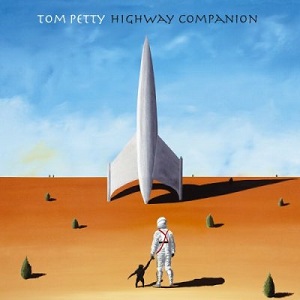
By now it should be clear that a Tom Petty solo album isn’t going to sound radically different from a Heartbreakers album, but we should still notice that they’re not around. His third such release, Highway Companion, at least restricts the guests to just Mike Campbell on lead guitar (naturally) and returns the producer credit to Jeff Lynne.
Thankfully, it doesn’t sound like a Jeff Lynne production, though with the drums handled by Petty himself—the jury’s still out on if they’re canned or live—it’s a moot point. “Flirting With Time” and “Ankle Deep” are the closest to that hit sound, though our hero’s voice is more off-pitch than ever. The homemade feel of the album is best displayed on “Jack”, which sounds like it took longer to play than to write, but it does have an excellent nod to Love’s “Bummer In The Summer” where the choruses should go. “Night Driver” has an intriguing mood, but it happens two tracks after he’d already threatened to “Turn This Car Around”.
Tom hasn’t been as prolific as he gets older, and we’re starting to think he either works better faster or has run out of new ideas. Unfortunately, there’s nothing that really leaps above the rest. There aren’t any home runs of the like that distinguished even such so-so albums as Long After Dark and Echo. To make matters worse, he’s even recycling his own songs; “Big Weekend” is “Yer So Bad” meets “To Find A Friend”, and “Damaged By Love”, pretty as it is, uses a Byrds song title as an opening line to disguise that he’s rewritten “Walls”.
Highway Companion could have been a lot worse, but it just isn’t memorable. It also wasn’t much of a hit, making the release a year later of a so-called “Special Edition”—two new songs plus demos of two album tracks—more insulting to diehard fans than anything else.

Tom Petty Highway Companion (2006)—2
2007 Special Edition: same as 2006, plus 4 extra tracks

Wednesday, March 24, 2010

Robyn Hitchcock 1: Black Snake Diamond Role


Robyn Hitchcock is the very model of a cult artist. He’s either loved or ignored, with a 35-year career that’s required a lot of patience on the part of his fans. Luckily, some of those fans work for record companies, so the curious newcomer hasn’t had to look too far to catch up on his best work. However, being the eccentric figure that he is, Robyn hasn’t made it easy to be a completist, taking back nearly as much as he gives. The bulk of his ‘80s catalog has now been reissued twice; the third time around wasn’t necessarily an improvement on the second, as we shall see.
Coming off the formative years with the Soft Boys, Black Snake Diamond Role sounds more like where he’d go than where he’d been. The songs are gentler, if still forced, but for the most part he’d found a style that would suit him for a while.
The piano-driven “Man Who Invented Himself” may or may not be about Syd Barrett, but it sure has a neat beat to it. Very singalongable. “Brenda’s Iron Sledge” has a wonderful snaky punk riff and a beat that sounds like drums being hit with wooden spoons. “Acid Bird” is his first real classic, a microcosm of that unique Hitchcock sound in both title and content.
Unfortunately, not everything else matches those highlights. “Do Policemen Sing?” and “Meat” try too hard to be bizarre, while “City Of Shame” isn’t much more than a poem with secondary music and an unfulfilled melody. “I Watch The Cars” has some promise, but again, he was still finding his way, though the line about eating Weetabix in “Love” (wherein the sound of the ocean is provided by one Tom Dolby) is a good clue where he’d wander.
Rhino’s version of the album was just fine, with such relevant B-sides as the short-story-set-to-music “Happy The Golden Prince”, which isn’t as clever once you’ve solved the allegory. The Yep Roc version repeats four of those bonuses save “Dancing On God’s Thumb” (which is odd, as it was included on the original 1987 CD version of the album) and adds four more tracks from an earlier rarities collection. Both versions start with an alternate mix of “The Man Who Invented Himself” without saxophones, which brings the piano out more.

Robyn Hitchcock Black Snake Dîamond Röle (1981)—3
1995 Rhino reissue: same as 1981, plus 5 extra tracks
2007 Yep Roc reissue: same as 1981, plus 8 extra tracks

Monday, March 22, 2010

Big Star 2: Third and I Am The Cosmos


The phrase “fractured masterpiece” doesn’t get thrown around a lot, but it aptly describes the album commonly credited to Big Star as either Third or Sister Lovers but usually both. While drummer Jody Stephens is the only other member of the band to appear on the album—even contributing vocals to one of his own compositions—it’s largely an Alex Chilton solo record, recorded in 1974 but not released for four years. And even when it did come out, it appeared on various tiny labels with different track listings. The 1992 version on Rykodisc is considered to be the artist-approved version, with a whopping 19 tracks.
The left turns Alex took on Radio City are even more extreme on Third/Sister Lovers, going right off the road and into the woods. Instead of tight trio arrangements, the songs exist in ragged, reverb-heavy spaces, played by various session musicians and friends, and some even sporting full string arrangements.
The opening “Kizza Me” sets the mood pretty well. A guitar starts, then wavers, and a vocal struggles to make its point while a piano and bass try to find their way through the murk. (The drums, of course, are spot on.) “Thank You Friends” can be taken either as sincere or sarcastic, depending on your mood. It too ends without certainty. “Big Black Car” is the emotional antithesis of the previous album’s car song—or any car song, for that matter. The song’s pace and delivery belie any possible joy of driving the open road. And then we have a bona fide Christmas song: “Jesus Christ” is the only modern pop song we can think of that would pass muster in a hymnal. A sleepy cover of Lou Reed’s “Femme Fatale” features Steve Cropper on lead guitar, before things pick up a tad on “O, Dana”, which would have incredible hit potential if not for the inscrutable lyrics (example: “I’d rather shoot a woman than a man”) and sloppy playing. But just as we’re starting to cheer up, “Holocaust” closes the first half with one of the darkest songs ever committed to tape.
“Kangaroo” always seems on the verge of falling apart but manages to hold itself long enough to reach an actual conclusion amid the chaos. Another possible hit was torpedoed when Alex changed his lyrics to “Stroke It Noel”, but luckily Jody comes next with the warm and straightforward “For You”. “You Can’t Have Me” brings back some of the angry power pop from #1 Record, setting up a similar closing suite of three songs filled with beauty. “Nightime” wanders the streets of Memphis in innocence (“Caught a glance in your eyes and fell through the skies”) and melancholy (“Get me out of here, get me out of here/I hate it here, get me out of here”). “Blue Moon” is a prayer for affection, then “Take Care” bids a sad adieu.
The “bonus tracks” work within the context of all that has gone before. There are covers—a chaotic “Whole Lotta Shakin’ Goin’ On”, the Kinks’ “Till The End Of The Day” and a haunting “Nature Boy”—and two key originals: the atonal “Downs”, which sounds like three songs playing at once, and the slower than slow “Dream Lover”, wherein our hero nearly falls off the piano while the strings reach for the heights.
Third/Sister Lovers is not for everyone, and it wouldn’t be a stretch to suggest that it’s waved around for hipster cred more than it’s enjoyed. But it truly does offer something different with each listen. If one order doesn’t work for you, try another; that’s what shuffle play is for.
To Rykodisc’s credit, the same day they released their version of Third they also put out a CD of post-Big Star recordings by the departed Chris Bell, Alex’s foil on #1 Record. I Am The Cosmos is not a “lost album”; rather it’s a collection of several stabs in the studio over a few years. Some songs appear twice, in different mixes or different recordings, and the three versions of “You And Your Sister” don’t seem like overkill. It’s a worthy companion to the Big Star oeuvre, if only for the majestic title track. (Chris may have preferred the mix done by Beatles engineer Geoff Emerick, but that one fades before the final couplet, which goes from “I’d really like to see you again” to “I never want to see you again”.)

Big Star Third/Sister Lovers (1992)—4
Chris Bell I Am The Cosmos (1992)—3
2009 Rhino Handmade Deluxe Edition: same as 1992, plus 12 extra tracks

Friday, March 19, 2010

Big Star 1: #1 Record and Radio City


Big Star was another one of those bands who seemed to make barely a ripple of a splash at the time, but years later had people falling over themselves in appreciation. In this case, the appreciation is warranted.
In many ways, the hopefully titled #1 Record is the template for what is considered power pop. At a time when Beatlesque songwriting was considered passé, it was left to a few standard bearers raised on the British Invasion to keep it going.
While the first name associated with the band is Alex Chilton, previously known as the gravel-voiced kid singing “The Letter”, equal if not greater credit should go to Chris Bell, who started the band and wrote a chunk of the songs. His is the first voice we hear, on the edgy “Feel”. His voice drives “In The Street”, best known in its permutation as the theme from That ‘70s Show, though the equally rocking “Don’t Lie To Me” is likely an actual Bell/Chilton composition. “Try Again” is typical of his yearning voice, while “ST 100/6” is a brief if mysterious closer.
Chilton’s contributions are just as strong, and surprisingly gentler. “The Ballad Of El Goodo” provides a balance of sound early on, as does the uncanny ode to being “Thirteen”. “When My Baby’s Beside Me” turns it up for that wonderful anachronistic balance of ‘60s and ‘70s. (A similar smirk, bassist Andy Hummel’s “The India Song”, is stuck right in the middle of the album.)

With little commercial success, the band kinda fell apart, reconvening as a three-piece without Chris Bell once Alex started writing and recording a few more songs. Consequently, the sound of Radio City is harder, and more unified by one voice.
For power pop, it’s hard to beat “Back Of A Car” or “September Gurls”, though more attention should be given to “You Get What You Deserve”. “What’s Going Ahn” and Andy Hummel’s “Way Out West” (sung by drummer Jody Stephens) are nicely sequenced for balance. “O My Soul” and “Daisy Glaze” are compact symphonies, well constructed and powerfully sung.
The album is also a harbinger of the fractured sound that would dominate the next Chilton project. “Life Is White” sports a wheezing harmonica over a stumbling rhythm, while the closing solo “Morpha Too” and “I’m In Love With A Girl” seem to come out of nowhere.

Luckily for those of us who weren’t there the first time, enough bands and critics kept the spirit of Big Star afloat that the band finally received the acclaim it deserved. Best of all, #1 Record and Radio City enhance each other so well that their continued existence on a single CD makes it an absolute bargain.

Big Star #1 Record (1972)—4
Big Star Radio City (1974)—4

Wednesday, March 17, 2010

Paul McCartney 24: Run Devil Run


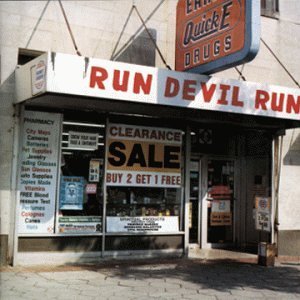
Paul’s main excuse for laying low in the mid-‘90s started with the activities surrounding the Beatles Anthology project, but the bigger issue around the McCartney household was Linda’s battle with breast cancer, which she lost in 1998. And just as he’d used the music of his youth to find his way in the past, he did the same on Run Devil Run.
But this isn’t an indulgent goof-off exercise—this is rock ‘n roll as healing and redemption. The band consists of guys close to his age of varying experience, like David Gilmour and even Ian Paice from Deep Purple, which no one saw coming. And for a guy who’d just buried his closest companion of thirty years, he sounds pretty together.
While his previous stroll through the jukebox, Choba B CCCP, didn’t take too many chances, this album digs deeper into his record collection to find songs that weren’t exactly standards, with a couple of originals added for variety. “Blue Jean Bop” is a good enough place to start, a little sweet Gene Vincent, then wham! He lets loose with fantastic vocal on “She Said Yeah”. Although John always sang the Larry Williams songs in the old days, Paul does even better with this one than the Stones did. It’s over to Elvis with a twist on “All Shook Up”, followed by an original, the burning title track. “No Other Baby” is especially poignant considering his personal life at the time, and a sweet tribute. It’s supported by a great take on “Lonesome Town”, which gets some soaring harmonies from David Gilmour. “Try Not To Cry” is another one Paul wrote, and fits in real well with the rest. “Movie Magg” is a Sun-styled Carl Perkins shuffle with knee slapping percussion. “Brown Eyed Handsome Man” is the only real clunker here, with an unnecessary Cajun treatment. “What It Is” is the last original, followed nicely by the obscure “Coquette” by Fats Domino, complete with a dead-on impression of the Fat Man. The rest of the album just burns—“I Got Stung”, “Honey Hush”, “Shake A Hand” especially (fantastic singing all the way through this one), ending up with “Party”. Whew.
My goodness, but this is a fun, fun, fun album. He’d been leaning on the oldies a lot lately, so previous experience shouldn’t be considered. Run Devil Run runs rings around the Russian album, and he hadn’t rocked this hard since Back To The Egg. Anyone who says he can’t sing, play the bass, or kick ass is just being difficult.

Paul McCartney Run Devil Run (1999)—

Monday, March 15, 2010

Todd Rundgren 1: Runt


The cover reads simply Runt, lending the listener to believe that’s either the name of the skinny long-haired kid on the cover or the name of the band on most of the cuts. The album is definitively the work of Todd Rundgren, who’d cut his teeth in the psychedelic garage band Nazz, and who’d already produced one album by The Band. While Levon Helm and Rick Danko appear on one track, the bulk of the remainder is handled by the rhythm section of Tony and Hunt Sales (both sons of Soupy, and destined to play with both Iggy Pop and David Bowie one day) and Todd himself, on guitars, keyboards, vocals and even sax.
No stranger to the arithmetic of the album side, Todd loads the first half of the album with straightforward melodic songs, from bluesy guitar parts to pop confections like “We Gotta Get You A Woman” and “Believe In Me”. “Once Burned”, that one song with Rick and Levon, is unfortunately derailed by a jokey soul vocal; before long he’d learn how to perform such material without trying to be funny.
Side two is a little more experimental. “I’m In The Clique” mixes free jazz a computerized voice (something of a harbinger) before going into a wordless interlude. An odd medley combines three decent Laura Nyro-inspired songs into one rushed track, while “Birthday Carol” is a journey in itself, from a Beatlesque orchestral piece to a Blood, Sweat & Tears-flavored workout.
Runt is full of the hooks that would endear Todd to his fans, from catchy tunes to smart leads. It’s also full of the left field moves that would mark his entire career. Vocally, he doesn’t always sound that strong. But then again, he was just getting started.

Todd Rundgren Runt (1970)—3

Friday, March 12, 2010

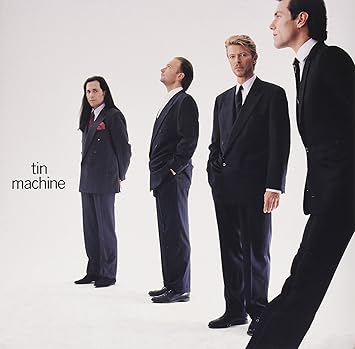
David Bowie 19: Tin Machine


Despite having destroyed his mainstream appeal with his last couple of bombs, Bowie seemed determined to keep working wherever his muse took him. So he teamed up with the Sales brothers (best known from their work with Todd Rundgren and, you guessed it, Iggy Pop) and an experimental guitarist named Reeves Gabrels for a project dubbed Tin Machine. This was a band concept, with Bowie insisting he was merely the vocalist. The new look involved dark suits and stubble, with musical content that was downright confrontational. Most people hated it. Everybody’s Dummy was among the approximately ten people worldwide who loved it.
“Heaven’s In Here” sets the tone of Tin Machine from the start, with a live sound and a repeated riff over several minutes, split up by pounding drums and chaotic solos. The title track plows through until the slightly gentler “Prisoner Of Love” comes in, much closer to the classic Bowie sound. “Crack City” really got under people’s skin, with its four-letter lyrics and use of half of the “Wild Thing” chords. “I Can’t Read” continues the feeling of desperation; skeptics thought the line “I can’t read sh-t” sounded more like “I can’t reach it”. The side ends with the relentless “Under The God”, its riff familiar from “I Wish You Would”, which Bowie fans knew from Pin Ups. If you can’t smile when he rails against “right-wing dicks in their boiler suits”, don’t bother with side two.
“Amazing” is something of a love song, then it’s off to unpredictable cover territory with a stomp through John Lennon’s “Working Class Hero”, most likely included for its bad language. “Bus Stop” is fairly short (a tongue-in-cheek live “country version” is added to the reissue) before the noise assault of “Pretty Thing” and the chaos of “Video Crime”. “Run” and “Sacrifice Yourself” weren’t included on the LP (probably due to space considerations) but luckily “Baby Can Dance” is the excellent closer for all versions.
Those of us who didn’t write it off as noise thought Tin Machine was Bowie’s best album in years—certainly of the decade—and not just because he swore a blue streak over those heavy chords. There were no gimmicks or dated synthesizers, just cut-up lyrics and relentless guitar. Of course, he insisted that the band was here to stay. And of course, things would change.

Tin Machine Tin Machine (1989)—4
1995 CD reissue: same as 1989 cassette/CD, plus 1 extra track

Wednesday, March 10, 2010

Bob Dylan 37: World Gone Wrong


While he’d only put out a similar solo acoustic recording of ancient folk blues songs a year before, Bob got the recipe right the second time around.
World Gone Wrong wins on several levels. First, the songs are better, more dirty blues than arcane folk. Next, while the sound on Good As I Been To You was muffled and distant, here it’s more in your face with even some distortion, making the album hard to ignore. He’s also working within the limits of his voice, rather than trying to yell his way out of it. His guitar playing is studied and precise, exploring all the dimensions of the neck. And while he didn’t write any of the songs, he does include a rambling yet straightforward set of liner notes describing to some extent either who did write each song, or at least recorded the version or versions that inspired him. (Just to throw in a trademark curve, he takes time to tweak the mythology of the Never-Ending Tour.)
Again, the songs will win you over. The run from the title track to the heartbreaking performance of “Delia” is six solid tracks, each an incredible performance. “Blood In My Eyes” is particularly compelling in its simple conversation between a man and a potential date. “Broke Down Engine” is more dirty blues, complete with sound effects. “Stack A Lee” and “Jack-A-Roe” would have been familiar to Deadheads, but “Two Soldiers” is another story song that piques your interest.
If we could truly put our finger on why this album is better than its predecessor, we’d be delighted. All we know is that it works, and still satisfies. Of course, as good as World Gone Wrong is, it seemed very odd to have gone so long without an album with original material. Perhaps he’d run out of things to say? Perhaps he was content to let someone else’s songs do the talking? Or maybe he didn’t think it was anywhere near as big a deal as we thought it was?

Bob Dylan World Gone Wrong (1993)—

Monday, March 8, 2010

Bob Dylan 36: Good As I Been To You


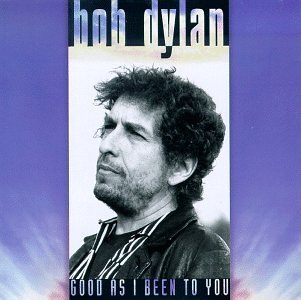
The poet of his generation had turned fifty, and what did he have to show for himself? How about an album of mostly folk songs? Good As I Been To You is wholly acoustic with vocals, just like his first four albums thirty years previous. But for the first time since his first time, these unaccompanied songs were all traditional folk and pop standards, not a one written by the man himself.
The first, most striking thing about the collection was that the guitar parts were all and only Bob. He hadn’t let himself be this exposed for such a long stretch for a while. Most of the songs defy classification; “Sitting On Top Of The World” and “Tomorrow Night” would have been known to fans of Cream and Elvis Presley respectively, while few would have guessed they’d ever hear “Froggie Went A-Courtin’” on a Dylan album. The out-of-tune “Arthur McBride”, “Hard Times” and “Frankie & Albert” have good intentions, but it’s hard to get past his (even for him) nasal delivery to care about the stories he tells.
Good As I Been To You screams contract obligation; seeing as these were the types of songs he played for an acoustic set on the now Never-Ending Tour, it seems he could have put this together in his sleep. Meanwhile, the packaging consisted of one recent crusty photo plus a shot from the 1986 run with the Heartbreakers.

Still, Columbia got a lot of mileage out of promoting it, coming on the heels as it did of the star-studded concert dubbed Bobfest by Neil Young. When The 30th Anniversary Celebration was eventually released on LP, CD and VHS, some of the more notable moments weren’t included, like Sophie B Hawkins’ pointless cover of “I Want You” and Sinead O’Connor being booed offstage into the arms of Kris Kristofferson (adding further insult to injury). Still, select moments from the still deliver chills, mostly from the version of “My Back Pages” where the verses are handled by Roger McGuinn, Tom Petty, Neil Young, Bob, Eric Clapton and George Harrison. Clapton’s version of “Don’t Think Twice” is pretty cool too, and Lou Reed’s spit-fueled take on “Foot Of Pride” makes one think the song was written just for him. The same can be said for George’s “Absolutely Sweet Marie”. Neil gets more attention for “All Along The Watchtower”, but it’s his version of “Just Like Tom Thumb’s Blues” that really shines.

Bob Dylan Good As I Been To You (1992)—
Bob Dylan The 30th Anniversary Concert Celebration (1993)—3

Friday, March 5, 2010

Rolling Stones 11: Hot Rocks


Not even a decade into their career, the Stones had already fallen into something of a trend by following a studio album with a live album or compilation. In the case of Hot Rocks, at least, the motivation came not from the band but from their former manager, the always philanthropic Allen Klein.
Hot Rocks is two records’ full of great Stones tracks, arranged chronologically and conveniently. All the hits you know and love are here, from singles to album tracks, all the way up to “Brown Sugar” (making its first but far from its last appearance on a Stones compilation) and “Wild Horses”. The Ya-Ya’s version of “Midnight Rambler” mixes it up. Most of the songs had already been on Big Hits or Through The Past, Darkly, and both “Ruby Tuesday” and “Let’s Spend The Night Together” were making their fourth American LP appearance, but again, how can you complain with such a lineup? As solid as Big Hits and Through The Past, Darkly are, the novice can’t go wrong with Hot Rocks, which is why it’s always sold incredibly well. In fact, the only bad thing we can say about it is the back cover photo.
Of course, it opened the floodgates for other cash-in opportunities. In the UK, the Decca label put out a series of strange collections of catalog clippings, none of them very well thought out nor appreciated by the band. Most collected odd singles or US-only tracks, but the most notorious was Gimme Shelter, which was not a soundtrack in any way.
The Stones themselves weren’t above a little plundering. Jamming With Edward! was credited collectively to Nicky Hopkins, Ry Cooder, Mick Jagger, Bill Wyman and Charlie Watts, and consisted of six loose jams from the Let It Bleed sessions. While an official release on Rolling Stones Records, it was sold at a budget price in anticipation of the scathing reviews it was sure to get. Truth be told, it’s not all that bad, and would have been a highly sought bootleg had they not put it out. It’s still an excellent showcase for Nicky’s piano, and while “It Hurts Me Too” is correctly credited to Elmore James, you don’t have to listen that close to hear Mick include a verse from Dylan’s “Pledging My Time”.

The Rolling Stones Hot Rocks (1964-1971) (1971)—5
Jamming With Edward! (1972)—3

Wednesday, March 3, 2010

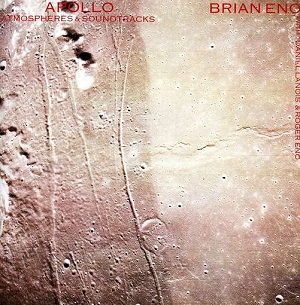
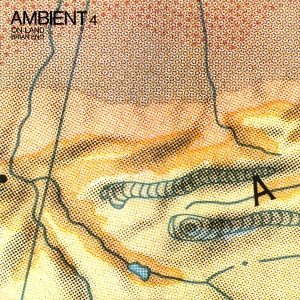
Brian Eno 8: Apollo


A project that made perfect sense on paper culminated in another exceptional ambient album. Apollo Atmospheres & Soundtracks collects various tracks commisioned for a film about the Apollo space missions, performed by Eno with his brother plus new collaborator Daniel Lanois. As the liner notes suggest, this music is designed to accompany images of “the vastness of space” on a big screen, compared to what people had seen on their tiny television screens.
Even without the visuals, one can picture space capsules floating by, with closeup shots of the moon’s surface and our own planet seen from miles away. Some tracks, like “Matta” and the “Under Stars” variations, evoke the machinery and isolation, while more melodic pieces of beauty emerge here and there. “An Ending (Ascent)” and “Always Returning” present pretty chord cycles that never quite resolve. “Weightless” manages to sound like a lazy afternoon on a tropical island, while “Silver Morning” is an excellent showcase for Daniel Lanois alone on several guitars.
Apollo sits comfortably between Eno’s ambient brand and his music for films, providing a listening experience that sounds just as good in the background as it does up close. Better still, it works outside the space motif; “Deep Blue Day” was later used as a humorous counterpoint in the film Trainspotting. In a catalog that grew to be increasingly unwieldy over time, Apollo stands out as a worthy purchase.

Brian Eno with Daniel Lanois and Roger Eno Apollo Atmospheres & Soundtracks (1983)—

Monday, March 1, 2010

Tom Petty 14: The Last DJ


By the end of the ‘90s, Tom Petty had become an artist of stature, such that he could take his sweet time between releases, to the point where each new album would be inevitably anticlimactic. The Last DJ is called a concept album, a not entirely accurate categorization, due to the suite formed by the first four songs. The title track is self-explanatory and, with a few exceptions in scattered stations across the country, a sad truth. “Money Becomes King” takes a scary trip through a time warp, contrasting the old hippie ideals with today’s concert experience. “Dreamville” goes into the head of the performer, a melancholy reverie jarred by the ugly nightmare of “Joe”, an amalgam of every record executive who considers artists as objects, and thinks of notes not as musical elements but as financial deals. The rest of the album flows like radio used to, even when switching between stations that fade in and out as you drive from state to state.
Being something of an elegy for AOR, it’s not out of line to say this is Tom Petty’s Abbey Road (or, if that’s too blasphemous, his Blind Faith), given the approach and sophistication. Listen to tracks like “Lost Children” and “When A Kid Goes Bad” and see if you’re not thinking of 1969. The understated orchestrations by Jon Brion help too.
The album’s true finale is “Have Love Will Travel”, a song much better than its title, but he pushes the point with “Can’t Stop The Sun” to remind us that regardless of the apocalypse he describes in that opening suite, he’s going to keep on punching.
As an effect of both his age and the subject matter, his tired voice consistently scoops the notes. The only real clunker is “The Man Who Loves Women”, an uncharacteristic music hall-style trifle. To wash that out of your ears, you can always skip back to the lovely “Like A Diamond”, which indeed shines thanks to Mike Campbell’s leads and Benmont Tench’s gentle keys.
With both a darker yet more focused sound than the previous album, The Last DJ wasn’t a big hit. Critics hated it, claiming Petty was biting the hand that fed him, but that wasn’t the point. Despite his fame and wealth, Tom Petty remains a music fan first and foremost, one who cherishes the history that led him to pursue his career. He knows he’d be nothing without it, and that he’d likely be nothing without the Heartbreakers. Or at least Mike and Benmont. Howie Epstein isn’t mentioned anywhere; he had been fired for chemical issues and would be dead within the year. Bass duties are handled by Tom and Mike, with a reappearance by original Heartbreaker Ron Blair.

Tom Petty & The Heartbreakers The Last DJ (2002)—3