Friday, May 22, 2026

Grateful Dead 23: Two From The Vault

The curators of the Grateful Dead’s archives were always mindful, knowing that their audience was somewhat particular. Rather than just throw any show out on the market, even if it had already been shared and dubbed on countless tapes, whatever they released needed to be important or unique. So it was in the case of the second installment of the From The Vault series.

At the time, this 1968 show was the earliest one they’d yet officially released, on top of being one of the few professional recordings from that year. Amazingly, some of the band wasn’t thrilled with the tapes back in the day, and even used them as a reason to justify firing Pigpen and Bob Weir for not keeping up with the others musically. Luckily for this supposedly less-than-dynamic duo, they would be reinstated soon enough, and ‘90s technology enabled us all to hear what the dissenters couldn’t then.

Pigpen was still a focal point onstage, so they open with a 16-minute “Good Morning Little Schoolgirl”. But then the suites start to flow: “Dark Star” into “St. Stephen” and “The Eleven”, slowing down for “Death Don’t Have No Mercy”. None of these were on either of their two albums, and could have filled up an album on their own. After a new seconds to regroup (and change CDs for the listener) they head right into “That’s It For The Other One” and “New Potato Caboose”, both twice their album length, followed by 17 minutes of “Turn On Your Love Light”. The crowd’s begging for more, so they get “Morning Dew”, which builds until the power is cut.

Two From The Vault certainly makes a nice companion to Live/Dead, unless you didn’t like that album to begin with. It portended well for the future of the series, except that further excavations would emerge under another banner, leaving this one all but abandoned. (Three songs—totaling 34 minutes—from the night before appeared on the first expansion of Anthem Of The Sun, and eventually comprised the bonus disc in Rhino’s expansion of this album fifteen years after its original release.)

Grateful Dead Two From The Vault (1992)—
2007 reissue: same as 1992, plus 3 extra tracks

Tuesday, May 19, 2026

Nilsson 13: Sandman

The cover of Sandman is something of a joke; the front shows Harry Nilsson happily sitting on a beach, fully clothed, while the rear suggests he’s been eaten by a crab. (These photos were taken by his pal Mal Evans, the Beatle road manager who was tragically killed shortly before the album came out.) Inside the gatefold is something of a Victorian-style etching of what appears to be an impending shipwreck, with various of the album’s participants’ faces slipped in. Clearly, Harry loved comedy, but even humor that isn’t an in-joke can only be funny so far.

“I’ll Take A Tango” begins with admitting to an aversion to rock ‘n roll and electric guitars, while the barely danceable rhythm lists towards the edge of the deck depicted in the aforementioned gatefold. But it’s followed by “Something True”, the closest thing to the romantic splendor for which he first became famous, and a stunner. That slide guitar isn’t George Harrison’s, yet we wish it were. It’s only a momentary distraction, as he now informs us that “Pretty Soon There’ll Be Nothing Left For Everybody” over a busy samba beat. There’s a lot of reverb throughout the album, thankfully toned down on the a cappella college parody “The Ivy Colored Walls”—we’re guessing all those vocal parts are him—which crawls to a denouement without a clear punchline. Instead it’s right into the completely lazy “Here’s Why I Did Not Go To Work Today”, which on the label is the subtitle of “Thursday”.

Depending on who you are, the album’s high or low point is “The Flying Saucer Song”, which he’d been trying to record for three years. It’s predominantly a conversation over a lopey sax groove between two drunks at a bar, mediated by the bartender, and naturally he does all the voices. (Joe Cocker can be heard wailing in the background.) While it may not have been inspired by Cheech & Chong, it pales. For even more hilarity, “How To Write A Song” gives him another excuse to put “a—hole” into a song while providing the instructions over a canned cheering audience. He finally finishes “Jesus Christ You’re Tall” from the snippet on the last album, degenerating into a few minutes of scatting. “Will She Miss Me” is another big production with a romantic undercurrent, trilling strings everywhere.

Comedy albums were of course popular by the mid-‘70s, but that’s not the main reason why people liked Harry Nilsson. He clearly didn’t have enough songs in him anymore, which is too bad, since he didn’t have enough for a comedy album either.

Nilsson Sandman (1976)—2

Friday, May 15, 2026

Guns N’ Roses 5: Chinese Democracy

Despite the rise of grunge, Axl Rose kept Guns N’ Roses in the spotlight till the mid-‘90s, courting controversy and creating events with each new cryptic video. Before long, each of the other members got fed up with him and quit, replaced by handpicked minions. 1999 saw the release of both the double-CD retrospective Live Era ’87-’93 (most of which was recorded towards the later year) and the very noisy “Oh My God”, released on the soundtrack of, yes, another Arnold Schwarzenegger movie. Rumors flew about the next album, which somehow and somewhere gained the title Chinese Democracy. Once the 20th century turned to the 21st, both the idea and the title of any new Guns N’ Roses album had become a joke. Much like Neil Young’s long-promised Archives, we’d believe it not when we heard it, but when we saw it in the wild. And besides, how could something that took so long to make, involving hundreds of thousands of studio hours, possibly sound any good?

Over 17 years after the Use Your Illusion albums made a splash by arriving the same day, Chinese Democracy started streaming at the band’s official MySpace page—now there’s a flashback for you—in preparation for its official release via the Best Buy chain, barring any last-minute crisis, of which Axl was the undisputed master. Just as amazing as the album finally going on sale was the simple fact that it didn’t stink. It sounded like him singing, and the guitars sounded like Slash. But that shouldn’t suggest that the album is “good”.

There’s a lot of music here—14 songs, most pushing five minutes, some over six. The first minute is atmospheric, until some power chords kick in for the title track, which sets the template for much of what follows: Axl doubling his angry vocals an octave apart, and one of the guitarists shredding constantly. There’s a chorus, but it’s not exactly “Paradise City”-level catchy. It also holds the record for the song with the most credited writers: eight. Only six people wrote “Shackler’s Revenge”, its industrial basis coming from two of them. “Better” slows the pace a bit, and could almost be a pop song, but we could really do without the singsongy falsetto verse at the start and end. Here’s a case where the minor key melody and chords serve the song well. That means it’s time for a power ballad, and “Street Of Dreams” is the album’s “November Rain”, complete with orchestral arrangement. Dizzy Reed, the only other member to play on the last album, is still on board to pound the piano; the rest of the band includes such famous stage names as Buckethead, Bumblefoot, and Brain, plus Tommy Stinson from the Replacements.

“If The World” probably irritated a lot of people, from the robotic drums to the Philly soul strings, the wrong kind of ‘70s homage for this brand. “There Was A Time” is even more divisive, with another drum loop and a damn children’s choir aah-ing along to hide what could be a half-decent tune, proof that a decade obsessing over an arrangement squeezes the life out of a song. Those of us familiar with the original novel were dubious of any song called “Catcher In The Rye”; here Axl manages to channel Oasis on the piano, clearly identifies with the protagonist, clearly misses the point of the book, and seems to chastise his fellow legendary recluse for writing it in the first place. But for those continual guitar lines and muddled message, it’s actually a cool track.

After a side away from hard rock, the hook of “Scraped” is vocally based around some of Sam Kinison’s most iconic yawps, and takes advantage of the layering capabilities of infinite tracks to have lyrics flying in from all over the place. It’s hard to picture anyone relating to “Riad N’ The Bedouins”, since the words are so muddled and obscure we don’t know who pissed him off this time. There’s another atmospheric intro, more Kinison-style “ah”s, and chorus chords that would be better served in another context. But no such ambiguity clouds “Sorry”, a mournful waltz complaining about everyone who’d ever doubted or underestimated him, specifically the other musicians on Appetite For Destruction. Despite the false alarm of the acoustic guitars, “I.R.S.” is a tirade against the government that might be more effective if he came up with a better title.

It’s been a while since we heard an orchestra, so “Madagascar” begins with one right out of a Russian symphony or Pink Floyd epic. From what we can gather from the lyrics, which don’t include the title once, he’s alone and lonely and misunderstood, and piles on movie samples and Martin Luther King quotes to illustrate his point. It’s got all the markings of a grand finale, but we’re not done yet. He’s got another love song in him with “This I Love”, another Elton John homage, loaded with heartbreak, and the only track on the album he apparently wrote all by himself. Finally, in the tradition of unfortunate title choices, “Prostitute” manages to encompass alt-rock and bombast, ranging from pensive to anguish, finally throwing all the ingredients we’ve heard so far into the soup for the big finish.

Chinese Democracy didn’t change the world, but in a universe where a Black man could actually be elected President of the United States and there was finally a new GN’R album, it seemed like anything was possible. And for a brief period, hope was truly alive and well. Yes, we could.

Guns N’ Roses Chinese Democracy (2008)—

Tuesday, May 12, 2026

Faces 6: Mahoney’s Last Stand

This enjoyable Faces side project snuck out four years after it was recorded, the soundtrack for a film that didn’t get a wide release either. Mahoney’s Last Stand was the brainchild of an actor best known for a couple guest star appearances on episodes of the cult TV series The Prisoner, and detailed the trials and tribulations of a man trying to get back to nature—a concept very appealing to Ronnie Lane. He and fellow Face Ron Wood recorded these tracks in 1972 while apparently “waiting around for Rod Stewart to show up to the Ooh La La recording sessions.”

Some of the music is very much along the lines of what the Faces might have done if Woody and not Rod had been so dominant. “Tonight’s Number” is a virtual Faces track, with Ian McLagan and Kenney Jones on board, along with Jim Price and Bobby Keys on horns, plus Pete Townshend on one guitar. “Title One” is a similar one-chord jam with horns, but not other Faces or Pete. “‘Mona’ The Blues” is an acoustic remake of an outtake from the first Faces album, whereas the Motown-flavored “Car Radio” could’ve come from their second.

Scattered throughout both sides, the rest points the gypsy folk direction Ronnie would pursue on his own. “From The Late To The Early” only has one verse despite several runs through the chords, mostly letting Woody extemporize on various acoustic guitars. “Chicken Wire” is a banjo-driven workout, while “Chicken Wired” is a slightly slower take with vocals and electric guitar. “Hay Tumble” and “Rooster Funeral” are another one-chord strum and a bluesy melody respectively, both with Ric Grech on violin, and “Woody’s Thing” features Ian Stewart on piano. Each side ends with a take of the wistful “Just For A Moment”, the second with a vocal.

By the time the album finally came out, Woody had already joined the Stones, while the packaging didn’t make it clear that this wasn’t a fresh reunion, that wasn’t enough to make it a hit. In the decades since it has been reissued a few times on CD, as well as streaming, so it can be appreciated again.

Ron Wood & Ronnie Lane Mahoney’s Last Stand: Original Motion Picture Soundtrack (1976)—3

Friday, May 8, 2026

Style Council 2: Internationalists

Straight out of the gate, the Style Council kept fans busy with singles, 12-inches, and a second album. As with its predecessor, Internationalists differed from the British version in title and cover—Paul Weller’s haircut clearly the influence decades later for Bill Hader’s Stefon—but only the mildest of track substitutions, which actually helped. Pointed political stances colored the lyrics, making it almost necessary to read along on the inner sleeve, where they appeared out of order and incomplete. (Like most Brits his age, Paul Weller really, really hated Margaret Thatcher.)

Just to be different, Mick Talbot takes the lead vocal on “Housebreakers”, probably because Weller’s phrasing wasn’t generally that measured. The jazz pop is about what we’d come to expect, but even from these guys, the bossa nova beat and harmonized flute solos in “All Gone Away” seem like parody. “Come To Milton Keynes” gets a more straightforward arrangement, but it’s a terribly sarcastic slam of a British town that didn’t deserve it any more than any others going through the same growing pains. (The trumpets always remind us of “Just Who Is The Five O’Clock Hero?”, which might have been intentional.) Weller pulls out the guitar and wah-wah pedal for the title track, but is accompanied by only a string quartet on the mournful “A Stone’s Throw Away”. The gravitas is killed by “The Stand Up Comic’s Instructions”, which are recited by comedian Lenny Henry over, though the chorus is catchy. “Boy Who Cried Wolf” is a little more standard, but the overly synthy backing is a matter of taste, but would appeal to fans of Sade and future pop stars Simply Red.

Side two is a little more consistent. Church bells right out of the Kinks herald “A Man Of Great Promise”, a surprisingly buoyant song for what’s essentially an obituary. “Down In The Seine” continues their Francophile tendencies, right down to the accordion solos. Besides being bestowed with another typically unwieldy title, “The Lodgers (Or She Was Only A Shopkeeper’s Daughter)” also features a front-and-center vocal by D.C. Lee, who got star billing when it was re-recorded in an inferior version for the single; here it’s solid R&B underneath more social commentary. With “Luck” we finally get a straightforward upbeat love song, and then “With Everything To Lose” brings back the bossa nova undercut by more complaints about the government. Here in the US, likely thanks to its appearance on the Vision Quest soundtrack, the Philly-infused “Shout To The Top!”—a single from the previous fall—replaced “Our Favourite Shop”, the instrumental title track of the UK version of the album. It makes a good lead-in for the equally snappy and punctuated “Walls Come Tumbling Down!” (By the time the album was issued on CD, it was the UK sequence, with “Shout To The Top!” added at the end.)

The best parts of Internationalists are the toe-tapping ones, but it’s still a very breezy and slick album, and Americans didn’t know what to do with it. They loved it in the UK, of course, where the eventual Our Favourite Shop Deluxe Edition was loaded with contemporary B-sides (of which there were always plenty) and some demo versions, a few of which were previously released elsewhere.

The Style Council Internationalists (1985)—

Tuesday, May 5, 2026

Morrissey 8: Maladjusted

In the early days of the Internet, various chat groups were dedicated to generating fake Morrissey song titles. His album titles weren’t so easy to concoct, but Maladjusted would be a good one if he hadn’t thought of it himself. Considering how all over place the songs are arrangement-wise, it’s fitting.

The title track is a bold opener, with pounding drums and feedbacky guitar from the Oasis album due out in a few weeks. He was due for a big anthemic-sounding single, and “Alma Matters” comes through on that score. “Ambitious Outsiders” is pinned to a somber synth orchestra arrangement that doesn’t make us want to decipher the lyrics any. Most people will hear the chords of Radiohead’s “Creep” in “Trouble Loves Me”, it’s actually very close to a song of a similar, shorter title from a Jayhawks album earlier that year. That aside, it’s very well arranged. The tale told in “Papa Jack” is open to lots of interpretation, none of which seem to match the soaring guitar parts over the second half.

“Ammunition” is similar musically to the other rockers, but stands out for being a song of confidence, even self-acceptance. “Wide To Receive” is a little dreamier and mopier, especially when the repeats of the first word of the title sound like “why, why, why, why”. “Roy’s Keen” would be a decent crowd chant to honor a Manchester United player of note, but the verses honor a guy who cleans windows for a living, so we’re at a loss. “He Cried” could be another one of those fake song titles, but it’s another catchy one reminiscent of older melodies. As good as the album’s going, it screeches to a complete halt with “Sorrow Will Come In The End”, wherein he recites a monologue of revenge over another faux-orchestrated backing. It would be unbearable even if it hadn’t been directed at the Smiths drummer who sued him and Johnny Marr over royalties, to the point where it was dropped from the UK release. Best to skip ahead to “Satan Has Rejected My Soul”, which is far catchier.

The band is the same as the last album, just as Steve Lillywhite produced it, so the sound throughout Maladjusted crackles. Yet twelve years later, he chose to reissue and repackage it with a new cover (as he also did with the one that came before it). In this case, the track list was dramatically shuffled and overhauled, going so far as to remove “Roy’s Keen” and “Papa Jack”. But beyond that, the new sequence flows better, even with the added tracks, all of which were contemporary B-sides, each excellent save the too-long and too-serious “This Is Not Your Country”. “Satan Rejected My Soul” was swapped with the worldwide reinstatement “Sorrow Will Come In The End”, making it easier for the listener to avoid that one altogether.

Morrissey Maladjusted (1997)—3
2009 Expanded Edition: same as 1997, plus 6 extra tracks (and minus 2)

Friday, May 1, 2026

Aerosmith 4: Rocks

When you get your sound down, the thing to do is work to perfect it on your next album, especially when you need a follow-up and fast. Rocks did just that for Aerosmith fans, delivering 35 minutes of guitars and stank, with Jack Douglas once again helping them get it all on tape.

With all the subtlety of crashing through saloon doors, “Back In The Saddle” is a perfect opener, right down to the whipcrack, stomping spurs, and neighing horses, you can practically feel the dust. (There’s even yodeling.) “Last Child” slows things down right away, but they fall into a stank of a groove with plenty of layers, mostly from the fingers of Brad Whitford. Some city sound effects link to the next track; “Rats In The Cellar” ups the tempo bigtime in something of a mirror to the title track of the previous album, with a cool extended ending. “Combination” is a sneaky one, since you really have to concentrate to discern the lyrics, but it’s actually a duet between Steven Tyler and Joe Perry, and something of a manifesto for their “toxic twins” image.

Don’t be fooled by the acoustics (and maybe a banjo?) at the start of “Sick As A Dog”, because it soon resolves into more chord-driven riffing that’s not too different from what we’ve already heard, but the twin solos in the break make a difference. After another atmospheric link, “Nobody’s Fault” would launch at least a dozen metal bands by the turn of the decade, only these guys keep some personality in the mix. “Get The Lead Out” sports a sassy strut they’d return to time and time again, while “Lick And A Promise” starts with one seriously complicated riff and just keeps going. Not until the end do they vary from the program. “Home Tonight” is a piano-based power ballad that would set another template for the band in the decades to come. At least they left out the orchestra, or at least mixed it low.

Throughout Rocks, the vocals are generally buried under all the guitars. Which is fine, but it makes it kinda hard to sing along. While it lacks the musical breadth of the two albums before, it delivers and keeps knees jogging. It’s clear why so many budding guitarists choose this as their favorite Aerosmith album.

Aerosmith Rocks (1976)—3

Tuesday, April 28, 2026

Beach Boys 4: Little Deuce Coupe

Perhaps feeling he’d exhausted the songwriting potential surfing offered, Brian Wilson decided to focus more sharply on that other Californian teen sensation: cars. What’s more, their label had already used “Shut Down” as the title track of an album that repackaged “409” and other songs about cars by other bands, as well as Robert Mitchum. So they figured they might as well repackage themselves, which is why an album released only a month after their last one repeated four songs from previous albums, including the title track of this one. Confused yet?

That title track is still primo Beach Boys, but here it’s followed by “The Ballad Of Ole Betsy”, a maudlin plaint for an automobile on its way to the scrapyard. While it may not specifically mention cars, “Be True To Your School” is one of the better high school rah-rah songs despite itself; the music makes it more than the words, which come off as the rantings of “some loud braggart”. (Co-writer Roger Christian is responsible for most of the lyrics on the album, being Brian’s go-to car expert.) “Car Crazy Cutie” is dominated by Dion and the Belmonts-style do-run-runs, and while it’s about a girl for a change, it’s not any more exciting than “Cherry, Cherry Coupe”, which was a rewrite of an earlier track and piles on the technical references.

“Spirit Of America” was supposed to pay tribute to racecar driver Craig Breedlove and his eponymous jet-propelled trike; fittingly, Capitol Records used it a decade later as the title track of the less musically successful cash-in follow-up to Endless Summer. While three of the repeats may have been worthy of hearing again, we won’t say the same for “Our Car Club”, but “No-Go Showboat” shows Brian trying to work more complicated arrangements into their albums than the usual three chords. Somewhat along the same lines, “A Young Man Is Gone” puts new lyrics eulogizing James Dean—who, or course, died in a car crash—to the lush Four Freshman-style harmonies of “Their Hearts Were Full Of Spring”. Finally, “Custom Machine” is more grandstanding, again over some unexpected chord changes.

Musically and vocally, Little Deuce Coupe certainly stands out as competent, even influential. But with only twenty minutes’ worth of new material, it offered little except to push them as a novelty act. Luckily, it was paired with a better album for its two-fer CD, which also included the rerecorded single version of “Be True To Your School”, featuring a simulation of a high school marching band and even more cheerleader chants.

The Beach Boys Little Deuce Coupe (1963)—2
1990 CD reissue: same as 1963, plus All Summer Long album and 4 extra tracks

Friday, April 24, 2026

Kinks 34: Did Ya and Phobia

Having somehow made it through the ‘80s, could the Kinks extend their longevity to a fourth decade? Their new manager hoped so. First, they’d need a new label, and Columbia stepped up. At a time when the CD was king, the band took the new opportunity to release an EP, with the single “Did Ya” as the lead track.

This charming little ditty was very reminiscent of “Sunny Afternoon” and “Dead End Street”, right down to the wheezing harmonium and backing vocals. This time Ray Davies’ concerns about the decline of British society were wrapped in wistful disappointment at the broken promises of the swingin’ sixties. As long as they were looking back, “Gotta Move”—originally the B-side to “All Day And All Of The Night”—is an outtake from The Road, and “Days” got a new acoustic busk with a not-too-raucous backing. But the irritating “New World” would be something of an extension of “Aggravation” from UK Jive, and a rant about Europe fifty years after the start of World War II. Much better is Dave Davies’ “Look Through Any Doorway”, instrumentally, lyrically, and musically, and deserves wider exposure than the end of an EP.

Eighteen months later, none of these were included on the band’s next album in the U.S., though “Did Ya” was added in some territories. Instead, Phobia was an entity all its own, and at 71 minutes their longest album since Preservation Act 2.

A forty-second “Opening” of dueling guitars gives way to the slow but big riffs of “Wall Of Fire”, an angry piece of social commentary. Following a brief pastoral opening, “Drift Away” is more of the same—neither a rewrite of “Loony Balloon” from UK Jive, nor is it remake of the Dobie Gray hit. While the sentiments in “Still Searching” seem genuine, and the performance is wonderful, the song is treacly and trite, two words we don’t normally associate with Ray Davies. (Plus, following a song that insists “sometimes I wish I could just drift away” with one that opens with “I’m just a drifter who has lost his way” is just sloppy sequencing.)

The title track brings back the crunch, and is one of his better litanies of neurosis, though we can’t imagine stadiums singing along. “Only A Dream” is this close to being one of his better tunes of late; all he’d have to do is jettison the spoken-word sections, where he rivals Pete Townshend in the creepy old man race. Titlewise, “Don’t” would be better extended to “Don’t Look Down”, as that’s the main hook, and an excellent metaphor we don’t think he’s touched on before. Along the same lanes, while “Babies” touches on all kinds of psychological ramifications of overpopulation, couldn’t he have found a better title?

The circus metaphors in “Over The Edge” don’t excuse a keyboard hook straight out of “Freeze-Frame” by the J. Geils Band, but he still manages to cram a lot of lyrics in. “Surviving” takes the other tack, being to find one hook and beat it into the ground. The best part of this six-minute opus is the breakdown over the final two, where they repeat a few wordless phrases over trilling acoustics and what sounds like at least one banjo. Dave’s guitar and harmonies have been prominent thus far, and “It’s Alright (Don’t Think About It)” provides something of a defiant determination with a spidery riff any grunge or hair metal band would have killed to have. “The Informer” comes completely out of left field, a gentle monologue by one pub patron to another, hinting at lots of back story and intrigue that’s only alluded to and never explained, unless we’re missing something really obvious.

Not so with “Hatred (A Duet)”, which seems to be the answer to some suit’s idea that it would hilarious if the Davies brothers sang a song about how they really feel about each other. It’s generally embarrassing. There’s no metaphor in “Somebody Stole My Car” unless you really want one; the best part is the “beep beep yeah” quote at the end. Only two tracks after yelling at each other, the boys were able to swap verses and harmonize on “Close To The Wire”, another example of Dave summing up a side’s worth of Ray’s angst in one song. The best is saved for last, as “Scattered” opens with a strum of “Lola” dobro and travels through rather dour subject matter—she’s gone and I’m alone, we all turn to dust someday—over a very jaunty tune, complete with accordion.

For the most part, Phobia isn’t a “bad” Kinks album, especially considering the handful that preceded it. The music is driven mostly by guitars, and the drums only occasionally sound canned, so on the surface, the album rocks. When you try to get into it, however, its flaws emerge, and you wish they had kept the songs tight and compact, rather than try to fill up a CD. It must have been too much for the band, as to date, it is the last Kinks album of new material. God rest the Kinks.

The Kinks Did Ya (1991)—
The Kinks
Phobia (1993)—3

Tuesday, April 21, 2026

Todd Rundgren 35: State

The good thing about Todd Rundgren constantly upgrading his technology is that with every one-man band album, he sounds closer to something organic even when he’s relying on electronics. Of course, it also helps if he’s got songs, and State does have a few of those, but not enough.

Over a bed of extraterrestrial synthesizers right off of any of his other albums, “Imagination” crawls towards us from across the desert. Both “verse” and “chorus” seesaw between two chords, but while the former is more pastoral, the latter is pure forboding, with suitably grungy guitars. The eight minutes don’t drag, but then everything changes. “Serious” is mildly jokey, unfortunately locked into a synth-funk backing that does the sentiment no favors. “In My Mouth” (as in “something in my mouth for you”) comes from a standard lyrical trope following a trip to the doctor, but overstays its welcome, while “Ping Me” is a modern take on basic communication. But comparing the plight of women to a popular video game in “Angry Bird” is a major whiff.

What we’d call side two begins as the first did, with a mysterious synthesizer heralding “Smoke”. The dance beat is a bit much, yet the track holds up. Not so “Collide-a-Scope”, already used as a clever song title and better song by nemesis Andy Partridge for the XTC side project the Dukes of Stratosphear, and theirs wasn’t a litany of opposites. Thankfully with “Something For Nothing” we finally have a track worthy of his talents, lyrically and melodically, nicely supported by Rachel Haden on the bridge and chorus. “Party Liquor”, which pointedly sounds like it’s set in a dance club, kills that mood, but it can be skipped in favor of the bleak landscape of “Sir Reality”, which has some screaming lead guitar above the synth beds.

Those still wanting to dive in to State would have been best served by springing for the deluxe edition, which boasted selections from a concert that covered his entire career, pop to prog, accompanied by the Metropole Orkest in big band arrangements on a second disc. He’s started to croon in his advancing years, but things like “Pretending To Care” and even songs from 2nd Wind get a fresh perspective. The otherwise unavailable “Frogs”, about a plague of same, allows him to indulge his Gilbert & Sullivan tendencies. (He encouraged attendees to film it, and the complete show is still available for viewing.) It’s still more entertaining than the zoopa-zoopa techno medley of “Can We Still Be Friends?”, “I Saw The Light”, and “Hello It’s Me” stuck at the end of the digital version of State itself.

Todd Rundgren State (2013)—2

Friday, April 17, 2026

Joe Jackson 22: Hope And Fury

It’s always encouraging when Joe Jackson emerges with a set of songs that aren’t specially part of a grand concept. Hope And Fury finds him keeping it basic yet again—another good sign—with his current trio backing him, anchored yet again by the staunch bass of Graham Maby. The music is described as “bicoastal Latin jazz funk rock”, which pretty much sums up his more commercial albums.

That description isn’t immediately apparent on the opening to “Welcome To Burning-By-Sea”, where the tribal rhythm doesn’t support any kind of melody until the chorus. If there is a theme to the album, it would be the state of the world, particularly in comparison to life in the same place in another time. (And frankly, the cover photo looks just a little too much like bad AI.) His defiance comes through on the more melodic “I’m Not Sorry”, a slap at cancel culture from a guy still miffed he can’t smoke in bars. “Made God Laugh” is the first really constructed and arranged song here, incorporating echoes of previous decades and a killer chorus. Speaking of previous decades, “Do Do Do” (which rhymes with “no no no”) begins with a cop on “Twist And Shout” sports cheesy Farfisa organ and guitar stabs while has a lot of fun with wordplay. The saga of Billy in “Fabulous People” may or may not be autobiographical, but boy, is it catchy. (The percolating bass and doubled piano and xylophone evoke that of “Stepping Out”.)

Unfortunately the main guitar riff of “After All This Time” immediately resonates of “Smooth” by Santana, and it’s a shame he couldn’t have found a better hook, since the pre-choruses and choruses are worth getting to, to the point where one doesn’t notice the deliberately pointed clichés stacked in the verses. “The Face” is another anthem for the timid, with a terrific call-and-response bridge and extended solos highlighting almost Klezmer violins, progressive guitar, and his own piano. On an album with already sophisticated ideas, “The End Of The Pier” stands out with its precise juxtaposition of families a century apart, even if the earlier one doesn’t seem that far back. (In fact, “Sunday Papers” would fit lyrically at the halfway point.) “See You In September” is thankfully not the near-bubblegum hit from the ‘60s, but something more resonant of the Great American Songbook, with its Ellington chords and shades of “As Time Goes By”. It would have been better served with just the piano and strings, and without percussion, but he really likes that percussion.

While Hope And Fury is short and sweet at under 35 minutes, there’s enough here for sinking one’s teeth. Although it doesn’t grab with the immediacy of Rain or Fool, it’s another fine installment in what seems to be a career without end.

Joe Jackson Hope And Fury (2026)—3

Tuesday, April 14, 2026

Daniel Lanois 3: Sling Blade

Production work and his own musical forays were still trickling in, but Daniel Lanois arguably got his widest exposure in the mid-‘90s in the context of Billy Bob Thornton’s breakthrough film Sling Blade. Lanois’ swampy atmospherics were well suited to heavy, hot, and humid scenery in the movie, and are weaved through out the soundtrack album. “Bettina”, “Omni”, and “Secret Place” are trademark instrumentals in his brand, and “Asylum”, “Orange Kay”, and “Blue Waltz” are suitably dark. Fellow Hamiltonian Russell Wilson collaborated with engineer Mark Howard on “Phone Call”. “Jimmy Was” isn’t that far musically from “Still Water” from his debut solo release, and “The Maker” resurfaces over the closing credits, ending the album.

Mostly, if there are vocals, they’re by other people. A relatively brief “Shenandoah” comes from his recent sessions producing Emmylou Harris, while Tim Gibbons, another Ontario native, croons his own brooding “Lonely One”. We were mystified for years by Bambi Lee Savage, whose “Darlin’” provides a wonderfully sweet break here and in the movie, until we found out she was previously known as Shannon Strong, who’d had engineering credits on U2’s Achtung Baby and their Passengers album with Brian Eno. The old 45 of “Soul Dressing” by Booker T. & The M.G.’s fits just fine, while the inclusion of Local H’s cover of Guided By Voices’ “Smothered In Hugs” seems like record label finagling, since it’s not in the film, wonderful as it is. Sadly, the backporch performance by Dwight Yoakam’s character’s band in the movie, featuring Ian Moore, Vic Chestnutt, Col. Bruce Hampton, and Mickey Jones, is not included. (For those who haven’t seen it, Dwight is genuinely terrifying in this film.)

Decades later, after the album had gone out of print and he’d started selling music via his own website, My Music For Billy Bob recycled his own contributions to the soundtrack, and added a few that didn’t make it, some for obvious reasons. “The One I Love” has a drum machine and doesn’t sound like much more than a demo, but “Nicky” is based around a pretty piano and other keyboards, and “London” has that eerie quality that may well have been used somewhere. “Willie Brown” would appear edited as “Flametop Green” on Belladonna, and the melody of “Moondog” would end up on another Emmylou Harris album. The album is nice to have if you can’t find the soundtrack, but you will end up with yet another copy of “The Maker”.

Music From The Miramax Motion Picture Sling Blade (1996)—
Daniel Lanois
My Music For Billy Bob (2014)—3

Friday, April 10, 2026

Yes 13: Yesshows and Classic Yes

While Yes was in a state of limbo, somewhat, they still owed the label some product. This conundrum was addressed in the usual way, first with their second live album. Yesshows was taken from recordings at five locations over the last three tours with Jon Anderson, yet still works as an entity to itself.

The finale from Stravinsky’s Firebird Suite is the opening fanfare as the band takes the stage for “Parallels”. Steve Howe does an awful lot of noodling through “Time And A Word”, the only earlier song here, having been revived in the wake of Yesterdays as part of a medley of earlier songs, not included here. Instead there’s a sharp but effective edit into “Going For The One”. Side two was devoted to “The Gates Of Delirium”, when Patrick Moraz was still in the band and Rick Wakeman wasn’t, and it translates well to the stage, particularly the transition from the solos into “Soon”.

Jon helpfully explains the impetus for “Don’t Kill The Whale”, after which he thanks various crew members over an against-type band jam and actually says “Don’t put that funk in mah face.” “Ritual” (again with Moraz) had to be split between sides on vinyl, and is now all one track. Chris Squire gets a decent bass solo, but the Tuvan-style throat singing during the percussion freakout is almost laughable, making the final “Nous Sommes Du Soleil” section a big relief. There’s a sloppy edit before “Wonderous Stories”, but Chris adds nice harmonies.

Outside of the devoted, Yesshows was always something of a stepsibling to Yessongs, and didn’t make it to CD outside of Japan until the ‘90s. Also, it was only a double album, as a triple album wasn’t going to fly in 1980, but it least it didn’t repeat selections.

Two such candidates for the album did appear a little over a year later, kind of. Some editions of the Classic Yes compilation included a bonus 45 consisting of live 1978 recordings of “Roundabout” and “All Good People”. (The cassette added a song to the end of each side, while the eventual CD had both at the end of the disc.) The album itself was sufficient as an overview of a now-defunct band, concentrating on some of their longer yet popular pieces, most of which were established radio staples. “Heart Of The Sunrise” is a surprising opener, jumping ahead to “Wondrous Stories” then back to “Yours Is No Disgrace”. “Starship Trooper” feeds into “Long Distance Runaround” and “The Fish”, and “And You And I” sums up the final Bruford trilogy. Plus it had another Roger Dean cover to underscore its place in the canon. And with that, the band’s label contract was fulfilled.

Yes Yesshows (1980)—3
Yes
Classic Yes (1981)—

Tuesday, April 7, 2026

Oasis 7: Heathen Chemistry

With rhythm guitarist Gem Archer and bassist Andy Bell still on board since the live album, the Gallagher brothers felt confident enough to get back to the rock with Heathen Chemistry. Noel seemed to have cut back on the nose candy, and even let the other members contribute to the songwriting. Even Liam wrote three songs of his own.

You’d be forgiven for fearing some kind of insensitive musical decoration on a song called “The Hindu Times”, but to their credit none of the other lyrics would have been better titles, and we’re off and running. “Force Of Nature” starts out like Iggy Pop’s “Nightclubbing”, but gets more of its own character when Noel starts singing. “Hung In A Bad Place” is very reminiscent of their first and third albums, but since one of the new guys wrote it that’s just fine. The piano on “Stop Crying Your Heart Out” brings to mind early Bee Gees in a good way, though we wish Noel had let off the “Wonderwall”-style echoed voices during the verses. The song still works as an anthem, especially as it sets up Liam’s utterly charming “Songbird” strum, sadly over before we know it. Noel seems to slow things down again on “Little By Little”, and we’re not used to hearing him sound so humanistic, but as ever, he knows how to nail a chorus.

“A Quick Peep” is indeed that, a rockin’ sketch by the bass player, then “(Probably) All In The Mind” recycles those Revolver tropes that put them and others on the map. The feedback doesn’t dominate, and a kinder, gentler Noel rises out of the fade with the attempt at sincerity of “She Is Love”, but even the Mellotron flutes can’t hide that this song has been written several times already, to the point where we can’t place the original source for the theft. (We suspect somewhere in Laurel Canyon, and tips or leads are welcome.) “Born On A Different Cloud” proves that Liam hasn’t learned how to vary a melody yet, but the “Karma Police” piano and dirge rhythm are more White Album than 1967, even if it does drag at six minutes, and enough with the Mellotron flutes already. He does better with “Better Man”—not the Pearl Jam song, nor an update of “It’s Gettin’ Better (Man!!)”—which favors guitars over its trip-hop backing. The half-hour of silence at the of the song serves only to fill up the disc to capacity, but since “The Cage” apparently never got lyrics, it provides a mildly moody finale. And they just couldn’t lay off the Mellotron.

Derivative as it is—and despite how many times we used the word “but” throughout this summation—Heathen Chemistry succeeds from not being overly indulgent or self-important. They still had their swagger, of course, though they weren’t trying to push people away. Too much, anyway. The parts are mostly better than the whole.

Oasis Heathen Chemistry (2002)—3

Friday, April 3, 2026

Prince 26: One Nite Alone

Having not learned his lesson with the Crystal Ball debacle, Prince tried again to make his music available directly to his fans, this time via online subscription. It was a nice idea, but those who parted with a hundred bucks complained first about the frequency of releases, as well as repetition of stuff they’d already received.

At any rate, the first such issue was One Night Alone…, billed as “solo piano and voice”, which is pretty much what we get for just over half an hour. The title track is a slow seduction, starting off nice and pretty over two chords, alternating between falsetto and spoken, escalating into a Keith Jarrett exploration, then out. Apparently she didn’t buy it, given the heartbreak in “U’re Gonna C Me”. “Here On Earth” is even slower, a rumination on a dream with some overdubs, including drums by John Blackwell. He pulls out some guitar and bass for “A Case Of U”, a cover of his favorite Joni Mitchell song, though he only uses the second verse.

“Have A ” is loaded with nonstandard chord changes and unexpected harmonies, and its mildly vague content makes an odd direct segue into the salacious metaphors of “Objects In The Mirror”. It’s right into “Avalanche”, another lovely performance, but the lyrics air eyebrow-raising claims about the history of slavery in America. After that, “Pearls B4 The Swine” is a quirky little post-breakup number, the closest thing to a catchy single. “Young And Beautiful” could be one too, with a message of empowerment for the object of the song, leaving us with “Arboretum”, a lovely instrumental closing theme of sorts, after which he gets up and walks away. (His pet doves are credited with “ambient singing”.)

The album was something of a taster for the One Night Alone… tour, where he was accompanied his smallest combo in years—albeit with Maceo Parker, Candy Dulfer, and Najee on horns—and would spawn his first official live album. He was ostensibly promoting The Rainbow Children, and the music certainly thrives onstage; the deep narration is still there, but mostly he just plays, mostly on guitar. The only real rarity is “Xenophobia”, which serves to introduce the band and to admonish those in the audience who came for the oldies. He does touch on his entire catalog, but more on deep cuts than obvious choices. “Extraordinary” and “The Other Side Of The Pillow” are surprises, while the adjusted title “When U Were Mine” and “Take Me With U” retain the vibe of the records. After 90 minutes he says good night, but comes back for a set alone at the piano cocktail lounge-style, touching on romantic favorites and encouraging the crowd. They go nuts when “Nothing Compares 2 U” kicks in, and the band comes back and stays for the duration. “Free” goes into “Starfish & Coffee”, then “Sometimes It Snows In April” and “How Come U Don’t Call Me Anymore”, and “Anna Stesia” stretches for ten minutes so he can harangue about God before a moody coda and farewell.

But that wasn’t all either. A third disc, The Aftershow: It Aint Over!, provides a glimpse into his tradition of hitting a club a few hours after finishing a concert to keep the party going. Larry Graham sits in on a torrid “Joy In Repetition”, George Clinton croaks “We Do This”, and Questlove and Musiq Soulchild are on the medley of the latter’s “Just Friends” and Sly Stone’s “If You Want Me To Stay”. “2 Nigs United For West Compton” fits well with “Alphabet St.” He threatens to keep “Peach” going for twenty minutes, but we only hear eleven. “Dorothy Parker” is more subdued but jazzy, “Girls & Boys” is mostly suggested by one chorus, and the closing vamp on “Everlasting Now” brings it full circle to the main show. All in all, a satisfying experience. (In 2020, the Up All Nite With Prince: The One Nite Alone Collection box included all of the above, plus the Live At The Aladdin Las Vegas DVD. Not included was 2004’s C-Note, a download-only EP consisting of four soundcheck jams—two funky and two moody—plus the first-ever release of “Empty Room”, a song about heartbreak dating from 1985.)

Prince One Night Alone… (2002)—3
Prince & The New Power Generation
One Night Alone… Live! (2002)—

Tuesday, March 31, 2026

Nico 1: Chelsea Girl

Even before she was appended to the Velvet Underground, Nico had been trying to make it in showbiz. Her blonde beauty and cheekbones had already emblazoned album covers and got her into movies, but the girl just wanted to sing. Her husky timber would be an acquired taste, but she exuded enough cool to open a few doors.

Once the band’s first album had been released, producer Tom Wilson took to the task of establishing her as a chanteuse. She’d already been doing solo shows at the same East Village venue that Andy Warhol had already turned into a nightclub, and where she was accompanied by a rotating cast of guitarists, including the guys from the Velvets, Tim Buckley, Tim Hardin, and a kid we’ll reveal shortly. She built a repertoire, which Wilson recorded in the folk style, then promptly slathered in chamber-pop arrangements nothing like the album she’d just finished, and which she insisted she hated. (Interestingly—to us, anyway—the arranger would work on Van Morrison’s Astral Weeks a year later.)

The aforementioned kid was named Jackson Browne, and while his own career would take another five years to really start, he plays on most of Chelsea Girl, and two of the three songs he’d written for the album open it. “The Fairest Of The Seasons” is lovely little reverie, and the strings don’t get too much in the way, but the future classic “These Days” would be bettered by others. “Little Sister” is credited to Lou Reed and John Cale, but the see-sawing organ and airy lyrics suggest mostly the work of the latter. Only his name is on the tense, Gothic “Winter Song”, which comes off as a faster minor-key variation with more polysyllabic words. Folks who were with her so far might not have appreciated “It Was A Pleasure Then”, wherein she sings a haunting, almost Gregorian melody over Reed and Cale’s tapped guitars and burst of feedback for eight minutes. Only the absence of drums keeps it from being a full-on Velvets track.

Another contender, and almost as long, is “Chelsea Girls”, written after the fact for Warhol’s experimental 3½-hour split-screen film experience. Eight nursery rhyme-style verses document the sad lives of the denizens, each culminating in a mournful chorus of sorts. She wasn’t the first person to record Dylan’s “I’ll Keep It With Mine”, but like Judy Collins she insisted he’d written it explicitly for her, and sources say he did. “Somewhere There’s A Feather” is another very sweet Jackson Browne song to which he never returned, while “Wrap Your Troubles In Dreams” was one of Lou’s earliest songs. At five minutes it tends to drag, and the constantly fluttering flute has the effect of a buzzing fly, causing the listener to swat the air with the album sleeve. “Eulogy To Lenny Bruce” is Tim Hardin’s tribute to the comedian who’d died the previous summer, and a little too specific about their shared addiction to be universal.

Chelsea Girl is one of those “iconic” albums that people seem to revere, but we always suspected it was more due to the fascination with her image and mythology. The arrangements are a little precious, and many of the songs have a sameness to them that take a lot of listens to distinguish. And you’ll either really, really like her voice, or find the accent and pitch problems to be too much to handle. Still, it’s since become part of the Velvet Underground story as a whole, having been included with its stepsiblings in various box sets and expanded reissues.

Nico Chelsea Girl (1967)—

Friday, March 27, 2026

Brian Eno 32: Lateral, Luminal, Liminal

Clearly not slowing down when he could simply enjoy the pensioner’s life, Brian Eno’s next collaborator was one Beatie Wolfe, a conceptual artist who’d done a lot of work fusing music and technology, and specifically exploring its therapeutic capabilities. Something sparked between the two, to the extent that they managed to release three albums in less than six months’ time.

Lateral consists of a single ambient track, “Big Empty Country”, split into “Day” and “Night” halves on the abridged vinyl and eight eight-minute segments in the digital files. Described by the pair as “space music”, not a lot happens over the course of it, making it not that different from Thursday Afternoon or Neroli. The same hum and triad are established for the first twenty minutes, then a few gentle guitar notes appear in the same rhythm, and other harmonics begin to emerge. Towards the last ten minutes or so, the atmosphere seems to spread wider, and eventually fades. So basically, it’s pretty and easy to get lost in as well as ignore, so it works.

Released the same day, Luminal presented “dream music”, which in this case means actual songs. Wolfe has a pleasant alto voice that melds well with her guitar and the background, as on “Milky Sleep”. “Hopelessly At Ease” is unique in the Eno catalog for being an actual love song; “Suddenly” could almost count as one, but it’s more suited to somebody in recovery. (Both of these recall Daniel Lanois’ work on the Sling Blade soundtrack thirty years earlier.) “My Lovely Days” picks up the tempo and a little jangle, but “Play On” is a little too robotic, and definitely too long. “Shhh” is an improvement, as his voice isn’t manipulated on it. “A Ceiling And A Lifeboat” ups the eeriness, and while “And Live Again” hints at more hope, “Breath March” and “Never Was It Now” are full of foreboding. At least the ticking rhythm of “What We Are” suggests that the bad dream has subsided.

Four months later, Liminal appeared, this time presenting “dark matter music”, which to them means a mix of songs and shorter, not necessarily ambient pieces. After the very slow “Part Of Us”, “Ringing Ocean” sets a slowly spiraling, tense mood, continued in the two-word phrases of “The Last To Know” before resolving on a major chord. “Procession” could well be a descriptive placeholder for this particular idea, while “Little Boy” is a lullaby over textures right out of Apollo. “Flower Women” isn’t much more than a looped two-chord phrase, the few words mixed so low as to be inaudible until the midway break. “Shallow Form” uses his favorite chord changes, as heard in “Spinning Away” and “The Big Ship”, then “Before Life” sends us off into the solar system again. “Laundry Room” is an existential crisis wrapped in a monologue a la Laurie Anderson, and “Corona” gives us more spacey music before culminating in the eerie carnival of “Shudder Like Crows”.

All of these are fine on their own, and are therefore recommended for individual use. But given the simple, uniform designs of each, one wonders if they couldn’t have simply created one really good album instead of three.

Brian Eno & Beatie Wolfe Lateral (2025)—3
Beatie Wolfe & Brian Eno
Luminal (2025)—
Brian Eno & Beatie Wolfe
Liminal (2025)—

Tuesday, March 24, 2026

Talking Heads 13: Tentative Decisions

A good half-century after they were formed, Talking Heads continued to be appreciated, and not just by people who liked them in the first place. David Byrne had continued to find interesting ways to apply performance art to his catalog, and interactions with his former bandmates had become much less strained, even cordial.

The band’s catalog had also become subject to deluxe editions on top of earlier expansions, as well as live recordings issued for various Record Store Days. Tentative Decisions: Demos & Live was one such release, but what was first a single LP plus a bonus 45 was expanded by a degree of three.

The first disc, which replicates the vinyl release, consists mostly of demos recorded by their sound guy, and offers early versions of songs that would go on to populate their first two albums. The tracks on the second disc were recorded as an audition for Columbia Records, who didn’t sign them, and features a lot of the same songs again. They were only a trio at this point, but already Tina Weymouth has learned how to maneuver through Byrne’s angular, non-standard riffing and chording. His voice is almost there, but sounds more, well, tentative than the eventual brand. There’s even two songs by the Artistics, the first version of the band before Chris Frantz got his girlfriend to learn the bass.

The third disc is all live, split between a show at Max’s Kansas City recorded from the audience, and another in much better fidelity a few months later and hours away in Syracuse. By this time they’d gotten their record deal, and have beaten the tunes into shape. Jerry Harrison still hadn’t joined, but “Take Me To The River” is already in their set, along with Jonathan Richman’s “Pablo Picasso” and “1, 2, 3 Red Light” by the 1910 Fruitgum Company.

Tentative Decisions comes in a handsome book-bound package, with hype incorporated into the artwork, and should fit comfortably on the shelf alongside its siblings. Historically it’s very interesting, showing both how formed the band was at this stage, and demonstrating just how much Jerry would bring to the dynamic.

Talking Heads Tentative Decisions: Demos & Live (2026)—3

Friday, March 20, 2026

Frank Zappa 57: The Lost Episodes

Another project Frank was working on his final years was a further attempt to present the pre-history and evolution of his music and obsessions. The You Can’t Do That On Stage Anymore series only scratched the surface of what he’d been sitting on, and outside of a few stray tracks, didn’t even begin to encompass studio work. The Lost Episodes was the first of several “audio documentaries” that would emerge over the coming decades, distilled from some of the multidisc retrospectives he’d threatened since the late ‘60s. (Sequels were promised and forgotten at the turn of the century, but the vault-digging continues to this day.)

Being mostly chronological, it’s designed to tell a story, starting from the oldest recordings in his vault. After a brief intro about one of his early bands, it begins at the beginning with “Lost In A Whirlpool”, sung by the future Captain Beefheart. Kenny and Ronnie of “Let’s Make The Water Turn Black” fame provide context for that song, and then we seesaw between his early attempts at classical and film scoring, and his earliest recording studio projects. Highlights include takes of Mothers music later heard on Freak Out and Ruben & The Jets, the Captain singing lines from a comic book over a blues riff for “Tiger Roach”, and the one-man doo-wop parody “Charva”. Engineer Dick Kunc sets up a series of recordings of the Mothers in New York City, including arrangements of the sea chanties “Wedding Dress Song” and “Handsome Cabin Boy”, excerpts from a visit by the police that almost made it to Uncle Meat, and the soundtrack for a cough drop commercial. Beefheart returns for a couple of humorous monologues and another original collaboration in “Alley Cat”, then it’s right into the ‘70s for some familiar songs. Ricky Lancelotti shrieks his way through “Wonderful Wino”, and we hear the first versions of “RDNZL” and “Inca Roads”, the latter without lyrics yet. We go back to the Hot Rats sessions for “Lil’ Clanton Shuffle” with Sugarcane Harris, leap ahead for the 1980 single version of “I Don’t Wanna Get Drafted”, and end with a glorious 12-minute alternate take of “Sharleena” that surpasses the original, with Sugarcane and Frank trading solos and Ian Underwood being amazing.

The Lost Episodes is a very listenable disc overall, particularly as it provides context for that elusive conceptual continuity before the internet made it easy to explain all the references. While the earlier field recordings are of historical interest only, the music stands out, and the humor even lands most of the time.

Frank Zappa The Lost Episodes (1996)—

Tuesday, March 17, 2026

Roger Daltrey 11: Going Back Home

What was left of the Who had been touring somewhat steadily with the idea that they’d keep showing up as long as tickets were sold, but they weren’t playing hundreds of dates a year. While Pete Townshend would occasionally mention some long-gestating project he was working on, Roger Daltrey had learned long before that he couldn’t just sit and wait for Pete to give him something to sing.

Still, once he got to his 70s and was all too aware that his voice might not last forever, Roger embraced the “if not now, when?” mentality common to rockers his age and got to work. A chance meeting with pub-rocker guitarist Wilko Johnson, who started out in Dr. Feelgood and had a brief stint with Ian Dury’s Blockheads, led to Going Back Home, Roger’s first solo album in twenty years, and first full-length non-Who collaboration ever.

With the exception of a surprising cover of Dylan’s “Can You Please Crawl Out Your Window”, the album consists mostly of rerecorded Johnson originals, taken from all eras of his career. (The photos throughout the packaging come from all eras too.) This is straight guitar-based rock ‘n roll, with no effects or pedals. The songs are all pretty tough, chock full of defiant lyrics over standard changes, though the regretful “Turned 21” is sung almost sweetly. The band includes two former Blockheads as well as Mick Talbot, once of the Style Council, on piano and organ. Sadly, it’s not Roger blowing harmonica at all, but he struts and growls his way through the tunes like he must’ve back in 1964. Meanwhile, Wilko plays guitar like he’s hitting the strings with a brick, and never misses a note.

At just under 35 minutes, Going Back Home gets the job done. Besides giving Roger some songs worthy of his voice, the album also raised Wilko’s profile at a time when he needed a boost, having been diagnosed with inoperable cancer. As it turned out, he would outlive the original terminal diagnosis by almost ten years. (About six months after its initial release, a Deluxe Edition offered an extra disc filled up with one session outtake that should have made the album, one radio edit, three songs from the album sung by Wilko and not Roger, six live tracks without Roger, and six tracks with.)

Wilko Johnson/Roger Daltrey Going Back Home (2014)—3

Friday, March 13, 2026

Warren Zevon 3: Excitable Boy

Jackpot. If Warren Zevon was ever typecast, it would be because of this album. Excitable Boy is full of unique imagery, sardonic humor, and sociopolitical commentary, sometimes in the same song. And it’s damn catchy, too.

To wit, “Johnny Strikes Up The Band” is fairly tame, a simple paean to the redemptive power of music. It’s probably just as well, as “Roland The Headless Thompson Gunner” is one of the nuttiest fables ever to be set to plastic. We especially like how the first verse is missing a certain word, as the plot point hadn’t happened yet. (We also wonder what Patty Hearst thinks of this song.) The title track is even cheerier, though many radio programmers probably balked at the third and fourth verses describing the junior prom, even with Linda Ronstadt and Jennifer Warnes cooing the song title and Jim Horn’s best Coasters sax. But everybody’s heard “Werewolves Of London”, all three chords of it, and not just on Halloween. (Another fun fact, that’s the Fleetwood Mac rhythm section.) Lest you think he’s all about laughs, “Accidentally Like A Martyr” is another one of his patented heartbreakers, and that’s how you finish a perfect album side.

Back when vinyl was the way to go, a sense of calm could pervade until you moved the needle. On CD and streaming, unfortunately, the disco thump of “Nighttime In The Switching Yard” wrecks it, with a groove co-opted later that year by the Grateful Dead. If there’s symbolism here, we can’t find it. It makes “Veracruz” all the more poignant, as he sings of the American occupation of that Mexican city while the rest of the world was at war, complete with authentic instruments backing him. After that, “Tenderness On The Block” (co-written with co-producer Jackson Browne) is almost uplifting, the exact opposite of a cautionary tale about a girl coming of age. And where else can we go but the international intrigue of “Lawyers, Guns And Money”? This masterpiece of comedy and economy features not one but two classic punchlines to the request in the title.

While Excitable Boy comes in at just over a half-hour, it doesn’t seem short at all, particularly when the songs and performances are so stellar. The expanded CD three decades later didn’t add much timewise. The alternate take of “Werewolves” isn’t much more than an early sketch, and “I Need A Truck” is only two short verses sung a cappella. But “Tule’s Blues” is a lovely remake of a song from his first album, and “Frozen Notes”, another early song, is cast with a lovely string arrangement.

Warren Zevon Excitable Boy (1978)—
2007 remaster: same as 1978, plus 4 extra tracks

Tuesday, March 10, 2026

Van Morrison 53: Beyond Words

With the exception of a few expanded reissues and The Philosopher’s Stone way back in 1998, Van Morrison has been very resistant to vault-digging. So it was very surprising when he announced the first release on his very own (initially mail-order) record label would be Beyond Words, a collection of instrumentals recorded over the decades from the ‘70s to the ‘00s. (There was one hilarious bump in this road: the label was announced as Esoteric, despite being the name of an established company. After a slight delay, the new name was Orangefield, which had already been a song title and lyrical reference, and the school he attended as a boy.)

Outside of the detailed musician credits, it’s not clear what was recorded when, though it is possible to guess, and the program does move somewhat chronologically. The first three tracks feature him trading acoustic licks with an electric guitarist, which is fine except for the obnoxious gurgling and scatting that ruins the title track. There’s a shift with “Breadwinner”, rich with composed horn lines in harmony. “Cool For Cats” has him blowing and shouting through a harmonica over a furious tympani and muffled bass; the same musicians plus piano back up his sax on the jazzy “Parisian Walkabout”. British guitar legend Mick Green dirties up “So Complicated” and strums along on the traditional “Kerry Dancing”, rearranged as a sax duet.

Van takes over the electric piano on “All Saints Beneficial”, “Celtic Voices”, and “Mountains, Fields, Rivers & Streams”, and the appearance of a certain harpist would suggest they come from the No Guru, No Method, No Teacher sessions. Given the vocalists plus Pee Wee Ellis on “The Street”, as well as Mark Isham on this and the tracks that follow, these would date from the early ‘80s, though “Far North” is close cousin of “Scandinavia” from Beautiful Vision. “12 Bar Celtic” sounds enough like the instrumentals on Poetic Champions Compose, and “Greenwood Tree” includes contributions from two Chieftains.

While it doesn’t exactly hold together as an album, Beyond Words does provide something of a respite from Van’s soapbox ranting, and a trip back in time to when he let the music do his talking. We often forget what a decent sax player he is, with his own unique style.

Van Morrison Beyond Words: Instrumental (2023)—3

Friday, March 6, 2026

Elton John 29: Sleeping With The Past

Now that Elton John was “back”, he was as determined as ever to keep his God-given place on the charts. Sleeping With The Past was again written solely with Bernie Taupin, to whom he even dedicated the album. The idea was that he wanted to emulate soul giants of previous decades, but the production is all ‘80s, cold and lacking personality, dominated by his electronic piano.

With an intentionally pounding hammer of a beat, “Durban Deep” would appear to be a metaphor about a sad coal miner, or maybe it’s supposed to be taken literally. That said, he does sing the heck out of it. “Healing Hands” was the attempted uplifting first single, though the choir on the choruses are a bit much, and prove that the song would be better served by someone singing with actual soul. The slower pace of “Whispers” is welcome, but the mix is just too ornate for something of this sentiment. While “Club At The End Of The Street” is sufficient on the album, its richly comic book-style animated video nicely fills in the details the track couldn’t convey on its own. The title track has a trashy guitar riff and overly popped bass, with something of a “Philadelphia Freedom” feel, and a lyric that could almost be gender-fluid.

“Stone’s Throw From Hurtin’” glues another tale of romantic woe to a catchphrase and a track that sounds like a demo, despite the ten people listed as contributors. But with “Sacrifice” we finally get a song that’s worthy of repeat listening and the “classic” label. Even that recurrent synth chime can’t kill this one. The story Bernie tells in “I Never Knew Her Name”—a narrative about a man falling in love with another man’s bride—might be more effective if we knew why the guy was attending the wedding in the first place. The horns sound canned, because they are. “Amazes Me” is another soul number with somebody wailing in the background, that in hindsight predicts Chris Stapleton. The unabashed love declared in the song is in direct odds with “Blue Avenue”, which compares a relationship to an addiction over an understated arrangement that almost recalls his first albums.

The videos for the singles got lots of play on VH-1, but while the album eventually went platinum, Sleeping With The Past just doesn’t deliver any more than his worse ‘80s albums did. Yet he gamely promoted it, raised money for AIDS charities with the proceeds, and went into rehab after the tour was over. (The remastered reissue, only nine years later, added the B-sides “Dancing In The End Zone” and “Love Is A Cannibal”, the latter of which had appeared on the previous summers Ghostbusters II soundtrack.)

Elton John Sleeping With The Past (1989)—
1998 CD reissue: same as 1989, plus 2 extra tracks

Tuesday, March 3, 2026

Ringo Starr 12: Time Takes Time

Not that anybody noticed, but Ringo Starr hadn’t put out a new album in over decade, give or take. But in the ‘90s he was freshly sober, playing sessions here and there, and had just come off a very successful tour with his All-Starr Band. (The final nights of the tour were even compiled onto a live album released by Rykodisc.) So when Private Music—yet another label that didn’t hold onto him, or last without him—signed him to do an album, he asked a few famous friends, including current hot producers Jeff Lynne and Don Was, to helm some sessions. The resultant Time Takes Time managed to sound cohesive, given the disparate players and songs contributed. What helped is that he wrote a few of them himself, and even played drums again.

With its chiming 12-string guitars, “Weight Of The World” is a comfortable opener and single, though Andy Sturmer and Roger Manning of Jellyfish are mixed a little too high in the backing vocals. (They also appeared prominently in the song’s video, which also featured Ringo’s trademark dance moves.) Along with two guys from the Knack, they also dominate “Don’t Know A Thing About Love”, co-written by Stan Lynch of the Heartbreakers, which has a very Harrisonian slide guitar part. “Don’t Go Where The Road Don’t Go” is one of the ones Ringo helped write, with a nice callback to “It Don’t Come Easy” and a pretty rockin’ cello throughout, but Jeff Lynne has once again turned one of the greatest drummers into a snare-heavy click track. Despite the Beatlesque title, “Golden Blunders” was borrowed from the first Posies album, and he does a nice job with it, but “All In The Name Of Love” is generic pop, mostly notable for the vocal arrangements by Mark Hudson, from whom we’ll hear a lot more soon.

“After All These Years” has some rockabilly touches as befits a sentimental look back, but it’s a one-man Jeff Lynne production but for Ringo. The Jellyfish boys contributed the Rubber Soul pastiche “I Don’t Believe You”, though it ends up sounding like the Rutles. Ringo’s not usually known for social commentary, but somehow he felt compelled to write about “Runaways”; unfortunately his delivery doesn’t have enough gravitas, and the audio-verité effects don’t help the cause any, making it seem like the theme song to a hit TV show popular with teens. It wouldn’t be the ‘90s unless Diane Warren contributed a song, and “In A Heartbeat” notable for Brian Wilson going “dit-dit-dit” among the Knack and Jellyfish singers. “What Goes Around” combines the best elements of all that’s gone before, and is somehow stretched to almost six minutes.

One really wants to like Time Takes Time, if only because Paul and George were having hits around the same time. But while it’s a competent album for the era, Ringo’s personality can’t quite carry the material. So he concentrated on further tours with incarnations of his All-Starr Band. (These would spawn even more live albums, which we will not be covering in this forum.)

Ringo Starr Time Takes Time (1992)—

Friday, February 27, 2026

Steve Winwood 2: Arc Of A Diver

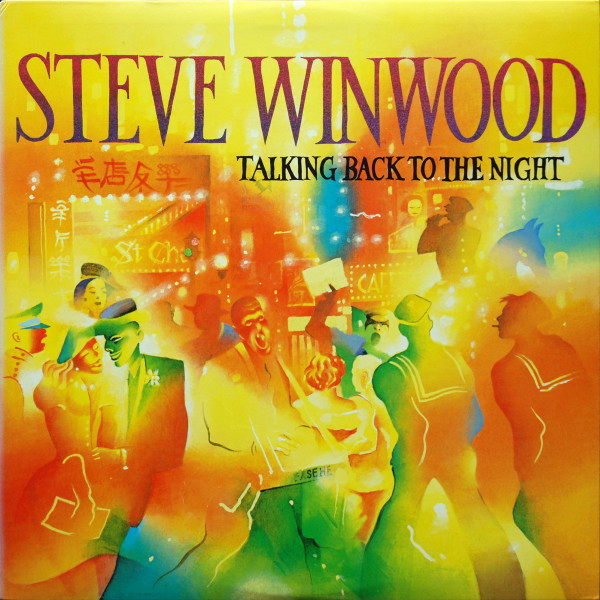
After a decade of wandering, bolstered by session work and hopefully decent royalty payments, Steve Winwood re-emerged at the start of the ‘80s as a pop star, once again on his own terms. Arc Of A Diver took everyone by surprise, starting with an incredibly catchy hit single, and a reminder that the kid could truly belt out a classic. What’s more, he recorded the album completely on his own, playing all the instruments in his own studio, yet it has the sound of a full band captured by a team of engineers. (Fun fact: the guy responsible for the cover art also did the original paintings for Bob Dylan’s Saved that same year, as well as the faux-cubic designs of two Traffic albums.)

The album was his first collaboration with lyricist Will Jennings, who’d already written hit songs for such adult contemporary icons as Barry Manilow and Dionne Warwick, and would go on to win Oscars for his movie themes. While his lyrics for “While You See A Chance” are definitely in the feel-good attaboy category, the music, driven along by Winwood’s iconic piano, organ, and that synth sound, emerging like an aural sunrise, makes the song a true winner. The title track is another co-write with Viv Stanshall, full of imagery and sporting nice guitar licks throughout. Unfortunately, “Second-Hand Woman” derails the progress, between the lyrics, dated production, and programmed drums. Fortunately, it’s the shortest song on the album, and is forgotten shortly after “Slowdown Sundown”, a ballad with trilling mandolins that recalls the better parts of the last Traffic album.

Side two concentrates on grooves; “Spanish Dancer” isn’t much more than a one colored by different synth tones, only occasionally diverting into another theme for the choruses. The disco inferno continues on “Night Train”, but at least he derived a nice popping bass line, albeit on the Minimoog. He does a pretty good job of jamming with himself, so even though it’s a home demo in need of editing, it works. “Dust” takes us out with another reverie, and superior lyrics by the guy responsible for “Second-Hand Woman”.

Arc Of A Diver made Steve Winwood a household name again, even more so than he’d ever been. With six out of only its seven tracks topping five minutes, he hadn’t quite figured how to keep his ideas compact, but listeners happily stayed for the whole ride. (The eventual Deluxe Edition wasn’t very illuminating, adding only two alternate mixes, a later rerecording of “Spanish Dancer” with a deeper vocal, and a BBC radio documentary about his career.)

Steve Winwood Arc Of A Diver (1980)—3
2012 Deluxe Edition: same as 1980, plus 4 extra tracks

Tuesday, February 24, 2026

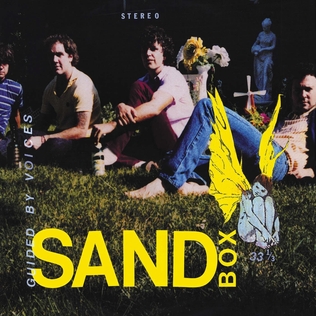
Guided By Voices 2: Devil Between My Toes

A big deal is made in the Guided By Voices narrative about Devil Between My Toes being their first full-length album, but at just over half an hour it’s a mere eight minutes longer than their EP. Still, Robert Pollard had already decided he’d concentrate on being more of a recording band than a performing band, and also took the bold step of including recordings in a “professional” studio alongside tapes compiled in his basement.

The R.E.M. jangle is still in place on “Old Battery”, with its punning chorus of “die hard”, and also “Discussing Wallace Chambers”, which may not have been inspired by the football player but still provides a springboard for a lyrical journey. “Cyclops” is another signpost, as it begins with an arpeggiated guitar part over open strings, something of a GBV trademark. A primitive drum machine drives “Crux”, which eventually includes some dueling riffs but no vocals, an idea in search of a song. “A Portrait Destroyed By Fire” is the anomaly here, as it runs over five minutes. A dark proto-metal dirge with buried vocals before the verses kick in, it’s mostly notable for being the first appearance of one Tobin Sprout, who would become a valuable collaborator and creative foil, to say the least. The side closes with “3 Year Old Man”, a simple exercise for tremolo guitar.

“Dog’s Out” is a more blatant attempt to write something catchy and singalongable, and for that it succeeds, but “A Proud And Booming Industry”, for all its potential as a classic Pollard song title, is more riff-noodling. “Hank’s Little Fingers” wants to be a pop song, and it’s kinda cute in that way. The song has distinct choruses, nicely melded at the end, but again it’s followed by an indulgent guitar instrumental in “Artboat”. And it’s back to the straight college rock of “Hey Hey Spaceman”, complete with happy cries of “let’s go” somehow rising above a dense, muddied mix. “The Tumblers” stands out for its almost tribal rhythm instead of the usual four-on-the-floor beat, though the lyrics are again, buried. “Bread Alone” is yet another instrumental, but this time it’s two acoustic guitars. But for some kind of horn blast grafted onto the beginning, “Captain’s Dead” has the hallmarks of a GBV classic, with crazy tempo, furious strumming, melody, and harmonies. It truly points the way for them.

Devil Between My Toes wouldn’t get wider exposure until it was repackaged in the Box box, but which time the band (or least Pollard) had become iconic. It remains of interest only to completists, and a reminder than they were just one of thousands of bands making records in their home towns across the country.

Guided By Voices Devil Between My Toes (1987)—

Friday, February 20, 2026

Freddie Mercury 1: Mr. Bad Guy

In 1985, Columbia Records pulled the unique trick of releasing several solo albums by iconic lead singers of iconic bands. Just like Steve Perry and Mick Jagger had with theirs, Freddie Mercury used his to explore more of his pop and dance interests than he might have gotten away with in Queen. Mr. Bad Guy even used the same producer and studio where the band had done much of their recording thus far in the decade, and included contributions by auxiliary member Fred Mandel.

Overall, these are songs about love, and nothing but songs about love, or Freddie’s idea of it. “Let’s Get It On” is designed to start the party and “get everybody dancing”, and he means it. But it’s followed but the elaborate balladeering of “Made In Heaven”, something of a modern “My Way”, while “I Was Born To Love You” is another statement of purpose sung over a track just made for roller-skating to. (These two tracks would resurface in the Queen story, and we’ll get to that when we do.) The accusatory “Foolin’ Around” sports a synthesizer we thought had already been retired by then, but maybe we’ve forgotten its ubiquity. “Your Kind Of Lover” begins as an overwrought piano ballad, but unfortunately taken over by modern touches that obscure the keyboard work.

The title track is adventurous, to say the least, with lots of classical-type fanfares all over it, while “Man Made Paradise” sports real drums and guitar parts that sound like Brian May but aren’t, ending in an extended operatic coda of layered voices. “There Must Be More To Life Than This” was supposed to be a collaboration with Michael Jackson; for better or worse this version is kept nice and simple, kinda like “Love Of My Life” with a full band backing. Despite a yodel-y hook in the verse and lots of scatting elsewhere, “Living On My Own” resembles Elton John of the same period, and not in a good way. “My Love Is Dangerous” might have been the unasked answer to the conundrum raised in the previous track, but the threat isn’t too convincing over a cod-reggae beat, even after the lead guitarist shreds his way to the fade. The album could only end with a torchy send-off, and “Love Me Like There’s No Tomorrow” fits the bill.

Despite his incomparable voice, Mr. Bad Guy got even less attention than other Queen albums of the decade on these shores. Hopefully, his cats—to whom he dedicated the album—appreciated it. After his death it would be revisited in various retrospectives, and in 2019 it was completely remixed for release as a “Special Edition” on its own and in a box set of his solo work. Sadly for collectors, the 12-inch extended versions of three songs included on the original release’s CDs in some countries were not in it.

Freddie Mercury Mr. Bad Guy (1985)—2