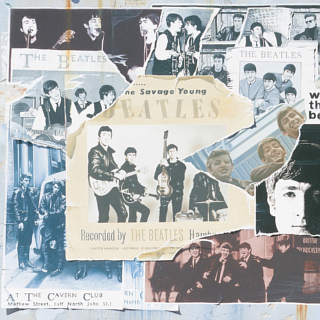
 For years, anyone and everyone connected with Apple said that the standard albums (and Past Masters collections) contained all the Beatles music that was to be heard. However, that was not the complete truth. EMI had even prepared a companion to Rarities of all unreleased recordings called Sessions, but quashed it after John died. Once pristine bootlegs started appearing with hours of tape from the Abbey Road vaults, it was clear that not only was there more to be heard, but some of it was actually pretty good.
 By the ‘90s, a montage of home movies compiled by Beatle insider Neil Aspinall had ballooned into a full-fledged band-endorsed autobiography, consisting of a multi-part television documentary—with video release and companion book to follow—concurrently promoted with three double-disc CD sets. Adding to the excitement, the first two TV installments each had a countdown clock over the closing credits leading up to the worldwide premieres of the first new Beatle songs in over 25 years. (Both were original late-’70s demos of Lennon compositions embellished by the “Threetles” with help from Jeff Lynne to ensure that the classic vibe would remain.)
Of the CDs, Anthology 1 most closely mirrors the documentary format of the broadcast. We follow their growth from a ragtag rockabilly outfit into EMI recording artists, with several tracks of spoken words from John, Paul and Brian Epstein included to help the story along for those of us who didn’t already know it by heart. But the very first thing we hear is “Free As A Bird”. Anticlimactic at first listen, this song has managed to tug all the right heartstrings without fail since its debut. Jeff Lynne drains all the life out of Ringo’s drums, but the harmonies and solo vocals by Paul and George more than suffice. Could we really have expected this to rank with any one of their greatest songs?
From there it’s all about the history, from the 1958 recordings of “That’ll Be The Day” and “In Spite Of All The Danger”, through some home demos from 1960 to highlights from a real studio in Germany. The best moments from the much-recycled Tony Sheridan period include “My Bonnie”, which looms large in the apocrypha, “Ain’t She Sweet”, with John’s confident swaggering lead, and the instrumental “Cry For A Shadow”. Then we’re listening to their failed Decca audition; Pete Best’s drumming is pretty dull, and Paul suffers from nervous over-enthusiasm. Once at EMI, we get official releases of such legendary outtakes as “Besame Mucho” (Paul does Ricky Ricardo), “How Do You Do It” and “One After 909”, seven years before its appearance on Let It Be. The remainder of the first disc showcases their live sound from various radio and TV shows.
Disc 2 takes us back to John telling the Windsors to rattle their jewelry, followed by an appearance on the BBC’s Morecambe & Wise TV show. It’s a quick jump to Paris for the first try at “Can’t Buy Me Love”, a pleasant change from the classic version that found its way onto seven or eight Capitol LPs. Ed Sullivan’s introduction of “All My Loving” is an essential piece of history, then it’s back to the studio. “You Can’t Do That” is fairly close to the released version, but the big surprise is the first take of “And I Love Her”, with heavier tom-toms and a more electric backing. The highlight of some recordings for the Around The Beatles TV show is undoubtedly their unique version of “Shout”, crammed into a minute and a half. The blistering “Leave My Kitten Alone”, had it been included on Beatles For Sale, would have been hailed as one of their best performances of that era. A fascinating sequence shows the evolution of “Eight Days A Week” through various experiments before they arrived on the fade-in idea. Riveting alternate takes and other unheard songs round out the set.
Anthology 1 is essential listening for any Beatle fan who’s already devoured the canon proper. With all the new material, diehards were mostly impressed by this first installment, and looking forward to the next two. The general public bought it too, though coming on the heels of the TV show, those who hadn’t read the fine print thought they were getting a hits package. The CDs subsequently showed up in used bins, much to the delight of consumers willing to pay it closer attention. We couldn’t wait for more.
The Beatles Anthology 1 (1995)—4½
A 4.5? I don’t know about that. I think that your rating may be a bit too influenced by nostalgia.
ReplyDeleteWhile the documentary is great viewing for everyone, the CD’s are really only for hardcore fans. The earliest stuff is historically interesting in that it shows the evolution of The Beatles. However, it’s limited in entertainment value.
The live material is missing something without the visuals. Not much was demanded of rock bands back then, so the appeal of the Beatles live can’t just be experienced from the audio.
The alternate studio takes are also interesting in hearing where the songs started out and comparing them to where they ended up. I will say again that I don’t get why they discarded “Leave My Kitten Alone”. The biggest find here.
I understand why so many used copies were – and are – floating around. It’s not for casual fans. I got it for Christmas from my brother that year. I’m not sure that I would have bought it. I am glad that I have it, but it doesn’t get a whole lot of time in my CD player nowadays.
It’s good that one track from Ed Sullivan is here. I never totally forgave my dad from keeping us from seeing the show, although that was not his primary intention. When I got to first grade, he decided that bedtime would be at 7:30 (then he wondered why we were all up at 5:30 AM, turning on the TV when there was nothing on but snow. But I digress). There were major bedtime battles over “My Favorite Martian”, which came out at 7:30, just before Ed. So, we missed The Beatles. Dad hated them from the first second that he saw them. He knew, at least unconsciously, that they were a threat to the Established Order. But he didn’t pay enough attention to keep us away from the cartoons. They were subversive in their own way.