Showing posts with label 1994. Show all posts

Tuesday, June 23, 2026

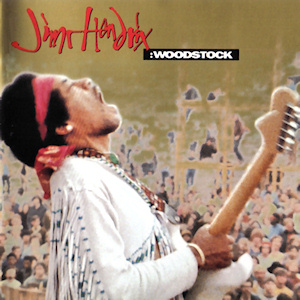
Jimi Hendrix 17: Woodstock

He didn’t play until the final morning, after most of the crowd had already left, but thanks to the film, Jimi Hendrix’s appearance at the Woodstock Festival has become legendary. He closed both the movie and the soundtrack album (both released before his death) and had all of side one to himself on Woodstock Two, released the following March.

Jimi was in transition; Billy Cox had replaced Noel Redding on bass, and for this performance he brought along two percussionists plus one Larry Lee—another old Army buddy who’d just returned from Vietnam—on second guitar. Due to comments he made throughout the set, this configuration has been called Gypsy Sun & Rainbows. While the extra musicians may have helped him fill out his sound to his liking in the studio, they couldn’t onstage, and future performances would go back to his tried and true trio format.

Because 1994 was the 25th anniversary of Woodstock, complete with another two festivals taking place that summer, the revitalized estate authorized an official release of Jimi’s performance that day. However, Alan Douglas was still in charge, so he rejigged the setlist and cut the program down to just over an hour so it could fit on a single CD. Everything that was on the original Woodstock albums was included, and in longer versions, but still not complete. It did subtitle “Jam Back At The House” with “Beginnings”, as it was known on other releases, and one of the solos after “Purple Haze” was now correctly titled “Villanova Junction”.

It was more than people had outside of bootlegs, and it was good enough for five years, when the new regime instigated another look, this time under the supervision of Eddie Kramer, who’d recorded the festival in the first place. Live At Woodstock contained most of the performance, now spread across two CDs and in the original sequence, but still without a few drum solos, Larry Lee’s solo spots, as well as some of his guitar solos. Even so, it seems more complete, particularly with all the stage patter left in.

After being erroneously announced as the Jimi Hendrix Experience, he starts by greeting the audience and introducing the musicians, almost apologizing for their lack of preparation. The first music we hear them play is “Message To Love”, making its public debut. “Hear My Train A Comin’” is identified by its alternate title and explored for ten minutes. “Spanish Castle Magic” had already become a jam, but at least the crowd would have heard it before; likewise, “Red House”. Despite having a precise riff, “Lover Man” is pretty straight but threatens to go off the rails, and “Foxy Lady” goes through the verses before letting him blaze out a solo. “Jam Back At The House” was another new funky one that required everyone to pay attention, and they seem to, though Mitch has trouble after his drum solo. “Izabella” was another new one, something of an antiwar love song, followed by tight “Fire”.

This is the point where the set became legendary, and not just because it appeared in the film. “Voodoo Child (Slight Return)” is on fire all the way, though he takes it down to introduce the band again. There’s a brief quote of what would soon be known as “Stepping Stone”, and while he repeatedly thanks the crowd, he doesn’t leave the stage, but keeps playing. What should be the last chord of the song turns into “The Star-Spangled Banner”, with only Mitch trying to keep up with him. Then he kicks into “Purple Haze”, wherein he clearly sings “kiss this guy.” Once that ends he solos alone for about four minutes, with only the occasional sound of a tambourine from somebody onstage, eventually coming to “Villanova Junction”. After that they try to leave, but the crowd wants more. Jimi toys with playing another new song, but can’t remember the words, so it’s back to “Hey Joe”.

Live At Woodstock is more historic than it is excellent, and the producers likely did us a favor by smoothing out or omitting the rougher edges. It’s interesting to have some things in proper context, but sometimes it’s easier to print the legend.

Jimi Hendrix Woodstock (1994)—3
Jimi Hendrix
Live At Woodstock (1999)—3
Friday, July 25, 2025

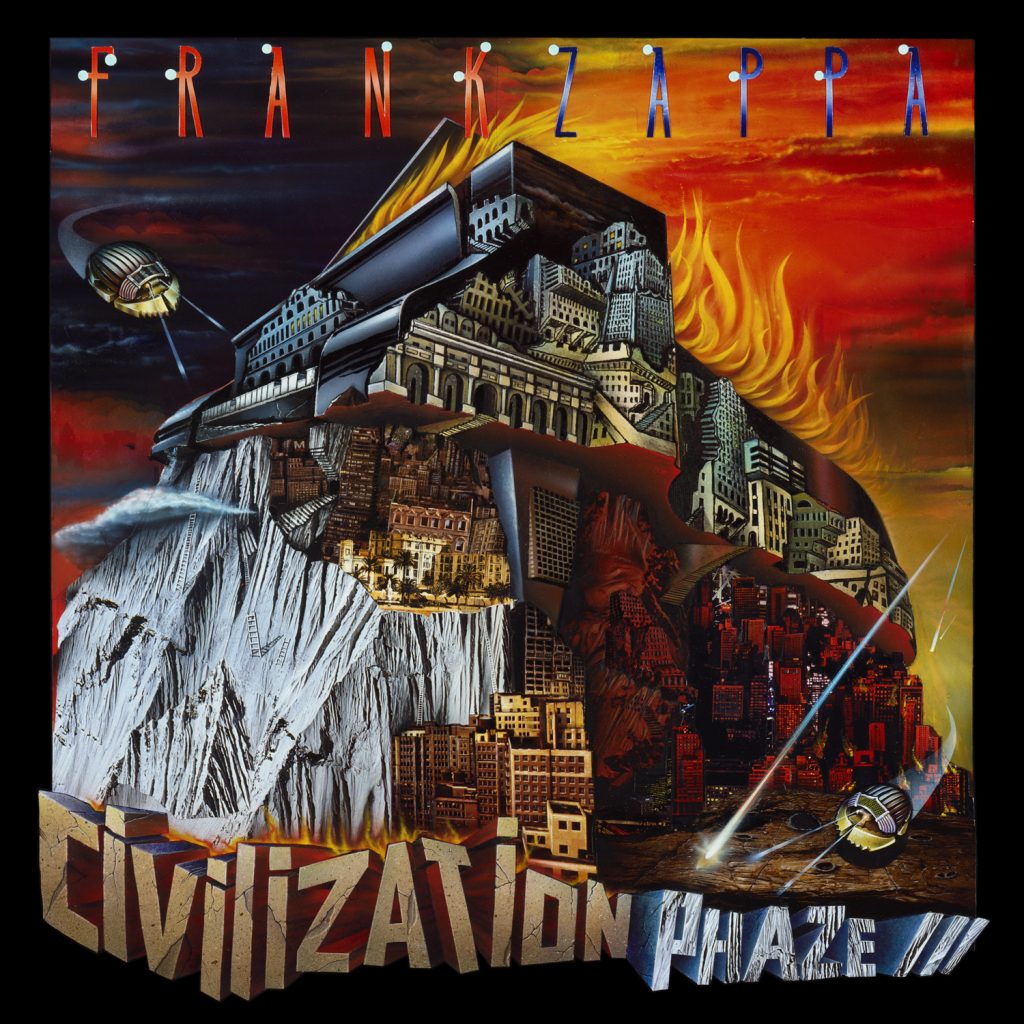
Frank Zappa 55: Civilization Phaze III

Everything Frank Zappa did, in his mind, was of great cultural significance, and the final project he completed before his death in 1993 was no different. Civilization Phaze III collected various compositions either realized on the Synclavier (because his road bands couldn’t tackle them) or performed by Ensemble Modern (because they really, really tried), interspersed with further dialogue recorded inside a piano in 1967 for the Lumpy Gravy album as well new dialogue recorded inside a different piano in 1991. He viewed the completed work as an opera or ballet, but based on the stage directions, it’s hard to imagine such a thing being staged, much less rehearsed or performed to satisfaction.

There will be those who will think the idea of connecting conversations that took place a quarter century apart is some kind of conceptual feat; we maintain that the snippets match up only because that’s how Frank edited them that day. There’s more discussion of pigs and ponies, from both eras, though most of the later dialogue only appears on the second disc. There, members of Ensemble Modern speak in languages other than English to add tension on the part of actor Michael Rapaport (who was dating Moon Zappa at the time of recording).

The music itself is very much in line with Frank’s orchestral tendencies, sometimes merely suggested by the dialogue that precedes or overlaps with it. Those can be entertaining, but things like “Reagan At Bitburg”, which commemorates that president’s visit to cemetery of Nazi criminals, suggest more significance. This one was realized on the Synclavier, and is able emulate an orchestra as well as what used to have to be played back sped up. (Clearly, he loved hearing his music without having to have actual people play it.) The spooky “Buffalo Voice” and “Get A Life” are very evocative of parts of Lumpy Gravy, or at least “The Chrome-Plated Megaphone Of Destiny”. “N-Lite”, divided into six unmarked parts, takes up the last eighteen minutes of the first disc. It sounds a lot like everything else, except for the occasional sample of gurgling or gargling, and a few areas where a piano is prominent. “A Pig With Wings” manages to cross the sound of a harp with piano strings being plucked for a feel somewhere between Japanese and flamenco. “Dio Fa” (itself the title of another unrealized Zappa masterwork) is dominated by samples of Tuvan throat singers (a feature of another interest Frank didn’t live to explore further). Fifteen of the last twenty minutes on disc two are taken up by “Beat The Reaper”—which has consistent rain in the background while Frank noodles on the Synclavier—followed by “Waffenspiel”, a collage of sound effects.

The album was released directly through Zappa’s own mail-order company, in a deluxe cardboard package with libretto. At two discs and running nearly two hours, rapt attention is required, and the mind does wander, even without said libretto. Yet Civilization Phaze III is held up by those who know such things as Frank’s crowning achievement, and a fine example of 20th century classical; indeed, orchestras have since tried to take some of this music on. We’ll have to take their word for it.

Frank Zappa Civilization Phaze III (1994)—2

Tuesday, December 3, 2024

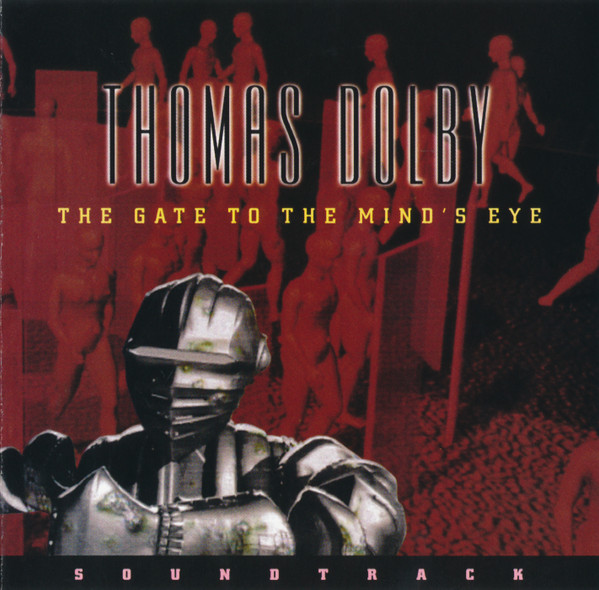
Thomas Dolby 5: The Gate To The Mind’s Eye

Having slowly wearied of trying to compete in the modern music industry marketplace, Thomas Dolby stayed true to his nature by following the latest in technology, which by the ‘90s had increasingly relied on computers. This meant he got gigs scoring computer-based video games, so it was an easy step to computer animation, just as it was starting to blossom. Since he was still signed to a label, The Gate To The Mind’s Eye was his soundtrack to the third in a series of computer-generated films, none of which we’ve seen and don’t plan to. (The previous soundtrack was scored by Jan Hammer, the next by Kansas founder Kerry Livgren.) As background music, it’s mostly inoffensive, but not exactly groundbreaking.

Much of it is instrumental, but there are some vocal pieces. “Armageddon” has lyrics, mostly in Latin, with operatic vocals that continue on “Planet Of Lost Souls”, which is nicest when it’s just the piano. “N.E.O.” is mostly spoken by respected (so we’re told) Italian astrophysicist Fiorella Terenzi; he’s credited with the closing “rap” but at least he’s not trying to be the most illinest B-boy. Despite beginning with a quote from one of Napoleon’s letters to Josephine, “Valley Of The Mind’s Eye” is a fairly lush love song, while “Nuvogue” is a swing jazz tune that would have fit fine on Aliens Ate My Buick. But “Quantum Mechanic” is a techno song warbled by Dr. Terenzi, who also supplied the words. These days it almost sounds like a parody.

The album didn’t do much for his record sales, but for those who weren’t interested in following his esoteric muse, earlier in the year a compilation cleverly titled Retrospectacle delivered the handful of hits and a few deep cuts. The main attraction for fans was the availability of “Urges” and “Leipzig”, which had been added to the first US version of the first album but soon dropped in favor of “She Blinded Me With Science” and “One Of Our Submarines”. Beyond that, it samples each of his first four albums for a chronological yet cohesive sampler.

Thomas Dolby The Best Of Thomas Dolby: Retrospectacle (1994)—
Thomas Dolby
The Gate To The Mind’s Eye Soundtrack (1994)—

Tuesday, October 22, 2024

Walter Becker 1: 11 Tracks Of Whack

Even more surprising than Donald Fagen re-emerging as a solo artist after a decade and promoting by touring with a reunited Steely Dan was Walter Becker releasing his first solo album. After all those years content to be the other guy in the band, 11 Tracks Of Whack—which perversely consists of 12 tracks—presents him as the vocalist for the first time. While he doesn’t have the distinct sneer his partner perfected, his voice is passable and not grating.

“Down In The Bottom” has a groove a lot like Big Audio Dynamite’s “Medicine Show”, and we mean that in a good way. “Junkie Girl” is a little slower, with a dark lyric and an expletive-laden chorus that belies its lazy lilt. “Surf And/Or Die” is even more elusive, with dense imagery in a barely sung litany. The keyboards and sax on “Book Of Liars” sound the most like Fagen should be singing, though he doesn’t, while “Lucky Henry” teeters on smooth jazz but for the busy meter and wailing, dueling guitar solos. And while “Hard Up Case” throws in some unexpected turns, it’s not much more than a prop for the hook in the chorus.

A marriage turned sour is approached with wry humor in “Cringemaker”, while “Girlfriend” is a complaint from a sad sack whining alone in front of his television. “My Waterloo” has something of a reggae feel, but the sameness of the content is starting to drag. Luckily “This Moody Bastard” is a better example of finger-pointing. The nuttiest tune by far is “Hat Too Flat”, sung by a visiting alien (presumably) from outer space, but maybe it’s an allegory) trying to fit in among ordinary English-speaking humans. “Little Kawai” is a sweet reprimand to a misbehaving imp that’s musically very close to John Cale’s “The Man Who Couldn’t Afford To Orgy”.

With co-production by Fagen, along with some keyboards and arrangements, and contributions from guitarist Dean Parks, 11 Tracks Of Whack is close enough to Steely Dan to appeal to fans. If they can just get past his voice.

Walter Becker 11 Tracks Of Whack (1994)—3

Tuesday, March 12, 2024

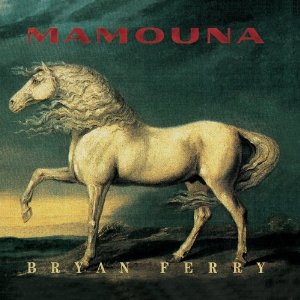
Bryan Ferry 9: Mamouna

As it turns out, writer’s block had kept Bryan Ferry from releasing a new album for so long, and only Taxi was able to break it. Working with Robin Trower must have helped too, as he’s credited as co-producer on Mamouna as well. The rhythm section was generally Nathan East and Steve Ferrone, then on loan from Eric Clapton. Even more interesting is the occasional presence of Brian Eno, who had legendarily fallen out with Ferry in the early days of Roxy Music.

Not much has changed since the last time, as “Don’t Want To Know” burbles with the same grooves that have dominated his work over the previous ten years. But for some street noise, “N.Y.C.” is straight-ahead Nile Rodgers funk with Maceo Parker guesting on sax. “Your Painted Smile” and “The Only Face” get the mix of mood and melody right, but in between, the title track follows on “To Turn You On” without the emotion.

“The 39 Steps” is just another groove with occasional soundbites that have us wondering what the song has to do with the film (any version). The heartbreak comes through big time on “Which Way To Turn”, but it’s the insistent “Wildcat Days” that really stands out, being co-written with Eno and also featuring Andy Mackay on sax somewhere in the mix. (He’s also credited on the mildly swampy “Gemini Moon”.) On “Chain Reaction”, he finally remembered how to write a song instead of just riding a groove, and the female vocals here are very effective.

Too much of Mamouna sounds the same, and like more of the same. But longtime fans seeking more of the same will be very pleased with it. There is definitely a flow, but if there’s any kind of story here, it’s buried.

As the album approached its 30th anniversary, an expanded package included not only the original shelved version of the album, which was to be titled Horoscope, but a third disc of “Sketches”, providing a first-ever glimpse into his creative process. Now it’s hard to hear what was wrong with Horoscope, as “Where Do We Go From Here” (the template for “The 39 Steps”) crackles with more menace, “The Only Face” is more direct, and “Desdemona” is just as solid without Maceo or Nile. “S&M (Midnight Train)” and “Loop De Li” would eventually emerge twenty years later on another album; here they provide a welcome lift (the former more than the latter, but still). “Gemini Moon” is less processed than the final version. “Raga” breaks out of the monotonic backing with some intriguing touches, but it was likely the tepid ten-minute overhaul of “Mother Of Pearl” that gave executives pause. (This was eventually used for a movie soundtrack.)

Most of the “Sketches” are instrumental—some dating back to 1989—which helps provide some musical contexts amid the finished grooves. “Robot” is a generic Ferry-by-numbers idea that matches its title for six minutes, while “Horoscope” itself has some interesting textures but with a woman’s spoken voice too high in the mix. “Your Painted Smile” and “The Only Face” each appear in strikingly intimate piano-and-vocal renditions that have us wishing he’d do more albums with performances just like them.

Bryan Ferry Mamouna (1994)—
2023 Deluxe Reissue: same as 1994, plus 18 extra tracks

Tuesday, March 8, 2022

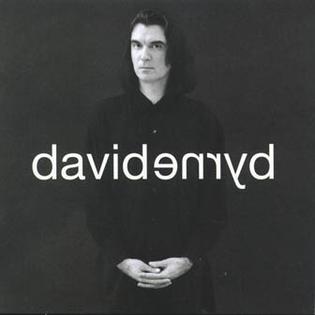
David Byrne 5: David Byrne

It’s safe to say that having spent several years making music that didn’t resemble Talking Heads, and not just because it was steeped in Latin influences, David Byrne had pretty much become a niche artist. It’s too bad, because his eponymous album from 1994 is very accessible. For one, it’s loaded with electric guitars.

“A Long Time Ago” more or less picks up where Naked left off, with an eerie melody over subtle percussion. But for the furious jangle that pins most of the track, “Angels” percolated with the classic vibe of “Once In A Lifetime”, particularly via the mostly spoken vocals. The distortion pedal stays on for “Crash”, which flirts with Mideastern rhythms and melodies, but gets derailed into a wildly dissonant bridge, and almost does again at the end before a gentle coda. That’s a nice segue to “A Self-Made Man”, which is a lovely track with unfortunately literal lyrics. The robotic “Back In The Box” stays radio-friendly until the closing scraping from guest guitarist Arto Lindsay, while “Sad Song” is anything but; rather, it’s a successful meld of Latin and rock.

“Nothing At All” again offers a spoken verse with a sung chorus, like a textbook David Byrne song. The convoluted riffing keeps the song interesting through the dreamy bridge, but again, the scraping lead guitar solo becomes tiresome. For a nice interlude, “My Love Is You” is a cute, pitch-challenged, and backhanded expression of affection, with a few unexpected couplets, complete with tuba. “Lilies Of The Valley” sports some disturbing imagery, but the vibraphone solo is fitting. He gets funky with “You & Eye”; turns out he’s responsible for both the clavinet and the guitar solos. “Strange Ritual” returns to the spooky place we started, but the lyrics follow the “in the future” template he’s been plying for years, only this time they’re “visions”. The tension builds to a dynamic close, leaving us with the more simple pleasures of “Buck Naked”.

While the music is as dark and stark as the packaging, David Byrne still manages to capture the ear. It’s worth re-discovery.

David Byrne David Byrne (1994)—3

Friday, December 24, 2021

Ben Keith: Seven Gates

Most people know him in the context of most of Neil Young’s albums without Crazy Horse, but Ben Keith was already an established Nashville studio musician before he worked on Harvest. The year before that he played on Ringo Starr’s Beaucoups Of Blues, and ten years before that he provided the pedal steel for Patsy Cline’s “I Fall To Pieces”.

About a year before he produced Jewel’s first album, Ben Keith completed a Christmas album. Partially recorded at Neil’s Broken Arrow Ranch studio, with some sessions in Nashville and elsewhere, Seven Gates has more of an authentic country feel than most showbiz holiday albums, which is probably why it was resoundingly ignored upon release. Music fans would have snapped it up, as it features Neil on several tracks either singing or playing his pump organ, while Mickey Raphael (best known for playing harmonica alongside Willie Nelson) is all over the place. Wanna hear Johnny Cash duet with Neil on “The Little Drummer Boy”? Here it is. Pat McLaughlin and Rusty Kershaw warble through “Christmas Time’s A Comin’”. But don’t be fooled by “We Will Rock You”—it’s actually “The Rocking Carol”, 50 years before Brian May used the words for something else. Here it’s sung by Nashville’s Pamela Brown and Neil’s wife Pegi.

The album is at its best when it’s simplest on the instrumentals, such as “Ave Maria”, “Silver Bells”, “Away In A Manger”, and “Blue Christmas”. It’s occasionally overproduced with dated synth strings, but all in all, it evokes snowy hills and pine trees for a serene listen. Thankfully, the children’s choir doesn’t show up until track 8, and we don’t know why so many people arrange “Greensleeves” aka “What Child Is This” to sound apocalyptic, though Neil appears at the end singing alongside his sister Astrid and Nicolette Larson.

Some 13 years later the album was reissued, again quietly, under the title Christmas At The Ranch with a different cover. But it also sports a modified version of “Les Trois Cloches”, now with vocals by Neil and Pegi.

Ben Keith & Friends Seven Gates (1994)—3

Friday, July 16, 2021

Prince 17: The Black Album

One of the most legendary unreleased albums of any era, The Black Album was withdrawn by Prince himself after what he called a spiritual crisis that convinced him what he created was evil. Unlike, say, the Beach Boys’ Smile album, this one was actually completed, and made it so close to general release that it was soon widely bootlegged. Naturally, critics raved, particularly after what they felt was the lackluster Lovesexy appeared in its place.

Certainly, such a legendary album would sound better on paper than out of speakers, and those who couldn’t procure a bootleg only had to wait an eternal seven years for an official release, right around the time when Prince was suing his record label. Except for the new catalog number, The Black Album appeared as originally planned, with all-black artwork a la Spinal Tap (and later, Metallica) with only the catalog number and legal info on the spine, and the song titles listed on the disc itself. A sticker helpfully explained what and who it was, and pointedly stated “limited edition”, as it was supposed to be available for sale for only two months.

The music spans a wide period in his sessionography, from the midst of what became Sign "☮" The Times through much of 1987. With the exception of the horns, some drums, and some of the vocals, he performed everything himself, staying in a predominantly heavy funk tone, set on the call-to-party “Le Grind”. “Cindy C” was inspired by the supermodel named Crawford then new on the scene; our favorite part is the hysterical exchange before the unfortunate rap section. Speaking of which, “Dead On It” takes aim at hip-hop, mostly the rappers’ lack of musicality, at a time when Prince was actively absent from that scene. “When 2 R In Love” is the same track as on Lovesexy, and stands out like the proverbial sore thumb here, unless it was intended as parody. Speaking of which…

After using a voice modulator for the Camille character, he went completely in the other direction on “Bob George”, which is mostly a comic four-letter monologue by an armed gangsta threatening bodily harm on the title character, then interacting with various sound effects to advance the story. “Superfunkycalifragisexy” is a decent groove, infectious without really going anywhere. “2 Nigs United 4 West Compton” opens with a hilarious exchange between Cat Glover and Prince as an unwanted party guest, before settling in a relentless groove with a low-mixed Hammond organ solo, a more prominent slap bass solo, a keyboard solo that sounds like a guitar, then layered percussion via keyboard, all over Sheila E.’s slammin’ drums. “Rockhard In A Funky Place” is a Camille track that was supposed to close that unreleased album, and nicely wraps up the proceedings here.

The overall vibe throughout The Black Album is Prince simply having fun, and showing a sense of humor that his mystique often hid. But everything had to be a statement, and maybe he was just as concerned that it would be considered lightweight as it was irreverent. Is it a lost masterpiece? Hell no. But it is key to the story.

Prince The Black Album (1994)—3

Friday, April 9, 2021

Prince 16: Come

Part of Prince’s strategy for changing his name to a symbol was to get out of his contract with Warner Bros. It didn’t work, and the label not only insisted he owed them albums, but sat on him until he delivered something they considered salesworthy.

Come pointedly featured the dates “1958-1993” under the word “Prince” on the cover, as if to suggest he was dead and buried in the prison-like edifice in the background. The New Power Generation is nowhere to be found, save the rhythm section on one track, and the horn section on others. While it doesn’t have the rap distractions of his most recent work, it’s hardly a return to form.

The title track has it moments, mostly in the horns, but it gets tedious over 11 minutes. “Space” doesn’t do much over the same simple groove except pull in some harmonies and use a few NASA samples. “Pheromone” begins with an almost-ASMR effect of ocean waves and spoken hypnosis, before the song kicks in proper, sounding a lot like the kind of thing he used to pawn off on Sheila E. “Loose!” almost rocks with an angry energy, and sports a welcome guitar solo, sampled twice.

“Papa” is unsettling, as it’s mostly a narrative about an abusive father that suggests the set-upon child is Prince himself. The ocean waves appear briefly before the ultra-funky “Race” kicks in, followed by the near-slow jam of “Dark”. “Solo” has the barest accompaniment, and consists of Prince singing a poem provided by playwright David Henry Hwang. “Letitgo” was the first single promoting the album, and hardly in the league of earlier “first singles”. Finally, because he could, “Orgasm” provides the finale in the form of a guitar solo taken from Controversy’s “Private Joy” battling Vanity’s uncredited climax at full volume while he creepily encourages her.

This lackluster album was particularly frustrating after the longest gap between new releases in his career. He was quick to dismiss Come as old news, looking immediately ahead to the music he really wanted to make, if only he was allowed.

Prince Come (1994)—2

Friday, April 10, 2020

Peter Gabriel 10: Secret World Live

Having taken his latest album around the world for a typically elaborate tour, Peter recorded its live souvenir in Italy and issued as both an audio and a video release. While Secret World Live might best be enjoyed on a screen, where the songs are enhanced by the silly choreography of David Rhodes and Tony Levin, the album itself provides a nice overview of his most commercially successful era.

Thanks to technology, the band was able to replicate the sound of the records pretty well, but luckily they took several opportunities to stretch. “Steam” takes some time to catch fire, beginning in the more tense arrangement that the faithful would have enjoyed as the B-side “Quiet Steam”. There’s a nice interlude in the middle of the first half that travels from the even rarer “Across The River”, through “Slow Marimbas” (from Birdy!) and into a great jam on “Shaking The Tree”. We never get tired of “Solsbury Hill”, and this version is nice too. “Red Rain” and “Secret World” gain even more power in the live setting, the latter complete with a repeat of the coda. And the average consumer can finally own an extended “In Your Eyes”, stretched to over eleven minutes that never drag. Throughout, then-unknown Paula Cole, yet to wonder where all the cowboys had gone, sings all the requisite female parts and harmonies. Youssou N’Dour must not have been available, so a variety of singers attempt to replicate his wail.

While some writers have equated Secret World Live with “listening to a light show”—likely forgetting that such an insult can only be applied to half-assed Pink Floyd reviews—there’s a charm in the album that will appeal to fans. And who knows—maybe casual fans will enjoy it too.

Peter Gabriel Secret World Live (1994)—

Friday, February 28, 2020

They Might Be Giants 7: John Henry

Having experimented with an actual rhythm section on Flood and Apollo 18, as well as subsequent tours, John Henry found They Might Be Giants expanded to a full combo. The challenge remained: would they still sound like themselves?

The simple accordion that runs through “Subliminal” cleverly links the past to the present, and the backwards ending is a cute touch. Things immediately get loud on “Snail Shell” and “Sleeping In The Flowers”, though the latter has a catchy chorus in a different tempo. “Unrelated Thing”, a song about the breakdown of a relationship as mined on Lincoln slows the proceedings down incredibly but uses a pedal steel for variety. No lyrics are provided for “AKA Driver”, likely because of the frequent use of the brand name NyQuil. “I Should Be Allowed To Think” is the first really impressive tune, this time hilariously warping the opening couplet of Allen Ginsburg’s “Howl” to dis other bands and proclaim one’s ubiquity. “Extra Savoir-Faire” is something of a son of “If I Wasn’t Shy”, and lopes along too slowly for our tastes, while “Why Must I Be Sad?” isn’t much more than an attempt to weave as many Alice Cooper song titles into the lyrics as possible. “Spy” is a remake of the closer from the previous year’s EP, with an almost arbitrary extended ending that would change every time they’d play it onstage. “O, Do Not Forsake Me” is sung by a male a capella group, just because.

Things seem to pick up in the second half, beginning with the jaunty “No One Knows My Plan”. They get their money’s worth out of the horns for the intro to “Dirt Bike”, which seems to sing about roving gangs of pre-teens terrorizing neighborhoods, but ends up referring to a band “over their sophomore jinx”—presumably one already referred to in “I Should Be Allowed To Think”? “Destination Moon” and “Out Of Jail” both manage to sound like classic TMBG, despite the full band sound, while “A Self Called Nowhere” is almost Beatlesque in its psychedelic choruses. “Meet James Ensor” (which celebrates “Belgium’s famous painter”) and “Thermostat” (a metaphor within an owner’s manual) return to the their more geeky aspects, then “Window” sounds like a “Fingertips” segment stretched out to a full minute. The energy keeps going on “Stomp Box”, a frenetic tune akin to “Dig My Grave” from the last album, and then “The End Of The Tour” uses another travelin’ band image while describing a car crash, or something like that.

Overall, John Henry is the band’s weakest yet. For the first time it felt like they put too much on one album; perhaps some paring back might have helped, or better pacing between the slower ones and the better, faster tunes on what we used to call side two. The good moments are good, certainly, but listeners will likely prefer to go back to the earlier stuff.

They Might Be Giants John Henry (1994)—3

Tuesday, January 7, 2020

Marshall Crenshaw 7: My Truck Is My Home

The Razor & Tie label was started in the mid-‘90s by a couple of ex-corporate lawyers who were determined to perpetuate the careers of some of their favorite performers whom they felt had unjustly fallen by the wayside in the modern music scene—Little Steven, Gary U.S. Bonds, Willie Nile, and so forth. After reissuing various albums and compilations, they set to signing established acts. Marshall Crenshaw was a perfect choice.

To buy some time and bring in some cash before a new studio album, a live set winkingly titled My Truck Is My Home presented a smattering of recordings of varying vintage and quality to present something of a snapshot of a typical Crenshaw show. As is made clear, his shows were anything but typical. Just as his own albums had veered into other people’s material, here he tackles tunes by the Byrds, the MC5, and even ABBA alongside his own concise compositions, including songs from the debut and the stellar “You’re My Favorite Waste Of Time”. The settings range from amplified acoustic to full band, and it all sounds like him. It’s also a nice primer for anyone who only knows the man from “Someday, Someway” and “Whenever You’re On My Mind”.

Marshall Crenshaw Live… My Truck Is My Home (1994)—3

Tuesday, September 10, 2019

Morrissey 5: Vauxhall And I

Fairly energized by the success of his last solo album, Morrissey stuck with the two guitarists and collaborators for a follow-up that, thankfully, was not a retread at all. Vauxhall And I isn’t quite as brash as Your Arsenal, but while it still has a big sound, it’s more lush too.

Beginning quietly but building slowly, “Now My Heart Is Full” would make longtime fans swoon, with his soaring vocal and Smiths-worthy backing. The mood immediately goes dark on “Spring-Heeled Jim”, which paints a portrait of a ne’er-do-well, while dialogue from a British documentary film may be important, but it distractingly overtakes the mix, obscuring the track. “Billy Budd” cranks up the energy again, with terrific wah-wah guitar and galloping drums. “Hold On To Your Friends” threatens to be somber, but finds the tempo soon enough and really turns around for the chorus. And you can add “The More You Ignore Me, The Closer You Get” to his pile of classic titles with tunes to match. (“I bear more grudges than lonely High Court judges”? Terrific.) All in all, a solid side of music.

That’s a lot to live up to, and the rest of the album tries, but without much increase in tempo. “Why Don’t You Find Out For Yourself” is a spiteful little strum, and “I Am Hated For Loving” follows the same basic lines, but it’s not as bitter. Things stay dreary on “Lifeguard Sleeping, Girl Drowning”, with its mournful clarinet effect and near-whispered vocal. With its briefest of lyrics, “Used To Be A Sweet Boy” is something of a trip back to the old house, perhaps to reel around a fountain? “The Lazy Sunbathers”, out there on the beach just after “a world war was announced,” might be a reference to Nero fiddling in the face of apocalypse, or something else entirely. Finally, “Speedway” has a sound effect 16 seconds in that could be a motorbike or car, but sounds more like a chainsaw. That makes more sense with all its talk of rumors and lies, and the album soon pounds to a close.

Despite running out of steam, Vauxhall And I is a decent album, and goes a long way to sustaining Morrissey’s icon status. At this point, he’d been a solo act longer than he was a Smith, and while he would always be connected with that group, he’d certainly proved what he could do on his own. With the right band. (Luckily for fans, the 20th anniversary update of the album kept the track order intact, and added a bonus disc with a 1995 concert.)

Morrissey Vauxhall And I (1994)—3
2014 20th Anniversary Definitive Remaster: same as 1994, plus 14 extra tracks

Tuesday, April 17, 2018

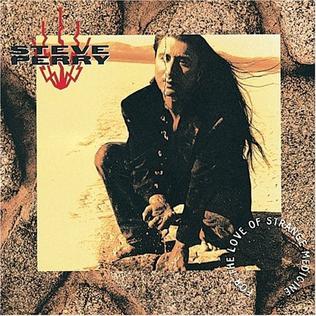
Steve Perry 2: For The Love Of Strange Medicine

Oddly, the glass-shattering voice of Steve Perry stayed silent for years following the last Journey album. When he did emerge, it seemed he’d spent his time growing his hair and singing himself hoarse. For The Love Of Strange Medicine finds him even raspier than on Raised On Radio, working with a bunch of unknown session guys, save the keyboard player from Winger and the bass player from Toto. Just as with his previous solo outing, there are enough Journey elements to keep the true believers invested, and wondering why he couldn’t just get the real guys to do it.

“You Better Wait” was the best choice for first single and opening track, and the best song on the album by far. It sports all the hallmarks people associate with That Voice—flashy lead guitar, piano and synth, layered vocals, pounding drums. From there, “Young Hearts Forever” strains to keep pace, but already sounds dated, and slows down needlessly in the middle. The slow ballad arrives right on time with “I Am”, followed by the theme song for a soundtrack to a movie yet to be filmed, “Stand Up (Before It’s Too Late)”. The title track limps along with some decent hooks, but not a lot of energy, while “Donna Please” attempts to be a heartbreaker a la “Suzanne”.

“Listen To Your Heart” attempts to inject some heavy rock into the proceedings, but somehow ends up jerry-rigging several half-baked ideas together. “Tuesday Heartache” is more heartache-by numbers that takes a strange detour into a Peter Gabriel soundtrack halfway through. “Missing You” is a little clichéd, but it’s a good kind of clichéd, just as “Somewhere There’s Hope” embraces the main ingredients of so-called melodic rock: ¾ time, slamming snares, piano, and yes, a choir. It even goes on about two minutes too long. That only makes the opening of “Anyway” (“I’d like to say I’m sorry/I’d like to make amends”) unintentionally hilarious.

While just a little better than Street Talk, the album underwhelmed, though “You Better Wait” was a mild hit. Fanatics raced to pick up the CD-maxi single, as well as the one for “Missing You”, both of which included songs not on the album. Two of those—“If You Need Me, Call Me” and “One More Time”—appeared as bonus tracks for the head-scratching reissue of For The Love Of Strange Medicine 12 years later (alongside two lesser outtakes and a live “Missing You” from his solo tour). Why these tracks were relegated to B-side status instead of the album itself, where they would have both been more welcome and appreciated, would be a mystery for a few years yet.

Steve Perry For The Love Of Strange Medicine (1994)—
2006 CD reissue: same as 1994, plus 5 extra tracks

Tuesday, March 6, 2018

Joni Mitchell 17: Turbulent Indigo

An artist of Joni Mitchell’s stature can be allowed the time and space to work, and a three-year gap had become her norm. But when that gap comes between two albums of such comparative quality, it’s worth the wait. Turbulent Indigo finds Our Heroine back on Reprise Records, where it all started, gently plucking her guitar strings and singing songs both direct and opaque. From time to time, Wayne Shorter flutters in on his soprano sax.

“Sunny Sunday” is a simple sketch of a woman who shoots a gun at a streetlight and always misses, a provoking metaphor. The theme of struggle set, the loudest song on the album—which isn’t saying much—is “Sex Kills”, which manages to skewer pharmaceutical companies, big oil, the gun climate, and just about everything else that’s wrong with society. “How Do You Stop” is a cover of a then-recent James Brown tune, and features Seal on backing vocals (she’d done the same for his album that year too). Somehow it fits perfectly on the album. The title track matches the cover self-portrait of herself with Van Gogh’s bandaged ear, making clear points about artistry. Her voice ably reaches the upper end of her current range on “Last Chance Lost”, a moving rumination on the end of a relationship (which may or may not be her own).

The heartbreak continues on “The Magdalene Laundries”, which refers to the fate of so-called “fallen women” in Ireland, in asylums that existed through even this past century, and by extension condemns the Catholic Church for its complicity. The piano emerges on “Not To Blame”, a timely lament for victims of spousal abuse and worse, which steadily ticks toward a hopeless conclusion. “Borderline” uses clever alliteration and mild wordplay to discuss the conflicts we instigate with each other, followed by another view on difference. A study of a man trying to impress a French girl, “Yvette In English” was written with David Crosby, and first appeared on his own album the year before. Joni’s version is superior, except for the constant repeats of Yvette’s name throughout the track. Finally, “Sire Of Sorrow (Job’s Sad Song)” is both the longest track and the closer, but not given epic treatment or any other stature above the rest. Still, its recasting of Job’s arguments with God is mesmerizing, particularly with the “antagonists” in her own multitracked voice mocking her plight.

Turbulent Indigo is a strangely soothing listen, given the subject matter. Not a single track could be considered upbeat, yet it’s a strong statement. And yes, it’s good to have her back.

Joni Mitchell Turbulent Indigo (1994)—

Friday, February 9, 2018

Toad The Wet Sprocket 4: Dulcinea

While they hadn’t become “hot”, Toad The Wet Sprocket racked up plenty of mileage over the time it took their third album to be noticed. That bought them some time to hone Dulcinea, another good mix of accessible college folk-rock, with some harder, darker songs too.

Mainstream attention didn’t mean the songs would be dumbed down at all, and indeed, it was at least a decade before we noticed that “Fly From Heaven” (which begins “Paul is making me nervous”) is sung from the point of view of James, brother of Jesus, concerned that the next generation of apostles would distort his martyred brother’s message. Even without that knowledge, it’s got a yearning quality and another catchy chorus. “Woodburning” is one of the heavier tunes, along the lines of the songs the band Live was having bigger hits with around this time. The furrowed brow in that song carries over to “Something’s Always Wrong”, which is much more straightforward musically and lyrically. Some dark humor emerges in “Stupid”, which only takes a few listens to make it plain that the guy’s wife is in congress with the handyman. Romantic woes are covered further in “Crowing”, a sad look at a doomed relationship from the outside, and inside perhaps, that turns into a growl of frustration on “Listen”.

“Windmills” is the most direct tie-in with the album title, though by now just about all the songs appear to be about an unattainable ideal. Its gentleness is nicely paired with the humor in “Nanci”, wherein a couple (perhaps the one from “Stupid”) argues over splitting up their record collection. While certainly radio-friendly, “Fall Down” was possibly the weakest song on the album to be chosen as the first single, maybe because it’s got “down” in the title. The microphone goes over to guitarist Todd Nichols for two songs—first the driving “Inside”, which gives him a chance to shred, and the much spookier “Begin”. Due to the different timbre in his voice, which is mixed low anyway, the words are hard to follow, and the screwed-up typeface in the liner notes doesn’t help. The latter song appears to be coming to grips with a death in the family, which aptly sets up the finale. “Reincarnation Song” begins quietly, with Glenn Phillips singing in almost a character voice, a little cracked, in all senses of the word. The band joins gradually, as the narrator moves from death to a supposed afterlife, onto to emerge back in the world again as a newborn. And just as the fifth chord in the repeated sequence descends further, singer and guitar let loose, howls competing with feedback for an extended jam that will stand your hair on your neck if you let it.

Dulcinea is not an immediately easy listen, particularly given the vagueness in the lyrics, but the album as a whole sports a full, live sound, helping it to seep into the psyche. Hard to believe it’s already this old, but it was indeed a highlight in a busy year filled with excellent music.

Toad The Wet Sprocket Dulcinea (1994)—4

Tuesday, September 12, 2017

Robbie Robertson 3: Music For The Native Americans

While he never overtly covered it in the songs he wrote, Robbie Robertson’s family legacy includes ancestry of Mohawk origin. Having already made a name for himself as a musical curator for films, he was a wise choice to perform that task for a television documentary called The Native Americans. On the accompanying soundtrack album, he surrounded himself with other colleagues of First Founders heritage—including Rita Coolidge and Douglas Spotted Eagle, to name two of higher-profile musicians—to make up a collective dubbed the Red Road Ensemble.

The music is best when instrumental, using modern programming techniques and textures to mix with authentic instruments. Vocals sung in other languages and dialects become part of the aural picture when picked up by ears that only understand English. In fact, Robbie’s own vocal selections, while good, bring it back to being a solo album, but not at a sacrifice of the overall mood.

Being even less typical a release than his previous solo albums, Music For The Native Americans wasn’t a massive hit, and even the documentary itself doesn’t exactly appear to be a momentous viewing event (which is too bad, because it sounds fascinating). The album itself is tough to find today outside of used bins, but is available for streaming and download, and worth a listen.

Robbie Robertson & The Red Road Ensemble Music For The Native Americans (1994)—3

Tuesday, February 14, 2017

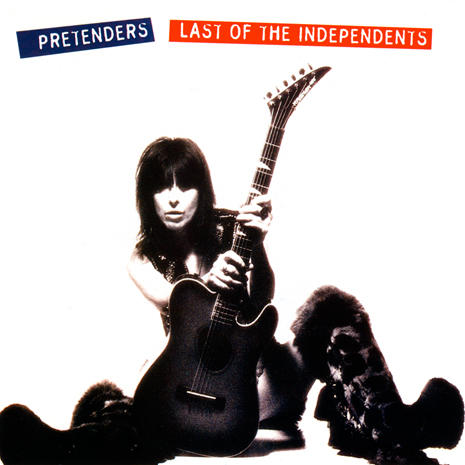
Pretenders 7: Last Of The Independents

Just as Britpop started to make straight rock popular again in the aftermath of grunge, Chrissie Hynde came across another guitarist up for the impossible task of filling James Honeyman-Scott’s shoes in another incarnation of the Pretenders. Martin Chambers seemingly returned to the fold as well, but a closer look at the credits on Last Of The Independents proves that it’s yet another collection of disparate recordings from different sessions with other rhythm sections (including another refugee from the Smiths). The only constant is Chrissie herself, whom we see right there on the cover.

The sound of the first single, the unabashedly debauched “Night In My Veins”, had pundits declaring it a comeback, but the big hit was the power ballad “I’ll Stand By You”, and it’s between those poles that the album lies. The result is not unpleasant, but hardly indispensible, especially when co-written with ‘80s hit machine Steinberg and Kelly.

The opening sequence of “Hollywood Perfume”, “Night In My Veins” and “Money Talk” is comforting, since the songs all rock, and even the slowdown of “977”, both musically and vocally an homage to John Lennon’s Plastic Ono balladry, is hardly a sentimental tale of a violent lovers’ spat. The hippie social commentary in “Revolution” (not the Lennon song) is where things start to slide to the wimpy, though “All My Dreams” does feature the new “official” lineup of the band and, unfortunately, a spoken monologue.

People who bought the album on the basis of “I’ll Stand By You” may have been jarred by what follows immediately. “I’m A Mother” is a feminist rant set to a danceable Manchester beat thrown off by her tuneless howl of the title and some riffing in a different key. Much more interesting and equally maddening is the snippet of “Tequila”, a country lament that predates the first album. After one lonesome verse it’s superseded by the opaque “Every Mother’s Son”. The rockabilly of “Rebel Rock Me”, complete with hiccupping vocal, recalls “Thumbelina”, possibly the least essential song from her last good album, then we get another by-numbers Steinberg/Kelly collaboration in the way of “Love Colours”. And for some reason she chooses to end the “comeback” with a tepid cover of Dylan’s “Forever Young” (yes, the slow version).

Last Of The Independents is not a bad album, but it’s not what we want from Chrissie. To which she’d likely retort with a string of obscenities, and she’d be right. We’re waffling over whether it should be docked half a point, so watch this space for changes.

Pretenders Last Of The Independents (1994)—3

Tuesday, May 17, 2016

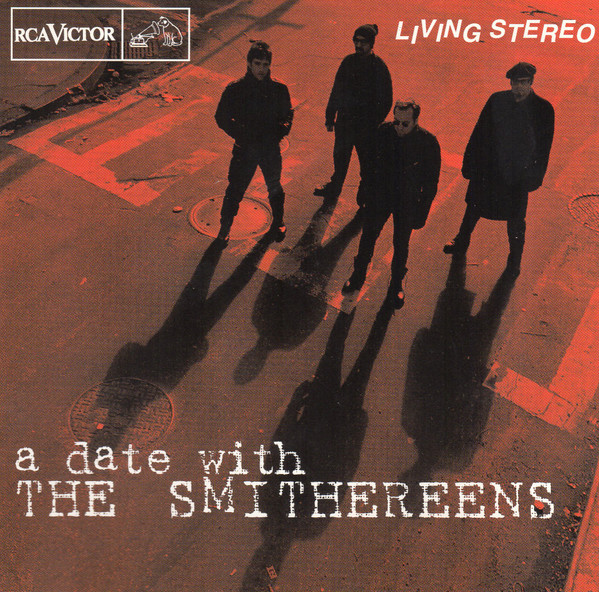
Smithereens 5: A Date With The Smithereens

By the ‘90s, RCA Records long since figured out how to break bands, and tried to stay solvent by offering contracts to bands whose heydays were past. So it was that the Smithereens, who likely felt honored to be a part of the label that once distributed Elvis Presley, ended up with the Record Cemetery of America. A Date With The Smithereens alluded to one of the King’s album titles, touted “Living Stereo” on the front cover, and was even available as a set of 45s, but failed to do much for the band’s fortunes.

Part of the problem was the times, and Pat DiNizio’s mood. Lovelorn is one thing, but here he’s just inconsolable. “War For My Mind” and “Everything I Have Is Blue” aren’t exactly grunge, yet even at a fast tempo they plod. “Miles From Nowhere” was the single, and a good one, but “Afternoon Tea” doesn’t meet its potential by the same chord played on every beat despite the actual modulations in the song. At least “Point Of No Return” and “Sleep The Night Away” (a rewrite of “Cigarette” from the first album) finally provide some of their trademark bite.

“Love Is Gone” and “Long Way Back Again” keep up the energy, and then we come to the misfire of the album, if not the band’s career. The overt Revolver-style arrangement and production belie the misguided op-ed statement of “Gotti”. Their fans don’t listen to the Smithereens for politics, and if the band really felt this way about the situation, you’d think they’d have the balls to extend the title to encompass the message of “free John Gotti”. This isn’t Bob Dylan painting Joey Gallo as a modern-day Western outlaw. While it might’ve made a swell B-side, “Sick Of Seattle” is too clever for its own good, besides repeating the meter from “Sleep The Night Away”. “Can’t Go Home Anymore” drags the proceedings back to normal with a snotty harmonica to boot, which keeps wheezing on “Life Is So Beautiful”.

Ultimately, A Date With The Smithereens turned out to be a one-shot deal; the label didn’t stick with them, and a year later their original label marketed a best-of collection that covered everything they’d done to date, including only “Miles From Nowhere” from this album, and rarities in the way of “Beauty And Sadness” and a cover of “Time Won’t Let Me”. Blown To Smithereens became a perennial catalog piece, both selling the band to newbies and reminding longtime fans of what once was. (For the real geeks out there, Attack Of The Smithereens was loaded with rarities, covers, B-sides and demos, while a decade later, From Jersey It Came! tried to accomplish both hits and rarities in a two-disc package.)

The Smithereens A Date With The Smithereens (1994)—
The Smithereens
Blown To Smithereens: The Best Of The Smithereens (1995)—
The Smithereens
Attack Of The Smithereens (1995)—3
The Smithereens
From Jersey It Came! The Smithereens Anthology (2004)—

Friday, April 8, 2016

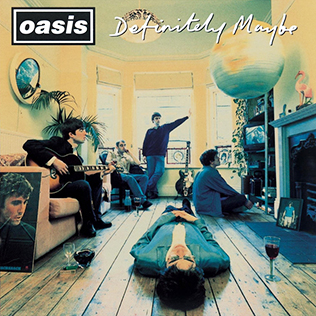
Oasis 1: Definitely Maybe

Once a band has passed into notoriety, it can be tough to go back to their beginnings with an open mind. But a glance through the booklet of Definitely Maybe, the first CD by Oasis, all of their personality is right there: the mod haircuts and styles, Liam Gallagher in a pugilistic pose or staring something down, Noel Gallagher playing guitar and/or mouth-breathing, both Gallaghers looking down their noses, and the other guys sitting around.

The so-called Britpop war hadn’t become a thing yet, so it’s possible to just enjoy the album as a solid collection of songs written by Noel Gallagher. If the legend is true, he heard Liam’s band rehearsing, told them their songs were awful, and promptly took over their repertoire. To his credit, or maybe proof he wasn’t a complete egomaniac, he knew Liam was the cute one, with a nasal whine comparable to Johnny Rotten’s in attitude (turning words like “sunshine” into four syllables), and let him remain the frontman while he stayed on the sidelines playing leads along the other guitarist and bass player, all three staring at their left hands on their fretboards.

The man could write catchy songs, with lyrics more designed to fit than mean anything—after all, the Bee Gees pulled that off for decades—to the point where the ones he stole weren’t immediately apparent. Only after you’ve given up what “Shakermaker” is supposed to be about do you realize that it’s the melody from “I’d Like To Teach The World To Sing”. More obvious is the T.Rex “Get It On” riff in “Cigarettes & Alcohol”, but Marc Bolan stole that from Chuck Berry anyway.

But depth isn’t everything when the tunes are right there. “Cigarettes & Alcohol” is terrific, and Rod Stewart even covered it a few years later in that brief period when he remembered he used to rock. The message in “Rock ‘N’ Roll Star” and “Live Forever” is pretty straightforward, so the arrangements make them even more memorable. “Live Forever” gets its boost from the falsetto tag on the choruses as well as the subtle piano buried in the mix (played either by Noel or their rhythm guitarist, consistently credited as “Bonehead”). There’s a truly dotty piano on the break for “Digsy’s Diner”, a song now called “Digsy’s Dinner”. “Up In The Sky” beats the same four-note riff into your head for four minutes, and kudos to whoever decided to add an acoustic guitar to those choruses.

The album was only a few years removed from the Stone Roses, EMF and other perpetuators of the Manchester beat, so “Columbia” and “Supersonic” placed back to back don’t have anyone missing original drummer Tony McCarroll much. “Bring It On Down” shows him off a little better, but by now the overall murk of reverb and tambourine can cause a headache. “Slide Away” recycles a lot of the motifs we’ve heard already for too long, so the acoustic busk of “Married With Children” provides some hope for their future.

Most of Definitely Maybe ended up as singles or B-sides before or after the album came out, so it’s clear they were going for quality. All of those singles had live versions, demos, and other tracks from the sessions, which can now be found among the pile of extras collected on 2014’s deluxe three-CD reissue. Some of those feature Noel instead of Liam, giving something of an alternate history. Plus, there’s “Whatever”, a stopgap single before their next album, that both predicts “Don’t Look Back In Anger” and rips off “How Sweet To Be An Idiot” by Neil Innes. (Ten years later, the 30th anniversary of the album was celebrated with another remaster but none of the extras from the first expansion. Instead a second disc consisted of earlier sessions—all alternate takes of album tracks, plus a demo for “Sad Song”—released here for the first time.)

Oasis Definitely Maybe (1994)—
2014 Deluxe Edition: same as 1994, plus 33 extra tracks
2024 30th Anniversary Edition: same as 1994, plus 16 extra tracks