Showing posts with label van morrison. Show all posts

Tuesday, July 14, 2026

Van Morrison 54: Accentuate The Positive

For his third release of 2023, Van fans were able to exhale in relief yet again. Not only was Accentuate The Positive another collection of covers, with zero political stands or even general complaining, but it was only an hour long.

The focus is once again mostly on pre-’60 rock ‘n roll and blues, in a distinctly R&B approach. Therefore the old chestnut “You Are My Sunshine” is more of a dare than homage, and the Everlys’ “When Will I Be Loved” and “Problems” are more jump blues. “Hang Up My Rock ‘N Roll Shoes” might be familiar to Band fans from Rock Of Ages, but this “The Shape I’m In” is not theirs. “Flip, Flop And Fly”, “A Shot Of Rhythm And Blues”, “Shakin’ All Over”, and “Bye Bye Johnny” are all faithful to the originals, while “Red Sails In The Sunset” could have come from one of his late-‘80s albums. “Sea Of Heartbreak” has a harmony part with one of the backup singers, who’s limited to two notes. Jeff Beck adds some rockabilly guitar to “Lonesome Train”, sung in unison with Chris Farlowe, and Taj Mahal helps close the proceedings on “Lucille” and “Shake, Rattle And Roll”, though he seems to need prompting on the latter. In between the selections range from obscure to well-trod.

We’re glad he took his own advice on Accentuate The Positive. He seems to have picked these songs just because he liked them, hadn’t recorded any of them for an album before, and uses the same band for most of it. So it’s another decent Van Morrison album that won’t stand out much otherwise.

Van Morrison Accentuate The Positive (2023)—3

Tuesday, March 10, 2026

Van Morrison 53: Beyond Words

With the exception of a few expanded reissues and The Philosopher’s Stone way back in 1998, Van Morrison has been very resistant to vault-digging. So it was very surprising when he announced the first release on his very own (initially mail-order) record label would be Beyond Words, a collection of instrumentals recorded over the decades from the ‘70s to the ‘00s. (There was one hilarious bump in this road: the label was announced as Esoteric, despite being the name of an established company. After a slight delay, the new name was Orangefield, which had already been a song title and lyrical reference, and the school he attended as a boy.)

Outside of the detailed musician credits, it’s not clear what was recorded when, though it is possible to guess, and the program does move somewhat chronologically. The first three tracks feature him trading acoustic licks with an electric guitarist, which is fine except for the obnoxious gurgling and scatting that ruins the title track. There’s a shift with “Breadwinner”, rich with composed horn lines in harmony. “Cool For Cats” has him blowing and shouting through a harmonica over a furious tympani and muffled bass; the same musicians plus piano back up his sax on the jazzy “Parisian Walkabout”. British guitar legend Mick Green dirties up “So Complicated” and strums along on the traditional “Kerry Dancing”, rearranged as a sax duet.

Van takes over the electric piano on “All Saints Beneficial”, “Celtic Voices”, and “Mountains, Fields, Rivers & Streams”, and the appearance of a certain harpist would suggest they come from the No Guru, No Method, No Teacher sessions. Given the vocalists plus Pee Wee Ellis on “The Street”, as well as Mark Isham on this and the tracks that follow, these would date from the early ‘80s, though “Far North” is close cousin of “Scandinavia” from Beautiful Vision. “12 Bar Celtic” sounds enough like the instrumentals on Poetic Champions Compose, and “Greenwood Tree” includes contributions from two Chieftains.

While it doesn’t exactly hold together as an album, Beyond Words does provide something of a respite from Van’s soapbox ranting, and a trip back in time to when he let the music do his talking. We often forget what a decent sax player he is, with his own unique style.

Van Morrison Beyond Words: Instrumental (2023)—3

Friday, December 12, 2025

Van Morrison 52: Moving On Skiffle

The news of a third multidisc release of new material from Van Morrison would give anyone pause in the post-Covid era. But while Moving On Skiffle is equivalent to four sides of vinyl, it delivers on its title. These are mostly old folk, country, and blues songs, some traditional, which would have been easily tackled by the skiffle players he heard back in the day. But it’s not a straight skiffle album—after all, he’d already done one, live, with Lonnie Donegan and Chris Barber.

This is another genre exercise, not that different from any of the other covers albums he’s done over the previous decade or so, with a selection of players and singers he’d been using throughout the century. (We were hoping the credit for one Sticky Wicket on washboard was a pseudonym, but no, he’s an actual drummer.) Only on “Gov Don’t Allow” does he get political, altering the original “Mama Don’t Allow”, which forbade certain kinds of music, to extend to freedom of speech. It does, however, give little solo spots to various of the musicians. (That song might be familiar thanks to a YouTube video of a 13-year-old Jimmy Page playing it on television; the man himself provided a back cover testimonial here.) “Worried Man Blues” was also on the live album, but this is a much different arrangement, working in “Mystery Train” and other lyrics. Things slow down only for Jimmie Rodgers’ “Travelin’ Blues”, Hank Williams’ “I’m So Lonesome I Could Cry”, and the closing “Green Rocky Road”, which runs nine minutes. (Thanks to the violin and the mood set, it’s worthy of Into The Music and No Guru, No Method, No Teacher.)

As usual there are complete instrumental credits, so you can tell when he’s playing the saxophone, and he’s singing with the passion you’d expect him to muster for the music he loved as a boy. At least he sounds cheerful.

Van Morrison Moving On Skiffle (2023)—3

Friday, June 27, 2025

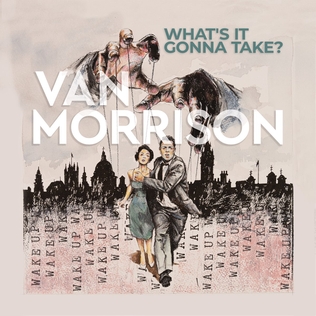
Van Morrison 51: What’s It Gonna Take?

Clearly still miffed about Covid, Van Morrison followed up the two-hour diatribe that was Latest Record Project with another 80 minutes of biased ranting from the Irish equivalent of a MAGA nut. It should be telling that the only positive review of What’s It Gonna Take? by a major news source came from the National Review.

“Dangerous” seesaws over two chords for over seven minutes, livened up only by a fiddle solo. The title track is catchy, but for the angry lyrics, and “Fighting Back Is The New Normal” makes its point over a cheesy organ. “Fodder For The Masses” is well arranged, down to the middle eight and the backing vocals, but doesn’t understand the irony of calling out “fake news”. The more meditative “Can’t Go On This Way” could easily be tweaked to be more about general heartbreak than all the ways he’s been inconvenienced, but “Sometimes It’s Just Blah Blah Blah” is just plain insulting, especially when he tries to drown out the doo-wop vocalist over the end. “Money From America” (as in no more) doesn’t even bother to find a melody.

“Not Seeking Approval” wastes its Motown beat by rhyming the title with “business as usual”, and “Damage And Recovery” rehashes all his beefs from the title track, livened only by his saxophone solos. “Nervous Breakdown” is just plain odd, as he introduces all the instruments one by one in a cartoony voice, then equates his condition with having “some kind of breakthrough”. It makes the piety and plea for unity in “Absolutely Positively The Most” all the more incongruous. We’d like to believe him when he insists “I Ain’t No Celebrity”, and he bemoans his own fame in “Stage Name”, and then “Fear And Self-Loathing In Las Vegas” finds him muttering to himself while killing time between gigs. While it’s a little repetitive, “Pretending” is by far the best song here, and the most universal.

Everyone is allowed their own opinions, of course, but until the end of the album, What’s It Gonna Take? doesn’t vary from the chosen theme enough to strengthen his arguments. We don’t want to listen to Neil Young yell about electric cars or Monsanto for the length of an album either. It’s just tedious.

Van Morrison What’s It Gonna Take? (2022)—2

Friday, January 17, 2025

Van Morrison 50: Latest Record Project

As if the record business didn’t annoy him enough, Van Morrison was forced to curtail his performing career by the rude intrusion of the worldwide Covid pandemic. Naturally, he took it personally. Denied the right to play shows he released three singles in succession—“Born To Be Free”, “As I Walked Out”, and the more pointed “No More Lockdown”—as well as a collaboration with Eric Clapton on “Stand And Deliver”, as if these two guys alone were hit hardest by the crisis.

Van’s attitude extended to the title of Latest Record Project Volume 1, with cover art that resembled a multitrack tape box. Having had two years since his last album, he managed to come up with over two hours’ worth of material, and just shoved it out there. (None of the 2020 singles nor the Clapton collaborations were included.) Our first thought was this was a similar tack he took with Hymns To The Silence, and then we reeled at the concept of that album being thirty years old already.

The title track is along the lines of his other rants about the futility of the business he’s chosen, and made longer by singing it a few words at a time with the band repeating each line. “Where Have All The Rebels Gone?” is a pertinent question, except that his immediate answer is “hiding behind computer screens.” Beyond that it’s a one-chord groove with tasty rockabilly guitar. “Psychoanalysts’ Ball” would be lovely if it were about anything else, and the decent soul groove of “No Good Deed Goes Unpunished” can’t hide the fact that most of the lines don’t bother to rhyme. “Tried To Do The Right Thing” restates the thesis better, musically as well as lyrically, and sticks to romance.

It’s back to complaining on “The Long Con”, a long 12-bar blues about being a “targeted individual”, the victim of whoever’s “pulling the strings”. He finds the joy in music in “Thank God For The Blues”, but it’s hard to think of “Big Lie” as anything else but a modern rant for which he roped in British blues belter Chris Farlowe. If only he’d left out the first verse and called it something else. “A Few Bars Early” is a clever idea, and suitably brooding.

We would bet actual money that Van was familiar with the blues standard “It Hurts Me Too”, but based on his song of the same name, he missed the point (hint: it’s called empathy). “Only A Song” seems to suggest that he can’t be held accountable for whatever he’s spewed, but at least he plays a decent alto sax. “Diabolic Pressure” must have kept him limited to two chords and a variation thereof outside of the bridge, “Deadbeat Saturday Night” is full of obvious rhymes, and we get the point by the time of “Blue Funk”, an otherwise decent song—the slap at “mainstream media” aside—but we’re only halfway through this album.

The message of “Double Agent” is muddled, with its slaps at MI5 and Kool-Aid, and “Double Bind” (which begins with the revelation that “mind control keeps you in line”) is just as paranoid. “Love Should Come With A Warning” is very welcome change of pace, and “Breaking The Spell” finds comfort in nature, even if the chorus is unoriginal. “Up County Down” is just plain confusing; there are lots of Irish references in the lyrics, along with calls back to earlier points in his career, but he couldn’t be bothered to add more than a mandolin and banjo to the R&B combo, and the chorus is about as inspired as “Blowin’ Your Nose” or “Nose In Your Blow”.

“Duper’s Delight” would be a wonderful reverie straight off of Into The Music or No Guru, No Method, No Teacher but for its diatribe against the lies “they” (probably female newscasters) are telling you. He strums a fine guitar on “My Time After A While”, another competent blues otherwise tainted in this context, and while no sax player is credited, that sounds like him too. “He’s Not The Kingpin” is sung in unison with P.J. Proby, another special guest forced to sing about the media’s agenda. “Mistaken Identity” is yet another example where he insists that we don’t really know him, which is laughable considering his slanted material.

The home stretch isn’t promising. The Bo Diddley retread “Stop Bitching, Do Something” might as well have been titled “Put Up Or Shut Up”. “Western Man” has a mild country swing but again is too busy hurling insults to attempt to rhyme. No points for guessing what “They Control The Media” is about, but there’s no beating “Why Are You On Facebook?” for inanity. Finally, “Jealousy” is his answer to anyone who’s still on his lawn, in case “Mistaken Identity” didn’t make it clear.

Anyone who’s followed Van’s career closely to this point will have already realized he is possibly the grumpiest millionaire this side of a Dickens novel, and it’s hard to imagine anyone taking his side. Six songs out of 28 isn’t even a decent batting average, but if he’d taken those and found other lyrics to the likes of “Duper’s Delight”, we might have actually had a concise album worthy of his voice, which is still as strong as ever. But no.

Van Morrison Latest Record Project Volume 1 (2021)—2

Tuesday, July 30, 2024

Van Morrison 49: Three Chords And The Truth

The seemingly relentless progression of Van Morrison albums could be tough to follow, especially when they weren’t always worth hearing. And when he names an album after a phrase many people associate with Bono—even though he didn’t coin it—we deserve to be wary. But Three Chords And The Truth did offer more than three chords, and presented mostly original compositions as well as a similar typographical approach to his most recent collection that wasn’t all covers.

His weather-related titles usually mean a profound meditation, and “March Winds In February” is a lovely start. Of course “Fame Will Eat Your Soul” retreads other familiar territory, this time abetted by Bill Medley, who shows his age. While not the smartest display of sequencing, “Dark Night Of The Soul” is more like it, a good song as well as performance. “In Search Of Grace” seems tossed off, and “Nobody In Charge” is more complaining, but at least he plays a fine sax solo on that one. He continues to brood on “You Don’t Understand” for six annoyed minutes, and we get it already, making the more succinct “Read Between The Lines” easier to digest.

“Does Love Conquer All?” isn’t the only question he asks in that song, but they’re good questions. “Early Days” celebrates the music of his youth lyrically and instrumentally, but he still finds time to whine about today’s music. “If We Wait For Mountains” is another collaboration with occasional lyricist Don Black, and he’s usually a good influence. The good feeling pervades into “Up On Broadway”, an almost gentle wish. While it doesn’t say much, the title track sparkles, and even “Bags Under My Eyes” provides a more wry take on weariness complete with a yodel at the end. And he actually has the decency to credit “Days Gone By”—a lengthy rewrite of “Auld Lang Syne”—as a traditional composition.

When Three Chords And The Truth is good, it’s very good. But he wasn’t likely to start editing himself now.

Van Morrison Three Chords And The Truth (2019)—3

Tuesday, February 13, 2024

Van Morrison 48: The Prophet Speaks

It worked the last time, so Van Morrison kept the pot simmering with Joey DeFrancesco and band. The Prophet Speaks was his second album of 2018, and his fourth album over fifteen months. Clearly, he was inspired, but not enough to give Joey co-billing again.

Over half of the album consists of rhythm and blues deep cuts, from such familiar touchstones as Solomon Burke, Sam Cooke, John Lee Hooker, and Willie Dixon. Two songs come from mildly obscure Chicago blues artist Shakey Jake: “Teardrops” [sic] and a medley of “Worried Blues” and “Rollin’ And Tumblin’”. Van mostly sticks to singing and blowing harmonica throughout, adding alto sax to only the title track and “Ain’t Gonna Moan No More”. For some reason he sees nothing strange about duetting with daughter Shana on a song like “Gotta Get You Off My Mind”.

More interesting is the fact that Van apparently wrote some new songs for the album. “Got To Go Where The Love Is” burbles with electric piano and “Spirit Will Provide” has a soulful, spiritual feel, though “5 am Greenwich Mean Time” is a basic blues. While it namechecks various icons, “Ain’t Gonna Moan” is a hollow promise coming out of his mouth, considering it’s soon followed by “Love Is Hard Work”. Finally, the title track is actually profound in its message, if repetitive.

Along with You’re Driving Me Crazy, The Prophet Speaks suggests Van’s onto something in his sixth decade of performing. His stuff may not necessarily be new, but it is fresh.

Van Morrison The Prophet Speaks (2018)—3

Friday, September 8, 2023

Van Morrison 47: You’re Driving Me Crazy

Joey DeFrancesco was a third-generation jazz phenom who had become a major label recording artist at the age of sixteen. He’d already worked with John McLaughlin and guested on dozens of albums in between recording his own before Van Morrison tapped him and his small combo for You’re Driving Me Crazy.

This was Van’s third album released in the space of seven months, and like the others, it’s a jazz and blues set combining standards and remakes of his own tunes. Most of the latter are recent (“Evening Shadows”, “Magic Time”, the whiny “Goldfish Bowl”) or certainly obscure (“All Saints Day”, “Celtic Swing”), and we’re not sure we needed another sprint through “The Way Young Lovers Do” or a bop version of “Have I Told You Lately” with daughter Shana. The covers are a grab bag as well, from Cole Porter’s “Miss Otis Regrets” to Ray Charles’ “Sticks And Stones”.

What helps everything stand out is DeFrancesco’s Hammond B-3 organ, and occasional trumpet. Van plays alto sax here and there—you can always tell when he’s about to because he keeps singing with the mouthpiece in; he also takes a nice harmonica break on “Things I Used To Do”—but mostly lets Troy Roberts do the heavy horn work. It’s refreshing to hear Van in a different environment. (Yes, he had Georgie Fame in his band for a while, but that was more R&B than jazz.)

The album was supposedly recorded over two days, and at 70 minutes, they seem to have kept everything. Van also seemed to enjoy himself, as we can hear him laughing during the solos on the title track, and at the end of “Every Day I Have The Blues”. As with most of his work this century, You’re Driving Me Crazy is not a major statement; it’s just a gig. And it’s a pretty good one.

Van Morrison and Joey DeFrancesco You’re Driving Me Crazy (2018)—3

Friday, March 31, 2023

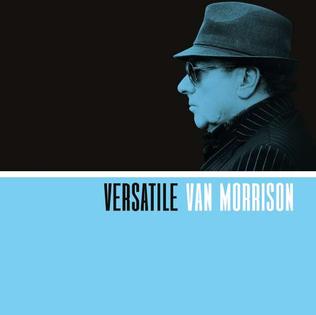
Van Morrison 46: Versatile

Mere months—that’s right, months—after a blues album, Van returned with a collection of new songs. Well, new recordings, anyway; Versatile is a swing album, more concerned with jazz (again) than blues.

If anything, this is his Sinatra album, with takes on “A Foggy Day”, “I Get A Kick Out Of You”, “Makin’ Whoopie”, and the like, but his arrangements are more unique, particularly on “Unchained Melody”. (Plus, nobody associates “I Left My Heart In San Francisco” with Frank.) It’s not all about singing; the traditional “Skye Boat Song” is a showcase for his alto sax as well as the other players.

Scattered throughout the program are originals that haven’t been done by a million people already. “Broken Record” starts the set well, except that the chorus consists of those two words repeated just as you feared. “Take It Easy Baby” is mostly a sax solo with inconsequential lyrics, but “Affirmation” is a lovely, lengthy piece featuring James Galway, up until Van starts scatting. He even covers himself: “I Forgot That Love Existed” gets a remake thirty years after we heard it the first time, “Start All Over Again” is almost as old, but “Only A Dream” only had to wait fifteen years.

While still way too long, Versatile is a good Van Morrison album for those people looking for something to play when they’ve already heard the Best Of. His voice is smooth, and we suppose you could even say it’s versatile.

Van Morrison Versatile (2017)—

Tuesday, November 8, 2022

Van Morrison 45: Roll With The Punches

In our music retail days, we found it hard to get excited about new releases in the blues or reggae genres, as both were populated by performers who weren’t exactly groundbreaking. Each also had a lot of sameness, and repetition, so when an album stood out, it was rare.

That’s one of the stumbling blocks of Van Morrison’s Roll With The Punches, which is predominantly concerned with blues, mostly old and some new. There are a few special guests, which is no surprise, along with a few retreads, so very little grabs one’s attention.

The title track gets right to business, but the softer “Transformation” is just one track featuring Jeff Beck and Chris Farlowe, both of whom get more room to shine on “I Can Tell” and the forced medley of “Stormy Monday” and “Lonely Avenue”. Georgie Fame sings first on Count Basie’s “Goin’ To Chicago”, while another veteran of the ‘60s R&B scene, Paul Jones of the original Manfred Mann, gets to warble on Van’s latest complaint about “Fame”. Another original, “Too Much Trouble”, finally delivers a tune that could be a classic.

If you thought the only thing missing Van’s version of “Bring It On Home To Me” on It’s Too Late To Stop Now was Jeff Beck, your prayers have been answered. Jeff and Chris also spice up the surprising addition of “Ordinary People”, which pales against the original, but Sister Rosetta Thorpe’s “How Far From God” is a nice change of pace, as is the oldie “Teardrops From My Eyes”. From there it’s just Van doing more Lightnin’ Hopkins (“Automobile Blues”), Mose Allison (“Benediction”), T-Bone Walker (“Mean Old World”), and Bo Diddley (“Ride On Josephine”).

Were we in charge, and we certainly are not, we’d’ve ditched the all-star turns and stuck to the blues standards he hadn’t done to death yet. It had been a while since Van had really wallowed in the blues genre, so Roll With The Punches mostly delivers, except when it doesn’t. As had been the pattern, he recorded a bunch of songs, decided he had an album’s worth, and put it out. Take it or leave it, see if he cares.

Van Morrison Roll With The Punches (2017)—3

Tuesday, November 2, 2021

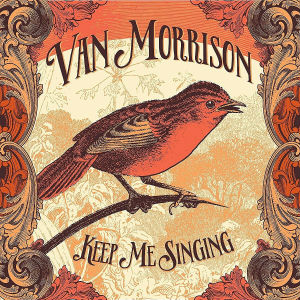
Van Morrison 44: Keep Me Singing

Eight years earlier Van Morrison pledged to keep it simple; now he’s asking whoever’s in charge to Keep Me Singing. Considering how his output had tailed off in that time, it’s a reasonable request.

It’s a slightly schizophrenic album—about half revives the lush sound perfected in the late ‘80s, which he abandoned as soon as it became profitable, while a variety of uptempo tracks attempt to provide variety, but simply seem badly placed. “Let It Rhyme” opens the proceedings with a reiteration of that theme he’s repeated since “Stepping Out Queen”, while the subtle pedal steel guitar gives a nice ambience. “Every Time I See A River” is a collaboration with lyricist of note Don Black, who apparently made his money in movies and theater. We like it anyway, and no, that’s not Georgie Fame on the organ. The title track isn’t very exciting, but “Out In The Cold Again” expresses a rare vulnerability, and “Memory Lane” begins with another out-of-character flourish, this time of strings. Then things go completely off the rails: “The Pen Is Mightier Than The Sword” is a decent groove, but the lyrics sound like a first draft, and completely at odds with what we’ve heard already.

Better you should skip right to “Holy Guardian Angel”, which repeats a bunch of blues clichés but still has a lovely arrangement with nice backing vocals for a change. He probably heard “Share Your Love With Me” from Bobby “Blue” Bland, or even The Band; most likely he ignored the Kenny Rogers cover. The reminiscing continues in “In Tiburon”, wherein his memories and impressions of the Beat scene in San Francisco weave through the verses. The comparatively brief “Look Beyond The Hill” begins as a cool-jazz instrumental, then delivers three quick verses and a middle eight. “Going Down To Bangor” is basically a tourist advertisement for some of the sights in County Down in 12-bar blues, and “Too Late” is strangely attached to a doo-wop tempo. Finally, “Caledonia Swing” is a pure instrumental akin to closing credits.

Had he shaved a few of the uptempo oddities from the running time, this might have been an overdue successor to his No Guru through Enlightenment period. Instead, Keep Me Singing is just another Van Morrison album, to be filed aside the rest.

Van Morrison Keep Me Singing (2016)—3

Friday, June 11, 2021

Van Morrison 43: Duets

The all-star duets album had its peak in the ‘90s, when the likes of Elton John and Frank Sinatra crossed genres and generations to expand their sales footprints. So it’s surprising when someone like Van Morrison makes such a clear commercial move, and that he did it this late in his career.

Both the cover and the title of Duets: Re-working The Catalogue make the intention clear, but this is not a grab for a renaissance a la Carlos Santana or Ray Charles. These are all takes on deep cuts from throughout his catalog, and all his own compositions. The lesser-known songs work better than the “hits”; “Real Real Gone” sounds exactly like the original, except that Michael Bublé enunciates half of it.

For the most part he sticks with likeminded veteran performers, such as Bobby Womack, Mavis Staples, and Natalie Cole, who’s known for possibly one duet too many. George Benson sings and plays welcome guitar on “Higher Than The World”, and “Whatever Happened to P.J. Proby?” features none other than the song’s subject. “Fire In The Belly” has some good repartee with Steve Winwood and Chris Farlowe does his best Ray Charles on “Born To Sing”. “Get On With The Show” sounds like Otis Day & The Knights, but he and Georgie Fame mix well per usual. You can skip the last track, wherein Van and Taj Mahal try to out-scat and stutter each other, but we actually get hear Van laugh at the end.

From the younger crowd, Joss Stone ably tackles “Wild Honey”, we’ve never heard of Clare Teal or Gregory Porter. Shana Morrison sounds better singing with her dad than solo on “Rough God Goes Riding”, but we’re rather partial to “Streets Of Arklow” with Mick Hucknall.

As duets albums go, Re-working The Catalogue could have been a lot worse, and maybe, just maybe, somebody dug through the back catalog to contrast and compare after hearing these. Maybe.

Van Morrison Duets: Re-working The Catalogue (2015)—3

Friday, January 29, 2021

Van Morrison 42: Born To Sing

At this point we wonder why we should bother assigning a rating to a 21st century Van Morrison album that doesn’t break any new ground or venture into a tangential genre. Born To Sing: No Plan B states the thesis in the title, and spends an hour proving it.

Just in case you’re not convinced, the CD booklet includes five pages of liner notes written by three separate writers, each praising the auteur to the heavens and marveling at his genius. Lyrics are included for each track, which is helpful given his increasingly mushmouthed approach, but suffice it to say he’s not above adding “shite” to a rhyme scheme, quoting Sartre, or railing about worldwide capitalism taking precedence over God-consciousness. Also, it’s one thing to hear him decry “phony pseudo jazz” in a verse, another to read it twice, and even more to imagine it sounding exactly like the song in progress.

But the notes for each track also detail who played what, and this is where we are impressed. Much of the piano lines come from Van’s fingers, and he often wails on his saxophone between verses. (Two other horn players are in the backup band, along with a keyboard player who doubles on trumpet.) He plays guitar on only the plodding John Lee Hooker pastiche “Pagan Heart”, which follows the equally lengthy but musically intriguing “If In Money We Trust”. “Close Enough For Jazz” adds words to a twenty-year-old instrumental, though “Retreat And View” merely inspires us to put on Astral Weeks to hear that phrase in “Beside You”. “End Of The Rainbow” does build nicely, and “Educating Archie” provides a shift in tempo for a closer.

While Born To Sing: No Plan B in neither overwhelming nor underwhelming, one could do a lot worse. And yes, he can still sing.

Van Morrison Born To Sing: No Plan B (2012)—3

Friday, September 11, 2020

Van Morrison 41: Astral Weeks Live

For decades, Van Morrison brushed off most questions about his legendary Astral Weeks album. Seeing as he’s never been the type of performer to go back to the well, it was surprising indeed to hear that he would do a series of concerts celebrating the album’ 40th anniversary, performing it as a suite.

Even more astonishing, given the evidence on Astral Weeks Live At The Hollywood Bowl, is that he was really into it. Because it’s his baby, he juggled the original album sequence, and enhanced four of the pieces with new codas consisting of possibly extemporaneous, certainly copyrighted lyrics over the established vamp. (Jay Berliner, who played acoustic guitar on the original album, does the same here, alongside accompanists from all stages of Van’s concert career.)

After a brief introduction we head right into the title track, which sounds as good as it ever had. The detour into “I Believe I’ve Transcended” provides a mediation and scat on Caledonia, important enough that he printed them on the back cover. “Beside You” nicely blends the dreamy arrangement from the album with the arpeggiated riff from the early take, and once again he’s on top of the swirling melody. “Slim Slow Slider”, moved up from the conclusion, actually fits in its new slot, at least until he does his best to break his strings via furious strumming for the “I Start Breaking Down” coda. (And the crowd goes wild.) The program gets back on track with “Sweet Thing”, complete with his singing-through-the-harmonica trick.

The halves of the performance are still split just like the side titles on the record. Ergo, there ends “In The Beginning”, and now, on to “Afterwards”.

“The Way Young Lovers Do” is played well, but his enthusiasm seems to have waned; maybe he shouldn’t have started breaking down two songs earlier. “Cyprus Avenue” doesn’t have the dramatics of the ‘70s rendition, instead extrapolating on the “You Came Walking Down” idea for a few minutes, for a smooth transition into “Ballerina”, which gains some seductive energy well before the “Move On Up” coda. “Madame George” ends the suite, and thanks to the lyrics printed in the booklet, for the first time we have confirmation that he’s been singing about “Madame Joy” all these years. The song proceeds as we’d hope, then he leaves the stage while the emcee pumps the crowd for recognition.

The break is short, however, as Van’s back to sing “Listen To The Lion” (incidentally, the name of his new custom label) that’s about half the original length with an instrumental section called “The Lion Speaks” marred by the emcee reminding us that the singer is “Van the man! The one! The only!” What’s called “Common One” pulls in lyrics from “Summertime In England” and “A Town Called Paradise” while the sax player parrots his words back a la Brian Kennedy. (If you buy the LP version, you get a bonus performance of “Gloria”, complete with the Doors’ John Densmore on tambourine. And yes, that really is how he’s identified in the liner notes.)

As album recreations go, Astral Weeks Live is entertaining. It helps that both band and strings follow the record very closely, so we always know where we are. It’s a nice souvenir, even more so on DVD, and only underscores why the original has endured all this time.

Van Morrison Astral Weeks Live At The Hollywood Bowl (2009)—

Friday, June 19, 2020

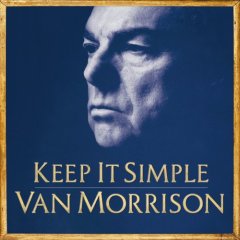
Van Morrison 40: Keep It Simple

It’s highly unlikely that the grumpiest man in rock ‘n roll takes anybody’s opinion under serious consultation, but with Keep It Simple he seems to be sticking to a well-worn philosophy. There’s nothing groundbreaking here, no catering to any genre, just Van singing and playing Van music. British legends Mick Green and Geraint Watkins add to the blend, and even ‘70s band members John Platania and David Hayes are on board.

Beginning with “How Can A Poor Boy?”, the music is understated rhythm & blues via guitar and organ, with some country & western touches in the harmonica and accordion, and gospel in the backing vocals. “Lover Come Back” is simple yet moving, while the unlikely banjo makes “Song Of Home” a grower. He’s not above regurgitating clichés, such as “School Of Hard Knocks” (a much better song than the title) and “Don’t Go To Nightclubs Anymore”. “That’s Entrainment” is a little too close to another phrase that the emotion he’s trying to convey doesn’t really come through. At this point in his career he’s gotta end with an epic of sorts, and “Behind The Ritual” combines the good and bad of Van, from a decent sax solo to two entire verses sung repeating the words “blah” and “blah”.

Keep It Simple is mostly harmless, and almost inviting. One might even presume he’s enjoying himself. And we can finally give this one the edge over its recent brothers. In the context of his post-Avalon Sunset work, the rating stands.

Van Morrison Keep It Simple (2008)—

Tuesday, July 2, 2019

Van Morrison 39: The Great Recession

While Van Morrison is very interested in the music of the past, that doesn’t include his own past. As evidenced by his prolific if not stellar release schedule over recent years, he’s more concerned with creating than revisiting. So it’s rare indeed when anything comes out of the vaults, yet in the space of one year, three separate yet hardly distinct collections were released, each with a different angle, and none definitive.

At The Movies, helpfully subtitled “Soundtrack Hits”, was designed to appeal to people who only know “Baby Please Don’t Go” from Good Morning Vietnam or “Have I Told You Lately” and “Someone Like You” from any number of rom-coms. The badly researched liner notes made a point of calling out how many times Martin Scorsese used Van’s music in his films, from the terrific performance of “Caravan” from The Last Waltz through the definitive version of “Wonderful Remark” to, strangely enough, his rendition of “Comfortably Numb” with members of The Band from Roger Waters’ 1990 all-star staging of The Wall in Berlin. A live version of “Moondance” with overdubbed vocals and an alternate of “Brown Eyed Girl” were dangled as rarities, but there were enough Van standards to make it all listenable.

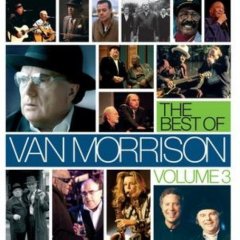
Going on two decades since the first two Best Of collections, Van himself compiled a third volume covering those heavily plowed but not exactly fertile years. The Best Of Van Morrison Volume 3 wasn’t just a double CD, but was loaded with about a dozen duets, certain to woo those consumers excited by Ray Charles, Tom Jones, John Lee Hooker, and B.B. King, to name a few. That means you also get a lot of Brian Kennedy, and way more covers than originals. Those collaborations also up the ante for everyone who already bought each of the albums, as many come from other artists’ albums, various artists sets, obscure CD singles, and whatnot.

Then, after trying to convince us that the least exciting span of his career needed two discs to encapsulate, a re-signing with PolyGram dictated that a single disc should somehow sum up four decades. Still On Top—The Greatest Hits repeated ten tracks from At The Movies while replicating about half of the first Best Of. Four songs were picked seemingly at random from Best Of Volume 3, yet a grave disservice was rectified by the inclusion of “Wavelength” and “Tore Down A La Rimbaud”. (Overseas, Still On Top was issued as a double CD, the second disc being equally as satisfying and maddening as the first. Another limited edition added a third disc of worthy selections and head-scratchers.)

So we’re not saying that the recession of 2007 was a result of such shelf-stuffing, but today these collections are basically moot. Because labels don’t like to leave anything alone, once Sony got their hands on Van’s catalog in 2015 they felt compelled to put out their own double-disc overview. The Essential Van Morrison starts with “Gloria” and goes on to cover the ‘60s and ‘70s fairly well, hitting on all the big albums but choosing “Hungry For Your Love” over “Wavelength”. “Cleaning Windows” comes from the Belfast Opera House album, and everybody likes “Caravan” from The Last Waltz, but “Spanish Rose”? Disc two manages to speed through the better part of three decades in the same time, skipping No Guru, No Method, No Teacher but still touching most of the albums from this century.

Van Morrison At The Movies—Soundtrack Hits (2007)—3
Van Morrison
The Best Of Van Morrison Volume 3 (2007)—3
Van Morrison
Still On Top—The Greatest Hits (2007)—
Van Morrison
The Essential Van Morrison (2015)—

Tuesday, March 19, 2019

Van Morrison 38: Pay The Devil

Oh great, another year, another Van Morrison album, another label, another… what the?! This sounds like old-time country and western!

And that’s exactly the deal. Pay The Devil is loaded with fiddle, pedal steel, two-step drums, Floyd Cramer-style piano, and lovelorn tunes from the honky tonk. Most of the songs are covers from the pre-rock era, “Your Cheatin’ Heart” being the most familiar one; the main exception is “Till I Gain Control Again”, written in the ‘70s by Rodney Crowell, and previously done by the likes of Emmylou Harris, Crystal Gayle, and Willie Nelson.

His own songs aren’t much to get excited about. The title track is another one of his “how dare you judge me” songs, but at least he doesn’t rant about the copycats in the business this time. “Playhouse” is a country blues that mentions the British monetary system but otherwise repeats the usual clichés. “This Has Got To Stop” reads like a parody, with its burned down houses and castles in the sand, rhyming “understand” with “Newfoundland”, and lines like “I watched you watching me as I watched you walk away from me.” His voice is still his best instrument, and even with all the trimmings, he delivers everything like it’s jazz or soul.

Pay The Devil is a nice change of pace from his other interchangeable releases of late. But if you want to hear Van sing country, you’re better off going back to Tupelo Honey.

Van Morrison Pay The Devil (2006)—3

Friday, November 16, 2018

Van Morrison 37: Magic Time

We’ve learned to take a deep breath before attempting to analyze another Van Morrison album. So it’s very refreshing when we stumble on one as pleasant as Magic Time. Maybe it was the label change—this time to Geffen—or the fact that the songs were leftovers from the two albums prior. What wasn’t good enough the first time hangs together well here.

The album starts strong with “Stranded”, a gentle blend of jazzy blues and doo-wop, with a slow lazy roll like floating on the sea. “Celtic New Year” is just as lovely and nearly as slow without dragging, complete with a cameo by Paddy Moloney near the end. “Keep Mediocrity At Bay” would be good advice if it weren’t so close to “Sweet Home Chicago”, and “Evening Train” doesn’t break any lyrical ground but it’s still a toe-tapper. He gets a couple of covers out of the way early on—Frank Sinatra’s “This Love Of Mine” and “I’m Confessin’”, given a slight Louis Prima scat over the loping beat. That clears the deck for “Just Like Greta” (as in Garbo, who just wanted to be alone), another slowish treat that builds nicely with a hint of the Caledonia Soul Orchestra in the strings.

“Gypsy In My Soul” doesn’t hearken back to “Gypsy” so much as evoke thoughts of “Spooky” and “Smooth Operator”, and he felt the need to alter Fats Waller’s “Black And Blue” into “Lonely And Blue”. Worth much more scrutiny is “The Lion This Time”, which suggests a connection to “Listen To The Lion” despite its lilting nursery rhyme quality. The title track isn’t much until the harmonica solo, but at least he waited until nearly the end to complain about all the injustice he’s endured in “They Sold Me Out”, over chords that sounds too much like “People Get Ready” and other songs we can’t identify. Finally, “Carry On Regardless” isn’t much more than a litany of film titles from the Carry On film franchise. Stick through the full six minutes to hear him yodel and—amazingly—laugh.

Take a few songs off and get it closer to 45 minutes, and Magic Time is one of Van’s better albums from the post-Avalon Sunset phase of his career. It still doesn’t rate higher than it is, but of the previous ten with the same rating, it’s the one to pick.

Van Morrison Magic Time (2005)—3

Friday, March 9, 2018

Van Morrison 36: What’s Wrong With This Picture?

And on Van goes, putting out a new album every year or so, daring us to care. The labels haven’t given up on him either, and somehow What’s Wrong With This Picture? was released on the Blue Note label, legendary for its jazz catalog, which likely appealed to him.

The title track begins full and lush, giving us the mistaken impression that this will be a make-out album. But then he ends the first verse by actually saying “it don’t mean a thing if it ain’t got that swing,” and cracking himself up in the process. Then it’s off to the upbeat swing of “Whinin Boy Moan”, the adult contemporary shuffle of “Evening In June”, and the bluesy “Too Many Myths”, featuring his own sloppy acoustic guitar. If you didn’t get enough Acker Bilk on the last album, he’s back to collaborate on “Somerset”. While the backing isn’t very adventurous, “Meaning Of Loneliness” does enter some thought-provoking lyrical territory, and while someone is singing along, he’s low in the mix and not Brian Kennedy.

The mood is broken again by “Stop Drinking”, an adaptation of a Lightnin’ Hopkins tune with a mix of R&B, skiffle and rockabilly. It’s back to the blues, and complaining about being famous, in “Goldfish Bowl”. “Once In A Blue Moon” touches on calypso, before the cover of “Saint James Infirmary”, most of which is devoted to soloing, slows things down again. “Little Village” is in a 12-bar structure, but somehow manages to evoke his late-‘80s sound. No prizes for guessing what he’s complaining about in “Fame”, but we do wonder if the call-and-response chant of the title at the end is a nod to David Bowie. “Get On With The Show” takes another cliché and builds a song around it without any real cohesion.

To answer the album’s title question, there’s nothing wrong with this particular picture, expect that we still half expect the guy to wow us like he used to. He’s obviously capable of blending several styles, but hearing so many at one time gives the impression of listening to several albums instead of just one. And at over an hour long, What’s Wrong With This Picture? isn’t likely to wow anyone.

Van Morrison What’s Wrong With This Picture? (2003)—3

Friday, October 6, 2017

Van Morrison 35: Down The Road

It can be tiresome to trawl through a legacy artist’s ongoing catalog when even the artist in question avers that he’s just doing a job. Van Morrison has never felt compelled to justify his albums; he simply records them and puts them out, and considers any status in the grand pantheon as moot, but somehow still deserving of awe.

Unfortunately for us, we’ve established a format here, and we must proceed, somehow. Down The Road is another competent album of pleasant R&B-inspired originals with some country flavors. He’s not overtly complaining about how the industry’s screwed him, but at least two songs lament the state of current popular music. “Hey Mr. DJ” is a Sam Cooke song in all but delivery, while “Whatever Happened To P.J. Proby?” gets its inspiration from a guy best known as having a hit with a Lennon-McCartney giveaway. “Choppin’ Wood” is supposedly about Van’s father, but it’s got the same rhythm as the far inferior “Talk Is Cheap”, lessening the sentiment somewhat. “All Work And No Play” spouts the usual clichés, and his ill-advised quasi-scatting results in one of the least essential versions of “Georgia On My Mind” ever recorded. Despite the pedestrian lyrics, “Evening Shadows” is an intriguing collaboration with jazz clarinet legend Acker Bilk, and we get more variations on common themes like “Meet Me In The Indian Summer” and “What Makes The Irish Heart Beat”.

At 15 tracks and over an hour of playing time, Down The Road is too long to really ingest, and the listener would likely put on an earlier album that truly resonates. In the plus column: not a sign of Brian Kennedy anywhere.

Van Morrison Down The Road (2002)—3