Showing posts with label bob dylan. Show all posts

Friday, November 14, 2025

Bob Dylan 70: Through The Open Window

After several volumes delving into distinct stages of Bob Dylan’s career, it took the Bootleg Series fifteen years and nine volumes before they went back to the beginning. Through The Open Window aims to tell the definitive story of his origin only touched on by his first three albums (and subsequent archival releases).

The years stated on the cover span 1956 through 1963, but after a 15-year-old Bobby Zimmerman pounding Shirley & Lee’s “Let The Good Times Roll” on a St. Paul music store piano and an acoustic ditty called “I Got A New Girl” three years later, the program really begins in 1960, where a college slacker has discovered Woody Guthrie. Before the end of the first disc he’s already made it to the Gaslight Café and Gerde’s Folk City in Greenwich Village. He enters a recording studio to blow harmonica on a Carolyn Hester session, plays a concert above Carnegie Hall, and two months later records his first album over two days. (Two familiar outtakes are included, along with two alternates, and a previously unreleased cover of Woody’s “Ramblin’ Round”.)

All the while, he’s learning how to pick guitar and play harmonica at the same time, memorizing song lyrics and attempting to write his own, and fabricating his own back story, as alluded to in the baffling “Dusty Old Fairgrounds”. Many of the selections are informal recordings, included more for historical purposes, far away from studio microphones and settings, so there are flubbed strings, off-key instruments, and the sound of a 20-year-old kid trying to sound four times his age (save a salacious ad-lib in a version of “Cocaine”; the compilers chose not to include any of the VD songs Woody wrote). When an audience is present, they are fascinated, and collaborators like Jim Kweskin and Dave Van Ronk clearly like what he has to offer. And we get to hear him improve and develop in a fairly short time.

By the third disc he’s moved on from aping Woody on vintage folk and blues songs, and started writing more topical songs about social injustice. After more harmonica work for Harry Belafonte, Victoria Spivey, and Big Joe Williams, he starts to record his second album. But it takes a while to complete, as he can’t decide whether it should be all protest songs (like the earlier, edgier “Ballad Of Hollis Brown”) or if he wants to rock out, which is why he attempts the familiar “That’s All Right Mama” and his own “Mixed-Up Confusion” with a band, eventually settle for just Bruce Langhorne on second guitar. “Worried Blues” is tried out on a 12-string, and “(I Heard That) Lonesome Whistle” shows off his Hank Williams yodel.

Come 1963, the surviving minute of his appearance on a British TV show kicks off disc five. After his April show at the Town Hall show—about a third of which is here, out of order, and including repeats of “Tomorrow Is A Long Time” and “Last Thoughts On Woody Guthrie”—he comes up with the last handful of songs, a fresh mix of protest and personal, needed to finish the Freewheelin’ album. But by the summer, he was caught up in the civil rights movement, with appearances at voter rallies and the March on Washington, and made a big splash at the Newport Folk Festival. He also made a big splash with Joan Baez, who sang with him every chance she got; three of their duets are included here, including the only known performance of “Troubled And I Don’t Know Why”.

Angrier topical songs would dominate his third album, though he was also writing songs like “Farewell”, “Liverpool Gal”, “Boots Of Spanish Leather”, and “One Too Many Mornings” (the latter two heard in alternate takes) and banging the piano for “Key To The Highway” and “Bob Dylan’s New Orleans Rag”. The final two discs contain his complete Carnegie Hall concert in October 1963, twenty years after it was first teased on a promo CD. It’s a good place to finish, as that third album would come out in the first few weeks of 1964, when everything changed, and for him too. Most of the songs in the set weren’t on albums yet, so they’re fresh for the crowd, but the performance would only reinforce his image as a protest singer and nothing but.

Some of this music had circulated on bootlegs for decades, but never in this quality. Through The Open Window of course only scratches the surface of what has survived from this period, and the individual listener will have their own missing favorites (for us it’s “Black Cross” and the electric “Rocks And Gravel”) in addition to resentment over repetition, both in song choice and things that had already appeared on earlier volumes and copyright releases. As had been the label’s habit, a two-CD “highlights” condensation was also made available, but we always wonder who would actually spring for those outside of completists. With most Bob, you’re either all in, or out.

Bob Dylan Through The Open Window: The Bootleg Series Vol. 18 1956-1963 (2025)—3
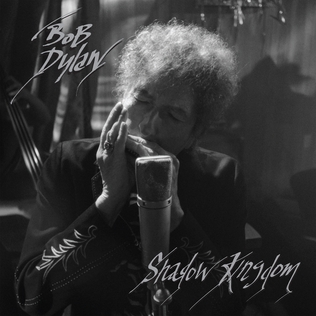
Friday, June 16, 2023

Bob Dylan 69: Shadow Kingdom

Recent years had seen a flurry of Bootleg Series and other archival collections, but Bob Dylan only halted his constant, consistent touring when Covid happened. Still, pushing 80, he didn’t want to stop.

Shadow Kingdom was a hyped online event at the height of the pandemic that turned out to be a film of an alleged live performance with masked musicians supposedly backing him, captured in smoky monochrome. Accordion was the main instrument, along with subtle acoustic and electric guitars, and the setlist came predominantly from the thin, wild mercury period of the mid-‘60s. Two years later, it was made available again for streaming, with a “soundtrack” to match, and no credits for who was actually in the band.

He’s in good voice, playing with the words of “When I Paint My Masterpiece” and enjoying the sentiment of “Most Likely You Go Your Way (And I’ll Go Mine)”. “Queen Jane Approximately” gets a reading as good as the one with the Dead, with a nice harmonica solo too, but “I’ll Be Your Baby Tonight” is nearly rocked-up and doesn’t work, especially lacking a rhythm section. The accordion gives a distinctly south-of-the-border tinge to “Just Like Tom Thumb’s Blues”, while “Tombstone Blues” is given a subdued treatment along the lines of everything on Rough And Rowdy Ways. “To Be Alone With You” shares the structure of the original, but mostly new (to these ears) lyrics that skew towards the twisted.

It's a good setup for the mild menace of “What Was It You Wanted?”, which is in stark contrast to the near-chamber pop of “Forever Young” with what sounds like a harpsichord. “Pledging My Time” is a welcome surprise—interesting that he uses the published lyrics for the “hobo” verse rather than what he sang on the original track—as is “The Wicked Messenger”, which has a more fleshed-out arrangement. “Watching The River Flow” also gets a few alterations but still upbeat, but while “It’s All Over Now, Baby Blue” is also stripped down like the last album, it’s also goes by so quickly we had to go back to hear if he skipped a verse. (He didn’t.) The final four minutes are given over to “Sierra’s Theme”, a two-chord minor key instrumental others have compared to “All Along The Watchtower”.

Any Dylan concert is a crapshoot, since one never knows what kind of mood or voice he’ll be in. Shadow Kingdom is an intimate evening with Bob, equal parts greatest hits and new interpretations, flowing neatly from song to song with nary a break. Besides being his first new live album since 1995, it’s a nice reminder that when he’s good, he’s very, very good.

Bob Dylan Shadow Kingdom (2023)—

Friday, March 3, 2023

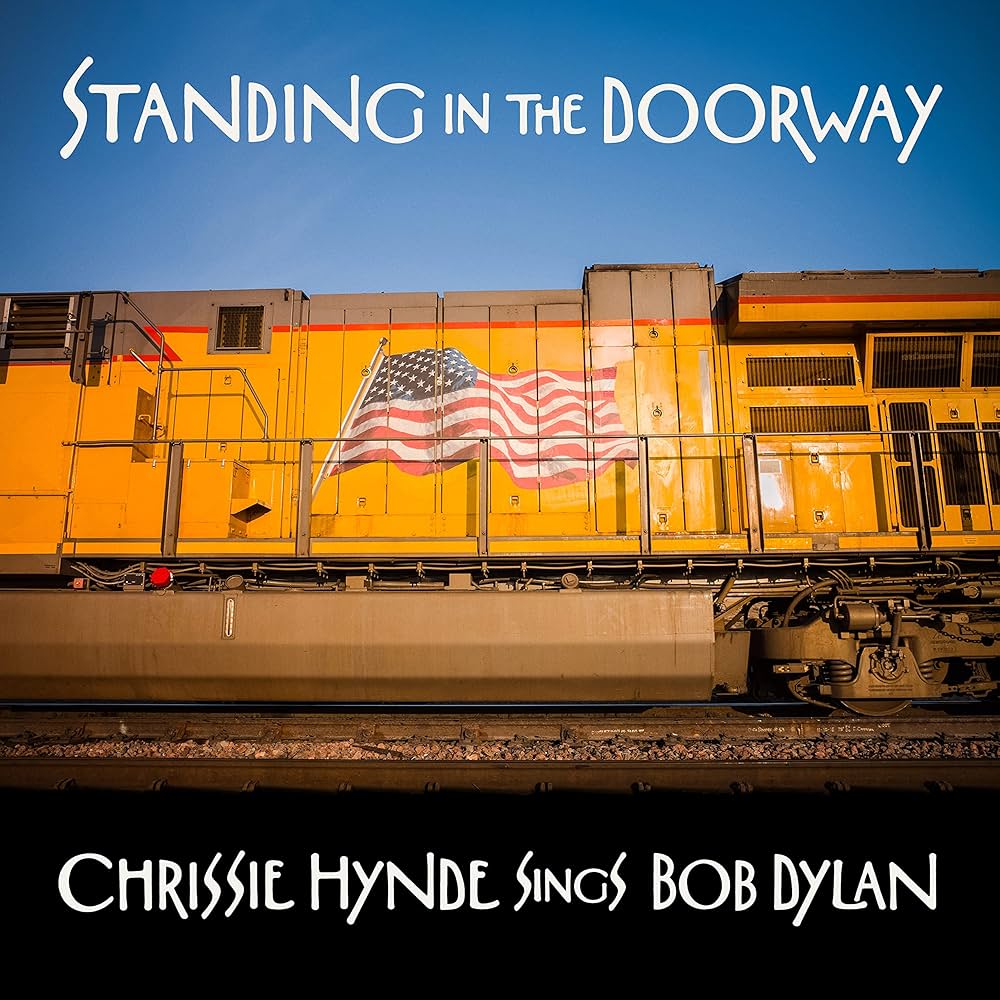
Chrissie Hynde 4: Standing In The Doorway

In addition to countless and sometimes notable covers, Bob Dylan tribute albums have been a thing since the ‘60s, but the Covid lockdown inspired many to re-associate themselves with the man’s music. Chrissie Hynde has unabashedly worn her Dylan devotion on her sleeve throughout her career, even adding “Forever Young” to one album, but Standing In The Doorway is a true labor of love. To her credit, she’s chosen nine songs more beloved to fans than jukeboxes, with half of the songs coming from the ‘80s. The album was recorded via text; she’d do a take, then send it to current Pretenders guitarist James Walbourne to add other instruments. Somewhere along the way veteran engineer Tchad Blake added further touches, mixed the batch, and took photos for the album package.

It all sounds very homemade, as befits modern file transmission, from the pre- and post-chatter around “In The Summertime” and “You’re A Big Girl Now” to the birdsong heard here and there. The title track has modified chords from the original, but they suit her delivery; her lyrical adjustments aren’t as successful on “Sweetheart Like You”. Despite its minimalist structure, “Blind Willie McTell” develops into an impressive production. “Love Minus Zero/No Limit” gets accordions and mandolin-like touches yet remains a happy strum, but “Don’t Fall Apart On Me Tonight” is the highlight, though that could be because we heard the opening chords and feared a take on “Knockin’ On Heaven’s Door”. “Tomorrow Is A Long Time” is played straight, while “Every Grain Of Sand” is elegant and understated.

Standing In The Doorway isn’t the most innovative Dylan tribute, and her vocal approach often mimics his, sometimes sounding more parody than homage. But at 70, Chrissie Hynde remains an excellent interpreter of anyone’s songs, and not just her own.

Chrissie Hynde Standing In The Doorway: Chrissie Hynde Sings Bob Dylan (2021)—3

Tuesday, February 28, 2023

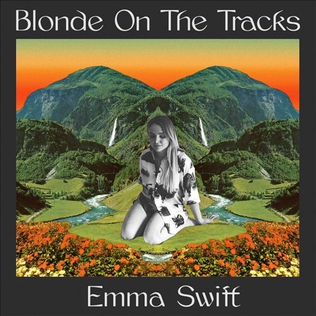
Emma Swift: Blonde On The Tracks

The standard joke is that Bob Dylan’s songs are always better when somebody else sings them. We know that’s not always true, but every now and then a voice comes along to help the medicine go down more easily. Emma Swift has one of those voices, a smooth alto with country tinges. Throughout Blonde On The Tracks she applies it to Dylan’s lyrics while staying true to the original melodies.

While recorded over several years and studios throughout Nashville, Pat Sansone’s production helps keep the album very much of a piece. “Queen Jane Approximately” has a mild Byrds jangle, but nicely laid-back drums that make the song more gentle. This is a mere appetizer for “I Contain Multitudes”, which had only been out for weeks before she found a way to inject more notes into his original three-note range. “One Of Us Must Know (Sooner Or Later)” gets a reading distilled through Oh Mercy, as does “Simple Twist Of Fate” to an extent, but that one is dominated by Thayer Serrano’s pedal steel guitar. The ballsiest move is to tackle all 12 minutes of “Sad-Eyed Lady Of The Lowlands”, and she does, without making it drag at all. Even the fade is lovely. “The Man In Me” gets some soul plus some nice harmonies on the bridge, and as with the rest of the album, she leaves the gender references intact. Her take on “Going Going Gone” will have you wondering why more people haven’t covered it, and while “You’re A Big Girl Now” doesn’t end the program on an up note, it’s an excellent reading. All together, a lovely surprise.

Emma Swift Blonde On The Tracks (2020)—

Friday, September 24, 2021

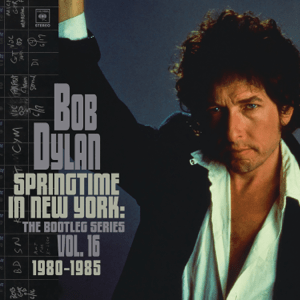
Bob Dylan 68: Springtime In New York

From the first Bootleg Series set, the compilers have focused on providing proof of Bob Dylan’s genius by sharing an alternate view of his craft via the songs he left off of albums. Where many discards from his first handful of LPs tended to be the tenth or eleventh best songs he’d recorded that day, the ‘80s was a time when he rehearsed, recorded, and revised almost constantly, whereupon several scholars insist that the Bard of Hibbing could no longer be trusted to sequence his own albums.

Three full decades after that first volume, the sixteenth installment in the series is dedicated to the first part of that troubled decade. Springtime In New York doesn’t merely follow on from Trouble No More (a.k.a. the “born-again era”) three volumes earlier; it overlaps, with many of the tour rehearsals and outtakes from Shot Of Love coming from sessions already mined. (The set was released, as had become the pattern, in a two-disc edition as well as an expanded five-disc package; as most Dylan diehards would invest in the latter, that’s the one we’re treating as standard.)

Revisionist history tells us that Dylan wasn’t so much lost in the early ‘80s as he was “finding his way”; the rehearsals that make up the bulk of the first disc begin with new takes on “Señor” and “To Ramona” before running through covers as startling as “Sweet Caroline” and “We Just Disagree”; we’d never heard the AC country hit “This Night Won’t Last Forever’, but “Jesus Met The Woman At The Well” and “Abraham, Martin And John” are already familiar from the gospel period. “Need A Woman” is an alternate from the first Bootleg box, while “Let’s Keep It Between Us” is a wonderful original played often on tour but making its welcome official debut here. Again, the band that accompanied him for the gospel shows is stellar.

The second disc delves into the recording sessions that resulted in Shot Of Love. Here, still, he’s “searching”, with somewhat polished arrangements of covers like “Let It Be Me”, “I Wish It Would Rain”, and Hank Williams’ “Cold, Cold Heart”. The best songs left off the original album have already been archived elsewhere; the included alternate of “Angelina” is nice but not as striking as the previously released take was when it emerged. “Lenny Bruce” is included in a mix with elements wiped before its release; presumably those are the “Casio” parts as depicted on the tape boxes in the packaging. A handful of originals heard first here are varied if occasionally lackluster: “Price Of Love” features a Bo Diddley beat and cheesy organ; “Don’t Ever Take Yourself Away” was buried on a TV soundtrack ten years ago and comes out as a cross between “Ramona” and “Romance In Durango”; “Fur Slippers” is an early arrangement of a one-chord song later given to B.B. King; “Borrowed Time” has promise but sits in an ordinary chord sequence; “Is It Worth It?” is a work in progress on the way to “Dead Man, Dead Man”; “Yes Sir, No Sir” is startling, enticing, and mysterious.

The two discs’ worth of Infidels outtakes finally bring the set’s title into context, considering where and when they were recorded. We already liked Mark Knopfler’s production on this album, as well as the contributions from the band, so hearing alternate takes of six of the album tracks is welcome. “Jokerman” and “Don’t Fall Apart On Me Tonight” are the original master tracks before the artist took advantage of the newfangled digital technology to tinker with the lyrics and phrasing. Then there are the leftovers; “Blind Willie McTell” was a highlight of the first set in an acoustic incarnation; this one adds electricity and more tension. We get to follow the journey to “Foot Of Pride” via an alternate take as well as two early drafts entitled “Too Late”. “Julius And Ethel” is an oddly timed piece of social commentary destined to be clouded by the facts. “Someone Got A Hold Of My Heart” might be the best version yet of this song, but that’s not saying much, and “Tell Me” is a toss-up. This version of “Lord Protect My Child” shows its musical similarity to “License To Kill”, while “Death Is Not The End” is notable for running two minutes past the length heard on Down In The Groove. Covers still abound; “This Was My Love” sees him exploring Sinatra three decades early; “Angel Flying Too Close To The Ground” is different from a rare B-side; “Baby What You Want Me To Do” is a duet with Clydie King and features a lot of Mick Taylor, so that’s good.

The fifth disc is the most challenging. While it begins with “Enough Is Enough” (an otherwise unknown original performed at one of the concerts mined for Real Live) and “License To Kill” as performed on the David Letterman show, we move into the making of Empire Burlesque. In most cases, it’s clear that while the production didn’t help the album, the songs weren’t quite there either. Although some of the gloss has been removed, it can’t save tracks like “Tight Connection To My Heart”, “Seeing The Real You At Last”, or either version of “Clean Cut Kid”. However, “I’ll Remember You” and “Emotionally Yours” are lovely, and the alternate of “Dark Eyes” sounds like an outtake from World Gone Wrong, proving that he really hadn’t changed at all. “New Danville Girl” presents a more accessible platform than its eventual “Brownsville Girl” incarnation for presenting the art within. Of the two versions of “When The Night Comes Falling From The Sky”, we prefer the “slow” one, but it’s still a chore since he yells through both of them. While never finished, “Straight A’s In Love” has promise, but goes way too fast for everyone involved.

As has also been the trend, the discs are short; the two-disc is just over two hours and the deluxe set could fit on four CDs. Maybe they knew better than to overload our ears with too much Bob. We could easily enjoy more outtakes from Infidels, and there have been accounts of numerous 1986 sessions with Tom Petty and the Heartbreakers in between tours that were not represented on Knocked Out Loaded. (“Band Of The Hand”, anyone?) Surely they’re not holding out for a standalone set dedicated to the period between Empire Burlesque and Oh Mercy. While we’re at it, why not have all three songs from the 1984 Letterman performance? Why not include the rehearsals?

All this is quibbling, of course. Springtime In New York is welcome and worthy of the canon. It definitely shows what was missing on the lesser albums, and highlights what we already liked of that period. Enjoy.

Bob Dylan Springtime In New York: The Bootleg Series Vol. 16 1980-1985 (2021)—

Tuesday, March 2, 2021

Bob Dylan 67: 1970

Just before the end of 2020, another one of those highly limited beat-the-deadline copyright releases snuck out and made another three discs’ worth of leftovers from Bob Dylan sessions quite popular on the illegal download sites. The key draw of 50th Anniversary Collection 1970 was the balance of the one day George Harrison spent in the studio with Dylan. That’s probably why the label decided to make the set available to the general public for a much lower price.

Now titled simply 1970, it arrived with George’s involvement emblazoned on the cover, overly gushing liner notes and, save the one New Morning-era image on the back of the booklet, several well-traveled photos from 1969. Normally this would be merely a footnote to the Another Self Portrait volume of the Bootleg Series, except that it offers over three hours of unreleased music, much of which hadn’t been bootlegged. Also, unlike that set, the music is presented strictly chronologically, filling in the development of two separate albums.

Disc one begins with the rest of the work done with David Bromberg and Al Kooper on what would be sent off for overdubs to complete Self Portrait. Along with yet another stab at “Spanish Is The Loving Tongue” (yippee), we get for more tries at “Went To See The Gypsy” and variations on “Alberta”, an “Untitled 1970 Instrumental”, and most revealing of all, the basic track of “Woogie Boogie”, consisting just of Dylan’s piano and Bromberg’s guitar. In between are abandoned tries at “Universal Soldier”, “Come A Little Bit Closer”, and a goofy “Little Moses”.

We jump to May 1, when George arrived, beginning with attempts at nailing down arrangements for “Sign On The Window”, “If Not For You”, and “Time Passes Slowly”, accompanied by Russ Kunkel on drums and yes, the Charlie Daniels on bass. Having seemingly tired of those, they began covering earlier Dylan originals, including “Song To Woody”, “Gates Of Eden”, “Rainy Day Women”, and “I Threw It All Away”. Only “Mama, You Been On My Mind” hadn’t made it to a Dylan album yet. In between, they jam on covers like “Ghost Riders In The Sky”, “Da Doo Ron Ron”, oldies by Sam Cooke, Carl Perkins, and the Everly Brothers, and even “Yesterday”. The day ended more takes of “If Not For You” and “Sign On The Window”. Despite what was reported in the press at the time, this was not exactly a stellar meeting of future Wilbury minds. George gamely strums his Stratocaster and offers some leads, harmonizing when he knows the words, but their collaboration at the Concert for Bangla Desh the following summer was ultimately more satisfying.

A month later, Bob brought back Kooper, Bromberg, Daniels, and Kunkel, plus Ron Cornelius on guitar and some female singers for five dedicated days of recording what would become New Morning. As it turns out, just as much and often more time was spent on covers than the originals that made up the album as released. In addition to three distinct variations on the Cajun chestnut “Alligator Man”, as well as “Jamaica Farewell” and “Long Black Veil”, it’s clear that the likes of “Sarah Jane”, “Lily Of The West”, and “Can’t Help Falling In Love” were not merely one-offs in between “proper” takes, but actually finessed to what would be first shortlisted for New Morning, and officially foisted on the public on the embarrassing Dylan album three years later. There are even two takes of “Tomorrow Is A Long Time”, which he’d yet to try in the studio; frankly, this bluesy approach with the women singing doesn’t work. But we can also hear more new originals take shape, thankfully, and a final session two months later would complete the project.

While it’s nice that the set is more easily attainable by both Dylan and Beatle completists, the historic value of 1970 outweighs its musical merit, and the casual listener will likely find it tedious. Yet throughout all three discs, Bob is engaged with the songs, slipping back and forth between his raspy voice and Nashville Skyline croon. Unless any snippy tirades against the participants were edited out, he sounds like he’s enjoying himself.

Bob Dylan 1970 (2021)—3

Tuesday, June 30, 2020

Bob Dylan 66: Rough And Rowdy Ways

Leave it to Bob Dylan to emerge after eight years with his personal take on the state of the world amidst a global situation. Right?

Wrong. Bob does a lot of things, but grand statements aren’t any of them. Even with the gravitas in the teasers that previewed it, Rough And Rowdy Ways is simply a collection of songs he wrote sometime in the preceding eight or so years. Granted, those eight years were filled with six hefty installments in his Bootleg Series, two box sets covering two historic tours, and three albums dedicated to old standards that happened to be covered first by Frank Sinatra.

Even the title is contrary. Yes, his voice is rough, but nothing on the album could really be considered rowdy. The packaging is as minimalist as any of his last handful of albums—the barest musician credits, antique photos repurposed, including a prominent photo of John F. Kennedy on the back captioned by exactly one song title; more about that in a bit. Bob’s name only appears on the spine and the discs themselves.

Most of the album is quiet, the words delivered in a near monotone, much like side two of Oh Mercy. “I Contain Multitudes” opens the program with his revised style of beat poetry infused with pop culture references, including a juxtaposition of Anne Frank, Indiana Jones, “and them British bad boys, the Rolling Stones.” You can almost hear him wink. “False Prophet” turns it up with a swaggering blues, full of the boasting that’s featured in his similar songs from this century. In “My Own Version Of You”, he takes the role of a Dr. Frankenstein, describing his method of creation over a spooky country-tinged backing.

In the aftermath of his Sinatra trilogy (for lack of a better term), “I’ve Made Up My Mind To Give Myself To You” sounds like another attempt at writing a standard along those lines. It’s even got crooning backing vocals for a very nice touch. The sense of calm doesn’t last, as he has to repel a demon in “Black Rider”. This enemy is either literal or symbolic, yet one he feels compelled to warn “the size of your cock will get you nowhere.” “Goodbye Jimmy Reed” is another namecheck of a blues legend over a fitting groove.

“Mother Of Muses” is an exquisite prayer, along the lines of “Stay With Me”, this time evoking the name of Calliope, the muse of epic poetry. It would be a wonderful way to end the album, but there’s more to go. “Crossing The Rubicon” is a dirty blues and something of a stumble, in need of editing. The Bob of yesteryear would have settled for ending each verse with the title, but here he overuses the image, from the first line and throughout the song. “Key West (Philosopher Pirate)” is lovely but dizzyingly inscrutable, a travelogue that mentions dead presidents, and includes the questionable biographical that he married a prostitute, at the age of twelve no less. (Naturally, they’re “still friends.”)

The important track here would be “Murder Most Foul”, the first preview for the album, included on a disc all its own. Just as “Sad-Eyed Lady Of The Lowlands” was given a place of honor taking up an album side, this mediation on the Kennedy assassination will be studied as deeply as any of his other epics. Over a nearly ambient backing, it begins with recounting of the events, weaving through the decades since and back, name-checking the Beatles and the Who, Woodstock and Altamont, Freddy Krueger and Scarlett O’Hara, “What’s New Pussycat” and “What’d I Say”. Over the final six minutes of nearly seventeen, he requests a litany of songs for Wolfman Jack to play, from classical and rock to jazz and blues, ending with a request for “Murder Most Foul” itself. A possible antecedent would be “Last Thoughts On Woody Guthrie”, which he recited once in public, approximately seven months before the events in Dallas. (See also his far-from-factual recount of the Titanic disaster in “Tempest”; meanwhile “Hurricane” also includes “wait a minute, boys” as a key statement.)

We seem to be in the minority among pundits, most of whom have declared Rough And Rowdy Ways to be a masterpiece. This far into his career, and at his advancing age, any album might be considered a final statement, and time will tell what he may yet have in store for us. Time will also tell how well this album will age; our expectations on that end have influenced our rating. And maybe one day we’ll find out what exactly Fiona Apple contributed to the album. (Supposedly piano on “Murder Most Foul”, but it’s not exactly idiosyncratic.)

Bob Dylan Rough And Rowdy Ways (2020)—3

Friday, November 15, 2019

Bob Dylan 65: Travelin’ Thru

The ongoing Bob Dylan Bootleg Series project has resulted in volumes designed to be as revelatory as they are historically important. The fifteenth such release certainly illuminates a legendary collaboration, but it doesn’t necessarily rewrite history.

Travelin’ Thru goes in depth into the creation of John Wesley Harding and Nashville Skyline, two albums that were so unlike what Bob had done before, as well as what his perceived rock ‘n roll peers had accomplished. They’re also albums that, for the most part, have never been plundered by bootleggers, so the anticipation for hearing outtakes for the first time runs high. The first disc in the set devotes the equivalent of an album side’s worth of alternates from each of these albums, but unfortunately there are no “HOLY CRAP” moments among the selections. The lone unheard song, “Western Road”, isn’t much more than an uninspired 12-bar repeating the same clichés about going to Chicago. There are some takes tried in alternate tempos, but nothing that will have the listener thinking it should have been released instead of what was. (The compilers admit to the dearth of multiple takes, partially because they allegedly just weren’t different, but mostly because the tapes themselves have been missing for decades. We can’t blame the Universal fire for this one, much as we’d like to.)

The packaging for Travelin’ Thru prominently trumpets “featuring Johnny Cash” throughout, as the bulk of the set is dedicated to the session of duets that yielded the version of “Girl From The North Country” that opens Nashville Skyline. Unfortunately, little else reaches that level of sublimity, the majority of the summit spent running through what they can recall of various songs while Johnny’s band, which included Carl Perkins, gamely plays along and navigates the hairpin key changes. Johnny comes off better throughout, as their voices don’t quite mesh with Bob in full “Lay Lady Lay” croon, and he barely harmonizes more than singing a single note against Johnny’s melody. A few tunes could have had potential had they worked on them, but it’s hard to say whether they thought it would be worth it. One stab deserving attention is the real-time mashup of “Don’t Think Twice, It’s Alright” and “Understand Your Man”, each man singing a verse from either song simultaneously. We could get excited about finally hearing Bob sing “Wanted Man”, but they spend most of the take trying to remember the words and making up new ones. Clearly they enjoyed each other’s company, and Bob even appeared on the debut episode of ABC-TV’s The Johnny Cash Show, performing “I Threw It All Away” and the almost-a-single “Living The Blues” and duetting with Johnny on “Girl From The North Country”. (All three are included here.)

To fill out a set that could easily fit on two discs instead of three, we get two further outtakes from Self Portrait, both Cash songs: “Ring Of Fire” gets a slick treatment and “Folsom Prison Blues” speeds up into a jam. Along the same lines are a handful of songs from a documentary about bluegrass legend Earl Scruggs, including the Scruggs Family arrangement of “Nashville Skyline Rag” and Bob’s half-remembered “To Be Alone With You”. Recorded amidst the New Morning sessions, his voice has returned to its familiar rasp.

When you count the various copyright collections that emerged over the last decade or so, Travelin’ Thru effectively fills in the remaining gaps on the first decade of Bob’s career. (In fact, keen-eyed collectors would have scooped up the highly limited 50th Anniversary Collection 1969, which offered two discs’ worth of further outtakes from that year—mostly unfinished takes, and a few more duets, but notably the otherwise unheard “Running”.) This one will be welcomed by Dylan obsessives, and everybody loves Johnny Cash. But it’s also nice to have an installment in the series that doesn’t break the bank. And no “Spanish Is The Loving Tongue”!

Bob Dylan Travelin’ Thru 1967-1969: The Bootleg Series Vol. 15 (2019)—3
Bob Dylan
50th Anniversary Collection 1969 (2019)—

Tuesday, September 4, 2018

Bob Dylan 64: Live 1962-1966

Way back in the pre-electric era, a handful of Bob Dylan concerts were recorded by Columbia for possible issue as an album to be titled In Concert. While several performances from these shows have been included on a variety of archival compilations, neither the album as originally sequenced—any of the variations considered—nor the complete shows have been granted specific release. The appearance in 2011 of an ultra-rare concert from his folksinger days turned out, so far, to be a standalone idea.

However, Columbia has seen fit to offer up hours of material for procurement, initially on a limited basis, to preserve their copyright license and probably with the assumption that they would be pirated and shared anyway. The first three years of his recording career were “protected” this way, then just about every captured note from 1965 and 1966 was served up via deluxe box set treatments.

As we’ve said before, it’s not all gold, and while some people have to have everything the man ever uttered or strummed, there’s barely enough time to hear it all, much less ingest it. That makes the sudden appearance of a double-disc set called Live 1962-1966: Rare Performances From The Copyright Collections seem like a great idea until you’re done with it. Given the breadth of truly rare compositions to choose from, only “Seven Curses” and “John Brown” represent songs not on the albums originally released during that period. Historically speaking, there’s “Blowin’ In The Wind” with only two verses, “When The Ship Comes In” from the March on Washington with Joan Baez, the electric “It Takes A Lot To Laugh” from Newport and “Maggie’s Farm” from the Hollywood Bowl. The same take on “Ballad Of A Thin Man” is repeated from the seventh Bootleg Series; we’d’ve preferred the incendiary “Like A Rolling Stone” from the final Albert Hall show.

Granted, the music is excellent, and the sequencing does illustrate his development from a Woody Guthrie wannabe to the legendary performer that inspired generations. Those who haven’t clogged their hard drives with this stuff already will likely appreciate it being made available, and at a relatively low price point. But it’s an awfully random collection, belying its origin as a Japan-only release, a sequel of sorts to another grab-bag set that at least offered some actual rarities (one of which is repeated here). The haphazard production is underscored by the bad proofreading on the spines, which read “PREFORMANCES”, along with the shameful omission of Richard Manuel from the credits on the electric tracks from 1966.

Bob Dylan Live 1962-1966: Rare Performances From The Copyright Collections (2018)—3

Friday, December 15, 2017

Bob Dylan 63: Trouble No More

After he publicly embraced Jesus Christ as his Lord and Savior, and began using his stage and albums to tell everyone about it, it took some time for fans to “get it”. The common belief is that Bob Dylan got Jesus out of his system after three albums, but close perusal of the songs he’s written over the last four decades prove that he’s still concerned about the end times, holy wrath and judgement, and other mysteries of faith. His approach changed, but he really didn’t.

Anyway, Bob’s so-called “born again” years continue to perplex longtime fans as well as newcomers, so a Bootleg Series volume devoted to the period makes sense from a marketing standpoint. While the recordings on those three albums vary from a quality standpoint, he also toured constantly with a stellar band backing him up—anchored by Jim Keltner, Tim Drummond, Fred Tackett, and sometimes Spooner Oldham—which gave the songs room to breathe and grow. Trouble No More, in all its incarnations, consists largely of live recordings in terrific sound, most of which are sourced from cassettes right off the board.

And here’s where it gets a little annoying for the consumer. As they’ve done lately, the volume is available as a two-CD set, as well as an eight-CD box with a DVD and books. The cheap set is all live, taken from concerts covering three calendar years, with a few duplicates of songs from different shows, and a small handful of songs that never made it to albums. The larger set includes those discs, plus two more discs of “rare and unreleased” studio outtakes, rehearsals, and live performances, including even more new-to-the-official-canon songs. There’s also two discs’ worth of selections from an April 1980 residency in Toronto, plus a full show from July 1981 in London on two more CDs. (And if you bought the set through Bob’s website, you got another concert from November 1979 on another two CDs.) Taken all together you have six versions each of “Slow Train” and “Gotta Serve Somebody”, four of “Solid Rock”, and two or three versions of several others of the period.

Of the new material on the two-CD version, “Ain’t Gonna Go To Hell For Anybody” is nice to hear in decent quality. As a song it’s preferable to “Ain’t No Man Righteous, No Not One”, which struggles under its New Orleans groove. “Blessed Is The Name” is actually better when the ladies sing. And we get earlier versions of “Groom’s Still Waiting At The Altar” and “Caribbean Wind” before he heavily revised the lyrics.

The big box does indeed provide some real gems, like the live versions of “Slow Train” and “Do Right To Me Baby” from early in his conversion. The virtual concerts nicely show not only how well the band rode the dynamics, but we also get to hear appreciative audiences, despite the legend. The alternate studio takes are occasionally illuminating, like the passionate first reading of “Pressing On”. Some of the unreleased songs aren’t very exciting lyrically, though “I Will Love Him” and “Jesus Is The One” are a little overt but well played, and “Thief On The Cross”, “Yonder Comes Sin”, and “Cover Down, Pray Through” just plain rock. Rather than the take issued as a B-side and available nowhere else, we get take one of “Trouble In Mind”, and “Ye Shall Be Changed” is repeated from the first Bootleg Series box. The 1981 concert is interesting for how he mixed earlier material with the Christian material, but some of it is still in the ill-advised Budokan arrangements, and frankly, doesn’t have the fire and passion of the religious material. Also, he’d already developed that whiny tendency to spout the lyrics rather than sing them, with that extra nasal approach comedians find so endearing.

The two-CD version of Trouble No More should suffice for all but the most rabid listeners. None of Bob’s sermonizing between songs is included on either package, nor are any of the opening sets of gospel from the rotating set of backing vocalists, but when we do hear them, they fit rather than dominate. We have since upgraded our rating due to becoming better acquainted with the music, and the big set is far from tedious. The liner notes go into incredible depth describing the evolution of the material onstage, and the essay by devout atheist and outspoken skeptic Penn Jillette is movingly powerful.

Yet we maintain that a happy medium could have been achieved, had they simply added the “rare and unreleased” discs to the two live ones for a single, comprehensive package; not too big, not too small. Sometimes we think they’re intentionally ignoring us.

Bob Dylan Trouble No More: The Bootleg Series Vol. 13/1979-1981 (2017)—4

Friday, May 26, 2017

Bob Dylan 62: Triplicate

We’ve already noted that Bob has rarely repeated himself in over half a century of recording, but some of his work has emerged, usually in hindsight, in arcs of threes. Triplicate is the third installment in his recent obsession with the Great American Songbook, and it’s three discs — whether you buy LP or CD — to boot. These 30 new recordings are evenly split between them, totaling just over 30 minutes each. It’s a lot of music to take in at once, and an in-depth analysis is out of our capabilities at this point. As with the last two, it’s nighttime listening, or if maybe if it’s raining, and probably not something that will be blasted out car windows or at the beach.

The first disc begins with a dance band horn section and ends jauntily; the second and third each start the same way but also end more subdued. Frank Sinatra is still the common touchstone. Disc one offers three songs from his September Of My Years album, which originally commemorated Frank’s (gasp!) 50th birthday, coloring the mood, but not clarifying it any. It’s easier to get into the more familiar, well-trodden songs, like “As Time Goes By”, “Stormy Weather”, “Sentimental Journey”, “My One And Only Love”, “These Foolish Things” and “Stardust”. In our case, the selections we know from September Of My Years and “Trade Winds”, familiar from Bugs Bunny cartoons, inspire the most humming along.

Once again transposing orchestral arrangements to a tiny combo, his band is flawless, particularly when left to themselves, quietly purring along behind the soft guitars and pedal steel. Dance band horns appear at times, providing variety. As should be expected, Bob’s voice varies. He has trouble on “Day In, Day Out”, “Where Is The One” and on tunes with the widest ranges, but is flawless on “It’s Funny To Everyone But Me” and even the wistful “There’s A Flaw In My Flue”. As silly as the title sounds, his delivery is convincing, the opposite effect of the blue pajamas he mentions on “I Guess I’ll Have To Change My Plan”.

The album title is just plain lazy, and the ones given to the individual discs, despite the apostrophes, seem almost arbitrary, as much red herrings as Fallen Angels was for that album. The liner notes, presumably not written by him, work a little too hard to praise. Triplicate remains something of a novelty, and Shadows In The Night remains the better album, making a welcome, familiar listen after getting through an hour and a half of similarly arranged pieces. So too does Fallen Angels fall better into place, but we dare say this one is the runner-up of the three. So far.

Bob Dylan Triplicate (2017)—3

Tuesday, May 31, 2016

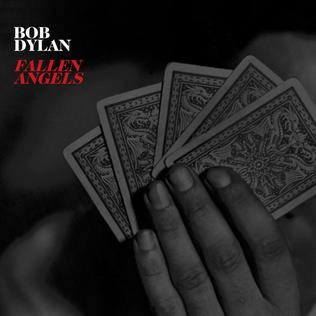
Bob Dylan 61: Fallen Angels

Having had something of a success with Shadows In The Night, Bob did something he’s rarely done: put out a sequel. By all accounts Fallen Angels is the balance of the tracks from the same sessions, played the same subdued style by his excellent touring band. Lest anyone say it’s another Sinatra tribute, the joke’s on them, because Frank never recorded “Skylark”, so there.

Most of these songs are more upbeat and less torchy than the last one, and comparisons are inevitable. It proves, somewhat in reverse, that he still knows how to put an album together, since Shadows certainly used the best songs from the batch. These are all good, but we’ve been spoiled.

“Young At Heart” is a great place to start, even if he does miss a few notes here and there. He has some trouble on the lonesome “Maybe You’ll Be There” and “All The Way”, too. “Polka Dots And Moonbeams” begins with a lengthy instrumental intro, giving us a chance to enjoy the band before the key changes and Bob wheezes in. There is a good balance of low-tempo and uptempo here, such as the switch from “Nevertheless” to the almost jaunty “All Or Nothing At All”; of course, those who bought it on vinyl will have to change side one to side two.

“On A Little Street In Singapore” is fairly obscure, with another long intro that sets up the exotic setting. Meanwhile, most casual music listeners would be familiar with “It Had To Be You”; Bob, historian that he is, sings the entire prelude section usually lopped off most other recordings of it. “Melancholy Mood” is another that plays before he begins singing, deftly navigating the pendulum from minor to major and back. You can almost hear him chuckling all the way through “That Old Black Magic”, the first-ever samba in his catalog. “Come Rain Or Come Shine” doesn’t provide a grand ending to compare to “That Lucky Old Sun”—or, for that matter, any of his other legendary closing tracks—but it does, seemingly, close this chapter of Bob’s music, ending on a minor chord.

If there’s a theme to Fallen Angels, it’s not as obvious as the last one. Nor is it obvious why the album has its title, or what the cover art has to do with any of it. Maybe these are simply the rest of the songs from those sessions. Maybe the novelty’s worn off, and these songs might have sounded better if they had been on the other album. But at a time when many of his contemporaries are leaving the planet, we’re lucky to still have Bob.

Bob Dylan Fallen Angels (2016)—3

Friday, January 15, 2016

Bob Dylan 60: The Cutting Edge

Nearly a generation after it began, Bob Dylan’s Bootleg Series continued to answer the dreams of fans, while adding to their nightmares. For the third year in a row, the compilers confounded all expectations, upping the ante each time.

In the annals of rock, the 18 months of creativity that resulted in Bringing It All Back Home, Highway 61 Revisited and Blonde On Blonde (as well as, by extension, the performance still referred to as the Albert Hall concert) are paralleled by few other artists. Outtakes from those albums have already been highlights of previous Bootleg Series installments, but now, in an astounding prequel to the complete Basement Tapes, and following three different “anniversary” or “copyright extension” collections, only with a lot more fanfare and easier availability, every recorded note of Dylan’s studio sessions in 1965 and 1966 has been presented to any discerning fan with six hundred bucks to spare. (Knowing full well that 18 CDs of multiple takes are too much for lots of people, there’s a six-CD distillation that still includes the complete evolution of “Like A Rolling Stone”, and a two-CD sampler that whittles 19 hours of tape down to two and a half.)

Unlike the Beatles, or Brian Wilson, who were busy pioneering their own recording techniques on different continents and coasts, Bob viewed the studio as another performance. Every song was recorded live, whether by himself or a room full of musicians. The lyrics would even change slightly, sometimes to match the dynamics of the song in progress. Overdubs or inserts were minimal, so whenever a take broke down, they started from the top. It becomes apparent why many takes were passed over for the ones that made the final cut, and the listener is often frustrated by hearing musicians from fifty years ago not quite getting the sound Bob hears in his head, and we’ve had imprinted on our brains.

That said, when the pistons were firing, Bob could work quickly. Bringing It All Back Home was recorded in three days, most of the first scrapped for later takes, often because they sound too much like Another Side Of Bob Dylan, which he was trying to get past. Two fine outtakes reappear here—“I’ll Keep It With Mine” and “Farewell Angelina”—and we hear his growing impatience with producer Tom Wilson. Amazingly, the false start of “Bob Dylan’s 115th Dream” comes from day one, and tacked onto a band take from a day later. (And while Bob does laugh, the hooting we hear is Wilson.) He was also coming to grips with having a band trying to keep up with him; earlier stabs at “Mr. Tambourine Man” involve a drummer. Much time was spent on “If You Gotta Go, Go Now” in a bid for a pop hit, wisely left off the album.

Once paired with new producer Bob Johnston for Highway 61 Revisited, he was a little more productive, and that album was recorded in three chunks of sessions. He never did figure out what to do with “Sitting On A Barbed Wire Fence”, which always sounded like a pale copy of “Outlaw Blues”, but at least he found the germs of other lyrics in it. It’s nice to hear “Queen Jane Approximately” before the guitar went out of tune, and fun to hear everybody crack up at the first use of the police whistle on “Highway 61 Revisited”. We get to experience “Desolation Row” as it passes through several rock arrangements, any of which are worthy of the final product.

The guys soon known as The Band were part of the first sessions for Blonde On Blonde, where things like “Jet Pilot” and “I Wanna Be Your Lover” were begun and abandoned. A couple of rocky “Visions Of Johanna” attempts still have promise, but a frustrating day spent on “She’s Your Lover Now” pretty much guaranteed why Bob never went back to it (though a few piano-based rehearsals predict the arrangement of “Dear Landlord”). Only Robbie Robertson was brought to Nashville, where local guys (directed by Al Kooper, or so he’d have us believe) helped whip the rest into place. Even that wasn’t easy going, as too many misfires on “Leopard-Skin Pill-Box Hat” prove, particularly the ones with the knock-knock-car horn-“who’s there” intro. Even “I’ll Keep It With Mine” was still in the running at this point, but ignored once “Sad-Eyed Lady Of The Lowlands” arose. Amazingly, six of the album’s 14 songs were nailed in the final 25-hour session.

The final disc of the massive set is devoted to hotel room recordings, as depicted in D.A. Pennebaker films of the time; the segments from 1966 are fascinating, with Bob finding his way through song ideas with Robbie. And those who bought the big package got an added bonus via download: 50th Anniversary Collection 1965 presented another 15 hours of music in the form of ten acoustic concerts, four partially electric concerts (including Levon Helm on drums before he bailed) and other performances. The two-CD “best of” will leave you wanting more, so the six-CD set just might fill the average appetite.

Bob Dylan The Cutting Edge 1965-1966: The Bootleg Series Vol. 12 (2015)—4

Friday, November 27, 2015

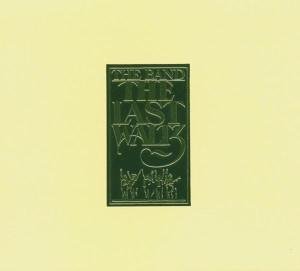
Band 9: The Last Waltz

It shouldn’t be news to anyone that The Last Waltz is one of the better rockumentaries in the genre. Much of the credit belongs to Martin Scorsese’s direction, which alternates staged interviews and performances with “you are there” footage from The Band’s star-studded farewell concert. The editing is particularly masterful; rather than presenting the concert as it was, many of the performances are shuffled. The film even opens with “Don’t Do It”, which was actually the night’s final encore.

Such suspensions of time are sometimes necessary to elevate a film that’s not designed to be a fly-on-the-wall cinema verité portrait. And when you add Robbie Robertson, with his fancy new haircut, telling his new best friend about “eight years of concerts, stadiums and arenas”, a simple glance at their actual activity between 1968 and 1976 will have the scholar wondering how empty itineraries in 1972 and all but one date in 1975 made their job so grueling.

All our nitpicking aside, the film is still fun to watch, and the music is terrific. The album, originally a three-record set, is paced well, with Band classics alternating with vocal spots by their very special guests, augmented by a horn section. Their old boss Ronnie Hawkins comes out for “Who Do You Love”, and Neil Young manages to overcome the ball of coke he snorted before his still sleepy rendition of “Helpless”. Joni Mitchell’s voice appears from backstage during that number, and then she comes out for an excellent performance of “Coyote”.

Robbie had recently produced an album for Neil Diamond, and despite Levon Helm’s protestations, was given a spot singing “Dry Your Eyes”. It’s a fine song, but nothing compared to Rick Danko’s excellent job on “It Makes No Difference”, not to mention Garth Hudson’s beautiful sax solo. Dr. John closes side two with “Such A Night”, a good setup for the blues sequence on side three. Paul Butterfield blows harp on their arrangement of “Mystery Train”, Muddy Waters burns the place down with “Mannish Boy”, and Eric Clapton duels with Robbie on “Further On Up The Road”.

Poor Richard Manuel doesn’t get a chance to sing until “The Shape I’m In” on side four, followed by their friend Bobby Charles coming out for “Down South In New Orleans”. Van Morrison emerges from his mid-decade hiatus to sing “Tura-Lura-Lura” with Richard, before completely demolishing the place on “Caravan”. Bob Dylan was an expected guest, but shocks with his nearly shoulder-length hair stuffed under a hat. All but one of his songs from the show appeared on the original album; 1966 is visited via “Baby Let Me Follow You Down” and “I Don’t Believe You”, and a tender “Forever Young” manages to turn into a reprise of the first track. Then everybody crowds the stage for a mass chorus on “I Shall Be Released”, Richard somewhere back there on his piano.

Side six presents “The Last Waltz Suite”, a loose set of songs recorded on a soundstage, and some inserted in the film. In addition to “The Weight” performed with some of the Staples Singers and “Evangeline” with Emmylou Harris, Robbie gets a solo vocal on “Out Of The Blue”, while Richard barks “The Well” and duets “The Last Waltz Refrain” with Robbie. “The Last Waltz Theme”, which appears at the top of side one, closes the set with an orchestra. While not stellar, they’re easily better than most of Islands.

Several songs in the album aren’t in the film, and vice versa. Even the four-CD box set, which adds much more from the concert and rehearsals, doesn’t include the complete show as performed. But of all their live releases, The Last Waltz is the best, and not just for their own songs. In the end it’s the music that makes it a nice finale for whatever was actually over; Levon would insist that the whole deal was Robbie’s ego trip, and the other guys would play together, in dives even smaller than the ones where they started out, up until and beyond Richard’s suicide in 1986, and continuing in various combinations until Rick died in 1999.

The Band The Last Waltz (1978)—4
2002 box set: same as 1978, plus 24 extra tracks

Friday, March 27, 2015

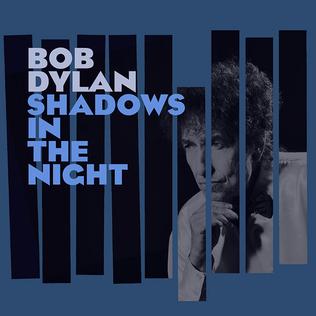
Bob Dylan 59: Shadows In The Night

Just when we think we’ve reached saturation on established artists reinterpreting the Great American Songbook, here comes another. The easy go-to concept for Shadows In The Night is that it’s Bob Dylan singing Frank Sinatra. While these songs are certainly associated with Frank, it’s safe to assume Bob’s familiar with other versions. However, a comparison to Frank’s recordings proves that those arrangements are the ones that Bob’s band labored to replicate to scale.

Seeing as Frank co-wrote “I’m A Fool To Want You”—and it’s still considered to be an ode to Ava Gardner—there’s no escaping the connotation. Here, with the barest echo of brass in the back of the mix, it’s a close cousin to the lovelorn music of Time Out Of Mind. The same goes for the weariness in “The Night We Called It A Day”, but the theme switches for “Stay With Me”, which, despite the assumption of the title, is actually something of a hymn. He sounds shakiest here, but still believable. “Autumn Leaves” is one of the shorter tracks, the bulk of it devoted to the intro, and you can just hear the guitar mimicking the wind in between the lines of the first verse. “Why Try To Change Me Now” effectively sums up his entire career, delivered with more of a shrug than a sob.

Familiarity with such oft-heard chestnuts can only inspire comparisons, so it’s hard to approach tracks like “Some Enchanted Evening” and “What’ll I Do” with complete objectivity. Let’s just say that the middle-eight of the latter should have been phrased a little tighter than he has. “Full Moon And Empty Arms” is the oldest song here, adapted from a Rachmaninoff melody, and some of those off notes are actually part of the original, proving his ear is spot on. “Where Are You?” was the title track of a Sinatra album that included three others of the songs here, and again, Bob nails it. Saving the best for last, “That Lucky Old Sun” is more associated with Ray Charles, or at least is was when Bob first started playing it three decades ago with Tom Petty and the Heartbreakers. Without the Queens of Rhythm, it’s even better here.

As noted, the band is terrific throughout Shadows In The Night, and Bob wisely doesn’t strain his voice past the point of tolerance. Recorded at Capitol Studios (the host, coincidentally or not, of such recent albums as Paul McCartney’s standards set, Neil Young’s orchestral experiment, and those updated Basement Tapes) with just a few mikes, you can hear his wheezy breath between the occasional verses. Most reports agreed that these weren’t the only songs recorded during the sessions, suggesting—dare we dream—the possibility of a sequel. One should always expect a curveball when Dylan’s on the mound.

Bob Dylan Shadows In The Night (2015)—

Tuesday, December 30, 2014

Bob Dylan 58: 50th Anniversary Collection 1964

Another Christmas present arrived from Bob Dylan in the form of the third limited-release collection of copyright busters. This time, nine LPs cover the extraneous material, filling in the holes around the one album he recorded in 1964, and the performances already available on various Bootleg Series. This stuff has long been documented, and one wonders if the producers merely follow the lead of certain websites.

A single visit to the studio in June was the source for Another Side Of Bob Dylan, and two sides’ worth of outtakes from it form the centerpiece of this set. Two incomplete, forced takes of “Black Crow Blues”, both on the guitar, demonstrate why the one on the album has piano. A 44-second excerpt of “Mr. Tambourine Man” seems to be included just because it can be, but four separate takes of “I Shall Be Free No. 10”, some with different words, show both how and why it was edited on the LP.

A tape recorded with Eric Von Schmidt (the blues guitar player he’d met in the green pastures of Harvard University) spans three sides and follows the pair running through blues riffs, R&B covers, silly impromptu songs and what appears to be the first recorded performance of “Tambourine Man”. If you’d rather hear him spar vocally with Joan Baez, four tinny “duets” are placed where they belong.

The rest of the material chronicles various live performances, beginning with a short set from Canadian television that closes with a nice version of “Restless Farewell”. Two of the records cover a London performance two years to the day before the notorious “Albert Hall” concert, recorded in excellent quality. “Walls Of Red Wing” and “Eternal Circle” are the rarities here, along with another “Restless Farewell”. The concerts on either side of the Halloween Philharmonic Hall show are, unfortunately, barely listenable; the intercom-quality sound in Philadelphia obscures the crowd’s laughter at “I Don’t Believe You” and their wonder at “It’s Alright Ma”, and renders the variations in “Talkin’ World War III Blues” inaudible. The California shows are a bit clearer but marred by the taper’s conversations. These would never have passed for official releases, so having them here to “protect” their copyright is laughable.

Somewhere out there somebody spent lots of money on one of the thousand copies of this set, and generously shared it over the Internet. Some people will buy anything.

Bob Dylan 50th Anniversary Collection 1964 (2014)—
CD availability: none; LP only

Friday, December 26, 2014

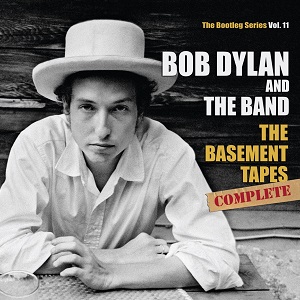
Bob Dylan 57: Basement Tapes Complete

Only a year after one of its finest installments, Bob Dylan’s occasional Bootleg Series maintained its quality by revisiting one of the most beloved and mysterious eras of his career. Volume 11 served up two discs of unadorned recordings, alternates and true rarities from the series of sessions known as the Basement Tapes, in excellent sound, with no after-the-fact overdubbing and no Band-only tracks. And to beat that, a deluxe edition offered everything captured in those sessions with Bob present, 139 tracks in mostly chronological order. (The timing was particularly apt, as the project was revealed and released right around the time of another album involving long-lost lyrics.)

For those seeking only a taster, The Basement Tapes Raw is two hours of arguable highlights, focusing on completed songs and less on the “jam” aspect of the sessions. Here, finally, in one tidy package are some truly legendary tracks in pristine sound. Neither “Silent Weekend” nor “Get Your Rocks Off” seems finished, but Dylan’s laughter on the latter makes it worth the listen. The first take of “You Ain’t Goin’ Nowhere” sports a truly surreal batch of alternate lyrics, while take two of “Too Much Of Nothing” is more straightforward than the chromatic experiment that made the 1975 album. The amateurish trombone all over “Don’t Ya Tell Henry” makes it clear why it was left alone till now. “Sign On The Cross” manages to stay mesmerizing over seven slow minutes, and “All You Have To Do Is Dream” has the potential of a wonderful pop song, whatever “floor birds” are. And while “I’m Not There” made its legal debut in 2007, it’s great to have this fascinating tune back alongside its brothers (including the close cousin “I’m Alright”).

The armchair Dylanologist has to have everything, and The Basement Tapes Complete does offer hours of listening pleasure, though not everything deserves more than one play. A 12-string acoustic guitar is hard to get into tune in the first place, much less when it’s being strummed by someone for whom pitch is already elusive. The compilers did do us a favor by putting the “least listenable” of the tracks on the sixth disc; besides not being recorded as well, with a particularly distorted electric piano guiding the way, there’s little hidden treasure here. Also, these were a bunch of guys in their 20s, basically playing hooky, so some of the goofiness doesn’t translate. But when they do catch fire, its wonders to behold.

There’s already been a lucrative cottage industry based around picking these sessions apart, and many of the mysteries will never be solved—mostly because nobody was anal enough to note dates, times, locations, who was playing what, etc. Some insist that “Garth’s order” isn’t to be trusted, but there is some structure to it, as successive performances are heard to go increasingly off rails. We can also hear where the focus switched from playing whatever struck to trying to arrange brand new songs. Having multiple takes of several songs will inspire further argument as to which is “best”. (And to think “Tiny Montgomery”, of all things, was the earliest track considered worth selling, appearing a whole disc away from the next one, “Million Dollar Bash”. From there, he doesn’t let up until disc five.)

The mystique of the sessions remains, mostly because it’s still not clear why all this was preserved on tape in the first place. Remakes of “One Too Many Mornings”, “It Ain’t Me Babe” and “Blowin’ In the Wind” suggest possible preparations for a stage performance. His Nashville Skyline voice surfaces a few times. The preponderance of country & western covers puts Self Portrait in yet another light, and makes Robbie Robertson look especially petty for claiming that it was The Band who “taught” Dylan all this music, instead of the other way around. How come he never went back to “One Man’s Loss”, “Lock Your Door” or “Wild Wolf”? Was it all recorded before John Wesley Harding? And what the hell was his fascination with “Spanish Is The Loving Tongue”, anyway?

We can be thankful that this weary world can finally hold not only a completed Beach Boys Smile CD, but a Basement Tapes collection that surpasses even the most revered bootlegs. Now fans had a very wide bridge from Blonde On Blonde to John Wesley Harding, and it only took 47 years.

Bob Dylan & The Band The Basement Tapes Complete: The Bootleg Series Vol. 11 (2014)—4

Friday, December 5, 2014

The New Basement Tapes: Lost On The River

Given the development of this unique little album, it’s bound to confuse people who aren’t obsessed with Bob Dylan or any of the participants. (Especially since its release was arguably overshadowed by a product more important to those obsessed.) Basically, it’s new music written to suit a pile of handwritten lyrics most likely dating from prior to the recordings known for years as The Basement Tapes. (Something similar happened in the ‘90s with unused Woody Guthrie lyrics, so there’s another precedent.) The project was driven by T Bone Burnett, so ultimately, it’s a T Bone Burnett album, familiar to anyone who’s heard the O Brother, Where Art Thou soundtrack or Raising Sand, the stellar meeting of Robert Plant and Alison Krauss. The New Basement Tapes is the name given to the collective, these song gathered under the title Lost On The River.

They’re not trying to recapture the basement sound of “Million Dollar Bash” or “Please Mrs. Henry”, but living within the country, blues and Appalachian folk that people like Greil Marcus insist inspired the original sessions. Banjo and fiddle courtesy of Rhiannon Giddens of the Carolina Chocolate Drops make this a distinct slice of Americana, and that’s considering that two Brits—Burnett buddy Elvis Costello and Marcus Mumford on leave from Mumford & Sons—are involved. Jim James of My Morning Jacket and Taylor Goldsmith from Dawes round out the group, and everybody swaps instruments when one is needed. (Of course, there’s a deluxe version with five more songs, one per band member.)

As per his recent work, Elvis tends to over-emote and spit. “Six Months In Kansas City” is two songs stuck together, encouraging shouted asides from the rest of the group, but still fares better than “Married To My Hack”. “Golden Tom—Silver Judas” could go on his “Sugarcane” albums, and the lovely melody on his version of “Lost On The River” (denoted “#12”) makes it the keeper of his contributions. (It was a smart move to record several versions of each song to inspire collaboration, and certainly to set up a possible sequel already in the can should demand arise, but the mind shivers at the possibility of stabs at “Hidee Hidee Ho” that didn’t make the first cut.)

Elvis is arguably the biggest “name” here, but he doesn’t nudge aside the lesser-known players. If anything, this album will expose people to them. Jim James already made a stamp as a Dylan interpreter from his appearance in the surreal faux-biopic I’m Not There. Arguably, his songs sound the most like potential Dylan songs, given his voice’s similarity to the Nashville croon. “Down On The Bottom” builds well, while “Nothing To It” is both jaunty and rocking, infused with a wonderful fuzz.

The original basement sessions were a pointed boys’ club, so having a woman sing on these also makes it separate from that established norm. At first appearance Rhiannon Giddens reminds the listener of Natalie Merchant, who appeared on the Billy Bragg and Wilco collaborations on the Guthrie material, but that comparison is grossly unfair considering how much more she offers. She infuses “Spanish Mary” with a melody that Bob would have been happy to pinch himself (and if he keeps making albums, he still might). And her closing take of “Lost On The River” (denoted “#20”) is pleasingly spooky. Taylor Goldsmith’s “Liberty Street” also recalls the Bragg/Wilco project, only because it’s so damn gorgeous, while “Card Shark” sounds uncannily like early Bruce Cockburn. Marcus Mumford’s offerings sound a lot like what’s thus far brought him a fan base; “Kansas City” and “Stranger” are his standouts, the latter a welcome example of Dylan wordplay.

But even though Dylan was the spark for the project, and he did endorse it while keeping his distance, the album is best appreciated out of that context, and for that, it succeeds. To get a better appreciation for their accomplishment, the Lost Songs: The Basement Tapes Continued documentary is rather illuminating, though the staged recreations of the events of 1967 inspire more winces than wonder.

The New Basement Tapes Lost On The River (2014)—4

Friday, April 25, 2014

Band 5: Rock Of Ages

While it wasn’t completely apparent at the time, The Band were out of ideas after four albums on their own. According to Levon’s autobiography, it was his idea to do a double live album to keep the record company off their backs, and Robbie suggested bringing in a horn section to make the concerts that much more special. Recorded at the comparatively intimate Academy of Music in Brooklyn, the resultant Rock Of Ages presents tight, well-worn tunes, with horn arrangements by Allen Toussaint that don’t get in the way at all.

After a brief explanation, their cover of “Don’t Do It” arguably rivals that of The Who, and on they go through the classics: “King Harvest”, “Caledonia Mission”, a curve ball in “Get Up Jake”, an outtake from the second album, “W.S. Walcott”. Richard is in particularly good voice, as is Levon. Rick gets to shine on “Stage Fright” and “This Wheel’s On Fire”, while a stately intro to “The Night They Drove Old Dixie Down” prefaces the grace within, with an inspired segue into an increasingly raucous “Across The Great Divide” and “Rag Mama Rag”, the latter with particularly crazy piano work from Garth.

“The Weight” is a little loose, with even a few mistakes left in to prove that it’s live, but things get back in order for “The Shape I’m In”. “Unfaithful Servant” is just as mournful as ever, and “Life Is A Carnival” shows where Allen Toussaint came into the picture in the first place. Garth’s lengthy, bent-note organ improvisation, titled “The Genetic Method”, detours into “Auld Lang Syne” at the appropriate moment, before finding its way to “Chest Fever” (which pale to the studio version). The package ends with a cover of “(I Don’t Want To) Hang Up My Rock ‘N Roll Shoes”, a prophetic title, and something of a harbinger of their next album.

As was not uncommon for double albums in the early part of the digital era, the first CD of Rock Of Ages presented an abridged version of the album (this after it had already been split into two budget-priced LPs/cassettes). By the 1990s it was restored in full, albeit across two discs. After the turn of the century, Robbie managed to squeeze it all on one disc, but added a second CD of ten more songs from the concerts, including the four with special guest Bob Dylan. This was only a few months after the Concert For Bangla Desh, and apparently now he was ready to rock. And he does, with “Crash On The Levee”, a barely-there “Don’t Ya Tell Henry”, the Band arrangement of “When I Paint My Masterpiece” and, finally, “Like A Rolling Stone” with mumbled words but still much better than at the Isle Of Wight (two years earlier, not six or sixteen). Even the horns get into it.

And as if that wasn’t enough, Robbie spearheaded a further expansion presented two different ways. Live At The Academy Of Music 1971 offered “every song played over the course of the four concerts” one two discs—basically a reshuffled, remastered version of the 2001 reissue, plus two songs never released anywhere. (Or, you could empty your wallet for the super-deluxe-in-all-but-title version that added on the complete December 31 show in what they call a surround mix, possibly to ease the pain of buying eleven songs twice in the same package.)

Either of the versions released this century shows the Band in their best element, a few years before another, bigger concert overshadowed their legacy. The extra tracks are certainly welcome, with more hits and better versions of “Smoke Signal” and “The Rumor”, plus the Motown nugget “Loving You Is Sweeter Than Ever”. And Dylan fanatics will welcome the missing piece of his “lost years”.

The Band Rock Of Ages (1972)—
2001 CD reissue: same as 1972, plus 10 extra tracks
2013 Live At The Academy Of Music 1971: The Rock Of Ages Concerts: same as 2001, plus 2 extra tracks (CD/DVD version adds 27 extra tracks)

Monday, December 23, 2013

Bob Dylan 56: 50th Anniversary Collection 1963

Well, it happened again, sort of. This time, the assumed record label attempt to either protect their archives, tease the public or both resulted in a six-record set of otherwise uncollected (but mostly bootlegged) Bob Dylan recordings, with limited availability.

This time, however, the studio takes on 50th Anniversary Collection 1963 total exactly six: alternates of “Eternal Circle” and “Percy’s Song”, another extremely sloppy stab at “That’s All Right, Mama” that peters into something called “Sally Free And Easy” before stopping altogether, the slightly more interesting “East Laredo Blues” piano solo, and the legendary unreleased tracks “Hero Blues” and “New Orleans Rag”.

The bulk of the live recordings are of more historic than musical interest. “When The Ship Comes In” at the March on Washington, for example, would be a lot more palatable if it didn’t sound like a news broadcast (and didn’t have Joan Baez yodeling all the way through it). Typical is a 12-song sequence called “The Banjo Tape” (because of one of the accompanists; he appears to have acquired a 12-string). In this seemingly impromptu hootenanny, the most successful songs, and the ones that don’t break down after a minute, happen to be his own compositions.

There’s also the balance of his two legendary New York concerts of the year, at Town Hall and Carnegie Hall. Despite these having already been plundered for various Bootleg Series sets (and in one case, Greatest Hits Vol. II) with pristine sound, having been professionally recorded, the question is begged: why not issue the complete shows in sequence?

Then there are a few lost songs, some better than others. “Ramblin’ Down Through The World” began the Town Hall show, and isn’t much of anything. “Hiding Too Long” is more fascinating, if clumsy. There are a few renditions of “John Brown”, and several of “Only A Pawn In Their Game”.

Like most bootlegs, this isn’t an album sequenced for anything other than posterity, and the multiple takes of less than exciting songs gets tiresome. It still provides a fascinating glimpse at the kid trying to finish his second album and on his way to his third.

Bob Dylan 50th Anniversary Collection 1963 (2013)—3
CD availability: none; LP only