Showing posts with label stephen stills. Show all posts

Friday, March 7, 2025

CSN 14: Live At Fillmore East

The big question wasn’t so much why this came out when it did as what took them so long. Crosby, Stills, Nash & Young had been playing gigs for only a few months when they did a stint at New York’s Fillmore East. (Ten days after these shows, Crosby’s live-in girlfriend would be dead in a car accident, just as they began recording what would become Déjà Vu.)

For decades, 4 Way Street was the only comprehensive live document, captured just as they were starting to fray and splinter. Culled from the two shows on the second night of the stand, Live At Fillmore East is structured the same way, but goes back to the beginning, with the original rhythm section of Dallas Taylor and Greg Reeves still on board.

The debut album was still new at these shows, and the joy of singing “Suite: Judy Blue Eyes” is as fresh as their excitement over what they could do with the Beatles’ “Blackbird”. They can’t help but giggle their way through “Helplessly Hoping”, but calm down a bit for “Guinnevere”. “Lady Of The Island” nicely highlights the Crosby-Nash blend, then Stephen previews “Go Back Home” and “4+20”, with Neil coming out for “On The Way Home” in between. (Only Stephen knows the words, as the other two haven’t figured out what to add yet.) Graham plays “Our House” at the organ—you can just hear the slightest high-hat in the back—and it’s cute, but a little jarring. A few people in the crowd recognize “I’ve Loved Her So Long”, and Graham adds a nice part before they all join in on “You Don’t Have To Cry”.

The wooden portion over, it’s time to rock. “Long Time Gone” and “Wooden Ships” are duly played with Neil and Stephen goading each other. After a drop in volume, “Bluebird Revisited” is a nice surprise from a 55-year perspective. “Sea Of Madness” should be familiar from its strange appearance on the Woodstock 2 compilation, and “Down By The River” runs over 16 minutes, in an initially more intricate version, for lack of a better word than any Crazy Horse rendition. And since you can’t end a CSNY concert without “Find The Cost Of Freedom”, that’s how the disc ends.

The album is dedicated to David Crosby, and brings the listener as well as the artists back to a time when they could still get lost in the wonder of music without too much of the egos getting in the way. In addition to hearing Graham yell “yeah!” after nearly every song, the other three each contribute paragraphs of appreciation to help drive it home. Given the potential, it’s just a shame they didn’t include both shows, complete.

Crosby, Stills, Nash & Young Live At Fillmore East, 1969 (2024)—

Tuesday, February 25, 2025

Stephen Stills 16: Live At Berkeley

Following the release of his second solo album, Stephen Stills embarked on an ambitious tour that he hoped would not only encompass his musical palate, but further establish him as a singular force with which to be reckoned. Along with four guys who would continue with him in Manassas, another guitarist plus a sax player and the five Memphis Horns filled out the sound even more. Reports say he booked 52 dates, and even he says he handled the pressure of his setlists by getting good and drunk before every show.

Luckily for us, the performances picked from the final two shows on Live At Berkeley 1971 aren’t embarrassing in the least. It also helps that these were theater shows, more intimate and forgiving than the hockey arenas played earlier on the tour. He begins acoustically, where he’s accompanied by Steve Fromholz on guitar and vocals. Proof that CSN wasn’t dead in the water, David Crosby is brought out for “You Don’t Have To Cry” (Fromholz filling in well) and his own “The Lee Shore”. He moves to the piano for a very nice “Sugar Babe” and the now-familiar “49 Bye-Byes/America’s Children” medley, and straps on a banjo for “Know You Got To Run”. The full band comes on for “Bluebird Revisited”, which burns pretty slow compared to Wayne Jackson’s “Lean On Me”. “Cherokee” runs almost ten minutes, plenty of time for the band to cook.

The sound throughout is clear and warm. Considering that it captures a moment in his career before things changed and would change again, this set goes a long way to remind us how good Stills could be when he got out of his own way and just played. One does wonder what they left out.

Stephen Stills Live At Berkeley 1971 (2023)—

Friday, January 12, 2024

Stephen Stills 15: Everybody Knows

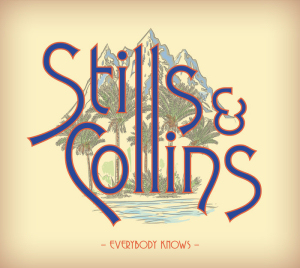
It was a great idea on paper: Stephen Stills and Judy Collins, who’d collaborated briefly musically and otherwise in the late ‘60s, finally doing an album together. Being the nature of the biz in this century, Everybody Knows was crowdfunded and promoted with a tour.

The album mixes covers and songs from their own catalog, some of which actually refer to each other. This would have been wonderful if these septuagenarians had voices that blended. Judy still has it, and sounds as sweet as ever, but Stephen does not mesh with her at all. The result is akin to overhearing a conversation at a high school reunion, appealing much more to the participants than observers.

The Traveling Wilburys’ “Handle With Care” is a surprisingly fun way to start. “So Begins The Task” was on the first Manassas album, but allegedly dates from just after their breakup. “River Of Gold” is a lovely lament for the environment written and sung by Judy, which soars when Stephen takes a solo, but sinks when he harmonizes. He finds the notes, but his voice is just too rough. The vintage “Judy” follows, first heard on Just Roll Tape, and odd to hear her harmonizing. The title track is the oft-traveled Leonard Cohen song; he died the year before.

Judy first released “Houses” in 1975, and we imagine Stephen was tickled to have a song written about him included. “Reason To Believe” and “Girl From The North Country” are of course well-worn folk standards, and Judy likely gave “Who Knows Where The Time Goes” its widest exposure back in the day. Finally, “Questions” doesn’t stray too far from the Buffalo Springfield template.

Impeccably recorded with a mix that recalls the soft rock of Daylight Again, Everybody Knows is a nice idea that unfortunately is fifty years too late. Had they managed to make an album like this back then, there’s a good chance it would have been widely beloved. But this isn’t it.

Stills & Collins Everybody Knows (2017)—2

Tuesday, August 19, 2014

CSN 13: CSNY 1974

In the summer of 1974, Crosby, Stills, Nash & Young embarked on a massive tour that brought their particular brand of singer-songwriterness to stadiums packed to the gills with ticket-buyers. Since their previous tour (and album together), roughly 12 albums’ worth of material had been released between the four of them, in addition to all the stuff Neil still had on deck. Supported by the crack rhythm section of Tim Drummond on bass and Russ Kunkel on drums, with Stills buddy Joe Lala on congas and cowbell, each show lasted for three hours on average, all four anxious to get as many of their own songs in. (Cocaine’s a hell of a drug.)

In the decades since then, the tour has been remembered for its excess, both pharmaceutical and egotistical. Even the participants have expressed varying memories about the experience. Graham Nash, in his role as self-appointed archivist, took up the task of re-assessing the tour from the vantage point of the shows that were professionally recorded, and it only took him about five years to finish it.

In its triple-CD-plus-DVD package, CSNY 1974 offers 40 songs from 10 shows, culled from the 77 different songs played throughout the tour. The program is split into three sets, roughly corresponding to a typical show. (We wouldn’t’ve put it past Rhino to issue a “complete” box of all ten shows start to finish, à la what they’ve been doing with the Grateful Dead lately, but they haven’t.) The “First Set” is full band electric; the “Second Set” is mostly “wooden music”, acoustic and solo; the “Third Set” brings the rhythm section back in full.

Nash has admitted to tweaking the tapes here and there, fixing harmonies and notes, and flying in other parts of the same track to smooth over a rough patch, so we’ll leave it up to other scholars to identify what songs came from where. For all his work, Stills sounds pretty ragged, to the point where his singing is unintelligible. His attempts to sound “soulful” often come off garbled; even when he’s playing guitar, a certain amount of showboating takes over when finesse is preferred. In contrast, Crosby is spot on at all times, and Nash is just happy to be there. For all his contrariness, Neil’s quite the team player, happily contributing harmonies, lead guitar and/or piano on the others’ tunes.

The big excitement (for Neil fans, anyway) is the first official release of several songs yet to be otherwise collected. “Traces” is a highlight of the first disc, in all its brevity, as is “On The Beach”, the title track of his solo album just in stores. The second disc has the most surprises, with an early duet of “Long My You Run” with Stills preceding the one-off “Goodbye Dick”, itself a slight variation of “Mellow My Mind” on the banjo, which follows complete with CSN harmonies and an extra line. “Love Art Blues” and “Hawaiian Sunrise” are nice to have in some form, personal as they are. The third disc has a terrific “Don’t Be Denied” (making its digital debut in any legal form) with an extra verse from its Time Fades Away incarnation, an intense “Revolution Blues” and, best of all, the mesmerizing “Pushed It Over The End”, showcasing the band and singers deftly navigating all those shifts from 5/8 to 4/4 over eight minutes.

Along with a thick booklet crammed with photos, quotes and instrumental credits, CSNY 1974 does provide, literally, hours of entertainment. Whatever surgery was performed to make it sound good took; it probably helps that the recordings were made towards the end of the tour, when most of the kinks had been worked out, and for the most part, the band cooks. (Of course, it only fanned the fire for Neil’s Archives Vol. II, which straddled and overlapped this era when it finally came out.)

Crosby, Stills, Nash & Young CSNY 1974 (2014)—

Monday, July 21, 2014

Stephen Stills 14: The Rides

For all his dabbling in styles over the years, Stephen Stills has always considered himself a blues man. His excursions into the genre have varied from astounding to embarrassing, and his fretwork hasn’t always been welcome in, say, a Crosby, Stills & Nash forum.

So it’s surprising that it only took him half a century to find an outfit that just lets him wail. The Rides pairs him with young phenom Kenny Wayne Shepherd, with Barry Goldberg (who was on the Bloomfield side of the Super Session album) on keyboards and a rhythm section including Chris Layton, once of Stevie Ray Vaughan’s band, on drums. On Can’t Get Enough—co-produced by Jerry Harrison of Talking Heads, interestingly enough—Stills and Shepherd alternate vocals on mostly originals, but there are some surprising takes. Shepherd happily sneers his way through the Stooges’ “Search And Destroy”, but he’s not as convincing on Muddy Waters’ “Honey Bee”. Stills hasn’t been in the strongest voice for years, but he’s most animated on the loud take on his own “Word Game”. The title track is not the Bad Company song, and we’ve got mixed feelings about that, but “Rockin’ In The Free World” adds nothing to the original. Basically, the album is best when they just play (and when there are no backing vocalists).

Three years later, the same crew delivered Pierced Arrow, which picked up where they left off, only louder. “Virtual World” halves the pace, but it’s a duet in harmony, “By My Side” is a slow burner, also with good harmonies, and “Mr. Policeman” has a terrific swagger. All the tracks were original collaborations this time, with the exception of Willie Dixon “My Babe” and “I’ve Got To Use My Imagination”, which first appeared on Barry Goldberg’s 1973 eponymous album. The backing vocalists were different this time, and mixed lower, and Kim Wilson of the Fabulous Thunderbirds blows harp, most prominently on “Game On” and the lyrically inane “I Need Your Lovin’”. Again, the focus is on the musical interplay and of the two—as there haven’t been any further Rides albums—Pierced Arrow gets the edge.

The Rides Can’t Get Enough (2013)—3
The Rides
Pierced Arrow (2016)—3

Sunday, July 20, 2014

Stephen Stills 13: Carry On

When it was Stephen Stills’ turn to get a Graham Nash-curated box set, he had to have four CDs, not three. Considering the volume of music he’d put out over nearly half a century, it almost makes sense, but any collection would have to keep in mind that quantity in Stills’ case doesn’t necessarily indicate quality. Luckily, Carry On is designed for those who like deep dives, via alternate versions and unreleased tunes.

The first sound we hear is a 17-year-old kid sweetly singing and picking on a Voice of America radio feed from Costa Rica; two years later his voice has acquired some of the smoke we’re accustomed to, with The Au Go Go Singers. Ten Buffalo Springfield tracks provide a terrific glimpse into his contributions there; sadly, the rare extended “Bluebird” jam is still MIA. We’d already heard the demo of “Four Days Gone” on the Buffalo box, but two one-man band demos nicely lead into the first CSN album and Déjà Vu. A solo “So Begins The Task” and a one-man-band-plus-drummer version of Crosby’s “The Lee Shore” are nice surprises.

Disc two offers a wonderful sequence. It covers roughly two years, in neither recording nor release order, but encompasses his first three albums, all made without those other guys. Hidden gems include an early version of “The Treasure”, a live duet with Steve Fromholz on “Do Unto Others”, “Find The Cost Of Freedom” from a surprise appearance with Neil Young at a Crosby-Nash gig, and “Little Miss Bright Eyes”, which evolved from a Déjà Vu outtake called “Ivory Tower”. And while he’s obviously proud that he got to play with Hendrix, did their unreleased “No Name Jam” really need overdubs in this century?

That disc stands alone just fine, but disc three is where it starts to unravel. We begin with some of the not-so-highs of the Stills album before bouncing through the rest of the ‘70s and into the ‘80s. Illegal Stills is ignored, but Thoroughfare Gap isn’t. A couple live acoustic tunes break up the slickness; other rarities include “Spanish Suite” with Herbie Hancock, a CSNY mix of “Black Coral”, an edited but still interminable “Dear Mr. Fantasy”, and the quieter mix of “I Give You Give Blind”.

Disc four is just as spotty, notable for offering selections from the anemic Allies live album for the first time on CD. A solo sketch called “Welfare Blues”, recorded at Jimmy Page’s studio, appears for some reason, as does an unnecessary remake of “Church (Part Of Someone)” from his first album, overloaded with synths and emoting chorists. Nice selections from Stills Alone sit uncomfortably next to clunkers from Man Alive! In the middle of all this is a live arrangement of “Girl From The North Country”, from one of the last times CSN sang together well in public, and a version of Otis Redding’s “Ole Man Trouble” from one of the CSNY2K tours with Booker T. & the MG’s.

The first half of Carry On is stellar, so while it’s a shame the rest can’t keep up, we didn’t expect it to. This one’s for the fans. And Graham.

Stephen Stills Carry On (2013)—

Saturday, July 19, 2014

Stephen Stills 12: Pieces

The outfit Stephen Stills called Manassas had a lot of potential, but had imploded before really reaching it. Stills and main partner Chris Hillman were increasingly distracted by their legacies and other collaborators to sustain it past the year they were together. (These ears felt Hillman was unfairly kept to second fiddle status anyway.)

So in a year when Crosby, Stills & Nash were celebrating their fortieth anniversary (and Graham Nash and Neil Young put out their own box sets), it was nice for Stills to curate a third, lost Manassas album. Pieces presents a deeper glimpse at the band’s potential, touching on all the genres they attempted to cover while they were together. It also gives more though not equal time to Hillman.

Some of these are alternate versions, but not alternate takes per se. “Witching Hour” and “Like A Fox” are absolute gems astoundingly left off the first album; “Sugar Babe” is an excellent improvement on the track from Stills’ second album, whereas “Word Game” is given an unnecessary shuffle. “Fit To Be Tied” would turn into “Shuffle Just As Bad” in a few years, while “My Love Is A Gentle Thing” had already been heard on the CSN box and was started in 1970 and finished in 1975, which doesn’t explain what it’s doing here. “High And Dry” goes from a “bluesman with my guitar” growl to a faster arrangement with what we assume is a canned audience cheering. “I Am My Brother” is Stills alone with his acoustic.

“Lies” is a rockin’ Hillman alternate, while “Love And Satisfy” shows another side of his talent. He likely leads a bluegrass detour through “Panhandle Rag”, “Uncle Pen”, and “Dim Lights, Thick Smoke (And Loud, Loud Music)”, including an alternate of “Do You Remember The Americans”, and including input from sometime Burrito Byron Berline. For contrast, the brief “Tan Sola Y Triste” instrumental fits the Latin side of the band.

Had some of these tracks made it to Down The Road, the band just might have endured longer. Or maybe not. At any rate, it’s a treat to have the material on Pieces available. Its length and quality illuminate its predecessors, and that was the point.

Manassas Pieces (2009)—3

Friday, July 18, 2014

CSN 12: Demos

While Neil spent much of the decade promising and delaying his box set, the others in Crosby, Stills & Nash quickly realized that there was gold in them there hills. Nash curated box sets for himself and Crosby, but Stills tinkered with his a lot longer. While we waited, he released Just Roll Tape, purporting to be a long-long demo session recorded in April of 1968. With snippets of songs never revisited, along with the usual embryonic versions of a few classics, the set proves that he wouldn’t truly find his voice until he had other voices to support him. (It also shows him to be a master of time travel, since it’s been established that Buffalo Springfield had a gig in Arizona while this session was supposedly taking place in New York.)

Two years later, the very same day Neil’s Archives box finally emerged, so did a CSN disc called, simply, Demos. Culled from the first three or so years they worked together, it’s a low-key, enjoyable collection of songs you already know, but generally in a basic format. In other words, solo and acoustic, and no harmonies.

Considering how headstrong these guys were, the demo versions aren’t that different, structurally, from the finished productions. In most cases they’re blueprints to be built on; “Music Is Love”, for example, appears to be the simpler basic track before Graham and Neil loaded it up to open Crosby’s first solo album, while “Long Time Gone” is an early band version that hasn’t quite arrived at its proper feel.

And that’s another perk to the set—the songs aren’t limited to just the group albums, but include plenty of ideas that wouldn’t reach fruition until their various solo albums. All of Nash’s songs (save “Marrakesh Express”) would end up on his first album, while Stills’ ideas (as proved on Just Roll Tape) could sit around for years before making one of his albums. “You Don’t Have To Cry” consists of just the one verse that would be repeated for the album version, though Crosby’s unplugged sketches of “Déjà Vu” and “Almost Cut My Hair” are even longer than the released takes.

Demos is for fans only, and might have spurred a sequel had the sales been there. But it does succeed for the reasons mentioned, as well as for sending people back to the first records they made together and apart. While not the cottage industry that runs message boards concerning hypothetical post-1970 Beatle albums culled from solo work, there must be more than a few fans who have compiled their own collections of the best of CSN apart.

Stephen Stills Just Roll Tape: April 26, 1968 (2007)—3
Crosby, Stills & Nash
Demos (2009)—3

Friday, May 2, 2014

Stephen Stills 11: Man Alive

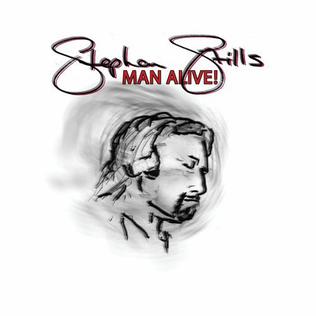
On his first solo album since the fleeting Stills Alone, Stephen Stills still didn’t have a major label deal. Yet he corralled some of favorite sidemen, such as Joe Vitale, Mike Finnegan, and George “Chocolate” Perry, and managed to fill up a CD called Man Alive!

While the otherwise detailed credits leave this information out, some of the material had been around for a while. At the very least, his vocals on the opening “Ain’t It Always” are exponentially clearer than his mushmouthed delivery on everything else. (We know we’ve used that adjective a lot, but until we find another, it will have to do.) This sinks another otherwise promising track like “Hearts Gate”, wherein he’s accompanied by an acoustic guitar plugged into the recording console for a rather sterile-sounding result. On “Piece Of Me”, a blues harp helps balance the sound.

Even the songs with real drums sound canned, starting with the excruciatingly island-tinged “Feed The People”. While touting a “special appearance by Neil Young,” “Round The Bend” features Stills on everything else save Russ Kunkel’s basic percussive pattern. Neil shows up again on “Different Man”, a welcome duet, but there’s no need for another recording of “Drivin’ Thunder”. Meanwhile, a similar “special appearance by Graham Nash” on the co-written “Wounded World” isn’t about to set the world on fire.

There are still a few moments that give hope for what could have been. “Acadienne” is a pleasant Cajun strum sung partially in Creole that thankfully keeps the accordion low in the mix, though the croaking frogs over the fade are unnecessary. “Ole Man Trouble” (the Booker T. Jones tune, and not the Otis Redding song) is a step in the right direction for his voice. And while daring in both design and length, “Spanish Suite” manages to stay interesting over its eleven minutes, partially thanks to a contribution by Herbie Hancock, and despite Stills’ ongoing insistence in singing in Spanish.

Once upon a time Stephen Stills had a voice that matched his instrumental dexterity. But after decades of performing, aging, and likely drug and alcohol abuse, his grizzled approach doesn’t match contemporary arrangements. Other artists of his age and longevity have learned to adapt, yet Man Alive! proves he’s hasn’t.

Stephen Stills Man Alive! (2005)—2

Friday, January 10, 2014

CSN 10: After The Storm

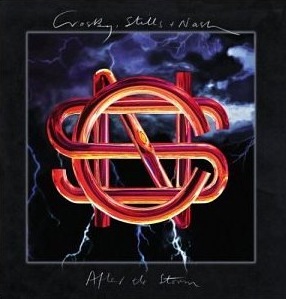
Even though nobody was asking for a new CSN album, they did one anyway. What was surprising was that they paid some attention to the backlash the greeted their last new set and, save one cut, kept the writing strictly in-house on After The Storm. Everybody sings on everyone’s tunes, too.

Stills is in relatively decent voice, but his tracks are hit or miss. Two Latin-tinged numbers bookend the album; “Only Waiting For You” leans too close to adult contemporary, while the excruciating “Panama” makes one even more squeamish as he recalls how a local girl made him a man. “It Won’t Go Away” and “Bad Boyz” are returns to social commentary, somewhat, though the former is too funky, and the latter, while rocking, shouldn’t be spelled that way by anyone over 30.

Nash comes off the best, mostly. “Find A Dream” and “These Empty Days” are both lifted by the harmonies—Stills being prominent, rare for Nash songs—whereas the simple, affecting “Unequal Love” sports some nice Stills leads straight out of Buffalo Springfield. When those are added to the title track, one wonders if everything is all right at home.

Having written very little for his own album the year before, Crosby kept up with the others by contributing a nearly equal pile of songs—in quantity, anyway. “Camera” has some decent imagery, but is slathered with cowbell and other Latin percussion; Stills gets co-writing credit so we’ll blame him. “Till It Shines” also gives Stills plenty of room to wail, up against Mike Finnegan’s organ. He does his own bit to decry social issues on “Street To Lean On”, which supposedly has Michael Hedges on guitar, but we can’t hear him.

Possibly the best track is their harmony-rich cover of “In My Life”, which Stills had done on his last solo album. Wisely, they stick to the chords, let a harmonica play the main riff, and leave it at that.

While mostly an improvement, that eternal blend that captured the world is only hinted at on After The Storm. They’ll always be able to lean on their old albums, which is just as well, since this one didn’t sell.

Crosby, Stills & Nash After The Storm (1994)—

Saturday, November 30, 2013

Stephen Stills 10: Stills Alone

It was all too telling that when Stephen Stills got around to releasing another solo album, it was on a tiny independent label, ran about half and hour, and was a mix of originals and covers, several of which are revisits. Even with all that against it, Stills Alone reminded people exactly what he could do. The title says it all: he sings and plays acoustic guitar by himself, occasionally overdubbing a lead electric or harmony, and in one case, percussion.

The originals are excellent. “Isn’t It So” and “Just Isn’t Like You” are both lovely and sad meditations on love with subtle touches, like the Buffalo Springfield flourish at the end of the former. “The Right Girl” is a delightful country-tinged strum thankfully absent of any production touches that could ruin it. “Amazonia” lets him explore his Latin fascination via some clichés about saving the rainforest, while the excellent “Treetop Flyer” makes its first appearance on a Stills album. His cover choices are mixed; “Everybody’s Talkin’” had been in his repertoire for years, but “In My Life” is surprisingly effective, just as “Ballad Of Hollis Brown” could have been a decent blues workout but isn’t. “Blind Fiddler Medley” deftly weaves the traditional song into his own “Do Unto Others” and “Know You Got To Run”.

Stills Alone was such a nice surprise, and as a further middle finger to those who’d written him off—guilty as charged—it’s now impossible to find unless you’re willing to shell out the bucks.

Stephen Stills Stills Alone (1991)—3

Friday, October 18, 2013

CSN 9: CSN Box

While Neil Young had gone through his own ups and downs in the ‘80s, Crosby, Stills & Nash had an even worse ride. Crosby hit rock bottom, went to prison, and emerged clean and sober. Meanwhile, the other two kept their noses clean, more or less, and failed to excite anyone with their solo efforts. American Dream, which had Neil’s full involvement, was less than stellar but sold; 1990’s Live It Up was even worse.

But being a legacy act with a strong catalog, Atlantic was fully behind the idea of a CSN box set, particularly after the success of a similar Led Zeppelin package. Outside of the usual rarities and album cuts, the CSN set boldly incorporated solo and duet work by each of the members (save Neil, who was keeping his best stuff on ice for his own archival brick). The trio took extra care to sequence the wide-ranging tracks into a logical and somewhat chronological order.

Of course, the bulk of the first two discs comes from the extremely fertile cusp of the ‘70s, when all three were positively teeming with tunes. Most of the first album is here, some in mildly different takes or mixes. By the middle of the second disc, they’ve all started their actual solo albums, so the set practically creates an imaginary 1971 album by the trio. The best of everyone’s work from the mid- to late ‘70s also provides a nice reminder as to why we still cared. As is the case with many such sets, the excitement tails off at disc four, where such hits as “Southern Cross” and “Wasted On The Way” share space with some uninspiring ‘80s solo and group work, including a dull remake of “Dear Mr. Fantasy”, ending with the 1970 B-side version of “Find The Cost Of Freedom” to close the circle.

For true rarities, there’s their lush arrangement of McCartney’s “Blackbird” for three voices and guitar, an earlier “Song With No Words”, a true Déjà Vu outtake in “Horses Through A Rainstorm”, and the full nine-minute take of “Almost Cut My Hair” faded on the LP. One of the more daring experiments that works is a studio take of “The Lee Shore”, but with vocals that weren’t added until the ‘90s. Crosby & Nash duet on a nice version of Joni Mitchell’s “Urge For Going”, and all four come together for alternates of “See The Changes”, “Taken At All” and “Homeward Through The Haze”, for those CSNY albums that never happened.

Taken all together, it’s a fine set, complete with detailed notes for each track. Neil’s contributions, while scattered, are pretty essential for his diehard fans too. What still baffles after all these years is what to call the thing; the spines of the disc and the box itself read Crosby, Stills & Nash, while a stylized CSN on the cover, booklet and jewel cases suggests that’s the title. Both, of course, had already been used as album titles. Meanwhile, a two-disc distillation of the set called Carry On appeared in Europe, so it’s too bad they just couldn’t go with that.

Crosby, Stills & Nash Crosby, Stills & Nash (1991)—

Sunday, October 13, 2013

CSN 8: Live It Up

Just when you thought they couldn’t get any worse, Crosby, Stills & Nash managed to underperform to the least of their senses, if not their abilities. The embarrassment of Live It Up begins with the cover art, depicting giant hot dogs being roasted on the moon. That should be enough to keep the album far from the cash register, but people bought it anyway. Whether they enjoyed the noisy, unsuited production values remains an equal mystery.

The liner notes helpfully pinpoint the dates each of the songs were committed to posterity; for the most part the recordings came immediately in the wake of the underwhelming release of American Dream, proving that they didn’t pay attention to their own bad reviews. The hideous title track was contributed by constant sideman Joe Vitale and recorded as far back as 1986, which is only part of the problem, but it’s followed “If Anybody Had A Heart”, penned by buddies J.D. Souther and Danny Kortchmar, supposedly featuring Roger McGuinn on 12-string, and first heard over the closing credits of that same year’s About Last Night (aka Demi Moore’s finest nude scenes before the implants). Stills steps forward with two polar opposites. “Tomboy” is another Latin-tinged drag, while “Haven’t We Lost Enough” is a very appealing and welcome acoustic tune, even though it was written with the singer from REO Speedwagon. Crosby and Nash team up on “Yours And Mine”, which pleads for someone, someone to think of the children. (Guest star: Branford Marsalis on sax, what else?)

After that downer, Stills and Nash bring back the “carnivále!” atmosphere for the unnecessarily parenthesed “(Got To Keep) Open”, with Bruce Hornsby on piano and accordion somewhere in there. Nash thought well enough of the drummer from Go West to spearhead the inclusion of “Straight Line” (guest star: Peter Frampton!), followed by his own “House Of Broken Dreams”. “Arrows” is a Crosby collaboration with buddy Michael Hedges, who plays keyboards and not guitar on the track, perhaps to make room for Branford Marsalis again. This tune would have been a low light on any Hedges album, which might explain how it got here instead. Finally, there’s “After The Dolphin”, which is not about the endangered mammal for once, but refers to a pub destroyed during World War I. A different angle for an anti-war statement, but badly tied to a synth program that jars with the canned radio reports.

So that’s one decent song out of ten, and surprisingly, the best thing Stills did all decade. The rest of Live It Up is beyond defense, and deserves to be buried.

Crosby, Stills & Nash Live It Up (1990)—1

Wednesday, September 4, 2013

Stephen Stills 9: Right By You

The cover of Stephen Stills’ only solo album of the ‘80s depicts what appears to be some kind of crazy angled rocket, alongside futuristic lettering. Those who took the time to flip it and see the back cover will see that it’s actually some kind of racing boat. Right By You is a nearly perfect representation of his misguided narcissism, every note a gem, every song a masterpiece. Of course, one has to be Stephen Stills to buy that.

We don’t know anyone who’s heard this album, much less owns it, so we have no idea whether the electronic drums that saturate all but the last two tracks sounded this awful in 1984. It should go without saying, yet we’ll say it anyway, that the percussion combines with the period keyboards and Latin rhythms for a truly aggravating listening experience. Lionel Richie could get away with these arrangements, and we’re not saying that in a bad way.

The same accomplices appear, like George Perry and Joe Lala, alongside other unrecognizable names. Graham Nash sings prominent harmonies, most frustratingly on a reworking of Neil Young’s “Only Love Can Break Your Heart” that didn’t really need another verse from Stephen’s hand. Mike Finnegan’s synth and soulful vocals on “Can’t Let Go” make an odd duet better suited to a female partner or a soap opera tie-in. Chris Hillman appears with cohort Herb Pedersen on a bluegrass version of an antiwar folk song. But the most striking guest is Jimmy Page, whose processed sound distracts from the horror on three tracks.

There just might be a good album buried under Right By You, which actually marked his return to Atlantic Records. In the absence of a reunited, rejuvenated CSN, maybe they figured it was an easy tax write-off.

Stephen Stills Right By You (1984)—

Monday, August 5, 2013

CSN 6: Daylight Again

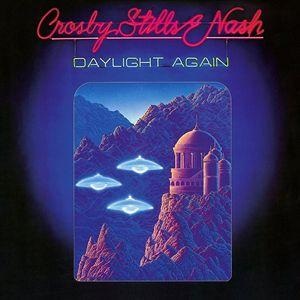
The story behind Daylight Again is, basically, Crosby was getting too far gone to be a viable partner in the CSN law firm. However, when Stills and Nash started working together without him, various powers that were suggested that maybe something couldn’t be done to make it seem like the three Laurel Canyon musketeers were right there together in one place, and thus facilitate at least a top 40 album, if the top ten was to be considered too greedy.

Even if you weren’t an ‘80s record executive, such logic would make sense. Besides, these guys weren’t doing much on their own anyway. A five-year gap since the last CSN album was nothing compared to the chasm that separated Déjà Vu and CSN, as if anyone was paying attention to any of the solo albums that had sprouted up in the same time.

Stills had been working with a guy named Michael Stergis, whom, despite his songwriting and instrumental credits all over Daylight Again, doesn’t seem to have parlayed that into anything worth creating a Wikipedia page over. “Turn Your Back On Love” is about as bland yet inoffensive as we might hope from Stills at this point. “Wasted On The Way” is Nash’s subtle summary of the previous ten years, all high harmonies lamenting what could have been. Despite itself, “Southern Cross” is the highlight of the album, a simple acoustic strum evoking both the tranquility of the sea and “Back In Black”, which it resembles chord-wise. (Go ahead; listen to them back to back, and damn, if they don’t mesh perfectly.) Nash gets tough on “Into The Darkness”, sung to the syncopation of a basic riff, but it’s eclipsed by one of the songs Crosby actually managed to finish. “Delta” is a positively gorgeous song, proving that even at his least coherent, he had the gift of song. It always seems more of an epic than it is.

Stills was still writing songs, so we get the back-to-back splendor of “Since I Met You” and “Too Much Love To Hide”, both of which are far more interesting musically than they are lyrically; in fact, Nash’s enthusiastic harmonies only underscore how average these songs really are. “Song For Susan” is hardly a substitute for “Our House”, but Nash puts a lot into it, so it’s a good effort. Stills finally slows down long enough to remind us that “You Are Alive”, a good setup for Crosby’s only other contribution, a cover of “Might As Well Have A Good Time” by a couple of fellow travelers. It’s pretty, which helps. To bring everything back home, the title track is basically a new intro welded to the front of “Find The Cost Of Freedom”, now with Art Garfunkel helping out (according to the credits, but good luck picking him out) just in case Crosby couldn’t cut it.

The usual suspects are all here—Joe Vitale, George “Chocolate” Perry, Craig Doerge, Michael Finnigan. The credits also list other vocalists on several tracks, covering up the initial and general absence of Crosby. Meanwhile, he and Nash don’t add anything instrumentally to the album, underscoring just how non-collaborative Daylight Again was. It’s not a bad album, but it certainly isn’t very exciting. Those two singles were successful enough to send the boys on the road, which resulted in the Allies live album, which was released very quickly compared to usual pace. It included two studio tracks: the hideous “War Games” and “Raise A Voice”, the latter of which would one day be appended to Daylight Again with three other outtakes of vague interest.

Crosby, Stills & Nash Daylight Again (1982)—3
2006 remastered CD: same as 1982, plus 4 extra tracks

Sunday, August 4, 2013

CSN 5: Replay

Naturally Atlantic was hoping for another Crosby, Stills & Nash album, but this point only Stills and Nash were working together, so this odd little mix was compiled, according to the back cover note, for Ahmet Ertegun, to whom they could never say no. Astute scholars will already know that they had released only that one album as a trio since 1974, so Replay goes outside the box by including tracks from various solo and duo albums, some of which actually do feature all three on vocals. To their credit, none of the selections had already appeared on So Far, though a couple of the Stills solo and Crosby/Nash tracks had been on previous best-ofs. (Lost yet?)

Since this was a CSN production, “Carry On” is included in a new mix that lops off the “Questions” coda in favor of a new solo and drums that loops back to the chorus. Two Nash songs each from the first album and CSN provide balance with songs from three different Stills solo albums, while “I Give You Give Blind” loses its frenetic string arrangement but still jars. Crosby is represented solely by “Shadow Captain” and the “To The Last Whale” suite with Nash.

Replay isn’t essential, but it’s very cohesive given the disparate sources, from other labels even, and does provide something of a intro to those lesser-known albums. They even managed to get a Joni Mitchell painting for the cover.

Crosby, Stills & Nash Replay (1980)—3
Current availability: streaming only

Saturday, July 27, 2013

Stephen Stills 8: Thoroughfare Gap

Compelled to keep making records, Stephen Stills followed the success of the CSN reunion with an album as disappointing as Illegal Stills and his lackluster half of Long May You Run. Apparently three albums in two years’ time wasn’t enough to convince him to slow down, as Thoroughfare Gap should have been allowed to bake a little longer (no pun intended, but we’ll take it anyway).

People flock to Stills for his prowess on the fretboard, so “You Can’t Dance Alone” is proof that he spent too much time hanging around the studios where the Bee Gees made their disco comeback; in fact, young Andy Gibb sings here, and elsewhere. The title track is a welcome detour back to the laidback country of the Manassas era, and based on some of the musicians listed it might even be of that vintage. “We Will Go On” begins with some “Dark Star”-type promise, but disco takes over and makes it tough to enjoy. “Beaucoup Yumbo” almost works despite itself, thought the N’awlins vibe is overseasoned by the strings. There’s a decent song hidden beneath the slick gloss of “What’s The Game”, but only if you like cowbells and guiros.

A fairly straight cover of the Allmans’ “Midnight Rider” doesn’t bring anything new to the table, but at least it delayed his annual insistence in singing a song written in Spanish until side two. From the title, “Woman Lleva” is sloppy; any high school student would know it should be “Mujer Lleva”, but that wouldn’t fit the meter. “Lowdown” has some dirty guitar over a dull groove and too big a choir, and it sounds like the limp cover of “Not Fade Away” was recorded immediately after. And though “Can’t Get No Booty” is likely meant as a joke, this kind of throwaway track is so unlike Stills that it simply reeks.

He may have been the main architect of the CSN sound, but left to his own devices, Stephen Stills simply couldn’t be trusted. Thoroughfare Gap didn’t even get reissued on CD until nearly 30 years later, crammed into a package with the previous two solo albums. It has not been missed.

Stephen Stills Thoroughfare Gap (1978)—2

Monday, July 15, 2013

CSN 4: CSN

Barely a year after a Stills-Young collaboration took on Crosby and Nash, then let them go, resulting in an album apiece by each duo, as well as solo albums from Stills and Young, three of the protagonists managed to forget all that ugliness, with the speed and productivity unique to recreational cocaine users, and give the world CSN. This was only the second album proper by Crosby, Stills & Nash, and while it isn’t remotely as excellent as their modest little debut, each of the boys rises to the occasion.

To underscore the unity, every track credits vocals to “Crosby, Stills, Nash”, as if there was any doubt. Beyond that, each man contributes instrumentally to his own compositions, with Stills more often than not playing lead guitar wherever one calls for it. The rest of the backing is courtesy of various regulars from their work apart, such as Russ Kunkel, Craig Doerge, George Perry and Joe Vitale—Miami meets L.A., if you will.

Crosby was still pulling his weight at this stage, as the excellent “Shadow Captain” demonstrates atop side one. “Anything At All” seems a tad dramatic, but “In My Dreams” is more along the lines of his ruminations. Nash’s high harmony is everywhere, and his songs vary from tedious to striking. “Carried Away”, with its piano and harmonica, almost suggests Neil Young. Like “Cold Rain”, it’s slow and depressing; the same could almost be said of “Cathedral”, but here he manages to nail the dynamics and near-psychedelia. The one everybody remembers is “Just A Song Before I Go”, famously written in ten minutes.

There were five slots open for the rest of the LP, and Stills comes through fairly well. “See The Changes” was left over from three CSNY attempts previous, and has the simplest performance. “Fair Game” and “Dark Star” have just enough of those Latin touches he was starting to put on everything, but both stand out—the former for rhyming “watch” with “crotch”, and the latter for its chorus. “Run From Tears” sports a guitar intro right out of a Neil Young album, with a simple riff that sticks. Finally, “I Give You Give Blind” is stuck underneath a way-too-tense string arrangement.

CSN is a demonstration of the sum being greater than the parts, which they already kind of knew anyway. More so than anything any of them had done in a while, it’s a good album, worth revisiting.

Crosby, Stills & Nash CSN (1977)—

Friday, April 12, 2013

Stephen Stills 7: Illegal Stills

Enough already. Stephen Stills’ Latin tendencies became more prominent on each successive album since his first solo effort, so that on Illegal Stills, it’s impossible to escape the timbales. But then again, he was never known for moderation.

And another thing. While it’s his name on the spine, his photo on the cover and his pun in the title, it might as well be co-credited to Donnie Dacus, a young guitarist and singer a few years away from joining Chicago. He doesn’t make an impression until after “Buyin’ Time”, social commentary buried under the rhythm from “Love The One You’re With”. “Midnight In Paris” was written by Dacus and Stills’ then-wife, Stephen choosing to sing the French verses himself. The instrumentation is more reminiscent of midnight in Rio, just for the record. “Different Tongues” has promise, but 1976 meant there had to be synth strings in the mix. “Soldier” is not a Neil Young cover, and if Stills wanted to comfort any scarred veterans, he should have eased off on the percussion. The highlight of the album might be “The Loner”, which really is a remake of a Neil Young song, decorated naturally with Latin percussion but a more precise riff than Neil’s original.

“Stateline Blues” finally offers a simple acoustic strum, a cross between Mike Nesmith and Willis Alan Ramsey, and it’s over too fast. Vocals are split on “Closer To You”, and Dacus is credited with the 12-string guitar, which we’d’ve guessed was Stills; maybe that was the appeal. “No Me Nieges” appears to be misspelled Spanish, at least fitting its cha-cha-cha tempo. Dacus begins “Ring Of Love” a cappella, but of course the cowbell’s gotta kick in to transform it into a pleasant slice of yacht rock. “Circlin’” finally injects some life into the proceedings, but not enough to redeem anything.

For its time, Illegal Stills would be appreciated by fans of the Little River Band, Ambrosia and the like, but if you’re looking for fiery Stills guitar, it’s not here. And as soon as the album came out, the Stills-Young Band had taken shape, only to disappear almost as quickly.

Stephen Stills Illegal Stills (1976)—2

Thursday, January 31, 2013

Stephen Stills 6: Live

Even though everybody in Crosby, Stills & Nash had taken off for other labels, Atlantic was still determined to make money off of them. Recorded early in 1974, before that summer’s CSNY stadium tour, Stephen Stills Live neatly presents both sides of the axeman.

The electric side, so labeled, gives him plenty of chances to wail, beginning with “Wooden Ships”, then getting moody for “Four Days Gone”, a hidden gem from the last Buffalo Springfield album. He neatly melds his own “Jet Set (Sigh)” with Joe Walsh’s “Rocky Mountain Way”, which shares a riff and tendency to wah-wah. There’s even an excellent segue into “Special Care”, from the same Springfield album. The band is tight, as to be expected, and while Joe Lala’s in the mix, he’s not prominent.

Proof that less is more, the pointedly labeled acoustic side consists of Stills alone, but still showing off his flash. A medley of “Crossroads” and “You Can’t Catch Me” gives him an excuse to fly around in an open tuning, which he does to lesser extent in “Word Game”. In contrast, “Change Partners” is a simple strum, “4 + 20” nicely restrained and the cover of “Everybody’s Talkin’” a nice surprise.

Stephen Stills Live is short, typical of a label cash-in, and likely not to be expanded anytime soon. It’s still a better overview than Still Stills, a “best-of” released late in 1976 that leaned heavily on his first solo album and Manassas.

Stephen Stills Stephen Stills Live (1975)—