Showing posts with label steely dan. Show all posts

Tuesday, December 30, 2025

Steely Dan 11: Everything Must Go

In the modern era, three years was a relatively short gap between albums, and especially so for a band like Steely Dan. Sure enough, Everything Must Go served up another familiar-sounding assortment of laid-back adult contemporary music that was too smart for anyone’s good. Some have called it a concept album, which is fair; there’s not a story per se, but a theme does run through it.

After opening with a flourish right off of Aja, the PA announcer in “The Last Mall” tells shoppers to pay up before Armageddon hits, but the message is lost under the standard shuffle. “Things I Miss The Most” is more standard fare, a lonely guy summing his life up after a breakup, but once he starts cataloging everything, it’s clear she’s better off without him. “Blues Beach” is obscure again, though there’s a suggestion this narrator is heading to rehab. Much more clever is “Godwhacker”, wherein a team of hired guns prepare to take out the Almighty. “Slang Of Ages” is the fourth song in a row with the same meter, but Walter Becker sings it, and that helps it stand out, but it’s yet another song sung by a guy trying to score with a young lady half or even a third his age. (Maybe that’s why Donald Fagen didn’t provide the vocal, as he’s already established a reputation.)

The rhythm finally changes for “Green Book”, but the subject is only too rote, this time exploring newer, high-tech ways to exploit women. “Pixeleen” is somewhat related, only this time Fagen is drooling over the teenage superhero vixen swashbuckling across the video screen. The cumulative effect thus far makes his bellyaching about the high-maintenance character in “Lunch With Gina” less than sympathetic. The title track echoes the opener, except that it’s more literal about a company going out of business. True to form, the narrator hopes for a tryst with an office mate, and further hopes a coworker will film it.

Musically, the album is well played and impeccably produced. As with its elder brother, Everything Must Go will please anyone willing to overlook its shortcomings. However, we can’t, and it doesn’t.

Steely Dan Everything Must Go (2003)—2

Tuesday, August 12, 2025

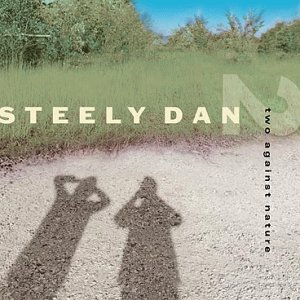
Steely Dan 10: Two Against Nature

Maybe it wasn’t inevitable, but after Steely Dan started touring regularly in the ‘90s, fans wondered whether a new album would happen. Indeed, Two Against Nature arrived nearly 20 years after Gaucho, and went on to win four Grammy® awards, including Album of the Year. But since the Grammys had been racking up several instances of questionable decisions, one must approach this album with skepticism. Given the Dan’s brand, it’s the natural response. They don’t exactly pick up where they left off, but with the loping rhythms, electric piano, different guitarist, horns, and drummers on every track, and Donald Fagen’s trademark sneer in the lyrics, there’s no mistaking said brand.

“Gaslighting Abbie” is generic CD101 jazz, a little too snappy for the crime elliptically described in the lyric. The story in “What A Shame About Me” is a little better—maybe because it’s a musical rewrite of “Josie”—wherein the narrator both shows his age and his wisdom in life choices. The title track is already a welcome departure, with the free jazz horn at the top and the non-standard meter covering up the gobbledygook of the lyrics. If the come-on in “Janie Runaway” is any indication, the dirty old man of “Hey Nineteen” hasn’t grown up any, and the leering seems to continue in “Almost Gothic”, which is more musically interesting, mostly because it’s based on “Deacon Blues”.

We hear echoes of “The Royal Scam” and “The Caves Of Altamira” in “Jack Of Speed”, another cautionary tale about drugs with a memorable hook in the title. But the catchiest song on the album is also the most cringey; “Cousin Dupree” is an aging slacker living on his aunt’s couch skeeving on a younger relative. At least the object of his desire has the sense to rebuff him. We’re not sure that can be said about “Negative Girl”, and by this time on the album we’re wondering whether the boys should be subject to court-ordered therapy for their proclivities. At least the vibes solo fits in with the more dreamy vibe. A sharp snare drives “West Of Hollywood”, which helps keep up interest even through the lengthy solos over the coda.

Most of the songs on Two Against Nature are in the same tempo, with little variation in dynamics, and very few hooks really leap out. Even after several listens it’s not easy to tell one track from another—or as they put it themselves in “Negative Girl”, “the original classic thing, more of the same”. If anything, this will send listeners back to the old albums.

Steely Dan Two Against Nature (2000)—2

Friday, February 14, 2025

Steely Dan 9: Alive In America

For most of their career, Steely Dan were strictly a studio band, having eschewed touring as soon as they could. Now it was 20 years later, both Donald Fagen and Walter Becker had solo albums to promote, and technology had caught up with their perfectionism to the point where they could hire sidemen (and women) to replicate their pristine album tracks onstage for those with the disposable income required to watch and hear them do it.

Alive In America was compiled from two of these ‘90s tours—Peter Erskine drummed on the first, Dennis Chambers played on the second—and presents over an hour of music in a seamless blend by long-suffering engineer Roger Nichols. As would be expected, everything is presented well, with the only real surprise being the inclusion of “Book Of Liars” from Becker’s album. “Sign In Stranger” has different lyrics on the bridge and something of an extended interlude, “Reelin’ In The Years” sports a vamped intro that disguises the song before the crowd recognizes it, and “Third World Man” is taken even slower. Hot as these players are, we’d still rather listen to the version of “Bodhisattva” that was the belated B-side to “Hey Nineteen”. Still, to finally get to hear these songs performed live for what was then the first time would be a thrill for fans. (Outside of the head-scratching cover, the packaging is suitably sardonic, from the song comments—helpful for identifying which guitarist or horn player gets to solo—to the “Howl” parody.)

While Steely Dan would continue to tour, even becoming something of a fixture on the road, they wouldn’t release another live album for another 25 years, after Walter had passed on and Donald was still pounding the boards against the wishes and financial claims of his former partner’s estate. He was nice enough to dedicate Northeast Corridor: Steely Dan Live!, exclamation point and all, to Walter. While the band was completely different this time out, and he’s even more nasal than ever, the album repeats half of Alive In America, with little varying from the token arrangements, save maybe the new coda to “Kid Charlemagne”. The rest of the program features more ‘70s classics, plus “Things I Miss The Most” from their last album and closing with “A Man Ain’t Supposed To Cry”, likely copped from the Joe Williams version. Probably to reflect streaming habits, each selection is faded to silence before the next track starts.

Since it’s worth mentioning somewhere, back in 2002 Becker and Fagen made an appearance on Marian McPartland’s Piano Jazz radio show, which was among the many installments to get a subsequent official release. As was the format, the show consists of conversation interspersed with performances, wherein the guys are backed by a simple rhythm section and joined occasionally by their host. Of their own songs they play “Josie”, “Chain Lightning”, and “Black Friday”, but more interesting are the standards they tackle, three of which were associated with Duke Ellington. It’s also nice to hear Walter play guitar rather than ceding it to somebody else.

Steely Dan Alive In America (1995)—3
Steely Dan
Marian McPartland’s Piano Jazz (2005)—3
Steely Dan
Northeast Corridor: Steely Dan Live! (2021)—3

Tuesday, October 22, 2024

Walter Becker 1: 11 Tracks Of Whack

Even more surprising than Donald Fagen re-emerging as a solo artist after a decade and promoting by touring with a reunited Steely Dan was Walter Becker releasing his first solo album. After all those years content to be the other guy in the band, 11 Tracks Of Whack—which perversely consists of 12 tracks—presents him as the vocalist for the first time. While he doesn’t have the distinct sneer his partner perfected, his voice is passable and not grating.

“Down In The Bottom” has a groove a lot like Big Audio Dynamite’s “Medicine Show”, and we mean that in a good way. “Junkie Girl” is a little slower, with a dark lyric and an expletive-laden chorus that belies its lazy lilt. “Surf And/Or Die” is even more elusive, with dense imagery in a barely sung litany. The keyboards and sax on “Book Of Liars” sound the most like Fagen should be singing, though he doesn’t, while “Lucky Henry” teeters on smooth jazz but for the busy meter and wailing, dueling guitar solos. And while “Hard Up Case” throws in some unexpected turns, it’s not much more than a prop for the hook in the chorus.

A marriage turned sour is approached with wry humor in “Cringemaker”, while “Girlfriend” is a complaint from a sad sack whining alone in front of his television. “My Waterloo” has something of a reggae feel, but the sameness of the content is starting to drag. Luckily “This Moody Bastard” is a better example of finger-pointing. The nuttiest tune by far is “Hat Too Flat”, sung by a visiting alien (presumably) from outer space, but maybe it’s an allegory) trying to fit in among ordinary English-speaking humans. “Little Kawai” is a sweet reprimand to a misbehaving imp that’s musically very close to John Cale’s “The Man Who Couldn’t Afford To Orgy”.

With co-production by Fagen, along with some keyboards and arrangements, and contributions from guitarist Dean Parks, 11 Tracks Of Whack is close enough to Steely Dan to appeal to fans. If they can just get past his voice.

Walter Becker 11 Tracks Of Whack (1994)—3

Friday, April 19, 2024

Steely Dan 8: Reissuin’ The Years

Way back in 1978, as part of a last gasp by ABC Records before being swallowed up by MCA—and knowing the band wouldn’t have any other product out soon—a Greatest Hits album by Steely Dan hit the shelves in time for the holiday buying season. This two-record set was packed to capacity, literally and figuratively, going through the band’s six albums to date in order, and leaning heaviest on Pretzel Logic. Twelve of the songs had actually been singles, but the biggest draw at the time was “Here At The Western World”, an decent unreleased tune from the Royal Scam sessions.

Not included on the set, likely because ABC didn’t have the rights to it, was the superior standalone single “FM”, recorded for the soundtrack of the movie of the same name. This was, however, included on 1982’s Gold, a typically thrown-together MCA compilation that also included “Hey Nineteen” and “Babylon Sisters” from Gaucho and five earlier album cuts seemingly chosen at random. At least it filled two sides of a record.

Three years later, to appeal to the burgeoning CD market as well as audio snobs who wanted slick recordings with which they could demonstrate the new hifalutin technology, A Decade Of Steely Dan took ten tracks from Greatest Hits and added the three later songs from Gold (also substituting “Deacon Blues” for “Josie”), all in a pre-shuffled order. The cover art made no sense, but at least the insert included musician credits for each track.

That set became the go-to Steely Dan hits CD, which meant “Here At The Western World” was left in limbo in the digital age. This was rectified in 1991 when Gold was reissued in an “Expanded Edition”, which tried to compensate for duplicating four songs on Decade by adding “Western World” along with some other rarities. Two were Donald Fagen solo tracks that had appeared on two very different movie soundtracks; the mostly instrumental “True Companion” from Heavy Metal is very Dan-like, while the slick “Century’s End” from Bright Lights, Big City isn’t. Perhaps most enticingly, a hot live “Bodhisattva” from 1974 that had appeared eight years later as the B-side to “Hey Nineteen”, of all things, rounded out the disc. Besides being one of the few recordings of the band as a touring outfit, it sports a lengthy inebriated and censored introduction from one of their roadies. (While originally recorded on cassette, some of the song’s vocals sound too clean to not have been overdubbed after the fact.)

By now the box set industry was in full swing, and Steely Dan had their turn in 1993; plus, they were on tour to promote Fagen’s new album. Citizen Steely Dan crammed all six albums in sequence onto four CDs, with the occasional track swap for an “enhanced” listening experience at the start and/or end of some discs. The live “Bodhisattva” was inserted in place between Pretzel Logic and Katy Lied, just as “Western World” and “FM” bookended the Aja selections. Beyond those, the sole rarity was a 1971 demo of “Everyone’s Gone To The Movies” stuck at the end of disc four, eschewing their other oft-bootlegged, early work and even both sides of their long-lost first single, which both guys said they hated. (Their active involvement with the set was borne out by the meticulously remastered contents—though they forgot to include the intro of “Rikki Don’t Lose That Number” in the first pressing—along with particularly sardonic and occasionally hilarious liner notes printed in an annoying all-caps font.)

That should be sufficient for anyone, but the allure of disposable income is too much for any record executive to resist, and why would they. At the turn of the century, Showbiz Kids did a nice job of expanding the original Greatest Hits onto two CDs, complete with the requisite dip into Gaucho, the inclusion of both “FM” and “Western World”, and finally acknowledging “Dirty Work” and “Aja” as essential, though perhaps at the expense of “East St. Louis Toodle-oo”, which is no real loss. Six years later, The Definitive Collection proved to be false advertising by sticking to a single CD and featuring a song from each of their 21st-century albums. At least it included “Dirty Work”.

Steely Dan Greatest Hits (1978)—4
Steely Dan
Gold (1982)—3
1991 Expanded Edition: same as 1982, plus 4 extra tracks
Steely Dan A Decade Of Steely Dan (1985)—
Steely Dan
Citizen Steely Dan: 1972–1980 (1993)—
Steely Dan
Showbiz Kids: The Steely Dan Story, 1972–1980 (2000)—4
Steely Dan
The Definitive Collection (2006)—3

Tuesday, January 2, 2024

Donald Fagen 3: Kamakiriad

Working with The New York Rock And Soul Revue must’ve done something to Donald Fagen’s creativity, as he was soon at work on his second real solo album. When Kamakiriad appeared, fans were surprised to see Walter Becker listed as producer, and more so when a reconstituted Steely Dan—stocked mostly by younger session cats—toured to support it.

Naturally, in all the excitement the album was often overlooked, particularly since only a few songs appeared in the setlists. That’s odd, because Kamakiriad was considered a song cycle of sorts, if not exactly a concept album. Where The Nightfly took the point of view of a young man on the cusp of the ‘60s envisioning the future, this time we have a middle-aged man imagining the future from the present day.

“Trans-Island Skyway” sets the scene as Our Hero drives off in his new space-age car, a steam-powered vehicle that grows its own food and features satellite navigation technology. (It’s not quite like Pete Townshend predicting the Internet, but still.) Despite the persistently jaunty mood, “Countermoon” refers to relationships gone stale or sour, so he decides to head to “Springtime”, a fun house that exists in the past as well as the future. Despite that stated intention, the next track finds the narrator “Snowbound”, but still trying to enjoy himself in hermetically sealed environment.

“Tomorrow’s Girls” has a mildly retro sound, painting a pretty picture that probably isn’t real. And he knows it, since he spends the fade reeling off dozens of names of the women that have apparently captured his eye in the past. Yet “Florida Moon” continues his fantasy of finding some sun-kissed strumpet to keep him company in a warmer clime. Yet the unpleasant memories he alludes to “On The Dunes” suggest it’s not the best place to be, so he’s clearly conflicted. At least “Teahouse On The Tracks” provides some kind of haven to which he can always return, where the music is hot and the dancing doesn’t stop.

Overall Kamakiriad sounds like a Steely Dan album with honking horns, slick guitars, cooing background singer, automated-sounding drums, and yeah, it’s a little sterile. No track is shorter than five minutes, and most exceed six. There’s a lot of sameness, especially in the tempo and the same rhythm, so it often fades into the background, whereas The Nightfly was much more dynamic. But if this is what it took to get the boys back on the road, so be it.

Donald Fagen Kamakiriad (1993)—

Friday, July 21, 2023

Donald Fagen 2: New York Rock And Soul Revue

Steely Dan stayed pretty quiet throughout the ‘80s, separately and collectively, only emerging for the occasional production job. So when Donald Fagen surfaced in 1991 as part of an outfit dubbed The New York Rock And Soul Revue, the resultant live album was a pretty big deal. To some people, anyway.

Live At The Beacon was recorded over two nights at the wondrous Manhattan theater of the title, and delivers pretty much what the combo promises in their moniker. A bunch of gigging and session locals back up Fagen and various special guests on a variety of tunes, mostly from decades prior, for something of a cross between Paul Shaffer and Ringo’s All-Starr Band. Michael McDonald and Phoebe Snow are the most prominent vocalists, beginning with a duet on “Knock On Wood”. Donald steps up for a cool take on “Green Flower Street”, and Phoebe belts out “Shakey Ground” and “At Last”. Michael responds with “Lonely Teardrops”, then Boz Scaggs comes out to sing “Drowning In The Sea Of Love”, but not play guitar. (Rather, stalwart sideman Drew Zingg gets the call-out.)

Blues legend Charles Brown gets the spotlight for his own classic “Driftin’ Blues”, and joins Donald and Phoebe on the Dan’s “Chain Lightning”. The Brigati brothers represent the (Young) Rascals for “Groovin’”, and there’s an unfortunate detour for Michael to sing “Minute By Minute” before the throng gathers for “People Got To Be Free”. The encore is a wonderful “Pretzel Logic”, wherein Michael sings the verse about the shoes.

It’s a slick album, but not necessarily bland. And they were never heard from again. The yuppies loved it, and hopefully dug deeper into the catalogs of the guest performers.

The New York Rock And Soul Revue Live At The Beacon (1991)—3

Wednesday, May 29, 2013

Donald Fagen 1: The Nightfly

We may as well consider The Nightfly to be the last Steely Dan album, since it has all the hallmarks of such, save a single contribution from Walter Becker. It was recorded and released relatively quickly, arriving less than two years after Gaucho. Despite its sterility, a by-product of the early ‘80s thanks to the new fad called digital recording, it’s still better than that album.

Critics then and now have hailed The Nightfly for its careful use of digital technology, presenting it as a solid defense in the re-emergence of analog among snobs. It’s also something of a concept album, and even though its sound doesn’t really fit the thoughts of a not-yet-adult suburban kid on the verge of the Kennedy administration, the songs are good; the hopeful, forward-thinking tone of “I.G.Y.”, predicting a future resembling that of The Jetsons, fits with the modern sound. “Green Flower Street” is a jazzy blues about an interracial romance, a set up for a slick version of the Lieber-Stoller R&B classic “Ruby Baby”. That song was once covered by the Beach Boys, and it’s hard not to hear echoes of “Wouldn’t It Be Nice” in “Maxine”. Somebody should do a new arrangement of this song that uses only the piano as heard on the intro, but still using the intricate one-man harmonies.

“New Frontier” continues the seduction motif; this time the narrator’s trying to drag his quarry down to his bomb shelter with promises of Dave Brubeck records. That’s likely part of the playlists dear to the narrator of the title track, vividly depicted on the album cover. This is probably the least successful segment of the album, if only because the music conjures less the sound of free-form radio than the Teflon-coated version of jazz perpetuated from the mid- to late ‘80s and afterwards by GRP Records and stations who wished they’d been the first to apply for the call letters WJAZ (proximity to Mount Belzoni notwithstanding). The old Dan version of island music returns on “The Goodbye Look”, which may or may not take place in recently “liberated” Cuba. He must have made it out in time, because we leave him hoping for romance in the jaunty “Walk Between Raindrops”.

Just as nothing was heard from the entity known as Steely Dan for some time, so was The Nightfly Donald Fagen’s only solo statement for several years, save the occasional soundtrack contribution. Still, it made for a nice wrap-up to the catalog, ending their era as the reigning sultans of sarcasm. Unless sardony is a real word, which it isn’t.

Donald Fagen The Nightfly (1982)—

Wednesday, May 15, 2013

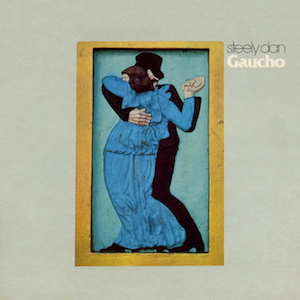
Steely Dan 7: Gaucho

And thus begins the tradition among California-transplanted songwriters to take an eternity making an album that turns out, after all that grasping for perfection, to be not worth the wait. Emerson, Lake & Palmer may have done it first, and Guns N’ Roses are carrying the torch today, but leave it to the cocaine cocktail circuit to make it fashionable to be bland.

Becker and Fagen toiled for hours over three years in five studios to get that optimal sound, tapping the talents of so many hired guns that no two tracks on Gaucho feature the same lineup. One track only has Fagen’s vocal, with no instrumental contributions from either of them among the people playing.

“Babylon Sisters” shuffles along, with enough catchiness to make it a shoo-in for SD compilations, but without really saying anything. “Hey Nineteen” is more memorable, despite the drum machine, in its portrayal of an “older” man attempting to seduce a young lady with tequila and weed. (And get this: the girl of the title would be approximately 53 years old now. How’s that make you feel, Don?) “Glamour Profession” presents the sound that launched the CD101/lite jazz sound, along with an eyebrow-raising reference to one Hoops McCann. That’s the highlight of its seven minutes.

The title track begins with a great groove, stolen directly from an obscure Keith Jarrett album track. The boys insisted it was an homage, but that doesn’t excuse the bold imitation of Jan Garbarek’s sax. Granted, the verses take the feel someplace else, the chorus is reminiscent of the same for “Doctor Wu”, and the Mexican motif in the bridge conjures up memories of ¡Three Amigos! The musical bed for “Time Out Of Mind” would be rewritten in a couple of years for a more successful final product; meanwhile, good luck trying to find Mark Knopfler’s lead guitar as advertised. “My Rival” has a nice snotty sound and more elaborate horns for a change of pace, but is it necessary to have the backup sings chant the title of the song at the start of every verse? Finally, “Third World Man” adds some drama and actual dynamics, but it sure has taken a long time to get there.

Gaucho sounds like a Steely Dan album, but it simply doesn’t offer as many highs as the ones that came before. It meanders to a close, and while the boys would still work together over the years, their appearances from here on out would be fewer and further between.

Steely Dan Gaucho (1980)—2

Friday, May 3, 2013

Steely Dan 6: Aja

This album is so slick it should have been sponsored by Pam® cooking spray. Aja was Steely Dan’s pinnacle, and their sixth album in as many years. They would never work this fast again.

The LP’s inner gatefold included two sets of liner notes, one of which was written with such a negative attitude towards Becker and Fagen that hindsight has suggested they wrote it themselves (borne by the equally snide response in the remastered CD booklet). Each track is also annotated with the laundry list of the 35 session pros old and new who contributed their performances at scale.

There was also a TV commercial for this album, in which a mysterious female voice (since revealed to be the one and only Eartha Kitt) explained that it was available “on ABC Records”. (Can you remember any other bands who were on ABC Records? And if this album was such a hit, how did they get swallowed up by MCA soon after?) It also helpfully demonstrates the correct pronunciation via the title track, which expertly conjures up images of the Orient for those who’ve never been there. Between Steve Gadd’s drums and Wayne Shorter’s sax, it’s an incredible track. A second favorite on the album would be “Josie”, but only when it’s Joe Jackson’s version, which he called “Look Sharp!” (Though this one does have Jim Keltner on drums.)

In between are five other songs, all on the lengthier-than-Top 40 side. This entire album was in constant rotation on the FM stations the year it came out (in between Billy Joel and Springsteen cuts), which could be why to this day we always mix up the lyrics from “Deacon Blues”, “Peg”, “Black Cow” and even “Josie”, and have to pay attention to the choruses to recall which song we’re hearing. Or maybe it’s just that too much of Aja sounds alike. “Home At Last” sounds fresh today, if only because it hasn’t been overplayed. However, “I Got The News” is something of a jazz-disco tune with little substance.

We said it was their pinnacle, and it is. Just as much as Can’t Buy A Thrill, Aja is quintessential Dan, epitomizing everything people either like or don’t like about them—slick arrangements and obtuse lyrics. Those descriptions have been used for each of their albums reviewed thus far, but the scales don’t lie; besides, when have you ever heard somebody praise Donald Fagen for his velvet throat?

Steely Dan Aja (1977)—3

Monday, April 22, 2013

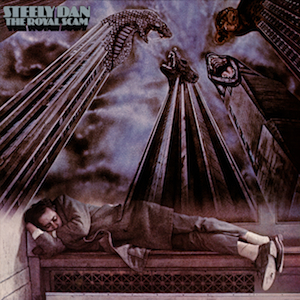
Steely Dan 5: The Royal Scam

At this point it’s become difficult to categorize Steely Dan—too sneaky for pop, too proficient for rock, too pop for jazz. That’s probably they way they like it, but at the same time, it makes it difficult to voice how or why the band can rub people the wrong way.

The Royal Scam has all the usual hallmarks—pristine sound, jazzy keyboards, nasal vocals and snide lyrics that seem to be about something and nothing, except when they’re almost too obvious. The hero of “Kid Charlemagne” would appear to be a high-rolling drug dealer, while the narrator of “The Caves Of Altamira” ponders his measly existence while reflecting on prehistoric paintings. Sometimes a song is at odds with itself—such as in the case of “Don’t Take Me Alive”, which begins with a fuzzy diminished arpeggio, then saunters through a boogie with a lyric of the type usually associated with Warren Zevon. “Sign In Stranger” could also take place in another country, with repeated references to zombies, and a wonderful piano part by Paul Griffin. And then there’s “The Fez”, which is about as ‘70s as you can get for a song that may simply be an emphatic endorsement of prophylactics. (Griffin got co-writing credit for this, justifiably.)

“Green Earrings” presents another jazz riff that seems to modulate a half-step at a time for the chorus. Meanwhile, Peter Frampton wasn’t the only guy working a talk box in 1976, as demonstrated in “Haitian Divorce”. “Everything You Did” is now notable for indirectly inspiring “Hotel California”. The title track oozes with a menace, somehow matching the mood of the cover art and capping a generally pessimistic album.

Does this do the album justice? Do the paragraphs manage to present an endorsement or dismissal? Somehow we feel it’s lacking, but that’s why we set it up as above. The Royal Scam is recommended for fans, and neither astounds nor annoys.

Steely Dan The Royal Scam (1976)—3

Wednesday, March 27, 2013

Steely Dan 4: Katy Lied

Having decided they weren’t made to be a touring unit, Becker and Fagen began crafting their albums with the assistance of the finest session musicians they could hire. That wasn’t such a shocking move; after all, some of the finest records of the previous decade were performed by the same handful of working stiffs. Steely Dan was merely being overt about it. Katy Lied furthered the Steely Dan sound—jazz-tinged FM radio fodder, with increasingly inscrutable lyrics—but one featured performer stands out. Today Michael McDonald is best known for his work with the Doobie Brothers and his smash hit single “Sweet Freedom”, but back then he was a just another smoky vocalist who dominates any track with his voice.

The first two tracks offer two angles on that trademark sound—“Black Friday” fading in on a galloping electric piano, “Bad Sneakers” with an electric sitar—that divide fans from non-fans. “Rose Darling” has some of the country touches from Pretzel Logic, something of a cousin to “Barrytown”. Speaking of retreads, “Daddy Don’t Live In That New York City No More” echoes “Show Biz Kids” without being as clever. The superior “Doctor Wu” suggests the title of the album, and presents the sax and chime tree combo that would re-emerge in a few years, complete with another faux-Eastern suggestion. The lyrics don’t make any sense, but the chorus is tremendous, climbing higher and higher.

“Everyone’s Gone To The Movies” matches a sinister suggestion of pederasty with a sunny calypso beat, and maybe that’s the point. There’s yet another sequel of sorts in “Your Gold Teeth II”, which doesn’t appear to share much with its interminable elder; this one has way more jazz changes, and even a decent melody dancing over a 6/8 rhythm. “Chain Lightning” lopes along in a slow shuffle for a Rick Derringer solo, but one of the more striking tracks is “Any World (That I’m Welcome To)”. While a monologue by a Holden Caulfield type isn’t such a weird thing for this band, there’s almost something defiant and hopeful in the chorus, almost like the Animals’ “It’s My Life”. (Joe Jackson liked it so much he borrowed the feel for the coda on “Nineteen Forever”.) Listen for that distant organ behind the second verse. Finally, “Throw Back The Little Ones” continues their tradition of ending albums with a clunker. Despite offering fishing advice, it’s got the telling lyric “Hot licks and rhetoric don't count much for nothing.”

Katy Lied has its moments, but as we’ve stated before and will again, Steely Dan is not for everyone. For most fans, it’s all or nothing, and there isn’t anything here that could be considered buried treasure. Therefore, it’s okay for what it is.

Steely Dan Katy Lied (1975)—3

Wednesday, March 6, 2013

Steely Dan 3: Pretzel Logic

Besides having a great title, Pretzel Logic manages to straddle the rock and jazz worlds to further establish the Steely Dan “sound”. Some of their better songs are here, along with a few clunkers.

“Rikki Don’t Lose That Number” lifts its intro from Horace Silver (not the last time Donald Fagen would get nailed for such a theft) but transcends that possible beginning, likely more of an affectation, with a wonderfully enigmatic tune and classic bridge. A decent rock tune, it trades in its acoustic guitar for horns and funky scratching on “Night By Night”; luckily, the guitar solo cooks. Speaking of funky, that word sticks out like two sore thumbs on “Any Major Dude Will Tell You”—the only other song we know outside of Genesis that mentions a squonk. It’s one of those “classic” Steely Dan songs that turns off their detractors, but we can’t say that about the positively catchy “Barrytown”. Unfortunately “East St. Louis Toodle-Oo” wastes space at the end of the side with a Duke Ellington song transposed to guitar. It does little but evoke They Might Be Giants doing “Jessica”.

To underscore their enjoyment of jazz as better than modern music, they start the second half with a tribute to the Charlie of “Parker’s Band”, though the suggestion of being “smacked into a trance” is a little suspect taste-wise. Then there’s “Through With Buzz”, which sounds like mid-period Wings, and is over before you’re able to figure out what’s going on. Likewise, the title track doesn’t explain the significance of the words, but it’s such a well-played groove (and we always want to answer the internal question with “I got my shoes at Thom McAn”). Another terrific solo takes over through the fade. “With A Gun” is an atypical country-flavored song suggesting the Old West, and is also over pretty quick. “Charlie Freak” slows down the general motif of “Through With Buzz” just enough to tell the tale of a junkie’s demise. Its driving arrangement belies the tragedy in the lyric, making for one of the saddest songs ever written. That makes “Monkey In Your Soul” a strange closer.

Short but sweet and mostly strong, there’s enough on Pretzel Logic to recommend it, even as a first entry into Steely Dan. However, it was also the last time they’d resemble a band, instead of a bunch of hired guns chosen for their slickness.

Steely Dan Pretzel Logic (1974)—

Friday, January 25, 2013

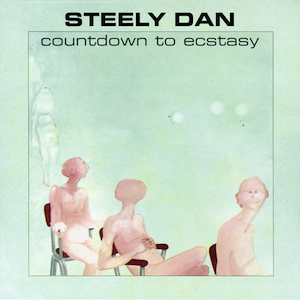
Steely Dan 2: Countdown To Ecstasy

While still a band with a rhythm section and everything, Countdown To Ecstasy has Steely Dan veering towards slick, if slightly. Donald Fagen is the only lead vocalist here, lending the album a little more cohesion and sameness.

The wonderful “Bodhitsattva” matches a big band swing to a spiritual plea, with terrific guitar throughout for a complete anachronism. “Razor Boy” sits on some island percussion and prominent vibes, with foreboding lyrics directed at somebody; it’s not clear. One would expect a title like “The Boston Rag” to be more upbeat, but that’s one of the points of the song, which meanders along, not really catching fire until the instrumental break. “Your Gold Teeth” is preloaded with the Steely Dan sound, riding one chord for the better part of seven minutes, with a few cacophonic Fender Rhodes runs here and a few modulations for the band to “stretch out”, as the liner notes sardonically remark.

Speaking of monotonous, “Show Biz Kids” rides in circles underneath guest star Rick Derringer’s slide guitar, with backing vocals comparing Las Vegas to “lost wages” until you’re ready to kill someone. (The song is also notable for a self-reference and a certain four-letter word.) The album finally gets another highlight with “My Old School”, a jaunty backhanded tribute to Bard College with crisp horns and just the right amount of cowbell. There’s something about “Pearl Of The Quarter” that reminds us of Richard Manuel singing “Lonesome Suzie” and “In A Station”. Maybe it’s the pedal steel; it’s certainly not the “voulez voulez voulez vous”. “King Of The World” is a lot of people’s favorite, but it gets awfully jittery after a while.

Again, it’s that Steely Dan “sound” that keeps us from loving this album, and the brand in general: too much electric piano and clean guitars. However, whenever somebody lets loose with a distorted lead (usually Denny Dias, or maybe it’s Jeff “Skunk” Baxter), anything with a little fuzz, grit, stank, whatever, we find ourselves more likely to tap our toes along. They were, after all, still a self-contained unit at this point, so Countdown To Ecstasy manages to surprise.

Steely Dan Countdown To Ecstasy (1973)—3

Monday, January 14, 2013

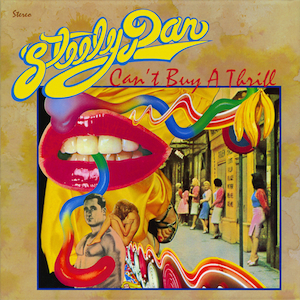
Steely Dan 1: Can’t Buy A Thrill

When Steely Dan started out, they were a tight little combo with three different singers. Of course, the one with the worst voice (and ever-present grimace) ended up dominating their catalog. But back then, Can’t Buy A Thrill was a relatively straightforward rock album, with only a few of the jazz touches that would soon color their output.

It’s fitting that their debut should begin with “Do It Again” matches its snaky riff to mildly Latin percussion, with one of the more extended uses of a Coral electric sitar on record. “Dirty Work” is the one that doesn’t sound like Steely Dan because of the smooth-voiced singer, but once the chorus comes in it becomes more obvious (and it’s still a fun one to sing at a job you hate). “Kings” is an excellent track about the Magna Carta, Nixon or neither, and another tasty guitar solo. A third vocalist (the drummer this time) takes over “Midnite Cruiser” (with another terrific solo section) but “Only A Fool Would Say That” ends side one kinda lame. At least it’s a shortish song.

Things turn around right away with the sizzling “Reelin’ In The Years”, another radio favorite, although our ears still think they’re “reeling in the yeast”. “Fire In The Hole” stumbles along to showcase the piano, becoming a setup for Jeff “Skunk” Baxter’s pedal steel solo through the fade. The guy who sang “Drity Work” returns to take the lead on “Brooklyn (Owes The Charmer Under Me)”, a not-so-distant cousin of Dylan’s “Queen Jane Approximately”. There’s a little Traffic influence in “Change Of The Guard”, and something very infectious about the “na-na-na” interludes between each verse. The side ends with the rather intricate “Turn That Heartbeat Over Again”, which is just plain confusing.

So again, it’s a pretty solid album, and consistent within itself despite the “casting” that was the band’s trademark. The lyrics are oblique to this day, but the catchiness and accessibility of the music makes it a mainstream pleaser. Which can’t be said for everything.

Steely Dan Can’t Buy A Thrill (1972)—