Showing posts with label elton john. Show all posts

Friday, August 14, 2026

John Baldry: It Ain’t Easy

The British blues scene of the early ‘60s was rife with important individuals who may not have become household names, like Alexis Korner, Chris Barber, and Graham Bond. And then there was Long John Baldry, whose early bands were launchpads for Rod Stewart and Elton John. (The latter took half of his stage name from the man, and would immortalize him as “sugar bear” in “Someone Saved My Life Tonight”.) So when both of those guys started to become really famous, they leapt at the chance to produce two albums for him, of which It Ain’t Easy was the better.

Though the session dates overlapped between producers, side one was devoted to the tracks Rod oversaw, beginning with a wonderful little medley. “Intro: Conditional Discharge” is a shaggy dog monologue in Baldry’s mostly proper English voice over Ian Armitt’s piano, leading into the driving “Don’t Try To Lay No Boogie-Woogie On The King Of Rock And Roll”. Micky Waller and Ron Wood, veterans of the Jeff Beck Group as well as Rod’s solo albums, provide the drums and guitar here and the rest of the side. “Black Girl” is country blues via Leadbelly, sung in duet with Maggie Bell, and better known as “In The Pines”, and to Nirvana fans as “Where Did You Sleep Last Night”. (Ron sits this one out, letting Sam Mitchell shine on the dobro.) The title track had already been covered by Three Dog Night, and Bowie would record his own nearly identical version shortly after. “Morning, Morning” is a rockier version of a song from the second Fugs album, coming close to Cat Stevens but with louder drums. It’s a quick segue to Muddy Waters’ “I’m Ready”, for a strong side-closer.

Just as Rod’s half reflected his own current brand and band, so did Elton’s side. Randy Newman’s “Let’s Burn Down The Cornfield” has some of the dark Americana already mined for Tumbleweed Connection. Another connection arrives in “Mr. Rubin”, a sweet piece of social commentary written by Lesley Duncan, whose “Love Song” was covered by Elton on that album, and who would go on to sing on his next album as well. Elton and Bernie Taupin offered up “Rock Me When He’s Gone”, one of the better songs he never released on an album or single of his own, but perfect for Baldry. In a wonderful crossover, “Flying” is the Faces song from their first album with Rod and Ron, here stretched a few more minutes for the vocalists to work the coda.

A year later, they flipped sides for Everything Stops For Tea, which has its moments but simply isn’t as consistent as its elder sibling. Both albums are available for streaming, though It Ain’t Easy includes the bluesy acoustic bonus tracks—as well as an electric “Love In Vain”—that were added to a 2005 reissue in the UK. It deserves to be heard and enjoyed.

John Baldry It Ain’t Easy (1971)

Friday, June 19, 2026

Elton John 31: Two Rooms

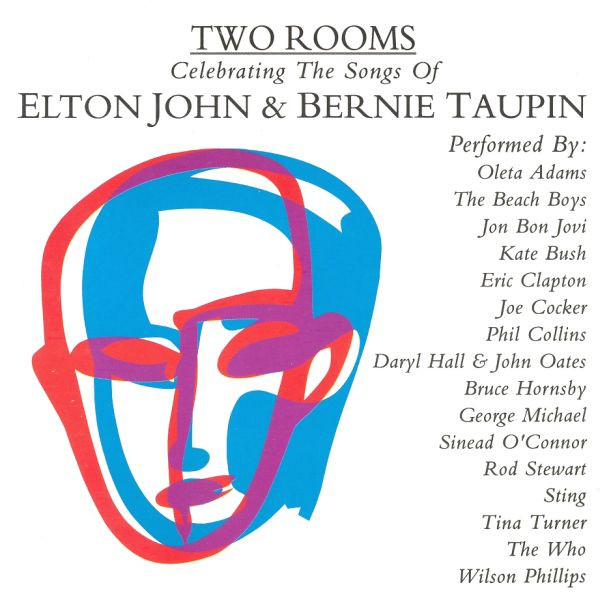
A multi-disc overview was one way for Elton John to assess his career, but he wasn’t done doing that. Along with the box set trend, thematic tribute albums began to be a thing in the ‘90s. Just as with the Grateful Dead the same year, Two Rooms was an all-star compilation “celebrating the songs of Elton John and Bernie Taupin”. Most of the songs were fairly faithful to the original, while still allowing the artists to put their own stamp.

Eric Clapton injects more gospel and a great solo into “Border Song”, then Kate Bush makes “Rocket Man” reggae, albeit with Uillian pipes. Sting’s “Come Down In Time” is a great choice, handled very gently, while the Who plow through “Saturday Night’s Alright For Fighting” with a quote from “Take Me To The Pilot”, just as Elton put “I Can’t Explain” in his version of “Pinball Wizard”. While the photo of the Beach Boys shows Brian Wilson, it’s only Carl, Al Jardine, and Bruce Johnston singing “Crocodile Rock” over a prerecorded track, while Mike Love chimes in with “re-mem-mem, remember-member”. Fittingly, Wilson Phillips (then still popular) follow with “Daniel”. Joe Cocker does a wonderful job belting out “Sorry Seems To Be The Hardest Word”, unfortunately given a boomy arrangement with in-your-face saxophone. Jon Bon Jovi does a band karaoke version of “Levon”; hearing the American pronunciation of “garage”, jars here.

Tina Turner tackles “The Bitch Is Back” for the second time in her career, and nails it, but while “Philadelphia Freedom” is fitting for Hall & Oates, their reading is pretty limp. Twenty years after recording “Country Comfort”, Rod Stewart goes the safe route with a tepid “Your Song”. Oleta Adams, then riding on a hit single, makes “Don’t Let The Sun Go Down On Me” that much more soulful, then Bruce Hornsby takes “Madman Across The Water” to a more gothic place. Sinead O’Connor’s gentle, heartfelt interpretation of “Sacrifice” is possibly the highlight of the album, while Phil Collins’ straight take on “Burn Down The Mission” is mostly notable for Steve Winwood on organ (according to the credits, anyway). George Michael offers a lengthy live “Tonight” with winds and strings, since “Don’t Let The Sun Go Down On Me” had already been claimed; his own duet with Elton on the latter from the same show would be released shortly as a single.

Two Rooms was promoted by a feature-length documentary on VHS, followed by an abridged TV special hosted by Sylvester Stallone of all people. The album wasn’t likely to make new fans for these artists, and like most tribute packages, the novelty wears off quickly. Seventeen years later, the concept would be repeated with a pair of albums with the intent of “reimagining the songs of Elton John & Bernie Taupin”: Revamp sported covers by modern artists ranging from Miley Cyrus and Lady Gaga to the Killers and Queens of the Stone Age, while Restoration was devoted to country artists.

Two Rooms: Celebrating The Songs Of Elton John & Bernie Taupin (1991)—3

Tuesday, June 16, 2026

Elton John 30: To Be Continued

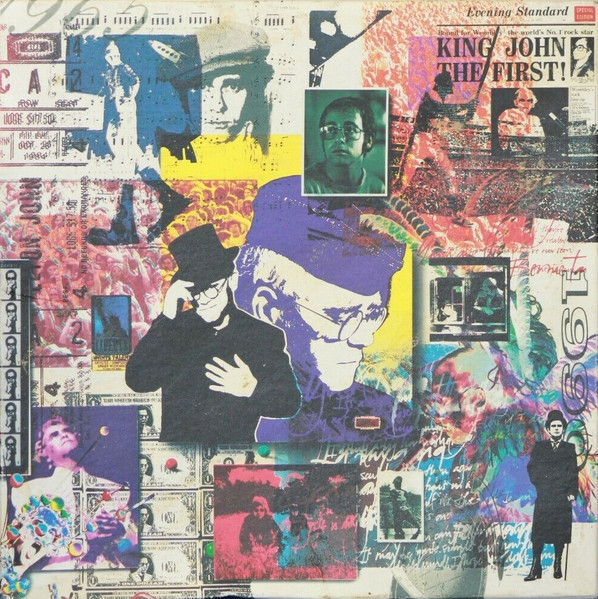
Having finally achieved sobriety, Elton John was determined to start the ‘90s strong. And since it was becoming the trend for artists of his stature, he got the box set treatment. To Be Continued… not only summed up his career to date on four CDs or cassettes, but precluded him from having to record another album to keep his annual chart appearances going. (The somewhat garish booklet was loaded with photos, an essay, and a joint interview with Elton and Bernie Taupin. Track info was very detailed as to who played what, even providing exact recording dates when available.)

At the time, the box was essential for offering up several songs—mostly B-sides—that would eventually be farmed out as bonus tracks when the individual albums were reissued, and are discussed there. That said, it still tells a full story, starting with “Come Back Baby”, a mildly melodramatic number sung by an 18-year-old Reg Dwight with the Bluesology combo. From there it’s a pretty comprehensive survey of the next 25 years, at roughly eight years per disc, except for the second, which covers 1972 to 1974. Oddly, Tumbleweed Connection is given short shrift; we would have picked “Amoreena” or “Where To Now St. Peter” over “All The Girls Love Alice”. Among the standouts in the rare stuff is a demo of “Your Song” that shows the song practically fully formed. “Step Into Christmas” gains a spot in context, and the run of “One Day At A Time” through “Lucy In The Sky With Diamonds” to the live “I Saw Her Standing There” gives John Lennon a spotlight. (“Empty Garden” also appears later in the set, as does an hideous “cover” of “Give Peace A Chance” with silly voices sung over part of the track for “I Don’t Wanna Go On With You Like That”.) An excellent “I Feel Like A Bullet (In The Gun Of Robert Ford)” comes from a series of concerts with only Ray Cooper accompanying him on percussion. The brief “Cartier” is basically an advertising jingle, while “Donner Pour Donner” is a bilingual collaboration with French singer France Gall. “Carla Etude” is an outtake from Live In Australia, and some of the later songs appear in single or dance mixes.

To further entice collectors, To Be Continued… ends with four newly recorded songs, produced by Don Was. “I Swear I Heard the Night Talking” and “Easier To Walk Away” are fairly generic, but “Made For Me” is just plain embarrassing, musically and lyrically (“If I couldn’t see you naked/Oh, I might as well be blind”?) “You Gotta Love Someone” is a better use of Bernie’s list-writing technique, but only slightly. If these songs were supposed to be the springboard for a full album, it’s best that he pulled the plug. To be fair, it’s not the only box set in history that runs out of steam on the last disc.

Elton John To Be Continued… (1990)—

Friday, March 6, 2026

Elton John 29: Sleeping With The Past

Now that Elton John was “back”, he was as determined as ever to keep his God-given place on the charts. Sleeping With The Past was again written solely with Bernie Taupin, to whom he even dedicated the album. The idea was that he wanted to emulate soul giants of previous decades, but the production is all ‘80s, cold and lacking personality, dominated by his electronic piano.

With an intentionally pounding hammer of a beat, “Durban Deep” would appear to be a metaphor about a sad coal miner, or maybe it’s supposed to be taken literally. That said, he does sing the heck out of it. “Healing Hands” was the attempted uplifting first single, though the choir on the choruses are a bit much, and prove that the song would be better served by someone singing with actual soul. The slower pace of “Whispers” is welcome, but the mix is just too ornate for something of this sentiment. While “Club At The End Of The Street” is sufficient on the album, its richly comic book-style animated video nicely fills in the details the track couldn’t convey on its own. The title track has a trashy guitar riff and overly popped bass, with something of a “Philadelphia Freedom” feel, and a lyric that could almost be gender-fluid.

“Stone’s Throw From Hurtin’” glues another tale of romantic woe to a catchphrase and a track that sounds like a demo, despite the ten people listed as contributors. But with “Sacrifice” we finally get a song that’s worthy of repeat listening and the “classic” label. Even that recurrent synth chime can’t kill this one. The story Bernie tells in “I Never Knew Her Name”—a narrative about a man falling in love with another man’s bride—might be more effective if we knew why the guy was attending the wedding in the first place. The horns sound canned, because they are. “Amazes Me” is another soul number with somebody wailing in the background, that in hindsight predicts Chris Stapleton. The unabashed love declared in the song is in direct odds with “Blue Avenue”, which compares a relationship to an addiction over an understated arrangement that almost recalls his first albums.

The videos for the singles got lots of play on VH-1, but while the album eventually went platinum, Sleeping With The Past just doesn’t deliver any more than his worse ‘80s albums did. Yet he gamely promoted it, raised money for AIDS charities with the proceeds, and went into rehab after the tour was over. (The remastered reissue, only nine years later, added the B-sides “Dancing In The End Zone” and “Love Is A Cannibal”, the latter of which had appeared on the previous summers Ghostbusters II soundtrack.)

Elton John Sleeping With The Past (1989)—
1998 CD reissue: same as 1989, plus 2 extra tracks

Tuesday, December 2, 2025

Elton John 28: Reg Strikes Back

The comeback started with the live album continued for Elton John, but he wouldn’t call it that. Rather, the title of Reg Strikes Back suggested a pugnacity along the lines of “I’m Still Standing”, and to prove he was serious, the album cover showed several closets full of old costumes and hats, which were presumably among the items soon to be auctioned for charity. Musically it wasn’t much of a departure; Bernie Taupin was on board and Davey Johnstone was still in the band, but Dee Murray and Nigel Olsson were only asked to provide backing vocals.

The arrangement of “Town Of Plenty” proves what part of what decades we’re in, and the mix—with the aforementioned backing vocals up front—obscures the social commentary in the lyrics. (News flash: Elton doesn’t like “the media”.) Then “A Word In Spanish” saunters in reminiscent of “Nikita”; it’s a nice idea, bringing in Bernie’s fascination with movies and romance, but Elton belts out the lyrics where a softer approach would have been more effective. Speaking of throwbacks, “Mona Lisas And Mad Hatters (Part Two)” is a sequel nobody asked for. While its predecessor eloquently celebrates New York City and the vulnerability one can feel there with a tender backing to match, this one gushes over just how awesome it is, presumably for those who can afford it and aren’t worried about getting mugged, atop a brassy R&B track with Freddie Hubbard taking a trumpet solo. But while “I Don’t Wanna Go On With You Like That” is a lot like what we’ve heard so far, it works, even with the limited range of the melody and mildly robotic beat. “Japanese Hands” finds Bernie in love again, but this time on another continent, and with a softer approach and not too heavy on the clichéd Oriental accents.

As with side one, side two also starts with a kiss-off. “Goodbye Marlon Brando” is mostly a list turned into a lyric, fleshed out in the bridges, but it also mostly expands on an idea already started by Tom Petty and Bob Dylan a year before on “Jammin’ Me”. “The Camera Never Lies” is an improvement, a meaty performance and catchy changes throughout, following an accusatory tale. Davey gets credit for helping out with “Heavy Traffic”, a character-heavy study of vice that burbles along over something of a salsa beat that stops and starts with odd frequency. The judgement continues on “Poor Cow”, which unfortunately uses that term as a hook in the chorus, at odds with the disdainful verses. While it makes for a nice finale, “Since God Invented Girls” just seems odd coming out his mouth, even if he was still technically married to his wife. It’s not the first reference to the Beach Boys on the album, underscored by Carl Wilson and Bruce Johnston actually providing harmonies, but it needs a better hook, which starts with the title.

Reg Strikes Back was something of a hit, as he’d intended, and certainly brought him back to a point where he was consistently on the radio—as well as VH-1 if not MTV. In contemporary interviews he boasted about all the piano playing he’d done compared to his recent output, but it still sounds too much of its time. (The expanded reissue added the B-side “Rope Around A Fool”, which could easily have replaced one of the lesser tracks on the album, plus a remix of “Mona Lisas Part Two” and two of “I Don’t Wanna Go On With You Like That”, one of which was labeled “Just Elton And His Piano”, but like the rest of the album, it’s still a digital piano instead of a grand.)

Elton John Reg Strikes Back (1988)—
1998 CD reissue: same as 1988, plus 4 extra tracks

Friday, June 6, 2025

Elton John 27: Greatest Hits Volume III

The live album notwithstanding, 1987 was Elton John’s first year without new material since his first album. But thanks to the label switch, he still had product in the racks. Somehow Geffen was able to license two tracks that were on MCA, which is how a third volume of so-called greatest hits happened, ten years after the last one, and mere months after Live In Australia came out.

Side one is indisputably strong, proof that even his lesser albums had great songs. It’s hard to argue with this lineup: “I Guess That’s Why They Call It The Blues”; “Mama Can’t Buy You Love”; “Little Jeannie”; “Sad Songs”; “I’m Still Standing”; “Empty Garden”. We’d like to say the same for side two, but these particular hits just aren’t as strong. Much as we like “Kiss The Bride” and “Blue Eyes”, “Heartache All Over The World” is just too fluffy, and “Too Low For Zero” hadn’t even charted as a single. “Nikita” belongs here, of course, but “Wrap Her Up” was likely included due to the presence of George Michael, then riding high with Faith.

Only five years later his catalog was standardized worldwide, with everything in the US reverting to MCA (even though Geffen was part of MCA by this time anyway). Because of licensing and whatnot, songs on the second hits album had been switched, but that meant that “Sorry Seems To Be The Hardest Word” and “Don’t Go Breaking My Heart” were now selling points on the revamped Greatest Hits 1976-1986. Best of all, those songs replaced “Heartache” and “Too Low For Zero” figuratively and literally, and the set even added “Who Wears These Shoes?”

The sequence was different from the Geffen album, shuffling the “new” songs on side one of the cassette—there was no LP version, being 1992—and going chronologically for side two. Geeks like us also appreciated the copious track information, including players and even recording dates. While the cover photo reflected the year of release and not the material, it’s still a strong collection, and preferred to its first incarnation.

Elton John Elton John’s Greatest Hits Volume III 1979-1987 (1987)—3
Elton John
Greatest Hits 1976-1986 (1992)—

Friday, January 10, 2025

Elton John 26: Live In Australia

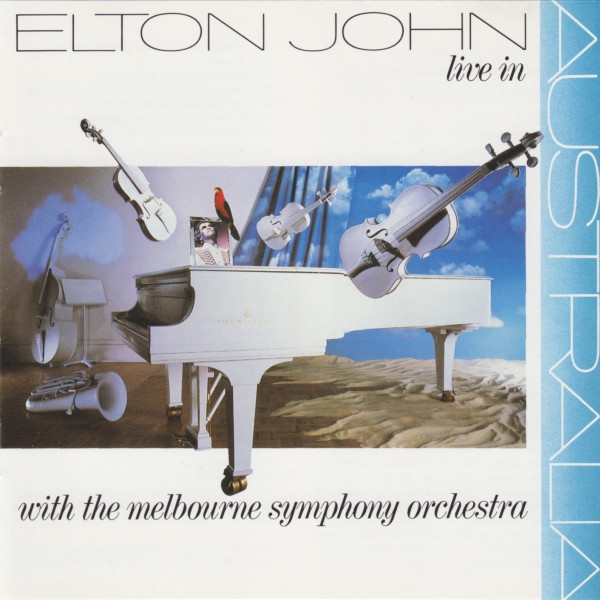
Elton’s 1986 tour of Australia followed almost immediately on the world tour he’d started the year before, which was initially in support of Ice On Fire but went on to attempt to put some life into Leather Jackets. What was different about the leg down under was the approach: 26 performances were spread throughout five venues, and each featured his band in the first half, then Elton performed accompanied by the Melbourne Symphony Orchestra while bedecked in powdered wig, beauty mark, and colonial costume a la Mozart.

Such an event was just screaming to be documented, and the following year a live album highlighting the orchestral portion appeared, alongside a home video with selections from both halves. In the US, the album was pointedly released on MCA, signaling that he too had had it with being on Geffen. (A few songs weren’t included, partially due to the then-limited capacity of a CD.)

From the start he sounds raspy; indeed he would have throat surgery immediately after the tour. But it’s an adventurous program, beginning with three deep cuts from his second, eponymous album. The grand spectacle of “Tonight” is followed by the more recognizable “Sorry Seems To Be The Hardest Word” from the same album. “The King Must Die” goes back to the second album, and does the more rocking “Take Me To The Pilot”, and by now he’s really enjoying himself. The band nicely balances the orchestra on “Tiny Dancer”.

“Have Mercy On The Criminal” was one of Elton’s personal favorites, he says, specifically because of the original Paul Buckmaster arrangement, fleshed out here but still with plenty of space for Davey Johnstone to solo. “Madman Across The Water” has power but not enough menace for our taste, but the surprise hit single was “Candle In The Wind”, performed by Elton solo with some keyboard help (plus vintage Marilyn Monroe footage in the video). This would become the song’s go-to version for the next ten years. “Burn Down The Mission” gets a little derailed at the end with backing vocalists chanting “burn it down,” but “Your Song” is treated a little more respectfully. While “Saturday Night’s Alright For Fighting” was the standard closer, here it’s omitted and replaced by “Don’t Let The Sun Go Down On Me”.

After the embarrassment that was Leather Jackets, Elton was back, so to speak. He’d insist he was never away, but Live In Australia was still a nice reminder of what he could do as well as what he had done, and managed to please long-suffering fans along with new converts.

Elton John Live In Australia With The Melbourne Symphony Orchestra (1987)—3

Friday, July 26, 2024

Elton John 25: Leather Jackets

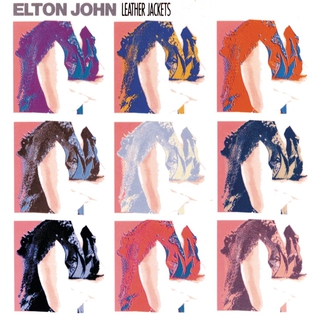
In the interest of full disclosure, we never knowingly heard a note of this album before writing this review. We remember seeing it in stores, but it wasn’t all over the radio like everything else he did before or since, and which we heard in real time. In our defense, Elton himself doesn’t remember much about it either.

Leather Jackets follows the template of his previous album, arriving almost exactly a year later. He and Bernie Taupin wrote most of the songs, Gus Dudgeon produced, and most of the two dozen musicians returned, with only Davey Johnston representing the classic Elton John Band. Yet that recipe created his most generic sounding album since Victim Of Love.

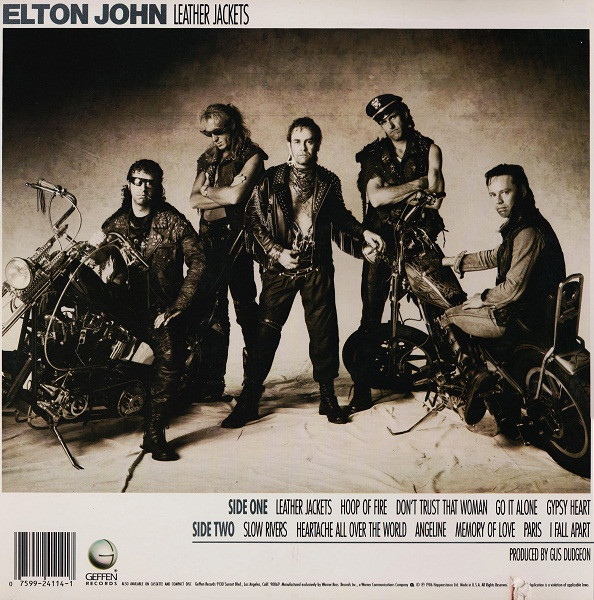
It’s a lot like Ice On Fire, which is good if you liked it, but there isn’t anything approaching something you’d want to hear again. The title track is dopey enough without the cringey back cover, which was probably an attempt to be funny. At least “Hoop Of Fire” changes the mood quickly, and could be a lot better with a more straight arrangement, but it still sounds like he’s singing about a “football fire”, whatever that is. “Don’t Trust That Woman” was written with Cher, of all people, and we’d love to know who decided the first line should be “she’s a real ballbuster”. As much as it sounds like a soundtrack refugee, “Go It Alone” is even more processed. Even though “Gypsy Heart” is slow and not slathered like everything else, it’s still something of a retread of the far superior “Blue Eyes”.

“Slow Rivers” is notable for being a duet with Cliff Richard, and not much else. “Heartache All Over The World” was the single—again, not that we recall hearing it anywhere, ever—and attempts to update the rhythm of “Philadelphia Freedom” with too many bad synthesizers. According to the credits, “Angeline” features John Deacon and Roger Taylor of Queen—not that you’d notice, given the “whoa-whoa” hook and car effects—suggesting it was left over from the last album. “Memory Of Love” tries to be a sensitive ballad, but for the fake harmonica all over the place. The acrobatic chord changes throughout “Paris” actually make the song interesting, but “I Fall Apart” sounds too much like it to stand out.

Throughout Leather Jackets he sounds like he’s trying to sound soulful and dramatic but coming off more hammy. The raspiness in his voice is more noticeable without his other mid-‘80s hits to provide context, and ultimately, it’s all a waste. Unlike most of his catalog, it has never been expanded.

Elton John Leather Jackets (1986)—2

Friday, April 5, 2024

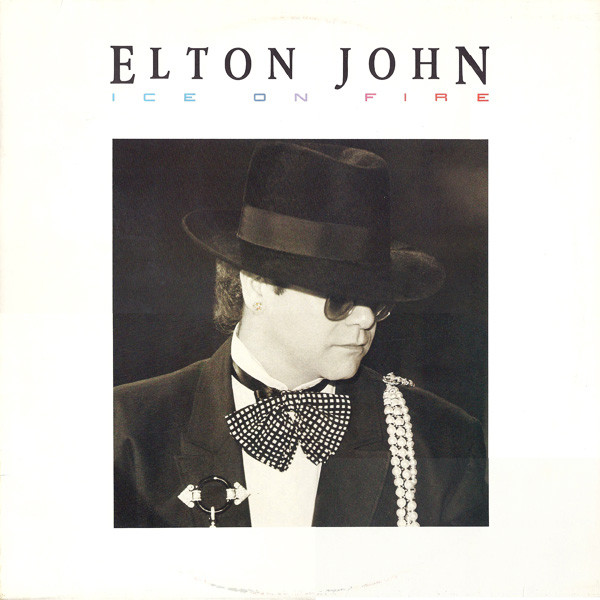
Elton John 24: Ice On Fire

For his next trick, Elton wrote an entire album with Bernie Taupin, brought back Gus Dudgeon to produce, but overlooked his trusty rhythm section to rely on hired guns and threw himself back into the ‘80s. After all, Bernie was fresh off the success of “We Built This City” for Starship. But perhaps the biggest crime about Ice On Fire was the mullet.

Typical of its era, “This Town” sounds like the theme from a buddy cop soundtrack, and even though the horns are real, they sound canned, and Elton’s delivery is near rap. And that would indeed be Sister Sledge on the backing vocals. At least “Cry To Heaven” is a return to a piano ballad, and it mostly works except for the stock Yamaha DX-7 chime that will always sound like a Taco Bell commercial. Despite the cringey lyrics, “Soul Glove” is generically catchy, with a popping bass by Deon Estus, who’d recently worked with Wham! (More on them later.) “Nikita” was the surprising first single, a non-binary-specific love song with allusions to Soviet relations in the thawing of the Cold War. “Too Young” features the Queen rhythm section, not that you’d notice, particularly with subject matter that would make Benny Mardones blush.

Credited to six writers, “Wrap Her Up” is excruciating enough for George Michael’s falsetto response to every line, and gets worse with the litany of female icons over the end, ranging from Marilyn Monroe to Nancy Reagan. “Satellite” is loaded with wacky space effects and an intro that sounds like a ripoff of Bowie’s “Fame”, but the song itself mostly improves on that. Unfortunately, “Tell Me What The Papers Say” is completely cheesy in a not-good way, and the fake horns cover up the bass and piano way too much. “Candy By The Pound” might have potential if not for the robotic backing. All this makes the closing ballad “Shoot Down The Moon” both welcome and frustrating.

The cassette and CD included an extra track in “Act Of War”, a duet with R&B singer Millie Jackson that completely jarred at the end of the program. For some reason this was not included on the eventual expanded CD, which instead added three live songs used as B-sides as well as “The Man Who Never Died”, an instrumental written for John Lennon. No version of the album included the all-star single “That’s What Friends Are For”, wherein Elton sang with Dionne Warwick, Gladys Knight, and Stevie Wonder. This was a charity single released to raise money for AIDS research, which would become a key campaign for Elton once he got sober. But that was some time away.

Elton John Ice On Fire (1985)—2
1999 CD reissue: same as 1985, plus 4 extra tracks

Friday, December 8, 2023

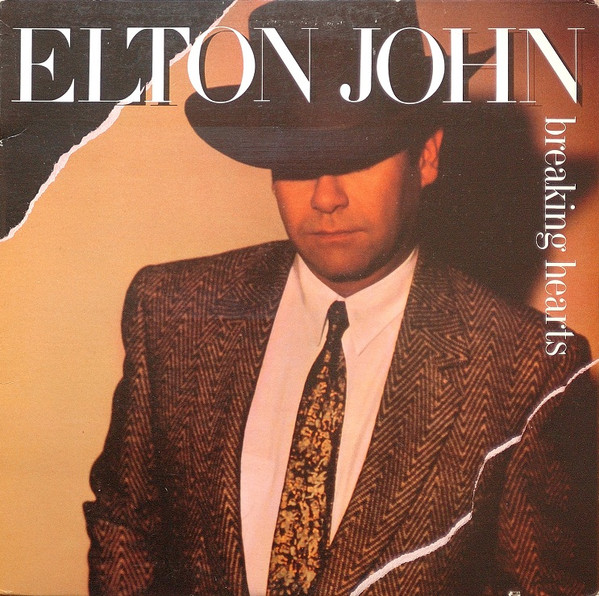
Elton John 23: Breaking Hearts

Proving he knew not to mess too much with success, Elton John plowed ahead with an album that once again kept the classic band intact, with Bernie Taupin providing every lyric, and even getting his own photo on the back cover. But Breaking Hearts wasn’t exactly a throwback, being steeped in contemporary sheen.

For example, while the synth is subtle on the mildly Stonesy “Restless”, the bass is very pronounced, to the point where we don’t care about the overtly political commentary in the lyrics. Bernie was trying to think worldly in those days, as he even slips in a reference to the Berlin Wall as a point of comparison in “Slow Down Georgie (She’s Poison)”, a schizophrenic arrangement equally let down by the character assassination driving the plot. A lot better is “Who Wears These Shoes?”, built around the same Motown rhythm that inspired recent hits by Phil Collins and Billy Joel. The mildly melodramatic title track (which gets the subtitle “Ain’t What It Used To Be”) provides an alternate viewpoint for a change, this time of a womanizing man rather than a slattern; one could almost hear Freddie Mercury crooning this. After a strange ambience, “Li’l ‘Frigerator” is an upbeat rocker back to hating women, with more ‘80s keyboard touches and a surprising sax solo pushed aside by a nice guitar solo.

“Passengers” is a departure of sorts, a catchy chant based on a South African folk song, and actually refers to apartheid. It’s one of the least Elton-sounding songs he’s ever done, and it works. “In Neon” is a sympathetic portrait of a sad woman wishing for fame and fortune, with backing vocal touches that recall earlier cinematic references like “Candle In The Wind”. Keeping the mood slow, the ballad “Burning Buildings” has a lot of dynamics, rising and falling without getting carried away, even a few Beatlesque touches. There’s a nice interlude where the piano doubles the acoustic guitar solo. Another one that shouldn’t work but does is “Did He Shoot Her?”, which is loaded with classic harmonies and combines ‘80s beats with ‘70s sitar, Philly soul with a Jagger vocal, bridging the decades. Speaking of which, “Sad Songs (Say So Much)” rankled us from the first listen as it more or less retreads the music from the Stones’ “Let It Bleed”, save the bridge. (Within a few months, he’d retooled the lyrics for a designer jeans commercial, declaring that “Sasson says so much.” This is absolutely true.)

That song kept him on the radio; he was also in the news after marrying the woman who engineered Breaking Hearts. The producer was the faithful Chris Thomas, who kept the sound fresh for an overall successful product, provided you don’t listen too closely.

Elton John Breaking Hearts (1984)—3

Friday, July 14, 2023

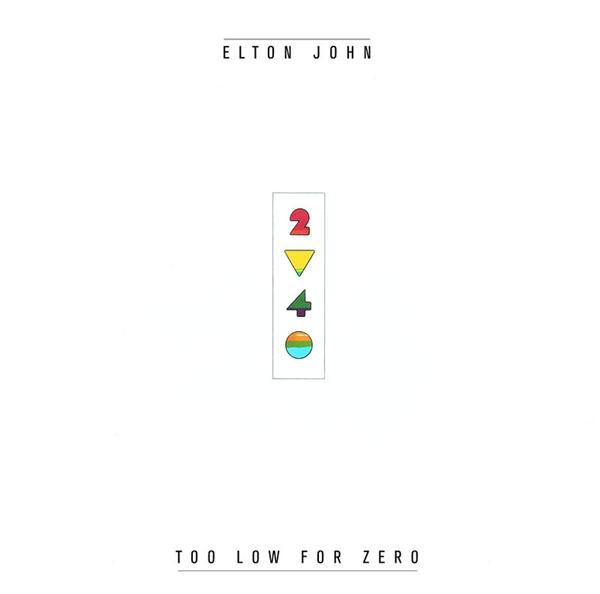
Elton John 22: Too Low For Zero

If nothing else, Elton John was determined to keep churning out music at a steady pace of a new album every year. Too Low For Zero kept him on the charts thanks to decent tunes as well as getting somewhat back to basics. Bernie Taupin was fully on board, providing the lyrics for every song, and so were all the members of the original Elton John Band.

Even Ray Cooper and Kiki Dee show up on “Cold As Christmas (In The Middle Of The Year)”, an odd choice for the lead track, given the title and subject matter (an older couple falling out of love). But it’s forgotten as soon as “I’m Still Standing” crashes in, and as wonderful a statement of purpose as any. The title track suffers from the keyboard and drum machines of the time—Elton is solely to blame, since James Newton Howard was no longer handling the synths—but there’s no denying its catchiness. “Religion” is a decent countrified track hampered by a lyrical indictment of hypocritical born-again types. (Social commentary was never this pair’s strong suit; that was about a decade away.) But he shows he can still get a hit with a slow one with “I Guess That’s Why They Call It The Blues”, another terrific track, helped along by a harmonica solo from Stevie Wonder. (Davey Johnstone gets credit for some of the music as well.)

Unfortunately, “Crystal” is in the same one-man-synth-band mode as the title track, but again, it’s got a terrific melody, and deserves to be rearranged. Its demo feel is underscored when it segues jarringly into the rocking, nearly Who-like “Kiss The Bride” with its welcome guitars. While “Whipping Boy” sounds like we’ve heard it before, it’s good and trashy in a way he and Bernie hadn’t been since the ‘70s, and like everything we’ve heard so far here, it’s infectious. It’s a quick segue to the slower “Saint”, with its opening fanfare straight from an Asia album, and the band supports the chorus well. Just as slow is “One More Arrow”, which seems to be an elegy for a doomed young man that Elton sings at the upper end of its register. Thus his best album in years ends hauntingly.

The contemporary sheen made sense then, and there are enough elements in Too Low For Zero to put it on the level of his ‘70s heights. It’s definitely worth revisiting. Even the lengthy B-sides included on the reissue, which seem to come from earlier sessions, aren’t that embarrassing. “Earn While You Learn” is a funky instrumental credited to Lord Choc Ice, “Dreamboat” is a Gary Osborne lyric that rhymes “dream on dreamboat” with “steam on steamboat”, and “The Retreat” is another Taupin rumination on dead soldiers that doesn’t quite evoke Tumbleweed Connection.

Elton John Too Low For Zero (1983)—3
1998 CD reissue: same as 1983, plus 3 extra tracks

Tuesday, February 21, 2023

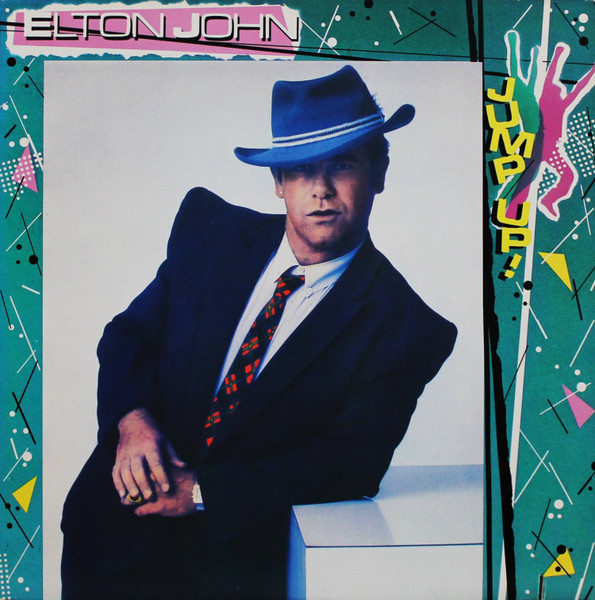
Elton John 21: Jump Up!

By now we weren’t expecting much from Elton John, but he surprised us. Jump Up! was very much a return to form, with straight pop songs, some arty ones, few clichés, and even Bernie doing the lyrics for six of the ten.

An uncharacteristically simple beat from Jeff Porcaro drives the guitars and straight-ahead piano of the rocker “Dear John”, and the basic lyrics are indicative of Gary Osborne. Bernie’s more poetic touch is apparent on the more arranged “Spiteful Child”, but the repeated “spiteful” backing vocals don’t exactly make for a hit single. There’s zero piano, and only a little keyboard back in the mix, on the mildly rockabilly but very catchy “Ball And Chain”, which is otherwise dominated by Pete Townshend’s rhythm acoustic. “Legal Boys” is not only the fourth straight song about a romantic breakup, but mostly notable as his first collaboration with Tim Rice, and not his last. The music has baroque musical theater touches, with some emotional juxtapositions in the chorus that keep it from being overly trite. Outside of the pastel paint-splattered cover art, the album’s most cringingly ‘80s aspect would be “I Am Your Robot”, which thankfully limits the dated synths to the intro that the rest of the song struggles to overcome. Amazingly, Bernie’s responsible for these words too. Yet this near-travesty is forgotten with “Blue Eyes”, a gorgeous torch song that ranks with the pair’s all-time best.

Speaking of classics, side two begins with “Empty Garden (Hey Hey Johnny)”, an elegant, heartfelt, and still touching tribute to John Lennon. The harpsichord, castanets, backing vocals, and highly singable chorus all come together to support not just a great song, but a fine recording. Unfortunately, “Princess” is something of a step down, combining the lyrical theme from “Tiny Dancer” with the lightweight pop of, once again, “Little Jeannie”. “Where Have All The Good Times Gone?” is not the Kinks song, but a return to “Philadelphia Freedom”-style soul that belies the aging-inspired anxiety of the lyrics. That leaves “All Quiet On The Western Front”, a slow six-minute single about the first World War that boasts a James Newton Howard arrangement over the lengthy close.

Unlike his last few albums, which seemed cobbled together from various sessions and participants, this album is tighter, with singular production by Chris Thomas and the same basic band throughout. 1982 was a good year for many veteran performers, and Elton could be pleased to have been part of it. It had been a rough five or so years, but Jump Up! seemed to indicate he was on the right track again.

Elton John Jump Up! (1982)—3

Tuesday, September 20, 2022

Elton John 20: The Fox

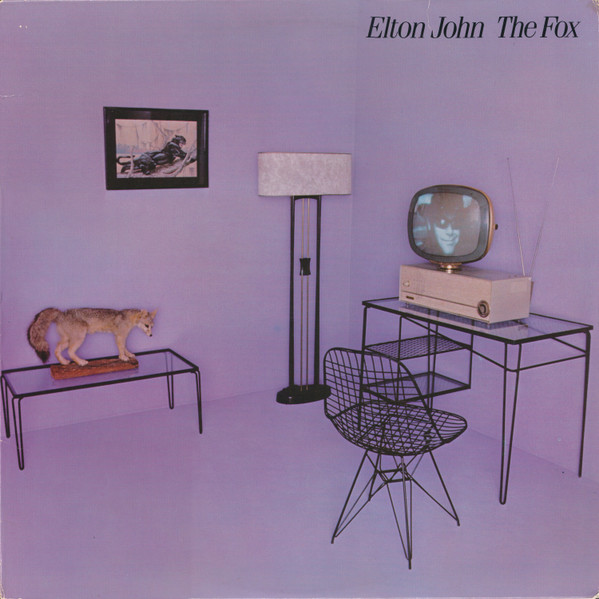
The Geffen label started out by wooing established artists, and after Donna Summer and John Lennon (and Yoko Ono), Elton John was the label’s next release. For several reasons, The Fox was overlooked then, and still seems so today. For starters, David Geffen felt the first batch of songs Elton presented was under par, so several tracks were revived after being left over from the 21 At 33 sessions. Once complete, it wasn’t promoted very well, and those who did buy the album were greeted with a rather disjointed sequence of music that went all over the place, with contributions from multiple lyricists.

“Breaking Down Barriers” is strong beginning, with waterfall piano lines and a defiant vocal over a mildly discofied arrangement that still rocks. “Heart In The Right Place” aims to be even dirtier, with the perpetual guitar solo from Steve Lukather, but the mix buries the vocal under way too much. “Just Like Belgium” sports an inscrutable Bernie Taupin lyric and a throwback ‘70s sound, with a little jangle thrown in and a woman whispering in French, whereas “Nobody Wins” is basically a cover of a song in that language, with new lyrics by Gary Osborne and a distinctly Euro-synth backing. He gets political on the angry “Fascist Faces”, which continues the modern rock sound and brings back the Rev. James Cleveland and his choir for more counterpoint. Elton even takes a piano solo.

His piano is the focus for the first part of side two, in the lushly orchestrated instrumental “Carla/Etude”, which is actually two pieces neatly stuck together. “Fanfare” is a not-brief enough James Newton Howard synth arrangement of the song that follows, and sounds like it belongs to someone else’s album. “Chloe”, the song itself, is a little better, though it sounds like a minor-key retread of “Little Jeannie”. “Heels Of The Wind” is another throwback, musically as well as lyrically via Bernie, but there’s something a little too by-the-numbers about it. That cannot be said for “Elton’s Song”, a heartbreaker written to a lyric by Tom Robinson. While the rarely-seen video makes it plain, this soliloquy of unrequited love is more poignant when heard as intended: from one schoolboy to another. That elegance makes the title track an odd finale, but there is a certain determinism in the track, which features harmonica from Mickey Raphael, soon familiar from his work with Willie Nelson.

The biggest obstacle with The Fox is that it doesn’t know what sort of album it wants to be. It’s one thing to have diverse styles, but when they jar rather than complement, the result is less than successful. As had happened before, the production and arrangements let down the potential of what could be excellent songs.

Elton John The Fox (1981)—

Tuesday, April 26, 2022

Elton John 19: 21 At 33

He was still selling out concert halls and arenas, but Elton John was obsessed with his chart placings. (He still is to this day.) 21 At 33 was something of an attempt at a comeback, even going so far to include Bernie Taupin and some old bandmates in the mix. But it’s still a mix, and not quite a blend.

“Chasing The Crown” is an excellent opener, with all the rock elements we’ve been missing, and lyrics by Bernie. The female choir fits, but it turns out that blazing guitar is courtesy of Steve Lukather, proving why he banked so much doing sessions. “Little Jeannie” was the hit single, with some “Daniel” echoes in the instrumentation; these days the drum machine in the second verse is a clever touch alongside the real thing. Gary Osborne wrote the lyrics for that one, and the next track is Elton’s first collaboration with Tom Robinson, who’d achieved notoriety a few years before with “Glad To Be Gay”. “Sartorial Eloquence” is a posh way of saying “gee but you clean up nice”, which wasn’t more successful as a hit single under the title “Don’t Ya Wanna Play This Game No More?” Bernie returns on “Two Rooms At The End Of The World”, which would describe and celebrate their tried-and-true writing method. Unfortunately, the track is just too punchy, and while he’d use this blueprint more successfully in the future, the horn and other singers engulf Elton’s parts.

Bernie’s also responsible for “White Lady White Powder”, which was hardly a subtle metaphor even then. The simple piano is soon joined by Dee Murray and Nigel Olsson and turns into something of a retread of “Phildelphia Freedom” without the strings. To underscore their intimacy with the song’s message, three of the Eagles add harmonies. Having seemingly packed his nostrils to the limit, “Dear God” is a limp prayer via Gary Osborne; the music deserves better. (This time the choir includes Bruce Johnston, Toni Tennille and two other veterans from The Wall, plus Peter Noone, of all people.) Tom Robinson also contributed “Never Gonna Fall In Love Again”, here given an arrangement too close to that of “Little Jeannie”, and a sax solo from the guy who used to play with Billy Joel. The genre shifts again on “Take Me Back”, which would do better if it was more overt country, especially given Byron Berline’s double fiddle solo. Finally, “Give Me The Love” is a disco-tinged collaboration with Judie Tzuke, whom we’ve never heard of either, but she was signed to his record label, so there.

While starting mostly strong, 21 At 33 fails as an album, though it’s certainly better than the missteps of 1979. Given his work ethic, he wasn’t about to take any time off. The album title was more of a score than a milestone anyway: he turned 33 years old while making the album, which would be his 21st. (This may seem confusing taking our series into account, but his arithmetic included everything we’ve reviewed thus far, plus Lady Samantha, a UK-only collection of B-sides and rarities issued initially only on 8-track and cassette that we’ll get to in another context.)

Elton John 21 At 33 (1980)—

Friday, October 15, 2021

Elton John 18: The Thom Bell Sessions and Victim Of Love

As further proof that Elton John was undergoing some kind of identity crisis, the follow-up to his tepidly received A Single Man was a maxi-single of three songs recorded two years earlier. The Thom Bell Sessions were named for the producer in charge, famous for his popular “Philly soul” hits of the time; by the time Elton got to work with him, he’d moved to Seattle.

Elton was happy to merely be the singer on the sessions, letting the producer provide the songs as well as the backing. Indeed, “Three Way Love Affair” benefits from Elton’s warm voice, and while “Mama Can’t Buy You Love” was a catchy hit, it could well have been the Spinners, who actually sing on “Are You Ready For Love”, which runs for eight minutes. Those of us who were thoroughly sick of disco by the summer of ‘79 were dismissive, but today we can agree that the production is indeed impeccable.

A good ten years later, once Elton was slowly regaining commercial acceptance again, The Complete Thom Bell Sessions presented all six songs originally recorded for the project. While false advertising, “Nice And Slow” found Elton and Bernie Taupin collaborating with Bell, and “Country Love Song” wouldn’t be confused for a Tumbleweed Connection outtake. A superior re-recording of “Shine On Through” would open A Simple Man.

But he wasn’t done with disco, nor was he ready to take control in the studio. For his next trick, he hooked up with Pete Bellotte, whom he’d first met in the mid-‘60s and had since gone on to make a mint creating Eurodisco with Giorio Moroder and writing for Donna Summer. That hitmaking approach was applied to Victim Of Love, to which Elton devoted exactly eight hours, which is what it took to apply his vocals to the generic backing tracks. Save the execrable opening cover of “Johnny B. Goode”, the songs were supplied by the producer and his team. Truly shocking are the credits, which include such musicians as Marcus Miller on bass, Keith Forsey on drums a few years before Billy Idol, the ubiquitous Paulinho da Costa on percussion, and even Michael McDonald and Pat Simmons hiding from the Doobie Brothers on the title track. Like most disco albums of the time, there is no break between songs, just the same four-to-the-bar kickdrum thump. The only respite comes with the silence at the end of each side. Even more so than The Thom Bell Sessions, Victim Of Love lacks any of Elton’s personality, and therefore any of his genius or talent.

Elton John The Thom Bell Sessions (1979)—
1989 The Complete Thom Bell Sessions: same as 1979, plus 3 extra tracks
Elton John Victim Of Love (1979)—

Tuesday, June 29, 2021

Elton John 17: A Single Man

Two things are apparent from the cover of A Single Man: Elton John is not wearing glasses of any kind, and Gus Dudgeon is not listed as producer. The gatefold shows the lord of the manor at the wheel of a classic Jaguar, and Bernie Taupin is nowhere to be found on the labels or inner sleeve. Clearly, this album was a considered departure.

The lyricist is one Gary Osborne, who Elton probably met through Kiki Dee, but was best known to the public at large for his contributions to Jeff Wayne’s Musical Version Of The War Of The Worlds, which managed to combine the talents of Justin Heyward of the Moody Blues, Phil Lynott of Thin Lizzy, and Richard Burton. He doesn’t have Bernie’s unique approach, his prosaic style, nor his pretension; the accent here is on rhymes that create ear candy. (The band is different too, with future Wings drummer Steve Holley behind the kit and future Pink Floyd sideman Tim Renwick on the guitars.)

We know we’re in for a different album with the stately elegance of “Shine On Through”, and quite lovely indeed. But “Return To Paradise” can’t decide if it wants to be in the islands or Mexico, with the marimba and mariachi horns competing for space. The uptempo “I Don’t Care” finally brings in the rock, somewhat, though the strings and phased guitar are definitely Philly soul. Possibly the least subtle metaphor by anyone’s standards, “Big Dipper” lopes around New Orleans, and it was wise of him to cop to lifting from “Makin’ Whoopee” at the end. “It Ain’t Gonna Be Easy” is sneaky, straddling the line between bluesy and ballad. Ray Cooper’s vibraphone is more welcome here than it was on Blue Moves, but the song truly didn’t need to last eight minutes. If anything in his catalog screams for a “radio edit”, this is it. (According to one report, the original take ran twelve minutes, so maybe we should be thankful.

“Part-Time Love” is from the same discofied cloth as “Don’t Go Breaking My Heart”, and a smart choice for a single while “Georgia” tries to evoke Tumbleweed Connection. He breaks out of his lower register for “Shooting Star”, something of a counterpoint to the groupie ballad “Superstar”, and should have been a smash hit for any female singer who wanted to cover it. “Madness” is a rare attempt to be political, but the sentiments are tempered by an undeniably catchy arrangement. After a brief “Reverie” comes one of the most elegant pieces he’d written since “Funeral For A Friend”. If his story is to be believed, “Song For Guy” was composed on a lonely afternoon, only he found out a day later that one of his assistants had been killed in an accident while he was writing. It’s a heartbreakingly gorgeous melody, played on piano with synthesized strings and a simple drum machine. The only words are “Life isn’t everything.”

A Single Man was not well-received upon release, but time has shown it to be far from awful. His “lower” voice sounds fine, and the work throughout is inventive and strong; Elton was just more concerned with having hits than making art. One such flop of the era was the over-ambitious single “Ego”, written with Bernie. This leads off the current CD’s bonus material, along with its flipside “Flinstone Boy” (which doesn’t do much beyond paraphrase a line from the show) and three other B-sides of the time, no better or worse than the album they were supporting.

Elton John A Single Man (1978)—3
1998 CD reissue: same as 1978, plus 5 extra tracks

Friday, February 26, 2021

Elton John 16: Greatest Hits Volume II

Maybe Elton (or his record company) knew his streak was over, as another “hits” package was pushed out to maximize any sales. Unlike the first installment, Elton John’s Greatest Hits Volume II ran all over the place, even including songs that predated that previous mop-up—never a good sign. It did have a nice booklet with lyrics and photos, which was nice.

After establishing the thesis yet again with “The Bitch Is Back”, his cover of “Lucy In The Sky With Diamonds” graduates from single to album track, and yes, that would be John Lennon himself playing “reggae guitars” on the break. “Sorry Seems To Be The Hardest Word” is still heartbreaking, just as “Don’t Go Breaking My Heart” his single duet with protégée Kiki Dee is all but irresistible. “Someone Saved My Life Tonight” brings the seesaw back to close the side.

Another non-album single, “Philadelphia Freedom” was all over the radio as America geared up for its bicentennial, and we still can’t figure out what it has to do with Billie Jean King’s tennis team outside the title. “Island Girl” and “Grow Some Funk Of Your Own” are good and bad choices, respectively, from Rock Of The Westies, and then we go all the way back to 1971 for “Levon”. Finally, “Pinball Wizard” reminded folks of one of the cooler sequences in the Tommy film, and showcases the Elton John Band at their best.

There’s no question that Greatest Hits Volume II delivers the goods. Back then, it did offer value for money by collecting songs from various sources, and there’s no denying how much he had dominated the charts, the jukeboxes, and the airwaves in those days.

Nothing is simple with Elton, of course; outside the U.S., “Bennie And The Jets” replaced “Levon” in the lineup. Then, when his catalog was standardized worldwide in the ‘90s, the remaster swapped out “Sorry Seems To Be The Hardest Word” and “Don’t Go Breaking My Heart” for “Tiny Dancer” and “I Feel Like A Bullet (In The Gun Of Robert Ford)”—not exactly an even swap—though it kept “Levon”. Future hits collections would be more comprehensive in including the necessary hits, just as upgraded and expanded albums have collected various of the standalone singles.

Elton John Elton John’s Greatest Hits Volume II (1977)—
1992 CD reissue: same as 1977, plus 2 extra tracks (and minus 2 tracks)

Friday, October 30, 2020

Elton John 15: Blue Moves

Seemingly pathologically addicted to recording albums, Elton emerged with his second double album in the space of three years. Heavy on pop and disco, Blue Moves is an over-ambitious, labored set that unfortunately pales in comparison with the more rock-oriented and concise Goodbye Yellow Brick Road. Musicians vary from track to track, and instead of the standard Elton John/Bernie Taupin credit for all the songs, authorship runs all over the place.

Right away, “Your Starter For…” is an antiseptic instrumental written by occasional band member Caleb Quaye, and unfortunately provides an incongruous setup for the lengthy introduction to “Tonight”, performed by the London Symphony Orchestra (and recorded at Abbey Road Studios, of course). All that’s missing is a candelabra. When Elton’s vocal finally comes in, you wish he hadn’t taken so long. As a movie soundtrack it might work, but there’s nothing like the payoff of “Love Lies Bleeding” after “Funeral For A Friend”. (We’ll try to keep those comparisons to a minimum.) “One Horse Town” manages to combine rock and disco in a well-worn theme for this lyricist, except that Ray Cooper’s vibraphone plonks are mixed as loud as the synthesized burps. Ray similarly dominates the next track, but as “Chameleon” recalls earlier, simpler triumphs, it’s a keeper. Finally.

Side two continues the flirting with American music, and not successfully. “Boogie Pilgrim” has something of a New Orleans funk strut, with lots of interjections by the Rev. James Cleveland for some reason. “Cage The Songbird” tries to do for Edith Piaf what “Candle In The Wind” did for Marilyn Monroe, but the “Daniel” flutes and country backing don’t fit. David Crosby and Graham Nash nicely blend their voices, though, as they did consistently when asked. “Crazy Water” is a too-long retread of “Philadelphia Freedom”, but lose the Brecker Brothers horn section and David Sanborn sax solo, and “Shoulder Holster” might fit on Tumbleweed Connection, though it wouldn’t be a highlight.

A true classic, and a heartbreaking one, emerges in “Sorry Seems To Be The Hardest Word”; our only quibble is the accordion. The mood is dispelled by “Out Of The Blue”, a six-minute instrumental sporting impeccably synchronized guitar and yes, vibes. The mild island feel of “Between Twenty And Seventeen” does not match a lyric about how the music business wrecked Bernie’s marriage to a certain tiny dancer. “The Wide Eyed And Laughing” gets points for being different, as it features several sitars as well as Crosby and Nash again. It also took five people to write. Reflecting the down start to the side, “Someone’s Final Song” is a sad elegy featuring just Elton, his piano, sympathetic keyboard touches from James Newton Howard, and mild backing voices.

The vibe continues on “Where’s The Shoorah?”, with a similar stark performance except for the choir led by Rev. Cleveland. (We looked it up, and while a shoorah has connotations both Hebrew and hoodoo, chances are Bernie just liked how it sounded.) The title basically sums up “If There’s A God In Heaven (What’s He Waiting For?)”, more fist-shaking about social ills. Despite the musical quality of this last run of tracks, “Idol” inadvertently identifies the main problem with the album (“he's not the same no more/And I have to say that I like the way his music sounded before”) over a lounge backing that must have meant a lot to George Michael. “Theme From A Non-Existent TV Series” is as badly placed as the other instrumentals, and “Bite Your Lip (Get Up And Dance!)” tries to provide a grand finale along the lines of “Saturday Night’s Alright For Fighting”, not realizing they’d nailed it the first time.

As well produced as it is, and there are high points, Blue Moves is still a mess, if not quite the Self Portrait to his Blonde On Blonde. Even if it were shaved down to two sides, it would still be subpar. Unfortunately, this is approximately where Elton, and his golden touch, went off the rails. (Because of the varying accepted capacity of compact discs in their early days, the album’s debut in the format was incomplete, cutting four tracks almost at random in order to fit on a single CD. It only took 20 years for a fully restored two-CD program, split between the original two LPs.)

Elton John Blue Moves (1976)—2

Monday, July 20, 2020

Elton John 14: Here And There

Five years and eight albums since his last live album, Here And There presented a side each from two different concerts from 1974 with the classic Elton John Band with Dee Murray, Davey Johnstone, and Nigel Olsson. It was initially intended as something of a contractual obligation in the UK, with “here” being London and “there” being New York City, but the quality of the music elevates it above stopgap status.

The London show is said to be a retrospective through the years, beginning with “Skyline Pigeon”. The band kicks in for the end of “Border Song” and gives percussionist Ray Cooper three minutes to play a duck call solo in the middle of “Honky Cat”. “Love Song” is a surprise, particularly as it is performed, as on the album, as a duet with writer Lesley Duncan. “Crocodile Rock” is just plain playful, as usual.

He sounds a little hoarse on the Madison Square Garden side—understandable, as he’d been on the road for two months already—but he has the first half of “Funeral For A Friend/Love Lies Bleeding” to rest up. “Rocket Man” and “Bennie And The Jets” inspire lots of cheering, and while “Take Me To The Pilot” doesn’t have the power of its initial live version, it’s still loaded with energy.

Given the repetition from the hits album and its presenting only a handful of tunes, Here And There was easy to overlook. That changed with the remaster rollout of the mid-‘90s, which more than doubled the program, devoting a full CD to each of the shows. The London show includes even more gems from the past, including further selections from Tumbleweed Connection and even “Bad Side Of The Moon”. Along with more hits and the Muscle Shoals Horns for “You’re So Static”, it turns out the New York show was the same one where John Lennon made his surprise (and final) stage appearance, and those three songs are now included in the proper context. Yes, “Take Me To The Pilot” and “Your Song” now appear twice each, but is that such a bad thing?

Elton John Here And There (1976)—3
1995 CD reissue: same as 1976, plus 16 extra tracks

Friday, March 13, 2020

Elton John 13: Rock Of The Westies

Having felt something of a rut setting in, Elton John fired his longtime rhythm section, replacing them with players from the early days and a couple of Americans found along the way. The sound was bigger but still Elton, as demonstrated on his next album, once again recorded at Caribou in Colorado. Rock Of The Westies is an odd little album, full of strange song titles but plenty of commercial sheen.

The opening “Medley (Yell Help – Wednesday Night – Ugly)” finds him harmonizing with himself over James Newton Howard’s funky clavinet (part of Elton’s new band strategy being that he’d stick to piano). The funk continues on “Dan Dare (Pilot Of The Future)”, which namechecks a sci-fi hero of British comic books amid other garbled lyrics; amazingly, the closing vocal chorale sounds just like Queen. “Island Girl” is the latest attempt to immortalize a woman from an exotic place, musically very interesting given the unconventional bass line. It was the album’s only hit single, unlike “Grow Some Funk Of Your Own”, something of a take on “Gimme Three Steps” and not entirely convincing, or “I Feel Like A Bullet (In The Gun Of Robert Ford)”, which takes Bernie Taupin’s cowboy fixation to the extreme, in an arrangement already perfected in the arrangements on the last album.

The howling guitar and riff at the top of “Street Kids” recalls Bad Company until the congas kick in, and the tricky meter manages to keep it interesting. However, “Hard Luck Story” is fairly pedestrian, with a chorus that sounds flown in from a completely different song than the verses. “Feed Me” is all yacht-rock swagger; these days we want to add “Seymour” to every time he croons the title. But nothing prepares the listener for the bombastic arrangement of “Billy Bones And The White Bird”, which in no way suggests the “ancient mariner” tale hidden in the lyrics. “Check it out,” indeed.

Rock Of The Westies isn’t bad, and not strange enough to be a failed departure. It came out a mere five months after its predecessor, and as a whole suggests that maybe a little more time than that was needed. (The eventual expanded CD included two extras from the album sessions: a low-key take of “Planes”, later covered by the lead singer of the Zombies, and the lovely B-side “Sugar On The Floor”, written by new protégée Kiki Dee, of whom more would be heard and soon.)

Elton John Rock Of The Westies (1975)—3
1996 CD reissue: same as 1975, plus 2 extra tracks