Showing posts with label journey. Show all posts

Friday, May 26, 2023

Journey 16: Freedom

Seemingly determined to rock till he dropped, and tout the wonders of Just For Men, Neal Schon continued to drive Journey well into a fifth decade, even without new music. Each of the post-Perry albums had been predominantly showcases for Neal, and proof that Deen Castronovo has none of the jazz chops that made the albums with Steve Smith on drums that much more interesting. That they cared about this fact was mildly apparent when, after Deen had to drop out due to legal issues over what we’ll euphemistically call various domestic dilemmas, the first replacement on the kit was Omar Hakim, shortly followed by none other than Steve Smith himself, who had previously refused to be part of any Journey project that didn’t include Steve Perry. More fun arose after Jonathan Cain’s latest wife joined the Trump administration as a spiritual adviser, which sent Neal back looking for Gregg Rolie, who also thought any Journey without Steve Perry (and to a lesser extent, himself) was stupid. Then, after Neal and Jonathan sued Ross Valory and Steve Smith for attempting to take over the band, those two were out again, to be replaced by Randy Jackson (again) and Narada Michael Walden. Those two couldn’t tour post-Covid, so Neal brought in the bass player from Hardline and, you guessed it, Deen Castronovo.

All this fun back story is offered for entertainment, of course, which we can’t say about Freedom, 2022’s one-word catalog entry. To Arnel Pineda’s credit he doesn’t try to ape Steve Perry’s phrasing on these new songs, which come across mostly as retreads of the classics. To say that the piano “Together We Run” apes that of “Don’t Stop Believin’” might be a stretch, but good luck getting through “Don’t Give Up On Us” without imagery from the “Separate Ways” video yet again clogging your head. (Too bad they didn’t do a straight cover of the David Soul tune of the same name.) If you can stomach those, the rest of the album follows as expected, throwing in the occasional piano ballad between the arena stompers, all recorded in separate places due to lockdown and whatnot, then mixed together into one boomy 73-minute mess. Pineda is a good sport, considering he only helped write one song, and thankfully, it wasn’t “United We Stand”. Deen sings lead on “After Glow”, proving he wasn’t completely on the outs, though he’s competing with Neal’s noodling for pretty much the whole track. “Don’t Go” is cheesy ‘80s in a good way, but we’d bet that wasn’t planned. And “Beautiful As You Are”, harmless as it is, does not need to be seven minutes long.

Soon after Freedom was released, Neal sued Jonathan over access to the band’s corporate American Express card. Yet they still managed to tour. To help push that along, their 2021 appearance at Lollapalooza was released at the end of 2022, and consists of nothing originally recorded after 1986.

Journey Freedom (2022)—2

Tuesday, December 20, 2022

Steve Perry 5: The Season

With nearly lightning speed, Steve Perry put out more new music only a year after his comeback with Traces. Granted, it was a Christmas single—an ill-advised cover of “Silver Bells”, plus an edit of same and a version of “Have Yourself A Merry Little Christmas” with melodic liberties—but it did qualify as new.

As it turned out, these were merely appetizers for The Season, an eight-song collection of well-worn holiday standards, accompanied by the guy who produced Traces plus subdued drumming by Vinnie Colaiuta. When they’re sung straight, he just sounds old and tired, but those are more palatable than the tag he adds to “I’ll Be Home For Christmas” and the overly smooth touches on “Winter Wonderland” and “Santa Claus Is Coming To Town”. We do have to give him points for restoring the intro verse to “What Are You Doing New Year’s Eve?” but we also wonder whether the younger man would have belted these better, or just as cringingly.

A year later, following his recent trend, the album was reissued in a deluxe digital edition that began with two new original songs. “Maybe This Year” was a new original with some originality, for lack of a better word, while “This Christmas” revived an obscure Donny Hathaway track. While an improvement over the original program, the overall melancholy isn’t likely to make your spirits bright.

“Maybe This Year” proved to be a prophetic title as two years after that a third incarnation of the album happened, this time in physical format on the revived Dark Horse label, of all places. The Season 3 offered a rejigged order and six new tracks scattered among everything that had gone before. The album now opens with the Louis Armstrong perennial “What A Wonderful World” (as opposed to the Sam Cooke song we figured he’d be all over, but that’s not exactly Xmassy). “Jingle Bell Rock” is taken at about half the speed of the original, with an attempt at slow funk, an approach that’s a little more effective on “Rudolph The Red-Nosed Reindeer” but even creepier with “Let It Snow”. The big surprise is a virtual duet on “Call Me Irresponsible” with his deceased father; it’s very sweet, if not exactly Grammy material. The closing recitation of “‘Twas The Night Before Christmas” is delivered with no accompaniment, wisely, but it caps what is still an extremely gloomy album.

Steve Perry The Season (2021)—2
2024 The Season 3: same as 2021, plus 8 extra tracks

Friday, February 25, 2022

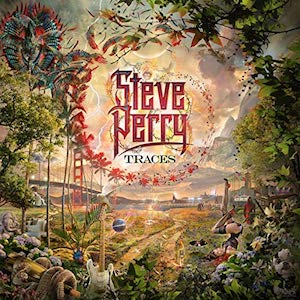
Steve Perry 4: Traces

It was one thing when grunge came and went between Journey albums. For the better part of twenty years, Steve Perry performed another disappearing act, emerging only to help the Chicago White Sox celebrate their 2005 World Series win. Content to let Journey hit the arena trail, that appeared to be that.

So it was very surprising when he broke his silence in 2018 for an extended press run promoting an album. Traces was said to have come together in the aftermath of his girlfriend’s death from cancer, and indeed, the bulk of the album is melancholy yet passionately delivered, and occasionally rocking. Still no dope, each song is a collaboration with a different songwriter. We don’t know how much singing, if any, he did during the decades away from the spotlight, but his voice has a layer of gravel that wasn’t always there. To his credit, he doesn’t try to hit notes he can’t reach anymore, but you kinda feel sorry for him anytime he approaches that portion of his register.

“No Erasin’” is a strong opener, a good combination of arena chords and yearning lyrics, even if a guy his age singing about back seats in cars is a little creepy these days. It effectively ends on an unresolved chord—an unsung Perry trademark—and “We’re Still Here” burbles slowly in. There’s not a lot of substance here, but his layered vocals (another trademark) carry the chorus. “Most Of All” is the first ballad, the type of thing that would normally close an album, but here it sets a tone. Written with the ubiquitous Dan Wilson, “No More Cryin’” is too slow in the verses to support the incongruous chorus, and the title is too similar to the first track, right down to the apostrophe. Slow and mildly orchestral, “In The Rain” is an improvement, with all the ingredients coming together nicely.

Right on time, “Sun Shines Grey” reminds us he can rock again, thanks to a hook from goth guitarist John 5, then “You Belong To Me” turns and slows everything down again. The subdued “So Easy To Love” is another showcase for his Sam Cooke impressions, and that’s meant in a good way. One of the more obscure Beatle covers, “I Need You” by George Harrison is taken at half speed, but it’s not exactly revelatory. Slow as it is, it only inserts a dash of rhythm before “We Fly” which would be considered an ambient piece if not for the vocals.

The Target chain of stores offered an exclusive edition of the album with five extra songs, all but the lush, orchestrated “October In New York”—considered so important it took up Side Three of the vinyl version, despite being only four minutes long—credited to only Perry as songwriter. “Angel Eyes” has pop potential, though the chords go all over the place. “Call On Me” is based on the same canned reggae rhythm as “Baby I’m A Leaving You”, though it does feature a very real telephone ringing that will have listeners of older generations hitting the rewind button. “Could We Be Somethin’ Again” is ordinary, but he actually approximates a growl over the otherwise nonsense coda. Finally, “Blue Jays Fly” provides another sad finale in case “We Fly” wasn’t enough.

Traces is good, but boy, is it a downer. We hope it did the guy some good; he was proud of it, and two years later unleashed a “stripped” selection of seven songs from the album, along with a “radio mix” of “Most Of All”. (Press reports suggested he did this to clear the decks for his next album already in progress, though we’re not holding our breath.) Subtitled Alternate Versions & Sketches, these versions are basically enhanced demos, which usually translates to no drums. He takes even more liberties with “I Need You”, but “No More Cryin’” works better in this format, while “Sun Shines Gray” retains its key riff.

Steve Perry Traces (2018)—3
Steve Perry
Traces (Alternate Versions & Sketches) (2020)—2

Friday, July 23, 2021

Journey 15: Eclipse

On something of a three-year plan, Journey took a mild detour not unlike what they’d tried with Red 13. Eclipse concentrated on heavier tunes and ignored ballads, to the point where it almost sounded like they wanted to be Dream Theater. Nobody has ever said Neal Schon couldn’t shred, and Deen Castronovo can certainly pound the skins, but despite Arnel Pineda’s vocal prowess, the band simply doesn’t have the gravitas to pull it off, even with most of the tracks running over six minutes and plenty of time to build motifs and whatnot. Plus, in all but two cases, Arnel’s lyrics were written for him.

They still try to go with the formula as much as ever; “City Of Hope” is full of “be true to yourself” platitudes, and “find your own destiny” is always convincing when sung by a guy picked for his vocal similarities to somebody else. “Edge Of The Moment” suggests what happens when you don’t quite reach that city, and perhaps the “Chain Of Love” is just a little too tight, particularly when you’re being whipped with it at a “Kashmir” tempo. “Tantra” sports a patented lengthy Jonathan Cain piano intro, reprised at the end, while Neal insistently matches the vocal note for note in between. After 25 minutes they still need to tell us that “Anything Is Possible”, such as the return of the same doom-laden drums on “Resonate”.

“She’s A Mystery” is a welcome change of pace, maybe because Arnel is credited as one of the writers, and certainly because we get an acoustic reprieve, but five minutes wasn’t long enough, and they insist on tacking on a loud coda for another two. For a song denouncing the overabundance of technology in our modern lives, “Human Feel” is incredibly robotic. With its cheesy keys and fake horns, “Ritual” almost sounds ‘80s, but the relentless beat makes the plea to “make sweet love all night long” more of a threat. “To Whom It May Concern” may start out like the senior prom slow dance, but the complicated time changes and pleading lyrics make it more of a history lecture or book report. “Someone” might even be a decent tune if it wasn’t a straight rewrite of “Somebody’s Out There” by Triumph. We’re sure we’ve heard the riff on the closing “Venus” instrumental before—maybe somewhere on this very album—and since it has nowhere to go but around, they throw a couple of false fades at us.

Eclipse is a case where the Journey brand definitely held them back. As much as they (read: Neal and Jonathan) insisted they were immune to apathy, they forgot to give what fans they still had wanted, no matter how many one-word titles they could concoct, with scarab-based artwork. The album didn’t sell—maybe because over here it was a Walmart exclusive—and the band spent the next several years touring, where they would make more money.

Journey Eclipse (2011)—2

Friday, March 26, 2021

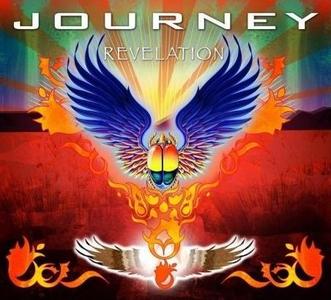
Journey 14: Revelation

After several grueling years trying to sing like Steve Perry, Steve Augeri’s voice gave out, and the band tapped Jeff Scott Soto, formerly of Yngwie Malmsteen’s band as well as other German metal supergroups. For whatever reason, he didn’t take, and wasn’t needed after Neal Schon saw a Filipino kid on YouTube singing a lot like Steve Perry. (Actually the “kid” was in his late 30s, but that was still a generation younger than the band he was about to join.) Thus, Arnel Pineda stepped into musical history.

Once he was installed as their singer, an album followed. Revelation wasn’t the most accurate title, considering that several editions were bundled with a disc of rerecorded Journey classics with Arnel doing the vocals, and also a live DVD with a set heavy on the hits. The album itself gets off to a bad start with “Never Walk Away”, a blatant rewrite of “Be Good To Yourself”, but at least the kid (yeah, we know) has enough of his own personality to give the proceedings some weight. “Like A Sunshower” slows things down for a pensive waltz-time slow dance, with “Change For The Better” providing a pick-me-up. “Wildest Dream” comes off like a parody of ‘80s Journey, complete with cheesy keyboards, then “Faith In The Heartland” from Generations is given the Arnel treatment, in something of a slap to Mr. Augeri; hopefully he kept his share of the publishing rights the former. (“The Place In Your Heart” was also rejigged, but only released in Japan.) “After All These Years” finds Jonathan Cain writing “Faithfully” again.

“Where Did I Lose Your Love” rewrites “Separate Ways” again, and arguably features the most Perry-like vocal, masked by Neal Schon shredding constantly. “What I Needed” is a good opportunity to go find the men’s room, even though it’s the only tune Arnel is partially credited for writing. “What It Takes To Win” actually uses “there’s no I in team” as a lyric, but at least it’s another musically intricate piece. However, “Turn Down The World Tonight” distills the album’s power ballads into a dirge, and “The Journey (Revelation)” combines Neal’s self-conscious pyrotechnics with disembodied yowling.

Because Schon and Cain have a lock on the songwriting throughout Revelation, it’s hard to state whether they considered Arnel a true team member or just a mouthpiece. The songs average at least five minutes apiece, as the guys weren’t about to edit themselves as long as it all fit on a CD. It’s not the best showcase for the vocalist, but they made more money on the road anyway.

Journey Revelation (2008)—

Tuesday, November 10, 2020

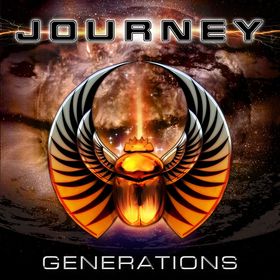
Journey 13: Generations

Steve Augeri had a thankless task replacing Steve Perry in Journey, but money is money and tour they did. While they made progress by maintaining the same lineup for two albums in a row, Generations muddles their aim by farming out four of the songs to every other band member. At least, they kept the songwriting in house for the most part. They even brought back Kevin Elson to produce.

The album continues Neal Schon’s quest for respect as a shredder, with more emphasis on power and less on ballads. Brevity is barely considered with most songs over five minutes; after all, don’t we wanna hear all that fretwork?

“Faith In The Heartland” is the rousing anthemic opener, and a good show case for Augeri, though there is a little of Perry’s asides just before the fade. Neal and Jonathan Cain didn’t notice how much the verse of “The Place In Your Heart” resembles that of “Ask The Lonely”, but they can still write a chorus. Drummer Dean Castronovo takes over the mike for the lackluster “A Better Life”, and he does a pretty good Steve Augeri impression, slightly better than Jonathan mewling his way through “Every Generation”. Augeri takes control for two songs he wrote on his own, the tender-but-barbed “Butterfly (She Flies Alone)” and the more adventurously metered “Believe”.

“Knowing That You Love Me” provides the requisite dark love song, kicked aside by the more frenetic war commentary in “Out Of Harms [sic] Way”. As if that wasn’t fast enough, Neal revives “In Self-Defense” from his second collaboration with Jan Hammer, a song incidentally co-written with Steve Perry. “Better Together” is a defiant message to the haters, and one they’d need before handing “Gone Crazy” over to Ross Valory. The classic Journey sound returns for “Beyond The Clouds”, and we still can’t figure out if she’s dead or just dumped him.

The band kindly gave a copy of Generations to anyone who attended one of their concerts that summer, but added the generic “Never Too Late”, sung by Dean, as a bonus to the retail release. Meanwhile, Japan got the exclusive extra of Jonathan’s “Pride Of The Family”, probably the only song in this century that quotes 38 Special.

This album will be easily embraced by the already converted; nobody else need bother.

Journey Generations (2005)—3

Tuesday, May 5, 2020

Journey 12: Arrival

Fed up with waiting for Steve Perry to pull his head out of his hip operation, Neal Schon remembered that Journey was his band. Jonathan Cain and Ross Valory knew where their money was likely to come from, and after tapping Bad English (and Hardline) drummer Dean Castronovo, they found a competent singer in the form of Steve Augeri, who’d toiled in a handful of not-very-successful bands throughout the ‘90s. The fact that he bore a mild resemblance to Perry was undoubtedly a big plus.

Touring the oldies circuit was the immediate concern, though contributing a song to the blockbuster Armageddon soundtrack album right between two Aerosmith tracks helped in the money department. (Co-written by Jack Blades, “Remember Me” sounded more like Night Ranger.) Two years later, Arrival intended to open a new chapter for the band. They released the album first in Japan, where the melodic rock genre—a.k.a. hair metal without the makeup—was bigger than ever, and whence it was promptly pirated all over Napster. By the time it came out worldwide, a few songs were swapped, and the overly wimpy “I’m Not That Way” was dropped.

There must be people who can quote chapter and verse on all the differences, and we’re not going to. Throughout, Augeri delivers the songs in the same raspy register, though “All The Things” is a distillation of the first Tonic album. He finally shows some emotion in his voice on “Loved By You”, and “Livin’ To Do” could pass for Perry; both songs were co-written by Cain with a country songwriter. “I Got A Reason” sounds like Perry singing with Damn Yankees (surprise: also written with Jack Blades). He sounds like Bryan Adams on the ballads, most of which are interchangeable.

With all that, Arrival is generic yet harmless, and not excruciatingly embarrassing. It is, however, too damn long. Neal throws in a guitar lick as often as the mix will allow him, and lest anyone was still unconvinced they had any balls left, the band released an “experimental” EP initially through their website. Red 13 offered a two-track prog suite, an overblown heavy track, and another more conventional rocker. Most interesting is “Walking Away From The Edge”, a slow burner supposedly co-written with Geoff Tate of Queensrÿche, which has us wondering what might have happened if he’d joined the band instead.

Journey Arrival (2001)—3
Journey
Red 13 (2002)—3

Friday, December 27, 2019

Journey 11: Greatest Hits Live

Unlike the Eagles, Fleetwood Mac, and other arena bands who reunited in the ‘90s, Journey did not tour to support their reunion album, which pissed off everyone in the band who wasn’t Steve Perry. Holograms hadn’t become an onstage thing yet, so Columbia did the next best thing in their power to cash in while they still could.

Greatest Hits Live cobbled a disc’s worth of live recordings from the Escape and Frontiers tours, effectively presenting a concert document in the form of a sequel to Captured. Some songs are repeated from that album, but Jonathan Cain did his homework and lived up to the challenge of replicating parts he didn’t write. The sequence is very much focused on the hits, but it is faithful to the shows in that “Lights” goes into “Stay Awhile” and “Lovin’, Touchin’, Squeezin’” is dragged out to seven minutes.

The liner notes made a big deal of saying how the tapes were “discovered” by chance and had to be baked before they deteriorated completely, but some of the music had indeed appeared before. This was proven a handful of years later when a complete show from 1981, which got lots of airtime in the early days of MTV, was cleaned up for an official DVD, released with a companion CD that was eventually made available on its own. Live in Houston 1981: The Escape Tour gets a slight edge over its half-brother, being that the sequence is true and Steve’s inter-song “ad-libs” make better sense in context. You also get extended solo showcases from Jonathan, Neal Schon, and Steve Smith. The CD even has something the DVD doesn’t, that being a live version of “Hopelessly In Love (The Party’s Over)”. The cover art isn’t too imaginative, but at least it’s not as baffling as the scary bird lady who adorns Greatest Hits Live.

Journey Greatest Hits Live (1998)—3
Journey
Live in Houston 1981: The Escape Tour (2005)—

Tuesday, January 8, 2019

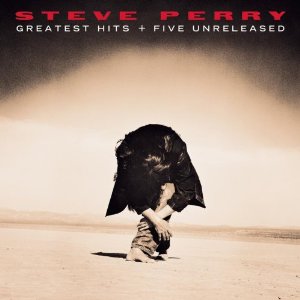
Steve Perry 3: Greatest Hits

Yes, we know what you’re thinking. Did the few hits Steve Perry had outside of Journey constitute a full album, particularly in a CD era that demanded a sequence at least an hour long? No, they didn’t. Yet to this day marketing geniuses still use the term “greatest hits” when they really mean “best of according to somebody’s whim.” Even more confusingly, the official title was Greatest Hits + Five Unreleased. The second half was correct, if a little too precise. (Bear with us, we’ll get there.)

The set duly kicks off with the four singles and/or radio hits from Street Talk, negating the need to own that album, plus “Go Away”, seemingly because it was the only other decent song on it. “You Better Wait” and “Missing You” represent For The Love Of Strange Medicine, but only after seven tracks not widely known.

As it turns out, he hadn’t been silent after Raised On Radio; rather, he completed a solo album in 1989 that (he says) was rejected by the label. Some of those songs had snuck out as the CD equivalent of B-sides to the Strange Medicine singles, where they were well received by the dozen or so people who heard them. While “Forever Right Or Wrong (Love’s Like A River)” and “Against The Wall” are a little overblown, they’re still catchy, just as “Melody”, “Once In A Lifetime Girl”, and “What Was” are decent pop fodder. “When You’re In Love (For The First Time)” and “Summer Of Luv” suggest that maybe the label was right, but the others have more staying power than most of Strange Medicine.

Back to the chronology, “I Stand Alone” is from the animated flop Quest For Camelot, the soundtrack of which put him in the company of Leann Rimes, Celine Dion, Andrea Bocelli, and the long-awaited collaboration of Eric Idle and Don Rickles. “It Won’t Be You”, denoted a “writing demo”, was one of those B-sides, but another, the expert “If You Need Me, Call Me”, is represented instead a 1977 track recorded by the band he was in before Journey. (The liner notes carefully list every single musician credit for all the songs.)

So with all that, the album title was half right. But while calling out the five “new” songs guaranteed sales to Journey fans who already had the Strange Medicine singles, it undersold the total contents, which weren’t all hits but weren’t complete dogs. Perhaps that’s why, when the album managed to be rereleased as part of a Journey catalog overhaul, the title was reduced to simply Greatest Hits, but with a bonus in the form on “Don’t Fight It”, a duet with Kenny Loggins that actually was a hit. (For those who have to have everything, 2009’s Playlist: The Very Best Of Steve Perry budget compilation repeats a dozen of the alleged greatest hits, and adds two more from Strange Medicine.)

Steve Perry Greatest Hits + Five Unreleased (1998)—3
2006 Greatest Hits reissue: same as 1998, plus 1 extra track

Friday, September 14, 2018

Journey 10: Trial By Fire

Steve Perry’s solo album hadn’t made much of an impact, but then again Bad English—Neal Schon and Jonathan Cain’s collaboration with John Waite—didn’t last past a second album, and Neal’s attempt at metal in Hardline was largely ignored. Even the Storm, which featured Gregg Rolie and the spurned rhythm section of Ross Valory and Steve Smith, missed out on success. Yet in an era when the Eagles managed to get back together, the re-emergence of Journey in the studio made sense, at least from a commercial angle. But would they sound any good?

Sure enough, the “classic lineup” that gave us Escape and Frontiers did indeed make an entire album together, which immediately led to Steve’s refusal to tour behind it, and an unintentionally hilarious episode of Behind The Music. The most maddening thing was, by Journey standards, Trial By Fire was pretty good.

Coming in at over an hour, the album shows the three songwriters attempting to straddle all possible worlds associated with the brand, giving equal time to big ballads and riff-heavy rockers. In fact, the first “single” from the album was a double: “Message Of Love” aped enough of “Separate Ways” to make it to classic rock radio, while “When You Love A Woman” was destined to be several couples’ wedding song. They are separated on the album by “One More”, another loud track with top-speed fretwork and nightmarish strings.

From there it’s mostly where they left off on Raised On Radio, but with a more unified sound than the patchwork of that album. “If He Should Break Your Heart” and “Forever In Blue” are typical Perry looks back to the high school crush who still haunts him, seemingly. And just when you think they’ve got the magic back, “Castles Burning” induces a headache sure to last longer than the six minutes it takes to sit through. You’re smarter to hit the skip button for “Don’t Be Down On Me Baby”, a slow apologetic waltz that apparently didn’t take, for all Steve’s got are the memories in “Still She Cries”, and Jonathan slathering the end of the track with John Tesh piano stylings.

Along with new age, so-called “world music” kept instrumentalists busy in the ‘90s between reunion albums, and “Colors Of The Spirit” also shows the influence of The Lion King back then. “When I Think Of You” brings back the romance and the slow dance, even if it does recall the love theme from Major League. Yet if there’s a real winner on the album, it’s “Easy To Fall”, to which the whole band rises: music, lyrics, harmonies, chord changes, key changes, a retro outro, just a great performance, and truly a hidden gem in the catalog. “Can’t Tame The Lion” delivers a final blast of arena rock, with “It’s Just The Rain” (complete with sound effects!) and the title track hobbling to the finish. (As if that wasn’t enough, there was a hidden track after several seconds of silence, the half-baked Sam Cooke reggae homage “Baby I’m A Leaving You”. This was given its own index on the eventual reissue, followed by “I Can See It In Your Eyes”, a surprisingly edgy track previously only included on the Japanese version of the album.)

As head-slappingly silly as it seems sometimes, Trial By Fire remains a much more worthy end to the Steve Perry era of Journey. Whatever legs it might’ve had were undermined by the band’s inactivity, leaving the Eagles, Fleetwood Mac, Kiss, and countless other “reunited” bands to rake in the box office receipts. The album’s mostly been forgotten; meanwhile, we’re still trying to figure out the significance of the cat lady and the giant baby in the boat on the album cover.

Journey Trial By Fire (1996)—3
2006 CD reissue: same as 1996, plus 1 extra track

Tuesday, April 17, 2018

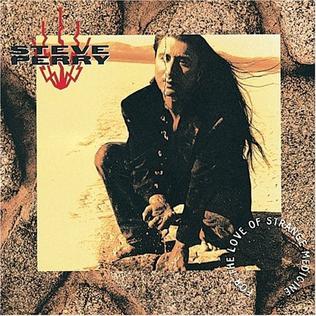
Steve Perry 2: For The Love Of Strange Medicine

Oddly, the glass-shattering voice of Steve Perry stayed silent for years following the last Journey album. When he did emerge, it seemed he’d spent his time growing his hair and singing himself hoarse. For The Love Of Strange Medicine finds him even raspier than on Raised On Radio, working with a bunch of unknown session guys, save the keyboard player from Winger and the bass player from Toto. Just as with his previous solo outing, there are enough Journey elements to keep the true believers invested, and wondering why he couldn’t just get the real guys to do it.

“You Better Wait” was the best choice for first single and opening track, and the best song on the album by far. It sports all the hallmarks people associate with That Voice—flashy lead guitar, piano and synth, layered vocals, pounding drums. From there, “Young Hearts Forever” strains to keep pace, but already sounds dated, and slows down needlessly in the middle. The slow ballad arrives right on time with “I Am”, followed by the theme song for a soundtrack to a movie yet to be filmed, “Stand Up (Before It’s Too Late)”. The title track limps along with some decent hooks, but not a lot of energy, while “Donna Please” attempts to be a heartbreaker a la “Suzanne”.

“Listen To Your Heart” attempts to inject some heavy rock into the proceedings, but somehow ends up jerry-rigging several half-baked ideas together. “Tuesday Heartache” is more heartache-by numbers that takes a strange detour into a Peter Gabriel soundtrack halfway through. “Missing You” is a little clichéd, but it’s a good kind of clichéd, just as “Somewhere There’s Hope” embraces the main ingredients of so-called melodic rock: ¾ time, slamming snares, piano, and yes, a choir. It even goes on about two minutes too long. That only makes the opening of “Anyway” (“I’d like to say I’m sorry/I’d like to make amends”) unintentionally hilarious.

While just a little better than Street Talk, the album underwhelmed, though “You Better Wait” was a mild hit. Fanatics raced to pick up the CD-maxi single, as well as the one for “Missing You”, both of which included songs not on the album. Two of those—“If You Need Me, Call Me” and “One More Time”—appeared as bonus tracks for the head-scratching reissue of For The Love Of Strange Medicine 12 years later (alongside two lesser outtakes and a live “Missing You” from his solo tour). Why these tracks were relegated to B-side status instead of the album itself, where they would have both been more welcome and appreciated, would be a mystery for a few years yet.

Steve Perry For The Love Of Strange Medicine (1994)—
2006 CD reissue: same as 1994, plus 5 extra tracks

Friday, November 24, 2017

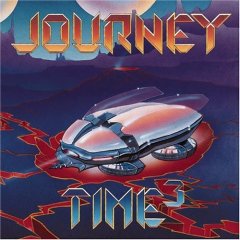
Journey 9: Greatest Hits and Time3

While no formal announcement was made, Journey was done, and the label wisely put together a hits compilation. Greatest Hits was fairly comprehensive, focusing solely on the Steve Perry era, leaning heavily on the Jonathan Cain era, and sticking with the ear candy. In addition to all the singles from the albums, what we used to call side one is framed by “Only The Young” and “Ask The Lonely”, putting them right along side their albumized brothers. Beyond that, the sequence is a grab bag, but at least they save “Be Good To Yourself” for last so you can skip it entirely. Wikipedia tells us, and they’re never wrong, that it’s among the most successful compilation titles by anyone ever, and most of those sales racked up before it was repackaged 18 years on with an extra track.

Since every band got its own box set in the ‘90s, Journey’s turn came right on schedule. The oddly titled Time3 mostly got it right by starting at the very beginning, with a full half-hour of music from the borderline fusion period before Steve Perry came along. To prove the point, a failed track called “Velvet Curtain” is duct-taped onto the completed “Feeling That Way” to show how he transformed it. There aren’t a lot of rarities here, outside of a few B-sides and live tracks since added to reissues of the albums, and some unfinished ideas from the mid-‘80s era. Some of the bigger hits appear in live incarnations, so despite the selection of deeper album cuts, it’s not the definitive Journey package for someone who just wants one title on the shelf.

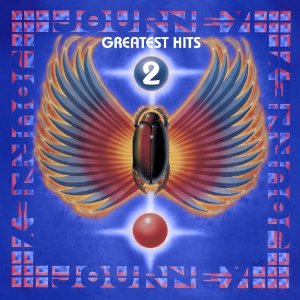
At the turn of the century, the new trend was the double-disc “Essential” anthology, which was an excuse to regurgitate a hits collection with some deeper cuts. The Essential Journey did just that, basically replicating the Greatest Hits sequence with only a little variety on disc one, with a questionable choice filling up the second. It would be another ten years before Greatest Hits 2 finally offered a decent (and decently priced) companion. In addition to more stuff from the Cain era (and big points for including “Suzanne”) and the FM radio hits and album tracks that stood out on the box set, segues like “Good Morning Girl” into “Stay Awhile” and “Feeling That Way” into “Anytime” were preserved. (We’d’ve dumped “Walks Like A Lady” and “When I Think Of You” for “Natural Thing” and “Edge Of The Blade”, but once again, the phone did not ring.)

Journey Greatest Hits (1988)—4
2006 CD reissue: same as 1988, plus 1 extra track
Journey Time3 (1992)—3
Journey
The Essential Journey (2001)—
Journey
Greatest Hits 2 (2011)—4

Tuesday, June 20, 2017

Journey 8: Raised On Radio

Steve Perry’s solo album was an early sign that Journey wouldn’t last without him, but they still managed to pull together an album that, for the first time in the Perry era, sported a title with more than one word. Raised On Radio found the singer defiantly in charge, credited as sole producer and bringing in players from his solo project to replace Ross Valory and Steve Smith. One report has them leaving “due to creative differences”, others say they were fired. Whatever the truth, their absence is felt big time.

With different sections in seemingly different keys, “Girl Can’t Help It” has enough of the established Journey vibe to pass, and it’s smart to start out that way. But “Positive Touch” would have been a great hit for the Pointer Sisters; here it’s just cheesy. And that saxophone? Good Lord. “Suzanne” is a vast improvement, providing a lovelorn lyric with yearning, keening chorus; one of their more underrated, ignored classics. “Be Good To Yourself” is the requisite pep talk, but might have been more effective as a side-opener or closer. Then we get funky with “Once You Love Somebody”, with a decent melody but a generic backing, and “Happy To Give” is about as far removed from rock as they’ve ever been.

The title track didn’t come with printed lyrics, although Perry and Cain are credited for them. Once you decipher the mushmouthed slurring, it’s merely a string of oldies song titles strung together over a rockin’ riff. Yet it makes the otherwise lightweight “I’ll Be Alright Without You” stand out, with its Greek-chorus asides and extended guitar solo. Something must have happened to Perry’s voice; already husky on the album, he doesn’t sound like himself until the first chorus of “It Could Have Been You”. “The Eyes Of A Woman” is another one that would have sold buckets of a solo album, but there’s no denying the lighters-in-the-arena potential of “Why Can’t This Night Go On Forever”, which might as well be “Faithfully” played backwards, with lyrics equally applicable to a lover as they are to you: the true fans.

Raised On Radio was great if you loved Street Talk. But longtime fans who were already uncomfortable with the encroaching adult contemporary influence on a band that developed from the fancy fretwork of Santana would resent Neal Schon for going along with something so by the numbers. Then again, nobody had conceived of Bad English or Hardline yet, but we’re getting ahead of ourselves.

Naturally, Journey toured to promote the album, with newcomers Randy Jackson resembling a portly Clarence Clemons on bass and the decidedly non-photogenic Mike Baird on drums. The setlists included two songs from the Perry solo album and a few covers as encores. (The expanded CD includes live versions of “Girl Can’t Help It” and “I’ll Be Alright Without You”, as previously heard on the videos for said songs.) And that would be it for a long time.

Journey Raised On Radio (1986)—
2006 CD reissue: same as 1986, plus 2 extra tracks

Tuesday, January 10, 2017

Steve Perry 1: Street Talk

When a band has an “iconic” lead singer, the average consumer tends to associate the two interchangeably. So what happens when said singer does a solo album, independent of the band? If you’re Roger Daltrey, you record songs nothing like those the main guy in the band wrote for you, giving yourself an outlet. If you’re Phil Collins, you make a sound nothing like what people expect of the band, but will eventually come to define the band, but we’re getting ahead of ourselves. If you’re Steve Perry, you release Street Talk, heralded by a single that’s not too far off from what people in 1984 associated with the Journey brand.

We say “heralded” in a pointed reference to the self-deflating video for “Oh Sherrie”, which attempted to display Our Hero as just another guy caught in the fabrications of the modern music video treadmill. And it’s a catchy tune, with Waddy Wachtel playing the lead with more of a Southern California tone than Neal Schon’s high-speed Frisco shred. Like most of the rest of the album, it was co-written with a couple of MOR hacks, and proceeds in decidedly unadventurous manner. There’s the Four Tops-inspired rhythms of “I Believe”, the incomprehensible high harmonies on “Go Away”, the Ambrosia rewrite “Foolish Heart”, the by-numbers pop of “It’s Only Love”, Waddy credited again for “rhythm guitar solo”. Mercifully, the excitement over a DX-7 patch sounding like steel drums would soon pass.

The yacht rock continues on “She’s Mine”, but it has enough of the angst left over from the last two Journey albums to sound familiar. Apparently he used it all up, because the rest of side two limps on through empty emoting (“You Should Be Happy”), inexplicable sound effects of children laughing (“Running Alone”) and a barely clever tribute to fallen rock stars and other leaders (“Captured By The Moment”) to “Strung Out”, which is about as catchy as where we came in, and another one where it could be mistaken for his regular band. (While we’re at it, Neal Schon did do a side project around this with the not-yet-Halened Sammy Hagar, spawning two full albums that nobody mistook for Journey.)

Of course, an album doesn’t have to be good to be a hit, and this one did spawn four hit singles, and even helped earn him a solo spot on “We Are The World”. Steve went on to contribute a limp track to the full USA For Africa album, and “If Only For The Moment, Girl” was duly added to a 21st-century repress of Street Talk, alongside the overblown B-side “Don’t Tell Me Why You’re Leaving”, left off the album for good reason, and three demos left over from the band he was in before Journey, and much more palatable even today.

Steve Perry Street Talk (1984)—2
2006 CD reissue: same as 1984, plus 5 extra tracks

Friday, August 26, 2016

Journey 7: Frontiers

Now that they were huge, Journey was able to keep the lineup intact for two albums in a row, but where could they go after their Escape? Frontiers isn’t the obvious answer, nor is the skydiving photo session, but that’s what they did, balancing their now-patented power ballads with their loudest guitars (and huskiest voices) yet.

The first synthesizer notes will immediately bring to mind the unintentional comedy of the “Separate Ways” video, that wonderful showcase of method acting, tight close-ups, and way-too-earnest air guitaring, keyboarding and drumming, all seemingly taking place behind a Home Depot, as if the woman in question had nowhere else to walk. “Send Her My Love” is one of the secrets here, even though it was a single, and another one of those songs that immediately reduces a sensitive teenage boy to absolute mush. Following that, “Chain Reaction” is loud and annoying, a slap in the face. “After The Fall” is a little better, at least easier to sway to, but not as big a hit as “Faithfully”, which is probably being played at a wedding somewhere right now. (And the impetus for yet another unintentionally hilarious video, including lots of setup shots of bone-tired musicians Out On The Road, and chronicling Steve Perry’s battle versus his mustache. We can thank this video for Jon Bob Jovi’s “Wanted Dead Or Alive”.) We should also mention that Jonathan Cain, who wrote the song for his then-wife, hasn’t been married to her since the Reagan administration. Not to worry, she went on to invest in implants that kept her in Skinemax movies for the duration of the century.

Side one sports four of the album’s singles, so side two often gets short shrift. Speaking of secrets, “Edge Of The Blade” doesn’t seem to get any love anywhere, besides having a terrific riff and a great overall performance. “Troubled Child” provides some welcome dynamics, if not the same drama of “Mother, Father”, but “Back Talk” is just a pile of noise, based around one of Steve Smith’s less inspired drum parts. The title track is a little more complicated, but overstays its welcome with the poor decision of delayed, repeating vocals. Thankfully, “Rubicon” is a good showcase for everybody, and a strong closer.

While it’s hardly a controversy on the level of the rejigged Blood On The Tracks or Infidels albums, Frontiers is notable today for the songs that were left off. “Only The Young” and “Ask The Lonely” were originally in the track sequence but pulled (replaced by “Back Talk” and “Troubled Child”). Both would surface down the road as soundtrack contributions, and become worthy inclusions on key Journey compilations as fan favorites. Both are on the CD you can buy today, along with a couple of other songs of the period, but the question remains: where would those tracks have fit on the original LP? Both have such a big sound that having them stuck back to back in the middle of side two, where the replacements resided, makes no sense. We haven’t settled on a sequence we like, simply because we much prefer “Troubled Child” to “Chain Reaction”, which isn’t part of the equation. But if you want to reprogram the modern CD for a better overall album, skip right from “Send Her My Love” to “After The Fall”, which would have “Edge Of The Blade” ending side one. Start side two with “Only The Young”, and follow “Troubled Child” with “Ask The Lonely”. (In other words: 1, 2, 4, 5, 6, 11, 7, 12, 9, 10. You’re welcome.)

Journey Frontiers (1983)—
2006 CD reissue: same as 1983, plus 4 extra tracks

Tuesday, April 19, 2016

Journey 6: Escape

Remember how they were Captured? Here’s their daring Escape. When it comes to fine cheese, Journey broke the mold, setting the bar for a brand-new decade. Besides inspiring the occasional “E5C 4P3” license plate, this album is chock full of arena-friendly hooks guaranteed to get you shaking your feathered hair.

Let’s do the math—“Don’t Stop Believin’” and “Stone In Love” put your fists in the air. “Who’s Crying Now” and “Open Arms” have you sobbing into your wine cooler. And then there’s the social commentary of “Mother, Father” and the ultimate secret weapon, the still underappreciated “Still They Ride”.

And those are just the singles. Inspired by newcomer Jonathan Cain on the keyboards, Steve Perry and Neal Schon found a guy who could help them craft powerful pop, while still giving room for Neal to shred to his heart’s content. Cain was a competent harmonizer too, but from here on out it’s Perry’s voice that dominates, so no more duets a la Gregg Rolie.

Side one has four of the above singles, but also contains “Keep On Runnin’”, heavy on the riffing and walls of vocals. Side two blows open with the title track, loaded with unconventional chord voicings and tricky time jumps. “Lay It Down” is more style than substance, Perry yodeling a bit too much against the riff. “Dead Or Alive” is just too busy, and something of a rewrite of the much better (and funnier) “Line Of Fire”. And while “Mother, Father” can be a tad melodramatic, the middle solo section is a striking counterpart, and the final minute or so of the track, with its subdominant chords and impossibly high notes, brings chills.

The album always ended with “Open Arms”, which will inspire memories of high school slow dances and the final scene of the most realistic teen sex comedy ever made, The Last American Virgin. Today the expanded CD has four more tracks: the B-side “La Raza Del Sol”, a rock-salsa hybrid that’s not very convincing, and live versions of the album’s three biggest hits recorded on that tour.

If you didn’t get Escape then, you won’t get it now. Lest you wanted something with more balls, back then there was also Loverboy and REO Styxkansas, with dreamy singers and fast-fingered guitarists, who combined with Journey to be the unwitting pioneers of a genre called melodic rock. As it’s not too far from hair metal, you can have it. We’ll take this album. At top volume.

Journey Escape (1981)—
2006 CD reissue: same as 1981, plus 4 extra tracks

Tuesday, December 22, 2015

Journey 5: Captured

Having made their bones as a popular arena concert attraction, the double live album was a natural step for Journey. Plus, they took the opportunity to further the cleverness in their album titles; they made a Departure and were promptly Captured.

With “Majestic” from Evolution piped through the PA as a fanfare, the boys plow into “Where Were You” and they’re off. Gregg Rolie’s affectations on “Just The Same Way” are ill-advised, but this was Steve Perry’s show by now anyway. They take it down for “Lights”, which segues nicely into “Stay Awhile”.

Since the band didn’t really have any hits yet, familiar songs are mixed with what we now call deep cuts. Steve makes a point of praising Gregg and Neal Schon as premier blues musicians, but “Walks Like A Lady” is a hardly a vehicle to demonstrate their alleged prowess. However, it does end in a flurry of guitar notes that eventually leads to “La Do Da”, which gives way to both a bass solo and a drum solo.

It’s always a treat when live albums provide something new for the fan, and technically “Dixie Highway” is such a rarity, seeing as it doesn’t appear on any other album. But the real enticement is “Hopelessly In Love (The Party’s Over)”, a studio cut tacked onto the end of side four. This catchy pop song is based around a circular piano riff, played either by Geoff Workman or Tim Gorman, depending on which liner notes you read. The player is certainly not Gregg Rolie, as he left the band before the album was released.

At several intervals, Steve nicely informs or reminds the audience that they are being recorded for the album, though he neglects to mention how much time they’ll spend in the studio sweetening the tracks. At little over an hour, Captured doesn’t deliver their entire set, but the album does serve the purpose of providing a transition to their next phase. (Fans could also drool over the photos in the gatefold, inner sleeves and massive poster. Those were the days.)

Journey Captured (1981)—3

Friday, August 28, 2015

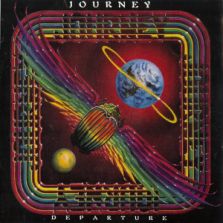
Journey 4: Departure

In the tradition of one-word titles that meant nothing, Departure continued the successful Journey formula, even retaining the same lineup (for now anyway).

“Any Way You Want It” will be familiar to anyone who’s seen Caddyshack more than once; its arena bombast is taken down by “Walks Like A Lady”, a much more subdued track in an R&B shuffle, Neal Schon playing tastier licks than his usual high-speed flurries. Lest anybody forgot about him, Gregg Rolie sings lead on “Someday Soon”, with Steve Perry providing the counterpart, just like on Infinity. It’s a better mix than “People And Places”, where Neal takes the verse against Steve, while the Hammond organ conjures memories of Joe Cocker and Led Zeppelin. “Precious Time” pits “Ain’t Seen Nothin’ Yet” guitar against harmonica, and nearly redeems the side.

Just as side one exploded from the first second, side two gets a great boost from the power-hitting “Where Were You”, which is needed before “I’m Crying”, an overwrought stomping weeper nicely elbowed out of the way by “Line Of Fire”. Here, all the instruments play the same melody as the vocal, in unison, but without sounding ponderous. The bridge still reminds us of “Lido Shuffle”, and we could do without the gunshot effect. The only real departure on the album is the title track, 38 seconds of ambient guitar layers in a different key to the similarly brief track it sets up, the orchestrated after-the-lovin’ plaint of “Good Morning Girl”. Presumably she heard this and determined to take off without eating breakfast, as it’s followed by “Stay Awhile”, shouted from the balcony of his pad at the back of her screeching car. Maybe she came back or he got over her long enough to string together the uncomfortable food metaphors in “Homemade Love”.

Despite having only one real hit single, Departure delivers equal doses of boogie and crooning to please the fans, with plenty of songs they’d take on tour. For its third CD reissue, there were two bonus tracks: “Natural Thing”, a wonderful leftover from the sessions featuring Steve’s best Sam Cooke impression later used as a B-side, and “Little Girl”, the most accessible song from Dream, After Dream, a 1980 soundtrack to a Japanese film nobody has ever seen, ever. Both had appeared on other compilations, but they fit very well here, both contextually and chronologically.

Journey Departure (1980)—3
2006 CD reissue: same as 1980, plus 2 extra tracks

Tuesday, May 5, 2015

Journey 3: Evolution

The only evolution on the album called Evolution is that Journey had a new drummer in jazz cat Steve Smith, Aynsley Dunbar having moved across San Francisco to pound the skins for Jefferson Starship. Otherwise, it’s the same formula that saved the band on the last album: arena-friendly anthems produced by Roy Thomas Baker.

There’s something of an overture in “Majestic”, a flutter of acoustic strings beaten aside by heavy chords and wordless vocals. “Too Late” is the requisite cautionary tale for one living too fast, too free, not to be confused with the dire warnings in “Lovin’, Touchin’, Squeezin’”. On the original LP and some CDs the a cappella ending segues immediately to the similar opening for “City Of The Angels” (hey, it worked for the last album). “When You’re Alone (It Ain’t Easy)” says all it needs to say within and without the parentheses. Luckily, Steve Perry knew the importance of keeping things “Sweet And Simple”, and that song is a better use for his pen and high octaves.

As they were apparently paid by the apostrophe, “Lovin’ You Is Easy” doesn’t seem like much at first, but there are some good changes in the chorus, continued under the solo, and there’s a nice piano break too. “Just The Same Way” lets Gregg Rolie take a lead vocal, supported prominently by Perry until he elbows him aside for the bridge. “Do You Recall” doesn’t sound like it took that long to write, but just like side two of the last album we have a crossfade into the next track. “Daydream” is slower than the rest of the album, so it’s longer, and some of the synth patterns are more jarring than evocative. Finally, “Lady Luck” is a heavy track that’s better than its lyrics.

So again, Evolution is more of an affirmation, as Journey knew what would keep the cash rolling in. The singles were good, and some of the more boneheaded tracks don't hold water, but as long as they kept to the script they’d be fine. And they were.

Journey Evolution (1979)—3

Friday, February 6, 2015

Journey 2: Infinity

Here’s where Journey became the Journey some love and others hate. In Steve Perry, the band had a photogenic frontman with a wide vocal range that would be ably supported by Gregg Rolie, still on the keys. Perry wasn’t a blues-based rooster, but came from the pop school, and tended to emulate Sam Cooke’s phrasing whenever possible.

Infinity presents the new blueprint for the band, arena-ready songs loaded with hooks and melodies, some of which came from a guy they tapped to be their singer before Perry came along. (Not to worry, though; the less attractively monikered Robert Fleischman got songwriting credits for what he did, and would one day front the Vinnie Vincent Invasion before being elbowed aside for Mark Slaughter.) Roy Thomas Baker, who’d produced a bunch of Queen albums and was about to work with The Cars, helped streamline the sound.

Right away it’s clear that they’re no longer a fusion band. “Lights” is a safe beginner, cueing cigarette lighters held aloft all over San Francisco. “Feeling That Way” begins with Gregg singing to his piano, then turns into a duet alternating with Perry, soothing the fears of anyone who’d enjoyed the first three albums. A tight edit brings “Anytime” in immediately, just as it would on FM stations everywhere. Not able to come up with lyrics for the chorus, “Lă Do Dā” sports accents in the title as extraneous as Neal Schon’s jackhammer intro. “Patiently” is another play for the audience hidden inside a love song.

The metaphor of “Wheel In The Sky” can be blamed on Robert Fleischman or Ross Valory’s wife, both of whom are credited with the lyrics, but Perry takes to them and we have another crowd-pleasing anthem. A hidden highlight of the album is “Somethin’ To Hide”, heavy on the triplets and culminating in an impossible falsetto. It’s another quick cut to “Winds Of March”, which hides melodic similarities to “Rainy Night House” by Joni Mitchell, of all things. “Can Do” toughens things up a bit with a crunch worthy of Jimmy Page, then “Opened The Door” takes its sweet time to thank the unnamed girl for doing just that. Neal’s solo gets the last word.

Compact and catchy, Infinity succeeds where the previous albums couldn’t. The band still displayed the chops to counter any accusations of selling out, but since selling out was exactly what they wanted to do, everybody was fine with that. And in an era dominated by such one-named bands as Foreigner, Kansas, Boston and the like, all Journey had to do was tour, promote, record and repeat.

Journey Infinity (1978)—