Showing posts with label 2021. Show all posts

Tuesday, March 25, 2025

Crowded House 8: Dreamers Are Waiting

After ten years on his own and with others, Neil Finn decided the time was ripe to revive Crowded House. Again. Along with stalwart bass player and cover designer Nick Seymour, the other residents this time were his sons Liam and Elroy, who’d proved their worth with their dad as well as on their own. In another link to the past, Mitchell Froom was brought in as an official member on keyboards; the production on Dreamers Are Waiting is credited to the band as a collective, but his boomy tendencies still prevail.

“Bad Times Good” lopes along with a mild island feel in 5/4 time for a tense yet tentative opener, then “Playing With Fire” has shades of lockdown in the lyrics and more edginess in the instrumentation. There’s a direct segue to the moody, wacky “To The Island”, but “Sweet Tooth”, with its scratchy rhythm guitars, finally sounds closer to the band of old. “Whatever You Want” keeps the electricity on, and it’s clear the younger Finns like odd meters, but “Show Me The Way” is another one that sounds like it takes place under water, or at least floating on it.

It takes a certain amount of quirk to place a title like “Goodnight Everyone” smack dab in the middle, but there we are, still bobbing on the waves. “Too Good For This World” works a lot of avian imagery and metaphors into a message entailing flight and escape, just as the downer lyrics in “Start Of Something” belie the sunny melody. “Real Life Woman” offers comfort in familiarity and not sounding like everything else here, particularly towards the end where the band breaks out of its straightjacket. “Love Isn’t Hard At All” provides even more relief, even it does incorporate the music most of us know as the Tetris theme. We’re surely not the first ones to notice that the chorus of “Deeper Down” sounds like more recent McCartney, and that’s not a bad thing at all.

But the sum is greater than the parts, and even if Crowded House is now more a brand name than a statement of purpose, Dreamers Are Waiting follows logically along Neil Finn’s trajectory. As with the last revamp, any further activity should not be considered guaranteed. Folks hoping for a return to the sound of the original lineup will be disappointed, but those who’ve kept up should be pleased.

Crowded House Dreamers Are Waiting (2021)—3

Friday, January 17, 2025

Van Morrison 50: Latest Record Project

As if the record business didn’t annoy him enough, Van Morrison was forced to curtail his performing career by the rude intrusion of the worldwide Covid pandemic. Naturally, he took it personally. Denied the right to play shows he released three singles in succession—“Born To Be Free”, “As I Walked Out”, and the more pointed “No More Lockdown”—as well as a collaboration with Eric Clapton on “Stand And Deliver”, as if these two guys alone were hit hardest by the crisis.

Van’s attitude extended to the title of Latest Record Project Volume 1, with cover art that resembled a multitrack tape box. Having had two years since his last album, he managed to come up with over two hours’ worth of material, and just shoved it out there. (None of the 2020 singles nor the Clapton collaborations were included.) Our first thought was this was a similar tack he took with Hymns To The Silence, and then we reeled at the concept of that album being thirty years old already.

The title track is along the lines of his other rants about the futility of the business he’s chosen, and made longer by singing it a few words at a time with the band repeating each line. “Where Have All The Rebels Gone?” is a pertinent question, except that his immediate answer is “hiding behind computer screens.” Beyond that it’s a one-chord groove with tasty rockabilly guitar. “Psychoanalysts’ Ball” would be lovely if it were about anything else, and the decent soul groove of “No Good Deed Goes Unpunished” can’t hide the fact that most of the lines don’t bother to rhyme. “Tried To Do The Right Thing” restates the thesis better, musically as well as lyrically, and sticks to romance.

It’s back to complaining on “The Long Con”, a long 12-bar blues about being a “targeted individual”, the victim of whoever’s “pulling the strings”. He finds the joy in music in “Thank God For The Blues”, but it’s hard to think of “Big Lie” as anything else but a modern rant for which he roped in British blues belter Chris Farlowe. If only he’d left out the first verse and called it something else. “A Few Bars Early” is a clever idea, and suitably brooding.

We would bet actual money that Van was familiar with the blues standard “It Hurts Me Too”, but based on his song of the same name, he missed the point (hint: it’s called empathy). “Only A Song” seems to suggest that he can’t be held accountable for whatever he’s spewed, but at least he plays a decent alto sax. “Diabolic Pressure” must have kept him limited to two chords and a variation thereof outside of the bridge, “Deadbeat Saturday Night” is full of obvious rhymes, and we get the point by the time of “Blue Funk”, an otherwise decent song—the slap at “mainstream media” aside—but we’re only halfway through this album.

The message of “Double Agent” is muddled, with its slaps at MI5 and Kool-Aid, and “Double Bind” (which begins with the revelation that “mind control keeps you in line”) is just as paranoid. “Love Should Come With A Warning” is very welcome change of pace, and “Breaking The Spell” finds comfort in nature, even if the chorus is unoriginal. “Up County Down” is just plain confusing; there are lots of Irish references in the lyrics, along with calls back to earlier points in his career, but he couldn’t be bothered to add more than a mandolin and banjo to the R&B combo, and the chorus is about as inspired as “Blowin’ Your Nose” or “Nose In Your Blow”.

“Duper’s Delight” would be a wonderful reverie straight off of Into The Music or No Guru, No Method, No Teacher but for its diatribe against the lies “they” (probably female newscasters) are telling you. He strums a fine guitar on “My Time After A While”, another competent blues otherwise tainted in this context, and while no sax player is credited, that sounds like him too. “He’s Not The Kingpin” is sung in unison with P.J. Proby, another special guest forced to sing about the media’s agenda. “Mistaken Identity” is yet another example where he insists that we don’t really know him, which is laughable considering his slanted material.

The home stretch isn’t promising. The Bo Diddley retread “Stop Bitching, Do Something” might as well have been titled “Put Up Or Shut Up”. “Western Man” has a mild country swing but again is too busy hurling insults to attempt to rhyme. No points for guessing what “They Control The Media” is about, but there’s no beating “Why Are You On Facebook?” for inanity. Finally, “Jealousy” is his answer to anyone who’s still on his lawn, in case “Mistaken Identity” didn’t make it clear.

Anyone who’s followed Van’s career closely to this point will have already realized he is possibly the grumpiest millionaire this side of a Dickens novel, and it’s hard to imagine anyone taking his side. Six songs out of 28 isn’t even a decent batting average, but if he’d taken those and found other lyrics to the likes of “Duper’s Delight”, we might have actually had a concise album worthy of his voice, which is still as strong as ever. But no.

Van Morrison Latest Record Project Volume 1 (2021)—2

Tuesday, November 5, 2024

David Crosby 10: For Free

Only the Covid pandemic could slow David Crosby’s determination to keep performing. Not able to tour, he recorded another album as fast as he could—his fifth since 2014. But rather than the experimentalism of his work with the so-called Lighthouse Band, For Free is more relaxed adult contemporary, typical of his collaboration with James Raymond. That means there’s also lots of piano, which is fine.

“River Rise” sets the tone immediately, being a co-write with Michael McDonald, who harmonizes on the choruses. We keep thinking we hear Stephen Stills singing on “I Think I”, but it turns out to be one Steve Postell, who’s been busy lately in the Immediate Family Band with such Croz veterans as Danny Kortchmar, Lee Sklar, and Russ Kunkel. “The Other Side Of Midnight” is one of three songs contributed solely by Raymond, with layered voices interwoven between the programmed guitar sounds. “Rodriguez For A Night” is a collaboration with Donald Fagen that basically sounds like Crosby singing on a Steely Dan record. That makes the mystery of “Secret Dancer” all the more alluring.

“Ships In The Night” is kinda generic, and we can’t get past how he pronounces “irrevocably”, but the title track is his second cover of this particular Joni Mitchell perennial, sung here as a lovely, intricate duet with Sarah Jarosz. From there it’s a leap to the present with “Boxes”, in which he seems to acknowledge his mortality as well as the choices that drove people away from him. That sets the tone continued on “Shot At Me”, a conversation with a young combat veteran. The finest moments come in “I Won’t Stay For Long”, a moving benediction set up by a count-in by Brian Wilson, who doesn’t seem to have anything else to do with the album.

Coming after such a strong run, especially for someone of his age and legacy, For Free isn’t as immediately surprising, or frankly as satisfying, as the four albums he’d made in the past decade. Unless there’s a pile of recordings waiting to be unleashed, this will have to stand as his final statement, as it was the last album he would complete in his amazingly long life.

David Crosby For Free (2021)—3

Tuesday, September 24, 2024

Genesis 24: BBC Broadcasts

Thirteen years after the last Genesis reunion tour, Phil Collins rejoined his old band for another go around the world. Dubbed The Last Domino?, the shows mixed familiar hits with older (and newer) epics. Phil sang seated in a comfy chair while his son played drums—and pretty well, by all accounts. Daryl Stuermer was still around, and two male backup singers were on hand as well. The tour was promoted by a double-disc compilation, also titled The Last Domino?, that more or less replicated the setlist—including full versions of songs that were excerpted onstage—and could have, once again, been a Spotify playlist. But it included some nice photos from the rehearsals and sent more royalties in the direction of the absent Peter Gabriel and Steve Hackett.

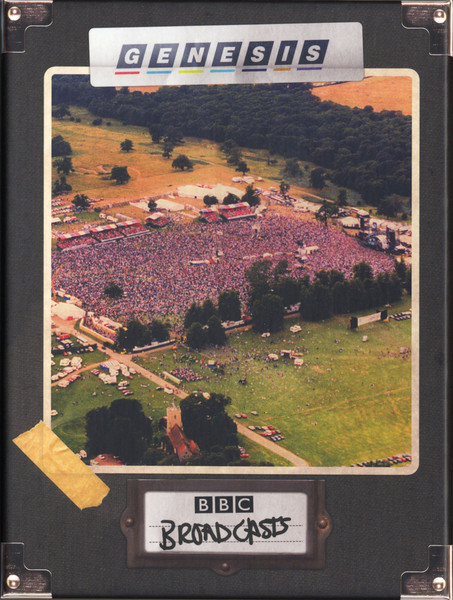
Once again the band had been put to bed, but Tony Banks still found a way to extend their reputation as a live attraction with the surprise release of the five-CD BBC Broadcasts box, covering the band’s career from 1970 to 1998. The package is mostly chronological, but by doing so some sessions are split between discs, which works for streaming, but can be jarring on CD. Also, while it’s five discs long, it doesn’t contain every radio performance by the band through the years—most likely to cut down on repetition, but also because they knew a whole disc from the Ray Wilson era was a non-starter, even at this low price point.

The first disc is the Gabriel era, beginning with three songs from the band’s first BBC studio appearance in 1970, and the same three that were already on the first Archives box. We jump to 1972 with the established Hackett-Collins lineup, with one flashback to the 1971 “Stagnation” that was also on the first Archives box. There’s a good performance of the rare “Twilight Alehouse” B-side, and an encore of “Watcher Of The Skies” from the Lamb tour.

From disc two on everything is in front of an audience, with improved sound, and the long-term live lineup including Daryl Stuermer and Chester Thompson. Five tracks from the 1978 Knebworth Festival—including the transition from “Dance On A Volcano” via “Drum Duet” to “Los Endos”—are followed by most of a 1980 London theater show, which fills the rest of disc two and most of disc three. Despite the occasional voiceover, highlights include the complete “Duke Suite” and the surprise encore of “The Knife”. (The songs omitted from this show were already part of the Knebworth selections. Also, “Follow You, Follow Me” is the same version that’s on Three Sides Live, while “Ripples”, “The Lady Lies”, “Duke’s Travels”, and “Duke’s End” were on Archives #2.)

Most of the well-traveled (since it was already on VHS and DVD) Wembley Stadium show from 1987 straddles discs three (the last two tracks) and four; the balance of the latter is given over to two songs from 1998 with Ray Wilson (who sounds very much like Paul Carrack on “Not About Us”). The fifth disc is devoted entirely to selections from their appearance at the 1992 Knebworth Festival: five songs from We Can’t Dance, with their “Old Medley” in the middle. We’d’ve ended with anything but an eight-minute “I Can’t Dance”, but the crowd seemed to love it.

Again, the sequencing is odd, and the discs aren’t all to capacity; surely some more music from 1978 or 1987 could have nudged the 1998 music to the end of disc five if it was so necessary to include? Quibbles aside, BBC Broadcasts has a lot of deep cuts for the musos and not just the pop fans, and thus provides an exhaustive look at what made the band, in any incarnation, such a draw through the decades.

Genesis The Last Domino? (2021)—3
Genesis
BBC Broadcasts (2023)—

Friday, August 9, 2024

Toad The Wet Sprocket 9: Starting Now

By 2021, it was hard to believe that Toad The Wet Sprocket had been around for over thirty years, even if you were good at math. Under no pressure to anyone, they slowly pieced together another album in person and by e-mail, and Starting Now was primed for exposure post-pandemic.

“Game Day” is a pleasantly tuneful strum, and while the lyrics in the chorus aren’t very convincing, the key change is clever. “Transient Whales” is typically obscure, but it hits all the right buttons to celebrate their legacy and stand with their best. “The Best Of Me” is the song that got all the attention, as it features prominent harmonies from Michael McDonald—yes, of the Doobie Brothers. But for the less-than-orthodox structure, this could be a new country song. Todd Nichols uses the same lead guitar tone throughout the album, almost as if it wouldn’t be them if it sounded different. We mention this here, because the title track is the most Toad-by-numbers song on the album, nicely contrasted with the more complex “In The Lantern Light”.

The second half gets poetic, or at least bookish, as “Hold On” quotes from the poem on the Statue of Liberty over a Counting Crows riff, while “Truth” calls out Frederick Douglass over a choogling country beat. There’s not much to “Slowing Down”, except that it’s a collaboration with Nashville songwriter Mando Saenz. There’s a jarring switch to the very processed “Dual Citizen”, with its robotic percussion and dated synths. That only makes the closing “Fever”, a maudlin plaint about ecology and injustice, punctuated by weepy vioilins, all the more epic at five minutes.

Not everything on Starting Now is memorable, but it sounds like a Toad album. Considering it was their first without longtime drummer Randy Guss, that’s important.

Toad The Wet Sprocket Starting Now (2021)—3

Friday, January 5, 2024

Micky Dolenz: Sings Nesmith and R.E.M.

Throughout the original TV series, it was apparent that Micky Dolenz and Mike (as he was known then) Nesmith were the Frick and Frack of the Monkees, playing on the assumed telepathic partnership of John and Paul in the Beatle legend. Even then, Micky was a champion of Nesmith’s songs, and it wasn’t until Nez returned to touring with the Monkees in the 2010s that Micky’s exhortations got more regular and wider broadcast. By that time, family scion Christian Nesmith, who’d already been a veteran of touring outfits ranging from Air Supply to King’s X, was the musical director for Monkees’ live show. This continued when Micky and Nez were the only surviving members, and could finally call their schtick “The Mike & Micky Show”.

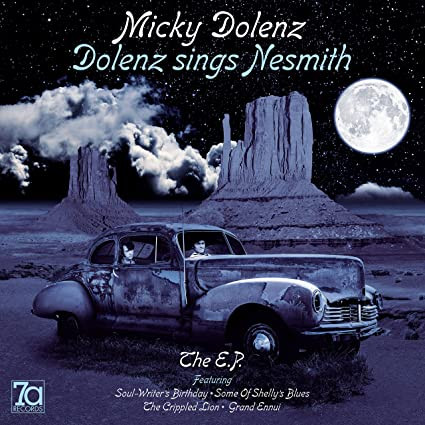
As with everything else in the music world, Covid put touring on hold, but since Micky had never been lazy and loved to sing, he decided to do his own spin on the Nilsson Sings Newman album by applying the concept (and cover design) to his buddy’s catalog, and corralled Christian to arrange it all. The resultant Dolenz Sings Nesmith accomplishes its thesis, relying mostly on songs outside the Monkees catalog. Many of those songs were originally released in Nashville country arrangements, which makes the templates fairly straightforward, but even the familiar ones are taken in less obvious manners.

“Carlisle Wheeling” includes everything but the kitchen sink, encompassing the original approach with arty touches. “Different Drum” is very daring, as the first-ever hit version put Linda Ronstadt on the map, but this one is done fairly straight. A deep cut on Instant Replay, “Don’t Wait For Me” is here presented with a simple picked acoustic accompaniment. The more obscure “Keep On” and “Marie’s Theme” are showcases for Christian’s keyboards, but still work. “Nine Times Blue” and “Little Red Rider” were both attempted by Nesmith with the Monkees before getting paired on the first First National Band album; here Micky takes the same approach, singing the former with a piano and rocking up the latter following the built-in key change.

“Tomorrow And Me” takes the tumblin’ tumbleweeds of the original to a more futuristic desert, pushing his voice to the upper limits of his senior range. Unfortunately, we didn’t need another version of “Circle Sky”, especially after it was redone once already, and certainly not with a faux-raga treatment. Similarly, “Tapioca Tundra” appears to be set on Mars, but still encouraging Micky’s vaudeville schtick. Much better is “Propinquity”, demoed by Nez for the first album and turned here into a stomper with an appealing banjo part. “Only Bound” is still spacey, and nicely segues into a snippet of “You Are My One”, a quarter of the length of Nez’s original jazz odyssey and filtered through Brian Wilson.

Nesmith died that December, and a month later Dolenz released Dolenz Sings Nesmith – The EP, containing four more songs from the sessions. The given highlight was “Soul-Writer’s Birthday”, a previously unreleased composition that shares the guitar accents with “Salesman” but otherwise isn’t much. “Some Of Shelly’s Blues” and “Grand Ennui” (the latter a bonus track on the main album’s CD) are taken country, while “The Crippled Lion” becomes a big ballad.

Dolenz Sings Nesmith is ultimately a vanity project, but it does reinforce what an inventive writer Michael Nesmith was, melodically and lyrically. As most of his post-Monkees catalog is slowly becoming available again, the curious would be well rewarded to go back to the sources.

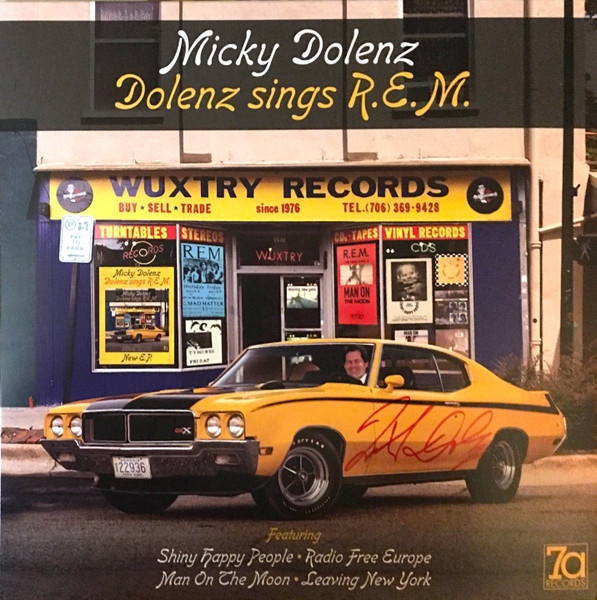
After those were given time to marinate, another project that was about as expected and double take-inducing as Pat Boone covering Ozzy Osbourne or Paul Anka doing “Mr. Brightside”. Dolenz Sings R.E.M. was tackled the same way as the Nesmith album, featuring new arrangements of four songs mostly performed by Christian. With “Shiny Happy People” the performers actually managed to make one of the shortest shelf-life R.E.M. songs into a thing of beauty. The waltz intro and interludes are retained, and Micky’s sister Coco gets to sing the Kate Pierson part. “Radio Free Europe” and “Man In The Moon” are perhaps too iconic to be re-interpreted, but “Leaving New York” is positively gorgeous. The R.E.M. boys loved it; perhaps this could be fleshed out into a full-length.

Micky Dolenz Dolenz Sings Nesmith (2021)—3
Micky Dolenz
Dolenz Sings Nesmith – The EP (2022)—3
Micky Dolenz
Dolenz Sings R.E.M. (2023)—3

Friday, March 3, 2023

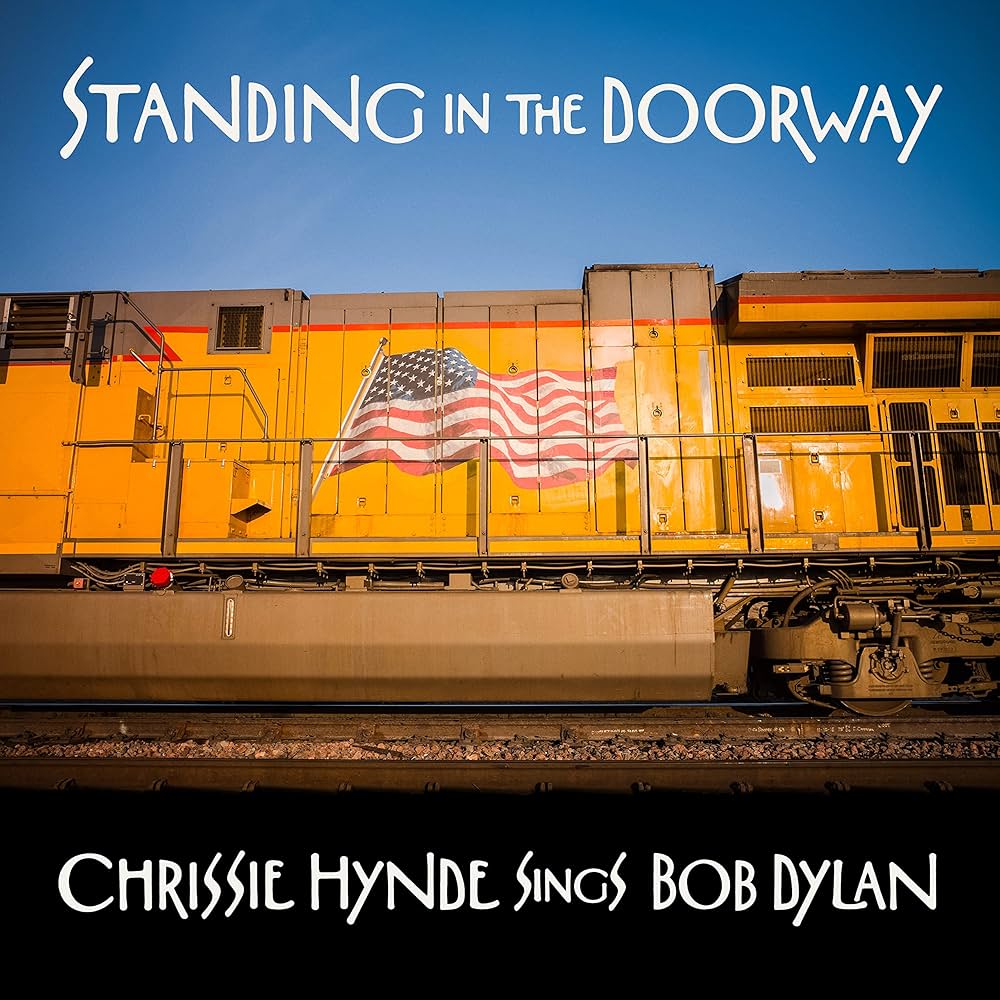
Chrissie Hynde 4: Standing In The Doorway

In addition to countless and sometimes notable covers, Bob Dylan tribute albums have been a thing since the ‘60s, but the Covid lockdown inspired many to re-associate themselves with the man’s music. Chrissie Hynde has unabashedly worn her Dylan devotion on her sleeve throughout her career, even adding “Forever Young” to one album, but Standing In The Doorway is a true labor of love. To her credit, she’s chosen nine songs more beloved to fans than jukeboxes, with half of the songs coming from the ‘80s. The album was recorded via text; she’d do a take, then send it to current Pretenders guitarist James Walbourne to add other instruments. Somewhere along the way veteran engineer Tchad Blake added further touches, mixed the batch, and took photos for the album package.

It all sounds very homemade, as befits modern file transmission, from the pre- and post-chatter around “In The Summertime” and “You’re A Big Girl Now” to the birdsong heard here and there. The title track has modified chords from the original, but they suit her delivery; her lyrical adjustments aren’t as successful on “Sweetheart Like You”. Despite its minimalist structure, “Blind Willie McTell” develops into an impressive production. “Love Minus Zero/No Limit” gets accordions and mandolin-like touches yet remains a happy strum, but “Don’t Fall Apart On Me Tonight” is the highlight, though that could be because we heard the opening chords and feared a take on “Knockin’ On Heaven’s Door”. “Tomorrow Is A Long Time” is played straight, while “Every Grain Of Sand” is elegant and understated.

Standing In The Doorway isn’t the most innovative Dylan tribute, and her vocal approach often mimics his, sometimes sounding more parody than homage. But at 70, Chrissie Hynde remains an excellent interpreter of anyone’s songs, and not just her own.

Chrissie Hynde Standing In The Doorway: Chrissie Hynde Sings Bob Dylan (2021)—3

Tuesday, December 20, 2022

Steve Perry 5: The Season

With nearly lightning speed, Steve Perry put out more new music only a year after his comeback with Traces. Granted, it was a Christmas single—an ill-advised cover of “Silver Bells”, plus an edit of same and a version of “Have Yourself A Merry Little Christmas” with melodic liberties—but it did qualify as new.

As it turned out, these were merely appetizers for The Season, an eight-song collection of well-worn holiday standards, accompanied by the guy who produced Traces plus subdued drumming by Vinnie Colaiuta. When they’re sung straight, he just sounds old and tired, but those are more palatable than the tag he adds to “I’ll Be Home For Christmas” and the overly smooth touches on “Winter Wonderland” and “Santa Claus Is Coming To Town”. We do have to give him points for restoring the intro verse to “What Are You Doing New Year’s Eve?” but we also wonder whether the younger man would have belted these better, or just as cringingly.

A year later, following his recent trend, the album was reissued in a deluxe digital edition that began with two new original songs. “Maybe This Year” was a new original with some originality, for lack of a better word, while “This Christmas” revived an obscure Donny Hathaway track. While an improvement over the original program, the overall melancholy isn’t likely to make your spirits bright.

“Maybe This Year” proved to be a prophetic title as two years after that a third incarnation of the album happened, this time in physical format on the revived Dark Horse label, of all places. The Season 3 offered a rejigged order and six new tracks scattered among everything that had gone before. The album now opens with the Louis Armstrong perennial “What A Wonderful World” (as opposed to the Sam Cooke song we figured he’d be all over, but that’s not exactly Xmassy). “Jingle Bell Rock” is taken at about half the speed of the original, with an attempt at slow funk, an approach that’s a little more effective on “Rudolph The Red-Nosed Reindeer” but even creepier with “Let It Snow”. The big surprise is a virtual duet on “Call Me Irresponsible” with his deceased father; it’s very sweet, if not exactly Grammy material. The closing recitation of “‘Twas The Night Before Christmas” is delivered with no accompaniment, wisely, but it caps what is still an extremely gloomy album.

Steve Perry The Season (2021)—2
2024 The Season 3: same as 2021, plus 8 extra tracks

Friday, March 18, 2022

Sting 16: The Bridge

Add Sting to the list of veteran slash legendary musicians who used the Covid lockdown to see what the muse had to bring. The Bridge was indeed written and recorded under pandemic conditions, and it’s free from gimmicks. His “exclusive liner notes” explain the origins of some of the songs, but it bears saying that from the first track, the focus is on catchy tunes.

A simple drum pattern heralds “Rushing Waters”, which features the auteur harmonizing with himself over the verse before a strong chorus; from there the harmonizing isn’t as obvious, and it helps. By his own admission, “If It’s Love” is not the first pop song that treats matters of the heart with a medical condition, but it’s simply meant to be a pop song, right down to the Barry White strings that herald each chorus. “The Book Of Numbers” is helpfully described as being inspired by the architect of the Manhattan Project, but it’s a shame someone as educated as Sting didn’t see the wonky math of “three score and twenty-five”. A collaboration with DJ Maya Jane Coles, “Loving You” is the unintentional answer to “If It’s Love”, showing his quality control is somewhat lacking on an album that’s not supposed to be a concept. Luckily, the labyrinthian guitar part of “Harmony Road”—courtesy of the reliable Dominic Miller—provides a fresh sound, made even nicer when Branford Marsalis shows up with his soprano sax.

“For Her Love” begins with a guitar motif very similar to “Shape Of My Heart”, and ends with the slightest vocal hint of the similarly titled Yardbirds hit. Northumbrian instruments color “The Hills On The Border”, while “Captain Bateman” is derived and updated from an ancient ballad; both are given superior choruses that transcend mere copying. The notes tell us that “The Bells Of St. Thomas” apparently derived from a Miller melody and a Rubens painting. He’s at his breathiest here, as he’s kept the crooning to a minimum. The pretty title track closes the album simply; the liner notes include the text from a letter Sting sent Billy Joel about claiming the title for himself. (The expanded edition exclusive to Target stores in the U.S. added three extra tracks. “Waters Of Tyne” is another traditional song that shares an arrangement with the preceding title track. “Captain Bateman’s Basement” is a pleasant, jazzy instrumental variation, but we didn’t need another carbon-copy cover of “Sittin’ On The Dock Of The Bay”, even if it was sanctioned by an Alzheimer’s charity. Eight months later, that sequence formed the first disc of a “super deluxe edition” that added six live tracks and a duet of “For Her Love” in Spanish.)

We’ve been rough on the guy, and deservedly so, but The Bridge is easily Sting’s best album in 25 years. Nice to know he still had it in him. If he keeps going, hopefully he’ll have learned something.

Sting The Bridge (2021)—3

Tuesday, February 8, 2022

David Bowie 45: Brilliant Adventure

Despite being already tapped for a different collection, another song title became an apt moniker for a comprehensive Bowie box set, this one covering the wide-ranging, occasionally frustrating ‘90s. Brilliant Adventure could conceivably be subtitled The Virgin Years, as that was the label that released most of this material in the first place.

Black Tie White Noise only slightly improves in this context, while The Buddha Of Suburbia (in its revised artwork) provides a smoother transition to Outside—for which the packaging included more legible lyrics, thankfully—and Earthling. The slight regression of ‘hours…’ is lifted by his 2000 BBC radio performance. (Oddly, 2018’s Glastonbury 2000, which was recorded two days before, is not included in this set, nor were these part of Brilliant Live Adventures. For that matter, the VH1 Storytellers album is left out too.) Originally included as a bonus in Bowie At The Beeb, it is here expanded to two CDs, with the addition of five songs. “All The Young Dudes”, “Starman”, and “‘Heroes’” were nice encores, but “The London Boys” and “I Dig Everything” hint at a project in progress.

The big draw of the box is that project, the first official release of the legendarily shelved Toy album. As sequenced here, it provides another peak before the three discs’ worth of oddities that make up Re:Call 5. These consist predominantly of single edits and remixes, along with the handfuls of B-sides (read: outtakes) from Outside and ‘hours…’, plus “Real Cool World” and other soundtrack contributions. Many of these had been included on various expanded versions of these albums, but several tracks are not collected from those. That said, we do get such oddities as “Don’t Let Me Down & Down” in Indonesian and “Seven Years In Tibet” in Mandarin, plus the exquisite rarity “Planet Of Dreams”, sung with Gail Ann Dorsey. The set closes with a cover of “Pictures Of Lily”, as requested by Pete Townshend for a Who tribute album, that’s just awful.

While the albums covered by Brilliant Adventure aren’t on par with his earlier masterpieces, there are enough bright spots that always made Bowie worth hearing, and therefore watching. He may not have been consistent, but his work ethic was as steady as ever. (The book inside the set includes new liner notes designed to illuminate from key collaborators of the period: Nile Rodgers, Erdil Kizilcay, Brian Eno, Reeves Gabrels, and Mark Plati.)

David Bowie Brilliant Adventure (1992-2001) (2021)—3

Tuesday, February 1, 2022

Beatles Get Back 23: Afterwards

So now that we know January 1969 wasn’t a complete waste of time in Beatledom, what happened to the proposed TV special and accompanying album?

Well, lots of things. First, the boys contracted Allen Klein to manage Apple (read: their finances) with the firm of Eastman & Eastman (Linda’s father and brother) to consult on various legal issues. Paul shaved off his beard. George had his tonsils out. John and Yoko performed a few “happenings”. Ringo went off to do his film, as planned. They did occasionally get together to work on music, with the idea to build on what they’d started; John’s “I Want You (She’s So Heavy)” was the focus of a few sessions. Glyn continued mixing some of the tracks from the Apple studio as well as the roof to see if they could flesh an album out of it, to be called Get Back. In April, the “Get Back” single, with “Don’t Let Me Down” on the B-side, was released with a George Martin production credit, and the label reading “The Beatles with Billy Preston”. Both recordings were from the Apple studio, and not from the rooftop gig.

But by March they had become very scattered, as Paul had feared, with extracurriculars. Both he and George helped Apple artists with sessions, and then Paul married Linda, and then John married Yoko. Once those two came back from their first Bed-In, the group gathered for a photo shoot to coincide with the “Get Back” single. With George and Ringo elsewhere, John corralled Paul to record “The Ballad Of John And Yoko”, joined by George two days later to record “Old Brown Shoe”, and both were released as a single while “Get Back” was still atop the charts. As April turned to May, more songs were freshly recorded, including “Octopus’s Garden”, “Oh! Darling”, “Something”, and Paul’s new “You Never Give Me Your Money”. All but the last had been tested during January, but the focus of “finishing” what they started had vanished. Not only were these songs not recorded live in a single take, as had been the idea in January, but they also overdubbed new vocals and guitars on the final take of “Let It Be” from January 31.

By the summer John had become sidetracked again with another Bed-In, which resulted in his solo “Give Peace A Chance” single, and the band’s financial situation continued to be a gigantic mess. It was during this period that there was pressure to have Allen Klein manage everything, dire warnings from the Eastmans, and a new wrench when Dick James—remember him?—decided he’d had enough of the boys’ petulance and sold his shares of their publishing out from under them. Yet somehow John and Paul managed to work together completing the two-year-old track “You Know My Name (Look Up The Number)” for future release.

With the footage from January already dated, Paul corralled the other Beatles to press on with a newer album mostly from scratch, returning mostly to the EMI studio on Abbey Road with George Martin producing. In addition to the handful of songs they’d amassed in the last few months, they managed to complete would become the superior Abbey Road in a matter of six or so weeks. Interestingly, all but five songs on the album had been attempted at least once in January.

Feeling justifiably accomplished, they decided that once that was out of the way, the film of them working in January could be expanded into a feature film, and had Glyn give another go at compiling a soundtrack of sorts. Abbey Road would come out in the fall, so the film and its album could follow in early 1970. By now, Michael’s rough cut of the film included performances of both “Across The Universe” and “I Me Mine”, so the former was remixed from its abandoned February 1968 recording, and the latter was recorded fresh by George, Paul, and Ringo in January 1970. Other than those two, Glyn’s selections still leaned on recordings from the studio, with only “One After 909” coming from the roof. George and Paul also continued tinkering with the tracks, embellishing “For You Blue” with a new vocal and ornamenting “Let It Be” even further. (“Teddy Boy” had been thankfully removed from the running, since it wasn’t seen in the film.)

The album still wasn’t quite there, unfortunately. Along with the wrinkle of “Don’t Let Me Down” appearing on the Hey Jude compilation of stray singles released worldwide except the U.K. in February 1970, necessitating its exclusion now, back in September John had told the others he was leaving the group and had begun actively recording as a solo artist. Somehow Phil Spector ended up producing John’s “Instant Karma” single—which likely spurred Paul to ramp up his home recording experiments to create the one-man-band McCartney album of actual songs—and was tasked with finalizing what was now called Let It Be. He used nearly all different takes than the ones Glyn had chosen, including two further songs from the rooftop, though it must be noted he was not the first to deviate from their “no overdubs” policy. Whatever one’s opinion of his selections or his mixes, Spector’s Let It Be is the one that remains in the canon today.

As for the film, it was finally released in May of 1970. It has its moments of fun, it can be tense and depressing, and the rooftop segment is the undisputed highlight. And if it weren’t for Michael Lindsay-Hogg filming, recording, and cajoling as much as he could, often with zero cooperation from his subjects, Peter Jackson wouldn’t have been able to present the incredible extravaganza that The Beatles: Get Back turned out to be.

Monday, January 31, 2022

Beatles Get Back 22: January 31

With seven minutes left of Part 3, today’s calendar is marked “LAST DAY”. At the sound of the clapper the music starts (a cover of the railroad tune “Take This Hammer”) and we go to split-screen to accommodate the credits.

Anything would be an anti-climax after the complete rooftop gig, but that shouldn’t suggest their work today was less than important. With appropriate mood lighting in the Apple basement studio, this day was devoted to capturing usable takes of “Two Of Us”, “The Long And Winding Road”, and “Let It Be”, which were not performed on the roof. Paul sings each of these songs directly to the camera, in the same spirit as the “Hey Jude” promo. (A complete take of each will be featured in the Let It Be film, sequenced before the rooftop portion.)

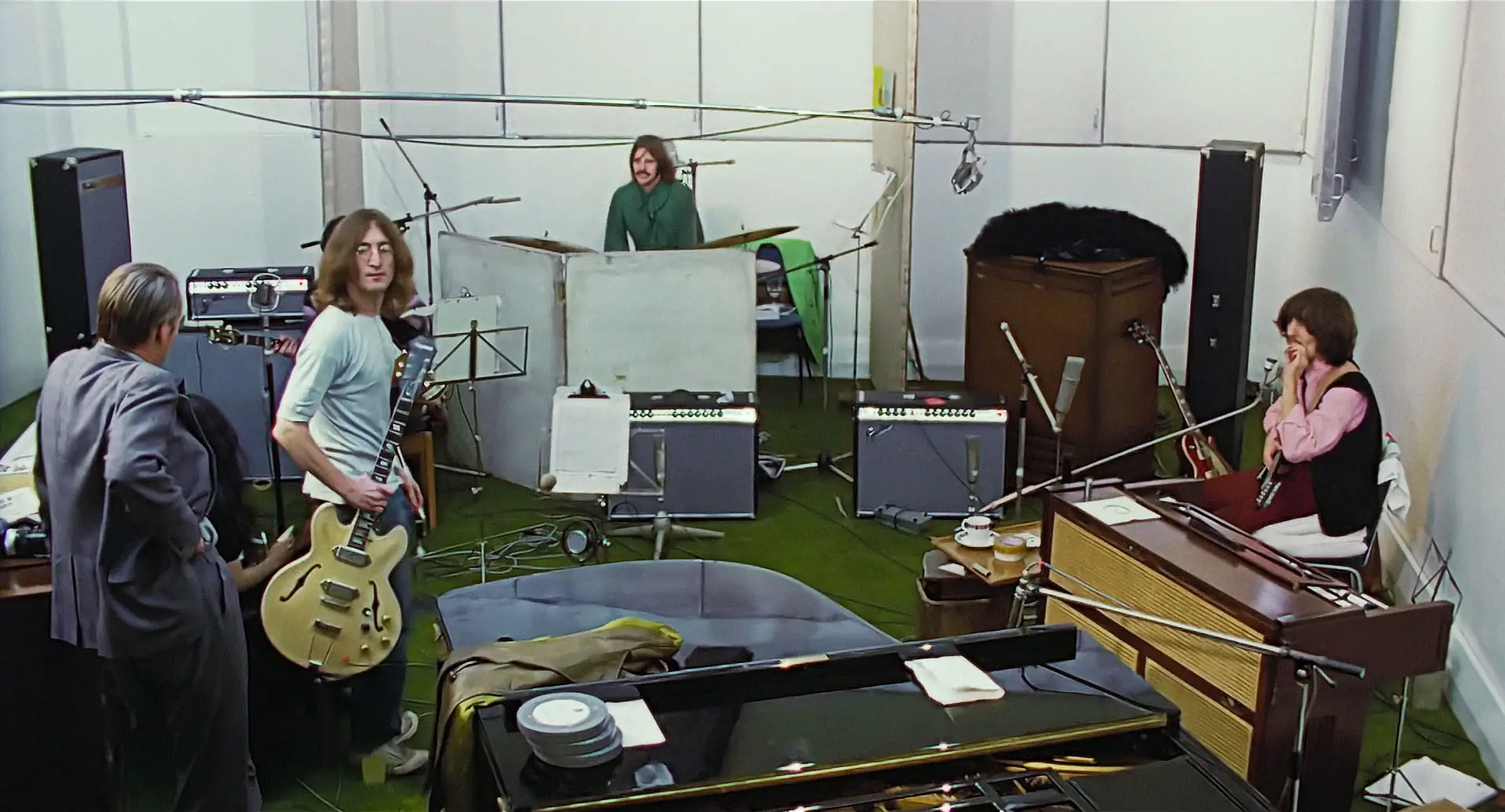
For “Two Of Us”, Paul is standing with his acoustic, while George is seated on the amps in front of Ringo’s drums, now on a riser. We can also see that Paul’s Rickenbacker bass has been sanded down to the bare wood, removing the psychedelic design we saw only days earlier. He’s even sanded away some of the horn on the body, much closer to how it would look onstage throughout the ‘70s with Wings. John is seated on the floor facing Paul, Yoko at his side. There’s a lovely split-screen effect that shows John and Paul harmonizing on the verse. (As the captions confirm, this is the same take of “Two Of Us” that will open the Let It Be album.) In between takes we get jokey snatches of “Ten Feet High And Rising”, “Friendship”, and “Run For Your Life”.

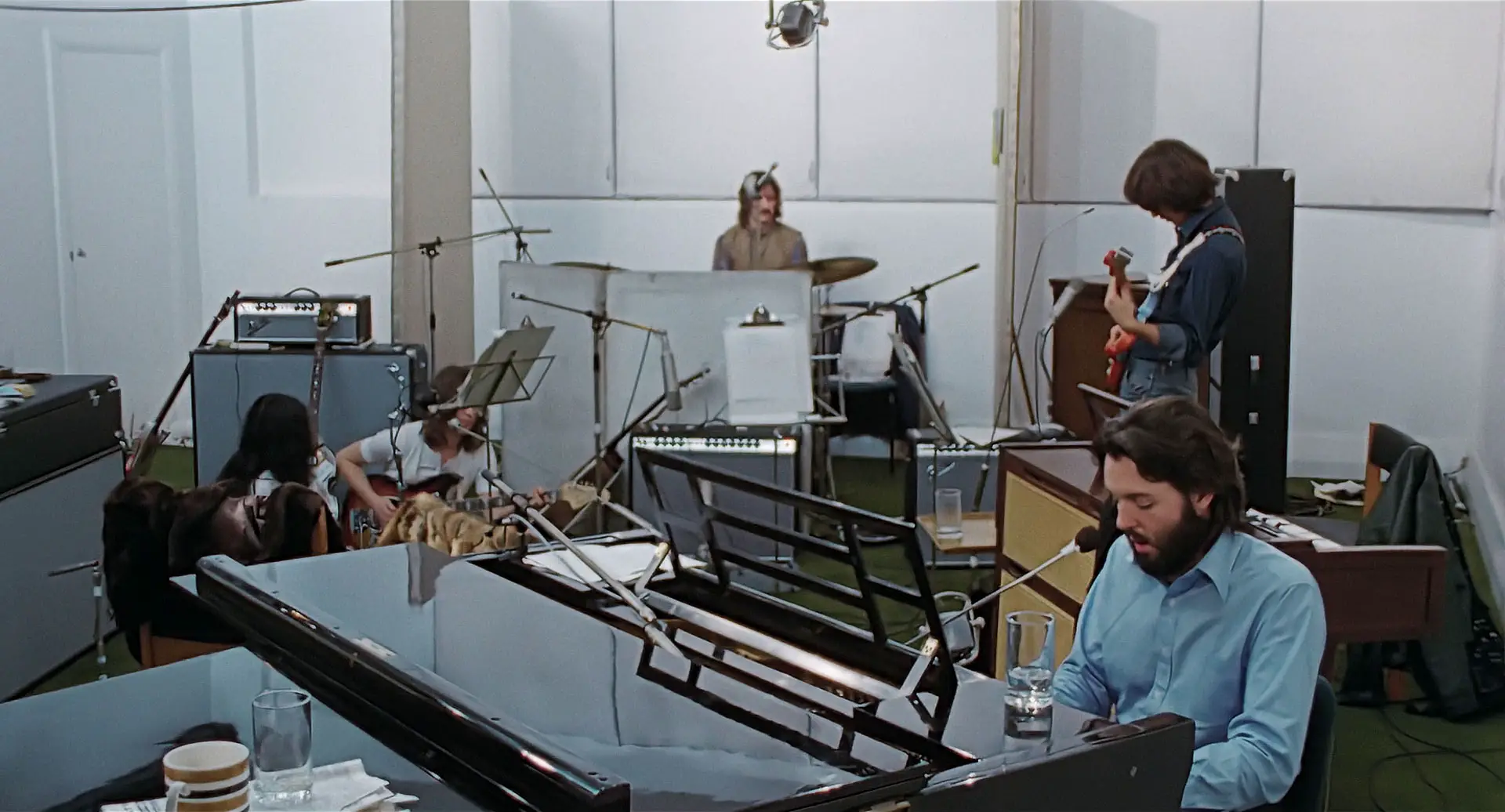
For “The Long And Winding Road”, George is back in his usual chair near to Paul at the piano, while John is in the same spot on the floor but now playing the Fender VI bass. Billy is across at the electric keyboards. We don’t see or hear a complete take of this—tellingly, George is still fuzzy on the chords—though one of them was included on Let It Be… Naked in 2003.

They’re in the same positions for “Let It Be”, and the wine has come out. We observe several false starts and reel changes; at one point John asks, “Are we supposed to giggle in the solo?” Paul replies, “Yeah.” The visuals show us that such ribbing was good-natured, as they’re all smiling at each other. That said, for the take that will be used for the single and eventual album (in different mixes), John is shown comically mouthing the words to the first verse along with Paul, who can’t see him from where he’s sitting. By now John has also removed his denim jacket, and we can even see Ringo swaying his arms dramatically along with John and George’s “ooh”s before the drums start. (It’s also nice to finally have the film synced to the sound, so the notes George plays match up with his fingers—unlike the major glitch in the Let It Be film.)

As the final notes fade, George Martin and Glyn agree that that was the take. Paul wants to “do one more, just to cover ourselves… ‘cos we know we’ve got it now.” We fade to black, and John gets the last word: “We’ve got so many of the bastards.”

Sunday, January 30, 2022

Beatles Get Back 21: January 30

The onscreen calendar is circled for today, with “ROOFTOP CONCERT” written in pen. The captions explain the camera setup: five on the roof, one across the street, three at street level, and one said to be “hidden” in the lobby of the Apple building. Hilariously, George Martin sees this camera as soon as he walks in and smirks at it. He will be down in the basement control room with Glyn, connected to the rooftop via recording cables and a closed-circuit television camera—high-tech sh-t for the time.

While all this is being set up, the captions explain that the Beatles are in a meeting, still undecided about playing on the roof. They also introduce receptionist Debbie Wellum and doorman Jimmy Clark—sporting quite the mod hairstyle—who will be prominent throughout today’s footage. Down in the street it’s lunch hour, with heavy automobile traffic and pedestrians moving about. Being January in London it’s cold, and windy, but not frigid; reports say it was a relatively mild winter.

Suddenly, Paul appears in the doorway leading onto the roof, which is covered with long wooden planks to support all the people and equipment. He’s followed shortly by Ringo and Maureen, then Billy. Ringo gets to work moving his drums, suggesting that Mal “nailed me down in the wrong place” as George and John appear. The onstage setup is slightly different from how they used to do concerts, and even from the “Revolution” promo clip; Paul is basically in front of Ringo, with John to his left and George on the other side of John. Billy is at the electric piano to Paul’s right, by the door. Yoko is seated at the side next to Maureen, Chris O’Dell, and Apple Records exec Ken Mansfield. (Apple “house hippie” and press liaison Richard DiLello’s fuzzy head can be glimpsed briefly in the doorway.) There is a Hohner keyboard set up behind George, but it will not be used.

After a quick count-off, they launch into a quick rehearsal of “Get Back”, intercut with crowd reaction. The people on the street can hear the music, and see some of the light towers at the top of the building, but they can’t see the band from that angle. However, spectators are gathering on neighboring buildings to watch.

Here Jackson’s edit begins to switch in and out of split-screen to utilize as many camera angles as possible, on the roof as well as in the street. John impatiently says, “Come on, youse idiots,” and George counts off the first full performance of “Get Back”. Before the first chord change, Paul breaks into a wide grin that stays for the entire song. We can see Kevin digging the sound too, and Maureen is happily bopping her head, just as she likely did back when they played the Cavern every lunchtime.

They cut filming on the roof to adjust sound levels, and the cameras on the street capture reactions from pedestrians, which are mostly positive. The sound presumably sorted out, and the band suitably warmed up—except for John, who blows on his chilled fingers any chance he gets—they go into another performance of “Get Back”. They’re all smiling, even George, and moving to the rhythm.

A terrific performance of “Don’t Let Me Down” with full three-part harmonies is arguably marred when John completely garbles the first line of the third verse. The split-screen shows George and Michael both laughing at this, and then Ringo. John recovers for the next line, in perfect sync with Paul’s harmony. (This remains our absolute favorite performance of this song.) We also hear the first negative comment on the street, specifically about the volume of the music, and two policemen make their way up the steps to the Apple lobby. One is identified as PC Ray Dagg; the Internet tells us that his official title was Police Constable 574C, and that he was all of 19 years old. The other is PC Ray Shayler, PC 637C and a veteran at 25.

The band goes straight into “I’ve Got A Feeling” as the police knock on the front door of the building; it is, after all, private property and they can’t just barge in. While the song plays on the left frame, in the right frame PC Dagg explains to Jimmy that there have been “30 complaints in the past half-hour”—which is odd because they’ve only been playing for ten minutes—about the alleged “breach of peace”. He doesn’t realize that they’re on the roof; he thinks they’re just being loud. Debbie the receptionist plays dumb, saying they’re trying to find Derek Taylor. (This is the take of “I’ve Got A Feeling” that will open side two of the Let It Be album, which is one thing Phil Spector got right.)

Paul acknowledges the cheers from across the street, and John, George, and even Ringo approach the edge of the roof to see all the people gathered on the pavement below. In the background, we see Jimmy talking with Mal, Michael, and Peter Brown, who’s been lurking in the doorway. In the street, a vicar gives his endorsement, while younger folks express their varying approval and disapproval, and one older woman straight out of a Monty Python sketch complains she was woken from her sleep.

Tony works the clapper for the cameras, and it’s right into “One After 909” as Apple exec Ron Kass appears in the background; George Martin can be seen at one point as well. This take is one of the very few of all the versions, in 1969 as well as 1963, where John didn’t screw up the bridge back to the verse. Glyn chose it to open his proposed Get Back LP, and Phil Spector would include it on the Let It Be album, directly after “I’ve Got A Feeling” and with the closing “Danny Boy” ad-lib intact.

Down in the lobby, PC Dagg is on the phone to the police station for reinforcements, while John looks for the words to “Dig A Pony”. They’re on a clipboard, but there’s no music stand available, so Kevin will be immortalized on film kneeling at John’s feet holding the lyrics for him to see. Before the song starts, Mal is down in the lobby appealing to the police, and only after this do the bobbies realize the band is on the roof in the open air, and PC Dagg gets back on the phone.

After a false start because Ringo hasn’t put out his cigarette, they kick into “Dig A Pony”. When included on the Let It Be album, this false start will be included, as well as John’s closing comment about his hands getting too cold, but the sung “all I want is” intro will be edited out. Meanwhile, more pedestrians in the street express their enjoyment, and Mal tells the police in the lobby that he’s lowered the PA volume. (Apple publicist Jack Oliver can also be seen briefly in the roof doorway.)

George suggests they play “Dig It”, of all things, while the camera shows more support from Beatle fans of all ages at street level. To accommodate a tape change in the basement, the band jams on “God Save The Queen”, heard (and seen) here for the first time ever. Once film and sound are in sync again, they have another pass at “I’ve Got A Feeling”. George is more vocally audible on this one, and he adds some extra guitar flourishes to John’s jumbled verse. There’s a wonderful moment where we see the band playing from six angles simultaneously, just like a Zoom call. John sings “everybody must get stoned” over the similar closing chords, and adds a line from “A Pretty Girl Is Like A Melody” after the last beat.

The band starts “Get Back” again, but John wants to do “Don’t Let Me Down”, so they start that again just as Mal leads the policemen onto the roof. The boys notice them, and it’s a raucous performance, but John’s voice is starting to go. Downstairs, Sgt. David Kendrick walks across Savile Row and knocks on the door. Once inside, the politest police officer in the history of the free world asks if some of his colleagues are about. When told they’re on the roof, he asks everyone in the lobby if they’d object to him joining them up there. They don’t, and he heads for the lift.

As soon as the final chord fades, George charges the band right into “Get Back” again. Mal makes his way behind Ringo and switches off George’s amp, then John’s, while Ringo, Paul, and Billy keep playing. Presumably some choice words are exchanged, and George leans over to turn his amp back on. Seemingly defeated, Mal turns John’s amp back on as well, and the song continues interrupted.

Downstairs, the man who says he owns the building across the street is complaining about the camera crew on his roof. By now several people are gathered in the doorway on the Apple roof, and we’ve only just noticed Ethan taking photos over by George. Paul ad-libs lyrics about Loretta’s mother having her arrested for playing on roofs again. As soon as the song ends, Paul removes his bass and the others follow suit. Maureen can be heard cheering, spurring Paul to say, “Thanks, Mo.” John intones his immortal line about passing the audition to much laughter. (This quip would close both the Let It Be album and film; Glyn would include it at the close of “One After 909” on his proposed Get Back album lineup.)

The captions tell us this was their final live performance. It lasted approximately 38 minutes.

The band and entourage crowd through the doorway to leave the roof, while Michael instructs the cameras to get more shots of the environment. Meanwhile, the police work on dispersing the crowd in the street.

Linda has joined them in the control room, as they discuss the possible legal ramifications they may have had to face. George Martin is pleased with the performance, and thinks it’s a good “dry run” for further events. George Harrison suggests they start putting rock groups on top of every building in London “playing the same tune.” The scene cuts to a montage of those gathered listening to a playback of the gig, including an edit to the middle of the first “Don’t Let Me Down” where John blew the lyrics; George’s reaction to this moment is priceless.

Everyone is energized, and they intend to break for lunch, then gather in the basement to attempt to continue the show by recording the songs they didn’t get to. However, as the captions tell us, it would take far too long for the necessary equipment to be brought all the way downstairs from the roof, so they decide to do those songs tomorrow.

Saturday, January 29, 2022

Beatles Get Back 20: January 29

Michael begins the day by asking how many songs the band thinks they’ll be able to play on the roof; Ringo estimates six. John continues to enthuse about Allen Klein, a man Glyn calls “very strange” and doesn’t appear to trust. Ringo calls Klein “a con man who’s on our side for a change.”

Paul’s not part of this conversation, but we do see him in the studio space discussing The Big Show with Michael, who still thinks they need an actual audience to perform at their best, while Ringo kindly informs those assembled that he’s passed gas. Paul still seems hesitant to commit to a rooftop performance, as he’s afraid that once they’ve done that, the group will dissipate into their own corners again. Basically, he doesn’t want it to end—he’d like the performance for the show to be the start of further, similar performances, rather than just churning out albums every year. He even seems to snap at George Martin when the producer tries to mollify him.

Paul keeps bringing up their club days, and the drive they had then. John reiterates that they’ve only got about six songs ready at this point, and that they’d need more time to get up to the fourteen he feels is the ideal number for an album, and enough for a set in a concert setting. George, who has also started smoking cigars, agrees by pointing out that such preparation would “take months”. It’s mentioned for the first time in several days that Ringo will shortly be tied up filming his movie away from the others, so that’s why there’s this deadline for the rooftop show—if they’re really going to do it, that is.

Paul finally confirms that the original idea for the project was to be a TV show promoting the White Album, but somehow it evolved into being filmed rehearsing all new songs. Once again their own ambition has thrust them ahead of themselves.

George asks how many songs are considered “good enough” at this point, to which John replies, “None.” While his oversized sunglasses detract from the gravitas, Glyn insightfully points out that their own approach to the grind of playing the songs over and over clouds the fact that they’ve already done the songs well.

It’s interesting to see that John accepts their differing perspectives as beneficial to the project, and the band, as a whole, while Paul is still itching for some kind of structure to keep them on track. And after all this, Ringo says he’d like to play on the roof, and that’s what incites Paul and George into deciding to do it after all, for now anyway. (John was already keen to play up there.) George Martin hands over a list of the songs they’ve been piling up, and they realize just how much they truly have under their belts—enough for an album already.

We cut to a jam on “Dig It”, where the lyrics consist of the very song titles they’ve amassed. We see Paul’s brother Michael—sometimes known as Mike McGear—reading a copy of Billboard while “playing” the closed lid of the grand piano. The brothers head out for lunch together, but stop in the control room so Mike can hear some of the tunes that have been mixed so far. This means Paul doesn’t hear George float his idea of doing a solo album of the songs he’s piled up, to “get them all out the way” and not try to fob them off for other people to do, so he can continue to contribute to the Beatles without trying cram his songs in. John is all for it; Billy and Yoko agree.

Paul has returned from lunch and is playing the Hawaiian while John and Billy jam on the “I Want You (She’s So Heavy)” chords with lyrics around the “I have a dream” theme of racial equality. It’s a fun jam, and Billy switches from electric piano to organ and back while stopping to light cigarettes. “Two Of Us” is rehearsed with John and Paul singing through comically clenched teeth a la bad ventriloquists. (Also performed today but not included in Jackson’s edit were “Besame Mucho”, as seen in the Let It Be film, and a plodding cover of Buddy Holly’s “Mailman Bring Me No More Blues”, which was mixed for the aborted 1985 Sessions LP of Beatles outtakes and officially included on Anthology 3.)

As they pack up to leave, Paul still seems wary about playing on the roof tomorrow. John suggests they play the Albert Hall, which Ringo agrees to. They say goodbye to Mike, who’s looking through one of the cameras, while George chats with Jackie Lomax.

Friday, January 28, 2022

Beatles Get Back 19: January 28

As the camera catches Linda unawares in the control room, Michael asks George Martin his opinion on which songs could be best performed on the roof, under the assumption that Paul’s piano songs won’t be among them. Meanwhile, in the studio the boys are still ruminating whether they should be concentrating on songs they could perform for The Big Show or focus on making an album. John, who appears to have finally washed his hair, feels today they should work on “the ones that are all in pieces” and also “do one of George’s.” George, wearing one of his new bow ties, launches into what he has so far of the song that would become “Something”. While the band is already familiar with some of the changes, George asks for input on lyrical ideas, specifically in what she attracts him like. For their part, the others seem familiar with the song in progress and play what there is of it well.

There could be a continuity glitch here, as the wine bottles and glasses have already come out, but after a snatch of “Love Me Do” similar to that heard in the closing credits of Part 2, Paul leaves to attend his 1:30 meeting. Imbibing this early in a session didn’t usually fit their work ethic, but anything is possible.

Speaking of work ethics, John, George, Ringo, and Billy continue to hone “I’ve Got A Feeling” in Paul’s absence, John singing Paul’s parts. During a break, John starts to tell George about the meeting he had with Allen Klein the night before. He says he wants to wait until they’re all together, but he also seems to be hesitant to say too much while the cameras are rolling. Regardless of the others’ inclinations, John says, “he’s gonna look after me,” he says, having been fully won over by Klein’s promise to deliver all the financial windfalls the organization needs, including funding a relief package for the war-torn region of Biafra via the Rolling Stones’ Rock And Roll Circus TV special. (This likely did not occur, as the TV special stayed in limbo for decades, but it’s also a subtle foreshadowing of the Concert for Bangladesh two-and-a-half years later, which resulted in one of many occasions where Klein attempted to get around tax laws and failed.)

For now, though, John wants to keep working on music, and suggests some songs they haven’t perfected yet. The scene cuts to “Old Brown Shoe” with George on piano and Billy on the six-string bass. (Perhaps on the same topic, George asks Mal to find him some “ordinary black leather shoes” since he’s never in shoe shops himself. Kevin says he’ll bring someone over, and we learn that George is a size 8.) Seemingly struggling with some of the parts, George cedes the piano bench to Billy and continues singing the song while standing next to him. Then they’re distracted by John’s new Stylophone, a tiny electronic keyboard played with a stylus, which would become famous in about six months via its prominent use by David Bowie on “Space Oddity”.

Paul has returned, and they work on “Don’t Let Me Down” some more. In a bit of foreshadowing, we see Linda poking at the keys of the Lowrey organ. George Martin suggests they tune their instruments, and John responds in joking indignance: “I’ve had some wine, you know. Remember Bob Wooler?” This is a reference to an incident some six years earlier when John reacted to a friend’s teasing about his close relationship with Brian Epstein by breaking the man’s ribs. The tuning was effective, as the take that follows would be used for the B-side of the “Get Back” single. (Though not included in Jackson’s edit, the end portion of “Get Back”, with the lines about “high-heeled shoes and low-neck sweater,” is also recorded today. While faded for the record, the very end of this version will be heard over the final frames of the Let It Be film.)

We also get a snatch of a jam on what would become “I Want You (She’s So Heavy)”, and a silly busk called “Half A Pound Of Greasepaint”. It’s listed as a Lennon-McCartney composition, and if it’s spontaneous, Paul’s rhymes, delivered with the last two inches of a cigar, are inspired. The day’s work over, the band heads upstairs for their first group meeting with Allen Klein.

Thursday, January 27, 2022

Beatles Get Back 18: January 27

This segment begins with a montage of footage, some from the day before and some from today, as the band listens to Glyn’s mixes of some of the music from Sunday, specifically the jams. In addition to the band shots, we also see lots of Heather twirling. This is all part of Jackson’s thesis that the sessions were a lot of fun, despite what we’ve been led to think all these years.

John says he was in a very good mood the night before. George replies that he went to bed “very late” because he was up writing a new song, remembering John’s advice to not walk away from an idea, but to get it down right away so you don’t lose it. John agrees that’s a good method, even though he admits to not having as many ideas at all these days.

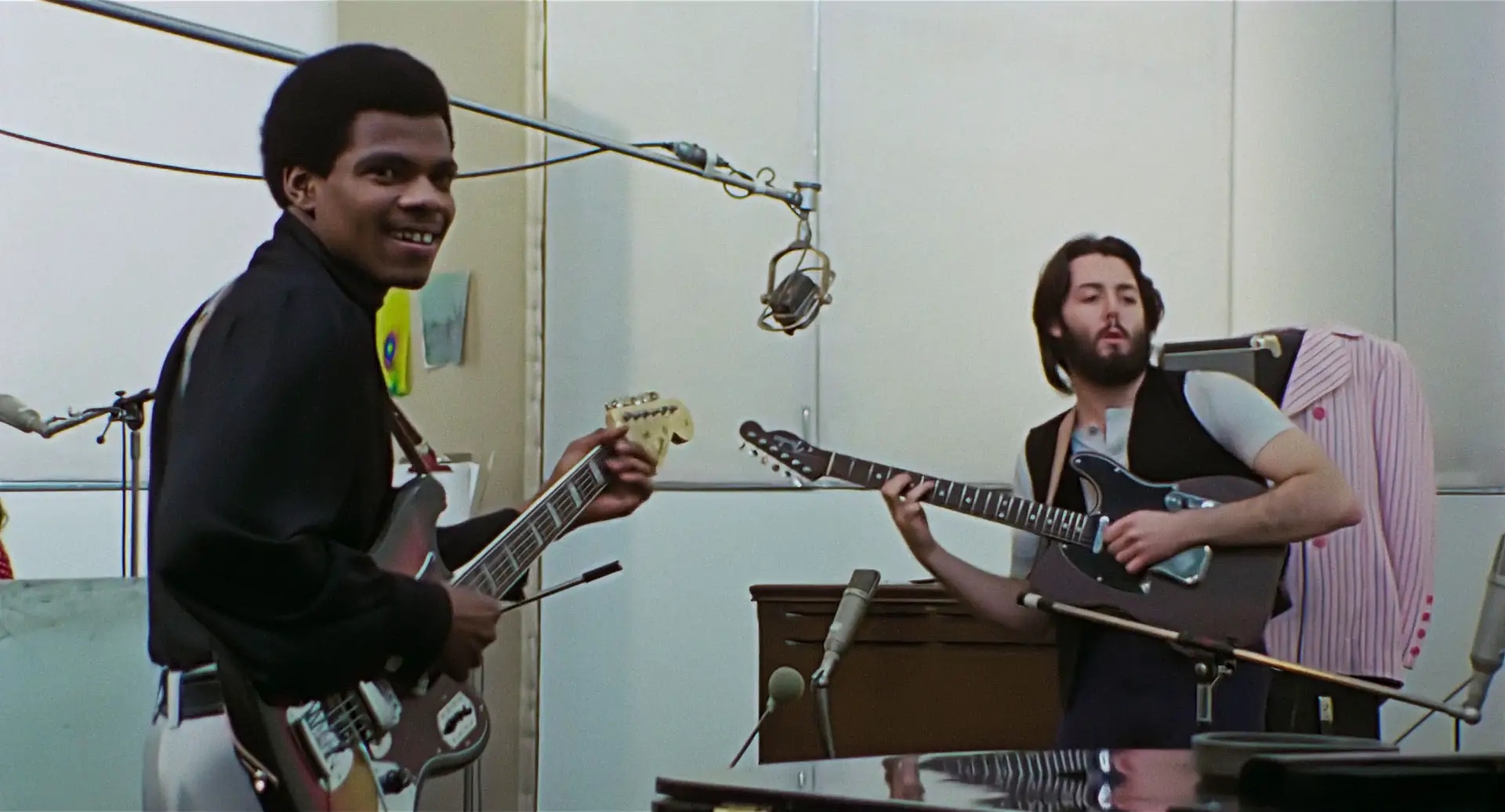
The song in question is “Old Brown Shoe”, which George proceeds to play at the piano. As he asks Billy what the actual names of some of the chords are, Paul sneaks over to Ringo’s kit and starts playing, while Ringo tinkers on the electric piano. Then we see Paul playing George’s Telecaster—upside down to accommodate his left-handedness—next to Billy on the six-string bass, and Ringo at the drums. John is shown helping the assistants move a Lowrey organ and Leslie speaker cabinet into the space. (Like most left-handed guitarists used to being around right-handed ones, Paul is rather adept at playing leads on an inverted instrument. Also, when the song is eventually recorded for a single in few months’ time, Paul will be on the drums as Ringo will be otherwise engaged.)

The action cuts to rehearsals of “Let It Be” and “The Long And Winding Road” as the band works on various aspects of the arrangements, honing the dynamics and harmonies. Paul is getting stuck on translating what he hears in his head, and they start blaming the volume of the instruments in the room and over the PA. Because they’re playing in a live setting, as opposed to a studio setup where there would be headphones and more separation to enable the individual instruments to be heard better, they have to maintain a balance between various microphones and speakers. Plus, they’re basically sitting in a circle facing each other, which unfortunately is the least ideal setup for pristine recording. George Martin explains this to them, and very patiently we must add.

The sound presumably sorted out, we cut to a rehearsal of “Oh! Darling”, with Paul on bass and Billy carrying the keyboard part. John is suddenly giddy after Yoko whispers to him, and he announces that “Yoko’s divorce has gone through,” launching into cry of “free at last” sung to the “Oh! Darling” chords. (This had been included on Anthology 3, 25 years ago, but with the visuals we can now see that the other Beatles were clearly happy for them.)

Further work on “Don’t Let Me Down” is made, John still struggling with the best way to phrase the off-tempo verses. Then, as the Beatles appear to break for lunch or a meeting upstairs or something, we get to see a jam involving Alan Parsons at the electric piano, “clapper man” Paul Bond at the drums, engineer Chris Thomas on the Fender VI bass, Glyn on George’s Telecaster, and a tall, slightly balding gentleman on Paul’s Hofner bass. They sneak off before the band returns to look over a montage of news articles about John & Yoko with Ivan Vaughan, who introduced John and Paul to each other back in 1957. (The original broadcast misidentified him as Apple art director Gene Mahon, who designed their distinctive record labels.) Paul plays “Strawberry Fields Forever” on the piano while John noodles on his guitar.

Michael wants to talk about the proposed rooftop show scheduled for two days away, but the boys are more concerned with recording a decent take of “Get Back”. After numerous attempts and the wine has come out, they do, as one of the takes will be used for the main part of their next single. Also, John’s “Sweet Loretta Fart” ad-lib will be included before the same take on the Let It Be album. After much time tuning, they get a mostly decent version of “I’ve Got A Feeling” down, but John has gone a bit sluggish for his sung section.

Glyn and George Martin confirm, with only the slightest weariness, that the band wants to keep playing each song again and again until they feel they’ve hit the perfect takes. This results in a lot of “this one was better than that one but not as good as the other one” discussion.

After the onscreen calendar moves off today’s date, the captions inform us that because of a bad weather forecast, the proposed rooftop performance is pushed back a day. It’s just as well, as both Paul and John have meetings they will need to attend mid-day on the 28th, so this will buy the Beatles more time to whip the songs they want to do into shape.

Wednesday, January 26, 2022

Beatles Get Back 17: January 26

Part 3 opens with the now-familiar disclaimer about swearing and cigarettes, and the captions remind us that the band has been rehearsing for “a live album… and possibly some kind of stage show.” With the end of January as a deadline, they aim to perform on the roof of the Apple building in three days’ time. Meanwhile, we hear George playing “Window Window”, which he’d go on to demo again for his 1970 solo album but ultimately abandon.

Ringo shows off his latest on the piano, which will become “Octopus’s Garden”. George is impressed that Ringo finally learned a fourth chord—A minor in this case—and comes over to help him finish the song, suggesting other chords to fill out the verse. Soon Mal is writing down the words, and George Martin is humming possibilities for an arrangement. John and Yoko arrive, and as soon as he can light a cigarette, John hops behind the drumkit, so now we’ve seen every Beatle on the drums. It really is a charming scene.

To add to the overall cuteness, Paul and Linda arrive with her five-year-old daughter Heather, who immediately endears herself to everyone present. Once Billy arrives, she’s already wearing Glyn’s furry coat, singing along with their rehearsal of “Let It Be”, and helping Ringo on the drums. A jam develops, and after hearing Yoko do her trademark wailing, Heather tries some of her own. This turns into an arrangement of “Twist And Shout” that evolves in meter to what we now know as “Dig It” from the Let It Be album. (Part of this was also seen in the Let It Be film, as was some of the oldies jam, which was also included on Anthology 3.)

A bossa nova “Long And Winding Road”, also seen in the original film, leads to a more serious rehearsal of same. These take a while, mostly due to John’s lack of aptitude on the six-string bass, but also because it’s one of the slowest songs they’ve ever done. Eventually they nail the performance that will be the basis, after much slathering of strings, choirs, and other elements bound to induce diabetic shock, of the song on the Let It Be album that would be their final #1 single. (Jackson’s edit includes a good deal of discussion, with input from George Martin and Glyn, about the track and possible arrangement ideas. Strings and brass are mentioned, as are the Raelettes from the Ray Charles band.)

Everyone, particularly Heather, is still in a good mood at the day’s end. It hasn’t been the most raucous Sunday, with less than 20 minutes devoted to it here, but it’s been productive. Again.

Tuesday, January 25, 2022

Beatles Get Back 16: January 25

Michael’s original Let It Be film included a scene where Paul is talking about the home movies he, John, and Ringo took during the Beatles’ Rishikesh jaunt of a year before. One coup of Jackson’s edit is that he was able to use some of this actual footage to illustrate the dialogue, along with putting it all in better context. The music used here includes the same mid-‘90s performance of George’s “Dehra Dun” from the Anthology soundtrack, plus a “Within You Without You” rehearsal from the Sgt. Pepper sessions. We even get the infamous shot of the copulating monkeys that inspired “Why Don’t We Do It In The Road?”, as one of Paul’s early takes from the White Album sessions plays under. Ringo’s timely choice to wear an Indian shirt to the studio space today notwithstanding, John and Paul have a more irreverent view of the experience than George, who would go back to India in a second. Paul feels the films show they were almost playing a role, and John agrees they weren’t being themselves. George finds that ironic, because finding themselves was the point of the excursion. They may have overcome the rift of two weeks before, but the boys are clearly growing up and apart.

Billy is still busy filming elsewhere, so the day starts with some busked covers before working on “Two Of Us”, specifically the harmonies, albeit via comedic Dylanesque, Scottish, and Jamaican accents and slight grammatical variations. George and Ringo aren’t as amused by the voices, but they gamely keep up. As a respite, George gets to revive his recent original “For You Blue”, which he plays on his acoustic, with John on the Hawaiian and Paul on the piano, the strings of which George Martin and Glyn have layered with newspaper to make it sound more honky-tonky. (One of these takes will the basis for the version eventually released on Let It Be.)

They’re still trying to figure out how to approach the songs, both as an album and as a potential live performance, with the switches between acoustic numbers and electric numbers. They could potentially have all the new songs ready in a few days. Glyn has changed his plans from leaving on Tuesday (three days off) to Thursday, though he says he’d like to have time to mix the tracks as well if it’s going to be an album as well as a show.

Meanwhile, they won’t be able to use the Primrose Hill site as mooted a few days before. John is still keen to a live show, with an audience, but without the BS needed to prepare it. George is happy with the organic development of the project, particularly with the atmosphere in the basement studio. It takes a while for Paul to say so, but whatever vision he had for a TV show has disappeared. He was hoping for something bigger, and a documentary of making an album isn’t it, because while they’ve had their fun, it’s not a catalyst to truly rejuvenate the band back to high-energy activity. His underlying hope, which is not voiced, is to get back to playing gigs, which isn’t going to happen for them. (Throughout these discussions, Ringo reads the newspaper and smokes.)

However, the captions inform us that Michael and Glyn have an idea for a suitable performance venue, so they bring Paul, Ringo, Mal, Kevin, Ethan, and at least one cameraman upstairs to the roof of the very same Apple building where they’ve been working in the basement. Presumably, provided they get the proper permission, as well as suficient structural support, the Beatles could play their show there.

Back downstairs, it’s tea time again, and the cocktails have come out while John plays “Mean Mr. Mustard”. Then Paul moves to the piano so they can work on “Let It Be”, George on his psychedelic painted Stratocaster. Robert Fraser is visiting again, and gets namechecked in the song. Also glimpsed today are Apple assistant Chris O’Dell and Alan Parsons, employed here as an engineer a few years away from launching his eponymous Project. Except for a moment showing painting Japanese characters on parchment, Yoko is merely there to smile at John and vice versa, or to stroke his hair when he lies in her lap.

As Part 2 ends, the captions inform us that the performance is penciled in for Wednesday, which gives them three full days to prepare. The credits roll and we hear a snatch of a rock jam featuring Billy on organ, and the old standard “Without A Song”, which he would re-record for an album in two years’ time. Sitting through the credits pays off, as we also get to hear a January 1969 performance of “Love Me Do”.

Monday, January 24, 2022

Beatles Get Back 15: January 24

The project, whatever it is, is progressing rapidly. With everyone already in place to rehearse, John tells Paul about the “book idea”, which would collect all the photos taken by Ethan Russell during the sessions and be released in conjunction with the film. George is still enthusiastic about getting “Get Back” out as a single, but Paul is oddly hesitant. “I’m just sort of still rehearsing,” he says. This is a turnabout, again, from what we’ve been told. Now it’s John and George who are riding the momentum, and pushing Paul, rather than the other way around. (Keep in mind this also reflects what Paul said about John on the 13th—once he’s keen on something, he’s all in.)

The captions tell us that Billy is off doing Lulu’s TV show; he is, after all, in town to get his own career off the ground. John remarks that Apple managed to sign Billy, and that George will be producing him. George, ever fiscally responsible, comments that they’d have to figure out how to pay him; were they to use Nicky Hopkins or somebody like that, union session rates would dictate. John and George figure Billy might as well become a full-fledged fifth Beatle, while Paul counters, humorously yet accurately, that it’s “bad enough with four.”

Michael asks if they have any new numbers; George Martin remarks, “You’re writing all the time, aren’t you, John?” This prompts John to pull out “Child Of Nature”, still referred to as “On The Road To Marrakesh”, which is somewhat limp. Glyn, still hammering out the sound, asks Paul to try a different bass, and we see him switch to the Rickenbacker, resplendent in its psychedelic paint job. After a few snatches of oldies, John remarks, “We seem to be at a loss without Billy”; based on their performances so far today, he’s not wrong.

In order to boost their energy, they decide to work on ones that haven’t been worked on as much, starting with “Two Of Us”. For a chance of pace, they try it acoustic, as opposed to the rocked-up versions at Twickenham. There is discussion about the pros and cons of using bass on the song, but they soon find their way to the tempo and style of the finished track. John and Paul find their Everly Brothers harmonies right away, to John’s visible delight. Yoko is at his side, but not in anybody’s way. Ethan can be spotted crouching throughout the studio space, but they don’t seem to notice or mind him either. Mal, who was seen earlier playing a tambourine with absolutely no sense of rhythm, takes the lunch orders while George thanks him for the bow ties he found. He also continues to dutifully write down any lyrics that emerge just in case.

In between takes of “Two Of Us”, John submits “Polythene Pam” and George tries out the “Hawaiian” lap steel while Paul plays “Her Majesty”, then tries to teach them “Teddy Boy”. It’s a complicated song, so John starts doing square dance calls to mask his disinterest. Billy arrives in time for tea and a few busks of “Maggie Mae”, one of which will make the eventual album, while another morphs into “Fancy My Chances With You”, another early Lennon-McCartney original.

Up until now, Ringo has been thumping along, merely keeping time, but the scene switches to a loose jam around a “can you dig it” theme, with John on the Hawaiian and Paul back on bass. The jam ends just as Pattie Harrison is seen for the first time all month, making her way through the cables to greet George with a kiss. John explains, “That was ‘Can You Dig It’ by Georgie Wood, and now we’d like to do ‘‘Ark the Angels Come’,” a quip that will be included on the eventual album.

John is still playing his electric guitar as the day wraps up, Ringo shows off his new Sony camcorder, and George asks George Martin how his own studio is coming together. For his part, Big George comments, “You’re working so well together. You’re looking at each other, you’re seeing each other. It’s happening, isn’t it?”

It’s not the most musically exciting day, but they’re simply doing what they do. The discomfort and ennui from earlier in the month seem ages ago. As we near the end of part 2 of Jackson’s edit, they’re on their way to something.

Sunday, January 23, 2022

Beatles Get Back 14: January 23

Paul is back behind the drums while Yoko wails into a microphone and John coaxes feedback from his guitar. George and Ringo arrive while John talks excitedly about the jam, and how he’d like it to go on her next album, or even theirs. (Luckily, this does not happen.)
Michael is still hoping some kind of public performance will happen in a week’s time, and the band agrees to rehearse through the weekend to keep the momentum going. (Today is Thursday.)

Billy has arrived, and they’re already in good spirits, joking about what to play next. George is equally chuffed about getting some bow ties he’s asked Mal to procure. “Across The Universe” is scratched because it’s due to go out on an EP (which will be cancelled) and they joke about “Mal’s anvil” in case they want to try “Maxwell’s Silver Hammer”. They choose “Oh! Darling”, then George leads them into “Get Back”; even though they still haven’t figured out what to do with the verses, now Billy can take one of the solos. (We’ve never understood why it’s John soloing on this song and not George.) The three guitarists all contribute to the arrangement, and then Billy finds his descending part that ends each chorus. George notices the similarity to the Temptations’ “Reach Out (I’ll Be There)”, and we learn that Paul isn’t playing his Rickenbacker bass, despite its better sound, because the Hofner weighs less. They even try playing the song standing, instead of all sitting, leading to a wonderful sequence of F-words never before broadcast on a Disney platform.

The development of the “Get Back” arrangement dominates the day’s work, with only occasional detours into other songs, including “I’ll Get You”, “Help!”, and “Please Please Me”. During one break they’re talking about the tour where Jimmy Nicol sat in for Ringo, who was out with a tonsillectomy, and John keeps trying to get something out of his coat, but stops every time he sees the camera on him. We see Denis O’Dell enjoying the music; art dealer Robert Fraser is hovering on the sidelines as well. George suggests that “Get Back” be their next single ASAP, since it’s been months since their last one, and that way The Big Show could promote it.

Much of the drama that defined the first week is long past, so there’s not much extra to say about this segment. The focus is on their music, which was the original point of the project. Most of all, they’re all having fun, which was the original point of Jackson’s edit.