Showing posts with label nilsson. Show all posts

Tuesday, May 19, 2026

Nilsson 13: Sandman

The cover of Sandman is something of a joke; the front shows Harry Nilsson happily sitting on a beach, fully clothed, while the rear suggests he’s been eaten by a crab. (These photos were taken by his pal Mal Evans, the Beatle road manager who was tragically killed shortly before the album came out.) Inside the gatefold is something of a Victorian-style etching of what appears to be an impending shipwreck, with various of the album’s participants’ faces slipped in. Clearly, Harry loved comedy, but even humor that isn’t an in-joke can only be funny so far.

“I’ll Take A Tango” begins with admitting to an aversion to rock ‘n roll and electric guitars, while the barely danceable rhythm lists towards the edge of the deck depicted in the aforementioned gatefold. But it’s followed by “Something True”, the closest thing to the romantic splendor for which he first became famous, and a stunner. That slide guitar isn’t George Harrison’s, yet we wish it were. It’s only a momentary distraction, as he now informs us that “Pretty Soon There’ll Be Nothing Left For Everybody” over a busy samba beat. There’s a lot of reverb throughout the album, thankfully toned down on the a cappella college parody “The Ivy Colored Walls”—we’re guessing all those vocal parts are him—which crawls to a denouement without a clear punchline. Instead it’s right into the completely lazy “Here’s Why I Did Not Go To Work Today”, which on the label is the subtitle of “Thursday”.

Depending on who you are, the album’s high or low point is “The Flying Saucer Song”, which he’d been trying to record for three years. It’s predominantly a conversation over a lopey sax groove between two drunks at a bar, mediated by the bartender, and naturally he does all the voices. (Joe Cocker can be heard wailing in the background.) While it may not have been inspired by Cheech & Chong, it pales. For even more hilarity, “How To Write A Song” gives him another excuse to put “a—hole” into a song while providing the instructions over a canned cheering audience. He finally finishes “Jesus Christ You’re Tall” from the snippet on the last album, degenerating into a few minutes of scatting. “Will She Miss Me” is another big production with a romantic undercurrent, trilling strings everywhere.

Comedy albums were of course popular by the mid-‘70s, but that’s not the main reason why people liked Harry Nilsson. He clearly didn’t have enough songs in him anymore, which is too bad, since he didn’t have enough for a comedy album either.

Nilsson Sandman (1976)—2

Tuesday, February 10, 2026

Nilsson 12: Duit On Mon Dei

At this point Harry Nilsson’s career had pretty much spiraled away from him. He was still writing songs, and his record deal meant he could still record with his famous friends, but he’d lost the momentum that had carried him to the middle of the decade. The title of Duit On Mon Dei—which had already appeared on the cover of the Ringo album—not only illustrated the level of humor at hand, but the general attitude.

This already short album begins with an unfinished idea called “Jesus Christ You’re Tall”. Once that’s out of the way, steel drums kick in and don’t let up for the rest of the album. He still sounds raspy on “It’s A Jungle Out There”, which pushes a Tarzan metaphor into social commentary, which was slightly more successful when Randy Newman ripped it off three decades later for the theme song to the TV show Monk, and shame on him. The accompaniment makes more sense for “Down By The Sea”, a sardonic look at retirement. “Kojak Columbo” uses television as an escape, but again, the jokes fall flat. We get a break with another touch of Schmilsson on the lovely “Easier For Me”, but Ringo had already done it the year before in an similar arrangement with the same pathos. Unfortunately the steel drums return on “Turn Out The Light”, and it’s hard to imagine anyone falling asleep to such a lullaby.

Co-written with Klaus Voormann, “Salmon Falls” is another big production, the highlight of the album, and one of the best songs of his career, as long as you can ignore the steel drums over the first minute and a half. “Puget Sound” is another excursion into island music that seems to exist only to set up a reference to “Paper Moon”; this time Van Dyke Parks doodles on a synthesizer to offset the percussion. “What’s Your Sign” is another attempt at a pick-up song, with an overblown arrangement and a wasted guest appearance by Gloria Jones. “Home” might have been a profound statement on the subject if not for the unsympathetic arrangement; the same can be said for “Good For God”, but for his own yowling and the equally drunken-sounding revellers singing along.

As with his other albums, the gatefold of Duit On Mon Dei sported photos of all the people involved with making the album. But as we’ve seen time and again, corralling talent doesn’t automatically guarantee they’ll create fine art. Unless you really, really like steel drums.

Nilsson Duit On Mon Dei (1975)—2

Friday, October 3, 2025

Nilsson 11: Pussy Cats

An unabashed Beatlemaniac, Harry Nilsson had already managed to get George Harrison and Ringo Starr to play on his albums before he went to L.A. to hang out and get smashed with Ringo and John Lennon during the latter’s so-called “lost weekend” during his separation from Yoko. In John’s own recollection, he and Harry were becoming more notorious for getting thrown out of clubs for drunk and disorderly behavior that he thought they would be better served making an album together. As he had little of his own on standby not already tied up by Phil Spector, he offered to produce Harry, and that’s how Pussy Cats happened. (Harry’s label RCA was persuaded to finance the project with the carrot that John would sign to the label once his Apple contract ended, and so prominently displayed the producer’s name and face on the cover. Spoiler alert: he didn’t.) Harry was so excited by the project that he wrecked his famously versatile voice trying to shout his way through the sessions.

This isn’t immediately apparent on the lush cover of Jimmy Cliff’s “Many Rivers To Cross”, which now sounds more of a template for the album John would eventually complete in a few months, particularly in the melody of the strings inspiring his own “#9 Dream”. We can’t tell if that’s John doubling Harry’s voice on the bridges and later choruses, or just Harry in full rasp. It’s a whiplash jump to Dylan’s “Subterranean Homesick Blues”, a little funkier than the original, but like most tracks on the album, sporting both Ringo and Jim Keltner on drums. (And again, it sounds like John’s next album.) Balladeering Harry is back on the sumptuous “Don’t Forget Me”, which he arranged himself, and in the context of this album is a fitting sentiment as well as its highlight. Despite John’s interjections on the intro, “All My Life” admits to a lifetime of bad behavior, but doesn’t give us any hope that he’ll change anytime soon. “Old Forgotten Soldier” finds him still feeling sorry for himself via a variety of metaphors; thankfully the sound effects of birds and the German solider yelling are faded out after the first verse.

The Drifters’ “Save The Last Dance For Me” gets a similar approach to that of “Many Rivers To Cross”, in that it’s drastically slowed down for maximum pathos, with a piano part sure to remind folks of “Without You”. Tantalizing on paper, “Mucho Mungo/Mt. Elga” is a Lennon/Nilsson writing collaboration to which John contributed the unfinished first half, and Harry added the other, for the album’s nod to an island feel. Another oldie, “Loop De Loop”, tries to let us all in on the party—which clearly has been going on too long—this time with Keith Moon joining Ringo and Keltner on drums, and a damned kids’ chorus yelling along. The eerie strings on “Black Sails” belie the forced pirate puns throughout the lyrics, then it’s back to the party. Just in time to cash in on Happy Days, on “Rock Around The Clock” the three drummers manage to stay on tempo, even in the double-time fade.

Pussy Cats has maintained notoriety for the details of the production, and has since become tagged as something of a cracked masterpiece, which it’s not. Nor is it horrible. It is in keeping with his brand, in that once again he approaches greatness, only to thumb his powdered nose at it. While it may be an unfortunate chapter in his own history, it is key to understanding John’s. (The bonus tracks on the expanded CD weren’t very illuminating. “Down By The Sea” and the drunken skit “The Flying Saucer Song” were session outtakes and would be re-recorded for later albums, as would an earlier take of “Turn Out The Light”. “Save The Last Dance” is performed solo with an electric piano, and is a template for the released version. As the album was also released in a quad mix back then, we’re half expecting a more deluxe upgrade someday to cash in on that.)

Nilsson Pussy Cats (1974)—3
1999 CD reissue: same as 1974, plus 4 extra tracks

Friday, April 18, 2025

Nilsson 10: A Little Touch Of Schmilsson In The Night

As a further thumbed nose to mega-stardom, Harry Nilsson decided his next album would consist solely of pop standards from what we now know as the Great American Songbook. The legendary Gordon Jenkins would provide the arrangements, and buddy Derek Taylor would produce, after Richard Perry refused to be involved.

A Little Touch Of Schmilsson In The Night was a labor of love from start to finish. The sessions went very quickly by anyone’s standards (sorry), with Harry singing live in the studio with the orchestra. The gatefold LP packaging included photos of just about everyone in the orchestra, with notes for each song accompanied by old-timey sheet music art. (The album was also dedicated to Frank Wills, the security guard who called the cops during the Watergate break-in.) He even promoted it with a TV special.

Clearly, Harry did his homework, as these are very straight renditions, some complete with usually cast-off introductory sections, and none of his customary multi-tracked vocals. One exception is “It Had To Be You”, which includes a parody verse misleadingly attributed to lyricist Gus Kahn. (False; it was all Harry.) The newest composition was “This Is All I Ask”, written only fifteen years earlier by Jenkins himself. The album opens with a quote from “As Time Goes By”; other quotes crop up here and there as interludes throughout the seamless listen, and a full version of the song closes the program.

Richard Perry was correct in thinking the album would be out of step with the times, as it didn’t burn up the charts. But it’s still a lovely album, and would go on to influence Linda Ronstadt during her Nelson Riddle partnership, as well as Rod Stewart and any other rockers looking to mine the same vault. It’s also the last time his voice would sound so smooth.

Fifteen years later, A Touch More Schmilsson In The Night was released in Germany, consisting of four alternate takes, a couple songs pulled in from a later album, and six outtakes, with blatantly Sinatra-inspired cover art already co-opted by Tom Waits. Those six outtakes were included on the eventual expansion of the original album, rightfully restoring “I’m Always Chasing Rainbows”, “Make Believe”, “Trust In Me”, “It’s Only A Paper Moon”, “Thanks For The Memory”, and the full take of “Over The Rainbow” (after which he requests scotch, water, matches, and heroin) to the canon.

Nilsson A Little Touch Of Schmilsson In The Night (1973)—
2006 CD reissue: same as 1973, plus 6 extra tracks

Friday, November 15, 2024

Nilsson 9: Son Of Schmilsson

With Nilsson Schmilsson, Harry Nilsson had pretty much become the big star he’d always seemed to want to be. And with that, he proceeded to buck trends and his own producer’s desire to repeat the formula. With its horror movie-inspired cover art and lettering, Son Of Schmilsson thumbed its nose at the very idea of a sequel, even with all-star help from two pseudonymed Beatles, Peter Frampton, Nicky Hopkins, Jim Price, Bobby Keys, and Klaus Voormann.

“Take 54” provides a peek at the increasingly difficult task of making records, particularly when distracted by a young lovely for whom the singer “sang [his] balls off”. Following a trailer-style announcement for the album, “Remember (Christmas)” is a lovely little ballad that has nothing to do whatsoever with the word in the subtitle, yet is exactly what everybody wanted. “Joy” is a country music parody, on which he doubles down the satire. Near the end he asks her to listen for him on the radio, and sure enough “Turn On Your Radio” presents another lovelorn lament but in a more pensive tone. Then there’s the wonderfully nasty “You’re Breakin’ My Heart”, with its opening line that guaranteed zero airplay, paving the way for Cee-Lo some 38 years later.

Speaking of odd connections, “Spaceman” is something of the flip-side to Elton John’s “Rocket Man”, in that the protagonist is tired of begin stuck in space; the strings were arranged by Elton (and Nilsson) regular Paul Buckmaster. With its sweet sentiment and lingering hopefulness, “The Lottery Song” hearkens back to his earlier songs. But his disdain for playing nice is epitomized by the opening of “At My Front Door”, wherein he begins to croon “Remember (Christmas)”, then belches and the track switches to an upbeat piano-driven cover of an old doo-wop tune. “Ambush” is a sneaky one, loping along with a tale of a platoon of soldiers singing to keep their spirits up, only to be wiped out by enemy gunfire. If you think that’s morbid, consider “I’d Rather Be Dead”, sung to the accompaniment of a jaunty accordion with the help of a choir comprised of pensioners happily crooning along with “I’d rather be dead/Than wet my bed.” Richard Perry’s hope for a big Disney finale with “The Most Beautiful World In The World” is compromised by the first half, sung in a faux-reggae voice with a gargled solo.

As long as people can handle the humor and chauvinism, Son Of Schmilsson actually is a worthy follow-up, especially when taken in the context of his catalog. Connoisseurs would very much appreciate the most recent reissue of the album, which added several bonus tracks: an early version of “What’s Your Sign”; an alternate “Take 54”; a comical busk of “It Had To Be You” that leads into “I’d Rather Be Dead”; an unused recording of Jimmy Webb’s “Campo De Encino”; and “Daybreak”, the one new song included on the soundtrack to 1974’s cinematic debacle Son Of Dracula, which otherwise recycled selections from this album and Nilsson Schmilsson.

Nilsson Son Of Schmilsson (1972)—3
2006 CD reissue: same as 1972, plus 5 extra tracks

Tuesday, May 21, 2024

Nilsson 8: Nilsson Schmilsson

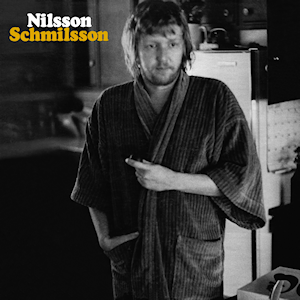
The world was finally ready for Harry Nilsson, and so was he. Hooked up with rising producer Richard Perry, who’d brought Barbra Streisand firmly into the present-day, they decamped to London and recruited such Beatle-centric aces as Jim Gordon, Jim Keltner, Klaus Voormann, and Gary Wright to create Nilsson Schmilsson. The blurry photo of a distinctly non-sexy photo of the bathrobe-clad artiste holding a hash pipe in front of an open refrigerator notwithstanding, this was the pinnacle of his pop journey.

Still, that cover photo nicely sets up the jaunty “Gotta Get Up”, complete with some in-context dreams, before canned car noises continue the story in “Driving Along”, which provides further chance for observation. Despite the optimistic sound of those tracks, a cover of “Early In The Morning”, accompanied by solely by a pawed organ, suggests our hero is stuck somehow. Suddenly it’s hours later and “The Moonbeam Song” has us pondering not only the skies but “bits of crap”. Horns weren’t a new thing on Nilsson albums thus far, but Jim Horn’s soulful arrangement on “Down” is firmly contemporary.

While side one is short, it’s a strong record so far, but side two is where everything goes into the stratosphere. It took Harry’s vision to turn Badfinger’s “Without You” from a middling album track to a soaring plaint, and the template for everyone thereafter. He follows it with the goofy “Coconut”, a song made for the Muppets if there ever was one. Following a sprightly take on Shirley & Lee’s “Let The Good Times Roll”, “Jump Into The Fire” doubles down on the one-chord challenge of “Coconut” for seven minutes, pounding the riff into submission over an audibly detuned bass while Henry Hill watches out for helicopters. The mildly mewling “I’ll Never Leave You” provides a mildly paranoid ending, but when you consider that it was left over from The Point!, it makes more sense.

If anything made Harry a household name, Nilsson Schmilsson was it. But then he had something to live up to, which was an impossible task. Still, he should have been proud of it. (The eventual expanded CD included some interesting bonuses: a “Without You” that’s even more overwrought in Spanish; “Lamaze”, a Smile-sounding track that dissolves into laughter after a recitation; a 1968 take of “Gotta Get Up” still in vaudeville mode; an alternate “Moonbeam”; and two songs that would be reworked on future albums.)

Nilsson Nilsson Schmilsson (1971)—
2004 CD reissue: same as 1971, plus 6 extra tracks

Friday, February 2, 2024

Nilsson 7: Aerial Pandemonium Ballet

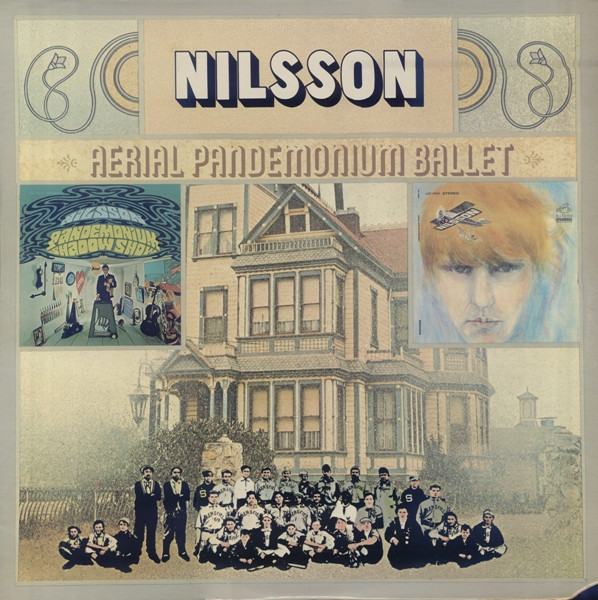
Now that more people knew who Harry Nilsson was, the label wanted to reissue his first two albums. That was mostly fine with him, but being very much a restless who got bored with the same old, he countered with a different idea. Rather than straight reissues of Pandemonium Shadow Show and Aerial Ballet, he reworked selections of both into Aerial Pandemonium Ballet.

People like to say this was the first remix album, to illustrate how ahead of his time Harry was. The fact of the matter is that sweetening an already-released master had been happening for years, such as in the case of the “rock” version of “The Sound Of Silence”; also this wasn’t long after tracks that had only been released in mono had been given stereo mixes months or even years down the road to keep up with audiophile trends. The difference was that Harry was overt about it, to the point that the back cover even helpfully listed what was different about each track (e.g. “slowed down”, “new vocals”, etc.).

Even with all the moderations and modulations, it still runs just under a mere half-hour. Following the familiar intro from the first album, two father songs (“1941” and “Daddy’s Song”) appear back to back. “Mr. Richland’s Favorite Song” now sports a quote from “One” in the middle. “Good Old Desk” makes a nice transition to “Everybody’s Talkin’”, which even sets “Bath” up well.

Side two juxtaposes various love-type songs cleverly. “River Deep–Mountain High” gets a new vocal but keeps the castanets and bongos, the latter of which still feature on “Sleep Late, My Lady Friend”. Thankfully “Don’t Leave Me” and “Without Her” both a tad softer in comparison. “Together” sounds a little jerky, plus it loses a bridge, running even shorter than before and going sharply into “One”. This is also chopped down, and diluted by the tap dance that bookended Aerial Ballet.

Still, Aerial Pandemonium Ballet is a nice way to hear where he started. It can even be argued he selected the best, most enduring tracks from each, and in most cases improved them, so his instincts were spot on. (An expanded version of the album had only one “outtake”: a remix of “You Can’t Do That” that highlights the song’s actual lyrics. The other bonus tracks were from the same period, including early versions of songs that would appear on his next two albums, his party piece cover of “Walk Right Back” that weaves in lyrics from “Cathy’s Clown”, and a faithful cover of John Lennon’s “Isolation”.)

Nilsson Aerial Pandemonium Ballet (1971)—3
2000 CD reissue: same as 1971, plus 5 extra tracks

Friday, September 1, 2023

Nilsson 6: The Point

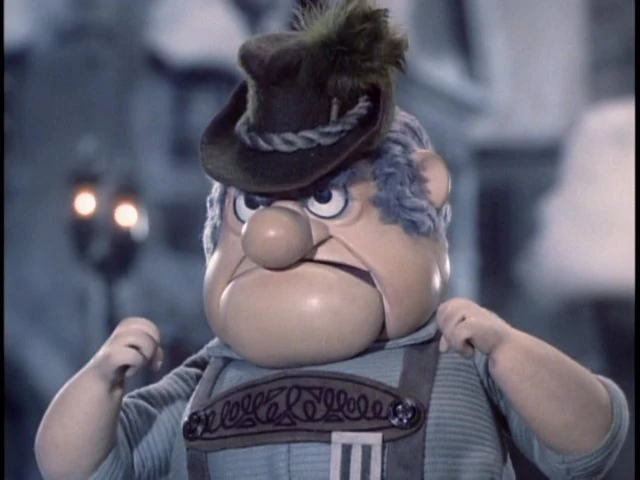
While he’d had some success, Harry Nilsson had yet to become a household name. Always looking for an angle, and with the help of an acid trip, he came up with an idea that would turn into not just his new album, but a feature-length children’s television special. The Point! was something of a cross between Dr. Seuss’s “The Sneetches” (which would be animated and broadcast two years later) and an earlier TV special, Rudolph The Red-Nosed Reindeer. An otherwise inoffensive kid with a different physical attribute from his neighbors is ostracized by them, and sent off with only his canine companion for company. Along the way they meet all kinds of wacky characters and return to share valuable lessons about inclusion, conformity, and hopefully forgiveness.

Like most TV specials of the era, it’s as charming as it is dated, as befits the technology of the time and the style of the head animator, best embodied for this generation in the commercials for Tootsie Pops. (One notices the influence of Yellow Submarine and The Phantom Tollbooth as well.) Dustin Hoffman originally narrated, in a role later redubbed by Ringo Starr and then Alan Thicke, while the part of the boy in the story, as well as the boy to whom the story is told, was played by none other than Mike Lookinland, then otherwise occupied as Bobby Brady. Other roles were filled by such voice luminaries as Paul Frees, June Foray, and Lennie Weinrib.

On the album, Nilsson narrates most of the story as seen in the film, which is over twice as long. The music is only tangentially related to the plot, but tempers the “hey man” tone of his narration. (We can even hear him turn a page at one point.) Still, the songs work on their own, singalongable by adults and kids of all ages, which, if you’ll pardon the expression, was the point.

“Everything’s Got ‘Em” mostly establishes that “this is the town and this is this people”; we assume the title refers to the ubiquitous points. A narration sets the scene about a boy born without a point on his head like everyone else has, but most people seem to like him anyway. “Me And My Arrow” is a wonderful song for any kid and his or her dog, though the bridge doesn’t fit at all, in all its familiar Nilsson-ness. The contest in the story that leads to the immediate crisis is illustrated by “Poli High”, basically a cheerleading chant that sports a brief “hold that line” counterpoint we would swear he heard in “Revolution 9”. The story’s Karen equivalent banishes the boy and his dog from the town, we are informed that the next song will conveniently fill the time it takes to get to the next part of the story, and “Think About Your Troubles” does just that, with a rather straightforward explanation of how water is repurposed in nature.

Some narration condenses the action in the film to the point (sorry) where the travelers come upon a seemingly bottomless hole, setting up “Life Line”, a lonesome song with a deceptively cheerful melody. Once out of that tough spot, the pair meets more fascinating people in the film, which is glossed over on the album until a prehistoric bird picks them up for “P.O.V. Waltz”. After “flying high in the sky,” they’re dropped off, and eventually nap, to the tune of “Are You Sleeping?”, which could be a nice lullaby if not for the same bridge detour that colors “Me And My Arrow”. The boy and his dog return to the town and point out that everything has a point. Thus science and compassion prevail over ignorance and egomania, and we live happily ever after.

With The Point!, he began to develop his “rock” voice more. As more people began to take notice of this character, the concept itself would endure outside of him. The songs were expanded into stage productions, one of which would reunite two Monkees. And for all its hippy-dippyness, it’s still a nice story. Such feel-good be-yourself messages were common in that era, and frankly, the message is just as important today.

The first expanded version of the album added the standalone single “Down To The Valley”, which was in the same spirit of the album if a little too busy—and very much like mid-period Beach Boys—and the B-side “Buy My Album”, which beseeched the listener to do just that, even though “Down To The Valley” wasn’t on any album. The more elaborate package a few years later sported excellent liner notes by Nilsson uberfan Curtis Armstrong, a reproduction of the original comic book insert of the story, and different bonuses: early versions of “Think About Your Troubles” and “Life Line”, an alternate take of “Down To The Valley”, and as a hidden track, the surviving excerpt of a demo for “I’ll Never Leave You”.

Nilsson The Point! (1970)—3
1998 DCC CD: same as 1970, plus 2 extra tracks
2002 BMG Heritage CD: same as 1970, plus 4 extra tracks

Friday, March 24, 2023

Nilsson 5: Nilsson Sings Newman

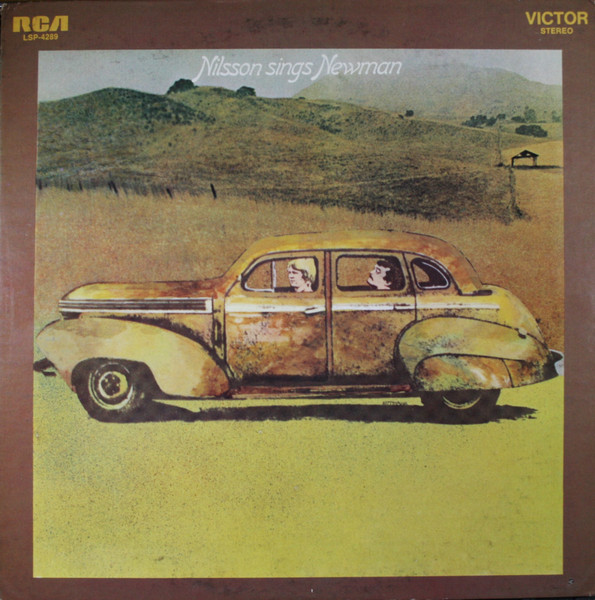
Harry Nilsson understood what it meant to be a struggling songwriter trying to simultaneously make his name as a singer, which is just one reason why he felt a kinship with Randy Newman. Having already covered one Newman tune on his last album, Harry decided to showcase the songwriter by singing along while said author played the piano. Hence, Nilsson Sings Newman.

Don’t be fooled by the tremolo guitar and tambourine for the first 45 seconds of “Vine St.”; that’s merely an in-joke to set up the song proper. This is a piano-and-vocal album, and when we say vocals, we mean it; Harry painstakingly overdubbed himself wherever he saw fit, as he does here for an almost Beach Boys chorale. “Love Story (You And Me)” is quiet and simple, though those trademark Newman ragtime chords are on every chorus. Considering the time, “Yellow Man” might have been considered an anti-war statement, but now it just sounds crass, and it’s easy to be distracted by Harry’s spoken voice between some of the verses. “Caroline” is a straight love song written expressly for the project, with just the slightest hint of vibraphone in the mix. A prairie wind is the sole accompaniment for most of “Cowboy”, and just when it seems about to float away, the piano melody changes to “Midnight Cowboy Theme” by John Barry. Clever.

“The Beehive State” is odd—a verse from a chairman, a verse from a delegate from Kansas, another verse from the chairman, and a verse from a delegate from title-monikered Utah. And that’s it; maybe he didn’t want to write about the other 48? “I’ll Be Home” is more direct in its sneakiness, going from devotion to threatening in two verses. The gospel exhortation between them seems mostly like another in-joke. “Living Without You” is even more straightforward, and almost aches for a bigger arrangement. We can hear him ask for more echo in “Dayton Ohio, 1903” right before the quote from “Moonlight Serenade”, and fake a trumpet at the end. The small-town homespun theme concludes with “So Long, Dad”, which also includes him arguing with himself over how many voices should be in the mix.

Considering that Randy Newman has one of those voices known more for its character than any pleasing timber, Nilsson’s smoother tone does these songs grand favors. Willfully eccentric in its simplicity, Nilsson Sings Newman didn’t do much for either artist at the time, but persistence would pay off in both cases. (As the cult of Harry escalated in the 21st century, the album was given an expansion adding four alternate takes, plus the positively gorgeous “Snow”, criminally left off the original 25-minute album for “lack of room”.)

Nilsson Nilsson Sings Newman (1970)—3
2000 30th Anniversary Deluxe Edition: same as 1970, plus 5 extra tracks

Friday, November 4, 2022

Nilsson 4: Harry

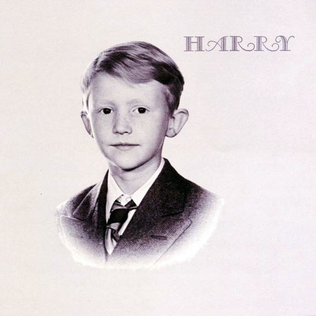
By the end of the decade Nilsson was starting to become equally known for singing as well as songwriting, certainly in the Hollywood industries. He was busy in the first part of 1969 working on the soundtrack for the over-the-top Otto Preminger film Skidoo, which featured two songs related to the “plot”, and “The Cast And Crew”, which literally read the film credits over musical backing. His next proper album played with his mystique with the simple title Harry, the boyhood photo on the front, liner notes by Apple publicist Derek Taylor’s daughter on the back, and sepia-toned snaps in the gatefold.

Opening with his own version of “The Puppy Song”, written originally for Mary Hopkin’s first album, he’s right back to the “vo-de-oh-doe” approach that filled up his first two RCA albums. “Nobody Cares About The Railroads Anymore” is another slice of nostalgia, but “Open Your Window” is a not-too-lush ballad that’s more restrained and therefore more successful. The Beatle fixation continues on a faithful cover of “Mother Nature’s Son”, with strings replacing the brass on the original. “Fairfax Rag” and “City Life” were both written by fellow Monkees songwriter Bill Martin; the former is forced ragtime, while the latter actually sounds contemporary, and is preferred.

“Mournin’ Glory Story” is also firmly in the present, a brief but heartbreaking portrait of what we used to call a bag lady, as is the romance glimpsed in “Maybe”, but then he adds a patriotic tune his mother wrote after World War II. “I Guess The Lord Must Be In New York City” was written but rejected for Midnight Cowboy in favor of “Everybody’s Talkin’”, the arrangement of which it almost pointedly resembles. “Rainmaker” was written with the aforementioned Bill Martin, and sounds like it could belong to a larger conceptual piece. He was smart enough to record Jerry Jeff Walker’s “Mr. Bojangles” a full year before the Nitty Gritty Dirt Band, while Randy Newman’s “Simon Smith And The Amazing Dancing Bear” provides a preview of Nilsson’s next album.

With Harry, he finally, tentatively, breaks away from the overused stylistic gimmick of his earlier work and begins to approach his true potential. For that, it is recommended.

Nilsson Harry (1969)—3
1997 DCC reissue: same as 1969, plus 3 extra tracks

Tuesday, April 5, 2022

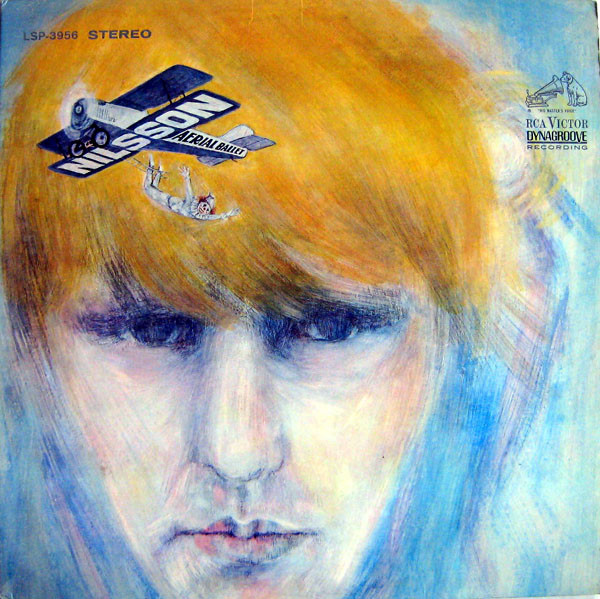
Nilsson 3: Aerial Ballet

Harry Nilsson’s third album followed on closely from the last one; it’s very polite, with plenty of overly cute touches and vocal gymnastics. Aerial Ballet is an apt title, as it consists of high-wire feats designed to stun and amaze. There’s even a tapdancing routine that frames the album.

Removed from the album so as not to compete with the Monkees’ version but since restored, “Daddy’s Song” follows the same template as “1941” from the last album (“I loved my daddy but he left and now I’m sad”). It’s said that the initials of “Good Old Desk” make it an ode to a certain deity, which goes way over our heads, but while we’d like to hear the piano chords removed from the rest of the arrangement, when the strings come in, they’re lovely. “Don’t Leave Me” has some lovely dynamics between the verse and the chorus, but the scat sections, again, grate. While he hadn’t hit such a level of fame yet, “Mr. Richland’s Favorite Song” is an astute diatribe about the fickleness of it all that dissolves into yet another scat detour. “Little Cowboy” is supposed to be a lullaby, but the clippety-clop effect sounds like parody, and when you factor in the horns, good luck getting the kid to sleep. “Together” finally blends words and music well for a good track, and no scatting!

Up till now the album has focused on his own songwriting, but side two starts with the classic “Everybody’s Talkin’”, two years before its use in Midnight Cowboy and originally written by folkie Fred Neil. It’s followed by the next best song on the album, “I Said Goodbye To Me”, at least until the lyrics are echoed, literally, by a spoken track, but then we’re subjected to a reprise of “Little Cowboy” dominated by virtuosic whistling. “Mr. Tinker” (who was a tailor, ho ho) is another character study that’s mostly notable for a vocal hook that foreshadows “One”, which comes after. While not as overwrought (or as effective) as the hit Three Dog Night version, its arrangement more closely follows the busy-signal mode that inspired the track. “The Wailing Of The Willow” is more Bacharach bossa nova, pleasant and not offensive, whereas “Bath” is one of the happiest songs about a having a hangover, yet still thinks a variation on “doo-wacka-doo” comprises an actual chorus.

Aerial Ballet tries very hard to impress, but he’s still an acquired taste. It’s telling that for such a short album, it seems a lot longer.

Nilsson Aerial Ballet (1968)—

Friday, September 3, 2021

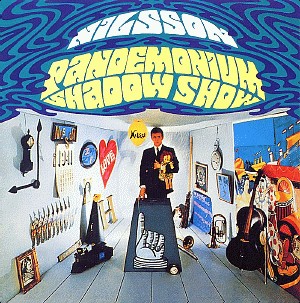
Nilsson 2: Pandemonium Shadow Show

This is where the legend of Harry Nilsson really begins, and mostly by a fluke. Beatles insider Derek Taylor heard one of its songs on the radio while doing publicity in California, told his old bosses about it, and soon they were trumpeting “Nilsson” as their favorite band. Coming so soon after their previous endorsement of the Monkees, who’d already recorded some of his songs, it kinda makes sense.

Still, that kind of advance hype doesn’t make Pandemonium Shadow Show the type of album everyone has to own. While gifted with a versatile voice, and a grasp of olde American musical styles, one gets a distinct “inside joke” vibe from it. Most of his originals are delivered in a cross between “vo-de-oh-doe” vaudeville—right down to the constant scat vocal breaks—and the circus element that ties in with the title. Even “She Sang Hymns Out Of Tune”, which he didn’t write, sounds like it should be accompanying someone on flying trapeze, while “Freckles” dates back to 1919.

The songs are catchy, yet hardly cliché. “Ten Little Indians” recasts the nursery rhyme with Ten Commandments connotations in a brass-heavy track, and “1941” is a bold, unforgiving autobiography. “Cuddly Toy” would get exposure on TV in the Monkees’ rendition, just as “Without Her” would be covered by everyone from Glen Campbell to Blood, Sweat & Tears. “Sleep Late, My Lady Friend” is a nice diversion, with its Bacharach-style bridges. “There Will Never Be” is near-Latin pop in a maddening 5/4 time signature, while “It’s Been So Long” evokes Pet Sounds-era Beach Boys as well as the Fab Four—who figure prominently in the grooves, too. “You Can’t Do That” is indeed a cover of their tune, delivered straight except for the backing vocals, which sing over a dozen Beatle song titles into the mix. If that wasn’t enough, his version of “She’s Leaving Home” was recorded just days after the original record came out. The grand finale is “River Deep—Mountain High”, the previous year’s flop by Ike & Tina Turner, and Harry’s version is very close to (former mentor) Phil Spector’s original production, but with more bongos.

Lots of people love Pandemonium Shadow Show. Again, that doesn’t guarantee everyone will. We’re not even sure if we like it—we never liked Davy Jones’ soft-shoe routines on The Monkees either. There’s a lot of sameness, and many of the songs blend together, and not conceptually either. Proceed with caution.

Nilsson Pandemonium Shadow Show (1967)—

Friday, April 30, 2021

Nilsson 1: Spotlight On Nilsson

Harry Nilsson was always something of a cult artist, the type of guy who had lots of fans in the business, even when he didn’t sell records. He never toured, and his live appearances were limited to presenting on awards shows. He began as a songwriter, yet the songs he’s arguably known best for were written by other people.

But he also had quite a voice, and a wide range, so he managed to record some singles for a Capitol Records subsidiary that didn’t remotely overspend on graphic design. Both sides of each of those singles, plus two other songs recorded during that period, were collected on Spotlight On Nilsson, which wouldn’t gain any real attention until it was reissued multiple times after he became a big name, and even then not by much. (He didn’t have the face of a teen idol anyway.)

With ten songs coming in at a whopping 22 minutes, the album barely hints at his potential, but even buried under the generic ‘60s production, his voice is recognizable. Well, most of the time; “The Path That Leads To Trouble” sports a growl similar to that of Sonny Bono, who likely worked with Harry on some Phil Spector sessions. “Good Times” would be offered to the Monkees, though they wouldn’t finish it for 50 years. “So You Think You’ve Got Troubles” serves up a wonderful litany of ailments, very much in the vein of future humorous Nilsson tracks, but it’s a cover of a little-known country song. “I’m Gonna Lose My Mind” dabbles in R&B, right down to the Raelettes-style singers mixed just as high as he is. “She’s Yours” crams a lot of tempo changes and dynamics into two minutes.

A startlingly rearranged “Sixteen Tons”, go-go style, nearly renders the song unrecognizable, but it wouldn’t be the last time he’d tinker with a standard. A similar arrangement pins “Born In Grenada”, wherein we’re supposed to buy that he’s from Mississippi. “You Can’t Take Your Love (Away From Me)” is a forced title nowhere near as good as the “think about the good times” bridge, but he was still learning. Presented lullabye-style, “Growin' Up” sounds more like the sophisticated pop he’d develop soon enough, but “Do You Believe” is more generic soul.

Spotlight On Nilsson is a mere taster for a career that would go in several directions, but even from the start, he was set on using just the surname. It’s available for streaming, or you can search for an obscure CD that pairs the tunes with a John Stewart album from four years later called Willard, the title track of which, sadly, is not related to the film about a man obsessed with rats.

Nilsson Spotlight On Nilsson (1966)—2