Showing posts with label rolling stones. Show all posts

Friday, July 24, 2026

Rolling Stones 53: Foreign Tongues

The experience making Hackney Diamonds was apparently so positive that the old geezers just kept going. Some of Foreign Tongues had been started during (and before) the sessions for that album, so good on them for not stepping back, and riding the momentum. Granted, they did issue two archival live albums of theater shows bookending the turn of the century in the interim, but this was still the fastest turnaround between studio albums in decades.

“Rough And Twisted” was the not-so-secret sneak peek track, a fairly pedestrian stomp over mostly one chord, so it’s nice when they add a bridge. It sets the stage. “In The Stars” has a terrific intro, which is also the chorus, but the verses and solo section recycle the same riff-chords from “You Got Me Rocking” from 32 years before. It’s still a winner. Mick turns on his falsetto for “Jealous Lover”, a decent soul tune. Steve Winwood plays the Nicky Hopkins slash Billy Preston keyboards role here and throughout the album, but they’re generally buried in the mix under all the guitars. “Mr. Charm” is pretty odd, Mick spitting out a monologue that borders on rap, but the secret weapon is the supporting vocals by a woman credited only as NaƤrai. “Divine Intervention” would be another strong Stones rocker with their trademark interlocking guitars, except that one of those is played by Robert Smith of the Cure. And yes, it’s another great chorus, and you can just hear the horns over the coda. They pointedly use a pokey country arrangement for “Ringing Hollow”, which has just the three surviving Stones with the rhythm section of Steve Jordan and Darryl Jones, and only Winwood adding his touches, which you can actually hear, along with Keith’s harmony. Mick’s political lyrics don’t always land, but it’s still a good track.

You can hear Winwood again on “Never Wanna Lose You”, which has a funky Jones bass line, but also Robert Smith again and Bruno Mars credited on cowbell. “Hit Me On The Head” stands out because it’s another rescued Charlie Watts drum track—and his touch is obvious—and for its frankly hilarious chorus. They hadn’t done a soul cover on an album of Jagger/Richards originals in a long time, so it’s surprising that they tackle Amy Winehouse’s “You Know I’m No Good”; Mick wails on harmonica, but mostly it underscores her loss. “Some Of Us” is Keith’s token solo spot, and another one of his slow burners. Mick supports him well without overpowering the track, and that’s Benmont Tench on the organ, alongside Winwood’s piano. Paul McCartney returns to play bass on “Covered In You”, which can’t decide if it wants to be yearning or yelling, a romantic plaint or political rant. But Mick sure plays a lot of harmonica on this album. After an intricate riff, probably played by Ronnie, “Side Effects” recycles the chords from “Covered In You” a step down, but it’s got an okay bridge. The best parts of both songs could have been combined, but they didn’t, so it’s a step back. But they redeem themselves on “Back In Your Life”, which is loaded with passion, one of Ronnie’s best-ever solos, and a horn section that evoke the spirit and splendor of the Jimmy Miller era. As with last time, they end with an acoustic bluesy cover, this time of Chuck Berry’s “Beautiful Delilah”, which they’d done on the BBC but never on an album. Chad Smith of the Red Hot Chili Peppers is credited with bass drum.

The removal of a few extraneous tracks, plus some tightening, would make Foreign Tongues a solid, two-sided single LP instead of surpassing an hour. Yet what it comes down to is that it’s nice to get excited about a new Rolling Stones album, especially when they seem into it. Their enthusiasm here is truly infectious. (In a nice touch, the label is the same color yellow as the ‘70s Stones albums. But the cover art is hideous, even by their standards.)

Rolling Stones Foreign Tongues (2026)—

Tuesday, May 26, 2026

Bill Wyman 3: Bill Wyman

Twenty years with the Stones meant a lot of sitting around for Bill Wyman, and although they were never going to use any of his songs for their semiannual albums, he kept recording anyway. Mostly this meant playing around with synthesizers, with a rotating group of friends who tended to work at Jimmy Page’s studio in Berkshire. Some of this experimentation was used on the soundtrack of the little-seen film Green Ice. Then somehow, the summer before Tattoo You was released and the subsequent tour happened, he had a mild hit with “(Si Si) Je Suis Un Rock Star”, a novelty song in fractured French with a truly cheesy synth part to match his weedy voice.

While it got somewhat regular MTV play when it was current, it wasn’t enough of a hit for the accompanying album to be released in America. It’s tough to say whether it would have made a dent. His voice does seem better matched to the robotic arrangements of “A New Fashion” and “Nuclear Reactions”. “Jump Up” attempts to create a new dance craze and fails, and we’re not sure how we’re supposed to relate to the weary jetsetter in “Rio De Janiero”. “Come Back Suzanne” was his other mild hit single of the period, with an even goofier video to match; it sounds like a real rhythm section too. “Ride On Baby” isn’t the Stones leftover from the Aftermath sessions, but his son helped write it. It has a lot of guitar from Brian Setzer, while Chris Rea provides the lead on the dreamy “Visions”. Knowing what we know now about his, shall we say, proclivities, “Seventeen” and “Girls” are a little cringey, though he might be trying to ape Mick on the latter.

While Bill Wyman isn’t as dull as his other two solo albums, it’s only of interest to Stones completists. They would naturally go for any of the reissues, which include four single edits as well as demos of the two hits.

Bill Wyman Bill Wyman (1982)—
2006 Bill Wyman Solo Collection Edition: same as 1982, plus 4 extra tracks

Tuesday, November 7, 2023

Rolling Stones 52: Hackney Diamonds

It took Charlie Watts dying for the Rolling Stones to “set a deadline” for bashing out an all-new album like the last one, which came out eighteen years before. Yet Hackney Diamonds has something that album didn’t have, and maybe we can thank album producer Andrew Watt, who was born after they completed the tour supporting Steel Wheels but before Flashpoint was released. (They must have really liked him since they gave him co-writing credit on the first three songs; somewhere Mick Taylor is seething.)

Granted, they’d put out new songs for compilations and expanded reissues, but this time there’s a unified purpose. The core band is down to Mick Jagger, Keith Richards, and Ronnie Wood. Darryl Jones isn’t on the album at all; the bass is handled by either Watt or one of the special guests (when specifically credited) or by either Keith or Ronnie (when there’s no bass credit). Charlie is on only two songs, but at least that’s one more than Lady Gaga, as one of our correspondents pointed out. We’ve been very vocal in our opinion that without Charlie there isn’t any Stones, but he himself handpicked Steve Jordan to fill in for the tour he had to miss, initially for health reasons, and eventually because he was dead. We like Steve, and not just because of his X-Pensive Wino status, and he equips himself well throughout the album.

They wisely start with the riff-happy “Angry”, which was hilariously previewed weeks before release with a website that purposely crashed when fans tried to access it. It’s dumb but catchy, with a great turnaround chorus that gets better. “Get Close” has a swagger in the rhythm (again, real nice job, Steve) and some more solid guitar. James King provides a nice Bobby Keys-style sax solo over a percussion break, and if you listen closely enough you might hear Elton John on piano. The third track is a good slot for a slow one, and “Depending On You” delivers without being too cloying. Mick’s tethered in his yell, and while there are strings on the track, they’re very subtle and effective. With “Bite My Head Off”, they seem to be retreading to the first track, with Mick back to shouting a moronically profane lyric, but none other than Paul McCartney on bass. (Sadly, right after Mick namechecks him, a guitar solo buries his contribution.) When Keith is heard harmonizing on the bridges, all is right with this song. “Whole Wide World” would be the social commentary tune, sung with a forced Cockney accent, but still solid. Suddenly it’s time for another quiet one; “Dreamy Skies” sounds like the type of thing Keith would sing, but Mick does it well, with Keith in support. The harmonica solo goes nicely with the laidback guitars.

The cycle goes back to upbeat and accusing on the mildly dance-y “Mess It Up”, which has Charlie on drums, and it’s obvious. He’s also on “Live By The Sword” (they even include his count-in), a mildly T.Rex-sounding track that also features the return of Bill Wyman on bass, and Elton pounding the piano into submission. Mick’s still ticked off for “Driving Me Too Hard”, but it’s a slower groove, and welcome, especially when we hear Keith. Speaking of which, it’s not until “Tell Me Straight” that he gets a lead vocal, and this time Mick provides the harmony, keeping it all in the band. The only nod to contemporary music comes via “Sweet Sounds Of Heaven”, a slowly building burner with Sticky Exile car horn saxes. Mick even uses his falsetto over the extended coda. It’s got Stevie Wonder on three different keyboards, but he’s buried in the mix to favor this century’s answer to Dale Bozzio. (At one point we could swear she sings “I hear the sweet smell” and “I smell the sweet sound” and we don’t think it was intentional.) The last statement is given over to just Mick and Keith, the original partners and last men standing, duetting on “Rolling Stone Blues”, the Muddy Waters song that started it all.

At 48 minutes, the album is solid and not at all bloated. Even though they said they had enough tunes left over for a follow-up, Hackney Diamonds would have made a fitting finale to a very long career that saw serious highs and lows. They weren’t supposed to live this long, much less keep rocking at this age. If they really could keep going at this level then everybody wins.

One thing this review did not cover upon initial post was the numerous vinyl versions that were dumped on the market, likely so collectors buying multiple copies would catapult it to the top of the charts. Not three months after the album’s release, a “Live Deluxe Double CD” was issued, likely to recoup momentum lost when “Now And Then” by the Beatles came out. The second disc here included the seven songs performed at the album launch the week of original release; four of these are from the new album, including Lady Gaga on “Sweet Sounds Of Heaven”, wherein she still smells them. “Shattered” is the opener, and a good thing, since the guitars are a little stiff. The rhythm section, which does include Darryl Jones, kicks.

Rolling Stones Hackney Diamonds (2023)—

Friday, May 3, 2019

Rolling Stones 51: Honk

The initial excuse for yet another Stones compilation in a non-anniversary year was that it was supposed to tie in with an American tour. Which was then postponed due to Mick needing an emergency medical procedure. (We predicted a Viagra-related issue, which has yet to be confirmed.) This didn’t stop the promo machine from pushing the “new” set in the slightest. Honk might actually make sense as a title were “Honky Tonk Woman” actually included anywhere, but it’s not. And that’s just one of several omissions that, despite what the ads say, disprove the claim that the set offers “the very best” of the Stones.

Honk concentrates on the band from 1971 on, so we get tracks that have already been compiled on Made In The Shade, Rewind, Jump Back, Forty Licks (including “Don’t Stop”), and GRRR!, and fear not, they didn’t forget “Brown Sugar” or “Wild Horses”. Granted, this is the first single-CD compilation they’ve offered in 25 years, but considering the small handful of new albums since then, it’s rather pointless.

But—and this is a big but—the deluxe three-disc version mines those recent decades even further, including both of the new songs from GRRR!, three unnecessary repeats from Blue & Lonesome, “Saint Of Me” instead of “Anybody Seen My Baby?” (presumably to skip paying k.d. lang any royalties), two too many choices from A Bigger Bang, and for some reason, “Dancing With Mr. D.” The already-frenzied PR spin suggests we’re supposed to be most excited about performances from the last handful of tours, featuring guest appearances from Dave Grohl, Ed Sheeran, Florence without her Machine, and Brad Paisley. This is the only portion of the album featuring music from the ‘60s, but you probably had to be there. Everything’s recorded well, with Chuck Leavell and Charlie Watts prominent in the mix. Might as well play it loud.

A year after Honk’s release, the world was in the midst of the Covid lockdown, and suddenly the Stones reappeared with a brand new song. “Living In A Ghost Town” is a dark, mildly funky number with lyrics reflecting the world situation. With even less fanfare, it was added as the lead track to streaming versions of the Honk deluxe edition, which shuffled the sequence further.

Rolling Stones Honk (2019)—

Tuesday, December 12, 2017

Rolling Stones 50: On Air

Two decades after every other band of their caliber (and several of lesser) released authorized compilations of recordings from their live BBC appearances, the greatest rock ‘n roll band in the world finally got around to beating the bootleggers with their own. The main purpose of On Air (not the band’s most imaginative title, since others got to it first) was to tie in with a hardcover book of the same title that documented their TV and radio spots throughout the ‘60s. However, because the scope is limited to radio recordings only, the audio artifact only goes up to 1965.

And that’s fine, because most of the tracks included come from the period when they were still considered blues interpreters. Only a small handful of Jagger/Richards compositions are included, the rest of the selections being expected Chuck Berry and Bo Diddley covers, plus other songs similar to the ones that filled up their first handful of albums. Throughout we get to hear that great rhythm section, sending Bill Wyman some due and royalties, as well as Brian Jones blowing harp.

It’s not complete, nor does it have a set chronology. That means that one of the earliest recordings (“Come On”) is followed by one of the last (“Satisfaction”, of course), and bouncing around from there. We can also hear their hopes of being blue purists dashed slightly by the screams of the girls in the audience for the theater performances.

Of course, there’s more than one version of this available; an 18-track single disc seems pointless when the double CD adds another 14. Four of the tracks were included on a vinyl EP with the super deluxe GRRR! set, but the real appeal, of course, are the eight songs that were never on any other Stones album ever. “Fannie Mae” and “Ain’t That Loving You Baby” are both serviceable tracks that would have fit on any of them. “Roll Over Beethoven” and “Memphis Tennessee” were done better by the Beatles, though even Mick doesn’t know who “took the message and wrote it on the wall” in the latter. “Beautiful Delilah” was a common Chuck Berry cover, but rare for them. “Cops And Robbers” is good silly fun, and everybody played “Hi Heel Sneakers” back then. “Crackin’ Up” is noted as one of the “new” songs to the canon, even though we do like the hot take already on Love You Live.

As can be expected, the sound quality varies due to whatever source tapes they could get. The first couple of tunes on the second or “bonus” disc are particularly grainy, but luckily the quality improves from there. In the end, it’s a long overdue addition to the wall, and as the liner notes suggest, interesting to compare to their last album.

The Rolling Stones On Air (2017)—

Friday, December 9, 2016

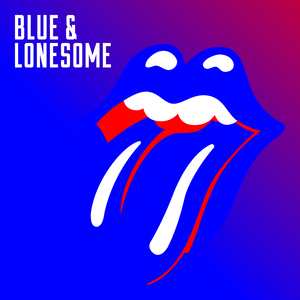
Rolling Stones 49: Blue & Lonesome

Another constant in the history of the Rolling Stones—post-‘80s, anyway—is that anytime Keith goes out on his own, Mick reels him in to do another Stones album. Why else would they be cutting tracks a full ten years after their last studio full-length? If the liner notes are to be believed, a detour from those recent sessions led to spirited takes on blues covers from their personal libraries, and within three days, they had an album’s worth of tracks, which they then sat on for nearly a full year before releasing them as Blue & Lonesome. (It’s not like it took all that time to design the cover.)

On paper it sounds great: the Stones playing the blues, just like they started out. Some are slow, some are dirty, all have energy; take the spirit of “Black Limousine” from Tattoo You and you get the general feeling. Every now and then there’s an echo of their first albums, just not as tinny. If, again, the liner notes are to be believed, these were all single takes, with no overdubs. And if Mick really managed to nail his vocals in one pass, we owe the guy an apology, since he sounds really good here. (We have no such questions about his harp ability; the kid can blow, even at 72. These guys are now older than the legends they grew up idolizing.)

It’s the four full-time Stones here, with Darryl Jones relegated to the sub-credits for each tune, along with Chuck Leavell and Matt Clifford on various keyboards, and Eric Clapton on two songs wherein you have to really pay attention to pick him out. The song choices are particularly commendable, being mostly lesser-known compositions by either or associated with Little Walter, Howlin’ Wolf, Willie Dixon, Otis Rush, Magic Sam, Jimmy Reed and the like. A track-by-track rundown doesn’t seem necessary, but suffice it to say that the songs don’t all sound alike. “Just Your Fool” is a snappy starter, “Commit A Crime” opens with the familiar drum fill from “Love Is Strong”, and the title track spells out the ampersand. “All Of Your Love” isn’t exactly like the one familiar to Clapton and Aerosmith fans, though “I Can’t Quit You Baby” is likely to start arguments among those who know Zeppelin. While relatively short, “Hoo Doo Blues” plods a bit, but “Little Rain” accomplishes more with its own slow tempo. (Suffice it also to say that Ian Stewart, their original piano player and long-suffering road manager, would’ve loved this album.)

There must be people out there still hoping that the Stones will release another classic album before they’ve all left us, and there are just as many people, if not more, who figure the band has nothing to prove, and wonder why they bother. (Well, besides money.) If we take Blue & Lonesome on the basis for what it is—12 blues covers by one of the best-ever British blues bands—it’s a good album. It’s not embarrassing in the least, nobody’s chasing any contemporary trend, and Charlie’s sounding good tonight, inny?

Rolling Stones Blue & Lonesome (2016)—3

Tuesday, November 3, 2015

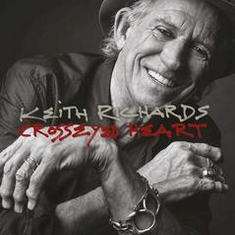
Keith Richards 4: Crosseyed Heart

Decades after the mid-‘80s derailment and subsequent realigning of the Stones, both Mick and Keith have kept their solo output minimal. But on the four studio albums plus the handful of new songs stuck onto anniversary compilations, Keith’s lead vocals have generally been the standouts, and the songs that have endured. Being allowed a regular outlet likely tempered his need to record on his own, but perhaps the Stones’ reliance on older material played live to cash in on whatever anniversary they were celebrating inspired him to call Steve Jordan and reunite the X-Pensive Winos.

However, while a Keith vocal is generally a welcome respite from Mick, Crosseyed Heart doesn’t prove that all Keith, all the time is the answer. Cut down to maybe ten songs, the album would be much stronger.

The title track is an engaging snippet of acoustic blues, right down to its charming conclusion. “Heartstopper” and “Trouble” pile in like you hoped they would. “Robbed Blind” is something of a country weeper, complete with pedal steel and Keith himself on piano. (We checked the credits, thinking it just had to be somebody else.) “Nothing On Me” could be a single in another era, though the lead guitar going throughout should have been pulled back a bit. He goes all out reggae on a cover of “Love Overdue”, giving up a lyrical influence for “All About You” in the process. Late saxman Bobby Keys is featured on “Blues In The Morning”, a great blast of Chuck Berry via Chicago, while “Illusion” gets a surprise lift from Norah Jones. Towards the end of the album, “Substantial Damage” bubbles with funk and “Lover’s Plea” melds reggae and soul.

That leaves “Amnesia”, “Suspicious” and “Something For Nothing”—good, but not up to the level of their brothers. Likewise, “Just A Gift” is one slow song too many. While he avoids the clichĆ© of closing with “Goodnight Irene”, this albeit pleasant rendition doesn’t add much to the song’s history.

Again, most of Crosseyed Heart is enjoyable, and if it scares Mick into rocking out again, then maybe we haven’t heard the last of the Stones. And since there’s no better place to mention it, even a casual listen to what passes for country music these days reveals a debt to Keith’s riffs. Whether it’s a guy with a twang or a blonde with a yodel, today’s country sounds like either a Stones ripoff or pancakes and sausage.

Keith Richards Crosseyed Heart (2015)—3

Monday, June 24, 2013

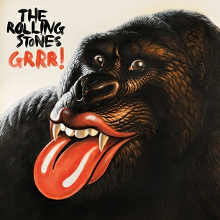
Rolling Stones 48: GRRR!

With their usual impeccable timing, the Stones took the easy bait of celebrating fifty years as a commercial commodity by commencing a variety of anniversary celebrations. Only ten years after their previous career retrospective—with just one studio album in between to add to the pantheon, unless you count the completed songs added to Exile and Some Girls, which we don’t—the band’s catalog was anthologized again in the form of GRRR! We still can’t decide what’s worse, the title or the cover, though we’re tempted to call it ZZZZ… instead.

Of course, it was made available in several configurations—a double-disc with 40 tracks, a triple-disc with 50, and a super deluxe version with 80 tracks on four discs, plus a bonus disc with the five songs from their first demo session, sounding identical to the bootleg that’s been out there, complete with pops and speed fluctuations. (And because it was considered the cool thing to do, a vinyl EP offered four songs from a BBC session. Here’s a stupid idea—why not offer the two new tracks, the demo tracks and the BBC tracks on their own as a single disc? Anyone?)

Because Forty Licks did a pretty decent job of summarizing the band already, it’s our duty to inform that the two-disc version lacks eight songs, the three-disc five, and the five-disc three from that collection, the common three being the three of the four 2002 songs. Of course, GRRR! in all its permutations offers two, count ‘em, two new songs. “Doom And Gloom” makes some clumsy rhymes and references to foreign wars, but it’s tough to worry over Mick “eating dirt [and] living on the side of the road” when you’ve shelled out $125 for the super deluxe edition of his band’s eleventh hits collection. “One More Shot” is a little better, since it sounds more like a stock Keith riff and you can actually hear Charlie’s drums.

GRRR! rates as high as it does because of the quality of the music, some of the best rock ‘n roll, really, of the last fifty years. Any of the three versions should satisfy anyone looking to add a pile of Stones to their CD racks if they don’t have any yet. But the mind reels as to what might happen come 2022…

…And as it turned out, they did release a few more archival live albums that year, one of which was excellent. Maybe that’s why they chose to wait a year to celebrate the tenth anniversary of the 50th anniversary tour with GRRR Live!, which presented the audio (and DVD or Blu-ray if you bought one of the CD versions but not the vinyl) of a show originally broadcast on pay-per-view. It’s no better or worse than any of the seemingly endless live souvenirs from this century, except that the focus seems to be on various celebrity guests. Lady Gaga mewls all over “Gimme Shelter”, John Mayer and Gary Clark Jr. muddy up an already sludgy version of Freddie King’s “Going Down” (the only song here not on any other live Stones album, unless you count “Doom And Gloom” and “One More Shot”), the Black Keys join on “Who Do You Love”, and Bruce Springsteen happily growls his way through “Tumbling Dice”. Unless you’re a big fan of the Choir of Trinity Wall Street, which augments “You Can’t Always Get What You Want”, the highlight would be Mick Taylor coming back for a 12-minute “Midnight Rambler”, except that he’s competing with two other guitarists in the mix and Jagger enjoys baiting the crowd on the slow break too much.

The Rolling Stones GRRR! (2012)—4
The Rolling Stones
GRRR Live! (2023)—3

Friday, May 24, 2013

Rolling Stones 47: Light The Fuse

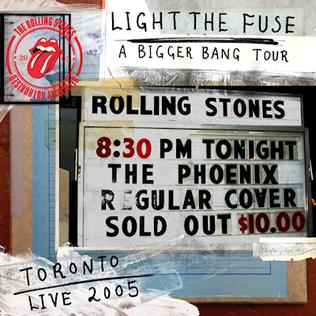
While gearing up for various celebrations of their 50th anniversary, the Stones quietly made some more official bootlegs available. Two were expansions of already documented tours, making Light The Fuse one of the more enticing titles. This was a club show to kick off their 2005 tour supporting A Bigger Bang, recorded at a Toronto theater with capacity of about a thousand. (Not the same place that spawned side three of Love You Live, a show that would have to wait another ten years to be put out.)

The club atmosphere is good for them, as it removes the distractions of the spectacle so common to Stones tours. Here they’re just playing, opening up with the new “Rough Justice”, and going back for a sloppy “Live With Me” and a slower, dirtier “19th Nervous Breakdown”. Any doubt that Charlie can’t keep up is dispelled by a sharp take on “She’s So Cold”, followed by “Dead Flowers”. With audible interplay between the instruments, “Back Of My Hand” works a lot better in this setting than it did on the album.

About halfway through Mick thanks the crowd and the city, and introduces all the people on stage, including the singers and horn players who’d turned up during “Ain’t Too Proud To Beg”. That provides a nice spot for Keith to sing “Infamy”, which stumbles to a close, and Mick comes back to yell “Oh No, Not You Again”. Things turn left for covers of “Get Up Stand Up” and “Mr. Pitiful”. Then it’s “Tumbling Dice”, “Brown Sugar”, a tease, and “Jumpin’ Jack Flash”.

We pick on these guys a lot here, but it’s examples like Light The Fuse that demonstrate why they’re still worth having around. When it comes right down to it, they’re a pretty decent band.

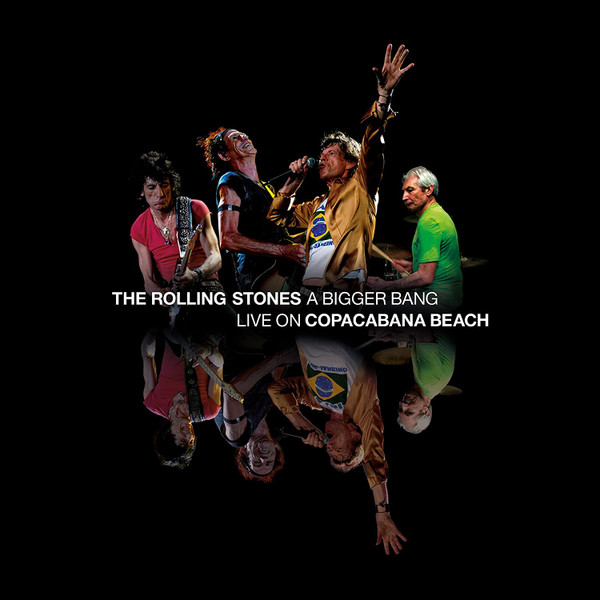
Since we gotta talk about it somewhere, the Archive Download series would peter out in time, but vault releases would continue with multiple concerts from well-mined tours repackaged as CD packages with DVDs and/or Blu-rays and of course multicolored vinyl versions. The 21st century was eventually acknowledged with a rejig of one of the shows included in an earlier DVD box set, this one a free concert in Rio de Janeiro in front of an audience of over a million and a half. With the exception of a few songs from the new album, the set is pretty much the same as ever, with the exception of a cover of “The Night Time Is The Right Time”, featuring Lisa Fischer.

Rolling Stones Light The Fuse: A Bigger Bang Tour (2012)—
CD equivalent: none; download only
The Rolling Stones A Bigger Bang Live On Copacabana Beach (2021)—3

Wednesday, January 23, 2013

Rolling Stones 46: L.A. Friday

The official Stones Archive download series rolled on, following the initial Brussels Affair with a show previously mined for the Still Life album. They kept things vintage and interesting with L.A. Friday, a remaster of a mistitled bootleg from the summer tour that coincided with the Made In The Shade compilation. Notable for the first appearances of Ron Wood with the band, it shares some sequencing with Love You Live, which was mostly recorded a year later. But it’s not a duplicate at all. L.A. Friday offers a complete show—nearly two and a half hours, downloadable to two discs.

The band is generally terrific, and the sound is incredible. Fifteen minutes of “You Can’t Always Get What You Want” is a bit much, but if Keith can stay awake, so can we. The law of equal time states that a “Midnight Rambler” of equal length is required, but that one had better built-in dynamics anyway. Things don’t threaten to go off the rails until the second verse of “Happy”, but you can always count on Charlie to restore order. (Mick sounds a little drunk, though; he finds his sea legs by the time “Fingerprint File” rolls around.) There’s a slight detour in the middle of the second half, where Billy Preston gets to do two of his own songs, with the band backing him up. Ronnie is no Mick Taylor, but he’s in tune, and listening to him is more pleasant than watching him.

When L.A. Friday cooks, it’s excellent, but the slower songs don’t translate as well in the same environment. But the boys made sure to end the show loud and fast—despite the out-of-sync percussion that threatens to capsize “Sympathy For The Devil”, removing the menace and turning it into a ten-minute Rio shuffle. The set is still that much of a notch above Love You Live. The price was right, too. (Those who had to have a physical copy only had to wait a couple of years before it was officially released in a package with a DVD, filmed a different night but synced to the audio.)

Rolling Stones L.A. Friday (Live 1975) (2012)—

Friday, May 18, 2012

Rolling Stones 45: Brussels Affair

At this late date, fifty years after their emergence under the name, the only pressure the Rolling Stones answer to is their own. The gap between new albums grows longer, and why shouldn’t it, since they can gussy up unfinished tracks to bolster reissued classic albums.

While it’s been decades since anyone’s called the Stones “cutting-edge”, they have attempted to stay with current marketing trends, even building up Twitter and Facebook presences. Their official website gets the occasional overhaul, though the on-site record reviews are still pretty skewed. An even more daring move began with an online marketplace where they sold memorabilia, apparel and, amazingly, authorized bootlegs of classic live shows, newly remastered by sonic wizard Bob Clearmountain, and downloadable for less than ten bucks.

The first such release, Brussels Affair (Live 1973), takes its name from several vinyl boots recorded on that 1973 tour; thankfully, we can enjoy it without seeing Mick ride the inflatable phallus that decorated “Star Star”. This authorized version does not replicate any of those, opting to offer most of the late show in that Belgian city, with a few substitutes from the early show, to provide a complete set. With four years and three albums under their belts since Get Yer Ya-Ya’s Out!, the band is tight and confident, giving Mick Taylor plenty of space to show off from his corner. The sound gets an additional boost from Billy Preston and a two-man horn section, none of whom get in the way.

“Brown Sugar” is strong opener, followed by a snaky “Gimme Shelter”. Amazingly, Mick steps aside for Keith to yell “Happy” only three songs in. “Tumbling Dice” is well-played, and we never thought we’d miss the chick singers. A mini-set from Goats Head Soup begins with “Star Star” (introduced by its actual title), keeping going with “Dancing With Mr. D” and “Doo Doo Doo Doo Doo (Heartbreaker)”. Mick consistently exhorts the crowd in French, who go nuts for “Angie”, delivered electric but just as slow.

As long as they’re staying mellow, an eleven-minute “You Can’t Always Get What You Want” never drags, thanks to the stretched-out solos in the middle. Similarly, nearly thirteen minutes of “Midnight Rambler” is an exercise in dynamics. And from there it’s all about the rock and/or the hits: “Honky Tonk Women”, “All Down The Line”, “Rip This Joint”, “Jumpin’ Jack Flash” and “Street Fighting Man”.

Had Brussels Affair been released on the heels of the original tour, we would have lambasted them for their laziness. Presented this way, marketed to fans at a bargain price—though there are the expected complaints about lossy sound formats and distribution—it boded well for a lucrative and enlightening series, had it continued past the first handful. This far on, it’s still preferable to the CD version of Ladies & Gentlemen: The Rolling Stones, the soundtrack to the 1974 concert film from the 1972 tour that snuck out to the market in 2017.

While other entries in the Stones Archive series were made widely available on physical media, Brussels Affair remained elusive, probably because there was no visual artifact. It was included in a pricey Japanese box set, but had to wait until 2020 for a more accessible release, as part of the upgrade of Goats Head Soup, via streaming or as part of the Super Deluxe Edition on CD and vinyl. A good place for it.

The Rolling Stones Brussels Affair (Live 1973) (2011)—
CD availability: Goats Head Soup Super Deluxe Edition

Sunday, April 15, 2012

Mick Jagger 7: SuperHeavy

Here at Everybody’s Dummy we like to think we’re at least up to date on the musical activities of artists we’ve reviewed in bulk. That’s no excuse for why we remain oblivious to so, so many other things, but somehow this alleged supergroup featuring Mick Jagger completely passed us by. Hands up if you’d heard of—much less heard—SuperHeavy before reading this paragraph. Okay, good to know.

The project may have descended from Mick’s soundtrack to the Alfie remake, which was a collaboration with the mildly parasitic David A. Stewart and featured contributions from British belter Joss Stone. This odd trio got together a few years later with Damian “Jr. Gong” Marley (Bob’s youngest acknowledged offspring) and composer A.R. Rahman, probably most famous for the Slumdog Millionaire soundtrack. The result was an album that mixed trip-hop with Jamaican and Indian influences, which the Los Angeles Times came just short of calling a “cross-cultural trainwreck.” (Rolling Stone loved it, of course.)

We don’t want to begrudge Mick trying to stretch, but reggae was always Keith’s territory. Wisely, he lets Damian rattle off the high-speed toasting, and Joss does most of the overemoting. But he himself is mostly reduced to yelling melodically instead of singing, as displayed on “One Day One Night”. “Energy” certainly displays some Stonesy grit once you get past the synths, but “I Can’t Take It No More” is another socio-political rant from one of the world’s richest men, and a knight to boot, mostly notable for Joss’s opening f-bomb. (She’s more suited to the humanist plea of “World Keeps Turning”, if you like that sort of thing.) “Never Gonna Change” is a country-gospel near-weeper sung all by himself, and he sure gets into enunciating the Sanskrit of “Satyameva Jayathe”.

Those who have to have more would spring for the deluxe edition, which boasts four extra tracks. But overall, SuperHeavy is neither super nor heavy, and that’s probably why they haven’t been heard from since.

SuperHeavy SuperHeavy (2011)—2

Saturday, April 14, 2012

Keith Richards 3: Vintage Vinos

One of the more enjoyable rock ‘n roll memoirs of any era was Life by Keith Richards, wherein he frankly rambled about all the years most people were surprised he could remember so well, much less at all. Alternately defiant and humble, it reminded everyone who already agreed that he was and would always be cooler than Mick.

A retrospective album was released as a tie-in, but rather than simply collect all his lead vocals from various Stones album, Vintage Vinos concentrates on the two studio albums by his X-Pensive Winos side band, with a few from the live album to split the program. To say the set leans heavily on Talk Is Cheap is putting it mildly, with all but one song from side one, and one from side two. By contrast, three songs come from Main Offender, and the live songs provide a sideways nod to the Stones via “Too Rude”, “Time Is On My Side”, “Happy”, and “Connection”. The big draw and only rarity is “Hurricane”, a short acoustic tune credited to Jagger/Richards and performed with Ron Wood, supposedly from the Forty Licks era, previously available as a giveaway.

Musically, of course, it’s solid; the photos are nice and the booklet even includes lyrics. Still, it’s a missed opportunity. By now diehard fans have compiled their own “Keith Sings” mix tapes and CDs covering his best lead vocals on Stones albums, but certainly any “best of Keith” should include his cover of Chuck Berry’s “Run Rudolph Run”, as well as its B-sides “Pressure Drop” and “The Harder They Come”. Then there’s “Key To The Highway”, which was a Japanese bonus track for Main Offender and B-side elsewhere, and “Oh Lord, Don't Let Them Drop That Atomic Bomb On Me” from a Charles Mingus tribute. Operators are standing by.

Keith Richards Vintage Vinos (2010)—

Monday, March 5, 2012

Rolling Stones 44: Shine A Light

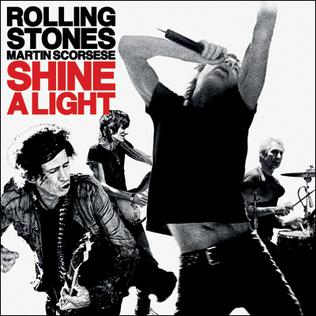
Having had fun with his recent Bob Dylan project, Martin Scorsese decided to reclaim his throne as king of the rockumentary with a Stones concert. And as long as there was a movie, why not issue a soundtrack? After all, it had been only four years since the last Stones live album.

We haven’t decided if the credit for “digital editing” refers to any post-dubbing, and it’s also not clear why Bob Clearmountain needed to mix the album at two different studios. But Shine A Light gets a slight edge over their previous five live albums in that the Beacon Theater setting is more intimate than any stadium, and the energy is more apparent. The horn section and vocalists don’t get in the way, and Darryl Jones’ bass manages to be heard. Charlie crackles as ever, even trying to add some life to “As Tears Go By”. Mick uses the f-word a lot, and has fun with “Faraway Eyes”. The biggest cheers are saved for Keith’s harmonizing. He sings three songs on his own, and even engages the crowd with conversation and a mention of the X-pensive Winos, which must have thrilled Mick no end. Unfortunately, whoever’s in charge decided that the greatest rock ‘n roll band in the world shouldn’t be left to stand on their own, so the album is graced by the presence of three so-called special guests: Buddy Guy, which makes sense; Jack White, which is a stretch; and Christina Aguilera, which is a crime to humanity.

Despite the performances of over half the songs from A Bigger Bang on their current tour, the newest songs on Shine A Light were first released in 1983. And to their credit, only four songs are repeated from Live Licks (a strategy Paul McCartney should consider for his next live album). There’s a single-disc version, but what fan’s gonna settle for that?

Rolling Stones Shine A Light (2008)—3

Sunday, March 4, 2012

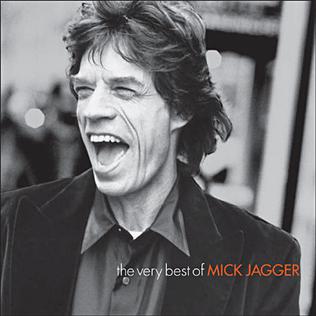
Mick Jagger 6: The Very Best Of Mick Jagger

Still trying to prove that he’s got the biggest set of balls in the business, The Very Best Of Mick Jagger is limited to the man’s less-than-stellar solo career. Granted, Keith’s own strange retrospective would include Stones songs performed live by the X-Pensive Winos, but he didn’t use such a pointed title. The one track here that ranks with the Stones’ best is “Memo From Turner”, his 1970 single from the Performance film, and no, that’s not the Stones playing on it.

That said, it’s a half-decent set, with rockers like “God Gave Me Everything”, “Put Me In The Trash”, and “Don’t Tear Me Up”, but you also have to deal with “Just Another Night”, “Let’s Work”, “Sweet Thing”, and the execrable version of “Dancing In The Street” with David Bowie. “Joy” is probably included because Bono’s on it, just as “Old Habits Die Hard” negates the need for the Alfie soundtrack.

Other rarities are included to entice the weary if not wary. “Charmed Life” was left over from Wandering Spirit, and should have stayed there, but “Checking Up On My Baby” comes from the same period, and a good blues workout. “(You Gotta Walk And) Don’t Look Back” is a duet with Peter Tosh from the latter’s Glimmer Twins-produced Bush Doctor, but the big carrot is the belated appearance of the notorious “Too Many Cooks”. This middling funk tune comes from one of the more sober stretches in John Lennon’s lost weekend, captured halfway through the sessions for a Harry Nilsson album.

So the good outweighs the bad on The Very Best Of Mick Jagger, and whoever decided “Evening Gown” should close the set is an absolute genius. It was also available as a set with a DVD including interviews and some of his videos. But beyond that…

Mick Jagger The Very Best Of Mick Jagger (2007)—

Wednesday, February 15, 2012

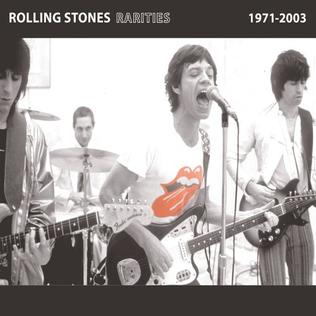
Rolling Stones 43: Rarities

Allegedly, following the success of the Beatles’ Anthology multimedia franchise, the Rolling Stones attempted to tell their own, similar story, but the self-interview process became such a hassle that they only went as far as publishing a coffee-table book. This was disappointing for fans, who hoped that the Stones would finally open the vaults and compile their own Anthology-style series of CDs chock full of outtakes and rarities.

However, that’s not how the Stones roll. (Sorry.) They’ve always looked to older, unfinished tracks when completing an album, as demonstrated by certain selections on Sticky Fingers and the whole of Tattoo You. Only more recently have they chosen to beef up a deluxe reissue of one of their albums with newly completed tracks from the same sessions, Exile On Main Street and Some Girls having received such treatment.

But as the contents of dozens of bootlegs can attest, the Stones have plenty of stuff in the vaults, and the band is just like the Beatles in wanting to preserve their version of their legacy. The reluctance to unveil anything from the ‘60s may be ascribed to the fact that they don’t own the publishing; most of the B-sides from the London years have already been collected elsewhere. For years, a handful of obscurities from the ‘70s and ‘80s stayed unalbumized, with the exception of those that had surfaced on the ultra-rare Collectibles disc in the limited-edition Flashpoint package.

This made the appearance of Rarities (1971-2003), mere weeks after A Bigger Bang came out, so surprising. The title is debatable, especially considering all the more obvious candidates that were left off. Someone had the good taste to include the live “Let It Rock” and “Through The Lonely Nights”, two excellent B-sides, on an album for the first time. But that doesn’t make up for the exclusion of “Think I’m Going Mad”, “The Storm”, “So Young”, “Jump On Top Of Me”, and “I Wanna Drive”. “Everything Is Turning To Gold” had already appeared on both Sucking In The Seventies and the Collectibles disc, but was left off here. Even “Cook Cook Blues” had been included on Collectibles. Any of those would have been preferred to repeats from Stripped and any number of remixes.

The point behind a “rarities” collection is to entice the consumer by filling in the blanks, and Rarities (1971-2003) fails to do that. (In an extremely petty move, Bill Wyman was cropped out of the Some Girls-era photos in the package, despite having performed on half of the tracks.) Musically the disc has its moments, but it hardly fulfills any fan’s dream.

Rolling Stones Rarities (1971-2003) (2005)—

Wednesday, January 18, 2012

Rolling Stones 42: A Bigger Bang

The last really solid Stones album was the hodgepodge of Tattoo You, from the days when they put out a new album every year or two. Wavering quality can be forgiven in a tight release schedule, so when eight years—that’s right, eight, the equivalent of two presidential terms—go by between studio albums, one hopes those geezers have something worth hearing. Of course, every album since their mid-‘80s hiatus had been heralded with PR to the effect that they’ve “got the old classic sound back”. Each of their last few has admittedly had their moments, while having to sit alongside with Mick’s regular attempts to sound “contemporary”.

On A Bigger Bang, the old bastards do keep it simple, mostly by not being afraid to sound like themselves. Most tracks were supposedly started by the trio of Mick, Keith and Charlie; Ronnie added some guitar after the fact, and any bass not later provided by Darryl Jones was handled by Mick or Keith. For the most part, the album does rock, without any clutter. “Rough Justice”, all two chords of it, was the best choice for a single. “Let Me Down Slow” and “It Won’t Take Long” are just as straightforward, and when they bring in the funk for “Rain Fall Down”, it’s a nice change of pace, despite some of the lyrics (“the bankers are wankers every Thursday night/They just vomit on the ground”. Huh?).

The obligatory ballad comes in “Streets Of Love”, and it’s not as bad as it threatens to be. “Back Of My Hand” is an interminable Delta blues number that according to the credits is mostly Mick. Luckily, “She Saw Me Coming” sounds like it was a long of fun to play in the studio. But the lovelorn lyrics of “Biggest Mistake” don’t ring true coming out of Mick’s mouth.

Keith finally sings lead on “This Place Is Empty”; it’s amazing how his voice has improved by taking it easy, though we’d love to know if anyone feels well and truly seduced when he coos “bare your breasts”. “Oh No, Not You Again” (which Charlie joked should have been the album’s title) gives Mick a chance to yell some of the dirty words censored off of earlier albums, but at this late date the shock value is nonexistent. Outside of rocking, “Dangerous Beauty” could either be about a romantic conquest or a public figure. “Laugh, I Nearly Died” slows things down to a sinuous groove that, dare we say, could be right out of 1978.

“Sweet Neo Con” got all the attention at the time, with its anti-Bush lyrics. The song itself is decent, with some nice twists, but the recently dubbed Sir Mick really shouldn’t try to be political. (And someone should have mixed out the harmonica soloing through half the song.) The wordy “Look What The Cat Dragged In” pulls out all the rhythmic stops they last touched on “Undercover Of The Night”. It’s odd to hear a man who once extolled the virtues of teenage girls now berating the same; I guess it’s different when they’re your own kids. “Driving Too Fast” keeps up the pace, and Keith gets the last word again on the underwhelming “Infamy” (as in “you got it in for me”; get it?) and there’s that harmonica again.

At over an hour, A Bigger Bang qualifies as another double album that with just the right pruning could have been a solid forty-minute program. It starts well, and it’s not a waste of plastic, but they’ve yet to experience the late-career renaissance that some of their peers have enjoyed. One wonders if they can, or will.

The Rolling Stones A Bigger Bang (2005)—3

Wednesday, November 16, 2011

Rolling Stones 41: Live Licks

In an amazing turn of events, the Stones broke pattern somewhat by issuing a live album as a follow-up to a hits collection, which itself had followed a live album! They’re nothing if not innovative.

Live Licks gets its title from the tour supporting the Forty Licks collection, and it’s to their credit that it’s not simply all the songs from that album played live. That would be silly, of course. They only pulled that trick for the first disc, which serves up eleven of their Classic Rock radio staples, the newest of which was over twenty years old, with the key addition of Sheryl Crow on “Honky Tonk Women”. (We’ll pause while you try to contain your excitement.) And the man who said he wouldn’t be singing “Satisfaction” in his forties is doing it at 60.

The second disc is slightly more interesting, with three—three!—solo vocals by Keith, some deeper catalog selections, a few choice covers and a guest appearance by gargantuan legend Solomon Burke on “Everybody Needs Somebody To Love”, to which most people will respond, “Hey, they’re doing a Blues Brothers song.” It’s still the more surprising, if anything, of the two discs.

Live Licks sounds good, of course, with technology helping Chuck Leavell and Bobby Keys replicate the sounds of the records. The boys sound great and the band is tight. But by now we’ve been used to seeing the “post-production” credit in the liner notes of a live Stones album, so who knows how much tweaking happened between the performances and the CD pressing? It remains just another souvenir, and one that certainly wasn’t purchased by everyone who’d bought a ticket on this crazy 14-month tour. If you were there, you probably had a great time. If not, the excitement doesn’t likely surface.

And what’s a Stones album without a little controversy? To ensure their stature as the world’s favorite dirty old men next to Hugh Hefner, Live Licks was released in some of the more liberated countries worldwide with an uncensored cover, showing the lovely lady riding the tongue topless. In the US we were left to wonder what was under the bikini. Hot-cha!

This wasn’t the only souvenir of this particular jaunt, as a year before a DVD box set called Four Flicks sold exclusively through the Best Buy chain contained three different concerts in three separate venues—an arena, a stadium, and a theatre, which was the other gimmick of the tour. Two decades on, after they’d begun regularly repackaging concert video from the post-Wyman years as live albums, Licked Live In NYC offered the audio from the set’s Madison Square Garden portion, as originally broadcast on HBO, which also happens to include the aforementioned Sheryl Crow cameo. Coming soon after the very welcome release of the El Mocambo set from 1977, this was not only overkill, but a big step back in the creativity department. Even more maddening is that it’s pretty good, set-wise and performance-wise.

Two years after that, Live At The Wiltern presented a theater-sized show from a couple months before that had also been sourced for Live Licks. The thrust of this selection from the vaults was that it sported deeper dives into the catalog, which was one of the more unique aspects of the tour. Some of these so-called rarities included “Live With Me”, “Hand Of Fate”, “Dance Part 1”, “Stray Cat Blues”, “No Expectations”, “Going To A Go-Go” by a thin margin, and others that were already represented on the other two albums above. (Solomon Burke’s guest appearance is here as well.) Being a more intimate venue, with excellent separation of Woody’s guitar on the left and Keith on the right—albeit with backup singers and a full horn section—it might be the keeper of the three.

Rolling Stones Live Licks (2004)—3
Rolling Stones
Licked Live In NYC (2022)—3
The Rolling Stones
Live At The Wiltern (2024)—3

Thursday, June 30, 2011

Mick Jagger 5: Alfie

While it’s easy to forget that there was something of a remake of the film Alfie with Jude Law in the title role, it’s even easier to overlook that the soundtrack was mostly a collaboration between David A. Stewart and Mick Jagger. But there was, and there is, and we listen so you might not have to.

Most of the album centers around two songs: “Old Habits Die Hard” and “Blind Leading The Blind”, both decent mid-tempo tracks that appear in multiple versions. They’re good, but a bit generic, so even the songs that aren’t those two sound pretty much like them. “Let’s Make It Up” mostly limps along, and “Lonely Without You (This Christmas)”, a duet with Joss Stone, is hardly going to top anyone’s go-to yuletide playlist. (She also contributes a remake of the original Bacharach and David title song.) There are a few instrumental grooves over which Mick either doo-doos or blows a harmonica, so perhaps we can be thankful he didn’t try to write words for them.

Alfie is not Primitive Cool II, which is good. To Mick’s credit, there’s nothing very embarrassing about this album, and he wisely steers far away from the one hip-hop track. Ultimately, it’s recommended for any connoisseur of rom-coms starring Jude Law.

Music From The Motion Picture Alfie (2004)—3

Monday, April 25, 2011

Rolling Stones 40: Forty Licks

Around the time that their ABKCO catalog got a major overhaul, with handsome digipacks, improved sound and, in some cases, SACD layers for the audiophile, somebody at the Stones office got thinking. Since they weren’t doing much else anyway, why shouldn’t the Stones put out another hits collection on their current label? For a twist, maybe it could encompass their entire career, and how about a couple of new songs to entice the wary? With a really suggestive title, like Forty Licks or something? And maybe even use it to launch an official website?

And that’s just what they did. The forty songs here are collected to commemorate the Stones’ fortieth anniversary. It should surprise nobody that the earliest twenty tracks cover their first ten years, and the remaining twenty (four of which are indeed brand new) cover the other thirty years.

Disc one is the first repackaging in a while of the ABKCO-owned material, and while it doesn’t quite replicate Hot Rocks, most of it is there. (And as long as we’re keeping score, it’s got only half of Big Hits and all but two from Through The Past, Darkly.) Disc two is much more traveled, sporting six songs from Made In The Shade, ten from Rewind and the 374th appearances of “Brown Sugar” and “Wild Horses”.

Of course, it’s the new songs that generate the most interest. “Don’t Stop” was the single, an inoffensive rocker, as was “Stealing My Heart”. “Keys To Your Love” brings back the old falsetto, but for many, Keith’s slow burner “Losing My Touch” was the winner.

Each disc is sequenced non-chronologically, but nothing from either “era” mixes with a stepsibling. Also, as a compromise, “Wild Horses” is on the ABKCO disc, while “Brown Sugar” is on the post-1971 disc. Forty Licks delivers what it promises, giving a nice overview of what made the boys great. But part of us still thinks Forty Lashes would have been just as fitting a title.

Rolling Stones Forty Licks (2002)—4