Showing posts with label 2005. Show all posts

Tuesday, November 10, 2020

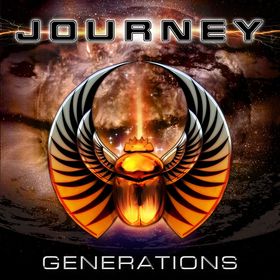
Journey 13: Generations

Steve Augeri had a thankless task replacing Steve Perry in Journey, but money is money and tour they did. While they made progress by maintaining the same lineup for two albums in a row, Generations muddles their aim by farming out four of the songs to every other band member. At least, they kept the songwriting in house for the most part. They even brought back Kevin Elson to produce.

The album continues Neal Schon’s quest for respect as a shredder, with more emphasis on power and less on ballads. Brevity is barely considered with most songs over five minutes; after all, don’t we wanna hear all that fretwork?

“Faith In The Heartland” is the rousing anthemic opener, and a good show case for Augeri, though there is a little of Perry’s asides just before the fade. Neal and Jonathan Cain didn’t notice how much the verse of “The Place In Your Heart” resembles that of “Ask The Lonely”, but they can still write a chorus. Drummer Dean Castronovo takes over the mike for the lackluster “A Better Life”, and he does a pretty good Steve Augeri impression, slightly better than Jonathan mewling his way through “Every Generation”. Augeri takes control for two songs he wrote on his own, the tender-but-barbed “Butterfly (She Flies Alone)” and the more adventurously metered “Believe”.

“Knowing That You Love Me” provides the requisite dark love song, kicked aside by the more frenetic war commentary in “Out Of Harms [sic] Way”. As if that wasn’t fast enough, Neal revives “In Self-Defense” from his second collaboration with Jan Hammer, a song incidentally co-written with Steve Perry. “Better Together” is a defiant message to the haters, and one they’d need before handing “Gone Crazy” over to Ross Valory. The classic Journey sound returns for “Beyond The Clouds”, and we still can’t figure out if she’s dead or just dumped him.

The band kindly gave a copy of Generations to anyone who attended one of their concerts that summer, but added the generic “Never Too Late”, sung by Dean, as a bonus to the retail release. Meanwhile, Japan got the exclusive extra of Jonathan’s “Pride Of The Family”, probably the only song in this century that quotes 38 Special.

This album will be easily embraced by the already converted; nobody else need bother.

Journey Generations (2005)—3

Friday, December 27, 2019

Journey 11: Greatest Hits Live

Unlike the Eagles, Fleetwood Mac, and other arena bands who reunited in the ‘90s, Journey did not tour to support their reunion album, which pissed off everyone in the band who wasn’t Steve Perry. Holograms hadn’t become an onstage thing yet, so Columbia did the next best thing in their power to cash in while they still could.

Greatest Hits Live cobbled a disc’s worth of live recordings from the Escape and Frontiers tours, effectively presenting a concert document in the form of a sequel to Captured. Some songs are repeated from that album, but Jonathan Cain did his homework and lived up to the challenge of replicating parts he didn’t write. The sequence is very much focused on the hits, but it is faithful to the shows in that “Lights” goes into “Stay Awhile” and “Lovin’, Touchin’, Squeezin’” is dragged out to seven minutes.

The liner notes made a big deal of saying how the tapes were “discovered” by chance and had to be baked before they deteriorated completely, but some of the music had indeed appeared before. This was proven a handful of years later when a complete show from 1981, which got lots of airtime in the early days of MTV, was cleaned up for an official DVD, released with a companion CD that was eventually made available on its own. Live in Houston 1981: The Escape Tour gets a slight edge over its half-brother, being that the sequence is true and Steve’s inter-song “ad-libs” make better sense in context. You also get extended solo showcases from Jonathan, Neal Schon, and Steve Smith. The CD even has something the DVD doesn’t, that being a live version of “Hopelessly In Love (The Party’s Over)”. The cover art isn’t too imaginative, but at least it’s not as baffling as the scary bird lady who adorns Greatest Hits Live.

Journey Greatest Hits Live (1998)—3
Journey
Live in Houston 1981: The Escape Tour (2005)—

Tuesday, November 19, 2019

Mary Hopkin 4: Live At The Royal Festival Hall

Having had enough of the pop music industry, and already starting a family, Mary Hopkin kept mostly to herself over the decades, surfacing occasionally on a background vocal or an album on a small label. Any Apple reissue brought her attention, and once her kids were grown they became extremely determined to promote their mum. One of the first CDs released on the Mary Hopkin Music label was a concert performed in the wake of Earth Song/Ocean Song, opening for headliner Ralph McTell.

It’s an eclectic set, touching on some of the hits but mostly on the folk songs she loved, such as “Silver Dagger”, “Once I Had A Sweetheart”, “Both Sides Now”, and “Morning Is Broken”. Acoustic guitars, plus Danny Thompson on upright bass, and a small string quartet back her gently. Just as her delivery is confident, her banter in between is witty and utterly charming. Speaking of which, one can’t help but smile as she and husband Tony Visconti duet on the Beatles’ “If I Fell”. She even does “Those Were The Days”, she says, because her in-laws had “flown in from New York” to hear it.

The sound quality is a little wonky on the last two songs, but her voice—that sweet, angelic voice—is clear as a blue sky, and shines through. Live At The Royal Festival Hall 1972 is a wonderful discovery for anyone who enjoyed her brief pop career.

Mary Hopkin Live At The Royal Festival Hall 1972 (2005)—

Tuesday, November 5, 2019

Joni Mitchell 22: Millennial Compilations

Although seemingly retired, Joni kept her hand in the marketplace with not one, nor two, but three thematic retrospective sets released over a period of nine months. Each follows something of a theme, building on the mild renaissance her career had experienced; the first two continued to use her own paintings for the cover art.

First came The Beginning Of Survival, which took its title from a letter written by a Native American chief to “the Great Chief in Washington” a century before, reproduced in the package. Released in an election year amid various wars in the Mideast, the set focused on social commentary from the mid-‘80s on, mostly from the “difficult” Geffen albums. Therefore, most but not all of the tracks have jarring synthesizer arrangements and her lower voice. Perhaps it’s a good intro to her least celebrated period, but the music is still a matter of personal taste, and some tracks are simply less annoying than others.

A few months later, Dreamland covered her entire career, from the ‘70s up through the orchestral albums of this century. The songs range from beloved hits already collected on Hits to more challenging pieces like “The Jungle Line”, “Dancin’ Clown”, and the title track. The chronology is all over the place, forcing the listener to take her as she is (or was), yet there is a thread from song to song (“Free Man In Paris” to “In France They Kiss On Main Street”, the harmonicas on “Furry Sings The Blues” into “You Turn Me On I’m A Radio”). Three tracks are remakes from her orchestral albums, and the set ends with her original recording of “The Circle Game”. With even more of her paintings depicted in the package, perhaps these are the songs that meant the most to her.

The same could be said for what came the following spring. Songs Of A Prairie Girl collected songs to celebrate and evoke Saskatchewan, its “long, cold winters [and] short but glorious summers” per her brief notes. Five songs are repeated from Hits, including “Urge For Going”, but for the most part the program leans towards the later years; “Cherokee Louise” is in its arguably superior Travelogue incarnation. Two songs from Don Juan’s Reckless Daughter appear: the title track, and right smack dab in the middle of the program, a so-called remix of “Paprika Plains” that aims to even out the dynamics a bit. Both songs benefit by this context, even with “Raised On Robbery” sandwiched between them. Because so many of the tracks reference her youth, there’s a certain nostalgia, and even melancholy, throughout the set.

Ultimately, these CDs prove that there is no way to encapsulate Joni Mitchell in under 79 minutes. Much like other mercurial artists among her contemporaries (Bob Dylan, Neil Young, Van Morrison, etc.) any favorites are going to vary from person to person, and different albums speak to different people in different ways. What comes through is that, as a composer, she was anything but ordinary. Hopefully any of these albums has drawn a newbie into her complete catalog.

Joni Mitchell The Beginning Of Survival (2004)—
Joni Mitchell
Dreamland (2004)—3
Joni Mitchell
Songs Of A Prairie Girl (2005)—3

Friday, November 16, 2018

Van Morrison 37: Magic Time

We’ve learned to take a deep breath before attempting to analyze another Van Morrison album. So it’s very refreshing when we stumble on one as pleasant as Magic Time. Maybe it was the label change—this time to Geffen—or the fact that the songs were leftovers from the two albums prior. What wasn’t good enough the first time hangs together well here.

The album starts strong with “Stranded”, a gentle blend of jazzy blues and doo-wop, with a slow lazy roll like floating on the sea. “Celtic New Year” is just as lovely and nearly as slow without dragging, complete with a cameo by Paddy Moloney near the end. “Keep Mediocrity At Bay” would be good advice if it weren’t so close to “Sweet Home Chicago”, and “Evening Train” doesn’t break any lyrical ground but it’s still a toe-tapper. He gets a couple of covers out of the way early on—Frank Sinatra’s “This Love Of Mine” and “I’m Confessin’”, given a slight Louis Prima scat over the loping beat. That clears the deck for “Just Like Greta” (as in Garbo, who just wanted to be alone), another slowish treat that builds nicely with a hint of the Caledonia Soul Orchestra in the strings.

“Gypsy In My Soul” doesn’t hearken back to “Gypsy” so much as evoke thoughts of “Spooky” and “Smooth Operator”, and he felt the need to alter Fats Waller’s “Black And Blue” into “Lonely And Blue”. Worth much more scrutiny is “The Lion This Time”, which suggests a connection to “Listen To The Lion” despite its lilting nursery rhyme quality. The title track isn’t much until the harmonica solo, but at least he waited until nearly the end to complain about all the injustice he’s endured in “They Sold Me Out”, over chords that sounds too much like “People Get Ready” and other songs we can’t identify. Finally, “Carry On Regardless” isn’t much more than a litany of film titles from the Carry On film franchise. Stick through the full six minutes to hear him yodel and—amazingly—laugh.

Take a few songs off and get it closer to 45 minutes, and Magic Time is one of Van’s better albums from the post-Avalon Sunset phase of his career. It still doesn’t rate higher than it is, but of the previous ten with the same rating, it’s the one to pick.

Van Morrison Magic Time (2005)—3

Friday, July 21, 2017

Daniel Lanois 6: Belladonna

Going on two decades after he’d become, if not a household name, a name that most people might recognize if they looked at some of the CDs in their collection, Daniel Lanois still dabbled in albums of his own music, but good luck knowing what to expect with each.

Belladonna was described in its initial press release as the natural culmination of his work with Brian Eno in the ‘80s and ‘90s, which is a stretch. Outside of occasional wordless vocals, it’s entirely instrumental, but doesn’t have the electronic coldness and distance of Eno’s ambient work. Rather, Lanois works in combos, usually around a standard rhythm section, then treating the sounds afterwards to capture the mood. There’s still distance, but it’s more evocative of a southwestern landscape in North America—or more specifically, Mexico. A dusty scene, if you will, and Eno’s never been dusty.

It’s his album, so he can describe it any way he likes, but different ears react in different ways. For something simply gorgeous, go to “Telco” and “Flametop Green”. If you’re looking for Eno-type sounds, try “Oaxaca” or “Todos Santos”. “The Deadly Nightshade” has treated guitars that remind us of Cluster, and “Desert Rose” manages to recall “Silver Morning” from the Apollo project, thanks to the similar pedal steel. While not always screaming through the mix, that particular instrument is a main element of many of the songs here. To hear what he can do with an instrument most associated with straight country and certain Neil Young albums, cue up “Carla” or “Panorama”. He even pulls in Calexico mariachi on “Agave”.

As he’d begun to do, the credits on Belladonna are slim, with main co-conspirators Brian Blade and Daryl Johnson listed in bold, and a few other familiar folks added on, like pianist Brad Mehldau, Malcolm Burn, and Bill Dillon. The album was certainly compiled over time, rather than in concentrated sessions, but it holds together as a mood, either at night or while driving for miles on abandoned highways. They’re mostly brief sketches, averaging two to three minutes, but worthy of immersion.

Daniel Lanois Belladonna (2005)—3

Friday, August 14, 2015

Bruce Springsteen 17: Devils & Dust

After thirty years in the business, Bruce Springsteen seemed to finally have the confidence to follow his own path, wherever it took him. While predominantly solo and acoustic, Devils & Dust isn’t as easily shoehorned into the same category as Nebraska and The Ghost Of Tom Joad, but it would likely feel that way for anybody who jumped back on the bandwagon after The Rising. Chances are, however, they’d get into this album faster.

What helps is the sequencing, so that there’s never danger of getting stuck in a rut. The title track builds from a quiet strum to a fleshed-out track, leading well into the driving rock in “All The Way Home”. It’s a startling switch to the dusty landscape and blatant sex in “Reno”, and back to the more conventional “Long Time Comin’” (wherein he still intends to “get buck naked”). “Black Cowboys” and “Maria’s Bed” stay on the quiet side, until the latter bursts its seams with mandolins, chanted backup vocals and a country echo of “Mary’s Place”.

The second half of the album isn’t as well-paced, staying mostly within the same tempo and intensity. “Silver Palomino” continues the country theme, and there’s something in “Jesus Was An Only Son” that sounds like Tom Waits. “Leah” is a simple love song, and “The Hitter” seems most like a descendant of Nebraska, with the boxer talking to his ma. One song with a lot of potential is “All I’m Thinkin’ About”, another love song but sung in a near-falsetto with a hushed backing. Just as hushed, but more complicated, is “Metamoros Banks”, following a traveler’s journey backwards, so Bruce says, from his demise to the hope that made him set out.

Devils & Dust succeeds as a departure from the Springsteen norm. Only one E Streeter is here, and it isn’t Clarence, while his main foil is co-producer Brendan O’Brien. Steve Jordan plays whatever drums are heard, and of course Patti’s everywhere. It takes a while to sink in, but ultimately satisfies.

Bruce Springsteen Devils & Dust (2005)—3

Friday, July 17, 2015

Billy Joel 19: My Lives

While he wasn’t writing new songs, Billy Joel did tour on a regular basis, and his old label was determined to milk the catalog as best they could. Naturally, 2001’s The Essential Billy Joel and 2004’s Piano Man: The Very Best Of Billy Joel didn’t really offer anything not already covered by the other two Greatest Hits volumes, so it was surprising that a box set would be primarily devoted to rarities. You know, like the sets already covering Bob Dylan, Bruce Springsteen, the Beatles, and other letters from the alphabet.

My Lives begins at the beginning, with a couple of demos from his early band The Lost Souls. “My Journey’s End” apes the Beatles, while “Time And Time Again” is Dylan via the Byrds, and both prove why they didn’t make it. The Hassles, a more soul-influenced combo, are represented by two tracks; his uncomfortable moaning on “You Got Me Hummin’” should never have made the cut. Attila—the organ-drums duo depicted on their only album cover standing in a meat locker—is acknowledged by an excerpt of “Amplifier Fire”. All that out of the way, the first disc moves through various recordings labeled as demos, some of which would be recognized as future hits, and a few album tracks to present a wider view of the hitmaker. Some are band performances, some are solo at the piano; standouts include “Oyster Bay”, an early lament that the road to superstardom wasn’t easy, and a simple sketch of “Miami 2017”. A reggae arrangement of “Only The Good Die Young” is a good showcase for the late Doug Stegmeyer on bass, while the full take of “Zanzibar” lets Freddie Hubbard solo longer.

The second disc continues chronologically with fewer demos, but more in the way of rarities and straight album tracks. A decent club performance of “Captain Jack” leads into a demo of “The End Of The World”, a cousin of “Don’t Ask Me Why”, on its way to “Elvis Presley Blvd.”, a Nylon Curtain B-side. “The Prime Of Your Life” is an unfinished full-band sketch of an idea that would come to fruition as “The Longest Time”. A piano-driven live cover of “I’ll Cry Instead” leads into an unfortunate dance remix of “Keeping The Faith” and “Modern Woman”, the worst song from The Bridge. Along the way we hear the original 1983 piano demo of “And So It Goes” (more interesting than the Storm Front B-side “House Of Blue Light”) and the kids’ song “Nobody Knows But Me”.

By the third disc, it’s clear he’s running out of original ideas; hence the pile of covers, both live and contributed to soundtracks throughout the ‘90s. Performing “Shout” at Yankee Stadium, after about three minutes of baiting the audience with local references and call-and-response “whoos”, is just about the definition of pandering, and changing the chorus of a certain hit to “I don’t know why I go for ice cream” is cute the first time. The three covers from Greatest Hits Volume III may be contextually important, but they’re hardly rare. Still, there’s no questioning how well his voice is suited to “When You Wish Upon A Star” and “In A Sentimental Mood”. An early version of “River Of Dreams” has the music from “Lullabye (Goodnight My Angel)” as a bridge, followed by “A Hard Day’s Night” live with an inaudible Elton John on vocals and piano. And it took us until hearing “Motorcycle Song” (an early version of “All About Soul”) to realize that the “na-na-na” part is the same as the bridge to “Just The Way You Are”. And truly helps illustrate that the well was dry.

The disc that covers the new millennium is therefore dominated by live versions and 24 minutes’ worth of music from Fantasies & Delusions (which, again, he composed but did not perform). There is, however, a new piece in the form of “Elegy: The Great Peconic”, an orchestral/symphonic/whatever composition that’s lush and familiar. Hidden at the end of the disc is a curious nine-minute conversation at the piano between Billy and Phil Ramone discussing possible promotional exercises for the Glass Houses album. While the included DVD could have boasted any number of promo videos or, say, 1982’s Live From Long Island concert for HBO, instead it offered only performances from the River Of Dreams tour.

One has to be a Joel fanatic to appreciate My Lives, so it can be only recommended to that handful of diehards. Anybody else can content themselves with any of the hits collections or live albums that came before or since.

Billy Joel My Lives (2005)—

Friday, June 6, 2014

Coldplay 3: X&Y

Rather than futz with the formula too much, Coldplay’s third album reinforced the brand, song after song. In fact, the music on X&Y is so consistent that the songs blend together, making it difficult to pin down which of them had that hook you liked. (It also continues the band’s U2 fixation by employing Brian Eno, who wouldn’t have bothered if he hadn’t heard something that intrigued him.)

With a wash of celestial keyboards, “Square One” establishes the pattern of much of the album. Keyboards suggest a spacey theme, a soundtrack to the guys shooting through galaxies in space suits. The song goes in an entirely different direction at the end, but with earnestly empathetic lyrics. This continues on “What If”, wherein the band’s guitarist (pop quiz: anybody know his name offhand?) begins to assert himself, as he will throughout the album. “White Shadows” manages to cross “11 O’Clock Tick Tock” with “Shiny Happy People”, and while we’re at it, “Fix You” is the fourth song in a row with the same basic structure (a plaintive keyboard, a solo vocal) but brings all the pieces together for the Millennial generation’s very own “Everybody Hurts”. “Talk” is catchy, probably because it’s based on a Kraftwerk melody, but the first real winner is the title track, which moves from the pattern with a chorus that almost seems psychedelic, or even Beatlesque.

“Speed Of Sound” rewrites “Clocks” from the last album, just as “A Message” delivers more of the general encouragement. “Low” takes another step away from the norm, with a driving beat that eventually the band gives into, resulting in a glorious explosion of power chords that thrill. That clears the way a bit for “The Hardest Part”, with its almost country feel and infectious piano—so much so that one wonders if it would make a better instrumental, to let the melody breathe a little more. By now the album is starting to get a little long, and while “Swallowed In The Sea” has all the makings of the finale, they save the big finish for “Twisted Logic”, a much better choice for an ending and a decent showcase for Jonny Buckland (answer to quiz in previous paragraph). But even that’s not the end—“Till Kingdom Come” is the requisite hidden track, written in the style of Johnny Cash, and maybe he might have recorded it.

While all this may appear dismissive, there’s no denying that X&Y is enjoyable, as long as you don’t try to get too much out of it. Or, if you’re feeling down and susceptible to pep talks from sensitive Brits, maybe it will pull you out of those doldrums. But if we’re supposed to take them as seriously as they want to be taken, they would need the shakeup that somebody like, say, Brian Eno would provide.

Coldplay X&Y (2005)—3

Friday, May 2, 2014

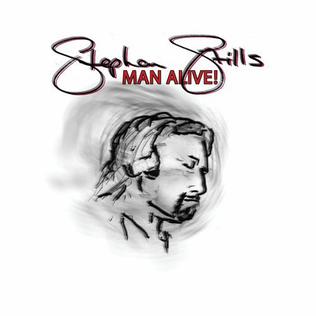
Stephen Stills 11: Man Alive

On his first solo album since the fleeting Stills Alone, Stephen Stills still didn’t have a major label deal. Yet he corralled some of favorite sidemen, such as Joe Vitale, Mike Finnegan, and George “Chocolate” Perry, and managed to fill up a CD called Man Alive!

While the otherwise detailed credits leave this information out, some of the material had been around for a while. At the very least, his vocals on the opening “Ain’t It Always” are exponentially clearer than his mushmouthed delivery on everything else. (We know we’ve used that adjective a lot, but until we find another, it will have to do.) This sinks another otherwise promising track like “Hearts Gate”, wherein he’s accompanied by an acoustic guitar plugged into the recording console for a rather sterile-sounding result. On “Piece Of Me”, a blues harp helps balance the sound.

Even the songs with real drums sound canned, starting with the excruciatingly island-tinged “Feed The People”. While touting a “special appearance by Neil Young,” “Round The Bend” features Stills on everything else save Russ Kunkel’s basic percussive pattern. Neil shows up again on “Different Man”, a welcome duet, but there’s no need for another recording of “Drivin’ Thunder”. Meanwhile, a similar “special appearance by Graham Nash” on the co-written “Wounded World” isn’t about to set the world on fire.

There are still a few moments that give hope for what could have been. “Acadienne” is a pleasant Cajun strum sung partially in Creole that thankfully keeps the accordion low in the mix, though the croaking frogs over the fade are unnecessary. “Ole Man Trouble” (the Booker T. Jones tune, and not the Otis Redding song) is a step in the right direction for his voice. And while daring in both design and length, “Spanish Suite” manages to stay interesting over its eleven minutes, partially thanks to a contribution by Herbie Hancock, and despite Stills’ ongoing insistence in singing in Spanish.

Once upon a time Stephen Stills had a voice that matched his instrumental dexterity. But after decades of performing, aging, and likely drug and alcohol abuse, his grizzled approach doesn’t match contemporary arrangements. Other artists of his age and longevity have learned to adapt, yet Man Alive! proves he’s hasn’t.

Stephen Stills Man Alive! (2005)—2

Friday, May 24, 2013

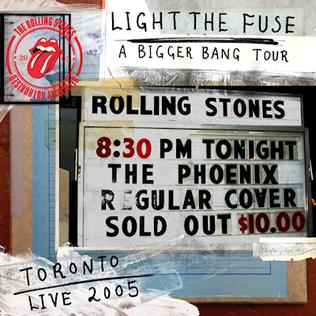
Rolling Stones 47: Light The Fuse

While gearing up for various celebrations of their 50th anniversary, the Stones quietly made some more official bootlegs available. Two were expansions of already documented tours, making Light The Fuse one of the more enticing titles. This was a club show to kick off their 2005 tour supporting A Bigger Bang, recorded at a Toronto theater with capacity of about a thousand. (Not the same place that spawned side three of Love You Live, a show that would have to wait another ten years to be put out.)

The club atmosphere is good for them, as it removes the distractions of the spectacle so common to Stones tours. Here they’re just playing, opening up with the new “Rough Justice”, and going back for a sloppy “Live With Me” and a slower, dirtier “19th Nervous Breakdown”. Any doubt that Charlie can’t keep up is dispelled by a sharp take on “She’s So Cold”, followed by “Dead Flowers”. With audible interplay between the instruments, “Back Of My Hand” works a lot better in this setting than it did on the album.

About halfway through Mick thanks the crowd and the city, and introduces all the people on stage, including the singers and horn players who’d turned up during “Ain’t Too Proud To Beg”. That provides a nice spot for Keith to sing “Infamy”, which stumbles to a close, and Mick comes back to yell “Oh No, Not You Again”. Things turn left for covers of “Get Up Stand Up” and “Mr. Pitiful”. Then it’s “Tumbling Dice”, “Brown Sugar”, a tease, and “Jumpin’ Jack Flash”.

We pick on these guys a lot here, but it’s examples like Light The Fuse that demonstrate why they’re still worth having around. When it comes right down to it, they’re a pretty decent band.

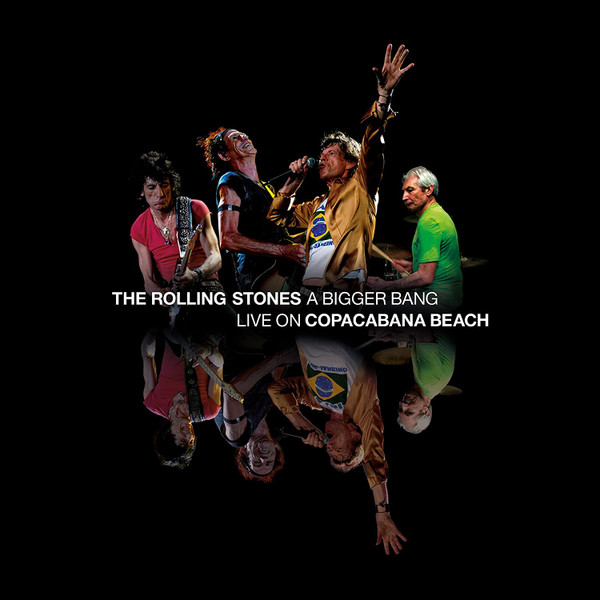
Since we gotta talk about it somewhere, the Archive Download series would peter out in time, but vault releases would continue with multiple concerts from well-mined tours repackaged as CD packages with DVDs and/or Blu-rays and of course multicolored vinyl versions. The 21st century was eventually acknowledged with a rejig of one of the shows included in an earlier DVD box set, this one a free concert in Rio de Janeiro in front of an audience of over a million and a half. With the exception of a few songs from the new album, the set is pretty much the same as ever, with the exception of a cover of “The Night Time Is The Right Time”, featuring Lisa Fischer.

Rolling Stones Light The Fuse: A Bigger Bang Tour (2012)—
CD equivalent: none; download only
The Rolling Stones A Bigger Bang Live On Copacabana Beach (2021)—3

Wednesday, August 15, 2012

R.E.M. 17: Live

R.E.M.’s commercial status was at its lowest since the band began, and maybe they were okay with that. Like Pearl Jam, whose own bell curve of success was pretty swift, world domination wasn’t as important as making records on their own terms, confident that the “true fans” would stick around.

That said, there’s something just a little defiant about R.E.M. Live. A fairly straight reproduction of the final show from a tour leg promoting their most recent dud of an album two years earlier, it’s unique for being their first by-the-book live album. (It was also recorded in Dublin, where, at the time of Live’s release, they had just finished a few shows trying out new material. Obviously, the city holds a special place for them.)

Since Bill Berry’s retirement, the other three took to touring with a drummer and two additional members who could swap guitars and keyboards, allowing Mike Mills to concentrate on bass and harmonies. But besides being strict hired guns and not full-fledged band members, they don’t get in the way, merely filling out the sound where necessary. That’s demonstrated very well on the songs from Around The Sun, which are performed better onstage than they were for the album.

Two decades’ worth of material means they could cherry-pick from throughout their career. Oddly only one song each appears from Up and Reveal. Everything is played fairly straight, even “Drive”, here in its album arrangement as opposed to the heavier “road” version. Even if you’re sick of “Everybody Hurts”, which runs over six minutes here, it’s still pretty cool to hear the crowd singing along with every note. They do the same for “The Great Beyond”, proving just how loyal that fan base was. Mike Mills’ lead vocal on “(Don’t Go Back To) Rockville” shows that his strengths lie in harmony. The one rarity for the time was “I’m Gonna DJ”, exuding tons of fun.

R.E.M. Live is for fans only, but packaged for value with a DVD of the same show. The second disc is shorter than the first, but research shows that it consists of (most of) the encore portion, and thus leans on the hits. People not fond of the band will have a field day mocking the Stipe image on the cover, but that merely reinforces the defiant attitude the band came to exhibit.

R.E.M. R.E.M. Live (2007)—3

Wednesday, February 15, 2012

Rolling Stones 43: Rarities

Allegedly, following the success of the Beatles’ Anthology multimedia franchise, the Rolling Stones attempted to tell their own, similar story, but the self-interview process became such a hassle that they only went as far as publishing a coffee-table book. This was disappointing for fans, who hoped that the Stones would finally open the vaults and compile their own Anthology-style series of CDs chock full of outtakes and rarities.

However, that’s not how the Stones roll. (Sorry.) They’ve always looked to older, unfinished tracks when completing an album, as demonstrated by certain selections on Sticky Fingers and the whole of Tattoo You. Only more recently have they chosen to beef up a deluxe reissue of one of their albums with newly completed tracks from the same sessions, Exile On Main Street and Some Girls having received such treatment.

But as the contents of dozens of bootlegs can attest, the Stones have plenty of stuff in the vaults, and the band is just like the Beatles in wanting to preserve their version of their legacy. The reluctance to unveil anything from the ‘60s may be ascribed to the fact that they don’t own the publishing; most of the B-sides from the London years have already been collected elsewhere. For years, a handful of obscurities from the ‘70s and ‘80s stayed unalbumized, with the exception of those that had surfaced on the ultra-rare Collectibles disc in the limited-edition Flashpoint package.

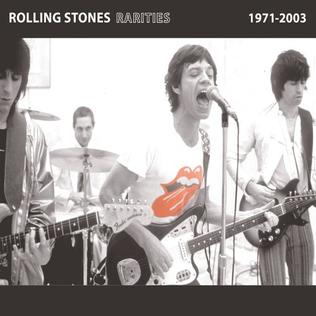
This made the appearance of Rarities (1971-2003), mere weeks after A Bigger Bang came out, so surprising. The title is debatable, especially considering all the more obvious candidates that were left off. Someone had the good taste to include the live “Let It Rock” and “Through The Lonely Nights”, two excellent B-sides, on an album for the first time. But that doesn’t make up for the exclusion of “Think I’m Going Mad”, “The Storm”, “So Young”, “Jump On Top Of Me”, and “I Wanna Drive”. “Everything Is Turning To Gold” had already appeared on both Sucking In The Seventies and the Collectibles disc, but was left off here. Even “Cook Cook Blues” had been included on Collectibles. Any of those would have been preferred to repeats from Stripped and any number of remixes.

The point behind a “rarities” collection is to entice the consumer by filling in the blanks, and Rarities (1971-2003) fails to do that. (In an extremely petty move, Bill Wyman was cropped out of the Some Girls-era photos in the package, despite having performed on half of the tracks.) Musically the disc has its moments, but it hardly fulfills any fan’s dream.

Rolling Stones Rarities (1971-2003) (2005)—

Wednesday, January 18, 2012

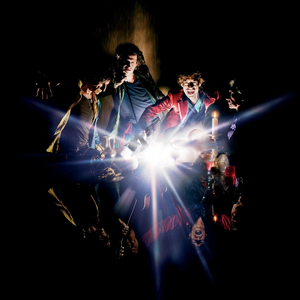
Rolling Stones 42: A Bigger Bang

The last really solid Stones album was the hodgepodge of Tattoo You, from the days when they put out a new album every year or two. Wavering quality can be forgiven in a tight release schedule, so when eight years—that’s right, eight, the equivalent of two presidential terms—go by between studio albums, one hopes those geezers have something worth hearing. Of course, every album since their mid-‘80s hiatus had been heralded with PR to the effect that they’ve “got the old classic sound back”. Each of their last few has admittedly had their moments, while having to sit alongside with Mick’s regular attempts to sound “contemporary”.

On A Bigger Bang, the old bastards do keep it simple, mostly by not being afraid to sound like themselves. Most tracks were supposedly started by the trio of Mick, Keith and Charlie; Ronnie added some guitar after the fact, and any bass not later provided by Darryl Jones was handled by Mick or Keith. For the most part, the album does rock, without any clutter. “Rough Justice”, all two chords of it, was the best choice for a single. “Let Me Down Slow” and “It Won’t Take Long” are just as straightforward, and when they bring in the funk for “Rain Fall Down”, it’s a nice change of pace, despite some of the lyrics (“the bankers are wankers every Thursday night/They just vomit on the ground”. Huh?).

The obligatory ballad comes in “Streets Of Love”, and it’s not as bad as it threatens to be. “Back Of My Hand” is an interminable Delta blues number that according to the credits is mostly Mick. Luckily, “She Saw Me Coming” sounds like it was a long of fun to play in the studio. But the lovelorn lyrics of “Biggest Mistake” don’t ring true coming out of Mick’s mouth.

Keith finally sings lead on “This Place Is Empty”; it’s amazing how his voice has improved by taking it easy, though we’d love to know if anyone feels well and truly seduced when he coos “bare your breasts”. “Oh No, Not You Again” (which Charlie joked should have been the album’s title) gives Mick a chance to yell some of the dirty words censored off of earlier albums, but at this late date the shock value is nonexistent. Outside of rocking, “Dangerous Beauty” could either be about a romantic conquest or a public figure. “Laugh, I Nearly Died” slows things down to a sinuous groove that, dare we say, could be right out of 1978.

“Sweet Neo Con” got all the attention at the time, with its anti-Bush lyrics. The song itself is decent, with some nice twists, but the recently dubbed Sir Mick really shouldn’t try to be political. (And someone should have mixed out the harmonica soloing through half the song.) The wordy “Look What The Cat Dragged In” pulls out all the rhythmic stops they last touched on “Undercover Of The Night”. It’s odd to hear a man who once extolled the virtues of teenage girls now berating the same; I guess it’s different when they’re your own kids. “Driving Too Fast” keeps up the pace, and Keith gets the last word again on the underwhelming “Infamy” (as in “you got it in for me”; get it?) and there’s that harmonica again.

At over an hour, A Bigger Bang qualifies as another double album that with just the right pruning could have been a solid forty-minute program. It starts well, and it’s not a waste of plastic, but they’ve yet to experience the late-career renaissance that some of their peers have enjoyed. One wonders if they can, or will.

The Rolling Stones A Bigger Bang (2005)—3

Monday, December 26, 2011

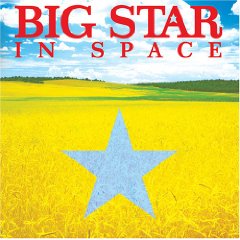
Big Star 6: In Space

After a decade of sporadic gigs (fueling continued interest in their tiny catalog) the reconstituted Big Star put out a new album in the middle of the second Bush administration. In Space is a Big Star album in name only, in that the players are the two Posies who joined Alex and Jody in 1993. In fact, Alex does not dominate the proceedings, and on the handful of songs that are certainly his, the sound is more like the schizophrenic R&B of his post-‘70s solo work. (Not that there’s anything wrong with that, if you like that sort of thing.)

The album is frontloaded with a handful of songs that do conjure the spirit of the band as people would like to remember them. “Dony” has a ragged edge and is catchy despite itself. “Lady Sweet” is the Posies version of the sound they’d like to hear. They harmonize with Jody on “Best Chance We’ve Ever Had”, and do a Beach Boys homage for “Turn My Back On The Sun”. Then Alex takes over for six minutes of silly funk in “Love Revolution”, a re-write of “Tighten Up” complete with calls to his “brothers and sisters” and a horn section. Thankfully, the old sound returns to Jody for “February’s Quiet”.

Alex wants the crowd to dance, which is obvious on his delivery of “Mine Exclusively”, a song that pre-dates even the Box Tops. The sound (and attitude) continues of “A Whole New Thing”, which pushes the irony in its beat-combo arrangement. “Aria, Largo” is hamfisted arrangement of a 400-year-old classical piece played on stiff guitar and bored drums. “Hung Up With Summer” sounds like it was recorded immediately afterwards, with a lot of the same guitar tones. “Do You Wanna Make It” is lyrically minimalist, conjuring memories of the Wonders as they toured the country’s finest state fairs. And it all comes to a sloppy end on “Makeover”, a jam with rambling “lyrics” cribbed from beauty ads. (It’s probably Paul Westerberg’s favorite track.)

In Space is not going to satisfy anyone’s dream of a fourth Big Star album, and the jury’s out as to whether anyone would care if not for the brand name on the label. At less than forty minutes, it delivers for about half. The Posies sound thrilled to be involved, but the real joy of the album comes from Jody Stephens, an exceptional and highly underrated rock drummer. His fills never fail to raise an eyebrow.

Big Star In Space (2005)—

Monday, November 7, 2011

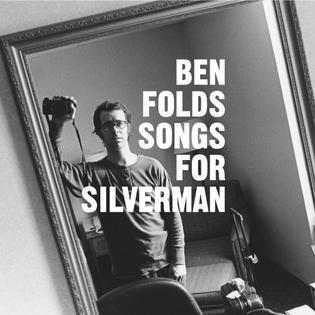
Ben Folds 7: Songs For Silverman

It was a longish time before his second solo album. There had been a few EPs (which we’ll get to soon enough), a live album and a project for William Shatner, but a real Ben Folds album gained the stature of a grand statement in its absence. To make things even wackier, there was a core band of bass and drums on every track. So why had the Five disbanded if that was Ben’s preferred sound?

Most of the Songs For Silverman veer towards the more serious side, as opposed to the snarky geek rock that had been his hallmark for the previous decade. He gets most of the comedy out of the way early; “Bastard” might have been a self-portrait, if not a more biting portrait of Stan from the last album. Its trips through various time signatures keep you guessing. “You To Thank” is another biting portrait, this time of a marriage that perhaps shouldn’t have been celebrated. A trip through America’s heartland inspired “Jesusland”, which he soon performed with an “arena rock” arrangement on tour, but that only distracted from the song’s message, as wonderful as the sound was. The Elton John homage “Landed” is a good barometer for the sound of this album; one of his best songs, it’s basically a phone call from someone who’s just escaped a stifling relationship. Before things get too heavy, he sings “Gracie” for his daughter, a charming lullabye with a childlike hook.

The anti-love songs continue with “Trusted”, a blunt portrait of division, and “Give Judy My Notice”, a gorgeous kiss-off. “Late” is a tribute to recently deceased songwriter Elliot Smith, and works only because of that knowledge. The remainder of the album is dedicated to some very vague songs, thick with possibility of interpretation. “Sentimental Guy” is a slight self-portrait (maybe) and “Time” gets a boost from lovely harmonies, including the voice of one Al Yankovic. The big enigma is “Prison Food”, with lyrics presumably about another impending breakup without illuminating the title; here the harmonies on the bridge resemble those of Pink Floyd (thanks to his British drummer).

Songs For Silverman takes a while to sink in, and as good as some of the individual tracks are, it does work best as a whole. Hindsight has explained a lot, as despite the loving dedication and photos of the woman, Ben was on the verge of divorcing his third(!) wife. This knowledge only makes the subject matter more uncomfortable to consider, but it’s doubtful he was trying to make his own Blood On The Tracks or Here, My Dear.

Ben Folds Songs For Silverman (2005)—

Wednesday, April 6, 2011

Brian Eno 18: Another Day On Earth

While Eno had released the occasional album since the turn of the century, most were ambient in the purest sense of the word, in that they were designed to accompany art installations, and not be overly concerned with things like melody or chord changes. The arrival of Another Day On Earth, however, was exciting, since he actually had songs with words to them. While it’s closer to the general sound of Wrong Way Up than anything in the “first four”, it was easy to ignore the previous fifteen years of silence.

Beginning with exactly the type of rhythm box he’d used for composition, “This” is repetitive yet melodic, while “And Then So Clear” and “A Long Way Down” continue the gentle approach, the former with a processed vocal in an artificially high register, and the latter more spoken. (Speaking of which, he gives over “Going Unconscious” and the closing “Bone Bomb”—something of an anti-war statement?—to the dulcet coos of a woman, while his synth burble underneath.)

“Caught Between” is fairly adventurous vocally, showing the grasp of harmony he’d picked over the years. It even has some guitar straight out of Another Green World. “Passing Over” comes close to being spooky, and luckily the mood is lightened by “How Many Worlds”, its chamber-like backing decorated by several violins. “Bottomliners” is full of impressionistic lyrics designed to excite the imaginations of Enophiles everywhere.

By the time “Just Another Day” comes along, many of the songs have started to resemble one another, but it’s still a nice summation of the best elements of the album. “Under” continues the mood, oddly enough as it’s a re-recording of a track from My Squelchy Life, previously released on one of his box sets.

Another Day On Earth wasn’t about to set the world on fire, but again, for Eno fans, it was great to have something to add the pile that wasn’t strictly digital wallpaper. Song-based albums would be the exception to his norm, as he’d continue to go further back into the future, determined as ever to find his own way.

Brian Eno Another Day On Earth (2005)—

Monday, April 4, 2011

Robert Plant 9: Mighty Rearranger

Not content to look back, Robert continued working with a permutation of his most recent backing band, now dubbed the Strange Sensation. Together, they conceived Mighty Rearranger, a set of new original songs following the same themes of the sate of the world while exploring exotic and traditional sounds.

The album is pleasant, certainly, but like much of his solo work, doesn’t always resonate past the initial listen. “Another Tribe” sets something of a mood, but the first single, “Shine It All Around” tries too hard with its boomy drums and isolated guitar solo. (A remix, included as a hidden track, downplays both, but at the expense of the actual song.) Despite the pointed title, “Freedom Fries” struggles under an impossible meter—and cribs an entire couplet from Don McLean—while “Tin Pan Valley” understates his determination to move forward via an imperceptible melody until the middle raveup section. One standout track, finally, is his own song called “All The King’s Horses”, a gentle acoustic number more satisfying than the one by The Firm. We originally said “The Enchanter” fails to truly deliver on its title, but several years of hindsight have shown it to be a fine harbinger of later, better albums.

By the time “Takamba” comes around, the Mideastern touches become more welcome, but are interrupted by loud interludes, making one wish he could have worked without the electrics. But with its juxtaposition of those foreign instruments and blues references, “Somebody Knocking” delivers the desired feel much better. In between, “Dancing In Heaven” is more straightforward, with open-tuned acoustic and nicely layered harmonies, even if the lead guitar sounds a lot like Page. “Let The Four Winds Blow” is a step in the right direction, but the title track is just more of the same. Whatever finale it was supposed to provide is augmented by “Brother Ray”, a short, seemingly impromptu duet with barrelhouse piano. (The hidden remix of “Shine It All Around” was included on the later remastered CD with two other unnecessary remixes of album tracks, plus the blues pastiche “Red, White And Blue” and the more straightforward “All The Money In The World”.)

Despite its best intentions, Mighty Rearranger is unfortunately another Robert Plant album that sounds fine when it’s on, but not guaranteed to stay in the player for more than one go-through. At least he could hardly be accused of embarrassing himself or his legacy.

Robert Plant and the Strange Sensation Mighty Rearranger (2005)—
2007 remastered CD: same as 2005, plus 4 extra tracks

Wednesday, September 29, 2010

Bob Dylan 46: No Direction Home

Since his last new album, our cups had overflowed with archival titles. The so-called soundtrack to the excellent PBS/Martin Scorsese documentary No Direction Home offered two CDs worth of stuff from the vaults. (Like the film, the cutoff was July 1966; following the numbering scheme set up by the box set, technically this release should have been considered volumes seven and eight.)

It’s not strictly a soundtrack to the film, but it does try to follow a chronological thread and include pieces of historic value. Two early “pre-professional” recordings show the sound of the kid before he discovered Woody Guthrie, underscored by a live performance of “This Land Is Your Land” and his own “Song To Woody”, taken from the debut. A variety of live performances and demos follow, plus such key outtakes as “Sally Gal” from Freewheelin’ and the first recording of “Mr. Tambourine Man”, sung as an out-of-tune duet with Ramblin’ Jack Elliot from the wine-soaked Another Side sessions. What stands out are the live acoustic performances, which sit alongside the recorded catalog to demonstrate why he was such a Big Deal.

With a few exceptions, the selections on the second disc underscore that Bob was right to use the established takes on the original albums. Some of those nuggets include the alternate “Desolation Row” with electric guitar, another early take of “Visions Of Johanna”, a slow stomp through “Leopard-Skin Pill-Box Hat” and the blast of “Maggie’s Farm” from Newport that may or may not have pissed everybody off. The disc ends appropriately with two live performances with the Hawks—“Ballad Of A Thin Man” from Edinburgh, and the famous “Judas” performance of “Like A Rolling Stone”, which of course closed Live 1966.

No Direction Home offers some diversion here and there, but it wasn’t exactly the most revelatory of the Bootleg Series. But the home office wasn’t done yet, as they served up two additional titles the same week. Live At The Gaslight 1962 gave people a reason to find a nearby Starbucks, as the coffee chain had the exclusive rights to it for the first year. As a collection of coffeehouse recordings from the folkie days, it got more repeat plays, as did Live At Carnegie Hall 1963, available only as a promo freebie and soon ubiquitous on eBay. Both offer lovely versions of both familiar songs and folk standards—including “Barbara Allen”, “The Cuckoo”, “Handsome Molly” and “Cocaine”, all on the Gaslight album—in tighter a snapshot.

Bob Dylan The Bootleg Series Vol. 7—No Direction Home: The Soundtrack (2005)—
Bob Dylan
Live At The Gaslight 1962 (2005)—4

Friday, September 17, 2010

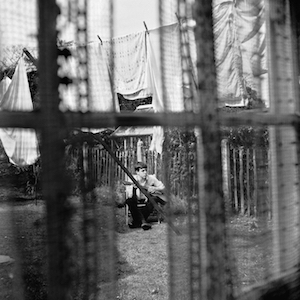
Paul McCartney 28: Chaos And Creation In The Backyard

Ever since he established himself as the chief surviving Beatle, news of any new McCartney album has always brought a mix of anticipation and dread. Such was the case with Chaos And Creation In The Backyard. The first disturbing sign was the title, accompanied by a cover based on a photo brother Michael took some 45 years previously. Then came the news that not only was it produced by the guy who worked with Radiohead and Beck, but the crackerjack band he was soon to tour with were not used; rather he played most everything himself, leading to the obvious comparisons to his first album (but none to the less-heralded McCartney II or Flaming Pie).

Our fear was unfounded. Each of the tracks here was honed to near-perfection, and nothing sounds like it was tossed off in a few minutes. Rather than the homemade sound of the McCartneys or the slap-dash but pleasant Pie, here he went into a room with a young producer who had the cojones to goad him into completing tracks worthy of the McCartney brand.

“Fine Line” is probably the best place to start the program, since it’s the most overtly McCartneyesque song here. Musically it’s a cross between “Flaming Pie” (the song) and “Keep Under Cover” (from Pipes Of Peace), and it’s a toe-tapper. “How Kind Of You” is based around a series of loops, mostly of wine glasses. It’s a mysterious one, and sits there until the buildup in the last half, which really takes hold. “Jenny Wren” is very reminiscent of early Wings stuff, and comparing it to “Blackbird”, as so many did, sells it short; it’s very original, and takes what could have been a lazy rewrite to another level. We’ve yet to figure out what “At The Mercy” sounds like. “Friends To Go” was said to have been written in George’s style, and it shows particularly in the chords and harmonies. George might have even liked it. While “English Tea” may come too close to “Cups And Cakes” by Spinal Tap, at least it’s short, with a flute solo from “Happiness Runs” off Mary Hopkin’s first album. At the same time, “Too Much Rain” is a little too close to “Young Boy”, but there’s a Wings feel on this, and a good ending too.

“A Certain Softness” is one of the few that features other players, so maybe that’s why it sounds out of place. “Riding To Vanity Fair” starts out with the same vibe as heard on World Party’s song with a similar title; no word yet on what Karl Wallinger thinks about it. It’s a rare mood for Paul, spooky and genuinely pissed off. “Follow Me” isn’t great, except for the middle bit. Fats Domino meets the Beach Boys in “Promise To You Girl”. He sounds decades younger, particularly in that guitar solo, but unfortunately it ends too quickly. Except for that bass, the first 30 seconds or so of the atmospheric “This Never Happened Before” don’t sound at all like him. The grand closer “Anyway” is a perfect example of what makes him so good. Like “Only Love Remains” or “Beautiful Night”, it would stand out on one of his not-so-stellar albums, except here it’s on an album full of more worthy companions. The steal from “People Get Ready” wears off soon enough, making way for a nod to “Little Willow”. (Apparently the hidden track, a hodgepodge not unlike “Rinse The Raindrops”, is called “I’ve Only Got Two Hands”. It definitely runs rings around “Ou Est Le Soleil”.)

The album divided a lot of people, which is too bad; overall it’s very strong, very focused and very mature. “Fine Line” may be the only one he tossed off quickly; the rest definitely sound like they were worked on and honed to satisfaction. Sonically it could even be compared to the White Album, in that there’s almost a claustrophobic feeling to the tracks.

If the sober-sounding Chaos And Creation In The Backyard was to be Paul’s last statement as a songwriter, it would have been an amazing one. Luckily, he hasn’t planned on checking out anytime soon. He went on tour soon afterwards, and any of the hype about the album was lost in the tabloids under news of his impending divorce from Heather. (Meanwhile, a souvenir of his previous tour snuck out in the form of Twin Freaks, a double vinyl collection of mashup remixes of solo tracks in collaboration with DJ Freelance Hellraiser that were played before each show. It wasn’t easy to find in the pre-streaming era, and it’s a little too dancey, but it’s fun to pick out some of the samples, much like a certain Beatles project that came out the following year.)

Paul McCartney Chaos And Creation In The Backyard (2005)—