Showing posts with label 2006. Show all posts

Tuesday, August 13, 2024

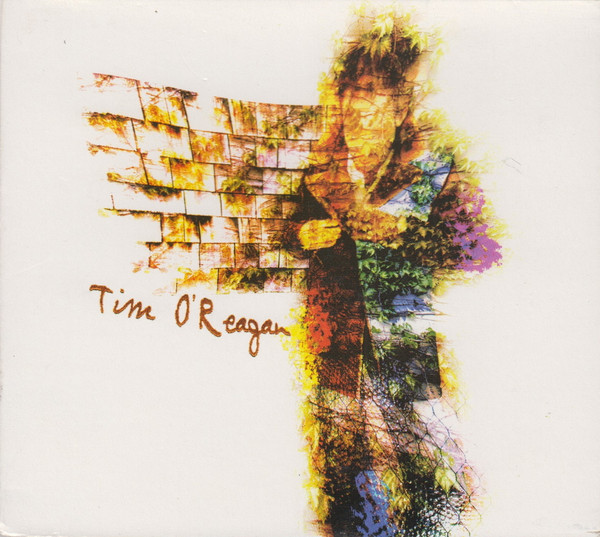
Tim O’Reagan 1: Tim O’Reagan

Since joining the band after their fourth album, Tim O’Reagan showed his value to the Jayhawks, not only as a solid drummer but a harmonist and songwriter with his own strength. His songs were standouts when they appeared, so he wisely took advantage of the band’s hiatus to finally do an album of his own. While he gets help from other Jayhawks, Jim Boquist of Son Volt, and even his own parents on his eponymous debut, he’s credited with playing several instruments. Even nicer, it was distributed by Lost Highway, the band’s most recent label.

Tim O’Reagan has a pleasant homespun feel, starting with the old-timey “These Things”. “Black & Blue” and “River Bends” have enough country twang, but “Highway Flowers” sounds most like the band, with the harmonies and Gary Louris’s unmistakable lead guitar tone. His voice can’t help but sound lovelorn and weary, particularly on “Everybody’s Only”, while “That’s The Game” sounds like a remake of a British Invasion nugget using cardboard boxes, and that’s meant in a good way. “Ivy” breaks away from the mold with a falsetto vocal and almost arty approach, and “Girl/World” is back to a back woods stomp. “Ocaso Rosa” (which means “pink sunset”; we looked it up) is a Mexican-flavored instrumental, at odds with the garage vibe of “Just Like You”, and “Plaything” has some experimental touches that don’t detract from the song. All in all, a nice surprise of a detour.

Tim O’Reagan Tim O’Reagan (2006)—3

Friday, May 31, 2024

Todd Rundgren 31: New Cars and Arena

One of the stranger—and certainly unexpected—detours of Todd Rundgren’s career was his brief stint fronting The New Cars. This star-studded tribute band included original Cars Greg Hawkes and Elliot Easton (fresh off a decade with Creedence Clearwater Revisited) plus Rundgren regulars Kasim Sulton and Prairie Prince. Todd did a decent job copping the vocal stylings of both Ric Ocasek and Ben Orr, as heard on It’s Alive. This live album delivered the familiar Cars hits, plus “I Saw The Light” and “Open My Eyes”, but they blew the chance to play “You’re All I’ve Got Tonight”, “Bye Bye Love”, and “Moving In Stereo” in order. They did come up with three new songs; nobody’s going to mistake “Warm”, “More”, or “Not Tonight” for Ocasek originals (that last one in either its live or studio version).

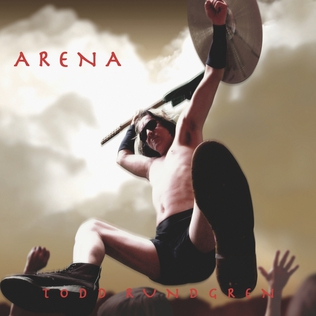
Still, Todd sounded engaged throughout, but when the tour was over, he went back to Hawaii and recorded his next album completely by himself, again, on his laptop. The resulting Arena has an apt title, as the songs are guitar-driven, alternately rocking and brooding, but all designed to keep crowds on their collective feet and pumping fists.

In keeping with the last album, one-word song titles are the norm. The intricate acoustic picking on “Mad” soon gives way to power chords and pounding drums with a yelled chorus. “Afraid” harkens back to Pink Floyd’s “Learning To Fly”, but this an arguably better song overall. We start to enter a theme, first on the angry monologue in “Mercenary” and then on the blatant parody in “Gun”. “Courage” is more along the lines of an ‘80s feel-good anthem, and while “Weakness” sports sludgy riffing to suggest another attack, the chorus gives away the sensitivity. Similarly, “Strike” sounds familiar, until you hit the chorus, which could almost be mistaken for AC/DC.

“Pissin” takes down a boor at a party, but it’s mixed in such a way that the music is the focus, not the action. Synths frame the arrangement of “Today”, but “Bardo” returns to the mysticism of his mid-‘70s lyrical endeavors. Lest people think it’s getting too deep, the swaggering “Mountaintop” has a buried fable. “Panic” ramps up the tension even while telling us not to, and “Manup” is a more direct call to action.

He’s consistently made solo albums that are completely solo, but his fascination with technology and speed in the digital age have often come off cold. Not so with Arena—even the drums, which are programmed, sound real. The album may sound big and stupid at points, but it’s worth it. He even took the album on tour with a real band, this time consisting of the loyal Prairie Prince and Jesse Gress, plus Rachel Haden on bass and Matt Bolton on guitar and keys. Only seventeen years went by before The Arena Tour Live was commemorated on audio and video. After four popular tunes from his catalog, they plow through eleven of the Arena songs, encoring with “Just One Victory” and “Couldn’t I Just Tell You”, bringing the vision to life.

The New Cars It’s Alive (2006)—3
Todd Rundgren
Arena (2008)—3
Todd Rundgren
The Arena Tour Live (2025)—3

Friday, June 25, 2021

Paul Simon 16: Surprise

Outside the title, the biggest surprise about this Paul Simon album was that it was largely a collaboration with Brian Eno, who’s credit with “sonic landscape”. Even with the domed one’s touches, Surprise is still unquestionably a Paul Simon album, built around the same exotic rhythms that have dominated his solo career. In another surprise, he plays nearly all the guitars throughout, from the sprightly African figures to the more distorted riffs.

One of those begins “How Can You Live In The Northeast?”, which opens the album with zero subtlety, touching on a world at war and floods overcoming levees. “Everything About It Is A Love Song” takes a journey through multiple textures, always coming back the most simple guitar figure. “Outrageous” is the first most overt attempt to sound modern, sung in one of his character voices, but the “who’s gonna love you when your looks are gone” hook still works. Not as successful is “Sure Don’t Feel Like Love”, which seems more like the Eno approach of using whatever words fit the rhythm at hand. The powerful “Wartime Prayers” starts out just lovely, with nice atmospherics and gentle guitar, but as it’s designed to be an anthem, the heavy drums distract from Herbie Hancock’s piano. “Beautiful” escapes us; the lyrics seem to teeter between modern nursery rhymes and details about children adopted from overseas.

“I Don’t Believe” is a highly personal cry of defiance, going so far as to credit his wife (who’s also glimpsed “brushing her long chestnut hair”) for one of the aside observations. Unfortunately, the bridges about his stockbroker aren’t about to raise any sympathy. The travelogue in “Another Galaxy” is elevated by Eno’s touch, though he’s heavier-handed on “Once Upon A Time There Was An Ocean”, which doesn’t quite reach lyrical heights. “That’s Me” suggests more autobiography—underscored by the vintage snapshot used to illustrate the lyrics—and while “I never cared much for money” is a baldfaced lie, the multiple looped guitars (again, all him) stand out.

Along with its overall consistency, the best thing about Surprise is its manageable playing time. There is something of a bonus track in “Father And Daughter”, a remix of a song previously featured in The Wild Thornberrys Movie, but it fits both sonically and thematically. It’s a nice inclusion.

Paul Simon Surprise (2006)—3

Friday, February 21, 2020

Cat Stevens 13: An Other Cup

Well, this was unexpected. After nearly three decades of musical silence—save the occasional benefit performance in this century—the artist formerly known as Cat Stevens returned to a world everyone thought he’d left behind. Not that Yusuf Islam had been completely absent; he still showed up in the news when his academic views on the Muslim faith collided with conservative Western thought, a situation not helped when the word “Islam” caused knee-jerk reactions throughout the so-called War on Terror. That could be why An Other Cup was credited to simply Yusuf, with a sticker helpfully referencing his ‘70s nom de pop. (We’re keeping him tagged under that name for our own convenience.)

Despite the Latin horns on “Midday (Avoid City After Dark)”, the album more or less picks up where he left off, and if some of the music sounds like vintage Cat, that’s because some of it is. “Heaven/Where True Love Goes” plays on the last section from “Foreigner Suite”, while “I Think I See The Light” revisits a tune from Mona Bone Jakon. “Greenfields/Golden Sands” was supposedly begun in the ‘70s, but not finished until now. Old friends like Alun Davies and Jean Roussel are on board to bring back the classic sound as well.

In general, the album delivers thoughtful acoustic folk-type songs without too much over-production. “In The End” is the closest to a straight pop song, while Youssou N’Dour adds his unique voice to “The Beloved”. “Whispers From A Spiritual Garden” and “When Butterflies Leave” are detours into poetry. The most surprising song is a remake of the Animals’ “Don’t Let Me Be Misunderstood”, with lyrical changes designed to defend his beliefs rather than plead with a lover. (The UK got a bonus track in the form of “There Is Peace”, which isn’t any more or less pleasant than anything else on the album proper.)

Overall the lyrics aren’t any more preachy than Dylan’s born-again phase, and still center on the same search that dominated his best music of years before. The music is what matters, and his voice, as warm as ever, makes An Other Cup worthwhile. It’s nice to have him back.

Yusuf An Other Cup (2006)—3

Friday, September 20, 2019

Pretenders 11: Pirate Radio

Once Rhino got a hold of the Pretenders catalog, a box set celebrating the band was certainly expected. Pirate Radio (helpfully subtitled “1979-2005”) presented four discs chronologically spanning Chrissie Hynde’s career to date, with the usual rarities added, along with a DVD of videos and TV appearances.

Needless to say, while it doesn’t include the entire debut album, the first disc is stellar. Beginning with a demo of “Precious”, it methodically works through all the singles that built that album, with big points for including “Cuban Slide” and “Porcelain” on CD in the U.S. for the first time. “What You Gonna Do About It” is a live cover of a Small Faces tune, and before we know it, two of the guys are dead and Chrissie’s onto the third album.

Things start to slide about halfway through the second disc, right about when we get to the Get Close debacle. Here at least we get to hear an early version of “Tequila”, and more complete than the snippet on Last Of The Independents. A handful of leftovers from Get Close are of varying interest, as is the cover of “Windows Of The World” from an obscure soundtrack and a carbon copy cover of the Beatles’ “Not A Second Time”.

The third disc continues with more songs from Packed! before serving up most of Last Of The Independents and finishing up with selections from the Isle Of View, nicely including “Creep”. Other rare covers include “Bold As Love” for a Hendrix tribute and “Angel Of The Morning” for a companion album to Friends. A demo of “Every Mother’s Son” is quite effective.

The final disc is easily the most forgettable, for while it does sample the inoffensive ¡Viva El Amor!, it also covers Loose Screw. However, if you wanted to hear Chrissie take on “The Needle And The Damage Done” and “Everyday Is Like Sunday”, and didn’t want to buy the G.I. Jane soundtrack for “The Homecoming”, you’re in luck.

Before too long Rhino would expand the early albums, and include several of the extras in all the right places. There’s more good than bad on Pirate Radio, but more than anything it underscores what she lost early on, and while we can admire her determination to keep going, the set is only of value to completists.

Pretenders Pirate Radio 1979-2005 (2006)—

Tuesday, March 19, 2019

Van Morrison 38: Pay The Devil

Oh great, another year, another Van Morrison album, another label, another… what the?! This sounds like old-time country and western!

And that’s exactly the deal. Pay The Devil is loaded with fiddle, pedal steel, two-step drums, Floyd Cramer-style piano, and lovelorn tunes from the honky tonk. Most of the songs are covers from the pre-rock era, “Your Cheatin’ Heart” being the most familiar one; the main exception is “Till I Gain Control Again”, written in the ‘70s by Rodney Crowell, and previously done by the likes of Emmylou Harris, Crystal Gayle, and Willie Nelson.

His own songs aren’t much to get excited about. The title track is another one of his “how dare you judge me” songs, but at least he doesn’t rant about the copycats in the business this time. “Playhouse” is a country blues that mentions the British monetary system but otherwise repeats the usual clichés. “This Has Got To Stop” reads like a parody, with its burned down houses and castles in the sand, rhyming “understand” with “Newfoundland”, and lines like “I watched you watching me as I watched you walk away from me.” His voice is still his best instrument, and even with all the trimmings, he delivers everything like it’s jazz or soul.

Pay The Devil is a nice change of pace from his other interchangeable releases of late. But if you want to hear Van sing country, you’re better off going back to Tupelo Honey.

Van Morrison Pay The Devil (2006)—3

Friday, June 29, 2018

Replacements 9: All For Nothing

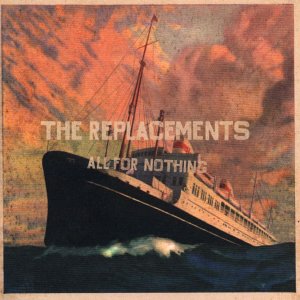
For years, rumors of a comprehensive set of outtakes from the Replacements’ time on the Twin/Tone label was said to be in the works, along with a rumor that such a thing couldn’t happen because Paul Westerberg stole the masters and dumped them all in one of Minnesota’s thousand lakes. Whatever the true story, fans got something of a gift with All For Nothing/Nothing For All, a double-CD set that offered four songs from each of the Sire albums on one disc, and 18 rare or unreleased tracks on the other. The cover art, seemingly depicting a sinking ship, was apt, along with the photos of the boys destroying one of their unfortunate rented vans throughout the booklet and images of beer mugs and urinals on the discs themselves.

The “hits” disc, a mix of rockers and sensitive ones, is fine, though everyone will have their own favorites that were left out. The second disc offers nuggets that would please even hardcore collectors. Some had already been B-sides, and others have since been appended to reissues of the albums themselves, but the selection and chronological sequencing make for a decent album’s worth of tunes. Highlights include: an earlier version of “Can’t Hardly Wait”; the brief but blatant “Beer For Breakfast”; vocal and writing debuts from Chris Mars (“All He Wants To Do Is Fish”) and Tommy Stinson (“Satellite”); “Date To Church” with Tom Waits; a sleazy take on “Cruella De Ville” from a Disney compilation; “Like A Rolling Pin”, a hoarse parody of a certain Bob Dylan song supposedly committed to posterity in the presence of the man himself; and their definitive crash through The Only Ones’ “Another Girl, Another Planet”. Stay tuned for the unlisted track at the end, a hilarious alternate version of “I Don’t Know”. (Also exciting for the mid-‘90s, these were enhanced CDs, with two music videos on each, accessible via the CD drive on computers. High tech!)

About a decade later, Rhino managed to grab the rights to the band’s Twin/Tone albums, and celebrated with a new compilation. Don't You Know Who I Think I Was? purported to offer “the best of the Replacements”, and the eight songs from the pre-Tim albums are excellent choices. (They even sound better.) All but six tracks from disc one of All For Nothing distill that period well, but the real cheese here are the two new recordings, the grand studio reunion of Paul, Tommy, and Chris (who didn’t play drums but sang, so they still count). Both “Message To The Boys” and “Pool & Dive” aren’t exactly lost classics, but drummer of choice Josh Freese, whom Paul had used on a solo album and Tommy knew from Guns N’ Roses, gets the wallop down to ensure the vibe is there.

The Replacements All For Nothing/Nothing For All (1997)—4
The Replacements Don't You Know Who I Think I Was?: The Best Of The Replacements (2006)—4

Friday, February 16, 2018

Byrds 14: Box Sets

Towards the end of the ‘80s, with the likes of Tom Petty and R.E.M. reviving interest in the Rickenbacker, the Byrds began to attract attention from a younger generation. Just in time for their induction in the Rock and Roll Hall of Fame, as well as a new Roger McGuinn solo album, and following successful lawsuits in favor of the band members not named Clark or Clarke came a four-disc box set covering the band’s tenure on Columbia.

Simply titled The Byrds, albeit with individually titled discs, the set begins with (naturally) “Mr. Tambourine Man” and moves all the way through Farther Along. Because the existing CD reissues of the albums were a little spotty, the sound was greatly enhanced, with many of the early songs presented in wide stereo and with extended endings, some of which had been revealed on the independent Never Before compilation from a few years before. That set also boasted some previously unreleased tracks, and many of them (such as “The Day Walk”, “She Has A Way”, and “Psychodrama City”) were included in the box in context.

As with most sets of its type, the earlier material vastly outweighs the later material, with the first five albums covered on the first two discs. A live radio take of “Roll Over Beethoven” sung by David Crosby isn’t much to write home about, but the real enticement was the inclusion of several Sweetheart Of The Rodeo tracks with Gram Parsons’ original vocals, as opposed to the common album tracks redubbed by McGuinn. The remainder of the discs speeds through the Clarence White era, still giving him some overdue recognition, and still sounding very different from the original incarnation of the band.

To bring it all back home, so to speak, the final 20 or so minutes of the set are given over to new recordings featuring the three senior members. Live recordings of “Turn! Turn! Turn!” and “Tambourine Man” with Bob Dylan (from a Roy Orbison tribute, of all things) are a sloppy setup for four studio tracks: a new recording of “He Was A Friend Of Mine”; the obscure Dylan cover “Paths Of Victory”; “From A Distance”, concurrently covered by Bette Midler in a Grammy-winning performance; and “Love That Never Dies", which was basically a teaser for McGuinn’s upcoming Back To Rio album. (Heralded as a comeback at the time, it hasn’t worn well, save two songs contributed by Byrds disciples: Elvis Costello’s “You Bowed Down” and Tom Petty’s “King Of The Hill”.)

Each of the Columbia albums was overhauled in the ‘90s, and most of the rarities in the box were included on their respective expansions, but it was still surprising that a second box set dedicated to the band came out a mere 16 years later. In addition to a DVD of mimed clips from the vintage era, the four discs in There Is A Season go a little wider on the history of the band, starting with six tracks from the Beefeaters and the Jet Set, a.k.a. the Byrds before they were the Byrds. Some of these were already available on various collections dubbed Preflyte, and while they have some of that harmonic charm, the pieces aren’t all there yet. More live material from the Clarence era shows their prowess, and two songs from the 1973 “reunion” move the spotlight back to Gene Clark. Yet for some reason, they choose to close with “Paths Of Victory” from 1990.

Much of the rare stuff was already covered on that first box, and is repeated on There Is A Season. As it pushed the first box into deletion, it’s the only comprehensive set available for physical purchase. There is more emphasis on Gene, but some of the swaps in the way of album tracks are questionable.

The Byrds The Byrds (1990)—4
The Byrds
There Is A Season (2006)—4

Friday, May 27, 2016

Mark Knopfler 7: All The Roadrunning

Emmylou Harris has the ability to create truly original harmonies for any occasion, making her a popular choice for any singer-songwriter seeking counterpoint. These days she’s generally used as a special guest, so it’s a big deal when somebody like Mark Knopfler taps her for a full, co-credited album.

All The Roadrunning was recorded in bits and pieces over the course of seven years, and includes ten new Knopfler tracks plus two Emmylou contributed. His music has fit into the country slot since before the last Dire Straits album, but it’s been decades since he last wrote a truly catchy melody. And as wonderful as she is, their voices simply don’t always blend. When they do, it works fine. “Beachcombing” opens the set with some promise, before the same sleepy tempo takes over on “I Dug Up A Diamond”. “This Is Us” captures an old married couple looking through old photographs, and is just plain charming. “Red Staggerwing”, which follows, is loaded with hackneyed clichés, and is not charming at all. “Rollin’ On” does just that, before her own “Love And Happiness” shows him how it’s done.

She dominates “Right Now”, capturing the literal and metaphorical feeling of a stranded marriage, but “Donkey Town” mines the same territory for too long, baby, too long. “Belle Starr” is fairly standard, as is “Beyond My Wildest Dreams”, but it’s better. The title track doesn’t do much, but “If This Is Goodbye” does have a stirring blend, even without knowledge of the inspiration (spoiler: cell phone calls on 9/11).

Because the album’s not pointedly bad, it’s still worth the listen, but don’t be surprised if it doesn’t sink in. A slightly better option is Real Live Roadrunning a CD/DVD combo recorded at the end of their joint month-long tour. The live setting inserts a little more punch into the proceedings, and each singer contributes a few songs from their own catalogs. Emmylou’s “Red Dirt Girl” gets applause of recognition, while strangely one of her signature songs, “Boulder To Birmingham”, does not. (They go nuts for “So Far Away”.) She escalates “All That Matters” and “Why Worry”, but doesn’t appear on “Romeo And Juliet”, stretched here to nine minutes.

Mark Knopfler and Emmylou Harris All The Roadrunning (2006)—3
Mark Knopfler and Emmylou Harris
Real Live Roadrunning (2006)—3

Friday, December 11, 2015

Bruce Springsteen 18: The Seeger Sessions

Despite his affinity for rock ‘n roll and motorcycle jackets, Bruce Springsteen has longed to emulate dusty folksingers. Whereas Bob Dylan never shied away from his debt to Woody Guthrie, the Boss chose Pete Seeger for inspiration on one of his more surprising projects. Suggested by a late-‘90s diversion, and likely pushed along by his political activism in the Bush II era, We Shall Overcome: The Seeger Sessions collects several folk songs, performed in what sounds like a barn with fiddles and Salvation Army horns. The result is a lot of fun despite the occasionally dour subject matter.

True folk songs have become part of America’s fabric, and these tunes would be recognizable, even if the titles aren’t. Kids of a certain age will recall “Old Dan Tucker”, “John Henry” and “Froggie Went A-Courtin’” from elementary school, while more scholarly types will nod at “Erie Canal”, “Pay Me My Money Down” and “Shenandoah”. “Eyes On The Prize” and “My Oklahoma Home” gain more gravity in the aftermath of Hurricane Katrina, which also gives “We Shall Overcome” more depth if not edge.

The album was released as a DualDisc, with bonus audio mixed in with DVD content. As has been all too common in this century, it was rereleased six months later as an expanded CD, adding three live tracks to the two earlier extras. The subtitle American Land Edition was suggested by the sole original composition in the set.

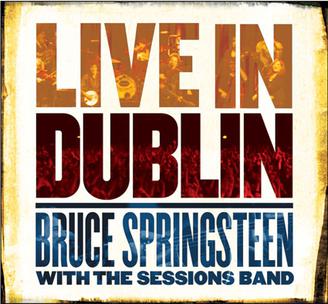
To prove that it wasn’t just a whim, Bruce took 17 people on the road on both sides of the pond, playing songs from the album, other public domain songs, and even new arrangements of his own songs. Three nights were the source of Live In Dublin, which presents a very boisterous crowd reacting positively to the folk songs they knew as well as such reworked nuggets as “Atlantic City”, “If I Should Fall Behind”, “Blinded By The Light” and even a jump swing extension of “Open All Night”. Of particular note is a raucous “American Land”, which sounds even more like a Pogues song. With several singers taking turns at the mic, the virtual concert is even more of a hootenanny than the album that inspired it all.

Bruce Springsteen We Shall Overcome: The Seeger Sessions (2006)—
American Land Edition: same as 2006, plus 5 extra tracks
Bruce Springsteen with the Sessions Band Live In Dublin (2007)—3

Tuesday, July 22, 2014

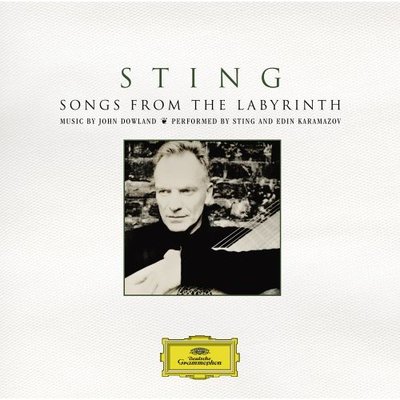
Sting 10: Songs From The Labyrinth

Never one to miss a chance to remind you just how much smarter he is than you are, Sting’s second album of the millennium was in the classical vein. Songs From The Labyrinth consists solely of music written by English Renaissance composer John Dowland, performed entirely on lutes. This is hardly an excavation of buried treasure, as Dowland was already well known to connoisseurs; fellow New Wave refugee Elvis Costello had already performed, recorded and released some pieces several years before Stingy got around to it.

Wisely, he lets special guest Edin Karamazov handle the fretwork, and indeed, the pieces with no vocals are the least distracting. Sting himself plays lute in the background on one interlude, and in duet on another longer piece. When he does sing, and he does, he does so in his imitable style, up close and back-of-the-throat nasal. This approach was great for something like his cover of “Spread A Little Happiness”, but gets a bit trying here. “Can She Excuse My Wrongs”, for instance, would be much better served with a softer vocal, or at least smoothing out all the sharp inhales. As the first track with a vocal, it sets a tone for the album at large.

Because many of the pieces were originally written for ensembles, we’re treated to multiple Stings singing in harmony. “Fine Knacks For Ladies” is one example of this overkill, but will certainly influence any number of college a cappella groups to tackle it.

And because the album is designed to be something of an aural biography, every three tracks or so he reads excerpts from a letter, written by Dowland, in his breathiest BBC accent, accompanied by stock sound effects. It doesn’t help. (One track’s music is credited to Robert Johnson—not, need it be said, the blues legend, but a Dowland contemporary.)

As might be expected, Songs From The Labyrinth topped the classical chart, as many crossovers tend to do upon release, before sharply typically tailing off in sales. It’s since been reissued with a variety of bonus tracks, some of which stem from a DVD documenting the rehearsals and live performances. If the listener is not put off by Sting’s attempts at vocalizing these pieces, rest assured there are other, more pleasing recordings by more apt voices out there. For example, John Potter, formerly of the Hilliard Ensemble, has released several albums under the moniker The Dowland Project; those are worth sampling, as is anything by the Hilliard Ensemble. Meanwhile, this writer plans on checking out other recordings by Edin Karamazov.

Sting Songs From The Labyrinth (2006)—2

Friday, May 30, 2014

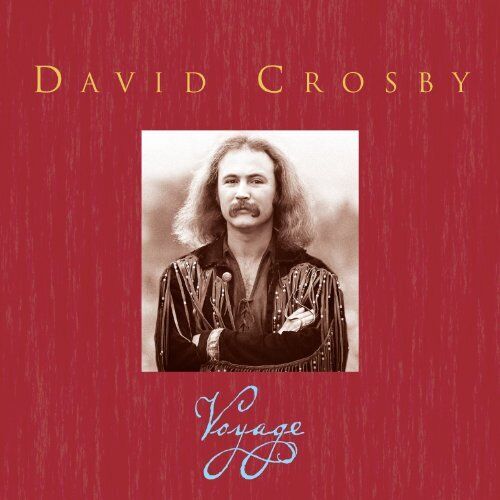
David Crosby 5: Voyage

The idea of a box set devoted to David Crosby is intriguing, simply because his actual musical output has been so sparse over his long career. But in 2006 Graham Nash was still Crosby’s biggest fan, so he spearheaded the project.

Voyage manages to compile the highlights of forty years on two discs, beginning with three songs from the Byrds. While he’s credited with co-writing “Eight Miles High”, most people will notice Gene Clark’s words and Roger McGuinn’s guitar, so it’s an odd place to start for a Crosby set. The rest of the disc sails through the first two CSN albums, his solo album, and the three duo albums with Nash. The second disc has a tougher time of it, given the little of value from the ‘80s and ‘90s past “Shadow Captain” and “Delta”. Basically, one track from each solo and CSN release is justified by the copious commentary in the liner notes. Both he and Nash are more excited about the CPR albums, with five tracks included.

The third disc is titled “Buried Treasure”, and packed to capacity with demos and alternate versions. Early versions of songs from the CSN albums are interesting, including the basic demo of “Déjà Vu” with Graham that was embellished for the final album track. An alternate backing of “Cowboy Movie” with more Neil Young but the standard vocal isn’t as exciting as the “Kids And Dogs” outtake from his first solo album, while an alternate mix of “Have You Seen The Stars Tonite” from a Paul Kantner project of the same period provides some wider perspective. In a show of restraint, only two unreleased live performances with Nash appear, which leaves room for such rarities as “King Of The Mountain”, “Samurai”, and “Climber”. A lengthy live “Dream For Him” from a recent CSNY tour provides some low-key Stills-Young guitar dueling.

Anyone looking for the best of David Crosby should own all the original albums anyway, but Voyage gets by on the quality of the tracks. The rarities disc probably wouldn’t have sold as many copies on its own, so the set is recommended, and certainly enjoyable, if not absolutely essential.

David Crosby Voyage (2006)—

Friday, March 28, 2014

Tom Waits 21: Orphans

Best described by the man himself as “a bunch of things that fell behind the stove while making dinner,” Orphans is a three-CD set presenting a grab bag of new music and extracurricular activities. Subtitled Brawlers, Bawlers & Bastards, it separates the music into those three, somewhat descriptive categories. Because it offers nothing from the ‘70s, this is not the ultimate Waits rarities collection. However, it does offer such nuggets as his wonderful dwarfs-on-strike arrangement of “Heigh-Ho”, and a whole pile of songs previously hiding on movie soundtracks, like the mandolin-scented “Bottom Of The World”, his cover of “Sea Of Love” and even a song from Shrek 2.

There’s an awful lot of music here, so much that it takes a long time to take it all it. Hence, we find the multitude of end-of-year accolades a bit suspect. Sure it’s trendy to champion Tom Waits in this century, but they can’t all be zingers, can they? Therefore, the best way to approach the set is how it was designed: as three separate albums.

Brawlers is the most consistently upbeat disc, starting strong with the hiccupping rockabilly of “Lie To Me”. Many of the tracks sound like outtakes from Mule Variations or Real Gone, and a couple of tracks had debuted on a Waits-produced John Hammond album that came out in between those. There’s a full-fledged studio recording of “Fish In The Jailhouse”, a rousing encore from his 1999 tour, and “Rains On Me”, written with old pal Chuck E. Weiss. “The Return Of Jackie And Judy”, from a Ramones tribute album, sports a rhythm track straight off of White Light/White Heat (essentially a faster version of “LowDown” back at the start of the disc). But the song that got all the attention was “Road To Peace”, an outright indictment of American activities in the Mideast, sung with sparing concern for rhyme, taken nearly verbatim from pages in the New York Times. (He even names names.)

Bawlers would suggest a pile of songs aimed in the general vicinity of one’s heartstrings, but for the most part, it’s more of a tuneful antidote to some of the noisier elements of the first disc. “Bend Down The Branches” is a brief lullaby, of all things, but if you’re looking for variations on “Kentucky Avenue” or “Take It With Me”, you can save the Kleenex. It’s not until “Shiny Things” (once you get past the banjo) that one of those heartbreaking melodies emerges, and flowers full on the intro for “World Keeps Turning”. One true gem is “If I Have To Go”, a pretty ballad left off of Franks Wild Years, while one of the oldest songs here is “Take Care Of All Of My Children”, written for a 1984 documentary about homeless teenagers (and ties in with “Never Let Go”, from a later film based on that documentary). “Tell It To Me” is a gentle waltz, decorated with a rare pedal steel, which also turns up on his cover of “Young At Heart”. He leads an overdubbed choir of himself raising pint glasses to “Goodnight Irene”, and there’s even another Ramones cover in “Danny Says”.

Bastards is devoted to his wackier side, from spoken word pieces to collaborations and obscure covers. How obscure? Well, there’s stuff from tribute albums dedicated to Kurt Weill, Daniel Johnston and Skip Spence, a recital of a Charles Bukowski poem, and two variations on an excerpt from Jack Kerouac’s On The Road. (“Home I’ll Never Be” is the better of the two, and could go on the Bawlers disc; the rest could conceivably fit on Brawlers, but for their inherent wackiness.) Next to “Heigh-Ho”, the highlight is “Altar Boy”, an outtake from the project that inspired Blood Money, sung in the drunk style of the Small Change album. Overall, much of your enjoyment of this disc will depend on how much you liked the Real Gone approach. Two hidden tracks are tucked at the end: “Dog Treat”, a pre-song monologue while his fingers wander about the piano keys (always a highlight of his live shows), and “Missing My Son”, a story with a trick ending that may or may not be an old joke.

This admittedly only scratches the surface of everything in Orphans. Sure, it’s good; there’s just way too much of it. And one person’s single-disc distillation will certainly differ from any other. And the only reason why the album exists is because the Anti label was happy to finance anything he did, on his terms. Must be nice. (For the collector, the set was released three years later as on vinyl, each section split into two records, with a seventh disc including six more songs.)

Tom Waits Orphans: Brawlers, Bawlers & Bastards (2006)—3
Wednesday, August 28, 2013

Robyn Hitchcock 21: Olé! Tarantula

It would seem that Robyn Hitchcock’s albums are the most consistent when he’s either working completely solo, or when he’s got a solid unit behind him for the duration. That’s the evidence one gleans from the first play of Olé! Tarantula, his most solid album since the heyday of the Egyptians. Here he’s helped out by the Venus 3, a trio of escapees from Young Fresh Fellows, Ministry and R.E.M. (longtime buddy Peter Buck). And considering that the other two guys have since been tapped to help out R.E.M. onstage and in the studio, that should suggest a certain mutual intuition.

Right from the top, “Adventure Rocket Ship” and “Underground Sun” sound like vintage Robyn; even “Museum Of Sex” works despite its saxophones and rambling lope. Speaking of which, “Belltown Ramble” sports a dotty piano over the acoustic and non-linear lyric for six minutes. The title track seems like an excuse to write a song to match said title, but it’s got all the ingredients for fun.

By now Robyn fans tend to give songs with titles like “(A Man’s Gotta Know His Limitations) Briggs” the benefit of the doubt, whatever the context. “Red Locust Frenzy” comes at the traditional spot when one of his albums starts to drag, nudged along by a riff not distantly related to “I’m Only You”. “‘Cause It’s Love (Saint Parallelogram)” was written with XTC’s Andy Partridge, and could have used some of his lyrical whimsy. “The Authority Box” is nice and trashy, in direct contrast with “N.Y. Doll”, something of a letter written from the point of view of that band’s Arthur Kane.

As we’d long begun to suspect that we were supporting this guy more out of habit than fascination with his development—not helped by pricey import-only items like Obliteration Pie and This Is The BBC—it was truly joyous to find something as, well, good as Olé! Tarantula. Clearly this was not a fluke, since he took the band on the road (pushed by some exposure from the Sundance Channel) and dug deep into his catalog. Some examples emerged on Sex, Food, Death… And Tarantulas, an EP released the following year; in the meantime, it was hoped that the Venus 3 would be able to help their boss out again, provided they could find the time.

Robyn Hitchcock & The Venus 3 Olé! Tarantula (2006)—3

Wednesday, July 11, 2012

R.E.M. 16: And I Feel Fine

It’s not clear why it happened when it did, but another R.E.M. collection appeared in 2006. With the bulky title And I Feel Fine… The Best Of The I.R.S. Years 1982-1987, it appeared to be something of a part one to the Warner-era set from 2003. Like that set, it was available two ways. The single-disc version is basically an expansion of Eponymous, adding some deep cuts to the standard versions of all the tracks (and dropping “Romance”).

Naturally, the fans had to spring for the double-disc version, heavy on rarities, with a few genuine outtakes and live versions. Alternates of “Gardening At Night”, “Just A Touch”, “Hyena” and “Swan Swan H” had already floated in and out of circulation, while vintage takes of “Bad Day” and “All The Right Friends” appear to contrast the later Berry-less recordings on the Warner set. “Mystery To Me” was likely never finished due to its resemblance to both “Radio Free Europe” and The Jam’s “All Mod Cons”. Both sides of the original “Radio Free Europe”/“Sitting Still” single add additional perspective. Each of the boys also chose a personal favorite from their catalog: “Pilgrimage” (Mike), “These Days” (Bill), “Disturbance At The Heron House” (Peter) and “Time After Time” (Stipe), plus “King Of Birds”, apparently a strong contender for disc one. Each is annotated with liner notes by all four original band members, and much more enlightening than the gushy paragraphs contributed by “legendary” critic Anthony DeCurtis.

And I Feel Fine appeared on Capitol Records, but this wasn’t their first stab at an R.E.M. compilation. Back in 1997, after they acquired the rights to the I.R.S. catalog, the label put out a series of odd digipack artist collections to celebrate EMI’s centennial. In The Attic was incorrectly subtitled “Alternative Recordings 1985-1989”, and served up a smattering of B-sides and sundry. Two had already appeared on Dead Letter Office, and another two were on Eponymous; the rest were live versions, the pointless “radio edit” of “Cant Get There From Here”, a true rarity in “Tired Of Singing Trouble” and a wonderful “medley” of “Time After Time” and “So. Central Rain”, with a few lines from Peter Gabriel’s “Red Rain”. As many of these were not included on And I Feel Fine, the R.E.M. catalog begins to get a tad unwieldy. An expanded Dead Letter Office would be an excellent place to stash these, but that’s not likely to happen.

R.E.M. And I Feel Fine… The Best Of The I.R.S. Years 1982-1987 (2006)—4

Wednesday, December 7, 2011

Ben Folds 8: Supersunnyspeedgraphic

Way back in the lull following the live album, Ben started issuing a series of five-song CD EPs available via direct mail order or digital download, in the spirit of how bands used to put out singles. These were said to be contenders for what would eventually be his next album, but while a few would soon get regular rotation on stage, only one would turn up on his next real album.

Of the three, the first EP is still the most satisfying. Speed Graphic kicks off with a fantastic cover of “In Between Days”, to the point where we think an whole album’s worth of “Ben Plays The Cure” could make that band’s catalog more palatable. “Give Judy My Notice” appears in a piano-and-voice version that’s just as nice as the one that made it to Songs For Silverman. “Protection” has a jazzy, Steely Dan feel; this escalates for “Dog”, mostly notable for the phone conversation with his wife at the end of the song. And “Wandering” is likely to be on anyone’s list of sappy Folds favorites.

Sunny 16 arrived on schedule a few months later. This time the cover was “Songs Of Love” by the Divine Comedy, and the other songs were, well, okay. “There’s Always Someone Cooler Than You” is the upbeat snide song; “You’ve Got To Learn To Live With What You Are” goes for Elton John territory; “All You Can Eat” puts a four-letter word in the chorus for shock effect; and “Rock Star” combines elements of all three.

It was almost a year before Super D completed the trilogy, and it’s the weakest of the series. Maybe the extra time convinced him to save the good stuff for the album proper, so this was merely the leftovers? Two covers frame the set: a faithful recreation of “Get Your Hands Off My Woman” by glam-rockers The Darkness, and a two-year-old live version of “Them That Got” by Ray Charles. “Kalamazoo” wanders along until a “disco string section” interrupts the middle, “Adelaide” seems an odd tribute to the city, while “Rent A Cop” is an obvious joke song.

After finishing the promotion for Silverman, it was time for another stopgap. He did come through somewhat on the original promise by compiling a sampler from the EPs, with the incentive that most were remixed and/or augmented slightly. From the fifteen contenders, Supersunnyspeedgraphic, The LP includes two songs from Speed Graphic, four from Sunny 16 and three from Super D. In addition, one song from his collaboration with Ben Lee and Ben Kweller, a track from his soundtrack to Over The Hedge and best of all, his uniquely melodic cover of Dr. Dre’s “Bitches Ain’t Shit” round out the set. (He did not, however, include anything from 2005’s Songs For Goldfish, a collection of live tracks and oddities released via the same channels as the EPs.) It’s still geared towards diehard fans anyway, most of whom were more excited about a real followup album. And then they could tread water while the next distraction came along.

Footnote: Supersunnyspeedgraphic was “promoted” by the first live concert streamed on the Myspace social network, released the following year on DVD and a dozen years later as a CD. Much of the humor is lost without the visuals, and he triggers the same effect from his new old-school synth far too many times. An interlude by cross-dressing comedian Titler is a distraction, but the all-request format does dig deep into his repertoire. (Five songs from an iTunes-exclusive performance fill up the space.)

Ben Folds Speed Graphic (2003)—4
Ben Folds
Sunny 16 (2003)—3
Ben Folds
Super D (2004)—
Ben Folds
Songs For Goldfish (2005)—3
Ben Folds
Supersunnyspeedgraphic, The LP (2006)—3
Ben Folds
Live At Myspace (2019)—3

Friday, April 15, 2011

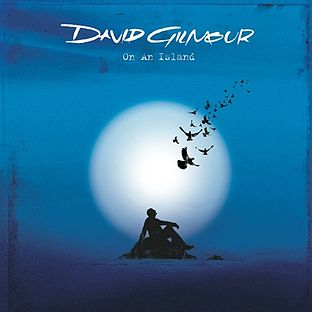
David Gilmour 3: On An Island

After his longest musical silence yet, broken only by the surprise reunion of Pink Floyd with Roger Waters for the Live 8 charity concert, David Gilmour was content to be taken on the strength of his own name again. Such things happen when a guy turns sixty.

On An Island was co-produced with the legendary Chris Thomas, who’d mixed both The Dark Side Of The Moon and The Division Bell (among other things), and Phil Manzanera, a unique guitarist best known for his work with Roxy Music. Richard Wright appears on a few tracks (and indeed, the subsequent tour) but Nick Mason is absent.

Much of the album suggests the feeling of floating downstream, particular on the floating title track, wrapped comfortably within the harmonies of David Crosby and Graham Nash. “Smile” is a pretty little love song, recorded nearly by himself with his wife on some vocals. The most schizophrenic song is “A Pocketful Of Stones”, which begins slowly for about a minute before switching to a poignant piano accompaniment under lyrics that have been suggested to be about either Syd Barrett or George W. Bush. The album even ends in a cycle, with the aptly titled “Where We Start” reprising the mood and feel of the early tracks.

Several instrumentals change the moods as well. “Castellorizon” adds orchestration to another guitar solo, the dreamy “Then I Close My Eyes” is prefaced by the sound of Turkish instruments, and “Red Sky At Night” is not a cover of the hit by The Fixx, but is instead a showcase for Gilmour on saxophone, of all things.

On An Island is pretty, slow and generally quiet, and the attempts to rock don’t; those who purchased the CD at Best Buy would very much have enjoyed the six-minute “Island Jam” included on a bonus CD. But overall it’s a nice if underwhelming album, and at least he didn’t try to disguise it as the return of Pink Floyd, because it wasn’t.

The tour for the album spawned two DVDs, the second of which was also released on CD in a dizzying variety of editions. Like the tour, Live In Gdańsk begins with a suite from Dark Side (of course) before a performance of On An Island in its entirety. A smattering of oldies make up the rest of the program, with a few tributes to Syd, who died that summer, a full-length “Echoes”, and even “Fat Old Sun”. The more elaborate packages included various DVDs with bonus content, some including a bonus performance of “Wots… Uh The Deal”, sure to drain the wallets of the most devout Floyd enthusiasts. As live albums go, it’s enjoyable, unique for the live orchestra on some songs, Dick Parry on occasional saxophone, and Richard Wright on everything, as he himself died the week before the album came out. (Slightly more appealing was the Arnold Layne EP, a live tribute to Syd that featured two versions of the title track, one sung by Rick Wright and the other by David Bowie, plus Gilmour’s acoustic tribute of “Dark Globe”.)

David Gilmour On An Island (2006)—3
David Gilmour
Live In Gdańsk (2008)—3

Friday, December 17, 2010

Beatles 30: Love

One of the last things George apparently did before he died was to get the Cirque du Soleil on board for a Beatles extravaganza in Vegas, and convince the other two plus Yoko it was a good idea. Eventually called Love, the show debuted in 2006 to the full endorsement of Paul, Ringo and the widows. More interesting to attendees were the liberal use of music extracted from the original multitrack tapes by George Martin (in what he said yet again would be his final production job) and his son Giles. These weren’t simple remixes along the lines of Rock ‘N’ Roll Music or the Yellow Submarine Songtrack—these were bona fide 21st-century mashups, the like of which had been keeping copyright lawyers busy for most of the decade. The album listed 36 titles within 26 tracks, yet the Martins said they mixed elements from over a hundred songs; we will not attempt to identify them all here. After all, the fun is finding them all yourself.

Bird noises introduce a vocals-only mix of “Because”, followed by key elements from “A Day In The Life”, “A Hard Day’s Night” and “The End”. “Glass Onion” includes some acoustic guitar from “Things We Said Today”. “I Am The Walrus” gets a new stereo remix including the orchestral count-in heard for the first time ever. One of the more successful experiments combines “Drive My Car” with “What You’re Doing”, along with “Savoy Truffle” saxes and various segments of “The Word” weaved in and out. Since it is a circus show, “Being For The Benefit Of Mr. Kite!” gets a new mix with the guitars (and more organ) from “She’s So Heavy” over the closing waltz section, plus some “Helter Skelter” vocals at the end. The intro of “Blackbird” is shoehorned less than successfully onto “Yesterday”.

After another previously unheard count-in by John, “Strawberry Fields Forever” gets a fascinating treatment that seems to emulate his demo plus each of the completed takes in turn, then combines a variety of elements all over the end drums. “Within You Without You” gets a great new face by simply adding the drums and effects from “Tomorrow Never Knows”, and goes nicely into a “star-like” effect chopping up the opening of “Lucy In The Sky With Diamonds”. The strings from “Good Night” are added almost tearjerkingly to the first verse of “Octopus’s Garden”, with sound effects from “Yellow Submarine” bubbling underneath, even after the song proper continues. “Lady Madonna” replaces the sax solo with the riff from “Hey Bulldog”, Clapton’s solo from “While My Guitar Gently Weeps” and Billy’s organ (again) from “She’s So Heavy”.

“While My Guitar Gently Weeps” takes the demo from Anthology 3 and adds a new George Martin string arrangement. Thankfully, “Hey Jude” isn’t the full seven minutes, but they do kill some of the orchestra to pull out a buried McCartney bassline for a more prominent ending. The true finale is “All You Need Is Love”, with two Christmas presents on the fade: the “Johnny Rhythm” sign-off from the 1965 flexi, and laughter and applause from the 1966 flexi. Which only makes us angry that they’re still not available officially. (The streaming version of the album, which became available in February 2011, added exclusive versions of “Fool On The Hill” and “Girl”, both of which lean heavily on the same tamboura drone.)

While it’s easy to cry foul at messing with history, some of the juxtapositions were pretty cool. And it’s always nice to find a new Beatles album under the Christmas tree.

The Beatles Love (2006)—4

Monday, December 13, 2010

Bob Dylan 47: Modern Times

While Modern Times sounds fine upon first listen, it hasn’t achieved the stature alongside Bob’s previous two. There’s a warmth to the performance, and in his piano playing, and a near-swagger in his delivery. He sounds very confident without being arrogant. The production is more like “Love And Theft” than Time Out Of Mind, but that’s fine; there’s still a progression. Melodies abound, amid more lifting from standard blues songs and other sources. (Apparently having gotten away with plagiarizing from obscure Japanese novels, he decided to go all out and replicate the folk tradition of “borrowing”.)

Much of the album is based on the blues. “Thunder On The Mountain” is a nice shuffle that mentions Alicia Keys in the second verse for some reason, but “Someday Baby” is a rewrite of “Trouble No More”. Similarly, “Rollin’ And Tumblin’” doesn’t even bother changing the title. “The Levee’s Gonna Break” seems a little redundant in the wake of Hurricane Katrina, since he’d already written the definitive response four years early with “High Water” on his last album.

What are more successful are the songs that sound like they could have been sung by Bing Crosby, particularly the lovely “When The Deal Goes Down”. “Spirit On The Water” and “Beyond The Horizon” suggest a sleepy lope in the days of the pioneers, while “Nettie Moore”, with its seemingly shifting meter, could have come from the Civil War era. “Ain’t Talkin’” gets singled out as a grand epic, but the one-note delivery keeps it from sinking in properly.

He’s definitely learned to work with his voice, and it fits the stuff he’s singing. Too many classic rock singers destroy their voices early on and sound like a shell of what they used to be, and can’t sing their old material. In Bob’s case, he stopped yelling like he did through most of the ‘80s, and has gotten more comfortable in the lower register. That’s kept his voice from getting worse over the past twenty years. (Then again, it couldn’t get much worse anyway.)

Here’s something else to consider—the albums in the “trilogy” of Time Out Of Mind, “Love And Theft” and Modern Times were all released over a nine-year period. That’s roughly the same difference between Blonde On Blonde and Blood On The Tracks, and between Desire and Infidels. Except that this time, he made each installment worth something. He’s waited until he has something to say, and records on his own terms. And that will likely be his M.O. until he goes down under the ground.

Bob Dylan Modern Times (2006)—3

Friday, October 15, 2010

Who 23: Endless Wire

While Roger Daltrey and John Entwistle were always more keen to play gigs as The Who than Pete Townshend was, even Roger would admit that much of the motivation to start touring again was to support John, who spent his money before the checks had even cleared. Performing as a mostly stripped-down unit with Zak Starkey on drums and Rabbit Bundrick on keyboards, they sounded as good as ever.

As the new century moved along, Pete continued to explore the possibilities of the Web by releasing official bootlegs of Who shows, as well as the very-well-received The Blues To The Bush, which captured the last tour before John Entwistle died. The survivors’ determination to continue added more fat to the critical fire.

First, there were two new songs on yet another hits collection. Then & Now featured “Real Good Looking Boy”, which might have been better had it not interpolated an old Elvis song, and “Old Red Wine”, a bittersweet tribute to John, alongside another permutation of songs fans owned already. Then came the sporadic mentions of a brand new Who album, prefaced in the UK by an EP of a “mini-opera”. Not an April Fool’s joke, the Wire & Glass EP really did have six shortish songs stuck together—just like “A Quick One While He’s Away”! That’s the extent of the similarity, and fans tried not to hold their breath for the whole album.

Was Endless Wire an instant classic? No. Is it better than It’s Hard, their last “new” album? Oh God yes. Is it nice to hear Roger singing new songs by Pete? Undoubtedly. Will you listen to this album again? Hard to say. It’s not all good, and the ideas in the mini-opera are pretty stumbly, but the spark is definitely there. (Plus, for $10 at Best Buy—the album with extended versions of two tracks, plus a bonus live CD, and a bonus live DVD—it was tough to pass up.)

The opening “Fragments” was developed from Pete’s recent Lifehouse revival, and is no “Baba O’Riley”. “Man In A Purple Dress” is an immediate improvement, a Dylanesque tirade against the hypocrisy of modern religion.

From there, the album is just okay, and only occasionally embarrassing. Pete’s rarely had an idea as badly developed as “Mike Post Theme”, where he tries to justify the use of Who classics on TV shows, and then “In The Ether” is delivered in a raspy character’s voice that sounds like a bad Tom Waits impression. “Black Widow’s Eyes” and “Two Thousand Years” cover recent events, while “God Speaks Of Marty Robbins” gives lyrics to an instrumental recently released on Scoop 3. “It’s Not Enough” and “You Stand By Me” look at devotion from opposite sides of a relationship.

The mini-opera takes up the rest of the album, and even expanded from the EP, it’s just not easy to navigate. Much of it was inspired by his equally impenetrable novella The Boy Who Heard Music, which was something of a sequel to Psychoderelict, if that helps. “Sound Round” and “Pick Up The Peace” evoke Lifehouse, but “Unholy Trinity”, “Trilby’s Piano” and “They Made My Dream Come True” are simply too literal to be appreciated. (“We Got A Hit” should have been kept as short as some of the links on Tommy.) Things improve a bit with the title track, although “Mirror Door” is a swing and a miss. The finale of “Tea And Theater”, at least, provides a moment that can be appreciated outside of its context.

It’s not easy to get excited about a band calling themselves the Who that doesn’t include John Entwistle and Keith Moon. However, in Zak Starkey (Ringo’s son) they finally have a touring drummer that plays enough like Keith without being a complete mimic. (Unfortunately, he was touring with Oasis so he’s not on the album.) Pino Palladino is a competent and unobtrusive bass player, even if he did do an album with John Mayer.

Ultimately, Endless Wire is a gift from Pete to Roger, who wanted to sing his music, and supported him through the turmoil of the past few years. It’s an acknowledgment of their history, knowing that life is short and time is precious. And it is a blessing for the fans, because if this is indeed their last joint musical statement, it’s a much better epitaph than It’s Hard (their last album with John) or even Who Are You (their last album with Keith). Roger and Pete, now both in their 60s, exude such life in what they do, whenever they do it, that they are an inspiration. We should all be so lucky to display such vitality when we get there.

The Who Then And Now (2004)—
The Who
Endless Wire (2006)—3