Showing posts with label smithereens. Show all posts

Tuesday, October 18, 2022

Smithereens 10: The Lost Album

In 1993, the Smithereens were without a label, but decided to record an album anyway. Then they began negotiations with another label, and promptly abandoned the work in progress for a whole new collection of songs. A Date With The Smithereens was recorded and released to little interest, and onward they went.

Many of the abandoned songs made it to the public in the form of demos and such on various self-produced compilations, but in 2022 what’s simply called The Lost Album made it to shelves. While it’s “80% finished” according to bassist Mike Mesaros’ liner notes—indeed, some tracks have only a tambourine for percussion—it’s still got a freshness and excitement that Date mostly lacked.

The songs lack the big boomy sound that characterized their first albums, but that dearth of punch doesn’t get in the way of the songs, which are all quality. “Out Of This World” is a decent retread of “Top Of The Pops”, and “Dear Abby” thankfully isn’t written as a contribution to an advice column. It sounds like there’s a whole other vocalist on “Don’t Look Down”—allegedly Pat’s own voice as a placeholder for a player to be named later—but “A World Apart” nicely cops the sound of Beatles ‘65 again. So far it’s standard Smithereens, which makes the “Iron Man” stomp of “Stop Bringing Me Down” a welcome departure. After almost six minutes of that, it’s a good switch back to the simple pop of “Pretty Little Lies”.

“Monkey Man” is neither the Stones song, nor the Toots & The Maytals track ska’d up by the Specials, but a terrific riff nonetheless. “Everyday World” is harmless, while “Face The World With Pride” sports a wonderful riff and snappy verses that deserve a better title and hook, no matter how painstakingly it was sung. “Love Runs Wild” and “All Through The Night” probably wanted big productions with strings and whatnot, and while Pat Dinizio’s joke songs don’t usually work, “I’m Sexy” just needs to change that one word to work.

Again, the tunes are solid, and most any would have improved A Date With The Smithereens. It’s doubtful they would have changed the overall fortune of that album, but at least we can hear them now.

The Smithereens The Lost Album (2022)—3

Friday, May 31, 2019

Smithereens 9: 2011

Not that anyone noticed, but the Smithereens were still hacking away at making a living as working musicians. Certainly they could fill sets with their classic material, but that wasn’t good enough for them, so when the chance came to record a brand new album, they took it. Amazingly, it was worth it.

Never ones to shy away from a gimmick, 2011 expands on the title and packaging of their third classic album. They even got back together with original producer Don Dixon (who could only do so much for them the last time he helped). The songs concern the same old themes: Pat DiNizio is still just a romantic fool, even when he’s lonely.

Maybe it’s their age, but most of the tunes are in the same slow tempo, which can get a little plodding after a while. Thankfully tunes like “Rings On Her Fingers”, “Nobody Lives Forever” (which borrows a hook from “Especially For You”), and “What Went Wrong” inject some adrenaline into the proceedings. Speaking of which, “Viennese Hangover” is the same melody as “Cigarette”, while “Turn It Around” has that same chunky intro as the Who’s “Circles” and plenty of other Smithereens touchstones. “Sorry”, “One Look At You”, and “All The Same” rank up with their best.

The album’s long for them; “Goodnight Goodbye” could probably be jettisoned despite its obvious hooks, and “A World Of Our Own” has a wonderful intro for a song that doesn’t quite deliver. Still, 2011 is possibly the best successor to that first handful of great albums, and that’s especially fitting since it was the last collection of new material Pat DiNizio completed before his death in 2017.

The Smithereens 2011 (2011)—3

Friday, December 22, 2017

Smithereens 8: Christmas With The Smithereens

Only a handful of rock (as opposed to pop) bands have attempted to devote an entire album to Christmas music, so it makes sense that one of the few to try, much less succeed, would be a combo with an overt retro sound. One of the more clever novelty projects of the Smithereens’ continued career, Christmas With The Smithereens finds the band bashing their way through a variety of Yuletide-related rock ‘n roll songs.

Their choices avoid the obvious ones, and their arrangements are fresh, for the most part. “Santa Bring My Baby Back To Me” is best known as a swaggering Elvis tune, yet these guys put a distinct Merseybeat bent on it, complete with harmonica. “Rockin’ Around The Christmas Tree” and “Run Rudolph Run” aren’t carbon copies either. Rather than retread “Little Saint Nick”, resident Beach Boys nut Dennis Diken sings lead on Brian Wilson’s “Merry Christmas Baby”, and the Ramones’ “Merry Christmas (I Don’t Want To Fight Tonight)” is reinforced as a modern classic. The three originals work too, working in references to It’s A Wonderful Life being on TV, and finding albums like Shut Down Vol. 2 and Rubber Soul under the tree.

There is some filler, like the recitation of A Visit From St. Nicholas over a swing drum solo, and a four-minute expansion on the single verse of Beatles’ “Christmas Time Is Here Again!”. Even “Christmas” by the Who is an odd choice, except for foreshadowing their Tommy tribute two years down the road. But again, considering the empty field of competitors, Christmas With The Smithereens is enjoyable both as a holiday album, as well as part of their catalog.

The Smithereens Christmas With The Smithereens (2007)—

Tuesday, August 22, 2017

Smithereens 7: Beatles and Tommy

The new century would keep the Smithereens occasionally busy touring, but without a record deal there seemed to be no point in recording new albums of original material. Meanwhile, Pat DiNizio tried running for public office, then contracted some kind of medical condition that required treatment via Prednisone, sending his body weight well over 300 pounds. He also started his own website, on which he occasionally posted in all caps and booked his “living room concerts”, open to anyone willing to pony up the dough. He also hawked homemade compilations of Smithereens demos and live versions, and recorded This Is Pat DiNizio. Distributed in a confusing array of multiple-disc configurations, it presented him singing pop hits from the rock era, accompanied by acoustic guitar or piano.

Already a capable replicator of power pop classics, it wasn’t big a jump for him to convene his old band for Meet The Smithereens!, a song-for-song duplication of the first Beatle LP on Capitol Records. The band sounds great, and they’ve obviously lived every one of these songs, but by staying so close to the blueprints—their excuse being that serious musicians wouldn’t take liberties with Beethoven or Mozart—they don’t really add anything to the experience, unless you thought the voices of the Fab Four pale in comparison to that of Pat DiNizio.

Beatlemaniacs will buy anything, seemingly, so that 27-minute album was followed a year later by another of the same length. B-Sides The Beatles offered a slightly more imaginative track selection, leaning more on the band’s less obvious early album tracks (and yes, B-sides). This time, however, guitarist Jim Babjak is allowed to sing lead on two tracks, and drummer Dennis Diken gets his own spotlight. Next to the commissioned Jack Davis cover art, the campiest touch is having Jersey transplant Andy White play drums on “P.S. I Love You”, just as he displaced Ringo on the original recording. What ultimately gives this volume a slight edge over its predecessor is the choices of the rare instrumental “Cry For A Shadow” and the closing “Some Other Guy”. (More recently the band has issued yet another Beatle tribute, wherein they commemorate the 50th anniversary of the Fabs’ Washington Coliseum concert with another re-recorded note-for-note set, complete with overdubbed screams. We’ll pass.)

Perhaps just to prove they were capable of something a little heavier (and headier), their next tribute presented an abridged selection of songs from the Who’s original Tommy album. The focus here isn’t so much on the story but the songs that rock harder, skipping things like “Underture”, “1921”, “Cousin Kevin”, and any reference to a perverted uncle. Well played, certainly, but while we get some variety with five of the songs sung by band members who aren’t Pat, none of the vocalists approach Roger Daltrey’s power or Pete Townshend’s vulnerability. Still, it’s a less obvious choice for a remake album, and the arrangements are closer to the Who’s eventual stage versions. The cover gimmick this time is using legendary bootleg artist William Stout, and most amazingly, the program tops 40 minutes.

The Smithereens Meet The Smithereens! (2007)—2
The Smithereens
B-Sides The Beatles (2008)—
The Smithereens
The Smithereens Play “Tommy”! (2009)—3

Tuesday, March 14, 2017

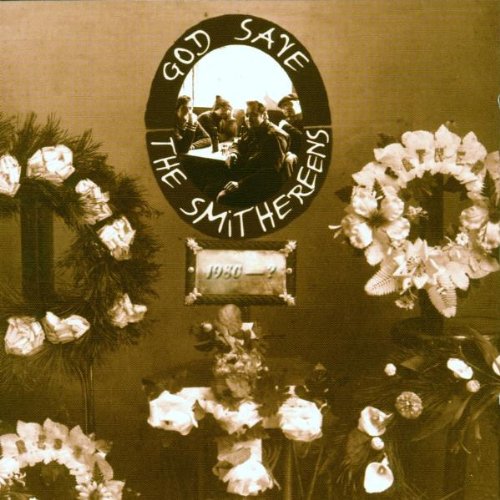
Smithereens 6: God Save The Smithereens

Towards the end of last century, new record labels were popping up left and right. Some were subsidiaries of the majors, and despite their best intentions would be all but wiped out once the majors began consolidating. But many were affiliated with some of the more independent distributors, and were run by music geeks who wanted to give some of their old heroes a fresh outlet.

One of these labels was Velvel, which began as a vanity label for the former head of Columbia Records, but soon spearheaded some comprehensive Kinks reissues. It also released Pat DiNizio’s little-heard solo album, and greenlit a new full-fledged Smithereens album.

After five years of no hits, constant gigging, and quite possibly the detour provided by that solo album, God Save The Smithereens isn’t a complete return to form, but wisely avoids any gimmicks. It’s simply a pile of tracks that sound like the band, with crackling drums, loud guitars, and DiNizio’s usual dour croon. “She’s Got A Way” gets a spirited backing the title deserves, before the left turn of “House At The End Of The World”, a collaboration with the otherwise little-known Carrie Akre. “Everything Changes”, “Flowers In The Blood” and “Someday” follow the usual sad path, but “The Long Loneliness” hints at something more upbeat. It’s probably as slow as it is, as any faster it would end up a lot shorter than 1:39.

There’s something a little jazzy about “The Age Of Innocence”, and not just because of the trombone and its being followed by a take on “Gloomy Sunday”. “I Believe” is up there with any of their best tunes, and “All Revved Up” manages to evoke the Beach Boys without being obvious. “Even If I Never Get Back Home” has a nice backwards guitar part at the end, and both “Try” and “The Last Good Time” deviate just enough to sound fresh (for them), sporting chords that hint at dissonance but manage to work.

Given the fluctuating appeal of power pop at that time, God Save The Smithereens could have been welcomed, and even a hit. It wasn’t. The band wouldn’t release a new album for several years, save a few gimmicks we may or may not get to. (For no reason we can determine, the album was reissued in a Deluxe Edition some six years later, augmented not only by some unreleased demos, but Pat DiNizio’s album on a second disc, with live performances and demos tacked at the end of that.)

The Smithereens God Save The Smithereens (1999)—3
2005 Deluxe Edition: same as 1999, plus 27 extra tracks

Friday, October 7, 2016

Pat DiNizio: Songs And Sounds

Given the declining excitement about anything new from the Smithereens, Pat DiNizio made a surprising detour into solo territory. Its faux-jazz packaging, complete with pretentious liner notes, didn’t help any, but those who looked closer could see that Songs And Sounds was recorded with the bass player from the Stranglers, a drummer who’d worked with Jeff Beck and Lou Reed, and a horn player for extra color.

The opening “Where Am I Going?” comes from an old Bernard Herrmann movie score, and its lugubrious sound would confound listeners into thinking he’d turned into Mark Eitzel from American Music Club. But it’s a false alarm, as the next track, and most everything that follows, could easily be a Smithereens track. It’s all there: melody, chord changes, toe-tapping beats. Perhaps some different faces in the studio were just the shot in the arm he needed.

The lyrics are still what we’d expect from the sad sack of Scotch Plains, given the lovelorn content of “No Love Lost” and “A World Apart”. “124 MPH” has a boomy demo quality for a difference, while “Today It’s You” is almost nasty. Contemporary reviews compared his delivery to the mature Elvis Costello, and similarities can be heard on that track and even the lullaby for “Liza” (though she’d probably sleep better if he strummed the acoustic a little more quietly).

Most of Songs And Sounds is slower than punk speed, which isn’t that big a deal, except that it makes the closing cover of “I’d Rather Have The Blues” more of a downer, the studio-verité excerpt hidden at the end notwithstanding. Naturally, the album made no impact on the charts, but it’s still worth discovering.

Pat DiNizio Songs And Sounds (1997)—3

Tuesday, May 17, 2016

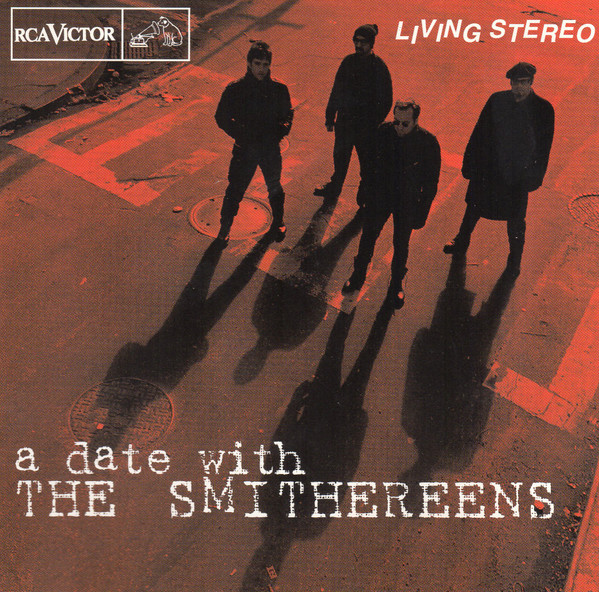
Smithereens 5: A Date With The Smithereens

By the ‘90s, RCA Records long since figured out how to break bands, and tried to stay solvent by offering contracts to bands whose heydays were past. So it was that the Smithereens, who likely felt honored to be a part of the label that once distributed Elvis Presley, ended up with the Record Cemetery of America. A Date With The Smithereens alluded to one of the King’s album titles, touted “Living Stereo” on the front cover, and was even available as a set of 45s, but failed to do much for the band’s fortunes.

Part of the problem was the times, and Pat DiNizio’s mood. Lovelorn is one thing, but here he’s just inconsolable. “War For My Mind” and “Everything I Have Is Blue” aren’t exactly grunge, yet even at a fast tempo they plod. “Miles From Nowhere” was the single, and a good one, but “Afternoon Tea” doesn’t meet its potential by the same chord played on every beat despite the actual modulations in the song. At least “Point Of No Return” and “Sleep The Night Away” (a rewrite of “Cigarette” from the first album) finally provide some of their trademark bite.

“Love Is Gone” and “Long Way Back Again” keep up the energy, and then we come to the misfire of the album, if not the band’s career. The overt Revolver-style arrangement and production belie the misguided op-ed statement of “Gotti”. Their fans don’t listen to the Smithereens for politics, and if the band really felt this way about the situation, you’d think they’d have the balls to extend the title to encompass the message of “free John Gotti”. This isn’t Bob Dylan painting Joey Gallo as a modern-day Western outlaw. While it might’ve made a swell B-side, “Sick Of Seattle” is too clever for its own good, besides repeating the meter from “Sleep The Night Away”. “Can’t Go Home Anymore” drags the proceedings back to normal with a snotty harmonica to boot, which keeps wheezing on “Life Is So Beautiful”.

Ultimately, A Date With The Smithereens turned out to be a one-shot deal; the label didn’t stick with them, and a year later their original label marketed a best-of collection that covered everything they’d done to date, including only “Miles From Nowhere” from this album, and rarities in the way of “Beauty And Sadness” and a cover of “Time Won’t Let Me”. Blown To Smithereens became a perennial catalog piece, both selling the band to newbies and reminding longtime fans of what once was. (For the real geeks out there, Attack Of The Smithereens was loaded with rarities, covers, B-sides and demos, while a decade later, From Jersey It Came! tried to accomplish both hits and rarities in a two-disc package.)

The Smithereens A Date With The Smithereens (1994)—
The Smithereens
Blown To Smithereens: The Best Of The Smithereens (1995)—
The Smithereens
Attack Of The Smithereens (1995)—3
The Smithereens
From Jersey It Came! The Smithereens Anthology (2004)—

Tuesday, December 29, 2015

Smithereens 4: Blow Up

Derivative retro-pop isn’t an easy genre to sustain, even when a band has the chops of the Smithereens. Blow Up (the title another nod to an old movie, with artwork by the legendary Saul Bass) finds the band mining the same territory, which is fine, except that Pat DiNizio started repeating himself, and hadn’t learned his lesson about rewriting his own songs on the previous album.

Maybe he knew his limitations after all, since he doesn’t monopolize the songwriting. “Get A Hold Of My Heart” was written with the matron of the hit single herself, Diane Warren, and outside of a prominent Rickenbacker 12-string, is probably the least exciting song on the album. The “J. Lennon” credited on “If You Want The Sun To Shine” is Julian, whom we would hope had mixed feelings about an arrangement owing months’ worth of debt to “I Am The Walrus”. Guitarist Jim Babjak contributes the best song; “Now And Then” finally gets the recipe correct.

Every track has something going for it, and every track is compromised by something. It starts strong with “Top Of The Pops”, and the Motown soul of “Too Much Passion” is a nice change but goes too long. (Smokey would’ve faded it by 2:50, of course.) “Tell Me When Did Things Go Wrong” finally ups the tempo, but recycles the I-III-V riff from “Yesterday’s Girl”. “Evening Dress” is sweet, and Beatlesque in all the right places, but good luck getting past the tune of “I Saw Mommy Kissing Santa Claus”. Truly odd is “Indigo Blues”, featuring a honking sax and Hammond organ, but the words quote from the middle section of “Shout” and the “here we go [fill in the blank] here we go” chant from every American sporting event ever.

That’s a lot of “buts”, and it would have helped if the guys had been kicked in theirs. For a band that used to have so much energy, the album doesn’t go much faster than “Girl In Room 12”, which fans might recognize as “Blues Before And After”. “Anywhere You Are” distills every hit by the Zombies into a cool little samba, and “Over And Over Again” could easily be sped up for better effect, but “It’s Alright” is just plain confused lyrically.

Blow Up is the least essential Smithereens album yet, and also the longest. Editing, or at least faster arrangements would have been a big help. Despite the shortcomings, it manages to be competent, listenable and even enjoyable if you don’t scrutinize it too much. The sound is big, thanks to producer Ed Stasium, but being released on the cusp of grunge didn’t do it any favors, and their label dropped them after the hits didn’t happen.

The Smithereens Blow Up (1991)—3

Friday, September 4, 2015

Smithereens 3: 11

The cover suggests a nod to the film Ocean’s Eleven (the Rat Pack one, years before the 21st century reboot) while most rock fans would take the title as a Spinal Tap reference. With 11, the Smithereens were able to keep up their track record three albums running.

As ever, it’s all about riffs, volume and melody, so “A Girl Like You” and “Blues Before And After” are pinned to muscular hooks. “Blue Period” sports a chamber pop string quartet, a harpsichord solo influenced by “In My Life” and—wait for it—Belinda Carlisle on harmonies. But good as they are, “Baby Be Good” and “Room Without A View” already sound like other Smithereens songs—“Listen To Me Girl” and “House We Used To Live In” respectively—a trend that becomes more apparent for the duration of the album.

“Yesterday Girl” is pretty snappy, even if it does share several elements with the Beach Boys’ “Girl Don’t Tell Me”, which they already covered on their first EP. “Cut Flowers” is the only song on the album with a co-writing credit, and perhaps Jim Babjak’s input is what helps make the song so good. Some would suggest it’s the backing vocals by the Honeys, a group better known as Brian Wilson’s ex-wife, ex-sister-in-law and ex-cousin-in-law. Speaking of which, the name “William Wilson” is a cross between the California auteur and an Edgar Allen Poe protagonist, and it’s a pretty busy song for such an obscure narrative. Keeping with the retro references, “Maria Elena” was also the name of Buddy Holly’s wife, and while it references a few song titles, the catchiness is more Pat DiNizio than Holly. Despite the Beatles ‘65-style intro, “Kiss Your Tears Away” is a midtempo lullaby with a prominent Coral sitar.

There’s a lot to like on 11, but it’s not as strong as the first two, and not just because those had all the good ideas. Consumers thought differently, and bought enough copies of the album to keep the band on the road for another year.

The Smithereens 11 (1989)—3

Friday, May 8, 2015

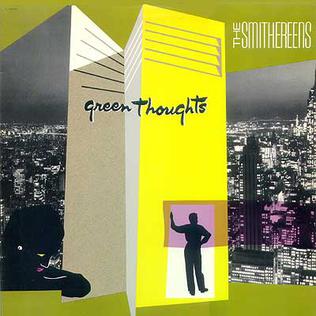
Smithereens 2: Green Thoughts

Their first album was something of a slow burner, so the Smithereens were able to keep the momentum going for their follow-up. Green Thoughts finds the boys mining familiar territory — harder power pop, with arrangements that skirt within a hair of outright plagiarism. In other words, just what the people wanted.

“Only A Memory” (its chorus stolen from the melody of Buffalo Springfield’s “Rock ‘N Roll Woman”) burns on a slow riff, and a similar sound drives “House We Used To Live In”. “Something New” cleverly takes its title and sound from American Beatles albums circa 1964, and its opening hook from the Kinks’ “Stop Your Sobbing” — all in less than two minutes. As sunny as that sounds, it’s still another song of heartbreak, as is “The World We Know”, another stomper, and perhaps another nod to the past, in this case a mid-‘60s Sinatra album. The moody “Especially For You” (which of course was the title of their first album) is built on piano and saxophone accents, and an effective side-closer.

Things turn back up on “Drown In My Own Tears”, something of a radio hit around certain parts. “Deep Black” has a cool near-Leslie guitar part playing off an acoustic, and is also a sunnier arrangement than the lyrics would suggest. You’d expect Pat DiNizio to write a song with a girl’s name in it, and that would be “Elaine”, where he reminds us yet again how lonely he is. The near-swirling production of “Spellbound” doesn’t go too overboard nicely uses the second middle-eight for a guitar solo, justifying its four-minute length. “If The Sun Doesn’t Shine” sports high harmonies and a tinkling harpsichord right out of the Beach Boys for welcome relief, and the closing title track provides another opportunity for a distinct riff.

Just as before, Don Dixon produced, echoing his work with R.E.M., and all the tracks on Green Thoughts are toe-tapping and hummable. Yet for all their homage to the “old days”, the album sports enough sheen to keep it sounding right up to date, and not dated today.

The Smithereens Green Thoughts (1988)—4

Tuesday, February 10, 2015

Smithereens 1: Especially For You

A band that presented power equal to their pop, the Smithereens were around a long time before becoming mainstream. Their debut EP, 1980’s Girls About Town, presented four songs with “girl” in the title—three originals, plus a cover of the Beach Boys’ “Girl Don’t Tell Me”. It’s bouncy, jangly pop, though Pat DiNizio had yet to develop his mopey baritone, sounding a lot like Joe Jackson on the title track. 1983’s Beauty And Sadness, reissued after the band got big, has a different gimmick; this title track’s drums are right out of “Tomorrow Never Knows”, “Some Other Guy” shares its title with an early Beatles cover, while “Much Too Much” is also the name of a Who song, but here sounds like the Stray Cats. “Tracey’s World” is an upbeat lovelorn lament in the spirit of the girl groups.

By the time of their first album, DiNizio learned to write songs in different styles, while the band found their ideal sound by running their Rickenbackers through Marshall amps. Especially For You straddles bona fide ‘60s pop with the brooding jangle recently popularized by R.E.M. and other college rock bands. “Strangers When We Meet” is a crackling opener, with harmonies equal parts Beach Boys and Hollies, and a title like “Groovy Tuesday” could only have come from a mind stuck to the radio. That’s how “Listen To Me Girl” is a cousin of The Who’s “Circles” with harmonica replacing the French horn, “I Don’t Want To Lose You” ends with the solo from “Feel A Whole Lot Better”, “Time And Time Again” turns on a riff everybody’s fudged, and “Crazy Mixed-Up Kid” is pure Beatles ‘65.

But you’ll be hard pressed to find a ‘60s equivalent to the menace in “Blood And Roses”. Name-drops of Bill Wyman and Jean Shrimpton are the only retro features of “Behind The Wall Of Sleep”. “Cigarette” features a prominent accordion, while “In A Lonely Place” uses vibraphone and Suzanne Vega to exude coffeehouse cool. “Hand Of Glory” sounds different, probably because it was written by little-known musician Jimmy Silva. “Alone At Midnight” is a bit of a downer, but it fits the image. (Later CDs added two bonus tracks: the trashy encore “White Castle Blues” and Dick Dale’s “Mr. Eliminator”.)

Especially For You still appeals on several levels, from rock ‘n roll to alternative, and the reason is the songwriting. That it was anachronistic in the ‘80s makes it just as enjoyable today.

The Smithereens Especially For You (1986)—4