Showing posts with label 1998. Show all posts

Tuesday, August 4, 2026

Ringo Starr 13: Vertical Man

Just like Paul McCartney, Ringo Starr had more time on his hands in the wake of the Beatles Anthology promotion wave, so why not do any album? While Vertical Man was still something of an all-star project, he took a more active role in the songwriting, co-writing all but two tracks, playing drums throughout and even some other instruments. His right-hand for the proceedings was Mark Hudson, who’d graduated from a Beatlemaniac in a band with his brothers on Saturday morning TV to become something of a hit songwriter and producer. Besides playing and writing for the album, he added lots of backing vocals and harmonies that had listeners checking the credits to see who was singing. The results were probably his most consistent album in, well, decades.

“One” is power pop filtered through country, thanks to Jeff “Skunk” Baxter on pedal steel, which sounds enough like George Harrison among the 12-strings. Paul provides harmonies as well as bass on the enjoyable “What In The… World”, returning the favor from Ringo’s help with Flaming Pie. But then “Mindfield” puts Ringo’s voice through a speaker for a wacky effect and comes this close to being rap. Joe Walsh’s solo is suitably loud, and the explosion at the end is stupid. The wistful “King Of Broken Hearts” also resembles George Harrison to warrant lovely guitar parts weaved through, with subtle strings and even Mellotron to help it along. Two tracks later, the title track has a “When We Was Fab” vibe and Hudson quirks to be yet another Beatlesque knockoff that’s starting to push its luck. (Ozzy Osbourne sings on this one.) But in between there’s “Love Me Do”. While his reasons for remaking it are understandable—he was relegated to tambourine for the Beatles’ original single—it’s extraneous, notable only for Steven Tyler on harmonica, who likely found his way there via Hudson. Nobody needed another version of Dobie Gray’s “Drift Away” either, and Steven Tyler’s vocal was nixed by his label, so his part was replaced by Tom Petty. Alanis Morissette’s contribution stood, and if you listen close you can hear Rose of the Family Stone in there somewhere.

Alanis and Paul sing along with “I Was Walkin’”, and Steve Cropper adds a guitar solo, so the mid-‘70s vibe is mostly charming until the unnecessary “sleep” sequence. and “La De Da” is also mostly harmless, even after five minutes, with roughly three dozen friends singing along the chorus, and they wisely kept Paul up in the mix. “Without Understanding” is one of his more convincing rock songs, though the operatic opening is odd, and we suppose the reference to “good vibrations” was reason enough to get Brian Wilson to add a bunch of layered vocals. The modern rockabilly of “I’ll Be Fine Anywhere” gets a boost from another Harrison solo, and it’s a good lead-in to the slap-back percussion of “Puppet”. To keep it in the family, George Martin provided the string arrangement for “I Am Yours”, a very sweet tribute to Mrs. Starkey.

Those who bought the album at Best Buy got a bonus disc with three extra songs, all somewhat country. For some reason “Mr. Doubleitup” ends with a lounge instrumental of “With A Little Help From My Friends”), while “Sometimes” and “Good News” were a little more straightforward, with an accent on humor. At a time when Garth Brooks, Shania Twain, and their ilk were selling millions, it’s anyone’s guess whether these should have gotten wider distribution.

Ringo went into overdrive promoting the album, with the biggest appearance arguably on VH1 Storytellers, that channel’s variation on the “unplugged” special. Along with the ubiquitous Hudson, the band included Joe Walsh, Simon Kirke, Jack Blades of Night Ranger. He actually had a hand in writing most of the songs in the set, so his anecdotes about them are pertinent as well as enjoyable—even the ones you’ve heard before. He even played piano to start “Don’t Pass Me By”. A CD of the performance was released four months after Vertical Man, and did worse on the charts.

Ringo Starr Vertical Man (1998)—3
Ringo Starr
VH1 Storytellers (1998)—3

Friday, September 29, 2023

Prince 22: Crystal Ball and The Truth

In an effort to keep his public offerings up with his musical output, TAFKAP tried a number of methods to work around the standard record company distribution model. One such gamble was a multi-disc outtakes collection called Crystal Ball, initially sold only on his website as a carrot or thank-you gift to his fans, who knew he had tons of great stuff in his vaults that never got out due to his “enslavement” to corporate schedules.

That would have been fine, but then he decided to sell it through the Best Buy and Blockbuster chains as well, while some people who ordered it “exclusively” from the website a full year earlier still hadn’t received theirs yet. Perhaps it’s not fair to condemn the man, since he was, after all, trying to get music to the fans without being tied to the big corporations. But while using the chains certainly got it out to a lot of people, it didn’t really help the independent stores, which were still in the best position to promote Prince (sorry, TAFKAP) to the people who still cared about him. But there we go being naïve again.

This editorial notwithstanding, Crystal Ball certainly deserves mention if only for the utter sprawl of the contents, which are pulled from the guy’s entire career to date over three discs. To begin with, the opening ten-minute title track originally served the same purpose for the album first compiled in 1986, which itself evolved from an album called Dream Factory, the title track of which comes next. Both are funky, and a little strange, and would have been just as mystifying had they appeared back then.

About a third of the music comes from the fertile, fabled mid-‘80s period. “Movie Star” is a wonderful Morris Day template, while the man himself plays drums on all fifteen minutes of “Cloreen Bacon Skin”. “Sexual Suicide”, “Last Heart”, and “Make Your Mama Happy” come from the Dream Factory era, “Crucial” was cut from Sign "☮" The Times for “Adore”, “Good Love” is a “Camille” track given to a movie soundtrack, and “An Honest Man” is an a cappella Parade outtake; we’d’ve preferred the instrumental from Under The Cherry Moon.

That’s not to say the more recent tracks, mostly from the mid-‘90s, aren’t as interesting. Standouts include the P-Funk homage “Hide The Bone”, “Acknowledge Me” and “Interactive”, supposedly dropped from The Gold Experience in favor of other tracks, and certain remixes of existing tracks (“So Dark”, “Tell Me How U Wanna B Done”). “She Gave Her Angels” is just lovely, but “Strays Of The World” is overwrought, though the guitar solo redeems it. “The Ride” and “Days Of Wild” were recorded live with the New Power Generation, the latter notable for being nearly the last time he’d curse on stage, and “Goodbye” provides a nice slow jam finale.

A lot of material, to be sure—and he even included liner notes for each track (as well as lyrics online at a dedicated website). It all flows together, and manages to match up despite covering a ten-year period. Without an overarching theme, it’s enjoyable if unwieldy.

As something of a bonus, perhaps because the thing took so long between announcement and arrival, a fourth disc was included in the retail version. Mostly low-key, The Truth is basically Prince with an amplified acoustic, overdubbing effects and other instruments from NPG members here and there.

The title track is still fairly profane, but tasty, as is “Don’t Play Me”, despite consisting of a single riff. “Circle Of Amour” is a wistful memory, very close for plagiarism to Janis Ian’s “At Seventeen”; a coda in another style shows he’d at least tried to modify it. “Third [Eye]” features fretless bass as well as some very jazzy chords, whereas “Dionne” is a slightly orchestrated plaint of petulant heartbreak. “Man In A Uniform” is a blues sporting a silly “reveille” synth part as a riff.

With its distorted vocals, “Animal Kingdom” isn’t any more effective a defense of vegetarianism as any other musician; plus, the dolphin sounds just sound cartoony. We’d like to think Stuart Scott influenced “The Other Side Of The Pillow”, but we haven’t been able to confirm this. The busy “Fascination” was mixed down from another session, and very well, so that it fits in here. Guitar is not the focal point on the bereft slow jam “One Of Your Tears” until the end, but it does support all the vocals on “Comeback”, a relatively brief song about loss, possibly about his son, who died six days after his birth. The fact that “Welcome 2 The Dawn” is labeled “Acoustic Version” suggests that a more elaborate production was in the works, yet none has appeared. At any rate, it’s another fine Prince finale.

The Truth was mostly overlooked at the time except for diehards, but in recent years it’s been reissued on its own on vinyl as well as for streaming, and is ripe for rediscovery. Its rating is as high as it is for standing out so well. (For those who’d ordered Crystal Ball direct, a fifth CD was included as well. Originally released via mail-order cassette, Kamasutra was credited to The NPG Orchestra and is entirely instrumental. Either designed to accompany a ballet, his wedding ceremony, or both, it has symphonic and classical touches, and save a few sax-based segments, doesn’t sound anything like him.)

o|+> Crystal Ball (1998)—3
o|+>
The Truth (1998)—
The NPG Orchestra
Kamasutra (1998)—3

Tuesday, August 24, 2021

They Might Be Giants 9: Severe Tire Damage

For years, They Might Be Giants worked just as hard at presenting a unique live show as they did crafting their songs in the first place. Now between labels, they took the opportunity to compile their first full-length album from various concerts and field recordings of a sort.

On Severe Tire Damage, familiar songs are largely revamped with the horn and rhythm sections they incorporated throughout the ‘90s. The most radical change is with their punk re-arrangement of “Why Does The Sun Shine?”, but “Meet James Ensor” is delivered by just voices and accordion. “They Got Lost” and “First Kiss” are early versions of songs to be rerecorded, and three new studio tracks bookend the main program—the horn-driven “Doctor Worm”, the even goofier “Severe Tire Damage Theme”, and the shockingly brief “About Me”. Being the wacky guys they were, the program ends with a series of hidden tracks, all supposedly improvised with nonsensical lyrics spoofing the various titles in the Planet Of The Apes film franchise.

There’s always something of an inside-joke cachet to TMBG, and perhaps Severe Tire Damage is a case of “you had to be there.” But it’s still fun, and that’s where the boys excel.

They Might Be Giants Severe Tire Damage (1998)—3

Friday, January 8, 2021

Rush 21: Different Stages

It was customary for Rush to follow four studio albums with a live album, but Different Stages was, well, different. First of all, it encompassed three full CDs—the first two devoted to music from the Test For Echo tour, with a few tracks from the Counterparts tour. These were even among the first “enhanced” CDs, providing a multimedia lightshow style program when inserted into certain computers.

Because the band is always so precise, the main indication that this is a live album is due to how loud the audience is mixed throughout the first two discs. There is a suggestion in the notes that some of the tapes may have been “messed with” to make a perfect representation, and Geddy’s growing dependence on sequencers for the keyboards while he’s singing and playing bass sometimes brings up sounds and voices that two hands and two feet simply can’t do themselves. (His detour in the middle of “Driven” is therefore a nice distraction.) Still, the extended jam (!) at the end of “Closer To The Heart” demonstrates that they still knew how to have fun. Most of the tunes on the first disc come from the Atlantic years, with detours to “Limelight” and “The Trees”. Then, they play the “2112” suite in its entirety for the first time onstage in years. The second disc stays in the recent past, save a surprise “Analog Kid”; unfortunately, they keep the rap section of “Roll The Bones”. “Leave That Thing Alone” segues into “The Rhythm Method – 1997”, a drum solo from a different date altogether. Then it’s back to the early ‘80s for a lengthy sequence of “Natural Science”, “The Spirit Of Radio”, “Tom Sawyer”, and “YYZ”.

The third disc goes back two decades to an hour’s worth of music excerpted from a show before a rather appreciative Hammersmith Odeon audience in 1978. It’s a good overview of the early years, the epics limited to “Xanadu” and “Cygnus X-1”. (The entire show would have to wait another two decades, until the 40th Anniversary Edition of A Farewell To Kings.) Get your magnifying glass out for the details in the artwork, where we see a modern-day Geddy scalping tickets, Alex being dragged off in a straitjacket, and Neil silently observing from the balcony.

Per their custom, it’s a good summation of the best aspects of their most recent phase, uneven as it was. As it turns out, this sprawling tour through the band’s history served a larger purpose. Coming in the aftermath of Neil Peart’s daughter’s death in a car accident, followed within a year by his wife’s death from cancer and his subsequent withdrawal from the band, Different Stages didn’t so much close a chapter as present a grand finale for the band.

Rush Different Stages (1998)—

Friday, December 18, 2020

Phil Collins 7: Hits

Even though Phil Collins no longer resembled the prog-rocker he once was, some of his pop songs remained guilty pleasures, or at least mild departures during the years before we even dreamed how he’d turn out. Particularly after confounding listeners throughout the ‘90s, an actual hits collection was a commercial no-brainer.

Stylized with an ellipsis, …Hits delivers the promise of the title, yet in a baffling sequence. Starting with the depressing message of “Another Day In Paradise” is one thing, but then he follows it with a cover of “True Colors”, as made famous by Cyndi Lauper when Genesis still had something of an edge. Speaking of covers, “You Can’t Hurry Love” precedes “Two Hearts”, which it resembles both musically and in the respective videos. Still, the latter song, along with “Groovy Kind Of Love”, makes it easy to live without the Buster soundtrack, just as “Easy Lover”, “Against All Odds”, and “Separate Lives” collect other non-album tracks.

You can only cram so many songs onto a single CD, so there are some curious omissions. Instead, “Both Sides Of The Story” and “Dance Into The Light” make sure the ‘90s albums are covered, but only “In The Air Tonight” comes from his first. But those guilty pleasures rise to the top, and manage to make up for the likes of “Sussudio”.

Phil Collins …Hits (1998)—3

Friday, September 4, 2020

Genesis 19: Archive

With the band all but over, the longtime members of Genesis convened to compile a box set of rarities. Rather than cram all their incarnations into a single sprawling compilation, Genesis Archive 1967-75 wisely concentrated on the Peter Gabriel years. In an eccentric move, but ultimately a method that enhanced the listening experience, the program went backwards, kind of. (We’ll explain.)

The first two discs are devoted to the only professionally recorded live performance of The Lamb Lies Down On Broadway. The sound is terrific, the rhythm section and keyboards tight, and Peter’s occasional song introductions attempt to shed some light on the work’s thick plot. Because many of the songs as originally performed had less-than-stellar vocals due to the costumes he wore onstage, Peter re-recorded an indeterminate portion of the vocals specifically for this set. Steve Hackett allegedly redid some of his guitar parts too. Because (they said) the tape ran out for “It”, that song is included in its studio incarnation with all new vocals.

The third disc begins with five songs from a 1973 concert at London’s Rainbow Theatre—four from Selling England By The Pound, plus “Supper’s Ready”, the latter supposedly with new vocal parts as well. A BBC performance of “Stagnation” with the then-newly recruited Steve Hackett and Phil Collins is excellent. Three rare singles fill the rest of the disc. “Twilight Alehouse”—originally from the Foxtrot era but eventually released as the B-side to “I Know What I Like”—is unsettling in its portrait of an ordinary yet disturbed man (as opposed to fantasy or mythological creature) finding solace in alcohol, but the instrumental break is worth it. The standalone “Happy The Man” single sounds almost like a parody of Cat Stevens (despite the alarming rhyme “like a nun with a gun”). The drastically re-arranged, re-recorded single version of “Watcher Of The Skies” cuts out the entire Mellotron intro, sticks to the verses, and fades on a chant.

The fourth disc is the most challenging, simply because it goes way, way back to when they were just kids starting out, before Steve and Phil. Some of these are more historically than musically interesting; good luck enduring “Let Us Now Make Love” without cringing. A strings-less mix of “In The Wilderness” suggests that a stripped-down version of the debut might be of interest, as are such demos as “Dusk” and “She Is Beautiful”. A few tracks recorded for the BBC and nowhere else are also unique in that Peter shares some vocals with Tony Banks and Anthony Phillips. The bulk of the disc predates the first album, and includes even more straight pop and love songs than anything they’d do until the ‘80s.

Coming at a time when Peter was supposedly hard at work on his next album, the Genesis Archive reminded people who’d given up on the modern version of the band where they’d come from. It didn’t do Phil Collins any favors, unless you listen closely enough to the drums.

Genesis Genesis Archive 1967-75 (1998)—

Tuesday, August 11, 2020

Marshall Crenshaw 9: The 9-Volt Years

We generally like it when artists put out compilations of their demos and works-in-progress, and a record geek and studio-holic like Marshall Crenshaw fits the bill. As the subtitle suggests, The 9-Volt Years: Battery-Powered Demos & Curios (1979-198?) covers a wide period of creativity.

It’s usually a smart move to include familiar tunes on discs like this; “Someday, Someway” and “Rockin’ Around In N.Y.C.” are blueprints for the first album, while “Vague Memory” is a late-‘80s reworking for the better, and “Bruce Is King” is a fascinating instrumental version of what would become “Blues Is King”. “Something’s Gonna Happen” and “You’re My Favorite Waste Of Time” appear very close to the versions originally released as singles, and had been hard to find for several years.

Esoteric covers have dotted his career, represented here by Bo Diddley’s “I’m Sorry” and radio performance of Sam Cooke’s “That’s It, I Quit, I’m Movin’ On”. He’s kind enough to help his brother Bob out with royalties, thanks to the inclusion of the otherwise unknown “She’s Not You” and the wonderful “Everyone’s In Love With You”, for which he credits Burt Bacharach as an influence, but we also hear Todd Rundgren. “Bad Luck” is collaboration with Was (Not Was), enhanced here by some subtle yet hilarious sound effects, while “Stay Fabulous” is a simple instrumental designed to stay that way. “Run Back To You” fits with the sunny power pop of the debut, though “First Love” would have been fine for a made-for-TV movie on the very subject. For some reason he includes a nine-second snippet called “…The Thrill Of The Fight…”, which allegedly illustrates a fistfight in the crowd at the end of a gig, not that we could tell if the liner notes hadn’t told us.

Much like Pete Townshend’s Scoop compilations, The 9-Volt Years likely represents a small fraction of the cassettes and other media Marshall Crenshaw has piled up over the years. Wisely, his self-deprecating nature keeps it from being a complete ego trip.

Marshall Crenshaw The 9-Volt Years: Battery-Powered Demos & Curios (1979-198?) (1998)—3

Friday, December 27, 2019

Journey 11: Greatest Hits Live

Unlike the Eagles, Fleetwood Mac, and other arena bands who reunited in the ‘90s, Journey did not tour to support their reunion album, which pissed off everyone in the band who wasn’t Steve Perry. Holograms hadn’t become an onstage thing yet, so Columbia did the next best thing in their power to cash in while they still could.

Greatest Hits Live cobbled a disc’s worth of live recordings from the Escape and Frontiers tours, effectively presenting a concert document in the form of a sequel to Captured. Some songs are repeated from that album, but Jonathan Cain did his homework and lived up to the challenge of replicating parts he didn’t write. The sequence is very much focused on the hits, but it is faithful to the shows in that “Lights” goes into “Stay Awhile” and “Lovin’, Touchin’, Squeezin’” is dragged out to seven minutes.

The liner notes made a big deal of saying how the tapes were “discovered” by chance and had to be baked before they deteriorated completely, but some of the music had indeed appeared before. This was proven a handful of years later when a complete show from 1981, which got lots of airtime in the early days of MTV, was cleaned up for an official DVD, released with a companion CD that was eventually made available on its own. Live in Houston 1981: The Escape Tour gets a slight edge over its half-brother, being that the sequence is true and Steve’s inter-song “ad-libs” make better sense in context. You also get extended solo showcases from Jonathan, Neal Schon, and Steve Smith. The CD even has something the DVD doesn’t, that being a live version of “Hopelessly In Love (The Party’s Over)”. The cover art isn’t too imaginative, but at least it’s not as baffling as the scary bird lady who adorns Greatest Hits Live.

Journey Greatest Hits Live (1998)—3
Journey
Live in Houston 1981: The Escape Tour (2005)—

Tuesday, January 8, 2019

Steve Perry 3: Greatest Hits

Yes, we know what you’re thinking. Did the few hits Steve Perry had outside of Journey constitute a full album, particularly in a CD era that demanded a sequence at least an hour long? No, they didn’t. Yet to this day marketing geniuses still use the term “greatest hits” when they really mean “best of according to somebody’s whim.” Even more confusingly, the official title was Greatest Hits + Five Unreleased. The second half was correct, if a little too precise. (Bear with us, we’ll get there.)

The set duly kicks off with the four singles and/or radio hits from Street Talk, negating the need to own that album, plus “Go Away”, seemingly because it was the only other decent song on it. “You Better Wait” and “Missing You” represent For The Love Of Strange Medicine, but only after seven tracks not widely known.

As it turns out, he hadn’t been silent after Raised On Radio; rather, he completed a solo album in 1989 that (he says) was rejected by the label. Some of those songs had snuck out as the CD equivalent of B-sides to the Strange Medicine singles, where they were well received by the dozen or so people who heard them. While “Forever Right Or Wrong (Love’s Like A River)” and “Against The Wall” are a little overblown, they’re still catchy, just as “Melody”, “Once In A Lifetime Girl”, and “What Was” are decent pop fodder. “When You’re In Love (For The First Time)” and “Summer Of Luv” suggest that maybe the label was right, but the others have more staying power than most of Strange Medicine.

Back to the chronology, “I Stand Alone” is from the animated flop Quest For Camelot, the soundtrack of which put him in the company of Leann Rimes, Celine Dion, Andrea Bocelli, and the long-awaited collaboration of Eric Idle and Don Rickles. “It Won’t Be You”, denoted a “writing demo”, was one of those B-sides, but another, the expert “If You Need Me, Call Me”, is represented instead a 1977 track recorded by the band he was in before Journey. (The liner notes carefully list every single musician credit for all the songs.)

So with all that, the album title was half right. But while calling out the five “new” songs guaranteed sales to Journey fans who already had the Strange Medicine singles, it undersold the total contents, which weren’t all hits but weren’t complete dogs. Perhaps that’s why, when the album managed to be rereleased as part of a Journey catalog overhaul, the title was reduced to simply Greatest Hits, but with a bonus in the form on “Don’t Fight It”, a duet with Kenny Loggins that actually was a hit. (For those who have to have everything, 2009’s Playlist: The Very Best Of Steve Perry budget compilation repeats a dozen of the alleged greatest hits, and adds two more from Strange Medicine.)

Steve Perry Greatest Hits + Five Unreleased (1998)—3
2006 Greatest Hits reissue: same as 1998, plus 1 extra track

Friday, January 4, 2019

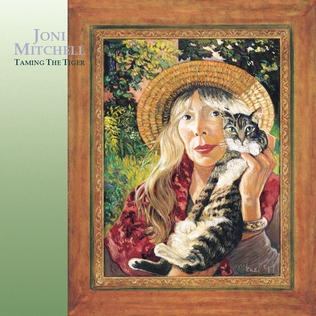
Joni Mitchell 19: Taming The Tiger

Between the Grammy Awards and the legs on her hits album, it’s safe to say that Joni Mitchell was about as high-profile as she would ever be. In addition to critical respect and public appreciation, the tabloids had a feel-good story on her hands when she was reunited with the daughter she’d given up for adoption 33 years before.

But anyone expecting Taming The Tiger to reflect all that good news just doesn’t know Joni. As ever, she’s experimenting with new sounds—this time courtesy of a guitar synthesizer that not only enabled her to change between her multitude of tunings in a matter of seconds, but provided sounds and textures that inspired the songs she wrote on it. The usual gang of supporting players is here, particularly Wayne Shorter and his soprano sax (one of the few horn players we don’t mind hearing as much as we do him).

In a mild act of defiance to anyone expecting easy listening, “Harlem In Havana” begins with atonal percussion effects, which turns into the sound of a carnival gone haywire, the canned sounds of excited riders coming off more like screams of actual terror. But soon enough a melody emerges, as does a song, and the jarring feeling passes. “Man From Mars” is a heartbreaking song of loss, lamenting the one who left, but what makes it so universal is that it’s actually about her cat, immortalized in the paintings throughout the packaging, who disappeared after she scolded him for peeing on the floors. (The lesson, of course, is that pain is just as real for the loss of a pet as it is a partner, and if you’ve never experienced either, you’re lucky.) To that point, “Love Puts On A New Face” is presented as a recount of a conversation that delineates the difference between the sexes without blaming anyone. Not so for “Lead Balloon”, a nasty song from the opening distortion and the “Kiss my ass” opening line that sticks out like a sore thumb, and frankly goes over like the metaphor in the title. Much more effective is “No Apologies”, another sad rumination on the abuse of women by men who should have known better.

The title track has soothing atmospherics, but outside of the obvious slams against the record industry, the poetry is way over our heads. From there, however, the themes return to those of the heart, and for the better. “The Crazy Cries Of Love” puts new music to words by a fellow Canadian songwriter she admired, and has some wonderful, hopeful imagery. The song most people would focus on is “Stay In Touch”, a gentle acknowledgement of the new relationship she was developing with her daughter, who brought along a family of her own. It’s nicely paired with “Face Lift”, said to be based on an argument she’d had with her own aging mother. Something of a benediction comes in “My Best To You”, her reinterpretation of an ancient song by the Sons of the Pioneers. Then, after what seems like an eternal gap of silence, “Tiger Bones” emerges. It’s a solo guitar piece, and it’s just lovely. We can’t think of any other instrumental in her catalog, either, so that makes it all the more special.

It may be that in a few years’ time we’ll decry the “cold, dated sound” of Taming The Tiger, but for now, the arrangements and production work, not only recalling parts of Hejira but nicely complementing what we’ll be kind and call her mature vocal range. It was nice to have her “back”; but was she?

Joni Mitchell Taming The Tiger (1998)—

Tuesday, January 30, 2018

Robbie Robertson 4: Contact From The Underworld Of Redboy

Not that age should have any real bearing on the type of music anyone should attempt, but chances are anyone following Robbie Robertson’s career never thought, “I bet he’d sound amazing with some trip-hop beats behind him.”

Yet with Contact From The Underworld Of Redboy, that’s more or less what he did. Following along from the field experiments of Music For The Native Americans, Robbie continued exploring elements of music by the indigenous peoples of Canada, and collaborated with hip programmers Howie B. and Marius de Vries. The result is jarring, and not exactly cohesive.

While some of the tracks are fine without his vocals (still an acquired taste), when he does put himself at the forefront of the mix, we wish the extra dressing could be stripped away for the songs to breathe. “The Code Of Handsome Lake” and “Unbound” follow closest to the first two solo albums. The centerpiece of the album is arguably “Sacrifice”, which gives voice to convicted activist Leonard Peltier. Somehow the message is diluted by the samples from “One Step Beyond” on “Take Your Partner By The Hand”.

As a Robbie album, it fails. As a world fusion album, we’re not the ones to judge.

Robbie Robertson Contact From The Underworld Of Redboy (1998)—2

Friday, June 9, 2017

Oasis 4: The Masterplan

Like all good British bands, Oasis had amassed a pile of B-sides for all the singles they’d released over the span of three albums. Most of these have been included on expanded 21st-century versions of those albums, but back when the band was still fresh, 14 of them were put together on The Masterplan.

Besides keeping these songs available, the set nicely reinforces Noel Gallagher as a performer in his own right. The orchestral pomp of the title track just wouldn’t fit with Liam’s sneer anyway. Noel’s acoustic busk of “Morning Glory” bookends “Acquiesce”, and he also sings the choruses in between Liam’s verses. “Talk Tonight” is a wonderfully sensitive plea for sanity, while “Going Nowhere” suffers from the Bacharach overload of the time. Speaking of which, “Half The World Away” bears a strong resemblance to “This Guy’s In Love With You”, but only in the main theme and a few of the chords. While we’re at it, “Listen Up” resembles “Supersonic” from the first album, but has some intricate (for Noel) modulations over the chorus that make it the better song; perhaps such touches kept it a B-side. “Headshrinker” is blown open with a great Stonesy riff, making a nice diversion from the usually worn influences.

Still, some of the songs were better as B-sides. “The Swamp Song”, excerpted as interludes on the Morning Glory album, is interesting to hear once in total, while the accordion diversion at the end of “(It’s Good) To Be Free” is just silly. And although their loud, live plow through “I Am The Walrus” wouldn’t have sat well on an album, it’s great to have here.

As only two of the tracks come from singles released to promote Be Here Now, The Masterplan might have made for a better third album than the overblown mess that did come out. Instead it became a nice reminder what made the band so good in the first place, and might even have helped keep them relevant into the next century.

Oasis The Masterplan (1998)—

Friday, July 8, 2016

Van Morrison 32: The Philosopher’s Stone

An artist as contrarian as Van isn’t about to give any people what they want, so news of a double-disc collection of unreleased material was surprising, and dubious once it was delayed. But two years after its original announcement, The Philosopher’s Stone arrived mostly as originally described. Basically his Bootleg Series, covering twenty years of recordings, it is alternately fascinating and frustrating, and not just because the sparse liner notes are misleading.

The first disc is chock full of worthy leftovers from his best early-‘70s work, starting with the simple blues of “Really Don’t Know” and “Ordinary People”. But then we have the original recording of “Wonderful Remark”, ten years before the recording that would be released first, and about half the speed, running eight minutes with a prominent flute and backing vocals from Ronnie Montrose. It kicks off an album’s worth of tracks that are just as good as (if not better than) what came out on Hard Nose The Highway. “Not Supposed To Break Down” and “Contemplation Rose” are just plain lovely, “Laughing In The Wind” a spirited duet with Jackie DeShannon, and “Lover’s Prayer” simple but catchy, despite the Johnny Carson reference. Not easily deciphered is “Madame Joy”, a much more carefree tune than its cousin on Astral Weeks. “Don’t Worry ‘Bout Tomorrow” is back to the blues, with a moment of the harmonica getting intentionally stuck in his mouth. “Try For Sleep” and “Twilight Zone” utilize the falsetto that stuck out like a sore thumb on Veedon Fleece, the latter even showing some humor by the end. Then there’s “Drumshambo Hustle”, a nasty tale about The Business, always lurching toward the hilarious couplet: “You were puking up your guts/When you read the contract you just signed.” “Foggy Mountain Top” and “There There Child” would have been familiar from his shows of the period, so it’s interesting to finally hear how they might have made it to albums had he so chosen. “Naked In The Jungle” provides a transition of sorts, its heavy percussion and insistent delivery way different from the rest of the disc.

The second disc is as spotty as the later albums that spawned from these sessions, though there are some nice moments here and there. We can almost imagine how his abandoned 1975 album might have sounded. Leading off the disc is a gem from this period that got its first airing in an inferior later take. The original “The Street Only Knew Your Name” is one of the best recordings in his catalog, the entire track falling together perfectly. Unremarkable versions of “John Henry” and “Western Plain”, both blues standards, suggest he was more interested in other music than his own, though “Joyous Sound” and “Flamingos Fly” appear in more palatable arrangements than first released. “I Have Finally Come To Realize” oozes with ‘70s smoothness, wisely left aside. We get a fascinating extension of “Stepping Out Queen” from after its fade on Into The Music, but a less exciting “Bright Side Of The Road”. “Street Theory” and “Real Real Gone” provide more upbeat insight into the Common One sessions; again, the released version of the latter is the keeper. By now we’re in the ‘80s, and it’s rough going. “Showbusiness” is another rant about one of his obsessions, but meanders for nine minutes; “For Mr. Thomas” is a duet with himself on a cover of a Robin Williamson song. “Crazy Jane On God” is the Yeats poem notoriously deleted at the last minute from A Sense Of Wonder, while “Song Of Being A Child” is a poem made famous by the film Wings Of Desire; Van’s version is delivered in a rapid-fire call-and-response with singer June Boyce. Finally, while “High Spirits” is a collaboration with the Chieftains, it does not approach even the lesser moments of Irish Heartbeat.

The Philosopher’s Stone is recommended for the first disc alone, and while the second doesn’t reach those heights, there’s nothing really terrible there. As a pricey double-disc, it should be approached on those terms. Tellingly, while the inner liner labels it “Unreleased Tapes Volume One”, there has been no sequel following this template.

Van Morrison The Philosopher’s Stone (1998)—

Friday, May 23, 2014

Bruce Springsteen 14: Tracks

Fans who saw the shows Bruce played to promote The Ghost Of Tom Joad were understandably excited whenever he pulled out a little-played oldie, or better yet, something that never made it to a record. That feeling of nostalgia, along with the knowledge that it would sell, likely fueled the completion of his second box set. Tracks presents four discs of studio material covering 25 years of recording. Only two songs were recorded live (besides, that area was pretty much covered already) and nine had been B-sides, leaving 55 songs put on tape with every intention, at one time or another, of competing for a spot on whatever album he hoped would emerge from the accumulating pile.

The set starts, appropriately, with four songs from his Columbia “audition”, and proceeds to tell the rest of the story, more or less chronologically, with a lot of deviation to supposedly accentuate flow; frankly, we’re sticklers for recorded order, and we know some of his diehard fans are too. Everything appears in studio quality, whether mixed then or for the box; in a few cases he added horns or even vocals from E Streeters to fill up a song just prior to its release here. We’re hardly of the caliber of the most devoted Springsteen scholars; the supplementary notes compiled by his most dedicated fanzine is required reading for anyone approaching this collection. But we do enjoy lists and puzzles, so hearing this alternate history does provide another perspective, and some more appreciation for why people love the guy so damn much.

Since so many of these songs were at one time contenders for whatever album he was trying to complete, the question is begged as to whether he should have included any of the rejects over what he did. The answer is an emphatic no. While there are some true compositional gems, so many of the tracks have the same production effects that color the ones we already know. The River may or may not have been better off as a single LP, even in the earlier, rejected sequence that would have been The Ties That Bind. Born In The U.S.A. would still have bad synthesizers, and we’ve already discussed how to improve on Human Touch and Lucky Town. And because it only scratches the surface, the jury is out on the alternate universe of Darkness At The Edge Of Town—for now, anyway. (Though we remain fascinated by “Iceman” and the proto-Southside Johnny performance of “Hearts Of Stone”.) The elusive Electric Nebraska stayed hidden away; instead, “Wages Of Sin” is a surprising slow burner from 1982, while the stark demo of “Born In The U.S.A.” better conveys the song’s intent.

As with any project of this theme, the “real fans” had lots of complaints with liberties taken and songs ignored. This continued the following spring when 18 Tracks distilled the box down to a single disc—you know, for the “casual fan”—but also added three songs not on the box, effectively forcing fans to open their wallets again. It’s a well-thought-out selection, focusing on rockers (mostly), alternate versions of familiar songs and two of the more popular B-sides (namely “Pink Cadillac” and the underrated “Janey, Don’t You Lose Heart”). The “new” songs then appear at the end of the disc. “Trouble River” was left off of Human Touch, despite being half-decent, and likely because it runs the same riff into the ground. The legendary Darkness-era song “The Promise” appears in a brand new solo recording, as opposed to a vintage E Street take. But all is nearly redeemed by “The Fever”, the best song left off his second album, perhaps because it sounded so much like his first album (where it also would have been the best song). Criminally excluded from Tracks, one wonders if this was the plan all along.

Bruce Springsteen Tracks (1998)—3
Bruce Springsteen
18 Tracks (1999)—

Saturday, February 1, 2014

David Crosby 4: CPR

In another one of those unlikely stories outside a Lifetime made-for-TV movie, David Crosby needed a liver transplant, and met a kid he likely would have given up for adoption if he hadn’t already ran out on the mother. Not only did young James Raymond bear little resentment towards his deadbeat dad, but he’d spent much of a blissful childhood becoming a rather accomplished musician in his own right. Once this odd couple started spending time together, jam sessions happened, and songs appeared. With the assistance of session rat Jeff Pevar, the easily monikered CPR started playing shows and recording an album.

Even more unlikely, the resultant CPR offers some of Crosby’s best work in literally decades. Relying mostly on Raymond’s musical ideas, which come from places outside his usual toolbox, the lyrics flow without sounding forced or trite. Highlights include “Morrison”, a belated criticism of Oliver Stone’s version of the Doors story. “That House” and “Somehow She Knew” express different kinds of loss and the sorrow they bring. “Rusty And Blue” is fleshed out from his live album, the source of the title “It’s All Coming Back To Me Now”. One PR selling point was “Little Blind Fish”, a CSNY leftover that had snuck out on bootlegs; the similarities are minimal. “Time Is The Final Currency” is a wonderfully understated closer.

Raymond sings the main voice on “One For Every Moment”, with percussion that veers a little close to Stills territory, as well as “Someone Else’s Town”, complete with F-bomb. On his own he sounds like Timothy B. Schmit; with Crosby he provides something of a high Nash counterpoint. The moody “Yesterday’s Child” is the best of his offerings. Throughout, Pevar adds guitar touches worth of Danny Kootch and David Lindley, while a variety of supporting players, some familiar, prop up the back end.

A few years later, following a CSNY reunion album and tour, CPR was back in business with Just Like Gravity. Like the debut, it’s on the long side, but it rocks a little harder, overall. It’s still in the slightly jazzier adult contemporary with New Age touches of the debut, but tunes like “Darkness” use sneaky melodies and non-standard chords to skew off the beaten path. The vocals are also shared more, taking turns on verses, and the kid gets more of a spotlight, taking charge on “Eyes Too Blue” and “Jerusalem”. “Angel Dream” lists Graham Nash as a co-writer, and has something of the moving sweep of “Delta”. Crosby’s voice is still up to the task right off the bat in “Map To Buried Treasure” and elsewhere; the title track is just him and an acoustic, and it’s the sound fans have waited to hear since about 1972.

These albums appeared on a tiny independent label, as did two live recordings, and are tough to find today, but they are streaming. Together they help preserve Crosby’s relevancy as the years go by.

CPR CPR (1998)—3
CPR
Just Like Gravity (2001)—3

Tuesday, July 16, 2013

Crosby & Nash 4: Live and Another Stoney Evening

Presumably to cash in on the reunited CSN’s success, the mustachioed majority of the triad found themselves on a live album to cash in on their time away. Crosby-Nash Live appeared only months after CSN, offering a grab bag of performances from two tours backed by the same guys keeping busy until James Taylor or Jackson Browne called. While the album does offer glimpses of a Crosby yet to be completely derailed by drugs, this duo really weren’t meant to rock. (Well, maybe Crosby, but certainly not Nash.) The best moments are the quietest ones—“Simple Man”, “Page 43”, for example—than the revved-up renditions of “I Used To Be A King”, “Lee Shore” and “Déjà Vu”, the latter of which sounds like they were trying to emulate Miles Davis (whose Bitches Brew-era recording of “Guinnevere” was still in the vaults at that time).

The best live albums show performers in their best element, or at least enhance the songs known inside and out from their studio albums. While not a complete waste of vinyl, Crosby-Nash Live doesn’t fulfill either goal.

Many years later, after their other ABC albums got the digital treatment, Crosby-Nash Live was duly remixed and remastered, and bolstered by two more Crosby performances: a welcome “Bittersweet” and the mega-rare “King Of The Mountain”, which begins with an exploratory, occasionally atonal piano solo, and continues to fight against it.

Before that, however, proof for why we should care about these guys—and why their shows were widely bootlegged in the good old days—arrived via a surprising source. Released in the late ‘90s on the Grateful Dead label, of all things, Another Stoney Evening presented a show similar but not identical to a notorious 1971 bootleg. This is “wooden music” start to finish, the boys strumming songs together and apart, some of which the crowd knew from the CSN albums and their solo albums, and some that hadn’t made it to an album yet. Therefore we here virtual premieres of “Where Will I Be”, “Stranger’s Room”, “Southbound Train” and “Immigration Man”. In-jokes aside, it’s a very intimate show, with none of the sterility of that other live album.

David Crosby/Graham Nash Crosby-Nash Live (1977)—2
2000 remastered CD: same as 1977, plus 2 extra tracks
Crosby-Nash Another Stoney Evening (1998)—

Sunday, December 2, 2012

King Crimson 18: Absent Lovers

Having already looked at both ends of the ‘70s version of the band, the next archival release from King Crimson covered the ‘80s version. Absent Lovers presents the final show of the tour supporting Three Of A Perfect Pair, which was also the last time these four musicians would play together for ten years. The show was originally recorded for radio broadcast, and promptly bootlegged, and while this official version is mixed from the original multitracks, some odd fades suggest that a boot might have been the source.

It’s no big deal, because the recording is crisp. After three albums and tours in this incarnation, they had the set pretty much down. After a lengthy introductory improv titled “Entry Of The Crims”, the disparate pieces come together into “Larks’ Tongues In Aspic Part III”, and off they go. As the vocalist, Adrian Belew takes the opportunity to engage the crowd in between songs, and his vocals are still a matter of personal taste. He even takes time at the end to individually acknowledge everyone on the tour crew. Outside of excellent versions of “Red” and “Larks’ Tongues In Aspic Part II” (both of which originally recorded in the ‘70s, so Bill Bruford gets to show how well he remembered them), the set leans heaviest on what was the new album and Discipline, with a few things from Beat, shuffling the pile and juxtaposing more familiar (read: better) songs with ones we overlooked.

And that right there is what makes the album worth it. While the three ‘80s albums sound very cold—partially because of the emphasis on electronics—onstage the pieces have a lot more room to breathe, which Robert Fripp insists is always better anyway. (He has even more to say, about prog and the music industry in general, in the booklet.)

Absent Lovers is a highly recommended introduction to that version of King Crimson, shedding some light onto that section of the catalog and the history. If one really wants to immerse oneself into the era, the On (And Off) The Road box set presents eleven CDs containing remastered versions of the three albums (with bonus tracks), live recordings, and outtakes, as well as Absent Lovers, along with DVDs and Blu-rays loaded with surround mixes and video content. For a smaller sampler, Sheltering Skies presented a 1982 show (from a French date in support of Roxy Music) that had already been released on VHS and DVD. Unique to this set are “Neal And Jack And Me” and “The Sheltering Sky”, plus another version of the latter from a show the day before. Be warned: Adrian Belew does a lot more mugging here.

King Crimson Absent Lovers—Live In Montreal 1984 (1998)—
King Crimson
Sheltering Skies (2024)—3

Saturday, October 13, 2012

Neil Finn 1: Try Whistling This

After Crowded House disbanded, Neil Finn found himself without a band for the first time in decades. So rather than start over with a new combo, he worked from the ground up, mostly on his own, embracing new technology to explore his more experimental side.

The first thing we hear on Try Whistling This is a primitive drum machine, which continues under the pleasantly picked acoustic guitar and sunny melody of “Last One Standing”. Altogether, a good start. “Souvenir” is reminiscent of the lo-fi experiments on the Finn Brothers album, right down to the octave harmonies. With a keyboard and verse right off a ‘70s Eno track, “King Tide” is off-putting at first, but once the other instruments come in, the song rises. Following the moody title track, which comes into its own during the last minute or so, the album’s clear highlight is “She Will Have Her Way”, which could have been a smash hit nationwide had it only gotten airplay. If it wasn’t so slow, maybe “Sinner” would have impressed some programmer, based as it is around a cocktail piano and strings loop.

Knowing how these musical geniuses come up with ideas, we’re going to assume “Twisty Bass” was a working title that stuck. Whatever the story, it’s too long and draggy to keep interest. Luckily, “Loose Tongue” sports one of those infectious riffs; if not for the modern effects, it could be a Crowded House track, and it’s got a cool coda too. “Truth” and “Astro” are further buried gems, and much more straightforward than the middle of the album, but he dumps out the effects bag for “Dream Date”, which is otherwise catchy. “Faster Than Light” suggests that he and R.E.M. were listening to some of the same producers for ideas around the same time. Finally, “Addicted” wanders around a simple tack piano, before winding slowly down to a stop.

Try Whistling This was underwhelming upon release, for those of us still stuck in the sunny power pop of the House. It’s improved in retrospect, with many melodies emerging from the murk. Kudos to him for taking the chance.

Neil Finn Try Whistling This (1998)—3

Friday, September 14, 2012

Jeffrey Gaines 3: Galore

The music scene in the ‘90s was all about survival of the fittest. Major labels no longer had the patience to nurture artists like they used to, so if you didn’t sell, you were dropped. Jeffrey Gaines had the good fortune to be noticed by the music fans at Rykodisc, who gave him a second chance by signing him.

Four years might have passed since his last album, but Galore picks up where he’d left off, even keeping his standard typeface. His style hasn’t changed, balancing the light and heavier approaches of his previous albums, and he even managed to get a few names to help out (including then-recent Bowie veterans Reeves Gabrels, Zachary Alford, and Gail Ann Dorsey, plus David Sancious on piano).

“First Chapter’s Last Page” has one of those melodies that sounds so familiar, with a lyrics about someone who needs some kind of help. “Right My Wrongs” has a good dose of soul without saying much, but “A Simple Prayer” overcomes the danger of being too maudlin with a nicely evolving melody and string arrangement. “Step By Step” expresses a determination to help somebody, a little on the plodding side, which contrasts with the chromatic descent on the slightly psychedelic “Belle De Jour”. The phased vocals on “Everything” bring an unfortunate comparison to Lenny Kravitz, who was much more successful without being as original. “Praise Or Blame” seems to take on the American history of destroying cultures of color; political commentary doesn’t really suit him, and the chorus needs work.

Things get back on track—or more specifically, to singing about relationships—for “Toast And Tea”, from the first-person perspective, “Goodbye”, a warning to a less-than-appreciative spouse, and “To Love Her Inside”, which might as well give a description of the woman scorned. “Anything New” unfortunately doesn’t offer much of the sort, though “Alone” appropriately has him playing all the instruments. “Leave Her To Me” offers a more personal variation on the message in “Goodbye”, demonstrating that that song should have been left off in favor of the superior closer.

Rykodisc really did want Galore to sell, and even offered a bonus in the first pressing. More Galore consisted of five covers, starting with the popular 1992 live recording of “In Your Eyes”. “Villier’s Terrace”, “Win” and “Riot Act” show his debts to Echo & The Bunnymen, David Bowie and Elvis Costello respectively. “Make Him Believe” sends some royalties the way of a friend, though it might as well be his own song.

Galore is good, but not enough to surpass either the debut or the expectations of the new label. Next time we heard from him, he was on another indie imprint, re-recording “In Your Eyes” and “Hero In Me”, and covering “First Time Ever I Saw Your Face”. He’s still out there doing shows, as proved by the two live albums that have appeared since his last studio album a decade ago.

Jeffrey Gaines Galore (1998)—3
Current CD availability: none, download only

Friday, July 20, 2012

Tom Waits 16: Bounced Checks and Beautiful Maladies

Besides being a very private man, Tom Waits is incredibly protective of his legacy. The lawsuits he’s won against advertisers that have borrowed his perceived style have financed his children’s college educations, and enabled him to record whenever he wants to, rather than according to the demands of a record company.

He also doesn’t like to be pigeonholed, and while he still performs some of his “oldies” from time to time, he generally avoids any connection to the barfly poet that graced most of his ‘70s work. That management contract ended around the time he married his wife, so there’s a pretty big dividing line between that Tom Waits and the one who emerged afterwards.

Various arms of Asylum Records anthologized that period in different ways. The US got the Anthology Of Tom Waits grab bag, while overseas markets got either the two-LP Asylum Years compilation or its truncated, resequenced CD version. In this century, Rhino used their access to the WEA catalog to issue Used Songs, which is more of a Hal Willner mix tape than an educational overview. Worth seeking out is the Bounced Checks import, which sported lesser-known album cuts, a few alternate mixes, a hilarious live exploration on “The Piano Has Been Drinking” and, best of all, an unreleased rarity in “Mr. Henry”, a classic portrait of a man stumbling home around dawn.

A lengthy sabbatical seemed to follow his somewhat high profile in the ‘80s and early ‘90s. In a move that screamed “contract obligation”, Island released Beautiful Maladies, a compilation of 23 tracks from his stint on the label. It’s a good introduction to that segment of his career, focusing on the rinky-dink orchestrations and vocals by way of a busted megaphone.

As the many one-off appearances, soundtracks and bootlegs can attest, there’s a whole pile of material not currently available. While some of the Island rarities and later nuggets have been collected, as we shall see soon enough, the Asylum period is likely to stay limited to those original albums. But we can dream, can’t we?

Tom Waits Bounced Checks (1981)—
Tom Waits
Anthology Of Tom Waits (1984)—
Tom Waits
Asylum Years (1984)—4
Tom Waits
Beautiful Maladies: The Island Years (1998)—4
Tom Waits
Used Songs 1973-1980 (2001)—3