Showing posts with label kinks. Show all posts

Friday, August 21, 2026

Kinks 35: To The Bone

Even if the Kinks had become something of an oldies act, their following was still fervent. So when they finished their most recent tour, they invited fans to their own Konk Studio for a special performance. A selection of songs were augmented by some recordings from larger venues for To The Bone, released in the UK on their own Konk label and an enjoyable live album.

Two years later, the album was expanded to the point where two CDs were required to hold it all. Even with that, “Waterloo Sunset” and “Autumn Almanac” from the original UK release were not included. The American release was on a label already devoted to legacy artists, and came partially thanks to the success of VH-1’s Storytellers show, which was inaugurated by Ray Davies and based on the format of his recent solo tour. (Indeed, an album of readings from his memoir and performances of pertinent songs would be released under his own name as The Storyteller.)

After the opening blast of “All Day And All Of The Night”, the program goes to the more stripped down approach, with acoustic guitars, occasional accordion, and only Dave Davies’ electric for bite. They’re clearly enjoying themselves, and so is the crowd, who can occasionally be heard singing along. Most of the songs come from the mid-‘60s through earliest ‘70s, though we do hear more recent hits like “Better Things”, “Don’t Forget To Dance”, and “Come Dancing”. “Do It Again” is started by Ray solo, and we’re given the impression that the band was late to the stage, which is why there’s a strange interlude before they come in. “Do You Remember Walter” is given a “Bavarian” treatment thanks to the accordion and slower tempo, but they wisely go back to album tempo for the last verse. The bulk of the second disc is from the larger shows, and are therefore a lot louder. “Give The People What They Want” and “Gallon Of Gas” are unnecessary, particularly in the absence of the aforementioned missing tracks.

They also took the opportunity of the expansion to include two pretty good new songs, both reflections of past relationships. “Animal” wistfully compares highs and lows over a familiar crunchy three-chord riff (with key changes well placed), and the title track is a unique take on the idea of records evoking memories of romance and vice versa. If they’re truly the band’s last songs, they’re a strong finish.

The Kinks To The Bone (1996)—

Friday, April 24, 2026

Kinks 34: Did Ya and Phobia

Having somehow made it through the ‘80s, could the Kinks extend their longevity to a fourth decade? Their new manager hoped so. First, they’d need a new label, and Columbia stepped up. At a time when the CD was king, the band took the new opportunity to release an EP, with the single “Did Ya” as the lead track.

This charming little ditty was very reminiscent of “Sunny Afternoon” and “Dead End Street”, right down to the wheezing harmonium and backing vocals. This time Ray Davies’ concerns about the decline of British society were wrapped in wistful disappointment at the broken promises of the swingin’ sixties. As long as they were looking back, “Gotta Move”—originally the B-side to “All Day And All Of The Night”—is an outtake from The Road, and “Days” got a new acoustic busk with a not-too-raucous backing. But the irritating “New World” would be something of an extension of “Aggravation” from UK Jive, and a rant about Europe fifty years after the start of World War II. Much better is Dave Davies’ “Look Through Any Doorway”, instrumentally, lyrically, and musically, and deserves wider exposure than the end of an EP.

Eighteen months later, none of these were included on the band’s next album in the U.S., though “Did Ya” was added in some territories. Instead, Phobia was an entity all its own, and at 71 minutes their longest album since Preservation Act 2.

A forty-second “Opening” of dueling guitars gives way to the slow but big riffs of “Wall Of Fire”, an angry piece of social commentary. Following a brief pastoral opening, “Drift Away” is more of the same—neither a rewrite of “Loony Balloon” from UK Jive, nor is it remake of the Dobie Gray hit. While the sentiments in “Still Searching” seem genuine, and the performance is wonderful, the song is treacly and trite, two words we don’t normally associate with Ray Davies. (Plus, following a song that insists “sometimes I wish I could just drift away” with one that opens with “I’m just a drifter who has lost his way” is just sloppy sequencing.)

The title track brings back the crunch, and is one of his better litanies of neurosis, though we can’t imagine stadiums singing along. “Only A Dream” is this close to being one of his better tunes of late; all he’d have to do is jettison the spoken-word sections, where he rivals Pete Townshend in the creepy old man race. Titlewise, “Don’t” would be better extended to “Don’t Look Down”, as that’s the main hook, and an excellent metaphor we don’t think he’s touched on before. Along the same lanes, while “Babies” touches on all kinds of psychological ramifications of overpopulation, couldn’t he have found a better title?

The circus metaphors in “Over The Edge” don’t excuse a keyboard hook straight out of “Freeze-Frame” by the J. Geils Band, but he still manages to cram a lot of lyrics in. “Surviving” takes the other tack, being to find one hook and beat it into the ground. The best part of this six-minute opus is the breakdown over the final two, where they repeat a few wordless phrases over trilling acoustics and what sounds like at least one banjo. Dave’s guitar and harmonies have been prominent thus far, and “It’s Alright (Don’t Think About It)” provides something of a defiant determination with a spidery riff any grunge or hair metal band would have killed to have. “The Informer” comes completely out of left field, a gentle monologue by one pub patron to another, hinting at lots of back story and intrigue that’s only alluded to and never explained, unless we’re missing something really obvious.

Not so with “Hatred (A Duet)”, which seems to be the answer to some suit’s idea that it would hilarious if the Davies brothers sang a song about how they really feel about each other. It’s generally embarrassing. There’s no metaphor in “Somebody Stole My Car” unless you really want one; the best part is the “beep beep yeah” quote at the end. Only two tracks after yelling at each other, the boys were able to swap verses and harmonize on “Close To The Wire”, another example of Dave summing up a side’s worth of Ray’s angst in one song. The best is saved for last, as “Scattered” opens with a strum of “Lola” dobro and travels through rather dour subject matter—she’s gone and I’m alone, we all turn to dust someday—over a very jaunty tune, complete with accordion.

For the most part, Phobia isn’t a “bad” Kinks album, especially considering the handful that preceded it. The music is driven mostly by guitars, and the drums only occasionally sound canned, so on the surface, the album rocks. When you try to get into it, however, its flaws emerge, and you wish they had kept the songs tight and compact, rather than try to fill up a CD. It must have been too much for the band, as to date, it is the last Kinks album of new material. God rest the Kinks.

The Kinks Did Ya (1991)—
The Kinks
Phobia (1993)—3

Friday, January 9, 2026

Kinks 33: Lost And Found

Just because the Kinks only released three albums with MCA, that was no reason for the label not to anthologize them. Yet even in the one country in the world where it was released, Lost And Found only fulfilled the first half of its title. (London Records in the UK didn’t bother.)

That said, it did collect some of the better songs of the period, beginning with “The Road”. “UK Jive” still wouldn’t make sense to Americans, but the virtual title track and “Working At The Factory” still belong on any Kinks anthology. Unfortunately, “Think Visual” and “Welcome To Sleazy Town” don’t invite any empathy. “How Do I Get Close” still sounded contemporary in 1991, but why would any compiler choose “The Video Shop” instead of, say, “Rock ‘N Roll Cities”, which actually got airplay? (Our guess: Dave Davies wrote it, not Ray, but that doesn’t explain “Now And Then” over “Down All The Days”.)

The well was pretty shallow to begin with, but they attempted to lure the unsuspecting with three tracks from Live: The Road. One of those is Dave’s “Living On A Thin Line”, but while “Apeman” thrills the small crowd, “Give The People What They Want” isn’t meant to be ironic. Even by cherry-picking from three lackluster sources, it’s unnecessary.

The Kinks Lost And Found (1986-89) (1991)—2

Friday, August 22, 2025

Kinks 32: UK Jive

The ‘80s didn’t end as well as they began for Ray Davies, and by extension the Kinks. Their albums had stopped selling, and the band—still down to two original members—weren’t exactly a unit. But Ray still felt compelled to write about his vision for the future, first for a short-lived musical based on Around The World In Eighty Days, and then for UK Jive, which was the next Kinks album. However, Americans weren’t concerned at all with the future of the British Empire, and those Brits who were vested weren’t looking to Ray for answers.

A writer of his caliber shouldn’t have to go out of his way to make the backing track of a song called “Aggravation” be so literal, so it’s a shame that he did. It’s especially disappointing because the first thirty seconds or so are very inviting, but we actually don’t mind the little funky breaks. But “How Do I Get Close” works on a romantic level as well as an existential one, even if it’s a little boomy. The title track buries political commentary in a throwback to an earlier era, and the nod to “My Generation” is odd. “Now And Then” may be a tongue-in-cheek distillation of humanity’s progress, but it works as a slow ballad, even when it recalls “Summer Nights” from Grease. “What Are We Doing” opens with a solid arpeggiated riff, but becomes rock-by-numbers when the band kicks in, serving the lyrics poorly.

“Entertainment” is a contender for the best song on the album; unfortunately the track was eight years old, having been left off Give The People What They Want. “War Is Over” is upbeat, tuneful, and charming, despite the canned trumpets, and it’s a shame Ray insisted on harmonizing with himself. Speaking of canned sounds, “Down All The Days (Till 1992)” opens with those familiar tolling bells from “Big Black Smoke” and is somewhat hopeful, being a look ahead to Britain joining what we now know as the European Union. Somehow he works in a lost-love angle in between the linguistic references, and it’s too bad he couldn’t have chosen a better synth patch. The title of “Loony Balloon” suggests it might have been left over from his musical, but the metaphors suggest otherwise. The folky nautical backing and intricate time signatures make the track stand out. He lets brother Dave get the last word with the bluntly pointed “Dear Margaret”, which fits thematically. (The CD version of the album not only had extended versions of three songs, but had two extra tracks, both by Dave, who was miffed that they weren’t on the album proper. “Bright Lights” is a pretty straight rocker, and “Perfect Strangers” is a little more sludgy, so maybe Ray was right.)

Their contemporaries did a little better in 1989—not by much, but just enough to sell records. For a band about to be inducted into the Rock and Roll Hall of Fame, they were sounding more like has-beens than still-coulds.

The Kinks UK Jive (1989)—

Friday, March 21, 2025

Kinks 31: The Road

Perhaps to maximize their investment in the band, their newish labels decided that the second album they’d release in the Kinks’ contract would be a live one, recorded on the tour in support of Think Visual. This could certainly be considered an astute commercial move, but somebody decided it should be titled Live: The Road. While it did lead off with a brand new studio song of the same title, this was only eight years after their previous live album, and of a very similar moniker.

We’ve lost count of how many songs Ray Davies had already written and released concerning the drudgery of touring. But “The Road” does have its charms, beginning wistfully, then picking up speed and giving something of an affectionate history of the band, namedropping here and there, and referencing well-known song titles. At six minutes it crams a lot of ideas in, but it’s not as embarrassing as it could be. And considering the band now consisted of only two original members with three dedicated supporting players, it’s nice to hear Pete Quaife and Mick Avory get mentioned.

From there the album presents a smattering of songs from the ‘80s—with the exception of “Apeman”—recorded not at stadiums but “outdoor pavilions”, which was the size of their draw by then. “Destroyer” features a lot of added asides from Ray, playing with and around the lyrics. Dave gets the spotlight on side two with “Living On A Thin Line”, but the other draw—if you can call it that—for collectors is “It (I Want It)”, a truly strange hodgepodge of styles beginning with Reagan and Gorbachev soundbites and devolving into a diatribe against a consumerist housewife.

Overall, the album is enjoyable but hardly legendary. If it got more people to go to see them live, then mission accomplished. But it didn’t sell, and hit used bins before dropping out of print.

The Kinks Live: The Road (1988)—3

Friday, November 1, 2024

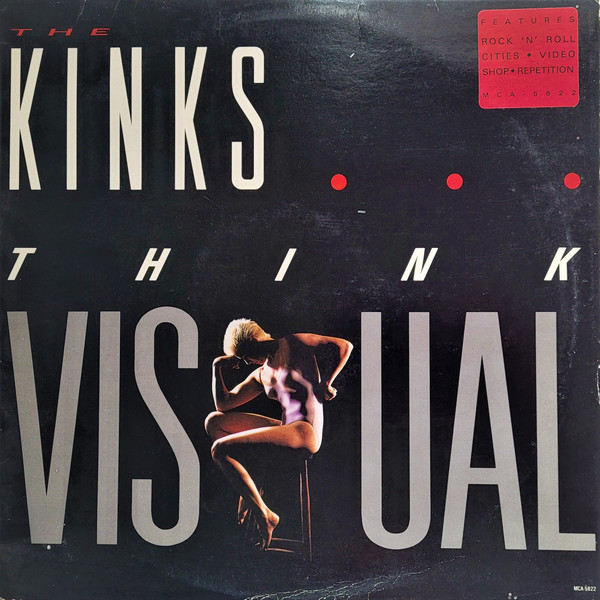
Kinks 30: Think Visual

1986 wasn’t the best year for bands like the Kinks, and whatever commercial clout they had built up thus far in the decade was scuppered once they signed to MCA (in the U.S.; London got them in the U.K.), a label that simply didn’t know how to promote artists, new or vintage. Which was too bad, since Think Visual, their first album under the new deals, wasn’t awful.

Of course, Ray Davies was still Ray Davies, and he opens the album with “Working At The Factory”, a blatant complaint about what the music biz has done to him. Subject matter aside, it’s still a decent track. So is “Lost And Found”, which is literally about getting through a hurricane, but works on metaphorical levels as well. (Even if it does evoke both “It’s The Same Old Song” and “The Boy With The Thorn In His Side”.) Too much of “Repetition” lives up to its title, but there are some clever inversions of the three-chord pattern, and a killer bridge. Similarly, “Welcome To Sleazy Town” has an arrangement to match, a slow bluesy stroll with a canned-sounding harmonica, while “The Video Shop” is left over from when Ray wanted to write a concept album about the guy from the “Come Dancing” video selling pirated tapes.

Dave Davies gets to bookend side two, and not very well. “Rock ‘N Roll Cities” is a not very original idea, shouting out names of places in a very pandering way looking for easy applause when they’d get around to playing it on stage. While it tends to drag over the same two chords, Ray redeems himself with “How Are You”, something of a sadder follow-up to “Do You Remember Walter”. The title track is more commentary on marketing, spouting what we now call buzzwords over an edgy backing, whereas “Natural Gift” takes a more human approach to the idea of substance over style. “Killing Time” is another one of those songs he could write in his sleep, and it’s a shame this wasn’t a single. But Dave leaves us with the synth-heavy “When You Were A Child”; there’s nothing wrong with it, except that it doesn’t belong on this album.

We said Think Visual wasn’t awful, mostly because it could have been a lot worse. There are enough decent songs throughout the album, but we get the feeling they were going through the motions.

The Kinks Think Visual (1986)—

Friday, May 3, 2024

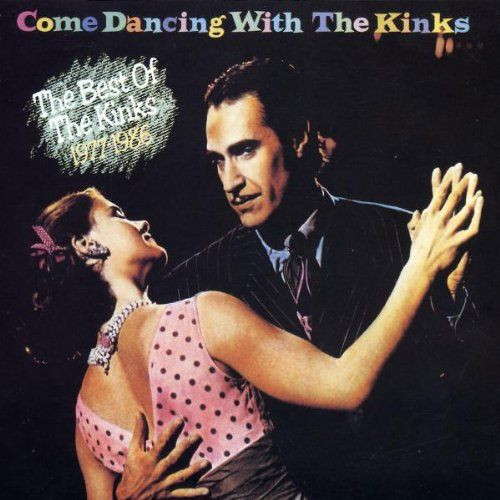
Kinks 29: Come Dancing

It had been ten years since the last Kinks kompilation, and it’s pretty safe to say that they had enough hits to fill such an album—particularly since their contract was up with the latest label. As proven by Come Dancing With The Kinks, helpfully subtitled “The Best Of The Kinks 1977-1986”, there were two records’ worth. The so-called Arista years were pretty solid as it turned out, and most of these tracks were FM radio favorites.

Of course, the live album included songs that had been around before, which is how the set could begin with “You Really Got Me”. That’s a good setup for the familiar structure of “Destroyer”, and while the disco thump of “(Wish I Could Fly Like) Superman” is out of place, “Juke Box Music” and “A Rock ‘N’ Roll Fantasy” show a common thread. The title track starts an upbeat side two, through “Sleepwalker”, “Catch Me Now I’m Falling”, “Do It Again”, and “Better Things”.

The third side begins like the first, this time with “Lola”. The snotty “Low Budget” leads into three more songs from State Of Confusion—“Long Distance” (which was only on the cassette of that album), “Heart Of Gold”, and “Don’t Forget To Dance”. The mood of that one is revealed to have its roots in “Misfits” from five years earlier, and it’s wisely placed at the top of side four. “Living On A Thin Line” gives Dave some of the publishing, but the real value is the first LP appearance of 1977’s “Father Christmas” single, with its bluntly honest sentiment disguised by a Springsteenian intro. The extended live “Celluloid Heroes” provides a fitting conclusion.

The set’s running time just exceeded 80 minutes, so something had to be sacrificed for the burgeoning compact disc format. To achieve this, the compilers chose to cut “Catch Me Now I’m Falling”, “Sleepwalker”, and “Misfits”. The latter was no real loss, but surely the two lesser tracks from State Of Confusion (read: non-hits) could have been booted instead.

When the album was reissued at the turn of the century as part of the Konk overhaul, those two were indeed left off, along with the live “Celluloid Heroes”, but replaced by “Full Moon”, “A Gallon Of Gas”, and “Good Day”. In other cases, the longer album tracks were used instead of single versions, to fill the disc to capacity. This only underscores that a band’s “best of” is purely subjective, as opposed to “greatest hits”, which can be verified. The order was shuffled as well, so it now begins with “Come Dancing”, sticks the live tracks in the middle, and ends with “Father Christmas”. Other than that, it seems very random, so while they may not sound as good, the 1986 versions are preferred.

The Kinks Come Dancing With The Kinks/The Best Of The Kinks 1977-1986 (1986)—3
The Kinks
Come Dancing With The Kinks/The Best Of The Kinks 1977-1986 (2000)—3

Friday, January 26, 2024

Kinks 28: Word Of Mouth and Return To Waterloo

Word Of Mouth found the still-busy Kinks in a state of transition. Founding drummer Mick Avory only played on three tracks on the album, and would be replaced by Bob Henrit, who’d followed Jim Rodford from Argent, via Dave Davies’ recent solo albums.

There must have been no hard feelings, since Mick appeared in the video for “Do It Again”, the album’s first track and lead single. It fades in on a variation of the opening to “A Hard Day’s Night”, and crackles along like a good Kinks single should. The title track has another wonderfully fuzzy riff and high harmonies from Dave, but “Good Day” sounds like a glorified demo. Still, its message of determination, even in the wake of a starlet’s death, is inspiring. Then Dave surprises us with rare political commentary in his “Living On A Thin Line”, and his mild yobbo phrasing works well with Ray’s occasional answering. Ray himself answers with the punky “Sold Me Out”, an angry comment on the same theme.

Following some synth-based wandering, the main riff on “Massive Reductions” sounds horribly dated today; while the song eventually rocks, the subject matter is starting to wear thin. Dave comes back with the angry (again) “Guilty”, but at least he wasn’t singing about aliens anymore. The wordy “Too Hot” has canned horns and some of the calliope sounds from “Come Dancing” disguising lyrics about the workout craze somehow related to more social commentary. After a lot of energy, “Missing Persons” provides sweet relief despite the sad subject matter. “Summer’s Gone” is almost Stonesy in its tempo and Dave’s licks, but there are some clever Beach Boy touches, and we can’t help thinking it’s about breaking up with Chrissie Hynde. We could say the same about “Going Solo”, but closer inspection shows it’s a parent’s plaint about grown offspring.

Even though Word Of Mouth is no masterpiece, it’s still a decent Kinks album, particularly considering how long they’d been at it. (The only bonus tracks on the expanded reissue 15 years later were extended versions of “Good Day” and “Summer’s Gone”.) If it sounds a little distracted, that’s likely because Ray was busy with yet another attempt at melding music and drama.

Though it had nothing to do with another song, Return To Waterloo was something of a Dennis Potter-influenced rock opera, depicting the dreary point of view and visions of a commuter who may or may not be a serial rapist, broadcast in the UK in late 1984, with limited theatrical showing in the US the following year. It’s a bit pretentious but still riveting, and therefore more successful than Pete Townshend’s White City.

Besides writing and directing it, Ray appears briefly as a subway busker, just like in the “Do It Again” video. A soundtrack album—credited solely to Ray, likely because Dave didn’t (or wouldn’t) play on it—runs just under a half-hour, and shares three songs with Word Of Mouth. (They also happen to be the three songs Mick played on. Meanwhile, “Ladder Of Success” and “The Good Times Are Gone” are in the film but not included on the album, probably because they’re sung by actors.)

Following an atmospheric intro, the title track begins as a busk, but soon detours into uncharacteristic yet effective synths. “Going Solo”, “Missing Persons”, and “Sold Me Out” gain a little more insight in this context, while the remaining tracks not only have promise, but work well without a screenplay. “Lonely Hearts” is a lover’s lament, offset by an advice columnist. One of the last lines is “you are far away”, and then we have “Not Far Away”, a rocker “sung” by a young Tim Roth in the film. The doom prophecy in that tune gets a different perspective in the more somber and stately “Expectations”. The techno-pop “Voices In The Dark” is used over the end credits, and pulls the theme of the film back from a response to Thatcherism towards general existential loneliness.

The Kinks Word Of Mouth (1984)—3
1999 Konk CD reissue: same as 1984, plus 2 extra tracks
Ray Davies Music From The Motion Picture “Return To Waterloo” (1985)—3

Tuesday, August 29, 2023

Kinks 27: State Of Confusion

Having re-established themselves as a big act, Ray Davies and the Kinks picked up where they left off. State Of Confusion even sports a similar cover theme to Give The People What They Want, but features the whole band, which was nice of Ray, who still wrote and produced everything.

The title track is a solid rocker with great keyboards, and they thankfully drop the scream accent a few bars in. The lyrics are fairly generic, but the music and particularly the guitar parts make it work. On a similar theme, “Definite Maybe” takes on the angst of modern life from another angle and a different rhythm. Opening with a Hendrixian take on “Here Comes The Bride”, “Labour Of Love” is a blatantly cynical view of marriage, repeatedly described as “a two-headed transplant”. What sold the album was “Come Dancing”, still a charming retro tune in tone and theme, and we still crack up at the mother’s commentary in the quiet section. It’s also a nice respite from the loudness of the first three tracks. (The video is still as charming as ever.) That happy memory is dashed aside by the post-breakup scene in “Property”.

The melancholy mood continues in “Don’t Forget To Dance”, which not only shared a word from the first single, but repeated the spiv character from the video in its own. Still, the song is a nice sentiment, and well constructed. A wash of loud guitars brings in the noisy “Young Conservatives”, an astute observation on a political trend on both sides of the pond, even pulling in a reference to a “well respected man”. “Heart Of Gold” begins with the same chord figure of “Don’t Forget To Dance” but in a different key. The verses go all over the place, seeming to describe basic sibling rivalry in one, teenage rebellion in another, and a bridge about paparazzi, yet somehow Ray says the song was inspired by the child he’d just had with fiancée Chrissie Hynde. Despite the title, “Clichés Of The World (B Movie)” is the most successful portrait of modern psychodrama hear, except for maybe the sci-fi interlude that may refer to brother Dave’s recent adventures, which we’ll explain shortly. Dave gets to yell his way through “Bernadette”, which nobody seemed to notice was already a Four Tops title, nor did they think to modify the riff stolen directly from Little Richard’s “Lucille”. Ray’s sneered interlude doesn’t add much, either, and the album just kinda ends. (Dave was likely too busy anyway with his third solo album in as many years. Chosen People continued his flirtation with synths and drum machines, and was very competent rock-wise, but ignored overall. The title track and “True Story”, which seem to address his alleged visitation by aliens who began transmitting voices into his head around this time, likely didn’t help.)

State Of Confusion is, once again, ordinary but competent, but should please anyone who liked the last album. “Come Dancing” may well have helped a new generation further discover the band’s history; the videos certainly helped. As happened in those days, the cassette version offered a variation, in this case adding an extra song on each side: “Noise” is a rant about that subject, literally and metaphorically, while “Long Distance” is a decent chapter in his “life on the road is hard” saga. (These were both added to the eventual expanded CD, following the “original extended edit” of “Don’t Forget To Dance” and the outtake “Once A Thief”.)

The Kinks State Of Confusion (1983)—3
1999 Konk CD reissue: “same” as 1983 cassette, plus 2 extra tracks

Tuesday, March 21, 2023

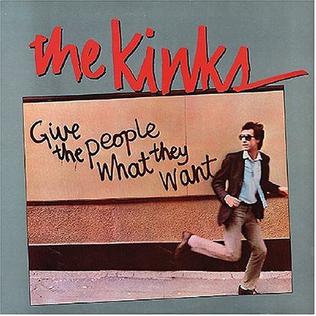
Kinks 26: Give The People What They Want

Ray Davies dove into the ‘80s seemingly ready to act like the Kinks had never experienced any kind of slump. To this day the title Give The People What They Want seems like both an ethos and a punishment, but that’s what he tried to do.

After a blast of static, the guitars begin right away, crunching through “Around The Dial”, which would go on to be an American anthem anytime a DJ moved on to another station. The title track is in the same key and nearly the same tempo, and an indictment of television (which of course we all know is inferior to radio). Following the verse about Lee Harvey Oswald, it seems the album is following if not a concept but a thread, as “Killer’s Eyes” takes an analytical view of a murderer. “Predictable” is a sludgy poke at modern fashion and neuroses, given a comedic and striking (for its time) video treatment, with the disdain taken further on the sneering “Add It Up”, which still sounds like the riff from Blondie’s “Call Me”, and listen for Chrissie Hynde cooing on the chorus breaks.

What really sold the album was “Destroyer”, wherein Ray mashes up “All Day And All Of The Night” and “Lola” to further explore neuroses and makes it work. “Yo-Yo” is a grim glimpse at the end of a marriage given an unfortunate metaphor that’s overused, and “Back To Front” is pounded through the speakers, though some of the snaky riffs are kinda cool. Unfortunately, while “Art Lover” is supposed to be from the point of view of a divorced father missing his kids, his delivery suggests there may be another, more horrible reason why he’s not allowed to see them. The sadness continues on “A Little Bit Of Abuse”, an outside look at a relationship that should end but won’t. The mood finally lifts for “Better Things”, a sincerely generous song of farewell.

The good outweighs the bad here, but there’s still something ordinary about the album. On top of Ray being the only Kink on the cover, it doesn’t take much to notice that Dave Davies doesn’t sing at all on the album, nor does he contribute any songs. Those needing their fixes didn’t have to look far, as he’d finally got a solo deal, putting out two albums in quick succession before Give The People What They Want came out. The first was mostly a one-man-band deal, with title and artwork based on the American catalog number, with lots of riffing and buried vocals, while Glamour was almost as loud, added more keyboards to befit the “futuristic” lyrics, and used one Bob Henrit on drums throughout.

The Kinks Give The People What They Want (1981)—3

Tuesday, November 1, 2022

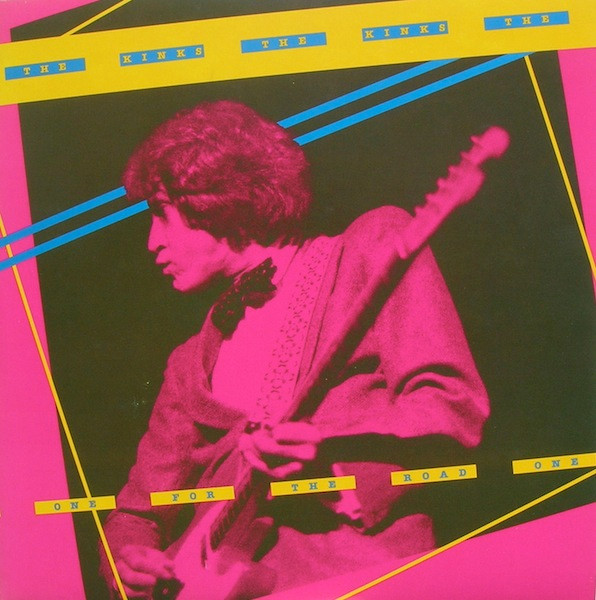
Kinks 25: One For The Road

Having had a few recent hits, plus interest spurred by classic rock radio in the U.S. and the U.K. mod revival, the Kinks had become a popular arena ticket over here. To cash in, One For The Road was a double live album culled from seven shows in preparation for and support of Low Budget, played over the space of a year. (Because of the times, the tracks received overdubs during the mixing process.)

Along with stalwart Mick Avory and Dave Davies living his guitar god dreams, they boasted Jim Rodford on bass and Ian Gibbons on keyboards, solidifying a lineup that would last for a few more albums. The theatrics and storylines were long gone—now it was all about the hits, the last album, well-chosen deep cuts like “The Hard Way”, “Misfits”, and “Prince Of The Punks”, and songs other bands had revived for them (“Stop Your Sobbing”, “David Watts”). For the most part, everything’s delivered straight, with the disco influenced ironed out of recent songs and “Celluloid Heroes” given an extended intro, but the ska rearrangement of “Till The End Of The Day” is just wrong for this band.

The album was a hit, with a gatefold package that included a double-sided poster, touted on the cassette as available for only a dollar to cover postage and handling. (Those were the days.) The first CD version of the album skipped “20th Century Man”; this was reinstated in the ‘90s in a package that included a bonus CD-ROM of live footage taken from the videocassette that came out back then, and appeared on DVD in 2001. Future reissues of the album were limited to the music.

The Kinks One For The Road (1980)—3

Tuesday, May 31, 2022

Kinks 24: Low Budget

The spirit and aggression of the punk scene seemingly invigorated rather than scared Ray Davies. With Low Budget, he concocted a set of mostly guitar-oriented songs loaded with hooks, just like the label wanted. There was no concept per se, but certain themes dominated.

“Attitude” sports a riff right off the lone Sex Pistols album, and Ray comes in shouting a snotty vocal, and while the synth wash at the end dates the track, it doesn’t ruin it. Good as that is, “Catch Me Now I’m Falling” is a truly classic track, with serious piano, crunchy riffing, and high harmonies disguising the pro-America sentiment. Curiously, the track runs nearly six minutes on the album, but the similar guitar and sax solos have us wondering if it weren’t artificially extended. A Chuck Berry cop is given the Ramones treatment on “Pressure”, where the ailment is more generalized, but “National Health” speaks more specifically about mental and physical stress with a less frenetic arrangement, with more modern percussion and synth effects. Speaking of which, “(Wish I Could Fly Like) Superman” is one of the more unfortunate results of the disco era. The hideous thump of the rhythm section is surpassed only by “I Was Made For Lovin’ You”, unleashed that same year by Kiss, but at least this works as an (albeit) stupid song, not at all taken seriously by Ray, and abetted handsomely yet under protest by Dave. (The Animals quote is cute too.)

Nobody must’ve told them the title track sounds too close to Joe Walsh’s “Life’s Been Good” for comfort, but it’s still a good track for yelling along. “In A Space” isn’t very exciting, and repetitive to boot, but the sympathy throughout “Little Bit Of Emotion” makes up for it, despite the sax solo. “A Gallon Of Gas” might have been designed to appeal to an American audience, or maybe Ray couldn’t find anything to rhyme with “a liter of petrol”. At any rate, the whining about not being able to fill the tank in his limousine is strange coming so soon after the title track. It lopes along like Zappa’s “Road Ladies”, until the more traditional rock of “Misery” smacks it aside. “Moving Pictures” brings back the disco influence, but more along the lines of what the Stones were doing.

Low Budget would re-establish the band as a relevant force both on FM radio as well as in concert. Those radio hits are reflected in the bonus tracks on the expanded CD, which include extended versions of “Catch Me Now I’m Falling”, “Superman”, and “Gallon Of Gas”, the latter with extra verses in the “your body’s like a car” motif. The album also begins the lengthy tenure of Jim Rodford, fresh from Argent, on bass, but oddly, the only Kink depicted anywhere in the package is Ray.

The Kinks Low Budget (1979)—3
1999 Konk CD reissue: same as 1979, plus 3 extra tracks

Friday, November 12, 2021

Kinks 23: Misfits

1978 found several veteran British invasion bands reacting to both their longevity as well as the generation gap. The Stones and The Who both faced their mortality and vitality straight on, and so did Ray Davies. While the Kinks managed to maintain a certain cachet among the young punks—the Jam’s cover of “David Watts” appeared as a single and again as an album track around this time—the band was fractured at this point, with John Gosling and bass recruit Andy Pyle easing out of the lineup. Even drummer Mick Avory couldn’t be bothered to make many of the sessions for the album that became Misfits; some of the tracks feature veteran session man Clem Catini.

Still, a contract was a contract, and Ray dutifully wrote a new batch of songs that weren’t tethered to an overall concept. The title track is a gentle celebration of those not like everybody else, with a hook repeated by several instruments—in all, a well-constructed track. Unfortunately, “Hay Fever” is a fairly dopey rocker lamenting seasonal allergies, and we’re pretty sure there’s not a clever subtext meant by “all the pills and the powders”. The American version of the album follows with the rocking “Live Life”, one of two overtly political songs on the album. This one is a plea for sanity amid times of social and racial unrest; chances are it was swapped with the less subtle character that narrates “Black Messiah” on side two, for fear we wouldn’t get the joke. (Plus, the UK mix of “Live Life” is longer.) The mood turns gentle again for “A Rock ‘N’ Roll Fantasy”, another of Ray’s periodic explorations of whether the power of music was enough to sustain him or his fans—possibly influenced by Elvis Presley’s death the year before. Oddly, it’s followed by “In A Foreign Land”, something of a lyrical cross between “Apeman” and the desire to be a tax exile.

“Permanent Waves” finds Ray back at the doctor, who prescribes a new hairstyle to cure his current ills. It’s not a winner, but showcases some of the latest synth technology. Even without the lyrical content, the aforementioned “Black Messiah” is a strange musical mix of bluebeat (too slow for ska, too fast for reggae) with the kind of New Orleans horns abandoned three or four albums ago. “Out Of The Wardrobe” is even more a defense of transvestism than “Lola”, bringing it into the lives of “ordinary folks”, and could well be an LGBT anthem today. Dave Davies finally gets his requisite solo spot in “Trust Your Heart”, matching a soaring melody with power-chord riffing for a nice distraction. It ends rather abruptly, and then we get the arty power chords that began the motivation anthem “Get Up”.

Misfits is mostly harmless, so it goes in the good pile. It’s not a classic by Kinks standards, but still a worthy chapter in Ray’s ongoing opus. (The expanded CD preserves the UK sequence of the album, bolstered by three single edits, including the shorter US mix of “Live Life”, and the standalone “Father Christmas” single, a suitably sardonic view of the modern holiday and still a perennial radio favorite.)

The Kinks Misfits (1978)—3
1998 Konk CD reissue: same as 1978, plus 4 extra tracks

Tuesday, July 20, 2021

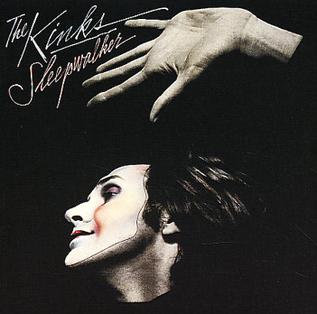
Kinks 22: Sleepwalker

With the promise of financial reward dangled in front of him, Ray Davies took the mandate of a new contract with Arista Records to heart and wrote an entire Kinks album devoid of any overwrought concept. That’s not to say Sleepwalker didn’t have any theme at all—he was still writing about the travails of being a working musician and skewering hypocrites and sycophants, but at least folks could enjoy the songs without having to follow a plot. (More to the point, there was no horn section or backing choir, just lots of guitar and plenty of keyboards.)

In case anyone hadn’t heard yet, it’s not easy living “Life On The Road”, but this variation is one of Ray’s catchier ones. “Mr. Big Man” builds to something particularly nasty, with brother Dave given free rein to solo throughout. With a drum intro straight from a Steve Miller record, the title track is one of the most deceptively catchy songs ever about creepy obsession. By contrast, “Brother” begins almost dreamily, as befits a heartfelt ballad, but this one is sung to humanity in general, and certainly not Dave.

Another anthem of sorts kicks off side two in “Juke Box Music”, which both celebrates and minimizes the art, complete with some wonderful Townshend-like strumming throughout. After singing lots of high parts, Dave gets the lead vocal on “Sleepless Night”, which becomes more desperate once you realize the narrator is being kept awake by the nocturnal exploits of his ex next door. “Stormy Sky” begins kinda wimpy, but a tempo change on the coda makes it a lot better, while “Full Moon” touches on the werewolf metaphor without sinking into horror cliché. Somehow “Life Goes On” manages to eulogize a suicide while poking fun at those who fail at it, until it emerges as a song of hope.

Just as the Who and the Stones met the challenge of being relevant in the punk era, Sleepwalker shows the Kinks had already figured out how to give the people what they want, well before that became a statement of purpose. It’s still firmly lodged in the ‘70s, but some things can’t be helped. (The extras on the eventual expanded CD show they weren’t exactly grasping at straws for material given what came out later as B-sides—the decent but ordinary “Artificial Light”, and the more pointed “Prince Of The Punks”, with its clever Beach Boys vocal tag. Despite their promise, two outtakes were left in the can: “The Poseur”, aged by its Latin disco approach, and “On The Outside” in both its original mix and one done in the ‘90s when it snuck out on an EP.)

The Kinks Sleepwalker (1977)—3
1998 Konk CD reissue: same as 1977, plus 5 extra tracks

Friday, March 19, 2021

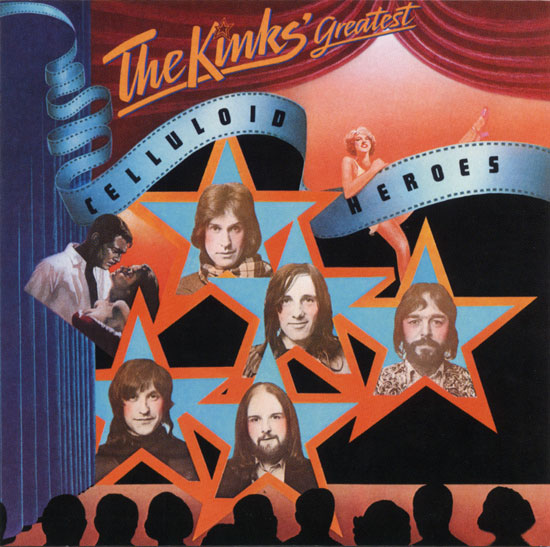
Kinks 21: Celluloid Heroes

After six challenging albums, critically and commercially, RCA did not renew the Kinks’ contract, and let them scamper off to greener pastures. Naturally, the label made sure to cash in immediately with a hits album.

Of course, the band didn’t really have any hits to speak of save one, so the title The Kinks’ Greatest — Celluloid Heroes was subjective, save the track that inspired it. True to form, the label put minimal effort into the packaging, giving no information as to the albums that spawned the tracks, and failing to identify any live or single versions, of which there were a few. (On the back cover, some song titles are asterisked, for reasons we have yet to determine.)

That said, the album does take several songs out of their specific contexts, giving them the chance to be heard simply as songs and not as plot points in a concept album. “Everybody’s A Star (Starmaker)” rocks, and it’s the single edit, so it makes its point quick, in time for “Sitting In My Hotel” to provide the downside to the proposition. A live version of “Here Comes Yet Another Day” is a surprise, complete with horn section and backup singers; this segues neatly to the live “Holiday” from Everybody’s In Show-Biz. “Muswell Hillbilly” picks up the pace before “Celluloid Heroes” gets the lighters going.

“20th Century Man” drops us back on Muswell Hill, and “Sitting In The Midday Sun” and “One Of The Survivors” offer two of the better tunes from the first Preservation act, the latter in a unique mix with a different verse. “Alcohol” and “Skin & Bone” are previously released live versions, and as nice as “(A) Face In The Crowd” is, it ends the set on a downer.

When the band’s catalog was upgraded at the turn of the century, Celluloid Heroes was overhauled with a different track listing, substituting studio versions for live versions and album tracks for single edits, adding even songs to fill the CD’s capacity but cutting others. Only “Alcohol” appeared in its live incarnation. If anything, it seemed designed to give equal time to each of the RCA albums, unlike the LP. In the streaming era, however, the title has reverted to that original sequence, preserving the live “Here Comes Another Day” that has appeared nowhere else, as well as the alternate “One Of The Survivors”. Either version of the album only underscores how spotty this period was for those who aren’t already converted.

The Kinks The Kinks’ Greatest — Celluloid Heroes (1976)—3
The Kinks
Celluloid Heroes (2001)—3

Tuesday, November 3, 2020

Kinks 20: Schoolboys In Disgrace

Well, at least this one rocks, finally, but Ray Davies still seemed pathologically bent towards concepts. The point of Schoolboys In Disgrace would be that the education system serves only to repress creativity and browbeat the poor little kiddies into kowtowing to authority. And maybe, that’s how ordinary juvenile delinquents turn into full-fledged villains like Mr. Flash, or so the note on the back cover suggests. (The band even dressed the part, in hideous green uniforms that would be bettered by Angus Young, and Ray donning a mask for the headmaster that was equal parts Gabriel-era Genesis and one of Gerald Scarfe’s puppets for The Wall, still four years away.)

Often the album leans on ‘50s parody, reflecting the band’s own ages and the wave of greasy nostalgia sweeping pop culture at the time. “Schooldays” finds Ray looking back wistfully yet again to his younger days, even missing the teachers and textbooks he hated. “Jack The Idiot Dunce” pits a portrait of an object of ridicule living in ignorant bliss against a Jerry Lee Lewis piano. The lengthy “Education” chronicles the journey from primitive man’s quest for basic knowledge to the oversaturated curricula of today’s competitive schools. Unfortunately, it has too many stops and starts, as befits a big production number. The over-the-top basso voice that begins “The First Time We Fall In Love” defies the listener to take it serious, despite its barbed commentary on the pain of young romance.

“I’m In Disgrace” takes a much more specific approach to the same theme, and it’s a much better song, though some of the lyrics suggest a sinister cause for the end of the affair (“It wasn't lust, it wasn't rape/It was just a mistake”). Great guitars though. Whatever shame the disgraced schoolboy feels is confessed to the “Headmaster”, and the anguish only increases as the pleading gets more desperate. The unfeeling response in “The Hard Way” rams the point home. After three straight tracks of solid rock, the gospel R&B of “The Last Assembly” points to such future graduation themes as “It’s So Hard To Say Goodbye To Yesterday” and “Good Riddance”. “No More Looking Back” could well be a prophetic title, as the electric piano at the start and the melded guitars certainly place it squarely in the ‘70s. But the parody returns for the minute-long “Finale”, which reprises the brainwashing message of “Education”.

Thanks to the guitar-centric arrangements, Schoolboys In Disgrace is one of the better Kinks albums of their “theatrical” period, but only if you don’t listen too closely to the story and skip the sillier numbers. Dave Davies can take some of the credit for the sound, which is small compensation since some of the events dramatized within are based on his own teenage misadventures. (Perhaps because they were working so fast to get records on the shelves, and thus lacked outtakes, it’s also that rare Kinks album that hasn’t been enhanced by any reissue.)

The Kinks Schoolboys In Disgrace (1975)—

Friday, July 24, 2020

Kinks 19: A Soap Opera

After several attempts and a handful of concepts, Ray Davies was still somewhat obsessed, shall we say, with meshing his high ideas with the television platform. A Soap Opera is an adaptation of a musical teleplay that actually aired called Starmaker, which presented something of a Twilight Zone-style tale of An Important Rock Star (played by Ray, naturally) who swaps places with an everyman named Norman under the intent of research for his next smash album. This entails sleeping with the man’s wife and going to work at his mundane job. He soon tires of the charade and tries to return to his old lifestyle, but it turns out he’s actually become Norman! Or has he? Does anyone really know? Does it even matter?

The vocals are delivered consistently mockingly by Ray, with overly parodic rock arrangements and intentionally trite strings. Dialogue punctuates each song, including input from the befuddled wife; the listener is forced to read along with the libretto to catch all the extra minutiae. The opening “Everybody’s A Star (Starmaker)” turns the sentiment of “Celluloid Heroes” inside out, and it’s not bad as a single, but then the plot takes over. Frankly, his view of “Ordinary People” who suffer from the “Rush Hour Blues” because they have to work “Nine To Five” is truly condescending, mostly because we don’t think he’s being ironic. It’s no shock that these people go straight to the bar “When Work Is Over”, where the only respite is to “Have Another Drink”; after all, that activity had been one of Ray’s more common themes for several albums going.

“Underneath The Neon Sign” opens side two, and it’s a track that could possibly stand alone outside the story line, though the arrangement could use a lot more delicacy to deliver the emotion. That’s also the problem with “Holiday Romance”, a faux-cabaret detour shoehorned into the plot to act as an escapist daydream. There’s a nice chorus in “You Make It All Worthwhile”, but the rest of the track is derailed by excess pathos and a radio-drama organ (no, really). “Ducks On The Wall” further illustrates the protagonist’s frustration by lashing out at the avian décor, made even more maddening by actual quacking impressions throughout. “(A) Face In The Crowd”, despite the unnecessary parenthetical article, is another existential crisis that might work on its own. Then “You Can’t Stop The Music” moots all that went before, acknowledging “the rock stars of the past” who have since faded to obscurity, but for the immortality of the music they created.

With the exception of an occasional Dave Davies riff, the Kinks are used as sidemen, and the music is cartoonish. A few of the tracks segue well to keep the story moving, but it’s not easy to care about any of these people. All together there are four tracks on this album—the first tracks on each side and the last two numbers—that would work without being shackled to a concept, and that’s not enough. The eventual reissue added a single mix of “Everybody’s A Star”, plus three live performances from the highly staged tour that followed; the band was tight, as were the actors. Ultimately, A Soap Opera is just as trivial as the television genre it apes.

The Kinks A Soap Opera (1975)—2
1998 Konk CD reissue: same as 1975, plus 4 extra tracks

Friday, March 20, 2020

Kinks 18: Preservation Act 2

The hollow promise of Preservation Act 1 wasn’t very encouraging, but those still keen to see it through had to wait only about six months until Preservation Act 2 presented the story proper over four sides. This was more of an original cast recording, complete with radio-style announcements appearing here and there to fill in the details. Once again, each of the tracks is sung by a character, with a couple roles taken by a singer outside of the five Kinks. This time it’s even more difficult to enjoy individual songs without thinking of the plot, which is pretty bleak overall.

The first announcement warns listeners of a “people’s army” formed by the upstart communist Mr. Black in order to topple the power of Mr. Flash. “Introduction To Solution” finds the Tramp expanding on the situation, and not very optimistic that things will turn out at all well—a rather unappealing way to start a show. Thankfully, “When A Solution Comes” and “Money Talks” are dark rockers, and fairly decent, too, but another announcement heralds a speech by Mr. Black, delivered as “Shepherds Of The Nation” and basically the platform of what we’d know in a few years as the Moral Majority.

At this point we’ve gone completely into Broadway musical territory, as Mr. Flash defends his status as “Scum Of The Earth”, and one of his toadies talks of his background as a “Second-Hand Car Spiv”; neither are very enjoyable, but at least we hear a subtle reprise of “Here Comes Flash”. “He’s Evil” is presented as a “party political broadcast” by Mr. Black about Mr. Flash, but as it’s presented in the style of warning a woman that a suitor will only break her heart, it’s an improvement. “Mirror Of Love” is sung (by Ray) as Flash’s main squeeze, defending her devotion to him, and another trip to vaudeville. But another announcement tells of a “victory” for Mr. Black that resulted in “casualties”. Cue curtain for intermission.

The Tramp returns to lament that “Nobody Gives” (a damn, that is), recalling the miners’ strike of 1926 and the rise of Hitler, with the idea that neither “side” provided a solution. It’s a long track, but it does rock. “Oh Where Oh Where Is Love” continues the theme, but now it’s sung in a duet with one Maryann Price, most recently of Dan Hicks & His Hot Licks, and doing a passable British accent. Just when you think the album might be improving (again), the most embarrassing track yet in the Kinks’ name arrives. “Flash’s Dream (The Final Elbow)” is a conversation between Flash and his conscience (much like Prince would a decade later on “Temptation”) that’s impossible to take seriously. Having become convinced of his own imminent demise, “Flash’s Confession” continues the nightmare, for him and for us.

“Nothing Lasts Forever” is another duet made for the stage and not a rock album, Ms. Price betraying more of a twang in her vocal. (She’s apparently taken the role Ray sang in “Mirror Of Love”, which is another thing wrong with this album.) We are informed that Mr. Black’s army overthrew Mr. Flash’s regime, and took him prisoner. “Artificial Man” reveals Black’s true aim: he’s engaged an actual mad scientist to create a perfect race of automatons, Ray apparently ignorant that he’d co-opted one of the major plot points of The Rocky Horror Show. Musically it’s about as over the top as anything in Phantom Of The Paradise, and that’s not meant nicely. Ms. Price returns to warble about the Village Green’s transformation into “Scrapheap City”, then we’re informed that the new regime has installed a curfew, food and utility rationing, control over telecommunications, etc. “Salvation Road” is supposedly the theme song of the regime, and while it’s good that it sounds like the Kinks, it’s way too late to save the album.

Preservation Act 2 seems a lot longer than it is, and it is exhausting. Maybe one day we’ll have the gumption to try to siphon the album down to just cool tracks and try to ignore their intended significance, and perhaps program a single two-sided LP out of it. Until then, we really don’t want to visit this particular village green again. (The double Rhino CD didn’t include any extras for the Act 2 portion, but the late ‘90s single CD reissue of the album added two at the end of the program. An alternate recording of “Mirror Of Love” was originally released as a single, and the tuba doesn’t do it any favors. “Slum Kids” was a refugee of the stage show, and represented here in a 1979 performance.)

The Kinks Preservation Act 2 (1974)—2
1998 Konk CD reissue: same as 1974, plus 2 extra tracks

Tuesday, March 17, 2020

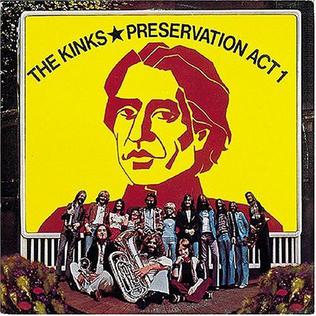
Kinks 17: Preservation Act 1

To say that Ray Davies was struggling is an understatement. Ten years into his professional career as a songwriter his work had become a chore, as he toiled away to be both commercial and profound. Plus, having established himself as a storyteller without compare, everything he issued had to have a theme. (Pete Townshend had the same problem, but that’s another story.)

Going back to the well is an iffy prospect for any auteur, so an extended theatrical expansion on the ideas of The Village Green Preservation Society was bound to be a challenge. What’s more, in an era of grand statements versus timetables, 1973’s Preservation opus was released in two parts before being taken on the road as a multimedia extravaganza. Preservation Act 1 was designed to set up the story somewhat, introducing characters and themes. That helps one approach it as just an album unencumbered by a plot yet to be fully revealed, but only just so, as the lyrics point out what characters sing which songs.

A wordless chorale is the basis of “Morning Song”, something of a cartoony intro that dares the listener not to think it’s a parody. “Daylight” is the first proper song, and at least it sounds like the Kinks, even after the now omnipresent brass band comes in to evoke the village green itself. “Sweet Lady Genevieve” is sung by the Tramp, but works as another lovelorn plaint and klassic Kinks too, particularly with brother Dave harmonizing on the title. Unfortunately fittingly, “There’s A Change In The Weather” is where the promise of those tracks dims. This portrait of class struggle is sung by three men in the same vocal tone, starting as a rocker but switching to a brass waltz and crawling through a heavy dirge back to the brass. “Where Are They Now?” and “One Of The Survivors” improve things slightly, the former a lament for Swinging London, angry-young-men playwrights, mods and rockers—basically everything before the summer of Love—while the latter revives the Johnny Thunder character, still on his motorcycle. By now Ray’s rhyming of pop culture icons is wearing thin.

Perhaps the most arcane track to American listeners, “Cricket” is a sermon sung by the Vicar, comparing that oh-so British sport to life. It’s clever, but it’s really to tell whether Ray has any sympathy for these characters. The plot becomes much more apparent on the medley that follows. After the chorus rails against “Money & Corruption” and prays for a savior to lead them, Mr. Black shows up to declare “I Am Your Man”, promising a version of communism that will benefit all (or at least make sure everyone has modern appliances). It would seem that the community had been taken in before, as recounted in “Here Comes Flash”, which begins as a cool riff and Dave singing lead, but soon turns to another cartoon piece, complete with closing faux-classical ending. The Tramp doesn’t seem bothered by any of this, as he’s “Sitting In The Midday Sun”, something of a cross between “Sunny Afternoon” and “Sitting By The Riverside”. In “Demolition” we finally get to hear what makes Mr. Flash so reprehensible: he was the developer who tore down all those lovely old houses to put up tower blocks and destroy the pastoral landscape. Once again, Dave’s solo bits redeem the track.

Again, as Preservation Act 1 was a stopgap to buy time necessary to complete the production, it demands to be heard as a first installment, and not its own entity. A standalone single that served to summarize the story appeared much later. “Preservation” was included as the “prologue” on Rhino’s 1991 double-CD set that contained both acts, and this sequencing was continued on the eventual single CD reissued in the late ‘90s. While a decent rocker and a welcome synopsis, its placement at the start of the program completely throws off the dynamics of the original LP. (The other bonus was the single edit of “One Of The Survivors”, one of the few songs that works on its own.)

The Kinks Preservation Act 1 (1973)—
1998 Konk CD reissue: same as 1973, plus 2 extra tracks

Tuesday, November 12, 2019

Kinks 16: The Great Lost Kinks Album

Navigating the Kinks catalog was already a chore in the early ‘70s, given the different releases on either side of the Atlantic. Having recently explored the depths of the vaults with The Kink Kronikles, Reprise (and resident Kinks krusader John Mendelsohn) dangled another carrot in the form of The Great Lost Kinks Album. With a track selection as baffling as its cover art, this album attempted to illuminate some hidden gems, except that the band (read: Ray Davies) didn’t know anything about it till after it was out, and since most of the tracks had already been rejected by the label years before, forced the LP’s deletion. (On top of that, the liner notes even take up several paragraphs slamming the band’s current stage act, which likely didn’t please Ray either.)

Two of the tunes were actually from a truly lost album, the aborted Four More Respected Gentlemen stopgap: “Misty Water” and “Mr. Songbird” (which had already been out on the rare 12-track version of Village Green Preservation Society). With its subtle Mellotron, “Lavender Hill” (not to be confused with the Muswell Hillbillies outtake “Lavender Lane”) is a nice refugee from the Something Else period, as is “Rosemary Rose” with its harpsichord. “Pictures In The Sand” is also from the same era, stuck between vaudeville and “Autumn Almanac”. The trad-jazzy “Till Death Us Do Part” sounds like a TV theme song, and since it was written for a film, that makes sense. Meanwhile, side two is bookended by two similar middle-aged goofs, “When I Turn Off The Living Room Light” and “Where Did My Spring Go?”

A handful of tracks come from another great lost album, that being the never-finished full-length LP Dave Davies was supposedly working on in the wake of his solo singles. “There Is No Life Without Love” and “This Man He Weeps Tonight” were both British B-sides, while the horn-flavored “Groovy Movies” makes its debut here. Dave also sings lead on “I’m Not Like Everybody Else”, rescued from the flipside of the “Sunny Afternoon” single; rumor has it the song was written for Eric Burdon of the Animals, and we believe it. “Plastic Man” was the equally silly A-side to “King Kong”, which was already included on Kronikles, and “The Way Love Used To Be” is the other worthy song from the Percy soundtrack.

As an album, The Great Lost Kinks Album isn’t great by any stretch, but its charms do reveal themselves in time. Original copies are rare and therefore high-priced; luckily, the tracks have since been farmed out to various CDs, predominantly the expanded Village Green and Arthur reissues. So while no single disc replicates it, the tunes are all readily accessible.

The Kinks The Great Lost Kinks Album (1973)—3
Current CD equivalent: none