Showing posts with label 1993. Show all posts

Friday, April 24, 2026

Kinks 34: Did Ya and Phobia

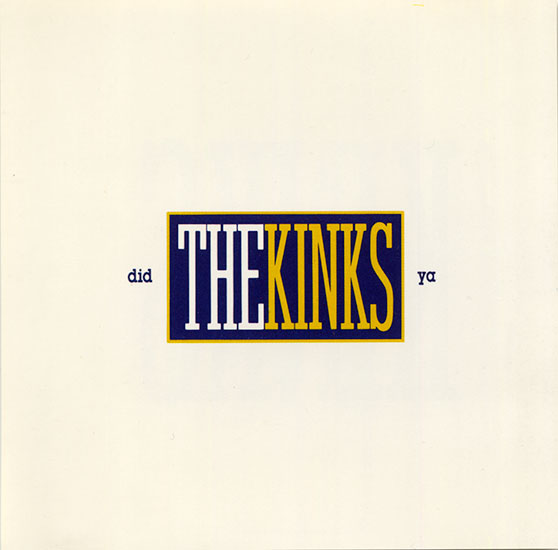
Having somehow made it through the ‘80s, could the Kinks extend their longevity to a fourth decade? Their new manager hoped so. First, they’d need a new label, and Columbia stepped up. At a time when the CD was king, the band took the new opportunity to release an EP, with the single “Did Ya” as the lead track.

This charming little ditty was very reminiscent of “Sunny Afternoon” and “Dead End Street”, right down to the wheezing harmonium and backing vocals. This time Ray Davies’ concerns about the decline of British society were wrapped in wistful disappointment at the broken promises of the swingin’ sixties. As long as they were looking back, “Gotta Move”—originally the B-side to “All Day And All Of The Night”—is an outtake from The Road, and “Days” got a new acoustic busk with a not-too-raucous backing. But the irritating “New World” would be something of an extension of “Aggravation” from UK Jive, and a rant about Europe fifty years after the start of World War II. Much better is Dave Davies’ “Look Through Any Doorway”, instrumentally, lyrically, and musically, and deserves wider exposure than the end of an EP.

Eighteen months later, none of these were included on the band’s next album in the U.S., though “Did Ya” was added in some territories. Instead, Phobia was an entity all its own, and at 71 minutes their longest album since Preservation Act 2.

A forty-second “Opening” of dueling guitars gives way to the slow but big riffs of “Wall Of Fire”, an angry piece of social commentary. Following a brief pastoral opening, “Drift Away” is more of the same—neither a rewrite of “Loony Balloon” from UK Jive, nor is it remake of the Dobie Gray hit. While the sentiments in “Still Searching” seem genuine, and the performance is wonderful, the song is treacly and trite, two words we don’t normally associate with Ray Davies. (Plus, following a song that insists “sometimes I wish I could just drift away” with one that opens with “I’m just a drifter who has lost his way” is just sloppy sequencing.)

The title track brings back the crunch, and is one of his better litanies of neurosis, though we can’t imagine stadiums singing along. “Only A Dream” is this close to being one of his better tunes of late; all he’d have to do is jettison the spoken-word sections, where he rivals Pete Townshend in the creepy old man race. Titlewise, “Don’t” would be better extended to “Don’t Look Down”, as that’s the main hook, and an excellent metaphor we don’t think he’s touched on before. Along the same lanes, while “Babies” touches on all kinds of psychological ramifications of overpopulation, couldn’t he have found a better title?

The circus metaphors in “Over The Edge” don’t excuse a keyboard hook straight out of “Freeze-Frame” by the J. Geils Band, but he still manages to cram a lot of lyrics in. “Surviving” takes the other tack, being to find one hook and beat it into the ground. The best part of this six-minute opus is the breakdown over the final two, where they repeat a few wordless phrases over trilling acoustics and what sounds like at least one banjo. Dave’s guitar and harmonies have been prominent thus far, and “It’s Alright (Don’t Think About It)” provides something of a defiant determination with a spidery riff any grunge or hair metal band would have killed to have. “The Informer” comes completely out of left field, a gentle monologue by one pub patron to another, hinting at lots of back story and intrigue that’s only alluded to and never explained, unless we’re missing something really obvious.

Not so with “Hatred (A Duet)”, which seems to be the answer to some suit’s idea that it would hilarious if the Davies brothers sang a song about how they really feel about each other. It’s generally embarrassing. There’s no metaphor in “Somebody Stole My Car” unless you really want one; the best part is the “beep beep yeah” quote at the end. Only two tracks after yelling at each other, the boys were able to swap verses and harmonize on “Close To The Wire”, another example of Dave summing up a side’s worth of Ray’s angst in one song. The best is saved for last, as “Scattered” opens with a strum of “Lola” dobro and travels through rather dour subject matter—she’s gone and I’m alone, we all turn to dust someday—over a very jaunty tune, complete with accordion.

For the most part, Phobia isn’t a “bad” Kinks album, especially considering the handful that preceded it. The music is driven mostly by guitars, and the drums only occasionally sound canned, so on the surface, the album rocks. When you try to get into it, however, its flaws emerge, and you wish they had kept the songs tight and compact, rather than try to fill up a CD. It must have been too much for the band, as to date, it is the last Kinks album of new material. God rest the Kinks.
The Kinks Did Ya (1991)—
The Kinks
Phobia (1993)—3

Tuesday, October 21, 2025

Dwight Twilley 7: The Great Lost Twilley Album

Power pop started getting something of a resurgence in the ‘90s, and thanks to Shelter Records’ distribution deal with the DCC Compact Classics label, the first two Dwight Twilley Band were reissued on CD. Hopefully this was a financial boon for Dwight Twilley, who’d retired from the major label biz a few years earlier, as well as Phil Seymour, who was losing his battle with lymphoma, to which he would succumb in August 1993.

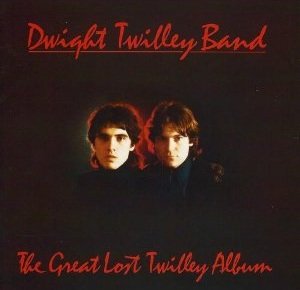
But a few months before that sad occasion, The Great Lost Twilley Album presented an overdue peek into the vaults. This packed CD compiled tracks from their earliest sessions through the drawn-out recording of their two albums together, as well as solo Twilley songs intended for the album that became Scuba Divers after taking so long. These are hardly leftovers; beginning with the original single version of “Somebody To Love”, it’s a non-chronological journey through 25 could’ve-been-hits, including the discarded single “Shark (In The Dark)” and its intended B-side “Please Say Please”, the original mix of “I’m On Fire” and its long-lost B-side “Did You See What Happened”, songs that would be rerecorded for Phil’s first solo album, and other alternate takes and mixes, with most tracks clocking under the 2:50 standard.

The presentation is designed more for listening than strict history, though session details for each track are included. So it’s not really a lost album per se, but a good chance to hear what else had been in the hopper. Most of all, it demonstrates once again how much these guys loved to make records, whether throwback tracks like “I Don’t Know My Name”, slow burners like “No Resistance”, or big productions like “Burnin’ Sand” and “Dancer”.

Thanks to another label switch, The Great Lost Twilley Album soon went out of print and was lost again. Luckily, it’s accessible on all the streaming services, and should be sought.

Dwight Twilley The Great Lost Twilley Album (1993)—3
Current CD availability: none; streaming only

Friday, September 12, 2025

Guns N’ Roses 4: The Spaghetti Incident

They had only just finished the massive Use Your Illusion tour, and the “Estranged” video hadn’t even been released yet when Guns N’ Roses released their long-threatened covers album. Much of what made up “The Spaghetti Incident?” originated during the album sessions, and could have ended up on those albums, but they eventually decided that “Live And Let Die” and “Knockin’ On Heaven’s Door” would be the extent.

While most of the album runs the gamut through punk and glam, it opens with “Since I Don’t Have You”, the venerable doo-wop nugget with a profane Axl aside before the solo and an unnecessary atmospheric coda. That out of the way, Duff does a decent job shouting the Damned’s “New Rose”, and Axl puts on a bad cockney for U.K. Subs’ “Down On The Farm”. He cleverly adds a kazoo in lieu of sax for “Human Being”, which they stretch out even longer than the New York Dolls version. Duff helps Axl with the Stooges’ “Raw Power”, and Michael Monroe makes his second appearance on a GN’R album, duetting on the Dead Boys’ “Ain’t It Fun”, though Axl makes sure he himself gets the line with the c-word.

Slash takes his first-ever lead vocal on “Buick Makane” (from the T. Rex album that inspired his hat), which gets a twist by bringing in the chorus of “Big Dumb Sex” by Soundgarden in a nod to grunge, but more a reason to drop more eff-bombs. Nazareth’s “Hair Of The Dog” is an inspired choice, right up to Slash’s “Day Tripper” quote at the end. Duff returns for the Misfits’ “Attitude” and Johnny Thunders’ “You Can’t Put Your Arms Around A Memory”, the latter brought over from the sessions for his own solo album. The Sex Pistols are said to be the source for “Black Leather”, but in reality it was a Steve Jones and Paul Cook collaboration first covered by the Runaways. The final listed track is a plow through the Fear classic “I Don’t Care About You”, which would have been a fine ending, but Axl decided to sneak on a song written by Charles Manson as a hidden track. (As if that wasn’t enough, the typed gibberish on the album’s front cover uses the code invented by the Zodiac Killer.)

What helps the album succeed is, of course, Slash, who plays his butt off everywhere without seeming showboaty, and Duff should get some credit for some of the more arcane selections. If the intention really was to pay homage as well as generate royalties for some of these people, good for them. But their sell-by date had passed. Outside an unnecessary carbon copy cover of “Sympathy For The Devil” released on the Interview With A Vampire soundtrack a year later, this was the end of the band as we knew them.

Guns N’ Roses “The Spaghetti Incident?” (1993)—3

Tuesday, September 9, 2025

Duff McKagan: Believe In Me

For a while, Duff McKagan was the dumbest man in rock ‘n roll, stumbling around drunk and/or high, laughing at some inside joke, with hair and clothes that suggested something of a male version of Kelly Bundy. But his marginalized role as the bass player in Guns N’ Roses belied his varied musical background, kinda like we always underestimated what Izzy Stradlin brought to the mix. This wasn’t exactly utilized to the fullest on Believe In Me, his first solo album, as epitomized by the song titles and the cartoony portrait of the artist on the front. No expense was spared for this project, seemingly created during studio and touring breaks; along with most of the current lineup GN’R except Axl, special guests included members of Skid Row and the girl from Warrant’s “Cherry Pie” video. But he does play the majority of the guitars and drums on the album, and quite well too, along with his usual bass.

Unfortunately, he also sings with confidence but not competence, his lyrics trite and cliché. Sometimes he speaks (or yells) asides when melodies just can’t suffice. These traits combine to erase most of the appreciation one could muster for the quality of the arrangements. Much of the album is heavy rock or power ballads, but he does detour into funk for Jeff Beck to shred on for “(F-cked Up) Beyond Belief” (censorship ours) that’s mostly instrumental but gets its title from the near rap in the midsection. (Beck also turns up on “Swamp Song”.) “Punk Rock Song” is a one-man thrash that lasts just over a minute and a half, and would have been shorter if he stayed true to the genre and didn’t break it down halfway through. Lenny Kravitz sings (and screams) “The Majority” with little fanfare, which is surprising considering his ubiquity at the time. Co-writer and contributor Gilby Clarke—a.k.a. Izzy’s replacement—can share half the blame for “10 Years”, and Sebastian Bach takes the Izzy role on “Trouble”. “F-uck You” (censorship again ours) is a loud metal number with a profane rap by one Doc of something called Haus Mob. The closing ballad “Lonely Tonite” is manna for those whose favorite song on the Use Your Illusion albums was “So Fine”.

Since getting mostly sober by the end of the century, Duff managed to clean up his look, resurfacing in various offshoots with old and new friends—most successfully with Velvet Revolver—and even went back to school to emerge as something of a financial adviser to his fellow burnouts. Back then, though, not a lot of people believed in Believe In Me, and it was soon overtaken by a more bankable release.

Duff McKagan Believe In Me (1993)—2

Friday, August 8, 2025

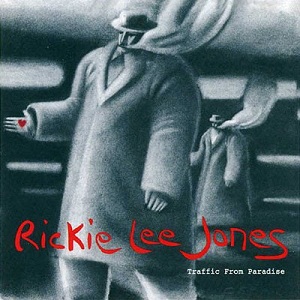
Rickie Lee Jones 7: Traffic From Paradise

Having gone through pop jazz and adult contemporary, Rickie Lee Jones chose a unique path for Traffic From Paradise. Though recorded in several places with several people—anchored by Leo Kottke, Jim Keltner, old buddy Sal Bernardi, and John Leftwich on bass and cello—there’s a spontaneous, live-in-the-room feeling, dominated by acoustic instruments. Throughout, her lyrics provoke wonder, just as her voice continually veers between happy toddler and stoned chanteuse.

“Pink Flamingos” is typical, in that it rumbles into place, finally settling on a basic riff with references to Las Vegas and other kitsch. A disturbing image of a monk opens “Altar Boy”, which soon turns into a Leonard Cohen homage. The simple folk picking of “Stewart’s Coat” is a wonderful contrast, even in its wistful longing for a past love, or so it seems. But for David Hidalgo’s south-of-the-border touch, Bernardi’s “Beat Angels” could have come from any of her earlier albums. Two of the guys from the Blue Nile are thanked for inspiration on the surreal “Tigers”, which improves with that knowledge.

The stripped-back cover of “Rebel Rebel” is unnecessary, though it did likely bring Brian Setzer some cash in the days before he rode the swing revival. “Jolie Jolie” is a sweet little number with Cajun influence, leading into the love song within the Kottke-cowritten “Running From Mercy”, featuring harmonies from Lyle Lovett. There seems to be another scary tale driving “A Stranger’s Car”, though the touch of strings (which we assume comes from a keyboard) adds to the landscape. David Baerwald—whom some might remember from David + David and “Welcome To The Boomtown”—duets on “The Albatross”, a seafaring benediction.

Traffic From Paradise wasn’t much heralded then, and hasn’t seemed to have surfaced in any retrospective appreciation. Geffen didn’t do much except release the album, since most of their money was going to Aerosmith, Nirvana, and Guns N’ Roses that year anyway. But it’s another good choice for quiet evenings or early mornings.

Rickie Lee Jones Traffic From Paradise (1993)—3

Friday, February 7, 2025

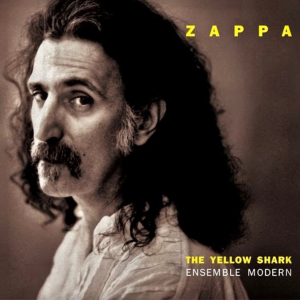
Frank Zappa 54: The Yellow Shark

Throughout his entire career, all Frank Zappa wanted was to work with a collective that was not only capable of playing his more sophisticated musical pieces, but enthusiastic about doing so, and willing to help finance them to fruition. In 1991, he found one in Ensemble Modern, a Frankfurt-based outfit that dove into the challenge. Compositions old and new were arranged and tweaked, culminating in a series of concerts entitled The Yellow Shark. An album culled from these shows was released one month before Zappa succumbed to prostate cancer.

As his classical-type albums go, it’s enjoyable unless you don’t like classical-type albums. Following a brief introduction by the composer (who was too sick to do much of the actual conducting) they go into “Dog Breath Variations” and “Uncle Meat”, both also familiar from previous orchestral excursions. “Outrage At Valdez” was written for a Jacques Cousteau documentary about the Exxon oil spill in 1989, and is suitably grave; along the same lines, two different pieces called “Times Beach” refer to a different chemical emergency that affected ordinary folks. One of the more daring pieces is “The Girl In The Magnesium Dress”, originally composed and played on the Synclavier but here executed by actual people who could replicate the sound of cats running up and down piano keyboards and vibraphones simultaneously. “Ruth Is Sleeping” had a similar birth, but is slightly more musical. “Be-Bop Tango” gets a chance to breathe without the choreographed distractions of the Roxy era.

The four movements from “None Of The Above”, a string quartet originally written for and performed by the Kronos Quartet, appear in a different order than supposedly written, and aren’t immediately melodic. Because he never wrote a skit he didn’t want to perform, this album has two. “Food Gathering In Post-Industrial America, 1992” is recited by a female viola player, punctuated by the sounds of mechanical sewage; then the federal customs form is the basis for “Welcome To The United States”, read in a thick German accent with comical vocal and instrumental responses from the band. (“Louie Louie” makes an appearance.) It’s followed by “Pound For A Brown” and “Exercise #4”, another Uncle Meat refugee. Despite its title—derived from an early version that used only the white keys on the piano—“Get Whitey” is very melodic and almost pretty. Finally, “G-Spot Tornado” is another Synclavier piece newly arranged, and it’s excellent. Still, it would be nice to have something after the nearly two-minute standing ovation at the end.

The Yellow Shark would not be the last major work he completed before his death, but it certainly got a lot of attention. For several years his estates teased a sequel of sorts; when Everything Is Healing Nicely finally appeared, it turned out to be something of an “audio documentary” of the ensemble’s earliest rehearsals and experiments with him. Moreso than The Yellow Shark, it’s generally for completists, beginning as it does with “Library Card”, mostly recited in German with Lumpy Gravy-style accompaniment. (“Master Ringo” and “Wonderful Tattoo” use a genital piercing enthusiast magazine for their lyric sources.) Luckily, the rest is a lot less silly.

“This Is A Test” is a brief experiment that deserved to be further developed, while “Jolly Good Fellow” is a conducted improvisation that plays on that familiar melody. “Roland’s Big Event/Strat Vindaloo” is a clarinet solo followed by Frank duetting on guitar with L. Shankar. “T’Murshi Duween” is a Roxy-era piece that usually followed “Penguin In Bondage” and would have been very well received at the shows. The appropriately titled “Nap Time” is based around the Alpine horn while two Japanese poems are recited quietly in the background. “9/8 Objects” features more L. Shankar, and “Naked City” is something of a guitar concerto (not played by Frank). “Whitey (Prototype)” is a brief rehearsal, while “None Of The Above (Revised & Previsited)” juxtaposes a rehearsal with live performance. “Amnerika Goes Home” also comes from the concerts, being an arrangement of a Synclavier piece used as bedding on Thing-Fish.

Between the two albums there is some very enjoyable music showing another side of Frank, but one must endure some of his more idiosyncratic tendencies to get to them. It’s a shame the collaboration didn’t get to go further.

Zappa/Ensemble Modern The Yellow Shark (1993)—3
Zappa
Everything Is Healing Nicely (1999)—3

Friday, September 13, 2024

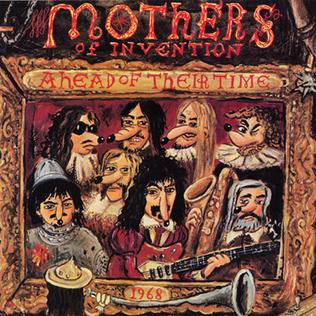
Frank Zappa 53: Ahead Of Their Time

Back in 1968, once the Mothers of Invention included trained individuals—or at least people who could read increasingly intricate music—Frank Zappa began introducing more complicated, almost classical pieces in the band’s sets. Some of this he called chamber music that he wrote himself, some were arrangements of Stravinsky and Zappa idol Edgard Varèse. Either to appeal to the less adept members of the band or with the excuse that audiences needed things dumbed down, silly skits involving scripts and in-jokes would accompany these performances.

Two such performances at London’s Festival Hall included contributions from an actual orchestra alongside the Mothers. Excerpts from the “dramatic” portion emerged in the ‘80s, and the visuals were included as part of the perennially incomplete Uncle Meat film (on VHS), but the shows appeared in more or less a complete form as Ahead Of Their Time.

Because the audio can’t adequately demonstrate the dramatic portion, the first half of the disc is an acquired taste. Much of the music would end up incorporated into “Bogus Pomp”, while the content detailing struggle between “serious music” and its opposite would recur in 200 Motels. Luckily, the guys sound into it, so it’s not too tedious.

The political rarity “Agency Man” is followed by the dramatic “Epilogue”, and the remainder of the disc is pretty much non-stop Mothers rock ‘n roll. “King Kong” eventually segues into “Help, I’m A Rock” and “Transylvania Boogie”, “Pound For A Brown” begets “Sleeping In A Jar”, and the “Orange County Lumber Truck” suite is heard nearly complete, and more than the excerpt already used on Weasels Ripped My Flesh. Being abridged to fit on a single disc, it’s a shame that to date the album hasn’t been expanded to provide at least the equivalent of a full set.

Nearly thirty years went by before the era was revisited. The inaugural release of the Road Tapes series presented a concert in a Vancouver hockey arena (a.k.a. “the local electric icebox”) two months before the Festival Hall show. Obviously there’s no play to perform, so they start right in with improvisations; others dot the setlist. Along with material also heard at the London show, this performance includes a piece introduced as “Shortly” and said to be released on an upcoming album; the music is better known now as “Holiday In Berlin”, and said album was reduced to two records from three, and without this piece. Other highlights include the first album appearance of the doo-wop parody “Oh, In The Sky” and their arrangement of “Octandre” by Varèse. Thanks to some apparently exhaustive restoration work by Vaultmeister Joe Travers, the mono sound is excellent.

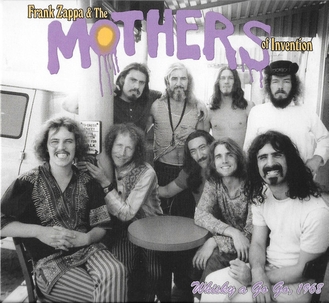
A little over a decade later, another relic from the era emerged. Whisky A Go Go, 1968 was recorded about a month before the Vancouver gig, and just before Ray Collins quit the band for the fourth and last time. The reason for this lengthy occasion was the intention of getting decent live performances from the nine-piece band on tape for future purposes that didn’t exactly develop.

A ten-minute improvisation leads perversely into “America Drinks And Goes Home”. Self-styled impresario (and accused sexual predator) Kim Fowley is brought up help shriek his way through “My Boyfriend’s Back”, followed by the original response of “[I’m Gonna] Bust His Head” and a lengthy “Tiny Sick Tears Jam”. Another improvisation goes into “Status Back Baby”, followed by some doo-wop, original and otherwise. “King Kong” is indexed as two parts, the second of which stops halfway through so the GTO’s [sic] can yell along with “Getting To Know You” and the Bugs Bunny Show theme. (Other guests on the evening included affiliated acts Alice Cooper and Wild Man Fischer; some of the Turtles were supposedly in the audience in a bit of foreshadowing.)

“The Duke” is played twice so they could get a decent usable take; this would eventually form part of “The Little House I Used To Live In”, but here’s it’s mostly Frank soloing over drums. Then there’s “Khaki Sack”, a more structured R&B jam that would be properly recorded in 1970 and shelved for half a century. “The Whip” and “Whisky Chouflée” run together for twenty minutes of mostly one-chord jamming, and the “world premiere” of “Brown Shoes Don’t Make It” for the first time on stage leads into an extended shuffle on the main theme and further improvisation.

In the end, only one segment from the evening was released at the time (“God Bless America” on Uncle Meat), though at least two other songs were mixed by Frank; one snippet made it to YCDTOSA #5, and more finally emerged on 2021’s Zappa documentary soundtrack. As the first full-length concert made available with Ray singing (save a few Beat The Boots), it’s about time.

Zappa/Mothers Ahead Of Their Time (1993)—3
Frank Zappa
Road Tapes, Venue #1 (2012)—
Frank Zappa & The Mothers Of Invention
Whisky A Go Go, 1968 (2024)—3

Friday, July 19, 2024

Jellyfish 2: Spilt Milk

The Bellybutton album and videos certainly created a buzz for Jellyfish boys Andy Sturmer and Roger Manning. They got a chance to write some songs for the first Ringo Starr album in ten years, and were even courted briefly by Brian Wilson’s team. Certainly their label wanted the band to keep going, except that they weren’t really a band anymore. Chris Manning never wanted to be a bass player anyway, and Jason Falkner realized the other two weren’t going to let him do anything but play guitar at their direction, so he bolted.

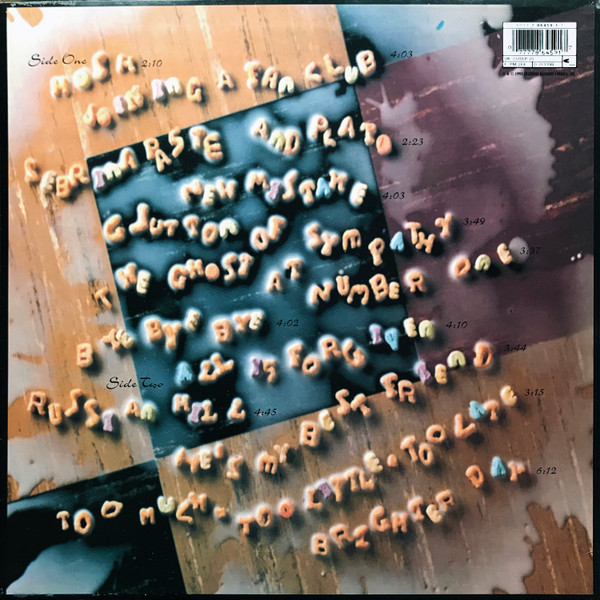
Undaunted, the dynamic duo hunkered down in the studio in their Scooby Doo-inspired wardrobe with the guys who produced the debut, tapping Lyle Workman and the soon-to-be ubiquitous Jon Brion for the lead guitars and T-Bone Wolk to handle the better bass parts. The result was Spilt Milk, which doubled down on their quirky touches and daddy issues in the lyrics by piling on religious commentary and ceaseless references to cake frosting and other sugars, delivering a tour de force in album production. Some have suggested there is a rock opera in there, which may or may not be true; perhaps the song titles written in Alpha-Bits cereal in, yes, spilt milk on the back cover were intended to deflate any pomposity.

Whatever the real intention, we do seem to be dealing with a series of dreams. “Hush” perversely starts us off with a lullaby, the layered vocals an overt homage to Queen. The orchestral touches are misleading, as “Joining A Fan Club” jolts everyone awake with straightahead rock, the snide lyrics alluding to both pop stars and televangelists. Roger gets to open “Sebrina, Paste And Plato” (the latter word likely used to avoid paying the Play-Doh manufacturer any royalties), one of the most elaborate songs ever to depict grade school at its most garish, kinda like “Getting Better” filtered through the Muppets. The silliness abates with the sublime “New Mistake”, another master production that pulls out all the stops, complete with key change for the bridge and Harrisonian guitar solo, all the while relating a playlet about a surprise pregnancy that spans generations. “The Glutton Of Sympathy” most resembles the songs on Bellybutton, loaded as it is with haunting melodic phrases, and so does “The Ghost At Number One”. The heaviest track the Beach Boys never recorded, complete with a nod to “Cabin Essence” over the fade, it had a truly dark video to match, and predicted even more dead rock stars. While it was written back before the first album, “Bye, Bye, Bye” melds Oktoberfest with “Those Were The Days” by way of Supertramp. The best parts of the song are still the vocal motif used as the intro and after the instrumental break.

It’s back to loud angry rock (and more Queen references) with “All Is Forgiven”, its dense sound burying some very delicate musical lines, escalating into a wash of echo that abruptly cuts off with the next mood switch into “Russian Hill”. Based around a dreamy approach derived from Nick Drake, it occupies a similar palate-cleansing mood-changer slot as “Bedspring Kiss” on the last album, but it’s a much better song and arrangement, the pedal steel guitar the perfect touch. Then it’s off to Nilsson territory with “He’s My Best Friend”, a not-too-subtle ode to onanism with an even more overt steal in the title. It’s a joke that wears thin, but the majestic kiss-off “Too Much, Too Little, Too Late” redeems it. (This is a good place to remind the listener that what sounds like a big band—anywhere on the album—was actually pieced together instrument by instrument and expertly mixed.) Another Harrisonian solo bookends the tune, to the point that we don’t always realize “Brighter Day” has started. The “Cabin Essence” banjo returns, in between carousel sounds and circus effects used to illustrate more of the horror than fun of life in the big top. Andy goosesteps toward the increasingly plodding denouement, and another Hollywood flourish brings us right back to where we came in on track one.

For the Split Milk tour, they drafted bass player Tim Smith to wear a hideous green corduroy suit with odd lapels and matching Prince Valiant haircut, while young Eric Dover was brought in to shred on guitar and leer at the girls in the front row. The stage was decked out with tinsel streamers like a high school dance and a working Lite-Brite displaying the band’s logo. Roger would occasionally come out from behind his rig to bash a guitar, particularly on their cover of Badfinger’s “No Matter What”. (Sadly, this was not included among the demos and live recordings added to the album’s eventual expansion.)

But it wasn’t enough to keep the band together, and rather attempt to make an even better record, Jellyfish dried up on the sand. Andy Sturmer was clearly happier making music than promoting it, and went on to a successful career working with Japanese musicians and scoring animated television, giving absolutely zero interviews in the time since. Roger Manning tried continuing as Imperial Drag with Eric Dover (who’d just finished a stint with Slash’s Snakepit) and eventually ended up in Beck’s touring band. While there he crossed paths with Jason Falkner, who was in the brief supergroup The Grays with Jon Brion before embarking on a prolific solo career of his own in between sessions (including one Paul McCartney album). Most recently, Manning, Dover, and Smith put out a series of three four-song EPs as The Lickerish Quartet, all released during Covid, and eventually compiled onto a CD in Japan, after which the project ended.

In the absence of a highly unlikely band reunion, Jellyfish endures as one of those bands who knew how to fill up both sides of a Maxell 90 with melodies that will stick in your brain. Some bands can barely fill one. (Those seeking even more from the band’s brief arc will want to look out for 2002’s mega-rare Fan Club box set, which includes much of the Omnivore bonuses and then some, the Radio Jellyfish compilation and Live At Bogart’s set, and the double-disc Stack-a-Tracks, which took the lead yet again from the Beach Boys by presenting predominantly instrumental mixes of both studio albums.)

Jellyfish Spilt Milk (1993)—
2015 Omnivore reissue: same as 1993, plus 25 extra tracks

Friday, April 19, 2024

Steely Dan 8: Reissuin’ The Years

Way back in 1978, as part of a last gasp by ABC Records before being swallowed up by MCA—and knowing the band wouldn’t have any other product out soon—a Greatest Hits album by Steely Dan hit the shelves in time for the holiday buying season. This two-record set was packed to capacity, literally and figuratively, going through the band’s six albums to date in order, and leaning heaviest on Pretzel Logic. Twelve of the songs had actually been singles, but the biggest draw at the time was “Here At The Western World”, an decent unreleased tune from the Royal Scam sessions.

Not included on the set, likely because ABC didn’t have the rights to it, was the superior standalone single “FM”, recorded for the soundtrack of the movie of the same name. This was, however, included on 1982’s Gold, a typically thrown-together MCA compilation that also included “Hey Nineteen” and “Babylon Sisters” from Gaucho and five earlier album cuts seemingly chosen at random. At least it filled two sides of a record.

Three years later, to appeal to the burgeoning CD market as well as audio snobs who wanted slick recordings with which they could demonstrate the new hifalutin technology, A Decade Of Steely Dan took ten tracks from Greatest Hits and added the three later songs from Gold (also substituting “Deacon Blues” for “Josie”), all in a pre-shuffled order. The cover art made no sense, but at least the insert included musician credits for each track.

That set became the go-to Steely Dan hits CD, which meant “Here At The Western World” was left in limbo in the digital age. This was rectified in 1991 when Gold was reissued in an “Expanded Edition”, which tried to compensate for duplicating four songs on Decade by adding “Western World” along with some other rarities. Two were Donald Fagen solo tracks that had appeared on two very different movie soundtracks; the mostly instrumental “True Companion” from Heavy Metal is very Dan-like, while the slick “Century’s End” from Bright Lights, Big City isn’t. Perhaps most enticingly, a hot live “Bodhisattva” from 1974 that had appeared eight years later as the B-side to “Hey Nineteen”, of all things, rounded out the disc. Besides being one of the few recordings of the band as a touring outfit, it sports a lengthy inebriated and censored introduction from one of their roadies. (While originally recorded on cassette, some of the song’s vocals sound too clean to not have been overdubbed after the fact.)

By now the box set industry was in full swing, and Steely Dan had their turn in 1993; plus, they were on tour to promote Fagen’s new album. Citizen Steely Dan crammed all six albums in sequence onto four CDs, with the occasional track swap for an “enhanced” listening experience at the start and/or end of some discs. The live “Bodhisattva” was inserted in place between Pretzel Logic and Katy Lied, just as “Western World” and “FM” bookended the Aja selections. Beyond those, the sole rarity was a 1971 demo of “Everyone’s Gone To The Movies” stuck at the end of disc four, eschewing their other oft-bootlegged, early work and even both sides of their long-lost first single, which both guys said they hated. (Their active involvement with the set was borne out by the meticulously remastered contents—though they forgot to include the intro of “Rikki Don’t Lose That Number” in the first pressing—along with particularly sardonic and occasionally hilarious liner notes printed in an annoying all-caps font.)

That should be sufficient for anyone, but the allure of disposable income is too much for any record executive to resist, and why would they. At the turn of the century, Showbiz Kids did a nice job of expanding the original Greatest Hits onto two CDs, complete with the requisite dip into Gaucho, the inclusion of both “FM” and “Western World”, and finally acknowledging “Dirty Work” and “Aja” as essential, though perhaps at the expense of “East St. Louis Toodle-oo”, which is no real loss. Six years later, The Definitive Collection proved to be false advertising by sticking to a single CD and featuring a song from each of their 21st-century albums. At least it included “Dirty Work”.

Steely Dan Greatest Hits (1978)—4
Steely Dan
Gold (1982)—3
1991 Expanded Edition: same as 1982, plus 4 extra tracks
Steely Dan A Decade Of Steely Dan (1985)—
Steely Dan
Citizen Steely Dan: 1972–1980 (1993)—
Steely Dan
Showbiz Kids: The Steely Dan Story, 1972–1980 (2000)—4
Steely Dan
The Definitive Collection (2006)—3

Tuesday, January 2, 2024

Donald Fagen 3: Kamakiriad

Working with The New York Rock And Soul Revue must’ve done something to Donald Fagen’s creativity, as he was soon at work on his second real solo album. When Kamakiriad appeared, fans were surprised to see Walter Becker listed as producer, and more so when a reconstituted Steely Dan—stocked mostly by younger session cats—toured to support it.

Naturally, in all the excitement the album was often overlooked, particularly since only a few songs appeared in the setlists. That’s odd, because Kamakiriad was considered a song cycle of sorts, if not exactly a concept album. Where The Nightfly took the point of view of a young man on the cusp of the ‘60s envisioning the future, this time we have a middle-aged man imagining the future from the present day.

“Trans-Island Skyway” sets the scene as Our Hero drives off in his new space-age car, a steam-powered vehicle that grows its own food and features satellite navigation technology. (It’s not quite like Pete Townshend predicting the Internet, but still.) Despite the persistently jaunty mood, “Countermoon” refers to relationships gone stale or sour, so he decides to head to “Springtime”, a fun house that exists in the past as well as the future. Despite that stated intention, the next track finds the narrator “Snowbound”, but still trying to enjoy himself in hermetically sealed environment.

“Tomorrow’s Girls” has a mildly retro sound, painting a pretty picture that probably isn’t real. And he knows it, since he spends the fade reeling off dozens of names of the women that have apparently captured his eye in the past. Yet “Florida Moon” continues his fantasy of finding some sun-kissed strumpet to keep him company in a warmer clime. Yet the unpleasant memories he alludes to “On The Dunes” suggest it’s not the best place to be, so he’s clearly conflicted. At least “Teahouse On The Tracks” provides some kind of haven to which he can always return, where the music is hot and the dancing doesn’t stop.

Overall Kamakiriad sounds like a Steely Dan album with honking horns, slick guitars, cooing background singer, automated-sounding drums, and yeah, it’s a little sterile. No track is shorter than five minutes, and most exceed six. There’s a lot of sameness, especially in the tempo and the same rhythm, so it often fades into the background, whereas The Nightfly was much more dynamic. But if this is what it took to get the boys back on the road, so be it.

Donald Fagen Kamakiriad (1993)—

Friday, October 27, 2023

Bryan Ferry 8: Taxi

An atypical break from the business for Bryan Ferry ended in 1993 with the release of Taxi, an album of… covers, just like his solo career started. (The album is dedicated to his mother, who died two years earlier; maybe that’s what’d kept him busy since his last album.) It was co-produced by Robin Trower, who contributes guitar effects to every track, as do the familiar Neil Hubbard and even ambient pioneer Michael Brook. Other session cats include Steve Ferrone, Nathan East, and Greg Phillinganes. All together it’s much less campy than his first solo albums, sounding instead like it’s coming from another planet.

That spacey approach oddly sets up “I Put A Spell On You”, which doesn’t sound like Creedence or Nina Simone, and certainly not like Screamin’ Jay Hawkins. Listen closely and you might hear Maceo Parker. Classic ‘60s R&B is touched by “Will You Love Me Tomorrow”, “Just One Look”, and “Rescue Me”, the latter two nearly unrecognizable. “Answer Me”, which he either heard from Frankie Laine or Nat King Cole, gets a groove treatment, as does “All Tomorrow’s Parties”, but still suitably dirgey. “Girl Of My Best Friend” was UK hit for Elvis, but not for Bryan. “Amazing Grace” comes closest to his double-take inducing choices of the ‘70s, though it’s still pretty straightforward, using David Sancious’ gospel-flavored organ, while the “title track” is far away from the silky soul of the original. (He does use the whistle, however.) Finally, “Because You’re Mine” is credited as his own, but it’s mostly an atmospheric throwback to the first track.

When the rhythm is there, Taxi follows on from his seductive ‘80s work, and sports grainy, moody Anton Corbjin photos aplenty. There are worse ways to kill time.

Bryan Ferry Taxi (1993)—3

Tuesday, October 18, 2022

Smithereens 10: The Lost Album

In 1993, the Smithereens were without a label, but decided to record an album anyway. Then they began negotiations with another label, and promptly abandoned the work in progress for a whole new collection of songs. A Date With The Smithereens was recorded and released to little interest, and onward they went.

Many of the abandoned songs made it to the public in the form of demos and such on various self-produced compilations, but in 2022 what’s simply called The Lost Album made it to shelves. While it’s “80% finished” according to bassist Mike Mesaros’ liner notes—indeed, some tracks have only a tambourine for percussion—it’s still got a freshness and excitement that Date mostly lacked.

The songs lack the big boomy sound that characterized their first albums, but that dearth of punch doesn’t get in the way of the songs, which are all quality. “Out Of This World” is a decent retread of “Top Of The Pops”, and “Dear Abby” thankfully isn’t written as a contribution to an advice column. It sounds like there’s a whole other vocalist on “Don’t Look Down”—allegedly Pat’s own voice as a placeholder for a player to be named later—but “A World Apart” nicely cops the sound of Beatles ‘65 again. So far it’s standard Smithereens, which makes the “Iron Man” stomp of “Stop Bringing Me Down” a welcome departure. After almost six minutes of that, it’s a good switch back to the simple pop of “Pretty Little Lies”.

“Monkey Man” is neither the Stones song, nor the Toots & The Maytals track ska’d up by the Specials, but a terrific riff nonetheless. “Everyday World” is harmless, while “Face The World With Pride” sports a wonderful riff and snappy verses that deserve a better title and hook, no matter how painstakingly it was sung. “Love Runs Wild” and “All Through The Night” probably wanted big productions with strings and whatnot, and while Pat Dinizio’s joke songs don’t usually work, “I’m Sexy” just needs to change that one word to work.

Again, the tunes are solid, and most any would have improved A Date With The Smithereens. It’s doubtful they would have changed the overall fortune of that album, but at least we can hear them now.

The Smithereens The Lost Album (2022)—3

Friday, April 1, 2022

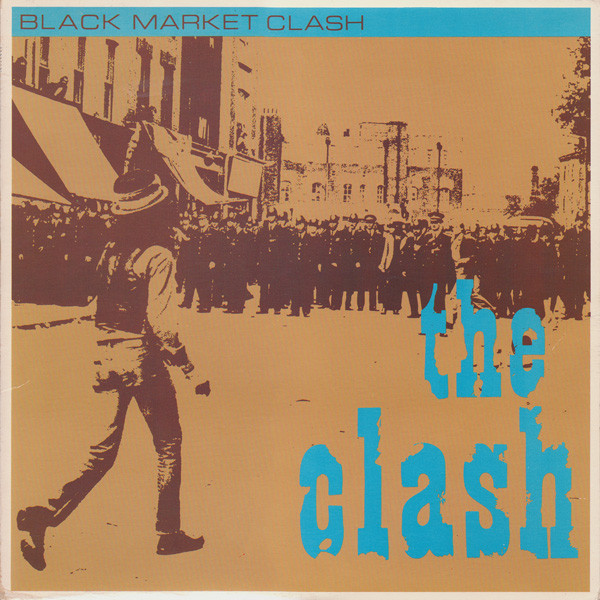
Clash 4: Black Market Clash

Thanks to the differences between UK and US releases, plus a number of songs exclusive to singles and EPs, the Clash had amassed a pile of unalbumized tracks that Epic Records was only happy to compile. Black Market Clash appeared in the short-lived 10-inch “Nu-Disk” format, but still ran almost as long as each of their first two albums had (in the UK anyway).

With its familiar slashing chords, “Capital Radio One” was especially rare, having been included on a giveaway single. Mick Jones sings “The Prisoner” a B-side from the Give ‘Em Enough Rope era, with muddy production to match. “Pressure Drop” is an extremely enjoyable cover of the Toots and the Maytals song, which makes for an odd transition back to the angry punk of “Cheat” from the UK version of the first album. The relatively early B-side “City Of The Dead” sports prominent organ and an unexpected smooth sax part by the soon-to-be-ubiquitous Gary Barnacle, who also features on the otherwise unreleased cover of “Time Is Tight”, the Booker T. & the MG’s tune. (At the time, many listeners would recognize this from the Blues Brothers’ cover.)

Side two provides a glimpse into the band’s descent into reggae culture, which would be even more overt on their next album. “Bankrobber” was the band’s newest single in the UK, featuring production work by Jamaican pioneer Mikey Dread; here it appears in an extended mix with a “Robber Dub” coda. More successful is “Armagideon Time”, a cover of a fairly recent reggae hit that had been the B-side of “London Calling” overseas. Here it’s followed by “Justice Tonight/Kick It Over” a dub version of the song running seven minutes.

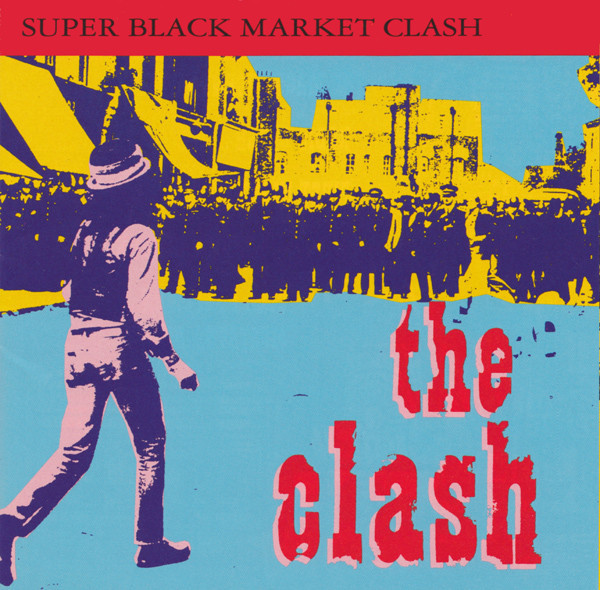
As with most grab-bags, Black Market Clash is a little disjointed, but the songs make it worth it. In the digital era, the band had already been anthologized on a two-record set as well as a box set, so a simple CD transfer of the album wouldn’t have sufficed. Rather, Super Black Market Clash (clever!) presented a vast expansion of the original, for a more comprehensive (though not complete) rarities collection. To cut down on duplication from those other compilations, “Capitol Radio One”, “Cheat”, “Bankrobber”, and “Armagideon Time” were dropped. Meanwhile, “Pressure Drop” was a different mix, “Justice Tonight/Kick It Over” was extended another two minutes, and “Robber Dub” was also more complete. (The set was also issued on vinyl as three 10-inch discs—clever again!—with four extra songs from the UK version of the debut filling up the first side: “Protex Blue”, “Deny”, “48 Hours”, and the reinsertion of “Cheat”.)

The new set opens with “1977”, the classic B-side of their first single with its bold declaration of “no Elvis, Beatles, or Rolling Stones.” “Listen” was previously sampled on that “Capital Radio” single, used as the bed of an interview; here’s it’s the full track but still instrumental. “Jail Guitar Doors” is repeated from the US version of the first album, followed by some of the repeats from the original set. Then there’s “1–2 Crush On You”, a surprising homage to sixties pop, with its allusions to “Wooly Bully” and “Twist And Shout”. Three songs from 1979’s The Cost Of Living E.P. follow: the misleadingly tuneful “Groovy Times” with its harmonica and acoustic guitar touches; the mildly soul-influenced “Gates Of The West”; and the “Capital Radio Two” re-recording. Sadly, the advertisement for the EP, which originally closed side two, is absent.

Following the lengthy dub tracks from the original set, the set moves to collecting material that postdated it, and since most of those are also dub versions, the sequencing is logical. These include “The Cool Out” (a danceable dub version of “The Call Up”), “The Magnificent Dance” (which piles completely arrhythmic bongos on the disco track for “The Magnificent Seven”), “Radio Clash” (the nearly identical B-side version of that single), and “Mustapha Dance” (an enjoyable rejig of “Rock The Casbah”). In between, “Stop The World” was a rare B-side with little musical quality, while “First Night Back In London” and “Cool Confusion” were outtakes from the double album that was shaved down for Combat Rock and “Long Time Jerk” also dates from the that period.

Where Black Market Clash made a nice stopgap in 1980, Super Black Market Clash becomes more of an afterthought. But listeners already following the band’s catalog knew that Clash B-sides were just as good as their album tracks. Clearly this band had plenty to say, and most of it was worth hearing.

The Clash Black Market Clash (1980)—
The Clash
Super Black Market Clash (1993)—

Tuesday, May 11, 2021

Todd Rundgren 26: No World Order

Ever the technophile, Todd Rundgren leapt into the possibilities of interactive music by offering his compositions as a series of files that could be programmed, sampled, and manipulated by any listener with the technology (read: cash) and the patience to handle it. For those who would rather hear his latest music as complete songs, a non-interactive version of No World Order was designed to suffice, though still credited to his TR-i moniker. With 16 tracks, six of which were alternate versions, this was still presented as an uninterrupted program, to encourage the shuffle play function on the listener’s CD player to encourage random and infinite variations of the sequence. (A year later, Rhino released No World Order Lite, which stuck to the ten songs, though it didn’t recoup their losses much.)

All of this makes a simple recap of the musical content more difficult than usual, since the music was designed to be fluid. With the exception of his voice and guitars, the accompaniment is largely computer-generated for a very sterile atmosphere. Luckily, “Worldwide Epiphany” is tuneful and rocking, though his rap detour (not the only one here) shows a debt to Public Enemy. “Day Job” is delivered in a Chuck D bark, punctuated by some berserk samples, but while “Fascist Christ” is more direct and topical, it’s hard to take him seriously. “Love Thing” is new jack swing two years after Bell Biv Devoe’s peak, whereas “Property” has a “Billie Jean” bounce. By the time the title track comes around the rap approach has become tiresome, and it goes on to derail “Proactivity”. However, “Word Made Flesh” brings back the rock for a potential anthem, and “Time Stood Still” and “Fever Broke” display more of his own classic brand of soul music.

While No World Order isn’t made for casual listening, Todd still displays his expert grasp on production and songwriting throughout. Maybe somebody out there has the capability to remix the tunes, dilute the raps, and update the dated textures into something more approachable. But then, doesn’t that negate the point of the exercise?

Todd Rundgren/TR-i No World Order (1993)—

Tuesday, December 15, 2020

Todd Rundgren 25: Redux ‘92

The Japanese tour looms large in many artist catalogs. Seemingly ever since Cheap Trick created “live at Budokan” as a trope, plenty of musicians have chosen that forgiving market to break in a new act, sometimes never taking it on the road in the US or the UK. Maybe that’s why Todd Rundgren accepted the easy check and actually reunited Utopia for the first time in six years for a tour.

To be precise, Redux '92: Live In Japan picks up pretty much where the band left off, playing quirky power pop heavy on synths and guitar breaks. Yet the set pulls liberally from albums like Oops! Wrong Planet and Swing To The Right in between more familiar tunes like “Hammer In My Heart” and “Love In Action”. Even “The Ikon”, albeit condensed to one-sixth of its original half-hour length, hints at their prog origins. “Hiroshima” is delivered and received well. And in case you forgot why we’re all here, “Love Is The Answer” sends everybody home.

Especially considering how many guises Utopia took on during their tenure, the uniformity of Redux ‘92 helps make sense of their catalog. Should anyone object, Todd offers a simple response in the liner notes: “Eat our collective shorts.”

Utopia Redux '92: Live In Japan (1993)—3

Tuesday, December 1, 2020

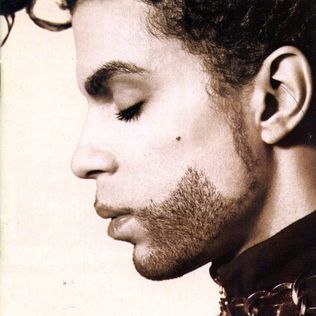
Prince 15: The Hits

It shouldn’t be surprising that Prince would resist a hits collection while he was still busy writing and creating new music. It also shouldn’t be surprising that when he did allow such a compilation to happen, it wouldn’t be anything simple or straightforward.

The Hits was released as two separate volumes, neither of which was sequenced with more than a slight concession to chronological order, both stacked with actual hits—along with some odd choices—and each with a pair of “new” songs. The Hits 1 offered the laid-back single “Pink Cashmere” and a live version of “Nothing Compares 2 U”. In addition to “When You Were Mine” and “I Feel For U”, this would suggest that the first volume was intended to showcase tunes that were hits for others. The Hits 2 could be seen as the raunchier of the two, leaning on his more suggestive lyrics, and included the rocking “Peach” (featuring Kim Basinger on sampled moan of ecstasy) and “Pope”, which samples comedian Bernie Mac and seems to be highly influenced by Digital Underground.

As long as you were going to buy both anyway, The Hits/The B-Sides boasted a third disc of tracks collected on CD for the first time. While not all-inclusive, it did spotlight many of the gems hidden on 45s and 12-inches throughout the ‘80s, including “Erotic City”, “God”, “How Come U Don’t Call Me Anymore?”, and the standalone single “Gotta Stop (Messin’ About)”. Granted, that means there are cast-offs like “La, La, La, He, He, Hee”, but who else was loading up quality B-sides like these? Two unreleased nuggets cap the disc—the alternate “video mix” of “4 The Tears In Your Eyes” aired during Live Aid after being donated to the USA For Africa, and the majestic “Power Fantastic”, recorded during the last days of the Revolution.

Those looking for just the hits in a simple package only had to wait until 2001’s The Very Best Of Prince, which presented the more obvious choices from the same period on a single disc. Five years later, Ultimate Prince offered a different smattering with a disc of extended mixes, and ten years after that, the posthumous double CD 4ever was mildly streamlined around the contents of The Hits 1 and The Hits 2, including “Peach” and the live “Nothing Compares 2 U”, with the added bonus of the 1999-era outtake “Moonbeam Levels”.

At any rate, The Hits effectively closed a chapter in Prince’s career, drawing a definite line between what happened before, and what would come after. He would continue to intrigue, certainly, but he would also confound.

Prince The Hits 1 (1993)—3
Prince
The Hits 2 (1993)—3
Prince
The Hits/The B-Sides (1993)—

Tuesday, October 20, 2020

Jeff Beck 13: Frankie’s House and Crazy Legs

All of a sudden Jeff Beck was busier than he’d been in years, and his record label happily pushed out anything he gave them. Who knows if they expected major returns, because what they got wasn’t exactly commercial, even a year or so apart.

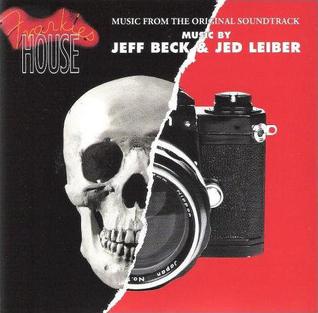
First up was Frankie’s House, the soundtrack to a British miniseries about a photojournalist in Vietnam, which explains some of the stereotypically Southeast Asian elements on some of the more atmospheric tracks. Beck is credited with merely guitars, while one Jed Lieber (whose father was the partner of Stoller) handles keyboards, which we assume includes all the drum programming. So basically, Jed provides the framework, and Beck does his thing. (“Cathouse” quotes from “Rice Pudding”, if you listen closely enough.) For overall listenability it helps that there are no vocals, but the curveball in the form of an instrumental cover of the old blues nugget “Hi-Heel Sneakers” is a little jarring.

However, that track actually provides a bridge to Beck’s other big project, a tribute to Gene Vincent’s guitarist Cliff Gallup. For this vanity exercise he teamed up with a retro combo called the Big Town Playboys, who might have been able to cash in on the Swingers fad a few years later if some of the members hadn’t defected to Portishead by then. Fans of the Stray Cats would dig the influence displayed here, though there’s a certain sameness to the program that doesn’t really vary until “Blues Stay Away From Me”, two tracks from the end. Notably absent is “Be-Bop-A-Lula”.

And with that, Jeff Beck limited himself to the occasional guest spot for the rest of the decade.

Jeff Beck & Jed Leiber Music From The Original Soundtrack Frankie’s House (1992)—3
Jeff Beck & The Big Town Playboys
Crazy Legs (1993)—3

Friday, June 26, 2020

Rush 19: Counterparts

As the music industry continued to evolve and expand, Rush remembered what their fans preferred while recording their next album. Having recently toured with the inimitable Primus on the bill, it probably helped having some likeminded musicians encouraging them to be themselves. As it turned out, Counterparts was their best album in years.

The first thing we hear is Neil Peart counting in the band for “Animate”, a solid combination of guitar, bass, and drums, with just enough keyboards underneath to support the track without overwhelming it at all. “Stick It Out” turns the “Limelight” riff inside out in a nasty way, obliterating any memory of synthesizers, at least for the next four minutes. “Cut To The Chase” is another bouquet of riffs topped by a gem of a solo, and stops just before you’re afraid they’ll take another rap detour. It’s overwhelmed by “Nobody’s Hero”, which boldly addresses a victim of the AIDS crisis in the first verse, alludes to a girl’s death in the second, and generally underscores the need to recognize the ordinary person for all his or her strengths before it’s too late—a message Neil Peart would be faced with a few years down the road. “Between Sun & Moon” explores the mysticism of the universe in a poetic lyric over, again, lots of guitars.

Unfortunately, “Alien Shore” is a clumsy lyric, attempting to reconcile differences in gender and race, and then “The Speed Of Love” actually explores that very concept on a highly intellectual level. Then “Double Agent” turns everything upside down, musically and lyrically, dominated by several spoken (NOT rap, thankfully) sections from the mind of a spy. Where else to go but an instrumental, in this case “Leave That Thing Alone”, giving each member a chance to stand out. Another juxtaposition of styles arrives in “Cold Fire”, which pits unlikely riffing against yet another exploration of the nature of romance. Finally, “Everyday Glory” provides something of a closing anthem, encouraging the youth to strive for greatness despite bleak surroundings.

Counterparts proved just how merely tolerable the last handful of albums had been. The misfires in the middle notwithstanding, here was a solid return to form, manna for air guitarists and practitioners of the real thing, and another step towards respect.

Rush Counterparts (1993)—

Friday, February 14, 2020

Phil Collins 5: Both Sides

After several high-profile years, both on his own and with Genesis, Phil Collins came home to find his marriage falling apart. Just as he did for Face Value, he turned to his trusty drum machine and home studio to put some demos together. But instead of adding horn sections and all-star buddies, he pretty much left the demos unadorned, and that was Both Sides.

Not all of the songs deal with failed romance, but overall it’s still a dour album, even when it’s upbeat. Apparently convinced that But Seriously wasn’t serious enough, “Both Sides Of The Story” treads territory familiar from “Another Day In Paradise”, but with faster drums and guitars and a distinct Peter Gabriel influence in the bridge (think “Biko”). “Can’t Turn Back The Years” is the first lover’s lament, while “Everyday” fills the “Never A Time” template following an extended solo piano intro. “I’ve Forgotten Everything” is a well-worn lyric in a defensive vein, but the recording certainly owes a debt to the Blue Nile. “We’re Sons Of Our Fathers” utilizes a banjo and canned horns for a near-Dixieland feel that thankfully dissipates. At least the track provides a little variety once those instruments are overshadowed, even if it if is about damn kids nowadays. “Can’t Find My Way” would likely stand out on any other album; here it’s just another mope.

While still a plea for forgiveness, “Survivors” revives the driving sound of the opening track, with prominent drums layered on top. It’s a shame he didn’t realize that the opening of “We Fly So Close” is ripped off from the theme from the movie Fame; maybe he was too concerned with repeating the basic chords from “In The Air Tonight”, right up to the guitar at the chorus. Despite the obvious nod to “Somewhere” from West Side Story, “There’s A Place For Us” has a Prince-worthy hook that’s screaming for someone to cover it. While supposedly about the ongoing troubles in Northern Ireland, the bagpipes on “We Wait And We Wonder” once again recall Peter Gabriel, this time “Come Talk To Me” from the year before. And in case you didn’t get the point, “Please Come Out Tonight” reiterates what’s really on his mind.

As is common with albums recorded in solitude, editing is eschewed throughout Both Sides, resulting in another over-long album, with several tracks lasting well over five, six, even seven minutes. Once again good songs get lost in the interminable sequence. Hence, it wasn’t the smash we’d come to expect; even the adult contemporary crowd seemed to be less than interested in something so down. (One of the first releases in the “Take A Look At Me Now” reissue series, the bonus Extra Sides disc collected a few contemporary B-sides, including the catchy “Take Me With You”, a demo of “Hero” as given to David Crosby, and a handful of live versions of album songs from questionable audio sources.)

Phil Collins Both Sides (1993)—
2016 “Take A Look At Me Now” edition: same as 1993, plus 10 extra tracks

Tuesday, October 1, 2019

Paul Simon 13: 1964/1993

Lots of people’s careers were celebrated with box sets in the early ‘90s, and some of them were actually worth investing in—usually if there were rare or unreleased tracks on them. That’s what made Paul Simon’s place on the shelf so maddening. First of all, the title was off; the music runs the gamut from 1957 to 1991, so somebody wasn’t paying attention. Even limited to three discs, as befits a guy who’d recorded fewer than a dozen albums, much of 1964/1993 was stuff people had already, whether on the albums themselves or, more likely for the time, Negotiations And Love Songs.

The set begins with the version of “Leaves That Are Green” from his then-out-of-print solo album, moving through only a handful of tracks from the Simon & Garfunkel albums—possibly due to licensing—with the live take of “Kathy’s Song” for variety. A tentative demo of an unfinished “Bridge Over Troubled Water”, already sounding like he meant it for Art to sing, is included for petulant reasons. The classic rendition follows, as does a strange little spoken segment called “The Breakup”, wherein Art attempts to make a statement about their separation while Paul interrupts constantly from the control booth. This goes into the original “Hey, Schoolgirl” single from 1957, then “My Little Town” is the last we hear from Art before the chronology returns to the start of Paul’s actual solo career.

From there, it’s basically an expansion on Negotiations, with a lot of the same tunes, save a live version of “Still Crazy After All These Years” from 1991. The final disc has seven songs from Graceland, five from The Rhythm Of The Saints, and three from Concert In The Park. There is another bonus in the form of “Thelma”, an outtake from Rhythm Of The Saints that’s worth more than a cursory listen.

Certainly, the music contained on 1964/1993 is such a high quality, even if you had it already, that we can’t fault the content. It simply should have been something else entirely, and both he and his label would soon learn a harsh lesson on what consumers were willing to abide.

Paul Simon 1964/1993 (1993)—