Showing posts with label john cale. Show all posts

Tuesday, November 29, 2022

Lou Reed 33: I’m So Free and Words & Music

Neither the labels nor the estate of Lou Reed immediately plundered their vaults for saleable archival material; rather, both waited several years. When “new” music did arrive, there was a similar theme, although different periods in the man’s development as a songwriter were addressed.

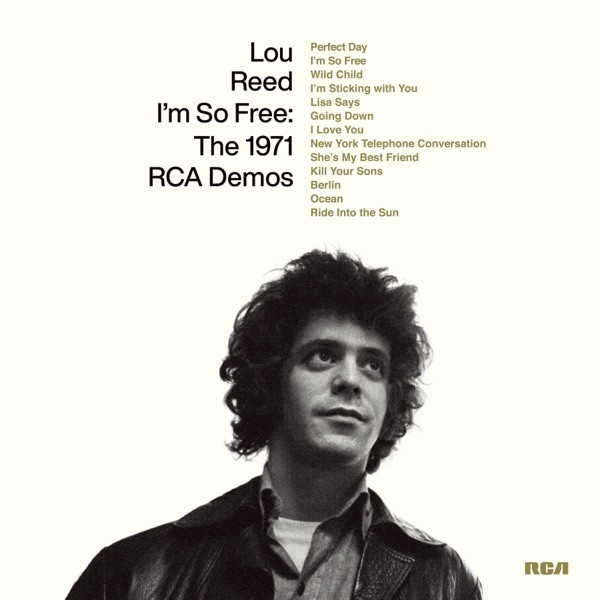
I’m So Free: The 1971 RCA Demos was one of those fifty-year copyright dumps that collectors trawl the file-sharing sites for every December, but then RCA put it out as a Record Store Day exclusive with an eye-catching cover and liner notes, and eventually for streaming with four more songs. These are basic acoustic guitar and vocal run-throughs, recorded professionally, of songs that would be considered for his first solo album. Every song that would appear there is auditioned here, including the leftovers from the last days of the Velvet Underground. We also get previews of later album cuts, including “Perfect Day”, “New York Telephone Conversation”, “Kill Your Sons” (with war-protest lyrics), and “She’s My Best Friend”, as well as a charming “I’m Sticking With You”. Throughout he’s immersed in each performance, laughing at any lyrical flubs, and instructing the engineer where the breaks are and when to fade.
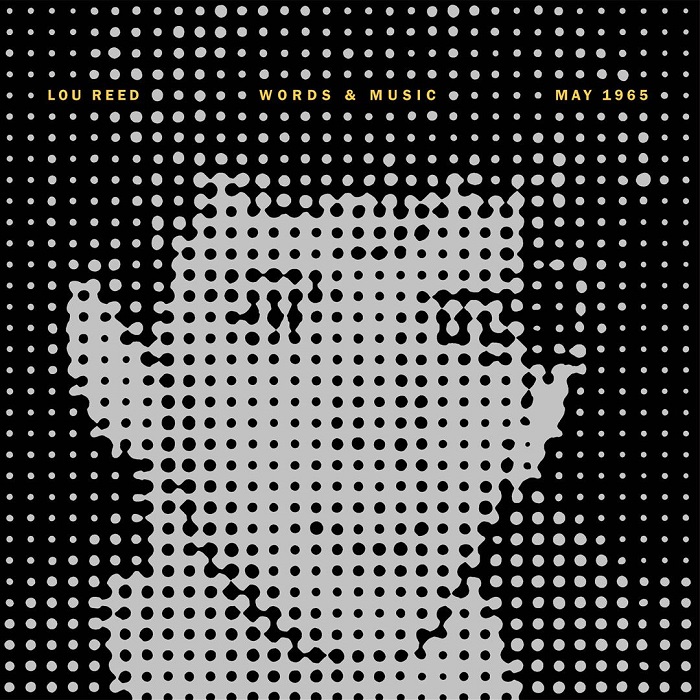
This snapshot of the artist stepping out is particularly interesting when compared to the album that followed soon afterwards. As the first release in the projected Lou Reed Archive Series, Words & Music, May 1965 presented the contents of a demo tape he recorded then mailed himself to preserve its authenticity. Dating from before the recordings heard in the Peel Slowly And See box, he’s still firmly in the thrall of Bob Dylan, from the delivery to the fingerpicking, even on songs we’d get to know via the Velvets. John Cale helps out on several songs, including the immortal “Buttercup Song”, which was teased for decades as “Never Get Emotionally Involved With A Man, Woman, Beast Or Child”, and takes the lead vocal on “Wrap Your Troubles In Dreams”, which features that same maddening single beat on a sarinda as on the box. “Men Of Good Fortune” would be a title he’d use eventually, but not with these words, sung from the point of few of a fair maiden. The other “new” songs are of varying interest, though “Stockpile” has rocking promise. And the early version of “Pale Blue Eyes” is lovely. (As a bonus for some editions of the album, six cuts go even further back, as for as 1958 for his own doo-wop composition “Gee Whiz”, then up to 1963 or 1964 for two Dylan covers—an instrumental “Baby Let Me Follow You Down” and “Don’t Think Twice, It’s All Right” with new words, both with harmonica—plus a run through “Michael, Row The Boat Ashore” and two nondescript blues.)

Together these albums are certainly essential for collectors. For the rest of the world, they actually show a kinder, gentler Lou who just wanted to write catchy songs, rather than the grouch determined to shock and upset.

Lou Reed I’m So Free: The 1971 RCA Demos (2022)—3
Lou Reed
Words & Music, May 1965 (2022)—3

Monday, December 16, 2013

Lou Reed 28: Le Bataclan

One of those gray-area releases that always seemed to turn up over the years was a one-off performance for French television that reunited the first three people to leave the Velvet Underground. Le Bataclan ‘72 spotlights Lou Reed, John Cale and Nico at a time when none of them were particularly visible, and certainly not commercially viable.

Lou had just recorded his first solo album, and had yet to fall into the Bowie circle, so he delivers some sleepy acoustic renditions of his old and new material—“Black Angel’s Death Song” is particularly striking in this format—before stepping aside to shakily strum behind the other two. Cale does three songs, two of which were never otherwise recorded, and then Nico sings a serviceable “Femme Fatale” before dragging her harmonium out to accompany her unique brand of lieder.

This can be startling if you’ve never heard it before, but basically, after the chamber pop of her Chelsea Girls album in 1967, the Teutonic titwillow started writing her own songs to the seesawing accompaniment of the aforementioned harmonium, which were then helped onto wax by Cale. And while they may seem to be simple two-finger noodlings, she still manages to sound convincing. Whatever these songs are about, they mean something to her.

For the sake of preserving history, a full minute of Nico coughing is not edited out, perhaps to excuse whatever might go wrong with “I’ll Be Your Mirror”, which is good because nothing does. She even comes back to sing lead on a jaunty rendition of “All Tomorrow’s Parties”.

Amazingly, for all the time spent tuning between songs, they never seem to find the right pitch. This is even sadly apparent on the snippets of “rehearsals” stuck on the end of the disc. Both happen to be songs from the third VU album, so perhaps this was the first Cale and Nico had heard them.

As with many bootlegs gone official, this doesn’t quite live up to the hype. Still, it’s a fascinating snapshot of Lou the troubadour, with giant hair and less attitude. YouTube clips abound, for easy sampling, teasing and/or repelling, depending on where you stand or sit.

Lou Reed, John Cale & Nico Le Bataclan ‘72 (2004)—

Wednesday, February 8, 2012

Velvet Underground 9: Peel Slowly And See

The catalog department at PolyGram was especially fond of the Velvet Underground, and just in time for their induction into the Rock and Roll Hall of Fame came the box set. Peel Slowly And See attempts to present the most complete portrait possible of the band, and does a pretty good job at it. Each of their four albums are included in their entirety—the third album in its alternate “closet” mix, and Loaded, licensed from Atlantic and featuring, for the first time, the full-length takes of “Sweet Jane” and “New Age”. A few of the more important selections from VU and Another View appear in context, as do two tracks from Nico’s Chelsea Girl.

Naturally, it wouldn’t be a box set without unreleased rarities. Of immediate historical significance is the entire first disc, a distillation of a recorded rehearsal held around 1965 by Lou, Sterling and Cale. It consists of several takes each of “Venus In Furs”, “Heroin”, “Waiting For The Man” and a hootenanny-style “All Tomorrow’s Parties”, along with the tedious “Wrap Your Troubles In Dreams” (later given to Nico) and the Dylanesque “Prominent Men”. It’s not exactly fascinating, but gives an idea of what they sounded like before meeting Maureen and Andy Warhol.

Other demos scattered throughout the set include “Here She Comes Now”, “Countess From Hong Kong” and a few pre-White Light songs that sound downright folky. Seven outtakes from Loaded were a big deal (until Rhino’s expanded version of the album went even deeper), being mostly songs Lou would later rerecord on his own.

The set also includes a few live recordings, such as the experimental “Melody Laughter” and “Booker T”, both edited from longer improvisations and both of which led to “Sister Ray”. “What Goes On” comes from Doug Yule’s first appearance with the band.

While it’s not absolutely complete, Peel Slowly And See is an excellent, comprehensive overview of the band. By including all four albums, it saves the trouble of having to buy each of the albums on their own. (Unless, of course, you need all the alternate versions on the expanded Nico and Loaded CDs, and later anniversary expansions.) It even featured a peelable banana on the box top. Hence the name.

The Velvet Underground Peel Slowly And See (1995)—4

Monday, January 30, 2012

Velvet Underground 8: Live MCMXCIII

Following Lou and John’s collaboration on the Andy Warhol tribute, one of the more improbable reunions occurred in 1993 when the original band, including Sterling Morrison and Maureen Tucker, got together for a tour. Unfortunately, it didn’t last long enough to make it out of Europe intact. (John blamed Lou, Lou blamed everyone else, and the other two had the class to keep their mouths shut about it all.)

Thankfully for those of us who missed out, their shows at L’Olympia in Paris were recorded by Lou’s team, and released later that year as a double-disc set (and a single disc distillation, also available in a limited edition covered in tiny peelable bananas). Their set pretty much stuck to the “hits”, with Cale taking the lead on two songs generally associated with Nico, as well as “I’m Waiting For The Man” and a giddy recitation of “The Gift”. Ever the professional, he even gamely learned the parts for the later songs they’d recorded without him. Maureen gets the spotlight for her two showpieces, to raves from the crowd, but the two new songs—the jokey “Velvet Nursery Rhyme” to introduce the band and the closing “Coyote”—don’t impress. In reflection of his career renaissance, Lou dominates Sterling on guitar, and peppers several of the songs with his more current vocal inflections. Still, the band sounded pretty good. “Hey Mr. Rain”, which hadn’t been played since they recorded in 1968, and had only resurfaced in 1986, gets a lengthy workout, beginning with nine minutes of Reed and Cale playing at each other, while Moe keeps the beat going like nobody else on the planet.

Live MCMXCIII also had a video counterpart, which is perhaps the best way to experience these four older, craggier figures interacting like jazz virtuosi. They’re very tight, if occasionally stiff, and we can be happy this particular moment was captured.

Sterling Morrison died two years later, and given Lou’s hamfisted control of the band’s legacy, as well as Cale and Maureen’s exasperation with him, the band was basically, finally over. But interest in the Velvets would continue to grow, just as it had in the ‘70s and ‘80s, and there would be more product to follow.

The Velvet Underground Live MCMXCIII (1993)—3

Wednesday, November 30, 2011

Lou Reed 20: Songs For Drella

Lou was on a career high with New York from the year before, so a reunion with John Cale was certain to get attention. The excuse was a piece commissioned to celebrate the life of Andy Warhol, so they jumped at it. Songs For Drella got excellent reviews from the usual arty quarters, but would it translate to an album? More to the point, how would it be received as a Lou album, since Cale wasn’t exactly a sales magnet?

The album is a song cycle, mostly sung from “Andy’s” point of view. He starts out trying to escape his “Small Town”, then going to The Big City to establish an “Open House” policy. “Style It Takes” is sung by John, with sympathetic vocals from Lou at the very end, and it’s one of the more successful descriptions of Andy’s approach. The two of them battle on guitar and piano to demonstrate “Work”, wherein Lou recounts some of their conversations. “Trouble With Classicists” frames a quiet rant, and Lou follows it with the more obvious “Starlight”, wherein he delivers an intensity we wouldn’t expect from Andy. “Faces And Names” is much quieter, and we’re starting to think John understood Andy better than Lou.

Indeed, “Images” is relentless, to express the idea of repetition, but “Slip Away” (helpfully subtitled “A Warning”) demonstrates the foreboding that is explained away in “It Wasn’t Me”, where the blame is pushed to others. Something of a plot arrives in “I Believe”, a fairly frank description of Andy getting shot (an event overshadowed in the news by the same thing happening to Bobby Kennedy). This is also where Lou’s guilt over not visiting him in the hospital begins to dominate the lyrics. “Nobody But You” features Lou on acoustic for the first time in a long while, but it’s a three-chord song with Cale playing a percolating bassline on the keyboard. The abrupt ending is an excellent a setup for “A Dream”, a monologue composed by Lou and recited by John in an emulation of Andy’s infamous diaries. This piece is mesmerizing, as the longer it goes the more it perfectly expresses his perceived loneliness, particularly in his anger at Lou. The despair intensifies as the piece comes to a close, so it’s a jarring switch to “Forever Changed”, based around the metaphor of a train, one that actually appears to slow down at the song’s end. After all that, “Hello It’s Me” seems more like the kind of song that would sit by itself on an album. Some of the rhymes seem a little forced, but the closing “goodbye Andy” never fails to catch in your throat.

The idea of these two guys working together for the first time in over twenty years was very enticing, and Songs For Drella delivers very stark listening, with a few great songs amidst some real cringers. But if you’re expecting a Velvet Underground album, you’ll be disappointed. It really is an art piece, conceived as a theater presentation. It’s the sound of a guy with a guitar looking at a guy on keyboards talking about a guy they knew. Lou gets to shred here and there, but even he knows that his chops are merely window dressing to Cale’s fingers. It’s a curio, not likely to be appreciated outside the fan base. (To appeal to them a limited edition was packaged like a jewel case-sized book with a fuzzy cover. Like velvet. Get it?) At least Lou lost the mullet in the process.

Lou Reed & John Cale Songs For Drella (1990)—

Saturday, October 8, 2011

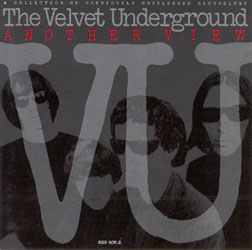
Velvet Underground 7: VU and Another View

In an early clue to the reissue trend of the CD era, Bill Levenson at PolyGram started taking advantage of the latest remastering technology to explore some of the lost treasures in the company’s vaults. Having acquired the rights to the Verve and MGM labels, he was able to coordinate the reissues of the first three Velvet Underground albums, which had long been out of print. (Loaded was still owned by Atlantic, and had stayed in their catalog on the strength of “Sweet Jane” and “Rock & Roll”.) Glowing press items and the budget price helped push each album, but just as interesting to newcomers and old fans alike was the cool collection of unreleased tracks Levenson found in the same vaults and spruced up nicely, even adding a more contemporary snap to the drums.

While most of the tracks were recorded in the space between the third album and Loaded, the notes took pains to insist that VU was in no way a rumored lost album; it was still a testament to Lou Reed’s ability to write great songs and the band’s ability to deliver them. “I Can’t Stand It”, “Ocean” and “Lisa Says” were of course familiar to the seven people who’d bought Lou’s first solo album. These versions rock as good as any; “Lisa Says” in particular benefits from not having the “why am I so shy” interlude. Likewise, “She’s My Best Friend” and “Andy’s Chest” are run at faster paces than Lou’s sluggish solo takes. Just as revelatory is “Stephanie Says”, which would be redone on Berlin and here features a wonderful arpeggiated guitar part plus John Cale’s fittingly sympathetic viola.

Then there are the completely new tracks. “Foggy Notion” chugs along like a train (particularly on the LP version, which has a false start available nowhere else), but the more ordinary “One Of These Days” was best left aside. “Temptation Inside Your Heart” sounds like they didn’t want to bother mixing the vocal parts, but it’s still nice to hear the boys banter in the booth. And good old Moe Tucker gets the last word with the exceptionally sweet “I’m Sticking With You”.

VU must have been something of a success, as nothing else could explain how a second volume, with the phonetically clever title Another View, snuck into stores with no fanfare and the same inner sleeve that had graced its brother reissues. This one was definitely for obsessives, as the multiple takes and backing tracks are more indicative of a bootleg. While the sound is excellent and up to major-label standards, one longs to hear the lyrics that would have graced such songs as “Guess I’m Falling In Love” and “Ride Into The Sun”; at the same time, “I’m Gonna Move Right In” isn’t much more than a jam. “We’re Gonna Have A Real Good Time Together” was familiar to longtime fans, though “Ferryboat Bill” and “Coney Island Steeplechase” could have spent more time being honed before recording. The first recorded version of “Rock & Roll” is nice from a historical standpoint, but you’d be hard-pressed to decide which version of “Hey Mr. Rain” is better. Both feature John Cale, and both are stunning. If you like that sort of thing.

The Velvet Underground VU (1985)—
The Velvet Underground Another View (1986)—3

Sunday, August 28, 2011

John Cale 8: Guts and The Island Years

By 1977 John Cale was the definition of a cult figure, but he was gaining notice as a daring live performer, whether beheading chickens or inspiring Jason Voorhees by wearing a hockey mask onstage. This was likely the reason why his label decided to release the Guts compilation. Put together by soon-to-be-legendary A&R man Howard Thompson, it focused on Cale’s more aggressive recordings. (The back cover also kindly listed every musician who had played on them.)

For collectors, it offered quite a bit. After opening with the “title track”, “Mary Lou” was a rockin’ outtake from Helen Of Troy, then three more songs are included from that non-U.S. album, including the suddenly rare “Leaving It All Up To You”. Side two is split between tracks from Fear (the title track being the most comparatively quiet part of the album, until its end, of course) and Slow Dazzle. All together it was listenable, and certainly very representative, if a little constricted.

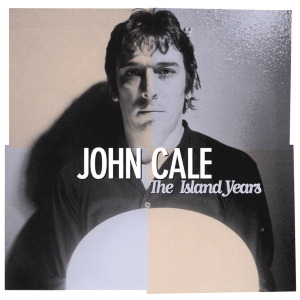
Fast forward to 1996, when Cale was more respected as an elder statesman and an inductee into the Rock & Roll Hall Of Fame with the Velvet Underground. The Island label had already done a nice job anthologizing many of their artists, and while they could have reissued his albums individually with bonus tracks, they made the smart economic move to maximize disc length with The Island Years, which fit all three albums onto two CDs—although “The Jeweller” was shorter for some reason—fleshed out with outtakes and rarities in context. The lovely “Sylvia Said” is a remix of a B-side, and very much along the lines of the poppier songs on Vintage Violence and Paris 1919. So too are “All I Want Is You” and “Bamboo Floor”, which would have stuck out on Slow Dazzle. Ensuring “Leaving It All Up To You” stays in context, the edgy “You & Me” and “Mary Lou” bookend “Coral Moon”. All together, a very busy two years. (Rhino’s 1994 Seducing Down The Door compilation sampled the same period but within the context of the rest of his solo career, up to his 1990 collaborations with Lou Reed and Brian Eno, so this was certainly preferred.)

John Cale Guts (1977)—3
John Cale
The Island Years (1996)—3

Saturday, August 20, 2011

John Cale 7: Helen Of Troy

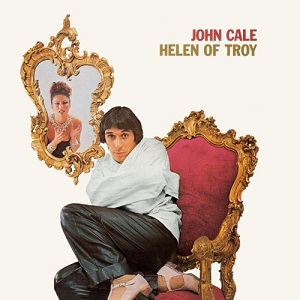
The cover of Helen Of Troy depicts John Cale in a straightjacket, over a pair of leather pants and stylish shoes with clashing socks. It’s a good setup for the music within, mostly right in line with his last two albums, with contributions from Chris Spedding and Brian Eno. String and choral arrangements by Robert Kirby, now best known for his work with Nick Drake, add color.

One adjective that applies to this album is menacing, right from the opening “My Maria”. Between the keyboards, guitar, and choir, the arrangement recalls Lou Reed’s “Lady Day”, but it’s even more impressionistic and impenetrable yet haunting somehow. The title track is punctuated by mincing, campy commentary from one Alan Courtney, synth blasts that sound very much like Roxy Music saxes but aren’t, and Enossification resembling an outer-space bowling alley. The much sunnier “China Sea” is as jaunty as anything on Paris 1919, complete with Beach Boy harmonies and other Wilsonian touches. A compact portrait of insanity, “Engine” begins with just piano and his voice, which gets increasingly unhinged after the band kicks in. Soon he’s pounding keys with his fists and shrieking until everything just stops. “Save Us” seems to be a prayer for salvation, and he manages to keep things in check despite the desperate tone. Following the template set on “Fear Is A Man’s Best Friend”, his voice goes from weary to histrionic within the space of a verse and chorus throughout this album, and certainly on “Cable Hogue”, presumably inspired by the recent Sam Peckinpah film.

But he could also be tender, as demonstrated on the positively torchy “I Keep A Close Watch”, the loveliest thing he’s ever written, and a love song to boot worthy of Sinatra. The sentimental mood doesn’t last for “Pablo Picasso”, the Jonathan Richman classic originally produced by Cale but unreleased at the time of this cover. “Leaving It Up To You” is mostly straightforward, but he gets very worked up in the middle, going to far as to reference Sharon Tate, which caused the song to be pulled from some pressings. (The much more placid “Coral Moon” was the replacement.) Jimmy Reed’s “Baby, What You Want Me To Do” is also played straight rock as opposed to blues, though without the shuffle it tends to drag. So it is that “Sudden Death” fits the same slot as “Ghost Story” and other “nightmare” songs, but in this context it’s no more scary than anything else, just morbid.

Cale maintains that Helen Of Troy was unfinished, and rushed out by the label before he had time to perfect it. Considering how ornate the tracks are, it’s hard to imagine what was missing; could be he didn’t intend there to be so much reverb anywhere. Even so, it wasn’t officially released in the U.S. for decades, which he may or may not have appreciated.

John Cale Helen Of Troy (1975)—3

Saturday, August 13, 2011

John Cale 6: Slow Dazzle

Having found a sound he liked, John Cale kept going. Slow Dazzle presented another set of mature, obscure rock disguised as pop, with the help of Roxy refugees Eno and Manzanera, but notably brought guitarist Chris Spedding into the fold. The result is a mostly straight-sounding album that lists steadily toward madness.

With just a hint of the Philly sound, “Mr. Wilson” acknowledges the influence of the head Beach Boy without aping him in the slightest. “Taking It All Away” recalls the chamber pop of Paris 1919, and is the first hint of remorse over a failed romance. The irritated narrator of “Dirtyass Rock ‘N’ Roll” uses onomatopoeia to convey how it soothes his soul, while “Darling I Need You” is greasy ‘50s rock right down to the sax solo and “Rollaroll” could easily be sung by Bryan Ferry, but he might not have taken Cale’s lead, which was to start to howl as the song fades.

Such an unsettling sound is carried over onto side two, where Elvis Presley’s “Heartbreak Hotel” is transformed into the soundtrack to a horror film. By comparison, “Ski Patrol” would appear to be a celebration of the fine workers who perform such a task at the world’s resorts, but there’s a good chance it could also be cocaine. “I’m Not The Loving Kind” would be an obvious cover choice for any adult contemporary crooner worth his salt, if only for the lovely wordless melody that makes up most of the choruses. The opening line of “Guts” makes plain why his marriage was currently in the toilet, and his anger increases over the end of the track much like “Fear”, except that the band keeps going. None of this can prepare the listener for “The Jeweller”, a Kafkaesque short story recited even more unsettlingly than “The Gift” over droning and controlled feedback.

Slow Dazzle is not an easy listen, but it’s right in line with his then-current trajectory. Chances are most people diving in without warning would swim for the ladder as soon and as fast as possible, but those who can take it will find possibly his most consistent album yet.

John Cale Slow Dazzle (1975)—3

Sunday, August 7, 2011

John Cale 5: Fear

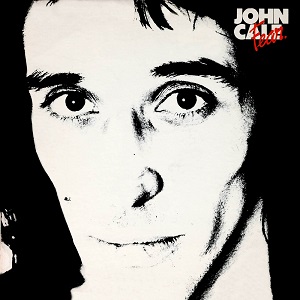
A switch to Island Records put him John Cale touch with some like-minded individuals who, like and with him, recorded a series of albums that predicted both punk and New Wave, both in sound and subject matter. Fear is consistent with his earlier song-based albums, while also being a departure. (Brian Eno is credited as contributing “Eno”; he and Cale also worked on Nico’s album that year.)

Dramatic piano chords open “Fear Is A Man’s Best Friend” before a more stately figure with guitar accompaniment carries the song proper. Things wind up in the choruses, and Cale ends the song nearly screaming as the arrangement falls apart. This makes “Buffalo Ballet” even prettier, despite the sad lyrics about the transformation of the Old West (admittedly, the auteur says, from a Welsh point of view). “Barracuda” is a little more rock ‘n roll, with dark poetry and a demented viola solo, all while reminding us that “the ocean will have us all.” This in turn makes the near seaside lullaby of “Emily” that much more perverse. Continuing the nautical theme, “Ship Of Fools” nicely varies between major figures and major-seventh figures for another nice-sounding track that’s fairly inscrutable.

“Gun” brings back the nasty rock, with a stark narrative, a tasty riff and an extended guitar solo from Phil Manzanera that more than fits the mood for over eight minutes. Softer, and not how you think, is “The Man Who Couldn’t Afford To Orgy”, which American listeners will be confused to hear rhymed with “porky”. Eno pal Judy Nylon coos throughout and amazingly, this was a single. We would have gone with the more straightforward but just as tuneful “You Know More Than I Know”. Besides, his delivery of “what crap” is wonderful. “Momamma Scuba” manages to combine the menace of “Gun” with the nautical imagery of side one over a band featuring Richard Thompson.

Thanks to the players, Fear has an edge over Paris 1919, and therefore sounds more natural. It was almost like he was getting used to being a frontman.

John Cale Fear (1974)—3

Tuesday, June 28, 2011

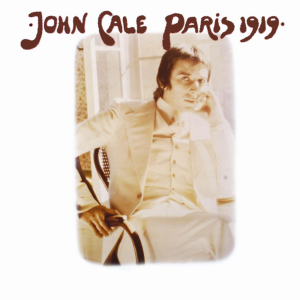
John Cale 4: Paris 1919

His last two vinyl excursions may have been difficult listening for those expecting the comparatively more mainstream pop of Vintage Violence, which only made John Cale’s next “rock” album more striking. Paris 1919 is an overdue collection of straightforward songs, recorded largely with Lowell George and Richie Hayward of Little Feat with the Crusaders’ Wilton Felder as the house band, giving the proceedings a slicker, L.A. feel. That’s not to say it could be mistaken for anything else on the radio at the time.

The opening “Child’s Christmas In Wales” shares its title with the wonderful Dylan Thomas piece, though its typically obscure lyrics that barely rhyme make it an unlikely Yuletide classic. The lush soundscape in “Hanky Panky Nohow” distracts from the words, which probably mean something to someone, unless they don’t. One track we’ve come to like is “The Endless Plain Of Fortune”, which hearkens to some of the more somber moments of Vintage Violence, and melds the orchestra with the band nicely. “Andalucia” begins with a truly lazy rhyme, but finishes as a sweet love song, whereas “Macbeth” is a driving rocker that directly references the Shakespeare play.

With its stately orchestration, the title track is the highlight of the album, with a hell of a hook in a chorus Robert Pollard has stolen at least once. One might have to be versed in the works of Graham Greene to catch all the references in the herky-jerky song of the same title, but luckily it’s moved aside by the thoughts of the train passenger moving “Half Past France”. Unfortunately, his near-whispered-but-still-sung delivery on “Antarctica Starts Here” states the decay of the “paranoid great movie queen” too clearly for comfort.

Despite the dressing, Paris 1919 is a dark album, which shouldn’t be too much of a surprise for anyone following along, but it’s still an unexpected listening experience. The better songs have endured, and rightly so. (In the UK, an expanded CD in 2006 bolstered the original short program with alternates or rehearsals of each of the album tracks, plus the outtake “Burned Out Affair”. Oddly missing is “Dixieland And Dixie”, the jaunty single issued after the first sessions with the Feat. Not all of these were included on the 2024 remaster, which added five alternate takes, an aborted stab at “Half Past France” called “I Must Not Sniff Cocaine”, and “Fever Dream 2024: You’re A Ghost”, a newly recorded nine-minute exploration, kinda, of the title track.)

John Cale Paris 1919 (1973)—3
2024 Version: same as 1973, plus 7 extra tracks

Friday, June 3, 2011

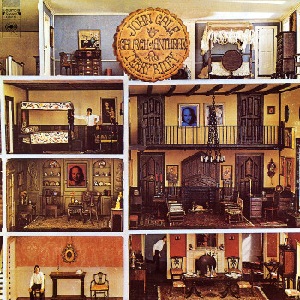
John Cale 3: The Academy In Peril

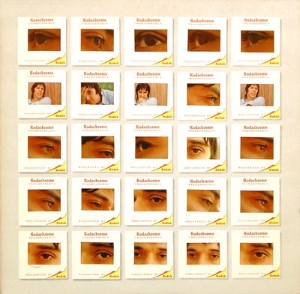
Somehow John Cale got a job as an A&R exec for the Reprise label, and his first album for them came loaded with lots of arty cachet. The very clever cut-out cover design via Andy Warhol is based on those good old Kodak slides, which don’t hint in the slightest at the predominantly classical contents, with only slight detours.

“The Philosopher” opens with a bluesy acoustic slide guitar while percussion thumps, an organ bleats, and horns blare, then a viola arrives. Ron Wood is thanked in the notes for the next track, but we suspect he’s playing the slide on this, because “Brahms” is simply solo piano in the classical style. Maybe he came up with the title? “Legs Larry At Television Centre” is named after the titular narrator, the drummer from the Bonzo Dog Band, here in the role of a director in an imaginary control room guiding the cameras supposedly filming the string quartet. Frankly, he’s distracting. The title track returns to the piano, starting quietly and eventually getting more frantic.

Layers of swirling piano make up the “Intro” to “Days Of Steam”, the most conventional track here, missing only a vocal and lyrics. The viola takes the melody, with a piano and vibraphone mostly doubling each other, before a recorder right out of “Ruby Tuesday” and a trumpet playing chromatic scales takes us out. The next “3 Orchestral Pieces” are banded as one track, and could be film soundtracks: “Faust” is lovely and haunting, “The Balance” begins regally and goes off-balance, and “Capt. Morgan’s Lament” is more stately. “King Harry” returns to the style of “The Philosopher” and “Days Of Steam” with percussion, plus demonic hissed vocals by Cale. Finally, “John Milton” is another piano piece with orchestral touches, and it’s quite moving.

One wonders how Reprise thought they were supposed to market this album. It’s not radio-friendly in the least, but when the guy whose name is on the cover works for the label, maybe that was enough for them. It’s tough to recommend The Academy In Peril, but for all its lovely moments, it still deserves to be heard. (The album was finally remastered in 2024, and included an extra track in “Temper”. This neo-classical piano exploration was an outtake from the sessions, and first emerged on an odd Warners sampler of punk and new wave music in 1980.)

John Cale The Academy In Peril (1972)—
2024 Version: same as 1972, plus 1 extra track

Friday, March 4, 2011

John Cale 2: Church Of Anthrax

Terry Riley is best known among casual rock fans as the titular (and musical) inspiration for the Who’s “Baba O’Riley”. Those who dug deeper from another part of the spectrum might have caught his name on a collaboration with John Cale, late of the Velvet Underground.

While it was recorded before Vintage Violence, Cale’s solo debut, Church Of Anthrax is very much in the shadow of that comparatively conventional release. Being funded by CBS Masterworks (the classical arm compared to Columbia), this is a pointedly experimental album, at times challenging, but occasionally mesmerizing. (The pair had met some years previously, when both were involved with avant-garde composer LaMonte Young.)

The title track is very reminiscent of Riley’s “A Rainbow In Curved Air”, the direct influence on Pete Townshend’s “Baba” synth work. A burbling bass plus drums holds down the drone while Riley’s organ wanders on top and various horns punctate. Soon a soprano sax can be heard, sometimes resembling a viola, and the track continues to build, before finally coming to something of a conclusion that predicts King Crimson’s “Sailor’s Tale”. Some distant piano chords herald “The Hall Of Mirrors In The Palace Of Versailles”, which is a showcase for two weaving soprano sax tracks. But for a few discordant moments, it’s hypnotic.

“The Soul Of Patrick Lee” is the only “song” on the album, its lyrics as dense as Cale’s back liner notes. It’s also the only track that sounds of a piece with Vintage Violence. Interestingly, the vocalist is not Cale, but one Adam Miller, whose voice and phrasing strongly resembles that of the auteur, if a tad smoother. The duelling pianos and frenetic drums on “Ides Of March” will likely try anyone’s patience, while “The Protege” is a more tightly constructed one-chord vamp that stays steady until it’s abruptly snuffed out in a burst of electronic feedback.

With the appearance of improvisation, much of Church Of Anthrax is more in keeping with Cale’s background, and the direction he preferred for the Velvet Underground. The album goes in and out of print fairly regularly, but there’s enough interest from people with the clout to keep it available to make it so.

John Cale and Terry Riley Church Of Anthrax (1971)—3

Tuesday, December 28, 2010

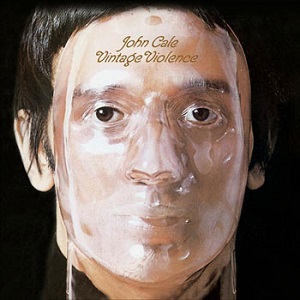
John Cale 1: Vintage Violence

After leaving the Velvet Underground in 1968, John Cale—arguably the band’s most accomplished musician—dabbled in production and session work, before finally putting out his first solo album in 1970. Vintage Violence actually beat Loaded into the stores by about six months, but was even less of a hit.

It’s an oddity of an album, consisting mostly of straightforward rock songs based around his pounding piano, colored by country-styled electric guitar and crisp drums. The lyrics don’t always click, but the songs are so catchy the meanings don’t matter. His voice is generally double-tracked, and not always in sync. Throughout, the then-unknown Garland Jeffreys wails along in harmony. (His band Grinderswitch, or maybe it was Penguin, was tapped for the sessions, including the legendary Harvey Brooks on bass, onetime Dylan drummer Sandy Konikoff, and erstwhile Band member Stan Szelest. Co-producer was Lewis Merenstein, right between Astral Weeks and Moondance.)

“Hello, There” is the obvious choice for an opener, though it pits an incongruous verse against a rather pedestrian chorus. “Gideon’s Bible” is equally inscrutable lyrically, but the soaring chorus incorporates pedal steel and Cale’s viola for a lovely mix. Punctuated throughout by a honking harmonica with occasional vocal interjections, “Adelaide” starts out as a yearning for the city, but seems to be about a woman by the end. “Big White Cloud” creeps in with sweeping “Expecting To Fly” strings for a big production, while “Cleo” harkens back to ’50s-style pop, complete with a female backing vocal. “Please” sports a lovely melody despite the outlandish rhymes (“Won’t you help me please, I’m growing old” followed by “Won’t you help me sneeze, I’ve caught a cold”). Clearly, he’s not going for profundity.

Side two is equally all over the map; “Charlemagne” brings back the pedal steel for a more expansive sound, but it mostly lopes along the plains like a lonesome cowboy, even with the reference to his uncle being a “vicar”. “Bring It On Up” is pure chugging boogie, though you can just barely hear the viola sawing away beneath the mix. The three-song juxtaposition of the solo acoustic “Amsterdam” (only two major-seventh chords throughout), the fittingly nightmarish “Ghost Story”, and the simple “Fairweather Friend”, which Jeffreys wrote, demonstrates his refusal to be pigeonholed.

Possibly because it’s one of his more accessible albums, Vintage Violence was treated to a slight expansion come the 21st century. Liner notes give just a little more info on how and why the album came together, and exactly two bonus tracks are included: a nearly identical alternate take of “Fairweather Friend” plus six minutes of layered, droning violas called “Wall”, which becomes something of a preview of his next album.

John Cale Vintage Violence (1970)—3
2001 remastered CD: same as 1970, plus 2 extra tracks

Friday, November 26, 2010

Velvet Underground 2: White Light/White Heat

Nico was gone, and the band carried on. To make up for her absence, they turned the volume up to 11 and didn’t hardly let up at all on White Light/White Heat.

The title track is an amphetamine onslaught, all distorted with quasi-doo-wop vocals up until the big blast of a finish in two minutes fifty—just right for Top 40 radio! The full-on promise of “Waiting For The Man” and “European Son” gets multiplied here. “The Gift” provides a much different listening experience entirely, split into extreme stereo with the two-chord jam on one side, and John Cale’s recitation of Lou’s short story of the rise and fall of Waldo and Marsha in the other. Best of all, it doesn’t get stale on repeat listens. A less penetrable tale is told in “Lady Godiva’s Operation”, where the vocals and vocalizations swap over a near-baroque backing, an approach that continues on “Here She Comes Now”, the quietest song on the album.

Which isn’t saying much, because side two isn’t quiet at all. “I Heard Her Call My Name” is a mere prelude of constantly soloing guitars over a relentless beat and lyrics that almost seem like an afterthought. You can just barely hear the chord changes beneath the guitar. But it’s only a setup for “Sister Ray”. These seventeen minutes of three chords have influenced more than their share of bands, but few can match the steady metronomic beat under the battle between the organ and guitars. It’s not easy listening, and it’s either loved or hated. But if you’ve gotten this far, you’ll want more.

White Light/White Heat can be seen as the antidote to the Summer of Love, starting off a tumultuous year with an assault to the senses. It would be the last true collaboration between Reed and Cale for twenty years, which is too bad, because they work together so well here. In only two albums, this band managed to create a sound that has been so influential in the over forty years since it happened. So much so that the participants have been trying to live up to it ever since.

With impeccable timing, Lou Reed left the planet just after approving the expanded editions of the album, giving the project a publicity boost. The Deluxe Edition added the five songs featuring Cale familiar from VU and Another View, an alternate “I Heard Her Call My Name” and a never-before-heard early take of “Beginning To See The Light”. The legendary April 1967 concert at the Gymnasium is included as well, rather than appearing as part of their stillborn “Bootleg Series”. (The Super Deluxe Edition had all that plus a big book, and a third disc with mono mixes, single mixes and new vocal- and instrument-only mixes of “The Gift”.)

The Velvet Underground White Light/White Heat (1968)—4
2013 Deluxe Edition: same as 1968, plus 14 extra tracks (45th Anniversary Super Deluxe Edition adds another 10 tracks)

Saturday, October 30, 2010

Velvet Underground 1: The Velvet Underground & Nico

The going cliché was that while the Velvet Underground didn’t sell many copies of their albums, everyone who did went out and formed their own band. While this has yet to be proven, it is safe to say that for the better part of two decades, all anyone knew about the band’s music came from Lou Reed albums, the occasional cover and the raves of critics.

A good deal of that changed in 1985, when PolyGram vault guru Bill Levenson pushed for the reissue of the band’s first three (long out-of-print) LPs, along with a collection of outtakes. All four albums were hyped by the usual critics (Kurt Loder going so far as to contribute liner notes to the common inner sleeve) but the overwhelming favorite was the debut, credited as always to the band plus the extra singer they’d picked up along the way.

The Velvet Underground & Nico treads a line between catchy ‘60s pop and what would eventually be called punk. Despite being hailed as a decadent band, “Sunday Morning” begins with a celeste, of all things, before an especially breathy Lou Reed vocal takes over. (It was, after all, his band.) Things get a little gritty with “I’m Waiting For The Man”, a fairly overt description of scoring dope. Nico finally shows up on “Femme Fatale”, something of a German doo-wop number, and a lovely song despite the attack on its subject. It’s a brief respite before “Venus In Furs”, featuring John Cale’s viola in full scrape over sado-masochistic references. More drugs turn up in “Run Run Run”, a perfectly snotty song just this side of melodic. Nico returns for the elegant yet foreboding “All Tomorrow’s Parties”, one of their most mesmerizing numbers.

Just in case you thought they were just another garage band, side two kicks off with the extremely blatant “Heroin”, which goes out of its way to describe the rush of the drug via the tempo and viola. But the pop returns for “There She Goes Again”, which could have been a hit single, and “I’ll Be Your Mirror”, which couldn’t have been since they let Nico sing it. The last two songs are certainly non-commercial, straight out of the art world. “The Black Angel’s Death Song” puts rapid-fire lyrics under a seesawing viola, and the band finally gets to replicate their live sound with the full-on assault of “European Son”.

As with many things he put his name to, The Velvet Underground & Nico gained most of its notoriety over the years due to Andy Warhol’s cover design and blatant production credit, emblazoned below the banana that peeled Colorforms-style. He may have designed the cover, but the actual producer was Tom Wilson, who’d recently worked with Frank Zappa after having been bounced from Bob Dylan’s sessions. Whoever was behind the desk, the overall sound comes straight from the heads and hands of the band itself, with all the grime in place. It was an astounding debut, and certainly ahead of its time.

The album was an excellent candidate for a Deluxe Edition when the Universal label started doing those, and it doesn’t disappoint. It appears in both its original stereo and mono mixes, having been recorded at a time when mono was still a common seller. Because the label considered the possibility of having hits, four tracks also appear in their single mixes, alongside five VU-related tracks from Nico’s Chelsea Girl album, released later in 1967 to even fewer sales.

Ten years later, Universal continued their “anything worth doing is worth overdoing” policy by issuing a so-called “Super Deluxe” six-disc version of the album. This time the Chelsea Girl tracks on the stereo disc have been replaced by alternate takes, so that the entire Chelsea Girl album is included as the third disc. An early acetate of working mixes is bolstered by a much-booted rehearsal excerpt (including the band playing Bo Diddley’s “Crackin’ Up” while Lou recites the lyrics of “Venus In Furs” to Nico, who also sings lead on a take of “There She Goes Again”), and a complete concert from November 1966 is spread across the fifth and sixth discs (beginning with the 28-minute “Melody Laughter”, edited down to ten minutes for the Peel Slowly And See box). Essential for fanatics, certainly, but even they would object to having to purchase half of the contents for the third or fourth time.

The Velvet Underground & Nico The Velvet Underground & Nico (1967)—
2002 Deluxe Edition: same as 1967, plus 20 extra tracks
2012 45th Anniversary Super Deluxe Edition: same as Deluxe Edition, plus 34 extra tracks

Friday, April 30, 2010

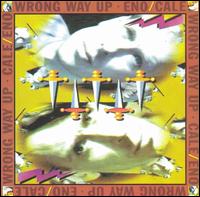
Brian Eno 12: Wrong Way Up

One of the most surprisingly accessible collaborations to emerge at the cusp of the ‘90s was that of Brian Eno and John Cale. Eno had been busy producing U2, and Cale had just come off the press junket for a tribute to Andy Warhol he and old sparring partner Lou Reed had completed the year before. While not the first time these two had worked together, Wrong Way Up was the most “poppy” either had sounded in years, and the first lyrically-oriented songs from Eno since :Before And After Science.

The songs are true collaborations, although the notes are very careful to say who did what, and all but three of the songs were written (and mostly sung) by one or the other. Most are built around a simple synthesized rhythm pattern, with pulsating keyboards and guitars. And it wouldn’t be Cale without a viola, so that turns up here and there.

Of course, even though there are actual lyrics here, that’s not to say we have any idea what the songs are about, these guys being as obtuse as ever. But tracks like “One Word”, “Lay My Love” and especially “Spinning Away” (which has the same chord structure as “The Big Ship” from Another Green World) are undeniably catchy. “Empty Frame” uses the cheesiest fake horns in its rendition of doo-wop as performed on Neptune. “Footsteps” and “Been There, Done That” will remind anyone why they hated the ‘80s, but “Crime In The Desert” makes up for it with some tasty Cale piano.

Although Wrong Way Up wasn’t a hit—and supposedly both Eno and Cale vowed never to work with the other again—it kept both guys current, and gave latecomers to their work something to get excited about. In Eno’s case, it was the beginning of a busy decade. Unfortunately, this album seemed to satisfy his pop interests, turning instead back to ambient experiments.

When the album was reissued as part of an Eno catalog overhaul in 2005, it acquired a slightly different cover and offered different bonus tracks depending on where you were in the world. Along with “You Don’t Miss Your Water”, most famous in the rock era by the Byrds, and a collaboration with Daniel Lanois for the Married To The Mob soundtrack of all things, the US got “Palanquin”, a gorgeous piano piece likely composed by Cale that had only been on a European CD single, while Europe got the enigmatic “Grandfather’s House”, which had been on several CD singles. Fifteen years after that, a so-called 30th Anniversary Edition added only the latter two, for some reason. Meanwhile, several remixes and whatnot remained uncollected.

Eno/Cale Wrong Way Up (1990)—3
2005 expanded CD: same as 1990, plus 2 extra tracks
2020 30th Anniversary Edition: same as 1990, plus 2 extra tracks

Sunday, November 22, 2009

Brian Eno 5: Live Collaborations

Some would call it a short attention span, while others would insist that it was part of his quest for something new, but the truth of the matter is that Brian Eno didn’t stay in one place for long. From time to time he’d be coaxed onto a stage, even going on a brief tour with a backup band supporting his first album. Bootlegs of usually short lengths go in and out of circulation, lately under the title Dali’s Car; of most interest is an early version of “I’ll Come Running” with different lyrics, based on a riff out of “Baby’s On Fire”.

Soon afterwards, attracted by the other performers involved, Eno took part in a one-off showcase featuring singer-guitarist Kevin Ayers, as well as John Cale and Nico, both late of Eno’s beloved Velvet Underground. The performance by the combo (dubbed ACNE from their collective surnames, an acronym sure to appeal to Eno’s fondness for wordplay) was released later in the year as June 1, 1974. Eno starts the album with “Driving Me Backwards” and “Baby’s On Fire”, supported by Cale and Ayers’ backing band, and sticks around for Cale’s dark cover of “Heartbreak Hotel” and Nico’s even more harrowing take on the Doors’ “The End”, with only her see-sawing harmonium below her voice. The other side of the album is devoted to Ayers, whose voice has its own issues with pitch. (Not included on the album was Nico’s rendition of the German national anthem, including the verses usually left out following the demise of the Nazis.)

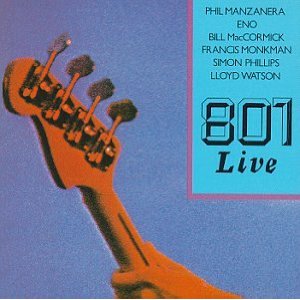
Following some appearances with Robert Fripp, Eno’s next high-profile extracurricular performances were with a group headed by fellow Roxy Musician Phil Manzanera. The 801 got their name from an Eno song lyric, and he takes the lead vocal on the majority of 801 Live. The suitably somber “Lagrima” leads into “TNK”, a wonderfully arranged cover of the Beatles’ “Tomorrow Never Knows”, followed by two rearranged pieces from the Manzanera catalog, dovetailing into Eno’s own “Sombre Reptiles”. “Baby’s On Fire” gets a funky makeover, complete with the aforementioned riff, before Phil’s “Diamond Head” instrumental from the album of the same name. A crash through “Miss Shapiro” from the same album leads into the Kinks’ “You Really Got Me”, and it all comes down to a reverent “Third Uncle”.

Of the two, 801 Live is pretty solid, and more accessible to a broad audience than the cult sounds of Ayers, Cale, and Nico. While the 1974 show has yet to be expanded, the 801 has been upgraded twice: first to add two more Eno songs between what were sides one and two, and again with a bonus disc of rehearsals from a few days earlier.

Kevin Ayers–John Cale–Eno–Nico June 1, 1974 (1974)—3
801
801 Live (1976)—
1999 CD reissue: same as 1976, plus 2 extra tracks
2009 Collector’s Edition: same as 1999, plus 12 extra tracks