Showing posts with label 1982. Show all posts

Tuesday, June 30, 2026

Steve Winwood 3: Talking Back To The Night

It worked the last time, so here was Steve Winwood back after a short (for him) break with another one-man band album driven by synthesizers and drum machines with lyrics by Will Jennings, whose other big success that year was co-writing “Up Where We Belong”. Talking Back To The Night covered the same adult contemporary pop ground, even if it didn’t make the same splash.

He knew to start with the single, and “Valerie” is a good one. “Come and see me/I’m the same boy I used to be” is a fairly universal sentiment, though “Big Girls Walk Away” is a little too preachy, with a modern melodic twist on the chorus that just jars. “And I Go” is a nice slice of blue-eyed soul, complete with organ swells and less electronic keyboards. “While There’s A Candle Burning” would also seem to be about a romantic relationship, a closer gaze at the lyrics have us thinking it’s more a challenge to a once-fervent audience, a sentiment better delivered on “Still In The Game”. This wonderful tune was the other single, and for whatever reason, it seems to have been forgotten, having been left off every one of his compilations. Maybe because it features prominent harmonies from his then-wife?

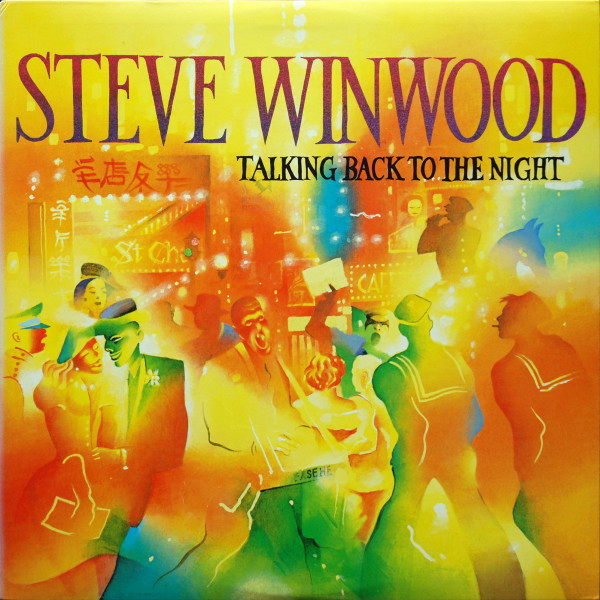
Side two unfortunately doesn’t have the same breadth or even daring. “It Was Happiness” has good dynamics in recalling something of a romance that spanned continents. “Help Me Angel” would be pure pop if not for the canned clavinet, and drives the same hook into the ground for five minutes. The uptempo title track exudes a certain, welcome drama to match the impressionistic nightlife of the cover art, where we think we see rain-drenched streets somehow. “There’s A River” provides something of a spiritual conclusion, albeit with synthesizers instead of piano or organ.

There are nice ideas throughout Talking Back To The Night. The synths are very stuck in their time, but he did have something of a signature sound then. Outside a few moments, there’s nothing overtly awesome or terrible about the album, making it difficult to do a more in-depth analysis. It just is.

Steve Winwood Talking Back To The Night (1982)—3

Tuesday, May 26, 2026

Bill Wyman 3: Bill Wyman

Twenty years with the Stones meant a lot of sitting around for Bill Wyman, and although they were never going to use any of his songs for their semiannual albums, he kept recording anyway. Mostly this meant playing around with synthesizers, with a rotating group of friends who tended to work at Jimmy Page’s studio in Berkshire. Some of this experimentation was used on the soundtrack of the little-seen film Green Ice. Then somehow, the summer before Tattoo You was released and the subsequent tour happened, he had a mild hit with “(Si Si) Je Suis Un Rock Star”, a novelty song in fractured French with a truly cheesy synth part to match his weedy voice.

While it got somewhat regular MTV play when it was current, it wasn’t enough of a hit for the accompanying album to be released in America. It’s tough to say whether it would have made a dent. His voice does seem better matched to the robotic arrangements of “A New Fashion” and “Nuclear Reactions”. “Jump Up” attempts to create a new dance craze and fails, and we’re not sure how we’re supposed to relate to the weary jetsetter in “Rio De Janiero”. “Come Back Suzanne” was his other mild hit single of the period, with an even goofier video to match; it sounds like a real rhythm section too. “Ride On Baby” isn’t the Stones leftover from the Aftermath sessions, but his son helped write it. It has a lot of guitar from Brian Setzer, while Chris Rea provides the lead on the dreamy “Visions”. Knowing what we know now about his, shall we say, proclivities, “Seventeen” and “Girls” are a little cringey, though he might be trying to ape Mick on the latter.

While Bill Wyman isn’t as dull as his other two solo albums, it’s only of interest to Stones completists. They would naturally go for any of the reissues, which include four single edits as well as demos of the two hits.

Bill Wyman Bill Wyman (1982)—
2006 Bill Wyman Solo Collection Edition: same as 1982, plus 4 extra tracks

Friday, August 1, 2025

Clash 9: From Here To Eternity and Shea Stadium

While the Clash’s recorded legacy had been preserved on their albums and a growing number of compilations, their prowess as a live band couldn’t be as easily experienced before YouTube. That finally changed with From Here To Eternity, an hour-long sampler cherrypicked from five years’ worth of professional recordings. (It also worked as a setup for the first grand remastering of the catalog the following year.)

The music moves chronologically through their history, but while the performances themselves are often from different years, the album has an excellent flow, even between drummers. Three of the tracks are alternate mixes (and allegedly overdubbed) of music already heard in the Rude Boy film, and three others come from their legendary 1981 residency at Bonds in New York City. The energy stays up, up, up from the beginning, letting up at the fade after “I Fought The Law”, setting up “London Calling” and “Armagideon Time”, the latter helped out by Mickey Gallagher and Mikey Dread. Paul and Joe swap instruments on “The Guns Of Brixton”, to enable the former to sing while the latter covers his bass part. By that time their music was more hit-oriented, and the audience reaction reflects that. The packaging also included quotes from appreciative fans, along with dubious recording data. If anything, the program should have been twice as long. The streaming version added two songs at the end, which wasn’t enough.

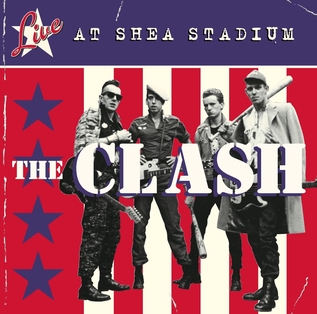
Just one song was included from Shea Stadium, during their stint on the Who’s first farewell tour, and it only took about a decade for their set to be further commemorated. (Even the Who themselves sat on their recordings until 2015.) Beginning with associate Kosmo Vinyl baiting the crowd, they plow into their set, and while there were reports of booing throughout the tour, and asides by Joe about people talking in the audience, the crowd sounds engaged throughout. The band holds themselves well in such a large venue, with no dead air, and only a few acts of defiance, like cutting into “The Magnificent Seven” for a detour through “Armagideon Time” (which sounds like it’s in a major key) then back into “The Magnificent Seven”. Songs are played from every album, but only two came from the one they were ostensibly promoting; “Rock The Casbah” manages to work without the piano, and “Should I Stay Or Should I Go” was used as the official video back then. The echo effects prevalent throughout the set are on full for “I Fought The Law”, and they leave the stage, never to play New York again. To date, this is the only CD containing a full set by the band, which is a crime, frankly.

The Clash From Here To Eternity Live (1999)—4
The Clash
Live At Shea Stadium (2008)—

Friday, May 30, 2025

Queen 12: Hot Space

While the band had proved they could evolve with the times, with Hot Space Queen seemed to go completely off the rails. There’s no mistaking that voice for Freddie Mercury, but especially with the dearth of guitars, much of the album sounds little like the Queen everybody (thought they) knew.

The band that boldly eschewed synthesizers now embraced keyboards and drum machines, and with Arif Mardin-arranged horns, “Staying Power” was an ironic title in a country that rejected disco. “Dancer” is a slower strut that improves whenever the guitars come in to crunch, especially that nutty solo, but most of it is burbling funk. “Back Chat” sounds even more like Chic than “Another One Bites The Dust” did, and the canned drums, which now sound so generic from countless records, do not help at all. We will admit that the tune isn’t that far off from the type of dance songs the Rolling Stones had put out recently. “Body Language” was the first single (and video) released for the album, almost all Freddie and synths; the reaction of many suburban kids was that it sounded “kinda gay,” which was Freddie’s point, of course. Then there’s Roger Taylor’s “Action This Day”, which has an incessantly pounding beat, subtle guitars, but rhythm piano for a trashy sound. An unexpected neo-classical flourish heralds a surprising saxophone solo.

Side two is a major improvement. “Put Out The Fire” finally, mercifully, has some Brian May riffing for a potential stadium anthem. What’s not immediately obvious is the song’s anti-gun content, culminating in cries of “shoot!”, which set up “Life Is Real”, subtitled “Song For Lennon”, and written in memory of the fallen Beatle. The somber mood is fleeting, as Roger’s pro-love “Calling All Girls” uses prominent 12-string acoustic guitars but still sounds robotic; the video doubled down on that feeling. The sentiment continues on “Las Palabras De Amor”, helpfully subtitled “The Words Of Love” for those who don’t speak Spanish, driven by swirling arpeggiated keyboards, real drums, and gang harmonies. The lazily jazzy “Cool Cat” now sounds like a template for George Michael, particularly in the falsetto vocal approach. A very trying album closes with “Under Pressure”, the untouchable duet with David Bowie that had already appeared on the American Greatest Hits, but not elsewhere.

Hot Space was not a hit in America, and was seen as something of a stumble around the world. Some of the songs would improve onstage, but it would take some time for the band to recover commercially. The U.S. took even longer to come around, by which time it was too late. (The first CD reissue included a new remix of “Body Language” with guitar and piano added, which was not included in the expanded CD two decades later in favor of three live tracks from 1982, the remixed single version of “Back Chat”, and the vintage B-side “Soul Brother”.)

Queen Hot Space (1982)—
1991 Hollywood reissue: same as 1982, plus 1 extra track
2011 remaster: same as 1982, plus 5 extra tracks

Friday, October 25, 2024

Kiss 15: Creatures Of The Night

Somehow Kiss still had a recording contract, and since they didn’t know how to do anything else, they recorded another album. But while Ace Frehley was still depicted on the cover of Creatures Of The Night, and would appear in the first video, he didn’t play a note on the album. Among the ringers they brought in—including such odd choices as Robben Ford and Jimmy Haslip—was one Vincent Cusano, who was credited with co-writing three of the songs. He’d make his mark in an even more visible way soon enough.

For the first time in five years the band did what they did best, which was to rock out. And that they do, beginning with the title track, sneered by Paul Stanley. We hear a touch of keyboard, but not in a dated way. It’s a good thing lyrics were included on the inner sleeve, as we can barely understand what Gene Simmons is singing about on “Saint And Sinner”, and Paul has the same problem on “Keep Me Comin’”, but at least that has a catchy chorus despite the suggestion. “Rock And Roll Hell” is another collaboration with Bryan Adams and Jim Vallance—a joke that almost writes itself. “Danger” is a retread of the high-speed shuffle that drove “Love Gun”, and actually sounds like something that could have been on one of their older albums.

If anything would have sold the album, it was “I Love It Loud”, another statement of purpose for a band that already had several. From Eric Carr’s “Kashmir”-style drums to the chant, the simple chorus to Gene’s interjections, they managed to create another classic, complete with false fade and return. Only then can they insert the requisite ballad, this time in the form of “I Still Love You”, which Paul asserts for six minutes. The fast riffing and misogynistic lyrics of “Killer” reinstate their badassery, and “War Machine” is more mercenary posing from Gene.

While Creatures Of The Night wasn’t the return to commercial form they’d hoped it would be, the album still holds up. Once the band’s catalog started selling again, the Mercury label reissued it with a new cover that still didn’t accurately represent who played on it, while remixing and shifting a few tracks; the original cover was reinstated a decade later when the catalog was remastered.

The album’s 40th anniversary was a cause for celebration in some quarters, and the band delivered again. The Deluxe Edition added a smattering of demos, outtakes, and live tracks to the original mix. But true Kiss Army enlistees would have wanted the Super Deluxe five-CD box, which boasted two full discs of demos and outtakes (including the four new songs released everywhere but the U.S. on Killers) and two full discs of live recordings from the tour, culminating in nine minutes of assorted and indexed sound effects. The requisite Blu-ray had the Atmos and surround mixes of the album, which could be enjoyed while thumbing through the book and ephemera.

Kiss Creatures Of The Night (1982)—3
2022 40th Anniversary Deluxe Edition: same as 1982, plus 16 extra tracks (Super Deluxe Edition adds another 51 tracks plus Blu-ray)

Friday, June 14, 2024

Dwight Twilley 4: Scuba Divers

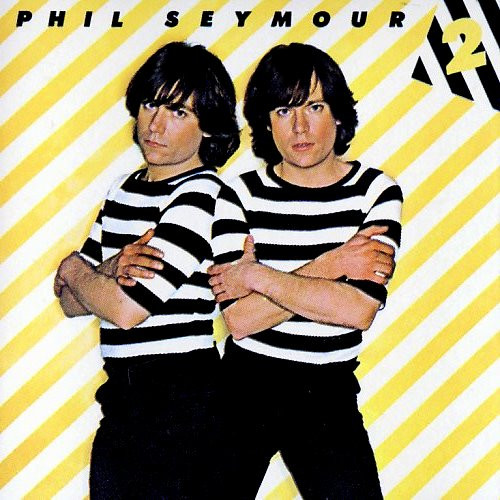
Speaking of Phil Seymour, he managed to get a solo deal with Boardwalk Records, the new label found by Neil Bogart after he had Casablanca taken away from him. Phil made two albums in succession, each with striking striped motifs (and the cover of Phil Seymour 2 was clever in its own way). The first had help from Bill Pitcock IV, and mixed originals, including the mild hit “Precious To Me”, with covers and contributions from Dwight Twilley and future Go-Go Kathy Valentine, while the second sported the first official release of Tom Petty’s “Surrender” and a remake of “Looking For The Magic”. Unfortunately, he just wasn’t a frontman.

But for those who loved the two Dwight Twilley Band albums, they had to tide them over while Dwight waited out his own label woes. When Scuba Divers finally appeared after a two-year delay, his original intentions had been reworked, shuffled, and sometimes left out. Four other producers besides himself were credited. He’d only slightly updated his sound to meet new wave standards, yet the secret weapon was the harmonic gift of none other than Susan Cowsill. (Her brother John played drums too.)

In fact, “I’m Back Again” could allude to his enforced absence, but overall it’s another catchy chorus with Petty-reminiscent touches. “Somebody To Love” had been a teaser single three years earlier; here it’s been remixed and a verse was added, but it’s still terrific. A title like “10,000 American Scuba Divers Dancin’” doesn’t always bode well, but there’s a fun summertime vibe to the tune. “Touchin’ The Wind” has a relatively quiet beginning, but once those handclaps start, they don’t let up. The menacing riff of “Later That Night” just screams girl-group car crash homage, like a less wordy Jim Steinman.

But for the production and the cowbell, “I Think It’s That Girl” could almost be Beatlesque, and we really gotta call out Susan Cowsill again for what she adds to these songs. While it has a rolling piano out of Fleetwood Mac’s “Say You Love Me”, “Dion Baby” is a sneaky tribute to his newborn daughter. Moreover, the mix completely obscures the lyrics of “Cryin’ Over Me”, which sounds like a cousin to “Feeling In The Dark”, and “I Found The Magic” is something of a sequel to the superior “Looking For The Magic”. “Falling In Love Again” has a mild ‘50s sheen, taking to the next level by Steve Douglas’s blaring sax solo.

Despite the single and some MTV exposure, Scuba Divers didn’t blow up the charts. Perhaps people were already busy with Marshall Crenshaw. But he kept at it anyway. There’s a lot here to enjoy.

Dwight Twilley Scuba Divers (1982)—3

Tuesday, April 23, 2024

Kiss 14: Killers

The band’s rep had hit such a nadir by 1982 that their label—Casablanca no longer being the money chute it once was—fast-tracked a new Kiss compilation. They even insisted the band record new songs for it, but figured the band was such a lost cause that they didn’t bother releasing the set in the US or Canada.

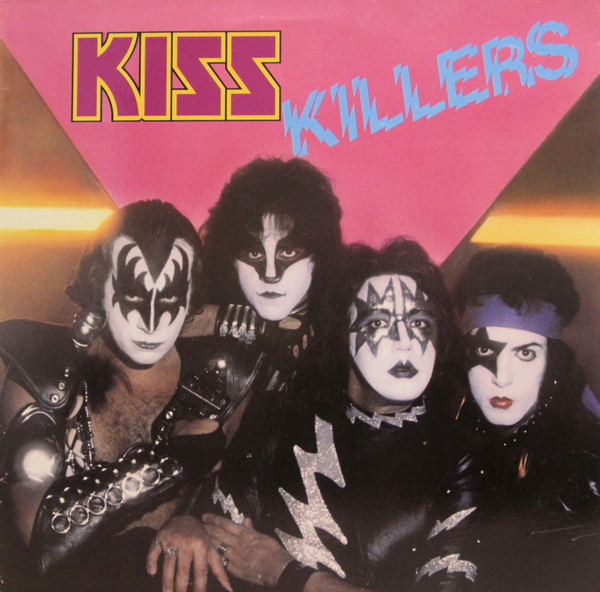
Everything about Killers screams budget release, from the tacky lettering on the front to the garish pink triangle on both sides. There was no special inner sleeve, or any shilling for merchandise. Outside of the new songs, the balance is made up by older hits, all album tracks and some repeated from Double Platinum. Worst of all, Gene is shown with short hair, and Paul has a bandana. But since American veterans of the Kiss Army had to get it somewhere, they might have been surprised to see the alternate band logo on the German version of the album, as that country didn’t like how the “SS” in the regular version resembled that of Hitler’s Schutzstaffel. (The kids also would have had to find the Japanese and Australian editions of the album, each of which added two catalog songs, one of which was “Shandi”.)

Paul sings all the new ones, beginning with “I’m A Legend Tonight”, which is better than its chorus, save for the muffled drums. He yells his way through “Down On Your Knees”, which crams an awful—and we do mean awful—lot of clichés into three and a half minutes. This masterwork was co-written with Bryan Adams, of all people. Unfortunately, these only highlight the lyrical shortcomings of “Cold Gin” and “Love Gun”. “Shout It Out Loud” is the single mix, and “Sure Know Something” is one of the two “later” songs.

Paul wrote “Nowhere To Run” all by himself, and the best of the new songs musically; too bad he couldn’t think of a better chorus than “Nowhere to run/Nowhere to hide”. He also didn’t notice that “Partners In Crime” mentions someone being “down on your knees”; this riff deserved a better home too, and the canned horn blasts don’t help. It’s back to the hits with edited versions of “Detroit Rock City”, “God Of Thunder”, and “I Was Made For Lovin’ You”, ending with the Alive! version of “Rock And Roll All Nite”.

Even the hits can’t save this album. But being what it was, Killers was a popular import for decades, particularly since the four new songs wouldn’t be collected on any other compilation until the 21st century. By that time the album was made available for streaming, incorporating the three songs from the Japanese and Australian sequences. And in 2022, those four rarities were included in the Super Deluxe Edition of Creatures Of The Night.

Kiss Killers (1982)—2

Friday, April 19, 2024

Steely Dan 8: Reissuin’ The Years

Way back in 1978, as part of a last gasp by ABC Records before being swallowed up by MCA—and knowing the band wouldn’t have any other product out soon—a Greatest Hits album by Steely Dan hit the shelves in time for the holiday buying season. This two-record set was packed to capacity, literally and figuratively, going through the band’s six albums to date in order, and leaning heaviest on Pretzel Logic. Twelve of the songs had actually been singles, but the biggest draw at the time was “Here At The Western World”, an decent unreleased tune from the Royal Scam sessions.

Not included on the set, likely because ABC didn’t have the rights to it, was the superior standalone single “FM”, recorded for the soundtrack of the movie of the same name. This was, however, included on 1982’s Gold, a typically thrown-together MCA compilation that also included “Hey Nineteen” and “Babylon Sisters” from Gaucho and five earlier album cuts seemingly chosen at random. At least it filled two sides of a record.

Three years later, to appeal to the burgeoning CD market as well as audio snobs who wanted slick recordings with which they could demonstrate the new hifalutin technology, A Decade Of Steely Dan took ten tracks from Greatest Hits and added the three later songs from Gold (also substituting “Deacon Blues” for “Josie”), all in a pre-shuffled order. The cover art made no sense, but at least the insert included musician credits for each track.

That set became the go-to Steely Dan hits CD, which meant “Here At The Western World” was left in limbo in the digital age. This was rectified in 1991 when Gold was reissued in an “Expanded Edition”, which tried to compensate for duplicating four songs on Decade by adding “Western World” along with some other rarities. Two were Donald Fagen solo tracks that had appeared on two very different movie soundtracks; the mostly instrumental “True Companion” from Heavy Metal is very Dan-like, while the slick “Century’s End” from Bright Lights, Big City isn’t. Perhaps most enticingly, a hot live “Bodhisattva” from 1974 that had appeared eight years later as the B-side to “Hey Nineteen”, of all things, rounded out the disc. Besides being one of the few recordings of the band as a touring outfit, it sports a lengthy inebriated and censored introduction from one of their roadies. (While originally recorded on cassette, some of the song’s vocals sound too clean to not have been overdubbed after the fact.)

By now the box set industry was in full swing, and Steely Dan had their turn in 1993; plus, they were on tour to promote Fagen’s new album. Citizen Steely Dan crammed all six albums in sequence onto four CDs, with the occasional track swap for an “enhanced” listening experience at the start and/or end of some discs. The live “Bodhisattva” was inserted in place between Pretzel Logic and Katy Lied, just as “Western World” and “FM” bookended the Aja selections. Beyond those, the sole rarity was a 1971 demo of “Everyone’s Gone To The Movies” stuck at the end of disc four, eschewing their other oft-bootlegged, early work and even both sides of their long-lost first single, which both guys said they hated. (Their active involvement with the set was borne out by the meticulously remastered contents—though they forgot to include the intro of “Rikki Don’t Lose That Number” in the first pressing—along with particularly sardonic and occasionally hilarious liner notes printed in an annoying all-caps font.)

That should be sufficient for anyone, but the allure of disposable income is too much for any record executive to resist, and why would they. At the turn of the century, Showbiz Kids did a nice job of expanding the original Greatest Hits onto two CDs, complete with the requisite dip into Gaucho, the inclusion of both “FM” and “Western World”, and finally acknowledging “Dirty Work” and “Aja” as essential, though perhaps at the expense of “East St. Louis Toodle-oo”, which is no real loss. Six years later, The Definitive Collection proved to be false advertising by sticking to a single CD and featuring a song from each of their 21st-century albums. At least it included “Dirty Work”.

Steely Dan Greatest Hits (1978)—4
Steely Dan
Gold (1982)—3
1991 Expanded Edition: same as 1982, plus 4 extra tracks
Steely Dan A Decade Of Steely Dan (1985)—
Steely Dan
Citizen Steely Dan: 1972–1980 (1993)—
Steely Dan
Showbiz Kids: The Steely Dan Story, 1972–1980 (2000)—4
Steely Dan
The Definitive Collection (2006)—3

Friday, June 30, 2023

Jerry Garcia 7: Run For The Roses

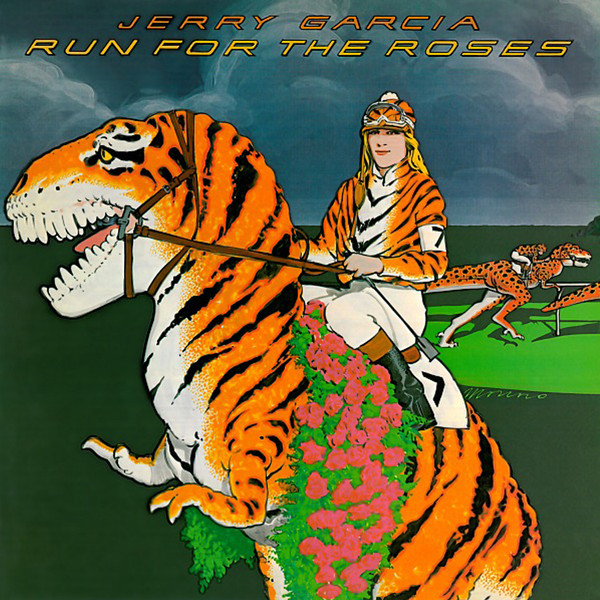
Just as Bob Weir liked to stretch outside of the Dead, Jerry Garcia had regularly used other bands as a chance to just jam without any pressure. Run For The Roses was technically the product of the Jerry Garcia Band, but that last phrase as written didn’t appear anywhere in the packaging. Along with the usual gang of John Kahn, Ron Tutt, and Merl Saunders was the brand new name of organist Melvin Seals, while the repertoire mixes diverse covers and originals written with Robert Hunter.

One of those is the title track, which sounds closest to a Dead contender and has some of Hunter’s most clever lyrics. Michael Omartian’s burbling clavinets dominate both channels of the otherwise surprisingly reggaefied “I Saw Her Standing There”. Clyde McPhatter’s “Without Love” is soulful R&B and a keeper, except for that final flatulent brass note. A real surprise is “Midnight Getaway”, a subdued and blatant lament over the end of an affair—very uncharacteristic of Hunter’s more, shall we say, poetic excursions. There’s no question what this song’s about, and the instrumental sections are even better. (We especially like the mention of the cat “under the stars”.)

That makes the equally straightforward “Leave The Little Girl Alone” something of a letdown—maybe because Kahn wrote the music while Jerry solos constantly under his own vocals. “Valerie” is a slow shuffle more along the lines of what we’d expect, and a sleepy slog through “Knockin’ On Heaven’s Door”, done even more reggae than Eric Clapton did, continues the dance with Dylan that would last the rest of his life. (Outtakes of “Tangled Up In Blue” and “Simple Twist Of Fate” feature among the bonuses on the expanded CD, along with an attempt at “Dear Prudence”, an alternate mix of “Valerie” with backing vocals, another stab at “Fennario” a.k.a. “Peggy-O”, and a pre-Dead take of “Alabama Getaway”.)

Even though side two loses steam, there’s enough on Run For The Roses to give fans something to enjoy at home when they’ve run out of concert tapes. Some of the keyboards and guitar effects are a little same-y and dated, but such technology would continue to be refined and embraced better in years to come.

Jerry Garcia Run For The Roses (1982)—3
2004 expanded CD: same as 1982, plus 6 extra tracks

Tuesday, April 4, 2023

Thomas Dolby 1: The Golden Age Of Wireless

Many one-hit wonders don’t deserve the appellation, since the assumption is that they never did anything else of merit. Thomas Dolby proved that to anyone who took the time to listen to his catalog, even if he can’t escape his one hit.

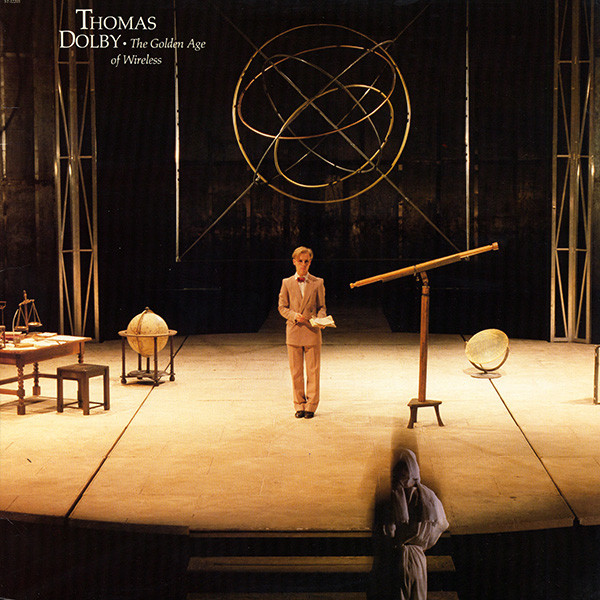
After a few years doing sessions, young Dolby (not his real name) managed to get financing for an indie single. “Urges” and “Leipzig” were harmless but mildly intriguing, and led to a major label deal for his first album. The Golden Age Of Wireless does depend on what were then modern synthesizers, but like Stevie Wonder and Pete Townshend before him, he had enough skill on keyboards and melodic sense to make the technological innovations more than mere gimmicks.

While “Flying North” does have a prominent drum machine, the insistent piano line and “string” arrangement would translate very well to an acoustic setting. “Commercial Breakup” adds more prominent guitars and a more danceable beat, while “Weightless” layers on the vocals before more subdued verses with that piano that Peter Gabriel used in those days. “Europa And The Pirate Twins” is wonderful synth-pop with an equally wonderful arc in the lyrics, and we like how “Windpower” builds on some of Brian Eno’s music for films for its main hook.

“Wreck Of The Fairchild” is mostly instrumental with ska touches but for some radio communications in Spanish that becomes a mere if lengthy prelude to the album’s best song. “Airwaves” has it all: nearly impenetrable lyrics, a unique bass part, a haunting melody, and a truly soaring chorus, the latter boosted by the faux-horn lines over the final choruses. (Billy Joel borrowed the verse melody for “Goodnight Saigon”.) Continuing with the theme, “Radio Silence” is more chilly music of the era, complete with cooing female vocals, and “Cloudburst At Shingle Street” provides an inscrutable yet fitting finale.

The Golden Age Of Wireless holds together very well, exceeding the sum of its parts, but was not left alone for long. The American version of the album, which followed a few months later, used a different cover for starters, and shuffled most of the tracks to accentuate the more techno aspects of the contents. It also dropped “The Wreck Of The Fairchild”, added both sides of his first single, replaced “Radio Silence” with an alternate version, and most criminally, used the single edit of “Airwaves”, which cuts out the bridge and fades too early.

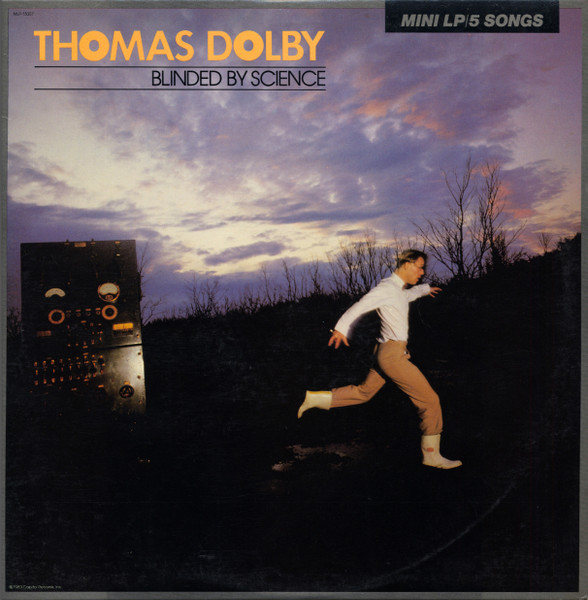
Meanwhile, Dolby got a great idea for a music video, and wrote a song to go with it called “She Blinded Me With Science”. Somehow this did the trick, and this maddeningly catchy track became what most people associate with the guy to this day. The flip side was “One Of Our Submarines”, a stunning mini-symphony we thought was called “What About South Marie?” the first several times we heard it on late-night radio, and took us even longer to realize borrows the main melody from The Six Million Dollar Man for one of its many hooks. Extended versions of these two songs made up side one of the Blinded By Science EP, which was backed with longer versions of “Windpower” and “Flying North”, bookending the full “Airwaves” for a stellar half hour of music.

By this time somebody decided that the smash hit single belonged on the American album, so the extended “Science” and “Submarines” replaced the two early single tracks, and the order was shuffled yet again, with the original album cover restored but “Windpower” shortened into a third variation. Further tinkering occurred for the CD versions (note the plural), until a final sequence took hold, though some copies favored the long “Science” but the shorter “Airwaves” and “Windpower”.

That lineup would become standard worldwide, until the man himself remastered the original album with a pile of extras for release in 2009 everywhere but the US, which had to wait ten years for a less extravagant package that supplemented the first version with both sides of the early single, both sides of the hit single, and the alternate “Radio Silence”. (The 2009 version is the one now streaming, and Blinded By Science was digitally upgraded, kinda, with standard versions of the tracks supplemented by three live versions of unknown vintage just in time for its 40th anniversary.)

Thomas Dolby The Golden Age Of Wireless (1982)—
Thomas Dolby
The Golden Age Of Wireless (US version) (1982)—3
Thomas Dolby
The Golden Age Of Wireless (US version #2) (1983)—
2019 Echo CD: same as 1982, plus 5 extra tracks
Thomas Dolby Blinded By Science (1983)—4

Tuesday, February 21, 2023

Elton John 21: Jump Up!

By now we weren’t expecting much from Elton John, but he surprised us. Jump Up! was very much a return to form, with straight pop songs, some arty ones, few clichés, and even Bernie doing the lyrics for six of the ten.

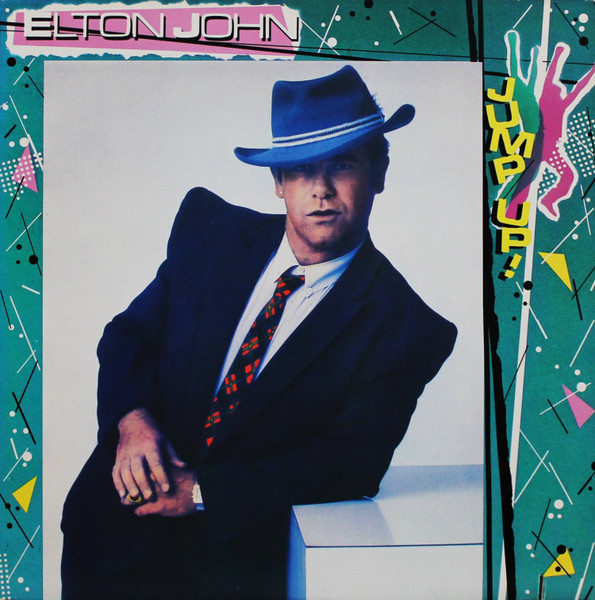
An uncharacteristically simple beat from Jeff Porcaro drives the guitars and straight-ahead piano of the rocker “Dear John”, and the basic lyrics are indicative of Gary Osborne. Bernie’s more poetic touch is apparent on the more arranged “Spiteful Child”, but the repeated “spiteful” backing vocals don’t exactly make for a hit single. There’s zero piano, and only a little keyboard back in the mix, on the mildly rockabilly but very catchy “Ball And Chain”, which is otherwise dominated by Pete Townshend’s rhythm acoustic. “Legal Boys” is not only the fourth straight song about a romantic breakup, but mostly notable as his first collaboration with Tim Rice, and not his last. The music has baroque musical theater touches, with some emotional juxtapositions in the chorus that keep it from being overly trite. Outside of the pastel paint-splattered cover art, the album’s most cringingly ‘80s aspect would be “I Am Your Robot”, which thankfully limits the dated synths to the intro that the rest of the song struggles to overcome. Amazingly, Bernie’s responsible for these words too. Yet this near-travesty is forgotten with “Blue Eyes”, a gorgeous torch song that ranks with the pair’s all-time best.

Speaking of classics, side two begins with “Empty Garden (Hey Hey Johnny)”, an elegant, heartfelt, and still touching tribute to John Lennon. The harpsichord, castanets, backing vocals, and highly singable chorus all come together to support not just a great song, but a fine recording. Unfortunately, “Princess” is something of a step down, combining the lyrical theme from “Tiny Dancer” with the lightweight pop of, once again, “Little Jeannie”. “Where Have All The Good Times Gone?” is not the Kinks song, but a return to “Philadelphia Freedom”-style soul that belies the aging-inspired anxiety of the lyrics. That leaves “All Quiet On The Western Front”, a slow six-minute single about the first World War that boasts a James Newton Howard arrangement over the lengthy close.

Unlike his last few albums, which seemed cobbled together from various sessions and participants, this album is tighter, with singular production by Chris Thomas and the same basic band throughout. 1982 was a good year for many veteran performers, and Elton could be pleased to have been part of it. It had been a rough five or so years, but Jump Up! seemed to indicate he was on the right track again.

Elton John Jump Up! (1982)—3

Tuesday, January 31, 2023

Clash 6: Combat Rock

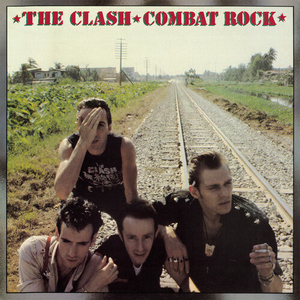
The late 1980 release of Sandinista! gave the Clash something to coast on, to the point where their next album wasn’t released until the spring of 1982. Combat Rock would be the band’s biggest album, but a commercial peak they ultimately couldn’t sustain, much less survive.

Joe Strummer begins the attack right away on “Know Your Rights” (“all three of ‘em”), as relentless as it is minimal. (This was the album’s first single in England, wisely not tried in America.) “Car Jamming” is a strange hodgepodge, somewhere between the sunny pop of “Hitsville U.K.”—complete with Ellen Foley in the chorus again—and rap poetry. It’s too slow to dance too, but too uptempo not to. Two Clash classics follow back to back, and likely the reasons why the album sold so well: “Should I Stay Or Should I Go” is a trash masterpiece from Mick Jones, from its scraped intro to the double-time choruses with our favorite part, the echoed backing in Spanish; “Rock The Casbah” is even more iconic, especially considering that the entire track save the guitars, vocals, and lyrics was all courtesy of drummer Topper Headon—even the piano! While it begins with a wonderful ska-influenced intro, “Red Angel Dragnet” is further proof that Paul Simonon couldn’t carry a tune if he was handcuffed to it. What’s more, band associate Kosmo Vinyl interrupts halfway through to growl some of Travis Bickle’s monologues from Taxi Driver. In the context of the album, it makes “Straight To Hell” all the more striking, with its tribal drums competing with the guitar effects and Joe’s pointed political lyrics. Vietnam was still a sore subject in America then, and he pulls no punches.

Side two continues more in the vein of the experiments on Sandinista!, and not always in a good way. Those who enjoyed the dance aspects of the last album might have enjoyed “Overpowered By Funk”, at least up until the mic is turned over to graffiti artist Futura 2000 for a less-than-assertive rap. “Atom Tan” has some nicely vocal interplay between Strummer and Jones, but the white-on-black lyric sheet is needed to decipher the imagery. “Sean Flynn” takes us back to Vietnam for a track named after a photojournalist who disappeared outside Saigon in 1970. There’s a song in here, but the dominant atmospherics make it more of an art installation. “Ghetto Defendant” is much in the same vein, except that it features recitations by special guest Allen Ginsberg, which distract from Joe’s decent vocal. “Inoculated City” is catchy if inscrutable, but the simple beat and toilet clean commercial sample predict Mick Jones’ future. It’s a distraction before the lounge jazz of “Death Is A Star” wherein Joe recites poetry for a change. Lord knows if any of the kids who bought the album for the singles made it through this side more than once.

Combat Rock was planned as a double album—the band’s third multi-disc set—except that legendary producer Glyn Johns was brought in to mix the tracks and rein in Mick Jones in the process. The legend of the unreleased Rat Patrol From Fort Bragg endured for decades, with no solid sequence ever confirmed, until various B-sides were identified as leftovers in this century, and other outtakes were included on box sets. Then, the 40th anniversary of the album brought an expanded version called Combat Rock + The People’s Hall that included another hour’s worth of extra material of varying interest.

If these tracks had been part of the original double album, it’s arguable that it might not have been as big a hit. To wit, “Outside Bonds” is four minutes of audio-verité captured outside the New York City nightclub where the band had an extended residency. “Futura 2000” is alternate mix of a rap single by the auteur, with the band’s backing. Mikey Dread is featured on “Radio One”, which had been the B-side to “Hitsville U.K.”, whereas “He Who Dares Or Is Tired” sounds like a dub version of “Hitsville” itself. “Radio Clash”, “First Night Back In London”, and “Long Time Jerk” were B-sides already collected on Super Black Market Clash and the Sound System box. Five other outtakes had already been in the Sound System box as well, including “Midnight To Stevens” (a tribute to the producer of London Calling), an extended, more musical “Sean Flynn”, and an alternate “Know Your Rights”. (A mildly entertaining two-song EP featuring the English Beat’s Ranking Roger toasting over “Rock The Casbah” and “Red Angel Dragnet” was released separately around the same time; these would have certainly been welcome in the main set.)

The Clash Combat Rock (1982)—3
2022 Combat Rock + The People’s Hall Special Edition: same as 1982, plus 12 extra tracks

Tuesday, October 12, 2021

Roxy Music 9: Avalon

Ten years after their debut, Roxy Music had come a long way from their initial image as “the ‘50s meets the ‘80s in the ‘70s.” Even without the greasy pompadour and space-age costumes, Bryan Ferry was still one of the suavest guys ever to stalk a stage in a rumpled silk suit, looking like he’d hurriedly gotten dressed following a backstage encounter. The band had always been about style, so in retrospect, their transition to a slick, post-disco adult contemporary sound wasn’t that surprising. Their journey culminated on Avalon, a lush and classy recording that showcases the band’s strengths—down to the trio of Ferry (singing more smoothly than ever before), Andy Mackay on sax and the inimitable Phil Manzanera on guitar, with well-chosen session guys. Moreover, it improved Flesh + Blood by association.

The opening single, “More Than This”, gained a new following after its use in the Bill Murray vehicle Lost In Translation, but that only underscored its reputation as a stirring, enigmatic song. In fact, a good deal of the album puts impressionistic images into grooves, so that the sound is more important than any possible message. “The Space Between” demonstrates this with its mix of drum machines and real drums, saxophones and riff guitars underneath blurry vocals. The title track is perhaps the most overt portrayal of the singer as lounge lizard, accented by the cooing of a female vocalist. “India” doesn’t sound like the country it’s supposed to describe, but just as the music seems about to go somewhere, it’s interrupted by the flourish that opens the snaky “While My Heart Is Still Beating”.

The album’s slick production value made it especially popular the year it came out, as the CD format provided a gapless listening experience over the LP—all the better for a yuppie’s makeout session. “The Main Thing” keeps up the tension through to the lengthy introduction that sets up “Take A Chance With Me”, all the way through the highly tuneful and romantic “To Turn You On”. The heavy tremolo on the synth and vocals makes a nice match for the simple changes of “True To Life”. The closing “Tara”, a quiet sax solo over seashore sound effects and hints of melodies that have come before, is a fitting finish.

While Avalon is the last studio album credited to Roxy Music proper, it paved the way to Ferry’s late-‘80s solo work. And while Andy Mackay and Phil Manzanera have shown up from time to time, if this album was indeed their swansong, it was a great way to go out.

Roxy Music Avalon (1982)—4

Tuesday, April 23, 2019

Todd Rundgren 20: The Ever Popular Tortured Artist Effect

While Utopia appeared to be his main focus, Bearsville Records demanded that Todd Rundgren finish out his contract, so he did. The Ever Popular Tortured Artist Effect is another completely solo Todd album, written and performed entirely by his lonesome. By now the synthesizers and drum machines had become more sophisticated, so many of the tracks sound like an actual band again. The songs themselves are predominantly throwaway pop, and that’s not always a bad thing.

“Hideaway” sounds like it could have been a contemporary Utopia track, particularly when the timber of his voice changes. Though it may sound sincere to some, the spoken couplet seems more of a parody, and belies the tossed-off nature of the album. “Influenza” could have been a major hit by, say, a female pop vocalist, though the hook isn’t exactly top 40 fare. Right on schedule comes the sensitive ballad “Don’t Hurt Yourself”, with a lotta blue-eyed soul. A saxophone can be heard now and then in “There Goes Your Baybay”, which goes in and out of a bossa nova beat as found on most home organs.

Side two is just as fluffy as side one, in content anyway. “Tin Soldier” is a fairly faithful (but not exactly Faithful) cover of the Small Faces tune, with a really jarring percussive vocal effect in the verses, but an excellent approximation of P.P. Arnold’s wonderful high part and a precursor to the next near-hit he’d have several years later. “The Emperor Of The Highway” is another Gilbert & Sullivan pastiche, this time taking the guise of a gearhead on the verge of road rage. It’s kinda stupid, but nothing compared to the gloriously stupid song that made the album a hit. The ever-popular “Bang The Drum All Day” is positively infectious, and will probably be played at a sporting event within the next 24 hours, no matter when you read this. In contrast, “Drive” soon fades in with chiming guitars and driving (sorry) beat, under a lyric extolling personal perseverance. “Chant” has a similar utopian message, but isn’t as catchy as it tries to be, and now just screams new wave techno-pop.

It would interesting to know if anybody who bought The Ever Popular Tortured Artist Effect based on “Band The Drum All Day” got into the rest of the album, or the rest of his catalog, or even the Small Faces. Todd himself didn’t care much, since he was too busy playing with computers, experimenting with videos, and making Utopia albums. The album may not have taxed his creativity very much, but it’s more proof that with only the slightest prodding, he could spit out a catchy album in his sleep. We’d venture a guess he probably enjoyed the money.

Todd Rundgren The Ever Popular Tortured Artist Effect (1982)—3

Friday, February 22, 2019

Talking Heads 5: The Name Of This Band

After a pretty busy couple of years, David Byrne was delving further into art-rock on his own, and the Talking Heads rhythm section made an album under the guise of Tom Tom Club, which would prove one day to be more lucrative for them than anything they did in the band. Even Jerry Harrison did a solo album.

Fearing group inactivity for who knew how long, the label smartly issued a double-live album with a twist. The Name Of This Band Is Talking Heads spanned their career to date, beginning with a radio broadcast from 1977 on side one (likely not in the living room setting shown on the front cover, sadly), then moving to a larger-capacity theater in 1979 on side two. The other two sides dip into shows from the tour supporting Remain In Light, wherein they recruited extra musicians, some of whom were already known, to translate their evolved sound: Adrian Belew on guitar, Bernie Worrell on keyboards, Steve Scales on percussion, “Busta Cherry” Jones on bass, and backup singers Nona Hendryx and Dolette McDonald.

Despite the difference in sound between the eras, the album is sequenced in such a way that it flows. Of course, it helps that David Byrne’s goofy delivery is up front and center. As a historical document it works, being the first LP appearance of “Love → Buildings On Fire”, as well as offering pre-release versions of “Air” and “Memories Can’t Wait”, plus the otherwise unavailable “A Clean Break”; cassette buyers got a bonus in the form of “Cities”. It also served as a hits overview, with such favorites as “Psycho Killer”, “Life During Wartime”, and “Take Me To The River”, scattered throughout, in familiar arrangements. (Note: this is called foreshadowing. All will be revealed in time.)

For some reason, The Name Of This Band Is Talking Heads was unavailable on CD for two decades, despite being able to fit onto a single disc. So it’s to their credit that when it did appear, it was doubled in length, bolstering both eras for a double-CD set packed to the gills.

An early version of “Drugs” appears in the first half, amidst some tracks taken from a promotional LP of a different radio broadcast and other sources, but what were sides one and two appear in sequence within themselves. To make the most of the later stuff, the same shows were mined, but now all the songs appear in an order to approximate the actual setlist, as well as preserve the flow. A couple of songs are repeated in this half, and the first tentative minute of “Crosseyed And Painless” is chopped off, going straight to the familiar groove, but sacrifices had to be made. Throughout, it’s clear—these guys were tight.

Talking Heads The Name Of This Band Is Talking Heads (1982)—
2004 expanded reissue: same as 1982, plus 16 extra tracks

Friday, January 18, 2019

Todd Rundgren 19: Utopia

Technically this is the second Utopia album called Utopia, but except for Todd Rundgren’s involvement, it’s miles away from the prog escapade of eight years before. This being 1982, Utopia was all about catchy pop with clever rhymes and metaphors all about the trials and tribulations of modern romance, heavy on guitars, harmonies, and trendy keyboards. All the compositions are democratically credited to Utopia as whole, the members trading off on lead vocals. Todd himself only sings lead on three tracks, duetting in unison with Kasim Sulton on others.

“Libertine” crashes out of the speakers, setting up a perfectly frenzied guitar solo, but the effect is lessened by the more MOR “Bad Little Actress”. The wonderfully Beatlesque “Feet Don’t Fail Me Now” could easily have fit on Deface The Music but for Roger Wilcox’s oafy delivery. This track was also promoted with a video wherein the band members appeared as hapless insects—pretty advanced for the time. (Also, Kasim Sulton had left the band for a short period, and this track was co-written with his ultimately temporary replacement.) Drummer Willie Wilcox takes over singing on “Neck On Up”, and frankly his voice isn’t bad. “Say Yeah” has some familiar changes and harmonies too, but the “say what” hook emerged a continent away from Merseyside.

“Call It What You Will” is along the same general lines as “Libertine”, right down to an albeit less insane guitar solo. And like side one, “I’m Looking At You But I’m Talking To Myself” slows the pace down, and right on time, the terrifically stupid “Hammer In My Heart” brings it right back up. (This wouldn’t be his only stupid yet wonderful song of the year, and we’ll get to that.) “Burn Three Times” is dopey but not in a good way, cramming in every cooking cliché as they can get to rhyme, and “There Goes My Inspiration” is something of a downer.

Ten songs are listed on the sleeve, but the set included a “bonus LP” of five songs, called side three on the inner sleeve and labels, the same five songs on both sides of the vinyl. Although it kicks off with “Princess Of The Universe”, one of the most infectious backhanded compliments of the decade, the other tunes aren’t as strong. “Infrared And Ultraviolet” offers the requisite demonic guitar work, “Forgotten But Not Gone” is an amalgam of ‘60s rockabilly but for the anachronistic piano, “Private Heaven” approaches ‘70s rock but misses, and “Chapter And Verse” works the “Burn Three Times” angle about as successfully.

Listening to Utopia now, it makes more sense how Todd ended up working with various members of the Cars over the years. Not all of the songs stand out, but they are catchy, and it provided value for your dollar. The original cassette shuffled the side three tracks within the program, while the eventual Rhino CD simply had them at the end of the disc. Collectors will want to find a Canadian reissue, which adds the so-called “dance mix” of “Hammer In My Heart”. Get down! (Another historical footnote: this was one of exactly five albums released by the short-lived Elektra subsidiary Network Records, putting Utopia in the regal company of Irene Cara.)

Utopia Utopia (1982)—3

Friday, March 16, 2018

Todd Rundgren 18: Swing To The Right

For the second Utopia album in a row, the cover art features a Beatles reference. But while Deface The Music was played in the style of the Fab Four, Swing To The Right merely uses a doctored photo from a Revolver-era record burning to tie into the album’s theme, a reaction to the conservative wave then washing over America. For the most part, the music is modern (read: dated) New Wave, and something of a less robotic version of Devo.

The title track does approach the band’s prog roots, except for its “wacky” resolutions. Todd takes over the mic for “Lysistrata”, a snappy retelling of an ancient love-conquers-war Greek comedy, though “The Up” tries a little too hard to be catchy. Still, it’s a treat compared to the assembly line effects of “Junk Rock (Million Monkeys)”, which attacks the current music scene. That doesn’t stop the stock chorus pedal Todd uses throughout the album, though less so on “Shinola”.

A remake of the O’Jays’ “For The Love Of Money” doesn’t do the original any justice, even when followed by “Last Dollar On Earth”, which almost resembles the Tubes (whom Rundgren had produced before and would again). He manages to turn “Fahrenheit 451” into an enjoyable Prince-style party anthem, and then it’s over to Broadway for “Only Human”, a big blue-eyed soul ballad that sticks out badly at first, but soon becomes preferable to most of what’s come before. Finally, “One World” is a very decent rocker in the vein of such album-closers as “Just One Victory” and “Sons Of 1984”.

Swing To The Right is an ugly-sounding record, which matches the lyrical content, but doesn’t make it any more enjoyable. Having become a democratic unit—on the liner notes anyway, which credits all songs to the band—it’s not always easy to figure out who’s singing, except when it’s Todd, but the better songs are all his.

Utopia Swing To The Right (1982)—

Tuesday, November 21, 2017

Phil Collins 2: Hello, I Must Be Going!

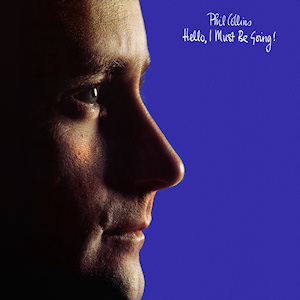
This was the stage of music history where it began to become impossible to avoid hearing Phil Collins. Months after touring behind the last Genesis album, he was back working on his second solo album. Hello, I Must Be Going! went further to establish him as Mr. Entertainment, balancing shameless pop with more substantial material, sometimes with the speed of a ping-pong match.

“Those drums” begin the album, as “I Don’t Care Anymore” angrily throws boxes all over the place. Then it’s a major mood swing to the horns-heavy “I Cannot Believe It’s True”, one of several songs that does not need to exceed five minutes but does anyway. Successful despite itself is “Like China”, a terrific, almost sweet tune not ruined by his Cockney accent. “Do You Know, Do You Care?” goes back to the darker sound, with those drums again, angry vocals and guitars used like loops. Amazingly, and a sad commentary on the record-buying public, his too-cute cover of the Supremes’ “You Can’t Hurry Love” became a massive hit, hyped by yet another promo video wherein he played all the parts.

Keeping things upbeat, “It Don’t Matter To Me” layers extremely syncopated horns over a very simple sequence. “Thru These Walls” begins in “In The Air Tonight” territory, right down to similar scenes in the video, but he errs too far on the side of creepy. Then it’s back to the ultra-sweet “Don’t Let Him Steal Your Heart Away”, which relies solely on voice, piano, guitar, bass, drums, and strings to convey the equally simple sentiment. Right out of nowhere comes “The West Side”, a near-fusion instrumental that still manages to clear the palette for “Why Can’t It Wait ‘Til Morning”, which displays his uncanny ability to write heartbreakers.

Ultimately, Hello, I Must Be Going! is a better album than Face Value, mostly because it was designed as an album, rather than a collection of enhanced demos. He even took it on his first solo tour, yet the eventual expanded reissue offers only a handful of tunes from that era (including covers of “It’s Alright” and “People Get Ready”), along with performances from later tours. Two demos cap the Hello! Extras disc, wherein we can hear him “doo-doo” and “no-no” his way through the yet-to-be-completed lyrics for “Do You Know, Do You Care?” and “Don’t Let Him Steal Your Heart Away”.

Phil Collins Hello, I Must Be Going! (1982)—3
2016 “Take A Look At Me Now” edition: same as 1982, plus 11 extra tracks

Tuesday, November 7, 2017

Rush 11: Signals

Each new album increased their popularity, and inducted new Rush fans into the fold. But if there was any doubt that Rush were the patron saints of the high school parking lot, the first track on Signals—released in time for the fall semester—dispelled it.

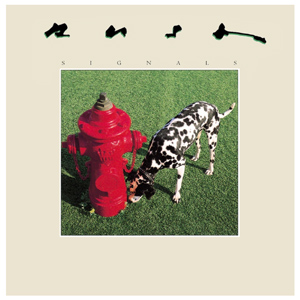
As with the previous album, a synthesizer dominates, setting a standard for the band’s new next phase. It’s a catchy riff, with nice open suspensions and slight minor modifications, and then the lyrics start. Tying in with the zoning map on the back cover, “Subdivisions” expertly nails the alienation felt by the average North American suburban teenage boy, many of whom may well have been Rush fans. The song doesn’t treat the turmoil as petty or insignificant, nor does it encourage violence or revolution. The band knew their audience, because they remembered what it was like to be that audience.

It’s a good start to the album, which does manage to keep up. “The Analog Kid” is built on a circular guitar riff, and further explores the dreams of a teenage boy, only scratching the surface. “Chemistry” begins with chords reminiscent of their early work, with a little “Vital Signs” thrown in, plus rare lyrical contributions from all three band members that likely would have made some sense to the kids struggling through science class. In contrast with the track earlier, “Digital Man” paints another archetypical portrait, with lots of guitars over a jazzy rhythm.

Reggae influences continue on “The Weapon”, which, while part of the in-progress “Fear” trilogy, isn’t really that scary. As further proof that they knew their fan base, “New World Man” was literally written to fill space, as a measure to keep the cassette sides equal. Besides being one of the better tracks here, it also became something of a hit. A sobering meditation on the loss of creativity, “Losing It” is possibly the least Rush-like track, beginning with synth parts off a Journey album and an electric violin contributed by a guy who would one day be best known for working with k.d. lang. And after years of exploring science fiction in their lyrics, “Countdown” is a factual account of the band’s experience watching the launch of the Columbia space shuttle.

While not as universally appealing as Moving Pictures, Signals provided a worthy follow-up for the growing fan base to wear out in their tape decks. Hindsight shows the worrisome encroachment of synthesizers into the band’s onstage arsenal, but the best songs are still highlights. (Like the previous five studio albums, Signals was subject to expansion for its 40th anniversary. Unlike those albums, the so-called Super Deluxe Edition consisted only of the album on CD and vinyl, hi-res mixes on a Blu-ray, four vinyl singles, a book, and ephemera. In other words, no new material, not even live. And it wasn’t cheap.)

Rush Signals (1982)—

Friday, September 8, 2017

Prince 5: 1999

Michael Jackson was years from anointing himself the King of Pop, but for those of us who liked rock ‘n roll (and couldn’t dance anyway), Prince’s wielding of a Telecaster more than made up for any hesitation of men wearing eyeliner and mascara. 1999 had been out for a while before MTV started showing the videos for the title track and “Little Red Corvette”, and soon enough he was inescapable. Even WNEW-FM (where rock lives, or at least did in 1983) started playing the songs. He had transcended genre, and that didn’t happen all that often anymore, if at all.

Simple (and similar) as those videos were by any production standards, they sold the image. The band, not yet known as the Revolution, set up on multiple levels of an elaborate stage. Two women gyrated over each other and one keyboard, while a guy in scrubs and shades played another. The lead guitarist (or so we thought) had a samurai-styled headband, and Prince actually slid down a firepole to make his entrance on “1999”.

Of course, once you bought the album, it was more clear: Prince played and sang everything on the album, except for the shared vocals on the title track and some elsewhere, and the lead guitar on “Little Red Corvette”. Those two tracks still sound great today, and the extended album versions add and highlight more of the music. (By the way, the key to the groove in “Little Red Corvette” is how he drops every fourth snare hit.) Followed by the infectiously goofy “Delirious”, that’s a perfect album side right there.

Side two is split between two long dance pieces, both heavy on beats and simple keyboard or guitar counterpoints. “Let’s Pretend We’re Married” is suggestive on its own before he explicitly tells “Marsha” what he’d like to do, while “D.M.S.R.” is more P-Funk-inspired. “Automatic”, which opens side three, is even longer, finally ending after some sad wailing from the ladies under a guitar solo. “Something In The Water (Does Not Compute)” is a weird homage of sorts to New Romantic synth-pop, but “Free”, prefaced by canned waves and marching footsteps, is a hidden gem of a ballad, an anthem even, that predicts a couple of future epics.

Then there’s “Lady Cab Driver”, which can’t decide if it wants to be a political tirade or a psychotic, vengeful sexual assault, and “All The Critics Love U In New York”; both are artfully minimalist tracks stretched way too long. Finally, “International Lover” is another slow piano ballad showcasing his vocal range, deviating into a pillow-talk session a la “Do Me, Baby” only transferred to the mile-high club; he even thanks us for choosing his airline. Well, at least he had a sense of humor.

It may be blasphemy not to give this four stars or higher, but 1999 really is padded to excess. That’s fine if you wanna dance, of course, but a listen to the various edits that came out on singles proves that it could have been a tight yet solid single LP. Part of the indulgence from his record label allowed him to release 70 minutes of music across a two-record set. It helps when the records sell, but at this rate, you’d think they’d let him break into films, for crying out loud.

As befits such a sprawling album, the eventual Deluxe Edition added a disc of single edits, dance mixes, and key B-sides like “How Come U Don’t Call Me Anymore”. But any fan worth his or her salt would have to have the Super Deluxe Edition, with two full discs of tracks from Prince’s legendary vault, including early versions of songs from the album, candidates for Vanity and the Time, and even tracks that would be reworked for release in the Batman and Graffiti Bridge era. One concert with the Revolution is included on a CD, while another is on a DVD.

Prince 1999 (1982)—
2019 Deluxe Edition: same as 1982, plus 18 extra tracks (Super Deluxe Edition adds another 36 tracks, plus DVD)