Showing posts with label david bowie. Show all posts

Friday, September 26, 2025

David Bowie 47: I Can’t Give Everything Away

The modern Bowie reissue project took a nearly four-year break, wherein they kept busy with colored vinyl, picture discs, and comprehensive archival digs related to Hunky Dory and Ziggy Stardust. Finally, what was billed as the final installment of the comprehensive series of box sets—though we’re still waiting on that Tin Machine collection—appeared. I Can’t Give Everything Away takes its apt title from the last song on the last of the four studio albums collected. As per usual, each has been remastered, and each is followed in the box with something to fill in the story. And there’s a nice thick book.

Even though there was a big gap between the first two albums and last two studio albums here, there is unity, given the production by Tony Visconti and the same players on about half of the contents. Heathen was a strong return to form after the commercial ‘80s and experimental (to be kind) ‘90s. He assembled a band for a relatively brief tour, and the performance at the 2002 Montreux Jazz Festival—which included eight songs from Heathen among a bunch of the old hits, and an encore consisting of the entire Low album save “Weeping Wall”—is included on two CDs. The same band stuck around to help him quickly record the Reality album, which was of course also promoted with a tour. The A Reality Tour DVD appeared in 2004, followed only six years later by a CD version; here it has been resequenced so the original non-DVD tracks appear in their proper places in the setlist.

The Next Day was a bounty after such a long break, and the various bonus tracks and other music on The Next Day Extra EP showed he had a lot cooking, as well as knowing what songs should be relegated. Even so, it was a big surprise when Blackstar appeared less than three years later, and the world had three days to ingest it before he died. From there, the only “new” music was the songs included in the Lazarus cast recording, then released on their own in the No Plan EP, which repeated “Lazarus” from Blackstar, as it does here.

While that was an official standalone release, it could be argued that “the final songs” made more sense as part of Re:Call 6, three CDs of extras from throughout the period. These include the various B-sides and SACD mixes from special editions of Heathen and Reality, two more songs from A Reality Tour that wouldn’t fit on those CDs, the earlier single versions of “Sue” and “‘Tis A Pity She Was A Whore”, guest appearances and soundtrack one-offs, three songs from one of his last live performances (with Arcade Fire), and “Arnold Layne” with David Gilmour and Richard Wright. Criminally, “The Little Fat Man (With The Pug-Nosed Face)” with Ricky Gervais didn’t make the cut.

David Bowie I Can’t Give Everything Away (2002-2016) (2025)—

Friday, February 11, 2022

David Bowie 46: Toy

The idea apparently stemmed from his VH1 Storytellers appearance in 1999, which featured a terrific performance of his early single “Can’t Help Thinking About Me” following a self-deprecating setup. Bowie soon set to revisiting songs from the same early period, and thus Toy was born.

Consisting almost entirely of re-arranged originals that dated to the mid-‘60s and his late teens, the album was recorded relatively quickly in early 2000 with his touring band, but was mostly shelved when the label couldn’t release it quickly enough and he moved on to writing new songs. (Plus, his daughter was born in August, so that was another distraction.) Having become old news, some of the tracks were doled out as B-sides or web exclusives until the legend of the “lost Bowie album” took over.

Over twenty years later, it’s finally been added to the canon. The sequence here is different from that which had been leaked ten years before, both in sequence and content. That leak lacked “Karma Man” and “Can’t Help Thinking About Me” but included “Liza Jane” and “In The Heat Of The Morning”, plus “Afraid” and “Uncle Floyd”, both of which would be revised for Heathen (the latter as “Slip Away”; hopefully the original mix will get wide release someday).

Most songs are longer and taken at a different pace than the originals—many of which were well below the standard for which he’d become legendary—with varying success. Beginning with a riff that predicts “I’d Rather Be High” twelve years away, “I Dig Everything” rocks with welcome guitars, also setting the pace with cooing vocals from Holly Palmer and Emm Gryner. “You’ve Got A Habit Of Leaving Me” is even stronger, and possibly the best demonstration of transforming this music. An astute harbinger of the mod angst personified in Quadrophenia, “The London Boys” is delivered in his trademark Cockney, which isn’t always convincing, and the lecture is gender-neutral. “Karma Man” sports a prominent harpsichord, the album’s only real nod to the vintage of the songs. “Conversation Piece” was already the wonderful B-side to the first version of “The Prettiest Star”, familiar from multiple reissues of Space Oddity, and just as melancholy here, but the real find is “Shadow Man”. A previously unreleased outtake from the Hunky Dory/Ziggy era, the yearning vocal and melody inject much more emotion into whatever the lyrics mean. (The original 1971 version was made available on a digital streaming alongside Toy’s release.)

Pinned to a twangy 12-string, “Let Me Sleep Beside You” was also widely previewed on the Nothing Has Changed set, and a favorite of producer Tony Visconti. It starts out ordinary, but Bowie makes it work. “Hole In The Ground” is curious, as the only known version was a very primitive demo with John Hutchinson from 1969; here it’s a groovy stomper with little concern for lyrics or plot. The lyrics for “Baby Loves That Way” have not aged well, but the slowed-down plod is a good showcase for Mike Garson’s simple piano and a mountain fiddle sawed by Lisa Germano. The Cockney returns on “Can’t Help Thinking About Me”, and despite his opinion of it, it’s a great track. “Silly Boy Blue” is closest to its original recording, only a tad slower and with the recorder from “Hole In The Ground” on the choruses and “I Am The Walrus”-style “whoo!” interjections on one of the middle ones. Finally, “Your Turn To Drive” becomes the subtitle for what is now the title track, and a fresh way to sum up the project.

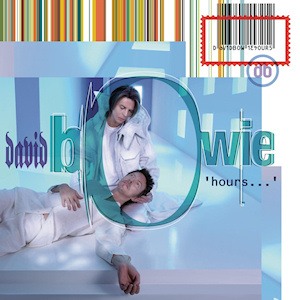
Had it come out when it did, Toy would have likely washed away the confusion of ‘hours…’, but likely not lessen Heathen in the slightest. But if that’s the cover art he fully intended to use? He would have scared the crap out of people.

Including it in the Brilliant Adventure box set was nice enough, but the estate went further with a special release designed to commemorate his 75th birthday. Toy:Box added two further discs of material related to the project. A wise idea might have been to include the original recordings for comparison, but instead, disc two offered negligibly alternate mixes of all the 2000 versions save “Karma Man”. Here, “London Boys” sports an even more unfortunate string arrangement that quotes two of the opening chords of “Changes”, while the “Tibet version” of “Silly Boy Blue” is supposedly a re-recording with Moby on guitar and Philip Glass on piano for a 2001 benefit concert. Two additional songs from the sessions are included on this disc, said to have been considered as potential B-sides. “Liza Jane” (which had been his first recorded single, back in 1964) is now delivered in a dirty strut with distorted vocal, while a wisely abandoned “In The Heat Of The Morning” taken an octave down is thoroughly unconvincing. (Its placement taints the alternate mix of “Conversation Piece” that follows, delivered in the same tone.)

The similarly extraneous third disc is part of a continuing trend wherein modern technology is used to transform Bowie tracks that didn’t need it. These “Unplugged & Somewhat Slightly Electric” mixes of the album boost the acoustic guitars added to each track during the mixing process, with much of the other instrumentation stripped away, led by one of “In The Heat Of The Morning”. (They must have known there was no point to deconstructing “Liza Jane”.) These mixes are occasionally nice, but a little indulgent, and considering how incredible Sterling Campbell’s drums sound on the first disc, they’re sorely missed when they’re not there. That said, “Shadow Man” remains gorgeous, and “Baby Loves That Way” includes some dialogue from Lisa Germano asking for more volume for her overdub.

David Bowie Toy (2022)—3

Tuesday, February 8, 2022

David Bowie 45: Brilliant Adventure

Despite being already tapped for a different collection, another song title became an apt moniker for a comprehensive Bowie box set, this one covering the wide-ranging, occasionally frustrating ‘90s. Brilliant Adventure could conceivably be subtitled The Virgin Years, as that was the label that released most of this material in the first place.

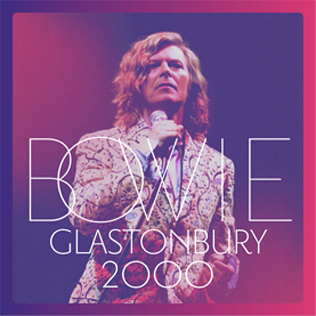
Black Tie White Noise only slightly improves in this context, while The Buddha Of Suburbia (in its revised artwork) provides a smoother transition to Outside—for which the packaging included more legible lyrics, thankfully—and Earthling. The slight regression of ‘hours…’ is lifted by his 2000 BBC radio performance. (Oddly, 2018’s Glastonbury 2000, which was recorded two days before, is not included in this set, nor were these part of Brilliant Live Adventures. For that matter, the VH1 Storytellers album is left out too.) Originally included as a bonus in Bowie At The Beeb, it is here expanded to two CDs, with the addition of five songs. “All The Young Dudes”, “Starman”, and “‘Heroes’” were nice encores, but “The London Boys” and “I Dig Everything” hint at a project in progress.

The big draw of the box is that project, the first official release of the legendarily shelved Toy album. As sequenced here, it provides another peak before the three discs’ worth of oddities that make up Re:Call 5. These consist predominantly of single edits and remixes, along with the handfuls of B-sides (read: outtakes) from Outside and ‘hours…’, plus “Real Cool World” and other soundtrack contributions. Many of these had been included on various expanded versions of these albums, but several tracks are not collected from those. That said, we do get such oddities as “Don’t Let Me Down & Down” in Indonesian and “Seven Years In Tibet” in Mandarin, plus the exquisite rarity “Planet Of Dreams”, sung with Gail Ann Dorsey. The set closes with a cover of “Pictures Of Lily”, as requested by Pete Townshend for a Who tribute album, that’s just awful.

While the albums covered by Brilliant Adventure aren’t on par with his earlier masterpieces, there are enough bright spots that always made Bowie worth hearing, and therefore watching. He may not have been consistent, but his work ethic was as steady as ever. (The book inside the set includes new liner notes designed to illuminate from key collaborators of the period: Nile Rodgers, Erdil Kizilcay, Brian Eno, Reeves Gabrels, and Mark Plati.)

David Bowie Brilliant Adventure (1992-2001) (2021)—3

Tuesday, May 18, 2021

David Bowie 44: Brilliant Live Adventures

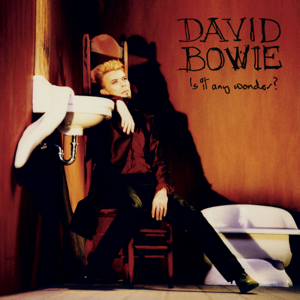
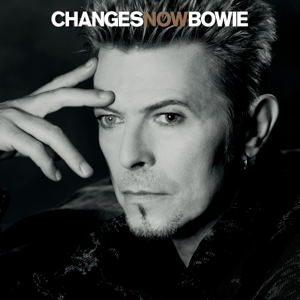
Perhaps killing more time while fans waited for the next box set in the chronology, the Bowie estate spent part of 2000 tidying up the aisle in the vaults dedicated to the ‘90s. First came two odd mini-albums. Is It Any Wonder? consisted of three Earthling outtakes—remakes of the Tin Machine tracks “Baby Universal” and “I Can’t Read”, and the quasi-instrumental “Nuts”—plus a new arrangement of “Stay”, the rarity “Fun” (both from the tour rehearsals), and an Eno remix of a re-recording of “The Man Who Sold The World” from the Outside sessions that had snuck out as a B-side. The more straightforward Changesnowbowie offered predominantly acoustic-based arrangements of mostly early ’70s songs—the outliers being “Shopping For Girls” and “Repetition”—recorded specifically for the BBC to celebrate his 50th birthday.

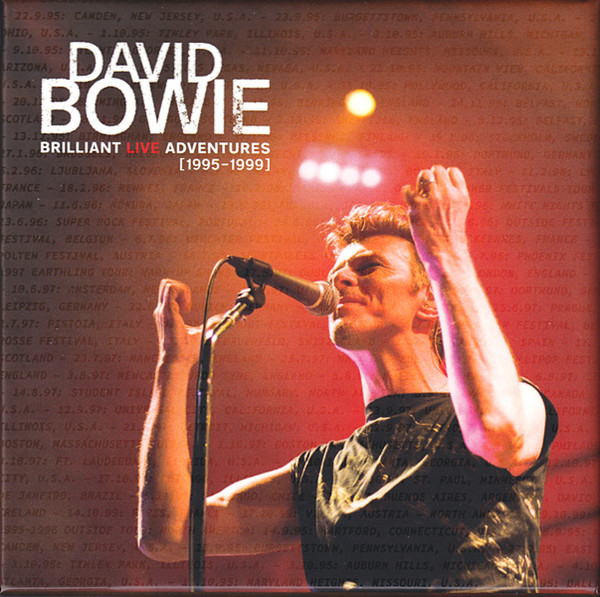
These were mere precursors to a curious program entailing the release of six live albums that would be made available individually, on CD and vinyl, for the purpose of being collected in a slipcase labeled Brilliant Live Adventures (1995-1999). These releases basically offered two glimpses each from three tours, supporting the Outside, Earthling, and ‘hours…’ albums in turn. “Glimpses” is the key word here, as one is a compilation from various shows, and two of the concerts are abridged, perhaps to fit on one disc. It was an ambitious program, to be sure, considering that the release schedule was sporadic and the quantities were limited, plus the general chaos resulting from the worldwide COVID pandemic threw even more wrenches into the works. But each title was uniquely packaged and designed, and looked as good as they sounded.

Along with such stellar players as Reeves Gabrels, Carlos Alomar, a fully reinstated Mike Garson, Zach Alford on drums, and the, frankly, brilliant addition of Gail Ann Dorsey on bass and vocals, the Outside tour was supported by Nine Inch Nails, their set melding into Bowie’s. However, none of their onstage collaborations appear on either Ouvrez Le Chien or No Trendy Réchauffé. Yet along with new arrangements of deep cuts, the songs from the album he was supporting translated much better to the stage. (The latter disc, recorded two months after the former—which adds two songs from the latter as bonus tracks for some reason—was a shorter set from a festival environment, with some different songs as well, including a strong “Jump They Say” and two performances of “Hallo Spaceboy”.)

The Earthling tour was stripped back to just Gabrels, Garson, Alford, and Dorsey, yet the keyboards and sequencers made everything sound big and full, if processed and programmed, and a little too close—rather, identical to the album. LiveAndWell.com was originally given away to website subscribers in 1999 and compiled from a handful of shows, concentrating on material from Outside and Earthling. Some editions included a bonus disc of remixes; this incarnation got new artwork and added the radical reinterpretations of “Pallas Athena” and “V-2 Schneider”, credited to “Tao Jones Index” when first released. By contrast, Look At The Moon! presented a full show on two discs (or three LPs). As with its brother, some of the rearrangements are repeated from the previous tour, but there are some new surprises, such as “Fame”, “Fashion”, and even a cover of Laurie Anderson’s “O Superman” sung by Gail Ann. Also, “The Jean Genie” starts acoustically, and is prefaced with a snippet of “Driftin’ Blues” for some reason.

1999’s much shorter tour—exactly nine shows, if you count the VH1 Storytellers appearance—was notable for Helmet’s Page Hamilton on lead guitar, following the abrupt departure of Reeves Gabrels. Sterling Campbell was also swapped in on drums, Mark Plati played guitars, and two women added breathy backing vocals. As befit the album he was promoting, the approach to the set was less frenetic and mostly softer, yet still energetic. The shows here are similar but not exactly identical; selections from Something In The Air had already been B-sides, while At The Kit Kat Klub was a small exclusive show recorded a month later and simultaneously webcast, which was spanking new and generally bug-prone technology at the time.

Taken all together, it’s six hours of music with a lot of repeats. Even with that, he was both busy and unpredictable throughout the latter half of the ‘90s. Collectors have to have them all, but luckily it’s possible to pick and choose. (Look At The Moon! gets a slight edge for length and variety.)

David Bowie Is It Any Wonder? (2020)—
David Bowie
Changesnowbowie (2020)—3
David Bowie
Ouvrez Le Chien (Live Dallas 95) (2020)—3
David Bowie
No Trendy Réchauffé (Live Birmingham 95) (2020)—3
David Bowie
LiveAndWell.com (2021)—3
David Bowie
Look At The Moon! (Live Phoenix Festival 97) (2021)—3
David Bowie
Something In The Air (Live Paris 99) (2021)—3
David Bowie
David Bowie At The Kit Kat Klub (Live New York 99) (2021)—3

Friday, November 27, 2020

Iggy Pop: The Bowie Years

David Bowie used his cachet to help—for lack of a better word—some artists who might have remained cult figures had he not championed them. In some cases, like Dana Gillespie and Ava Cherry, it didn’t exactly work, but Lou Reed and Mott The Hoople could certainly attribute some of their longevity to his patronage.

Then there was Iggy Pop. Bowie loved the garage anarchy of the Stooges, and helped get their Raw Power album onto shelves. (He also appropriated Iggy’s croon into his own vocal styles.) A few years later, both Bowie and Iggy were trying to get off drugs, so they went to France and then Germany to work as artists. Between them they completed four albums that were all released in 1977, and all remain high points of their respective catalogs.

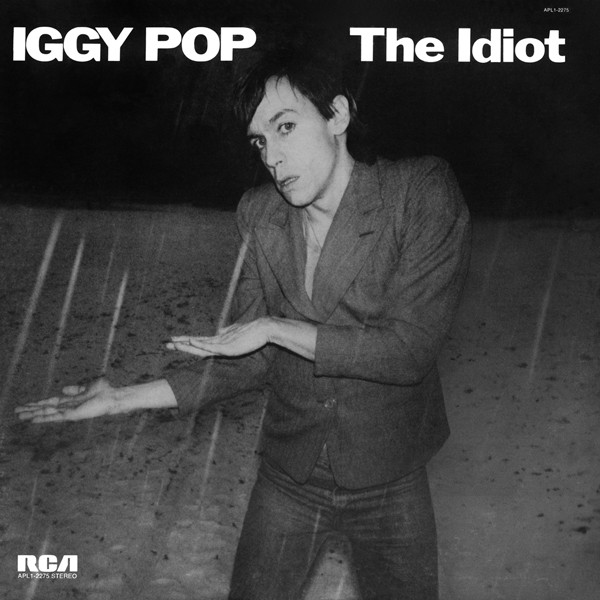
Everything on The Idiot was written by the pair, backed by Carlos Alomar and the rhythm section of George Murray and Dennis Davis. While still trashy (“Funtime” and “Baby”), Bowie’s arty tendencies took over to slow the music down and find grooves. “Sister Midnight” and “Nightclubbing” paint vivid pictures of their lifestyle, while “China Girl” would one day get a new lease on life. “Dum Dum Boys” is something of a lament for old bandmates, “Tiny Girls” sports a doo-wop saxophone, and “Mass Production” turns the drone of “Station To Station” into something more robotic. Besides being removed from the assault of the Stooges albums, The Idiot is a startling album, but now we can hear it as very much a blueprint for bands like Joy Division, as well as what would become side one of Low.

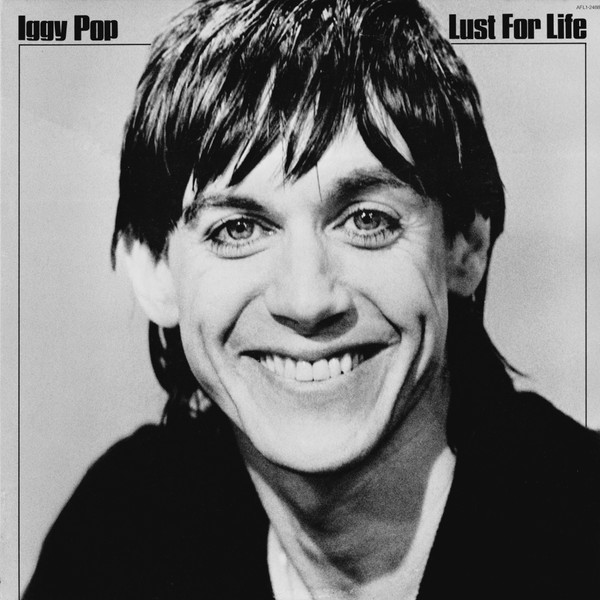
To promote the album, Bowie actually went on tour with Iggy, playing keyboards and adding vocals alongside the Sales brothers (Tony on bass and Hunt on drums and vocals) and guitarist Ricky Gardiner. Then the band went right back into the studio to record Lust For Life. This time Iggy was more in charge, relying less on Bowie to provide music and scenarios, and it works. It also rocks, from the Motown-derived pounding of the title track through “Sixteen” and “Some Weird Sin”, the latter of which sports some wonderful backing Bowie vocals. Ricky Gardiner’s chords drive “The Passenger”, but “Tonight” is most striking if you’ve only heard Bowie’s tame cover, which doesn’t include the prelude. The call-and-response of “Success” is just plain hilarious, making the pleas in “Turn Blue” even more arresting. “Neighborhood Threat” would also get a Bowie remake one day, while the band swapped instruments for the trashy “Fall In Love With Me”.

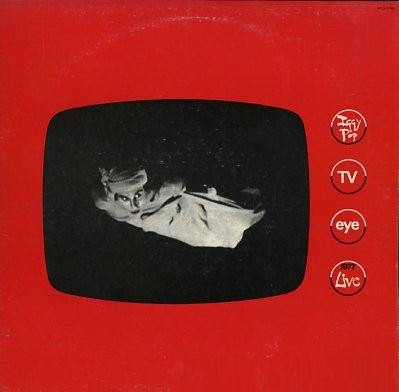
By the time Lust For Life came out, Bowie was busy recording his own “Heroes” album, so Iggy ended up touring the album with future Heartbreaker Scott Thurston and Stacey Heydon replacing Bowie and Gardiner augmenting the Sales brothers. TV Eye 1977 Live, released a year later, was split between shows played by the two bands, and for the longest time was the only evidence of Bowie’s onstage work with Iggy. The sound is bootleg quality, recorded and mixed on the cheap to get out of his label contract, but still crackles with energy—or at least power when the songs slow to a crawl—particularly on the Stooge classics “T.V. Eye”, “Dirt”, and “I Wanna Be Your Dog” and the rare “I Got A Right”.

All three albums would become cult classics despite low sales, and all three were included on 2020’s comprehensive The Bowie Years box set. A disc of negligible single mixes and alternate takes is capped by the Bowie-produced “I Got A Right” single and an recent interview with Iggy, while three discs present three live performances with mostly identical setlists and Bowie on board, from London’s Rainbow, Cleveland’s Agora, and a Chicago radio station. These vary in quality, but we do hear pre-studio renditions of “Turn Blue”, “Tonight”, and “Some Weird Sin”, as well as further Stooge favorites. (Meanwhile, Deluxe Editions of The Idiot and Lust For Life were each bolstered by a live disc: the Rainbow show from the box for the former, and TV Eye for the latter.)

Iggy Pop The Idiot (1977)—
2020 Deluxe Edition: same as 1977, plus 15 extra tracks
Iggy Pop Lust For Life (1977)—4
2020 Deluxe Edition: same as 1977, plus TV Eye 1977 Live
Iggy Pop TV Eye 1977 Live (1978)—3
Iggy Pop
The Bowie Years (2020)—3

Tuesday, December 3, 2019

David Bowie 43: Conversation Piece

If the previous few years had been any indication, the time was ripe for the next massive chronological Bowie box set. Instead, to celebrate the 50th anniversary of the “Space Oddity” single and subsequent album, the Bowie estate began releasing a series of vinyl-only sets of mostly unheard acoustic demo versions of songs, not all of which were familiar. Spying Through A Keyhole and Clareville Grove Demos were each issued as box sets of 7-inch 45rpm singles where they could easily have filled out a single LP, while The ‘Mercury’ Demos did just that.

The music spans 1968 through 1969, when Bowie was trying to finalize songs that would go on his second album, following the less-than-astounding reception for his first. The Keyhole songs are intriguing as they appear to be completely solo, sometimes overdubbing himself on guitar and percussion, with an arrival for an early version of “Space Oddity” with then-musical partner John Hutchinson. At this point he was still finding his way, aping different styles, from the nursery pop of “Mother Grey” to the more theatrical “Goodbye Threepenny Joe”. “Love All Around” is more successful, and there are two versions of “Angel Angel Grubby Face” to compare.

The Clareville Grove and Mercury material are all “Bowie & Hutch” folk duo recordings, the latter set specifically intended for the A&R man at that label. In addition to the familiar “Space Oddity” demo, highlights include two versions of “Lover To The Dawn”, which would turn into “Cygnet Committee”, Lesley Duncan’s “Love Song”, a year before Elton John released his version, and two versions of the very Simon & Garfunkel-inspired “Life Is A Circus” written by one Roger Bunn. “Janine” sports a cringey cop from “Hey Jude”, thankfully dropped by the time the album would be recorded.

Being culled from various sources and taping sessions, there was much repetition, particularly in “Space Oddity” itself. The repetition only amped up when the sets were eventually issued on CD, as part of the Conversation Piece box. This set basically served as a prequel to the Five Years box, and tried to cram in everything from the period leading up to what we now know as the Space Oddity album, with only a few overlaps.

To start, Spying Through A Keyhole and Clareville Grove Demos were fleshed out with eight further unreleased performances to fill a single disc. “April’s Tooth Of Gold” is wordy but Kinky, as is “Reverend Raymond Brown” which rocks but is just too busy. The overtly Dylanesque “Jerusalem” and especially “Hole In The Ground”, which wouldn’t see an official recording until the next century, are nice surprises. And we can be glad he never pursued more “kids” songs like “When I’m Five”, which appears three times throughout the box. (Meanwhile, The ‘Mercury’ Demos got its own disc, running only 42 minutes.)

A third disc mixed two complete BBC sessions, which had previously been spread across previous deluxe editions and whatnot, with various odd singles and studio outtakes, including the rejected single that backed “In The Heat Of The Morning” with “London Bye, Ta-Ta”. A fourth disc included a new remaster of the original 1969 mix of the second David Bowie album, a.k.a. Space Oddity, and some alternate mixes. A fifth disc sported Tony Visconti’s updated 2019 mix of the same album, which was also released separately; here it added the new mix of the single version of “Wild Eyed Boy From Freecloud”, plus the apparently necessary upgrade of “Ragazzo Solo, Ragazza Sola”—a.k.a. “Space Oddity” with different lyrics in Italian.

It’s been suggested that the reasoning for this release is more along the lines of any “copyright extension” practices than any merit beyond historical. It’s more of a prequel than anything else, and deserves its own entry rather than being crammed into the context of the Space Oddity album. So we did.

David Bowie Conversation Piece (2019)—3

Tuesday, November 27, 2018

David Bowie 42: Loving The Alien

Bowie’s switch to the EMI-America label in 1983 brought him possibly his greatest mainstream commercial success, but it also inaugurated a period where he found himself torn between taking the paycheck and thinking he was actually innovating. His own commentary after the fact only worked against whatever good emerged from the music collected on the Loving The Alien box set. Covering another five- or six-year stretch, this volume encompasses three studio albums, two associated tours, and just about everything else from that high-profile arc. Plus, of course, a book.

As could be said for many artists of his longevity, there was a lot of good Bowie in the ‘80s; the trouble was, you often had to endure some horrible music to find it. Side one of Let’s Dance is still solid, and the aftertaste of side two is nicely wiped away by Serious Moonlight (Live ’83), which is basically two CDs of audio from the VHS tape of the tour of the same name. Led by Carlos Alomar, the band was mostly new, with Tony Thompson on drums and the Simms Brothers on backing vocals, plus a horn section. The sound is a tad boomy, but the setlist is surprising deep, opening with “Look Back In Anger”, and leaning mostly on music from the second half of the ‘70s. (“Modern Love” was always the encore, and the live B-side version of same is included as a bonus here.)

Up next, the low good-to-bad ratio on Tonight doesn’t do him any favors, but this box set was more concerned with the drastic reimagining of Never Let Me Down alongside a remaster of the original album. Both versions ignored “Too Dizzy”, leaving it lost to time, or those of us with vintage copies. The other tour from this period is commemorated by the two CDs of Glass Spider (Live Montreal ’87), which had previously only been available as a companion to the DVD version, which itself was an upgrade from an earlier VHS. The set leans much more on ‘80s work, exceptions including a revved-up “All The Madmen” and a strangely placed “Big Brother”. Without the visuals showcasing the dance troupe onstage, the listener isn’t as distracted from concentrating on Peter Frampton’s lead guitar work. He even gets to sing the chorus of “Sons Of The Silent Age” (and yes, he does work “Do You Feel Like We Do” into one of his breaks).

The ‘80s also saw an exponential rise in the frequency of the 12-inch dance mix, to the point where a standalone Bowie compilation called Dance had apparently been planned and scrapped. The disc of that title in this set is not that aborted release, but a CD’s worth of extended mixes of various songs from the period. As with most excursions of this type, most of these remixes are pointless, and unfortunately not unintentionally funny.

Dance was a nice way to declutter what would make up the mop-up portion of the set. The two discs of Re:Call 4 consist yet again of single edits, a couple B-sides, and his musical contributions to various soundtracks, including “This Is Not America”, plus his three songs from Absolute Beginners and the five from Labyrinth. For good measure, the shorter mixes of six tracks from the LP version of Never Let Me Down are included, but still no “Too Dizzy”. Yet the compilers made room for the perennially embarrassing remake of “Dancing In The Street” with Mick Jagger and two duets with Tina Turner from her 1988 live album.

There’s just enough good spread throughout Loving The Alien to make it enjoyable. If anything, it shows he was able to be productive, if not necessarily creative, without the stimulus of cocaine. After all, he knew when to go out, and he knew when to stay in, and get things done.

David Bowie Loving The Alien (1983-1988) (2018)—3

Friday, October 13, 2017

David Bowie 41: A New Career In A New Town

Once again an era of Bowie’s career is perfectly summarized by one of his own song titles. The A New Career In A New Town box set basically covered what is still called the Berlin era, despite only some of the music being recorded there, and follows the pattern of the previous sets: the studio albums and pertinent live albums, sometimes twice, and a mop-up disc to include singles. With a book.

Starting with this box, Tony Visconti has become very involved with shaping the official history. Not only did he produce the original albums, but his modern mixes, with the stated intention of enhancing the original records thanks to modern technology, will become both prominent and controversial—particularly without Bowie around to approve or reject.

Low and “Heroes” appear in simply remastered versions of their original mixes, then we get Stage as originally released, followed by Stage (2017), newly prepped by Visconti, which incorporates all the additional tracks added since 1991, and in the correct setlist order. (The artwork is only mildly different.) Lodger is presented the same way—the original mix, which we admittedly always found harsh, and then a new, airier mix, this one supposedly okayed by Bowie prior to his death. Scary Monsters follows, once again succinctly summing up the period. (Sadly, his narration of Prokofiev’s Peter And The Wolf, recorded as a Christmas present for his son and released on RCA Red Seal in 1978, is not included.)

As for extras, a separate “Heroes” EP offers German and French versions of the song in both album and single edits, which nicely cuts down the potential repetition on the Re:Call 3 disc. Beginning with the usual single edits of several songs—plus extended versions of “Beauty And The Beast” and “Breaking Glass”—this installment includes rarities expected and unique, such as: 1979’s stark re-recording of “Space Oddity”; the instrumental “Crystal Japan”; the complete 11-minute Baal EP, recorded for a BBC-TV production of a Bertolt Brecht play; the initial, superior soundtrack version of “Cat People (Putting Out Fire)”; and the classic duets “Under Pressure” with Queen and “Peace On Earth/Little Drummer Boy” with Bing Crosby. In all, a suitably odd end to a challenging yet rewarding chapter of Bowie’s career, poking into the ‘80s, right before things took a complete turn.

David Bowie A New Career In A New Town (1977-1982) (2017)—

Tuesday, February 7, 2017

David Bowie 40: Lazarus

In addition to recording what turned out to be his last album, the other thing David Bowie was working on the year nobody knew he had terminal cancer was a stage musical based on the character he played in the wacky 1976 film The Man Who Fell To Earth. If the liner notes are to be believed, the cast recording for Lazarus took place the morning the world found out he was gone.

The musical becomes something of a Bowie revue, pulling together over a dozen tunes from his career, some well-known (“Changes”, “All The Young Dudes”), some not as much (“It’s No Game”, “This Is Not America”), some more recent (“Valentine’s Day”, the title song), and three previously unheard. There’s a rock combo for the backing, with Bowie saxes, and if you ever wanted to hear the guy from Dexter and the subject of How I Met Your Mother sing Bowie, here’s your chance. Try as they might, the men can’t help but add Bowie inflections to their delivery, while Sophia Anne Caruso’s solo spots are pure Broadway kiddie schmaltz. The newer songs stick to the templates on The Next Day and Blackstar, but some of the older ones get arrangements that aren’t exactly karaoke. (Presumably key to the plot are snippets of Ricky Nelson singing “Hello Mary Lou” and Bowie’s own recording of “Sound And Vision”.)

The big deal here, of course, is Bowie’s own versions of those three new songs, added on a bonus disc along with his rendition of the title song, providing 12 precious additional minutes of music as another kind of farewell (and eventually released as the digital-only No Plan EP on its own to celebrate what would have been his 70th birthday, followed by a physical release some weeks later). “No Plan” is moody and melodramatic; “Killing A Little Time” is edgy and clattery; “When I Met You” is romantic and anthemic. All are up to the quality and spirit of the last two albums, and will likely be dissected over the years to come in the absence of any other recordings from his final years. At least they weren’t tacked onto a “special deluxe” reissue of Blackstar, which would have forced us to buy that album again, and would arguably have messed with its unity. (The rating below is for the new songs, as we’re casting—yeah, we said it—aside the versions redone for the musical.)

Lazarus: Original New York Cast Recording (2016)—3

Friday, December 2, 2016

David Bowie 39: Who Can I Be Now?

The loss of David Bowie at the start of 2016 naturally inspired a worldwide reassessment of his catalog, resulting in yet another compilation in multiple formats. Meanwhile, the estate was already ready with the second in a series of box sets designed to bring everything together according to the most recent version of history. In addition to another clever use of a song title, Who Can I Be Now? covered a much shorter period of time than the Five Years set, but it was just as sprawling. This time, three studio albums and one live album were examined, and all but one twice, with another vintage live recording added along with a single disc of extras. (And a book filled with photos and documentation old and new.)

While they may have seemed strikingly different from each other at the time, now we can better trace a progression from Diamond Dogs through Young Americans to Station To Station that seems so obvious and seamless in hindsight. Diamond Dogs has a fresh new remaster, then David Live appears in first its original LP sequence and then the most recent expansion with extra songs, proper set list order, corrected artwork, and Tony Visconti mix. (The CD version of the latter is preferable only as it doesn’t adhere to the fades and missing transitions required by six LP sides.) While the adjustments made to the setlist mid-tour aren’t explored here, his next album is demonstrated both in progress as The Gouster, then as more polished and ultimately released as Young Americans. As with the first box, an album is presented in its standard mix and again in a more modern mix courtesy of the original co-producer—in this case, Station To Station via Harry Maslin, that boosts the vocals and uses an alternate take of “Wild Is The Wind”. (The only packaging difference between the two is the full color cover art, which first appeared on the Rykodisc edition, given to the new mix.) Live Nassau Coliseum ’76 is pulled back into circulation from its brief availability in 2010’s Station expansion; sadly, Dennis Davis’ epic drum solo has still been mostly chopped from “Panic In Detroit”.

Given the brevity of this period compared to the first box, the Re:Call 2 collection of extras only amounts to one CD worth (or two album sides). Most are “single edits”, chopping longer album tracks down to more radio-friendly lengths, sometimes resembling amputation. By this method, five Station songs total 20 minutes; the title track starts five minutes in at the “once there were mountains” sections and fades earlier than the album. Along with the B-side mix of “Panic In Detroit” from the David Live period, the alternate “sax” version of “Rebel Rebel” is included for those fans who prefer it, as is the shorter edit of “John I’m Only Dancing (Again) 1975”.

At the time, this period was capped by the Changesonebowie compilation before moving to what still gets called the Berlin era. While these albums weren’t always as strong on their own, their strengths truly emerge taken together, even with the repetition. And the title of the set is perfect.

David Bowie Who Can I Be Now? (1974-1976) (2016)—

Friday, January 29, 2016

David Bowie 38: Blackstar

First of all, this is not an obituary. If you want one, look elsewhere.

Second of all, forget all the noise about Blackstar being a jazz album. Bowie played sax before he played guitar, and that instrument has featured on practically every album he’s ever made, whether he’s played it or got somebody else to. This is a Bowie album, and can be classified as rock if you need a genre to label it. (In fact, two songs, “Sue (Or In A Season Of Crime)” and its B-side, “’Tis A Pity She Was A Whore”, have been re-recorded to sound less like free jazz.)

Third of all, even though the actual title is ★, Blackstar is a lot easier to type, just like we’d alternately refer to Led Zeppelin IV as Zoso and The Artist Who’s Once Again Known As Prince is called just that.

While we’re at it, death has been one of Bowie’s go-to subject matters for practically every album he’s made, going back as far as “Please Mr. Gravedigger”, through obvious songs like “Rock ‘N Roll Suicide”, deep cuts like “Time”, covers like “My Death”, and so forth. To say he predicted his own demise down to the day is a bit of a stretch, but a sense of his own mortality likely had a lot to do with why he laid low for the better part of this century.

Blackstar is a daring release, sticking with the minimalistic graphics approach from The Next Day (which still seems like a “new” album, which just goes to show what three years can mean in a career like Bowie’s). Musically, it’s most reminiscent of that album, and Heathen, but good luck figuring out what the words really “mean”. Best of all, with its seven songs totaling 41 minutes, it’s easy to ingest, and hear again.

The title track, which comes in at a whopping ten minutes, fades in to introduce a clattering of electronic drums and a Mideastern melody speaking of some foreign village wherein lies, in “the center of it all,” not the Milford Plaza but “your eyes”. There are a few big accents, and a digital scramble brings us to another location on the planet where the title becomes a main motif in the form a grand ballad that Bowie could write in his sleep, and has. After a few minutes of that, the opening section is repeated over the new tempo until then end. Following a few odd inhales, “’Tis A Pity She Was A Whore” is upbeat, with a not-quite-jungle arrangement. Easily the most striking song on the album, “Lazarus” was also the best choice to promote the album upon release. Considering that the song shares a title with a Bowie-sanctioned Broadway musical based on The Man Who Fell To Earth, the lyrics can be taken both in and out of that context.

“Sue” had already been used to promote the most recent hits collection, but sounds better here among her siblings. “Girl Loves Me” seems designed to provoke, from its parental advisory-baiting hook and lyrics that sound like Alex and his droogs. Opening with a slow piano and sax, “Dollar Days” switches from latter-day Pink Floyd to a more recognizable Bowie lament once the voice kicks in. It carries on in that vein until a provocative crossfade into “I Can’t Give Everything Away”, the upbeat conclusion, complete with echoes of the harmonica from “A New Career In A New Town” and other sounds that touch on so many stages of his catalog. Its final seconds seem both resolved and unresolved.

Blackstar will never considered as another mere chapter in Bowie’s catalog, which is too bad, since it already showed promise in the 48 or so hours people had to experience it without time’s definitive stamp. Again, its relatively short length invites multiple repeat plays, and thus more opportunity for the elements to reveal themselves. Too many of the lyrics seem foreboding, but that can’t be helped. As far as he was concerned, his next musical adventure would happen whenever it did.

David Bowie (2016)—4

Friday, November 13, 2015

David Bowie 37: Five Years

Every couple of years it seemed somebody would come up with another reason to remaster some element of the David Bowie catalog, sometimes as part of an anniversary, or sometimes just because. This time, it appears the people in charge wanted to streamline things somewhat, and thus began the third major overhaul of what we’ll call the RCA catalog.

Five Years is a handy title for a set that covers the initial trajectory of Bowie stardom, starting from the Space Oddity album through Pin Ups, which bade farewell to the Spiders From Mars. Six albums are presented in their original sleeves and sequences, complete with replica labels and inner sleeves, with all but Ziggy Stardust and Aladdin Sane getting modern sonic overhauls. A nice book includes new notes and reproductions of contemporary reviews and ads, and somebody felt it necessary to include the Ziggy Stardust album a second time, in its 2003 mix by original co-producer Ken Scott, which most fans apparently hated. (The alternate cover art nicely credits Rick Wakeman and Dana Gillespie for their contributions to “It Ain’t Easy” for the first time.)

Because they were both official albums, Live Santa Monica ‘72 and the Ziggy concert soundtrack fill in the picture further. While similar in setlist, they show the difference nine months made; the earlier show leaned more on Hunky Dory since Aladdin Sane was still in progress, while by the time he got to the Hammersmith Odeon, he’d become a sensation. (Personally, the earlier show is a little more intimate, and less flashy, but just as powerful when the band is playing full speed.)

Because the albums didn’t tell the whole story, two extra discs dubbed Re:Call 1 helped to mop up many of the period’s standalone singles, B-sides, and single edits. They’re in chronological order, making it easy to track the progress from “Space Oddity” through such alternates as “The Prettiest Star” with Marc Bolan, the Arnold Corns versions of two Ziggy songs, and both versions of “John, I’m Only Dancing” and “Holy Holy”. Nothing recorded before 1969 is included, and a handful of songs from the same period that had been bonus tracks on the Ryko CDs and/or other anniversary reissues are MIA, to more gnashing of teeth.

What helps, of course, is that these albums were so good to begin with. This era is one that most Bowie fans agree brought out some incredible music, and that fact becomes even more astonishing when it’s all heard together. Unless one has everything already, it’s a great place to start.

David Bowie Five Years 1969-1973 (2015)—4

Tuesday, December 2, 2014

David Bowie 36: Nothing Has Changed

Celebrating fifty years of media manipulation, the Nothing Has Changed compilations capped a fertile period of activity for David Bowie, in which he got lots of press but only appeared in public via the videos for his well-received The Next Day album. We say “compilations” plural because, in an echo of the Best Of Bowie deluge of a different version appearing depending on what country you bought it in, this new set appeared at least three ways, each with a different cover: a three-CD set in reverse chronological order, a two-CD in forward order, and a two-LP version that jumps all over the place. Besides being a nod to the Changes albums (and song) from the RCA years, when it comes to repackaging, nothing has changed.

To entice the Bowie nut who has everything already, many of the songs appear in various edits or remixes. That’s fine if you want the Pet Shop Boys hijack of “Hallo Spaceboy” or the condensed single of “‘Heroes’”, but Bowie’s propensity to release multiple remixes of the same song makes only slightly more sense than the Stones. (Speaking of which, is there anyone out there who thinks the Jagger duet on “Dancing In The Street” belongs on anything purporting to be either’s “best”?) Nothing from the Tin Machine era is included, leaving a gap but also keeping the sound consistent between the late ‘80s and the early ‘90s.

With all the repetition, there are some interesting, truly rare tracks. “Sue (Or In A Season Of Crime)” is a lengthy croon over an edgy jazz traffic jam, not unlike Elvis Costello’s experiments in the same Herrmannesque territory. Touted as a “brand new song recorded specially” for the set, he needn’t have bothered. Much more exciting are “Let Me Sleep Beside You”, “Your Turn To Drive” and particularly “Shadow Man” from the unreleased Toy album, spurring discussion of whether that would ever be released. And for those of us who don’t have anything from before “Space Oddity”, a handful of early singles (sorry, no “Laughing Gnome”) enables the selections to span fifty years.

As ever with these things, Nothing Has Changed is a good Bowie set for the newcomer, and frustrating for the longtime fan. But at least the Stones didn’t put out another hits album that year.

David Bowie Nothing Has Changed (2014)—4

Monday, March 18, 2013

David Bowie 35: The Next Day

The last two times David Bowie staged a “comeback” was the ‘80s, when Let’s Dance and Never Let Me Down were each preceded by a baffling three-year gap. This time, however, the comeback is more profound and satisfying, since he’d more or less been written off to old age. Somehow, against all odds, there’s a new Bowie album, just as if he hadn’t spent the past nine years away from music. Where the ‘90s found him following trends instead of setting them, The Next Day is simply an album. Or, as one of our favorite reviews says, it’s a Bowie best-of, except that all the songs are new.

The title track recalls “Repetition” from Lodger but happily moves on from there. Like most of the lyrics on the album, they don’t match the era suggested by the music. Many advance reviews called “Dirty Boys” a Tom Waits homage; that’s an uninspired comparison, since if anything, it’s another track in the vein of the Berlin trilogy or Scary Monsters. “The Stars (Are Out Tonight)” has an excellent driving beat, even if the lyrics need a little work to be convincing. One of the more inscrutable tracks is “Love Is Lost”, with its tense backing and abrasive organ. But right away that’s four strong tracks to set up the curveball. “Where Are We Now?” was a striking choice for the first sample from the album, as it’s so slow. Taken within the context of the rest of the album, it’s gorgeous. “Valentine’s Day” is a deceptively catchy tune, but the subject matter appears to be a school shooting, so it seems perverse to enjoy it. Still, try not to swoon at the guitar line that follows the chorus (foreshadowed in the previous song). “If You Can See Me” is incredibly chaotic, but he makes it hang together, even with a sped-up vocal buried in the mix.

Much of the album touches on the concept of war waged by deluded despots—not a new subject for him. “I’d Rather Be High” and “How Does The Grass Grow?” both offer laments from the point of view of a young soldier boy stuck in an impossible situation, but again, the atmosphere doesn’t belabor the point. One thing the album lacks is a wacky cover, and “Boss Of Me” might have been the best place to put it, were it the Malcolm In The Middle theme song. There is a silly dance song, and if you can’t tap your toes to “Dancing Out In Space”, you probably shouldn’t be reading this blog. “(You Will) Set The World On Fire” begins with a promising riff, and pounds away at a late ‘80s/Tin Machine idea that completely jars with lyrics about the Greenwich Village folk scene. Something of a gear shift happens with “You Feel So Lonely You Could Die”, a torchy tune that ends with a nod to “Five Years”, adding to the “coming full circle” vibe. It makes “Heat” an ambiguous ending for the album proper, slowing things down for only the second time. It’s tough to figure out what’s going on here, except that his father ran a prison, which affects his identity.

The album was simultaneously released in a “deluxe” edition, which added three tracks, of which “Plan” is the most exciting, a brief instrumental used as the intro music to the “Stars” video. By year’s end, an even more elaborate deluxe package appeared, with a DVD plus a second CD offering those three tracks, a Japanese exclusive track, two remixes and some more new songs. Of those, “The Informer” expands on the promise of “Plan”, and “Born In A UFO” has a trashy charm.

The Next Day is a very “poppy” album, just as Heathen and Reality were in their own small ways. He worked with a small crew of longtime regulars, just happy to be along for the ride. Anybody looking for an early clue to the new direction should instead relax and enjoy that same ride. It’s tempting to crow about how wonderful the album is; we must admit that our enthusiasm about The Next Day comes from a) the excitement at having a new album when he’d seemed to have retired, and b) the fact that it’s not a wretched attempt to be trendy. It’s a Bowie album, in that it sounds like him. And boy, is it nice to have.

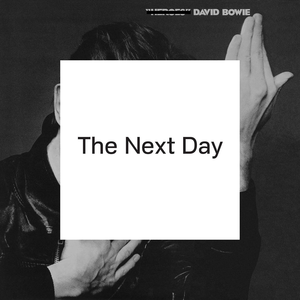
That said, the cover—a manipulation of “Heroes”—is just plain lazy coming from a guy who’s thrived on striking visuals.

David Bowie The Next Day (2013)—3

Friday, April 20, 2012

David Bowie 34: iSelect, Santa Monica, Storytellers

While he’d shown up here and there on stage and screen, the first decade of the 21st century had turned quiet for David Bowie. Still, a few new collections of older material kept him on the shelves while we waited for something new.

With its retro photo and Changesonebowie typeface, iSelect was sure to draw attention, even after it was given away with a Sunday paper in the U.K. This was a handpicked compilation of his own favorites, mostly from the ‘70s and generally deep cuts, complete with his own commentary on the inspiration and/or recording for each in the liner notes. He’s not above self-deprecation, and is also careful to praise several of the musicians who contributed, including Mick Ronson and Mike Garson.

Any collection taken from such a wide source is guaranteed not to please everyone, but we find it hard to fault a mix tape that begins with “Life On Mars?” and “The Bewlay Brothers” from Hunky Dory with the “Sweet Thing/Candidate” suite in between. As for rarities, “Some Are” was included from the out-of-print Rykodisc version of Low, while “Time Will Crawl” was upgraded with real drums and strings replacing the machines on the original. The radio introduction and “Hang On To Yourself” from Santa Monica in 1972 cap the set.

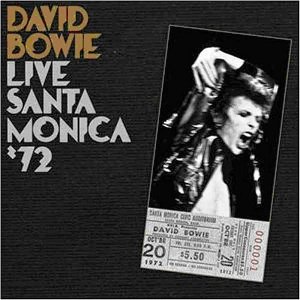
That particular recording had been a legendary bootleg for years, and got wider distribution in the mid-‘90s via a label set up by Bowie’s old management, to the artist’s irritation. An official Bowie-approved release, with improved sound and packaging, was something of a surprise in 2008 after such a stretch of time. It’s an essential snapshot of the era; the band was only ten shows into the American tour, and they’re still working on their swagger. Terrific performances of “The Supermen”, “Life On Mars?”, “Waiting For The Man”, and a preview of “The Jean Genie” are just some of the highlights, and Bowie’s brief but affectionate liner notes praise Ronson and Garson again.

Such candor wasn’t exactly rare for Bowie when the mood struck him. He was particularly effusive for his appearance on VH1 Storytellers as part of the advance promotion of ‘hours…’ Along with anecdotes (and occasional imitations) of Iggy Pop, Marc Bolan, and Steve Marriott, he delivered two songs from the album, plus low-key renditions of a few deep cuts and a few familiar ones. “China Girl” got a lovely introduction courtesy of Mike Garson, and a revved-up remake of his oldie “Can’t Help Thinking About Me” would lead to a shelved album of similar remakes. (When made available for purchase ten years later, the CD merely replicated the original broadcast, but it was packaged with a DVD that added four further songs, which have since become available via streaming and a vinyl release. These included two more new songs, plus his recent deconstruction of “I Can’t Read” and a striking “Always Crashing In The Same Car”.)

David Bowie iSelect (2008)—
David Bowie
Live Santa Monica ’72 (2008)—
David Bowie
VH1 Storytellers (2009)—3

Wednesday, March 9, 2011

David Bowie 33: Reality

Almost as quickly as ever before, Bowie was back with another new one, with much of the same band and production crew as on the satisfying Heathen. But while some have hailed Reality as a masterpiece, these ears were not nearly as wowed. The ingredients generally don’t add up and the covers—an unrecognizable “Pablo Picasso” by Jonathan Richman and “Try Some Buy Some” by George Harrison via Ronnie Spector—don’t seem to fit anywhere.

Something about “New Killer Star” manages to sound like a typical Bowie album opener, its jaunty meter belying the lyrics that seem to reference the recent attack on the World Trade Center. “Never Get Old” crosses the moods of Never Let Me Down and Outside, and it’s an odd transition into the depressing but touching lament of “The Loneliest Guy”. “Looking For Water” portends a doom that also may or may not be inspired by the aftermath of 9/11, while the tension in the opening verses of “She’ll Drive The Big Car” doesn’t last through the different chorus sections.

“Days” isn’t the Ray Davies song, which is a shame, since he could probably nail it. One of the more teasing tracks is “Fall Dog Bombs The Moon”, with its straightforward guitars, bass, and drums riding a stop-and-start rhythm. The title track piles a lot of heavy sounds into a small space, making the lengthy closer “Bring Me The Disco King”, with its quieter jazz backing, easier to swallow. (As with Heathen, the initial release included a bonus disc, this time with three extra tracks: the very synth-pop “Fly”, the basically unfinished “Queen Of All The Tarts (Overture)”, and a re-arrangement of “Rebel Rebel” apparently recorded for a Charlie’s Angels sequel. Along with some remixes, these were included on the expanded CD along with two covers: the Kinks’ “Waterloo Sunset” and “Love Missile F1-11” by Sigue Sigue Sputnik.)

Reality isn’t very exciting, no pun intended, but ultimately the good outweighs the bad. But Bowie was a trouper, so when he was excited about something he promoted it. First, he performed the album start to finish live, and broadcast via satellite the week before its release. A DVD of the event was added to an overseas “tour edition” of the album the following year, and became a Record Store Day album of its own sans visuals two decades later. Ready, Set, Go! presented the entire show, bolstered the encore of “Hallo Spaceboy”, “Afraid”, and “Cactus”.

The subsequent tour was one of his better ones, covering all the highlights of his nearly forty-year career, until a health scare forced him to cut it short. The CD version of A Reality Tour (which had already been a DVD) shows off a terrific band, good sound, and an extremely cheerful singer—particularly in the stellar duet with Gail Ann Dorsey on “Under Pressure” and a mesmerizing acoustic arrangement of “Loving The Alien”—yet suggested something of a finale for such a wild career. It was just as well; outside of a few guest appearances and the occasional catalog update, he stayed silent for his longest stretch in decades. Nine-plus years without new music had us thinking that he really had retired, yet, as much as we’d missed his input, something told us he was happy where he was. Finally.

David Bowie Reality (2003)—3
2007 limited 2CD edition: same as 2003, plus 8 extra tracks
David Bowie A Reality Tour (2010)—
David Bowie
Ready, Set, Go! (Live, Riverside Studios ‘03) (2025)—3

Wednesday, February 9, 2011

David Bowie 32: Heathen

Another label change set up Bowie’s next album, but the big news on Heathen was the return to the fold of producer/creative foil Tony Visconti. Sure enough, the album was his strongest in years. Much of the content seemed to be influenced by the aftermath of 9/11, though Bowie insisted most of it was in the can before that. (Indeed, some was even left over from sessions for the aborted Toy project, which was to present new compositions alongside rerecorded songs he originally did back in the pre-“Space Oddity” days.)

Overall, the sound mixes nods to his Berlin era with a cold, claustrophobic atmosphere and ruminations on a world in turmoil. “Sunday” begins the album with a spooky synth and a slow vocal, reporting that “nothing remains” and “everything has changed”. Similarly, “5:15 The Angels Have Come” and “Heathen (The Rays)” follow each narrator through a city where the trains are late and the sky is made of glass. The demand for “A Better Future” gets an edge when you consider the song is sung from the point of view of his young daughter.

“Slip Away” is an odd tribute of sorts to the obscure cult favorite, the Uncle Floyd TV show, with a gorgeous chorus and arrangement to match, complete with Stylophone. “Slow Burn” turns up the volume, boasting a searing lead guitar literally phoned in by Pete Townshend. The success of “Afraid” and “I Would Be Your Slave” depends on our mood, while “Everyone Says ‘Hi’” revives the best elements of his mid-‘80s pop sound; we especially like the nod to “Absolute Beginners” on one of the bridges.

Of course, it wouldn’t be a Bowie album without weird covers, and Heathen offers three: “Cactus” by the Pixies, “I’ve Been Waiting For You” from the first Neil Young album, and “I Took A Trip On A Gemini Spaceship” is his long overdue nod to the Legendary Stardust Cowboy.

Heathen was a very pleasant surprise, and easily his most consistent collection since the first Tin Machine album. He successfully combined some of his recent “sounds”, from pensive to electronic, and it looked like the 21st century was going to be another fruitful period for him.

The first version came with a strange little bonus disc, with two contemporary remixes and two re-recordings—“Panic In Detroit” from 1979, which had already been on Ryko’s Lodger reissue, and “Conversation Piece”, an excellent early B-side redone during the Toy sessions. The SACD version, released a few months later, had marginally extended mixes of some of the songs, plus “Conversation Piece” and three other extras. Five years later, the expanded double CD included all those, plus there more songs from the Toy sessions. These curios don’t add or subtract from the main program at all.

David Bowie Heathen (2002)—
2007 limited 2CD edition: same as 2002, plus 10 extra tracks

Friday, January 21, 2011

David Bowie 31: Bowie At The Beeb and All Saints

As many artists had seen their old BBC Radio performances repackaged for consumers throughout the ‘90s, Bowie was an obvious candidate for similar treatment, having made several appearances on the station on his way up to discovering himself. A sampler appeared earlier in the decade (right around the time of various issues of the Santa Monica radio simulcast from 1972), but it wasn’t until 2000 when the real thing appeared.

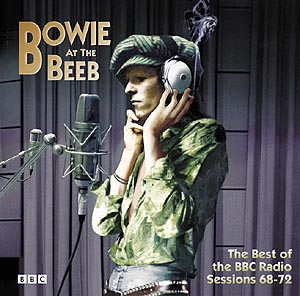
Bowie At The Beeb is an impressive collection, with two full discs offering selections from all his known (and available) radio appearances, starting from the pre-Ziggy era and moving all the way up to the heyday, with only a few omissions for contextual and timing’s sake. (There was a glitch on the first copies, which had the same version of “Ziggy Stardust” included twice; the label thoughtfully sent a single-track CD with the correct version to anyone who e-mailed a request for one.) If anything, it may give people reason to seek out some of those early albums, as well as exposing such early rarities as “Let Me Sleep Beside You”, “Karma Man”, and “In The Heat Of The Morning”. All of the first disc has since been surpassed by more complete recordings included in later archival sets, but that was two decades away.

In addition, most of an excellent fan-club performance from 2000 was included as a bonus of sorts in the set’s initial release. With his crackerjack band, here abetted by Earl Slick, helping cover his entire career, and even including some odd choices as “This Is Not America” and “Absolute Beginners”, it puts his work in a new light, even while still promoting ‘hours…’ (It’s also a mildly different set from the set from the two-hour show he performed two days earlier at the Glastonbury Festival, which was released in 2018. He laid on the Cockney accent thick for the crowd, despite a professed bout of laryngitis, and Earl Slick was at this show too, so we get even more material from Station To Station.)

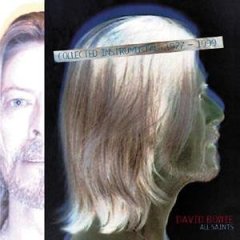
Bowie also took the opportunity of a new century to look back in another way. Having already marketed separate hits collections roughly covering the periods previously summarized by the Changes albums, his more obscure instrumental work was highlighted on All Saints. This interesting idea stemmed from a Christmas gift the man himself gave to friends a few years earlier; while that was a two-disc set, the official version collected the key tracks from Low and “Heroes”, along with surprises from The Buddha Of Suburbia, bonus tracks from the Berlin era, and even one of the movements from the Low Symphony as interpreted by Philip Glass. The result was a disc full of background music, and that’s meant in a good way.

David Bowie Bowie At The Beeb (2000)—
David Bowie
All Saints (2001)—4
David Bowie
Glastonbury 2000 (2018)—3

Monday, November 29, 2010

David Bowie 30: Hours

Bowie was certainly one of the first artists to embrace the Internet as a social tool as well as a promotional one. His next stunt was to have a contest wherein one of his subscribers would write lyrics for a song he’d then record for his next album. He made good on the offer, too.

‘hours…’ was hailed by some as a return to the Hunky Dory era, but don’t let that fool you. While the overall sound is more low-key and reflective, and his shaggy haircut was impressive for a guy his age, was he happy? For the most part he sounds pensive, a little melancholy, and the tempo isn’t anywhere as frenetic as his last two albums.

The immediate low-key sound of “Thursday’s Child” heralds the return of the Bowie croon, and if only there were less Holly Palmer cooing in the mix. While his take on the Thunderclap Newman song would probably be welcome, this particular song with the title “Something In The Air” isn’t, tethered to his wobbly vocal. Worse, it drags. “Survive”, the mildly grungy “If I’m Dreaming My Life” with its double-time shift, and “Seven” all mine the same depressed territory, though the latter track, for all its simplicity, has the melody that sticks.

Things pick up a bit in the second half, starting with “What’s Really Happening?”, written by the aforementioned contest winner. It does give the album the kick it needs, as furthered in “The Pretty Things Are Going To Hell”, a nod to an old Iggy Pop song. “New Angels Of Promise” and “The Dreamers” stay upbeat, but in between comes “Brilliant Adventure”, an instrumental cut from the same cloth as side two of “Heroes” and tracks like “Crystal Japan”.

‘hours…’ isn’t very exciting, but it’s not awful. But after three full decades in the business, it would have been nice if Bowie still wowed us. As it turns out, many of these songs were originally written for the soundtrack of a video game, which shows where his head was at. (Some of those versions appear on the bonus disc of the reissue, alongside demos, remixes and outtakes. Clearly, he was full of ideas, some but not all of them good.)

David Bowie ‘hours…’ (1999)—
2005 limited 2CD edition: same as 1999, plus 17 extra tracks

Friday, November 19, 2010

David Bowie 29: Earthling

In a demonstration of the philosophy that fast work equals better results, Earthling appeared with little warning. Recorded very quickly (for Bowie) with his touring band—now including the incredible Gail Ann Dorsey on bass—it was released within a month of his 50th birthday. Apparently the new sound he liked was called “jungle”. While still steeped in modern dance culture, by sticking to songs he ended up with an album that didn’t need a lot of attention to enjoy.

“Little Wonder” was a striking first single, driven by all that speedy percussion, a great Cockney vocal and lyrics that mention all seven dwarves. “Looking For Satellites” doesn’t have much in the way of words, but it moves along with a typically out-there Reeves Gabrels guitar solo. More sped-up percussion drives “Battle For Britain (The Letter)”—there’s that good ol’ Cockney voice again—with a great chorus to match and a trademark Mike Garson interlude. (Our favorite part is the high-speed digital scanning before the track catches up with the chorus.) “Seven Years In Tibet” finally gives us a slowish song, with elements of his past in the saxophone and a Farfisa organ emulating a Stylophone.

With that driving F-to-G riff, “Dead Man Walking” is hypnotic as it is, but particularly worth seeking out is the acoustic version as performed on Late Night With Conan O’Brien. Unfortunately, “Telling Lies”, despite having been released early as an Internet-only single, sounds a little too much like some of the other jungle tracks. Similarly, “The Last Thing You Should Do” comes off as more of a groove than a song. “I’m Afraid Of Americans” got all the attention thanks to Trent Reznor’s appearance in the video (as well as his remixes of the song, some of which are naturally included on the expanded reissue). And yes, it’s a pretty catchy tune. The album ends strangely with the dated synths on “Law (Earthling On Fire)”, which does nothing so much as remind us of some of the less horrible moments on Black Tie White Noise.

Between recording, touring and running his own interactive website, Bowie was having the time of his life. His creativity is obvious on Earthling, leading back to that age-old question, “What’ll he do next?” Even if you didn’t like all the stops on his journey, at least he was keeping it interesting. (The eventual expanded version added a disc full of remixes and alternate versions of varying interest, including “Seven Years In Tibet” sung in Mandarin.)

David Bowie Earthling (1997)—3
2005 limited 2CD edition: same as 1997, plus 13 extra tracks