Showing posts with label smiths. Show all posts

Tuesday, September 12, 2023

Morrissey 7: Southpaw Grammar

Morrissey never hid his love of glam rock from his own work, so it should be no surprise that art-rock wasn’t far behind. Southpaw Grammar lets the band—the same as the last few albums, except a rotating rhythm section—bash through eight songs, with a big Steve Lillywhite production.

Based around a sample from a Shostakovich symphony, “The Teachers Are Afraid Of The Pupils” is very much a dirge that at least gets some energy once the drums kick in, and runs a total of eleven minutes. “Reader Meet Author” is a tightly packed rock tune that skewers critics, not noticing for a second that he’s calling the kettle black. “The Boy Racer” is even louder and angrier, and seems to resent the new brand of Britpop bands taking his place in people’s ears, but we could we be reading way too much into it. “The Operation” begins with a two-minute drum solo that’s more rhythmic than virtuostic, until the song itself takes over, another nasty kiss-off. (It goes into a completely different rave-up for the last two minutes.)

“Dagenham Dave” is seemingly a portrait of a typical working-class lout, but it’s hard to tell since the verses are spare and the chorus merely repeats the title ad infinitum. “Do Your Best And Don’t Worry” is the closest thing yet to a Morrissey pep talk, whereas “Best Friend On The Payroll” is even more minimalist in its lyrics, which is a shame since the melody is so catchy. (And quite honestly, who among his fans could relate to the struggles of employing a personal servant?) Finally, “Southpaw” is another lengthy one, mostly a showcase for guitar effects and pyrotechnics, coming to strange halt after ten minutes.

Southpaw Grammar is edgy and angry, perhaps too much. It’s not an album to get lost in, but it certainly rocks. He always defended it, of course. (Some 14 years later he saw fit to reissue the album in a dramatically revised format, with a completely different sequence—now opening with “The Boy Racer”, with “The Teachers” moved to the third-but-last track, and “Southpaw” shoved to the middle”—Bowie-inspired cover art, and four extra tracks that don’t add much.)

Morrissey Southpaw Grammar (1995)—3
2009 Expanded Edition: “same” as 1995, plus 4 extra tracks
Tuesday, August 23, 2022

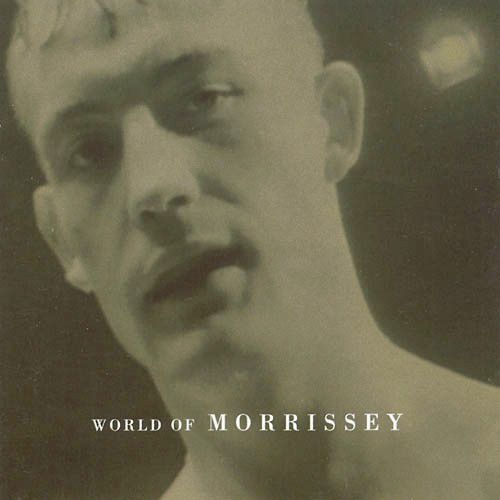
Morrissey 6: World Of Morrissey

It had been three albums and five years, so the time was ripe for Morrissey to put out one of those mop-up albums that collected various strays of the period. As should have been expected, the selection on World Of Morrissey was as random as could be.

The cover art depicts a boxer, which is somehow fitting as the excellent “Boxers” was his most recent standalone single. Both of its B-sides, the tense “Whatever Happens, I Love You” and the deceptively singalong “Have-A-Go Merchant”, are included as well. “The Loop” backed the “Sing Your Life” single (not included here) and for the first minute or so you might think it’s going to be instrumental, but there are words eventually. Still, it’s a cool, bouncy rockabilly tune. “My Love Life” is rescued from the post-Kill Uncle limbo. A lovely, lush cover of “Moon River” is nice, except that it goes on for over nine minutes; the last six are instrumental, with barely discernable film samples of some woman sobbing layered over the last four. Three songs from the overseas-only live album Beethoven Was Deaf were nice to have, partially because the band sounds great, but two of the choices (“Jack The Ripper” and “Sister, I’m A Poet”) were both B-sides anyway, albeit in studio recordings.

And just to be perverse, the balance of the album was filled up by two album tracks each from Your Arsenal and Vauxhall And I, but most ridiculous of all was including “The Last Of The Famous International Playboys”, which had already been collected on Bona Drag. All together, a nice set, but frustrating, and still forcing collectors to collect.

Morrissey World Of Morrissey (1995)—3

Tuesday, September 10, 2019

Morrissey 5: Vauxhall And I

Fairly energized by the success of his last solo album, Morrissey stuck with the two guitarists and collaborators for a follow-up that, thankfully, was not a retread at all. Vauxhall And I isn’t quite as brash as Your Arsenal, but while it still has a big sound, it’s more lush too.

Beginning quietly but building slowly, “Now My Heart Is Full” would make longtime fans swoon, with his soaring vocal and Smiths-worthy backing. The mood immediately goes dark on “Spring-Heeled Jim”, which paints a portrait of a ne’er-do-well, while dialogue from a British documentary film may be important, but it distractingly overtakes the mix, obscuring the track. “Billy Budd” cranks up the energy again, with terrific wah-wah guitar and galloping drums. “Hold On To Your Friends” threatens to be somber, but finds the tempo soon enough and really turns around for the chorus. And you can add “The More You Ignore Me, The Closer You Get” to his pile of classic titles with tunes to match. (“I bear more grudges than lonely High Court judges”? Terrific.) All in all, a solid side of music.

That’s a lot to live up to, and the rest of the album tries, but without much increase in tempo. “Why Don’t You Find Out For Yourself” is a spiteful little strum, and “I Am Hated For Loving” follows the same basic lines, but it’s not as bitter. Things stay dreary on “Lifeguard Sleeping, Girl Drowning”, with its mournful clarinet effect and near-whispered vocal. With its briefest of lyrics, “Used To Be A Sweet Boy” is something of a trip back to the old house, perhaps to reel around a fountain? “The Lazy Sunbathers”, out there on the beach just after “a world war was announced,” might be a reference to Nero fiddling in the face of apocalypse, or something else entirely. Finally, “Speedway” has a sound effect 16 seconds in that could be a motorbike or car, but sounds more like a chainsaw. That makes more sense with all its talk of rumors and lies, and the album soon pounds to a close.

Despite running out of steam, Vauxhall And I is a decent album, and goes a long way to sustaining Morrissey’s icon status. At this point, he’d been a solo act longer than he was a Smith, and while he would always be connected with that group, he’d certainly proved what he could do on his own. With the right band. (Luckily for fans, the 20th anniversary update of the album kept the track order intact, and added a bonus disc with a 1995 concert.)

Morrissey Vauxhall And I (1994)—3
2014 20th Anniversary Definitive Remaster: same as 1994, plus 14 extra tracks

Friday, May 4, 2018

Smiths 9: Reissues! Repackages!

If you’ve been keeping score, you will have deduced that the Smiths catalog consisted of four LPs, a pile of singles and radio sessions that were reshuffled on three separate compilations, and one live album, all released within a relatively brief five-year period. Yet the earnest reissuing and repackaging of their output began shortly after Morrissey’s delayed “comeback”, and things still got left out, even with the repetition.

1992 brought a decent pair of CDs, the similarly but not uniformly titled Best…I and …Best II (both of which spawned singles to promote them). The first volume concentrated mostly on songs that had been singles, while the second added a few album tracks for a slightly deeper focus. Neither was chronological, but together presented many of their best-known cuts for what would have been a solid double album. A little over two years later, Singles repeated many of the tunes on a single disc lasting an hour, but often in their longer album mixes, and including one album track that had been a single but wasn’t on the previous volumes. (Confused yet?)

In the new millennium, The Very Best Of The Smiths crammed 23 tracks onto a single disc, with only two songs that hadn’t been on the 1992 discs, one of which had yet to be regurgitated thusly. The band was more directly involved with 2008’s The Sound Of The Smiths, with Johnny Marr going so far as to supervise the mastering. It also had 23 tracks, in mostly chronological order, but without exactly duplicating Very Best. More interesting to collectors was the deluxe edition, which added several of the B-sides already familiar from previous compilations, along with several rare B-sides that hadn’t made it to any album to date.

But then vinyl came back into vogue, so in 2011, Johnny Marr remastered the catalog so Complete could present all the albums all together in one package for anyone who wanted to start from scratch. However, the title was incorrect. The CD set offered the four studio albums, the three compilations, and the one live album, leaving several of those stray B-sides out. And with all the overlapping between those three compilations, some tracks appeared more than once. For even more repetition, the deluxe set offered (along with the eight albums on LP and CD) vinyl replicas of 25 singles rife with duplication, with some of those otherwise unavailable tracks shoehorned in between. And we’re not even going to touch the deviation in mixes.

For all the fleecing, each of the above compilations does present hefty servings of the band’s best work, so each is musically valid. The first two volumes are the most satisfying of the choices, while Complete allows the new fan to get most everything in one shot, provided he or she can handle the repeats.

The Smiths Best…I (1992)—4
The Smiths
…Best II (1992)—4
The Smiths
Singles (1995)—4
The Smiths
The Very Best Of The Smiths (2001)—4
The Smiths
The Sound Of The Smiths (2008)—
The Smiths
Complete (2011)—

Tuesday, January 2, 2018

Morrissey 4: Your Arsenal

Just like it did with the Smiths, it took Morrissey three albums (and one compilation) to reach a level of something approaching greatness. Your Arsenal was produced by Mick Ronson—an icon to any kid raised on Bowie and Mott The Hoople—and mostly bathes Moz in a glorious meld of glam and rockabilly, to be expected from guys with pompadours.

“You’re Gonna Need Someone On Your Side” and “Glamorous Glue” are wonderfully trashy stompers, the former bringing to mind “Brand New Cadillac” and the latter echoing parts of “Sheila Take A Bow”, both in good ways. “We’ll Let You Know” is based around softer arpeggios and acoustic rhythm, but there’s a tension and discord underneath that threatens to overpower it—fittingly, for a song that seems to forgive the football hooligan culture. If that doesn’t raise enough eyebrows, “The National Front Disco” straddles a defense of a kid who joins a racist movement with the suggestion that it’s just a trendy thing to do. After that too builds and builds, “Certain People I Know” sits somewhere between skiffle and music hall—a simple sounding song, but with lots of layers that belie the simplicity.

Possibly the closest relative to his old band, “We Hate It When Our Friends Become Successful” is a hilarious portrait of musical envy well known to bands from the local to the international level. “You’re The One For Me, Fatty” doesn’t say much besides that, but it’s such a happy and sweet tune it doesn’t need to. Not until “Seasick, Yet Still Docked” does he go back to his morose persona; it’s actually welcome by now. A long transition involving a ticking clock and a radio stuck between German and French stations eventually finds “I Know It’s Gonna Happen Someday”, which does have a few musical nods to “Rock & Roll Suicide” off Ziggy Stardust. (Bowie himself liked the song so much recorded it for his own next album.) It’s enough of a big ending, but instead we close with “Tomorrow”, which starts in a three but continues in four before going back to three and a tack piano sequence that reminds us of “Asleep”.

Your Arsenal is very good because it not only sounds good, but the songs are also good. There isn’t a throwaway here, he keeps the whining to a minimum, and he also remembered to show off his humor. It truly takes skill to sound this effortless.

He took the band on tour, and selections from two shows were released everywhere except the U.S. as Beethoven Was Deaf the following year. Most of the songs from the album were performed as expected, though “The National Front Disco” gained a cacophonous coda. The rest of the set was pulled from his solo catalog; “Sister I’m A Poet” got a rockabilly update. The band is best when it rocks, though the crowds eat up the slow ones too. And only 31 years later the album was reissued with a new cover, and for the first time here. Yay.

Morrissey Your Arsenal (1992)—
Morrissey
Beethoven Was Deaf (1993)—3

Tuesday, August 8, 2017

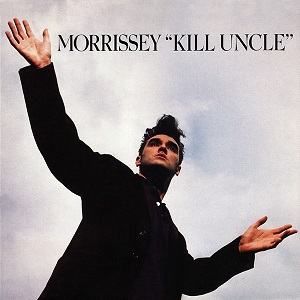
Morrissey 3: Kill Uncle

Moz soldiered on, determined to stay in business as a frontman. Kill Uncle, his third full-length release but only his second solo album, finds him in limbo somewhat, torn between the guitar sound that brought him fame and a distinct pop personality that didn’t keep people asking when the Smiths were getting back together. The producers were Clive Langer and Alan Winstanley, best known for their pop work ages previously in the decade before with Madness, Dexys Midnight Runners and Elvis Costello, but who’d recently worked on They Might Be Giants’ Flood. That’s one reason why the sound is all over the place. His main musical foil (Morrissey being all about his lyrics) was Mark E. Nevin, previously of the shortlived Fairground Attraction.

Two of the better tracks, both singles, appear near the top of the album. “Our Frank” has welcome guitars and complementary piano, while the sneaky but catchy “Sing Your Life” has a background chorus of multiple Morrisseys and strings even. In between, however, is the mournful “Asian Rut”, which decries racial violence over a string bass, violin, and organ backing. “Mute Witness” is driven by a canned piano right out of the Go-Go’s we can assume comes from co-writer Clive Langer, so it’s surprising when he starts to croon. The silly pop continues on “King Leer”, its title only the first of its wincing puns. (Yet there are those who say the only good puns are bad ones, so it’s up to the listener to decide if the song succeeds.)

Also co-written with Clive Langer, “Found Found Found” celebrates a promising new relationship over an ominous heavy guitar arrangement, which contrasts with “Driving Your Girlfriend Home”, a cinematic little track that recalls some of the more moving Smiths moments. “The Harsh Truth Of The Camera Eye” is a trying song, partially because the whiny (even for him) lyrics about the pitfalls of public scrutiny, partially because of the length, and mostly because of the camera-clicking sound effects and zoo noises. A more familiar, and welcome sound and lament returns for “(I’m) The End Of The Family Line”, a matter-of-fact statement of the consequences of being so unlovable. It’s even got a trick ending. But the true farewell is “There’s A Place In Hell For Me And My Friends”, sung quietly over a mournful piano, with some military snares near the end. (In America, where they couldn’t leave things alone, a fine B-side called “Tony The Pony” has the right sound but completely upsets the mood.)

Critics and the public alike were down on Kill Uncle upon release, but it’s hardly terrible. True to form, the remastered version you can pick up today not only has different cover art and a shuffled track order, but two negligible B-sides are inserted between the original short album sides. More strikingly, “There’s A Place In Hell” no longer ends the album, and has been replaced by a rock version. Oh, and no “Tony The Pony” either.

Morrissey Kill Uncle (1991)—3
2013 Expanded Version: “same” as 1991, plus 3 extra tracks (and minus 2)

Tuesday, October 25, 2016

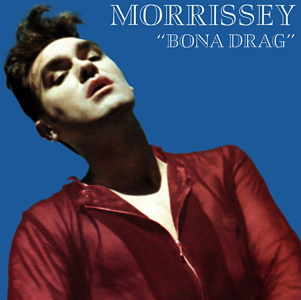
Morrissey 2: Bona Drag

Just as he had as a member of the Smiths, Morrissey forged his solo career not on albums, but singles, releasing four new songs (plus B-sides) in the space of the calendar year following his debut. And just as with the Smiths, his second album was a simply a compilation of those singles and some, but not all, of the B-sides. Convenient for non-collectors, for sure, but maddening for anyone who already had “Suedehead” and “Everyday Is Like Sunday” on Viva Hate, wonderful as they are.

All of the singles are decent, as a matter of fact, and while most of the B-sides are on the second half of the set, Bona Drag is still sequenced to enhance listening, not to provide a chronology. “Piccadilly Palare”, “Interesting Drug” and “November Spawned A Monster” are all Smith-worthy (though Mary Margaret O’Hara’s vocal interjections over the instrumental break of the latter are a little unsettling). “Will Never Marry” is a little slower, based around keyboards, one of the better B-sides, in contrast with “Such A Little Thing Makes Such A Big Difference”, the title itself a knowing acknowledgement of inferiority. “The Last Of The Famous International Playboys” finds him developing his sound, despite having the Smiths rhythm section on hand, though “Ouija Board, Ouija Board” is another step back.

Side two is dominated by B-sides, luckily elevated by the repeats mentioned above. “Hairdresser On Fire” wasn’t on the British version of the first album anyway, so it’s nice to have it here. “He Knows I’d Love To See Him” is mopey even for him, and “Yes, I Am Blind” only piles it on, but is redeemed by the guitars; this would have been a fabulous Smiths track. “Lucky Lisp” appears to be another occasional benediction to Johnny Marr, and a clumsy one, but still vague. “Disappointed” has a satisfying stomp very much in the “How Soon Is Now?” pattern without being self-plagiaristic. It’s even got a funny ending.

Taken all together, Bona Drag shows he at least had a solid work ethic, and the effort makes up for some of the less-than-stellar output. The current version of the album is mostly cosmetically different, with an altered cover, though a few of the tracks have been remixed or edited. More amazingly, he added six outtakes of the era, including the very decent “Happy Lovers At Last United” and “Let The Right One Slip In”, the less successful “Lifeguard On Duty”, and “Please Help The Cause Against Loneliness”, previously given to Moz idol Sandie Shaw and a musical ripoff of “You Can’t Hurry Love”.

Morrissey Bona Drag (1990)—3
2010 20th Anniversary Edition: “same” as 1990, plus 6 extra tracks

Friday, March 25, 2016

Smiths 8: Rank

Something of an official epitaph, Rank presents selections from a concert on the Smiths’ last tour, in support of The Queen Is Dead and the singles that followed. Various live performances had appeared as B-sides over the years, but this is the closest thing to a full Smiths concert, before or since.

For the most part, the songs are pretty close to the standard studio versions, save Morrissey’s occasional outbursts and introductions. “Rusholme Ruffians” begins with a verse of “Marie’s The Name (His Latest Flame)”, paying back that musical debt, and “What She Said” is rearranged, using “Rubber Ring” as its frame. The big difference is the addition of Craig Gannon on guitar, to take some of the pressure off Johnny Marr. Above all, Rank shows off the band as a band, and is a testament to that rhythm section, despite all the reports of the bass player still detoxing from heroin in those days.

The setlist is upbeat for dancing, and while “I Know It’s Over” seems to slow things down when it arrives, the power of the song and the performance keep the emotional impact high. It’s even followed by “The Draize Train”, an instrumental otherwise only available as a B-side.

Rank certainly presents the band at an apex; they only played six more shows together as a band, and had even just cut short their American tour due to “exhaustion”. The complete show had been broadcast on the BBC and subsequently bootlegged, making this album ripe for expansion. Don’t bet on it.

The Smiths Rank (1988)—3

Tuesday, December 8, 2015

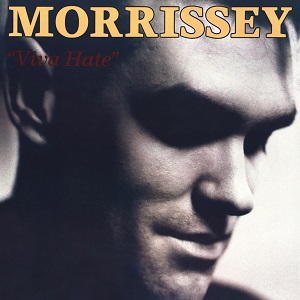
Morrissey 1: Viva Hate

With alacrity if not tenacity, Morrissey emerged as a solo artist hot on the heels of the last Smiths album. Obviously, a voice like his is going to be recognizable, and by drafting Stephen Street, who’d worked the knobs on several Smiths albums, he did manage something of a seamless transition with Viva Hate.

That’s not apparent right away, as guitarist Vini Reilly displays none of the finesse or taste of Johnny Marr; witness the insect infestations all over “Alsatian Cousin” and “I Don’t Mind If You Forget Me”. However, the first singles, “Suedehead” and especially “Everyday Is Like Sunday”, rank with the best moments of his former band. “Bengali In Platforms” and “Dial-A-Cliché” are gentle if obscure, while “Margaret On The Guillotine” is one of the most tender-sounding pieces of hate mail ever, right up to the closing sound effect.

Every track sounds different, which adds variety. Even though “Little Man, What Now?”, “Late Night, Maudlin Street” and “Break Up The Family” have all the percussive elements of demos, they do display a good deal of melody and emotion. Just as melodic and emotional is “Angel, Angel Down We Go Together”, a brief track accompanied by a very tense string arrangement.

Viva Hate kept Moz-heads happy, though Johnny Marr and even the Smiths rhythm section are sorely missed. But even the album isn’t the same as it once was. In this century, Morrissey has seen fit to take reissues and repackages to their furthest potential, changing not only his albums’ covers but also their sequences. In this case, the gorgeous track “The Ordinary Boys” has been replaced by the outtake “Treat Me Like A Human Being”, and “Hairdresser On Fire”, which was only on the American version of the album anyway, is not included. For a man from whom the word “stubborn” is an understatement, it’s just one example of his pathological need to finesse his own legacy and image.

Morrissey Viva Hate (1988)—3
2012 Remastered Special Edition: “same” as 1988, plus 1 extra track (and minus 2 tracks)

Tuesday, August 11, 2015

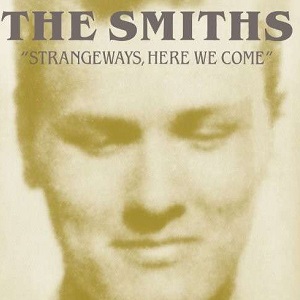
Smiths 7: Strangeways, Here We Come

Lots of bands break up for stupid reasons, and most of them involve lack of communication, miscommunication, or somebody’s ego. While the end of the Smiths wasn’t as dramatic as that of the Beatles, which had lots of factors, or even Aerosmith, who really did argue over spilt milk, if Morrissey had only let Johnny Marr take some (very much earned) time off, they might have had a better epitaph than Strangeways, Here We Come.

The songwriters consider it their best work, and it’s pointless to dispute an opinion, but it’s not one we share. The best songs are in the middle, so before you get there you must navigate the baroqueness of “A Rush And A Push And The Land Is Ours”, which has no guitars on it. They do return on “I Started Something I Couldn’t Finish”, which also repeats a growling “rrr” from the track before. “Death Of A Disco Dancer” starts well, with a White Album groove and even a developed Morrissey melody, but the last three minutes escalate into a pointless jam that could have been faded earlier. But on an already short album, the two-minute perfection of “Girlfriend In A Coma” stands out, particularly because the narrator is not the usual Morrissey fop. That guy returns on “Stop Me If You Think You’ve Heard This One Before”, another classic should’ve-been-the-first-single with great guitars and slightly, only slightly dated keyboard tinkles.

While it wasn’t their longest title, “Last Night I Dreamt That Somebody Loved Me” is just begging to be ridiculed, but that would show ignorance of its magnitude. Beginning with a lengthy piano dirge over what sounds like a soccer riot, it gives way to an even more sweeping main section, showing Marr at his orchestral best. For wordplay, “Unhappy Birthday” doesn’t quite live up to its title, but it’s an awfully sour lyric against a sprightly 12-string gallop. That’s good, because the bile is not spared on “Paint A Vulgar Picture”, a diatribe against the continual exploitation of pop idols, though the “Reissue! Repackage!” lines are hollow considering the compilations the band released in its lifetime and since. Besides repeating a motif from side one, “Death At One’s Elbow” is an undercooked rockabilly strum that should have waited to be a B-side, but since most of their B-sides were better than their album tracks… well, never mind. The fitting finale, and their best album ender save compilations, is “I Won’t Share You”, which says much more about the Morrissey-Marr relationship than either would admit.

While it wasn’t planned that way, Strangeways, Here We Come was indeed the last Smiths album, and they were over almost as soon as they began. It’s too bad, because it didn’t have to end like this, and although the experimentation here doesn’t always work, it does show promise for whatever they might have done next. Or not. The momentum they’d built over the past couple of years had to run out sometime.

The Smiths Strangeways, Here We Come (1987)—

Friday, April 24, 2015

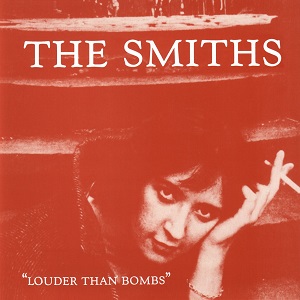
Smiths 6: Louder Than Bombs

As good as it is, The World Won’t Listen doesn’t quite provide the breadth of Louder Than Bombs, the Smiths compilation released in the US only a month later. This two-record set (or single cassette/CD) served basically the same purpose of mopping up extra tracks, but had the advantage of adding a few more recent recordings, and further muddied the shelves by including several songs already on Hatful Of Hollow.

Designed as a listening experience rather than a definitive history, Louder Than Bombs is chronologically jumbled, but sequenced very well—side one presents the most recent recordings, while side four is an exercise in dynamics, starting from “Hand In Glove” again down to “Asleep”. The 13 or so songs repeated from The World Won’t Listen are scattered throughout, in between earlier singles and B-sides not on any US albums (“William”, “Please Please Please”, “Heaven Knows”, “Girl Afraid”, to name a few).

Even with all the repetition, several songs can be considered “new”. The big production of the suggestive “Sheila Take A Bow” was the most recent single; its B-sides, both taken from a BBC session, were the only recordings of “Is It Really So Strange?”, a comical Morrissey travelogue, and the unfortunate “Sweet And Tender Hooligan”, whose lyric strains to keep up with the music. “Back To The Old House” and “These Things Take Time” appear in their studio, non-BBC incarnations; the former pales while the latter prevails. Slightly different mixes of “Stretch Out And Wait” and “You Just Haven’t Earned It Yet, Baby” further ensured purchase on both sides of the pond.

As a more comprehensive overview of non-album tracks covering the Smiths’ career to date, Louder Than Bombs does somewhat negate the need for The World Won't Listen, and makes Hatful Of Hollow more for absolute completists, but then those people would miss out on the BBC versions of “Reel Around The Fountain” and “Back To The Old House”. Now that all three albums are considered part of the canon, there’s no easy answer, and future Smiths collections wouldn't help streamline things any. Nevertheless, with 24 songs in 73 minutes, Louder Than Bombs is as enjoyable for longtime fans as it is for newcomers.

The Smiths Louder Than Bombs (1987)—4

Tuesday, April 21, 2015

Smiths 5: The World Won't Listen

With two fingers up to those who either had all the band’s singles or didn’t like the band anyway, The Smiths compiled another music-crammed LP of hits and otherwise. The World Won’t Listen was basically a sequel to Hatful Of Hollow, but while that album at least offered alternate tracks in the form of BBC performances, this one stuck to the band’s own releases, and ended up repeating four album tracks that were also singles, so fans now had at least three versions of the same song(s) in their racks.

But, as we’ve asserted, the band’s singles were as good as (if not better than) the albums, so this is hardly a mopping-up of leftovers. Two terrific singles from the previous summer start off the collection. “Panic” urges the populace to “burn down the disco” while making sure to “hang the DJ”, and “Ask” is a simple, sunny song with shimmering acoustic guitars and even backing vocals by Kirsty Maccoll. “London” is a surprising blast of punk, while “Shakespeare’s Sister” gallops along under a frenetic piano. “Shoplifters Of The World Unite” repeats the Bo Diddley beat of “How Soon Is Now?” with little of the excitement. In between, “Bigmouth Strikes Again”, “There Is A Light That Never Goes Out”, and “The Boy With The Thorn In His Side”, all from The Queen Is Dead, keep the quality high.

Side two is nearly all B-sides, and somewhat subdued musically. “Asleep” is a solid departure, a waltz on piano with wind effects and a music box coda of “Auld Lang Syne”, lying just this side of a suicide note. “Unloveable” is a typical Morrissey lyric, heavy on repetition and short on subtlety, but as quotable as it is lovable (“I wear black on the outside because black is how I feel on the inside”, for instance). “Half A Person” is a bit more toe-tapping but just as mopey. “Stretch Out And Wait” is another predominantly acoustic strum that pales as a close copy of “That Joke Isn’t Funny Anymore”, from Meat Is Murder. But instead of the fake ending, it’s followed by “Oscillate Wildly”, a striking piano-led instrumental that ups the tempo to meet “You Just Haven’t Earned It Yet, Baby”, a completely new song that was this close to being their newest single. A reggae rhythm begins “Rubber Ring”, but luckily abandoned for a more straightforward arrangement to match a lyric that tries to bridge (and meld) singer and fan. (Later reissues included the rare instrumental “Money Changes Everything”, which likely caught Bryan Ferry’s ear, and the hideous cover of a song called “Golden Lights”, in a most un-Smiths-like arrangement that sounds exactly like the kind of insipid ‘80s pop we thought the band was actively trying to eradicate.)

For kids who’d been immersed in The Queen Is Dead since June, here were more songs to save their lives. Being a Smiths release with heretofore unavailable tracks in the US, The World Won’t Listen did brisk business as an import, until another release stirred the pot further.

The Smiths The World Won’t Listen (1987)—4

Friday, January 30, 2015

Smiths 4: The Queen Is Dead

The third LP (not counting compilations) by The Smiths has grown in such stature over the years that it hasn’t only topped the best-of lists of 1986, or even the whole decade. Some pundits have gone as far to declare that The Queen Is Dead is the greatest album of all time. While it’s clear those people haven’t heard Mean Business, opinion is one thing and fact altogether another. It’s a good album, but not great, and it should soon be clear why.

The title track is a terrific way to start, with a snippet from some little-known film Morrissey fetishized, cut off by galloping drums and a strong band performance driving the cutting lyrics. Here the guitar is more part of the sound than dominating it. “Frankly. Mr. Shankly” is something of an ‘80s version of “Take This Job And Shove It”, but with the knowing, parodic angle of the narrator. Any chance of “I Know It’s Over” being just another gloomy lament of unrequited love is dashed by beginning (and repeating) “Oh mother, I can feel the soil falling over my head.” In between, he does manage to stir some sympathy as well as empathy. The album’s clunker is “Never Had No One Ever”: it sounds too much like the song that precedes it, retreads the same territory, and is about three times as long as it needs to be. Here are some options: either incorporate some of the lyrics into other songs, or move it to the end of the side, change the arrangement, and make it only as long as it needs to recite the lyrics once, and done. To their credit, the side ends instead with “Cemetry Gates”, a jaunty stroll through said territory, where Our Hero sees the graves of people who’ve died and it seems so unfair that he wants to cry.

Side two, however, is enough to suggest that all those best-album-ever claims might be on to something. Two of their best singles dominate: “Bigmouth Strikes Again”, with its relentless attack and sped-up counterpart; and “The Boy With The Thorn In His Side”, a gorgeous lament decorated by Johnny Marr’s deft orchestration. “Vicar In A Tutu” returns to the rockabilly shuffle that dominated the previous album, and a much better pastiche too. “There Is A Light That Never Goes Out”, Mozzer’s own “My Way”, would have been a fine closer, that place is instead bestowed upon the one-liner of “Some Girls Are Bigger Than Others”. While countless songs utilize the fake ending, this one sports a fake beginning.

The Queen Is Dead was easily the band’s best album to date, and they knew it. Their confidence extended to the artwork, which challenged their apostles to squint at the tiny pink lettering on a dark green background. In many ways, it epitomizes what people both love and hate about the band today. Thus it made sense for a reissued, repackaged edition to appear a year after the album’s 30th anniversary. The double-disc expansion added a pile of demos slash early takes plus familiar B-sides. The seven-minute version of the title track is a joy, though the demo of “Never Had No One Never” is marred by a crazy trumpet solo and Morrissey’s laughing over the extended fade. Naturally any fanatic would want the Deluxe Edition, which added a DVD with a high-resolution mix of the album plus a short film, and a third CD touted as “live in Boston”. While actually recorded some thirty miles outside that city’s limits, and not the complete show, it sports a different setlist from the gig recorded two and a half months later and eventually released on Rank.

The Smiths The Queen Is Dead (1986)—4
2017 expanded edition: same as 1986, plus 13 extra tracks (Deluxe Edition adds another 13 tracks plus DVD)

Tuesday, October 28, 2014

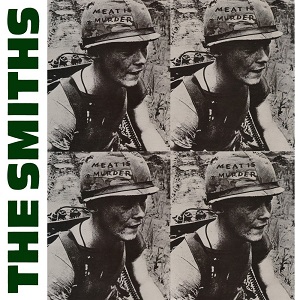
Smiths 3: Meat Is Murder

The Smiths seemed to save their most refined pop for their singles, making their albums a platform for grand statements less likely to hit the charts. And in those “Frankie Say Relax” times, could there have been a more bold attitude than Meat Is Murder?

“The Headmaster Ritual” is a strong opener, an excellent mix of groove and subtle changes, upon which Morrissey’s tale of schoolboy woe sits within a five-note range. “Rusholme Ruffians” is a rockabilly shuffle, a carefree decoration for a song filled with even more violence and fear. It’s not easy to follow the free-verse of the vocal, but we can assume that sound effect at the end is some kind of carnival game shutting down. There’s a similar retro-twang to “I Want The One I Can’t Have”; the band are credited with the album’s production, so the instruments are mixed better, but Morrissey still sounds like he’s singing in a closet, and we don’t mean that metaphorically. Just as muddy is “What She Said” with some near-metal bursts from Johnny Marr. The high-point is “That Joke Isn’t Funny Anymore”, which lives up to its archetypically lengthy title, and sports a fake fade.

In the US, “How Soon Is Now?” was added to the top of side two—a wise choice, since it not only made this stellar track more available, but improved the album as a whole. “Nowhere Fast” is the best rockabilly raveup here, with excellent, surprising rhymes to boot. While seductively sad, “Well I Wonder” is one of their least successful mopes, and the atmospheric rain over the end makes it even more maudlin than it needs to be. (Especially since the effect always ends up sounding like a toilet running or somebody filling same.) “Barbarism Begins At Home” isn’t much more than a groove that goes on for seven minutes; excellent as it is, and particularly that bass, it would have been better served as a B-side or an extended dance mix. And since the first album ended with a somber elegy for innocent victims, the title track uses buzzsaw sound effects and plaintive moos and bleats to illustrate Morrissey’s vegetarian stance.

Violence certainly pervades Meat Is Murder, whether perpetuated on students or farm animals, by teachers and parents, or between society classes. The Smiths certainly weren’t shy about confrontation, but they’d yet to learn how to really seduce their audience.

The Smiths Meat Is Murder (1985)—3

Tuesday, August 12, 2014

Smiths 2: Hatful Of Hollow

It displays an awful lot of hubris for a band to issue an LP of rarities as their second album, but in the Smiths’ case, it worked. Hatful Of Hollow crams 16 tracks onto two sides of an LP, alternating between singles, their B-sides and BBC recordings. The quantity of music is more than justified by their quality.

UK record-buyers and artists alike staunchly supported the single as statements just as important as an album, even as late as 1984. The dizzying “William, It Was Really Nothing” is an exercise in brevity, as is its B-side “Please Please Please Let Me Get What I Want”, both classics on their own. But those who sprang for the 12-inch single got the monster that is “How Soon Is Now?”, included here in its six-minute splendor of tremolo and whine. (A favorite moment: “Whistle While You Work” whistled, naturally, about four minutes in.) “Hand In Glove” re-appears in its single mix, the biggest difference being the fade-in opening and fade-out ending. “Heaven Knows I’m Miserable Now” transcends its potential as a target with a perfect arrangement, while “Girl Afraid” (again, 12-inch only) expertly paints the men-are-from-Mars dilemma.

The BBC takes generally pre-date the versions on the first album and, because they’re recorded better, sound better. “What Difference Does It Make?” has even more punk energy, while “This Charming Man” is played slightly jauntier, but not necessarily better. “Still Ill” has an incongruous harmonica over the drum intro and outro; likewise, stripped of the piano and organ, “Reel Around The Fountain” crackles and builds tension on its own. “You’ve Got Everything Now” doesn’t break the tie, unfortunately.

That leaves a handful of songs that fans weren’t necessarily getting for the second time, unless they taped them off the radio. “These Things Take Time” is a great performance, well constructed, and should have gone on the debut. “Handsome Devil” is taken at a furious pace with little subtlety (“let me get my hands on your mammary glands” indeed). Musically, it’s a minor-key version of “This Charming Man”; sing the lyrics for that one over this and you’ll find they match up well. “Accept Yourself” is the first and last time Morrissey would offer anything resembling a chin-up pep talk, while the band keeps up with itself over some tempo changes. Contrast that with the somber subject matter of “This Night Has Opened My Eyes”, here in its only recorded incarnation, and one that really spotlights the band’s use of dynamics. How he could come up with such a deep lyric is explained by its being adapted from one of his favorite plays. A personal favorite is “Back To The Old House”, electric in its B-side guise, but here a gorgeous acoustic meditation, and a better match for the melancholy lyrics.

Hatful Of Hollow wouldn’t be released in the US for another ten years, after the band’s catalog had already become somewhat muddled. We’ve tried to stick with American chronologies throughout the history of this blog, but in a case like this we feel we can justify the exception—and particularly when it was such a popular import to begin with. Despite its repetition, it’s superior to their first album, and comes much better recommended.

The Smiths Hatful Of Hollow (1984)—

Tuesday, May 20, 2014

Smiths 1: The Smiths

In a time when U2 and R.E.M. were already considered too mainstream for the college alternative, The Smiths were the absolute rulers of the scene (with the possible exception of The Cure, who were a lot synthier and projected even shriller yodeling). Looking back it makes perfect sense; in Morrissey, sensitive kids had an icon they could worship and hurl wilted flowers at. This self-styled “poet” crooned his pained lyrics with calculated repetition, equally inspired by Oscar Wilde, Joy Division and soulful ‘60s pop as he was obsessed with Hollywood glamour, gay icons and Britain’s Angry Young Men. Johnny Marr immediately made a name for himself as a guitar hero, providing melodicism and bite wherever either was needed more. And while those two got most of the attention (by design), the rhythm section was nothing to sneeze at—Andy Rourke’s bass percolated right along with Mike Joyce’s powerful drums.

Unfortunately, their self-titled debut doesn’t always deliver that musical combination at its best, or with the same care given to their singles. Throughout The Smiths the vocals are buried, the drums sound robotic and the bass is hidden. This is most apparent on side one; despite starting strong with “Reel Around The Fountain” (which still sounds like the soliloquy of someone who enjoyed the abuse he suffered), it was one of the tracks subjected to piano and organ overdubs by none other than Paul Carrack, halfway between Squeeze and Mike + The Mechanics. “You’ve Got Everything Now” dances near a ska rhythm as Morrissey laments “the terrible mess I’ve made of my life”. “Miserable Lie” begins with a pleasant, sad strum, but degenerates into a pointless stomp with such lyrics as “I’d like to see your underwear” and his falsetto at its most insistent and annoying. “Pretty Girls Make Graves” is an improvement, though it’s clear the guy’s got issues; it even quotes their debut single ere the close. “The Hand That Rocks The Cradle” is a circular riff that doesn’t really go anywhere, and the more you listen to the lyrics the more they seem to approach pedophilia.

In the US, “This Charming Man” was added to the LP at the top of side two, and has remained on the album worldwide ever since. It was the smart move, being such a strong single. “Still Ill” is a better mix of music and anger that could have been a single, especially leading into an alternate mix of “Hand In Glove”, that excellent debut, and the snaky riff of “What Difference Does It Make?” “I Don’t Owe You Anything” is another good homage to the heartbroken pop of twenty years before, but it’s overshadowed by the closer. “Suffer Little Children” is the most adventurous composition on the album, as it incorporates some unorthodox changes, but mostly because of the subject matter. The song is an elegy for the victims of the so-called Moors Murders of the early ‘60s, children not much older than Morrissey himself was at the time. While not intended to exploit, the idea to incorporate a woman’s laughter (sounding at first like a sob) makes it a song one would choose to avoid.

There’s enough good on The Smiths to make it a good place to start, but they would improve and quickly. At the same time, there’s enough of what makes Morrissey such an insufferable character that keeps people away from the band completely here too.

The Smiths The Smiths (1984)—3