Showing posts with label gnr. Show all posts

Friday, May 15, 2026

Guns N’ Roses 5: Chinese Democracy

Despite the rise of grunge, Axl Rose kept Guns N’ Roses in the spotlight till the mid-‘90s, courting controversy and creating events with each new cryptic video. Before long, each of the other members got fed up with him and quit, replaced by handpicked minions. 1999 saw the release of both the double-CD retrospective Live Era ’87-’93 (most of which was recorded towards the later year) and the very noisy “Oh My God”, released on the soundtrack of, yes, another Arnold Schwarzenegger movie. Rumors flew about the next album, which somehow and somewhere gained the title Chinese Democracy. Once the 20th century turned to the 21st, both the idea and the title of any new Guns N’ Roses album had become a joke. Much like Neil Young’s long-promised Archives, we’d believe it not when we heard it, but when we saw it in the wild. And besides, how could something that took so long to make, involving hundreds of thousands of studio hours, possibly sound any good?

Over 17 years after the Use Your Illusion albums made a splash by arriving the same day, Chinese Democracy started streaming at the band’s official MySpace page—now there’s a flashback for you—in preparation for its official release via the Best Buy chain, barring any last-minute crisis, of which Axl was the undisputed master. Just as amazing as the album finally going on sale was the simple fact that it didn’t stink. It sounded like him singing, and the guitars sounded like Slash. But that shouldn’t suggest that the album is “good”.

There’s a lot of music here—14 songs, most pushing five minutes, some over six. The first minute is atmospheric, until some power chords kick in for the title track, which sets the template for much of what follows: Axl doubling his angry vocals an octave apart, and one of the guitarists shredding constantly. There’s a chorus, but it’s not exactly “Paradise City”-level catchy. It also holds the record for the song with the most credited writers: eight. Only six people wrote “Shackler’s Revenge”, its industrial basis coming from two of them. “Better” slows the pace a bit, and could almost be a pop song, but we could really do without the singsongy falsetto verse at the start and end. Here’s a case where the minor key melody and chords serve the song well. That means it’s time for a power ballad, and “Street Of Dreams” is the album’s “November Rain”, complete with orchestral arrangement. Dizzy Reed, the only other member to play on the last album, is still on board to pound the piano; the rest of the band includes such famous stage names as Buckethead, Bumblefoot, and Brain, plus Tommy Stinson from the Replacements.

“If The World” probably irritated a lot of people, from the robotic drums to the Philly soul strings, the wrong kind of ‘70s homage for this brand. “There Was A Time” is even more divisive, with another drum loop and a damn children’s choir aah-ing along to hide what could be a half-decent tune, proof that a decade obsessing over an arrangement squeezes the life out of a song. Those of us familiar with the original novel were dubious of any song called “Catcher In The Rye”; here Axl manages to channel Oasis on the piano, clearly identifies with the protagonist, clearly misses the point of the book, and seems to chastise his fellow legendary recluse for writing it in the first place. But for those continual guitar lines and muddled message, it’s actually a cool track.

After a side away from hard rock, the hook of “Scraped” is vocally based around some of Sam Kinison’s most iconic yawps, and takes advantage of the layering capabilities of infinite tracks to have lyrics flying in from all over the place. It’s hard to picture anyone relating to “Riad N’ The Bedouins”, since the words are so muddled and obscure we don’t know who pissed him off this time. There’s another atmospheric intro, more Kinison-style “ah”s, and chorus chords that would be better served in another context. But no such ambiguity clouds “Sorry”, a mournful waltz complaining about everyone who’d ever doubted or underestimated him, specifically the other musicians on Appetite For Destruction. Despite the false alarm of the acoustic guitars, “I.R.S.” is a tirade against the government that might be more effective if he came up with a better title.

It’s been a while since we heard an orchestra, so “Madagascar” begins with one right out of a Russian symphony or Pink Floyd epic. From what we can gather from the lyrics, which don’t include the title once, he’s alone and lonely and misunderstood, and piles on movie samples and Martin Luther King quotes to illustrate his point. It’s got all the markings of a grand finale, but we’re not done yet. He’s got another love song in him with “This I Love”, another Elton John homage, loaded with heartbreak, and the only track on the album he apparently wrote all by himself. Finally, in the tradition of unfortunate title choices, “Prostitute” manages to encompass alt-rock and bombast, ranging from pensive to anguish, finally throwing all the ingredients we’ve heard so far into the soup for the big finish.

Chinese Democracy didn’t change the world, but in a universe where a Black man could actually be elected President of the United States and there was finally a new GN’R album, it seemed like anything was possible. And for a brief period, hope was truly alive and well. Yes, we could.

Guns N’ Roses Chinese Democracy (2008)—

Friday, September 12, 2025

Guns N’ Roses 4: The Spaghetti Incident

They had only just finished the massive Use Your Illusion tour, and the “Estranged” video hadn’t even been released yet when Guns N’ Roses released their long-threatened covers album. Much of what made up “The Spaghetti Incident?” originated during the album sessions, and could have ended up on those albums, but they eventually decided that “Live And Let Die” and “Knockin’ On Heaven’s Door” would be the extent.

While most of the album runs the gamut through punk and glam, it opens with “Since I Don’t Have You”, the venerable doo-wop nugget with a profane Axl aside before the solo and an unnecessary atmospheric coda. That out of the way, Duff does a decent job shouting the Damned’s “New Rose”, and Axl puts on a bad cockney for U.K. Subs’ “Down On The Farm”. He cleverly adds a kazoo in lieu of sax for “Human Being”, which they stretch out even longer than the New York Dolls version. Duff helps Axl with the Stooges’ “Raw Power”, and Michael Monroe makes his second appearance on a GN’R album, duetting on the Dead Boys’ “Ain’t It Fun”, though Axl makes sure he himself gets the line with the c-word.

Slash takes his first-ever lead vocal on “Buick Makane” (from the T. Rex album that inspired his hat), which gets a twist by bringing in the chorus of “Big Dumb Sex” by Soundgarden in a nod to grunge, but more a reason to drop more eff-bombs. Nazareth’s “Hair Of The Dog” is an inspired choice, right up to Slash’s “Day Tripper” quote at the end. Duff returns for the Misfits’ “Attitude” and Johnny Thunders’ “You Can’t Put Your Arms Around A Memory”, the latter brought over from the sessions for his own solo album. The Sex Pistols are said to be the source for “Black Leather”, but in reality it was a Steve Jones and Paul Cook collaboration first covered by the Runaways. The final listed track is a plow through the Fear classic “I Don’t Care About You”, which would have been a fine ending, but Axl decided to sneak on a song written by Charles Manson as a hidden track. (As if that wasn’t enough, the typed gibberish on the album’s front cover uses the code invented by the Zodiac Killer.)

What helps the album succeed is, of course, Slash, who plays his butt off everywhere without seeming showboaty, and Duff should get some credit for some of the more arcane selections. If the intention really was to pay homage as well as generate royalties for some of these people, good for them. But their sell-by date had passed. Outside an unnecessary carbon copy cover of “Sympathy For The Devil” released on the Interview With A Vampire soundtrack a year later, this was the end of the band as we knew them.

Guns N’ Roses “The Spaghetti Incident?” (1993)—3

Tuesday, September 9, 2025

Duff McKagan: Believe In Me

For a while, Duff McKagan was the dumbest man in rock ‘n roll, stumbling around drunk and/or high, laughing at some inside joke, with hair and clothes that suggested something of a male version of Kelly Bundy. But his marginalized role as the bass player in Guns N’ Roses belied his varied musical background, kinda like we always underestimated what Izzy Stradlin brought to the mix. This wasn’t exactly utilized to the fullest on Believe In Me, his first solo album, as epitomized by the song titles and the cartoony portrait of the artist on the front. No expense was spared for this project, seemingly created during studio and touring breaks; along with most of the current lineup GN’R except Axl, special guests included members of Skid Row and the girl from Warrant’s “Cherry Pie” video. But he does play the majority of the guitars and drums on the album, and quite well too, along with his usual bass.

Unfortunately, he also sings with confidence but not competence, his lyrics trite and cliché. Sometimes he speaks (or yells) asides when melodies just can’t suffice. These traits combine to erase most of the appreciation one could muster for the quality of the arrangements. Much of the album is heavy rock or power ballads, but he does detour into funk for Jeff Beck to shred on for “(F-cked Up) Beyond Belief” (censorship ours) that’s mostly instrumental but gets its title from the near rap in the midsection. (Beck also turns up on “Swamp Song”.) “Punk Rock Song” is a one-man thrash that lasts just over a minute and a half, and would have been shorter if he stayed true to the genre and didn’t break it down halfway through. Lenny Kravitz sings (and screams) “The Majority” with little fanfare, which is surprising considering his ubiquity at the time. Co-writer and contributor Gilby Clarke—a.k.a. Izzy’s replacement—can share half the blame for “10 Years”, and Sebastian Bach takes the Izzy role on “Trouble”. “F-uck You” (censorship again ours) is a loud metal number with a profane rap by one Doc of something called Haus Mob. The closing ballad “Lonely Tonite” is manna for those whose favorite song on the Use Your Illusion albums was “So Fine”.

Since getting mostly sober by the end of the century, Duff managed to clean up his look, resurfacing in various offshoots with old and new friends—most successfully with Velvet Revolver—and even went back to school to emerge as something of a financial adviser to his fellow burnouts. Back then, though, not a lot of people believed in Believe In Me, and it was soon overtaken by a more bankable release.

Duff McKagan Believe In Me (1993)—2

Friday, April 11, 2025

Izzy Stradlin: Ju Ju Hounds

After fourteen or so years of putting up with Axl Rose, Izzy Stradlin had had it, and left Guns N’ Roses shortly after the Use Your Illusion albums came out. While the band stumbled around the world promoting the albums, Izzy quietly put together a band of his own, tapping Rick Richards of the Georgia Satellites on lead guitar, journeyman bass player Jimmy Ashhurst, and respected drummer Charlie Quintana. MTV News aired the first preview of the band, playing a song highlighting his raspy voice that strangely would not be included on the full-length Izzy Stradlin and the Ju Ju Hounds album.

While there are some nods to punk and reggae, the Stones and the Faces are the clear influence here, and not just because Ian McLagan plays organ on half the album. “Somebody Knockin’” and “Cuttin’ The Rug” aren’t that far removed from the new Keith Richards album, whereas “Train Tracks” is dominated by heavy slide. “Time Gone By” and “How Will It Go” lean on acoustics and mandolins for a more rootsy sound, but the clear highlight of the album is the single “Shuffle It All”, opening with a cool bass line that runs through much of six minutes. Too bad we can’t make out most of the lyrics. “Bucket O’ Trouble” is near speed metal that Axl might have enjoyed if he bothered to listen to it, while “Pressure Drop” is given a revved-up treatment faster than even the Clash, with a half-time coda that’s slower than the Specials. The cover of Ron Wood’s “Take A Look At The Guy”, with the auteur himself yelling along, serves only to make Izzy’s own voice sound that much more melodic, but it does extend the moody ending, which was faded on the original. Nicky Hopkins and the Waters Sisters are brought in for the sleepy ballad “Come On Now Inside” that closes the album. (Stuck at the end is a hidden track called “Morning Tea”, which is mostly two minutes of tribal drums with some melodic feedback low in the mix.)

Despite good reviews and whatever momentum GN’R had, the album got somewhat lost in an industry being dominated by grunge and in between Black Crowes albums. While the band did tour behind it, Izzy cancelled a bunch of dates because, well, he just didn’t like touring anymore. Six years would go by before he released a follow-up and was dropped from the label, and since the turn of the century he’s released further albums, usually via iTunes, and joined up with the evolving Guns N’ Roses on fleeting occasions, always leaving as abruptly as he’d emerged. Wherever he is now, he’s probably enjoying the peace and quiet.

Izzy Stradlin and the Ju Ju Hounds Izzy Stradlin and the Ju Ju Hounds (1992)—3

Friday, November 22, 2024

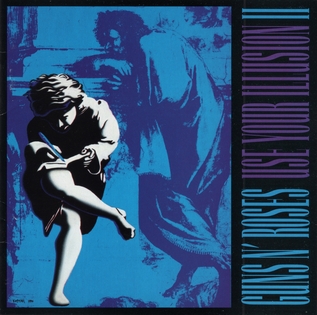
Guns N’ Roses 4: Use Your Illusion II

Releasing two albums at once meant that the chances of both hitting #1 in Billboard were slim, even for Guns N’ Roses. Somehow Use Your Illusion II (the blue and purple one) beat out its brother for the top slot. Arguably it was the better album anyway, with more variety and depth.

“Civil War” had been out for a year already, having been recorded when Steven Adler was still in the band, and included on an album compiled to benefit a charity founded by Olivia Harrison. It begins with Strother Martin’s iconic speech from Cool Hand Luke, and sets a somber tone for the rest of the album. “14 Years” was Izzy Stradlin’s best song of the batch he brought to the project; he sings the verses and Axl Rose handles the choruses, and they might as well be two separate songs stuck together. “Yesterdays” is less bitter but still disgruntled, and one of Axl’s better tunes. Their cover of “Knockin’ On Heaven’s Door” had also been released previously on a Tom Cruise movie soundtrack, but in a slightly different mix.

Just when you think they’ve grown up, “Get In The Ring” sends us back to grade school. Yelled by Axl and Duff McKagan, between audience chants recorded live on tour only months before, it’s a basic eff-you to anyone and everyone, and particularly various writers and magazines who had been less than complimentary about the band. Duff helps out also with “Shotgun Blues”, which is just as angry and profane but doesn’t name names. The side is redeemed by “Breakdown”, another long but well-constructed track with introspective lyrics, with another film reference; this time Axl impersonates Cleavon Little from Vanishing Point over the last couple minutes.

Izzy returns with “Pretty Tied Up”, which seesaws between mythology in the verses and an incongruous chorus, but it’s got an undeniable strut. And while thus far they’ve chosen to open or close sides with the epics, “Locomotive” runs nearly nine minutes in the middle of side three. It’s a showcase for Slash, and we’re amazed that with all the tweaking these albums underwent, they never bothered to fix Axl’s time issues on the choruses. It’s even got a cool piano-driven coda. But then Duff steps up to the mic to mewl the bulk of “So Fine”, a mostly inoffensive power ballad with a truly stupid bridge.

We’re not done with the epics yet, as “Estranged” runs for nine minutes, has a lot of Axl on piano and Slash soloing constantly, and can be heard as something of a companion to “November Rain”. But it’s mainly remembered today for its inexplicably bonkers video, released two years after the album came out, wherein Axl is chased by SWAT teams, sent to the nut house, and pursued by helicopters, finally leaping from an oil tanker to swim with dolphins. Then it’s back to the beginning of the cycle with “You Could Be Mine”, first released on the Terminator II soundtrack and something of a rockin’ sorbet in the spirit of the debut. “Don’t Cry (Alt. Lyrics)” has different verses but the same choruses as the “Original” on the other album, and nobody was ready for “My World”, basically an Axl-driven industrial rap experiment that sounds like a joke but probably wasn’t.

While there are some truly cringey moments on Use Your Illusion II, it remains an excellent demonstration of the band’s collective and individual talents. They weren’t just another hair metal band. (A week later, the major-label debut from a Seattle band called Nirvana was released, also on Geffen. The first album by another Seattle band, called Pearl Jam, had come out at the end of August. Meanwhile, new albums by such previously multiplatinum acts as Skid Row, White Lion, and Tesla did not break any sales records. The music business was changing again.)

Once again the Deluxe Edition added a disc of various live tracks from the shows, not all of which were included in the Super Deluxe Use Your Illusion box. And once again most of the GN’R songs were on the main reissue, with some interesting extras, like “Mama Kin” and “Train Kept A-Rollin’” with Steven Tyler and Joe Perry of Aerosmith at a show in Paris. A segment from the same show encompasses a seven-minute drum solo, a four-minute Slash guitar solo that finds its way to the Godfather theme, and Queen’s “Sail Away Sweet Sister”. For some reason “Civil War” is bookended by the “Voodoo Child” riff, and “Knockin’ On Heaven’s Door” is prefaced by the riff but no sung lines from Alice Cooper’s “Only Women Bleed”. By this time the band had two keyboard players, backing vocalists, and a horn section, so Axl didn’t have to handle both playing and singing things like “Estranged”. And boy, did he holler a lot.

Guns N’ Roses Use Your Illusion II (1991)—3
2022 Deluxe Edition: same as 1991, plus 13 extra tracks

Tuesday, November 19, 2024

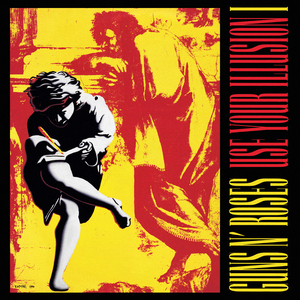
Guns N’ Roses 3: Use Your Illusion I

Back in 1991, Guns N’ Roses had been taking an eternity to complete their next album. They were touring to promote it while still tinkering with it, to the extent that Use Your Illusion would finally arrive as two double-album-length CDs, available separately. This was the biggest thing to happen in the record business in years, as demonstrated by nationwide midnight sales. Nobody wanted to be the only one at school to not have the new GN’R albums, and everyone had to have them both.

Use Your Illusion I, or the red and yellow one, was probably the closest in spirit to the debut, in that it was more about straight-ahead rock. By now Steven Adler had been bounced from the band, replaced by Matt Sorum, who was best known for touring with the Cult, but had also done time with a woman soon to be known as Tori Amos. He was, and is, a heavy hitter, exactly the type of drummer needed to fill a stadium P.A., but frankly lacked the swing that Adler exhibited on the first album. Another sign that we’re on the other side of the bell curve is the individual writing credits; where previous songs were credited to the band as a whole, now it was clear which ones Axl Rose wrote by himself, and moreso when it was an Izzy Stradlin tune.

Duff McKagan’s bass and a Slash riff kick off “Right Next Door To Hell”, one of several rapid-fire vocals from Axl. Izzy takes the first of three(!) lead vocals on the album for “Dust N’ Bones”, though it’s mostly buried under Slash’s lead line. Their cover of Wings’ “Live And Let Die” was surprising yet nearly note-for-note, but most people were probably on board for “Don’t Cry”, their new power ballad and smash single, and wondering if he really held that last note for 30 seconds. “Perfect Crime” is more high-speed yelling, and best during the slower break.

Izzy dominates what LP owners called side two, starting with “You Ain’t The First”, which could have fit on side two of Lies. Michael Monroe of Hanoi Rocks honks harmonica and saxophone on “Bad Obsession”, and we can also hear new member Dizzy Reed on piano. It’s one of several songs here that garnered the parental advisory sticker and prevented the album(s) from being sold at stores like Walmart, along with the overly angry “Back Off Bitch”. “Double Talkin’ Jive” is another piledriver riff, mostly sung by Izzy with Axl helping, that manages to find its way to an extended flamenco-style coda.

The centerpiece of the album was “November Rain”, the epic piano-based showstopper Axl had been concocting since he bought his first Elton John album. It was made even more inescapable in those days thanks to its over-the-top video, which ran the full length of the song’s nine minutes. (The canned strings used on the original album were replaced thirty years later by actual strings for the album’s Deluxe Edition, and still sound cheesy.) “The Garden” begins somewhat subdued, and wanders around one chord until Alice Cooper’s guest appearances. It tends to drag, which can’t be said about the oddly sequenced “Garden Of Eden”, which is twice the speed and half the length. “Don’t Damn Me” is this volume’s response to Axl’s critics over his homophobia, racism, misogyny, etc. It’s another song that benefits from the dynamics of a slowed-down midsection.

“Bad Apples” begins with a taste of funk but soon descends into straight boogie, while “Dead Horse” is bookended by Axl singing and strumming his acoustic, in the same style as the main, heavier meat of the song. All this is a mere prelude to “Coma”, which Axl and Slash wrote after separate overdoses and takes up the final ten minutes of the album. The riff offsets the heartbeat kick drum, and spoken interludes by medical experts with matching sound effects aren’t too gratuitous—though the nagging female voices don’t evoke much sympathy for the singer’s plight—and the cyclical music manages to support Axl’s closing rant.

As with most double albums, Use Your Illusion I could have easily been shaved down to a single, but that wasn’t part of the plan. Considering that two of the best songs together took 20 minutes, Izzy likely would have seen only one of his songs included, if at all, had they tried to condense it. But we can only take so much of Axl’s wordy screaming song after song—even he needed a teleprompter onstage to get all the words right.

In addition to the new mix of “November Rain” inserted into to the original sequence, the album’s Deluxe Edition added an hour’s worth of live tracks from a variety of shows—mostly songs from the album, plus such unique tunes as a cover of the Misfits’ “Attitude” sung by Duff, “Always On The Run” with Lenny Kravitz (who wrote the song with Slash), “November Rain” prefaced by Black Sabbath’s “It’s Alright”, and a mostly instrumental take on the Stones’ “Wild Horses”. Shannon Hoon, eventually of Blind Melon, sings on two songs. Not all of these were included in the seven-CD-plus-Blu-ray Super Deluxe Edition, which added two full concerts: two discs from the Ritz (the former Studio 54) at the start of the tour, and three discs from Las Vegas eight months into it. A lot of music, to be sure.

Guns N’ Roses Use Your Illusion I (1991)—3
2022 Deluxe Edition: “same” as 1991, plus 13 extra tracks

Friday, May 17, 2024

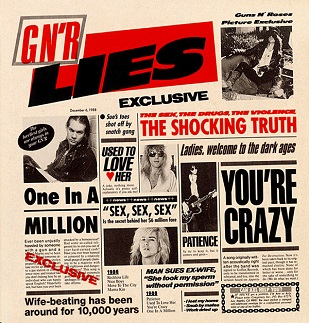
Guns N’ Roses 2: Lies

By the end of 1988, tapes (and CDs) of Geffen catalog number 24148 sold hourly. It seemed every kid and their older siblings had to have Appetite For Destruction—along with Metallica’s …And Justice For All—and the posters, pins, T-shirts, and stickers sold pretty well too. Soon enough, another Geffen catalog number (24198) was flying out of stores alongside its elder brother. GN’R Lies was something of a stopgap, a glorified EP and initially priced accordingly.

The “live” side ran only 13 minutes, and replicated the now-rare Live ?!*@ Like A Suicide EP from 1986, put out while the band was prepping Appetite. These were actually demos spiced up with canned audience noise, but most young listeners were fooled. “Reckless Life” is pretty snotty, as is the cover of Rose Tattoo’s “Nice Boys”. Somebody’s honking a sax on “Move To The City”, which swamps the swagger of this otherwise lame song, but Aerosmith’s “Mama Kin” is a fairly accurate demonstration of their roots. Axl’s profane intro proves he didn’t understand the song’s lyrics.

The second side of all new acoustic-based tracks put them well ahead of not only the Unplugged trend but the competition, proving they really were musically adept. “Patience” is the first surprise, since pretty much nobody was whistling on songs then, and Axl sang most of it straight, saving the yowl until the coda. “Used To Love Her” is a poorly landed joke, but it’s still catchy as heck, somewhat descended from the Stones’ “Dead Flowers”. The revamp of “You’re Crazy” is startling and very successful, slowed down and funky, but still edgy. “One In A Million” is the tune that pissed off everybody with a conscience, as it railed equally against law enforcement, foreigners, and minorities. It’s got more whistling and some fuzz guitar, and the portions of the song that don’t offend—like the backing track and about half of the lyrics—are actually pretty good. Instead, Axl was all about making statements, and the backlash was such that the song was pointedly left off the deluxe expansions of Appetite For Destruction three decades later, though the song remains available. Not for the last time would Axl torpedo any respect the band garnered.

Side two is what makes Lies worth keeping, though the mixed messages in the music as well as all over the tabloid-style cover prevented them from gaining more respect. Yet at this point they pretty much ruled the roost, so much so that every wannabe band made sure to include power ballads on their next albums.

Guns N’ Roses GN’R Lies (1988)—

Tuesday, January 30, 2024

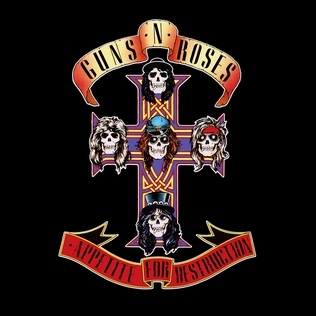
Guns N’ Roses 1: Appetite For Destruction

Maybe it’s because of our age, but the early ‘80s and late ‘80s sometimes seem very far apart from each other in memory. A glance at MTV playlists demonstrates the chasm: the early part of the decade was dominated by new wave until Michael Jackson took over, and the other half was all hip-hop and hair metal. The latter appealed to dirty young men, as all of a sudden cleavage had made a comeback, after years of being hidden under bulky sweaters.

Because MTV’s rotation model relied on oversaturation, those of us who weren’t connoisseurs quickly came to hate most of the hair metal bands, starting with Poison and Bon Jovi, but there was definitely something about those Guns N’ Roses guys. For one, although they had teased hair and tattoos and played loud, it seemed like they were cut more from the Aerosmith cloth than Mötley Crüe or even Van Halen. Their music was more intricate than the usual power chords, and the lead guitarist was skilled but not strictly a pyrotechnic shredder. Going by the non de plume of Slash, it was apt. His top hat and curls made a good counterpart for the banshee of a lead vocalist, who called himself W. Axl Rose, soon to be familiar solely by the singular Axl. The other guitarist, Izzy Stradlin, usually looked like he couldn’t decide if he was Mick or Keith, bass player Duff McKagan resembled a doughier male version of Kelly Bundy, and drummer Steven Adler sat at the back but swung a lot more than he got credit for.

Appetite For Destruction shows much of their musical breadth, beginning with the undeniable swagger of “Welcome To The Jungle”, the first single and soon-to-be inescapable video. After a lot of yowling, Axl works on his lower range for “It’s So Easy”, but storms through the Def Leppard interlude for a profane kiss-off. “Nightrain” loads up the riffs and solos for a toe-tappin’ ode to drinkin’. “Out Ta Get Me” isn’t much more than a riff and a hook to hang F-bombs on, while “Mr. Brownstone” goes out of its way not to glorify smack. Yowza, indeed. While the third one released, “Paradise City” ended up being the first single to come out after the album had already started to sell, and soon became a radio anthem despite or because of its six-plus-minute length.

After a dark Aerosmith-like intro, “My Michelle” is apparently a true story about another lost little L.A. girl, and there’s even more cowbell on the almost sensitive “Think About You”; it’s even got acoustic guitars. But these tentative approaches to love songs have nothing on “Sweet Child O’ Mine”. Constructed as a mini-suite, it’s got (another) one of those classic riffs pinning it, even a bass solo of sorts on the intro, and was helped along by a video that garnered more widespread appeal. The speed-punk “You’re Crazy” ups the energy as well as the attitude, which “Anything Goes” tries to sustain, but is mostly a showcase for Slash’s talk box, until the tempo switch at the end. Finally, “Rocket Queen” is another mini-suite that couldn’t get played on the radio, as the middle section includes audio-verité of actual sexual congress. That said, each of the bookends are solid tunes on their own.

While it took the better part of a year to get noticed, Appetite For Destruction basically ensured that GN’R would be ubiquitous on the radio and TV, as well as in the press for the next three years. While their saga would take various twists and hit new valleys, this is where their legend started, and it remains an impressive debut.

The album was natural candidate for expansion for its 30th anniversary in multiple configurations, and they went all out. The bonus disc in the Deluxe Edition included all of the tracks from the Lies album but one, replaced by an acoustic trial of “Move To The City” and an earlier “Jumpin’ Jack Flash”, but the key addition is “Shadow Of Your Love”, an outtake from the original Live ?!*@ Like A Suicide EP that had been a B-side, but MIA until now. Five songs from the “1986 Sound City Sessions” show the band having the arrangements down, while three live tracks from London—including covers of “Knockin’ On Heaven’s Door” and AC/DC’s “Whole Lotta Rosie”—mop up tracks from out-of-print singles and EPs. Along with a pile of photos, ticket replicas, and even temporary tattoos, the Super Deluxe Edition added two more discs to encompass even more of the Sound City Sessions, including a shrill “Heartbreak Hotel”, an early take of “Back Off Bitch”, a few unfinished sketches, some spirited acoustic takes, and two versions of an epic called “November Rain”. (The piano-based take is just as long as the final product, while the one built around acoustic guitar sounds way too much like “I Don’t Want To Talk About It”.) For those who needed more, the $1000 Locked N’ Loaded Edition added everything on vinyl, plus a cassette of a 1985 demo session hidden amidst reams of even more ephemera.

Guns N’ Roses Appetite For Destruction (1987)—4
2018 Deluxe Edition: same as 1987, plus 18 extra tracks (Super Deluxe Edition adds another 21 tracks plus Blu-ray)