Showing posts with label marshall crenshaw. Show all posts

Tuesday, November 18, 2025

Marshall Crenshaw 14: The EP Collection

Like a lot of artists of his generation, Marshall Crenshaw saw the writing on the wall—or lack of it—in the second decade of the new century, and decided his music would be served best going directly to his fan base. So in 2012, he launched what would become an ongoing series of 10-inch vinyl EPs, crowdsourced and sold via his website. Each consisted of a new song serving as the title track, a cover, and a unique version of something in his catalog, either rerecorded or live.

Six EPs were released over a four-year period, which didn’t suggest prolific creativity, and there’s something of a darkness pervading the new songs. “I Don’t See You Laughing Now” sounds like the vocal’s been AutoTuned, but it’s got one catchy chorus. A highlight is “Stranger And Stranger”, which sports a prominent vibraphone that eventually blends with the rest of the backing. The moody “Driving And Dreaming” is very evocative of a late-night ride; like the rest of the originals, it was written with alt-folkie Dan Bern, with whom he worked on the Walk Hard soundtrack. “Red Wine” is the most developed track, with a full band arrangement and accordion. While it seems to be based on simple if forced rhymes, the undertones of “Move Now” are extremely dark, particularly in the current political situation. “Grab The Next Train” has similar forebodings, but seems to be more focused on a failed relationship.

The remakes weren’t all that radical, but the guy loved making records, so his covers have plenty of feeling. His voice is an improvement on Jeff Lynne’s on the Move’s “No Time”, while still retaining the psychedelic elements, just as “(They Long To Be) Close To You” is straight and sweet, right down to the horn solo. The Coral sitars he adds to James McMurtry’s “Right Here Now” are an unexpected touch, but then his heart is definitely in the ‘60s, as demonstrated by “Never To Be Forgotten” by the Bobby Fuller Four, John Sebastian’s “Didn’t Wanna Have To Do It” for the Lovin’ Spoonful, and “Made My Bed, Gonna Lie In It”, a great hidden gem by the Easybeats.

Once the series was done, much of the music was made available on a wider scale. #392: The EP Collection collected each of the new songs (sequenced in reverse release order) followed by the covers, with bonus tracks: a live version of the Everly Brothers’ “Man With Money” and a demo of “Front Page News”. (At some point, the individual EPs were downloadable from Amazon and iTunes, usually offering another live track, making things even more confusing for completists.)

Ten years later, thanks to a new deal with Yep Roc, he took the opportunity to remix and rerelease the music. This time, From The Hellhole shuffled the contents of the previous version for a more diverse program. However, it dropped “Right Here Now” and the previous bonus tracks, and instead added a 1991 demo of “Walkin’ Around” and covers of Rare Earth’s “I Just Want To Celebrate” and Todd Rundgren’s “Couldn’t I Just Tell You”, a song that was basically made for him. Still, as a summation of the relatively little music he’s been creating, it’s good to have.

Marshall Crenshaw #392: The EP Collection (2015)—3
Marshall Crenshaw
From The Hellhole (2025)—3

Tuesday, June 3, 2025

Marshall Crenshaw 13: Jaggedland

It should be clear that Marshall Crenshaw wasn’t made for whatever times he’s in, but that doesn’t mean he’s out of place. Jaggedland was his first album after a six-year stretch, and an apt title for the guitar sound of this music, which always sounds like it’s being played in a big room.

“Right On Time” mentions Bobby Vinton in the first line, but we should assume his fanbase will get the reference. The edginess turns pensive on the softer, slower “Passing Through”, but things pick up a tad on “Someone Told Me”, with lots of sliding guitars. He overdoes the title of “Stormy River”, but for stupid rock ‘n roll peppered with sound effects, it’s tough to beat “Gasoline Baby”. “Never Coming Down” is full of unexpected chord changes, fittingly matching the portrait he’s painting, and “Long Hard Road” offers a little more hope. Violin and cello color the instrumental and complex title track and the jazzy “Sunday Blues”. The mood finally becomes hopeful on “Just Snap Your Fingers”, and “Eventually” sports some of his classic hooks and harmonies. The pedal steel suggests a lowkey closer, but “Live And Learn” hitches a gallop for its looking back.

The backing as usual is stellar, including Crenshaw regulars Diego Voglino and Greg Leisz, along with Jim Keltner, the MC5’s Wayne Kramer, and percussionist extraordinaire Emil Richards. As had been his wont of late, Jaggedland isn’t a sunny pop album, but it is consistent with his catalog.

Marshall Crenshaw Jaggedland (2009)—3

Tuesday, December 31, 2024

Marshall Crenshaw 12: What’s In The Bag?

Even with the support of such an artist-centric label as Razor & Tie, Marshall Crenshaw wasn’t exactly prolific in the 21st century. The wonderfully titled acoustic live album I’ve Suffered For My Art… Now It’s Your Turn appeared in 2001, and another two years went by before he emerged with What’s In The Bag?

It’s off to a slow start with the lonesome waltz of “Will We Ever?”, followed by the subtle post-9/11 pondering in “Where Home Used To Be”. A straight cover of Prince’s “Take Me With U” features help from Mary Lee’s Corvette and picks up the pace, continued on the mildly galloping “From Now Until Then”. “Despite The Sun” is an elaborate one-man-band instrumental with a mildly cinematic swagger and some surprisingly screaming guitar. And despite its relatively low-key approach, “The Spell Is Broken” is classic Crenshaw.

He also plays most of “A Few Thousand Days Ago”, and he’s gotten either hold of a decent drum machine or just better at playing the real thing. “Long And Complicated” is only half-accurate, alternating between darker verses and sunnier choruses. The album’s other cover is Bootsy Collins’ oft-sampled “I’d Rather Be With You”, and he manages to pull it off, particularly when followed by the seduction of “Alone In A Room”. And “AKA A Big Heavy Hot Dog” is another snappy one-man instrumental with a melody we wish we could place that just ends.

There’s not a lot of jangle on What’s In The Bag?, and while it would be obvious to say he’d gotten older, that shouldn’t suggest he’d slowed down at all. He’s got excellent support from a rotating pool of musicians throughout—especially Greg Leisz on pedal steel—and it’s just as pleasant as anything else he’s done.

Marshall Crenshaw What’s In The Bag? (2003)—3

Friday, May 14, 2021

Marshall Crenshaw 11: This Is Easy

Certain artists have that first album that’s so solid that the idea of a greatest hits album almost seems redundant. The Cars and the Pretenders come to mind, but in Marshall Crenshaw’s case, where his later albums never had the legs of his first, a hits album is an opportunity to show people what they might be missing.

Being the good curators they’d always been, the Rhino label went for the one-two punch, by expanding his stellar debut simultaneously with compiling a best-of. This Is Easy! offered an unbeatable chronological sequence of his finest ear candy. Opening with the early wide-eyed single “Something’s Gonna Happen”, it moves through only four songs from the debut, and includes the “You’re My Favorite Waste Of Time” B-side. Field Day and Downtown each get four songs, and the balance of his studio albums get smaller but choice samples, right up to “Starless Summer Sky” from 1996.

Those two singles are the only real rarities, but since many of the albums had gone out of print by then, This Is Easy! very conveniently revived songs that had been lost to indifference. Some even appeared in their single edits, which guaranteed that the disc was filled to capacity. In fact, Rhino’s double disc The Definitive Pop Collection six years later expanded the program by a mere eight songs, tacking on a few more recent tracks but also adding “Cryin’, Waitin’, Hopin’” from 1987’s La Bamba soundtrack. And for all the different producers and players involved, everything goes together like they were meant to be.

Marshall Crenshaw This Is Easy! The Best Of Marshall Crenshaw (2000)—4

Friday, January 15, 2021

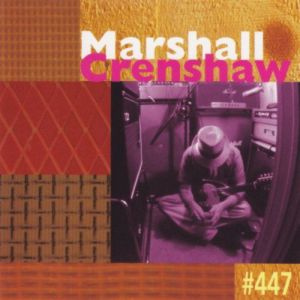
Marshall Crenshaw 10: #447

Even at a time when the major labels were throwing all kinds of money at hit artists, the smaller indies managed to keep their rosters afloat, even when the folks in question weren’t drawing in barrels full of cash. Marshall Crenshaw simply kept doing what he always did—writing and recording, touring on a small scale, repeat.

The drolly titled #447 also delivered what was expected. The now customary “Opening” is a sonic mishmash designed to confuse before the songs proper kick in. “Dime A Dozen Guy”, “Television Light”, and “Glad Goodbye” are all tuneful Crenshaw numbers, melding rockabilly with country and rhumba. But for the Mellotron, “T.M.D.” could have fallen off his first album, as could “Tell Me All About It” and “Right There In Front Of Me”. Guitar instrumentals had become part of his palette by now, and his progress is displayed on the highly picturesque “West Of Bald Knob”, the even jazzier “Eydie’s Tune”, and the closing “You Said What??”, the latter two noted as being from his soundtrack to a PBS documentary on Yogi Berra.

As with Miracle Of Science, #447 has a lo-fi but not amateurish sound, the auteur having mastered the complexities of economy. Save some spare contributions from others, he plays most of the instruments himself. And just as with the 9-Volt Years collection, we get to hear the sound of a man having fun making records. Even if they weren’t calling them that anymore. (Also like Miracle Of Science, the album was remastered two decades later, with a slight rejig that moved “T.M.D.” up to the middle of the program, or the end of side one, and added two recent tracks: the brand new original “Will Of The Wind”, and “Santa Fe”, by former Angry Samoan Gregg Turner.)

Marshall Crenshaw #447 (1999)—3
2022 Shiny-Cool reissue: same as 1999, plus 2 extra tracks

Tuesday, August 11, 2020

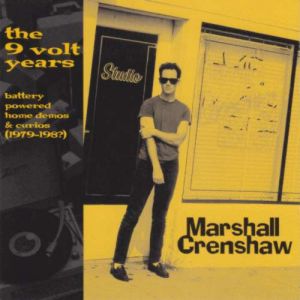
Marshall Crenshaw 9: The 9-Volt Years

We generally like it when artists put out compilations of their demos and works-in-progress, and a record geek and studio-holic like Marshall Crenshaw fits the bill. As the subtitle suggests, The 9-Volt Years: Battery-Powered Demos & Curios (1979-198?) covers a wide period of creativity.

It’s usually a smart move to include familiar tunes on discs like this; “Someday, Someway” and “Rockin’ Around In N.Y.C.” are blueprints for the first album, while “Vague Memory” is a late-‘80s reworking for the better, and “Bruce Is King” is a fascinating instrumental version of what would become “Blues Is King”. “Something’s Gonna Happen” and “You’re My Favorite Waste Of Time” appear very close to the versions originally released as singles, and had been hard to find for several years.

Esoteric covers have dotted his career, represented here by Bo Diddley’s “I’m Sorry” and radio performance of Sam Cooke’s “That’s It, I Quit, I’m Movin’ On”. He’s kind enough to help his brother Bob out with royalties, thanks to the inclusion of the otherwise unknown “She’s Not You” and the wonderful “Everyone’s In Love With You”, for which he credits Burt Bacharach as an influence, but we also hear Todd Rundgren. “Bad Luck” is collaboration with Was (Not Was), enhanced here by some subtle yet hilarious sound effects, while “Stay Fabulous” is a simple instrumental designed to stay that way. “Run Back To You” fits with the sunny power pop of the debut, though “First Love” would have been fine for a made-for-TV movie on the very subject. For some reason he includes a nine-second snippet called “…The Thrill Of The Fight…”, which allegedly illustrates a fistfight in the crowd at the end of a gig, not that we could tell if the liner notes hadn’t told us.

Much like Pete Townshend’s Scoop compilations, The 9-Volt Years likely represents a small fraction of the cassettes and other media Marshall Crenshaw has piled up over the years. Wisely, his self-deprecating nature keeps it from being a complete ego trip.

Marshall Crenshaw The 9-Volt Years: Battery-Powered Demos & Curios (1979-198?) (1998)—3

Friday, April 24, 2020

Marshall Crenshaw 8: Miracle Of Science

Having sprung for the mild teaser of a live set, Marshall Crenshaw’s new label went all out to make his new album something to remember. This being the days of non-vinyl, the jewel cases of Miracle Of Science were treated with a glitter-effect hologram, while the liner itself was presented origami-style with multiple creases and miniscule credits. Meanwhile, he made the most of his deal by eschewing big studios and recording most of the album himself.

Of course, packaging is moot if the album doesn’t stick, and this one does. Following an indexed soundbite from an obscure Sammy Petrillo/Duke Mitchell movie, “What Do You Dream Of?” hits the ear candy jackpot, and the album hardly lets up from there, from the haunting “Laughter” and “Only An Hour Ago” through “Seven Miles An Hour” and the extended quasi-surf instrumental “Theme From ‘Flaregun’”. Our favorite by far is “Starless Summer Sky”, which dates back to his pre-professional years.

The originals are mixed with covers with only the barest misstep, “The ‘In’ Crowd” sounding the most like an indulgent afternoon spent overdubbing. Research tells us that “Wondrous Place” was an old Billy Fury tune; “Who Stole That Train” is an old rockabilly number that also sounds just like him, just as Grant Hart’s “Twenty-Five Forty-One” fits like a glove.

After being unavailable for too long, Marshall made Miracle Of Science the first of a projected series of reissues on his own Shiny-Tone label. The packaging was more straightforward, but he did rejig the sequence somewhat and give a few songs a fresh mix. Besides adding two brand new obscure covers, “Seven Miles An Hour” becomes a bonus track itself, as he now chose to end the album proper with the song played backwards. Beyond that, the album is still a winner, and welcome back.

Marshall Crenshaw Miracle Of Science (1996)—
2020 Shiny-Cool reissue: same as 1996, plus 3 extra tracks

Tuesday, January 7, 2020

Marshall Crenshaw 7: My Truck Is My Home

The Razor & Tie label was started in the mid-‘90s by a couple of ex-corporate lawyers who were determined to perpetuate the careers of some of their favorite performers whom they felt had unjustly fallen by the wayside in the modern music scene—Little Steven, Gary U.S. Bonds, Willie Nile, and so forth. After reissuing various albums and compilations, they set to signing established acts. Marshall Crenshaw was a perfect choice.

To buy some time and bring in some cash before a new studio album, a live set winkingly titled My Truck Is My Home presented a smattering of recordings of varying vintage and quality to present something of a snapshot of a typical Crenshaw show. As is made clear, his shows were anything but typical. Just as his own albums had veered into other people’s material, here he tackles tunes by the Byrds, the MC5, and even ABBA alongside his own concise compositions, including songs from the debut and the stellar “You’re My Favorite Waste Of Time”. The settings range from amplified acoustic to full band, and it all sounds like him. It’s also a nice primer for anyone who only knows the man from “Someday, Someway” and “Whenever You’re On My Mind”.

Marshall Crenshaw Live… My Truck Is My Home (1994)—3

Tuesday, October 23, 2018

Marshall Crenshaw 6: Life’s Too Short

After too many years of public apathy and corporate indifference, Marshall Crenshaw surfaced on a new label with his best album since his debut, and hardly anyone noticed. Part of the battle Life’s Too Short faced was the times; well-constructed rock ‘n roll just wasn’t selling in 1991. Also, it came out on a tiny subsidiary of MCA, which was too busy with the money Geffen was raking in to promote it. (We’ll give him a pass on the mullet, since it was 1991.)

Those who did dive in were rewarded immediately; “Better Back Off” rises above the Stones quote, and the album barely lets up from there, one solid track after another. “Fantastic Planet Of Love” is borderline silly, with effects that could even pass for spacey, but a catchy tune always wins. Just to show he’s not completely in his own world, a cover of “Face Of Fashion” by New Zealand punk icon Chris Knox gets a nice grungy reading. The only slow songs don’t show up until the middle of side two; “Starting Tomorrow” has a near doo-wop vibe, while “Somewhere Down The Line” goes a little long but has sweet harmonies from Rosie Flores. “Everything’s The Truth”, written with Jules Shear, sits in between for a terrific bash.

Ed Stasium, fresh off Living Colour and the Smithereens, produced, with a solid combo anchored by Fernando Saunders and Kenny Aronoff. (The one track with another rhythm section, “Stop Doing That”, also includes contributions from TV’s Paul Shaffer, and fits seamlessly with the rest of the album.) We’ll go ahead and state the obvious: Life’s Too Short to miss out on this album.

Marshall Crenshaw Life’s Too Short (1991)—

Tuesday, February 13, 2018

Marshall Crenshaw 5: Good Evening

Somehow, on his fifth album, Marshall Crenshaw seemed a little confused. Good Evening sounds a lot like him, but several of the songs are written by or with other people, and the overall sound—even for the late ‘80s—is a little confused, mixing country with contemporary touches, and not always well.

It’s always good to start with your single, and “You Should’ve Been There” has enough mystery, as well as some trademark hooks, to catch one’s ear. But with its speedy rhymes and strange details, “Valerie” is a Richard Thompson gem that just sounds odd coming out of Marshall’s mouth. “She Hates To Go Home” begins with truly awful keyboards, but manages to put together a catchy tune and a wholly out of place acoustic guitar solo. “Someplace Where Love Can’t Find Me” comes from the pen of John Hiatt, and while it’s no “Thing Called Love”, it’s worthy of further covers. A quirky tribute to a deejay, “Radio Girl” was written with the two main BoDeans, but still sounds like a demo.

“On The Run” is fairly ordinary, but increases in stature after one hears what comes next. “Live It Up” takes the funky Isley Brothers tune into quirky Alex Chilton territory, but that’s nothing compared to “Some Hearts”, from schlockmeister Diane Warren, complete with sawing fiddle. (Yes, that Diane Warren, and yes, that Carrie Underwood song.) The twang continues on “Whatever Way The Wind Blows”, which gets kinda generic, but he goes back to his more obvious roots on Bobby Fuller’s “Let Her Dance”, which still goes on longer than it should.

You want to like the guy, and Good Evening is hardly a bad album; it’s simply not very exciting. Even loaded with hired guns like Sonny Landreth, David Lindley, and James Burton, he can’t figure out what kind of album wants to make. It’s not country enough for country, but has too much of that to make it as a rock album. Shame on us for profiling, but that’s what happen when you establish a brand.

Marshall Crenshaw Good Evening (1989)—

Friday, April 28, 2017

Marshall Crenshaw 4: Mary Jean & 9 Others

In 1987, it wasn’t enough to write catchy songs and record them well. John Mellencamp had the “heartland sound” pretty much sown up, hair metal was creeping in, and record buyers were fairly selective in their nostalgia. One of the bigger movie hits that summer was the Richie Valens biopic La Bamba, which brought Los Lobos their biggest hit. Meanwhile, in the same film, Marshall Crenshaw played the role of Buddy Holly, which translated to little public interest in his fourth album, in shops around the same time.

Mary Jean & 9 Others is a suitably retro title, but makes the mistake of not putting the actual name of the potential hit single in the title. Still, This Is Easy & 9 Others mightn’t have grabbed many eyes on the shelf either, given the poorly lit photo on the cover, which depicts Marshall with brother Bob (back on drums) and the high-stacked hair of Graham Maby, on loan from Joe Jackson’s band. “This Is Easy” remains a great tune, and would eventually be used as the title of a turn-of-the-century best-of.

Given that fantastic start, much of the album follows his established template of catchy melodies, simple chords (save the occasional major-seventh), rockabilly rhythms and hooky choruses. One unfortunate sidestep is “This Street”, with its processed guitars and electronic drums, sounding much like a demo. He was no slouch at recording demos, but this one simply doesn’t fit the sound of the album. “They Never Will Know”, which closes the set, is more of a slow dance, but not too slow.

“Calling Out For Love (At Crying Time)” and “Somebody’s Crying” may have a word in common, but are both standouts. The closest thing what could be called the album’s title track is certainly toe-tappin’, but pales slightly in comparison to “For Her Love” (which it closely resembles structure-wise) from his second album. In the tradition of obscure covers, this album’s contribution is a subtly rocking “Steel Strings”, from former Plimsoul Peter Case’s critically acclaimed solo debut the year before.

That track tops five minutes, and most of the songs on Mary Jean & 9 Others are over four; perhaps with only ten songs in his arsenal he was hesitant to shorten them, lest the album seem too short. In an alternate universe, his version of “Cryin’, Waitin’, Hopin’” from the La Bamba soundtrack might have joined the other “Crying” songs to entice consumers, but we should hope that in any alternate universe, he’s sold more records than he has in this one.

Marshall Crenshaw Mary Jean & 9 Others (1987)—3

Tuesday, June 14, 2016

Marshall Crenshaw 3: Downtown

Here’s another perfectly harmless album that was ignored upon release. Only three years on from his debut, Marshall Crenshaw hitched his wagon to T-Bone Burnett, then gaining ground as a producer. Even the players are different on Downtown, dominated by such Burnett go-tos as Rick Marotta, Mickey Curry, David Miner and Mitchell Froom, plus Tony Levin on a lot of bass, Mitch Easter and Faye Hunter from Let’s Active on one track and even the rhythm section from NRBQ on another.

These days the sound could be considered Americana; back then it was retro-rockabilly, completely out of step with everything that sold in 1985. Even the covers were off-beat—one namechecks Brenda Lee, while the other was first recorded by Gene Vincent. His own tunes are carved from similar wood, “Little Wild One”, “Yvonne” and “(We’re Gonna) Shake Up Their Minds” all galloping along gamely. “Blues Is King” is a welcome departure from that sound, produced in tandem with Mitch Easter, following several esoteric chords with a yearning melody. The electric sitar that dominates “Terrifying Love” would become a stock sound in both Burnett and Froom playbooks. Each side ends with a country-style lament, and both “Like A Vague Memory” and “Lesson Number One” are superior to “The Distance Between”, another tune in the same vein.

Overall, Downtown seems kinda down, and again, nobody bought it despite its few reviews, most of which were positive. He just wasn’t made for those times.

Marshall Crenshaw Downtown (1985)—3

Tuesday, February 2, 2016

Marshall Crenshaw 2: Field Day

His first album being such a fresh kick, there was a lot of pressure for Marshall Crenshaw’s follow-up. Field Day keeps most of the recipe without being a carbon copy.

Smart students of rock ‘n roll know you’re supposed to start the album with the lead single, and that’s why “Whenever You’re On My Mind” is such a great opener. There’s the opening riff, which is vocalized in the verses and along with the solo, and the classic chorus. “Our Town” and “One More Reason” gallop along, though the words get a little lost in Steve Lillywhite’s boomy production. (Then again, the engineer was Scott Litt, just a few years away from dealing with Michael Stipe’s mumbling for R.E.M.) “Try” doesn’t really sink in, but pay attention to the litany of impossible tasks he’ll undergo for “One Day With You”.

Remember how great the first side began? Side two does the same with “For Her Love”, with another infectious riff and a tasty lick that forms both the middle eight and the coda. “Monday Morning Rock” is a mildly salacious sentiment from such a clean-cut kid, someone we associate more with the lovelorn fella in “All I Know Right Now”. While it’s no “Soldier Of Love”, “What Time Is It?” revives a little-known early-‘60s doo-wop side via a nice baritone guitar. And somehow the processed drum echoes at the end of “Hold It” provide a nice conclusion.

One doubts that the artiste would ever strip some of the echo from Field Day given the chance—there is something of a precedent for that, of course—given that he’s repeatedly defended Lillywhite’s work. In fact, three of the album’s songs were released on a British EP called U.S. Remix against his wishes. These were included in a 2019 vinyl-only reissue that altered the original cover art which he always hated. When he got the rights back, his expanded version included only the live version of “Little Sister” from that EP, a B-side cover of “Jungle Rock”, and four session outtakes. (He also changed the cover again.) At any rate, the songs are still pretty good, and at least he didn’t take a complete dive on his sophomore effort.

Marshall Crenshaw Field Day (1983)—3
2023 40th Anniversary Expanded Edition: same as 1982, plus 6 extra tracks

Tuesday, May 26, 2015

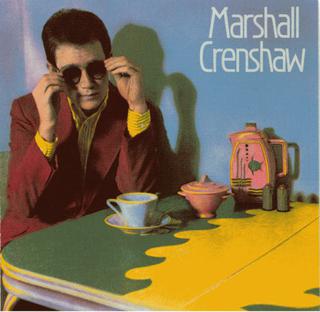
Marshall Crenshaw 1: Marshall Crenshaw

The most successful musician to come out of Beatlemania, if not the nicest, Marshall Crenshaw is not quite a household name these days. But if you listened to the right radio stations in 1982, you would have heard several tracks from his eponymous debut. Indeed, Marshall Crenshaw is chock full of catchy, pop love songs. The songs are tight, loaded with melody and most even coming in under the two-minute-fifty mark.

Any of these songs could have been top 40 singles, but only “Someday, Someway” managed that feat. Its Stratocaster twang and the singer’s glasses brought inevitable comparisons to Buddy Holly, not for the last time. “The Usual Thing” is Sun rockabilly, plain and simple, while the cover of Arthur Alexander’s “Soldier Of Love” replicates the Beatles’ BBC arrangement perfectly. “Cynical Girl” and “Mary Anne” are just terrific songs not enough people know. “Rockin’ Around In N.Y.C.” and “She Can’t Dance” also court rockabilly without being retro, and the production gives a modern sheen to the basic tracks, making the trio sound bigger than they are, particularly on “There She Goes Again” and “Girls…” (The art deco graphics give the decade away too.)

Rhino lovingly reissued the album with a pile of bonus tracks, including his first single, “Something’s Gonna Happen”, B-sides (like his one-man-band gem “You’re My Favorite Waste Of Time”), live tracks and demos. Sadly, that’s been out of print for years, and when he got the rights back to the album, he took it to the Yep Roc label, updated the cover and added different bonuses, save the two extras named above. But we should be grateful that it’s available at all, so go get it.

Marshall Crenshaw Marshall Crenshaw (1982)—4
2000 expanded CD: same as 1982, plus 9 extra tracks
2022 40th Anniversary Expanded Edition: same as 1982, plus 7 extra tracks