Showing posts with label bryan ferry. Show all posts

Tuesday, March 12, 2024

Bryan Ferry 9: Mamouna

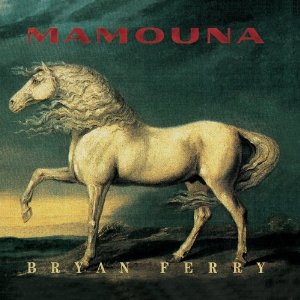
As it turns out, writer’s block had kept Bryan Ferry from releasing a new album for so long, and only Taxi was able to break it. Working with Robin Trower must have helped too, as he’s credited as co-producer on Mamouna as well. The rhythm section was generally Nathan East and Steve Ferrone, then on loan from Eric Clapton. Even more interesting is the occasional presence of Brian Eno, who had legendarily fallen out with Ferry in the early days of Roxy Music.

Not much has changed since the last time, as “Don’t Want To Know” burbles with the same grooves that have dominated his work over the previous ten years. But for some street noise, “N.Y.C.” is straight-ahead Nile Rodgers funk with Maceo Parker guesting on sax. “Your Painted Smile” and “The Only Face” get the mix of mood and melody right, but in between, the title track follows on “To Turn You On” without the emotion.

“The 39 Steps” is just another groove with occasional soundbites that have us wondering what the song has to do with the film (any version). The heartbreak comes through big time on “Which Way To Turn”, but it’s the insistent “Wildcat Days” that really stands out, being co-written with Eno and also featuring Andy Mackay on sax somewhere in the mix. (He’s also credited on the mildly swampy “Gemini Moon”.) On “Chain Reaction”, he finally remembered how to write a song instead of just riding a groove, and the female vocals here are very effective.

Too much of Mamouna sounds the same, and like more of the same. But longtime fans seeking more of the same will be very pleased with it. There is definitely a flow, but if there’s any kind of story here, it’s buried.

As the album approached its 30th anniversary, an expanded package included not only the original shelved version of the album, which was to be titled Horoscope, but a third disc of “Sketches”, providing a first-ever glimpse into his creative process. Now it’s hard to hear what was wrong with Horoscope, as “Where Do We Go From Here” (the template for “The 39 Steps”) crackles with more menace, “The Only Face” is more direct, and “Desdemona” is just as solid without Maceo or Nile. “S&M (Midnight Train)” and “Loop De Li” would eventually emerge twenty years later on another album; here they provide a welcome lift (the former more than the latter, but still). “Gemini Moon” is less processed than the final version. “Raga” breaks out of the monotonic backing with some intriguing touches, but it was likely the tepid ten-minute overhaul of “Mother Of Pearl” that gave executives pause. (This was eventually used for a movie soundtrack.)

Most of the “Sketches” are instrumental—some dating back to 1989—which helps provide some musical contexts amid the finished grooves. “Robot” is a generic Ferry-by-numbers idea that matches its title for six minutes, while “Horoscope” itself has some interesting textures but with a woman’s spoken voice too high in the mix. “Your Painted Smile” and “The Only Face” each appear in strikingly intimate piano-and-vocal renditions that have us wishing he’d do more albums with performances just like them.

Bryan Ferry Mamouna (1994)—
2023 Deluxe Reissue: same as 1994, plus 18 extra tracks

Friday, October 27, 2023

Bryan Ferry 8: Taxi

An atypical break from the business for Bryan Ferry ended in 1993 with the release of Taxi, an album of… covers, just like his solo career started. (The album is dedicated to his mother, who died two years earlier; maybe that’s what’d kept him busy since his last album.) It was co-produced by Robin Trower, who contributes guitar effects to every track, as do the familiar Neil Hubbard and even ambient pioneer Michael Brook. Other session cats include Steve Ferrone, Nathan East, and Greg Phillinganes. All together it’s much less campy than his first solo albums, sounding instead like it’s coming from another planet.

That spacey approach oddly sets up “I Put A Spell On You”, which doesn’t sound like Creedence or Nina Simone, and certainly not like Screamin’ Jay Hawkins. Listen closely and you might hear Maceo Parker. Classic ‘60s R&B is touched by “Will You Love Me Tomorrow”, “Just One Look”, and “Rescue Me”, the latter two nearly unrecognizable. “Answer Me”, which he either heard from Frankie Laine or Nat King Cole, gets a groove treatment, as does “All Tomorrow’s Parties”, but still suitably dirgey. “Girl Of My Best Friend” was UK hit for Elvis, but not for Bryan. “Amazing Grace” comes closest to his double-take inducing choices of the ‘70s, though it’s still pretty straightforward, using David Sancious’ gospel-flavored organ, while the “title track” is far away from the silky soul of the original. (He does use the whistle, however.) Finally, “Because You’re Mine” is credited as his own, but it’s mostly an atmospheric throwback to the first track.

When the rhythm is there, Taxi follows on from his seductive ‘80s work, and sports grainy, moody Anton Corbjin photos aplenty. There are worse ways to kill time.

Bryan Ferry Taxi (1993)—3

Tuesday, May 2, 2023

Bryan Ferry 7: Bête Noire

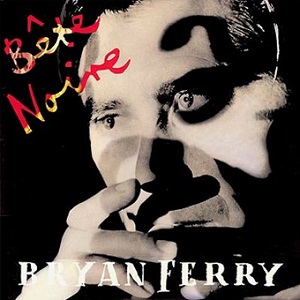
Seeing as he still had some traction on the charts, Bryan Ferry kept his solo career going in the latter half of the ‘80s. Bête Noire is more of the post-Avalon template, but even with Madonna’s producer Patrick Leonard on board, it’s mostly more of the same. Seven guitarists are credited, along with three bassists, three drummers, percussion, saxes, and backing vocals, all combined into a generic, sterile program.

The three singles are still the best tracks. “Limbo” leads off well, and “Kiss And Tell” uses the clever pun of a typewriter to inspire the beat. “The Right Stuff” got most of the attention, being based on a Smiths instrumental and featuring Johnny Marr himself on guitar.

Beyond that, these are danceable grooves with barely discernable lyrics, and that’s really it. We could swear he sings “open your heart” in the choruses of “Day For Night”, which should please anyone who already wore out their cassettes of True Blue. “Zamba” closes the first half moodily for an okay change of pace, and “The Name Of The Game” has a decent chorus (with shades of “Live To Tell”) but “Seven Deadly Sins” begins with that canned chime common to so many Taco Bell commercials.

There was a time when “style over substance” wouldn’t be an insult for the voice and face of Roxy Music, but Bête Noire misses the mark. He must have known it, as five years would pass until his next album. (The album did have its fans, who would have been delighted when almost four decades later a deluxe edition added a bonus disc with multiple dance remixes of the three singles, plus an instrumental of the title track.)

Bryan Ferry Bête Noire (1987)—
2025 Deluxe Edition: same as 1987, plus 12 extra tracks

Friday, November 25, 2022

Roxy Music 11: Street Life

Whenever a band splits up, you can usually expect some kind of compilation or other contractual release in short time. Back in 1983, Roxy Music’s old American label put out The Atlantic Years 1973-1980, heavy on Manifesto and Flesh + Blood, adding only “Love Is The Drug” and “Do The Strand” from before the hiatus, with a fetching model’s face on the cover.

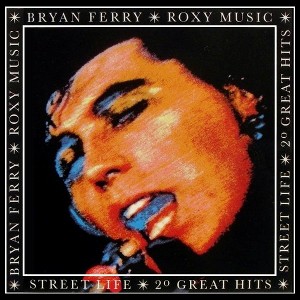
While it has its charms, they band deserved a more comprehensive career overview, and they got one. Not released in North America until 1989, once the catalog had been collected under the Warner Bros. umbrella, Street Life does a yeoman’s job of not only pulling together Roxy’s best, but including six Bryan Ferry solo tracks for context. The cover boasted “20 Great Hits”, which filled up the compact disc’s mid-‘80s capacity of 74 minutes, which made for short LP sides.

Right away there’s left turn, as the pounding glam of “Virginia Plain” is nudged aside by Ferry’s inane interpretation of “A Hard Rain’s A-Gonna Fall”. The obscure “Pyjamarama” single appears in a remix before “Do The Strand” and back to Bryan for “These Foolish Things”. “Street Life” and “Love Is The Drug” fight for space among two more Ferry cover attempts and the superior “Sign Of The Times”. Five terrific choices from Manifesto and Flesh + Blood are very welcome, but they also include the hideous “In The Midnight Hour”. “More Than This” and “Avalon” help to complete the story, with “Slave To Love” slotted in before their reverent cover of “Jealous Guy”.

For the beginner, Street Life was a good way to dip into the Roxy world, with the caveat that Ferry was in the lounge. A later set called More Than This was evenly split between the band and Ferry solo, with some selections jettisoned in favor of newer songs. A proper best-of Roxy, with nothing but Roxy in reverse chronological order, appeared in the new century and did the trick.

Bryan Ferry/Roxy Music Street Life—20 Great Hits (1986)—
Roxy Music
The Best Of Roxy Music (2001)—4

Tuesday, July 5, 2022

Bryan Ferry 6: Boys And Girls

The template set by Avalon served Bryan Ferry very well following the second dissolution of Roxy Music. Boys And Girls not only continues the trend towards original material, just like his more recent solo albums, but it includes many of the same hired-guns involved with Roxy at the end—Andy Newmark, Neil Hubbard, Alan Spenner, and more. Several guitarists of name pop up throughout the album, and David Sanborn is the only saxophonist credited. Neither Phil Manzanera nor Andy Mackay appear in the laundry list of contributors.

In many ways, the album is Avalon II: The Sequel. “Sensation” works the template, with one guitar playing a staccato two-note riff over a disco thump, but just when you think it’s going to be ordinary, “Slave To Love” bursts forth. The deceptive intro is in one key, and the song itself moves to the standard I-vi-IV-V with a pretty melody on top. When the intro returns for the solo, it’s a perfect transition. Simple but infectious. “Don’t Stop The Dance” returns to the moody template. Ferry’s ever known to be deep, but he does make the astute observation that “beauty should be deeper than skin”, and who can argue? “A Waste Land” isn’t much more than an impressionistic link, filling the “India” slot on Avalon, going right into “Windswept”, which shares some musical similarities to “While My Heart Is Still Beating”.

Flip over to side two and “The Chosen One” burbles into place, sounding just like “The Main Thing”. “Valentine” breaks from the template with something of a Mideastern reggae feel; this time the guitarist would either be Mark Knopfler or someone doing an uncanny impression. “Stone Woman” picks up the tempo noticeably, though it’s not much more than a dance groove. The title tracks provides a slow-burning finale, automated and real drums beating to the end.

Like most sequels, Boys And Girls doesn’t so much continue the story as retell it, and that’s fine if you’re looking for more of the same. The days when Bryan Ferry was a trendsetter were long past, and now he was just making records and counting the money. He could still blend vocals to make one’s ears prick up.

Bryan Ferry Boys And Girls (1985)—3

Tuesday, December 22, 2020

Bryan Ferry 5: The Bride Stripped Bare

The post-breakup album looms large in rock ‘n roll, wherein an artist pours his or her soul into music to exorcize any demons that come with losing the one thing money and fame can’t buy. Bryan Ferry was said to have been so bereft after being jilted by Jerry Hall for Mick Jagger that The Bride Stripped Bare was the inspired result.

Except for the barest disco influence, and a reduction of camp, the album fits alongside his previous albums, with and without Roxy Music. This is particularly surprising considering that two of the key elements among the players are American—Waddy Wachtel on lead guitar and Jerry Marrotta on drums.

He’s still determined to bend covers to his will, as demonstrated by the de-funked “Hold On (I’m Coming)”, “That’s How Strong My Love Is”, and “Take Me To The River” (a year before Talking Heads). J.J. Cale’s “The Same Old Blues” is slowed down and swampier, though the Velvet Underground’s “What Goes On” is an inspired choice, Waddy even replicating some of Lou Reed’s solos from the original. His rendition of the traditional “Carrickfergus” seems restrained to these ears; we’ve come to expect more passion.

His originals stand out, from the opening “Sign Of The Times” through the infectious “Can’t Let Go”. One striking departure is “When She Walks In The Room”, wherein the strings go smoothly from chamber music to contemporary, just as “This Island Earth” provides a suitably spacey conclusion.

Of his solo albums thus far, The Bride Stripped Bare is probably the most consistent, despite its apparent randomness. It’s no Blood On The Tracks, but who’d expect that?

Bryan Ferry The Bride Stripped Bare (1978)—3

Tuesday, September 8, 2020

Bryan Ferry 4: In Your Mind

Seemingly freed from the shackles of Roxy Music, Bryan Ferry’s next solo album found him… writing original songs and recording them with various members of the band. There’s not a single wacky cover tune on In Your Mind, nor is there a single trace of camp or irony.

“This Is Tomorrow” is a fairly ordinary track, except for the instrumental bridges that hit other chords, while “All Night Operator” is proto-pub rock. “One Kiss” fades out on a drum pattern much like that which opens Bowie’s “Five Years”. With its prominent electric piano, “Love Me Madly Again” recalls the dirty skank of “Editions Of You”. It’s also the longest track, at over seven minutes. “Tokyo Joe” continues the vibe, though the “Oriental” touches in the strings are little overdone. “Party Doll” keeps up the dancing beat, and it’s not until “Rock Of Ages” that some transitory ambience, but even that gives way to another upbeat track. The title tracks provides a similar tease.

Except for the wall of saxophones—not provided by Andy Mackay, by the way—In Your Mind might as well be a Roxy Music album, following as well as it does from the more mainstream track they’d started to find. While it’s fairly ordinary, without a lot of variety, it’s also harmless.

Bryan Ferry In Your Mind (1977)—3

Friday, May 29, 2020

Bryan Ferry 3: Let’s Stick Together

While Roxy Music was on hold, Bryan Ferry didn’t waste the opportunity to do a summing-up of his own. Let’s Stick Together fit with his existing solo brand of Roxy-fied covers, but this time collected various strays that had been already issued as B-sides or EPs. The other difference was that half of the album consisted of re-recorded Roxy tracks, mostly from the first album. “Casanova” is transformed into a slinky strut, while “Sea Breezes” tempers the creep factor somewhat. “2HB” and “Chance Meeting” might as well be the same recordings, but unfortunately, “Re-Make/Re-Model” is drained of its charm, losing the solo sections but retaining the slowdown.

The balance of the album shows he’s getting the hang of putting his own stamp on covers. The “title track” is dominated by a saxophone honking one note throughout—just like the harmonica on Wilbert Harrison’s original, but not as charmingly. “Shame, Shame, Shame” is nice and trashy, the Beatles’ “It’s Only Love” is completely transformed into something else entirely, and the old chestnut “You Go To My Head” becomes pure Philly soul. “The Price Of Love” was a latter-day Everly Brothers hit; just chop off the mariachi trumpet at the start for best effect. Finally, “Heart On My Sleeve” was actually a current song, courtesy of the Gallagher and Lyle songwriting team.

Having been cobbled from various sources, Let’s Stick Together actually works as an album, with enough variety to keep him from having to sustain a theme. The alternate takes on Roxy tunes remain curiosities, in all senses of the word.

Bryan Ferry Let’s Stick Together (1976)—3

Tuesday, September 24, 2019

Bryan Ferry 2: Another Time, Another Place

Just bursting with the need to express himself, Bryan Ferry found time in between Roxy Music albums to record another collection of covers, this time leaning on country music, R&B, and even standards. The tuxedo shot on the cover is at odds with the musical content, just like last time.

And just like last time, the results as heard on Another Time, Another Place are mixed. The beginning of “The ‘In’ Crowd” predicts another hit song down the road, but in this context it sounds like a typical Roxy tune, which is fine. From there, the arrangements vary from song to song. After a winking first verse, he tramples through “Funny How Time Slips Away” and turns “You Are My Sunshine” into a New Orleans funeral. “(What A) Wonderful World” is the Sam Cooke tune, not the one made famous by Louis Armstrong, turned into a calypso cha-cha. His take on “It Ain’t Me Babe” isn’t as horrifying as what he did to “A Hard Rain’s A-Gonna Fall”, but it’s not much better. “Fingerpoppin’” is possibly the least-known track here—at least it is to us—and interchangeable with “Barefootin’” and tunes of that ilk. “Help Me Make It Through The Night” survives a very misplaced key change, but the best is truly saved for last. The title track is a Ferry original, and easily as good as any Roxy tune.

Musically, Another Time, Another Place is fine, provided you have little familiarity with the originals and don’t listen too closely to the words. If anything, it’s a snapshot of a time when labels were willing to put out anything their artists recorded.

Bryan Ferry Another Time, Another Place (1974)—

Tuesday, June 18, 2019

Bryan Ferry 1: These Foolish Things

Apparently Roxy Music wasn’t broad enough to contain all of Bryan Ferry’s creativity, so first chance he got, he did a solo album. Yet while the cover shot of These Foolish Things presents him as almost contemporary, the cover songs that make up the album itself come off as a broad parody a la the lounge lizard in all his previous photos, as befits a man with a truly twisted idea of scintillating cocktail music.

Yes, these are cover songs, played straight without any wacky effects or funny sounding instruments—unless you count Eddie Jobson’s electric violin. It’s just his croon, backed up by some very enthusiastic women. He runs roughshod through the Top 40 songbooks of the ’50s and ‘60s, touching on everyone from Lieber & Stoller to Goffin & King, Lennon/McCartney to Jagger/Richards, Brian Wilson to Motown. Dylan’s “A Hard Rain’s A-Gonna Fall” is removed from post-nuclear nightmare into a near-clone of “Virginia Plain”. “Don’t Worry Baby” retains the same “Be My Baby” beat as the Beach Boys original, just as “Sympathy For The Devil” doesn’t deviate from the Charlie Watts tattoo. “You Won’t See Me” opens with a busy signal that thankfully doesn’t carry through the entire track. The title track, which dates back to the ‘30s, closes the set with just enough kitsch to fit onto an actual Roxy album.

We suppose that the repertoire presented on These Foolish Things is supposed to be ironic along the lines of Warhol’s soup cans, particularly when he tackles songs usually associated with female singers (“Piece Of My Heart”, “It’s My Party”, “I Love How You Love Me”). Obviously he’s enjoying himself, or he wouldn’t waste his time, much less the listener’s. But truly great covers transcend their originals, and these don’t.

Bryan Ferry These Foolish Things (1973)—2