Showing posts with label 1996. Show all posts

Friday, August 21, 2026

Kinks 35: To The Bone

Even if the Kinks had become something of an oldies act, their following was still fervent. So when they finished their most recent tour, they invited fans to their own Konk Studio for a special performance. A selection of songs were augmented by some recordings from larger venues for To The Bone, released in the UK on their own Konk label and an enjoyable live album.

Two years later, the album was expanded to the point where two CDs were required to hold it all. Even with that, “Waterloo Sunset” and “Autumn Almanac” from the original UK release were not included. The American release was on a label already devoted to legacy artists, and came partially thanks to the success of VH-1’s Storytellers show, which was inaugurated by Ray Davies and based on the format of his recent solo tour. (Indeed, an album of readings from his memoir and performances of pertinent songs would be released under his own name as The Storyteller.)

After the opening blast of “All Day And All Of The Night”, the program goes to the more stripped down approach, with acoustic guitars, occasional accordion, and only Dave Davies’ electric for bite. They’re clearly enjoying themselves, and so is the crowd, who can occasionally be heard singing along. Most of the songs come from the mid-‘60s through earliest ‘70s, though we do hear more recent hits like “Better Things”, “Don’t Forget To Dance”, and “Come Dancing”. “Do It Again” is started by Ray solo, and we’re given the impression that the band was late to the stage, which is why there’s a strange interlude before they come in. “Do You Remember Walter” is given a “Bavarian” treatment thanks to the accordion and slower tempo, but they wisely go back to album tempo for the last verse. The bulk of the second disc is from the larger shows, and are therefore a lot louder. “Give The People What They Want” and “Gallon Of Gas” are unnecessary, particularly in the absence of the aforementioned missing tracks.

They also took the opportunity of the expansion to include two pretty good new songs, both reflections of past relationships. “Animal” wistfully compares highs and lows over a familiar crunchy three-chord riff (with key changes well placed), and the title track is a unique take on the idea of records evoking memories of romance and vice versa. If they’re truly the band’s last songs, they’re a strong finish.

The Kinks To The Bone (1996)—

Friday, July 3, 2026

Frank Zappa 58: Läther

As we’ve learned from the various reissues and forensic work done by scholars, Frank Zappa loved to edit and re-edit. One prime legendary example was the saga of Läther. Pronounced “leather”, this was a four-record (eight vinyl sides) box set that Frank said he delivered as a complete unit to the label, only for them to reject it, whereupon he re-sequenced them into the albums released as Zappa In New York, Studio Tan, Sleep Dirt, and Orchestral Favorites. In actuality, he delivered those four albums in one batch, but the label didn’t want to shell out for all of them, whereupon he then converted them into the box format for another label, which was also quashed. In the end, the four albums were released individually over the space of a year or so, and well after the tracks were originally recorded.

The legend of Läther persisted for a couple of decades for a number of reasons. For one, at the height of the dispute, Frank appeared on an LA radio station and played the whole thing, resulting in various bootlegged copies that circulated. But fanatics soon discovered that while most of the songs did appear on those official albums, many of the mixes and edits were different, there was music that was exclusive to the box, and a Lumpy Gravy-style conversation, mostly between bass player Patrick O’Hearn and drummer Terry Bozzio, along with other percussive blasts from the past, appeared between tracks as “grout”, which was also heard throughout Sheik Yerbouti and other later albums.

So it was a nice surprise when the estate officially released the album as a three-CD through their arrangement with Rykodisc two decades after it was first mooted. And while it’s a lot for anyone to ingest, it’s still a better way to hear the music than as they appeared on those four albums, even though those had material that was not on Läther. Confused yet?

A snippet of the “leather conversation” heralds “Regyptian Strut” in its original mix, not with the replaced drums from the Sleep Dirt CD, for a great start. “Naval Aviation In Art?” provides a nice interlude before an earlier version of “A Little Green Rosetta”, which is just Frank singing the familiar melody over a tack piano, switching sharply to the guitar solo one day known as “Ship Ahoy”. That eventually becomes “Duck Duck Goose”, 45 seconds of another solo over “Whole Lotta Love” that’s engulfed by more conversation and other grout from the archives. “Down In De Dew” is a reconstituted snippet of a jam with Jim Gordon from the Apostrophe sessions, and “For The Young Sophisticate”, the first real “song” on the side, is an earlier version of similar vintage, and pretty good until Ricky Lancelotti’s vocals.

That would have been a pretty strong first side, but then it gets a little more, shall we say, challenging. “Trying To Grow A Chin” and “Broken Hearts Are For Assholes” are even more obnoxious versions than the ones on Sheik Yerbouti, followed by “The Illinois Enema Bandit”, complete with Don Pardo’s narration. What would become side two of Studio Tan is next, and aren’t any more exciting in this context; after “Lemme Take You To The Beach” the focus is more instrumental, through “Revised Music For Guitar & Low Budget Orchestra” and “RDNZL”.

What would have been side four is made up of Zappa In New York tracks, kinda. “Honey, Don’t You Want A Man Like Me?” is a different edit, including some jousting with a heckler; “The Black Page” is the musical portion after the drum solo; “Big Leg Emma” is pretty much the same; “Punky’s Whips” is the edit from the original LP before the label axed it. Continuing the balance of ridiculous to less so, “Flambé” is a shorter edit and different spelling without the later vocals, then some entertaining grout is the bridge to “The Purple Lagoon”, the same as side four of New York. “Pedro’s Dowry” and “Duke Of Orchestral Prunes” are from Orchestral Favorites, surrounding the title track (a gratefully better title for “I Promise Not To Come In Your Mouth”) and “Spider Of Destiny”, again without the later overdubs.

In the home stretch there’s a slightly edited “Filthy Habits”, its fusion grandiosity followed by a minute of grout that somehow leads to a slightly edited “Titties & Beer” that still retains its puerility. A few minutes of noodling are chopped off the beginning of “The Ocean Is The Ultimate Solution”, so than most of the track features the full band. The final side was given over to “The Adventures Of Greggery Peccary” with mild cosmetic differences; while it actually works better ending a journey than starting one, it’s still an acquired taste.

So all in all there are some strong sides’ worth of music here, predominantly when there are no vocals. While each of the original four releases made sense in their own buckets, Frank did a remarkable job of sequencing this material into a different perspective. And yes, we like the grout.

The original Rykodisc release included four bonus tracks at the end of disc three, containing 16 more minutes of music, bracketed by more grout and some of Frank’s announcements from that radio show. “Regyptian Strut (1993)” is an alternate mix with different drums, while “Time Is Money” is merely the original track from Sleep Dirt without the added vocals. More interesting was “Leather Goods”, a longer excerpt of the solo that spawned “Duck Duck Goose”, and “Revenge Of The Knick Knack People”, an excerpt from a collage featuring snorks and percussion by the original Mothers, edited and sped up. (Some of this would end up as grout elsewhere.) None of these were included on the 2012 reissue, which still spread what was left across three discs, and also used different artwork.

Frank Zappa Läther (1996)—3

Friday, March 20, 2026

Frank Zappa 57: The Lost Episodes

Another project Frank was working on his final years was a further attempt to present the pre-history and evolution of his music and obsessions. The You Can’t Do That On Stage Anymore series only scratched the surface of what he’d been sitting on, and outside of a few stray tracks, didn’t even begin to encompass studio work. The Lost Episodes was the first of several “audio documentaries” that would emerge over the coming decades, distilled from some of the multidisc retrospectives he’d threatened since the late ‘60s. (Sequels were promised and forgotten at the turn of the century, but the vault-digging continues to this day.)

Being mostly chronological, it’s designed to tell a story, starting from the oldest recordings in his vault. After a brief intro about one of his early bands, it begins at the beginning with “Lost In A Whirlpool”, sung by the future Captain Beefheart. Kenny and Ronnie of “Let’s Make The Water Turn Black” fame provide context for that song, and then we seesaw between his early attempts at classical and film scoring, and his earliest recording studio projects. Highlights include takes of Mothers music later heard on Freak Out and Ruben & The Jets, the Captain singing lines from a comic book over a blues riff for “Tiger Roach”, and the one-man doo-wop parody “Charva”. Engineer Dick Kunc sets up a series of recordings of the Mothers in New York City, including arrangements of the sea chanties “Wedding Dress Song” and “Handsome Cabin Boy”, excerpts from a visit by the police that almost made it to Uncle Meat, and the soundtrack for a cough drop commercial. Beefheart returns for a couple of humorous monologues and another original collaboration in “Alley Cat”, then it’s right into the ‘70s for some familiar songs. Ricky Lancelotti shrieks his way through “Wonderful Wino”, and we hear the first versions of “RDNZL” and “Inca Roads”, the latter without lyrics yet. We go back to the Hot Rats sessions for “Lil’ Clanton Shuffle” with Sugarcane Harris, leap ahead for the 1980 single version of “I Don’t Wanna Get Drafted”, and end with a glorious 12-minute alternate take of “Sharleena” that surpasses the original, with Sugarcane and Frank trading solos and Ian Underwood being amazing.

The Lost Episodes is a very listenable disc overall, particularly as it provides context for that elusive conceptual continuity before the internet made it easy to explain all the references. While the earlier field recordings are of historical interest only, the music stands out, and the humor even lands most of the time.

Frank Zappa The Lost Episodes (1996)—

Friday, May 12, 2023

Prince 21: Emancipation

After years of complaining about his record contract, TAFKAP didn’t declare his emancipation from it with a mere album. Emancipation consisted of 36 tracks—12 songs each on three discs, each lasting exactly an hour. A bold statement, to be sure, somewhat reminiscent of George Harrison’s three-record set following the demise of the Beatles, but considering his recent hit-and-miss ratio, did we really need three hours of all-new Prince music, or whatever we were supposed to call it?

There is some rhyme and reason to the set, thankfully. The first disc is fairly straightforward radio-friendly R&B—nothing too innovative, nothing too offensive, but nothing too ordinary either. He can still write hooks, of course; “Right Back Here In My Arms Again” is simple but infectious, and “Get Yo Groove On” has an extended dialogue section in the middle that doesn’t get much in the way. “Courtin’ Time” is a snappy ‘40s jazz distraction before the straight cover of the Stylistics’ “Betcha By Golly Wow!” Four tracks later he serves up “[Eye] Can’t Make U Love Me”, as recorded by Bonnie Raitt, shortly before George Michael got to it. “Damned If [Eye] Do” kinda rocks and segues neatly into a Latin section, and “Mr. Happy” isn’t as lascivious as it could be, coming off more like a Dr. Dre pastiche even before the guest rap section. We want to read more into “In This Bed [Eye] Scream”, as the liner notes dedicate it to Wendy & Lisa, and Susannah, suggesting some kind of throwback to the days of the Revolution, but the music is all modern Prince.

Beginning with “Sex In The Summer”, based around a loop of his then-unborn baby’s heartbeat, the second disc is all about the slow jam, tracing the journey with new bride Mayte. There’s a lot of sameness, but “Emale” stands out for its relatively early embrace of terminology from what we used to call the World Wide Web. “Curious Child” is somewhat brief, lyrically anyway, based on a harpsichord motif, and very sophisticated musically. The lengthy “Joint 2 Joint” incorporates another guest rap, insights on what cereal he likes and how, ending with one end of a phone conversation. “The Holy River” is a welcome departure, more of a song than a groove, culminating in an accepted marriage proposal and a nicely constructed guitar solo. The logical conclusion is, of course, “Let’s Have A Baby”, mostly falsetto over piano and a little bass. The slow jams are broken up again by the atmospheric instrumental “The Plan”, then back with the ode to “Friend, Lover, Sister, Mother/Wife”.

Disc three kicks off with “Slave”, a word he had drawn on his face during the period when he started referring to himself as the symbol and trying to leave Warner Bros. The song doesn’t seem to give much more insight to that, except for an excuse to get funky, which “New World” encourages and “The Human Body” perpetuates. “Style” and “Sleep Around” are extended workouts, though “Da, Da, Da” has too much rap for our tastes. This disc also includes covers: “La, La, La Means [Eye] Love U” is more of an update than a carbon copy of the Delfonics original, while Joan Osborne’s “One Of Us” seems tailor-made for him. “The Love We Make” is pointedly not danceable, but a better grand finale than the title track.

We’re glad he got it all out of his system, but we don’t spend a lot of time with Emancipation, mostly because it takes up so much time. While it proves that TAFKAP never stopped teeming with ideas, having his own playground to create non-stop didn’t teach him how to edit himself.

o|+> Emancipation (1996)—3

Friday, November 11, 2022

Prince 20: Chaos And Disorder

Before we begin: By this point in history people found it easier to refer to The Artist Formerly Known As Prince with the acronym TAFKAP, and we’re going to adopt that here for the time being. It’s easier to pronounce than “o|+>” anyway.

Chaos And Disorder was presented as the “last original material” he owned Warner Bros., and given how they promoted it, they seemed to be fine with that. We were also supposed to believe he knocked it off quickly, but it was actually more crafted than that, as the evidence shows.

The first thing you notice is the electric guitar, and boy, is there a lot of it on this album, and more than had been heard on a TAFKAP album in years. The title track is a solid groove with support from the New Power Generation, and “I Like It There” is even more dominated by the guitar, and fit right in with grunge at the time. “Dinner With Delores” is almost soft-rock, with a gentle strum out of the Revolution’s mid-period; he also performed the song on two major talk shows within the same week. “The Same December” is also radio-friendly pop, though the song turns to harder rock before the first chorus, and becomes a slow swagger midway. “Right The Wrong” is horn-heavy social commentary about injustice that’s more interesting musically than lyrically, whereas “Zannalee” whose title seems to have been inspired by a certain hideous movie starring Judge Reinhold and Nicolas Cage; the song itself is an average blues notable for his uncanny impersonation of a heavily accented Minnesota cop.

“I Rock, Therefore I Am” would be a strong statement if the song did; instead it’s a showcase for vocalist Rosie Gaines and not one but two rappers. The piano balladry of “Into The Light” is a nice change of pace, though it soon turns into a pushy Christian anthem. There’s a direct segue into “I Will”, which is basically the second part of the song, making a nice suite, complete with a cocktail jazz piano solo and more guitar. “Dig U Better Dead” is a promising title with a techno groove and a mixed message, and the nasty “Had U” is an idea that fades before it really goes anywhere, except for a blunt kissoff.

While TAFKAP may not have considered Chaos And Disorder to be anything major, it’s still a solid, accessible album that works simply because it’s not labored. A few missteps aside, it deserves reevaluation by anyone who wrote it off.

o|+> Chaos And Disorder (1996)—3

Friday, July 29, 2022

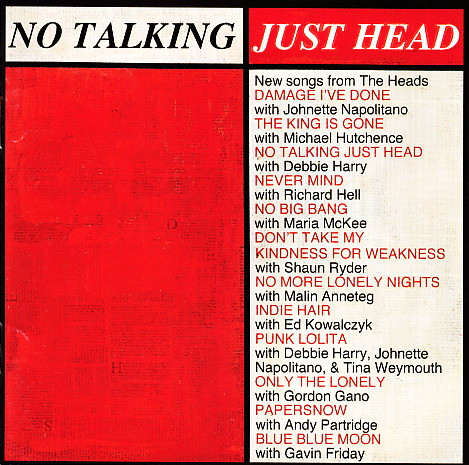
Talking Heads 12: No Talking, Just Head

You can’t blame them for trying.

The members of Talking Heads had grown tired of waiting for David Byrne to deign them with his presence again, so after five or so years they began recording together. Chris Frantz, Jerry Harrison, and Tina Weymouth had stayed busy producing other people, so they had several singers they could ask to sing for them, along with old friends from their CBGB days, when they started making music together again. Byrne had other ideas, and tried to sue them; the eventual project was credited to The Heads, with the album pointedly titled No Talking, Just Head.

No matter how they approached it, the deck was stacked against them. Sometimes an established band can find a new singer to take them to commercial heights, but not every band is AC/DC. Rather than sticking with one collaborator, the Heads assigned each of the 12 tracks on the album to somebody different. Each of the resulting songs is so different, it sounds like a mix tape of 12 different bands.

Johnette Napolitano of Concrete Blonde opens with the dark “Damage I’ve Done”, and would go on to tour with the trio to promote the album. Michael Hutchence of INXS (who would have their own issues trying to replace a singer) ironically makes one of his last appearances on an album on “The King Is Gone”, and Blondie’s Debbie Harry wails the profane title track. “Never Mind”, which seems to be based around the drums for their version of “Take Me To The River”, is a showcase for Richard Hell, while the frenetic “No Big Bang” is an odd pairing for the otherwise soulful Maria McKee. Shaun Ryder gets to do his Happy Mondays thing all over “Don’t Take My Kindness For Weakness”.

A still-unknown spoken word performer named Malin Anneteg recites the strange lyrics for “No More Lonely Nights”, while the singer from Live was still coasting on their hit album when he added “Indie Hair”. “Punk Lolita” might be the highlight of the album, with Debbie, Johnette, and Tina Weymouth trading fun rap-influenced vocals just like Tom Tom Club. Gordon Gano of Violent Femmes is lost in the mix of “Only The Lonely”, but there’s no mistaking Andy Partridge on “Papersnow”. Finally, cult figure Gavin Friday warbles “Blue Blue Moon”.

While Chris, Jerry, and Tina were all undoubtedly key to the success of Talking Heads, and contributed to the sound of the band, David Byrne’s vocals and lyrics were what resonated in millions of album sales. This goes both ways, as Byrne’s solo albums are nearly devoid of any music that sounds like the old band. No Talking, Just Head remains a curio, more interesting for fans of the individual singers.

The Heads No Talking, Just Head (1996)—2

Tuesday, June 7, 2022

Prince 19: Girl 6

Even though nobody knew what to call him, The Artist Formerly Known As Prince managed to keep people guessing just by staying in the news. The soundtrack for the Spike Lee joint Girl 6 further confused things by proclaiming “SONGS BY PRINCE” on the cover. It even appeared on Warner Bros., the label that had made him so angry in the first place. We haven’t seen the film, but the album is a curious little sampler of old and new, with album tracks and B-sides going back a decade, plus contributions from other Paisley Park artists driven by the man himself.

The brand new “She Spoke 2 Me” has mild jazz overtones in the horns and especially the guitar solo, and while “Don’t Talk 2 Strangers” is sweet, somehow such a sentiment seems odd coming from him, and after the more charged material on the rest of the album. The title track is danceable, and features samples from the film; interestingly, it’s credited to New Power Generation, but he’s obviously singing. “Count The Days” is a soulful one sporting a certain twelve-letter insult from a so-called “solo” New Power Generation album, and everybody knows “Nasty Girl” by Vanity 6, but more exciting is “The Screams Of Passion”, which was the debut single in 1985 by The Family. “Pink Cashmere” is repeated from the Hits album; so technically are “Erotic City” and “How Come U Don’t Call Me Anymore?”, making this a more convenient, less expensive way to obtain those songs. “Girls & Boys” comes from Parade, while three tracks from Sign "☮" The Times don’t excuse anyone from owning that album.

Again, while it’s an odd collection, Girl 6 provides something of an alternate Prince mix tape. And although the material comes from a variety of sources, it all holds together just fine.

Music From The Motion Picture Girl 6 (1996)—3

Friday, September 18, 2020

Rush 20: Test For Echo

Three years was the longest hiatus for Rush yet, but once they reconvened for another album, they pretty much picked up where they left off. Test For Echo built on the guitar-centric sound that made Counterparts so refreshing, but missed some subtleties. Maybe Alex Lifeson’s experiments on Victor were still ringing in everyone’s ears.

The title track is a successful groove, nicely balanced between the players, while the lyrics bemoan the barrage of media already starting to affect society in the ‘90s. “Driven” is built upon multiple bass tracks; apparently Geddy Lee felt it was his turn to drive. Several tricky rhythms throw off the listener, who might not realize how few lyrics there actually are. A similar tendency to use a list as the basis for lyrics dogs “Half The World”, which still manages to be catchy, and we hear echoes of Pearl Jam in the arrangement (but definitely not the vocals). “The Color Of Right” is another good mesh of music and lyrics, this time provoking thought over legal terms. “Time And Motion” manages to mix Rush prog with current alt-metal, with a completely anachronistic keyboard throwing a wrench into everything. The social commentary continues on “Totem”, a litany of deities and religious icons, traditional and imagined.

By Neil Peart’s own admission, the lyrics to “Dog Years” were written during a post-celebratory hangover, which could be why he pushes the metaphors and puns as far as possible. (Photos of the boys as children with their new instruments illustrate the words in the CD booklet.) “Virtuality” almost sounds quaint today, decades after a time when the possibilities of the Internet still seemed like science fiction. The album’s sound finally shifts with “Resist”, based around a piano pattern that’s been the hallmark of the Atlantic era thus far along with a pleasing acoustic breakdown. It’s welcome, almost an anthem. “Limbo” is the album’s requisite instrumental, but unlike their previous successes, this seems more like a track that never got vocals, save the disembodied samples and some wordless moaning. (Apparently it was pieced together, Frankenstein-style, from various ideas that had been “in limbo” for some time. And as much as “Rush Limbo” suggests a certain narcissistic radio host, that wasn’t the intention.) With its references to Sisyphus, “Carve Away The Stone” aims to be profound amid more complicated rhythms.

Test For Echo isn’t classic Rush, but it is impressive for coming together as quickly as it did. They would tour, of course, but little did anyone know that they were about to take an even longer break.

Rush Test For Echo (1996)—3

Tuesday, September 15, 2020

Alex Lifeson: Victor

Apparently not happy with Rush as his sole creative outlet, Alex Lifeson spent part of the 1994 and 1995 recording tracks in his home studio, without the other guys. Eventually the results became something of a solo album, which didn’t get much attention outside Rush diehards. Lifeson’s insistence on calling both album and artist “Victor” didn’t do him any favors.

Much of the music is harsh and overly loud. He doesn’t sing, thankfully, though he does provide “spoken word”. The handful of vocals are left to the singer from Canadian band I Mother Earth; another track is sung by cult artist Dalbello, who seesaws between a witchy purr and a Geddy-like yowl. Several musicians, including his son Adrian, assisted on other instruments, and Les Claypool of Primus plays on one track, not that you’d notice.

Four tracks of thrash finally give way to the moody “At The End”, while the more progressive “Strip And Go Naked” provides relief a few tracks later. “Shut Up Shuttin’ Up” is an attempt at humor, as two harpies complain about men over a funk-metal groove. While it should be no surprise that the lyrics don’t reach the lofty heights of Neil Peart, the sexual violence in “Don’t Care” and the title track (albeit an adaptation of a W.H. Auden poem) has us concerned about his psyche.

Victor is a vanity project that certainly has its admirers, but it can be skipped. Meanwhile, Neil occupied himself with an extensive all-star tribute to Buddy Rich, which sold better but was equally tangential to his main outfit.

Victor Victor (1996)—2

Friday, July 10, 2020

They Might Be Giants 8: Factory Showroom

While they still had a rhythm section and horns at their disposal, on Factory Showroom They Might Be Giants managed to infuse some of their lo-fi whimsy into the more advanced proceedings. Economy extended to the program, which reduced the number of songs to give each more room to shine.

Kitsch is still king, from the Philly strings on “S-E-X-X-Y” to the mildly Memphis groove of “Pet Name”. “Till My Head Falls Off” is a wonderful punky celebration of stubbornness, but “How Can I Sing Like A Girl?” tries a little too hard to be cute. In contrast, “Exquisite Dead Guy” is built on very close wordless harmonies, while “Metal Detector” is the closest we get to geeky science this time out. A cover of a song by an obscure “cuddlecore” band, “New York City” is a love song, to a person as well as the metropolis itself.

The goofiness picks up on “Your Own Worst Enemy”, which illustrates a kind of madness with a reference to “Precious And Few”. “XTC vs. Adam Ant” imagines a heavyweight competition for the rock title between those two ‘80s icons, and while the music only occasionally hearkens to XTC, there’s a sly reference to the lead singer of Bow Wow Wow (a band made up of former Ants). The ultra-catchy “Spiraling Shape” is another hit single that never was. Some recycling occurs in “James K. Polk”, a remake of a Flood-era B-side that provides a fairly sanitized biography of the president. As long as they’re steeped in history, “I Can Hear You” provides some hilarious buzzwords and catchphrases related to modern technology, but was recorded solely on acoustic instruments using no electricity whatsoever to a vintage Edison cylinder. And just as “New York City” seems to evoke the holidays, “Bells Are Ringing” takes a seemingly harmless melody to the point of madness.

While still not as strong as the first handful, Factory Showroom is a grower, and has emerged as one of TMBG’s sleepers. Hell, it took us a while to get it, and we’re glad we did. (It’s since been re-allocated to a rarities collection, but the original pressing of the CD included the amusing “Token Back To Brooklyn” in the form of a pre-gap bonus track, which you had to rewind to at the start of the disc to hear.)

They Might Be Giants Factory Showroom (1996)—3

Tuesday, June 2, 2020

Phil Collins 6: Dance Into The Light

After 25 years in the band, and fully flush from his solo career, Phil Collins officially left Genesis, and promptly dropped this pile of dreck into the marketplace.

Perhaps “dreck” is too harsh a word. Dance Into The Light isn’t pointedly bad, or even misguided. It’s simply ordinary, and the few times it tries to be anywhere near adventurous, it’s not original. The title track, despite its assertion, is in such a weird meter that anyone attempting to dance to it would appear to be suffering a conniption. “Just Another Story” beats the same groove into the ground for 6½ minutes; frankly, it’s most interesting during the jazz piano solo, and the chorus hook is pretty good. “Oughta Know By Now” has something in there, but this arrangement doesn’t cut it. The lyrics for “Lorenzo” come of the mother of the kid with the disease dramatized in the film Lorenzo’s Oil from a few years before, but the music is sub-Afropop done better by Peter Gabriel. Speaking of which, if you hoped he’d distill the quirky narratives of Paul Simon’s Graceland into one track, “Wear My Hat” is just for you, while “Take Me Down” and “River So Wide” merely cop the guitar styles and milder rhythms from that album. The liner notes insist that “there are no drum machines on this album!”, but the real deal doesn’t always help. (It’s also the first album he’s put out that didn’t sport his mug life-size on the cover.)

Most frustrating about this album is that there are a few guitar-based tracks hidden amidst all the others. “That’s What You Said” (subtitled “Spirit Of ‘65” in the booklet) sports a part halfway between a 12-string and a Coral sitar, and it’s good pop. “Love Police” keeps the jangle going, even if “It’s In Your Eyes” pours it on too thick. “The Same Moon” could have fit on the last two Genesis albums, except for the guitar solos. “No Matter Who” isn’t great, but he was probably listening to George Harrison while writing it. Had he concentrated on tracks like these, he would have endured the usual brickbats about jumping on the Britpop bandwagon, and hindsight might have treated it better, but there’s still no excuse for the anemic version of “The Times They Are A-Changin’” that closes this opus.

If you’ve been keeping up with the story so far, it should be no surprise that Dance Into The Light is just way too long at a full hour. For those who simply have to have more, the Extra Moves disc (clever, that) of the Deluxe Edition 20 years later adds the usual smattering of live versions and demos, plus three contemporary B-sides, each very different.

Phil Collins Dance Into The Light (1996)—2
2016 “Take A Look At Me Now” edition: same as 1996, plus 10 extra tracks

Friday, April 24, 2020

Marshall Crenshaw 8: Miracle Of Science

Having sprung for the mild teaser of a live set, Marshall Crenshaw’s new label went all out to make his new album something to remember. This being the days of non-vinyl, the jewel cases of Miracle Of Science were treated with a glitter-effect hologram, while the liner itself was presented origami-style with multiple creases and miniscule credits. Meanwhile, he made the most of his deal by eschewing big studios and recording most of the album himself.

Of course, packaging is moot if the album doesn’t stick, and this one does. Following an indexed soundbite from an obscure Sammy Petrillo/Duke Mitchell movie, “What Do You Dream Of?” hits the ear candy jackpot, and the album hardly lets up from there, from the haunting “Laughter” and “Only An Hour Ago” through “Seven Miles An Hour” and the extended quasi-surf instrumental “Theme From ‘Flaregun’”. Our favorite by far is “Starless Summer Sky”, which dates back to his pre-professional years.

The originals are mixed with covers with only the barest misstep, “The ‘In’ Crowd” sounding the most like an indulgent afternoon spent overdubbing. Research tells us that “Wondrous Place” was an old Billy Fury tune; “Who Stole That Train” is an old rockabilly number that also sounds just like him, just as Grant Hart’s “Twenty-Five Forty-One” fits like a glove.

After being unavailable for too long, Marshall made Miracle Of Science the first of a projected series of reissues on his own Shiny-Tone label. The packaging was more straightforward, but he did rejig the sequence somewhat and give a few songs a fresh mix. Besides adding two brand new obscure covers, “Seven Miles An Hour” becomes a bonus track itself, as he now chose to end the album proper with the song played backwards. Beyond that, the album is still a winner, and welcome back.

Marshall Crenshaw Miracle Of Science (1996)—
2020 Shiny-Cool reissue: same as 1996, plus 3 extra tracks

Tuesday, December 24, 2019

Jorma Kaukonen 2: Christmas

The holidays are all about giving, and one of our faithful readers and staunch supporters hipped us to an album we’d overlooked. Simply titled Christmas, it’s a simple collection of originals and standards from the fingers of Jorma Kaukonen, with help from collaborator Michael Falzarano.

Much like Hot Tuna seesawed between acoustic folk and electric blues, the album isn’t strictly one style or the other, but through the magic of digital, whether on a disc or streaming, one can change the sequence. Some of the instrumentals only count as holiday songs due to sleigh bells as percussion, but they work because the artists say they do. “Christmas Blues” and “You’re Still Standing” rely on distorted guitar to distract from the basic lyrics, but “The Christmas Rule” is a hilarious cautionary tale about why you shouldn’t use your fireplace on Christmas Eve. A very reverent reading of “Silent Night” is followed by “Holiday Marmalade”, which turns it into an extended 11-minute blues. “Baby Boy” is a traditional tune we suspect may have originated in the Caribbean, and a nice surprise. Just like the album itself.

Jorma Kaukonen Christmas (1996)—3

Tuesday, May 28, 2019

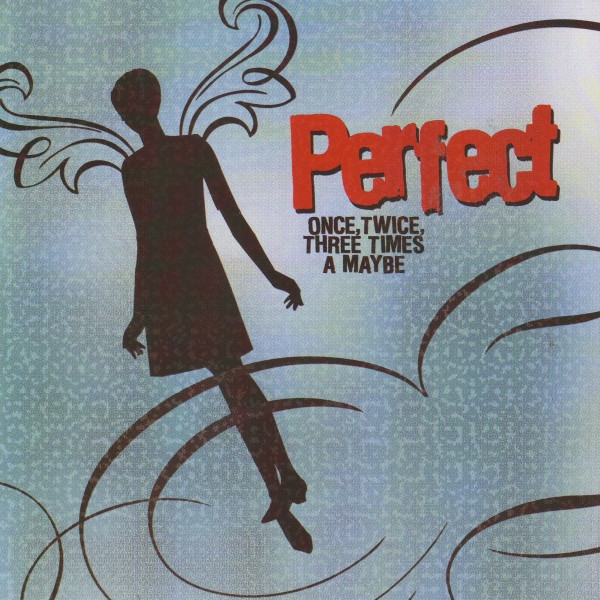
Tommy Stinson 2: Perfect

After the Bash & Pop album was basically ignored, Tommy Stinson gave up on music for a while. After all, if Paul Westerberg couldn’t sell records on his own, how could the guy everyone still thought of as the teenage bass player?

By most accounts he tried working real jobs to support the family he’d left in Minneapolis while he was floundering in L.A., but eventually he made his way back to music, and put together a new band called Perfect. With the support of onetime Replacements manager Peter Jesperson, the band hit the studio and recorded an EP for an offshoot of an indie distributor. When Squirrels Play Chicken is a harmless cross between ‘70s punk and power-pop songsmithing, best exemplified by “Makes Me Happy”, which seems unsure of its key, yet matches Tommy’s freewheeling sense of melody. “Sometimes” is a stomp too slow for Green Day but perhaps more suitable for Bob Mould fans. “Alternative Monkey” is ahead of its time, considering how much it sounds today like Jet or the Strokes. “Miss Self-Esteem” comes closest to Westerberg at his most sensitive, and “Don’t Need To Know Where” revs it up to top speed, with truly explosive drums. The best part of the album is hidden at the end, a joyous thrash through “Crocodile Rock”, truly out of affection.

At 20 minutes, the EP was a nice taster of what could be, and the band went off to record a full-length album with Jim Dickinson, whom Tommy had met way back on Pleased To Meet Me. The album was completed, and promptly shelved by the record company. The tapes eventually ended up seven years later with Rykodisc, who took a chance on it, but not after juggling it and dropping one song. Once, Twice, Three Times A Maybe (an Eddie Murphy reference?) is closer to the straight Bash & Pop sound, but more straightahead rock. He’s still not the best singer, but the songs are well-crafted and arranged. (The title notwithstanding, “Making Of An Asshole” is truly terrific, as is “Peg Song”, the track not released.)

Taken all together, the entire official output of Perfect could be squeezed onto a single CD, which only means a future Record Store Day release will have it all on two records at overblown prices. You heard it here first, folks.

Perfect When Squirrels Play Chicken (1996)—3
Perfect
Once, Twice, Three Times A Maybe (2004)—3

Friday, September 14, 2018

Journey 10: Trial By Fire

Steve Perry’s solo album hadn’t made much of an impact, but then again Bad English—Neal Schon and Jonathan Cain’s collaboration with John Waite—didn’t last past a second album, and Neal’s attempt at metal in Hardline was largely ignored. Even the Storm, which featured Gregg Rolie and the spurned rhythm section of Ross Valory and Steve Smith, missed out on success. Yet in an era when the Eagles managed to get back together, the re-emergence of Journey in the studio made sense, at least from a commercial angle. But would they sound any good?

Sure enough, the “classic lineup” that gave us Escape and Frontiers did indeed make an entire album together, which immediately led to Steve’s refusal to tour behind it, and an unintentionally hilarious episode of Behind The Music. The most maddening thing was, by Journey standards, Trial By Fire was pretty good.

Coming in at over an hour, the album shows the three songwriters attempting to straddle all possible worlds associated with the brand, giving equal time to big ballads and riff-heavy rockers. In fact, the first “single” from the album was a double: “Message Of Love” aped enough of “Separate Ways” to make it to classic rock radio, while “When You Love A Woman” was destined to be several couples’ wedding song. They are separated on the album by “One More”, another loud track with top-speed fretwork and nightmarish strings.

From there it’s mostly where they left off on Raised On Radio, but with a more unified sound than the patchwork of that album. “If He Should Break Your Heart” and “Forever In Blue” are typical Perry looks back to the high school crush who still haunts him, seemingly. And just when you think they’ve got the magic back, “Castles Burning” induces a headache sure to last longer than the six minutes it takes to sit through. You’re smarter to hit the skip button for “Don’t Be Down On Me Baby”, a slow apologetic waltz that apparently didn’t take, for all Steve’s got are the memories in “Still She Cries”, and Jonathan slathering the end of the track with John Tesh piano stylings.

Along with new age, so-called “world music” kept instrumentalists busy in the ‘90s between reunion albums, and “Colors Of The Spirit” also shows the influence of The Lion King back then. “When I Think Of You” brings back the romance and the slow dance, even if it does recall the love theme from Major League. Yet if there’s a real winner on the album, it’s “Easy To Fall”, to which the whole band rises: music, lyrics, harmonies, chord changes, key changes, a retro outro, just a great performance, and truly a hidden gem in the catalog. “Can’t Tame The Lion” delivers a final blast of arena rock, with “It’s Just The Rain” (complete with sound effects!) and the title track hobbling to the finish. (As if that wasn’t enough, there was a hidden track after several seconds of silence, the half-baked Sam Cooke reggae homage “Baby I’m A Leaving You”. This was given its own index on the eventual reissue, followed by “I Can See It In Your Eyes”, a surprisingly edgy track previously only included on the Japanese version of the album.)

As head-slappingly silly as it seems sometimes, Trial By Fire remains a much more worthy end to the Steve Perry era of Journey. Whatever legs it might’ve had were undermined by the band’s inactivity, leaving the Eagles, Fleetwood Mac, Kiss, and countless other “reunited” bands to rake in the box office receipts. The album’s mostly been forgotten; meanwhile, we’re still trying to figure out the significance of the cat lady and the giant baby in the boat on the album cover.

Journey Trial By Fire (1996)—3
2006 CD reissue: same as 1996, plus 1 extra track

Tuesday, June 19, 2018

Joni Mitchell 18: Hits and Misses

Amazingly, Joni had been in the business for nearly 30 years before somebody said, “Let’s do a hits album.” To which she replied, “Sure, as long as you put a ‘misses’ album out too.”

And that’s exactly what happened. Hits features a comedic cover shot of Joni lying in a street, presumably where the truck ran her over, whereas Misses depicts her drawing her chalk outline on the pavement—as she said, mooning the camera. Both albums were released simultaneously, and considering that the Hits volume was stacked with songs from Her First Four and Court And Spark, songs well known either in her renditions or in popular covers, it far outsold the sampler of lesser-known tracks that made up Misses. As something of a carrot for the fans, Hits begins with her only recorded version of “Urge For Going”, previously available only as a B-side. And while the program dwells mostly in that early era, “Chinese Café/Unchained Melody” and “Come In From The Cold” nicely represent the ‘80s and ‘90s respectively.

While Hits was a no-brainer, Misses rewards anyone brave enough to dive in. This set is not programmed chronologically at all, flying back and forth among the decades, with a slight emphasis on the Geffen years and “difficult” albums like The Hissing Of Summer Lawns. That said, fans familiar with the earliest albums will recognize “The Arrangement”, “A Case Of You”, and the title tracks from For The Roses and Hejira, the latter of which closes the set magnificently. They’re not all winners; later selections like “Nothing Can Be Done” and “Dog Eat Dog” are not our personal choices to advertise the lesser-loved albums, and the programmed sound of the newer tracks jars with the more pristine acoustic material, but if any of it gets people to dig deeper, it’s all good. The woman is, after all, an absolute treasure.

Joni Mitchell Hits (1996)—4
Joni Mitchell
Misses (1996)—3

Tuesday, April 10, 2018

Paul Westerberg 2: Eventually

Some critics still cared about Paul Westerberg, and his label had Replacements fans working there, so they were willing to bankroll another solo album. Eventually was an apt title, considering that it took a while to complete, starting with Brendan O’Brien (in between multiplatinum Pearl Jam albums) as producer, and finishing with the more indie-minded Lou Giordano.

The music follows the same template as his more recent albums to this point, catchy guitar-driven rock with clever couplets. “These Are The Days” and “Century” would have fit on 14 Songs, but the listener’s ears perk up on the bittersweet “Love Untold”, a terrific song unfairly ignored by most radio programmers. Right on time, the tempo picks up for the hook-laden “Ain’t Got Me” and the relentless trash rock of “Had It With You”, which comes off as a cross between “My Little Problem” and “Backlash”, except there’s no female duet partner. “MamaDaddyDid” returns to a lazier strum, and not very exciting.

Side two (on the cassette, since no vinyl version was released at the time) immediately becomes more interesting with “Hide N Seekin”. It begins like a demo, Westerberg singing over a single quiet electric guitar, pausing for several silent seconds after the chorus, then picking up again, adding a slight organ and brushed drums to the mix. “Once Around The Weekend” is a bit of a retread, but everyone got excited for “Trumpet Clip”, which features good ol’ Tommy Stinson on bass and, yes, trombone while the auteur spits out the lyrics, giggling occasionally. “Angels Walk” is redeemed by some decent guitar rips, but it’s forgotten once “Good Day” takes over, a piano dirge that, but for the lyrical nod to “Hold My Life”, one might not guess is a tribute to the recently departed Bob Stinson. From there, “Time Flies Tomorrow” keeps it quiet and sensitive.

There’s no thrashing on the album, nothing that fans complained had been missing since Don’t Tell A Soul. Yet, Westerberg sounds more confident overall on Eventually, which puts it strongly in the plus column. The whole is definitely greater than the parts.

Paul Westerberg Eventually (1996)—

Friday, February 2, 2018

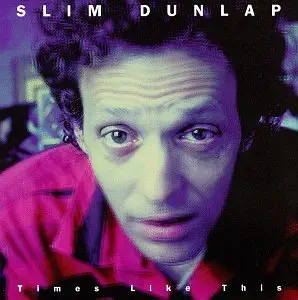
Slim Dunlap: The Old New Me and Times Like This

By all accounts, Bob Dunlap was a highly likeable guy about the Minneapolis music scene whose life changed when he was asked to join the Replacements as their lead guitarist. And that’s not all: because he was replacing the irreplaceable Bob Stinson, the ‘Mats insisted he go by Slim Dunlap, as if anyone would be confused otherwise.

His time in the band only lasted a couple years and a few albums, but he was welcomed by the fan base, and folks were naturally concerned for his welfare once the ‘Mats split up. He spent a bit of time touring with the also-newly solo Dan Baird from the Georgia Satellites, and while he had no desire to be a frontman, he had enough support in the Twin Cities to finance a solo album, albeit via an offshoot of Twin/Tone. The Old New Me even beat Paul Westerberg’s solo debut into stores by a few months; Westerberg is vaguely credited among the performers, one of which is future Jayhawk Tim O’Reagan.

The album is a pleasing blend of Stonesy chords and riffing (best exemplified by “Rockin’ Here Tonight”) and sh-t-kicking honky tonk. In other words, fun. “Isn’t It” is a wonderful groove with a roller-rink organ for accent. “Partners In Crime” sounds like Westerberg is in the mix, and his influence is felt on “Taken On The Chin”. The best song is “The Ballad Of The Opening Band”, a tender tribute to all those also-rans from a man who knew them well. (Compare with the well-landed insults in “Ain’t Exactly Good”.) It’s followed by a rendition of the obscure James Burton instrumental “Love Lost” for a wonderful coda.

Three years later Times Like This slipped out, with a little more money spent on the packaging, and more experimental, almost lo-fi tracking, as on the clattery “Jungle Out There” and “Chrome Lipstick”. There’s also more self-referencing of life as a working musician this time, from the first half of the band-setting-up medley of “Not Yet/Ain’t No Fair (In A Rock ‘N’ Roll Love Affair)” through “Nowheres Near” to “Radio Word Hook Hit”, which doesn’t have one. The album’s not as fun, and a little more jaded, though people like it. Bruce Springsteen even recorded a yet-to-be-released cover of “Girlfiend”.

From there he gave up on superstardom and mostly gigged around Minneapolis in between day jobs until a stroke felled him in 2012. Musicians and friends rallied to help with his medical bills, which led to the “Songs For Slim” project. The first release was a covers EP credited to the Replacements, which was mostly Westerberg and Tommy Stinson, except for Chris Mars’ one-man band rendition of “Radio Word Hook Hit” (he also did the artwork); similar benefit singles by other friends and admirers would follow, eventually collected on a double LP. His two albums were also repackaged for the first time on vinyl for a Record Store Day as My Old New Records.

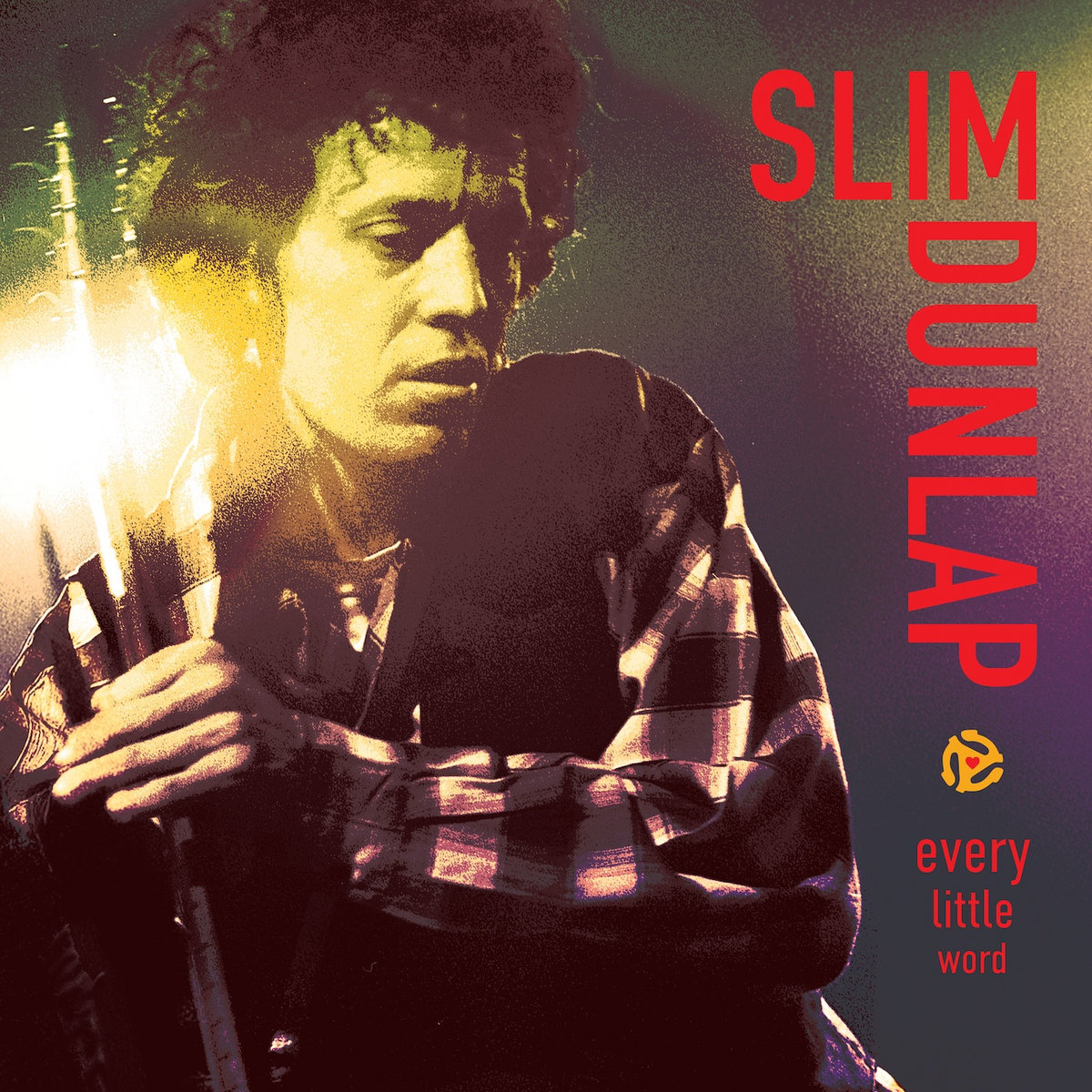
A year after his death in 2024, the albums were made available again in the Every Little Word double-CD set, with each album bolstered by bonus tracks, including outtakes, live versions, and even recordings from the late ‘70s—20 in all for two full discs. Highlights include three versions of the previously unreleased “Before She’s Gone”, the aching “title track”, Westerberg tinkling piano and moaning along with an alternate of “Nowheres Near”, further acknowledgement of his lot in life in “Musician/Bum”, and a cover of Dylan’s “I’ll Be Your Baby Tonight”, his favorite song.

Slim Dunlap The Old New Me (1993)—3
Slim Dunlap
Times Like This (1996)—
The Replacements
Songs For Slim (2013)—
Slim Dunlap
Every Little Word (2026)—3

Tuesday, March 7, 2017

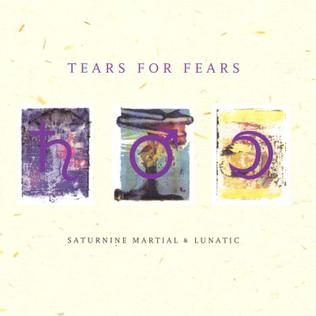
Tears For Fears 7: Saturnine Martial & Lunatic

Before the expanded CD reissue became ubiquitous, the rarities album was the common (not to mention cheapest) method for gathering various castoffs outside of a band’s more easily acquirable releases. The Smiths, Elvis Costello and R.E.M. are just a few artists whose “B-sides” albums rank up with their better work, but the arithmetic doesn’t always compute for everyone.

Saturnine Martial & Lunatic arrived at an odd time for Tears For Fears fans, released by the label that dropped them before another label released the album they’d finished, which didn’t exactly set the world on simmer. And while TFF had amassed a pile of rarities over the years, there’s usually a reason why something is a B-side. For example, “The Big Chair” isn’t the lost title track from that album, but an instrumental experiment featuring sound bites from the movie Sybil, which inspired it. A little better is “When In Love With A Blind Man”, but only because it shares a melody and piano part with “The Working Hour”. “Pharaohs” seems like another odd experiment, but turns out to be a slow instrumental of “Everybody Wants To Rule The World” with a shipping forecast on top.

A third of the tracks come from the Roland-only era, like “New Star”, which even made it to a movie soundtrack. And it wouldn’t be a rarities collection without wacky covers—in this case, “Sad Song” by Robert Wyatt and Bowie’s “Ashes To Ashes” in a carbon copy. But by including some very self-deprecating liner notes and ending with “The Way You Are”, a top 30 single they didn’t even include on their hits album because they hated it so much, the overall mood here is an album that can be left aside.

Tears For Fears Saturnine Martial & Lunatic (1996)—2

Friday, November 6, 2015

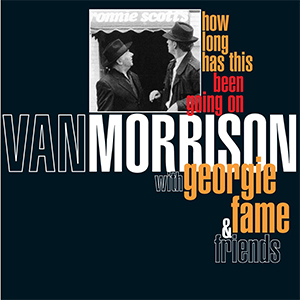
Van Morrison 30: How Long… and Tell Me Something

As demonstrated on his most recent live album, and the two doubles before it, Van Morrison seemed happiest when in the midst of a rhythm and blues show band and revue. Every now and then he calls his music jazz, which is how the Verve label marketed his next two albums. Such was one of the perks of being signed to a major corporate entity with several specialty labels; another perk would be the ability to release two novelty projects to help fulfill said contract.

How Long Has This Been Going On was recorded live without an audience at Ronnie Scott’s club in London, and features mostly covers from the pre-rock era. Aside from Georgie Fame, who gets spine billing, Annie Ross shows up to sing along on “Centerpiece”, which she helped make famous once upon a time. Just to show his own ties to the music. A different arrangement of “I Will Be There” opens the set and there’s a repeat of “All Saints Day” from a few years past, but the big draw is “Heathrow Shuffle”, performed many times in the ‘70s but unreleased until here. A seven-minute rendition of “Moondance” reels in those whose knowledge of jazz is limited to that song.

Appearing halfway through the album is “Your Mind Is On Vacation”, written by Mose Allison, which was a clue to the album that appeared not too long afterwards. Tell Me Something is in some ways more satisfying, as it consists of 13 songs written by the man Pete Townshend called a “jazz sage”, and who sings two of them here. Van is only one of the billed performers, which means the balance of the tracks are sung by either Georgie Fame or Ben Sidran, best known to hippies as an early member of the Steve Miller Band, and to a few Gen Xers as the host of a VH-1 show. Those guys have certainly picked up their vocal styles from Mose, while Van only sounds like Van. Taken all together, it’s a good introduction to Mose Allison; hits collections on the Prestige and Atlantic labels are highly recommended.

Van Morrison with Georgie Fame & Friends How Long Has This Been Going On (1995)—3
Van Morrison, Georgie Fame, Mose Allison, Ben Sidran
Tell Me Something: The Songs Of Mose Allison (1996)—3