Showing posts with label prince. Show all posts

Friday, July 17, 2026

Prince 27: Xpectation and N.E.W.S.

Without a major label trying to tell him what to do, Prince continued to follow his muse—or whatever it was—to the neighborhood of jazz for a pair of releases. More to the point, both featured the phrase “new directions in music by Prince”, which everyone will tell you was similar to what Miles Davis had on the cover of Bitches Brew. Both were also entirely instrumental.

Xpectation came first, as a digital download, and would remain that way, with no physical release, ever. Ranging from quiet and dreamy (“Xhalation”, “Xcogitate”, “Xotic”) to upbeat and funky (the title track, “Xpand”, “Xpedition”), with a prominent electric piano on all tracks, this is dinner music jazz. He does play some guitar, the rhythm section of Rhonda Smith and John Blackwell is consistent, and some tracks feature Candy Dulfer and/or Vanessa Mae on violin. And yes, all the track titles follow that theme. We don’t know why the last jam ends with a baby crying, but maybe that’s none of our business.

N.E.W.S. followed a few months later, and was considered important enough that it was available on CD. Four improvised jams at exactly 14 minutes each—with the same rhythm section, plus one Renato Neto on keys and the stalwart Eric Leeds on misspelled “saxaphone”—were captured live on tape in one day, each named after a point on the compass; hence the album title. “North” does have some spacey elements resonant of certain Jan Garbarek albums, “East” sports Saharan instruments and effects until it doesn’t, “West” takes a while to find something of a groove then switches to a more typically Prince slow groove melody about halfway through, and “South” is pretty much straight funk.

These are even more meandering than tracks on Xpectation, which each are at least shorter, and more focused. The fact is, his music shouldn’t be background music.

Prince Xpectation (2003)—3
Prince
N.E.W.S. (2003)—2

Friday, April 3, 2026

Prince 26: One Nite Alone

Having not learned his lesson with the Crystal Ball debacle, Prince tried again to make his music available directly to his fans, this time via online subscription. It was a nice idea, but those who parted with a hundred bucks complained first about the frequency of releases, as well as repetition of stuff they’d already received.

At any rate, the first such issue was One Night Alone…, billed as “solo piano and voice”, which is pretty much what we get for just over half an hour. The title track is a slow seduction, starting off nice and pretty over two chords, alternating between falsetto and spoken, escalating into a Keith Jarrett exploration, then out. Apparently she didn’t buy it, given the heartbreak in “U’re Gonna C Me”. “Here On Earth” is even slower, a rumination on a dream with some overdubs, including drums by John Blackwell. He pulls out some guitar and bass for “A Case Of U”, a cover of his favorite Joni Mitchell song, though he only uses the second verse.

“Have A ” is loaded with nonstandard chord changes and unexpected harmonies, and its mildly vague content makes an odd direct segue into the salacious metaphors of “Objects In The Mirror”. It’s right into “Avalanche”, another lovely performance, but the lyrics air eyebrow-raising claims about the history of slavery in America. After that, “Pearls B4 The Swine” is a quirky little post-breakup number, the closest thing to a catchy single. “Young And Beautiful” could be one too, with a message of empowerment for the object of the song, leaving us with “Arboretum”, a lovely instrumental closing theme of sorts, after which he gets up and walks away. (His pet doves are credited with “ambient singing”.)

The album was something of a taster for the One Night Alone… tour, where he was accompanied his smallest combo in years—albeit with Maceo Parker, Candy Dulfer, and Najee on horns—and would spawn his first official live album. He was ostensibly promoting The Rainbow Children, and the music certainly thrives onstage; the deep narration is still there, but mostly he just plays, mostly on guitar. The only real rarity is “Xenophobia”, which serves to introduce the band and to admonish those in the audience who came for the oldies. He does touch on his entire catalog, but more on deep cuts than obvious choices. “Extraordinary” and “The Other Side Of The Pillow” are surprises, while the adjusted title “When U Were Mine” and “Take Me With U” retain the vibe of the records. After 90 minutes he says good night, but comes back for a set alone at the piano cocktail lounge-style, touching on romantic favorites and encouraging the crowd. They go nuts when “Nothing Compares 2 U” kicks in, and the band comes back and stays for the duration. “Free” goes into “Starfish & Coffee”, then “Sometimes It Snows In April” and “How Come U Don’t Call Me Anymore”, and “Anna Stesia” stretches for ten minutes so he can harangue about God before a moody coda and farewell.

But that wasn’t all either. A third disc, The Aftershow: It Aint Over!, provides a glimpse into his tradition of hitting a club a few hours after finishing a concert to keep the party going. Larry Graham sits in on a torrid “Joy In Repetition”, George Clinton croaks “We Do This”, and Questlove and Musiq Soulchild are on the medley of the latter’s “Just Friends” and Sly Stone’s “If You Want Me To Stay”. “2 Nigs United For West Compton” fits well with “Alphabet St.” He threatens to keep “Peach” going for twenty minutes, but we only hear eleven. “Dorothy Parker” is more subdued but jazzy, “Girls & Boys” is mostly suggested by one chorus, and the closing vamp on “Everlasting Now” brings it full circle to the main show. All in all, a satisfying experience. (In 2020, the Up All Nite With Prince: The One Nite Alone Collection box included all of the above, plus the Live At The Aladdin Las Vegas DVD. Not included was 2004’s C-Note, a download-only EP consisting of four soundcheck jams—two funky and two moody—plus the first-ever release of “Empty Room”, a song about heartbreak dating from 1985.)

Prince One Night Alone… (2002)—3
Prince & The New Power Generation
One Night Alone… Live! (2002)—

Friday, December 26, 2025

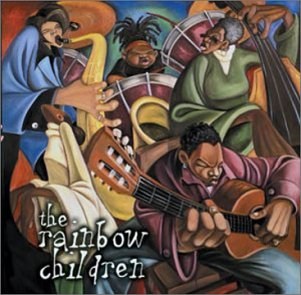
Prince 25: The Rainbow Children

Once in the new century, Prince did a few things. First, he started using his name again. Then he decided to license his new albums rather than signing a longterm label deal he’d one day regret. He also got divorced, and had embarked on a relationship with the woman who’d become his next wife. But perhaps most significantly, he became a full-fledged Jehovah’s Witness.

This last detail wasn’t quite as earth-shattering as, say, Bob Dylan’s religious conversion. After all, Prince had grappled with religion and sex and whatever twain shall meet throughout his previous albums, but this shift would send him on a decidedly more puritan (for lack of a better term until we find one) path. And because he had to be him, his journey would manifest in his new music.

The Rainbow Children is a parable of sorts about good conquering evil, full of imagery, metaphors, questionable viewpoints, and most unfortunately, narration by a processed voice pitched even lower than that of the guy in “Bob George”. But beyond all that, the most striking aspect of the album is the music, which as a whole is unlike anything he’d previously put out under his own name or even symbol. He played everything as usual, with the exception of the drums, horns, and some backing vocals, but the music borders on jazz fusion.

The title track sets up the story with some narration—helpfully transcribed in the included lyrics—but mostly exists for a lengthy guitar exploration, which is fine with us, and modulations of the main vocal theme, which exhorts said Rainbow Children to rise, before switching to a much more subdued theme very reminiscent of late-‘60s Miles Davis. That makes a smooth transition to the just-as-smooth “Muse 2 The Pharaoh”, which begins as something of a love song, but slides over to expound on religious theories. (From here the tracks are shorter, for a while anyway.) “Digital Garden” is almost ambient jazz until he starts singing, and the narration moves the story further. That entails people going door to door a la Jehovah’s Witnesses, so “The Work Pt. 1” extols this via a James Brown workout. “Everywhere” is begun very sweetly by one of his female backup singers before escalating into a joyful number with lots of drums, then the instrumental “The Sensual Hereafter” would appear to be something of a seduction scene, which continues into the apt “Mellow”.

More narration insists that we understand “1+1+1=3” over another funky groove, with a Camille-style voice modulation in the mix. “Deconstruction” is an orchestrated segue leading into “Wedding Feast”, an incredibly silly fanfare right out of The Wizard Of Oz. (See, he still has a sense of humor.) With “She Loves Me 4 Me” we finally get a track that can easily insist outside of the narrative, even if some of the words might rankle the former Mrs. Nelson. From here the tracks get longer again, beginning with “Family Name”, which sports a different kind of computerized narration and other vocals dealing with the history of African Americans and other marginalized minorities, with a Martin Luther King sample for good measure. “The Everlasting Now” is more preaching, but it’s over yet another infectious groove, and not at all tossed-off. And since he likes to have grand finales regardless of the subject matter, “Last December” fills that purpose with a slowish groove and a gospel-tinged chorus, and a very Hendrixian break. Just for good measure, the album fades to silence before returning with an a capella reprise of the final notes.

It’s redundant to say The Rainbow Children is a very personal album for Prince, since they all are. Unfortunately, unless you’ve fully subscribed to his bag, the message can be a bit much. But musically, it’s terrific, especially if you like hearing him play guitar. If only there was a strictly instrumental mix of the album somewhere.

Prince The Rainbow Children (2001)—3

Tuesday, July 29, 2025

Prince 24: Rave Un2 The Joy Fantastic

A new label deal brought TAFKAP under the purview of Arista, then currently raking in the bucks with Santana’s all-star collaboration album Supernatural. Not very surprisingly, special guests appeared on Rave Un2 The Joy Fantastic too, which arrived mere months after The Vault. The album had a production credit for Prince, but all the vocals and instruments he played—mostly by himself, with only some help from other musicians—were credited to the symbol, so do your own math.

The title track had been around since the late ‘80s, when it would have been the anchor for an album that would have followed Lovesexy had the Batman soundtrack not happened. Musically it’s not much, but for lots of riffing and his screamy falsetto. “Undisputed” is an oddly timed statement of superiority, with “N! P! G!” chants and even a rap by Chuck D. “The Greatest Romance Ever Sold” was the single that preceded the album, and an odd choice, since it’s a mostly meandering slow groove with Eastern touches, and a little long. Following a four-second silent segue credited to Miles Davis, “Hot Wit U” is fairly generic but for a few lines, but at least Eve’s rap challenges his prowess. “Tangerine” is a quiet little trifle with some jazzy touches, then the more rockin’ “So Far, So Pleased” is a duet with Gwen Stefani. “The Sun, The Moon And Stars” is rather nondescript until the Jamaican-style rap toward the end.

His cover of Sheryl Crow’s “Everyday Is A Winding Road” takes an R&B slant on the tune, with a rap chant near the end; the woman herself sings inaudibly and blows harmonica somewhere on “Baby Knows”. In between, there’s a lovely orchestral segue before “Man‘O’War”, a falsetto slow jam full of sorrow. “Eye Love U, But Eye Don't Trust U Anymore” (Eye=I, of course) is a piano-based heartbreaker along the lines of “Nothing Compares To U” that sports acoustic guitar by indie folk queen Ani DiFranco. “Silly Game” continues the sad mood with more prominent orchestration, while “Strange But True” is rhythmically spoken over programmed beats, which almost turns into an actual song by the end. Something of a resigned farewell, “Wherever U Go, Whatever U Do” is the last listed song, but an advertisement for his websites precedes “Prettyman”, a dance number in the style of James Brown, complete with Maceo Parker on sax.

His promotion for the album consisted solely of a New Year’s Eve pay-per-view concert, wherein he partied like it was 1999, released a few months later on VHS and DVD as Rave Un2 The Year 2000. A year after that, a remix album of sorts called Rave In2 The Joy Fantastic appeared via his own website, with slightly different artwork to help identify it. In most cases the tracks were extended mixes; “The Greatest Romance Ever Sold” included a rap by Eve, “Hot Wit U” interpolated elements of “Nasty Girl”; “Tangerine” gained a whole 43 seconds, and “Baby Knows” has more Sheryl Crow in the mix. “Everyday Is A Winding Road” and “Strange But True” were not included, though an extended “Prettyman” without the website promo was still there yet unlisted. The one exclusive track was “Beautiful Strange”, which resembles some of Sly Stone’s druggier works.

Whether Un2 or In2, the music reminds us that he hadn’t been that innovative for a while. If you must, both albums were issued in 2019’s Ultimate Rave box set, which also included the Rave Un2 The Year 2000 DVD. Certainly it will all be reassessed as time goes on without him.

o|+> Rave Un2 The Joy Fantastic (1999)—
o|+>
Rave In2 The Joy Fantastic (2001)—

Friday, February 23, 2024

Prince 23: The Vault

The Artist Still Referred 2 As Prince by Warner Bros. still owed them N album, so he gave them 1. The Vault… Old Friends 4 Sale purportedly collected tracks from a variety of sources from the ‘80s and ‘90s; even after Crystal Ball, many of the Purple 1’s fans had been looking 4ward 2 such N album 4 years. (Sorry.)

We said “purportedly”; his liner notes stated they spanned the years 1985 to 1994. However, while one song was indeed recorded that early, the rest came from the ‘90s. They’re of a piece as well, bordering on jazz, and a few were even intended for James L. Brooks’ ill-fated I’ll Do Anything film when it was designed as a musical.

One of those songs was supposedly the bopping “The Rest Of My Life”, which could work as the theme song for any sitcom starring an empowered modern woman. The party noises on “It’s About That Walk” are a little distracting, but luckily they fade away to let the track breathe. “She Spoke 2 Me” had already appeared on the Girl 6 soundtrack; this extended version runs over eight minutes, with lots of soloing. “5 Women” had previously been covered by Joe Cocker, and even without hearing his version it’s easy to see how, given its “Thrill Is Gone” vibe. “When The Lights Go Down” sets a subtle groove, and lays back for a lengthy piano solo.

“My Little Pill” is another odd detour, especially when followed by the moody “There Is Lonely”. That song’s allusion to Biblical betrayal ties in well with the theme of “Old Friends 4 Sale”, which did indeed date from 1985, and got a big arrangement in the Parade era. These aren’t the original lyrics, but they’re just as bitter. “Sarah” lightens the mood considerably with a more expected appreciation of the female form, and “Extraordinary” is a hidden gem of a slow jam.

Being a contractual obligation, he did the bare minimum for this album. Compared to the bounty and quality of Crystal Ball, The Vault was a major letdown, but we can blame its marketing. Musically it’s still intriguing, unfairly overlooked, and just as worthy as Chaos And Disorder.

Prince The Vault… Old Friends 4 Sale (1999)—3

Friday, September 29, 2023

Prince 22: Crystal Ball and The Truth

In an effort to keep his public offerings up with his musical output, TAFKAP tried a number of methods to work around the standard record company distribution model. One such gamble was a multi-disc outtakes collection called Crystal Ball, initially sold only on his website as a carrot or thank-you gift to his fans, who knew he had tons of great stuff in his vaults that never got out due to his “enslavement” to corporate schedules.

That would have been fine, but then he decided to sell it through the Best Buy and Blockbuster chains as well, while some people who ordered it “exclusively” from the website a full year earlier still hadn’t received theirs yet. Perhaps it’s not fair to condemn the man, since he was, after all, trying to get music to the fans without being tied to the big corporations. But while using the chains certainly got it out to a lot of people, it didn’t really help the independent stores, which were still in the best position to promote Prince (sorry, TAFKAP) to the people who still cared about him. But there we go being naïve again.

This editorial notwithstanding, Crystal Ball certainly deserves mention if only for the utter sprawl of the contents, which are pulled from the guy’s entire career to date over three discs. To begin with, the opening ten-minute title track originally served the same purpose for the album first compiled in 1986, which itself evolved from an album called Dream Factory, the title track of which comes next. Both are funky, and a little strange, and would have been just as mystifying had they appeared back then.

About a third of the music comes from the fertile, fabled mid-‘80s period. “Movie Star” is a wonderful Morris Day template, while the man himself plays drums on all fifteen minutes of “Cloreen Bacon Skin”. “Sexual Suicide”, “Last Heart”, and “Make Your Mama Happy” come from the Dream Factory era, “Crucial” was cut from Sign "☮" The Times for “Adore”, “Good Love” is a “Camille” track given to a movie soundtrack, and “An Honest Man” is an a cappella Parade outtake; we’d’ve preferred the instrumental from Under The Cherry Moon.

That’s not to say the more recent tracks, mostly from the mid-‘90s, aren’t as interesting. Standouts include the P-Funk homage “Hide The Bone”, “Acknowledge Me” and “Interactive”, supposedly dropped from The Gold Experience in favor of other tracks, and certain remixes of existing tracks (“So Dark”, “Tell Me How U Wanna B Done”). “She Gave Her Angels” is just lovely, but “Strays Of The World” is overwrought, though the guitar solo redeems it. “The Ride” and “Days Of Wild” were recorded live with the New Power Generation, the latter notable for being nearly the last time he’d curse on stage, and “Goodbye” provides a nice slow jam finale.

A lot of material, to be sure—and he even included liner notes for each track (as well as lyrics online at a dedicated website). It all flows together, and manages to match up despite covering a ten-year period. Without an overarching theme, it’s enjoyable if unwieldy.

As something of a bonus, perhaps because the thing took so long between announcement and arrival, a fourth disc was included in the retail version. Mostly low-key, The Truth is basically Prince with an amplified acoustic, overdubbing effects and other instruments from NPG members here and there.

The title track is still fairly profane, but tasty, as is “Don’t Play Me”, despite consisting of a single riff. “Circle Of Amour” is a wistful memory, very close for plagiarism to Janis Ian’s “At Seventeen”; a coda in another style shows he’d at least tried to modify it. “Third [Eye]” features fretless bass as well as some very jazzy chords, whereas “Dionne” is a slightly orchestrated plaint of petulant heartbreak. “Man In A Uniform” is a blues sporting a silly “reveille” synth part as a riff.

With its distorted vocals, “Animal Kingdom” isn’t any more effective a defense of vegetarianism as any other musician; plus, the dolphin sounds just sound cartoony. We’d like to think Stuart Scott influenced “The Other Side Of The Pillow”, but we haven’t been able to confirm this. The busy “Fascination” was mixed down from another session, and very well, so that it fits in here. Guitar is not the focal point on the bereft slow jam “One Of Your Tears” until the end, but it does support all the vocals on “Comeback”, a relatively brief song about loss, possibly about his son, who died six days after his birth. The fact that “Welcome 2 The Dawn” is labeled “Acoustic Version” suggests that a more elaborate production was in the works, yet none has appeared. At any rate, it’s another fine Prince finale.

The Truth was mostly overlooked at the time except for diehards, but in recent years it’s been reissued on its own on vinyl as well as for streaming, and is ripe for rediscovery. Its rating is as high as it is for standing out so well. (For those who’d ordered Crystal Ball direct, a fifth CD was included as well. Originally released via mail-order cassette, Kamasutra was credited to The NPG Orchestra and is entirely instrumental. Either designed to accompany a ballet, his wedding ceremony, or both, it has symphonic and classical touches, and save a few sax-based segments, doesn’t sound anything like him.)

o|+> Crystal Ball (1998)—3
o|+>
The Truth (1998)—
The NPG Orchestra
Kamasutra (1998)—3

Friday, May 12, 2023

Prince 21: Emancipation

After years of complaining about his record contract, TAFKAP didn’t declare his emancipation from it with a mere album. Emancipation consisted of 36 tracks—12 songs each on three discs, each lasting exactly an hour. A bold statement, to be sure, somewhat reminiscent of George Harrison’s three-record set following the demise of the Beatles, but considering his recent hit-and-miss ratio, did we really need three hours of all-new Prince music, or whatever we were supposed to call it?

There is some rhyme and reason to the set, thankfully. The first disc is fairly straightforward radio-friendly R&B—nothing too innovative, nothing too offensive, but nothing too ordinary either. He can still write hooks, of course; “Right Back Here In My Arms Again” is simple but infectious, and “Get Yo Groove On” has an extended dialogue section in the middle that doesn’t get much in the way. “Courtin’ Time” is a snappy ‘40s jazz distraction before the straight cover of the Stylistics’ “Betcha By Golly Wow!” Four tracks later he serves up “[Eye] Can’t Make U Love Me”, as recorded by Bonnie Raitt, shortly before George Michael got to it. “Damned If [Eye] Do” kinda rocks and segues neatly into a Latin section, and “Mr. Happy” isn’t as lascivious as it could be, coming off more like a Dr. Dre pastiche even before the guest rap section. We want to read more into “In This Bed [Eye] Scream”, as the liner notes dedicate it to Wendy & Lisa, and Susannah, suggesting some kind of throwback to the days of the Revolution, but the music is all modern Prince.

Beginning with “Sex In The Summer”, based around a loop of his then-unborn baby’s heartbeat, the second disc is all about the slow jam, tracing the journey with new bride Mayte. There’s a lot of sameness, but “Emale” stands out for its relatively early embrace of terminology from what we used to call the World Wide Web. “Curious Child” is somewhat brief, lyrically anyway, based on a harpsichord motif, and very sophisticated musically. The lengthy “Joint 2 Joint” incorporates another guest rap, insights on what cereal he likes and how, ending with one end of a phone conversation. “The Holy River” is a welcome departure, more of a song than a groove, culminating in an accepted marriage proposal and a nicely constructed guitar solo. The logical conclusion is, of course, “Let’s Have A Baby”, mostly falsetto over piano and a little bass. The slow jams are broken up again by the atmospheric instrumental “The Plan”, then back with the ode to “Friend, Lover, Sister, Mother/Wife”.

Disc three kicks off with “Slave”, a word he had drawn on his face during the period when he started referring to himself as the symbol and trying to leave Warner Bros. The song doesn’t seem to give much more insight to that, except for an excuse to get funky, which “New World” encourages and “The Human Body” perpetuates. “Style” and “Sleep Around” are extended workouts, though “Da, Da, Da” has too much rap for our tastes. This disc also includes covers: “La, La, La Means [Eye] Love U” is more of an update than a carbon copy of the Delfonics original, while Joan Osborne’s “One Of Us” seems tailor-made for him. “The Love We Make” is pointedly not danceable, but a better grand finale than the title track.

We’re glad he got it all out of his system, but we don’t spend a lot of time with Emancipation, mostly because it takes up so much time. While it proves that TAFKAP never stopped teeming with ideas, having his own playground to create non-stop didn’t teach him how to edit himself.

o|+> Emancipation (1996)—3

Friday, November 11, 2022

Prince 20: Chaos And Disorder

Before we begin: By this point in history people found it easier to refer to The Artist Formerly Known As Prince with the acronym TAFKAP, and we’re going to adopt that here for the time being. It’s easier to pronounce than “o|+>” anyway.

Chaos And Disorder was presented as the “last original material” he owned Warner Bros., and given how they promoted it, they seemed to be fine with that. We were also supposed to believe he knocked it off quickly, but it was actually more crafted than that, as the evidence shows.

The first thing you notice is the electric guitar, and boy, is there a lot of it on this album, and more than had been heard on a TAFKAP album in years. The title track is a solid groove with support from the New Power Generation, and “I Like It There” is even more dominated by the guitar, and fit right in with grunge at the time. “Dinner With Delores” is almost soft-rock, with a gentle strum out of the Revolution’s mid-period; he also performed the song on two major talk shows within the same week. “The Same December” is also radio-friendly pop, though the song turns to harder rock before the first chorus, and becomes a slow swagger midway. “Right The Wrong” is horn-heavy social commentary about injustice that’s more interesting musically than lyrically, whereas “Zannalee” whose title seems to have been inspired by a certain hideous movie starring Judge Reinhold and Nicolas Cage; the song itself is an average blues notable for his uncanny impersonation of a heavily accented Minnesota cop.

“I Rock, Therefore I Am” would be a strong statement if the song did; instead it’s a showcase for vocalist Rosie Gaines and not one but two rappers. The piano balladry of “Into The Light” is a nice change of pace, though it soon turns into a pushy Christian anthem. There’s a direct segue into “I Will”, which is basically the second part of the song, making a nice suite, complete with a cocktail jazz piano solo and more guitar. “Dig U Better Dead” is a promising title with a techno groove and a mixed message, and the nasty “Had U” is an idea that fades before it really goes anywhere, except for a blunt kissoff.

While TAFKAP may not have considered Chaos And Disorder to be anything major, it’s still a solid, accessible album that works simply because it’s not labored. A few missteps aside, it deserves reevaluation by anyone who wrote it off.

o|+> Chaos And Disorder (1996)—3

Tuesday, June 7, 2022

Prince 19: Girl 6

Even though nobody knew what to call him, The Artist Formerly Known As Prince managed to keep people guessing just by staying in the news. The soundtrack for the Spike Lee joint Girl 6 further confused things by proclaiming “SONGS BY PRINCE” on the cover. It even appeared on Warner Bros., the label that had made him so angry in the first place. We haven’t seen the film, but the album is a curious little sampler of old and new, with album tracks and B-sides going back a decade, plus contributions from other Paisley Park artists driven by the man himself.

The brand new “She Spoke 2 Me” has mild jazz overtones in the horns and especially the guitar solo, and while “Don’t Talk 2 Strangers” is sweet, somehow such a sentiment seems odd coming from him, and after the more charged material on the rest of the album. The title track is danceable, and features samples from the film; interestingly, it’s credited to New Power Generation, but he’s obviously singing. “Count The Days” is a soulful one sporting a certain twelve-letter insult from a so-called “solo” New Power Generation album, and everybody knows “Nasty Girl” by Vanity 6, but more exciting is “The Screams Of Passion”, which was the debut single in 1985 by The Family. “Pink Cashmere” is repeated from the Hits album; so technically are “Erotic City” and “How Come U Don’t Call Me Anymore?”, making this a more convenient, less expensive way to obtain those songs. “Girls & Boys” comes from Parade, while three tracks from Sign "☮" The Times don’t excuse anyone from owning that album.

Again, while it’s an odd collection, Girl 6 provides something of an alternate Prince mix tape. And although the material comes from a variety of sources, it all holds together just fine.

Music From The Motion Picture Girl 6 (1996)—3

Tuesday, November 16, 2021

Prince 18: The Gold Experience

The Artist Formerly Known As Prince continued his quest to create on his own terms, first releasing “The Most Beautiful Girl In The World” as a standalone single on the tiny Bellmark label, credited to the unpronounceable symbol he insisted was his legal name. At the same time, he was becoming very immersed in the potential of the Internet, hoping to use it as a method to distribute his music outside of the established record industry.

Virtual reality—and its limitations—was also a big thing in those days, and thus The Gold Experience was presented not so much as a concept album, but as a continuous guided program. Various “NPG Operator” segues throughout the album serve to narrate the journey, sometimes bafflingly, through the different “experiences”.

After a long intro that makes you think your disc is stuck, the irresistible beat of “P. Control” takes over, and despite his ineffectiveness as a rapper, plus the cursing and repeated female anatomy part initialed in the title, the high vocals and goofy sound effects win. “Endorphin Machine” is a furious rocker with terrific guitars, the likes of which had been missing from most Prince albums of late, culminating in one of his classic Revolution-era screams. After we’re informed in Spanish that “Prince está muerto,” somebody’s moaning punctuates the slammin’ intro to “Shhh”, a tune originally given to young protégé Tevin Campbell and taken back to become a ‘90s slow jam. “We March” purports to be something of a call for unity, but there’s an undercurrent of violence in the lyrics and sound effects. “The Most Beautiful Girl In The World” comes next, a year and a half after its appearance as a single. It’s a sweet song, if a little syrupy, and has gone in and out of availability due to being the object of a plagiarism lawsuit, which he lost. “Dolphin” is almost psychedelic rock, a better track than the lyrics.

While it’s specifically set up by the NPG Operator as a jam worthy of “Housequake” and “Sexy MF”, “Now” is simply not as fun as even the latter; frankly, Digital Underground did it better. Similarly, the crunchy guitars on “319” make the song seem like a copy of Tone Loc’s “Wild Thing”, but the minimalist funk of the completely solo “Shy” provides another welcome tangent, despite the dire lyrics. “Billy Jack Bitch” features a repeated sample from the first Fishbone EP, ten years earlier, while the synth hook comes right out of Controversy. The lengthy courtroom rant “Eye Hate U” has promise, but it’s hard to take a womanizer’s broken heart seriously, and especially when he threatens violence. Still, there’s a terrific solo. After the VR program seems to melt down, we find we’ve been granted access to the final tier, in the form of “Gold”. Besides being the longest track on the album, it seems to be set up as not only a finale but a grand anthem. Even the guitar solo seems to recall “Purple Rain”. The operator reappears briefly to confirm the listener’s membership in the New Power Generation and once again welcome said listener “2 the dawn.”

Albums tended to run over an hour in those days, so it’s not fair to dismiss The Gold Experience for being too long for its own good. Stylistically it’s all over the place, offering echoes of all the music he’d created to date. In other words, it’s got something for everybody.

Footnote: As part of the promotional lead-up, a mixtape called The Versace Experience–Prelude 2 Gold was distributed during that year’s fashion week. Several exclusive edits of songs from The Gold Experience appear alongside tracks by New Power Generation (allegedly as their own entity but still driven by The Artist Himself), songs from the still-unreleased third Madhouse album, and a preview of the Kamasutra ballet. After years racking up high prices on the collector’s market, it was made available for Record Store Day 2019, then as a CD for general release.

o|+> The Gold Experience (1995)—3
o|+>
The Versace Experience–Prelude 2 Gold (2019)—3

Friday, July 16, 2021

Prince 17: The Black Album

One of the most legendary unreleased albums of any era, The Black Album was withdrawn by Prince himself after what he called a spiritual crisis that convinced him what he created was evil. Unlike, say, the Beach Boys’ Smile album, this one was actually completed, and made it so close to general release that it was soon widely bootlegged. Naturally, critics raved, particularly after what they felt was the lackluster Lovesexy appeared in its place.

Certainly, such a legendary album would sound better on paper than out of speakers, and those who couldn’t procure a bootleg only had to wait an eternal seven years for an official release, right around the time when Prince was suing his record label. Except for the new catalog number, The Black Album appeared as originally planned, with all-black artwork a la Spinal Tap (and later, Metallica) with only the catalog number and legal info on the spine, and the song titles listed on the disc itself. A sticker helpfully explained what and who it was, and pointedly stated “limited edition”, as it was supposed to be available for sale for only two months.

The music spans a wide period in his sessionography, from the midst of what became Sign "☮" The Times through much of 1987. With the exception of the horns, some drums, and some of the vocals, he performed everything himself, staying in a predominantly heavy funk tone, set on the call-to-party “Le Grind”. “Cindy C” was inspired by the supermodel named Crawford then new on the scene; our favorite part is the hysterical exchange before the unfortunate rap section. Speaking of which, “Dead On It” takes aim at hip-hop, mostly the rappers’ lack of musicality, at a time when Prince was actively absent from that scene. “When 2 R In Love” is the same track as on Lovesexy, and stands out like the proverbial sore thumb here, unless it was intended as parody. Speaking of which…

After using a voice modulator for the Camille character, he went completely in the other direction on “Bob George”, which is mostly a comic four-letter monologue by an armed gangsta threatening bodily harm on the title character, then interacting with various sound effects to advance the story. “Superfunkycalifragisexy” is a decent groove, infectious without really going anywhere. “2 Nigs United 4 West Compton” opens with a hilarious exchange between Cat Glover and Prince as an unwanted party guest, before settling in a relentless groove with a low-mixed Hammond organ solo, a more prominent slap bass solo, a keyboard solo that sounds like a guitar, then layered percussion via keyboard, all over Sheila E.’s slammin’ drums. “Rockhard In A Funky Place” is a Camille track that was supposed to close that unreleased album, and nicely wraps up the proceedings here.

The overall vibe throughout The Black Album is Prince simply having fun, and showing a sense of humor that his mystique often hid. But everything had to be a statement, and maybe he was just as concerned that it would be considered lightweight as it was irreverent. Is it a lost masterpiece? Hell no. But it is key to the story.

Prince The Black Album (1994)—3

Friday, April 9, 2021

Prince 16: Come

Part of Prince’s strategy for changing his name to a symbol was to get out of his contract with Warner Bros. It didn’t work, and the label not only insisted he owed them albums, but sat on him until he delivered something they considered salesworthy.

Come pointedly featured the dates “1958-1993” under the word “Prince” on the cover, as if to suggest he was dead and buried in the prison-like edifice in the background. The New Power Generation is nowhere to be found, save the rhythm section on one track, and the horn section on others. While it doesn’t have the rap distractions of his most recent work, it’s hardly a return to form.

The title track has it moments, mostly in the horns, but it gets tedious over 11 minutes. “Space” doesn’t do much over the same simple groove except pull in some harmonies and use a few NASA samples. “Pheromone” begins with an almost-ASMR effect of ocean waves and spoken hypnosis, before the song kicks in proper, sounding a lot like the kind of thing he used to pawn off on Sheila E. “Loose!” almost rocks with an angry energy, and sports a welcome guitar solo, sampled twice.

“Papa” is unsettling, as it’s mostly a narrative about an abusive father that suggests the set-upon child is Prince himself. The ocean waves appear briefly before the ultra-funky “Race” kicks in, followed by the near-slow jam of “Dark”. “Solo” has the barest accompaniment, and consists of Prince singing a poem provided by playwright David Henry Hwang. “Letitgo” was the first single promoting the album, and hardly in the league of earlier “first singles”. Finally, because he could, “Orgasm” provides the finale in the form of a guitar solo taken from Controversy’s “Private Joy” battling Vanity’s uncredited climax at full volume while he creepily encourages her.

This lackluster album was particularly frustrating after the longest gap between new releases in his career. He was quick to dismiss Come as old news, looking immediately ahead to the music he really wanted to make, if only he was allowed.

Prince Come (1994)—2

Tuesday, December 1, 2020

Prince 15: The Hits

It shouldn’t be surprising that Prince would resist a hits collection while he was still busy writing and creating new music. It also shouldn’t be surprising that when he did allow such a compilation to happen, it wouldn’t be anything simple or straightforward.

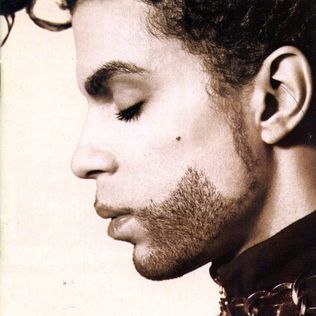
The Hits was released as two separate volumes, neither of which was sequenced with more than a slight concession to chronological order, both stacked with actual hits—along with some odd choices—and each with a pair of “new” songs. The Hits 1 offered the laid-back single “Pink Cashmere” and a live version of “Nothing Compares 2 U”. In addition to “When You Were Mine” and “I Feel For U”, this would suggest that the first volume was intended to showcase tunes that were hits for others. The Hits 2 could be seen as the raunchier of the two, leaning on his more suggestive lyrics, and included the rocking “Peach” (featuring Kim Basinger on sampled moan of ecstasy) and “Pope”, which samples comedian Bernie Mac and seems to be highly influenced by Digital Underground.

As long as you were going to buy both anyway, The Hits/The B-Sides boasted a third disc of tracks collected on CD for the first time. While not all-inclusive, it did spotlight many of the gems hidden on 45s and 12-inches throughout the ‘80s, including “Erotic City”, “God”, “How Come U Don’t Call Me Anymore?”, and the standalone single “Gotta Stop (Messin’ About)”. Granted, that means there are cast-offs like “La, La, La, He, He, Hee”, but who else was loading up quality B-sides like these? Two unreleased nuggets cap the disc—the alternate “video mix” of “4 The Tears In Your Eyes” aired during Live Aid after being donated to the USA For Africa, and the majestic “Power Fantastic”, recorded during the last days of the Revolution.

Those looking for just the hits in a simple package only had to wait until 2001’s The Very Best Of Prince, which presented the more obvious choices from the same period on a single disc. Five years later, Ultimate Prince offered a different smattering with a disc of extended mixes, and ten years after that, the posthumous double CD 4ever was mildly streamlined around the contents of The Hits 1 and The Hits 2, including “Peach” and the live “Nothing Compares 2 U”, with the added bonus of the 1999-era outtake “Moonbeam Levels”.

At any rate, The Hits effectively closed a chapter in Prince’s career, drawing a definite line between what happened before, and what would come after. He would continue to intrigue, certainly, but he would also confound.

Prince The Hits 1 (1993)—3
Prince
The Hits 2 (1993)—3
Prince
The Hits/The B-Sides (1993)—

Friday, August 7, 2020

Prince 14: Love Symbol

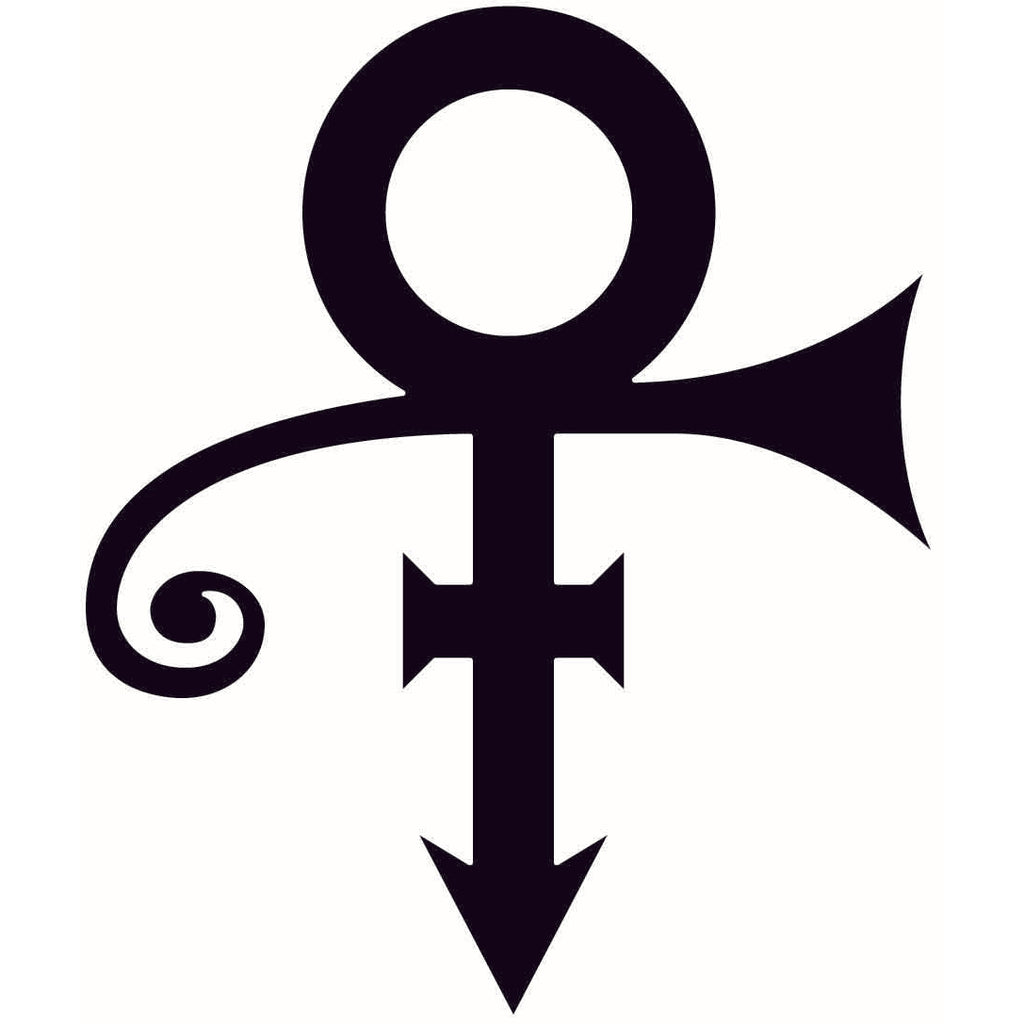
Those who hadn’t been paying attention might not have noticed that Prince had kept up the same rate of output for the better part of a decade at this point, and that doesn’t include all the songs he gave other people and left off his albums. Diamonds And Pearls still had legs when news came of his next album, this one officially titled with an unpronounceable rune. This artsy combination of the traditional symbols for male and female wasn’t such a surprise for the guy, but it made it very difficult to talk about the album. Anyplace the label couldn’t use the graphic itself (which had been supplied to all press outlets), the album was referred to as Symbol. Over the years, this changed to Love Symbol, as that’s how Prince had copyrighted the image. When he changed his name to the same squiggle as a protest the following year, the symbol had become larger than the album itself.

And what about that album? Well, it’s very much a continuation of the modern R&B of which the New Power Generation was capable. The first two songs were the first two singles; “My Name Is Prince” is an unconvincing gangsta rap and “Sexy MF” seems to exist only to put a hook to that particular twelve-letter word. “Love 2 The 9’s” begins more like the early soul of his first albums, until the rap break. “The Morning Papers” is finally a decent ballad, complete with guitar solo. “The Max” is mostly a listenable hybrid, though good ol’ Tony M. gets to punctuate each chorus with a rap. “Blue Light” mixes funk with reggae fairly well, but “Eye Wanna Melt With U” (that first word being an eye symbol, of course) is mostly tossed off. You’re better off skipping ahead to the ultra-smooth “Sweet Baby”.

We were hoping “The Continental” would somehow evoke Christopher Walken’s recurring character on Saturday Night Live, but instead it’s a loud track with a rap by Carmen Electra, a protégée he’d already dumped for Mayte Garcia. “Damn U” is another sultry ballad, then like clockwork we’re back to the high-energy funk of “Arrogance”, a relatively brief track that leads right to the dueling raps in “The Flow”. Catchy with a mildly Eastern motif, “7” brings back the finger cymbals we thought he misplaced after Around The World In A Day. “And God Created Woman” is such an obvious candidate for a Prince title we’re surprised it took him this long; the song itself is nothing much. “3 Chains O’Gold” has all the hallmarks of a grand epic, and apparently it was designed that way; more about that below. The guitar work is great, but the ending is just a little too Hollywood. The actual finale of the album is given over to “The Sacrifice Of Victor” another rap hybrid in falsetto that drops various hints about his childhood in the lyrics. (He since stated for the record that “Victor” is not the translation of the squiggle that served as the album title, so there.)

One odd feature of the album is the two dialogue segues, featuring actress Kirstie Alley (then starring on the final season of Cheers) as a befuddled reporter trying to get answers out of our hero. Nowadays they just seem silly, but apparently these bits were supposed to play a larger part of the album, which at one point encompassed a “funk opera” (our words) of sorts entailing those mythical chains of gold. (We haven’t heard any of the bootlegs of the working versions, nor have we seen the full-length 3 Chains O’Gold film, and we don’t plan to.)

Yet the biggest obstacle to Love Symbol is its length, amounting to a CD packed to the gills. There’s just too much music here. Prince had always had more material than he knew what to do with, and now that vinyl wasn’t anyone’s priority, he could load up an album to capacity. That doesn’t always translate to quality—after all, Sign "☮" The Times had been reduced from three records—and this album is hardly in the same league. It sold okay, of course, thanks to the singles.

Prince & The New Power Generation o|+> (1992)—2

Friday, May 8, 2020

Prince 13: Diamonds And Pearls

After a few years of less-than-stellar music, and seeing the genre now called R&B evolving without him, Prince needed to start making hits again. To his credit, he began working with a set collective of musicians with whom he could interact, and thus The New Power Generation was brought forward. Some members even took prominent roles in the videos and other appearances, in the spirit of the Revolution an eternal half-decade before. (They also included dancers and rappers, which we’ll get to soon enough.) Diamonds And Pearls confidently presented the new combo; Prince being Prince, the artwork sported a holograph, and the interchangeable women flanking him on the cover and the videos were dubbed Diamond and Pearl.

He must have been inspired, as research tells us that for the first time in forever, all the tracks were developed specifically for the album, with nothing recycled from the vault. It’s a solid set start to finish, and paced well. “Thunder” has a dark groove, and “Daddy Pop” focuses on fun; unfortunately, NPG rapper Tony M takes over the second half of the song, and will elsewhere. Vocalist and keyboard player Rosie Gaines makes a much better impression on the title track, which was one of many hit singles, as was “Cream”. He dusts off his falsetto for the mildly jazzy “Strollin’” and “Willing And Able”, while the more decadent “Gett Off” was wisely chosen to provoke as the first single.

“Walk Don’t Walk” features protégée Elisa Fiorillo prominently, and cleverly uses a car horn sample as part of the track. It’s a sharp detour into “Jughead”, a Tony M showcase that sounds like a cross between The Time and Digital Underground and just doesn’t fit, the closing “argument” being particularly intrusive. “Money Don’t Matter 2 Night” is much more like it, a mid-tempo confection, then “Push” confuses everything, combining his early funk, Clare Fischer strings, and interjections from Rosie and Tony. “Insatiable” is complete slow jam along the lines of “International Lover”, but rather than end the album there, “Live 4 Love” turns the beat up again. Seeing as it’s subtitled “Last Words From The Cockpit”, perhaps the connection was intended; it even takes time for an extended guitar solo, a rarity on this album.

We’ve given a lot of Prince albums the three-star rating, even the more trying ones. Diamonds And Pearls was very much in the R&B vein, and far away from guitar-driven rock, so those of us not concerned with the pop charts didn’t pay much attention. (His propensity for turbans and buttless pants didn’t excite us much either.) But it was clear the little freak still had it, and deserved the sales that followed.

It took a while, but a long-gestating expansion program finally appeared in celebration of the album’s 32nd birthday. The remastered album was paired with a disc of “single mixes and edits” for the Deluxe Edition, whereas the Super Deluxe Edition added another three hours of vault tracks, including songs written for and/or recorded at the time by the likes of Rosie, Chaka Khan, Mavis Staples, and Martika, plus two discs devoted to a concert at his Glam Slam nightclub. This is a hot show, focusing on the album but including previews of “The Sacrifice Of Victor” and “Sexy M.F.”—the next album already being complete—plus his reclaimed “Nothing Compares 2 U”. “Cream” and “1999” kick off lengthy jams, the latter into “Baby I’m A Star”. Tony M is all over it, and the set ends with the standard version of “Gett Off” followed by the “Houstyle” arrangement. (A Blu-ray included the video of this show and others, along with the complete Diamonds And Pearls Video Collection, which interspersed videos with band interviews.) All together, a motherlode for fans of the album.

Prince & The New Power Generation Diamonds And Pearls (1991)—3
2023 Deluxe Edition: same as 1991, plus 15 extra tracks (Super Deluxe Editions adds another 47 tracks plus Blu-ray)

Friday, January 10, 2020

Prince 12: Graffiti Bridge

Having had success with the Batman album, Prince used his regained clout to bank another film, which he’d once again write and direct all by himself. Anyone who enjoyed Purple Rain onscreen would be rightfully curious as well as nervous about a sequel, and unfortunately, Graffiti Bridge did not make anybody happy.

The film sets up another battle of wits, wills, and music between the Revolution-less Kid and Morris Day, who not only still has the Time under his thumb, but the band regained Jimmy Jam and Terry Lewis, who in the real world had been bounced a few years earlier for daring to express their own ideas, only to find multimillion-dollar success producing Janet Jackson and that really hideous song by the Human League. The movie has little of the grit or charm of its predecessor; plus, being filmed inside the Paisley Park complex, it looks like it takes place entirely indoors.

This time, however, the companion album included songs by the other performers in the film—all signed to the Paisley Park record label, natch—making it more of a soundtrack. We get several songs from the Time, including a pale Xerox of “The Bird” and even “Oak Tree”, Morris’s own pale Xerox from his stillborn solo career. (For even more posturing, the Time had a full album of their own available at the same time. Pandemonium, for a change, was not entirely the work of Prince, and features a fun single in the form of “Jerk Out” and a head-scratcher called “Donald Trump (Black Version)”.) The legendary Mavis Staples sings “Melody Cool”, her character’s theme song, George Clinton helps out (kinda) with “We Can Funk” (developed from a 1984 jam with the Revolution under the more explicit title), and young protégé Tevin Campbell actually had a hit with “Round And Round”, now best known for a vocal hook sampled on the opening credits for several seasons of Top Chef.

Prince’s own songs are very mixed bag. Most came from ideas that had been percolating as far back as before 1999, and sound disjointed in the context. A foreboding spoken intro notwithstanding, “Can’t Stop This Feeling I Got” tries to get the party going, and “New Power Generation” would become more important in a couple years when he started calling his band that. “The Question Of U” is right out of left field; turns out it’s from the Parade era, and that’s probably why we like it. “Elephants & Flowers” is fairly catchy, even if the lyrics make no sense, while “Joy In Repetition” brings back the weirdness. (Surprise! It originated in that murky era when Sign "☮" The Times was a triple album under another title.) “Tick, Tick, Bang” is an annoying, noisy, sample-heavy track not as strong as the Time track that follows it, but “Thieves In The Temple”, Prince’s only hit from the album, still sounds promising. “Still Would Stand All Time” is a simmering ballad that works despite its lushness and overemoting, unlike the title track, which tries to be an anthem and misses wide right. Had he forgotten he’d sung about “The Ladder” five years before? “New Power Generation (Pt. II)” provides a nice reprise for the credits rolling in our heads.

Besides being way too long, Music From Graffiti Bridge is frustrating, and basically another step back. In the real world, rap and new jack swing were taking over. Working in a vacuum wasn’t doing him any favors, and while that’s how he put together much of his greatest stuff to begin with, at least Purple Rain exuded a gang mentality that had you rooting for him. This time around, the Morris character’s accusations that nobody understands his music get a grudging nod. All that said, the Prince songs on their own, outside of any cinematic context, are worth the trip.

Prince Music From Graffiti Bridge (1990)—3

Friday, August 23, 2019

Prince 11: Batman

One of the more surprising projects of Prince’s career involved music designed to tie in with what would prove to be the first major reboot of a superhero franchise. While Danny Elfman wrote the score for Tim Burton’s vision of Batman, which had its own soundtrack album, Prince got roped into making an album of music “inspired” by the film. (Plus, after several albums that failed to reach the commercial heights of Purple Rain, Warner Bros. figured they could get The Purple One to do them a solid. This would not bode well for their relationship going forward, but back to our story, see.)

While some of the music was indeed included in the film—which your correspondent has never, ever seen and doesn’t plan to—Prince’s songs profess to present the point of view of various characters, the lyric sheet helpfully telling us who says what. Luckily for those of us just here for the music, the album isn’t bad at all. Rather than pluck a variety of incomplete ideas from his growing stockpile of ideas, he devoted his full creativity, as well as once again playing everything except the horns.

But for the voice samples and orchestral touches, “The Future” comes off like more minimalist funk, which always works in his case. The voice of Jack Nicholson jars us back to the present, and “Electric Chair” both turns up the drums and lets loose his electric guitar. Then there’s “The Arms Of Orion”, which is supposed to be the romantic duet, and sure enough, Sheena Easton is brought back to sing the female part. It seems almost too tame for even him, probably because she apparently wrote the lyrics, and probably would have been better off on her own album. “Partyman” is another one of those danceable tracks he can create in his sleep—nice little nod to Sly & the Family Stone on the choruses—and while “Vicki Waiting” mentions a character in the movie, the track works on its own. (Just substitute another two-syllable name.)

What we still called side two in those days is a little more hit or miss. In a rare case of Prince repeating himself, “Trust” builds on the tempo and structure of “Baby I’m A Star”, but’s it’s still catchy. These days “Lemon Crush” seems reflective of recent Michael Jackson, as well as suggesting the new jack swing genre nearly upon us. The biggest throwback to his old sound is “Scandalous”, a slow jam sung in falsetto, complete with female moans and sighs poking through the mix here and there. (This was given even more heat when it was remixed three times as part of “The Scandalous Sex Suite” with further contributions from Kim Basinger herself.) While it doesn’t do much except pad a short album, “Batdance” became the best advertisement for the movie, mashing up more samples of dialogue with other songs from the album and even the old Batman TV theme. It’s actually kinda fun, until the tempo drastically changes, but at least it comes back for the end (on the album, but not the single).

The movie was a huge hit, and Prince’s album did almost as well. (You could even pony up for the limited edition “Batman in a can”, which housed the CD with different artwork and booklet inside a miniaturized replica of a film canister. Nice idea, but it took up space and tended to roll off a shelf.) Silly as it all was, it was proof we shouldn’t write Prince off just yet. However, he had further cinematic goals, which would unravel it all again. (That’s called foreshadowing. Can you stand it?)

Batman™ Motion Picture Soundtrack (1989)—3

Friday, May 10, 2019

Prince 10: Lovesexy

Along with the “racy” cover art, Lovesexy was notable at the time mostly for what it wasn’t. A set of edgy funk and rap called The Black Album had been scheduled and hurriedly pulled from release the previous December, whereupon Prince just as hurriedly recorded this album in its place. As the legend of the shelved album grew, and what did come out didn’t exactly wow those whose interest had been waning since 1985, Lovesexy was considered something of a flop, and has been somewhat forgotten since, except for the cover, of course. That’s too bad, because listeners will find the music within many of the elements of the better albums in his catalog, as well as a few new buzzwords that would emerge again.

“Eye No” (the first word is actually the symbol of an eye, which we’re not going to bother with) begins with an intriguing new agey mood and the voice of a waif informing us that rain is wet (really) before a horn-filled groove takes over for a party featuring his full band. From there, the only other musicians he uses are Sheila E. on the drums (slammin’), a couple of female vocals, and a couple of horns. “Alphabet St.” was the first single, and another of his simple yet excellent one-man-band opuses. As a single, it stops at the right time, but here on the album, he insists that Cat Glover rap a few verses. The rhythm guitar makes the whole track work. Speaking of guitar, “Glam Slam” combines the occasional Arabian orchestral touches from the last three albums into another toe-tapper underneath his distorted fretwork. A lengthy faux-classical interlude on strings takes up too much time before his ode to “Anna Stesia”, another muse he hopes will bring him closer to God and Jesus.

The chorus and title “Dance On” may suggest a party, but the lyrics are pure social commentary hidden in allegories and puns, while Sheila E. skitters around her kit. The title track would almost seem to recall “1999”, both in tempo and instrumentation, while reminding us once again that rain is wet and alluding to a new power generation. A section with sped-up and slowed-down voices almost seems to poke fun at his image. “When 2 R In Love” is a slow jam rescued from The Black Album, and would have been the least exciting track there too. “I Wish U Heaven” is a much catchier improvement, too short, and has us really missing Wendy and Lisa. As the third single from the flagging album it didn’t catch fire, which is too bad, since it deserves better. Finally, “Positivity” stretches more “we gotta got together” platitudes in a low register over a snaky stroll, stretching out under even more guitar soloing. We go out with the sound of what are probably supposed to be ocean waves but sound more like someone sloshing around a bathtub.

Prince daringly and defiantly programmed the CD version of Lovesexy as a single track, without indexing, so the listener would either have to hear it all at once. In retrospect, this wasn’t a big deal considering those who had the cassette were also subject to two lengthy halves, but in today’s culture of instant gratification, even the version first available for streaming was just the one 45-minute track. Just as he wanted it. Check it out.

Prince Lovesexy (1988)—3

Tuesday, February 12, 2019

Prince 9: Sign “O” The Times

Considering that he was never remotely suspected of using cocaine or amphetamines, Prince was a particularly prolific musician. By the time Parade and Under The Cherry Moon came out, he was already on his way to having another album ready. Not just another album; first there was the double Dream Factory, plus the vari-sped Camille, which were somewhat combined into the triple Crystal Ball. Eventually, sixteen tracks were spread across two records, released as Sign "☮" The Times, credited to Prince alone, having disbanded the Revolution the previous fall. Most of his work thus far had been completely solo works anyway, and while the Revolution does appear on a live track recorded the year before, pretty much everything else save the horns and some vocals are all him. (He also had time to record two LPs’ worth of funky smooth jazz under the Madhouse moniker.)

Released ahead of the album, everybody called the infectious title track “minimalist” and it is, based around a simple stock drum pattern, with a few bass runs and lots of bluesy guitar. It’s probably also the last time anybody referred to heroin as “horse”. Lest anyone think he was leaving the funk behind, “Play In The Sunshine” is an upbeat distillation of “1999” and “Delirious”, then—“Shut up already! Damn!”—“Housequake” is an even nastier groove, and pretty funny to boot. (His voice is sped up a tad here, and credited to “Camille” on other instances too.) “The Ballad Of Dorothy Parker” keeps up the funk, and manages to slip in a Joni Mitchell reference halfway through. This is where the album starts to get what people call “eclectic”, and we’re pretty sure it has nothing to do with the legendary wit of the same name.

The meaning of “It” shouldn’t be too hard to figure out, but there’s something about that raspy vocal that cracks us up. The very surreal “Starfish And Coffee” becomes less so when one learns it’s an account of Susannah (and Wendy) Melvoin’s grade school classmates, eventually given a charming reading on a mid-‘90s reboot of The Muppet Show. The horn-infused “Slow Love” fits its title just fine, a Hey Love-style jam with minimal falsetto, and things pick up again on “Hot Thing”. “Forever In My Life” could be called a departure, wherein he expresses a desire for long-term commitment over some subtle yet tasty acoustic guitar.

The idea is swatted away with the surprising hit in the form of “U Got The Look”, basically a duet with Sheena Easton, who had a hit a few years earlier with “Sugar Walls”, and definitely Prince’s type. Here’s where “Camille” truly stands out, seeming to get squeakier with every line. “She” apparently sings “If I Was Your Girlfriend” too, making the pronouns and perspective dizzying. “Strange Relationship” seems like a rearrangement of the same tune, but with a more straightforward structure and no monologue. The extremely catchy “I Could Never Take The Place Of Your Man” was already a terrific single, with its “nah-nah-nah-nah” vocals predicting “November Rain”; on the album it’s extended by about three minutes with a tempo shift and guitar solos before reverting to the original theme.

Despite being only two chords over one bass note, “The Cross” builds from its simple strum to a driving grunge that Lenny Kravitz would eventually cop for three full albums. Suddenly we’re transported back to Paris the previous summer for “It’s Gonna Be A Beautiful Night” with the expanded Revolution, reviving the “oh-wee-oh” Wizard Of Oz chant last heard in “Jungle Love”. Finally, “Adore” says goodnight with another horn-driven slow jam, with about four or five vocal parts weaving in and out of each other at all octaves.

Because the four sides’ worth offer a lot to ingest, Sign "☮" The Times takes a lot of time to appreciate. That said, it’s diverse, a lot of fun, and better than 1999. Pare it down to a single, and it would be even better, but what would you leave off? Besides ending his golden era, it mostly signified the end of the Revolution, and we miss them. (He didn’t tour America behind it, but did release a concert-style film, which did about as well as his previous film, but is worth checking out if you can find it.)

The eventual posthumous expanded version of the album presented a wealth of material for fans and scholars. While the Deluxe Edition merely added all the pertinent single mixes, B-sides, and 12-inch mixes, the behemoth Super Deluxe Edition offered another three discs of tracks from the vault, detailing the progress of the album through all its configurations, finally revealing legendary outtakes, and (of course) adding some stuff that wasn’t part of the soup at all, such as a track with Miles Davis and several songs demoed for pre-comeback Bonnie Raitt. (Two further CDs documented a live show from June 1987, and a DVD presented a New Year’s Eve concert from the newly completed Paisley Park Studios.) While we can’t reconstruct each of the unreleased albums from these contents alone, we can still marvel at his productivity and explorations, and lament the loss of the Revolution—Wendy and Lisa in particular. We’ll even go so far as to say the record company was right, and Sign "☮" The Times was better as a double album than the triple he presented them.

Prince Sign "☮" The Times (1987)—4
2020 Deluxe Edition: same as 1987, plus 13 extra tracks (Super Deluxe Edition adds another 53 tracks, plus DVD)

Friday, November 2, 2018

Prince 8: Parade

Prince’s second major motion picture was a big deal destined to crash, and it did. So a lot of what people think of Parade, the album designed as a companion to the film, is colored by whether they have any opinion of Under The Cherry Moon, and most of that isn’t positive. A narcissistic exercise in black and white, at first it appears to take place in an earlier decade, but the music doesn’t match, and much of the dialogue is too modern. Prince directed the movie himself, and completely relishes the script in every scene. Jerome Benton plays a larger version of the version of himself from Purple Rain, but doesn’t quite have the capacity for some of the more dramatic lines he has to deliver.

Therefore it’s best to take the album as its own entity, despite some obvious references in the lyrics and a heavily French influence. While credited to the Revolution, the whole band only plays on three tracks, the rest consisting of Prince by himself, per usual, with help from Wendy and Lisa, and lots of cinematic orchestration by Hollywood veteran Clare Fischer. (Pointedly, however, all the singles taken from the album save the first were Revolution tracks.)

“Christopher Tracy’s Parade” doesn’t just open the album; it kicks off a suite of tracks that were recorded as one sequence, with changes in rhythm, time, and key intact. A fanfare with plenty of flourishes, it crumbles down into something of a muddle, before returning as “New Position”, accompanied by the barest percussion and broken steel drums. That slows down as well to the even more spare, even briefer “I Wonder U”, wherein Wendy sings the lead. It’s a quick change of tempo to the disturbed waltz of “Under The Cherry Moon”. Strange as it is, the segment works. It’s not the psychedelia of the last album, nor is it rock or funk. And that makes the arrival of “Girls And Boys” welcome, as it sounds more like the type of Prince track people might have come to expect, finger cymbals and all. The whole band seems to be singing the repeated chant of a chorus, with Wendy’s sister Susannah and Sheila E. in there too, plus a woman talking in French for about a minute. “Life Could Be So Nice” has a big uptempo sound, though it’s just him, and it too stops abruptly for the lush instrumental “Venus De Milo”, just a hint of the background music used in the film.

Side two is framed by two of his most underappreciated tracks. “Mountains” has all the pieces: a good groove, Prince on falsetto, decent horns that don’t overplay, a catchy chorus. (There’s a nearly ten-minute version on the 12-inch single, which would be nice to hear again.) In case you forgot where we were, the track fades into another French trifle, “Do U Lie?” Female vocals fight for space with the orchestra, and yes, there’s an accordion. The song that people do know is “Kiss”, which he originally gave to one of his protégé slash side projects, only to take it back when he liked their minimal arrangement. The video is still fun for showing of his sense of humor. The Revolution returns for “Anotherloverholenyohead”; the wordplay of the title likely contributed to its lack of success on the radio, but the movie was out of theaters by then anyway. And everything quiets down for “Sometimes It Snows In April”. This gorgeous lament features only acoustic guitars and piano, with Wendy and Lisa joining his vocals for an extended ethereal introduction. The chorus, sad as it is, has wonderful changes, and just like that, the album’s over.

Parade is a strange little album, but very rewarding given time to breathe. It’s hard to believe now that it came out less than two short years after Purple Rain, during which he did two albums for Sheila E. and tried to morph the remains of The Time into The Family (known today for releasing the first version of a little number called “Nothing Compares 2 U”). Also, during the three-month period between the release of the album and the film, he was competing with himself, as the Bangles had a smash hit with “Manic Monday”, credited to his character onscreen.

Prince and the Revolution Parade: Music From The Motion Picture Under The Cherry Moon (1986)—