Showing posts with label 2011. Show all posts

Tuesday, January 27, 2026

Jayhawks 10: Mockingbird Time

Apparently Mark Olson and Gary Louris found recording and touring together again to be so easy that they reconvened what some would call the classic lineup of the Jayhawks for a new album. Maybe Olson needed the money, and Louris’ sole credit for the production raises an eyebrow, but if the credits are to be believed, Mockingbird Time was a pure collaboration.

Right away on “Hide Your Colors” it seems they’re trying to recapture the genre blending that made Tomorrow The Green Grass so good. The harmonies go unexpected places, and the strings are present but not overpowering. Once Olson’s voice cuts through the mix on “Closer To Your Side”, it feels like home. “Tiny Arrows” is one of several tracks here that has a gothic undercurrent, but this one is nicely smoothed over by the mildly Byrdsy “She Walks In So Many Ways”, which is really a rewrite of Manfred Mann’s “Pretty Flamingo”. “High Water Blues” has some more striking imagery, but surprisingly goes into an extended dueling acoustic solo that would sound a lot better on stage than in the middle of an album focusing on songwriting. The title track meanders through several melancholy sections, but again, runs too long to keep interest.

“Stand Out In The Rain” is more like the old sound, with the same riff as “Wichita” from Hollywood Town Hall, but it goes to another place for the solo. In the same vein, “Cinnamon Love” is another one that mixes riffing with major-seventh chords and unique imagery, and a tendency to repeat a phrase for some kind of emphasis. “Guilder Annie”, whoever she is, has a mild jangle in a waltz tempo for a nice change of sound. It’s followed by another ode to a woman of mystery, in this case “Black Eyed Susan”, which was one of the fabled “mystery demos” from two decades before. “Pouring Rain At Dawn” is a welcome piece of picking after all the mythology that’s come before, and “Hey Mr. Man” takes us out on a rocker.

Throughout Mockingbird Time we hear their inimitable harmonies, Karen Grotberg’s wonderful piano (and voice), and that terrific rhythm section. They didn’t exactly pick up where they left off, and the reunion wouldn’t last, but it’s still a worthy chapter in the saga. Better to have it than not.

The Jayhawks Mockingbird Time (2011)—3

Friday, August 15, 2025

Todd Rundgren 33: [re]Production

This curious album apparently arose from Todd Rundgren’s residency in the music department at Indiana University, and came to fruition during a record-making fantasy camp. The concept of [re]Production is intriguing, in that it finds Todd covering songs from his various production gigs over the decades. However, his quest to do something contemporary meant that the results were hi-NRG ‘90s style dance versions.

His voice is unmistakable—even when AutoTuned—and the digital instruments he uses are familiar from most of the one-man band albums he’d been putting out all century. Somebody might have had hits with these arrangements of Patti Smith’s “Dancing Barefoot”, Meat Loaf’s “Two Out Of Three Ain’t Bad”, or Psychedelic Furs’ “Love My Way”, but coming from Todd they sound like parody. It’s more successful on songs we don’t know, like “Chasing Your Ghost” by a band that would eventually evolve into Red Hot Chili Peppers, and on the gastronomic reconstruction of “Personality Crisis”. It is daring to put a banjo on “Tell Me Your Dreams” from Jill Sobule’s little-heard first album, and at least he doesn’t mess with Badfinger’s “Take It All” too much. Cheap Trick’s “I Can’t Take It” is just a little synthed-up, but we can’t hear XTC’s “Dear God” without the taint of his and Andy Partridge’s mutual rancor.

Todd himself acknowledges the callback to his earlier cover project Faithful in the liner notes, which was frankly more ambitious and successful. [re]Production is a novelty, and nothing more.

Todd Rundgren [re]Production (2011)—2

Tuesday, May 20, 2025

Thomas Dolby 6: A Map Of The Floating City

When we last left Thomas Dolby, he was writing music for video games. In that period away from the record business he went even further into emerging technology, creating tools and content for interactive applications, including ringtones. So when he finally did return to the commercial marketplace in the new century, it was with an album that tied in with a online multiplayer game that we don’t think is accessible anymore. (We looked.)

A Map Of The Floating City was conceived and recorded on a restored lifeboat deposited in the back garden of his English home. While his musical technology has kept up with the times, it still sounds like a Thomas Dolby album. (Old friends like Matthew Seligman, Kevin Armstrong, and the woman who sang on “Hyperactive!” show up in the credits.) There is a loose concept to be discerned within the sections of the album, which had been released as themed online EPs in the months leading to the full release of the album, although in a different order than the tracks appear here. But anyway.

Urbanoia is the first part, and it’s an apt description. “Nothing New Under The Sun” is the bold opening statement, with clever rhymes and sardonic wit that seems to poke fun at himself, even stating “any fool can write a hit” at one point. As fresh as that track sounds, “Spice Train” is driven by the wacky synth sounds most people would associate with the guy, with lots of exotica touches that are kinda distracting from the lyrics. “Evil Twin Brother” is another travelogue, and features prominent vocals not only in Russian by Regina Spektor, but also the guy who sang the original Pokémon theme. “A Jealous Thing Called Love” has something of a bossa nova feel filtered through Bacharachian horns, redeemed by a killer chorus.

While the horns carry over onto the doomed love story in “Road To Reno”, the journey moves sideways for the Amerikana section. “The Toad Lickers” is near Cajun bluegrass, and a little too silly. But with its piano and fretless bass, “17 Hills” is a lovely turn away from some of the gimmickry we’ve heard so far, and right when the drums come in, so does Mark Knopfler, soloing tastefully over the balance of the track. Something of a Sinatra pastiche, “Love Is A Loaded Pistol” keeps us safe in the low-key if melancholy mood.

“Oceanea”—the “title track” of the last section—is even dreamier, with a simple yet haunting theme played on guitar, and even lovelier when the verses are sung by Eddi Reader. The island feel and return to bossa nova on “Simone” seems a little too much like a retread, and while “To The Lifeboats” stays too much in that mode, the loud bridge helps shake things up.

While it stumbles shortly after it starts, A Map Of The Floating City eventually finds its way through all the styles to deliver a satisfying listen. A nice surprise indeed. (Those who picked up the limited double-disc edition got instrumental mixes of the songs.)

Thomas Dolby A Map Of The Floating City (2011)—3

Tuesday, March 11, 2025

Todd Rundgren 32: Johnson

While Todd Rundgren professes to have a blues background, like most white American kids in the ‘60s, he found out about Robert Johnson via the British blues players who revered him. Supposedly when the label who distributed his last album got a hold of some of the rights to Johnson’s music, they strongly suggested Todd cover them. Never one to shy away from a dare, he did, resulting in the embarrassingly titled Todd Rundgren’s Johnson. (It was previewed by a digital EP called Todd Rundgren’s Short Johnson.)

If you want to hear Todd wail on the guitar, this is the album for you. Keep in mind you’ll also have to hear him sing the tunes, and not very convincingly. Naturally he played all the instruments—save Kasim Sulton on bass—which means there are lots of boomy drums, which worked on Arena, but just sound bloated here. While the opening “Dust My Broom” isn’t bad, even though it doesn’t use the patented riff, the rest simply wear out the novelty. Some of the more familiar songs already exist in definitive remakes by the Stones, Zeppelin, and yes, the Blues Brothers. Eric Clapton himself waited forty years before tackling this material in bulk, and even the Red Hot Chili Peppers knew “They’re Red Hot” was supposed to be fun. The cover art wasn’t much better; when the album was re-released eleven years later it used a more attractive albeit anachronistic image, and wisely changed the title to just Johnson.

The album wasn’t a complete surprise to Todd lifers, as he’d played many of them on tour a year before, but with the reliable Prairie Prince and Jesse Gress joining Sulton in the band. One of the shows was recorded and filmed before a devout audience and eventually released as Todd Rundgren’s Johnson Live in a CD/DVD package. The Johnson renditions aren’t much better than what made the album, but hearing an actual drummer interplay with the other members (sorry) is certainly preferable. The bonus is that the setlist includes guitar-focused originals from his own career, including “Kiddie Boy” from the second Nazz album, “Bleeding” from his second solo album, and even “I Saw The Light”. (The DVD, which we haven’t viewed, added more Rundgren originals.)

Todd Rundgren Todd Rundgren’s Johnson (2011)—2
Todd Rundgren
Todd Rundgren’s Johnson Live (2013)—

Tuesday, July 11, 2023

Peter Gabriel 13: New Blood

Now things were starting to get a little out of control. Having enjoyed the kudos for Scratch My Back, Peter got the idea to extend the orchestral remake approach to—wait for it—his own songs. This was hardly a new concept, for people as widespread as Sting and Spinal Tap had gone this route, and it was a worrying trend when once-vital performers saw the remake idea as fresh. The fact of the matter was that they simply couldn’t be bothered write a new album’s worth of tunes. Or maybe it’s the fault of the generation who put them on the map, who’d grown up to be wary of anything unfamiliar.

At any rate, and as might be expected, New Blood is exceptionally concocted, with great care given to both the new arrangements and capturing the sound. It’s an album for diehard fans, who will likely get much more out of it than the casual listener. Some of the tracks actually provide a new perspective; “San Jacinto” in particular is given a sweeping arrangement with a chilly piano intro reminiscent of Tubular Bells, and moves smoothly into its own coda. Without its booming drums, “Intruder” is very different, and scarier; “Darkness” is just as unsettling in this format too. Two songs from the OVO project might spur interest in that obscure CD; even though one is an instrumental, and a lovely one at that, the other is a duet with his daughter Melanie.

But much of the album comes off more like background music. Most of “Rhythm Of The Heat” isn’t that different from the song, until the big climax happens, sounding less like a tribal ritual than a movie soundtrack. “In Your Eyes” is much too urgent, and comes off like a stalker. “Red Rain” is given a brass-heavy treatment that misses on the tension, and “Don’t Give Up” is sung with a woman (not his daughter) who trills like a cartoon bird. A “bonus” rendition of “Solsbury Hill” is preceded by five minutes of ambient sound actually recorded on location, which is a great idea if you like listening to wind blowing.

New Blood is certainly harmless, but it’s just a shame that so much time was put into something that still comes off as a distraction. In fact, the disc of the first twelve tracks without any vocals, included in the “special edition”, is almost preferable, as some of the pieces work best that way, like “Mercy Street”; otherwise that song isn’t any more riveting than the original version. (“Blood Of Eden” was a bonus track in this edition as well, and “Signal To Noise” was available for download.)

He had already taken the orchestra on tour supporting Scratch My Back when he started to prepare for the album. The following year’s Live Blood was culled from two nights in London, with selections from the two orchestral albums augmented by arrangements for “The Drop”, “Washing Of The Water” (another nice duet with Melanie), and “Biko”, which is oddly placed in the middle of the program. Despite the occasional bombast, the album is an intimate listen, helped by his occasional commentary.

Peter Gabriel New Blood (2011)—3
Peter Gabriel
Live Blood (2012)—3

Friday, April 14, 2023

Rush 25: Time Machine

As their history loomed large and technology advanced, Rush celebrated their 35th anniversary as a band with a variety of looks back, beginning with three archival rehashes. Retrospective III: 1989-2008 notably contained two freshly remixed tracks from Vapor Trails and a recent live recording of “Ghost Of A Chance” alongside a decent mishmash of tunes from the six guitar-heavy albums released during that period. Meanwhile, Working Men was a nice idea with cool artwork, but merely recycled selections from the last three live albums, as apparently Atlantic didn’t have the rights to the first three live albums. Each track fades to silence before the next fades up for a disjointed listening experience. Oddly, most of the songs were at least two decades older than their performances, with only an otherwise unavailable “One Little Victory” as an extra. Certainly more interesting was Grace Under Pressure 1984 Tour, a live album originally released as a bonus in 2006’s Replay X 3 box, which presented three live DVDs converted from VHS, including this one. It presents the band somewhat in transition, being roughly halfway between Exit Stage Left and A Show Of Hands.

Around this time, the acclaimed documentary Beyond The Lighted Stage did a lot to boost their cred in the mainstream. Two years later, taking a break from developing new material, the band embarked on the Time Machine tour, which celebrated the 30th anniversary of the Moving Pictures album with a complete performance of same in the middle of a 2½-hour show. (Geddy also changed his backdrop to working sausage makers, tended by the crew.) And naturally, it became a live album. Time Machine 2011 was pointedly recorded in Cleveland, where the band had made early strides when nobody else cared, and also reminded the Rock and Roll Hall of Fame to stop ignoring the band.

The program begins with a smattering of hits, including “Time Stand Still” with Aimee Mann’s voice triggered from a sample. (There are a lot of samples on the album, from cartoons and cult films, that were probably a lot more entertaining in person or on video.) Two new songs already recorded and pushed to radio, “BU2B” and “Caravan”, preview the upcoming studio album already in progress. While the novelty of hearing our favorite Rush album performed live in its original sequence is appealing, Geddy’s voice isn’t up the task, as he’s begun howling the high notes after decades of tempering his shriek. (This is particularly disappointing in “The Camera Eye”, which hadn’t been played live in nearly 30 years.) Neil’s drum solo appears as its own entity rather than as part of “YYZ”, with harmonics buried in the timber leading to the customary Buddy Rich trigger, and Alex gets a 12-string solo spot called “O’Malley’s Break” that sets up “Closer To The Heart”. The crowd, of course, goes wild.

Rush Retrospective III: 1989-2008 (2009)—
Rush
Grace Under Pressure 1984 Tour (2009)—3
Rush
Working Men (2009)—
Rush
Time Machine 2011: Live In Cleveland (2011)—3

Tuesday, April 11, 2023

Neil Finn 5: Pajama Club and Goin’ Your Way

Empty nest syndrome is apparently a universal thing, as Neil Finn discovered when his kids were grown. With more time and space than they knew what to do with, he and his wife Sharon decided to make some music. He played drums for the first time ever, and she played bass. Fellow Kiwi Sean Donnelly was brought in to add keyboards and beats, and Pajama Club was born.

The music on their eponymous (and to date, only) album is predominantly electronic, more along the lines of the experiments of Neil’s first solo album as well as the lo-fi atmosphere of the first Finn Brothers album. His voice is welcome when it’s heard, and Sharon can carry a tune as well, but it’s not always easy to find the songs amid the mix. That said, “TNT For 2” sounds most like standard Finn, “Go Kart” is goofy fun, and the chorus of “Can’t Put It Down Until It Ends” reveals a song crying out for a straight arrangement.

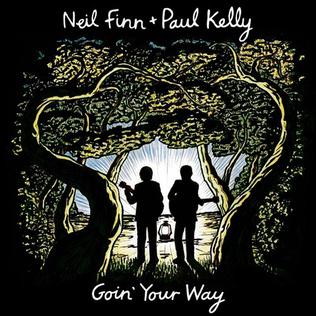
The following year, Neil embarked on a collaboration of sorts with Australian singer-songwriter Paul Kelly, who’d never really caught on in America with his band the Messengers, but was beloved at home. This mutual admiration society resulted in a tour wherein they performed each other’s songs, sometimes swapping vocals, backed by a band including Paul’s nephew Dan on guitar, Neil’s son Elroy on drums, and a bass player not related to any of them. Goin’ Your Way presents a Sydney performance, and it’s both a wonderful retrospective of Crowded House and Neil solo, plus a few Split Enz songs, as well as a nice intro to Paul Kelly’s work. The two-hour set is capped by a fun stomp through Buddy Holly’s “Words Of Love” and a subdued “Moon River”, which gives the album its title.

Pajama Club Pajama Club (2011)—
Neil Finn + Paul Kelly
Goin’ Your Way (2012)—

Friday, July 8, 2022

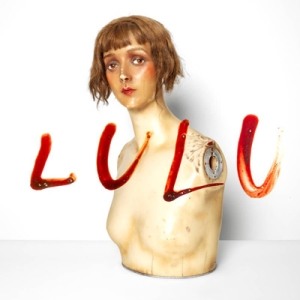
Lou Reed 32: Lulu

While he’d been mildly active, and certainly visible, Lou Reed wasn’t celebrated for any new innovations in the 21st century. Most of his musical adventures involved reviving earlier triumphs; his last album of new material was just plain ugly. But despite finding true love with Laurie Anderson, he wasn’t about to turn softer or gentler, and was happy to explore the worst aspects of the human condition via yet another pile of songs designed to accompany yet another obscure German play being directed by Robert Wilson. (The original playwright also wrote the text that would become the modern musical Spring Awakening.) Since the source material concerned a seductress turned prostitute, it naturally behooved Lou to go out of his way to load up the libretto with scatological references and violent sexual imagery. Adding to the carnage was his decision to record the songs with Metallica, who hadn’t exactly been relevant for a couple of decades themselves.

On paper, the idea of Lou Reed backed by Metallica sounds like a really terrible idea, and the audio evidence doesn’t contradict. It wasn’t enough to just knock out a few songs—Lulu is a double album, running nearly 90 minutes. Don’t be fooled: this is not art. It’s not even decent noise.

“Brandenburg Gate” starts okay, with a few strums of an acoustic and Lou singing on pitch, but then three power chords crash in and James Hetfield starts yelling “small town girl” at the end of each phrase and Lou’s grasp on melody goes out the window. This is the shortest track on the album. “The View” would be a hilarious theme song for the talk show of the same name, as it’s built on doom-soaked chords for Lou to rant over. Hetfield offers a chorus of sorts as small respite, and there’s a decent solo, so perhaps the band could rework it on their own. What sounds like a viola opens “Pumping Blood”, soon melded and overtaken by feedback and another crunching riff that deserves better than Lou yelling the title over it. This gives way to a moodier section while Lou talks about, you guessed it, pumping blood, then a completely different riff takes over, then another. The same feedback leads to the speed metal of “Mistress Dread”, providing at least a consistent tempo for headbanging. “Iced Honey” repeats the same two chords, and is shorter than it seems; the dueling vocals when they start do not favor either singer. “Cheat On Me” opens with three minutes of a near-ambient drone that will turn to feedback when Lou cuts in, and a drum pattern right out of the Moe Tucker playbook starts up. But Lars Ulrich can’t play that simple that long, so around the time Lou and James start yelling at each other he’s hitting more and more drums and adding cymbals. This continues for another six minutes.

“Frustration”—too easy a target for a song title—begins with a minute or so of metallic scraping and stabs at an organ, like something used as percussion on a Tom Waits album, then the most basic metal riff of all time provides another bed for Lou to rant over. Everything comes to a halt, and then he decides to sing a melody over the tuneless scraping. The most listenable track isn’t exactly a relief, as “Little Dog” sports minor-key acoustic strumming in one channel and electric feedback in the other and also in the center, the lyrics lamenting the existence of the subject. (Lou loved dogs, and he and Laurie had lost Lolabelle to pancreatic cancer just a few years before.) “Dragon” goes back to the established template of ambient noise eventually taken over by riffing that, again, deserves a better lyric and vocal than the eleven minutes of ranting here. “Junior Dad” finally combines a melody with a sentimental backing, with a drone not unlike a John Cale viola, but more like what’s used on an Eno album. It also runs over nineteen minutes, the last nine of which consist solely of that drone.

It’s mostly too bad that there are some decent metal riffs throughout Lulu, doomed to exist only for Lou to yell over. His voice is ragged but not in a method acting way. He doesn’t sound scary; he just sounds weak. The few times Hetfield gets to let loose with his yowl just jar with Lou’s bleating, to the point where they don’t even sound like they’re on the same album. (Frankly, we’d love to know how many times during the sessions Lou glared at Lars or ordered him to just shut up already.)

David Bowie allegedly loved this album. And there is music on Lulu, really. It’s just not worth waiting for. It would also be the last new music Lou Reed would release in his lifetime.

Lou Reed & Metallica Lulu (2011)—2

Tuesday, November 9, 2021

Paul Simon 17: So Beautiful Or So What

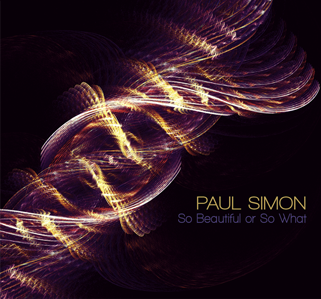
After all this time, and a handful of, frankly, “eh” albums, one might be forgiven for not expecting to be wowed another time by Paul Simon. So Beautiful Or So What is sneaky in that it starts out tepidly, but soon elevates to something special.

Much of the album was recorded alone at his home studio, so there are plenty of loops and effects. These seem to dominate “Getting Ready For Christmas Day”, which is built around a sermon from several decades earlier, then becomes a relevant lament for children stationed overseas during the holidays and the determination to muddle through somehow. The same clattery backing supports “The Afterlife”, one of his more successful attempts at approaching aging and death with humor. “Dazzling Blue” has echoes of “Under African Skies”, which is fine with us. A very intricate guitar part, half plucked and half strummed, drives “Rewrite”, which rises above the “help me, thank you” hook in the chorus with subtle verses. Those tracks will not prepare you for “Love And Hard Times”, a gorgeous rumination on creation and blessings, with a gentle piano and string arrangement to match his gentle guitar.

“Love Is Eternal Sacred Light” is almost a sermon of its own, with an uptempo backing and near-gospel delivery. We take another break for the exquisite “Amulet”, a solo guitar instrumental, leading into further rumination on “Questions For The Angels”, wherein a pilgrim’s stroll through Brooklyn takes in a billboard of Jay-Z. “Love And Blessings” samples from another old gospel recording, but wisely limits it to the choruses. Meanwhile, the vocal, guitar, and bass all follow the same basic melody, but just out of phase to keep from unison. Finally, the title track, digs into a dirty groove, reiterating all the themes we’d heard thus far.

So Beautiful Or So What really is a pleasant surprise, especially when you’re not expecting much. Even with all the contributors in the credits, and the time it took to create, it still exudes a low-key presentation, with a fresh sound. Well worth revisiting.

Paul Simon So Beautiful Or So What (2011)—

Friday, July 23, 2021

Journey 15: Eclipse

On something of a three-year plan, Journey took a mild detour not unlike what they’d tried with Red 13. Eclipse concentrated on heavier tunes and ignored ballads, to the point where it almost sounded like they wanted to be Dream Theater. Nobody has ever said Neal Schon couldn’t shred, and Deen Castronovo can certainly pound the skins, but despite Arnel Pineda’s vocal prowess, the band simply doesn’t have the gravitas to pull it off, even with most of the tracks running over six minutes and plenty of time to build motifs and whatnot. Plus, in all but two cases, Arnel’s lyrics were written for him.

They still try to go with the formula as much as ever; “City Of Hope” is full of “be true to yourself” platitudes, and “find your own destiny” is always convincing when sung by a guy picked for his vocal similarities to somebody else. “Edge Of The Moment” suggests what happens when you don’t quite reach that city, and perhaps the “Chain Of Love” is just a little too tight, particularly when you’re being whipped with it at a “Kashmir” tempo. “Tantra” sports a patented lengthy Jonathan Cain piano intro, reprised at the end, while Neal insistently matches the vocal note for note in between. After 25 minutes they still need to tell us that “Anything Is Possible”, such as the return of the same doom-laden drums on “Resonate”.

“She’s A Mystery” is a welcome change of pace, maybe because Arnel is credited as one of the writers, and certainly because we get an acoustic reprieve, but five minutes wasn’t long enough, and they insist on tacking on a loud coda for another two. For a song denouncing the overabundance of technology in our modern lives, “Human Feel” is incredibly robotic. With its cheesy keys and fake horns, “Ritual” almost sounds ‘80s, but the relentless beat makes the plea to “make sweet love all night long” more of a threat. “To Whom It May Concern” may start out like the senior prom slow dance, but the complicated time changes and pleading lyrics make it more of a history lecture or book report. “Someone” might even be a decent tune if it wasn’t a straight rewrite of “Somebody’s Out There” by Triumph. We’re sure we’ve heard the riff on the closing “Venus” instrumental before—maybe somewhere on this very album—and since it has nowhere to go but around, they throw a couple of false fades at us.

Eclipse is a case where the Journey brand definitely held them back. As much as they (read: Neal and Jonathan) insisted they were immune to apathy, they forgot to give what fans they still had wanted, no matter how many one-word titles they could concoct, with scarab-based artwork. The album didn’t sell—maybe because over here it was a Walmart exclusive—and the band spent the next several years touring, where they would make more money.

Journey Eclipse (2011)—2

Friday, February 7, 2020

Robbie Robertson 5: How To Become Clairvoyant

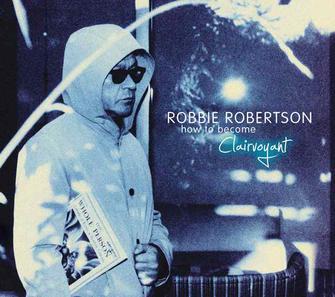
After a decade spent scoring films and hawking the legacy of the Band, Robbie Robertson actually got around to recording an album of songs. Despite the photos of the artist in a hoodie and contributions from people like Trent Reznor and Marius de Vries, throughout How To Become Clairvoyant he generally acts his age and goes with his strengths.

He’s also wise enough to ask notable guests to contribute. “Straight Down The Line” immediately conjures good memories of his first two solo albums, with help from guitarist Robert Randolph. The sultry “When The Night Was Young” and “The Right Mistake” feature the vocals of one Angela McLuskey. But the most prominent special guest is Eric Clapton, who sings and plays on half the album, even writing some, while Steve Winwood adds his trademark organ. Clapton is most prominent on “Fear Of Falling”, which sounds more like one of his own recent albums, and the instrumental “Madame X”, which is the track with the Reznor credit but hardly Nine Inch Nails. “Axman” name-checks various guitar slingers of days gone by, but the only guy Robbie trades licks with is Tom Morello of Rage Against The Machine.

Even without the neon-bright guest appearances, the songs are commendable, for the most part. “He Don’t Live Here No More” is full of mystery, but “This Is Where I Get Off” only scratches the surface about why he left The Band, mostly relying on clichés. “She’s Not Mine” might sink under a more syrupy arrangement, but here he lets his raspy voice do the talking, whereas “Won’t Be Back” is sufficiently heartbreaking. The title track had already appeared on a soundtrack for the vampire TV series True Blood, and is loaded with imagery and metaphors, with a teasing narrative a la “Somewhere Down The Crazy River”. The closing instrumental “Tango For Django” doesn’t sound much like a tango to these ears, but some of the atmospherics are nice.

Without a doubt, How To Become Clairvoyant is a very pleasant surprise, and certainly the true follow-up to the debut and Storyville. It’s a grower, and we like that.

Robbie Robertson How To Become Clairvoyant (2011)—3

Tuesday, September 17, 2019

Cars 7: Move Like This

After literally decades of avoiding the nostalgia train—and the “New Cars” project that paired Elliot Easton and Greg Hawkes with Todd Rundgren, Kasim Sulton, and Prairie Prince doesn’t count—Ric Ocasek apparently wrote a set of songs that he decided would sound perfect if played by the old guys. David Robinson was contacted, and the Cars, now a quartet in the absence of the late Ben Orr, were back. For a while, anyway.

Move Like This isn’t going to supplant any of the original series, with the possible exception of Door To Door, but that at least had “Strap Me In” on it. These tracks are very evocative of their classic sound, with percolating synths that recall Devo, steady drums, lots of guitars, and those omnipresent harmonies. Ric’s voice is certainly older, and doesn’t have that goofy quality he used to promote (though that doesn’t keep him from sounding like Goofy on some of the slower numbers). The production was split between the band and Jacknife Lee, when he wasn’t busy with U2 and R.E.M.; Ric and Greg are both credited with playing bass, whether programmed or stringed.

“Blue Tip” (the opener), “Free”, and “Sad Song” are possibly the best tunes, with riffs right off the first couple albums, and sardonic lyrics. “Hits Me” actually mentions Ric’s resemblance to Ichabod Crane. The aforementioned slower songs, “Soon” and “Take Another Look”, aren’t always as convincing; maybe if Ben were around he could have added his croon.

As reunions go, Move Like This is far from embarrassing. The band played a handful of shows to promote it, and that was it.

The Cars Move Like This (2011)—3

Friday, May 31, 2019

Smithereens 9: 2011

Not that anyone noticed, but the Smithereens were still hacking away at making a living as working musicians. Certainly they could fill sets with their classic material, but that wasn’t good enough for them, so when the chance came to record a brand new album, they took it. Amazingly, it was worth it.

Never ones to shy away from a gimmick, 2011 expands on the title and packaging of their third classic album. They even got back together with original producer Don Dixon (who could only do so much for them the last time he helped). The songs concern the same old themes: Pat DiNizio is still just a romantic fool, even when he’s lonely.

Maybe it’s their age, but most of the tunes are in the same slow tempo, which can get a little plodding after a while. Thankfully tunes like “Rings On Her Fingers”, “Nobody Lives Forever” (which borrows a hook from “Especially For You”), and “What Went Wrong” inject some adrenaline into the proceedings. Speaking of which, “Viennese Hangover” is the same melody as “Cigarette”, while “Turn It Around” has that same chunky intro as the Who’s “Circles” and plenty of other Smithereens touchstones. “Sorry”, “One Look At You”, and “All The Same” rank up with their best.

The album’s long for them; “Goodnight Goodbye” could probably be jettisoned despite its obvious hooks, and “A World Of Our Own” has a wonderful intro for a song that doesn’t quite deliver. Still, 2011 is possibly the best successor to that first handful of great albums, and that’s especially fitting since it was the last collection of new material Pat DiNizio completed before his death in 2017.

The Smithereens 2011 (2011)—3

Friday, May 4, 2018

Smiths 9: Reissues! Repackages!

If you’ve been keeping score, you will have deduced that the Smiths catalog consisted of four LPs, a pile of singles and radio sessions that were reshuffled on three separate compilations, and one live album, all released within a relatively brief five-year period. Yet the earnest reissuing and repackaging of their output began shortly after Morrissey’s delayed “comeback”, and things still got left out, even with the repetition.

1992 brought a decent pair of CDs, the similarly but not uniformly titled Best…I and …Best II (both of which spawned singles to promote them). The first volume concentrated mostly on songs that had been singles, while the second added a few album tracks for a slightly deeper focus. Neither was chronological, but together presented many of their best-known cuts for what would have been a solid double album. A little over two years later, Singles repeated many of the tunes on a single disc lasting an hour, but often in their longer album mixes, and including one album track that had been a single but wasn’t on the previous volumes. (Confused yet?)

In the new millennium, The Very Best Of The Smiths crammed 23 tracks onto a single disc, with only two songs that hadn’t been on the 1992 discs, one of which had yet to be regurgitated thusly. The band was more directly involved with 2008’s The Sound Of The Smiths, with Johnny Marr going so far as to supervise the mastering. It also had 23 tracks, in mostly chronological order, but without exactly duplicating Very Best. More interesting to collectors was the deluxe edition, which added several of the B-sides already familiar from previous compilations, along with several rare B-sides that hadn’t made it to any album to date.

But then vinyl came back into vogue, so in 2011, Johnny Marr remastered the catalog so Complete could present all the albums all together in one package for anyone who wanted to start from scratch. However, the title was incorrect. The CD set offered the four studio albums, the three compilations, and the one live album, leaving several of those stray B-sides out. And with all the overlapping between those three compilations, some tracks appeared more than once. For even more repetition, the deluxe set offered (along with the eight albums on LP and CD) vinyl replicas of 25 singles rife with duplication, with some of those otherwise unavailable tracks shoehorned in between. And we’re not even going to touch the deviation in mixes.

For all the fleecing, each of the above compilations does present hefty servings of the band’s best work, so each is musically valid. The first two volumes are the most satisfying of the choices, while Complete allows the new fan to get most everything in one shot, provided he or she can handle the repeats.

The Smiths Best…I (1992)—4
The Smiths
…Best II (1992)—4
The Smiths
Singles (1995)—4
The Smiths
The Very Best Of The Smiths (2001)—4
The Smiths
The Sound Of The Smiths (2008)—
The Smiths
Complete (2011)—

Friday, November 24, 2017

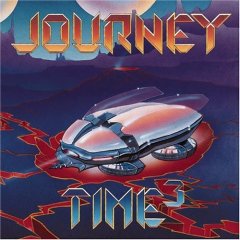
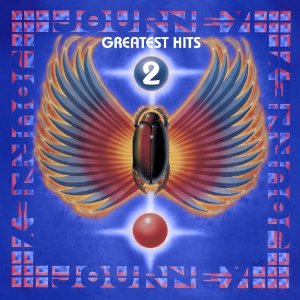
Journey 9: Greatest Hits and Time3

While no formal announcement was made, Journey was done, and the label wisely put together a hits compilation. Greatest Hits was fairly comprehensive, focusing solely on the Steve Perry era, leaning heavily on the Jonathan Cain era, and sticking with the ear candy. In addition to all the singles from the albums, what we used to call side one is framed by “Only The Young” and “Ask The Lonely”, putting them right along side their albumized brothers. Beyond that, the sequence is a grab bag, but at least they save “Be Good To Yourself” for last so you can skip it entirely. Wikipedia tells us, and they’re never wrong, that it’s among the most successful compilation titles by anyone ever, and most of those sales racked up before it was repackaged 18 years on with an extra track.

Since every band got its own box set in the ‘90s, Journey’s turn came right on schedule. The oddly titled Time3 mostly got it right by starting at the very beginning, with a full half-hour of music from the borderline fusion period before Steve Perry came along. To prove the point, a failed track called “Velvet Curtain” is duct-taped onto the completed “Feeling That Way” to show how he transformed it. There aren’t a lot of rarities here, outside of a few B-sides and live tracks since added to reissues of the albums, and some unfinished ideas from the mid-‘80s era. Some of the bigger hits appear in live incarnations, so despite the selection of deeper album cuts, it’s not the definitive Journey package for someone who just wants one title on the shelf.

At the turn of the century, the new trend was the double-disc “Essential” anthology, which was an excuse to regurgitate a hits collection with some deeper cuts. The Essential Journey did just that, basically replicating the Greatest Hits sequence with only a little variety on disc one, with a questionable choice filling up the second. It would be another ten years before Greatest Hits 2 finally offered a decent (and decently priced) companion. In addition to more stuff from the Cain era (and big points for including “Suzanne”) and the FM radio hits and album tracks that stood out on the box set, segues like “Good Morning Girl” into “Stay Awhile” and “Feeling That Way” into “Anytime” were preserved. (We’d’ve dumped “Walks Like A Lady” and “When I Think Of You” for “Natural Thing” and “Edge Of The Blade”, but once again, the phone did not ring.)

Journey Greatest Hits (1988)—4
2006 CD reissue: same as 1988, plus 1 extra track
Journey Time3 (1992)—3
Journey
The Essential Journey (2001)—
Journey
Greatest Hits 2 (2011)—4

Friday, February 3, 2017

Suzanne Vega 9: Close-Up

It’s common for musicians to release re-recorded versions of songs. It happened all the time in the standards era, so connoisseurs could compare how Frank Sinatra delivered a tune in his twenties to his approach decades later. Many live albums offer straight reproductions of hit singles and album tracks to adoring audiences. However, in an age when music can be shared and distributed faster, wider, and easier than ever, anytime an artist redoes his or her own music the cynical eyebrow is raised.

Suzanne Vega was very straightforward when she began her Close-Up series, which presented new recordings of her songs, chosen from her entire catalog, released in four thematic volumes. Her reasons were that some of her albums were out of print, and mass consolidation across the music industry didn’t guarantee future royalties from them. Therefore, new, mostly stripped-down renditions of songs she still liked playing would bring another opportunity to gets paid, yo.

We adore her voice, and wish we could hear her sing from the kitchen when it’s her turn to do the dishes, so we admit to a bias. Unlike other singers, her range is the same as it always was, though some of those high notes have been lost to a quarter-century. While some songs sound the same as ever, whether acoustic (“Small Blue Thing”, “Gypsy”) or electrically embellished (“Marlene On The Wall”), it’s more interesting to hear the ones rescued from busy production (“When Heroes Go Down”, everything from Nine Objects Of Desire). But she also keeps “(If You Were) In My Movie” and “Fat Man And Dancing Girl” close to their original clattering arrangements, and not exactly “stripped down”.

Each of the volumes has something to offer, and even had different bonus tracks, depending on where you bought them. Love Songs is the most successful; because it’s the first one, the novelty is new, but it also offers some of her prettiest tunes. People & Places, with its observations and speculations, is a little more embellished, and also has her two most famous songs in “Luka” and “Tom’s Diner”, the latter delivered closer to the style of the bootleg remix. The big draw is a version of “The Man Who Played God”, originally part of a collaboration with Danger Mouse and the late Mark Linkous of Sparklehorse. States Of Being covers “emotional turmoil”, and deviates least from the originals, with such embellishments as a string quartet and a new song in the way of the then-unreleased “Instant Of The Hour After”. Songs Of Family would appear to be her most personal songs, being inspired by her daughter, her divorce, her childhood, and her lineage. Mostly back to the original sparse brief, it includes three more produced “new” tracks, two of which were among the first songs she ever wrote.

That’s four albums that revisit most of her previous seven albums, with Days Of Open Hand being the least represented. The way to get it all would be Close-Up Series, a book-style package that includes each volume, plus another disc containing another album’s worth of the bonus tracks offered up on various digital platforms (including a version of “Luka” sung in Spanish), lyrics for every song, and a live DVD. Being a box set it’s on the pricey side, but that’s to be expected.

Suzanne Vega Close-Up Vol. 1, Love Songs (2010)—
Suzanne Vega
Close-Up Vol. 2, People & Places (2010)—
Suzanne Vega
Close-Up Vol. 3, States Of Being (2011)—3
Suzanne Vega
Close-Up Vol. 4, Songs Of Family (2012)—
Suzanne Vega
Close-Up Series (2014)—

Tuesday, October 18, 2016

King Crimson 21: A Scarcity Of Miracles

Despite being subtitled “A King Crimson ProjeKct”, A Scarcity Of Miracles should not be mistaken for a 21st century Crimson album. Rather, it was built up from a collaboration between Robert Fripp and one Jakko Jakszyk, who’d fronted a group of reunited Crimson alumni, including Mel Collins, who added some saxophone parts to the works in progress. Tony Levin and Porcupine Tree drummer Gavin Harrison (who’d played with Crimson in 2008) added a rhythm section and that was the album.

Most of the pieces are on the long side, with melancholy melodies and soundscape-style atmospheres. Each track has a vocal and lyrics, and Jakko harmonizes with himself. In this and other ways it’s similar to Fripp’s collaboration with David Sylvian, not as dance-heavy, but still rhythmic in places. Collins is prominent, but guitars provide the main structures, in different styles and electricity; a Chinese zither features occasionally. Some familiar-sounding riffs appear before the higher-energy segment of “The Other Man”, which is the most frenetic and welcome portion of the album. (Those who bought the DVD package got alternate mixes of the album’s tracks, as well as two improvs, which would eventually be offered for download.)

While more historic for what was to follow for the principals—and the appearance of two of the songs in future setlistsA Scarcity Of Miracles remains mostly a curio, not astounding, but not awful. It chronicles a new beginning for these principals. And because of said principals, it’s catalogued here thusly.

Jakszyk, Fripp and Collins A Scarcity Of Miracles (2011)—3

Tuesday, March 17, 2015

Robyn Hitchcock 28: Tromsø, Kaptein

Another year, another album from Robyn Hitchcock. This time, however, the gimmick was that Tromsø, Kaptein was initially released physically only in Norway, but eventually downloadable or streamable anywhere. It’s a predominantly acoustic album, with the addition of a few strings, muted rhythm section and female backing vocals.

Things begin promisingly with “Light Blue Afternoon” and its timely tempo changes, but it ends abruptly. Two tracks are remakes: “Raining Twilight Coast”, with prominent cello and vocal touches similar to the demo, and “Godnatt Oslo”, a version of the title track of the second Venus 3 album, sung in Norwegian. “Savannah” fades in, clomps along for five and a half minutes, then fades out, leaving one’s mind to wander.

And that’s why the album fails to triumph. Part of it is because most tracks hover within the four- to five-minute window, and cycle through even fewer chords. And a lot of them sound alike, making it difficult to separate one title from another verse after the fact. Every now and then a melody leaps out, as in the choruses of “The Abyss”, or within the jaunty music-hall march of “Dismal City”. “Old Man Weather” sports a nice instrumental bridge, amid lots of cello. “Erasing Your Life” is an interesting hook, though “August In Hammersmith” doesn’t sound very thought through (at least until the chanting of the region’s postal code over the end).

In the end, Tromsø, Kaptein is pleasant, harmless and not immediately memorable. His level of quality prevents him from making a “bad” album, but somehow still feels like we’re not saying anything different about him.

Robyn Hitchcock Tromsø, Kaptein (2011)—3

Friday, November 14, 2014

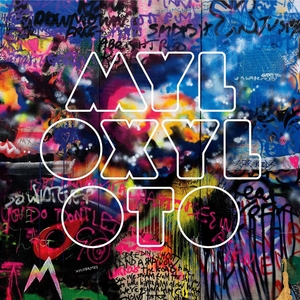
Coldplay 5: Mylo Xyloto

The biggest band on the planet kept going, comfortable with the knowledge that anything they did would be multi-platinum. And so it was with Mylo Xyloto. This time, there’s a concept, something having to do with a futuristic struggle of good vs. evil, not that you’d be able to tell from listening to the album, decoding the lyrics or flipping through the CD booklet.

For the most part, they embrace modern pop, using machine-driven drums and the by-now familiar Chris Martin “whoa-oh-oh” hooks. They seem to have left the circular piano of “Clocks” and its clones behind, in favor of that solitary bass drum that drove “Viva La Vida”. To be arty, a few brief tracks exist only as interludes or introductions, while other tracks end with similar detours.

A key turnoff for anyone not otherwise into current music would be “Princess Of China”, which features the “vocal” stylings of Rihanna. She doesn’t get too much in the way, but after a while, one expects the auto-tune queen, part-time punching bag and lingerie model to show up all over the album, particularly on “Paradise” and “Every Teardrop Is A Waterfall”, or within the canned chipmunk voices on “Charlie Brown”.

But those songs are undeniably catchy, and the listener vacillates between wanting to hate the album and hoping it will become comfortable. “Us Against The World” is played so delicately you’re not convinced of the actual meter, while “Major Minus” is just a little too jarring and clattery. “U.F.O.” sounds like it could be from the first album; it almost comes off as a finale, as does “Up In Flames”, but instead they bookend the Rihanna track. And indeed, the pounding “Don’t Let It Break Your Heart” does work as a sewing-together of whatever’s gone before, more so than “Up With The Birds”.

Mylo Xyloto soars when it wants to, but doesn’t get too experimental. It’s also not as long as it seems. The band seems compelled to make their audience think; for them, it’s not enough to put addresses of human rights organizations and such in the liner notes. At the same time, they make it hard for that same audience (and all the haters) to get lost in the music.

Coldplay Mylo Xyloto (2011)—3

Tuesday, October 7, 2014

Tom Waits 23: Bad As Me

As with each of the albums Tom Waits has put out over the last 20 years, critics fell all over Bad As Me, starting with superlatives like “tour de force” and working up from there. We won’t go that far, but to say that unlike his more conceptual work of late, it’s more in keeping with Bone Machine and Mule Variations in being just a collection of songs (though we do miss the piano ballads that still stand out from the latter, and still don’t subscribe to the fawning over the former).

There’s no gimmick this time, save what he swears was his wife’s request that he do some short songs for a change. And he does, beginning with the sputtering “Chicago”. “Raised Right Men” has a decent message and even chord changes, but both are camouflaged by the maddening tabla Tom taps for most of the track. After the meandering falsetto of “Talking At The Same Time”, “Get Lost” is a welcome slice of rockabilly, especially given the lazy feel of “Face To The Highway”. “Pay Me” is a pretty accordion-based ballad, with a nice piano coda, setting up the tropical croon in “Back In The Crowd”.

The title track mixes metaphors and dirty blues, which get even dirtier in “Kiss Me”, with the effects of a scratchy record decorating this cousin of “Blue Valentines”. “Satisfied” got the most attention upon release, due to its shout-outs to “Mr. Jagger and Mr. Richards”, and the appearance of the latter himself on the track. Keith sings harmony on “Last Leaf”, the weeper that follows. Despite its military imagery, “Hell Broke Luce” follows well on from similarly barked nursery rhymes on Rain Dogs. “New Year’s Eve” ends the album on with a waltz, but the inclusion of a chorus of “Auld Lang Syne”—not once but twice—is a tad gratuitous.

For no real reason other than to get fans to buy a copy of the album that wouldn’t fit in their racks too well, Bad As Me was also made available in a limited edition with the dimensions of a hardcover book and a “bonus” disc with three more songs. “She Stole The Blush” would have been welcome on the main album; the same could be said of “Tell Me”, which fits the “tropical” mode of “Back In The Crowd”. Seashore noises also appear on “After You Die”, more metaphors that don’t say much, in possibly a rough draft for “Face To The Highway”.

The good thing about Tom Waits music is that some of the better songs reveal themselves over time, and maybe that will happen with these. Either way, it’s nice to have a Waits album that doesn’t require a lot of attention, and for that, Bad As Me gets the job done.

Tom Waits Bad As Me (2011)—3