Showing posts with label 2020. Show all posts

Friday, August 2, 2024

Brian Eno 28: Film Music

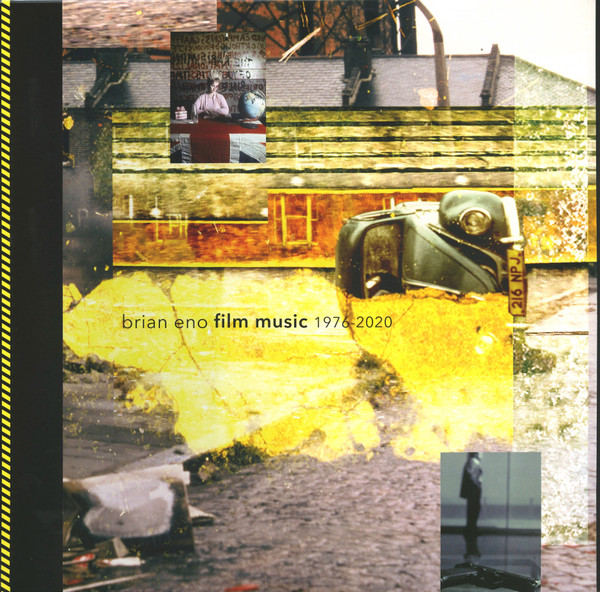
That Brian Eno’s music has been used on cinematic and television soundtracks isn’t much of a surprise, especially after almost half a century of public creativity. The full title of the Film Music 1976-2020 compilation suggests that it picks up where 1976’s Music For Films left off, and while it doesn’t tell the whole story, it does provide a wide-ranging smattering of his work over that period.

Just because he can, “Final Sunset” is repeated from Music For Films; like “Dover Beach”, it was used in a Derek Jarman film. Unlike those earlier compilations, three vocal selections are included: “Under” from the animated flop Cool World; “You Don’t Miss Your Water”, his only “song” from the ‘80s; and “Beach Sequence” from the Passengers project, one of the few pieces on that album used in an actual film, and including exactly one line sung by Bono.

A few pieces are appropriately “spacey” if not intended that way, like “Blood Red”, “Decline And Fall”, “Late Evening In Jersey”, and “Undersea Steps”. Meanwhile, “Prophecy Theme” from 1984’s Dune soundtrack (otherwise populated with music by Toto) fits right in with “An Ending (Ascent)” and “Deep Blue Day”, as first heard on Apollo, and the latter more widely in Trainspotting. Two pieces for the British crime drama series Top Boy are intriguing and suspenseful. (A full album of score music, some very reminiscent of Peter Gabriel’s Birdy soundtrack, was later released on CD in Japan, vinyl other places, and streaming everywhere.) While not from that project, “Reasonable Question” and “Design As Reduction” are of more recent vintage yet fit right in.

More than conveniently collecting stray tracks, Film Music works as an album, one to get lost in without necessarily picturing the visuals. Otherwise we mightn’t have heard such pleasant surprises as “Ship In A Bottle”.

Brian Eno Film Music 1976-2020 (2020)—3
Brian Eno
Top Boy (2023)—3

Tuesday, April 9, 2024

Brian Eno 27: Mixing Colours

We don’t know if being Brian’s younger brother has done Roger Eno any favors, but he has managed to build up a catalog of his own brand of ambient music over the decades. Mixing Colours was the Enos’ first released collaboration in decades, and it was apparently built over a period of 15 years.

The brief is very much like the albums Brian did with Harold Budd—Roger plays gentle keyboards, mostly in the acoustic or electric piano family, and Brian treats the sound or adds his own touches. Each track’s title is derived from a specific shade or tint, so whether or not they convey an accurate representation of a mood is up to the individual. That being so, we found “Snow” to be very pretty and engaging, even before we checked to see what it was called. “Celeste” seems to be one of the more musically developed pieces, as opposed to a sketch, and “Slow Movement: Sand” does convey a certain majesty as it builds. By comparison, “Desert Sand” is dominated by a Brian texture right out of 1976. “Obsidian” breaks from the mold with an organ-based sound, tempered by the more chamber-nursery tone of “Blonde”. The album is easy to have in the background, so one might not notice that the melody of “Spring Frost” turns up again an hour later as “Cerulean Blue”, for example.

Mixing Colours was released at the start of the COVID lockdown, and provided a companion for enforced solitude. Some time afterwards, the Luminous EP presented another seven tracks by the duo, which may be easier to ingest as a shorter program. These were then inserted into the album’s original sequence, which was rereleased as Mixing Colours Expanded. All together, it’s pleasant aural wallpaper from the family dynasty that invented it.

Roger Eno and Brian Eno Mixing Colours (2020)—3
Roger Eno and Brian Eno
Luminous (2020)—3

Tuesday, February 28, 2023

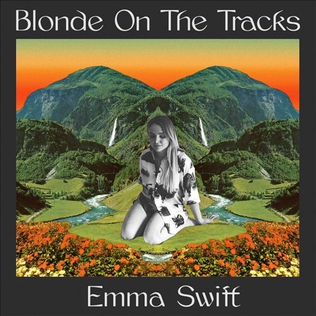
Emma Swift: Blonde On The Tracks

The standard joke is that Bob Dylan’s songs are always better when somebody else sings them. We know that’s not always true, but every now and then a voice comes along to help the medicine go down more easily. Emma Swift has one of those voices, a smooth alto with country tinges. Throughout Blonde On The Tracks she applies it to Dylan’s lyrics while staying true to the original melodies.

While recorded over several years and studios throughout Nashville, Pat Sansone’s production helps keep the album very much of a piece. “Queen Jane Approximately” has a mild Byrds jangle, but nicely laid-back drums that make the song more gentle. This is a mere appetizer for “I Contain Multitudes”, which had only been out for weeks before she found a way to inject more notes into his original three-note range. “One Of Us Must Know (Sooner Or Later)” gets a reading distilled through Oh Mercy, as does “Simple Twist Of Fate” to an extent, but that one is dominated by Thayer Serrano’s pedal steel guitar. The ballsiest move is to tackle all 12 minutes of “Sad-Eyed Lady Of The Lowlands”, and she does, without making it drag at all. Even the fade is lovely. “The Man In Me” gets some soul plus some nice harmonies on the bridge, and as with the rest of the album, she leaves the gender references intact. Her take on “Going Going Gone” will have you wondering why more people haven’t covered it, and while “You’re A Big Girl Now” doesn’t end the program on an up note, it’s an excellent reading. All together, a lovely surprise.

Emma Swift Blonde On The Tracks (2020)—

Tuesday, October 11, 2022

Pretenders 14: Hate For Sale

Not that Chrissie Hynde worked at a frantic pace, but Hate For Sale is the first Pretenders album in a while that earns the use of the band name. For one, Martin Chambers is back on drums, and the other two guys had already appeared on a previous album. Plus, the producer is Stephen Street, who helmed the desk for the band’s ‘90s albums. Also, it rocks. Mostly.

Chrissie wrote all the songs with guitarist James Walbourne, and they’re all pretty solid. The title track is a furious opener, complete with false start, while “The Buzz” sports an intro very much like “Kid”. “Lightning Man” evokes the reggae of “Private Life”, with a melodica right out of Twin/Tone. We don’t know what “Turf Accountant Daddy” is supposed to be about, but at least she finds “Cincinnati” to be a better rhyme than “Reno, Nevada”. (We also like the nod to Blondie in the brief synth solo.) “You Can’t Hurt A Fool” gives her a chance to be soulful.

“I Don’t Know When To Stop” takes us back to the loud bash at the beginning, then “Maybe Love Is In NYC” subverts the familiar “All Along The Watchtower” chords by arpeggiating the electric and strumming a prominent acoustic, and finding a catchy melody for the chorus. The trashy “Junkie Walk” is followed by Bo Diddley filtered through “Didn’t Want To Be This Lonely”. She waits until the very end to flip the script, with the overly emotional “Crying In Public”, accompanied by piano and her go-to Duke String Quartet.

At just over thirty minutes, Hate For Sale is short and to the point. It’s also the first Pretenders album in a long time worthy of playing on a loop. Not bad for a few veterans pushing 70.

Pretenders Hate For Sale (2020)—

Friday, December 17, 2021

Suzanne Vega 11: New York Songs And Stories

New York City has been the focus of much of Suzanne Vega’s work, so the idea of a live album dedicated to songs related to the city might seem negligible. However, given how few live albums are in her catalog, much less active, it’s worth exploring, so we are.

An Evening Of New York Songs And Stories presents an intimate café-style performance of 16 songs, interspersed with brief explanations of some of the tunes. Impeccably recorded, with the support of a percussion-less combo, the appreciative audience enjoys some of her more familiar songs, though they likely knew them all. Despite occasional huskiness, she sounds exactly like she did when she first recorded most of these songs. As with the Close-Up Series, some of the “newer” songs benefit from a minimum of production trickery, and also help illuminate songs otherwise overlooked (case in point: “Pornographer’s Dream”). “Ludlow Street” and “Tombstone” are the most ornate, while “Thin Man” uses a prominent dated drum machine. “Tom’s Diner” is again in the style of the bootleg remix, and not a cappella. Covers are a rarity in her catalog, so her rendition of Lou Reed’s “Walk On The Wild Side” is surprising if not exactly unique. Altogether, it’s a nice diversion, and probably the closest we’ll get to spending an evening with Suzanne Vega.

Suzanne Vega An Evening Of New York Songs And Stories (2020)—3

Tuesday, May 18, 2021

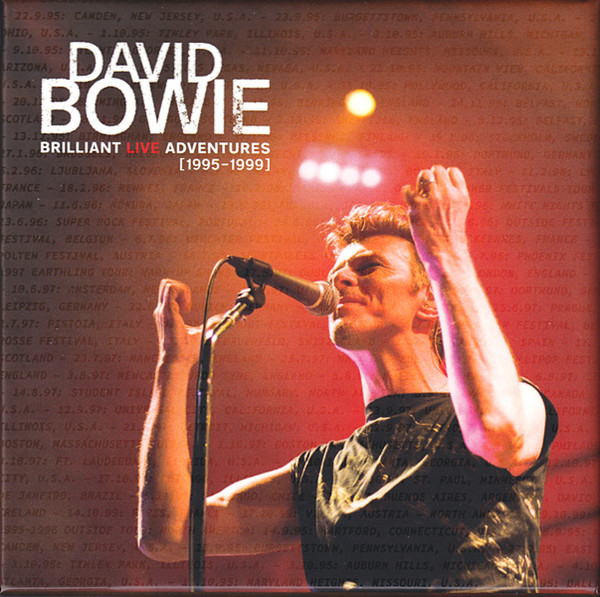
David Bowie 44: Brilliant Live Adventures

Perhaps killing more time while fans waited for the next box set in the chronology, the Bowie estate spent part of 2000 tidying up the aisle in the vaults dedicated to the ‘90s. First came two odd mini-albums. Is It Any Wonder? consisted of three Earthling outtakes—remakes of the Tin Machine tracks “Baby Universal” and “I Can’t Read”, and the quasi-instrumental “Nuts”—plus a new arrangement of “Stay”, the rarity “Fun” (both from the tour rehearsals), and an Eno remix of a re-recording of “The Man Who Sold The World” from the Outside sessions that had snuck out as a B-side. The more straightforward Changesnowbowie offered predominantly acoustic-based arrangements of mostly early ’70s songs—the outliers being “Shopping For Girls” and “Repetition”—recorded specifically for the BBC to celebrate his 50th birthday.

These were mere precursors to a curious program entailing the release of six live albums that would be made available individually, on CD and vinyl, for the purpose of being collected in a slipcase labeled Brilliant Live Adventures (1995-1999). These releases basically offered two glimpses each from three tours, supporting the Outside, Earthling, and ‘hours…’ albums in turn. “Glimpses” is the key word here, as one is a compilation from various shows, and two of the concerts are abridged, perhaps to fit on one disc. It was an ambitious program, to be sure, considering that the release schedule was sporadic and the quantities were limited, plus the general chaos resulting from the worldwide COVID pandemic threw even more wrenches into the works. But each title was uniquely packaged and designed, and looked as good as they sounded.

Along with such stellar players as Reeves Gabrels, Carlos Alomar, a fully reinstated Mike Garson, Zach Alford on drums, and the, frankly, brilliant addition of Gail Ann Dorsey on bass and vocals, the Outside tour was supported by Nine Inch Nails, their set melding into Bowie’s. However, none of their onstage collaborations appear on either Ouvrez Le Chien or No Trendy Réchauffé. Yet along with new arrangements of deep cuts, the songs from the album he was supporting translated much better to the stage. (The latter disc, recorded two months after the former—which adds two songs from the latter as bonus tracks for some reason—was a shorter set from a festival environment, with some different songs as well, including a strong “Jump They Say” and two performances of “Hallo Spaceboy”.)

The Earthling tour was stripped back to just Gabrels, Garson, Alford, and Dorsey, yet the keyboards and sequencers made everything sound big and full, if processed and programmed, and a little too close—rather, identical to the album. LiveAndWell.com was originally given away to website subscribers in 1999 and compiled from a handful of shows, concentrating on material from Outside and Earthling. Some editions included a bonus disc of remixes; this incarnation got new artwork and added the radical reinterpretations of “Pallas Athena” and “V-2 Schneider”, credited to “Tao Jones Index” when first released. By contrast, Look At The Moon! presented a full show on two discs (or three LPs). As with its brother, some of the rearrangements are repeated from the previous tour, but there are some new surprises, such as “Fame”, “Fashion”, and even a cover of Laurie Anderson’s “O Superman” sung by Gail Ann. Also, “The Jean Genie” starts acoustically, and is prefaced with a snippet of “Driftin’ Blues” for some reason.

1999’s much shorter tour—exactly nine shows, if you count the VH1 Storytellers appearance—was notable for Helmet’s Page Hamilton on lead guitar, following the abrupt departure of Reeves Gabrels. Sterling Campbell was also swapped in on drums, Mark Plati played guitars, and two women added breathy backing vocals. As befit the album he was promoting, the approach to the set was less frenetic and mostly softer, yet still energetic. The shows here are similar but not exactly identical; selections from Something In The Air had already been B-sides, while At The Kit Kat Klub was a small exclusive show recorded a month later and simultaneously webcast, which was spanking new and generally bug-prone technology at the time.

Taken all together, it’s six hours of music with a lot of repeats. Even with that, he was both busy and unpredictable throughout the latter half of the ‘90s. Collectors have to have them all, but luckily it’s possible to pick and choose. (Look At The Moon! gets a slight edge for length and variety.)

David Bowie Is It Any Wonder? (2020)—
David Bowie
Changesnowbowie (2020)—3
David Bowie
Ouvrez Le Chien (Live Dallas 95) (2020)—3
David Bowie
No Trendy Réchauffé (Live Birmingham 95) (2020)—3
David Bowie
LiveAndWell.com (2021)—3
David Bowie
Look At The Moon! (Live Phoenix Festival 97) (2021)—3
David Bowie
Something In The Air (Live Paris 99) (2021)—3
David Bowie
David Bowie At The Kit Kat Klub (Live New York 99) (2021)—3

Tuesday, January 19, 2021

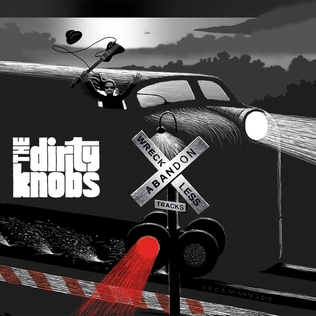
Mike Campbell 2: Wreckless Abandon

Having spent his entire adult life working as Tom Petty’s right hand man on stage and in the studio, Mike Campbell waited a good three years after his boss died before finally starting his solo career. (A stint touring with Fleetwood Mac alongside Neil Finn kept him busy as well.) He’d already formed the Dirty Knobs as a side project, so they were ready to back him up on Wreckless Abandon.

As was clear from the exactly two songs wherein he sang lead with the Heartbreakers and Mudcrutch, he was never exactly a singer. But years of writing for and with Tom certainly helped shape his voice into a vehicle for lyrics, and we’re here for the guitars and hooks anyway. The title track has lots of them, fitting nicely between classic Heartbreakers and the Stones’ “Happy”, framed by atmospheric effects. On “Pistol Packin’ Mama” his drawl gets easily lost against guest Chris Stapleton’s, and if it’s a little derivative, “Sugar” makes up for it in bite and attitude. “Southern Boy” stomps a little too long, but the pounding “I Still Love You” shows what was missing on the last couple Heartbreaker albums. Stapleton comes back to harmonize on “Irish Girl”, which rhymes “mutiny” with “scrutiny” and otherwise sounds like 21st-century Mudcrutch.

He tells it like it is on the Stapleton co-write “F-ck That Guy” (censorship ours), but isn’t the most arresting storyteller on the John Lee Hooker pastiche “Don’t Knock The Boogie”, which improves once the solos start. “Don’t Wait” stays in the swamp even longer, so the pretty and quiet “Anna Lee” is certainly a respite. Benmont Tench shows up to lend a little welcome piano to “Aw Honey”, and “Loaded Gun” brings back the classic Campbell sound from all those records. The last minute of the album is dedicated to an acoustic slide rendition of “Don’t Knock The Boogie”.

The band is clearly comfortable backing him, since they’d been together twenty years already, and Wreckless Abandon has a fresh live sound thanks to George Drakoulias. Most of it clearly came to life on stage, but that doesn’t mean some editing mightn’t have helped. We’re just glad he’s still writing and playing. (He blows a mean harmonica too. And he got Klaus Voormann to design the cover.)

The Dirty Knobs Wreckless Abandon (2020)—3

Friday, December 25, 2020

Paul McCartney 37: McCartney III

Never one to miss an opportunity to be musical, Paul McCartney emerged from the Covid-19 lockdown (or “rockdown”, as he called it) with enough material recorded in isolation to comprise McCartney III. Like its predecessors, it was performed in its entirety all by himself.

Technology has obviously come a long way in the decades since the more primitive approach of the first two installments. Most of the albums he’s put out this century have been largely one-man band operations, so this album isn’t too far removed from Chaos And Creation In The Backyard, Memory Almost Full, or New. But by doing everything himself save the engineering, he can always fall back on the insistence that it was never designed as an album in the first place. Maybe that’s why the album is as good as it is. (In a nice touch, the album is dedicated to the recently departed Eddie Klein, an Abbey Road veteran who worked on the first post-Beatle albums by John and George, and went on to build the home studio that Paul’s used since 1985.)

“Long Tailed Winter Bird” takes the most basic acoustic guitar riff and builds a five-minute jam out of it, for something of an extended overture. The first real song is “Find My Way”, the tossed-off verses well-balanced by the more melodic choruses, and a nice false ending too. “Pretty Boys” is another rewrite of “Early Days”, but this time focusing on young male models for some reason. A piano drives “Women And Wives”, which he repeatedly said was influenced by the vocal style of Leadbelly; it’s good that he’s finally exploring the lower end of his increasingly limited range. On paper “Lavatory Lil” screams embarrassment, and most listeners think they know which ex-wife is the inspiration, but the damn thing chugs. At over eight-and-a-half minutes, one would expect “Deep Deep Feeling” to wear out its welcome, yet it’s a wonderful showcase for his unquestionable prowess on guitar, bass, and piano, and the drums aren’t bad neither.

Placed earlier on the vinyl to better even out the two sides, “Slidin’” gets its riff from a soundcheck jam from a few years previous; indeed Rusty Anderson and Abe Laboriel Jr. are credited indirectly in the notes. It’s a good rocker that nicely finds lyrics to match the suggestion of the title. “The Kiss Of Venus” recalls “Two Magpies” from the third Fireman album, and introduces a harpsichord to match his rough vocal. (This is what we mean by suggesting he try not to hit those old high notes.) “Seize The Day” seems to be most inspired by the state of the world mid-pandemic, and it turns out to be one of his better anthems, helped by the more personal bridge. If anything, “Deep Down” is the closest the album comes to “Kreen-Akrore” or “Darkroom”. Along with the recurring “deep” in the title, it’s a half-decent groove that is underdeveloped and beaten into the ground. One of our correspondents suggested that he’s a little too old to be concerned with “partying”, and in this context we’d agree. The “Winter Bird” riff resurfaces to usher in “When Winter Comes”, brought out of mothballs from the same George Martin-helmed session that gave us “Calico Skies” and “Great Day”. (Naturally, nothing is simple anymore, as the album was released in a dizzying quantity of colored vinyl pressings and cover variations. Meanwhile, Japan got four bonus tracks in the form of three alternate versions plus the original jam that begat “Slidin’”.)

Not as homespun as McCartney, nor as experimental as McCartney II, McCartney III was nonetheless a welcome visitor at the end of a very trying calendar year. We would suggest that unless he intends to record with his band again, all future new albums should be prepared with only input from his immediate family and any resultant offspring not given to sugarcoating, even for a man pushing 80. (We’d also accept a completely stripped down acoustic guitar or piano album, maybe produced by Rick Rubin…?)

Of course, he had to go and risk wearing out the album’s welcome by continually reissuing it. Four months after its initial release, McCartney III Imagined presented the album remixed by various modern hip collaborators. A year later, McCartney I II III packaged all three of his numbered solo albums in a box of CDs or two choices of colored vinyl. And a year after that, three further multicolored vinyl options were made available for a limited time. Meanwhile, the Archive Collection program seemed to have ground to a halt.

Paul McCartney McCartney III (2020)—

Friday, December 4, 2020

Neil Young 61: Archives Vol. II

Speculation about the next installment of Neil Young’s Archives box sets began immediately upon release of the first. For a few years it was presumed that this set would take the story through the rest of the ‘70s. When Archives Vol. II: 1972-1976 did finally appear, the covered timeline was shorter, but the ten discs dove deep into one of his most fertile songwriting periods, and an era that has since become hallowed by fans. (Also, with the multimedia portion largely handled by the Archives website and app, the physical package was only released on CD, initially as a limited release with a deluxe book as with the DVD and Blu-ray versions of Archives Vol. I. This sold out in seconds, forcing Neil and Reprise to prepare a second run, as well as a slightly cheaper version with a less elaborate book. The hole left by the death of manager Elliot Roberts was never more apparent.)

Three of the CDs had already been released individually, and familiar album tracks abound; he’d already established that the Archives project is designed to present his creative output in context. Roxy gains an extra track in an extended encore performance of “The Losing End (When You’re On)”, but Tuscaloosa was not so lucky, despite the outtake of “The Loner” made available for streaming.

There is an alternate live version of that song on Everybody’s Alone (1972-1973), which fills in more of the gaps in the wake of Harvest, skirting around Time Fades Away, and offering the title track to the incomplete CSNY album Human Highway. The opening “Letter From ‘Nam” is immediately recognizable as a draft for “Long Walk Home” a decade and a half later; “Goodbye Christians On The Shore” is a mysterious fable in 7/8 time. Long booted favorites like “Sweet Joni”, “Come Along And Say You Will”, and the ramshackle electric pillage of “The Last Trip To Tulsa”, exiled for years as a B-side, show up, along with a rambling introduction to an acoustic “L.A.” that finds its way out of “I Got You Babe”.

Strangely, “Everybody’s Alone” itself doesn’t appear until two discs later. Confusingly titled, Tonight’s The Night (1973) presents the raw sessions from that album, but with none of the fabled “raps” in between the songs themselves, save a longer intro to “Tonight’s the Night Part II”. A barely together “Speakin’ Out Jam” shows the effects of the tequila, and the sound of the Santa Monica Flyers backing Joni Mitchell on “Raised On Robbery” must be heard to be believed. Similarly, Walk On (1974) presents a more complete picture of how On The Beach happened, bringing in key outtakes of the period, including an electric “Bad Fog Of Loneliness” and solo acoustic renditions of “Traces” and the old chestnut “Greensleeves”.

The Old Homestead (1974) is something of a companion to Homegrown (which follows in the set) and it’s fascinating. Only the “title” track and “Deep Forbidden Lake” had been released on albums proper, with the rest of the program—70 minutes total, the equivalent of two Neil albums—devoted to songs that slipped through the cracks. Some, like “Hawaiian Sunrise”, had featured on that summer’s CSNY tour, represented here by a superior take on “Pushed It Over The End” and Stephen Stills’ blazing contribution to “On The Beach”. “Homefires” and “Give Me Strength” were often highlights of acoustic sets over the years, while “Bad News Comes To Town” would be trotted out with the Bluenotes and “Changing Highways” would emerge 22 years later as a Crazy Horse stomper. A piano rendition of “One More Sign”, dating from the Buffalo Springfield era, is as heartbreaking as “LA Girls And Ocean Boys”, which would be co-opted into “Danger Bird”. Three distinctly different takes of “Love/Art Blues”—solo, downbeat, and jaunty with yodeling—demonstrate his quest for the right sound. “Frozen Man” and “Daughters” had been rumored for years, and live up to our hopes.

Dume (1975) not only widens the scope on Zuma by about half an hour, but reveals some of the incredible candidates left off that album, such as an earlier version of “Powderfinger” and electric takes on “Ride My Llama”, “Pocahontas”, and amazingly, even “Kansas” and “Hawaii”. “Too Far Gone” and “No One Seems To Know” appear a year before the live takes on Songs For Judy; “Born To Run” is not the Bruce song, but a Neil original tried and abandoned over the decades. Look Out For My Love (1976) is even more sprawling, the continuing adventures of the refurbished Crazy Horse alongside that year’s CSNY experiment that dwindled down to the short-lived Stills-Young Band, culminating in another stab at “Human Highway”. But first we get a transcendent “Separate Ways” that would have tilted Long May You Run even further in Neil’s favor, a band take of “Traces”, and two tracks with the Crosby-Nash vocals still intact. In the midst of all this is “Mediterranean”, an intoxicating exploration unlike anything in the catalog.

The disc also weaves in and out of the shows that made up Odeon Budokan (1976), a live album captured in London and Japan, both solo and with the Horse. While heavy on Zuma, he was probably right to shelve it and wait for Live Rust three years later. Still, the sequence includes a few songs that would have made their debuts had the album been released back then, including “Too Far Gone”, “Lotta Love”, and “Stringman”. (The overdubbed version supposedly earmarked for yet another scrapped album is on the previous disc.)

As before, not every song from every album of the period is included, and the repetition throughout the ten discs may rankle some. It can also be jarring to hear songs outside of an order etched in our brains for decades. But given the quality of those original albums, it’s astounding that he had this much in the tank, and exciting for fans who’d thought they’d heard everything. In a word, wow.

Neil Young Archives Vol. II: 1972-1976 (2020)—4
Friday, November 20, 2020

Elvis Costello 35: Hey Clockface

Like many working musicians, Elvis Costello had to cancel a tour and other best-laid plans as a result of the COVID-19 pandemic. With his itinerary scuppered, he made the best of a restricted situation and emerged at year’s end with one of the most challenging—and ultimately rewarding—albums of his career.

Hey Clockface is a daring amalgam of recordings from three distinct sessions. The bulk come from Paris with a combo featuring Steve Nieve on all kinds of keyboards, with brass, reeds, and cello from some French musicians, and even Steve’s stepson AJUQ on drums and harmonies. (Steve spent the lockdown holed up in the French countryside with his wife Muriel Teodori and stepson, and streamed “Daily Improvisations” for weeks on end over Facebook.) For variety, some solo recordings come from Helsinki with a rhythmic approach inspired by Tom Waits’ Real Gone, and two songs were collaborated on and recorded remotely during the lockdown with Michael Leonhart and Bill Frisell. When put together, it all works.

“Revolution #49” begins with a sound not unlike Peter Gabriel’s Mideast experiments, giving way to a spoken narrative as clear as mud. It’s a nice lead-in to the angry “No Flag”, one of the Helsinki tracks that thankfully has enough instrumentation to cover his mouth percussion. One can imagine what the Imposters would bring to this tune. “They’re Not Laughing At Me Now” is mildly smug song of schadenfreude, sung at a slow pace, almost relishing the comeuppance. The mysterious “Newspaper Pane” is one of the Leonhart-Frisell collaborations, fitting seamlessly with the rest of the tracks (thanks to the Nieveian organ parts), while “I Do (Zula’s Song)” has a mournful gait that recalls several facets of Tom Waits, whoever Zula is. “We Are All Cowards Now” is the best of the Helsinki recordings, as it sounds like an actual band, and provides less ambiguous protest than “No Flag”. The title track comes at an odd place smack in the middle of the program, with a jokey vaudeville delivery already satisfied by “A Voice In The Dark”. It seems to exist only to be shackled to Fats Waller’s “How Can You Face Me?”, which he’s careful to credit.

Lovely as it is, “The Whirlwind” is a mysterious ballad that is part of the batch written for the musical staging of the political fable A Face In The Crowd, coming eventually to the Broadway stage. Unfortunately, “Hetty O’Hara Confidential” is the least successful of the Helsinki experiments, another portrait of another fictional muckraker, the story overtaken by the auteur’s human beatbox. Just as inscrutable, “The Last Confession Of Vivian Whip” doesn’t explain who she is or why we’re hearing it, but it’s a lovely melody contributed by Nieve and Teodori. “What Is It That I Need That I Don’t Already Have?” pits an aside by Bob Dylan to an arrangement recalling Leonard Cohen, then “Radio Is Everything” is another mysterious monologue over Frisell’s loops and Leonhart’s accompaniment. The mood shifts again for “I Can’t Say Her Name”, more cocktail ragtime oddly positioned in the sequence, particularly when he repeats the cartoony scatting from the title track over what should have been a fade. Thankfully, all is redeemed by the heartbreaking and gorgeous “Byline”, from the piano and his melody to the lyrics and AJUQ’s harmonic chorale.

In some ways, Hey Clockface can be seen a vast improvement over the similar experimentation that sank When I Was Cruel, delivering the late-night autumnal feel of North for easily Elvis’s best jazz excursion to date. Maybe in a few years we’ll actually know what the hell some of these songs are about.

Elvis Costello Hey Clockface (2020)—

Friday, November 13, 2020

Joni Mitchell 24: The Early Years

With nary a rarity in her catalog, Joni Mitchell has generally let her albums speak for her career. While other artists of her caliber, generation, and output have shared their sketchbooks, Joni has resisted such openness. Her only box set that doesn’t merely repackage albums, 2014’s Love Has Many Faces: A Quartet, A Ballet, Waiting To Be Danced, presented four hours of music going as far back as Blue covering the subject of, well, love, all taken from the catalog.

Her longtime manager, the late Elliot Roberts, had been privy to his other client Neil Young’s ongoing efforts to document his professional career, so maybe we can thank him for convincing her to finally delve back in the past. After all, Archives—Volume 1: The Early Years (1963-1967) is dedicated to his memory. These five CDs cover roughly five years before her first album was recorded, and it provides an abundance of riches, and in pretty good quality.

The set begins with a quasi-audition tape recorded at a Saskatoon radio station, wherein she treads the folk music ground familiar to fans of Joan Baez, furiously strumming her ukulele, yet her voice is as strident and clear as ever. Two club sets by “Joanie Anderson” expand her brand somewhat, in her engaging introductions, though a rendition of the calypso “Sail Away” hints at some of the harmonic heights she’d achieve in a few years’ time.

With the second disc, a performance of “Urge For Going” at her mother’s birthday party debuts her earliest songwriting attempts. “Born To Take The Highway” and “Here Today And Gone Tomorrow” are more naïve than naiveté, and Jac Holzman of Elektra Records was presumably less than wowed by the five songs from her audition for him. Nonetheless, her voice and passion makes them work in the context of this box. Besides, the songs began to just pour out.

The decided shift from traditional material to her own compositions is amplified by her switch to guitar and her discovery of alternate tunings, evident in a couple dozen songs she never brought to a studio. A trio of unheard songs from a March 1967 tape (“Gemini Me”, “Strawflower Me”, “A Melody In Your Name”) are particularly astounding; a few months later “Free Darling”, featuring a slight detour with the phrase “I came to the city”, is buried amidst demos of familiar songs. Despite its melancholy tone, “Come To The Sunshine” is an unabashed love song, while “The Gift Of The Magi” suffuses the O. Henry story with existential horror. “Dr. Junk” sports dizzying changes and wordplay, and a good example of why she might have been hesitant to explore her history. But “What’s The Story, Mr. Blue?”, which she says was cobbled together from several unfinished songs, displays a wry, even ribald humor.

Most of the familiar songs appear as formed as we got to know them, either from her albums or the covers that sustained her before she got her own contract. Though there are a few word changes and alternate melodies, but hardly radical ones. A tantalizing snippet called “Joni Improvising” finds her edging up to “The Dawntreader” and “I Had A King”. We finally have her own versions of “Eastern Rain”, which Fairport Convention recorded early on. There’s even a performance of Neil Young’s “Sugar Mountain” to illustrate how it influenced “The Circle Game”. Several radio and television appearances are introduced by fawning hosts, to which she replies with equal parts modesty and candor.

While she’s increasingly avoided live performance in recent decades—citing stage fright, insufficiently receptive audiences, and the tedium of having to constantly change guitar tunings as the main deterrents—she did start out on the coffeehouse circuit, so it’s insightful indeed to hear how she fared when she was literally singing for her supper. Three straight sets from the Canterbury House in Ann Arbor, Michigan cap the package, and demonstrate how much she had in her arsenal at that time. Songs she would scatter throughout her first three albums (four if you include “Little Green”, wherein she sings the name of the daughter she gave up) are often prefaced by lengthy introductions and elaborations, painting a portrait of a performer at ease in the spotlight. After breaking a string, she beseeches someone to change it for her while she performs an a cappella song.

As might be expected of a release this size, some songs (e.g. “Both Sides Now”, “Urge For Going”, “The Circle Game”) appear repeatedly. Still, the pure talent in her voice and fingers shines throughout. Also, there’s not a single song played on the piano. Those would come.

Joni Mitchell Archives—Volume 1: The Early Years (1963-1967) (2020)—

Friday, November 6, 2020

Bruce Springsteen 27: Letter To You

As threatened, Bruce did indeed record an album with the E Street Band following the unveiling of his Western Stars project. Then he proceeded to sit on it for a year, rather than unleash it in time for blasting from car windows by fans happy to be out of the house amidst the COVID-19 pandemic. Perhaps then Letter To You might truly be appreciated as “just what we needed,” as all the other reviews would have us believe. Maybe the delay was because he knew this was the basic framework of an album, with lyrics far from polished and frankly pandering, and an overall sound that often sounds like somebody trying to imitate Springsteen.

“One Minute You’re Here” quietly eulogizes someone or something that has been lost, then the title track crashes in along the lines of “Lucky Town”. “Burnin’ Train” opens with a flourish of Charlie Giordano’s Hammond organ, then gallops along like the title. Then we come to the first of three songs pulled from the notebooks of the 1970s. Despite their age and their legend, they have two more things in common: they’re all too long and played way too slowly, in the same plodding tempo. “Janey Needs A Shooter” was started, then abandoned, and finally finished with Warren Zevon in 1980, where it’s still slow but not plodding. This version goes back to Bruce’s original, more disturbing lyrics, covered by the three major chords. “If I Was A Priest” is loaded with the same hick Guthrie voice that Dylan adopted in an attempt to camouflage a suburban upbringing. “Song For Orphans” had been played live as recently as 2005; the choruses add a few notes to the melody. Each of these top six minutes, and drag an already slow program. (All date from his first demos for Columbia Records, supposedly unearthed for a yet-to-be-specified archival project; the songs, and fans alike, would be better served having the originals.)

The other songs fare a little better, but there’s still some sameness between “Last Man Standing” and “The Power Of Prayer”, which sit back to back. (The latter features a lot of sax courtesy of Jake Clemons.) “House Of A Thousand Guitars” is mostly keyboards, but his repeating “a thousand guitars” a thousand times before the end doesn’t give it any edge. “Rainmaker” sounds like a louder version of the dusty anthems on Western Stars, which isn’t a bad thing. Nobody in the studio pointed out how much the verses of “Ghosts” resemble “Walls Came Down” by the Call, especially over the lengthy coda, which is too bad, since the choruses have potential. Yet “I’ll See You In My Dreams” is an excellent closer, and a shoo-in for any season-end montage you can imagine.

Letter From Home isn’t bad, and we have warmed to it, but those who consider it a masterpiece are just as deaf as those who didn’t get the lyrics to “Born In The U.S.A.”, and by now they should know better. He may have been going for the vibe of the sessions that produced The River, but this is not the same band as it was forty years earlier. Nor should it be. Take it for what it is and don’t put any more significance to it. (And what’s up with that cover shot? Shouldn’t he have saved that for his Christmas album?)

Bruce Springsteen Letter To You (2020)—3

Friday, October 9, 2020

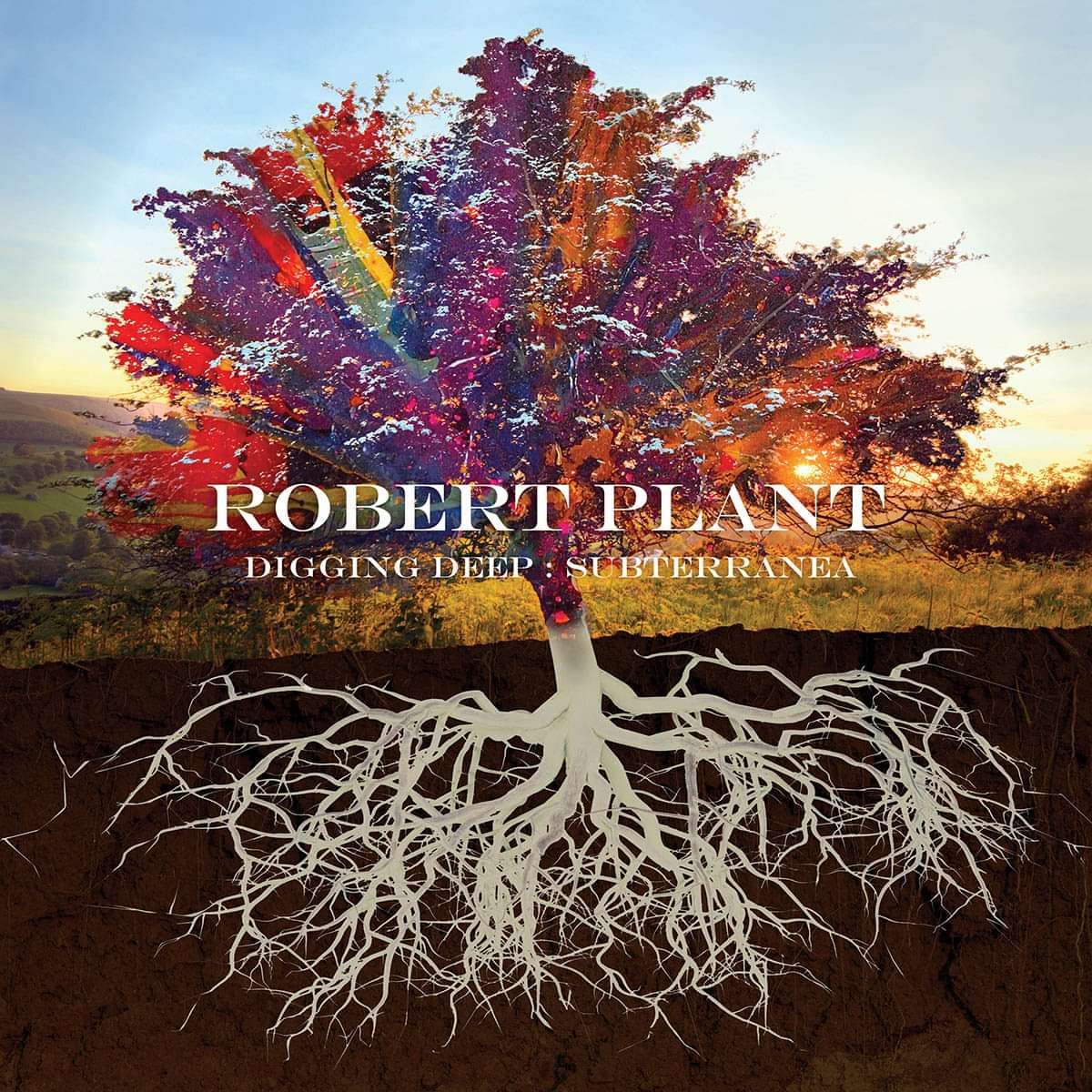
Robert Plant 14: Digging Deep

Although the term has seemingly outgrown the technology whence it was derived, the celebrity podcast has become a valuable promotional tool in the music industry, particularly when related to archival releases. Robert Plant was an early adopter with his Digging Deep series, wherein he told wide-ranging stories about a handful of songs from his catalog, prodded by an eager interviewer. Some of these were included on a box set of vinyl 45s, resequenced from 16 original singles, which appeared in late 2019, and included some actual radio hits.

The following fall brought forth Digging Deep: Subterranea, a much cheaper two-CD set that only shared a few tracks with the vinyl box. Like the equally sprawling Sixty-Six To Timbuktu, it’s designed to present Robert as an innovative wanderer outside of the golden god image cultivated with Led Zeppelin. Out of thirty tracks, only seven are repeated from that set. Each of his solo albums are touched on, nearly democratically, but there’s nothing from the Honeydrippers EP or his Grammy®-winning collaboration with Alison Krauss. However, Shaken ‘N Stirred is completely ignored. The often-overlooked (especially by us) Band Of Joy and Fate Of Nations get the most love. The latter is obviously very important to him, and while “I Believe” and “29 Palms” aren’t exactly deep cuts, “Great Spirit” appears in its acoustic mix, which was a bonus track to the 2007 rerelease of the album. In this context, we can see how that album was very much a transition from synth-tinged radio rock to the sounds he’d embrace in this century, were it not for that little side trip with Jimmy Page in the mid- to late ‘90s (also not mentioned here).

While that earlier compilation included a full disc worth of rarities, Digging Deep: Subterranea offers only three previously unreleased tracks, all presumably recent recordings, scattered throughout the non-chronological track order. “Nothing Takes The Place Of You” is a wonderful slow burner originally written and recorded by Toussaint McCall (we never heard of him either). “Charlie Patton Highway (Turn It Up Part 1)” reworks a tune from lullaby and… The Ceaseless Roar and is supposedly a preview of his next full album project; as befits the title, it’s more of a detuned blues than an exotic world jaunt. Finally, “Too Much Alike” is a jaunty duet with Patty Griffin, and the lyrical content will only fuel further wonder about the level of their collaboration.

As the subtitle leaves open the possibility of other volumes, Digging Deep isn’t a hits collection per se, but serves to celebrate his full catalog. Perhaps some of those overlooked albums will be given more appreciation as a result.

Robert Plant Digging Deep: Subterranea (2020)—

Friday, October 2, 2020

Nick Mason: Live At The Roundhouse

The Pink Floyd tribute band industry has been thriving for decades now, making room for any number of outfits in addition to such successful franchises as Brit Floyd, The Machine, and The Australian Pink Floyd Show. So it was both surprising and fitting that drummer Nick Mason, of all people, who’s the only man to appear on every Floyd album, would launch a tribute band of sorts.

With the fantastical moniker of Nick Mason’s Saucerful of Secrets, this five-piece combo was formed to celebrate the Floyd of the pre-Dark Side Of The Moon years—basically the music on the various volumes of The Early Years. Most of the songs in their repertoire were not performed at all by the post-1987 Floyd, and some barely made it to the stage at all when they were new. Between the economy of the lineup and the capabilities of modern stage equipment, these versions are as faithful as they are passionate.

Live At The Roundhouse, a combination CD/DVD or Blu-ray set, provides the evidence. On bass is Guy Pratt, who held the same job through the Waters-less years. One of the guitarists is Gary Kemp, best known from Spandau Ballet, of all bands. Both sing lead, and neither attempt to emulate the original vocalist(s). And Nick Mason himself, who’s barely played drums this century and was never really known as the most dynamic player, shows an awful lot of energy.

The songs are paced well, bouncing between some very different albums. “Interstellar Overdrive” is something of an overture, the freakout section incorporating elements of “Embryo” and “The Narrow Way”, going into “Astronomy Domine”. “Lucifer Sam” suffers a bit from Guy Pratt’s wacky asides, but there’s still no beating that riff. (A Sex Pistols reference is somehow shoehorned into “The Nile Song”, too.) Obscured By Clouds finally gets its due, with a few tracks scattered throughout the set. An abridgement of “Atom Heart Mother Suite” is bookended by verses from the starkly acoustic “If”, and “A Saucerful Of Secrets” itself is tackled and conquered. Syd Barrett is not ignored, from all of the early singles to “Bike” and the ultra-rare “Vegetable Man”. “Point Me At The Sky” is the wild card of an encore.

Lots of aging rock stars get pigeonholed into the living tribute act category, and it’s moot whether this set will woo the skeptical. But Live At The Roundhouse is a unique snapshot of an era that often gets overlooked, and even more fun to watch.

Nick Mason’s Saucerful Of Secrets Live At The Roundhouse (2020)—

Tuesday, September 29, 2020

Robyn Hitchcock 32: The Man Downstairs

Like every other musician, Robyn Hitchcock went into quarantine, lockdown, sheltering in place, whatever you want to call it, as a result of the COVID-19 pandemic. In his case, he hunkered down in Nashville with his partner Emma Swift, shared the occasional file and short story via his Patreon account, and performed regular, almost weekly acoustic shows from his kitchen on Zoom. While Emma completed an album of unique Dylan covers, Robyn’s only release was this odd snapshot from his vault.

The Man Downstairs is helpfully subtitled Demos & Rarities, and purports to be a dry run for The Man Upstairs. That album was split between evenly between covers and originals, and while his own songs tip the scales on this one, only “Recalling The Truth” made it to the final product; “I Pray When I’m Drunk” was rerecorded with a full band for the album what came after.

The cover choices shouldn’t surprise many Robyn fans—“Arnold Layne” being one of the more common Syd Barrett selections, Dylan’s “Born In Time”, and Nick Drake’s “River Man”, which he’d played onstage. “The Tower Song” by Townes Van Zandt is a surprise, and hopefully will send the uninitiated to that catalog. His own songs run the gamut of his styles, from the mildly Dylanesque “All Love And No Peace” and the mild psychedelia of “The Threat Of Freedom” to the retro (for him) approach of the disparate “Cavendish Square” and “On Seeing Your Photograph”.

An unnumbered release on his own label, the homemade charm of The Man Downstairs comes through in its minimalist packaging, topped by a truly amateurish cover collage. Yet the quality of the music puts this up there with previous solo acoustic endeavors. What’s more, the quality of the recording suggests that he should stick with this presentation going forward, if only for economic reasons.

Robyn Hitchcock The Man Downstairs: Demos & Rarities (2020)—3

Tuesday, June 30, 2020

Bob Dylan 66: Rough And Rowdy Ways

Leave it to Bob Dylan to emerge after eight years with his personal take on the state of the world amidst a global situation. Right?

Wrong. Bob does a lot of things, but grand statements aren’t any of them. Even with the gravitas in the teasers that previewed it, Rough And Rowdy Ways is simply a collection of songs he wrote sometime in the preceding eight or so years. Granted, those eight years were filled with six hefty installments in his Bootleg Series, two box sets covering two historic tours, and three albums dedicated to old standards that happened to be covered first by Frank Sinatra.

Even the title is contrary. Yes, his voice is rough, but nothing on the album could really be considered rowdy. The packaging is as minimalist as any of his last handful of albums—the barest musician credits, antique photos repurposed, including a prominent photo of John F. Kennedy on the back captioned by exactly one song title; more about that in a bit. Bob’s name only appears on the spine and the discs themselves.

Most of the album is quiet, the words delivered in a near monotone, much like side two of Oh Mercy. “I Contain Multitudes” opens the program with his revised style of beat poetry infused with pop culture references, including a juxtaposition of Anne Frank, Indiana Jones, “and them British bad boys, the Rolling Stones.” You can almost hear him wink. “False Prophet” turns it up with a swaggering blues, full of the boasting that’s featured in his similar songs from this century. In “My Own Version Of You”, he takes the role of a Dr. Frankenstein, describing his method of creation over a spooky country-tinged backing.

In the aftermath of his Sinatra trilogy (for lack of a better term), “I’ve Made Up My Mind To Give Myself To You” sounds like another attempt at writing a standard along those lines. It’s even got crooning backing vocals for a very nice touch. The sense of calm doesn’t last, as he has to repel a demon in “Black Rider”. This enemy is either literal or symbolic, yet one he feels compelled to warn “the size of your cock will get you nowhere.” “Goodbye Jimmy Reed” is another namecheck of a blues legend over a fitting groove.

“Mother Of Muses” is an exquisite prayer, along the lines of “Stay With Me”, this time evoking the name of Calliope, the muse of epic poetry. It would be a wonderful way to end the album, but there’s more to go. “Crossing The Rubicon” is a dirty blues and something of a stumble, in need of editing. The Bob of yesteryear would have settled for ending each verse with the title, but here he overuses the image, from the first line and throughout the song. “Key West (Philosopher Pirate)” is lovely but dizzyingly inscrutable, a travelogue that mentions dead presidents, and includes the questionable biographical that he married a prostitute, at the age of twelve no less. (Naturally, they’re “still friends.”)

The important track here would be “Murder Most Foul”, the first preview for the album, included on a disc all its own. Just as “Sad-Eyed Lady Of The Lowlands” was given a place of honor taking up an album side, this mediation on the Kennedy assassination will be studied as deeply as any of his other epics. Over a nearly ambient backing, it begins with recounting of the events, weaving through the decades since and back, name-checking the Beatles and the Who, Woodstock and Altamont, Freddy Krueger and Scarlett O’Hara, “What’s New Pussycat” and “What’d I Say”. Over the final six minutes of nearly seventeen, he requests a litany of songs for Wolfman Jack to play, from classical and rock to jazz and blues, ending with a request for “Murder Most Foul” itself. A possible antecedent would be “Last Thoughts On Woody Guthrie”, which he recited once in public, approximately seven months before the events in Dallas. (See also his far-from-factual recount of the Titanic disaster in “Tempest”; meanwhile “Hurricane” also includes “wait a minute, boys” as a key statement.)

We seem to be in the minority among pundits, most of whom have declared Rough And Rowdy Ways to be a masterpiece. This far into his career, and at his advancing age, any album might be considered a final statement, and time will tell what he may yet have in store for us. Time will also tell how well this album will age; our expectations on that end have influenced our rating. And maybe one day we’ll find out what exactly Fiona Apple contributed to the album. (Supposedly piano on “Murder Most Foul”, but it’s not exactly idiosyncratic.)

Bob Dylan Rough And Rowdy Ways (2020)—3

Tuesday, June 23, 2020

Neil Young 60: Homegrown

While some unreleased albums gain notoriety via blurry traded copies, Neil Young is the king of unreleased albums shelved so well that they’ve never been bootlegged. Homegrown was his first legendary secret, scheduled for release in 1975 only to be replaced from the back burner by Tonight’s The Night. Save the handful of tracks that emerged elsewhere, it had never been heard outside his closest circle for 45 long years. With all the delays inherent to his Archives project, the promise that it would be finally released in 2020 seemed almost too good to be true. (Even the COVID-19 pandemic got in the way, pushing its release back a few months while fans sheltered impatiently in place.)

The biggest mystery about the album was this: seeing as Tonight’s The Night was such a dark album, just how much darker was Homegrown, even if Neil said it was a sequel of sorts to Harvest? The answer lies in his biography. Tonight’s The Night eulogized dead friends, while Homegrown eulogizes a dead relationship, with the body still warm and the legacy ongoing in the child Neil and girlfriend Carrie Snodgress shared. It was mostly written and recorded in the aftermath of CSNY’s massive 1974 reunion tour, and yet another aborted album by that crew. Neil was incredibly prolific in this period, the songs coming faster than he could record them, much less release them. His voice throughout Homegrown is weary, and Tim Drummond’s solid but wavering bass reflects the mood wherever he plays.

The first few songs do mirror the Harvest sequence. “Separate Ways” begins already in progress, a lazy lope a la “Out On The Weekend”, but even slower and much more infused with despair than simple melancholy. Having only been heard on bootlegs with the likes of Booker T & the MG’s, it’s great to finally have it in the official canon. “Try” is only slightly jauntier in tempo, with a tack piano and Emmylou Harris, and notoriously uses a phrase attributed to the woman screaming in the rain in “Harvest”. In the “Man Needs A Maid” slot is “Mexico”, a solo piano and voice vignette derived from Joni Mitchell’s prettier moments. “Love Is A Rose” was previously a pleasant trifle on Decade; here the same take, with its bum harmonica note, proves its true home. While not as raucous as the eventual Crazy Horse version, the title track revs slowly up to speed in the spirit of “Are You Ready For The Country?” And then the album goes completely off the rails. “Florida” is a recitation of a surreal dream while he and Ben Keith scrape piano strings and rub wine glass rims at an excruciating pitch. (If it sounds at all familiar, that would be due to the packaging of Tonight’s The Night, where the words were transposed over a replica of the liner notes from On The Beach.) “Kansas” isn’t as surreal, but acknowledges the waking “from a bad dream” over exploratory acoustic strumming. (That the melody sounds a bit like the Hitchhiker version of “Powderfinger” is probably insignificant.)

On the basis of the contents, “We Don’t Smoke It No More” wouldn’t stand up in a court of law, being little more than a slow Jimmy Reed blues with the barest of lyrics but cool lead guitar fighting with harmonica. Perhaps the most surprising departure is “White Line”. Even though its acoustic arrangement was revealed on Songs For Judy, this understated take (recorded at the Who’s studio, by the way, with only Robbie Robertson adding acoustic noodling) seems galaxies away from the loud Crazy Horse rendition that would be taken as standard fifteen years later. Frankly, it’s gorgeous. It nicely sets up the brilliant “Vacancy”, an edgy electric stomp like “World On A String” crossed with “Revolution Blues”, with sometime Band member Stan Szelest working the Wurlitzer electric piano. (Levon Helm is on the album as well.) “Little Wing” cleanses the palate just as it mysteriously opened Hawks & Doves, and an allegedly alternate mix of “Star Of Bethlehem” brings the program to a quiet close.

The benefit of history makes Homegrown as good as it sounds today. Despite being recorded in Nashville and on his ranch with some of the same players, it’s ragged where Harvest was smooth. Its haphazard flow is right in line with the mind of the man who directed Journey Through The Past only a couple of years before. Had it been released as originally planned, it likely would have confused and angered many, only to be debated for decades. It is the natural follow-up to On The Beach, and should be celebrated.

Neil Young Homegrown (2020)—4

Tuesday, April 21, 2020

Monkees 11: The Mike & Micky Show

One of the things that helped the Monkees as they kept touring 50 years after the fact was the active involvement of Mike Nesmith. The surviving members were also careful to hire a crack backup band of multi-instrumentalists to replicate all the parts fans knew from the records. (Having one of Mike’s sons and Coco Dolenz, sister of Micky, in the troupe kept the tours family affairs.) Peter Tork had bowed out for health reasons towards the end of his life, which the other two acknowledged by billing their concerts as “The Mike & Micky Show”. This also made an easy title for the live album that ensued from the 2019 run.

To their credit, this is not a strictly “all the hits” package. Mike sticks mostly to songs he wrote or sang, and the focus is more on the deep cuts the longtime fans love most, like stuff from Headquarters and Head, and obscurities like “St. Matthew”. A so-called acoustic set recasts “Papa Gene’s Blues” and “Tapioca Tundra”, and “Auntie’s Municipal Court” gets a rare outing. The banter between the two is still fun, but Micky’s recounting of how he came to write “Randy Scouse Git” is becoming about as tired as Paul McCartney’s story of “Yesterday”. Only two of the newer songs are included: the complicated Paul Weller/Noel Gallagher collaboration “Birth Of An Accidental Hipster”, and the sublime “Me & Magdalena”, which Mike closes by acknowledging writer Ben Gibbard.

Both Mike and Micky are in their 70s, and some of the keys are taken lower to accommodate old men’s voices. But listening to Micky keep up with every word on “Goin’ Down” after all these years deserves a standing O. Live—The Mike & Micky Show is a decent souvenir for those who still care, and especially those who have yet to experience these guys while they still can. And yes, they still do “Last Train To Clarksville” and “Daydream Believer.”

The Monkees Live—The Mike & Micky Show (2020)—3

Saturday, November 9, 2013

Cream 5: Live Cream

Just because the band was done didn’t mean there wasn’t money to be skimmed off Cream. With all three members still active with various new projects, their label went back to the vaults and emerged ere long with Live Cream, which mostly presented two sides’ worth of extended versions of songs from the first album, recorded during the same stretch of shows that spawned the live portion of Wheels Of Fire. “N.S.U.” is particularly good, though we always think “Sweet Wine” is played too slowly. The sound is terrific, and the interplay excellent. Oddly, the compilers also chose this outlet to unleash “Lawdy Mama”, a Disraeli Gears outtake better known as “Strange Brew” with different lyrics.

Two years later, after Eric Clapton had already struck gold on his own and with Derek and the Dominos, Live Cream Volume II leaned more on the “hits” (“White Room”, “Sunshine Of Your Love”, f’rinstance). This time the sources were split between the same Wheels Of Fire shows and those from their farewell tour, as sampled on Goodbye. “Deserted Cities Of The Heart” stands out, but then again so does the crowd noise throughout, and it’s a matter of taste whether these particular tunes sound better live. But the key draw here is a 13-minute exploration on “Steppin’ Out”, which Clapton had done with the Blues Breakers, but hadn’t been included on any Cream album. Both albums, while more tossed together than lovingly presented, still showed off the band’s power, and nicely bookend their work.

From there, Cream’s legacy was recycled through countless complications and repackages. Clapton was the only surviving band member when, over half a century after the band called it quits, the powers that be put together Goodbye Tour—Live 1968, a set of four discs each containing a complete show from that brief run. The Oakland show is arguably the most interesting, as the set list varies the widest from the other three; Ginger Baker takes his drum solo on “Passing The Time” instead of “Toad”, which wasn’t performed. “Toad” as well as “Traintime” show up on disc two and three; the crowd was rowdy at the L.A. Forum, and not because of Buddy Miles introducing the band, while the San Diego show is heard for the first time ever here. Finally, while the final show at the Royal Albert Hall had already been broadcast at the time and released on video (it’s the one where the camera on Jack Bruce’s microphone is close enough to show his fillings and tonsils) this is the first time it’s been on CD. While it sounds like mud compared to the other discs, it’s historically important. Though you’d think someone would have noticed that some of the photos in the booklet are backwards.

Cream Live Cream (1970)—
Cream
Live Cream Volume II (1972)—3
Cream
Goodbye Tour—Live 1968 (2020)—3

Monday, November 8, 2010

Rolling Stones 34: Flashpoint

To confirm their position as a major cash cow, the Stones completed their CBS contract with a live album as a souvenir of their recent tours. Of the forty odd songs they played around the world, only twelve are included on Flashpoint. (The CD included two more and various singles had others; unfortunately, “2000 Light Years From Home”, which was pretty cool when they played it at Shea Stadium, was only issued as a B-side.)

As mentioned, the tours were fairly elaborate. Along with inflatable props and tons of scaffolding, the five Stones were accompanied by two keyboard players, backup singers and a full horn section. Despite all the preparation and shows to choose from, like many live albums it was sweetened in the studio during the mixing process.

The hits are here of course, like “Start Me Up” and “Satisfaction”, but there are some surprises, such as “Ruby Tuesday” and “Factory Girl”. “Paint It Black” is predicted by the inclusion of some chatter about the song (right before “You Can’t Always Get What You Want”) lifted from side two of Get Yer Ya-Ya’s Out!, and Eric Clapton joins on a version of “Little Red Rooster”. For the most part, the songs sound like the records, which was the point of having all those people onstage.
Surprisingly, the band included two brand new studio songs on the album. “Highwire” was a very timely if futile commentary on the Gulf War as it started, while “Sex Drive” is another stupid James Brown takeoff that gave Mick another excuse to put out dance remixes.

Flashpoint was a moderate hit, and about as exciting as Still Life. Even more maddening was the limited red leather-bound edition that included a disc called Collectibles, sporting some of the better recent B-sides and a few remixes. But the most striking aspect of the album is the photo of the band taken at the end of one show: all five are grinning, except for Bill Wyman, whose sad smile and wave foretells his departure from the band. This album represents the last time he would play with the Rolling Stones.

Two decades later, the Stones released one of the tour’s complete shows as part of their official bootleg download series, eventually followed by a physical release. Live At The Tokyo Dome had been a Japanese television broadcast, and the source of “Sympathy For The Devil” on Flashpoint, and provides a slightly better reflection of a so-so tour, with Chuck Leavell’s keyboards and the backup singers high in the mix. Eight years after that, Steel Wheels Live presented the Atlantic City show from two months earlier that spawned “Sad Sad Sad” and “Little Red Rooster” from Flashpoint, with Clapton sticking around for “Boogie Chillen” with special guest John Lee Hooker, as well as Axl and Izzy from Guns N’ Roses on “Salt Of The Earth”. This particular two-CD set came with either a DVD or Blu-ray of the show, or you could get both video versions with a bonus DVD of the Tokyo show, with a CD of five extra songs. Or you could shell out the big bucks for the four-LP version. (With the exception of the guest appearances, the only real setlist differences between Atlantic City and Tokyo are the addition of “Undercover Of The Night”, and “Terrifying” in place of “Almost Hear You Sigh”.)

Rolling Stones Flashpoint (1991)—
Rolling Stones
Live At The Tokyo Dome (2012)—3
Rolling Stones
Steel Wheels Live: Atlantic City New Jersey (2020)—3