Showing posts with label tears for fears. Show all posts

Tuesday, July 1, 2025

Tears For Fears 10: Songs For A Nervous Planet

The promotional success of The Tipping Point saw Tears For Fears touring behind it over two consecutive summers, and a show from near the end of the second leg was the basis of the double live album Songs For A Nervous Planet, as well as a matching film. Stuff from the new album is mixed with the expected hits and older favorites, all impeccably performed to replicate the records, with little variation (such as the blatant quote from “Hello Goodbye” at the end of “Sowing The Seeds Of Love”). There’s a wonderful shift when Lauren Adams sings a stripped-back “Suffer The Children”, followed by the duets of “Woman In Chains” and “Badman’s Song”. We do find it interesting to hear “Break It Down Again”, the only song in the set from an album Curt Smith wasn’t on. “Shout” is the closing number, of course; you can just barely hear the crowd singing it before the first verse.

Perhaps to give the consumer a little more, the first disc begins with four new studio tracks. “Say Goodbye To Mum And Dad” mixes somber messaging with a jaunty whistled tune, while “The Girl I Call Home” starts out techno and ends anthemic. “Emily Said” is downright cheery, and blatantly personal, given the titular character speaks Roland Orzabal’s first name, and is also the name of his new bride. The children’s choir overdoes the sugar, however, and the false ending with a different coda suggests there’s another version of it somewhere in a vault. But the opposite emotion is “Astronaut”, another wish to hide from the world. (Target stores got an exclusive track in “Landlocked”.) In some ways the live portion seems like a bonus to an EP.

Tears For Fears Songs For A Nervous Planet (2024)—3

Friday, January 31, 2025

Tears For Fears 9: The Tipping Point

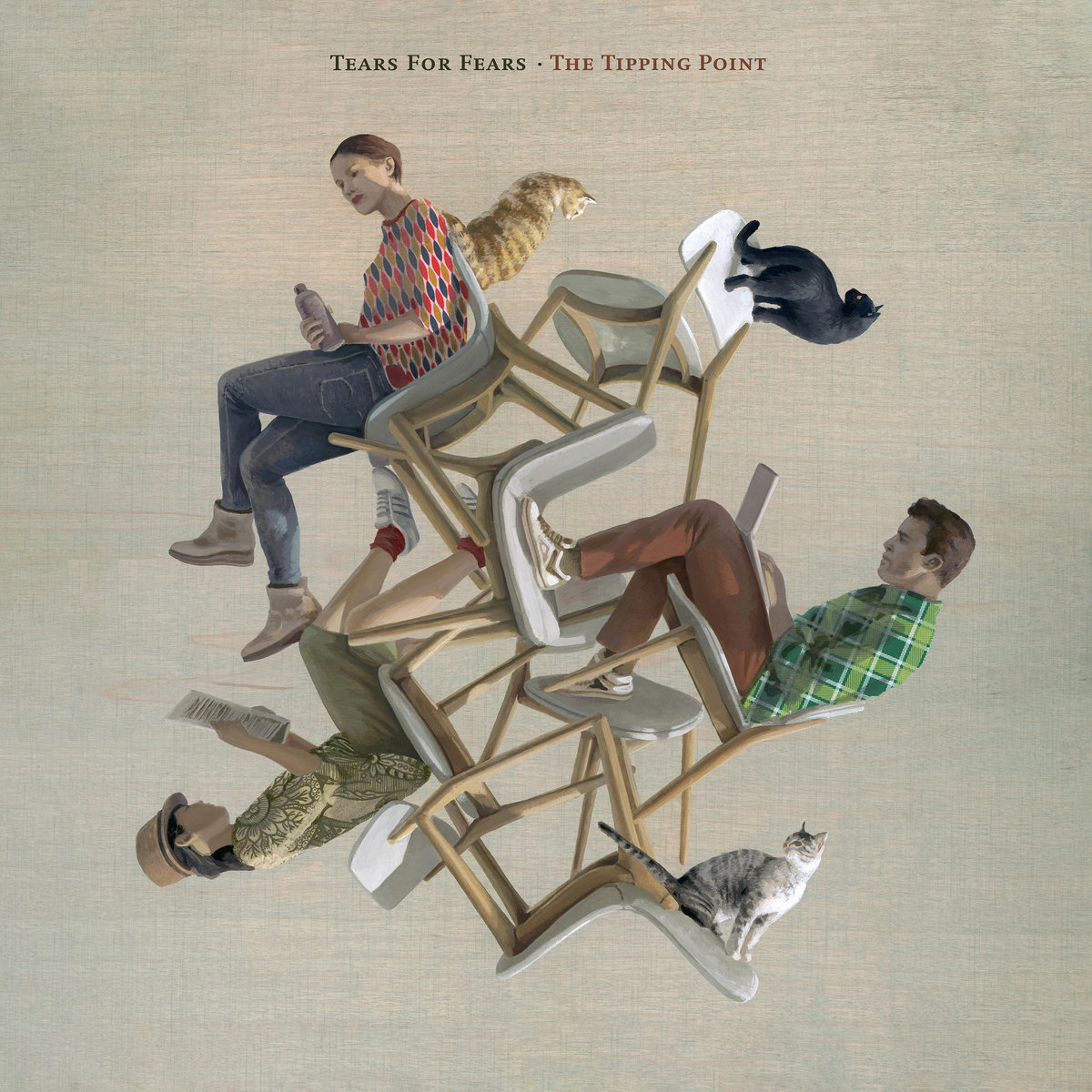
Considering how long they’d generally taken to make their albums even when they were more relevant, nobody was really expecting much from Tears For Fears, especially considering how tiny a splash their first reunion made. But they were able to keep in the public’s mind through touring, and deluxe expanded repackages of their ‘80s albums; meanwhile Curt Smith released two more solo albums. Even when they spoke of writing new material, people weren’t cancelling dinner plans. And frankly, “I Love You But I’m Lost”, one of two new songs added to the 2017 Rule The World compilation, was mostly of appeal to diehard nostalgists and Pet Shop Boys fans. (The other was “Stay”, and will be discussed shortly.)

Yet when The Tipping Point finally appeared after even more delays, the media received it like a gift, with the boys making the rounds of the talk shows, speaking openly about their own professional difficulties and personal travails. Curt looked as chiseled as ever, while Roland Orzabal embraced his own silver mane and beard. Aging and mortality were the main topics among the songs, many of which were collaborations with Charlton Pettus, who produced the last album, and hit songwriter Sacha Skarbek.

The simple acoustic strum of “No Small Thing” is proof right away that they’d evolved. A mention of New Mexico suggests a south-of-the-border influence, but another rhythm comes in to take it somewhere else entirely, escalating toward a frantic and sudden end. The title track eases its way in until hitting tempo with a drum track that sounds exactly like it was lifted from “Everybody Wants To Rule The World”, whereupon it gets very busy and doesn’t let up. It’s easy to read into the lyrics of “Long, Long, Long Time”, but the changing meters keep you guessing in the meantime. “Break The Man” was written by Curt and Pettus—without Roland—and is straightforward pop without too much decoration, in contrast to “My Demons”, an excellent lyric tethered to a robotic mix.

“Rivers Of Mercy” is much more gentle than anything we’ve heard yet, with gospel touches addressing the worldwide turmoil of 2020. “Please Be Happy” is unique in their catalog as it addresses someone else’s pain and suffering, as opposed to their own or that of the world at large. With horns and subtle orchestral touches, it’s quite lovely. By the time “Master Plan” arrives with its overt Beatle references, it’s welcome, and nicely sets up the catchy, raspy soul of “End Of Night”. Finally, “Stay” sounds wonderful in the context of the album, moreso than it did as a carrot on a hits collection. The other song written by just Curt with Pettus, it was directly inspired by his own doubts about continuing with the band, and nicely caps a strong second side.

While we’re still partial to earlier albums, The Tipping Point does succeed with its breadth of style. Keeping mostly away from the Beatles and Brian Wilson playbooks certainly helped, as did keeping it down to a manageable LP length.

Of course, as had become an annoying trend among “legacy” artists, the album was released by retailers in different territories with exclusive bonus tracks, with all included on a very limited deluxe edition. “Secret Location” is a sop for those who want to dance: “Let It All Evolve” is more tense, based around acoustic chords and a drone, but with a decent chorus; “Shame (Cry Heaven)” has a lovely stark piano beginning, but soon detours into plastic soul and an ill-advised tempo change. They are merely extras.

Tears For Fears The Tipping Point (2022)—3

Friday, September 6, 2024

Tears For Fears 8: Everybody Loves A Happy Ending

Come the 21st century, Tears For Fears had become something of a relic of an earlier time. Curt Smith laid low for a while, eventually releasing two solo albums—one under the nom de plume Mayfield and the other as himself. Roland Orzabal emerged after a quiet spell with Tomcats Screaming Outside, a strange techno concoction wisely not credited to Tears For Fears.

But the boys managed to patch things up as well as record an album together, once again having to wait until label shenanigans were worked out. Everybody Loves A Happy Ending loads up on the psychedelia from where they left off with a lot more sexy soul, truly enjoying the potential of the studio. The Beatles remain a touchstone; we counted at least two samples of the “Day In The Life” orchestral buildup throughout the album. In addition to the dynamic duo, Charlton Pettus is a main collaborator, having already worked with Curt on his solo projects.

The title track emerges like a spaceship appearing over the horizon, then an alarm clock rings and the song becomes an XTC pastiche (a redundant statement to be sure). About halfway through there’s another mood shift to a completely different vibe—a hallmark of the album as a whole. “Closest Thing To Heaven” is even closer to “Sowing The Seeds Of Love”, right up to the backwards drum fill, but gosh, what a hook. A 12-string jangle drives the chamber-pop touches of “Call Me Mellow”—wherein they didn’t realize they took the melody from “There She Goes”—and things finally slow down for the lightweight “Size Of Sorrow”. No points for guessing whence they copped the drum pattern for “Who Killed Tangerine?”, another song where the choruses don’t match the verses. They finally sound almost contemporary, or at least less retro, on “Quiet Ones”, which is pretty straightforward pop and not at all complicated.

We hear a little Brian Wilson in the melodies of the lyrically sparse but still catchy “Who You Are”, which just soars until the processed closing reprise of the title track. It’s a strange transition to the unsettling effects throughout “The Devil”, a brooding number that gets a lift from the guitar before winding to a halt. They save all their tricks for the glorious “Secret World”, with its Paul Buckmaster arrangement (before Ben Folds hired him); the studio applause at the end is justified. “Killing With Kindness” juxtaposes slow and faster sections, a battle of psychedelic grooves that don’t always gel. “Ladybird” recalls some of the textures of the last album before maneuvering through tricky time signatures, and “Last Days On Earth” takes us out with trippy soul; both tracks recall Seal, in a good way.

At 12 tracks and just under an hour, Everybody Loves A Happy Ending is a very dense album, with a lot of style but none of the overbearing substance that marked their earliest work. For one thing, they’re twice as old as they used to be. It’s the sound of people enjoying making records, and for fans of the duo, it was just nice to hear them playing together again.

Tears For Fears Everybody Loves A Happy Ending (2004)—3

Tuesday, March 7, 2017

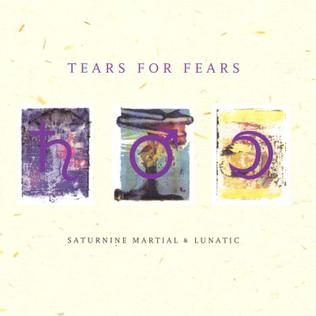
Tears For Fears 7: Saturnine Martial & Lunatic

Before the expanded CD reissue became ubiquitous, the rarities album was the common (not to mention cheapest) method for gathering various castoffs outside of a band’s more easily acquirable releases. The Smiths, Elvis Costello and R.E.M. are just a few artists whose “B-sides” albums rank up with their better work, but the arithmetic doesn’t always compute for everyone.

Saturnine Martial & Lunatic arrived at an odd time for Tears For Fears fans, released by the label that dropped them before another label released the album they’d finished, which didn’t exactly set the world on simmer. And while TFF had amassed a pile of rarities over the years, there’s usually a reason why something is a B-side. For example, “The Big Chair” isn’t the lost title track from that album, but an instrumental experiment featuring sound bites from the movie Sybil, which inspired it. A little better is “When In Love With A Blind Man”, but only because it shares a melody and piano part with “The Working Hour”. “Pharaohs” seems like another odd experiment, but turns out to be a slow instrumental of “Everybody Wants To Rule The World” with a shipping forecast on top.

A third of the tracks come from the Roland-only era, like “New Star”, which even made it to a movie soundtrack. And it wouldn’t be a rarities collection without wacky covers—in this case, “Sad Song” by Robert Wyatt and Bowie’s “Ashes To Ashes” in a carbon copy. But by including some very self-deprecating liner notes and ending with “The Way You Are”, a top 30 single they didn’t even include on their hits album because they hated it so much, the overall mood here is an album that can be left aside.

Tears For Fears Saturnine Martial & Lunatic (1996)—2

Friday, September 30, 2016

Tears For Fears 6: Raoul And The Kings Of Spain

Another album nobody cared about when it came out was from the band still known as Tears For Fears. Ten years and only two full-lengths after Songs From The Big Chair—still their best work—Roland Orzabal’s latest project was scheduled, then dropped from their label before it could be released, and picked up by another that did release it, only to have it sink like a stone. It’s too bad, because Raoul And The Kings Of Spain was the most cohesive thing he’d done since that high watermark. (Curt Smith was still AWOL at this point.)

That’s a lot of back story, but maybe it will get people to appreciate this underrated gem, which sports rich production, regretful but otherwise impenetrable lyrics, and plenty of dynamics. Spanish imagery seems to be a key theme here, as portrayed in the artwork and the songs themselves (the title track, the punning and slinky “Sketches Of Pain”, and “Los Reyes Catalicos”, which appears halfway through and again as a reprise) but if there’s a story here we haven’t figured it out.

In between are all kinds of catchy tunes, most flowing in and out of each other, making something of a suite that still supports the idea of a concept. “Falling Down” builds from a very simple guitar riff to a track that should have been a hit single, if people still cared about TFF. “Secrets” begins with “Imagine”-style piano—something of a trend in the ‘90s—before escalating into a soaring statement in their own style. The weakest track is “God’s Mistake”, which sounded dated even when it was tried as a single, but even in this company it’s doesn’t require skipping.

“Sorry” simply explodes from the speakers with a lot of energy, and “Humdrum And Humble” builds on the retro-soul stylings popularized by Seal. “I Choose You” is the slow ballad, and a sentiment Ralph Wiggum can get behind. Reading the lyrics for “Don’t Drink The Water” won’t help, but does get the feet going again, while “Me And My Big Ideas” sneaks in TFF mainstay Oleta Adams just before the album finishes.

One of the best things about Raoul And The Kings Of Spain is that you can probably find it in a used bin for under five bucks. Thank the waning consumer confidence in the Tears For Fears brand, because with this album, their loss is your gain. (The album was expanded some fourteen years later by a UK-based reissue label, which added several era B-sides, including “Queen Of Compromise”, which was part of the original album sequence before the set was rejigged in favor of “Sorry” and “Humdrum And Humble”, and the superior “All Of The Angels”. The current streaming version also adds a live cover of Radiohead’s “Creep”.)

Tears For Fears Raoul And The Kings Of Spain (1995)—4

Friday, June 3, 2016

Tears For Fears 5: Elemental

Seeing just one guy on the cover where there used to be two leads to the obvious joke that this album should be credited to Tear For Fear. But since Roland Orzabal was the more dominant character in the group anyway, it should be no surprise to hear the longtime brand on Elemental.

The title track offers elements (sorry) familiar from their early synth-pop days, and less of the adult contemporary sheen from The Seeds Of Love. “Cold” is straight-ahead rock, as “Break It Down Again”. Its mock-pomp intro is purposely silly, and only helps the song succeed as a terrific single. “Mr. Pessimist” rambles a bit long, but has some tasty piano work, while “Dog’s A Best Friend’s Dog” lacks focus, besides rocking out.

With its pointed references to “primal scream” and “adolescent dream”, “Fish Out Of Water” seems to be a swipe at his onetime partner, complete with very Curt-sounding counterpart vocals in the choruses. “Gas Giants” is predominantly instrumental, hearkening back to similar experiments of the band’s from the ‘80s, and works well as a lead-in to “Power”, which, but for its length, could also have been a radio hit in that earlier time. “Brian Wilson Said” (a clever title) is an overt homage to the Smile era, but builds on those ingredients using more contemporary touches, going into an extended jazzy guitar exploration. And while a title like “Goodnight Song” belongs at the end of any album, this toetapper is hardly a lullaby.

There’s much to enjoy on Elemental, particularly since not much was expected. Labored as it is, the listener must be patient and open-minded to be rewarded. (More so than to “the other guy”, as Curt Smith quietly released Soul On Board, a collection of competent but antiseptic dance pop, later that year to resounding silence.)

Tears For Fears Elemental (1993)—3

Tuesday, January 12, 2016

Tears For Fears 4: Tears Roll Down

It’s a little presumptuous for a band with only three albums to put out a hits collection, and even more so when one of the songs on said collection is brand new, not having even earned its stripes as a hit. But in the case of Tears For Fears, the hits from those three albums were so good that they sound great together.

Tears Roll Down (Greatest Hits 82-92) shuffles five songs from Songs From The Big Chair and three from the other two very well. The earliest songs don’t arrive until halfway through, but they fit just fine. “Mother’s Talk” is our least favorite single here, and ending with “Advice For The Young At Heart” makes it all kinda depressing, but “Laid So Low (Tears Roll Down)”, that one new song, gives lyrics to an earlier, instrumental B-side, and provides something of a link to the band’s future.

This was not the only hits collection, as the band’s association with PolyGram worldwide meant that the millennium would ensure several repackagings of the same pile of songs at budget prices and higher. Tears Roll Down itself reappeared in other ways overseas: in tandem with a DVD of their videos plus another disc of lesser hit singles, and in a two-disc version that added eleven remixes. But in summing up the fruits of the band’s first decade, this simple hour of ‘80s pop is satisfying.

Tears For Fears Tears Roll Down (Greatest Hits 82-92) (1992)—4

Tuesday, September 8, 2015

Tears For Fears 3: The Seeds Of Love

After two albums that had come out relatively close to each other, it took Tears For Fears four full years to complete their follow-up. Roland Orzabal had come down with a severe case of studio-itis, recording and re-recording tracks, with seemingly little input from Curt Smith. (Keyboardist Nicky Holland became Orzabal’s key collaborator in the interim.) By the time The Seeds Of Love finally came out, the music scene had changed from the synth-pop that helped launched the band; as a result their sound was less experimental, but still elaborate pop.

The opening track, “Woman In Chains”, is notable as a near-duet with Oleta Adams, who got a nice boost for her career thanks to this album, as well as from its production, which very much resembles the recent hit work by Peter Gabriel. At over six minutes, the track is given time to breathe and expand, and is quite stirring. (Also, that’s Phil Collins pounding the skins for the second half of the track.) “Badman’s Song” is even longer, beginning with a frantic Latin jazz solo, and continuing with gospel overtones. “Sowing The Seeds Of Love” was a late entry into the psychedelic revival of two years before, but because Beatles nostalgia was still in vogue, the song became a hit. What’s more, Curt Smith’s voice was heard for the first time on the album. He’s also prominent on the slightly wimpy “Advice For The Young At Heart”, a little too adult contemporary for these ears.

Side two’s songs are just as lengthy, a little more demanding and not always as catchy. “Standing On The Corner Of The Third World” mostly rumbles along at a medium tempo, with occasional melodies borrowed from “I Believe”. “Swords And Knives” is a little more involved but just as meandering. As if one song about knives wasn't enough, “Year Of The Knife” beings inexplicably with the sound of a live audience cheering, though there’s been no indication that it was actually recorded at a concert. Maybe they were going for a “Broken” vibe? Anyway, there’s a return to the “sun and the moon, wind and the rain” motif from “Women In Chains”. “Famous Last Words” is the shortest song, has hints of the Blue Nile and more “sun and the moon”, and leaves the listener feeling depressed about the end of the world.

While not a triumph—few albums that take so long to make are—The Seeds Of Love does show the band progressing. The best songs still sound good today, and that’s always appreciated.

The eventual reissue added four contemporary B-sides, one of which would eventually be reworked for their next single, which we’ll get to, and the sterile jazz of “Music For Tables”. Two decades later, these were accompanied by a pile of other single mixes and B-sides on the Deluxe Edition’s bonus disc (called “The Sun”), while two further discs (called “The Moon” and “The Wind”) in the Super Deluxe Edition offered even more alternate mixes, demos, jams, and the like. Plus a Blu-ray (called “The Rain”). Clever boys, they.

Tears For Fears The Seeds Of Love (1989)—3
1999 remastered CD: same as 1989, plus 4 extra tracks
2020 Deluxe Edition: same as 1999, plus 12 extra tracks (Super Deluxe Edition adds another 26 tracks plus Blu-ray)

Friday, May 15, 2015

Tears For Fears 2: Songs From The Big Chair

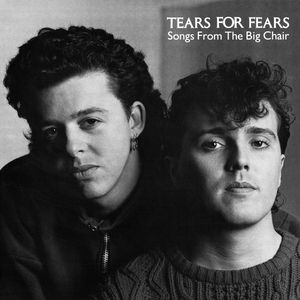
If we had the knack of predicting what would be a hit song, we’d be a lot wealthier today. We’d also could’ve been able to explain how the second album by Tears For Fears became such a mega-success worldwide. And deservedly so.

A title like Songs From The Big Chair is just begging for interpretation, even after the photogenic duo (not quite as dreamy as Wham!, but still) explained that it was yet another reference to psychotherapy. Videos helped too, though it wasn’t until their third single that America (and MTV) took notice. Simply enough, in the two years since their debut, they’d progressed from a borderline techno outfit to a band, melding modern sounds with more organic ones.

A programmed drum pattern provides a few bars of restraint before “Shout” crashes in, its chorus repeated for maximum retention while a lengthy guitar solo sees the song out. (There’s a lot of guitar on this album, keeping the sound fresh.) A saxophone dominates “The Working Hour”, from the slow intro to the motifs between the verses. One of the few songs on the album that wasn’t a single, it’s a good bridge to “Everybody Wants To Rule The World”, which also uses guitar along with the programmed sounds. A sampled swell of strings introduces “Mothers Talk”, possibly the most dated track here, and arguably the low point.

The saxophone returns to color “I Believe”, an overwrought but still moving piano ballad that sets up the mini-suite that comes next. “Broken” is an upbeat dance track without vocals until the near end, bringing in a motif and quote from “Head Over Heels”, the third (and best) single with the wackiest video. The single version ends with the final “time flies”, but the album segues into a live excerpt of “Broken”. As the applause fades, “Listen” creeps in, the most experimental track lyrically, since there aren’t that many, not counting the Spanish phrase that these ears still hear as “comb-be-on-a-chickie-na-na-poopa-say”.

This is a cursory summary of the album, mostly because the best-known songs are so well known we can’t add much. But while the singles were all good, Songs From The Big Chair holds together very well as an album, a continuous listening experience. Its stature as one of the most popular albums of the ‘80s is displayed by its three reissues in three different decades—first adding a few B-sides as bonus tracks, then a two-CD Deluxe Edition with even more remixes and alternates, and most recently a Super Deluxe Edition with four CDs covering all the related songs in multiple versions (including live recordings and BBC performances) plus DVDs with 5.1 audio and video content. Eleven years after that went out of print, the 40th Anniversary Edition offered the first three discs of the 30th Anniversary Edition, leaving out most of the early mixes and live recordings. So if you can’t get enough of all those hit singles, have at it.

Tears For Fears Songs From The Big Chair (1985)—4
1999 remastered CD: same as 1985, plus 7 extra tracks
2006 Deluxe Edition: same as 1985, plus 20 extra tracks
2013 Super Deluxe 30th Anniversary Edition: same as 1999, plus 44 extra tracks (and 2 DVDs)
2025 40th Anniversary Edition: same as 2013, minus 14 tracks (and DVDs)

Friday, February 20, 2015

Tears For Fears 1: The Hurting

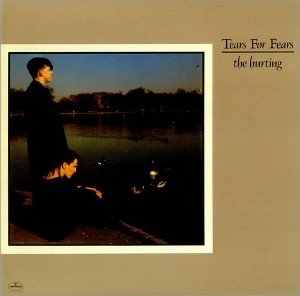
Synth-pop was huge in the early ‘80s, and even bands that didn’t have any real songwriting talent could fall back on production to stand out from the pack. Tears For Fears straddled that territory very well by matching modern sounds to mopey lyrics about the pain of childhood. Much of The Hurting covers that theme, with song titles taken from the works of Arthur Janov, the inventor of primal scream therapy.

But even with that source, the album is catchy. Its three hit singles still stand out in particular: “Mad World”, with its robotic drums and taunting fake trumpets; “Pale Shelter”, built on a straight rock beat and acoustic major-sevenths; and “Change”, driven by edgy marimbas. All were sung by bass player Curt Smith, who was the prettier of the two boys featured on the record sleeves. (The other one, Roland Orzabal, did all the writing, channeling his angst through a series of unfortunate haircuts.) Peter Gabriel’s influence looms large, particularly on “Ideas As Opiates”, which begins sounding a lot like “Biko”, and spending a minute chasing correct pitch at the end. “Start Of The Breakdown” utilizes a Yamaha electric piano familiar from Gabriel records as well. Mel Collins, once of King Crimson and lately with Dire Straits, adds saxophone when asked.

Despite the overwrought “Memories Fade” and “Watch Me Bleed”, gloom does not rule the day here. “Suffer The Children” is a lot cheerier than one might expect, especially in comparison to the Smiths song of a similar title. Even the title track builds into textbook early ‘80s ear candy. That said, “The Prisoner” is extremely abrasive, and would have made a better B-side (which it was, and is included with plenty more variations, remixes and BBC recordings of the album’s songs in the latest Super Deluxe Edition reissue).

A lot of The Hurting sounds dated, but again, take those three singles and they’re even better out of context. And there was no indication they’d ever progress beyond this.

Tears For Fears The Hurting (1983)—3
1999 remastered CD: same as 1983, plus 4 extra tracks
2013 Super Deluxe 30th Anniversary Edition: same as 1983, plus 26 extra tracks and DVD