Showing posts with label 2018. Show all posts

Tuesday, October 8, 2024

Neil Finn 8: Lightsleeper

Liam Finn had been appearing on father Neil’s albums since the start of the 21st century, but Lightsleeper was their first officially billed collaboration. All but two tracks are co-written by the pair, who also layer vocals and instruments all over the place for a lush, sonic smorgasbord.

A techno dreamscape explodes into a lush chorale on “Prelude–Island Of Peace”, which then flows into the dreamy “Meet Me In The Air”. “Where’s My Room” goes a lot of places, from Revolution-era Prince funk to Philly soul strings over seven minutes, with several drums competing throughout with a programmed beat. Liam’s “Anger Plays A Part” is more straightforward but sounding very much like his dad, and Neil’s “Listen” is very much in the introspective mood of his solo albums. Despite its spacey atmosphere, “Any Other Way” exudes hope from a low point.

“Back To Life” is another expression of devotion, even after taking a detour through a Greek café. “Hiding Place” is very lush and dreamy, but little quirks in the background threaten to make any dreams less sweet, particularly after the halfway mark when competing voices add to the confusion. In a smart case of sequencing, “Ghosts” seems to be a reaction to those unsettling dreams. “We Know What It Means” is a celebration of family, remembering the early days of kids on the tour bus, and now extended to another generation, though we could do without the CB radio effects. “Hold Her Close” is very much like a lullaby, to ease nodding heads and send us gently away.

While the sounds may not keep Lightsleeper in the background, it’s very much worth revisiting. It’s very much a Finn family production, as Sharon and Elroy show up, as well as brother Tim’s daughters. But one of the more surprising contributors is Mick Fleetwood, which is timely, as shortly after the album’s release, Neil (along with Mike Campbell, suddenly with free time following the death of Tom Petty) replaced Lindsay Buckingham on a major Fleetwood Mac tour.

Neil & Liam Finn Lightsleeper (2018)—3

Friday, May 10, 2024

David Crosby 9: Here If You Listen

Enjoying the continued collaboration with Michael League, David Crosby kept up his creative run to work with him again—plus two women who’d sung on one song on the Lighthouse album—for his fourth album in five years’ time. (Yes, he actually doubled his output.) He even went so far as to credit Becca Stevens, Michelle Willis, and League in that order on the cover of Here If You Listen, albeit under his much larger name, but still. Age did not affect the man’s gift.

The album truly is a collaboration, with everyone either contributing to the songwriting or providing it on their own. Voices blend everywhere, and while his is the most noticeable, the performers are serving the music, not Crosby. Just as he was able to prove in CPR, he does thrive when he’s in a band. With one exception, the quartet provides all the instrumentation, and none of those include percussion of any kind.

“Glory” showcases each vocalist in a lush but not overprocessed mix; indeed, the production is pristine throughout this album. “Vagrants Of Venice” sports a circular riff from Becca and collaborative, poetic lyrics. “1974” is one of two vintage demos newly amended here; wordless vocals from presumably that year scat over a trademark strum before the others join in to fill out the track. Snarky Puppy pianist Bill Laurance supplies the basis for “Your Own Ride”, wherein Crosby directly addresses his mortality inside a song for his youngest son. The lyrically minimalistic “Buddha On A Hill” is most notable for supplying the album title, which is frankly repeated way too many times, but the combination guitar and vocal solo is striking.

Becca set a Jane Tyson Clement poem to her own music for “I Am No Artist”, an eyebrow-raising claim considering Crosby’s history, but it’s not his song. “1967” is the other augmented vintage demo, his familiar “dun-dun” placeholders overlaid with three repeated lines of antiwar prose, fading on hammer-ons a la Michael Hedges. (And yes, we’d love to hear more demos like this.) Crosby alone supplied the lyrics for “Balanced On A Pin”, another subtle meditation on mortality and potential, while League takes the lead on the feminist “Other Half Rule”. Given all that’s come so far, Willis’s “Janet” is a jarring funk detour, and the cover of “Woodstock” is a vocal distillation of Joni’s original and the CSNY cover, but more along the lines of the former.

That sort of thing works better as a concert highlight than an album track. Sure enough, the combo played a short tour in support of the album, one night of which was commemorated on a CD and DVD four years later, and which ends with that very cover. The set is pulled mostly from the new one and Lighthouse, with an early detour to Stevens’ “Regina” from one of her solo albums, and a smattering of jazzier Croz classics. “What Are Their Names” is a minute-long a capella snippet, but “Déjà Vu” is stretched to ten minutes. Throughout the program he’s in excellent voice and having a great time, and it’s clear their natural-sounding blend was not a studio concoction.

David Crosby Here If You Listen (2018)—3
David Crosby & The Lighthouse Band
Live At The Capitol Theater (2022)—3

Tuesday, May 7, 2024

Graham Nash 8: Over The Years

For no reason we can fathom, except maybe that the oldest song was turning fifty, Graham Nash decided to put together an anthology of his work. Over The Years… consisted of two discs—one of the album tracks we all know, and the other with demo versions of eight of the songs, plus seven others.

The first disc is enjoyable by itself. Most of it features Crosby, Stills, and sometimes Young, and from the fertile four-year period that straddled the turn of the ‘70s. Starting with “Marrakesh Express”, there are no real surprises or eye-raisers. Two of the five Songs For Beginners tracks are “previously unreleased mixes” for those who notice such things. Just one song comes from the ‘80s, and the disc ends with “Myself At Last” from his most recent album.

The demos disc is mostly previously unreleased, and provides an alternative view of most of the same period. These aren’t the lo-fi cassette variety we often get with demos, but studio-quality recordings. Beginning again with “Marrakesh Express”, it continues chronologically but still doesn’t get past 1972 until the last three songs. Each track is denoted with not only the year, but the city where it was recorded. Generally the demos aren’t too different from the final product, but there are some rarities. There’s “Horses Through A Rainstorm”, recorded by both the Hollies and CSNY but not released until decades later by either of them. The intricacies of “Pre-Road Downs” turn out to be built-in, which is unexpected, just as the piano on “Wind On The Water” is better than we thought him capable. (“Just A Song Before I Go” is another surprise on piano.) “Man In The Mirror” sports an almost jaunty intro that went unused, and “I Miss You” and “You’ll Never Be The Same”—both from Wild Tales—actually work better here. “Wasted On The Way” features Stephen Stills and Timothy B. Schmit, just like the album version would.

But for the repetition, Over The Years… nicely recaps what people like about Graham Nash. It also says something about his output that he seems to have very little that hasn’t been heard, nor does he put much stock into much over the last three decades.

Graham Nash Over The Years… (2018)—3

Friday, March 15, 2024

Phil Collins 14: The Singles and Plays Well With Others

The “Take A Look At Me Now” series of Phil Collins album reissues was certainly ambitious, and considering how quickly it come to completion, mostly successful. (Your move, Paul McCartney.) However, many of the hit singles that appeared on movie soundtracks over the years were not included near their most obvious albums, and a high volume of B-sides and other oddities were also passed over on the various bonus discs in favor of demos and live versions of often anachronous origin.

But he didn’t make it this far in the biz being a dope. Just in time for his autobiography to hit bookshelves came a compilation—his third—called The Singles. This was available two ways: a three-disc version in chronological order, and an abridged version that shuffled 33 of the songs into one mostly upbeat mix and one mostly slow one. (It also contains everything on …Hits.) Anyone who truly cares will half to have the big set, but considering that half of the third disc is made up of songs from Tarzan and Brother Bear, that makes it easy to skip it.

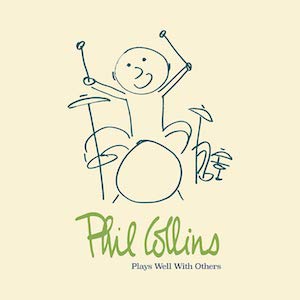
Two years later, an even more ambitious project emerged. Plays Well With Others was a sprawling four-CD set highlighting his guest spots on albums going all the way back to 1969. The first disc goes up to 1982, touching on sessions he did for the likes of John Cale, Brian Eno, Robert Fripp, John Martyn, and Peter Gabriel, his furious side trips with Brand X, and production jobs for Robert Plant and ABBA’s Frida (represented by the smash hit “I Know There’s Something Going On”). The second disc is a little less eclectic, with production work for Eric Clapton, Philip Bailey, and Stephen Bishop, as well as more obvious hits like Howard Jones’ “No One Is To Blame”, Tears For Fears’ “Woman In Chains”, and even “Do They Know It’s Christmas?” by Band Aid. (His version of “Burn Down The Mission” from the Elton John tribute album Two Rooms appears as well.)

By the third disc we’re in the ‘90s, which here is dominated by more John Martyn productions, session work for David Crosby, and his own appearances on soundtracks and tribute albums. “No Son Of Mine” appears here too for some reason. But there is some jazz work, with Quincy Jones and Fourplay. This continues on the fourth disc, which pulls from three decades’ worth of live appearances, but the jazz is tempered by all-star turns from Prince’s Trust concerts and such. For all the trashing he’s gotten over the years, including by this very forum, it’s easy to forget that he was a very inventive drummer in his prime.

A year after that, further strays from the Collins catalog were finally collected, albeit digitally. Other Sides contained 90 minutes of B-sides—including “The Man With The Horn” and several revealing demos—that still should have been parceled out to the proper album reissues, while Remixed Sides ran to two hours’ worth of extended versions to appease anyone who loved 1988’s 12"ers compilation or needed all four versions of “Hang In Long Enough”.

Phil Collins The Singles (2016)—3
Phil Collins
Plays Well With Others (2018)—
Phil Collins
Other Sides (2019)—
Phil Collins
Remixed Sides (2019)—2

Tuesday, February 13, 2024

Van Morrison 48: The Prophet Speaks

It worked the last time, so Van Morrison kept the pot simmering with Joey DeFrancesco and band. The Prophet Speaks was his second album of 2018, and his fourth album over fifteen months. Clearly, he was inspired, but not enough to give Joey co-billing again.

Over half of the album consists of rhythm and blues deep cuts, from such familiar touchstones as Solomon Burke, Sam Cooke, John Lee Hooker, and Willie Dixon. Two songs come from mildly obscure Chicago blues artist Shakey Jake: “Teardrops” [sic] and a medley of “Worried Blues” and “Rollin’ And Tumblin’”. Van mostly sticks to singing and blowing harmonica throughout, adding alto sax to only the title track and “Ain’t Gonna Moan No More”. For some reason he sees nothing strange about duetting with daughter Shana on a song like “Gotta Get You Off My Mind”.

More interesting is the fact that Van apparently wrote some new songs for the album. “Got To Go Where The Love Is” burbles with electric piano and “Spirit Will Provide” has a soulful, spiritual feel, though “5 am Greenwich Mean Time” is a basic blues. While it namechecks various icons, “Ain’t Gonna Moan” is a hollow promise coming out of his mouth, considering it’s soon followed by “Love Is Hard Work”. Finally, the title track is actually profound in its message, if repetitive.

Along with You’re Driving Me Crazy, The Prophet Speaks suggests Van’s onto something in his sixth decade of performing. His stuff may not necessarily be new, but it is fresh.

Van Morrison The Prophet Speaks (2018)—3

Friday, November 17, 2023

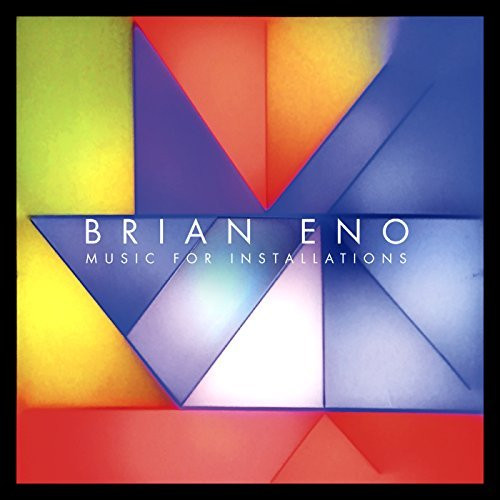
Brian Eno 26: Music For Installations

Starting with Discreet Music and making a leap forward with Thursday Afternoon, Brian Eno has continually strove (strived? striven?) to create music that would enhance a visual experience without overwhelming it. Sometimes he’s created his own visuals, but more often since the ‘90s he has been sought out by established artists and organizations to accompany theirs. This led to his own strides using software to create “generative” music.

Music For Installations gathers over five hours of content from art shows over the decades. Some of it had been previously distributed on rare and/or limited-run CDs or as part of larger book/DVD packages. Collectors will be happy to make room on their shelves previously taken up by such rarities as 77 Million Paintings, Lightness, I Dormienti, and Kite Stories, whether procured officially or downloaded from file-sharing sites.

Eno’s ambient music is usually hard to describe, and here we have six CDs’ worth to attempt, moreso without the visuals they were intended to accompany in the first place. Possibly because it’s the first track in the set, “Kazakhstan” stands out, a spooky but moving piece devised for an event in that city. Many of his pieces have chiming qualities to them, and not always demonstrated by such titles as “Flower Bells”, which itself isn’t very soothing, not that that was ever the point. “Atmospheric Lightness”, however, is soothing. “77 Million Paintings” gurgles along for 44 minutes, and we could swear we hear voices sometimes, though they’re beyond discernability. They’re more prominent and disembodied on “I Dormienti”, which is almost as long, whereas the three “Kites” pieces seem to vary on that one.

The disc titled Making Space counts here because it replicates a CD that was sold at some of his installations, but it’s much more rhythmic and involved than the other discs, more along the lines of the “juju space jazz” of his mid-‘90s albums. “New Moons” even features electric guitar purposefully strummed by Leo Abrahams, while “Delightful Universe (Seen From Above)” is almost majestic. Finally, the Music For Future Installations disc contains pieces never before utilized, not as “generative” as the earlier discs, and certainly eerie. (Good luck nodding off during “Surbahar Sleeping Music”.)

While culled from a variety of sources over the years, there’s a unity to Music For Installations, and none of it sounds dated. This music demonstrates what kept Eno occupied in solitude (mostly) throughout the late ‘90s and first part of this century, despite his less obvious output following The Drop. The set itself was available on CD and vinyl in a snazzy Plexiglas design, as well as in a more economical CD box, and the simplest of all: streaming. The latter allows the listener to have the least possible contact with the execution, and thus absorb however it works. Probably not best to have on while driving.

Brian Eno Music For Installations (2018)—3

Friday, September 8, 2023

Van Morrison 47: You’re Driving Me Crazy

Joey DeFrancesco was a third-generation jazz phenom who had become a major label recording artist at the age of sixteen. He’d already worked with John McLaughlin and guested on dozens of albums in between recording his own before Van Morrison tapped him and his small combo for You’re Driving Me Crazy.

This was Van’s third album released in the space of seven months, and like the others, it’s a jazz and blues set combining standards and remakes of his own tunes. Most of the latter are recent (“Evening Shadows”, “Magic Time”, the whiny “Goldfish Bowl”) or certainly obscure (“All Saints Day”, “Celtic Swing”), and we’re not sure we needed another sprint through “The Way Young Lovers Do” or a bop version of “Have I Told You Lately” with daughter Shana. The covers are a grab bag as well, from Cole Porter’s “Miss Otis Regrets” to Ray Charles’ “Sticks And Stones”.

What helps everything stand out is DeFrancesco’s Hammond B-3 organ, and occasional trumpet. Van plays alto sax here and there—you can always tell when he’s about to because he keeps singing with the mouthpiece in; he also takes a nice harmonica break on “Things I Used To Do”—but mostly lets Troy Roberts do the heavy horn work. It’s refreshing to hear Van in a different environment. (Yes, he had Georgie Fame in his band for a while, but that was more R&B than jazz.)

The album was supposedly recorded over two days, and at 70 minutes, they seem to have kept everything. Van also seemed to enjoy himself, as we can hear him laughing during the solos on the title track, and at the end of “Every Day I Have The Blues”. As with most of his work this century, You’re Driving Me Crazy is not a major statement; it’s just a gig. And it’s a pretty good one.

Van Morrison and Joey DeFrancesco You’re Driving Me Crazy (2018)—3

Friday, January 6, 2023

Paul Simon 19: In The Blue Light

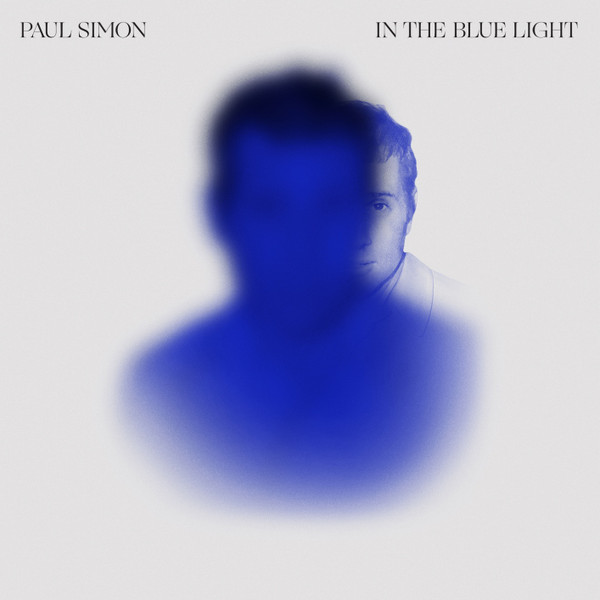
Even though he wasn’t exactly a road warrior, it was surprising to hear Paul Simon announce a farewell tour in 2018. Shortly afterward, he surprised us further with an album made up entirely of remakes of songs from his catalog. To his credit, In The Blue Light isn’t merely a reclaiming of songs in publishing limbo, nor is it the “let’s orchestrate them!” gambit. Rather, he’s taken songs he felt were “underappreciated” over the years, not least by himself, and given them “fresh perspectives”.

That’s all fine and well, but it’s still an album of remakes. “One Man’s Ceiling Is Another Man’s Floor” becomes a big band slow blues, whereas “Love” (one of four songs from You’re The One) isn’t all that different, except that now it has Bill Frisell. “Can’t Run But” does get an orchestral treatment from the yMusic ensemble, who we first heard on a Ben Folds album. “How The Heart Approaches What It Yearns” goes for late-night jazz, with help from Wynton Marsalis, who infuses “Pigs, Sheep And Wolves” with New Orleans gumbo.

The yMusic folks return on “Rene And Georgette Magritte With Their Dog After The War”, downplaying the doo-wop references on the original but still lovely. “The Teacher” works better in this context, particularly with the focus on Spanish guitars and brief saxophone solos, but he still chooses to “act out” the emotions in “Darling Lorraine” rather than let the words and music carry them. That lengthy tune makes the moody jazz of “Some Folks’ Lives Roll Easy” stand out that much more. It’s an especially nice lead-in to the very soft take on “Questions For The Angels”.

Throughout In The Blue Light his voice is tired, but he works with its limitations. Having different players on each track also gives the listener time to be immersed in each, rather than have them be lost in the sequence. It’s a nice album for easy listening.

Paul Simon In The Blue Light (2018)—3

Tuesday, January 3, 2023

Mark Knopfler 12: Down The Road Wherever

We know Mark Knopfler can chicken-pick and solo like nobody else, but he’s suffered from relying on a lot of the same over the decades. Down The Road Wherever is another assortment of new songs, and it’s striking for the variety of music styles, sometimes from track to track.

“Trapper Man” fades in kinda like “Telegraph Road”, which is encouraging, but the similarity ends there, as the song stretches the metaphor to cover the music biz, and even has a funk breakdown. “Back On The Dance Floor” is either about that stated subject or a career criminal hoping for a big score; either way the chorus is stolen from “The Letter” via the Box Tops. The same narrator could be the subject of “Nobody’s Child”, for that matter. “Just A Boy Away From Home” sports a solo initially stolen from the Stones’ version of “You Gotta Move”, but goes into a completely different place with the most subtle of Stax horns to become a highlight of the album. Also nice is “When You Leave”, which has a prominent muted trumpet and sad piano like a lost torch standard, but “Good On You Son” just sounds too modern with its beats, despite the reference to Cockney Rebel.

We wouldn’t have expected a dour song with a chorus asking where somebody left “My Bacon Roll”, but here it is. “Nobody Does That” is another experiment with modern beats mixed with ‘70s funk; “One Song At A Time” is similarly upbeat, but the lyrics nicely travel through time. “Floating Away” seems based on “Spooky”, with striking lyrics about painting a portrait of a fat man, and likely symbolic, but “Slow Learner” is another piano-based torch song, and more resonant. “Heavy Up” is stuck between reggae and salsa for an interesting blend, but “Matchstick Man” is a lovely memory of a traveling musician during the holidays.

Down The Road Wherever appeared in a dizzying array of formats, with bonus tracks depending on category and country, which suggests that even he didn’t know how to present the album. We’re still waiting for another Making Movies or Love Over Gold, which is why we still pay attention.

Mark Knopfler Down The Road Wherever (2018)—3

Friday, December 16, 2022

JD McPherson: Socks

Once the holiday season arrives, one’s tolerance of the frequency and preponderance of Christmas music is often related to how many times we have to hear the same songs over and over and over again. For every old favorite there seem to be fewer and fewer modern classics. Somebody had to write those songs in the first place, after all.

JD McPherson is a young-ish rockabilly player from the Tulsa area who took up this challenge and ran with it. Socks has the vibe of classic R&B, all self-penned originals, recorded with “no schmaltz”, though there is an occasional celeste to color the tracks. Beyond that, there are twangy guitars, honking saxes, piano triplets, and cheesy organs.

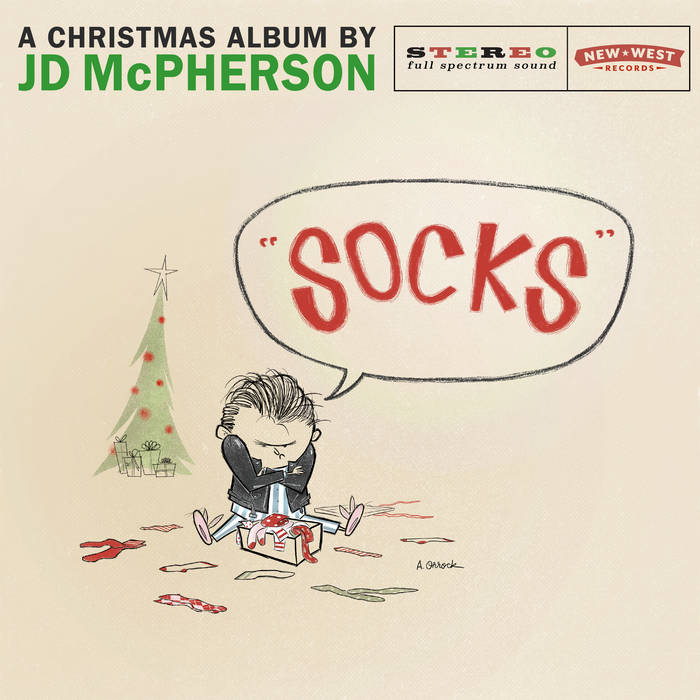
“All The Gifts I Need” sets the thesis, and the rest of the album follows it. “Bad Kid” and “Santa’s Got A Mean Machine” made us double-check that these weren’t actual oldies. “Hey Skinny Santa!” takes a clever culinary tour through various cities, and “Holly, Carol, Candy & Joy” is definitely one of those songs that should have been written already. The title track more than lives up to the promise of the cover art, reinforced by “Ugly Sweater Blues”, while “Claus Vs. Claus”, a duet with the sultry Lucie Silvas, provides a fresh angle on holiday stress at the North Pole, but we assure you there is a happy ending.

Socks is a short album, barely over half an hour, but there’s no filler. We wonder why more people don’t write songs like these, and when someone will get around to covering them.

JD McPherson Socks (2018)—

Friday, February 25, 2022

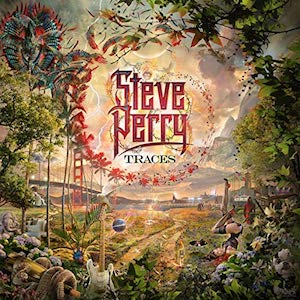
Steve Perry 4: Traces

It was one thing when grunge came and went between Journey albums. For the better part of twenty years, Steve Perry performed another disappearing act, emerging only to help the Chicago White Sox celebrate their 2005 World Series win. Content to let Journey hit the arena trail, that appeared to be that.

So it was very surprising when he broke his silence in 2018 for an extended press run promoting an album. Traces was said to have come together in the aftermath of his girlfriend’s death from cancer, and indeed, the bulk of the album is melancholy yet passionately delivered, and occasionally rocking. Still no dope, each song is a collaboration with a different songwriter. We don’t know how much singing, if any, he did during the decades away from the spotlight, but his voice has a layer of gravel that wasn’t always there. To his credit, he doesn’t try to hit notes he can’t reach anymore, but you kinda feel sorry for him anytime he approaches that portion of his register.

“No Erasin’” is a strong opener, a good combination of arena chords and yearning lyrics, even if a guy his age singing about back seats in cars is a little creepy these days. It effectively ends on an unresolved chord—an unsung Perry trademark—and “We’re Still Here” burbles slowly in. There’s not a lot of substance here, but his layered vocals (another trademark) carry the chorus. “Most Of All” is the first ballad, the type of thing that would normally close an album, but here it sets a tone. Written with the ubiquitous Dan Wilson, “No More Cryin’” is too slow in the verses to support the incongruous chorus, and the title is too similar to the first track, right down to the apostrophe. Slow and mildly orchestral, “In The Rain” is an improvement, with all the ingredients coming together nicely.

Right on time, “Sun Shines Grey” reminds us he can rock again, thanks to a hook from goth guitarist John 5, then “You Belong To Me” turns and slows everything down again. The subdued “So Easy To Love” is another showcase for his Sam Cooke impressions, and that’s meant in a good way. One of the more obscure Beatle covers, “I Need You” by George Harrison is taken at half speed, but it’s not exactly revelatory. Slow as it is, it only inserts a dash of rhythm before “We Fly” which would be considered an ambient piece if not for the vocals.

The Target chain of stores offered an exclusive edition of the album with five extra songs, all but the lush, orchestrated “October In New York”—considered so important it took up Side Three of the vinyl version, despite being only four minutes long—credited to only Perry as songwriter. “Angel Eyes” has pop potential, though the chords go all over the place. “Call On Me” is based on the same canned reggae rhythm as “Baby I’m A Leaving You”, though it does feature a very real telephone ringing that will have listeners of older generations hitting the rewind button. “Could We Be Somethin’ Again” is ordinary, but he actually approximates a growl over the otherwise nonsense coda. Finally, “Blue Jays Fly” provides another sad finale in case “We Fly” wasn’t enough.

Traces is good, but boy, is it a downer. We hope it did the guy some good; he was proud of it, and two years later unleashed a “stripped” selection of seven songs from the album, along with a “radio mix” of “Most Of All”. (Press reports suggested he did this to clear the decks for his next album already in progress, though we’re not holding our breath.) Subtitled Alternate Versions & Sketches, these versions are basically enhanced demos, which usually translates to no drums. He takes even more liberties with “I Need You”, but “No More Cryin’” works better in this format, while “Sun Shines Gray” retains its key riff.

Steve Perry Traces (2018)—3
Steve Perry
Traces (Alternate Versions & Sketches) (2020)—2

Friday, January 3, 2020

Sting 14: 44/876

We don’t profess to be experts on reggae to any extent. At the suburban CD store we managed, we directed inquisitive boomers to Bob Marley’s Legend compilation, then to any other titles we knew tended to sell. Beyond that, they were on their own, but at least we couldn’t be accused of tricking anyone into buying something lousy.

Sting has dabbled in reggae from the very first Police album, and occasionally since then, but it’s still surprising that four decades later, after forcing himself into nearly every other genre, he’d submerge himself in an entire album of the stuff. Yet 44/876 is a collaboration with dancehall superstar (and native Jamaican) Shaggy, whose expertise and style rules the proceedings, to their benefit.

If not for his distinctive vocals, Sting seems almost like an embellishment, but he gets credit for composition on every track. (Adding to the confusion: the producer credited as Sting International is not a megalomaniacal sobriquet for Gordon Sumner, but the stage name of an actual producer.) “Morning Is Coming”, “Waiting For The Break Of Day”, and “22nd Street” could easily work on a Sting album, while the title track, “Just One Lifetime”, and “To Love And Be Loved”, to mention a few, don’t benefit much from his interjections. “Don’t Make Me Wait” is certainly catchy, especially if you’ve already heard Marley’s “Waiting In Vain”. “Dreaming In The U.S.A.” has a mild “Roxanne” guitar in the verse that’s not as noticeable when you realize it’s in a major key. Still, it takes a lot of balls to write a song called “Sad Trombone” in an era when that’s become a ubiquitous clichéd sound effect. (Target customers and digital downloaders got four extra tracks, including a remix of “Don’t Make Me Wait” and an arrangement of “Love Changes Everything”, the main song from a less-than-beloved Andrew Lloyd Webber production, that sounds way too much like “Ring Of Fire”.)

Were this 20 years ago, we could probably pass this off to customers looking for a new reggae CD; whether that would incur the wrath of purists, we can’t say. 44/876 is harmless, mildly enjoyable, and fine for background music at whatever Starbucks or mall clothing store you choose to frequent.

Sting & Shaggy 44/876 (2018)—3

Friday, December 20, 2019

Monkees 10: Christmas Party

Given the critical success of the first new Monkees album in 20 years, it should surprise no one that a follow-up would shortly be in the works, considering the advanced years of the vocalists. Extra points if you guessed it would be a Christmas album. Sure enough, Christmas Party attempts to recreate the recipe of Good Times!, using the same producer, some of the same songwriters, and plenty of modern technology to bring Davy Jones back from the grave.

If you’re good at math, you’ll also notice that eight of the thirteen songs are sung by Micky Dolenz, with no other Monkee involvement. His tunes include new holiday songs from the fingers of Andy Partridge, Rivers Cuomo, novelist Michael Chabon, and Peter Buck and Scott McCaughey from R.E.M. and the Minus Five. After he gets those out of the way, he tackles more modern rock ‘n roll standards, including “Jesus Christ” by Big Star, “I Wish It Could Be Christmas Every Day” by Wizzard, and most daringly of all, “Wonderful Christmastime” by Paul McCartney. Finally, his cover of “Merry Christmas Baby” proves he ain’t no blues man.

Since a Micky Dolenz Christmas album wouldn’t be as lucrative for anybody, Michael Nesmith contributed two covers recorded on his own: Mel Tormé’s unstoppable chestnut “The Christmas Song” and the more obscure but quite lovely “Snowfall”. An unrecognizable Peter Tork added a vocal-and-banjo rendition of “Angels We Have Heard On High”, while Davy’s vocals on “Mele Kalikimaka” and “Silver Bells” come from 1991. As ever, he knew how to work a room, a professional to the end. (Smart consumers and Monkeemaniacs would have rushed to their nearest Target store to get two exclusive bonus tracks: “Ríu Chíu”, sourced from the TV show’s 1967 Christmas episode, and “Christmas Is My Time Of Year”, originally recorded by Micky, Davy, and Peter in 1976 for the still-active fan club.)

There aren’t a lot of rock ‘n roll Christmas albums, and we’ve already covered the better ones. One’s enjoyment of Christmas Party depends on how much one can stomach an aging yet unflappably enthusiastic Micky Dolenz. Frankly, the ones he doesn’t sing are more successful, and the album is paced mostly well. We wanted to hate it, and we don’t. And it is just once a year.

The Monkees Christmas Party (2018)—3

Friday, May 24, 2019

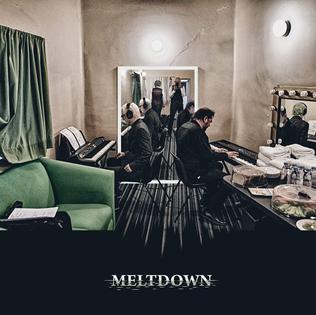
King Crimson 23: Meltdown

The resurgence of King Crimson in the second decade of the 21st century is somewhat surprising, but Robert Fripp—who’s just as pleased about it as anyone—insists that it could only have happened when people’s preconceptions of what the band is and does are ignored. What he calls the ninth lineup of the band (and the fourth “Definitive Formation”) includes eight men, some already eligible to collect Social Security, whose dedication to the material and history of the band results in not only stellar performances greeted enthusiastically by audiences—some of whom are seeing the band for the first time—but the capability of performing music that was never quite able to make it from the studio to the stage.

Fripp has been releasing selected “official bootlegs” from throughout the band’s history, and the latest lineups have already been represented on several such CDs since 2014. Even after the comprehensive Radical Action To Unseat The Hold Of Monkey Mind, two further shows from 2017 were made available. Live In Vienna had Jeremy Stacey on drums in place of Bill Reiflin, who’d gone on sabbatical for what turned out to be terminal cancer. The third disc of the set was filled out by extra improvisations from elsewhere in the tour, and was held back for mass release until after that of Live In Chicago, which still had Stacey but also included Bill, back in the band on keyboards. (This two-disc set also included the otherwise unavailable song “The Errors”.) As good as that show seemed, somehow their Mexico City run a few weeks later managed to astound audience and band members alike, and that’s how Meltdown: Live In Mexico got the full-fledged pantheon treatment.

Unlike Radical Action, which shuffled various tracks and presented them without audience atmosphere, Meltdown delivers what mostly replicates an actual setlist in order, with crowd ambience included. We even get to hear some of the atmospherics from the top of the show, and Fripp’s pre-recorded welcome, admonishment not to use cell phones until the very end (“use your eyes to viddy and your ears to record”), and the hilarious exhortation “Let’s have a party!” The tuning-up snippet from the tail end of the Islands introduces “Larks’ Tongues In Aspic, Part One” and the show properly begins.

While many tunes are repeated from Radical Action, Meltdown is a different listening experience. Two pieces from the underappreciated Lizard are given new life: “Cirkus” and the “Battle Of Glass Tears” sequence from the title track—the latter suite a massive improvement from the studio take. Selections from the ‘80s incarnation of the band appear; “Indisicipline” is an incredible demonstration of the how the three drummers work with and off each other. “Level Five” is also presented on its way to its promotion to part five of the “Larks’ Tongues” suite, while a gorgeous rendition of “Islands” may well be the highlight of the set. (The band’s now-traditional cover of Bowie’s “‘Heroes’”—the original to which Fripp contributed that guitar part—sits right there betwixt “The Court Of The Crimson King” and “21st Century Schizoid Man”.)

Because of its song selection, overall sound, and continuity, Meltdown gets a slight edge over Radical Action. The three discs very much convey the idea of first set, second set, and encores; the third disc is bolstered by further live recordings from the summer of 2018, including some improvs and a blazing take on “Breathless” from Fripp’s first solo album. And those who wish to viddy with their eyes can pop in the included Blu-ray. (Folks seeking even more from this period would appreciate Audio Diary 2014-2018, which offers five discs’ worth of individual songs from shows, with some repetition and very little overlap with stuff already released on official live albums. Of course, several full shows are available for streaming and download via subscription.)

King Crimson Live In Chicago (2017)—
King Crimson
Live In Vienna (2018)—
King Crimson
Meltdown: Live In Mexico (2018)—
King Crimson
Audio Diary 2014-2018 (2019)—3

Tuesday, January 22, 2019

Bruce Springsteen 25: Springsteen On Broadway

Still getting a lot of legs off his memoirs, Bruce undertook a theater residency on Broadway, which he called the first five-day-a-week job he ever had. The show consisted of about 16 songs, most preceded by an extended monologue, performed solo on acoustic guitar or piano, occasionally accompanied by wife Patti Scialfa. Given the proximity to his most fervent fan base, the show’s run was extended several times, and eventually ended up as a Netflix feature and accompanying soundtrack, both entitled Springsteen On Broadway.

Bruce has been telling stories about his childhood as long as he’s been filling theaters and arenas, but with a Broadway audience he’s allowed to stretch them out as long as he wants, with no band vamping behind him waiting for the downbeat. The crowd sits quietly while he talks, laughs at all the jokes, calls out answers to brief questions and saves their applause for the music itself and a tribute to Clarence Clemons. He does his best to take advantage of the intimate setting, telling his alternately self-deprecating and exaggeratedly boastful tales, peppered with four-letter words and his own chuckles.

Springsteen On Broadway is a long program, filling up two CDs, and best enjoyed in one sitting. The stories themselves are nothing new, particularly for anyone who read his book. He begins with his youth, and moves gradually through trying to get signed, and what he did after he got famous, with some commentary on the Trump administration toward the end. The songs are mostly the expected classics from the ‘70s and ‘80s, with a few curveballs thrown in, but predominantly stripped back and slowed down. We kept checking the notes, and it really is him playing the piano, even keeping pace while he’s talking. Naysayers won’t be convinced, but he’s not singing for them anyway.

Bruce Springsteen Springsteen On Broadway (2018)—

Friday, December 7, 2018

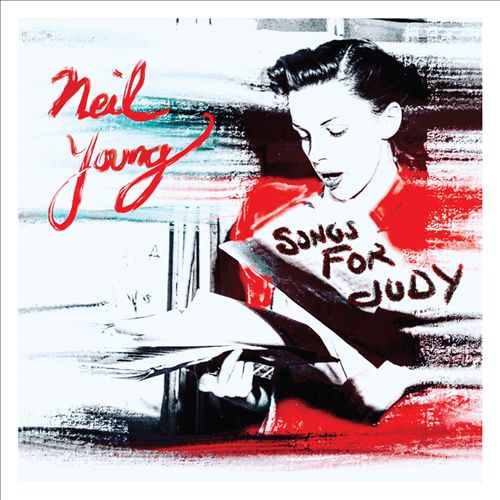
Neil Young 57: Songs For Judy

Just as chapters in Neil’s first Archives box were tantalizingly parceled out ahead of time, a decade later he appeared to be doing the same thing, focusing on performances from the mid-‘70s. Perhaps not surprisingly, the item designated #7 in his Performance Series was basically a chronologic and sonic upgrade of one of his more famous bootlegs. Songs For Judy gets its title from various meandering raps about Judy Garland, which were something of a theme during a November 1976 tour with Crazy Horse. Journalist Cameron Crowe and photographer slash guitar tech Joel Bernstein had carefully selected their favorite acoustic performances from the run and stuck them on a Maxell tape, which eventually got into the wrong hands and began circulating as “The Bernstein Tapes”. (Another fun fact: the night after the last show of the tour, Neil flew off to San Francisco to play a gig called The Last Waltz. It was a busy year.)

A quick glance at the tracklist may suggest you’ve heard this all before, and if you’ve got the bootlegs, you have, but suffice it to say this sounds a lot better. Even coming three months after the cutting session that made up Hitchhiker, only four songs are repeated. And of those, “Pocahontas” gets a stoney intro and extra lyrics at the end, while “Human Highway” is delivered on “gitjo” with a disclaimer of its own. “Give Me Strength” is given an excellent reading, and it’s hard to tell whether the crowd knew “Love Is A Rose” from the Linda Ronstadt version or thought it was “Dance, Dance, Dance”. At the time, these were brand new to audiences, and wouldn’t be out on albums for a while, if at all. The pretty piano lament “No One Seems To Know” makes its official debut, finally, and it’s worth the wait; “Too Far Gone” and “White Line” would each take over a decade to find homes. The audience hoots and hollers either way, upon which Neil constantly remarks.

Beyond that, the selections touch on just about every album he did have out by then. “Here We Are In The Years” is resurrected with a dedication to President-elect Carter, while “The Old Laughing Lady” is given a much jauntier arrangement (much like how he’d do it on Unplugged) with an added coda known as “Guilty Train”. “A Man Needs A Maid” is performed simultaneously on stringman and piano, beginning with the familiar chords of “Like A Hurricane”. “The Losing End” is just as effective solo as it was with the Horse, and even “Sugar Mountain” gets a treatment that wanders around the all-too-familiar structure. We get one line from the chorus of “Country Girl” before he moves on (“that’s as much as I know,” he says, as we tear our hair out in frustration). And of course, the hits: “Heart Of Gold”, “After The Gold Rush”, “Needle And The Damage Done”, “Harvest”, “Tell Me Why”, etc.

An unreleased live album from earlier that year, half of which featured Crazy Horse, was eventually released as part of Archives Vol. II, so those jonesing for electric mud will have to seek elsewhere. Still, Songs For Judy is an archival release of more broad appeal to casual fans than the last handful, and is right up there with the Fillmore East and Massey Hall sets.

Neil Young Songs For Judy (2018)—

Tuesday, November 27, 2018

David Bowie 42: Loving The Alien

Bowie’s switch to the EMI-America label in 1983 brought him possibly his greatest mainstream commercial success, but it also inaugurated a period where he found himself torn between taking the paycheck and thinking he was actually innovating. His own commentary after the fact only worked against whatever good emerged from the music collected on the Loving The Alien box set. Covering another five- or six-year stretch, this volume encompasses three studio albums, two associated tours, and just about everything else from that high-profile arc. Plus, of course, a book.

As could be said for many artists of his longevity, there was a lot of good Bowie in the ‘80s; the trouble was, you often had to endure some horrible music to find it. Side one of Let’s Dance is still solid, and the aftertaste of side two is nicely wiped away by Serious Moonlight (Live ’83), which is basically two CDs of audio from the VHS tape of the tour of the same name. Led by Carlos Alomar, the band was mostly new, with Tony Thompson on drums and the Simms Brothers on backing vocals, plus a horn section. The sound is a tad boomy, but the setlist is surprising deep, opening with “Look Back In Anger”, and leaning mostly on music from the second half of the ‘70s. (“Modern Love” was always the encore, and the live B-side version of same is included as a bonus here.)

Up next, the low good-to-bad ratio on Tonight doesn’t do him any favors, but this box set was more concerned with the drastic reimagining of Never Let Me Down alongside a remaster of the original album. Both versions ignored “Too Dizzy”, leaving it lost to time, or those of us with vintage copies. The other tour from this period is commemorated by the two CDs of Glass Spider (Live Montreal ’87), which had previously only been available as a companion to the DVD version, which itself was an upgrade from an earlier VHS. The set leans much more on ‘80s work, exceptions including a revved-up “All The Madmen” and a strangely placed “Big Brother”. Without the visuals showcasing the dance troupe onstage, the listener isn’t as distracted from concentrating on Peter Frampton’s lead guitar work. He even gets to sing the chorus of “Sons Of The Silent Age” (and yes, he does work “Do You Feel Like We Do” into one of his breaks).

The ‘80s also saw an exponential rise in the frequency of the 12-inch dance mix, to the point where a standalone Bowie compilation called Dance had apparently been planned and scrapped. The disc of that title in this set is not that aborted release, but a CD’s worth of extended mixes of various songs from the period. As with most excursions of this type, most of these remixes are pointless, and unfortunately not unintentionally funny.

Dance was a nice way to declutter what would make up the mop-up portion of the set. The two discs of Re:Call 4 consist yet again of single edits, a couple B-sides, and his musical contributions to various soundtracks, including “This Is Not America”, plus his three songs from Absolute Beginners and the five from Labyrinth. For good measure, the shorter mixes of six tracks from the LP version of Never Let Me Down are included, but still no “Too Dizzy”. Yet the compilers made room for the perennially embarrassing remake of “Dancing In The Street” with Mick Jagger and two duets with Tina Turner from her 1988 live album.

There’s just enough good spread throughout Loving The Alien to make it enjoyable. If anything, it shows he was able to be productive, if not necessarily creative, without the stimulus of cocaine. After all, he knew when to go out, and he knew when to stay in, and get things done.

David Bowie Loving The Alien (1983-1988) (2018)—3

Tuesday, November 20, 2018

Roger Daltrey 12: As Long As I Have You

The years rolled on and The Who kept touring, for the simple reason that they could. Yet Pete Townshend still hadn’t written any new songs for Roger Daltrey to sing, so he went back to the template of his ‘70s solo albums. As Long As I Have You was a grab bag of covers found across the decades, plus two of his own songs. Pete plays guitar on several tracks, and most have a female choir shouting in the back, but it’s all about the guy on the cover.

The title track is a great punchy soul number, one of those songs that loomed large on the British R&B scene when the Who were starting out. It’s a sharp switch to “How Far”, a Stephen Stills track from Manassas delivered in the same spirit. However, “Where Is A Man To Go” switches the gender of a song most commonly associated with Dusty Springfield after bouncing around Nashville for a while, and it doesn’t really work for Roger. Research tells us that “Get On Out Of The Rain” is a modified title for an early Parliament song; the political lyrics are relevant for 2018, but sound a little mushmouthed coming from him. “I’ve Got Your Love” is similarly dug up from a Boz Scaggs album released around the same time as Nick Cave’s “Into My Arms”, and both suit him fine.

Political throwbacks continue with a slowed down take on “You Haven’t Done Nothin” by Stevie Wonder, and then the album stays in the same tempo for the duration. He goes back to the ‘50s for the little-known doo-wop of “Out Of Sight, Out Of Mind”, and up to the mid-‘60s for “The Love You Save”, the old Joe Tex number. Oddly, he sounds the least like himself on “Certified Rose”, which he wrote himself and had even performed with the Who when John Entwistle was still alive. But the album ends strong with another original. “Always Heading Home” is a pretty ballad with piano and cello that recalls the sweeter pop of his solo debut.

As his autobiography (also out this year) attests, Roger loves his job, and is happy for whatever good turns come his way. As Long As I Have You was a nice souvenir, and better than the bulk of his solo work.

Roger Daltrey As Long As I Have You (2018)—

Friday, October 26, 2018

R.E.M. 23: At The BBC

With seemingly hours of shows in their vaults, R.E.M. took a simpler route for an archival release, once again in a year without an album’s 25th anniversary. R.E.M. At The BBC spews up a box of eight CDs’ worth of material (plus a DVD) culled from the band’s British radio appearances. These were all live performances, both as a four-piece as well as the expanded ensembles of later years.

Fans of the classic lineup with Bill Berry will have to be content with an hour or so from a 1984 concert that sounds like they’re playing at the other end of a tunnel and includes songs that weren’t on albums yet (“Hyena” being a particular train wreck), part of a 1991 appearance that’s very similar to their Unplugged set, plus a full performance from 1995 that includes songs that would end up on New Adventures In Hi-Fi. Everything else comes from post-Up, after Bill retired. (Granted, several of their upgraded albums include live performances from the earlier period.)

That’s not to say the later stuff isn’t of the same quality; it’s tough not to get caught up in the crowd’s excitement at Glastonbury in 1999, Thom Yorke’s Patti Smith impression on “E-Bow The Letter”, or any deep cut given a passionate treatment. Yet while the selections come from different years, the listener may tire of multiple renditions of “Losing My Religion”, “Man On The Moon”, “The Apologist”, “Walk Unafraid” and the like. Rare songs are few; there’s “Fretless” and “Love Is All Around” from 1991, and a cover of “Munich” by the Editors from 2008. Yet for the price—$80 for the set, or $25 for a two-disc distillation—it’s a pretty good deal. And it makes a strong argument for their prowess as a solid live band.

R.E.M. R.E.M. At The BBC (2018)—3

Friday, October 19, 2018

Elvis Costello 34: Look Now

You can’t argue with math, so it really had been ten years since Elvis Costello’s last album with the Imposters, and only his fourth album of “new” material in that same span. Look Now arrived in something of the wake following a tour that focused on 1982’s Imperial Bedroom (a big favorite around these parts) as well as work with Burt Bacharach on more songs for a projected Broadway musical based on 1998’s Painted From Memory. Both albums show up in all the press for this one, but we hear shades of Mighty Like A Rose in the baroque horn arrangements, and Punch The Clock in the female backup vocals. One thing the album doesn’t do is rock; the spirit, as well as the musical and piano contribution, of Bacharach looms large over the proceedings, which tend mostly toward soulful pop. (For another clue, Dusty In Memphis gets a clever acknowledgment in the notes.)

The big drums and sound of “Under Lime” are about as loud as the album gets, a catchy sequel of sorts to “Jimmie Standing In The Rain” with a plot that gets more disturbing with every listen. “Don’t Look Now”, written with Bacharach, is just one of many songs sung from a woman’s perspective, this one bringing to mind either an aging ingénue or a young model. It’s pretty, yet brief. “Burnt Sugar Is So Bitter” is a collaboration with Carole King that sat unheard from the ‘90s; while it’s hard to discern her mark, the theme of a spurned divorcée is carried over in “Stripping Paper”, something of a cousin to “This House Is Empty Now”, wherein the narrator finds the remnants of her marriage amid the décor. The “daring” teen pregnancy ode “Unwanted Number” makes a surprising appearance, being the other song he contributed to the soundtrack of Grace Of My Heart, the film that brought him together with Bacharach in the first place. We take a break from female problems to world issues, as “I Let The Sun Go Down” is concerned with the impending Brexit.

The modern-sounding “Mr. & Mrs. Hush” bears the most echoes of his collaboration with The Roots, and catchy as it is, still befuddles the listener still trying nail the identities of Harry Worth, Mr. Feathers, Stella Hurt, and the like. “Photographs Can Lie” is another Bacharach co-write, this time from the point of view of a woman considering her father’s infidelities. Things pick back up in “Dishonor The Stars”, which deftly sets up the soul promise made real in “Suspect My Tears”, another 20-year-old tune making its welcome appearance, with a terrific Hey Love arrangement and occasional falsetto. (Nobody told him he lifted the chorus from Diana’s version of “Ain’t No Mountain High Enough”.) “Why Won’t Heaven Help Me?” continues the R&B revue, with a samba backing and clever interlocking vocals. It makes “He’s Given Me Things”, the final scorned woman tune written with Burt, something of an anti-climax; it’s a little too quiet, and we’re left wondering if all these women are the same character.

Because it had been so long, Look Now is a big deal, with a lot of expectation for it. The history of some of the compositions puts it across not so much as a statement but a reason to give these songs some exposure past the concert stage, where he’s been living for most of the decade. The diehard fans will also eat up the Deluxe Edition, with four extra tracks: “Isabelle In Tears” sounds like an unfinished audition for Bacharach; “Adieu Paris”, a smarmy excuse to write and sing in lounge French; “The Final Mrs. Curtain”, a decent contender for the album proper if not for the Hush couple; and “You Shouldn’t Look At Me That Way”, written for the movie Film Stars Don’t Die In Liverpool.

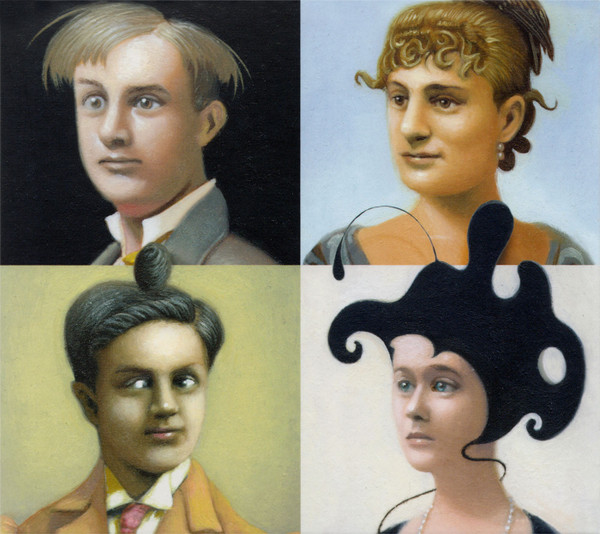
But that cover art? He’s a much better songwriter than a painter.

Elvis Costello & The Imposters Look Now (2018)—3