Showing posts with label mark knopfler. Show all posts

Friday, December 13, 2024

Mark Knopfler 13: One Deep River

It seems that whenever Mark Knopfler has amassed a pile of new songs, he records all of them, then releases them in bulk. One wonders whether the songs on One Deep River all arrived at once, explaining the six-year gap since his last album.

Whatever the story is, it’s pretty much more of what we’ve come to expect. “Two Pairs Of Hands” shuffles into play on mostly one chord. “Ahead Of The Game” has a more striking backing and hooks, and succeeds on those. The first two verses seem to be a reminiscence of the days before “Sultans Of Swing”, while the final draws a line to anyone trying to get by. “Smart Money” can’t decide if it’s country or Caribbean, while “Scavengers Yard” is suitably clanky, with a processed break that veers dangerously close to techno before escaping. “Black Tie Jobs” is almost stately, with canned chamber pop strings. “Tunnel 13” tells the true-life tale of a train robbery turned tragic, but as with much of his solo material, the loping backing doesn’t necessarily keep you riveted to the story.

Another scene is set for “Janine”, but it works better as a love song without context. “Watch Me Gone” is more mournful, with surprising female voices on the choruses. Beginning with a spooky, wintry atmosphere, “Sweeter Than The Rain” uses his already craggy yet aging voice to good effect, and “Before My Train Comes” is nice, even if it sounds too much like too many of his other songs. The somewhat plodding “This One’s Not Going To End Well” may or may not be social commentary on any political situation, but it is lifted by two brief fiddle solos. And the understated yet majestic title track does rank with his best.

His usual crack band backs him throughout One Deep River, and to the album’s credit, most of the tracks hover around four minutes each. But a further four tracks were added to the vinyl: “Dolly Shop Man”, an allegory about a pawn shop; the mildly romantic “Your Leading Man”; “Wrong ‘Un”, a good lyric in search of a better tune; and “Chess”, loaded with metaphors and resembling late-‘80s Chris Rea. And five others made it to deluxe CD and Blu-ray editions. The portrait of a has-been in “The Living End” is sunk by “shoop shoop” backing vocals, whereas “Fat Chance Dupree” has guys sounding like the Jordainaires. Celtic pipes finally make an appearance on “Along A Foreign Coast”, and the one-sided conversation in “What I’m Gonna Need” doesn’t go anywhere despite the nice melody. “Nothing But Rain” would have been welcome on the album, bluesy as it is.
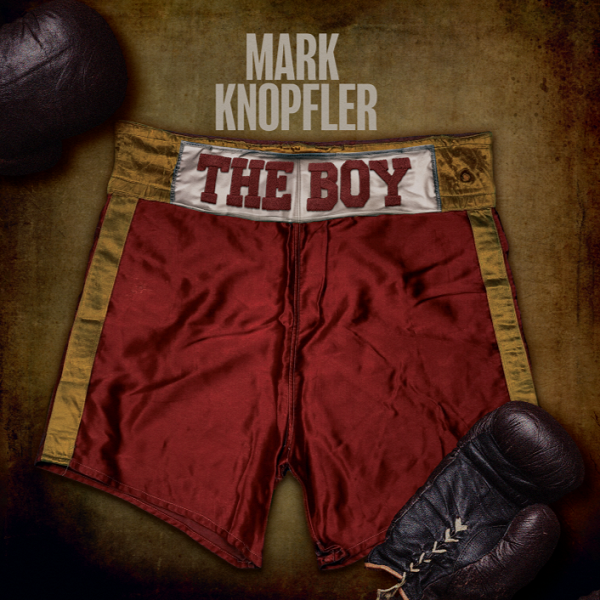
Further proof that good editing makes good listening, less than a month after the album’s release came The Boy, an EP of four thematically related songs inspired (so Knopfler said) by the fairgrounds of his youth, complete with ambient effects. Lyrically we can see that, but the music could accompany any story, and not just one about a boxer. “Mr. Solomons Said” is the cool jazzy setup, and the title track explores the character from another perspective. “All Comers” is strong enough to stand outside the framework, and so does “Bad Day For A Knife Thrower”, but it doesn’t roll as easy. Unlike most of the other bonus tracks, any of these tracks are as good as what made the album, deluxe or otherwise. It surprises us that he wasn’t able to expand the concept; surely other songs on One Deep River could have been revised to fit the story?

Mark Knopfler One Deep River (2024)—3
Mark Knopfler
The Boy (2024)—3

Tuesday, January 3, 2023

Mark Knopfler 12: Down The Road Wherever

We know Mark Knopfler can chicken-pick and solo like nobody else, but he’s suffered from relying on a lot of the same over the decades. Down The Road Wherever is another assortment of new songs, and it’s striking for the variety of music styles, sometimes from track to track.

“Trapper Man” fades in kinda like “Telegraph Road”, which is encouraging, but the similarity ends there, as the song stretches the metaphor to cover the music biz, and even has a funk breakdown. “Back On The Dance Floor” is either about that stated subject or a career criminal hoping for a big score; either way the chorus is stolen from “The Letter” via the Box Tops. The same narrator could be the subject of “Nobody’s Child”, for that matter. “Just A Boy Away From Home” sports a solo initially stolen from the Stones’ version of “You Gotta Move”, but goes into a completely different place with the most subtle of Stax horns to become a highlight of the album. Also nice is “When You Leave”, which has a prominent muted trumpet and sad piano like a lost torch standard, but “Good On You Son” just sounds too modern with its beats, despite the reference to Cockney Rebel.

We wouldn’t have expected a dour song with a chorus asking where somebody left “My Bacon Roll”, but here it is. “Nobody Does That” is another experiment with modern beats mixed with ‘70s funk; “One Song At A Time” is similarly upbeat, but the lyrics nicely travel through time. “Floating Away” seems based on “Spooky”, with striking lyrics about painting a portrait of a fat man, and likely symbolic, but “Slow Learner” is another piano-based torch song, and more resonant. “Heavy Up” is stuck between reggae and salsa for an interesting blend, but “Matchstick Man” is a lovely memory of a traveling musician during the holidays.

Down The Road Wherever appeared in a dizzying array of formats, with bonus tracks depending on category and country, which suggests that even he didn’t know how to present the album. We’re still waiting for another Making Movies or Love Over Gold, which is why we still pay attention.

Mark Knopfler Down The Road Wherever (2018)—3

Tuesday, April 12, 2022

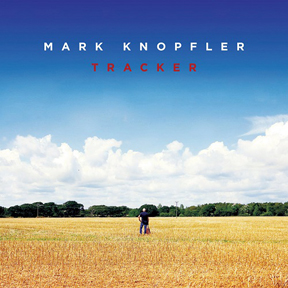
Mark Knopfler 11: Tracker

The listener’s contract with a favorite artist is that we must follow their trail, even if the artist doesn’t excite us as much anymore. We know what to expect from a Mark Knopfler album, but we keep listening in case something wows us. It’s happened with other people, but Tracker fills his end of the bargain by being competent.

“Laughs And Jokes And Drinks And Smokes” threatens jazz before being overtaken by Irish folk, and as has become usual, the lyrics—this time a reverie about a time long past—don’t meld with the backing. A much more effective reminiscence is “Basil”, which details his early job at a newspaper in the company of a poet who clearly wished he was elsewhere. “River Towns” is slow and ordinary, except that the saxophone reminds us of Clarence Clemons at his most restrained; think “Secret Garden”. A highlight is “Skydiver”, which clops along for a while, but manages to soar when the extra harmony from Ruth Moody kicks in, and especially when the chords change slightly towards the end. “Mighty Man” fades in like a foggy Irish ballad, and sports Chieftains-style chanting on the chorus, but the incessantly handclap rhythm of “Broken Bones” will make you feel as if your own palms hurt. Besides, the pseudo-funk arrangement wasn’t much better on “Another Brick In The Wall (Part 2)”.

Ms. Moody features again on “Long Cool Girl”, one of his stronger love songs, but “Lights Of Taormina” sounds like we’ve heard it before. That said, we do smile when he rhymes the title with “if anyone has seen her.” “Silver Eagle” is a lulling reverie from a musician on the road that manages to build despite its simplicity. “Beryl” pays tribute to another obscure writer, but the cheesy organ seems an extremely odd touch, and while the rockin’ beat is a nice change, it merely takes up space. It’s a particularly strange palate-cleanser before “Wherever I Go”, a gorgeous duet with Ms. Moody with unnecessary sax solos.

As had become common, an hour-long album wasn’t enough to contain all his creativity, so various bonus tracks appeared in a variety of territories and permutations. These include the bluegrass-tinged “.38 Special”, the truck driver’s monologue in “My Heart Has Never Changed”, the traditional-sounding “Heart Of Oak” and “Time Will End All Sorrow” (both superior to many songs on the album), and “Oklahoma Ponies”, which begins with a welcome blast of feedback. The best is “Terminal Of Tribute To”, one of the more intricate songs he’s done in years, and a caustic portrait of a never-was—worse than a has-been—stuck on the cover band treadmill. Could this be a snipe at former Dire Straits bandmates on the tribute band circuit, as one of our intrepid correspondents has pointed out? Either way, this definitely should have made the main album.

What can we say about this album that we haven’t said already? Tracker is not offensive, and it would be a lot better if he cut some of the tracks. Quantity is not always quality, but at last he’s got a level that’s maintained. If anything, we’re going to keep our ears out for Ruth Moody, so thanks for that.

Mark Knopfler Tracker (2015)—3

Tuesday, May 21, 2019

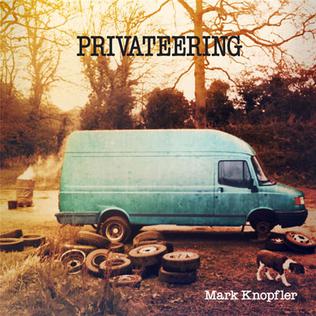
Mark Knopfler 10: Privateering

People like consistency, and we know that when Mark Knopfler releases a new album, we’ll have a pretty good idea what it will sound like. We don’t expect another Making Movies or Love Over Gold, but chances are he’s not about to go too far out of his (or our) comfort zone.

Recorded throughout 2011, Privateering was released worldwide in 2012, except in North America, where it took another year. Reviews were generally positive. At nearly 90 minutes there are two full albums here, but the sequence is mostly arbitrary. The music is what you’d expect: slow rumblings here, uilleann pipes there, chunky rockers elsewhere. The big addition this time out is Kim Wilson of the Fabulous Thunderbirds, blowing harp through a Green Bullet on the bluesier tunes. The songs are all pleasant, and fairly interchangeable, though he does have a way with words (“Don’t Forget Your Hat”, “Corned Beef City”, “I Used To Could”, “Hot Or What”). The one true standout is “Radio City Serenade”, a ‘70s Tom Waits-style ballad that’s slow and pretty and doesn’t sound like everything else.

Mark Knopfler Privateering (2012)—3

Tuesday, September 5, 2017

Mark Knopfler 9: Get Lucky

Don’t be fooled by the garish casino motif throughout the artwork on Get Lucky. This Mark Knopfler album rarely approaches anything reminiscent of Vegas, and coming five years after the slot machine on the cover of an earlier album, we wonder if he’s hiding a gambling addiction. Rather, a sizable portion of the album relies on dreamy Celtic- and highland-inspired backdrops, while the rest is just as low-key and midtempo. In fact, the one sore thumb here is “You Can’t Beat The House”, with its bluesy shuffle and gang backing vocals, and “Cleaning My Gun” is the closest thing to a typical post-Dire Straits rocker.

His notes for the album describe many of the influences behind the songs, and it should be no surprise than many of them describe lives lived in earlier decades than this one. “Before Gas And TV” is about as far back as he goes; industry and automotive innovation are still pet themes. That means the lovely waltz “Monteleone” is an ode to a favorite guitar builder. “Hard Shoulder” is just as exquisite, and seemingly sung from the point of view of a roadside mechanic. Even “Remembrance Day” avoids being over-mawkish, despite the presence of a makeshift children’s choir. As it turns out, thanks to the title track we know that “Get Lucky” is merely a metaphor for life in general.

The album is kept down to a digestible length, which helps. But typical of too many albums released by veterans these days, Get Lucky was made available in a variety of “editions”, some with a DVD, one with engraved poker chips and dice (yes, really), and some with extra tracks, exclusive to various retailers, and not exactly hidden treasure.

Mark Knopfler Get Lucky (2009)—3

Friday, October 28, 2016

Mark Knopfler 8: Kill To Get Crimson

When one is a fan of a particular performer, new albums are bought more out of habit, and with a lot of finger-crossing that something will even approach said performer’s best work. Mark Knopfler wandered through the new century dropping crumbs here and there, and Kill To Get Crimson would appear to be another one in a lengthening series of temporary diversions until the next change of wallpaper.

He’s not about to change his style, or his approach. This much is obvious on “True Love Will Never Fade”, and in case that sentiment comes off as vague, he’ll repeat the title about 47 times before the track ends. But then “The Scaffolder’s Wife” matches flute and vibes for a more cinematic angle.

The album proceeds like that, with mystery on “The Fizzy And The Still” and the familiar romantic dobro on “Heart Full Of Holes”. “We Can Get Wild” doesn’t, but “The Secondary Waltz” is charming. “Punish The Monkey” is a meaningless groove, “Let It All Go” and “Behind With The Rent” songs in character, “The Fish And The Bird” and “Madame Geneva’s” descended from arcane English folk. Finally, “In The Sky” floats along for over seven minutes, and is probably still up there.

Kill To Get Crimson just slides over the thumbs-up finish, but—and we’re getting really tired of saying this—would be a lot better if it weren’t so long. Yes, it’s nice when musicians use the capacity of the compact disc to provide value, but it’s nicer when you actually want to devote an hour to an album.

Mark Knopfler Kill To Get Crimson (2007)—3

Friday, May 27, 2016

Mark Knopfler 7: All The Roadrunning

Emmylou Harris has the ability to create truly original harmonies for any occasion, making her a popular choice for any singer-songwriter seeking counterpoint. These days she’s generally used as a special guest, so it’s a big deal when somebody like Mark Knopfler taps her for a full, co-credited album.

All The Roadrunning was recorded in bits and pieces over the course of seven years, and includes ten new Knopfler tracks plus two Emmylou contributed. His music has fit into the country slot since before the last Dire Straits album, but it’s been decades since he last wrote a truly catchy melody. And as wonderful as she is, their voices simply don’t always blend. When they do, it works fine. “Beachcombing” opens the set with some promise, before the same sleepy tempo takes over on “I Dug Up A Diamond”. “This Is Us” captures an old married couple looking through old photographs, and is just plain charming. “Red Staggerwing”, which follows, is loaded with hackneyed clichés, and is not charming at all. “Rollin’ On” does just that, before her own “Love And Happiness” shows him how it’s done.

She dominates “Right Now”, capturing the literal and metaphorical feeling of a stranded marriage, but “Donkey Town” mines the same territory for too long, baby, too long. “Belle Starr” is fairly standard, as is “Beyond My Wildest Dreams”, but it’s better. The title track doesn’t do much, but “If This Is Goodbye” does have a stirring blend, even without knowledge of the inspiration (spoiler: cell phone calls on 9/11).

Because the album’s not pointedly bad, it’s still worth the listen, but don’t be surprised if it doesn’t sink in. A slightly better option is Real Live Roadrunning a CD/DVD combo recorded at the end of their joint month-long tour. The live setting inserts a little more punch into the proceedings, and each singer contributes a few songs from their own catalogs. Emmylou’s “Red Dirt Girl” gets applause of recognition, while strangely one of her signature songs, “Boulder To Birmingham”, does not. (They go nuts for “So Far Away”.) She escalates “All That Matters” and “Why Worry”, but doesn’t appear on “Romeo And Juliet”, stretched here to nine minutes.

Mark Knopfler and Emmylou Harris All The Roadrunning (2006)—3
Mark Knopfler and Emmylou Harris
Real Live Roadrunning (2006)—3

Friday, September 12, 2014

Mark Knopfler 6: Shangri-La

The new century was already seeing an upswing in Knopfler solo albums, but perhaps a motorcycle accident spurred him into more frequent releases. Whatever the real story, Shangri-La presented another hour’s worth of generic Knopfler noodling, most of the songs interchangeable with each other.

His penchant for storytelling is to be admired, but the music doesn’t always seem to match whatever the tale is, whether it’s an elegy for Elvis Presley’s movie career (“Back To Tupelo”) or the genius of McDonald’s entrepreneur Ray Kroc (“Boom, Like That”). “Donegan’s Gone” pays tribute to the recently departed skiffle king Lonnie Donegan, and no points for guessing the subject matter of “Song For Sonny Liston”.

Still, a few tracks stand out. “Our Shangri-La” and “Postcards From Paraguay” do successfully evoke a tropical scene, just as “The Trawlerman’s Song” sounds like a sea shanty. The late-night saloon setting of “Stand Up Guy” makes reference to a doctor, while the why “Don’t Crash The Ambulance” would seem to come from a personal place as well. The ironic country lament “Whoop De Doo” and the tender lullaby of “All That Matters” are easily the best songs here.

Sure, Shangri-La is nice, but we’re tired of using that adjective to describe a Mark Knopfler album. The near-title track does have a good extended ending, but it barely comes halfway into the program, making even the sequencing seem arbitrary. There was a time when his music truly stirred and painted pictures; this is just going through the motions.

Mark Knopfler Shangri-La (2004)—2

Tuesday, June 24, 2014

Mark Knopfler 5: The Ragpicker’s Dream

Working at a pace we hadn’t seen in a couple of decades, Mark Knopfler returned in 2002 with The Ragpicker’s Dream, another low-key collection of original songs with that familiar tone and rasp. Compared to the overblown concepts that marred Sailing To Philadelphia, this one’s a lot more relaxed, understated and satisfying.

The album’s at its best when it feels like you’re sitting on a casual strum, Knopfler singing either in the style of or actual re-creations of ancient folk songs. “Why Aye Man”, “Hill Farmer’s Blues”, “Fare Thee Well Northumberland” and “Marbletown” appear to be sung by tradesmen away from home, without seeming repetitive. However, when he adds more rock to the mix, as on “Coyote” and “You Don’t Know You’re Born”, it gets a little tedious, except for the chorus.

He’s careful not to stick too close to a couple of styles. “Devil Baby” takes place in a circus, and the same wacky scene inhabits “Old Pigweed”. “A Place Where We Used To Live” is more timeless, even jazzy, while on “Daddy’s Gone To Knoxville” and the sales pitch of “Quality Shoe”, he sounds uncannily like Leon Redbone. He even sneaks in an original Christmas song for the title track, without limiting it to the usual clichés.

A little shaving here and there might even put The Ragpicker’s Dream on a higher level, but for what it is, it’s a nice, comfortable listen. Save it for your next rainy day and see how it goes down.

Mark Knopfler The Ragpicker’s Dream (2002)—3

Monday, March 11, 2013

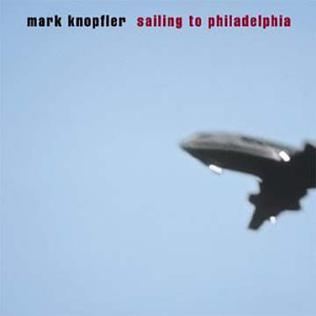
Mark Knopfler 4: Sailing To Philadelphia

After scoring a few more movies, Mark Knopfler got around to completing another solo album (of songs, that is) by the century’s end. Despite sporting a central set of players, each of the tracks on Sailing To Philadelphia included “guest” performances—and it’s worth mentioning that one track was substituted for non-American audiences.

There’s a nice galloping intro in the way of “What It Is”, complete with trademark coloring. A violin adds a Western feel, which tries to pervade from here. The title track is designed as a dialogue between the creators of the Mason-Dixon line, one of whom is portrayed by James Taylor (direct from his pointless appearance on a recent Sting album). “Who’s Your Baby Now” is the first track that doesn’t sound like something else, and therefore offers something of a fresh kick. The memorable title “Baloney Again” is given to a dull monologue seemingly given by a musician facing racial discrimination—a noble sentiment, but not convincing coming from Knopfler’s pen and mouth. “The Last Laugh” sports a nice Memphis Horns arrangement, as well as a vocal appearance by Van Morrison. That’s fine, but forcing it into makes it more of a novelty, detracting from the quality of the composition itself. “Do America” is built around that trademark snotty tone that drove so many Dire Straits hits, while “El Macho” is based around a canned mariachi tone and doesn’t answer the question as to quién es más.

“Prairie Wedding” is based in another century, without really gelling. “Wanderlust” is an improvement, a simple strum that would be even better without the atmospherics dressing it up. An all-too-familiar rhythm pins down the lengthy “Speedway At Nazareth”, which seems to exist solely to rhyme a bunch of race courses.

To prove that there really is a decent album in here, the last three tracks are pretty good. “Junkie Doll” has some nice changes, and then the main guys from Squeeze show up on “Silvertown Blues”. “Sands Of Nevada” has quite an impressive, near-cinematic sound, thanks to Guy Fletcher’s piano (he being the guy who’d played keyboards on all those Knopfler soundtracks over the years).

While there are those who will welcome any Knopfler vocal like a comfortable sweater on a snowy day, the fact of the matter is that his knack for storytelling seems to have been left behind on Love Over Gold. We’ve already referred to his albums as wallpaper, and while albums like this certainly aren’t offensive, they also aren’t very exciting. With a little editing, Sailing To Philadelphia could have been great, but at this length, it becomes dull, without purpose.

Mark Knopfler Sailing To Philadelphia (2000)—

Wednesday, April 4, 2012

Mark Knopfler 3: Golden Heart

A seeming eternity went by before Mark Knopfler started making actual albums again. Golden Heart follows from where he left off with the last Dire Straits album, mixing country and Celtic folk with what had become adult-contemporary rock.

Soundwise, it might as well be a Dire Straits album. “Darling Pretty” opens with a slow rendition of what could be a traditional melody, before the big drums kick in to make it heavier. The title track and “A Night In Summer Long Ago” are particularly lovely. “Vic And Ray” and particularly the portrait of the obsessive fan “Rudiger” indulge his knack for distinctive character. “I’m The Fool”, “Nobody’s Got The Gun” and “Are We In Trouble Now” revive the sound of classic ‘70s country. “Je Suis Desole” puts a neat twist on a Cajun rhythm, and the French touch of the accordion colors “Done With Bonaparte”.

In fact, there are a lot of nice sounds here, but as the above examples show, there’s just too much of it, so that any sense of variety disappears. “No Can Do” burps along with a raspy vocal and a mix of dobro and electric, but sounds too much like “Don’t You Get It” two tracks later. “Cannibals” is another rewrite of “Walk Of Life”, as if we needed one. “Imelda” seems an odd reference point a full decade after the end of the Marcos regime, but at least the guitar’s tasty.

At 70 minutes, Golden Heart is mostly too long. With a little editing, it had the potential to be excellent. Instead, it works as pleasant musical wallpaper, soothing to those seeking the familiar Knopfler sound. And if he was writing again, maybe he wouldn’t be so keen to fill a CD to capacity just because he could.

Mark Knopfler Golden Heart (1996)—3

Wednesday, January 5, 2011

Mark Knopfler 2: Screenplaying

Not too long after the last Dire Straits studio album, Mark Knopfler compiled a collection of some of the film music work he’d done, focusing on four films, the soundtracks for which were all still in print. Screenplaying is arranged for feel more than history, making it a nice listen indeed.

Beginning with five tracks from 1984’s Cal, the mood is set with a distinctly Irish influence, with Uillean pipes and tin whistle accompanying Knopfler’s guitar and quiet accompaniment from some Dire Straits regulars. “Irish Boy” and “The Long Road” in particular provide a welcome contrast to the boomy sound of Brothers In Arms.

While Knopfler is credited as its composer, the entire soundtrack for 1989’s Last Exit To Brooklyn was performed solely by keyboard player Guy Fletcher, who joined the band in 1984 and has worked with Knopfler ever since. Here the harsh imagery of the film is illustrated by more pastoral if mournful passages.

“Pastoral” is a good word for the music from 1987’s The Princess Bride, arguably the music most recognizable to the average consumer. Five excerpts from the film evoke the adventure of the plot, with a few variations on the one song from the film, “Storybook Love”, which is not included in its vocal incarnation.

Overseas, however, it was his 1983 score for the Scottish film Local Hero that put him on the path to film composing. Some of its more Adult Contemporary cuts are included—namely “Boomtown” and anything featuring Mike Brecker’s saxophone—but thankfully the program ends with “Going Home”, which also closed Alchemy, as it did many Dire Straits concerts over the years.

In a few years’ time Mark Knopfler would release his first real solo album. He’s put out a handful of song-based albums since the turn of the century, alongside the occasional soundtrack work, and it doesn’t look like Dire Straits will return anytime soon. In the ears of consumers, he quit the band while he was ahead. So in many ways, Screenplaying serves as an epilogue to the Dire Straits story—a footnote, perhaps, but another perspective on what he was doing when the band was at its biggest. From here, it’s all firmly in the past.

Mark Knopfler Screenplaying (1993)—

Sunday, November 21, 2010

Mark Knopfler 1: Notting Hillbillies and Chet Atkins

While the world, or at least part of it, wondered what was up with Dire Straits, Mark Knopfler emerged as part of an outfit dubbed the Notting Hillbillies, with a very Dire Straits-like single in “Your Own Sweet Way”. Unfortunately for listeners, that was Knopfler’s only lead vocal on an album mostly made up of traditional songs and country covers. Missing… Presumed Having A Good Time was presented as a collaboration with British pickers Steve Phillips and Brendan Croker, with Dire Straits keyboardist Guy Fletcher, future Dire Straits member Paul Franklin on pedal steel, and the band’s manager Ed Bicknell credited on drums.

The album does provide a breadth of material made for coffee bars and bookstores of the next decade. With its insistent anvil effect, “Railroad Worksong” is better known as “Take This Hammer”, while “Bewildered” is much toned down from James Brown’s version. “Run Me Down” follows the pattern of “Setting Me Up” and “Sound Bound Again” until the vocals start, though “One Way Gal” has a distinct Caribbean feel, or even reminiscent of a luau. You can almost hear Mark harmonizing on “Blues Stay Away From Me” and “Please Baby”, but only barely. “Will You Miss Me?” and “That’s Where I Belong” bring songwriting royalties to Phillips and Croker respectively, and we presume they’re duetting on the Louvin Brothers’ “Weapon Of Prayer”. Outside of the single, the album’s highlight is Charlie Rich’s immortal “Feel Like Going Home”.

The soft, smooth tone of the album was mirrored a few months later on an album billed as a Knopfler collaboration with the legendary Chet Atkins. Neck And Neck offered more adult contemporary country music played by twenty agile fingers supported by such Nashville legends as Steve Wariner, Mark O’Connor, Edgar Meyer, and Vince Gill. Roughly half the album is vocal; the modern updates of “There’ll Be Some Changes Made” and “Yakety Axe” are cute, if a little cringey today. The balance is made up of more cinematic vocal-less pieces, such as “So Soft, Your Goodbye” and “Tears” by Grappelli and Reinhardt. “Tahitian Skies” is something of a cross between “Why Worry” and “Waterloo Sunset”, while “I’ll See You In My Dreams” is taken at a jaunty pace. Don Gibson is covered twice, in an instrumental of “Sweet Dreams”, then in a Knopfler vocal on “Just One Time”. “Poor Boy Blues” and “The Next Time I’m In Town” (the only Knopfler original on the album) are templates for the solo career he’d start in earnest one day.

While not exactly what fans wanted, these two albums fit well together, both conceptually as well as time-wise on a Maxell 90-minute tape. They kept Mark Knopfler’s name in the trades while the rest of Dire Straits waited for the phone to ring, and were more commercial than his occasional soundtracks. Although the Notting Hillbillies didn’t line the pockets of its “other” members with gold, Neck And Neck brought Chet Atkins back into favor in the ‘90s.

The Notting Hillbillies Missing… Presumed Having A Good Time (1990)—3
Chet Atkins/Mark Knopfler
Neck And Neck (1990)—3