Showing posts with label david crosby. Show all posts

Friday, March 7, 2025

CSN 14: Live At Fillmore East

The big question wasn’t so much why this came out when it did as what took them so long. Crosby, Stills, Nash & Young had been playing gigs for only a few months when they did a stint at New York’s Fillmore East. (Ten days after these shows, Crosby’s live-in girlfriend would be dead in a car accident, just as they began recording what would become Déjà Vu.)

For decades, 4 Way Street was the only comprehensive live document, captured just as they were starting to fray and splinter. Culled from the two shows on the second night of the stand, Live At Fillmore East is structured the same way, but goes back to the beginning, with the original rhythm section of Dallas Taylor and Greg Reeves still on board.

The debut album was still new at these shows, and the joy of singing “Suite: Judy Blue Eyes” is as fresh as their excitement over what they could do with the Beatles’ “Blackbird”. They can’t help but giggle their way through “Helplessly Hoping”, but calm down a bit for “Guinnevere”. “Lady Of The Island” nicely highlights the Crosby-Nash blend, then Stephen previews “Go Back Home” and “4+20”, with Neil coming out for “On The Way Home” in between. (Only Stephen knows the words, as the other two haven’t figured out what to add yet.) Graham plays “Our House” at the organ—you can just hear the slightest high-hat in the back—and it’s cute, but a little jarring. A few people in the crowd recognize “I’ve Loved Her So Long”, and Graham adds a nice part before they all join in on “You Don’t Have To Cry”.

The wooden portion over, it’s time to rock. “Long Time Gone” and “Wooden Ships” are duly played with Neil and Stephen goading each other. After a drop in volume, “Bluebird Revisited” is a nice surprise from a 55-year perspective. “Sea Of Madness” should be familiar from its strange appearance on the Woodstock 2 compilation, and “Down By The River” runs over 16 minutes, in an initially more intricate version, for lack of a better word than any Crazy Horse rendition. And since you can’t end a CSNY concert without “Find The Cost Of Freedom”, that’s how the disc ends.

The album is dedicated to David Crosby, and brings the listener as well as the artists back to a time when they could still get lost in the wonder of music without too much of the egos getting in the way. In addition to hearing Graham yell “yeah!” after nearly every song, the other three each contribute paragraphs of appreciation to help drive it home. Given the potential, it’s just a shame they didn’t include both shows, complete.

Crosby, Stills, Nash & Young Live At Fillmore East, 1969 (2024)—

Tuesday, November 5, 2024

David Crosby 10: For Free

Only the Covid pandemic could slow David Crosby’s determination to keep performing. Not able to tour, he recorded another album as fast as he could—his fifth since 2014. But rather than the experimentalism of his work with the so-called Lighthouse Band, For Free is more relaxed adult contemporary, typical of his collaboration with James Raymond. That means there’s also lots of piano, which is fine.

“River Rise” sets the tone immediately, being a co-write with Michael McDonald, who harmonizes on the choruses. We keep thinking we hear Stephen Stills singing on “I Think I”, but it turns out to be one Steve Postell, who’s been busy lately in the Immediate Family Band with such Croz veterans as Danny Kortchmar, Lee Sklar, and Russ Kunkel. “The Other Side Of Midnight” is one of three songs contributed solely by Raymond, with layered voices interwoven between the programmed guitar sounds. “Rodriguez For A Night” is a collaboration with Donald Fagen that basically sounds like Crosby singing on a Steely Dan record. That makes the mystery of “Secret Dancer” all the more alluring.

“Ships In The Night” is kinda generic, and we can’t get past how he pronounces “irrevocably”, but the title track is his second cover of this particular Joni Mitchell perennial, sung here as a lovely, intricate duet with Sarah Jarosz. From there it’s a leap to the present with “Boxes”, in which he seems to acknowledge his mortality as well as the choices that drove people away from him. That sets the tone continued on “Shot At Me”, a conversation with a young combat veteran. The finest moments come in “I Won’t Stay For Long”, a moving benediction set up by a count-in by Brian Wilson, who doesn’t seem to have anything else to do with the album.

Coming after such a strong run, especially for someone of his age and legacy, For Free isn’t as immediately surprising, or frankly as satisfying, as the four albums he’d made in the past decade. Unless there’s a pile of recordings waiting to be unleashed, this will have to stand as his final statement, as it was the last album he would complete in his amazingly long life.

David Crosby For Free (2021)—3

Friday, May 10, 2024

David Crosby 9: Here If You Listen

Enjoying the continued collaboration with Michael League, David Crosby kept up his creative run to work with him again—plus two women who’d sung on one song on the Lighthouse album—for his fourth album in five years’ time. (Yes, he actually doubled his output.) He even went so far as to credit Becca Stevens, Michelle Willis, and League in that order on the cover of Here If You Listen, albeit under his much larger name, but still. Age did not affect the man’s gift.

The album truly is a collaboration, with everyone either contributing to the songwriting or providing it on their own. Voices blend everywhere, and while his is the most noticeable, the performers are serving the music, not Crosby. Just as he was able to prove in CPR, he does thrive when he’s in a band. With one exception, the quartet provides all the instrumentation, and none of those include percussion of any kind.

“Glory” showcases each vocalist in a lush but not overprocessed mix; indeed, the production is pristine throughout this album. “Vagrants Of Venice” sports a circular riff from Becca and collaborative, poetic lyrics. “1974” is one of two vintage demos newly amended here; wordless vocals from presumably that year scat over a trademark strum before the others join in to fill out the track. Snarky Puppy pianist Bill Laurance supplies the basis for “Your Own Ride”, wherein Crosby directly addresses his mortality inside a song for his youngest son. The lyrically minimalistic “Buddha On A Hill” is most notable for supplying the album title, which is frankly repeated way too many times, but the combination guitar and vocal solo is striking.

Becca set a Jane Tyson Clement poem to her own music for “I Am No Artist”, an eyebrow-raising claim considering Crosby’s history, but it’s not his song. “1967” is the other augmented vintage demo, his familiar “dun-dun” placeholders overlaid with three repeated lines of antiwar prose, fading on hammer-ons a la Michael Hedges. (And yes, we’d love to hear more demos like this.) Crosby alone supplied the lyrics for “Balanced On A Pin”, another subtle meditation on mortality and potential, while League takes the lead on the feminist “Other Half Rule”. Given all that’s come so far, Willis’s “Janet” is a jarring funk detour, and the cover of “Woodstock” is a vocal distillation of Joni’s original and the CSNY cover, but more along the lines of the former.

That sort of thing works better as a concert highlight than an album track. Sure enough, the combo played a short tour in support of the album, one night of which was commemorated on a CD and DVD four years later, and which ends with that very cover. The set is pulled mostly from the new one and Lighthouse, with an early detour to Stevens’ “Regina” from one of her solo albums, and a smattering of jazzier Croz classics. “What Are Their Names” is a minute-long a capella snippet, but “Déjà Vu” is stretched to ten minutes. Throughout the program he’s in excellent voice and having a great time, and it’s clear their natural-sounding blend was not a studio concoction.

David Crosby Here If You Listen (2018)—3
David Crosby & The Lighthouse Band
Live At The Capitol Theater (2022)—3

Tuesday, January 16, 2024

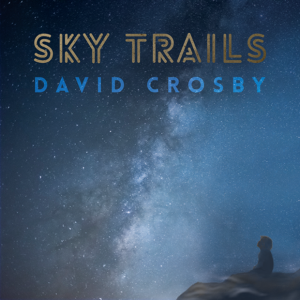
David Crosby 8: Sky Trails

It’s amazing that it took this long for Crosby to realize that he didn’t need Stills, Nash, or Young to goad him into creating. Sky Trails was his third album in as many years, and just as different to its predecessors. Anyone worried that James Raymond had fallen out of favor can be relieved, as he’s all over this one, adding a distinctly jazzy influence throughout.

“She’s Got To Be Somewhere” crackles with Steely Dan funk, from the electric piano and horns to the Dean Parks guitar solos. The lovely title track is an acoustic gem written and sung with Becca Stevens, whom we first heard on Lighthouse. There’s a forced metaphor in “Sell Me A Diamond”, but the track itself is good, with Greg Leisz adding steel guitar before Jeff Pevar gets to shred all over it. Continuing the Steely Dan connection, “Before Tomorrow Falls On Love” was written with THE Michael McDonald, but is musically based on Raymond’s piano and Mai Agan’s striking fretless bass. She’s the cowriter of “Here It’s Almost Sunset”, which features further soprano sax work from Steve Tavaglione.

“Capitol” is the requisite political diatribe, and unfortunately derails the momentum thus far; the fake drums don’t help. A reverent cover of Joni Mitchell’s “Amelia”, however, sounds of a perfect piece with the rest of the program. “Somebody Home” had already appeared in a live version on a Snarky Puppy album, and here it’s nicely restrained, considering how many people are on the track. The complicated “Curved Air” melds flamenco with jazz over dizzying, changing meters, and “Home Free” is a slow, grateful appreciation of simple domesticity.

Each of the albums he made this decade have been good, and Sky Trails is by far the strongest. One would think the well would be dry after working at such a speed, but it’s nice to have one’s assumptions refuted.

David Crosby Sky Trails (2017)—

Friday, August 18, 2023

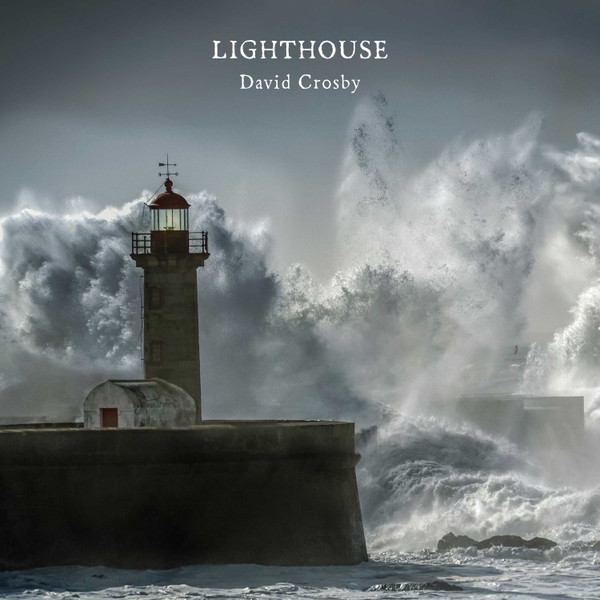
David Crosby 7: Lighthouse

All of a sudden David Crosby was busy musically, which was good for him, since he’d pissed off Nash and Young seemingly for good, and Stills was happy playing with anyone else. Enter one Michael League, who was born right before Crosby went to prison for multiple drug and weapons convictions in the mid-‘80s. Apparently the kid, who was best known for a jazz fusion called Snarky Puppy, wanted to record something fast, so they did. Lighthouse is mostly a collaboration, with Crosby singing everything and playing some guitar, while League adds very unobtrusive guitars and basses. (Surprisingly absent for the first time in decades is James Raymond, who’d been so involved with every other Crosby project of the previous twenty years.)

Overall it’s a very gentle album, beginning with “Things We Do For Love”, which is otherwise about as slight as its title might suggest, but good luck resisting it. “The Us Below” has a comforting, familiar rolling guitar part and rich harmonies pondering our place in the universe. “Drive Out To The Desert” is full of good advice, delivered slowly and deliberately. Musically it’s a prelude to the more percussive “Look In Their Eyes”, which appears to be a plea for the homeless, immigrants, refugees, you name it. He expands the theme on “Somebody Other Than You”, wherein he angrily assails the people who marginalized others in the first place.

League wrote the music for “The City”, which is probably why it doesn’t sound like a Crosby song, but somebody should have noticed the lift from Steely Dan’s “Do It Again”. They’re not the first to write about New York as a woman, and won’t be the last. “Paint You A Picture” is another collaboration with Marc Cohn, who wrote the words but does not play the piano. Spooky as well as haunting, the lyrics are as autumnal as the music. “What Makes It So” combines the rolling approach already heard on the album with more questioning of so-called authority. “By The Light Of Common Day” stands out for one of the female voices who sings with him, one Becca Stevens, who also wrote the music to Crosby’s words.

Lighthouse is another nice album, and at its best when it stays low-key. While we don’t hear the masterpiece other reviewers have, and he certainly sounds older, it was good to know he still had the fire to create.

David Crosby Lighthouse (2016)—3

Friday, February 16, 2018

Byrds 14: Box Sets

Towards the end of the ‘80s, with the likes of Tom Petty and R.E.M. reviving interest in the Rickenbacker, the Byrds began to attract attention from a younger generation. Just in time for their induction in the Rock and Roll Hall of Fame, as well as a new Roger McGuinn solo album, and following successful lawsuits in favor of the band members not named Clark or Clarke came a four-disc box set covering the band’s tenure on Columbia.

Simply titled The Byrds, albeit with individually titled discs, the set begins with (naturally) “Mr. Tambourine Man” and moves all the way through Farther Along. Because the existing CD reissues of the albums were a little spotty, the sound was greatly enhanced, with many of the early songs presented in wide stereo and with extended endings, some of which had been revealed on the independent Never Before compilation from a few years before. That set also boasted some previously unreleased tracks, and many of them (such as “The Day Walk”, “She Has A Way”, and “Psychodrama City”) were included in the box in context.

As with most sets of its type, the earlier material vastly outweighs the later material, with the first five albums covered on the first two discs. A live radio take of “Roll Over Beethoven” sung by David Crosby isn’t much to write home about, but the real enticement was the inclusion of several Sweetheart Of The Rodeo tracks with Gram Parsons’ original vocals, as opposed to the common album tracks redubbed by McGuinn. The remainder of the discs speeds through the Clarence White era, still giving him some overdue recognition, and still sounding very different from the original incarnation of the band.

To bring it all back home, so to speak, the final 20 or so minutes of the set are given over to new recordings featuring the three senior members. Live recordings of “Turn! Turn! Turn!” and “Tambourine Man” with Bob Dylan (from a Roy Orbison tribute, of all things) are a sloppy setup for four studio tracks: a new recording of “He Was A Friend Of Mine”; the obscure Dylan cover “Paths Of Victory”; “From A Distance”, concurrently covered by Bette Midler in a Grammy-winning performance; and “Love That Never Dies", which was basically a teaser for McGuinn’s upcoming Back To Rio album. (Heralded as a comeback at the time, it hasn’t worn well, save two songs contributed by Byrds disciples: Elvis Costello’s “You Bowed Down” and Tom Petty’s “King Of The Hill”.)

Each of the Columbia albums was overhauled in the ‘90s, and most of the rarities in the box were included on their respective expansions, but it was still surprising that a second box set dedicated to the band came out a mere 16 years later. In addition to a DVD of mimed clips from the vintage era, the four discs in There Is A Season go a little wider on the history of the band, starting with six tracks from the Beefeaters and the Jet Set, a.k.a. the Byrds before they were the Byrds. Some of these were already available on various collections dubbed Preflyte, and while they have some of that harmonic charm, the pieces aren’t all there yet. More live material from the Clarence era shows their prowess, and two songs from the 1973 “reunion” move the spotlight back to Gene Clark. Yet for some reason, they choose to close with “Paths Of Victory” from 1990.

Much of the rare stuff was already covered on that first box, and is repeated on There Is A Season. As it pushed the first box into deletion, it’s the only comprehensive set available for physical purchase. There is more emphasis on Gene, but some of the swaps in the way of album tracks are questionable.

The Byrds The Byrds (1990)—4
The Byrds
There Is A Season (2006)—4

Tuesday, June 2, 2015

Byrds 12: Byrds

The Byrds may not have been the first supergroup, but they spawned several, most of which had splintered by the time Roger McGuinn had driven the original brand into the ground. Now that all five original members were available, they were free to reunite for a brand new album on David Geffen’s new Asylum label, carrying forth the tradition of L.A. country-rock. Simply titled Byrds, it lists the full names of the five on both the cover and the labels, lest there be any doubt.

Gene Clark had the most to gain from any boost the reunion could provide, being the least commercially successful on his own. The album opens with his “Full Circle”, an apt title thankfully not used for the album as a whole, but demonstrating how much his songs meant to the band. “Changing Heart” is country-flavored with good counterpoints. He also takes the lead on a jaunty rejig of Neil Young’s “Cowgirl In The Sand”, while “(See The Sky) About To Rain” appears a full year before Neil’s own version.

Roger’s songs are pretty thin, “Sweet Mary” being another collaboration with Jacques Levy (who’d helped with “Chestnut Mare” and a few others) and “Born To Rock & Roll” an unconvincing sentiment despite several attempts to record it over the years. His dominance over the proceedings was likely quashed by David Crosby, whose first lead vocal is on a decent waltz arrangement of Joni Mitchell’s “For Free”. For some reason he re-does “Laughing” in much the same arrangement as on his solo album, except for some Rickenbacker and other harmonies. “Long Live The King” is his only new songwriting contribution, much harsher and more forgettable than his patented stoner style.

Chris Hillman had gained a lot of confidence from the Burritos and Manassas, and contributes more mandolin than Roger does the Rickenbacker 12-string. “Things Will Be Better” is a half-decent contemporary rocker, while “Borrowing Time” is a ringer for the Grateful Dead playing Cat Stevens. (Michael Clarke contributes drums, and the fact that they’re barely noticeable is a compliment to his honed skill.)

The album was soon overlooked, and the band split again; Crosby was soon busy with trying to reform CSNY anyway. Roger was already gearing up for his solo career, finally, and Gene kept hacking away. Hillman, meanwhile, got sucked into another Buffalo Springfield hybrid on the Asylum label; the Southern-Hillman-Furay Band gave him equal billing with Eagles songwriter J.D. Souther and Richie Furay, fresh from Poco, with three former Manassas members, plus Jim Gordon on drums on the first of their two albums.

Nonetheless, Byrds is really not as bad as reviews of the time said, and certainly better than the last handful of albums released under the name. While hard to find, it gets reissued from time to time to gain new audiences and appreciation.

Gene Clark, Chris Hillman, David Crosby, Roger McGuinn, Michael Clarke Byrds (1973)—3

Tuesday, August 19, 2014

CSN 13: CSNY 1974

In the summer of 1974, Crosby, Stills, Nash & Young embarked on a massive tour that brought their particular brand of singer-songwriterness to stadiums packed to the gills with ticket-buyers. Since their previous tour (and album together), roughly 12 albums’ worth of material had been released between the four of them, in addition to all the stuff Neil still had on deck. Supported by the crack rhythm section of Tim Drummond on bass and Russ Kunkel on drums, with Stills buddy Joe Lala on congas and cowbell, each show lasted for three hours on average, all four anxious to get as many of their own songs in. (Cocaine’s a hell of a drug.)

In the decades since then, the tour has been remembered for its excess, both pharmaceutical and egotistical. Even the participants have expressed varying memories about the experience. Graham Nash, in his role as self-appointed archivist, took up the task of re-assessing the tour from the vantage point of the shows that were professionally recorded, and it only took him about five years to finish it.

In its triple-CD-plus-DVD package, CSNY 1974 offers 40 songs from 10 shows, culled from the 77 different songs played throughout the tour. The program is split into three sets, roughly corresponding to a typical show. (We wouldn’t’ve put it past Rhino to issue a “complete” box of all ten shows start to finish, à la what they’ve been doing with the Grateful Dead lately, but they haven’t.) The “First Set” is full band electric; the “Second Set” is mostly “wooden music”, acoustic and solo; the “Third Set” brings the rhythm section back in full.

Nash has admitted to tweaking the tapes here and there, fixing harmonies and notes, and flying in other parts of the same track to smooth over a rough patch, so we’ll leave it up to other scholars to identify what songs came from where. For all his work, Stills sounds pretty ragged, to the point where his singing is unintelligible. His attempts to sound “soulful” often come off garbled; even when he’s playing guitar, a certain amount of showboating takes over when finesse is preferred. In contrast, Crosby is spot on at all times, and Nash is just happy to be there. For all his contrariness, Neil’s quite the team player, happily contributing harmonies, lead guitar and/or piano on the others’ tunes.

The big excitement (for Neil fans, anyway) is the first official release of several songs yet to be otherwise collected. “Traces” is a highlight of the first disc, in all its brevity, as is “On The Beach”, the title track of his solo album just in stores. The second disc has the most surprises, with an early duet of “Long My You Run” with Stills preceding the one-off “Goodbye Dick”, itself a slight variation of “Mellow My Mind” on the banjo, which follows complete with CSN harmonies and an extra line. “Love Art Blues” and “Hawaiian Sunrise” are nice to have in some form, personal as they are. The third disc has a terrific “Don’t Be Denied” (making its digital debut in any legal form) with an extra verse from its Time Fades Away incarnation, an intense “Revolution Blues” and, best of all, the mesmerizing “Pushed It Over The End”, showcasing the band and singers deftly navigating all those shifts from 5/8 to 4/4 over eight minutes.

Along with a thick booklet crammed with photos, quotes and instrumental credits, CSNY 1974 does provide, literally, hours of entertainment. Whatever surgery was performed to make it sound good took; it probably helps that the recordings were made towards the end of the tour, when most of the kinks had been worked out, and for the most part, the band cooks. (Of course, it only fanned the fire for Neil’s Archives Vol. II, which straddled and overlapped this era when it finally came out.)

Crosby, Stills, Nash & Young CSNY 1974 (2014)—

Monday, August 18, 2014

David Crosby 6: Croz

Right about when nobody was expecting it, David Crosby released only his fourth solo album in a four-decade span. Granted, he’d done two albums with the CPR project, but his last collection of new songs was half of another duo album with Graham Nash a decade before. Luckily for performer and listener alike, Croz is laid-back and natural, like visiting with an old friend.

James Raymond is still his main collaborator, and he wrote several songs, including the opening “What’s Broken”. This features a very subtle contribution from Mark Knopfler; you have to listen very closely before it’s clear that it’s really him. Social commentary comes early with “Time I Have”, mostly in the same tempo, but with much more obtrusive guitar from Shane Fontayne. “Holding On To Nothing” is more contemplative, and this time the guest soloist is Wynton Marsalis, flown in from Lincoln Center. The tempo picks up and the meter gets intricate for Raymond’s “The Clearing”, with nice voicings built in. Nautical metaphors dominate “Radio”, which has a wonderful and dare we say inspiring chorus. “Slice Of Time” is poetic and pleasant.

“Set That Baggage Down” has some almost funky guitars courtesy of co-writer Fontayne, and Crosby plays one for the only time on the album on the haunting portrait of “If She Called”. The stripped-down approach makes this one a highlight. The drum machine sadly undercuts the piano on “Dangerous Night”, especially through earbuds, but the harmony on the chorus helps you forget as the song progresses. The instrumentation on “Morning Falling” seems transported from a ‘90s Sting album, but it’s a nice sound for him. Graham Nash probably wishes he could have sung on “Find A Heart”; the soprano sax and jazzy meter keep the Sting connotation going, and in a good way.

Croz is a nice surprise—not stellar, but welcome. Despite how he wrecked his health for so many years, he’s still in terrific voice. If anything we wish we heard more of his guitar rather than let the hired guns play all the parts.

David Crosby Croz (2014)—3

Friday, July 18, 2014

CSN 12: Demos

While Neil spent much of the decade promising and delaying his box set, the others in Crosby, Stills & Nash quickly realized that there was gold in them there hills. Nash curated box sets for himself and Crosby, but Stills tinkered with his a lot longer. While we waited, he released Just Roll Tape, purporting to be a long-long demo session recorded in April of 1968. With snippets of songs never revisited, along with the usual embryonic versions of a few classics, the set proves that he wouldn’t truly find his voice until he had other voices to support him. (It also shows him to be a master of time travel, since it’s been established that Buffalo Springfield had a gig in Arizona while this session was supposedly taking place in New York.)

Two years later, the very same day Neil’s Archives box finally emerged, so did a CSN disc called, simply, Demos. Culled from the first three or so years they worked together, it’s a low-key, enjoyable collection of songs you already know, but generally in a basic format. In other words, solo and acoustic, and no harmonies.

Considering how headstrong these guys were, the demo versions aren’t that different, structurally, from the finished productions. In most cases they’re blueprints to be built on; “Music Is Love”, for example, appears to be the simpler basic track before Graham and Neil loaded it up to open Crosby’s first solo album, while “Long Time Gone” is an early band version that hasn’t quite arrived at its proper feel.

And that’s another perk to the set—the songs aren’t limited to just the group albums, but include plenty of ideas that wouldn’t reach fruition until their various solo albums. All of Nash’s songs (save “Marrakesh Express”) would end up on his first album, while Stills’ ideas (as proved on Just Roll Tape) could sit around for years before making one of his albums. “You Don’t Have To Cry” consists of just the one verse that would be repeated for the album version, though Crosby’s unplugged sketches of “Déjà Vu” and “Almost Cut My Hair” are even longer than the released takes.

Demos is for fans only, and might have spurred a sequel had the sales been there. But it does succeed for the reasons mentioned, as well as for sending people back to the first records they made together and apart. While not the cottage industry that runs message boards concerning hypothetical post-1970 Beatle albums culled from solo work, there must be more than a few fans who have compiled their own collections of the best of CSN apart.

Stephen Stills Just Roll Tape: April 26, 1968 (2007)—3
Crosby, Stills & Nash
Demos (2009)—3

Friday, May 30, 2014

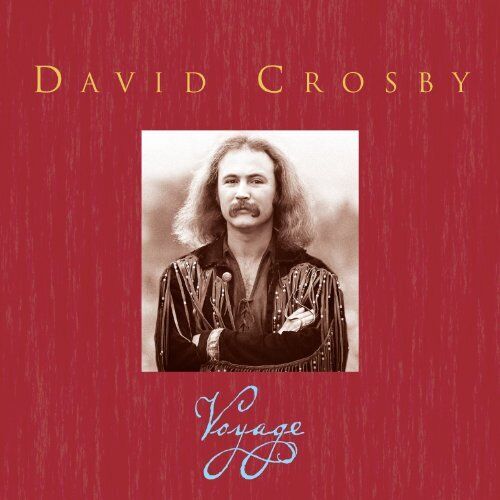
David Crosby 5: Voyage

The idea of a box set devoted to David Crosby is intriguing, simply because his actual musical output has been so sparse over his long career. But in 2006 Graham Nash was still Crosby’s biggest fan, so he spearheaded the project.

Voyage manages to compile the highlights of forty years on two discs, beginning with three songs from the Byrds. While he’s credited with co-writing “Eight Miles High”, most people will notice Gene Clark’s words and Roger McGuinn’s guitar, so it’s an odd place to start for a Crosby set. The rest of the disc sails through the first two CSN albums, his solo album, and the three duo albums with Nash. The second disc has a tougher time of it, given the little of value from the ‘80s and ‘90s past “Shadow Captain” and “Delta”. Basically, one track from each solo and CSN release is justified by the copious commentary in the liner notes. Both he and Nash are more excited about the CPR albums, with five tracks included.

The third disc is titled “Buried Treasure”, and packed to capacity with demos and alternate versions. Early versions of songs from the CSN albums are interesting, including the basic demo of “Déjà Vu” with Graham that was embellished for the final album track. An alternate backing of “Cowboy Movie” with more Neil Young but the standard vocal isn’t as exciting as the “Kids And Dogs” outtake from his first solo album, while an alternate mix of “Have You Seen The Stars Tonite” from a Paul Kantner project of the same period provides some wider perspective. In a show of restraint, only two unreleased live performances with Nash appear, which leaves room for such rarities as “King Of The Mountain”, “Samurai”, and “Climber”. A lengthy live “Dream For Him” from a recent CSNY tour provides some low-key Stills-Young guitar dueling.

Anyone looking for the best of David Crosby should own all the original albums anyway, but Voyage gets by on the quality of the tracks. The rarities disc probably wouldn’t have sold as many copies on its own, so the set is recommended, and certainly enjoyable, if not absolutely essential.

David Crosby Voyage (2006)—

Tuesday, April 8, 2014

Crosby & Nash 5: Crosby-Nash

They could wait around for Neil to call, or see if Stephen wanted to do anything. Instead, while not exactly teeming with songs dying to be recorded, David Crosby and Graham Nash hooked up with some old and new friends for their first duo album in over 25 years.

And not just any album; Crosby-Nash was spread across two discs—one 45 minutes, the other half an hour—to give the impression that they really were teeming with songs dying to be recorded. They start strong with “Lay Me Down” and “Puppeteer”, both from the pen of James Raymond, Crosby’s long-lost son, with whom he’d reconnected in the mid-‘90s and started collaborating almost immediately. After that it gets pretty quiet—a little too quiet, especially if you’re waiting for an “Almost Cut My Hair” to blow the roof off the proceedings. Instead we get more immaculately recorded adult contemporary pop designed to accompany a gently swaying sailboat. Things pick up whenever the two harmonize, but as usual, they write separately or with anybody else in the band but each other, and cover people like Marc Cohn.

There’s nothing wrong with quiet and pretty; “Grace” is a very pretty piano interlude, but it’s used to set up an inferior song. “Luck Dragon” (again, written with James Raymond) comes close to rocking, while “Don’t Dig Here” (also written with guess who) gives Graham a chance to lament the environment over a riff that eventually rips off “Come Together”. “Michael (Hedges Here)” is a shaky but well-intentioned tribute to the late guitarist, who’s also credited with the arrangement of “My Country ‘Tis Of Thee” that closes the set.

Graham’s getting a little mushmouthed in his old age, and Crosby’s mellowed right with him, only the anger he used to exercise is now demonstrated by the warmed-over Steely Dan of “They Want It All”. He spends five minutes on the scat-sung “How Does It Shine?” (the answer: not as brightly as “Song With No Words” or even “Orleans”), the last minute or so turning into a faux-samba for anybody who misses Stephen Stills’ forays into the same. “Samurai” is an a cappella piece that obviously means something to him.

A shuffled “highlights” disc was made available around the same time, leaving some of us to wonder why they didn’t just leave it at that. Rather than alternating between the guys, the sequencing goes two and two, adding to the general tedium. Being the 21st century, it sounds great, thanks to ProTools and close miking. But there’s not a lot here that will compete with their old stuff.

Crosby-Nash Crosby-Nash (2004)—

Saturday, February 1, 2014

David Crosby 4: CPR

In another one of those unlikely stories outside a Lifetime made-for-TV movie, David Crosby needed a liver transplant, and met a kid he likely would have given up for adoption if he hadn’t already ran out on the mother. Not only did young James Raymond bear little resentment towards his deadbeat dad, but he’d spent much of a blissful childhood becoming a rather accomplished musician in his own right. Once this odd couple started spending time together, jam sessions happened, and songs appeared. With the assistance of session rat Jeff Pevar, the easily monikered CPR started playing shows and recording an album.

Even more unlikely, the resultant CPR offers some of Crosby’s best work in literally decades. Relying mostly on Raymond’s musical ideas, which come from places outside his usual toolbox, the lyrics flow without sounding forced or trite. Highlights include “Morrison”, a belated criticism of Oliver Stone’s version of the Doors story. “That House” and “Somehow She Knew” express different kinds of loss and the sorrow they bring. “Rusty And Blue” is fleshed out from his live album, the source of the title “It’s All Coming Back To Me Now”. One PR selling point was “Little Blind Fish”, a CSNY leftover that had snuck out on bootlegs; the similarities are minimal. “Time Is The Final Currency” is a wonderfully understated closer.

Raymond sings the main voice on “One For Every Moment”, with percussion that veers a little close to Stills territory, as well as “Someone Else’s Town”, complete with F-bomb. On his own he sounds like Timothy B. Schmit; with Crosby he provides something of a high Nash counterpoint. The moody “Yesterday’s Child” is the best of his offerings. Throughout, Pevar adds guitar touches worth of Danny Kootch and David Lindley, while a variety of supporting players, some familiar, prop up the back end.

A few years later, following a CSNY reunion album and tour, CPR was back in business with Just Like Gravity. Like the debut, it’s on the long side, but it rocks a little harder, overall. It’s still in the slightly jazzier adult contemporary with New Age touches of the debut, but tunes like “Darkness” use sneaky melodies and non-standard chords to skew off the beaten path. The vocals are also shared more, taking turns on verses, and the kid gets more of a spotlight, taking charge on “Eyes Too Blue” and “Jerusalem”. “Angel Dream” lists Graham Nash as a co-writer, and has something of the moving sweep of “Delta”. Crosby’s voice is still up to the task right off the bat in “Map To Buried Treasure” and elsewhere; the title track is just him and an acoustic, and it’s the sound fans have waited to hear since about 1972.

These albums appeared on a tiny independent label, as did two live recordings, and are tough to find today, but they are streaming. Together they help preserve Crosby’s relevancy as the years go by.

CPR CPR (1998)—3
CPR
Just Like Gravity (2001)—3

Friday, January 10, 2014

CSN 10: After The Storm

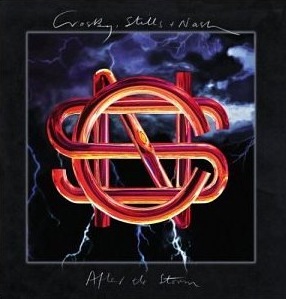
Even though nobody was asking for a new CSN album, they did one anyway. What was surprising was that they paid some attention to the backlash the greeted their last new set and, save one cut, kept the writing strictly in-house on After The Storm. Everybody sings on everyone’s tunes, too.

Stills is in relatively decent voice, but his tracks are hit or miss. Two Latin-tinged numbers bookend the album; “Only Waiting For You” leans too close to adult contemporary, while the excruciating “Panama” makes one even more squeamish as he recalls how a local girl made him a man. “It Won’t Go Away” and “Bad Boyz” are returns to social commentary, somewhat, though the former is too funky, and the latter, while rocking, shouldn’t be spelled that way by anyone over 30.

Nash comes off the best, mostly. “Find A Dream” and “These Empty Days” are both lifted by the harmonies—Stills being prominent, rare for Nash songs—whereas the simple, affecting “Unequal Love” sports some nice Stills leads straight out of Buffalo Springfield. When those are added to the title track, one wonders if everything is all right at home.

Having written very little for his own album the year before, Crosby kept up with the others by contributing a nearly equal pile of songs—in quantity, anyway. “Camera” has some decent imagery, but is slathered with cowbell and other Latin percussion; Stills gets co-writing credit so we’ll blame him. “Till It Shines” also gives Stills plenty of room to wail, up against Mike Finnegan’s organ. He does his own bit to decry social issues on “Street To Lean On”, which supposedly has Michael Hedges on guitar, but we can’t hear him.

Possibly the best track is their harmony-rich cover of “In My Life”, which Stills had done on his last solo album. Wisely, they stick to the chords, let a harmonica play the main riff, and leave it at that.

While mostly an improvement, that eternal blend that captured the world is only hinted at on After The Storm. They’ll always be able to lean on their old albums, which is just as well, since this one didn’t sell.

Crosby, Stills & Nash After The Storm (1994)—

Sunday, December 29, 2013

David Crosby 3: Thousand Roads

Only four years after his second solo album, David Crosby appeared with a third installment. Could he really have written an album’s worth of songs in that time?

Unfortunately, as Thousand Roads proved, the answer was a big fat no. Not that it bothered him; he was happy to restrict himself to vocals, not even touching the guitar, and contributed exactly one solo composition in addition to two high-profile co-writes. The obvious selling point was the first single, “Hero”, not only written with Phil Collins but featuring him prominently on vocals. “Yvette In English” is a collaboration with Joni Mitchell, who would release her own version a year later; Crosby’s is laid-back, and a high point. The title track also has promise, something of a dirty blues with minimal drums and electric and acoustic dueling from Andy Fairweather-Low and Bernie Leadon respectively.

Every other song was written by somebody else, all strictly in the adult contemporary mode, yet with sensitive hippie ideals and themes close to his heart. “Too Young To Die” comes from Jimmy Webb, of all people, and is about driving fast, as opposed to Stephen Bishop’s closing tearjerker “Natalie”, about an OD victim. Marc Cohn and John Hiatt, both decent writers whose commercial high points were already behind them, are featured in the first half, and the genre’s favorite unknown songwriter, Paul Brady, gets a spot in the second half, as does a writer who’d recently given a couple of hits to Bonnie Raitt.

Throughout the album, Graham Nash pops up to harmonize with his buddy, and help remind the listener who’s album it is. Anyone looking for a pleasant MOR album for upscale suburban afternoon will enjoy it, but coming from the legacy of David Crosby, even considering CSN’s lightweight tendencies, Thousand Roads is a dead end. (Yeah, we said it.)

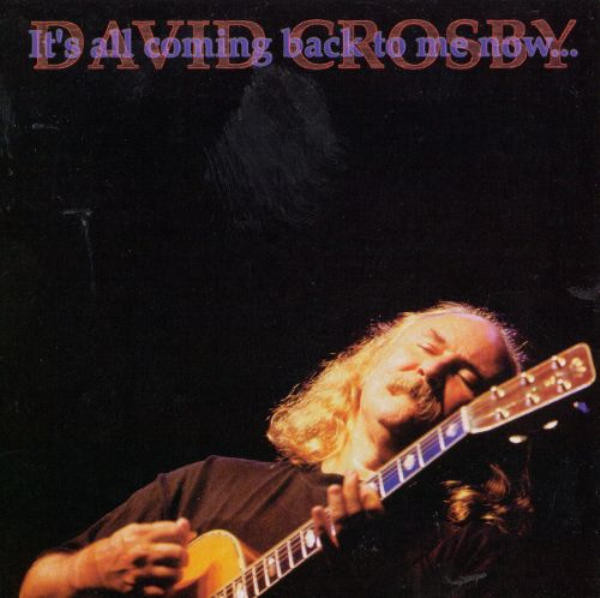
Amazingly, his brief promotional tour for the album highlighted two new original songs, both of which appeared on It’s All Coming Back To Me Now…, an entertaining document of a night at the Whisky A Go Go. “Rusty & Blue” is a decent meditation with nice atmospherics by Jeff Pevar, while “Till It Shines On You” would get a full CSN treatment soon enough. Lengthy explorations on tunes from the ‘60s and ‘70s fill out the package, and not only does Chris Robinson of the Black Crowes come out to mewl on “Almost Cut My Hair”, good ol’ Graham Nash shows up for that extra bit of excitement. (The album title mystifies, as it’s likely Crosby hadn’t heard the song that Celine Dion would scream to the top of the charts in a few years’ time.)

David Crosby Thousand Roads (1993)—2
David Crosby
It’s All Coming Back To Me Now… (1995)—3

Friday, October 18, 2013

CSN 9: CSN Box

While Neil Young had gone through his own ups and downs in the ‘80s, Crosby, Stills & Nash had an even worse ride. Crosby hit rock bottom, went to prison, and emerged clean and sober. Meanwhile, the other two kept their noses clean, more or less, and failed to excite anyone with their solo efforts. American Dream, which had Neil’s full involvement, was less than stellar but sold; 1990’s Live It Up was even worse.

But being a legacy act with a strong catalog, Atlantic was fully behind the idea of a CSN box set, particularly after the success of a similar Led Zeppelin package. Outside of the usual rarities and album cuts, the CSN set boldly incorporated solo and duet work by each of the members (save Neil, who was keeping his best stuff on ice for his own archival brick). The trio took extra care to sequence the wide-ranging tracks into a logical and somewhat chronological order.

Of course, the bulk of the first two discs comes from the extremely fertile cusp of the ‘70s, when all three were positively teeming with tunes. Most of the first album is here, some in mildly different takes or mixes. By the middle of the second disc, they’ve all started their actual solo albums, so the set practically creates an imaginary 1971 album by the trio. The best of everyone’s work from the mid- to late ‘70s also provides a nice reminder as to why we still cared. As is the case with many such sets, the excitement tails off at disc four, where such hits as “Southern Cross” and “Wasted On The Way” share space with some uninspiring ‘80s solo and group work, including a dull remake of “Dear Mr. Fantasy”, ending with the 1970 B-side version of “Find The Cost Of Freedom” to close the circle.

For true rarities, there’s their lush arrangement of McCartney’s “Blackbird” for three voices and guitar, an earlier “Song With No Words”, a true Déjà Vu outtake in “Horses Through A Rainstorm”, and the full nine-minute take of “Almost Cut My Hair” faded on the LP. One of the more daring experiments that works is a studio take of “The Lee Shore”, but with vocals that weren’t added until the ‘90s. Crosby & Nash duet on a nice version of Joni Mitchell’s “Urge For Going”, and all four come together for alternates of “See The Changes”, “Taken At All” and “Homeward Through The Haze”, for those CSNY albums that never happened.

Taken all together, it’s a fine set, complete with detailed notes for each track. Neil’s contributions, while scattered, are pretty essential for his diehard fans too. What still baffles after all these years is what to call the thing; the spines of the disc and the box itself read Crosby, Stills & Nash, while a stylized CSN on the cover, booklet and jewel cases suggests that’s the title. Both, of course, had already been used as album titles. Meanwhile, a two-disc distillation of the set called Carry On appeared in Europe, so it’s too bad they just couldn’t go with that.

Crosby, Stills & Nash Crosby, Stills & Nash (1991)—

Sunday, October 13, 2013

CSN 8: Live It Up

Just when you thought they couldn’t get any worse, Crosby, Stills & Nash managed to underperform to the least of their senses, if not their abilities. The embarrassment of Live It Up begins with the cover art, depicting giant hot dogs being roasted on the moon. That should be enough to keep the album far from the cash register, but people bought it anyway. Whether they enjoyed the noisy, unsuited production values remains an equal mystery.

The liner notes helpfully pinpoint the dates each of the songs were committed to posterity; for the most part the recordings came immediately in the wake of the underwhelming release of American Dream, proving that they didn’t pay attention to their own bad reviews. The hideous title track was contributed by constant sideman Joe Vitale and recorded as far back as 1986, which is only part of the problem, but it’s followed “If Anybody Had A Heart”, penned by buddies J.D. Souther and Danny Kortchmar, supposedly featuring Roger McGuinn on 12-string, and first heard over the closing credits of that same year’s About Last Night (aka Demi Moore’s finest nude scenes before the implants). Stills steps forward with two polar opposites. “Tomboy” is another Latin-tinged drag, while “Haven’t We Lost Enough” is a very appealing and welcome acoustic tune, even though it was written with the singer from REO Speedwagon. Crosby and Nash team up on “Yours And Mine”, which pleads for someone, someone to think of the children. (Guest star: Branford Marsalis on sax, what else?)

After that downer, Stills and Nash bring back the “carnivále!” atmosphere for the unnecessarily parenthesed “(Got To Keep) Open”, with Bruce Hornsby on piano and accordion somewhere in there. Nash thought well enough of the drummer from Go West to spearhead the inclusion of “Straight Line” (guest star: Peter Frampton!), followed by his own “House Of Broken Dreams”. “Arrows” is a Crosby collaboration with buddy Michael Hedges, who plays keyboards and not guitar on the track, perhaps to make room for Branford Marsalis again. This tune would have been a low light on any Hedges album, which might explain how it got here instead. Finally, there’s “After The Dolphin”, which is not about the endangered mammal for once, but refers to a pub destroyed during World War I. A different angle for an anti-war statement, but badly tied to a synth program that jars with the canned radio reports.

So that’s one decent song out of ten, and surprisingly, the best thing Stills did all decade. The rest of Live It Up is beyond defense, and deserves to be buried.

Crosby, Stills & Nash Live It Up (1990)—1

Sunday, September 29, 2013

David Crosby 2: Oh Yes I Can

After pulling the best survival stunt next to that of Keith Richards, one wants to truly root for David Crosby. The least prolific partner in the Crosby, Stills, Nash & Young law firm, his comparatively miniscule output can be put down partially to years of drug addiction and subsequent incarceration. Giving only two songs to the American Dream project, one hoped that he was holding out the really good stuff for his own solo album, which arrived only 17 years after his previous one.

Unfortunately, most of the music on Oh Yes I Can would have the superfan saying, “Oh, no you don’t.” The arrangements, performed by the usual suspects, still reek of the worst ‘80s adult contemporary touches. “Drive My Car”, which had been sitting around since the previous decade, has average lyrics and showcases David Lindley in an uncharacteristic shredding frame. “Melody” sounds like a Star Search audition, but at least “Monkey And The Underdog” has some decent metaphors along the lines of “Cowboy Movie”. “In The Wide Ruin” is a pretty piano piece written by Craig Doerge and Judy Henske with nice harmonies, but hits an awful cliché when the drums kick in. (Bette Midler would have nailed this one.) Finally, “Tracks In The Dust”, a simple, slow strum performed with virtuoso “new edge” guitarist Michael Hedges and Graham Nash, is exactly what we want, and right in his wheelhouse.

Such a beautiful moment is splashed away by “Drop Down Mama”, a prime example of white man blues hollered badly. Bonnie Raitt does not contribute the dirty slide guitar to that, but she does harmonize on “Lady Of The Harbor”, a love song to the Statue of Liberty that very much predicts the sound with which she would soon take VH-1 by storm. “Distances” begins with some of those lovely wordless melodies, and while it would be better without lyrics, it does follow some of those unpredictable changes we’d been waiting for. “Flying Man” is one of those “songs with no words”, but it’s sung over a generic pop-jazz track led by Larry Carlton, making the vocals practically inconsequential. The title track does have some potential, going through inspired tempo changes, but singing “I’m sitting at my piano” while that instrument plays is just a little lazy. It’s not much better in the next verse where he’s literally sitting in his kitchen, especially considering that it’s supposed to be a declaration of commitment to his one true love. (And in case you didn’t know, “fire and ice makes water.”)

The album closes with a striking re-arrangement of “My Country ‘Tis Of Thee” by Michael Hedges, possibly the most political moment next to “Tracks In The Dust”, and again, underscoring just what this album could have been. Sadly, Oh Yes I Can is not a demonstration of his grand return to form.

David Crosby Oh Yes I Can (1989)—2

Monday, August 5, 2013

CSN 6: Daylight Again

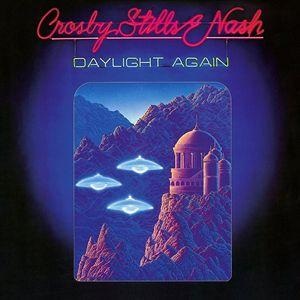
The story behind Daylight Again is, basically, Crosby was getting too far gone to be a viable partner in the CSN law firm. However, when Stills and Nash started working together without him, various powers that were suggested that maybe something couldn’t be done to make it seem like the three Laurel Canyon musketeers were right there together in one place, and thus facilitate at least a top 40 album, if the top ten was to be considered too greedy.

Even if you weren’t an ‘80s record executive, such logic would make sense. Besides, these guys weren’t doing much on their own anyway. A five-year gap since the last CSN album was nothing compared to the chasm that separated Déjà Vu and CSN, as if anyone was paying attention to any of the solo albums that had sprouted up in the same time.

Stills had been working with a guy named Michael Stergis, whom, despite his songwriting and instrumental credits all over Daylight Again, doesn’t seem to have parlayed that into anything worth creating a Wikipedia page over. “Turn Your Back On Love” is about as bland yet inoffensive as we might hope from Stills at this point. “Wasted On The Way” is Nash’s subtle summary of the previous ten years, all high harmonies lamenting what could have been. Despite itself, “Southern Cross” is the highlight of the album, a simple acoustic strum evoking both the tranquility of the sea and “Back In Black”, which it resembles chord-wise. (Go ahead; listen to them back to back, and damn, if they don’t mesh perfectly.) Nash gets tough on “Into The Darkness”, sung to the syncopation of a basic riff, but it’s eclipsed by one of the songs Crosby actually managed to finish. “Delta” is a positively gorgeous song, proving that even at his least coherent, he had the gift of song. It always seems more of an epic than it is.

Stills was still writing songs, so we get the back-to-back splendor of “Since I Met You” and “Too Much Love To Hide”, both of which are far more interesting musically than they are lyrically; in fact, Nash’s enthusiastic harmonies only underscore how average these songs really are. “Song For Susan” is hardly a substitute for “Our House”, but Nash puts a lot into it, so it’s a good effort. Stills finally slows down long enough to remind us that “You Are Alive”, a good setup for Crosby’s only other contribution, a cover of “Might As Well Have A Good Time” by a couple of fellow travelers. It’s pretty, which helps. To bring everything back home, the title track is basically a new intro welded to the front of “Find The Cost Of Freedom”, now with Art Garfunkel helping out (according to the credits, but good luck picking him out) just in case Crosby couldn’t cut it.

The usual suspects are all here—Joe Vitale, George “Chocolate” Perry, Craig Doerge, Michael Finnigan. The credits also list other vocalists on several tracks, covering up the initial and general absence of Crosby. Meanwhile, he and Nash don’t add anything instrumentally to the album, underscoring just how non-collaborative Daylight Again was. It’s not a bad album, but it certainly isn’t very exciting. Those two singles were successful enough to send the boys on the road, which resulted in the Allies live album, which was released very quickly compared to usual pace. It included two studio tracks: the hideous “War Games” and “Raise A Voice”, the latter of which would one day be appended to Daylight Again with three other outtakes of vague interest.

Crosby, Stills & Nash Daylight Again (1982)—3
2006 remastered CD: same as 1982, plus 4 extra tracks

Sunday, August 4, 2013

CSN 5: Replay

Naturally Atlantic was hoping for another Crosby, Stills & Nash album, but this point only Stills and Nash were working together, so this odd little mix was compiled, according to the back cover note, for Ahmet Ertegun, to whom they could never say no. Astute scholars will already know that they had released only that one album as a trio since 1974, so Replay goes outside the box by including tracks from various solo and duo albums, some of which actually do feature all three on vocals. To their credit, none of the selections had already appeared on So Far, though a couple of the Stills solo and Crosby/Nash tracks had been on previous best-ofs. (Lost yet?)

Since this was a CSN production, “Carry On” is included in a new mix that lops off the “Questions” coda in favor of a new solo and drums that loops back to the chorus. Two Nash songs each from the first album and CSN provide balance with songs from three different Stills solo albums, while “I Give You Give Blind” loses its frenetic string arrangement but still jars. Crosby is represented solely by “Shadow Captain” and the “To The Last Whale” suite with Nash.

Replay isn’t essential, but it’s very cohesive given the disparate sources, from other labels even, and does provide something of a intro to those lesser-known albums. They even managed to get a Joni Mitchell painting for the cover.

Crosby, Stills & Nash Replay (1980)—3
Current availability: streaming only