Showing posts with label yardbirds. Show all posts

Friday, March 6, 2015

Yardbirds 4: Greatest Hits

American labels knew how to recycle product in the ‘60s, and since a few months had gone by since the last album, Epic decided to release a greatest hits set by the Yardbirds. It’s only half an hour long, as were a lot of albums back then, but it really does cover their hits to date. It includes two songs from the first album, four songs from Having A Rave-Up, and only “Over Under Sideways Down” from that album. New to LP in the states were the previous year’s stellar single “Shapes Of Things” and its B-side “New York City Blues” (which opens with the same riff Jimmy Page would cop for “You Shook Me”, adding insult to Jeff Beck’s injury, but we’re getting ahead of ourselves), plus “Happenings Ten Years Time Ago”, which means the album includes performances by all three of the band’s soon-to-be-legendary lead guitarists.

Three years later, once each of those lead guitarists had become household names in households that listened to FM radio, Epic issued a double album with the inspired title Featuring Performances By Jeff Beck, Eric Clapton, Jimmy Page. With 20 songs coming in at just under an hour, it repeated nothing from the hits album—which had covered pretty much all of the songs that qualified as actual hits—and scrambled deep tracks from all the American albums in no understandable sequence, seesawing from blues to experimental. Several paragraphs of liner notes bemoaned the band’s commercial failures, but didn’t bother to detail which albums begat which songs, nor which of the performances featured which guitarist, even though each had an instrumental all to themselves. The bizarre cover art was typical of the era, and the same designer would get to work on another related project ere long.

Both of these compilations would go out of print by the end of the ‘70s, and because the masters were owned by different managers depending on who produced what, licensing would continue to be wonky, and shoddy rehashes abounded overseas. Then, in 1986, the Rhino made good on their original brief to restore music to the masses with a hits collection with the hopeful title of Volume One. This set concentrated on the Giorgio Gomelsky era, with began with Clapton and covered the first two American albums, including two further tracks from Five Live Yardbirds. It did a fine job of presenting them as blues interpreters, but the contents predated some of Beck’s innovations.

While a second volume never materialized, Rhino did score a coup in the new century with Ultimate! This was another apt title, as it crammed two CDs full of just about everything, starting with their first demos, through four tracks from Five Live Yardbirds, most of the three American albums, and all key singles and B-sides, plus a rare Italian single and three fey Keith Relf solo sides. Attention to detail ensured liner notes and comprehensive discographical information, including recording dates, locations, and even engineers; who knew Eddy Offord, Roy Halee, and even Bones Howe taped this band?

This, too, is out of print, but luckily in the digital era it’s possible to stream most of the music. The original albums are out there, along with various grey-area live performances. And of course, the BBC. After scoring the rights to Roger The Engineer, Warner Archives followed another ‘90s catalog trend with the 1997 release of BBC Sessions for the first time in the US after a few years floating around elsewhere. This set presented 26 tracks from the Beck and Page eras, complete with interview snippets from the usual clipped-voiced deejays and a few tunes that never made it to wax. This too became scarce, until 2024 brought The Ultimate Live At The BBC—they sure like that adjective—box of four discs.

The Yardbirds The Yardbirds’ Greatest Hits (1967)—4
The Yardbirds
Featuring Performances By Jeff Beck, Eric Clapton, Jimmy Page (1970)—
The Yardbirds
Greatest Hits, Volume One (1964-1966) (1986)—
The Yardbirds
Ultimate! (2001)—4
Current CD availability: none
Friday, December 19, 2014

Yardbirds 3: Over Under Sideways Down

Having racked up enough hit singles in the UK, somebody decided the Yardbirds were ready to record a full studio album. By this time impresario Giorgio Gomelsky was no longer in charge, so production was shared by bassist Paul Samwell-Smith and new manager Simon Napier-Bell in a feat of hyphenation. The band even wrote all the songs themselves, or at least they were credited that way.

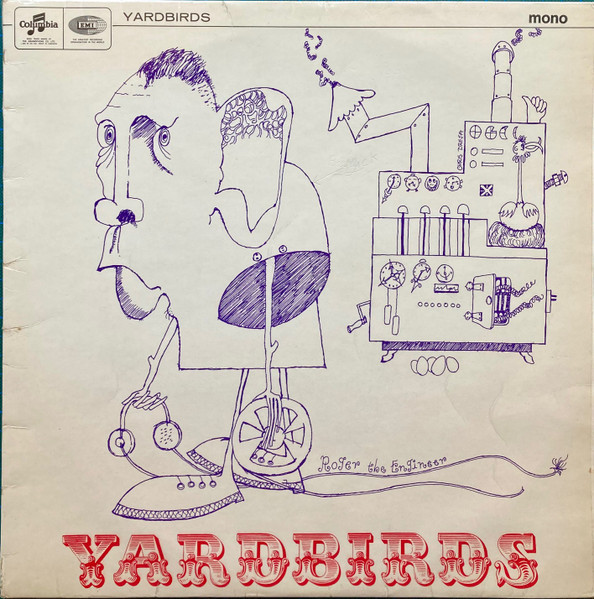
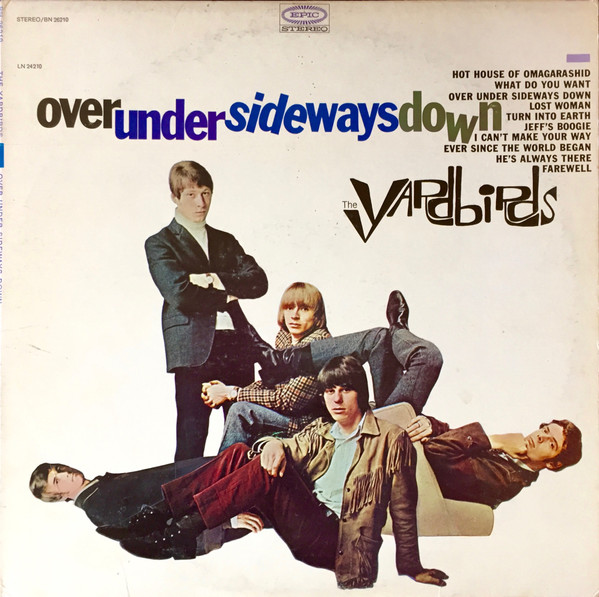
Over there the album’s title was simply Yardbirds, but because the cover had a drawing captioned Roger The Engineer, that became how it was known among those who bought it. In America, where it was the band’s third album, two songs were off, and the set was called Over Under Sideways Down in honor of the hit single it was pushing, with wacky cover art to match.

It’s a good start with “Lost Women”, which follows a fairly standard riff and takes a cool extended “I’m A Man”-style raveup detour that nicely pairs Keith Relf’s harmonica and Jeff Beck’s guitar. The title song is another classic, pinned by everyone shouting “HEY!” and a raga-styled hook from Beck. “I Can’t Make Your Way” is surprisingly toe-tapping pop, with the harmonica and guitar nicely balanced under the verse (Relf seemingly harmonizing with himself) and another well-constructed Beck solo. The nursery rhyme piano of the brief “Farewell” is odd enough, but then there’s the nutty chanting and wobble board in “Hot House Of Omagararshid”, and yes, the guitar solo should have come in much earlier.

That’s not the complaint with “Jeff’s Boogie”, another derivative piece that’s a showcase for his style. He’s got a good fuzz tone on the mildly menacing “He’s Always There”, one of the better paranoid lyrics of the period. “Turn Into Earth” has a similar Gregorian approach from “Still I’m Sad”, wordless vocals once again dominating over simple piano bass notes and distant guitar. But “What Do You Want” is a Bo Diddley-style rave-up that takes two chords to make its point. “Ever Since The World Began” is more doom-laden philosophizing about the evils of money in another exploration of near-Gregorian style, then switches to a boogie halfway through, and stops.

While it’s a strange little album, it hangs together very well. As time went on, and the band’s stature increased with their legend, fans would have sought out British pressings, if only for the two extra songs on side one that shifted “Hot House” up to the start of side two. “The Nazz Are Blue” featured Jeff Beck singing, kind of, and had already inspired the name of Todd Rundgren’s first band, while “Rack My Mind” was another average boogie.

For some reason, Epic reissued the album in 1983 on LP and cassette as The Yardbirds, using the original British cover and lineup, but with the added bonus of the single “Happenings Ten Years Time Ago” at the top of side one and its B-side, “Psycho Daisies”, ending side two. (These tracks are notable for being the only appearance of Jeff Beck and Jimmy Page together on Yardbirds recordings.) It didn’t make it to an American CD until 1997 when Warner Archives of all labels issued it as Roger The Engineer with the same 14 tracks, but sticking “Happenings” at the end after “Psycho Daisies”. Since then smaller labels have taken over, usually pairing the mono and stereo mixes and adding the single, and rotating bonus tracks like Keith Relf solo singles, “Stroll On” from the movie Blow-Up, the occasional alternate take, and their Great Shakes commercials. So it’s out there; Spotify alone currently has three different editions of the album available for streaming.

The Yardbirds Over Under Sideways Down (1966)—
1983 The Yardbirds reissue: same as 1966, plus 4 extra tracks

Sunday, April 14, 2013

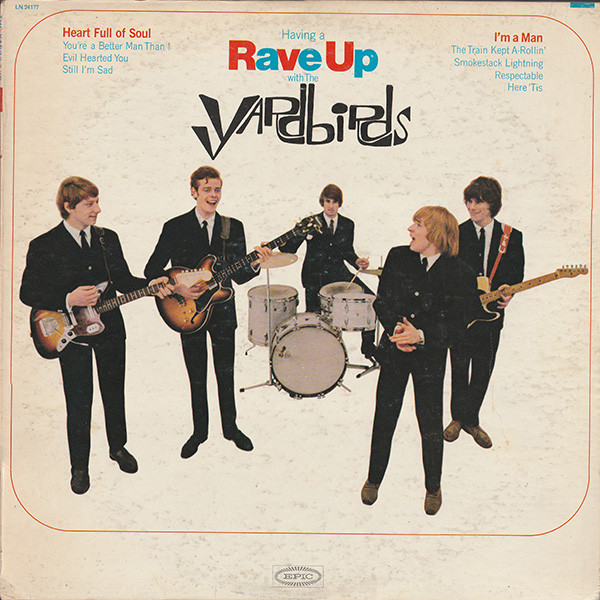
Yardbirds 2: Having A Rave-Up

After scoring a hit single on both sides of the pond, the Yardbirds’ manager made sure they kept the hits coming in between gigs. Single after single were released in the UK, while America demanded albums, and that’s how Having A Rave-Up With The Yardbirds! happened.

Side one of the album offers a smattering of those singles, although the first track made its debut here. The mildly socially conscious “You’re A Better Man Than I”, written by Manfred Mann’s drummer, sports good dynamics and a exploratory Jeff Beck solo over one chord. “Evil Hearted You” and “Heart Full Of Soul” were both written by Graham Gouldman, who was responsible for “For Your Love”; the former has a mild James Bond theme feel, while the latter sports a very Indian-flavored riff. Bo Diddley’s “I’m A Man” had already been covered by everybody in London, but it’s the Yardbirds’ version that stands above, with their patented rave-up approach (which would be copped by the Count Five for “Psychotic Reaction”). The rhythm section gets credit for writing “Still I’m Sad”, which betrays the brief flirtation many British groups of the time played with Gregorian chant. “Train Kept A-Rollin’” is a trash classic, from Beck’s locomotive imitation to Keith Relf’s inexplicably double-tracked, mismatched vocals. This recording is responsible for Led Zeppelin and Aerosmith, so take that as you will.

While the packaging said nothing about it, the entirety of side two was excerpted from the previous year’s Five Live Yardbirds, which was the band’s only British LP release so far, and which still featured Eric Clapton on lead guitar. This was the stuff Clapton thrived on: Howlin’ Wolf’s “Smokestack Lightning”, the Isley Brothers’ “Respectable”, Bo Diddley’s “Here ‘Tis”, and another blast through “I’m A Man”. And considering it was recorded at London’s legendary Marquee Club, the sound is very good.

Even though it wasn’t clear how or why the album was put together, Having A Rave-Up remains a solid listen. The singles are all solid, and somebody did us a favor by allowing the comparatively lengthy songs on side two, averaging five minutes each, to show the strength of the band, even if it did give short shrift to Clapton in the process. The album has had a confusing life in the digital era, but at the same time Five Live Yardbirds has remained available—starting with an official U.S. release on Rhino in 1988—which is a blessing.

The Yardbirds Having A Rave-Up With The Yardbirds! (1965)—

Sunday, September 2, 2012

Yardbirds 1: For Your Love

As with most of the British blues boom bands, balancing integrity with teenybopper appeal, the Yardbirds catalog is a mess. At one time or another one could find all their “classic” songs on one collection or another, but often they’re mixed with multiple takes of various blues covers. Their main consistency through all the changes was singer Keith Relf, he of the bleach-blonde bowl cut and surprisingly nasal voice. He’s the one singing on the hits, no matter which of the legendary guitarists—Eric Clapton, Jeff Beck, Jimmy Page, and of course, Top Topham—who passed through the organization is playing. Chances are, if it gets airplay today, Beck is playing lead. (The drummer is always Jim McCarty, but good luck picking him out.)

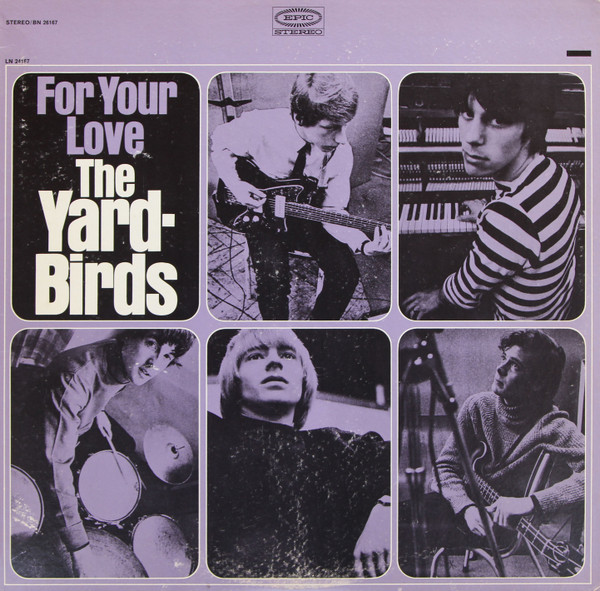
Their first American LP had no British equivalent, and by the time it came out, Clapton had already left, replaced by Jeff Beck. He appears on the cover of For Your Love, despite only playing on three of the songs, and depicted in front of a piano, which he did not play. The album was put together by their manager, Giorgio Gomelsky, to capitalize on the eponymous hit single that was Clapton’s last straw. Having already missed out on the money the Rolling Stones were making, Gomelsky was determined to make the most of the Yardbirds.

That single was dominated by a harpsichord and bongos also not played by any official band member, with guitar only appearing on the bluesy middle section. Since the band hadn’t started writing their own material yet, the rest of the album is dominated by blues and jazz covers, most already released on British singles. Some of these are definitive, like Mose Allison’s “I’m Not Talkin’” (which has a lot of Beck bending), Billy Boy Arnold’s “I Wish You Would” and “I Ain’t Got You”, and the venerable “Good Morning Little Schoolgirl”. Even “A Certain Girl” has charm in its call-and-response vocals.

They aren’t all winners. “Putty (In Your Hands)” was first recorded by the Shirelles, and probably appealed because of its “Money”-style riff. Clapton dominates the Chess-influenced “Got To Hurry” instrumental, which putters to a halt. “I Ain’t Done Wrong” is another studio jam on old tropes mostly notable for Beck’s wah pedal and heavy chording. “Sweet Music” stands out, partially because it’s a botched attempt to croon, and mostly because the overall sound is different, having been produced by contemporary scene fixture Manfred Mann. And “My Girl Sloopy” has been done better by lots of other people.

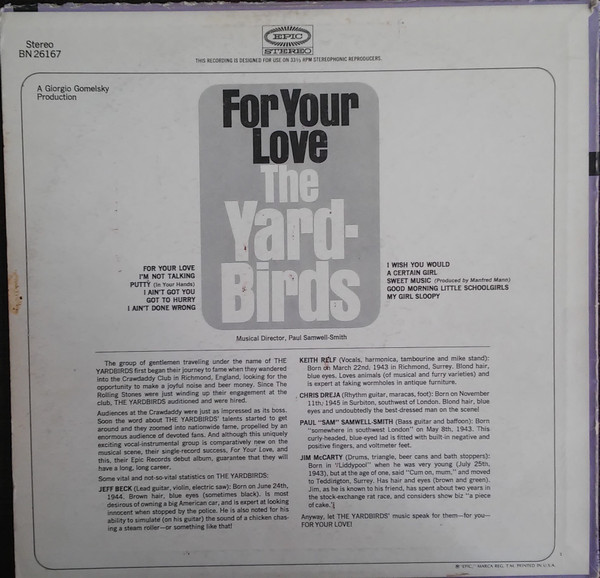
Still, as albums go, For Your Love delivers a lot of what made the Yardbirds popular over here, with enough of the blues sound to keep purists happy. It’s been out of print in the States for a long time, but overseas labels have reissued it multiple times, with and without bonus tracks. Something else to remember—most of the band’s early stuff was recorded quickly and cheaply, and therefore sounds awful today. The goofy liner notes must also be read to be appreciated.

The Yardbirds For Your Love (1965)—3

Thursday, August 21, 2008

Yardbirds 6: Live Yardbirds

Once Led Zeppelin had become a worldwide sensation, Epic Records realized they had a live recording of the Yardbirds’ final incarnation as a quartet from 1968 sitting in their vaults. After beefing up the mix with unconvincing audience atmosphere (according to legend, from a sound effects LP featuring ambience from a bullfight), the concert was released as Live Yardbirds! Featuring Jimmy Page, to the guitarist’s immediate displeasure—partially because the fourth Zep LP was due out shortly. This and any subsequent reissues were quickly recalled, making actual copies rare, but commonly pirated and bootlegged. Its mass unavailability was a shame, because what one could hear of the show was quite entertaining, the band mixing some of their hits with a couple of tunes from the recent flop Little Games.

Beginning with a welcome from Keith Relf and a riff soon famous from “Dazed And Confused”, they plow through “Train Kept A-Rollin’”, then manage to make a medley out of “You’re A Better Man Than I” and “Heart Full Of Soul”. What comes next is likely what most worried Page: the Yardbirds version of a song they then called “I’m Confused” to differentiate it from the song it was stolen from, but still maintaining many of the elements of the track that would close side one of the first Zeppelin album. “My Baby” was a mild hit a couple of years earlier for soul shouter Garnet Mimms, and would be later recorded by Janis Joplin; here it’s an exercise in staying in sync with the time changes.

Relf asks the crowd to help out with the “heys” on “Over Under Sideways Down”; whether they comply is hard to tell under all the fake applause. “Drinking Muddy Water” is prefaced by an explanation of the detuned guitar, and a similar boast sets up “Shapes Of Things”, wherein Page replicates Jeff Beck’s original solo while sneaking in his own flourishes. He plays “White Summer” mostly by himself, the rhythm section joining in ably here and there. Finally, “I’m A Man” is dragged out to twelve minutes, incorporating the riff from “Over Under Sideways Down” and a violin bow solo, and Relf muttering some mystical lyrics (“Deep within the turning sands of inspiration…”?) before the drone goes back to the main riff via a detour that today sounds like parts of “How Many More Times”.

Besides being historic, captured a mere five months before Led Zeppelin as we know it was formed, Live Yardbirds! was still a fine showcase for the man Relf dubbed “Jimmy Magic Fingers, the Grand Sorcerer of the Magic Guitar.” The band was pretty good, too, when you could hear them.

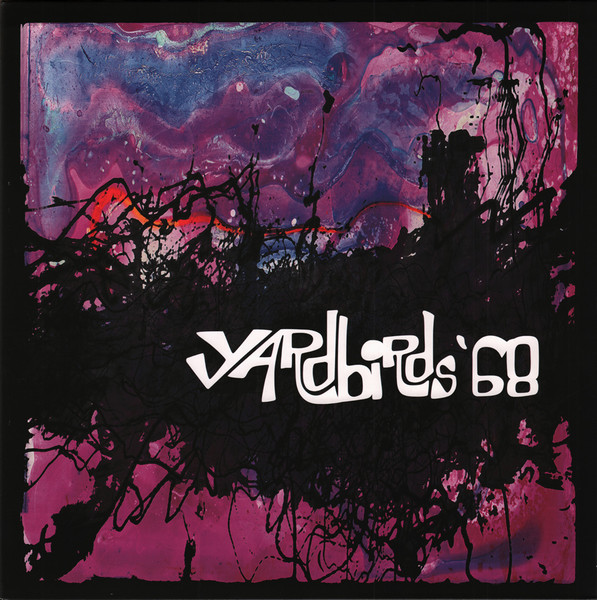
And only a half-century later, one could. Soon after Jimmy managed to expand the Zeppelin catalog in record time, he and the surviving Yardbirds approved an officially restored version of the album without the extra sound effects, but also with some of Relf’s stage patter removed. Packaged as a double album, even though it could have fit on a single CD, and extravagantly priced accordingly, Yardbirds ‘68 also included about 20 minutes of previously booted “studio sketches”, including an early version of what would one day be better known as “Tangerine”.

The Yardbirds Live Yardbirds! Featuring Jimmy Page (1971)—3
2017 Yardbirds ‘68: “same” as 1971, plus 8 extra tracks

Thursday, July 31, 2008

Yardbirds 5: Little Games

Unless they were enmeshed in the business themselves, chances are if any Americans heard of Jimmy Page before Led Zeppelin was when he was playing with the Yardbirds—first as a bass player after Paul Samwell-Smith quit to focus on producing, then in a twin-guitar attack with Jeff Beck. After Beck finally had enough, the band was down to a quarter, with Jimmy as sole guitarist.

Given his experience playing countless sessions for potential pop hits, he was probably the best person yet able to handle the more commercial material foisted upon the band by producer Mickie Most, while still flirting with experimentalism. As it is, Little Games presents what Jimmy was doing immediately before Led Zeppelin, and demonstrates what led to it. Even being near the end of the band, it’s a good place to dive in.

The title track bears an simple, repetitive bar chord attack, with some signature Page leads and a cello arrangement for that chamber pop feel, provided by one John Paul Jones. “Smile On Me” is a fairly simple blues, played in two tempos depending on the section; think “The Lemon Song” without the power. Then there’s Page’s solo acoustic showpiece, “White Summer”, accompanied by tabla and oboe, which led to countless Zeppelin ideas. “Tinker Tailor Soldier Sailor” sports a couple of chords in the intro that will be heard again on “The Song Remains The Same”, along with the first instance of Page’s violin bow technique. The potential of that approach to create spooky sounds is taken further on the psychedelic “Glimpses”, complete with tape loops, sound effects, distorted voices and Keith Relf’s Gregorian-style chant on top (a genre he’d been courting for years).

The blues return on “Drinking Muddy Water”, a blatant rewrite of “Rollin’ And Tumblin’”, with Ian Stewart on piano, while “No Excess Baggage”, while strong, is another misplaced pop song. The band’s view of the material thrust upon them is best demonstrated on the nutty rearrangement of “Stealing, Stealing”, the old jug band chestnut; here, the part of the washboard is tackled by somebody blowing raspberries. “Only The Black Rose” is very English folk, which is where Relf would go next, albeit with only two chords. “Little Soldier Boy” is another in a line of protest songs disguised as a nursery rhyme; rather than hire a trumpet player, that part is played by a vocal imitation.

The album’s lack of sales ultimately played a part in the band dissolving, leaving Page to take charge of his future, and boy, did he. Beginning in the early ‘90s, Little Games has had a few reissues, starting with 1992’s Little Games Sessions & More. This double CD presented the original album in excellent sound, with session chat and alternate mixes, and also attempted to complete the picture with further Page-related recordings of the period. These include the excellent B-sides “Puzzles” and “Think About It”, and less impressive A-sides, such as “Ten Little Indians”, “Ha Ha Said The Clown” and “Goodnight Sweet Josephine”. A few tracks by Together, Relf and McCarty’s next project, take some of the spotlight off of Page. (Later reissues kept it down to one disc, tacking on some of the singles and sometimes BBC sessions, including unique takes on Dylan’s “Most Likely You Go Your Way (And I’ll Go Mine)” and even an early incarnation of “Dazed And Confused”.)

The Yardbirds Little Games (1967)—3
1992 Little Games Sessions & More: same as 1967, plus 22 extra tracks