Showing posts with label 2014. Show all posts

Friday, November 10, 2023

Genesis 23: R-Kive

With Phil Collins supposedly retired and Peter Gabriel happily touring on his own any further Genesis reunions seemed unlikely. But all the principals had been involved with a BBC documentary on their history, so somebody decided an overview of the band was due. The difference this time, however, was that R-Kive democratically included three extracurricular and/or solo tracks each, and not always obvious ones, by each of the five best-known members. (Sorry, Anthony Phillips.)

The first disc focuses on the complicated early material from the Gabriel period, focusing on such epics as “The Knife”, “The Musical Box”, “The Cinema Show”, and “Supper’s Ready”. Then the songs get shorter, but still challenge. The disc is capped by “Ace Of Wands”, a frenetic prog-fusion instrumental from Steve Hackett’s first solo album that features Phil and Mike Rutherford.

Disc two charts the evolution of the band with Phil as lead singer, starting with the gorgeous “Ripples” and “Afterglow”, detouring to “Solsbury Hill”, “Biko”, and a track each from Tony Banks (the poppy “For A While”, on which he plays a competent guitar solo) and Hackett (the tuneful “Every Day”, from his third solo album). It stays somewhat heavy through “Turn It On Again”, “Abacab”, and “Mama” with “In The Air Tonight” in between, then it’s all pop with “That’s All”, “Easy Lover”, and “Silent Running” from Mike + The Mechanics.

The ubiquity of the pop charts continues on disc three with three songs from Invisible Touch, plus “The Living Years”, a.k.a. the other hit by Mike + The Mechanics. “Red Day On Blue Street” comes from a Tony Banks album nobody bought wherein he worked with such vocalists as Marillion’s Fish and, in this case, Nik Kershaw. Three songs from We Can’t Dance are followed by “Over My Shoulder”—another Mike + The Mechanics track that spotlights Paul Carrack—and the title track from Calling All Stations. Nothing appears from So, despite having been endlessly promoted over the previous two years on Gabriel’s tours in support of its anniversary reissue; instead we get “Signal To Noise”. Similarly, of all the Phil songs to choose, somebody picked “Wake Up Call”. Just to give everyone their due, “Nomads” is a flamenco new age hybrid sung by Hackett with Chris Squire on bass, while “Sirens” comes from Banks’ second classical album.

While R-Kive was a nice idea, it was a missed opportunity. Chances are trying to coordinate all the solo Collins and Gabriel hits would have taken a lot of paperwork, but it still seems they felt it necessary to have that equal time for everybody. That third disc is just weird, but that’s roughly where the quality didn’t really keep up with the chronology. By now, anyone with a CD burner or premium Spotify account could make their own compilations, or dig out their old mix tapes. Still, most of the music makes it worth the listen.

Genesis R-Kive (2014)—3

Tuesday, October 10, 2023

Neil Finn 6: Dizzy Heights

By now it should be clear that just because Neil Finn’s name is on something doesn’t necessarily indicate that it will sound like anything else he’s done. While Crowded House, Split Enz, and even the Finn Brothers have their niches, a solo album will be surprising and unexpected.

That’s certainly the case with Dizzy Heights, which was co-produced with Dave Fridmann, and individual best known for his work with Mercury Rev, the Flaming Lips, Mogwai, and other sonically experimental entities. As set forth immediately in “Impressions”, much of this album is funky psychedelic, with lots of wah-wahs and sweeping strings, to the point where if Neil’s not singing, you’d forget it’s his album. The title track is a little more straightforward, as is “Flying In The Face Of Love”, but both are danceable. Following a nutty windup intro, “Divebomber” builds to sport a dramatic, almost harrowing orchestral arrangement that seems influenced by “Song Of The Lonely Mountain”, which he wrote and sang for Peter Jackson’s first Hobbit movie a couple years before. “Better Than TV” doesn’t have as much tension, but still swirls into a frenzy, and “Pony Ride” provides another more accessible experience.

He gets political on “White Lies And Alibis”, a diatribe about injustice straight outta Peter Gabriel and U2 that is suitably somber sounding. The bloopy intro of “Recluse” is off-putting, but it turns into the album’s best song, with a killer chorus. “Strangest Friends” is comparatively brief compared to the rest of the album, and seems to ponder the performer-audience relationship. “In My Blood” prominently uses that phrase in the chorus, but it sounds like it’s been flown in from a completely different song. The highly impressionistic “Lights Of New York” is treated in such a way that puts the listener in the scene, bringing the album to a close.

It's clear Neil made Dizzy Heights for himself, and with no expectations of world domination. Once again, it’s a family affair, with wife Sharon on bass and backing vocals, and sons Liam and Elroy providing guitar and drums respectively. There’s a lot here, and it’s worth it.

Neil Finn Dizzy Heights (2014)—3

Tuesday, March 1, 2022

Brian Eno 22: Someday World and High Life

We’ve never heard anything by the electronic band Underworld, except that they had a hit in the early ‘80s called “Doot-Doot” when they were known as Freur. One of the principals is a fellow named Karl Hyde, who hooked up with Brian Eno in 2014 for what turned into two albums.

Someday World also features a lot of input from the musician not yet known as Fred Again; at this point he was basically interning for Eno, and contributed much in the way of composing and production assistance. Hyde has a pleasing voice, not as deep as Eno’s, who often uses that phased effect, but sometimes the blend blurs the singer’s identity.

This is an album of songs, not mere textures. Much of the album bubbles with the spirit of catchy synth-pop just like what Eno inspired. “The Satellites” is pinned by a cyclical fake trumpet section, which return for another hook on “Daddy’s Car”, featuring Hyde on vocals. He’s also center-stage for most of the more dated-sounding “A Man Wakes Up”. “Witness” has a promising basic track with echoes of green worlds before and after science, but the vocals spend too much time around a single note, and the spoken contributions of Eno’s younger daughter should have been saved for the extended remix. The tension in “Strip It Down” bursts through with each chorus pleasingly.

The more subdued “Mother Of A Dog” recalls Eno’s 1990 collaboration with John Cale, and so does “Who Rings The Bell” at times, but that one’s sung by Hyde, and has much more of a melody. “When I Built This World” borrows the melody from the first line of “When I Fall In Love”, but soon deteriorates into something more robotic. “To Us All” is too loud for a lullaby, but it is lilting.

Despite all the electronics, Someday World doesn’t sound at all cold; if anything, it’s cheerful. In the interest of keeping things fresh, the dynamic duo went on to record and release High Life later in the same year. This time brevity was out the window, as ideas were chased across lengthy tracks, beginning with the hypnotic “Return” followed by the much more frenetic “DBF”. “Time To Waste It” is almost funky, the groove decorated by treated and sampled vocals. “Lilac” brings to mind later Talking Heads filtered through Bo Diddley before it gets taken over by the momentum. “Moulded Life” seems to throw multiple samples into the mix at once before the track emerges as a kind of Mission: Impossible theme, while “Cells & Bells” combines ambience with distortion to predict Eno’s next step. (As was becoming a trend, the digital version included a bonus track in “Slow Down, Sit Down And Breathe”, which is far from relaxing, while the vinyl included that plus another, “On A Grey Day”, which would be welcome anywhere.)

Eno•Hyde Someday World (2014)—3
Eno•Hyde
High Life (2014)—

Friday, January 22, 2021

Chrissie Hynde 2: Stockholm

One has to hand it to a veteran like Chrissie Hynde, determined to make music no matter who was listening, with whoever she happened to find compatibility. Named for the city where it was recorded, Stockholm was her first full-length album released under her own name, rather than a conglomeration dubbed the Pretenders.

And that’s a good thing, since outside of her iconic voice, this is the least Pretenders-sounding album since Get Close. Like that album, the focus this time is on pop, but in more of the ‘60s retro-soul slash Bacharach mode as revived lately by the likes of Mark Ronson. Most of that can be laid on producer Bjorn Yttling, supposedly a wunderkind of Swedish pop. The sound isn’t so much striking as it is repetitive. Every now and then there’s a departure, such as Neil Young’s trademark contribution to “Down The Wrong Way”; John McEnroe apparently offers the same for “A Plan Too Far”. “Tourniquet (Cynthia Ann)” takes an almost goth turn, while “You’re The One” has a hook that recalls Britney Spears’ “Toxic”.

So Stockholm is acceptable, but we suspect we’d prefer the straight rock approach to these lyrics. Seeing as they’re split between pining for someone or damning their insensitivity, we wonder whether anyone in particular inspired them. Her previous collaborator perhaps?

Chrissie Hynde Stockholm (2014)—3

Tuesday, October 13, 2020

Cat Stevens 15: Tell ‘Em I’m Gone

While the songs weren’t exactly pouring out of him, Yusuf had fully returned to the concept of performing what used to be called pop music again. When it did arrive, Tell ‘Em I’m Gone prominently included his previous stage name as part of the packaging. (The album was also released on his own Cat-O-Log imprint. For those interested in such things, the vinyl version sported artwork by famed bootleg illustrator William Stout.)

The album’s liner notes helpfully explain his early fascination with the blues, and how he developed his own folk-style approach to it once he realized he didn’t have the voice as displayed by his contemporaries (think Eric Burdon, Rod Stewart, etc.) Decades later he’s still steeped in the architecture of the blues, putting his own arrangements to the likes of “Big Boss Man” and “You Are My Sunshine”. Just to keep you on your toes, he also covers Edgar Winter (“Dying To Live”) and Procol Harum (the atypically rocking “The Devil Came From Kansas”).

When he’s not tapping on his own history—“I Was Raised In Babylon” discusses the pros and cons of world religions, while the loping “Editing Floor Blues” explicitly addresses the Salman Rushdie kerfuffle—his own tunes continue to spread good news, such as the pretty fable “Cat & The Dog Trap” and the obvious but still heartfelt “Doors”. While “Gold Digger” may seem overly materialistic, it apparently concerns a South African miners’ strike, which ties in with the anti-slavery theme of his title track (aka “Take This Hammer”).

Because he can, lots of big names come to help out, including Richard Thompson, Charlie Musselwhite, Lenny Castro, and Will Oldham. The sound on Tell ‘Em I’m Gone is simple and crisp, as befits a co-production with Rick Rubin. What’s more, the album was mixed by onetime producer Paul Samwell-Smith, providing another link to the past.

Yusuf Tell ‘Em I’m Gone (2014)—3

Tuesday, October 31, 2017

Bruce Springsteen 23: High Hopes

Having decided he could create albums anywhere and anytime, Bruce went the Tattoo You route by raiding his outtakes vault. However, while the Stones managed to create a great album from their leftovers, Bruce only ended up with a plateful of table scraps on High Hopes, a desperate title to be sure.

Some songs had appeared in earlier incarnations. The title track had been part of the E Street Band reunion sessions two decades earlier; it’s a cover, so he can’t be blamed for the lazy chorus, but he should have known better about the horns. “American Skin (41 Shots)” was introduced on the reunion tour and released on the 2001 live album, and is just as long here, but still good. Tom Morello played guitar on half the album, and sings some of the verses on the too-long, too-loud rock remake of “The Ghost Of Tom Joad”. (He also allegedly suggested all the covers that were included. “Just Like Fire Would” was originally recorded by a punk band, but here it’s all Bruce. Similarly, “Dream Baby Dream” was originally by synth-punk duo Suicide, and becomes an aching prayer.)

“Harry’s Place” was likely left off The Rising in favor of “Mary’s Place”, which is no better. “Down In The Hole” begins low-key like a Devils & Dust track, but picks up with crazy samples and sound effects, just as “Heaven’s Wall” opens with a gospel chant and beats a “raise your hand” motif into submission. “Frankie Fell In Love” is a nice throwback to his character songs from the ‘70s, and “The Wall” a nice memorial to Vietnam veterans. But “This Is Your Sword” is an unconvincing call to arms, and “Hunter Of Invisible Game”, while lilting, lopes aimlessly.

While some of the songs are certainly worth saving from obscurity, the album as a whole fails. Perhaps as proof that he’s no longer his best editor, an EP called American Beauty appeared for Record Store Day and online streaming, containing four songs easily as good if not better than anything on High Hopes. The title track and “Hurry Up Sundown” are rousing arena rockers, “Mary Mary” a sweet strum, and “Hey Blue Eyes” a deceptively pretty tune about wartime atrocity.

Bruce Springsteen High Hopes (2014)—2
Bruce Springsteen
American Beauty (2014)—3

Friday, February 3, 2017

Suzanne Vega 9: Close-Up

It’s common for musicians to release re-recorded versions of songs. It happened all the time in the standards era, so connoisseurs could compare how Frank Sinatra delivered a tune in his twenties to his approach decades later. Many live albums offer straight reproductions of hit singles and album tracks to adoring audiences. However, in an age when music can be shared and distributed faster, wider, and easier than ever, anytime an artist redoes his or her own music the cynical eyebrow is raised.

Suzanne Vega was very straightforward when she began her Close-Up series, which presented new recordings of her songs, chosen from her entire catalog, released in four thematic volumes. Her reasons were that some of her albums were out of print, and mass consolidation across the music industry didn’t guarantee future royalties from them. Therefore, new, mostly stripped-down renditions of songs she still liked playing would bring another opportunity to gets paid, yo.

We adore her voice, and wish we could hear her sing from the kitchen when it’s her turn to do the dishes, so we admit to a bias. Unlike other singers, her range is the same as it always was, though some of those high notes have been lost to a quarter-century. While some songs sound the same as ever, whether acoustic (“Small Blue Thing”, “Gypsy”) or electrically embellished (“Marlene On The Wall”), it’s more interesting to hear the ones rescued from busy production (“When Heroes Go Down”, everything from Nine Objects Of Desire). But she also keeps “(If You Were) In My Movie” and “Fat Man And Dancing Girl” close to their original clattering arrangements, and not exactly “stripped down”.

Each of the volumes has something to offer, and even had different bonus tracks, depending on where you bought them. Love Songs is the most successful; because it’s the first one, the novelty is new, but it also offers some of her prettiest tunes. People & Places, with its observations and speculations, is a little more embellished, and also has her two most famous songs in “Luka” and “Tom’s Diner”, the latter delivered closer to the style of the bootleg remix. The big draw is a version of “The Man Who Played God”, originally part of a collaboration with Danger Mouse and the late Mark Linkous of Sparklehorse. States Of Being covers “emotional turmoil”, and deviates least from the originals, with such embellishments as a string quartet and a new song in the way of the then-unreleased “Instant Of The Hour After”. Songs Of Family would appear to be her most personal songs, being inspired by her daughter, her divorce, her childhood, and her lineage. Mostly back to the original sparse brief, it includes three more produced “new” tracks, two of which were among the first songs she ever wrote.

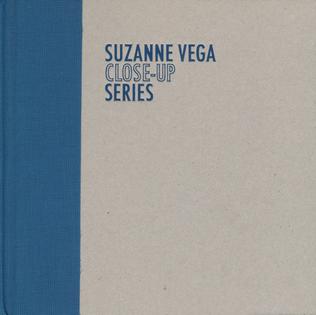
That’s four albums that revisit most of her previous seven albums, with Days Of Open Hand being the least represented. The way to get it all would be Close-Up Series, a book-style package that includes each volume, plus another disc containing another album’s worth of the bonus tracks offered up on various digital platforms (including a version of “Luka” sung in Spanish), lyrics for every song, and a live DVD. Being a box set it’s on the pricey side, but that’s to be expected.

Suzanne Vega Close-Up Vol. 1, Love Songs (2010)—
Suzanne Vega
Close-Up Vol. 2, People & Places (2010)—
Suzanne Vega
Close-Up Vol. 3, States Of Being (2011)—3
Suzanne Vega
Close-Up Vol. 4, Songs Of Family (2012)—
Suzanne Vega
Close-Up Series (2014)—

Tuesday, January 26, 2016

Robyn Hitchcock 30: The Man Upstairs

Here’s something different from Robyn Hitchcock: an album that’s half covers, familiar and not so, and half originals. The big eyebrow-raiser is that it was produced by Joe Boyd, who these days tends to avoid anything that’s not considered “world music”. Nor does it mine the catalog of artists most associated with Boyd; the choice of songs is all the artist’s.

Most versions of the Psychedelic Furs’ “The Ghost In You” have been reverent, and while this isn’t Robyn’s first recording of it, the muffled bass, strings piano and high harmonies give it a quiet elegance. Similarly, he’s long admired Roxy Music’s Avalon album, and “To Turn You On” sticks to their arrangement, even the key change in the middle. The Doors’ “Crystal Ship” isn’t a big stretch for him either, with a pianist filling in some of the holes; enjoyment of any of these will be enhanced by familiarity. Occasional touring buddy Grant Lee Phillips gets a nod with “Don’t Look Down”, while “Ferries” is a cover of a song by a Norwegian band called I Was A King, with the song’s own writer providing harmonies (as she does throughout the album).

His own songs are a mixed bag. “San Francisco Patrol” is one of the loveliest and therefore unlikely songs to be inspired by a Dirty Harry movie. “Comme Toujours” seesaws between French and English and is a nicer version of a song he’s recorded already. “Trouble In Your Blood” is also quite slow and pretty, but not dull. “Recalling The Truth” isn’t as pretty, but brings everything to an unresolved end. Unfortunately, “Somebody To Break Your Heart” completely breaks from the mood, and is the album’s sore thumb.

Faithful readers have marveled at how we can stay interested in an artist whose most provocative work was decades ago. Part of it comes from an unspoken agreement with a man we’ve never met; as long as he keeps making albums that aren’t horrible, we’ll listen. And maybe, just maybe, one day something will come out of him that absolutely stuns.

Robyn Hitchcock The Man Upstairs (2014)—3

Friday, June 19, 2015

Jon Kanis 1: All-American Mongrel Boy

A musician, journalist, video archivist, visual artist, DJ, tour manager and probably a bunch of other things, Jon Kanis has been toiling in the entertainment industry for over 25 years. His experiences and observations have been collected in an anthology, Encyclopedia Walking: Pop Culture & The Alchemy Of Rock ‘N Roll.* The virtual soundtrack to that tome could well be All-American Mongrel Boy, which collects a dizzying array of recordings from various self-made demos, EPs, CDs and collaborations over a 25-year period. The songs on this CD represent only a fraction of those listed in the sprawling discographical appendix of the book.

The music runs the gamut from college rock through adult alternative to whatever label can be applied to that created by those born on the cusp of Baby Boomers and Gen X, touching on folk, country and even avant-prog along the way. His voice combines Roger McGuinn twang with Peter Case smoke, a drawl as comfortable as a baggy wool sweater. With contributions from people better known as right-hand men for Frank Zappa and Brian Wilson, when it comes to six degrees, Kevin Bacon’s got nothing on this guy.

Kanis wrote all the songs himself, naturally, including such clever turns of phrase as “Where Is Joe Strummer When You Need Him?” and “It Is & It Isn’t”. The spirit of creation shines in a couple of collaborations from Steel Bridge Songfest, an annual collective songwriting festival. Others have pointed out how well “Dweller On The Threshold” evokes early Elton John, and we’ll add that it does so without a prominent piano. The lyrics are smart without being patronizing, and the instrumentals “A.C. In Michigan” and “The Return Of The Edmund Fitzgerald” aren’t just background music.

All-American Mongrel Boy is a testament to the so-called struggling musician working under the radar of fame and fortune, and an inspiration to anyone with talent to burn and songs nobody’s heard—yet. Chances are he’s written another pile of songs since publishing his book, so this could conceivably be Volume One of his archives.

Jon Kanis All-American Mongrel Boy (1989-2014) (2014)—

Friday, April 3, 2015

Coldplay 6: Ghost Stories

Lots of great albums have been recorded in the wake of a writer’s divorce, but this is the first time an album has appeared following a conscious uncoupling. Whether or not they meant it that way, every song on Ghost Stories reads like a guy who’s been dumped. Even if you don’t give a fig about Chris Martin or Gwyneth Paltrow, after a few listens, you begin to understand why she left. A dreamy sound permeates, with a reliance on programmed as opposed to acoustic drums. If we’re going to keep the U2 comparison going, think Zooropa crossed with the Passengers side project, but without the energy; outside of U2, we hear echoes of Tears For Fears and even the voice of Shawn Smith of Brad and Satchel.

Beginning with voices from an astral choir, “Always In My Head” is a melancholy midtempo number, and we only mention that now because most of the tracks will follow that template. It ends abruptly, and switches to the bong-rattling bass in “Magic”, which finally introduces some guitar but mostly sounds like “Numb”. “Ink” pushes the tattoo metaphor way too far in another robotic-sounding track. Despite having an actual melody and chord changes, “True Love” moves along like any other lovelorn ballad with a lyrical steal from “Hallelujah”, until the intentionally dissonant guitar solo throws it off. “Midnight” puts the vocal through a vocoder, sounding more like an Eno effect than a song.

“Another’s Arms” revives the guitar as riff, with a sample of an operatic voice (another idea stolen from U2). On “Oceans” a constant beep likely is used for a sonar effect, but instead suggests a phone not being picked up. Maybe that was the point? With an acoustic guitar it does appear a throwback to the first album, but buries the idea with a lengthy atmospheric collage including canned church bells over the end. That sets up “A Sky Full Of Stars”, which sounds like every cliché dance-floor anthem of the last 20 years. (Thankfully, Rihanna’s not on this album.) Halfway through the beats and effects drop out to heighten the acoustic, and then it flanges back to remix territory. Those not longing for a night at the Roxbury will at least welcome such an upbeat detour. “O” would stand out as a highlight if it weren’t the same tempo and feel of everything else here. It’s admittedly satisfying in its gradual build from a simple piano tinkle (apparently an unlisted title called “Fly On”) to a bigger sound, and easing up just before it threatens to explode. And as has become custom with these guys, there’s a pause and a reprise of the sound heard at the top of Track 1.

Rather than pushing the limits of compact disc technology, Ghost Stories goes by fairly quickly, though Target did get dibs on the “bonus tracks”, two of which are actually uptempo, along with a “Reprise” of “O”. With Chris Martin as their frontman, the other guys are not only anonymous but generic, adding very little to what he’s spewing. Surely one of them would have pointed out that it all sounds alike. Given the rapturous response heard on Ghost Stories Live 2014 released at year’s end, their fans don’t care. They got to hear the album played exactly as released, with no spontaneity or surprises.

Coldplay Ghost Stories (2014)—2

Tuesday, December 30, 2014

Bob Dylan 58: 50th Anniversary Collection 1964

Another Christmas present arrived from Bob Dylan in the form of the third limited-release collection of copyright busters. This time, nine LPs cover the extraneous material, filling in the holes around the one album he recorded in 1964, and the performances already available on various Bootleg Series. This stuff has long been documented, and one wonders if the producers merely follow the lead of certain websites.

A single visit to the studio in June was the source for Another Side Of Bob Dylan, and two sides’ worth of outtakes from it form the centerpiece of this set. Two incomplete, forced takes of “Black Crow Blues”, both on the guitar, demonstrate why the one on the album has piano. A 44-second excerpt of “Mr. Tambourine Man” seems to be included just because it can be, but four separate takes of “I Shall Be Free No. 10”, some with different words, show both how and why it was edited on the LP.

A tape recorded with Eric Von Schmidt (the blues guitar player he’d met in the green pastures of Harvard University) spans three sides and follows the pair running through blues riffs, R&B covers, silly impromptu songs and what appears to be the first recorded performance of “Tambourine Man”. If you’d rather hear him spar vocally with Joan Baez, four tinny “duets” are placed where they belong.

The rest of the material chronicles various live performances, beginning with a short set from Canadian television that closes with a nice version of “Restless Farewell”. Two of the records cover a London performance two years to the day before the notorious “Albert Hall” concert, recorded in excellent quality. “Walls Of Red Wing” and “Eternal Circle” are the rarities here, along with another “Restless Farewell”. The concerts on either side of the Halloween Philharmonic Hall show are, unfortunately, barely listenable; the intercom-quality sound in Philadelphia obscures the crowd’s laughter at “I Don’t Believe You” and their wonder at “It’s Alright Ma”, and renders the variations in “Talkin’ World War III Blues” inaudible. The California shows are a bit clearer but marred by the taper’s conversations. These would never have passed for official releases, so having them here to “protect” their copyright is laughable.

Somewhere out there somebody spent lots of money on one of the thousand copies of this set, and generously shared it over the Internet. Some people will buy anything.

Bob Dylan 50th Anniversary Collection 1964 (2014)—
CD availability: none; LP only

Friday, December 26, 2014

Bob Dylan 57: Basement Tapes Complete

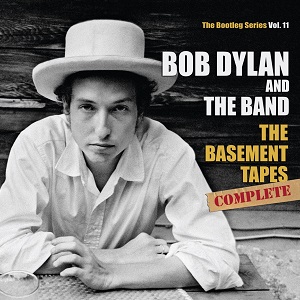
Only a year after one of its finest installments, Bob Dylan’s occasional Bootleg Series maintained its quality by revisiting one of the most beloved and mysterious eras of his career. Volume 11 served up two discs of unadorned recordings, alternates and true rarities from the series of sessions known as the Basement Tapes, in excellent sound, with no after-the-fact overdubbing and no Band-only tracks. And to beat that, a deluxe edition offered everything captured in those sessions with Bob present, 139 tracks in mostly chronological order. (The timing was particularly apt, as the project was revealed and released right around the time of another album involving long-lost lyrics.)

For those seeking only a taster, The Basement Tapes Raw is two hours of arguable highlights, focusing on completed songs and less on the “jam” aspect of the sessions. Here, finally, in one tidy package are some truly legendary tracks in pristine sound. Neither “Silent Weekend” nor “Get Your Rocks Off” seems finished, but Dylan’s laughter on the latter makes it worth the listen. The first take of “You Ain’t Goin’ Nowhere” sports a truly surreal batch of alternate lyrics, while take two of “Too Much Of Nothing” is more straightforward than the chromatic experiment that made the 1975 album. The amateurish trombone all over “Don’t Ya Tell Henry” makes it clear why it was left alone till now. “Sign On The Cross” manages to stay mesmerizing over seven slow minutes, and “All You Have To Do Is Dream” has the potential of a wonderful pop song, whatever “floor birds” are. And while “I’m Not There” made its legal debut in 2007, it’s great to have this fascinating tune back alongside its brothers (including the close cousin “I’m Alright”).

The armchair Dylanologist has to have everything, and The Basement Tapes Complete does offer hours of listening pleasure, though not everything deserves more than one play. A 12-string acoustic guitar is hard to get into tune in the first place, much less when it’s being strummed by someone for whom pitch is already elusive. The compilers did do us a favor by putting the “least listenable” of the tracks on the sixth disc; besides not being recorded as well, with a particularly distorted electric piano guiding the way, there’s little hidden treasure here. Also, these were a bunch of guys in their 20s, basically playing hooky, so some of the goofiness doesn’t translate. But when they do catch fire, its wonders to behold.

There’s already been a lucrative cottage industry based around picking these sessions apart, and many of the mysteries will never be solved—mostly because nobody was anal enough to note dates, times, locations, who was playing what, etc. Some insist that “Garth’s order” isn’t to be trusted, but there is some structure to it, as successive performances are heard to go increasingly off rails. We can also hear where the focus switched from playing whatever struck to trying to arrange brand new songs. Having multiple takes of several songs will inspire further argument as to which is “best”. (And to think “Tiny Montgomery”, of all things, was the earliest track considered worth selling, appearing a whole disc away from the next one, “Million Dollar Bash”. From there, he doesn’t let up until disc five.)

The mystique of the sessions remains, mostly because it’s still not clear why all this was preserved on tape in the first place. Remakes of “One Too Many Mornings”, “It Ain’t Me Babe” and “Blowin’ In the Wind” suggest possible preparations for a stage performance. His Nashville Skyline voice surfaces a few times. The preponderance of country & western covers puts Self Portrait in yet another light, and makes Robbie Robertson look especially petty for claiming that it was The Band who “taught” Dylan all this music, instead of the other way around. How come he never went back to “One Man’s Loss”, “Lock Your Door” or “Wild Wolf”? Was it all recorded before John Wesley Harding? And what the hell was his fascination with “Spanish Is The Loving Tongue”, anyway?

We can be thankful that this weary world can finally hold not only a completed Beach Boys Smile CD, but a Basement Tapes collection that surpasses even the most revered bootlegs. Now fans had a very wide bridge from Blonde On Blonde to John Wesley Harding, and it only took 47 years.

Bob Dylan & The Band The Basement Tapes Complete: The Bootleg Series Vol. 11 (2014)—4

Friday, December 5, 2014

The New Basement Tapes: Lost On The River

Given the development of this unique little album, it’s bound to confuse people who aren’t obsessed with Bob Dylan or any of the participants. (Especially since its release was arguably overshadowed by a product more important to those obsessed.) Basically, it’s new music written to suit a pile of handwritten lyrics most likely dating from prior to the recordings known for years as The Basement Tapes. (Something similar happened in the ‘90s with unused Woody Guthrie lyrics, so there’s another precedent.) The project was driven by T Bone Burnett, so ultimately, it’s a T Bone Burnett album, familiar to anyone who’s heard the O Brother, Where Art Thou soundtrack or Raising Sand, the stellar meeting of Robert Plant and Alison Krauss. The New Basement Tapes is the name given to the collective, these song gathered under the title Lost On The River.

They’re not trying to recapture the basement sound of “Million Dollar Bash” or “Please Mrs. Henry”, but living within the country, blues and Appalachian folk that people like Greil Marcus insist inspired the original sessions. Banjo and fiddle courtesy of Rhiannon Giddens of the Carolina Chocolate Drops make this a distinct slice of Americana, and that’s considering that two Brits—Burnett buddy Elvis Costello and Marcus Mumford on leave from Mumford & Sons—are involved. Jim James of My Morning Jacket and Taylor Goldsmith from Dawes round out the group, and everybody swaps instruments when one is needed. (Of course, there’s a deluxe version with five more songs, one per band member.)

As per his recent work, Elvis tends to over-emote and spit. “Six Months In Kansas City” is two songs stuck together, encouraging shouted asides from the rest of the group, but still fares better than “Married To My Hack”. “Golden Tom—Silver Judas” could go on his “Sugarcane” albums, and the lovely melody on his version of “Lost On The River” (denoted “#12”) makes it the keeper of his contributions. (It was a smart move to record several versions of each song to inspire collaboration, and certainly to set up a possible sequel already in the can should demand arise, but the mind shivers at the possibility of stabs at “Hidee Hidee Ho” that didn’t make the first cut.)

Elvis is arguably the biggest “name” here, but he doesn’t nudge aside the lesser-known players. If anything, this album will expose people to them. Jim James already made a stamp as a Dylan interpreter from his appearance in the surreal faux-biopic I’m Not There. Arguably, his songs sound the most like potential Dylan songs, given his voice’s similarity to the Nashville croon. “Down On The Bottom” builds well, while “Nothing To It” is both jaunty and rocking, infused with a wonderful fuzz.

The original basement sessions were a pointed boys’ club, so having a woman sing on these also makes it separate from that established norm. At first appearance Rhiannon Giddens reminds the listener of Natalie Merchant, who appeared on the Billy Bragg and Wilco collaborations on the Guthrie material, but that comparison is grossly unfair considering how much more she offers. She infuses “Spanish Mary” with a melody that Bob would have been happy to pinch himself (and if he keeps making albums, he still might). And her closing take of “Lost On The River” (denoted “#20”) is pleasingly spooky. Taylor Goldsmith’s “Liberty Street” also recalls the Bragg/Wilco project, only because it’s so damn gorgeous, while “Card Shark” sounds uncannily like early Bruce Cockburn. Marcus Mumford’s offerings sound a lot like what’s thus far brought him a fan base; “Kansas City” and “Stranger” are his standouts, the latter a welcome example of Dylan wordplay.

But even though Dylan was the spark for the project, and he did endorse it while keeping his distance, the album is best appreciated out of that context, and for that, it succeeds. To get a better appreciation for their accomplishment, the Lost Songs: The Basement Tapes Continued documentary is rather illuminating, though the staged recreations of the events of 1967 inspire more winces than wonder.

The New Basement Tapes Lost On The River (2014)—4

Tuesday, December 2, 2014

David Bowie 36: Nothing Has Changed

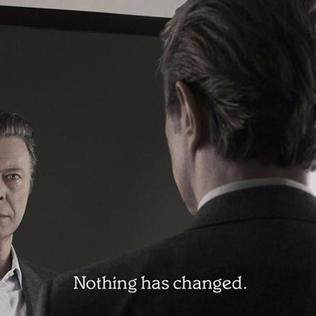
Celebrating fifty years of media manipulation, the Nothing Has Changed compilations capped a fertile period of activity for David Bowie, in which he got lots of press but only appeared in public via the videos for his well-received The Next Day album. We say “compilations” plural because, in an echo of the Best Of Bowie deluge of a different version appearing depending on what country you bought it in, this new set appeared at least three ways, each with a different cover: a three-CD set in reverse chronological order, a two-CD in forward order, and a two-LP version that jumps all over the place. Besides being a nod to the Changes albums (and song) from the RCA years, when it comes to repackaging, nothing has changed.

To entice the Bowie nut who has everything already, many of the songs appear in various edits or remixes. That’s fine if you want the Pet Shop Boys hijack of “Hallo Spaceboy” or the condensed single of “‘Heroes’”, but Bowie’s propensity to release multiple remixes of the same song makes only slightly more sense than the Stones. (Speaking of which, is there anyone out there who thinks the Jagger duet on “Dancing In The Street” belongs on anything purporting to be either’s “best”?) Nothing from the Tin Machine era is included, leaving a gap but also keeping the sound consistent between the late ‘80s and the early ‘90s.

With all the repetition, there are some interesting, truly rare tracks. “Sue (Or In A Season Of Crime)” is a lengthy croon over an edgy jazz traffic jam, not unlike Elvis Costello’s experiments in the same Herrmannesque territory. Touted as a “brand new song recorded specially” for the set, he needn’t have bothered. Much more exciting are “Let Me Sleep Beside You”, “Your Turn To Drive” and particularly “Shadow Man” from the unreleased Toy album, spurring discussion of whether that would ever be released. And for those of us who don’t have anything from before “Space Oddity”, a handful of early singles (sorry, no “Laughing Gnome”) enables the selections to span fifty years.

As ever with these things, Nothing Has Changed is a good Bowie set for the newcomer, and frustrating for the longtime fan. But at least the Stones didn’t put out another hits album that year.

David Bowie Nothing Has Changed (2014)—4

Friday, November 21, 2014

Pink Floyd 17: The Endless River

And you thought seven years was a long time between albums? Try twenty. That’s how many had gone by since the last Pink Floyd studio album, and with the passing of Rick Wright it looked like the band was finally done. Sure, Roger Waters took his improved multimedia upgrade of The Wall on the road, and managed to convince Nick Mason and even David Gilmour to show up for a few dates, but new music appeared out of the question.

That changed when Gilmour put off work on a solo album to “finish up” some jams left over from the early stages of the Division Bell sessions. With Nick Mason in tow, The Endless River is a tribute to Wright, an ambient experiment, and likely the last thing ever to be remotely labeled a Pink Floyd album.

Designed as a four-part suite, it’s largely instrumental, many tracks less than two minutes, and moody little pieces they are. “Things Left Unsaid” begins with snippets of conversation in proper Queen’s English, over a few minutes of atmospherics along the lines of “Cluster One”. The aptly titled “It’s What We Do” is built around sounds familiar from Wish You Were Here; a little “Welcome To The Machine” here, some “Shine On You Crazy Diamond” there. “Ebb And Flow” finishes the first section with some heavily panned electric piano and acoustic.

“Sum” conjures images of the racecars Gilmour and Mason adore; that track and “Skins” feature some of the most energetic drumming Nick Mason’s done in decades. The hand of co-producer Youth is noticeable here. The brief “Unsaid”, set up the more majestic “Anisina”, combining the piano bass of “Us And Them” with the swirling strings of “Comfortably Numb” underneath slide guitar, saxophone, and hearty “ooh”s.

A lot of the titles seem tossed off; calling one track “The Lost Art Of Conversation” continues the communication theme of The Division Bell but rings weirdly on an album with no vocals. Similarly, “On Noodle Street” sounds just what it is, a smooth jazz riff. “Night Light” is another nondescript interlude before the ‘80s sound (think more “Blue Light” than “Run Like Hell”) of “Allons-Y”. This piece is bisected by “Autumn ‘68”, a vintage recording of Rick Wright on the glorious Royal Albert Hall organ we wish was longer and less adorned. We didn’t really need more soundbites from Stephen Hawking, but there he is, inevitably, halfway through “Talkin’ Hawkin’”, which is at least musically different from “Keep Talking”. Is that a howl from Dark Side buried in there?

Some of the guitar-less moments resemble sci-fi movie soundtracks, and “Calling”, “Eyes To Pearls”, and “Surfacing” don’t always catch. Then the chimes of Big Ben reappear at the start of “Louder Than Words”, the only song with a vocal on the album and something of a weary summation until the closing solo, ending the album in a minor key. Not much at first, it improves with familiarity. (Despite the insistence that the album was to be treated like a four-sided LP, the deluxe DVD and Blu-ray packages included some extra music, dominated by extended jams on “Wearing The Inside Out” and one rocking track called “Nervana”.)

So while The Endless River isn’t a grand finale, it is something of a conclusion, and a fitting one. In many ways it recalls Rick’s long-forgotten Wet Dream, with its own nautical mood and down tempos. People can and will argue whether this would be more or less valuable in a deluxe anniversary edition of The Division Bell—one of which had appeared earlier in the year, boasting a surround sound mix and a double LP pressing that matched the CD, unlike the original edited LP—but it sure was nice to hear the guys again.

Pink Floyd The Endless River (2014)—3

Tuesday, November 18, 2014

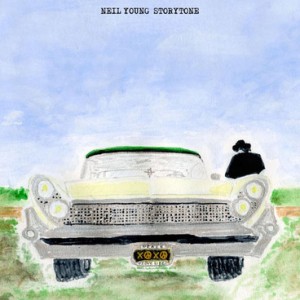
Neil Young 49: Storytone

A Letter Home proved to be not much more than a snapshot of an experiment, as Neil’s next real album was much more substantial. Storytone was presented as an orchestral album with Neil’s voice and occasional harmonica, but also made available with a Solo Storytone disc of Neil accompanying himself on piano or guitar. To confuse things even more, he went back to the editing suite to combine elements of the tracks for yet another permutation of the songs, called Mixed Pages Of Storytone, so whichever is the “real” version remains up in the air.

In the orchestral setting his voice sounds more vulnerable than ever, bringing to mind recent Brian Wilson. The strings recall Comes A Time, and particularly the lonesome cowboy sweep of Prairie Wind, while even evoking Gordon Jenkins’ work with Frank Sinatra. The songs are presented as a suite, some seeming to follow on from the one before, whether she’s sleeping or he’s still driving.

“Plastic Flowers” recalls the piano version of “Living With War”; it’s unknown if giving the flowers of the title to Mother Nature’s daughter is supposed to be a good thing. “Who’s Gonna Stand Up?” is the one he likely hopes to will get the most attention. With its urgent riff and choir, it’s not as much of a departure. The end is overly melodramatic, ending with a “Day In The Life”-type stop and a surprise coda. The grumpy “I Want To Drive My Car” is more This Note’s For You than Fork In The Road, with a big-band backing and even an electric solo, probably courtesy of Waddy Wachtel. The joy of the open road doesn’t seem to pervade in “Glimmer”, where he’s left alone behind the wheel with only his thoughts and choked memories. Here’s a place where the Sinatra echo is most obvious, particularly when followed by “Say Hello To Chicago”, arranged in a style that will sound to most under-40 ears like Brian Setzer. Seeing as Neil doesn’t croon, it sounds very out of place.

“Tumbleweed” is more lush yet gentle, a lullaby suggesting the plant itself. “Like You Used To Do” is another Bluenotes cousin, a woman-done-me-wrong song, before the grand sweep of the final songs. Insisting that he’s not different from anyone else, “I’m Glad I Found You” offers a hushed, repeated ending in a naked love song. “When I Watch You Sleeping” sounds like it has a pedal steel, asking the unanswerable question as to how the late Ben Keith might have shaped this album. She’s still sleeping in “All Those Dreams”, while Neil rides off into the sunset, burning not a drop of gasoline.

The horn-driven blues songs break up any threat of monotony, but they don’t really fit in; in many ways the solo versions, each just as unique and just as considered as the arranged versions, allow the listener to get in deeper. “Plastic Flowers” and “I’m Glad I Found You” are pretty on the piano, “Who’s Gonna Stand Up?” stark, “Glimmer” less mournful. “I Want To Drive My Car” and “Like You Used To Do” are more subdued strums, and “Say Hello To Chicago” a boozy late-night reverie right off a Tom Waits album. “Tumbleweed” is given a ukulele arrangement similar to how Paul McCartney’s been playing “Something” of late. “When I Watch You Sleeping” and “All Those Dreams” finish things up, quiet and acoustic.

Coming so soon after the shocking revelation that he was divorcing Pegi (and taking up with Daryl Hannah), it’s not easy to keep the lyrics separate from diary entries. In fact, the mood and content of Storytone can be compared with Elvis Costello’s North, another love-lost-and-found album that divided listeners. Time will tell whether this will be a substantial chapter or just another tangent.

Neil Young Storytone (2014)—3

Friday, October 31, 2014

Who 25: Hits 50

The Who already had too many compilations clogging up shelves, but just like their brethren in the Rolling Stones, a 50th anniversary was apparently enough reason to make another one. Sporting a much more fitting cover (and title) than what the Stones did, The Who Hits 50! was also available in multiple editions, thankfully limited to two CD versions, plus vinyl and Blu-Ray for those with money to burn.

Both begin with “Zoot Suit”, when they were still the High Numbers, and move steadily through the singles. Once they hit the ‘70s, or disc two if you have the double, the selections have to balance between actual singles and key album tracks. Needless to say, the opportunity to simply replicate Meaty Beaty Big And Bouncy has been ignored, with not even all of those tracks represented.

The double disc takes the idea of “hits” to the extreme, seeming to think that anything released on a 45 counts. That’s why their version of “The Last Time” appears, as do “Dogs”, “Call Me Lightning”, “Postcard”, “Trick Of The Light”, “It’s Not Enough” (the non-hit from Endless Wire) and the pointless, clumsy edit of “Won’t Get Fooled Again”. (Kudos for including the long version of “Magic Bus” in glorious mono, and equal demerits for not including the longer, alternate “I’m A Boy”.)

The single disc isn’t too different from the other 37 single-disc CDs that have come out, except for how it finishes. Even though nobody liked it before, and it wasn’t even a hit, “Real Good Looking Boy” (the new song unleashed for their 40th anniversary) appears again, but the big selling point, so they say, is the first new Who track in eight years. “Be Lucky” is either an anthem of empowerment or a snide indictment of modern pop music, complete with an auto-tuned phrase; hardly a classic, but mostly harmless.

That one new track is the only reason why we’ve bothered giving this collection its own post. As good as the majority of the music is, The Who Hits 50! is docked half a point for redundancy. 2002’s The Ultimate Collection is still the best overview of their full career.

The Who The Who Hits 50! (2014)—

Tuesday, September 23, 2014

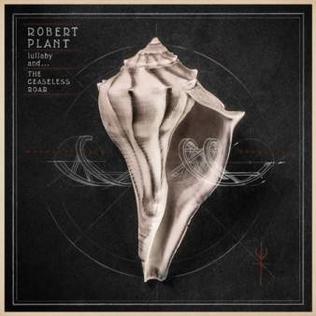
Robert Plant 12: Lullaby And The Ceaseless Roar

Whether by design of Page or his own doing, in the midst of yet another Led Zeppelin catalog overhaul came a new Robert Plant album of mostly original material. With the unwieldy title of lullaby and… The Ceaseless Roar, he and his evolving band of eclectics, now called the Sensational Space Shifters, work within that processed, “spacey” sound picture, heavy on drones and exotic acoustic instruments. Like Peter Gabriel, back when he made albums, these unique sounds combine to sound familiar. They sound like music.

It begins with, no surprise here, a new interpretation of an old folk song, in this case “Little Maggie”, in an afro-beat style. “Rainbow” starts with a similar feel, but turns into an actual song, which helps. “Pocketful Of Golden” dares to begin with “and if the sun refused to shine” and hearkens back to “In The Mood”, for a very commercial sound. With its tribal beat, lush strings and vocals in another language (Arabic? No! Welsh!), the haunting “Embrace Another Fall” conjures images of misty green landscapes. Throw in the mention of a “shire” and it could well be from the soundtrack to a Peter Jackson movie. The NPR stream compared “Turn It Up” to U2’s “Bad”, and we can’t figure out where the hell they got that idea; rather, it’s a celebration of the American South on an album that mostly avoids that. And for the first time ever, Robert sings a solo voice and piano ballad in “A Stolen Kiss”, with some subtle guitar and bass atmospherics, approaching a spiritual at some points and 21st century Bowie at others.

“Somebody There” is a conventional rock song, complete with guitar solo, and possibly the best track on the album. “Poor Howard” updates another blues song, somewhere between Appalachia and the Sahara, with a great reference to “four little kids who’ll drive me crazy”. Speaking of borrowings, “House Of Love” takes one lyric from his own song with Jimmy Page and builds it into a much more accessible song with a galloping rhythm. Between “Up On The Hollow Hill” (with the baffling subtitle “Understanding Arthur”, unless that’s the once and future king) and the closing “Little Maggie” alternate with African vocals, the album ends tensely but well prepared for another spin.

We’ve said this before, but Robert is certainly aging well, on the ears, anyway. His hushed, intimate yet inimitable delivery suggests the lullaby, but even the heavier songs don’t convey a ceaseless roar, and that’s fine. The album is a comfortable listen for fall, and one of his better efforts.

Robert Plant and the Sensational Space Shifters lullaby and… The Ceaseless Roar (2014)—

Tuesday, September 16, 2014

U2 17: Songs Of Innocence

What a surprise—after five years’ worth of red herrings, U2 “released” their next album via an iTunes event, essentially giving it free of charge to half a billion accounts worldwide, six weeks before its official release date. Songs Of Innocence was available to anyone with access to the iCloud; reactions ranged from ecstatic, particularly among the band’s champions, to offended, in the view of those who felt such an “imposition” was an invasion of privacy. (Apple even devised an app that would remove the album from one’s music library; meanwhile, we can’t get the Zappos app off our Droid, but we’re not about to sue anybody over it.)

Despite the initially artless cover, the “digital booklet” offered copious song credits and lyrics, several pages of “thanks to”, and a kind of stream-of-consciousness liner note about the album’s influences. Seeing such names as Joey Ramone and Joe Strummer raises a red flag along the lines of Rattle And Hum’s evocation of other icons, but the songs are better than that, and thankfully, don’t include anything that can be associated with the Spiderman musical.

“The Miracle (Of Joey Ramone)” would be just fine without its dedication in the subtitle, particularly because the song doesn’t resemble the Ramones in any way (in fact, the clicking sticks remind us more of “Antmusic”). Ending with a decisive power chord slash, it sets up the comparatively quieter “Every Breaking Wave”, which soon builds into a classic U2 anthem, and it’s a keeper. “California (There Is No End To Love)” is possibly their most effective ode to an American city yet, mostly because it dwells more on the subtitle. Even the “vocal chorale” at the start only hints at the Beach Boys rather than emulating them directly, unless you count the cello flourish here and there. “Song For Someone” wins over the listener with, again, the “classic” sound and welcome Edge harmonies. “Iris (Hold Me Close)” is not the first time Bono’s written about his mother, but the knowledge makes some of the sentiment Oedipal. Too similar-sounding to tracks from the more recent albums, it could have used some more work, as does “Volcano”, a “dumb” song along the lines of “Vertigo” or “Get On Your Boots”.

The anti-terrorism tirade “Raised By Wolves” is the most experimental sounding track. We could do without the “vocal effects”, and the title phrase doesn’t sound so natural coming out of his mouth, but the track does evoke an earlier decade. Another throwback of sorts is “Cedarwood Road”, both lyrically and in the glockenspiel that suggests a musical rewrite of “Electrical Storm”, one of their least notable singles. One reviewer called “Sleep Like A Baby Tonight” a portrait of a pedophilic priest, which isn’t obvious in the lyrics, but it’s still an unsettling listen. While dedicated to Joe Strummer, “This Is Where You Can Reach Me Now” doesn’t sound like any Clash song we’ve ever heard, except in its seeming evocation of street violence. Consequently, “The Troubles” isn’t about Ireland, but inner conflict. A female vocalist is prominent, reminding us of a latter-day Duran Duran hit or a movie soundtrack bid. (Hey, at least it wasn’t Rihanna or somebody trendy like that.)

U2 was of the stature now that any new album gets the “best work since” tag that the Stones have held for three decades, and have long been stuck, if not a moment they can’t get out of, then in the uncomfortable position of having to compete with their own legacy. By not laboring too much over the presentation—though we can’t figure out why it takes so many producers to create an album that sounds like a unified distillation of the band’s entire career—they seem to have been more concerned with “writing songs” than “creating sonics”. While Songs Of Innocence is not necessarily a triumph, it succeeds, it’s not too long, and besides… it was free.

Sure enough, a physical release happened, complete with a new cover depicting a shirtless Larry embracing his shirtless son. A more deluxe edition came with a bonus disc that begins with two more songs—the trashy, B-side caliber “Lucifer’s Hands”, and “The Crystal Ballroom”, which rips off its disco backing from “Love Is The Drug”. A 22-minute “acoustic medley” of six of the main album’s songs didn’t need horns and strings. An alternate mix of “The Troubles” tones down the female voice, though the alternate mix of “Sleep Like A Baby Tonight” isn’t an improvement. Hidden at the very end is “Invisible”, which had already been given away earlier in the year. It’s a much better song than its techno arrangement would suggest, once again begging the question why they have to labor over things so damn much.

U2 Songs Of Innocence (2014)—3

Tuesday, August 26, 2014

Suzanne Vega 8: Tales From The Realm Of The Queen Of Pentacles

After nearly thirty years and eight albums, Suzanne Vega still has the same clear alto. Clean living is most likely the reason, but taking lengthy breaks between releases most likely helps. Tales From The Realm Of The Queen Of Pentacles follows a seven-year absence of new material, finding her in familiar territory, parables and medieval imagery, with several songs hinting at a Tarot influence.

The album starts strong and stays strong, if brief. “Crack In The Wall” is loaded with poetic metaphors, while the poppier “Fool’s Complaint” is of a musical piece with “When Heroes Go Down” and “(I’ll Never Be) Your Maggie May”. “I Never Wear White” melds a bold statement with a punk riff lifted from “(I’m Not Your) Stepping Stone”. Things finally go quiet for “Portrait Of The Knight Of Wands”, its delicate finger-picking turning to waltz-time in the bridge but not repeating it over the coda. The one everybody talks about is “Don’t Uncork What You Can’t Contain”, thanks to its 50 Cent sample, nod to Macklamore and hip-hop rhythm. We can excuse the Arabian strings, but hearing Our Heroine bust rhymes and exclaim “for real” is just plain jarring.

Syncopated handclaps make “Jacob And The Angel” a continuation of the Eastern theme, but only for a couple of minutes. “Silver Bridge” would appear to be an elegy for her father-in-law, though that’s only an assumption from the dedication and a Google search for the name. (A better, more universal tribute ends in the album in the form of “Horizon (There Is A Road)”, written for Vaclev Havel.) Two songs about stoicism appear back to back; “Song Of The Stoic” is called out as an update of “Luka”, being a monologue by a now-adult victim of abuse, while “Laying On Of Hands” ponders the healing power of Mother Teresa, switching neatly into a faster “Stoic 2” section.

For the first time in a long time, she’s gone back to letting the songs speak for themselves. For the most part, they steer clear of gimmicks, keeping the arrangements simple and clear. Her main collaborator is Gerry Leonard, who brought with him a few other alumni of David Bowie sessions. That’s not to say the album sounds like Bowie, but that Leonard does know a thing or two about sonics, and Tales From The Realm Of The Queen Of Pentacles will not disappoint fans.

Suzanne Vega Tales From The Realm Of The Queen Of Pentacles (2014)—3