Showing posts with label 2007. Show all posts

Tuesday, January 24, 2023

Genesis 22: Live Over Europe

Following ten years apart, wherein Phil Collins did Disney soundtracks between solo albums and Mike Rutherford and Tony Banks twiddled their thumbs, the most profitable lineup of Genesis reconvened for a reunion tour. Not able to convince Peter Gabriel and Steve Hackett to join, they called back Daryl Steurmer and Chester Thompson for support and off they went. (The documentary detailing the rehearsals and first shows is particularly hilarious when it’s clear Daryl and Chester know their parts far better than the other three know theirs.)

Following the American leg, Live Over Europe 2007 replicated the setlist on two full CDs. Beginning with “Duke’s Intro”, which melds elements of “Behind The Lines” and “Duke’s End”, they move to “Turn It On Again”, which was the handy name of the tour, and proceed through over two hours of expected hit songs (“No Son Of Mine”, “Land Of Confusion”, “I Can’t Dance”, “Invisible Touch”, and the like) as well as more ambitious epics (the complete “Home By The Sea” and “Domino” suites, an “In The Cage Medley”, “Firth Of Fifth” into “I Know What I Like”) and relative deep cuts (“Mama”, “Ripples”). The requisite dual drum solo is called “Conversations With 2 Stools”, named after the objects Phil and Chester beat for the first three minutes, and after a few encores of later hits, the set ends nicely with “The Carpet Crawlers”.

The performances are impeccable, and drawing from several shows ensures competency if not intimacy. The album was a nice enough souvenir, but it was soon to become part of a larger deal.

Being one of those bands audiophiles liked, it made good business sense for Genesis to revisit their catalog in the 21st century by releasing three box sets over a period of 18 months, each dedicated to a distinct period of the band. Each remastered CD was matched with a DVD containing the same studio album in 5.1 surround sound and other audio-visual content, and each set contained a bonus disc—and matching DVD—of “Extra Tracks”, such as B-sides (including “Match Of The Day” and “Me And Virgil”, which were omitted from the Archives #2 box) and other rarities.

A year after the final album box was released, their live legacy was reassessed much the same way, but not exactly. 1973-2007 Live included a CD and 5.1 surround-sound DVD pairing for an expanded Genesis Live, which added five out-of-order tracks from the Lamb tour, but not the fabled “Supper’s Ready” that had snuck out way back when. Seconds Out was also paired with a DVD, while Three Sides Live—in its all-live, no “Paperlate” version—did not get a surround mix. Neither did The Way We Walk, but that combined volume was rejigged to replicate the actual set lists as opposed to “short” and “long”. Also, “Drum Duet” was now called “The Drum Thing”, while “Mama”, “That’s All”, and “In Too Deep”, plus “Turn It On Again” as a bonus, were moved to the end, having been recorded on earlier tours.

A slot in the packaging was included for consumers to store their separately purchased copies of Live Over Europe 2007, which was nice of the designers, but even more exciting was the disc of extra tracks in the form of Live At The Rainbow, recorded in 1973 at the fabled London theater. Some of this was already on the first Archives box, and the jury’s still out as to how much of the vocals were touched up by Peter Gabriel decades later. (The DVD portion includes another 20 minutes of music from the show, sequenced in context. Also, folks gnashing their teeth about no DVDs for two of the albums only had to wait two months for The Movie Box 1981-2007, which contained five DVDs, plus their Behind The Music documentary and an empty slot for the When In Rome DVD from the reunion tour.)

Genesis Live Over Europe 2007 (2007)—3
Genesis
1973-2007 Live (2009)—3

Tuesday, November 22, 2022

Rush 24: Snakes & Arrows

While it wasn’t their longest break between albums, Rush certainly took their time before delivering Snakes & Arrows. Working with a producer who was four when their first album came out, the album is fairly heavy throughout, although Alex Lifeson adds a lot of acoustic guitar to the overall mix, and they indulge themselves as well as the listener with three instrumentals.

The first few bars of “Far Cry” remind us of their earlier prog tracks, but that changes to modern rock before even the vocals kick in. “Armor And Sword” has a big Presto sound with riffing and rhythm Metallica fans would appreciate, while “Workin’ Them Angels” has a mandolin for we believe the first time on a Rush album. “The Larger Bowl” is helpfully subtitled “A Pantoum” which is the rhyme scheme and structure the lyrics follow, and explains the repetition, which is effective. “Spindrift” is an odd one; though we like the “Witch Hunt” atmospherics at the start, the verses don’t seem to work with the choruses. Perhaps these ideas would be better suited in combination with “The Way The Wind Blows” two tracks later. While we can hear some vocals suggesting a melody, “The Main Monkey Business” is instrumental—not as intricate as “YYZ” or “La Villa Strangiato”, but still catchy in a stumble-along way.

After the aforementioned “The Way The Wind Blows”, “Hope” is just Alex on a 12-string for two minutes, providing something of a prelude to “Faithless”, which goes from tense to anthemic with subtle strings. “Bravest Face” is surprising lyrically, as it makes reference to popular songs and even TV shows, but the choruses are an improvement, and Alex plays an unexpectedly jazzy solo. “Good News First” is another rare Neil Peart lyric spoken conversationally, but the message is murky underneath the urgency of the music. The final instrumental, “Malignant Narcissism”, does indeed build on the conceit of those earlier epic epics, with tongues firmly in cheek. It’s a lot of fun. This already long album ends with “We Hold On”, which follows the theme of struggles scattered throughout the previous hour.

They toured behind the album, as would be expected. By now their marketing strategy seemed to have been borrowed from the Rolling Stones, as the following year’s Snakes & Arrows Live was their third live album in five years. Opening with a drawn-out tease on “Limelight”, they plow through old favorites, deep nuggets like “Digital Man”, “Entre Nous”, and “Circumstances”, and most of the new album note for note over the course of two discs that fans will find essential. Alex gets to play more acoustic due a new rig, and Neil’s drum solo follows “Malignant Narcissism”. (Thankfully, while the tour continued after the live album came out, which they were ostensibly now promoting, they didn’t release another live album covering that leg. Also, for those of you following along, Geddy’s side of the stage now included ovens with actively spinning rotisserie chickens.)

Rush Snakes & Arrows (2007)—3
Rush
Snakes & Arrows Live (2008)—3

Tuesday, March 16, 2021

Lou Reed 29: Hudson River Wind Meditations

As further proof that nobody could pin him down, Lou Reed ended an extended break from recording with another baffling album release. If the liner notes are to be believed, and why wouldn’t they, Hudson River Wind Meditations is a collection of ambient music he recorded solely to accompany his own tai chi regimen. The source is supposedly the wind coming into his loft from the nearby titular river, treated electronically for an even less busy listen than Brian Eno’s static experiments. In other words, the polar opposite of Metal Machine Music.

The first two tracks run about a half hour each; he even titled them. “Move Your Heart” sounds like a basic loop mirroring breathing and movement, whereas “Find Your Note” sounds like fingers on wine glass rims, occasionally approaching the sound of an amp feeding back. “Hudson River Wind (Blend The Ambiance)” turns the volume way up for two minutes to the point where the wind is deafening and a car horn can be heard just over the fade, and “Wind Coda” combines elements of the previous three tracks for a five-minute finale.

Our research has failed to find any endorsement or otherwise from the tai chi enthusiast community. As our exercise regimen consists solely of walking a dog, we can’t speak to its practicality. Nonetheless, Hudson River Wind Meditations is not unpleasant, only occasionally jarring, and easy to ignore.

Lou Reed Hudson River Wind Meditations (2007)—2

Friday, March 6, 2020

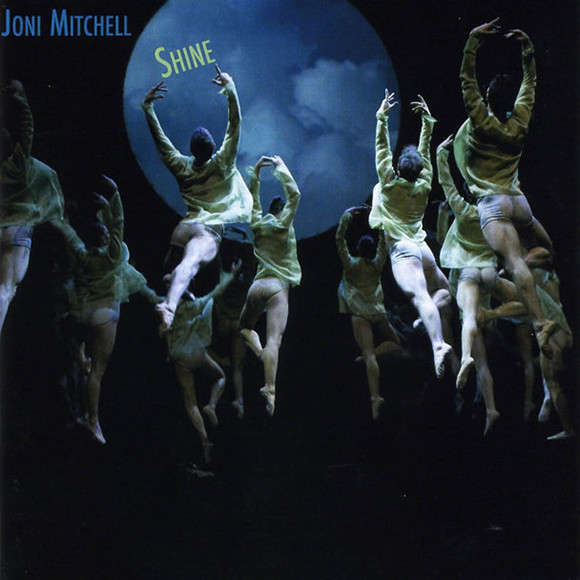
Joni Mitchell 23: Shine

If you leave a genius alone long enough, she’ll emerge when she has something to say. And that’s exactly what Joni Mitchell did, nearly a decade after her last album of new material. Shine arrived with no agenda, save the pile of songs she’d just created, or came to her, however you want to put it. Best of all, most were simply arranged, with nothing reeking of any time period or musical trend—just her voice, her piano or guitar, and a few friends adding the instruments she didn’t play, like winds and pedal steel.

In an unexpected move, Shine begins with “One Week Last Summer”, a wonderful piano instrumental with saxophone that manages to sound fully orchestrated. “This Place” celebrates the great outdoors and wide open spaces, helped by pedal steel guitar, in the hope that there’ll still be time before they all get mined for any number of reasons. She returns to the piano for “If I Had A Heart”, a lament for the state of the world in the post-9/11 world and the numbness that has resulted. The drum machine and effects turn up on “Hana”, and she adds some amazingly distorted guitar herself, which is jarring at first. However, taken as part of the whole it’s not too distracting, particularly with the slow pretty piano of “Bad Dreams”.

A remake of “Big Yellow Taxi” is unnecessary, except to enforce that she’d been pissed about the environment for decades. The canned beats continue, along with that wacky guitar, on “Night Of The Iguana”, which was inspired by the movie of the play of the same name, tied to the ecological theme. “Strong And Wrong” is back to the piano, mourning centuries of man’s hubris in the name of religion. For an excellent juxtaposition, the title track is a lengthy prayer, asking for grace for all things on Earth, from little children and starving fishermen to misguided leaders and even those who inspire road rage. That would be a heavy way to go out, but instead she chooses to end with “If”, an adaptation of the Rudyard Kipling poem that extols strength in the face of chaos.

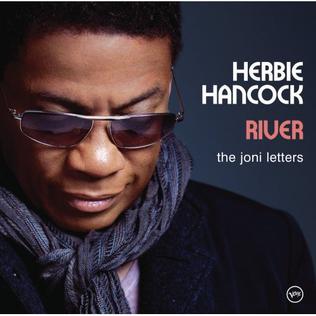
A comeback of this magnitude would normally lead directly to a Grammy for Album of the Year; instead, that increasingly dubious honor went to Herbie Hancock’s all-star tribute River: The Joni Letters, out the same day. Featuring appearances by Norah Jones, Tina Turner, Leonard Cohen, and the woman herself, it recast songs from her catalog into Starbucks-friendly jazz, pushed along by Wayne Shorter and Vinnie Colaiuta. The album works best on the instrumental tracks, particularly as two of them are jazz standards: “Solitude”, by Duke Ellington, and “Nefertiti”, which Shorter (who wrote it) and Hancock played with Miles Davis. (A 10-year anniversary edition thoughtfully included a second disc comprising the four bonus tracks that had been farmed out to Amazon and iTunes.)

Joni Mitchell Shine (2007)—
Herbie Hancock
River: The Joni Letters (2007)—3
2017 Expanded Edition: same as 2007, plus 4 extra tracks

Friday, July 19, 2019

Paul McCartney 36: Amoeba Gig

Sir Paul has hardly gone into retirement in his advancing years, dedicating lots of time to tours in concentrated chunks, occasionally releasing new material, and revisiting his own catalog at a snail’s pace in direct opposition to what many fans feel he should be doing with it. Where other artists his age have been more organized about how they re-sell their own albums, Paul has gone at it at random, even eschewing vault peeks for straight vinyl releases in different colors. Granted, some of those vinyl releases didn’t come out that way in the first place, but seeing as how a 21st-century vinyl reissue is listed at triple what it would have been originally, there’s gold in them thar hills.

So it was surprising indeed that in a promotion that included multicolored vinyl reissues of Wings Over America, Choba B CCCP, and Paul Is Live—each a “live” release from a different decade—he chose to expand a release that had only been available as a four-song EP. Amoeba’s Secret was recorded at an in-store appearance as part of the promotion for Memory Almost Full, released first as a 12-inch and two years later on CD, then expanded to 12 tracks on the extremely limited Live In Los Angeles freebie CD, and to 14 via his own website. Now dubbed Amoeba Gig, the complete show finally became available on CD; the vinyl got a bonus “Coming Up” from a soundcheck.

So with all that, is the show any good? Oh yes. Such a small venue makes for a nice clean sound, and considering that this is the best band he’s ever employed on his own, the playing is excellent and the recreations masterful. (However, Paul “Wix” Wickens is not to be heard, his place taken by one David Arch.) As for the album he was ostensibly promoting, what became the usual staples are in evidence. “Only Mama Knows” and “Dance Tonight” appear early on, “That Was Me” is extracted from the middle of the “suite”, and “Nod Your Head” is an odd setup for a powerful “House Of Wax”.

The crowd goes nuts for the oldies, of course. The first surprise is “I’ll Follow The Sun”, fleshed out a bit with drums, keyboards, and goofy trick endings, while “The Long And Winding Road” still employs the (albeit toned-down) string arrangement he supposedly loathed. A well-traveled anecdote about “She Loves You” is a wide tangent to “I’ve Got A Feeling”, which has an extended guitar duel for a coda, followed by a blast through “Matchbox”. (Ringo was in the house, but not on the stage, sadly.) His timeworn fakeout of “Baby Face” before “Hey Jude” is about as spontaneous as his exhortations over the last four minutes, but you’d have to have a heart of stone not to be moved when he chokes up during “Here Today”.

Particularly following the hype and ballyhoo surrounding the overrated Egypt Station and its numerous repackagings, Amoeba Gig presents a nice little snapshot of Paul’s live capabilities. It’s also not as time-consuming as Back In The U.S., Good Evening New York City, or the various concert DVDs from other tours of the period.

Paul McCartney Amoeba Gig (2019)—3

Tuesday, July 2, 2019

Van Morrison 39: The Great Recession

While Van Morrison is very interested in the music of the past, that doesn’t include his own past. As evidenced by his prolific if not stellar release schedule over recent years, he’s more concerned with creating than revisiting. So it’s rare indeed when anything comes out of the vaults, yet in the space of one year, three separate yet hardly distinct collections were released, each with a different angle, and none definitive.

At The Movies, helpfully subtitled “Soundtrack Hits”, was designed to appeal to people who only know “Baby Please Don’t Go” from Good Morning Vietnam or “Have I Told You Lately” and “Someone Like You” from any number of rom-coms. The badly researched liner notes made a point of calling out how many times Martin Scorsese used Van’s music in his films, from the terrific performance of “Caravan” from The Last Waltz through the definitive version of “Wonderful Remark” to, strangely enough, his rendition of “Comfortably Numb” with members of The Band from Roger Waters’ 1990 all-star staging of The Wall in Berlin. A live version of “Moondance” with overdubbed vocals and an alternate of “Brown Eyed Girl” were dangled as rarities, but there were enough Van standards to make it all listenable.

Going on two decades since the first two Best Of collections, Van himself compiled a third volume covering those heavily plowed but not exactly fertile years. The Best Of Van Morrison Volume 3 wasn’t just a double CD, but was loaded with about a dozen duets, certain to woo those consumers excited by Ray Charles, Tom Jones, John Lee Hooker, and B.B. King, to name a few. That means you also get a lot of Brian Kennedy, and way more covers than originals. Those collaborations also up the ante for everyone who already bought each of the albums, as many come from other artists’ albums, various artists sets, obscure CD singles, and whatnot.

Then, after trying to convince us that the least exciting span of his career needed two discs to encapsulate, a re-signing with PolyGram dictated that a single disc should somehow sum up four decades. Still On Top—The Greatest Hits repeated ten tracks from At The Movies while replicating about half of the first Best Of. Four songs were picked seemingly at random from Best Of Volume 3, yet a grave disservice was rectified by the inclusion of “Wavelength” and “Tore Down A La Rimbaud”. (Overseas, Still On Top was issued as a double CD, the second disc being equally as satisfying and maddening as the first. Another limited edition added a third disc of worthy selections and head-scratchers.)

So we’re not saying that the recession of 2007 was a result of such shelf-stuffing, but today these collections are basically moot. Because labels don’t like to leave anything alone, once Sony got their hands on Van’s catalog in 2015 they felt compelled to put out their own double-disc overview. The Essential Van Morrison starts with “Gloria” and goes on to cover the ‘60s and ‘70s fairly well, hitting on all the big albums but choosing “Hungry For Your Love” over “Wavelength”. “Cleaning Windows” comes from the Belfast Opera House album, and everybody likes “Caravan” from The Last Waltz, but “Spanish Rose”? Disc two manages to speed through the better part of three decades in the same time, skipping No Guru, No Method, No Teacher but still touching most of the albums from this century.

Van Morrison At The Movies—Soundtrack Hits (2007)—3
Van Morrison
The Best Of Van Morrison Volume 3 (2007)—3
Van Morrison
Still On Top—The Greatest Hits (2007)—
Van Morrison
The Essential Van Morrison (2015)—

Friday, December 22, 2017

Smithereens 8: Christmas With The Smithereens

Only a handful of rock (as opposed to pop) bands have attempted to devote an entire album to Christmas music, so it makes sense that one of the few to try, much less succeed, would be a combo with an overt retro sound. One of the more clever novelty projects of the Smithereens’ continued career, Christmas With The Smithereens finds the band bashing their way through a variety of Yuletide-related rock ‘n roll songs.

Their choices avoid the obvious ones, and their arrangements are fresh, for the most part. “Santa Bring My Baby Back To Me” is best known as a swaggering Elvis tune, yet these guys put a distinct Merseybeat bent on it, complete with harmonica. “Rockin’ Around The Christmas Tree” and “Run Rudolph Run” aren’t carbon copies either. Rather than retread “Little Saint Nick”, resident Beach Boys nut Dennis Diken sings lead on Brian Wilson’s “Merry Christmas Baby”, and the Ramones’ “Merry Christmas (I Don’t Want To Fight Tonight)” is reinforced as a modern classic. The three originals work too, working in references to It’s A Wonderful Life being on TV, and finding albums like Shut Down Vol. 2 and Rubber Soul under the tree.

There is some filler, like the recitation of A Visit From St. Nicholas over a swing drum solo, and a four-minute expansion on the single verse of Beatles’ “Christmas Time Is Here Again!”. Even “Christmas” by the Who is an odd choice, except for foreshadowing their Tommy tribute two years down the road. But again, considering the empty field of competitors, Christmas With The Smithereens is enjoyable both as a holiday album, as well as part of their catalog.

The Smithereens Christmas With The Smithereens (2007)—

Tuesday, August 22, 2017

Smithereens 7: Beatles and Tommy

The new century would keep the Smithereens occasionally busy touring, but without a record deal there seemed to be no point in recording new albums of original material. Meanwhile, Pat DiNizio tried running for public office, then contracted some kind of medical condition that required treatment via Prednisone, sending his body weight well over 300 pounds. He also started his own website, on which he occasionally posted in all caps and booked his “living room concerts”, open to anyone willing to pony up the dough. He also hawked homemade compilations of Smithereens demos and live versions, and recorded This Is Pat DiNizio. Distributed in a confusing array of multiple-disc configurations, it presented him singing pop hits from the rock era, accompanied by acoustic guitar or piano.

Already a capable replicator of power pop classics, it wasn’t big a jump for him to convene his old band for Meet The Smithereens!, a song-for-song duplication of the first Beatle LP on Capitol Records. The band sounds great, and they’ve obviously lived every one of these songs, but by staying so close to the blueprints—their excuse being that serious musicians wouldn’t take liberties with Beethoven or Mozart—they don’t really add anything to the experience, unless you thought the voices of the Fab Four pale in comparison to that of Pat DiNizio.

Beatlemaniacs will buy anything, seemingly, so that 27-minute album was followed a year later by another of the same length. B-Sides The Beatles offered a slightly more imaginative track selection, leaning more on the band’s less obvious early album tracks (and yes, B-sides). This time, however, guitarist Jim Babjak is allowed to sing lead on two tracks, and drummer Dennis Diken gets his own spotlight. Next to the commissioned Jack Davis cover art, the campiest touch is having Jersey transplant Andy White play drums on “P.S. I Love You”, just as he displaced Ringo on the original recording. What ultimately gives this volume a slight edge over its predecessor is the choices of the rare instrumental “Cry For A Shadow” and the closing “Some Other Guy”. (More recently the band has issued yet another Beatle tribute, wherein they commemorate the 50th anniversary of the Fabs’ Washington Coliseum concert with another re-recorded note-for-note set, complete with overdubbed screams. We’ll pass.)

Perhaps just to prove they were capable of something a little heavier (and headier), their next tribute presented an abridged selection of songs from the Who’s original Tommy album. The focus here isn’t so much on the story but the songs that rock harder, skipping things like “Underture”, “1921”, “Cousin Kevin”, and any reference to a perverted uncle. Well played, certainly, but while we get some variety with five of the songs sung by band members who aren’t Pat, none of the vocalists approach Roger Daltrey’s power or Pete Townshend’s vulnerability. Still, it’s a less obvious choice for a remake album, and the arrangements are closer to the Who’s eventual stage versions. The cover gimmick this time is using legendary bootleg artist William Stout, and most amazingly, the program tops 40 minutes.

The Smithereens Meet The Smithereens! (2007)—2
The Smithereens
B-Sides The Beatles (2008)—
The Smithereens
The Smithereens Play “Tommy”! (2009)—3

Friday, October 28, 2016

Mark Knopfler 8: Kill To Get Crimson

When one is a fan of a particular performer, new albums are bought more out of habit, and with a lot of finger-crossing that something will even approach said performer’s best work. Mark Knopfler wandered through the new century dropping crumbs here and there, and Kill To Get Crimson would appear to be another one in a lengthening series of temporary diversions until the next change of wallpaper.

He’s not about to change his style, or his approach. This much is obvious on “True Love Will Never Fade”, and in case that sentiment comes off as vague, he’ll repeat the title about 47 times before the track ends. But then “The Scaffolder’s Wife” matches flute and vibes for a more cinematic angle.

The album proceeds like that, with mystery on “The Fizzy And The Still” and the familiar romantic dobro on “Heart Full Of Holes”. “We Can Get Wild” doesn’t, but “The Secondary Waltz” is charming. “Punish The Monkey” is a meaningless groove, “Let It All Go” and “Behind With The Rent” songs in character, “The Fish And The Bird” and “Madame Geneva’s” descended from arcane English folk. Finally, “In The Sky” floats along for over seven minutes, and is probably still up there.

Kill To Get Crimson just slides over the thumbs-up finish, but—and we’re getting really tired of saying this—would be a lot better if it weren’t so long. Yes, it’s nice when musicians use the capacity of the compact disc to provide value, but it’s nicer when you actually want to devote an hour to an album.

Mark Knopfler Kill To Get Crimson (2007)—3

Friday, April 1, 2016

Bruce Springsteen 19: Magic

His fans should know by now that while it might take some time, Bruce always goes back to the E Street Band to rock and roll. Even people who came in as late as The Rising can’t complain about the five-year gap before Magic provided the sound they craved.

This album is textbook Bruce, with plenty of guitar, familiar glockenspiel touches, gratuitous sax solos and choruses aplenty. At the same time, it stays a little too close to that textbook. “Livin’ In The Future” is a rave-up in the style of “Tenth Avenue Freeze-Out” run through Born In The U.S.A., with plenty of Clemons breaks. “I’ll Work For Your Love” has the type of opening Jim Steinman stole for Meat Loaf, directly descended from the live “Santa Claus Is Comin’ To Town”; the addition of violin and harmonica bring it into this century’s version of the E Street Band.

But the oddest influence seems to be that of Brian Wilson. “You’ll Be Comin’ Down” borrows its melody and feel from “Don’t Worry Baby”; “Your Own Worst Enemy” could be a Wilson production, with its lush strings, tympani and sleighbells, and a very odd choice for such a paranoid lyric. “Girls In Their Summer Clothes” mines similar territory only two tracks later, but his croon overpowers everything for a better meld.

There are songs that don’t sound like his catalog or that of the Beach Boys. “Radio Nowhere” is a smart opener, fulfilling the narrator’s plea for rhythm and guitars. “Gypsy Biker” provides just enough dust for variety, but the title track sticks out like a sore thumb, being more along the lines of solo works like The Ghost Of Tom Joad and Devils & Dust. It makes “Last To Die” even more striking, with a nervous edge and runaway pulse. That sets up “Long Walk Home”, an ultimately hopeful cousin of “My Hometown” and “My City Was Gone”, and the building mystery in “Devil’s Arcade”. (A hidden track, “Terry’s Song”, is a tribute to his recently deceased friend and road manager that avoids any fake sentimentality.)

If anybody else released this album, it would be praised (or condemned) as an overt Springsteen homage. Magic is undeniably catchy, and avoids any overt theme or message. That’s not to say it’s not there; he’s still concerned about the state of the world and the well-being of his fellow Americans, but delivers it via the type of music his fans want most to hear. It’s unlikely any Republican candidates would mistake these songs for potential campaign anthems.

Bruce Springsteen Magic (2007)—

Friday, May 16, 2014

Crowded House 6: Time On Earth

Ten years after Crowded House’s final performance, Farewell To The World was released on CD and DVD, presenting the concert in its emotional entirety. To add to the PR, a new album by the reconstituted band was in the works, and arrived as promised.

Despite the presence of bassist Nick Seymour and latter-day member Mark Hart, Time On Earth is really Crowded House in name only, since the songs started out for a Neil Finn solo album. It’s also missing a lot of the quirkiness (and harmonies) that made the first four CH albums so archetypal. (The press, tour and artwork spotlit their new drummer, but he’s not even on half the album.)

Sadness permeates the album, from the tempo to the lyrics. Something’s missing, or more to the point, someone. Paul Hester was such a lovable clown for the band, and perhaps it’s a cliché to say that it wasn’t enough to keep him around. It’s tough to hear “English Trees” and “You Are The One To Make Me Cry” without getting depressed. The very quiet “A Sigh” comes immediately before the tense “Silent House”, originally written with and recorded by the Dixie Chicks. “Transit Lounge” is distracted by a foreign voice suggesting the same, with an “ethereal” woman’s voice helping out elsewhere.

There are a few tracks that will get the toes tapping in a familiar way: “Don’t Stop Now”, familiar enough for a single; “Even A Child”, written with Johnny Marr; the classic-sounding “She Called Up” and its teasing hook; “Say That Again” and its jumpy meter. “Pour Le Monde” is a nice cross of the Lennon and McCartney piano styles, with an orchestral part that reflects the better elements of the last Finn Brothers album. Thankfully, the French title is only decoration. “Walked Her Way Down” travels from a moody piano piece to an infectious track. “People Are Like Suns” is a final slow song on an album with too many of them, but becomes a good place to end.

For all its schizophrenia, perhaps the worst thing we can say about Time On Earth is that it’s too long—an ironic statement considering the title. It’s pleasant background music, and while it could be said that Crowded House was “back”, they were hardly “better than ever”. (The eventual Deluxe Edition was bolstered with a pile of home and studio demos, plus some contemporary B-sides that also sound more like Neil Finn solo than the House.)

Crowded House Time On Earth (2007)—
2016 Deluxe Edition: same as 2007, plus 13 extra tracks

Tuesday, May 6, 2014

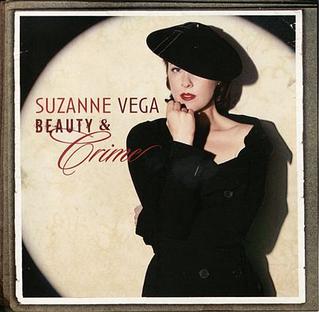
Suzanne Vega 7: Beauty & Crime

The Blue Note label, once a venerable home for the best in modern jazz, found themselves well in the black with the surprise success of one Norah Jones, who played piano but wasn’t exactly jazz. Willing to throw the rule book out the window in the 21st century, they signed Suzanne Vega as a free agent, and released her first album in six years. Beauty & Crime finds her in familiar territory, still balancing introspective writing with up-to-date recording techniques.

“Zephyr & I” is the first indication that this wasn’t your grandpa’s Blue Note, and particularly not with a riff borrowed directly from Judas Priest’s “Living After Midnight”. It’s quirky and cute, but immediately surpassed by “Ludlow Street”, a haunting tribute to her departed brother, with a melody that tugs at the heart. “New York Is A Woman” manages to overcome the limitations of that metaphor, though we could do without the Klezmer arrangement that keeps popping up. Similarly, “Pornographer’s Dream” states that figure of speech right away, with a near-lounge delivery that improves by the chorus. “Frank & Ava” is perhaps too literal a comparison for a couple that finds it’s “not enough to be in love”, unless she really is imagining the celebrities of the title, while “Edith Wharton’s Figurines” is more obscure.

A lifelong New Yorker, it’s easy to read sadness into songs like “Bound” (“the way of the world
has taken its toll/ravaged my body
and bitten my soul”), except that in this case, it’s about reconnecting with the man who would become her husband (and remains so as of this writing; good for her and better for him). But it’s followed by “Unbound”, a less successful techno-groove. “As You Are Now” is a tender love song, with sympathetic strings, leading nicely into the final two songs. Both deal with the aftermath of 9/11: “Angel’s Doorway” alludes to the eternal cleanup, while “Anniversary” reflects on the survival of the city as a whole. To her credit, the album ends on an upbeat tempo, rather than a somber one.

There are good songs on Beauty & Crime, but they’re still hidden behind production effects and bigger arrangements. It takes a few listens for those songs to emerge, which may well be one reason why the album, lauded as it was, didn’t sell. And that’s too bad, because we’d happily listen to her sing anything.

Suzanne Vega Beauty & Crime (2007)—3

Monday, September 23, 2013

Robyn Hitchcock 22: While Thatcher Mauled Britain

Yep Roc’s joy at having Robyn Hitchcock on their label came equally from having mild critical and commercial success with his new work as it did from finagling yet another revamp of his thorny catalog. Already patronized by customers into digital downloads to go with new pristine vinyl, they and he took direct aim at people resigned to buying things they already had with two box sets devoted to Robyn’s seminal (there’s that word again) ‘80s work.

The first of these, I Wanna Go Backwards, was built around three key solo albums: Black Snake Dîamond Röle, I Often Dream Of Trains and Eye. Each got new booklets and bonus tracks, some familiar, some not. But the real attraction was the two discs of demos from the ‘80s, some familiar, some not, collected under the new title While Thatcher Mauled Britain.

One of our favorite since-deleted bloggers was kind enough to break out what makes this set essential in comparison to the Rhino program of a decade earlier, but essentially the discs shuffle a bunch of selections already beloved from Invisible Hitchcock and You & Oblivion with some of the Rhino discoveries for an even more chaotic listening experience. One’s enjoyment of these depends on the listener (and how many copies they already had) but chances are everyone went straight for the never-before heard stuff. Not all of it would have been better off unheard.

“Melting Arthur” does a lot with a simple melody, and “Parachutes & Jellyfish” is one of his better Syd Barrett impressions. “Lightplug” is something of an ancestor to “Wafflehead”, and “You’re So Repulsive” has better verses than the chorus of the title. As for the more familiar stuff, a jaunty acoustic “Flesh Number 1” has no Glenn Tilbrook but does boast Peter Buck. There’s even a live version of “Dr. Sticky”. An earlier, more primitive performance of “The Abandoned Brain” helps keep things different; the same keyboard is used for “Opiatrescence”, which is worth the wait. Likewise, it’s surprising that he never did anything else with “Lovely Golden Villians” or “Toadboy”. And after a couple of hours’ worth of spooky acoustic music, “I Wanna Go Backwards” provides some electricity to close the set.

So there’s a lot of music crammed into this set, and hardcore Hitchcock fans need it all (again). Still, one can’t help wishing the all-new stuff could have been made available in their own tidy little package, because really, did they expect a whole crop of new fans to discover him for the first time here?

Robyn Hitchcock I Wanna Go Backwards (2007)—

Monday, February 11, 2013

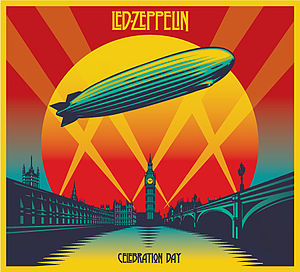
Led Zeppelin 14: Celebration Day

It took a concert in tribute to Ahmet Ertegun for the unthinkable to happen: a live reunion of Led Zeppelin. Despite the teasers over the years—Live Aid, the hideous Atlantic Records 40th Anniversary performance, the Rock & Roll Hall of Fame induction—this was the first and, most likely, only time the surviving members played a full set since John Bonham’s death.

Perhaps not to compete with Robert Plant’s solo career, then riding high on his Alison Krauss collaboration, it only took five years to prepare the release of Celebration Day—which sadly, doesn’t include a performance of the song of that title—on CD, DVD and Blu-Ray. The audio version only includes a few edits of dialogue; some overdubbing supposedly took place, and there is a ProTools credit in the booklet, but considering all the mistakes Jimmy left in, it’s hard to call foul. Most of the songs are taken down a full step to accommodate Robert’s voice, so while they do sound different, they still sound like them—particularly when he goes for one of those high notes and hits it. Besides, it’s not like he’d been sitting in a box since the last Page/Plant tour, as the moderate success and general quality of his albums since then have shown.

Beginning appropriately with “Good Times Bad Times”, the band plows through the tune, Jason Bonham adding a few backing vocals here and there. “Ramble On” follows, a song never played in its entirety by the band before, and here incorporating a quote from “What Is And What Should Never Be” at the end. The solo intro to “Black Dog” gets a huge roar from the crowd, as does Plant’s “good evening” at the end. “In My Time Of Dying” is played to nearly the length of the album version, right down to the “oh my Jesus” pleas, starting low and gaining power. Another surprise comes with “For Your Life”, never played live either. “Trampled Under Foot” and “Nobody’s Fault But Mine” continue the blues trawl, and “No Quarter” turns the spotlight somewhat to John Paul Jones, the quietest, most patient and musically accomplished band member—the glue, if you will.

“Since I’ve Been Loving You” gets a good reading, followed by a nicely experimental “Dazed And Confused”, complete with violin bow. Probably because they couldn’t get away without doing it, the doubleneck is strapped on for a somewhat restrained “Stairway To Heaven” (thankfully, the audience is not asked if they remember laughter) and stays for “The Song Remains The Same”. A nod to Jason Bonham leads into “Misty Mountain Hop”, and “Kashmir” is reclaimed from Puff Daddy, though we kinda wish they’d used a real Mellotron. The first encore is “Whole Lotta Love”, then thanks and appreciation for Ahmet set up “Rock And Roll”, one of their simplest songs, but probably the one “obvious” one they’d yet to do. There’s an excellent tease at the end to set up that final drum solo.

It’s a great finish, because throughout the two-hour show, Jason Bonham pounds away. He was, after all, the biggest Zeppelin fan on that stage, having studied his dad’s technique through the albums and bootlegs, and a long way from the mulleted lout that surfaced in the hair metal era. He’d played in previous Zep reunions, but this was the first time he did a complete show, and he’s flawless. As is obvious from the film, the other three adore the kid.

Anybody who’s into the show might as well spring for the video, as it includes some of the inter-song chat cut out of the CD version. Jones hasn’t aged a day, Plant should have tied his hair back, and Page stopped dyeing his (Paul McCartney, take note), looking like a wizened master. Because they played so well—and it’s an occasion highly unlikely to happen again—Celebration Day is a worthy bookend to the Zeppelin saga. They played as well as ever, with no gimmicks; just fingers, feet, arms and voice.

Led Zeppelin Celebration Day (2012)—4

Monday, November 19, 2012

R.E.M. 19: Live At The Olympia

It’s fairly odd that only two years after their first-ever live album—with only one studio album in between—that R.E.M. would release another. Lest we think they were turning into the Rolling Stones, Live At The Olympia isn’t your typical post-tour souvenir. These two CDs are culled from the series of “live rehearsals” the boys—the three main members, plus drums and another guitar—played in Dublin as they were preparing for the album that would become Accelerate.

Of course, the performances didn’t consist solely of all-new, untried material; the bulk of the CD—two-thirds from the Bill Berry years—provides fresh takes on some of the deeper recesses of their catalog. Ecstatic fans in the audience (and now, listening on their player of choice) are treated to six songs from Reckoning, five from Fables and all but one from the Chronic Town EP. Only Green, Out Of Time and Up go unrepresented. But they’re not carbon copies either—there’s energy behind each song, whether introduced by Stipe with an anecdote or described lovingly in Peter Buck’s liner notes. The sharp-eared will notice a changed family dynamic, with “Gardening At Night” played at the request of longtime advisor Bertis Downs, while all references to “Jefferson” have been removed from “Little America”.

Of course, it’s an album for fans, so while there’s no need to into detail for each old song, a few other details are worth mentioning. “Harborcoat” makes it most of the way unscathed, until the tuneless harmonica sets up a purposely sloppy ending. “Circus Envy” is even a lot of fun, more so than surrounded by all the noise on Monster. And whose idea was it to revive “Romance”?

Considering the songs that did end up on Accelerate, it’s interesting to consider the other surviving contenders. “Staring Down The Barrel Of The Middle Distance”, fine as it is, wouldn’t have added anything to the album, and “Disguised” turns out to be a an early version of “Supernatural Superserious”, somehow not as tight as the recorded version. The slow and sad “On The Fly” comes from the same cloth as “Country Feedback”, but a little more melodic. There’s a middle interlude that threatens to go somewhere else entirely, but instead folds back to the song. It’s a hidden gem all right, but would have been out of place on the album they completed.

Live At The Olympia ends up a nice little surprise, with 39 songs filling up two-and-a-half hours of music, it’s a preferred listen to the other live album. It also provides a nice setup for the live recordings they’d begun including in the anniversary editions of their back catalog.

R.E.M. Live At The Olympia (2009)—

Sunday, March 4, 2012

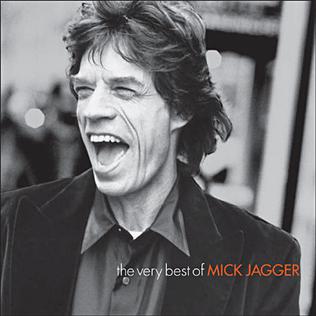
Mick Jagger 6: The Very Best Of Mick Jagger

Still trying to prove that he’s got the biggest set of balls in the business, The Very Best Of Mick Jagger is limited to the man’s less-than-stellar solo career. Granted, Keith’s own strange retrospective would include Stones songs performed live by the X-Pensive Winos, but he didn’t use such a pointed title. The one track here that ranks with the Stones’ best is “Memo From Turner”, his 1970 single from the Performance film, and no, that’s not the Stones playing on it.

That said, it’s a half-decent set, with rockers like “God Gave Me Everything”, “Put Me In The Trash”, and “Don’t Tear Me Up”, but you also have to deal with “Just Another Night”, “Let’s Work”, “Sweet Thing”, and the execrable version of “Dancing In The Street” with David Bowie. “Joy” is probably included because Bono’s on it, just as “Old Habits Die Hard” negates the need for the Alfie soundtrack.

Other rarities are included to entice the weary if not wary. “Charmed Life” was left over from Wandering Spirit, and should have stayed there, but “Checking Up On My Baby” comes from the same period, and a good blues workout. “(You Gotta Walk And) Don’t Look Back” is a duet with Peter Tosh from the latter’s Glimmer Twins-produced Bush Doctor, but the big carrot is the belated appearance of the notorious “Too Many Cooks”. This middling funk tune comes from one of the more sober stretches in John Lennon’s lost weekend, captured halfway through the sessions for a Harry Nilsson album.

So the good outweighs the bad on The Very Best Of Mick Jagger, and whoever decided “Evening Gown” should close the set is an absolute genius. It was also available as a set with a DVD including interviews and some of his videos. But beyond that…

Mick Jagger The Very Best Of Mick Jagger (2007)—

Monday, September 26, 2011

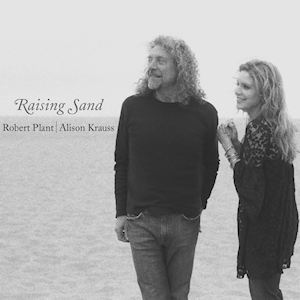
Robert Plant 10: Raising Sand

To the astonishment of everyone, Robert Plant managed his biggest critical success in years—if not ever—for his collaboration with Alison Krauss on Raising Sand. Much of the success can be attributed to hip roots music producer T Bone Burnett, who’d already sold millions and got a Grammy for his work on the O Brother, Where Art Thou? soundtrack. The sound sits somewhere between that, a Daniel Lanois production, and a Tom Waits album, and not just from using some of the same musicians.

Alison Krauss has one of the sweetest, clearest voices in music, not to mention that she’s a cute as a box full of buttons. She’s also a great fiddle player, which takes a back seat to the songs. The selections run the gamut from bluegrass standards to newer folk nuggets. One exception, amazingly, is “Please Read The Letter”, a song first heard on the Page/Plant album and here taken at a much more contemplative pace. “Trampled Rose” is a more recent Waits tune, and “Sister Rosetta Goes Before Us” sounds like one, but it was written by Sam Phillips, the former Mrs. Burnett. (Alison nails both.) Her gender-bent take on “Let Your Loss Be Your Lesson” shows a hot R&B streak.

Two Gene Clark songs come from the second Dillard & Clark album, and they’re exceptional, though we can do without yet another version of “Fortune Teller”. The track that got the most exposure was the chugging “Gone Gone Gone (Done Me Wrong)”, which sounded the most like something like Robert might have sung earlier in his solo career. Most of the songs are duets, starting with “Rich Woman”, and they blend nicely. “Stick With Me Baby” is another tender one.

What’s especially impressive is the development of Robert’s voice as he’s aged. For a tangential comparison, consider the recent sounds of Bob Dylan, who finally stopped yelling like he did through most of the ‘80s and got more comfortable in the lower register. That kept his voice from getting worse until just recently. Robert’s done that too; he doesn’t go for the high notes at all, and instead has made the most of the notes he can reach. His near-whispered take on Townes Van Zandt’s “Nothin’”, for instance, is well matched to the stark horror of the arrangement.

Raising Sand is the culmination of his work since the turn of the century, immersing himself in older folk and country songs and reinterpreting them in fresh ways. Not only did it win five Grammys, but it kept him interested in doing absolutely anything besides heeding the inevitable calls for a Zeppelin reunion. It’s a special album; not about to replace the band that spawned him, and far from embarrassment.

Robert Plant | Alison Krauss Raising Sand (2007)—4

Saturday, May 28, 2011

Fripp & Eno 5: Beyond Even

Robert Fripp had already pioneered a system of releasing seemingly random selections from the deep King Crimson archives by the 21st century, and his Discipline Global Mobile operation would soon make further economic inroads by offering direct downloads. These extended to various of his non-Crimson ensembles and activities, so a 2006 compilation titled The Cotswold Gnomes, credited to Fripp & Eno, was an intriguing tease.

Described as “a sequence of sketches, out-takes, work in progress and alternative mixes,” its genesis was made clearer when the music was released on CD a year later as Beyond Even (1992-2006). Those who’d found The Equatorial Stars to be less than thrilling might have been more pleased with the breadth of styles undertaken here. Most of the pieces have percussion, so it doesn’t belong to the strictly ambient pile. The first few tracks burble along, then for the aptly titled “Sneering Loop” Fripp lets loose with a nasty riff. “Timean Sparkles” benefits from no percussion, and is closest to the quieter parts of Evening Star; “Hopeful Timean” sports contributions from bassist Tim Harries and is even quieter yet spookier. From time to time we hear some atmospherics reminiscent of Fripp’s albums with Andy Summers, blurring the lines further as to who did what on those particular albums. “The Idea Of Decline” recalls the “juju space jazz” of Nerve Net, but the latter half of the album leans to the spacey. Even the occasional energy of the first half is no match for the closer, the utterly explosive “Cross Crisis In Lust Storm”, which features ‘90s Crimso Trey Gunn on what we’ll assume is his trusty Chapman Stick. (Fripp rated his own contribution to this track very highly.)

Modern technology had of course made it much easier for people who were neither Fripp nor Eno to create automated loops and textures; still, these veterans get the benefit of being old hands at experimenting. Beyond Even is a nice peek for fans into their workshop. (A limited edition package offered the music two ways: one disc separated into individual tracks, with a few seconds of silence between each, and the other as a segued yet still indexed suite of continuous music. Even the artists’ own sites disagree as to what “disc one” is, but the streaming version is continuous, so there you go.)

Fripp & Eno Beyond Even (1992-2006) (2007)—

Wednesday, February 2, 2011

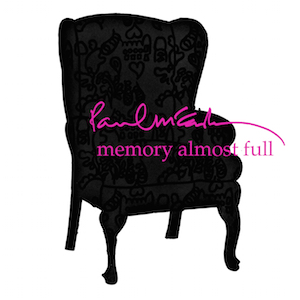
Paul McCartney 29: Memory Almost Full

In one of his fastest turnarounds in decades, Paul recorded another original classical piece, the churchy Ecce Cor Meum, then boldly left Capitol Records for the first time since 1979, choosing to let Starbucks promote his latest release worldwide. Memory Almost Full is an old/new affair of sorts, being that it completed some tracks he’d started before recording what turned out to be 2005’s excellent Chaos And Creation In The Backyard. The result isn’t bad, but it follows his tradition of including a few cringe-causing moments amidst some new potential classics.

“Dance Tonight” could be one of the latter, a simple happy song he wrote reportedly while watching his young daughter enjoy the noodling on his new mandolin. A little more elaborate is “Ever Present Past”, which always seems to be on the verge of saying something but never quite does. “See Your Sunshine” hearkens back to his early ‘80s pop sound, and for that alone, it seems more like a song for Linda than his current wife, no matter what he insists. A mournful piece for strings brackets “Only Mama Knows”, which seems mostly an excuse to rock and work the word “godforsaken” into the lyrics as much as possible. The gloomy “You Tell Me” acknowledges his age, as will another track to be discussed. “Mr. Bellamy” is downright odd, sung from the points of view of a man (or a cat?) on a ledge and the people watching below. The final minute of the track is given over to a wandering pastiche of piano, acoustic, and clarinet. “Gratitude” has a forced R&B delivery that isn’t very convincing.

Much was made at the time of the suite of songs—not snippets—that, while written and recorded as separate entities, were sequenced in the style of Abbey Road but come off more like those on Red Rose Speedway. (Unlike most of the album, which he played all by himself, four of the five were recorded with his touring band.) “Vintage Clothes” has a nice Beach Boys break in the middle. “That Was Me” is a look back that unfortunately comes off as a little pompous, but it’s replaced by the nicer “Feet In The Clouds”. Suddenly, however, “House Of Wax” revives the classic Wings sound for something of a detour into a horror movie. But it’s “The End Of The End” that’s the most striking song here, an actual rumination on his own funeral, beautiful and sad at the same time. “Nod Your Head” tries to diffuse the gloom with a loud, throwaway track. What most people didn’t realize was that, in the spirit of “Why Don’t We Do It In The Road?” via “Please Please Me”, it’s not so much a song as a blatant plea for oral sex.

Memory Almost Full got decent reviews, and the Starbucks connection helped it sell by the bucketful, but neither he nor his new record company were kind to the fans lining up to buy it. It was first issued as a single CD, and also in a deluxe package that wouldn’t fit alongside the other McCartney CDs in your rack and included a second disc with three extra songs—an instrumental, an actual song, and a mishmash that predicted his next move somewhat—and an interview about the album. Then, just in time for Xmas, a “special edition” in a standard-size case included the album plus the three extra songs on a CD, plus a DVD with video clips and whatnot. Had they just gone with that version, everything would have been fine.

Paul McCartney Memory Almost Full (2007)—

Monday, August 16, 2010

Neil Young 39: Chrome Dreams II

His recent one-two live releases were accompanied by more teases about the long-promised Archives box to be released in the fall. Surprise: it didn’t happen. Instead we got a brand new Neil album, knee-slappingly titled Chrome Dreams II in an homage to a cancelled album from thirty years earlier.

Like its namesake, this album is a mishmash of old and new songs newly recorded (and at least one that had been in the can for two decades)—kinda like Freedom presented a selection of songs with disparate backgrounds. “Beautiful Bluebird” was left over from the Old Ways period, and lulls people into thinking they’ve got another country album on their hands. (They’d be wrong.) “Boxcar” was from the Bluenotes era, then was recorded for an album allegedly called Times Square (which, neatly enough, evolved into Freedom) but wasn’t as heavy as the rest of those tracks, which is also why it didn’t make it for Ragged Glory. This version is based around the banjo, so it sounds more like “Southern Pacific”; go figure. “Ordinary People” finally makes its official debut at a full 18 minutes, complete with horn section, though fans wondered why he rearranged the verses from the live versions they’d memorized. “Shining Light” has a doo-wop/R&B feel, though the pedal steel takes it somewhere else. “The Believer”, while acoustic, feels a little too similar to the previous track, and sounds like it could have been left over from Are You Passionate?

“Spirit Road” is closer to the Volume Dealers sound with a Crazy Horse crunch, which continues on “Dirty Old Man”, complete with sloppy drum fills and could be left over from the Ragged Glory period. “Ever After” has a broken-leg waltz that would fit well on American Stars ‘N Bars or Hawks & Doves. “No Hidden Path” takes up 14½ minutes, and echoes lyrics from the previous and next song while channeling one of the lengthy “Love” songs from Ragged Glory, only it doesn’t end in a wash of feedback. (It doesn’t help that Ralphie slows the beat down over the last three minutes.) And it all ends with “The Way”, which frighteningly enough includes a children’s choir from the get-go but fits the role of that tender piano closer we’ve come to expect.

Hardly a bold statement (despite what critics said and the presence of “Ordinary People”), Chrome Dreams II still offers something for everyone. And that, he said, was the point. It’s good but not great, competent but not essential, with big points for including those long-unreleased songs. (It was also available as a CD/DVD combo, the video content consisting mostly of close-up photomontages of rusty cars and the occasional tree, accompanied by the songs on the album in high resolution.)

Neil Young Chrome Dreams II (2007)—3