Showing posts with label grateful dead. Show all posts

Friday, May 22, 2026

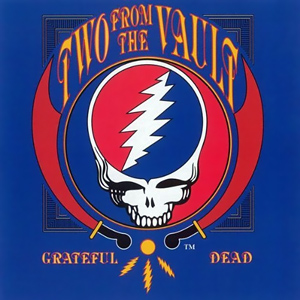
Grateful Dead 23: Two From The Vault

The curators of the Grateful Dead’s archives were always mindful, knowing that their audience was somewhat particular. Rather than just throw any show out on the market, even if it had already been shared and dubbed on countless tapes, whatever they released needed to be important or unique. So it was in the case of the second installment of the From The Vault series.

At the time, this 1968 show was the earliest one they’d yet officially released, on top of being one of the few professional recordings from that year. Amazingly, some of the band wasn’t thrilled with the tapes back in the day, and even used them as a reason to justify firing Pigpen and Bob Weir for not keeping up with the others musically. Luckily for this supposedly less-than-dynamic duo, they would be reinstated soon enough, and ‘90s technology enabled us all to hear what the dissenters couldn’t then.

Pigpen was still a focal point onstage, so they open with a 16-minute “Good Morning Little Schoolgirl”. But then the suites start to flow: “Dark Star” into “St. Stephen” and “The Eleven”, slowing down for “Death Don’t Have No Mercy”. None of these were on either of their two albums, and could have filled up an album on their own. After a new seconds to regroup (and change CDs for the listener) they head right into “That’s It For The Other One” and “New Potato Caboose”, both twice their album length, followed by 17 minutes of “Turn On Your Love Light”. The crowd’s begging for more, so they get “Morning Dew”, which builds until the power is cut.

Two From The Vault certainly makes a nice companion to Live/Dead, unless you didn’t like that album to begin with. It portended well for the future of the series, except that further excavations would emerge under another banner, leaving this one all but abandoned. (Three songs—totaling 34 minutes—from the night before appeared on the first expansion of Anthem Of The Sun, and eventually comprised the bonus disc in Rhino’s expansion of this album fifteen years after its original release.)

Grateful Dead Two From The Vault (1992)—
2007 reissue: same as 1992, plus 3 extra tracks

Friday, February 13, 2026

Jerry Garcia 10: Jerry Garcia Band

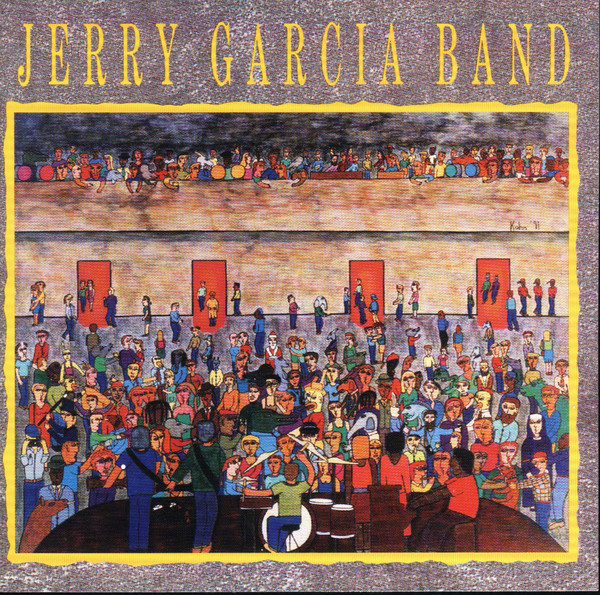
With the Dead regularly touring, reaching and dealing with larger audiences, Jerry Garcia still took the opportunity to just go out and play. The most recent incarnation of the Jerry Garcia Band had been together for four years when a two series of shows at San Francisco’s Warfield Theater became the basis for an eponymous double CD a year later.

Besides being performed by musician who knew how to play off each other, what makes Jerry Garcia Band stand out is the variety and breadth of the songs they play. Bob Dylan is the main touchstone, with covers of “Simple Twist Of Fate”, “I Shall Be Released”, “Tangled Up In Blue”, and the deeper cut of “Señor (Tales Of Yankee Power)”. (We might as well count “The Night They Drove Old Dixie Down” as a close relation, and Bob also loved “That Lucky Old Sun”.) “Dear Prudence” was a surprise to newbies, but the band had been jamming on it for years. Other revered songwriters include Smokey Robinson, Allen Toussaint, Bruce Cockburn, Peter Tosh, and Los Lobos. The only song familiar from his other band—albeit via his first solo album—is “Deal”, nicely set up for the break between discs.

The CD (and cassette) format was the best way to present this stuff, as each selection averages an eight-minute duration; “Don’t Let Go” is twice that, approaching free-form at one point. But it’s not all Jerry noodling, as Melvin Seals is often allowed to explore his keyboards, and John Kahn even gets to solo on his bass. Granted, most of the tunes are slow, often reggae-tinged, but we’re not here for shredding. He’s a little raspy, but hits the notes most of the time.

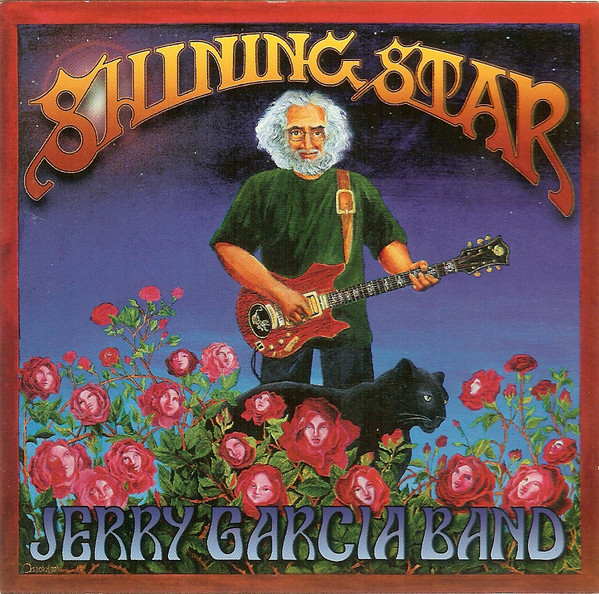
After Jerry died, the keepers of the vault made sure to unearth more of his solo excursions along with those of his main band. Overall more uptempo than Jerry Garcia Band, How Sweet It Is… had two more Dylan songs (“Tough Mama”, of all things, and “Tears Of Rage” via The Band), two from Cats Under The Stars, one from Compliments, the title track as made famous by Marvin Gaye (or perhaps James Taylor to this crowd), and some relatively obscure bluesy covers. Four years later, Shining Star presented two more CDs pulled from a wider net, covering over five years of gigs for even shakier vocals. This time six covers from Compliments were interspersed with such surprises as the album’s title track, first heard by the Manhattans, Daniel Lanois’ much-travelled “The Maker”, more Motown, R&B, and Dylan, and even “Midnight Moonlight” from Old & In The Way. Further into this century, individual shows and venue runs have been spotlit from time to time as well, as seen below, so there’s plenty more where this came from.

Jerry Garcia Band Jerry Garcia Band (1991)—3
Jerry Garcia Band
How Sweet It Is (1997)—3
Jerry Garcia Band
Shining Star (2001)—3
     Archival releases of same vintage:
     • Pure Jerry: Merriweather Post Pavilion (2005)
     • Garcia Live Volume Two (2013)
     • Fall 1989: The Long Island Sound (2013)
     • Garcia Live Volume 10 (2018)
     • Electric On The Eel (2019)
     • Garcia Live Volume 13 (2020)
     • Live At The Warfield (2025)

Friday, October 17, 2025

Jerry Garcia 9: Garcia/Grisman

David Grisman was the originator of “Dawg” music, a mix of bluegrass and jazz that highly appealed to his buddy Jerry Garcia. Deadheads would have heard his mandolin on “Friend Of The Devil” and “Ripple”, and he was a key component of Jerry’s Old & In The Way project. The two of them loved sitting and picking together, with Jerry on guitar and sometimes banjo, and once Grisman installed a studio in his house, it was only natural that they’d record some of their sessions.

Released on Grisman’s own label, Jerry Garcia/David Grisman was the first of the albums that have commemorated their collaboration. With occasional fiddle from Joe Craven, who also adds percussion, the overall feel is very much in the tradition of Django Reinhardt and Stéphane Grappelli, which was the point. They loved playing pre-war tunes, like “Russian Lullaby” and “Rockin’ Chair”, and “Two Soldiers” was likely the source for Bob Dylan’s own cover. Their take on the blues classic “The Thrill Is Gone” is way cool, but the retread of “Friend Of The Devil” is unnecessary. Just as impressive are the instrumentals “Grateful Dawg” (which lent its title to a 2001 documentary about the pair, which spawned a soundtrack album including live performances among previously released material) and “Dawg’s Waltz”. “Arabia”, which incorporates a Cuban melody, is a bit much at 16 minutes, but it does include an upright bass solo.

Two years later, Not For Kids Only took a similar approach, leaning heavily on traditional songs and the occasional nursery rhyme. It really does live up to its title, with charming lyrics, helpful liner notes, and familiar tunes, like “There Ain’t No Bugs On Me”, and “A Horse Named Bill” sung over “Dixie”. The tune of “Teddy Bear’s Picnic” might be familiar to tapers as one of Nicky Hopkins’ go-to timekillers onstage; here it’s got a more ragtime feel. Jerry’s voice isn’t as strong as before, but his cover art is very sweet, as are the pair’s goofy exchanges on “Arkansas Traveller”. Nice as the album is, Grisman took it upon himself to add other musicians, including the Wrecking Crew’s Hal Blaine, on a variety of instruments “while Jerry was out touring”. That’s fine sometimes, except when the Jew’s harp and animal sounds get in the way. (In 2024, the Bare Bones: The Duo Recordings download presented three discs’ worth of alternate and pre-embellishment tracks from this and other Garcia/Grisman albums, making it easier to focus on just them.)

After Jerry died, Grisman added more volumes to their catalog, drawing from the same fertile period. Shady Grove focused again on traditional and folk songs; with the exception of “Stealin’” and “Jackaroo”, many of these hadn’t made it to any stage Garcia was on since before the Dead formed. A thick booklet provided recording details as well as the history of the songs, with lyrics, in an attempt to suggest that the album was a through line to the work of Harry Smith and Alan Lomax. Even when there are other players, the approach throughout is laidback and relaxed, with between-take chatter too, but Jerry’s voice is shot for most of it.

That’s not an issue for So What, which presents three takes of the title track and two of “Milestones” (both by Miles Davis) plus two of Milt Jackson’s “Bags’ Groove” (also recorded by Miles) and one of Grisman’s own, “16/16”. These were all tried at different sessions, so any similarities end beyond the basic framework of each. The rhythm section and occasional flute are present but not obtrusive. The two friends are the focus and play off each other so well, it’s clear they know these tunes inside out. And with no singing, one can concentrate on their phenomenal fretwork. It’s too bad there isn’t more of this mode.
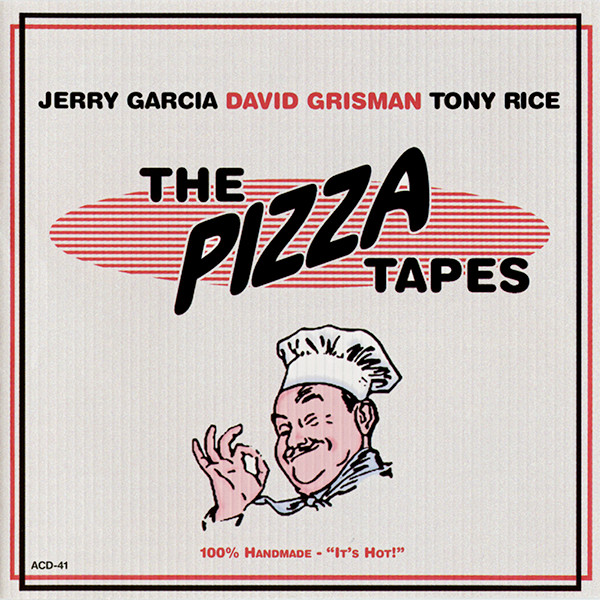
A unique tangent to these albums is The Pizza Tapes, which got its moniker from the highly plausible tale of a dub being given to or stolen by a pizza delivery driver at Garcia’s house, after which it became a widely traded bootleg until Grisman made it official. This was a trio session, recorded over two days with legendary bluegrass guitarist Tony Rice sitting in with the pair. Given the pedigree of their guest, most of the material leans towards the songs already heard on the albums already described, but with some other familiar tunes, like “Knockin’ On Heaven’s Door”, “Long Black Veil”, “Summertime”, “House Of The Rising Sun”, and supposedly Garcia’s only known performance of “Amazing Grace”. Throughout, Rice adds a wonderful dimension, and they’re clearly having a ball, and not just when goofing on the Addams Family theme and the Good Humor truck jingle in the sections indexed as “Appetizers”. (Ten years later Grisman released a three-CD expanded “Extra Large Edition”, which added more rehearsals and takes of the songs on the album, and further chatter.)
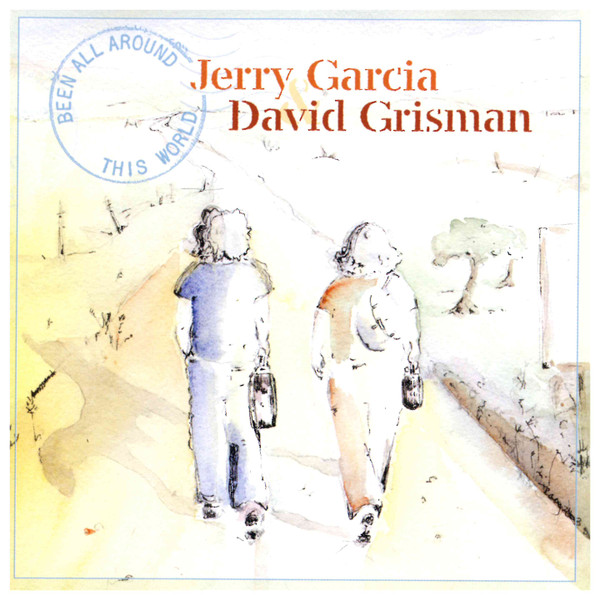
A few years went by what was stated as the final volume was released, and to date, it still is. Been All Around This World is the most wide-ranging of them all, running the gamut from standards like the title track (which the Dead had played for years, and was also a staple of the Jerry Garcia Acoustic Band) and tunes by Merle Travis, Jimmie Rodgers, and Mel Tillis to surprises like Dylan’s “Ballad Of Frankie Lee And Judas Priest”, Jimmy Cliff’s “Sittin’ Here In Limbo”, “Take Me” by George Jones, and wackiest of all, James Brown’s “I’ll Go Crazy”. “Handsome Cabin Boy Waltz” had already appeared on Shady Grove, but this instrumental version with flute is lovely.

While Grisman did manage to get several albums out of a finite well, the good news is that it’s all high quality. If you like one, you’ll probably like all the others.

Jerry Garcia/David Grisman Jerry Garcia/David Grisman (1991)—
Jerry Garcia/David Grisman
Not For Kids Only (1993)—3
Jerry Garcia/David Grisman
Shady Grove (1996)—3
Jerry Garcia & David Grisman
So What (1998)—
Jerry Garcia/David Grisman/Tony Rice
The Pizza Tapes (2000)—
2010 Extra Large Edition: same as 2000, plus 19 extra tracks
Jerry Garcia & David Grisman Grateful Dawg: The Original Motion Picture Soundtrack (2001)—3
Jerry Garcia & David Grisman
Been All Around This World (2004)—3
Friday, May 2, 2025

Grateful Dead 22: One From The Vault

Back in 1975, the Grateful Dead had just finished recording their Blues For Allah album, and invited a bunch of radio people from a nearby convention to hear it as part of their promotion. Fifteen or so years later, the existence of a superior recording (as broadcast on the radio soon after) coupled with the novelty of being captured in the midst of their lengthy break from touring made it a good choice to kick off their latest archival series, on their own label. (In solidarity with the environmental movement to eliminate longbox packaging for CDs, the album came in the new digipack style, which made it easy to display on store racks, and prone to scuffs and tearing at home.)

One From The Vault presents the complete show, the band kicking in while Bill Graham is doing his introduction, with the first set (and disc) concentrating mostly on side one of the album, melding in “It Must Have Been The Roses” and “Eyes Of The World”, which incorporates a “Drums” detour. The second set starts with a slowed-down “Around And Around”, closing the first disc as the rest of the show filled the second disc to capacity. Following “Sugaree” and “Big River”, it’s on to side two of Blues For Allah, with another “Drums” detour, “The Other One”, “Goin’ Down The Road Feelin’ Bad”, and “U.S. Blues” before ending with a 20-minute exploration of the title suite, complete with miked crickets, for the only time ever. It’s a good gig musically as well as historically. (Only one other show from this era has officially surfaced, albeit in a limited 80-CD box set: a free concert in conjunction with Jefferson Starship; see below.)

The album was followed into stores a week later by an all-star tribute album distributed by Arista, who were probably wondering when they’d get another Dead album themselves. Deadicated was designed to benefit rainforest and indigenous peoples causes, and featured mostly faithful covers by the likes of Elvis Costello, Cowboy Junkies, Warren Zevon, Indigo Girls, Los Lobos, Dr. John, and new sideman Bruce Hornsby. A few Georgia Satellites and Heartbreakers gang up as the Harshed Mellows to stomp through “U.S. Blues”, and Suzanne Vega manages to create a medley of “China Doll” and “Cassidy”. Dwight Yoakam and Lyle Lovett mildly countrify “Truckin’” and “Friend Of The Devil” respectively; Burning Spear takes “Estimated Prophet” even further into reggae; Midnight Oil matches the mystery of “Wharf Rat”; and Jane’s Addiction makes “Ripple” fairly goofy. All in all, the matchups work and the album flows.

Grateful Dead One From The Vault (1991)—3
     Archival release of same vintage:
     • 30 Trips Around The Sun: The Definitive Live Story 1965-1995 (2015)
     • Blues For Allah: 50th Anniversary Deluxe Edition (2025)
Deadicated: A Tribute To The Grateful Dead (1991)—

Friday, December 27, 2024

Grateful Dead 21: Without A Net

Modern technology caught up with the scope of the Grateful Dead at the height of their popularity, and their most recent tours provided plenty of content for Without A Net. Besides being the first of their live albums to go gold—being a double-CD, double-cassette, or triple-LP helped—it also served as a tribute to Brent Mydland, who had become the third of the band’s keyboard players to die, not two months before the album came out.

Because it was sequenced with the extended playing time of CDs in mind, most tracks stretch as easily as they would have on stage. With songs being allowed to last seven and, in some cases, over eleven minutes, the overall effect is of a laid-back, natural show, albeit edited seamlessly between almost as many shows as there were tracks. (Indeed, many of the original shows would be released in their entirety in the decades to come, as demonstrated below.)

In addition to the Dead in their element playing, if not necessarily hits, crowd favorites, there were a few tunes that hadn’t been on albums before, even if they were likely throughout collectors’ tapes. Robert Johnson’s “Walkin’ Blues” had been a relatively recent addition to their repertoire, after Bob Weir had done it on a solo acoustic tour with Rob Wasserman. “Looks Like Rain” had been a Dead staple since first appearing on Ace; “I Know You Rider” had been in their sets from the beginning, and often followed “China Cat Sunflower”, as it does here. A lengthy “Eyes Of The World” features Branford Marsalis on saxophone, a welcome difference from the some of the now-dated synthesizer sounds and MIDI effects elsewhere. “Victim Or The Crime” is more effective here than on Built To Last, and the “Franklin’s Tower” suite runs nineteen minutes before a crowd-pleasing “One More Saturday Night”. “Dear Mr. Fantasy” isn’t much to get excited about, except to showcase Brent; curiously, it fades before whatever it segued into originally. Throughout the over two hours of music, everything is mixed evenly and clearly.

Since the idea was to present an up-to-date representation of where the Dead had arrived at the end of the decade, Without A Net was successful, musically as well as commercially. And while it was good to incorporate longer songs, missing from the experience were the improvisational moments common to many shows, usually denoted as “Drums” and “Space” on most tapers’ cassette inserts. The band addressed this directly a year later with Infrared Roses, an hour-long collage consisting of four suites of three tracks each, selected and mixed by their sound guy and titled by Robert Hunter.

The program opens with “Crowd Sculpture”, putting the listener in the middle of the parking lot before a show. From there we’re plunged amid the drums, and jamming commences. Branford Marsalis appears again on “Apollo At The Ritz”, while “Silver Apples Of The Moon” is a duet between new official keyboardist Vince Welnick and common fixture Bruce Hornsby. It’s certainly for the initiated, even though the novice should recognize “Uncle John’s Band” at the start of the second suite, but as aural sculptures go, you could do worse. (Of course, this had nothing on 1994’s Grayfolded, a commissioned project that saw fragments of 25 years’ worth of live performances of “Dark Star” melded and overlaid over the course of 109 minutes on two CDs.)

Grateful Dead Without A Net (1990)—3
Grateful Dead
Infrared Roses (1991)—3
     Archival releases of same vintage:
     • Dozin’ At The Knick (1996)
     • Terrapin Station (Limited Edition) (1997)
     • Nightfall Of Diamonds (2001)
     • Formerly The Warlocks (2010)
     • Spring 1990 (2012)
     • Spring 1990: So Glad You Made It (2012)
     • Spring 1990: The Other One (2014)
     • Wake Up To Find Out (2014)
     • 30 Trips Around The Sun: The Definitive Live Story 1965-1995 (2015)
     • Enjoying The Ride (2025)

Tuesday, July 2, 2024

Grateful Dead 20: Built To Last

In the late ‘80s the Dead were arguably bigger than they’d ever been, and largely hadn’t changed much of their business plan in the decades thus far. So when they decided to record a follow-up to their smash hit of two years before, they didn’t dip into the well that had built up over the previous gap between studio projects. Built To Last consisted of songs that had been written since that last album and, in keeping with tradition, were subject to questionable mixing that didn’t do them any favors. Part of the problem was the embracing of MIDI technology, which combined with synthesizers for a very cold, non-organic sound. Also, for the first time Brent Mydland’s songs outnumbered both Bob Weir’s and Jerry Garcia’s, and one of our favorites, “Don’t Need Love”, wasn’t among them.

Confusing things quite a bit, the cassette and CD versions of the album had an extra track not on the LP, and all three running orders were different. Now that the CD has become standard, that’s the sequence we’re going to explore here, and frankly, it’s the one that works best.

“Foolish Heart” was the first single, and more enjoyable than the production would suggest. Even with that, it sets a low bar the rest of the album doesn’t always meet. To wit: Brent’s “Just A Little Light” is just a little too adult contemporary, not helped by a vocal that resembles that of Dan Hill. A raspy Jerry sings the title track, something of a continuation of the theme of “Touch Of Grey”, but it works. “Blow Away” is a better Brent song, with a cool hook on the keyboards and guitars that complement the vocal well. Bob finally turns up with “Victim Or The Crime”, written with the guy probably best known for playing Beef in Phantom Of The Paradise. This one is tough to unpack, as the last half is slathered with effects too cliché for an album released on Halloween, but there’s a good song in there somewhere.

“We Can Run” was left off the vinyl version, which is mind-boggling because it’s not only one of the better songs here, and it’s one of Brent’s. Jerry (with Robert Hunter) goes three-for-three with “Standing On The Moon”, an affecting meditation on humanity, history, and legacy. While it only follows on the CD, the placement of “Picasso Moon”—another challenging Bob construction—is odd. Interestingly, both of Bob’s songs here seem patterned on his winning pair on the last album, and pale in comparison. And while “I Will Take You Home” is a lovely sentimental lullaby, the windup music box theme and fake strings jar with the rest of the album. It does not belong here.

Save the occasions where they simply played—Workingman’s Dead, American Beauty, even In The Dark—the band clearly never learned how to work in the studio. Certainly from the ‘70s on, “production” just didn’t work for them. But that didn’t matter. They promoted Built To Last by going on tour like they always did, where the songs breathed and sounded better. There was, however, a unique promotion in the form of Dead In A Deck, which packaged your choice of the album on CD or cassette with official Dead-branded playing cards. And as it turned out, this was the last studio album they would complete. (Rather than provide a peek into the recording sessions, the bonuses on the later expanded CD were all live tracks: twelve-minute takes on “Blow Away” with an extended rap and an off-pitch “Foolish Heart”, and a cover of Rodney Crowell’s “California Earthquake”.)

Grateful Dead Built To Last (1989)—3
1989 CD: same as 1989, plus 1 extra track
2006 expanded CD: same as 1989 CD, plus 3 extra tracks

Friday, March 22, 2024

Jerry Garcia 8: Almost Acoustic

Multiplatinum success wasn’t going to slow Jerry Garcia down any, and just because the Dead didn’t have any gigs booked didn’t mean he wasn’t going to play somewhere. For a few months in 1987 and 1988 he did a series of shows with a group that augmented a few members of the Jerry Garcia Band with old friends David Nelson (of New Riders of the Purple Sage) and Sandy Rothman plus a fiddle player. Hence, the Jerry Garcia Acoustic Band.

The repertoire was primarily folk and blues, not as extreme as the bluegrass of Old & In The Way but certainly connected. Almost Acoustic presented a grab bag of tunes recorded during stands in Frisco and L.A. and released on the Dead’s own label for the new generation of Deadheads to snap up for their CD players. These kids would have been familiar with the likes of “Deep Elem Blues” and “I’ve Been All Around This World”, and of course the closing “Ripple”, but they might not have expected the original song about Casey Jones. In the process they would become more familiar with the work of Mississippi John Hurt, Elizabeth Cotten, Jimmie Rodgers, and so forth.

The playing is relaxed and friendly, the crowd noise appreciative but not distracting. Jerry’s voice is a bit rough, but he’d been through a lot lately. Luckily the other pickers sing, and they harmonize well. And if you like this, there’s more where it came from, as seen below.

Jerry Garcia Acoustic Band Almost Acoustic (1988)—3
     Archival releases of same vintage:
     • Pure Jerry: Lunt-Fontanne, NYC, 10/31/87 (2004)
     • Pure Jerry: Lunt-Fontanne, The Best Of The Rest (2004)
     • Ragged But Right (2010)
     • On Broadway: Act One (2015)
     • Electric On The Eel (2019)

Friday, November 24, 2023

Grateful Dead 19: In The Dark

By the time the Dead released another studio album, it was their first in seven years. However, they had toured consistently in that period, which both allowed them to slowly hone new material as well as grow their appeal as a live draw. Soon the younger brothers and sisters of the original Deadheads were catching shows and trading tapes with the same fervor. By the time In The Dark came out, the pump was primed. They even made videos for three of the songs, increasing the exposure. (Also, pop culture was suddenly very nostalgic for the hippie scene of the late ‘60s, what with the whole 20th anniversary of Sgt. Pepper and so forth.)

They also learned their lessons from their last few studio albums, and chose to record this one live in an empty auditorium, then spending little time fixing and overdubbing before mixing and completing. The result is a strong set that doesn’t have any dated production sheen outside of whatever keyboard effects they were using that year. They had to reason to try to sound contemporary, and fully embraced their advanced years in the lyrics.

After rumbling into motion, “Touch Of Grey” tackles the statement of purpose immediately, with a playful lyric that doesn’t try to be poetic or overly profound, and that’s what sold the album. “Hell In A Bucket” is a wordy, bawdy Weir/Barlow kissoff that gives Jerry plenty of room to stretch, and you can dance to it too. “When Push Comes To Shove” is a basic shuffle boogie that loads up the imagery to convey a simple statement (that being “you’re afraid of love”, of course), and the sneaky blues of “West L.A. Fadeaway” caps a strong side.

Brent Mydland was still the new guy, and his “Tons Of Steel” is in the “woman as a train” metaphor, with appropriate opening effects, that’s about as subtle as a chainsaw. Bobby loads up other metaphors in the state-of-the-world address in “Throwing Stones”, for a strong two-fer. Finally, “Black Muddy River” is an elegant embrace of the inevitable that’s far from sappy or morose.

Perhaps in a nod to the preferred format for most Dead collections in those days, the cassette version of In The Dark included a bonus track at the end of side one, which bumped “West L.A. Fadeaway” to the middle of side two, making it much longer than side one. At any rate, “My Brother Esau” is heavy on Biblical and Vietnam War connotations, and a song even Bobby himself professes to not comprehend. (It was also the B-side for the “Touch Of Grey” single. By the time of the expanded reissue, it was programmed after the album proper, bolstered by two earlier outtakes and two contemporary rehearsals of album tracks, plus a live “Throwing Stones” from their summer tour with Bob Dylan.)

In The Dark was a blessing and a curse for the band and their fans, who suddenly had to deal with an onslaught of affluent kids harshing their mellows, crowding the parking lots, and generally acting uncool. But everybody already liked the songs, and weren’t likely to get sick of them anytime soon.

Grateful Dead In The Dark (1987)—
1987 cassette: same as 1986, plus 1 extra track
2006 expanded CD: same as cassette, plus 5 extra tracks

Friday, June 30, 2023

Jerry Garcia 7: Run For The Roses

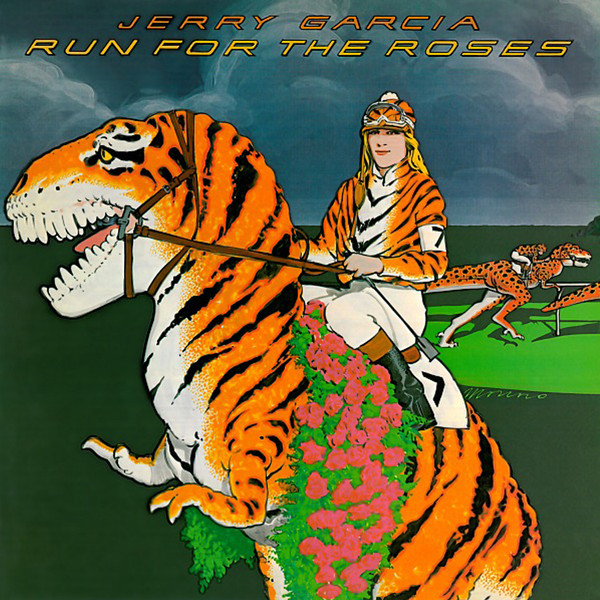
Just as Bob Weir liked to stretch outside of the Dead, Jerry Garcia had regularly used other bands as a chance to just jam without any pressure. Run For The Roses was technically the product of the Jerry Garcia Band, but that last phrase as written didn’t appear anywhere in the packaging. Along with the usual gang of John Kahn, Ron Tutt, and Merl Saunders was the brand new name of organist Melvin Seals, while the repertoire mixes diverse covers and originals written with Robert Hunter.

One of those is the title track, which sounds closest to a Dead contender and has some of Hunter’s most clever lyrics. Michael Omartian’s burbling clavinets dominate both channels of the otherwise surprisingly reggaefied “I Saw Her Standing There”. Clyde McPhatter’s “Without Love” is soulful R&B and a keeper, except for that final flatulent brass note. A real surprise is “Midnight Getaway”, a subdued and blatant lament over the end of an affair—very uncharacteristic of Hunter’s more, shall we say, poetic excursions. There’s no question what this song’s about, and the instrumental sections are even better. (We especially like the mention of the cat “under the stars”.)

That makes the equally straightforward “Leave The Little Girl Alone” something of a letdown—maybe because Kahn wrote the music while Jerry solos constantly under his own vocals. “Valerie” is a slow shuffle more along the lines of what we’d expect, and a sleepy slog through “Knockin’ On Heaven’s Door”, done even more reggae than Eric Clapton did, continues the dance with Dylan that would last the rest of his life. (Outtakes of “Tangled Up In Blue” and “Simple Twist Of Fate” feature among the bonuses on the expanded CD, along with an attempt at “Dear Prudence”, an alternate mix of “Valerie” with backing vocals, another stab at “Fennario” a.k.a. “Peggy-O”, and a pre-Dead take of “Alabama Getaway”.)

Even though side two loses steam, there’s enough on Run For The Roses to give fans something to enjoy at home when they’ve run out of concert tapes. Some of the keyboards and guitar effects are a little same-y and dated, but such technology would continue to be refined and embraced better in years to come.

Jerry Garcia Run For The Roses (1982)—3
2004 expanded CD: same as 1982, plus 6 extra tracks

Tuesday, June 27, 2023

Bob Weir 4: Bobby & The Midnites

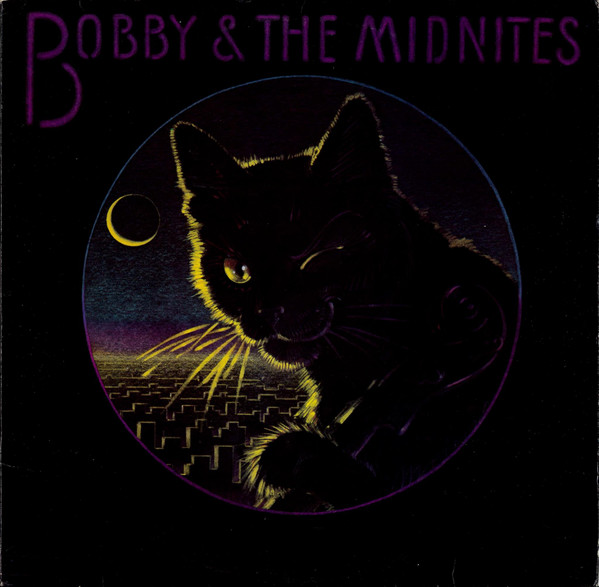
Always the poppiest of the Dead, Bob Weir took advantage of another break between albums to work with a side project to explore that tendency. Along with onetime Kingfisher Matt Kelly and new Dead boy Brent Mydland, he recruited Alphonso Johnson and Billy Cobham, both veterans of fusion outfits, and one Bobby Cochran, who’d been in a recent incarnation of Steppenwolf and happened to be the nephew of Eddie Cochran. While the label of their first album was careful to state “featuring Bob Weir”, it was credited to Bobby & The Midnites.

The music is more straightahead rock—and faster—than most Dead albums, and Billy sure knows how to hit cymbals. “Haze” is a fun boogie from the start with a nice chant from the band. Bob uses his Dylanesque yelling-singing hybrid on “Too Many Losers”, but much more tunefully. “Far Away” has some cool chords but descends into an easier singalong, with lots of space for Brent to explore his Hammond B-3. There’s a sharp left turn on the reggae cover “Book Of Rules”, and “Me, Without You” is typical early-‘80s tense rock fodder. “Josephine” is mostly a vehicle for Matt and Brent while Bob expresses his desire to “rock and roll with you”, then “(I Want To) Fly Away” crams a lot of ideas in, never sure if it’s jazz, rock, or reggae. “Carry Me” is the requisite pretty one, though the choruses have more power that just can’t be contained. For crowd-pleasers, “Festival” sure is a sneaky Jimmy Buffett knock-off.

Bobby & The Midnites was easily the most enjoyable Weir album since his first, which was basically a Dead album anyway. Although it didn’t light up the charts, the band was never more than a way to kill time between Dead tours, and it took three years for a follow-up. By the time of Where The Beat Meets The Street, Kelly and Mydland were otherwise detained, Kenny Gradney of Little Feat replaced Alphonso, a keyboard player who doubled on sax came in, and Jeff “Skunk” Baxter was brought on as producer. Bob took a back seat in the writing and singing categories, resulting in an extremely generic ‘80s soundtrack to a movie we’d never want to see. “(I Want To Live In) America” wouldn’t impress even the most diehard Rambo fan, and “Rock In The ‘80s” is even worse.

Most of the songs were covers, or at least by outside writers; why else would Bob sing about some girl who needs a “Lifeguard”? The techno remake of Marvin Gaye’s “Ain’t That Peculiar” was particularly execrable considered he’d been shot to death by his own father just that year. “Thunder & Lightning” might be better without the atmospheric intro, and “Falling” is half-decent, possibly due to John Barlow’s lyrics, but he was also partly responsible for “America”, along with the guy who played Beef in Phantom Of The Paradise, as well as the dangerous groupie portrait of “Gloria Monday”.

Whatever he’d hoped to achieve with this band was shot to hell in three short years; luckily he still had his day job. Not surprisingly, none of the songs on either album were ever played live by the Dead.

Bobby & The Midnites Bobby & The Midnites (1981)—3
Bobby & The Midnites
Where The Beat Meets The Street (1984)—

Tuesday, February 14, 2023

Grateful Dead 18: Reckoning and Dead Set

In October 1980, the Dead played two major residencies—first at the Warfield Theater in San Francisco, and then at Radio City Music Hall in New York City, with a stop in New Orleans in between. They intended to get a live album out of it, but ended up with so much material that they didn’t know what to leave out. Arista allowed them to put out two distinct albums that year—one focusing on the seated acoustic sets, the other more electric.

Reckoning was the acoustic album, extending the mood of side one of Bear’s Choice across four sides, except there’s no Pigpen and Brent’s playing piano (and harpsichord on “China Doll”). Like that album, the song choices are more laid back, whether their own tunes or covers. These include “The Race Is On”, made famous by George Jones, Jesse Fuller’s “Monkey And The Engineer”, old folk tunes like “Oh Babe It Ain’t No Lie”, “Jack-A-Roe”, and the traditional “On The Road Again”, and repeats of “Dark Hollow” and “Been All Around This World”. “It Must Have Been The Roses”, “To Lay Me Down”, and “Bird Song” had already been claimed as Dead fodder from Jerry’s solo albums and are very welcome here, as was Bob’s “Cassidy”.

The first CD version of the album was for some reason titled For The Faithful… and left off “Oh Babe It Ain’t No Lie” so it would all fit onto a single disc; this was not rectified for 25 years, when the original sequence was restored, along with a full second disc of additional material. Granted, eight of these were songs already on the original, “To Lay Me Down” was a studio rehearsal, and “Deep Elem Blues” (along with “Tom Dooley”) was from two years earlier, but still, this was generous. Of the “new” material, “Iko Iko” would become a staple, Bobby’s “Heaven Help The Fool” (played instrumental) and “Sage And Spirit” (already instrumental) were rare airings; he’d been singing “El Paso” for years.

Four months later, Dead Set was the “electric” album, and while it sported a way cooler cover, it struggled to display the excitement of the band at full throttle. As they hadn’t learned with Steal Your Face, vinyl limitations dictated shorter songs and edits, so the lengthy jams of legend aren’t captured here. In fact, the run from “Rhythm Devils” (aka “Drums”) through “Space” (née “Feedback”) to “Fire On The Mountain” is split between sides.

Plugging in the songs didn’t necessarily make them faster, but there’s a lot more room for soloing. “Samson And Delilah” has the energy but none of the disco trappings, but “Friend Of The Devil” is taken at about one third the original speed. Most of the tunes were staples, as were “Deal” and “Loser” are taken from Jerry’s first solo album and “The Greatest Story Ever Told” from Bobby’s. The only real rarity per se is a slog through “Little Red Rooster”.

As with its sibling, Dead Set was also truncated on CD by omitting “Space”, which was restored when the album was expanded in 2006. The bonus disc consisted of mostly longer performances, which helped make up for the edits left intact on the original album. We get to hear them stretch more; by now Bobby had started singing “C.C. Rider”, plus the band had taken on “Lazy Lightning” and “Supplication” from the Kingfish album. “Shakedown Street” is still a matter of personal taste, but “Not Fade Away” doesn’t need to be so slow for Jerry to wail. Besides, it fades out the disc.

In addition to these albums, a video compilation from the Radio City shows called Dead Ahead was available on VHS (and laserdisc!); this was later reissued on DVD with another 50 minutes of material. Altogether they provided a glimpse at what the band was all about on the cusp of the ‘80s, and the new guy was fitting in pretty well. Beyond that, these would be the last new albums by the Grateful Dead for another six years.

Grateful Dead Reckoning (1981)—
2006 expanded CD: same as 1981, plus 16 extra tracks
Grateful Dead Dead Set (1981)—3
2006 expanded CD: same as 1981, plus 10 extra tracks
     Archival releases of same vintage:
     • Download Series Volume 7 (2005)
     • Dave's Picks Volume 8 (2013)
     • 30 Trips Around The Sun: The Definitive Live Story 1965-1995 (2015)
     • The Warfield, San Francisco, California, October 9 & 10, 1980 (2019)
     • Enjoying The Ride (2025)

Friday, September 16, 2022

Grateful Dead 17: Go To Heaven

It was time for another Dead album. Their Arista deal still required them to work with an outside producer, and this time they got Gary Lyons (another guy who’d worked with Foreigner) who was also busy working on an Aerosmith album at the same time. Meanwhile, both of the Godchauxeseseses were gone, and were replaced in one swell foop by Brent Mydland, who could play keyboards as well as sing.

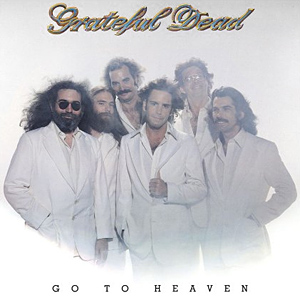
The humor in the Go To Heaven title wasn’t immediately obvious; the white suits on the hazy cover were likely intended to depict them as angels, but most people just assumed they’d gone full disco. Luckily, they hadn’t. Right off the top “Alabama Getaway” is a Garcia-Hunter rocker in the Chuck Berry mode, with a singalong chorus to boot. The new kid comes in strong too, with “Far From Me”, although his Michael McDonald huskiness and the overall production sound accidentally close to Pure Prairie League’s “Let Me Love You Tonight”. “Althea” rights the both lyrically and musically in a track that sounds like, well, the Dead. “Feel Like A Stranger” is a funky Bob Weir groove that leaves plenty of room for multiple guitar solos that probably went on well after the botched-sounding abrupt ending.

Bobby stays in front for the next two songs, which form something of a nautical suite. “Lost Sailor” is mysterious whether taken literally or figuratively, while the highly optimistic “Saint Of Circumstance” lifts the mood considerably. The drummers are credited with the slightly flatulent “Antwerp’s Placebo (The Plumber)” interlude before Brett shows his skill at composed in tricky time signatures with “Easy To Love You”. He’s also brought synthesizers to the mix, but we could do without the steel drum solo. Then “Don’t Ease Me In” makes its first-ever appearance on a Dead album, 14 years after its first recording for their debut indie single, bringing things full circle.

While it was released in 1980, Go To Heaven is very much a ‘70s album, and a decent finish for that era of the band—more so than Shakedown Street anyway. For the next few years they’d stick to touring. (The eventual expanded CD doesn’t add much; limp covers of the traditionals “Peggy-O” and “Jack-A-Roe” suggest a spent bullpen, although the Garcia/Hunter rarity “What’ll You Raise” shows they weren’t at all dried up. To fill up the disc, three live versions from later in the year provide something of a preview of their next two albums.)

Grateful Dead Go To Heaven (1980)—3
2006 expanded CD: same as 1980, plus 6 extra tracks

Friday, April 22, 2022

Grateful Dead 16: Shakedown Street

Their record company wanted more product, so the Dead decamped to their rehearsal space to deliver what would become Shakedown Street. Still required to use a name producer, they went the somewhat safe route with Little Feat’s Lowell George, who’d be dead within the year.

There is something of a gumbo feel to their laid-back cover of the Young Rascals’ “Good Lovin’”; this was one of Pigpen’s showcases back in the day, but it’s handled here by Bob Weir. It’s also splattered with timbale-style percussion, which continues on “France”, wherein Donna Godchaux duets with Weir on music he wrote with Mickey Hart to a Robert Hunter lyric. It’s got way too much steel drums, but some nice acoustic soloing, which only whets listeners’ appetites for Jerry Garcia to do something. Unfortunately he does so with the heavily discofied title track, the chorus and hooks of which still bear an uncomfortable similarity to “Stayin’ Alive”. This wouldn’t keep the tune from becoming a live staple, however. “Serengetti”, a track consisting solely of Mickey and Bill Kreutzmann’s percussion, is a more successful experiment, and a nice distraction. However, “Fire On The Mountain” uses the same two-chord template—maybe because Mickey wrote the music?—as “Franklin’s Tower”, but a hair slower. It, too, would become a favorite onstage.

Side two starts strong with “I Need A Miracle”—a rather ordinary sentiment, but the track has power. “From The Heart Of Me” is Donna’s final spotlight with the band, and while it’s a little chirpy, it’s a nice song, perhaps too quirky to be an adult contemporary hit. Historians shouldn’t be misled by “Stagger Lee”—rather than work up a new arrangement of this chestnut, Robert Hunter wrote all new words to tell the story, including the previously unknown fact that “she shot him in the balls.” Ideas remained thin, however, as “All New Minglewood Blues” is a slowed-down retread of a song from their first album. But “If I Had The World To Give” is a very tender Garcia-Hunter tune, and a nice benediction.

Despite its shortcomings, Shakedown Street isn’t a “bad” album, but it’s not great. The most popular songs continue to sell it to those who embrace them. (Bonus tracks on the eventual expanded CD include a version of “Good Lovin’” with Lowell George singing lead, alongside three songs from the band’s legendary appearance in Egypt in front of the Sphinx, including a 13-minute slog through “Fire On The Mountain”.)

Grateful Dead Shakedown Street (1978)—3
2006 expanded CD: same as 1978, plus 5 extra tracks

Friday, October 8, 2021

Jerry Garcia 6: Cats Under The Stars

Just as bandmate Bob Weir got to indulge his quirks outside the confines of the Grateful Dead, so could Jerry Garcia. And he did, constantly. Cats Under The Stars ventured near the MOR territory of Bob’s recent outing, but at least Jerry had lyricist Robert Hunter to keep him in familiar territory. Keith and Donna Godchaux feature prominently, on keyboards and too-loud vocals respectively, alongside the reliable John Kahn, Merl Saunders, and Ron Tutt; the collective was dubbed, naturally, Jerry Garcia Band.

“Ruben And Cherise” is one of those character mythologies that Robert Hunter weaves so well, though we could do without the synth horns and guitar effects that sound like a warped steel drum. It’s also easy to sway too, despite the constant tempo changes. John Kahn is credited for the music on the calypso-flavored “Love In The Afternoon”, and it’s surprising that nobody pointed out the chord changes are identical to “Ship Of Fools”. “Palm Sunday” is a brief trifle, sunk by what sounds like a synthesized harmonica, while the title track starts with a decent groove and another screwy meter. We’d love to take that tinkly keyboard out of the mix.

Side two is just strange. First off, “Rhapsody In Red” is a celebration of music that just plain rocks, Jerry soloing from start to finish, whether he’s singing or not. Unfortunately, Donna is the only vocalist on her own “Rain”, which otherwise sports a smart chamber strings and horns arrangement behind the adult contemporary backing, the guitar sounding like ‘70s Traffic. She also leads the choral group on John Kahn’s “Down Home”, evoking a cowboy campfire. “Gomorrah” brings Jerry back to the microphone for a slow lope a la “Candyman” or “Sugaree”, more in line with classic Garcia-Hunter.

Deadheads find Cats Under The Stars to be an absolute treat, but they probably like Donna anytime and anywhere. While Jerry’s voice and guitar ring throughout, the uninitiated may find the album to be dated at best, and generally sub-par. (The bonus tracks on the expanded CD are mostly covers and aren’t very exciting—unless you want a 16-minute version of “Don’t Let Go”—although there is a rehearsal of “Down Home” without Donna and a lovely stripped-down take of “Palm Sunday”.)

Jerry Garcia Band Cats Under The Stars (1978)—
2004 expanded CD: same as 1978, plus 7 extra tracks

Tuesday, October 5, 2021

Bob Weir 3: Heaven Help The Fool

The Dead’s deal with Arista Records allowed members to do solo albums, and Bob Weir was the first to bite. Where his first solo project involved the rest of the band anyway, it seems he had a different vision for Heaven Help The Fool. This time, the musicians included schlockmeister David Foster, Tom Scott, Waddy Wachtel, two guys from Toto, Bill Champlin on his way to ‘80s Chicago, and the guy who played drums in Journey after they booted Steve Smith. Do the math, and you get L.A. smooth.

That’s the prevailing sound from the start. “Bombs Away” is catchy, but there are far too many singers and saxophones in the way of the tune. If “Easy To Slip” sounds like a step in the right direction, keep in mind it’s a Little Feat cover, and that’s Elton John’s rhythm section holding it down. “Salt Lake City” is about as inspiring as the Beach Boys song of the same title, and it didn’t work for them either. Besides, he’s already a little old to be talking about all the pretty Mormon girls he’d like to see there. (As with all the songs that weren’t covers, John Barlow is the lyricist, so blame him.) “Shade Of Grey” moves through what sounds like several keys from verse to chorus, and musically surpasses the gang vocals on every “out in the streets”.

Maybe we’re just dim, but we can’t tell whether the title track is boasting or a warning. And maybe we’re suckers for mush, but “This Time Tomorrow” is a heartbreaker, even with the lush strings. However, in six short years Marvin Gaye could actually roll in his grave in reaction to the limp arrangement of “I’ll Be Doggone”. That makes the generic arena rock of “Wrong Way Feelin’” a relief.

There’s nothing wrong with Heaven Help The Fool except that it’s a departure from the Dead brand. One suspects that given his druthers, Bobby would have preferred a career like Boz Scaggs or Dan Fogelberg had attained by this time, and gladly worked with producer Keith Olsen forever. But for extremely rare occasions, none of these songs would make it to Dead setlists, which is telling.

Bob Weir Heaven Help The Fool (1978)—2

Tuesday, June 22, 2021

Grateful Dead 15: Terrapin Station

It had seemingly been an eternity since the last Dead album, and now they’d signed with Clive Davis’ new Arista label, which had already scooped up such daring legacy artists as the Kinks, Lou Reed, Patti Smith, and Barry Manilow. They were also tasked with using an outside producer, which is how Terrapin Station ended up with Keith Olsen in the booth, on his way from Fleetwood Mac to Foreigner.

Bob Weir dominates side one, beginning with the confusing time signature on the mildly reggaefied “Estimated Prophet”, unfortunately featuring the ubiquitious Tom Scott on sax. While the band had played “Dancin’ In The Streets” at several points in their career thus far, the disco arrangement of it here is just plain horrible. Bob and Donna Godchaux get a better chance to shine harmonically on Phil Lesh’s “Passenger”, which injects some needed rock and roll into the proceedings, particularly when followed by another disco mistake, this time on the traditional “Samson & Delilah”. Then Donna takes center stage for “Sunrise”, which she wrote all by herself. Between her performance and the orchestration, this could have been a very well received adult contemporary hit; it just doesn’t sound like the Dead at all.

The centerpiece of the album, of course, was the entirety of side two, entitled “Terrapin Part 1”. (The Dead apparently never completed music for Part 2, although lyricist Robert Hunter played portions of it over the years.) Besides presenting Jerry Garcia on vocals for the first time on the album, it challenges the listener not merely because it’s a multipart suite, but because it incorporates orchestration by Paul Buckmaster, and even the English Choral choir.

It starts innocently enough with “Lady With A Fan”, which evokes an image of scarlet begonias and such, but takes a minor key turn before morphing to “Terrapin Station” proper. The “Terrapin” theme is based around a not-too-intricate guitar part, part riffing and part chords, that is unfortunately matched and ultimately overshadowed by the orchestration. Following a crescendo, “Terrapin Transit”, credited to the two drummers in the band, recalls some of the Eastern influences of the “Blues For Allah” suite, and nicely folds into the “At A Siding” vocal portion, which features an uncredited trumpet a la Miles Davis. The drummers also drive “Terrapin Flyer” and its quickly syncopated beats under Jerry’s high-speed (sped up?) soloing, though the orchestration veers dangerously close to calypso. After another crescendo, the main theme returns as “Refrain”, this time with the choir intoning the title with different affectation.

Despite the overall success of the suite, the dated production as well as the clunkers on side one do not serve Terrapin Station well, rendering it sub-par. Luckily, there are better versions of these songs in the Dead archives, which continues to expand in general availability. (The cover has its charm, too.)

The eventual expanded CD would have been a perfect opportunity to concoct a stripped-back mix of the “Terrapin” suite, but apparently nobody thought of that. Still, it did offer some interesting rarities, including the otherwise unrecorded Lesh track “Equinox”, a Dead rendition of “Catfish John”, which had already appeared on Jerry’s most recent solo album, an early studio take of “Fire On The Mountain”, and a lengthy “Dancin’ In The Street” from their fan-favorite 1977 show at Cornell University.

Grateful Dead Terrapin Station (1977)—
2006 expanded CD: same as 1977, plus 6 extra tracks

Tuesday, February 9, 2021

Grateful Dead 14: Steal Your Face

Back before quitting the road for a spell, the Dead undertook a few projects to buy time and stay in front of fans. One guaranteed crowd-pleaser was The Grateful Dead Movie, which combined performances from a farewell five-night stand at San Francisco’s Winterland Ballroom with conversations with actual Deadheads plus psychedelic animation. Of course, by the time the film was finished, the band had resumed touring anyway, so to maximize the documentation of the stint, as well as bolster profits for their failing record label, the double live Steal Your Face album was released as a placeholder.

This was the period where the band was using their “Wall of Sound” PA system, a couple hundred speakers that may have sounded fine in person, but wasn’t recorded very well. Also, where previous live albums had ebb, flow, and momentum, this one seemed mostly a grab bag. It was not well-received, nor did it seem the band had much input past playing the songs in the first place. The energy seems subdued, even for them; “Ship Of Fools”, for one, is taken at a funereal pace, making “Beat It On Down The Line” a welcome pick-me-up, even with Donna Godchaux doing her thing. A few R&B and country covers make their first appearances on a Dead LP after having been in their repertoire for a few years; Chuck Berry’s “Promised Land” and “Around And Around” don’t have much life, but “Big River” by Johnny Cash and “El Paso” by Marty Robbins are snappier. Similarly, “solo” tracks like “Sugaree” and “Black Throated Wind” get the full band treatment, and Robert Hunter’s “It Must Have Been The Roses” enjoys another workout.

Despite its relation to the film, Steal Your Face was not the official soundtrack album for their movie, nor was it given much love in their ongoing archival program, getting only a couple of straight CD transfers with no extras. Rather, fans are directed to The Grateful Dead Movie Soundtrack, which offers five discs full of mostly complete performances from the shows, though not all of them, and in a mostly ramshackle order. (It still offers more than the double-DVD reissue of the movie itself.) As for the Wall of Sound era, official band archivists have made several shows available for comparison, as listed below.

Grateful Dead Steal Your Face (1976)—3
     Archival releases of same vintage:
     • Dick’s Picks Volume Seven (1997)
     • Dick’s Picks Volume Twelve (1998)
     • Dick’s Picks Volume Twenty-Four (2002)
     • Dick’s Picks Volume 31 (2004)
     • The Grateful Dead Movie Soundtrack (2005)
     • Road Trips: Vol. 2, No. 3 (2009)
     • Dave’s Picks Volume 2 (2012)
     • Dave’s Picks Volume 9 (2014)
     • Dave’s Picks Volume 13 (2015)
     • 30 Trips Around The Sun: The Definitive Live Story 1965-1995 (2015)
     • Dave’s Picks Volume 17 (2016)
     • Pacific Northwest ‘73-‘74: The Complete Recordings (2018)
     • Pacific Northwest ‘73-‘74: Believe It If You Need It (2018)
     • Dave’s Picks Volume 34 (2020)
     • Dave’s Picks Volume 42 (2022)
     • From The Mars Hotel: 50th Anniversary Deluxe Edition (2024)

Friday, September 25, 2020

Bob Weir 2: Kingfish

While Jerry Garcia played with a whole pile of people in and out of the Dead during their live hiatus, Bob Weir stuck mostly with a local bar band called Kingfish, fronted by occasional Dead collaborator Matthew Kelly and New Riders of the Purple Sage refugee Dave Torbert. Their eponymous debut came out on the Dead’s Round Records imprint, which was reserved for side projects such as these.

The big shot got to kick off the album, and both “Lazy Lightning” and “Supplication” would find their ways into Dead sets in the future, sometimes in tandem, sometimes not. Bobby also sings lead on “Home To Dixie” and the Marty Robbins outlaw ballad “Big Iron”, later covered by Johnny Cash in the Rick Rubin era. He also anchors the reggae gospel reading of “Bye And Bye”, a Joseph Spence arrangement of the beloved hymn “We’ll Understand It Better By And By”.

In between, the success of the album depends on your tolerance of mid-‘70s country rock. We hear echoes of the Starland Vocal Band with a better guitar player. A few tracks stand out, such as “Asia Minor”, one of a few songs brought forward from an earlier Kelly-Torbert project, and sporting some of the skip-time elements of earlier Dead.

Bob would be back with the Dead soon enough, leaving Kingfish to endure on their own. Matt Kelly would reappear throughout the Dead story from time to time, but outside of this album and a couple live releases, the band’s connection is merely tangential.

Kingfish Kingfish (1976)—3

Tuesday, September 22, 2020

Jerry Garcia 5: Reflections

As mentioned, the Dead as a unit were off the road, but all the members kept busy, in the studio and onstage, sometimes with each other. So it was that Jerry Garcia’s next solo album was an amalgam of sorts. Half was recorded with the current Jerry Garcia Band (which included Nicky Hopkins on keyboards, as well as Larry Knechtel in the studio), and the rest featured the Dead. Since each of the latter would make it to their setlists, Reflections shouldn’t be dismissed as a side project. Be warned, however: Donna Godchaux is prominent in the mix, in both bands.

The music alternates from one band to the other, but since the Dead tracks bookend the set, we’ll start there. “Might As Well” kicks off the proceedings, but don’t be fooled by the rollicking arrangement; this is predominantly a low-key set. The other tunes made their first album appearances after several years in progress: written solely by Robert Hunter, “It Must Have Been The Roses” was rescued from his first solo album; “They Love Each Other” was a perennial in 1973, but not as jaunty here; “Comes A Time” had been around as far back as 1971, and gains an expressive solo.

The “other” tracks aren’t as strong, with the clear exception of “Mission In The Rain”. The only Garcia/Hunter original here recorded by the solo band, it’s a keeper, from the mystery of the first verse to the delivery in the chorus. Unfortunately, “I’ll Take A Melody” is an Allan Toussaint song taken at a dirgey pace. “Tore Up Over You” is a Hank Ballard & The Midnighters song done well here, with lots of rolling piano from Nicky, whereas the country cover “Catfish John” was already in Jerry’s peripheral vision, having been part of the Old & In The Way repertoire.

Given the two distinct sources of the recordings, Reflections is sequenced very well, mostly alternating between bands. The bonuses include four further middling covers jammed in the studio by the JGB, along with a 16-minute Dead instrumental called “Orpheus”. This certainly supports the theory that the album was pieced together using earlier Dead sessions, coming off the high of the Blues For Allah experiments, to bolster what little the JGB was able to accomplish in the studio.

(Note: while we don’t normally append studio albums with this kind of info, it bears mentioning that two live collections from the vaults spotlight this lineup of the JGB, and especially because Nicky Hopkins is involved. They are listed below.)

Jerry Garcia Reflections (1976)—3
2004 expanded CD: same as 1976, plus 5 extra tracks
     Archival releases of same vintage:
     • Let It Rock: The Jerry Garcia Collection, Vol. 2 (2009)
     • Garcia Live Volume Five (2014)

Tuesday, June 16, 2020

Grateful Dead 13: Blues For Allah

For too many reasons to document here, the Dead had taken an extended break from live performance—as a unit, anyway. But with their own record label and distribution, they used the studio to experiment, ably blending songs with exploration on Blues For Allah. (Mickey Hart was also back in the fold, having left a few years earlier after his dad ran off with a pile of the band’s money.)

“Help On The Way” exudes a certain mysticism in the guitars and electric piano, going into the intricate jam of “Slipknot!” Before you know it, they’ve found their way to “Franklin’s Tower”, a two-chord slow boogie best known for its “roll away the dew” chorus. “King Solomon’s Marbles” is a two-part instrumental with dizzying time changes; the “Stronger Than Dirt” portion gets its title from the same rhythmic suggestion of the Doors’ “Touch Me”, while “Milkin’ The Turkey” would suggest a bluegrass influence that isn’t there. “The Music Never Stopped” would be a middling Bob Weir trifle, except that it once again features Donna Godchaux prominently, sinking it for these ears.

Side two is even more esoteric. “Crazy Fingers” has a reggae lilt, and plenty of organ, destined to become a live favorite over the last decade of the band’s run. Weir redeems himself with the lovely Bach-flavored instrumental “Sage & Spirit”, featuring a roadie from Quicksilver Messenger Service on flute. Finally, the lengthy title suite is taxing at first, working very hard to evoke the spirit of Egypt. There’s a moment near the end of the opening section where Donna’s counterpoint sounds like the middle of “Brown Shoes Don’t Make It” (the “world of secret hungers” part) but eventually it coalesces, crickets poking through the desert winds (really). A melody develops out of all this, and “into eternity” is chanted with Donna wailing past the point of welcome.

While it’s not usually our thing, Blues For Allah is a successful experiment, breaking barriers as well as new ground for the band. But it still sounds like the Dead, and even without an audience for ambience and feedback, they found a way to create. The expanded version of the album is of interest in that context, adding a bunch of instrumental jams recorded few months before the sessions proper, plus “Hollywood Cantata”, a Robert Hunter lyric for a song that would evolve into “The Music Never Stopped”. These were not included on the 50th Anniversary Deluxe Edition, which added two discs: one had the soundcheck for the concert eventually released as One From The Vault (including two run-throughs of the suite culminating in “Franklin’s Tower”) plus their set from Bill Graham’s SNACK benefit show, and the other consisting of selections from two June 1976 shows in Philadelphia. (A Blu-ray sold exclusively at the band’s site offered the album in four mixes prepared by Steven Wilson: hi-res stereo, instrumental, 5.1 surround, and Atmos. Also, as had become customary, there was a supplemental digital release in Blues For Allah: The Angel’s Share, which offered about 90 minutes’ worth of instrumental “rehearsals”.)

Grateful Dead Blues For Allah (1975)—3
2006 expanded CD: same as 1975, plus 6 extra tracks
2025 50th Anniversary Deluxe Edition: same as 1975, plus 22 extra tracks