Showing posts with label gram parsons. Show all posts

Friday, February 16, 2018

Byrds 14: Box Sets

Towards the end of the ‘80s, with the likes of Tom Petty and R.E.M. reviving interest in the Rickenbacker, the Byrds began to attract attention from a younger generation. Just in time for their induction in the Rock and Roll Hall of Fame, as well as a new Roger McGuinn solo album, and following successful lawsuits in favor of the band members not named Clark or Clarke came a four-disc box set covering the band’s tenure on Columbia.

Simply titled The Byrds, albeit with individually titled discs, the set begins with (naturally) “Mr. Tambourine Man” and moves all the way through Farther Along. Because the existing CD reissues of the albums were a little spotty, the sound was greatly enhanced, with many of the early songs presented in wide stereo and with extended endings, some of which had been revealed on the independent Never Before compilation from a few years before. That set also boasted some previously unreleased tracks, and many of them (such as “The Day Walk”, “She Has A Way”, and “Psychodrama City”) were included in the box in context.

As with most sets of its type, the earlier material vastly outweighs the later material, with the first five albums covered on the first two discs. A live radio take of “Roll Over Beethoven” sung by David Crosby isn’t much to write home about, but the real enticement was the inclusion of several Sweetheart Of The Rodeo tracks with Gram Parsons’ original vocals, as opposed to the common album tracks redubbed by McGuinn. The remainder of the discs speeds through the Clarence White era, still giving him some overdue recognition, and still sounding very different from the original incarnation of the band.

To bring it all back home, so to speak, the final 20 or so minutes of the set are given over to new recordings featuring the three senior members. Live recordings of “Turn! Turn! Turn!” and “Tambourine Man” with Bob Dylan (from a Roy Orbison tribute, of all things) are a sloppy setup for four studio tracks: a new recording of “He Was A Friend Of Mine”; the obscure Dylan cover “Paths Of Victory”; “From A Distance”, concurrently covered by Bette Midler in a Grammy-winning performance; and “Love That Never Dies", which was basically a teaser for McGuinn’s upcoming Back To Rio album. (Heralded as a comeback at the time, it hasn’t worn well, save two songs contributed by Byrds disciples: Elvis Costello’s “You Bowed Down” and Tom Petty’s “King Of The Hill”.)
Each of the Columbia albums was overhauled in the ‘90s, and most of the rarities in the box were included on their respective expansions, but it was still surprising that a second box set dedicated to the band came out a mere 16 years later. In addition to a DVD of mimed clips from the vintage era, the four discs in There Is A Season go a little wider on the history of the band, starting with six tracks from the Beefeaters and the Jet Set, a.k.a. the Byrds before they were the Byrds. Some of these were already available on various collections dubbed Preflyte, and while they have some of that harmonic charm, the pieces aren’t all there yet. More live material from the Clarence era shows their prowess, and two songs from the 1973 “reunion” move the spotlight back to Gene Clark. Yet for some reason, they choose to close with “Paths Of Victory” from 1990.

Much of the rare stuff was already covered on that first box, and is repeated on There Is A Season. As it pushed the first box into deletion, it’s the only comprehensive set available for physical purchase. There is more emphasis on Gene, but some of the swaps in the way of album tracks are questionable.

The Byrds The Byrds (1990)—4
The Byrds
There Is A Season (2006)—4

Tuesday, January 31, 2017

Flying Burrito Bros 5: Close Up The Honky Tonks and Sleepless Nights

Like any smart label, A&M cashed in on both Gram Parsons’ death as well as the first breakup of the Flying Burrito Brothers with a double-LP compilation. Close Up The Honky Tonks devoted the first half to a side each of selections from Gilded Palace Of Sin and Burrito Deluxe, plus the single “The Train Song”. The second half was all previously unreleased material. Side three was all covers—mostly country, but also the Bee Gees’ “To Love Somebody”—from a session recorded with Gram shortly before Altamont, and side four came from the sessions for the third album: more covers, as well as the lost classic “Did You See”, Sneaky Pete’s workout “Beat The Heat”, and Gene Clark’s “Here Tonight”, the one song recorded the week he was in the band. (This album would be superseded by later Burritos compilations, and many of the rarities made it to 2000’s Hot Burritos! double-CD anthology, along with the first three albums in their entirety.)

Two years later, with Gram’s legend growing, they decided to spotlight their onetime artist with another set compiled from the same source as side three of the last album, giving him top billing and a moody cover shot on Sleepless Nights. These were more country weepers, with the exception of “Honky Tonk Women”, taken even cornier than the Stones’ own “Country Honk” variation. But nine tracks weren’t enough to fill up another album, so they wisely licensed three outtakes from Grievous Angel, all duets with Emmylou Harris. Besides sounding better from being actually produced instead of just recorded, they shine compared to the others, particularly on the title track.

Overall Sleepless Nights is more country than rock, and doesn’t really spotlight the band, who could certainly cook when given the opportunity. If its legacy means anything, the album meant a lot to Elvis Costello, who would mine this and other Gram Parsons performances for the selections on his own Almost Blue five years later.

The Flying Burrito Brothers Close Up The Honky Tonks (1974)—3
Gram Parsons/The Flying Burrito Bros.
Sleepless Nights (1976)—3
The Flying Burrito Brothers
Hot Burritos! The Flying Burrito Brothers Anthology 1969-1972 (2000)—

Saturday, August 22, 2015

Gram Parsons 2: Grievous Angel

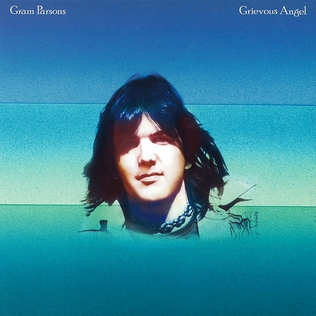
By the time Grievous Angel came out, its auteur was dead, just short of the magical age of 27. This has had a lot to do with Gram Parsons’ hagiographical status, but the key to the album—and its success—is Emmylou Harris, who harmonizes on nearly every track. Having many of the same solid players on board, none of whom were as debilitated by drink and drugs as he was, helped too.

For all its Nashville trappings, “Return Of The Grievous Angel” is not your ordinary country song, loaded with sly imagery and changes. “Hearts On Fire” is another weeper, Emmylou’s control tempering his wavering. The uptempo “I Can’t Dance” has some tasty guitar work but is just a brief tangent. “Brass Buttons” is a lovely sad lament, and “$1000 Wedding” is even more heartbreaking; both are excellent cases for his songwriting.

The atmosphere changes abruptly for “Medley Live From Northern Quebec”, which isn’t a medley at all but “Cash On The Barrelhead” followed by his own “Hickory Wind” with canned crowd noise and fake patter added in, basically used to keep the album over half an hour. “Love Hurts” was tackled a full year before Nazareth got to it, and here it’s milked for all the tears it can wring. “Ooh Las Vegas” is a jaunty rewrite of “Mystery Train” written with Ric Grech and left over from the first album, while “In My Hour Of Darkness”, written with Emmylou is stately and profound, ultimately lifting the album above its older brother.

And that was pretty much it for Gram Parsons, though his music certainly endured. Warner Bros. thoughtfully paired GP with Grievous Angel on a two-fer cassette in the ‘80s, then issued them together on a single CD in 1990, providing excellent value for fans old and new. In 2006, in time for what would have been his 60th birthday, The Complete Reprise Sessions put each album on its own disc with interview snippets afterwards, and added a third disc of alternate takes.

Gram Parsons Grievous Angel (1974)—

Monday, June 1, 2015

Gram Parsons 1: GP

Revisionist history will tell you that Gram Parsons was a musical genius not fully appreciated in his time. We weren’t there, so we can’t say for sure, but like most people we had to find out about him after the fact. Still, he did help Roger McGuinn and Chris Hillman find a new direction for the Byrds, then ran off with Hillman to form the Flying Burrito Brothers, and helped found what we now call country rock. However, he also hero-worshipped Keith Richards, musically as well as pharmaceutically, so it took a relative while for him to finally record an album under his own name.

While recorded in Hollywood and not Nashville, GP is a pure country album, with very little of the “rock” sounds that permeated the best Burritos tracks. With Ric Grech of Blind Faith and Traffic as the unlikely producer, the band gathered such pros as James Burton, Glen Hardin, and Ron Tutt from Elvis Presley’s band, Al Perkins and Buddy Emmons switching off on pedal steel, and the ever-popular Byron Berline on fiddle. But the most notable contribution was that of a heretofore unknown singer named Emmylou Harris, who brought out the best in the man who more or less discovered her.

Berline’s fiddle saws away from the very first notes of “Still Feeling Blue”, a Parsons original that sounds like a chestnut. Emmylou gets a nice spotlight on “We’ll Sweep Out The Ashes In The Morning”, but lends more subtle support on “A Song For You”. “Streets Of Baltimore” is another classic weeper about the evils of the big city, balanced nicely by the portrait of “She”, who “sure could sing”.

“That’s All It Took” is another swell duet that’s pretty straightforward, but we can’t say the same for “The New Soft Shoe”, which actually seems to be just as much about footwear as it is a dance move. Ric Grech contributed “Kiss The Children”, which sports a vocal backing borrowed directly from the Jordanaires, while “Cry One More Time” and its ‘50s saxophone comes straight from the second J. Geils Band album, of all places. The simple remorse of “How Much I’ve Lied” is smacked aside by the more obnoxious “Big Mouth Blues”, which is all honky-tonk boogie.

One’s enjoyment of GP will depend on how much likes any kind of country music, whether it’s classic Nashville or today’s sterile conveyor belt products. Whatever your preference or lack thereof, Gram Parsons was not a cookie cutter musician, and that’s why these songs have endured.

Gram Parsons GP (1973)—3

Monday, February 6, 2012

Flying Burrito Bros 2: Burrito Deluxe

For a while there it looked like the Flying Burrito Brothers would be around for a while. They even played at Altamont, thanks to Gram Parsons’ friendship with Keith Richards. (They can be seen for about two minutes in the Gimme Shelter film, right after the naked fat guy, playing “Six Days On The Road” before fights start in the crowd.)

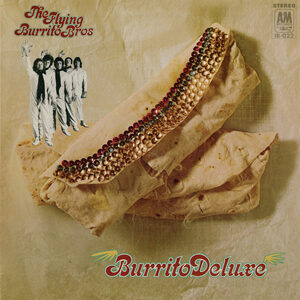
As tight as the first album was, Burrito Deluxe is not as focused, and a little disappointing. Despite Chris Hillman moving back to bass and introducing future Eagle Bernie Leadon on guitar, Parsons didn’t do as much, and the lousy mix obscures the novelty of having fellow former Byrd Michael Clarke on lackluster drums.

There are some okay moments, like the stellar cover of the Stones’ “Wild Horses” released before their version. The other covers are more rote country songs, except for the chaotic stab at “If You Gotta Go”, an obscure Dylan song people started covering around then. At just over a half hour of music, one is left feeling unsatisfied. What made the debut so striking—the originals, the odd R&B transformations—is absent here, so everything sounds very ordinary.

Some people worship every note that Gram Parsons played, so this album is fine for them. True to form, he barely stuck around for the Burritos either; they fired him after Burrito Deluxe, which gave him more time to do smack with Keith Richards, and eventually recorded two of his own albums before succumbing to alcohol and morphine. As for the Burritos, they had two more albums that most notably added a guy who would eventually start Firefall, before sputtering out, then reforming without Hillman and revolving through several other members, including the occasional latter-day Byrd. Nitpickers will likely only care about the first two albums, which are nicely compiled in toto on Sin City: The Very Best Of The Flying Burrito Brothers, alongside three other tracks from the original band.

The Flying Burrito Bros Burrito Deluxe (1970)—2

Monday, November 28, 2011

Flying Burrito Bros 1: The Gilded Palace Of Sin

Gram Parsons was only in the “new” Byrds long enough to spearhead the recording of Sweetheart Of The Rodeo. Even before that album was released, he had left the band, soon to be followed by Chris Hillman, and together they formed the Flying Burrito Brothers.

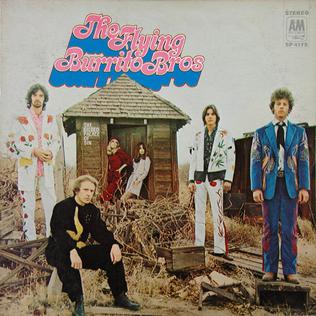
This outfit expanded on the country tendencies of the Byrds by infusing it with a distinct rock sound, best summed up by the fuzz tone used by pedal steel guitarist “Sneeky Pete” Kleinow, which cuts through even the corniest tracks like a saw. On top of it all, Parsons and Hillman croon like the Everly Brothers. This blend appears at the top of The Gilded Palace Of Sin on “Christine’s Tune” (later retitled “Devil In Disguise”).

Their approach to country was anything but orthodox, as even the straighter sounding songs can be deceptive. The wonderfully melodic “Sin City” skewers the LA music scene, while the jaunty “My Uncle” concerns draft evasion while a mandolin trills away. “Wheels” and “Juanita” celebrate, respectively, the open road and the redemption of a teenage girl. “Do You Know How It Feels?” is relatively straight, setting us up for the closing, slightly surreal monologue about a “Hippie Boy”, complete with a chorus of “Peace In The Valley”.

Each side gets its own unique centerpiece as well. On the first, there’s a pair of Memphis R&B covers, “Do Right Woman” and “The Dark End Of The Street”, which had been hits just a few years before and would later feature in The Commitments. Side two has two songs that were apparently written so fast that they barely got titles. “Hot Burrito #1” is a lovelorn lament later claimed by Elvis Costello as “I’m Your Toy”. “Hot Burrito #2” isn’t as easy to sum up except for the insistence on love and the exasperated “Jesus Christ!” at the end of each chorus.

The Gilded Palace Of Sin is one of those albums that gets better with each listen, coming across as so effortless and easy. And as with most things involving Gram Parsons, it wouldn’t last.

The Flying Burrito Bros The Gilded Palace Of Sin (1969)—4

Friday, November 11, 2011

Byrds 6: Sweetheart Of The Rodeo

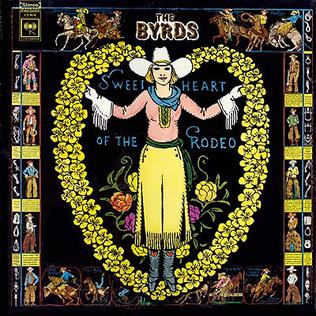
The original Byrds were now down to two: McGuinn and Hillman. Still saddled with a record contract, they regrouped with a couple of new members and some grand ideas. Instead, they followed the post-psychedelic hangover of 1968 by going back to basics. Anchored by multi-instrumentalist trust fund brat Gram Parsons, the band more or less invented country-rock with Sweetheart Of The Rodeo.

Neither veteran brought an original composition to the album, but being the Byrds, they do frame the set with two Bob Dylan songs (“You Ain’t Goin’ Nowhere” and “Nothing Was Delivered”) recently unearthed from the Basement Tapes. The rest are straight arrangements of traditional songs, bluegrass favorites and even an R&B cover, a wonderfully pretty “You Don’t Miss Your Water”. Throughout, the songs are colored by rolling piano, banjo, pedal steel guitar and not a single Rickenbacker. McGuinn still took center stage as the leader, and even without his old granny glasses he could still carry a tune—so much so that for either legal or personal reasons he overdubbed his lead vocal on a few tracks that were originally cut with Gram Parsons singing.

That Parsons guy tended to make a pretty big impression on everyone he met; supposedly he was the one who turned the Byrds ship into this particular harbor. “You’re Still On My Mind” is a good drinkin’ song, and “Life In Prison” fits the same stereotype. His best moments on the album are on his own songs; “Hickory Wind” and “One Hundred Years From Now” (even sung by McGuinn) became immediate genre classics. And although mostly relegated to bass and mandolin duties, Hillman indulges his bluegrass roots with strongly sung performances of “I Am A Pilgrim” and “Blue Canadian Rockies”.

Sweetheart Of The Rodeo was not an immediate hit, but became a touchstone once more rock musicians began incorporating country sounds into their work. Its importance in the history of the Byrds was underscored by the inclusion of the original Gram Parsons vocals on the three songs McGuinn tinkered with on the band’s 1990 box set. It’s also the only one of their albums to be given its own “deluxe” expansion past a single CD. The Legacy Edition includes the three Parsons vocals originally featured on the box set, along with the standard outtakes, a bunch of early Parsons tracks and a whole pile of rehearsal takes on a second disc, but ignores five of the bonus rehearsals on the 1997 CD, so completists have to have both.

The album does show something of a progression through their first five, and while the Byrds continued as a band for another five years, they really weren’t the same band. Only Roger McGuinn was left, and he built a new unit around the amazing speedy picking of a kid named Clarence White. There would be some definite highlights over the next handful of albums—“Ballad Of Easy Rider” and “Chestnut Mare” to name two—and they still maintained a rabid fan base, but people seeking the jingle-jangle sound of the original band would be disappointed. (Besides, David Crosby was doing pretty well with his new friends anyway.)

The Byrds Sweetheart Of The Rodeo (1968)—4
1997 CD reissue: same as 1968, plus 8 extra tracks
2003 Legacy Edition: same as 1968, plus 28 extra tracks