Showing posts with label 2004. Show all posts

Friday, September 6, 2024

Tears For Fears 8: Everybody Loves A Happy Ending

Come the 21st century, Tears For Fears had become something of a relic of an earlier time. Curt Smith laid low for a while, eventually releasing two solo albums—one under the nom de plume Mayfield and the other as himself. Roland Orzabal emerged after a quiet spell with Tomcats Screaming Outside, a strange techno concoction wisely not credited to Tears For Fears.

But the boys managed to patch things up as well as record an album together, once again having to wait until label shenanigans were worked out. Everybody Loves A Happy Ending loads up on the psychedelia from where they left off with a lot more sexy soul, truly enjoying the potential of the studio. The Beatles remain a touchstone; we counted at least two samples of the “Day In The Life” orchestral buildup throughout the album. In addition to the dynamic duo, Charlton Pettus is a main collaborator, having already worked with Curt on his solo projects.

The title track emerges like a spaceship appearing over the horizon, then an alarm clock rings and the song becomes an XTC pastiche (a redundant statement to be sure). About halfway through there’s another mood shift to a completely different vibe—a hallmark of the album as a whole. “Closest Thing To Heaven” is even closer to “Sowing The Seeds Of Love”, right up to the backwards drum fill, but gosh, what a hook. A 12-string jangle drives the chamber-pop touches of “Call Me Mellow”—wherein they didn’t realize they took the melody from “There She Goes”—and things finally slow down for the lightweight “Size Of Sorrow”. No points for guessing whence they copped the drum pattern for “Who Killed Tangerine?”, another song where the choruses don’t match the verses. They finally sound almost contemporary, or at least less retro, on “Quiet Ones”, which is pretty straightforward pop and not at all complicated.

We hear a little Brian Wilson in the melodies of the lyrically sparse but still catchy “Who You Are”, which just soars until the processed closing reprise of the title track. It’s a strange transition to the unsettling effects throughout “The Devil”, a brooding number that gets a lift from the guitar before winding to a halt. They save all their tricks for the glorious “Secret World”, with its Paul Buckmaster arrangement (before Ben Folds hired him); the studio applause at the end is justified. “Killing With Kindness” juxtaposes slow and faster sections, a battle of psychedelic grooves that don’t always gel. “Ladybird” recalls some of the textures of the last album before maneuvering through tricky time signatures, and “Last Days On Earth” takes us out with trippy soul; both tracks recall Seal, in a good way.

At 12 tracks and just under an hour, Everybody Loves A Happy Ending is a very dense album, with a lot of style but none of the overbearing substance that marked their earliest work. For one thing, they’re twice as old as they used to be. It’s the sound of people enjoying making records, and for fans of the duo, it was just nice to hear them playing together again.

Tears For Fears Everybody Loves A Happy Ending (2004)—3
Friday, September 22, 2023

Todd Rundgren 30: Liars

Now working slowly but deliberately, Todd Rundgren waited till he had something to say rather than rush things. Released in the midst of a volatile American political atmosphere, Liars is something of a concept album about the “paucity of truth”, in his own words, and one we had to look up.

Most of the album is based around keyboard-generated sounds, from synths to bass parts to drum machines, but it doesn’t sound canned. The tracks blend together, beginning with the slightly jazzy but mostly techno “Truth”, and only slightly slows down on the superior “Sweet”. “Happy Anniversary” humorously explores the age old “men are stupid/women are evil” dichotomy, taking time out for a guitar solo played by Kauai neighbor Ken Emerson, while “Soul Brother” complains about most modern music, from emo to rap. “Stood Up” is a better skewering of supposedly evolved mammals, while those who worship “Mammon” are indicted by a big rock sound and a growling vocal. The space noises in the meandering “Future”, which otherwise laments the non-appearance of flying cars and other unrealized promises.

From there it’s an easy jump to “Past” (as in “living in the”), which is a welcome lost-love tangent. “Wondering” is another basic groove, but a nice derivation from the overall theme, while “Flaw” seems to be something of a takeoff new jack swing ballad, except for the expletive-laden bridge we’d expect from Ben Folds. “Afterlife” in the same mood, but more of a universal theme, and we could swear we hear some AutoTuning. The tempo finally changes for the searching plea of “Living” (as in “a lie”), shifting abruptly for the nature sounds that open the lengthy “God Said”, which continues the conversation begun in “Mammon”. At least he doesn’t take on a strange timber, accent, or other effect for the Almighty’s responses. Finally, “Liar” begins with an Eastern melody and a symphonic flourish to condemn the guilty.

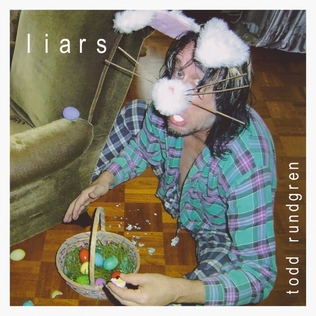
There’s a lot of sameness on Liars, and nothing really stands out. The handful of good ones could have been culled, and shortened, for a really tight album. Yet it’s somewhat amazing, for lack of a better word, that he managed to record another one-man band album that has a lot of the aspects of previous blue-eyed soul outings. His cult audience would certainly appreciate it; the public at large would likely have been turned off by the truly nutty cover photo.

Todd Rundgren Liars (2004)—

Friday, October 7, 2022

Phil Collins 12: Love Songs

So this was odd. Six years after a proper hits collection, Phil Collins doubled up with a two-disc set of favorites from his solo career, and included a handful of rarities. In keeping with his image as a romantic balladeer, Love Songs was subtitled A Compilation… Old And New. Only four songs are repeated from that first set of hits, which we guess is the good news.

The problem is we didn’t need two discs of this drivel. Four songs come from Both Sides, none of them hits; he also has a better opinion of his last two solo albums than we do. We approve the revival of “Don’t Let Him Steal Your Heart Away”, but “This Must Be Love” and “If Leaving Me Is Easy” were hardly highlights of his solo debut. The only real hit that postdated the …Hits set was “You’ll Be In My Heart.”

So what was “new”? “Tearing And Breaking” is a collaboration with folk hero John Martyn, and a sleep-inducing opener to disc one. A live “rehearsal” of “True Colors” avoids cries of redundancy with the hits album, but is unnecessary; similarly, “Separate Lives” is the inferior live version. Two songs from ‘90s various artists are mopped up—Curtis Mayfield’s “I’ve Been Trying”, “Somewhere” from West Side Story—though live covers of “My Girl”, the standards “Always” and “The Way You Look Tonight” aren’t going to convince anyone they’re definitive.

While Love Songs was a good idea, somebody should have explained to Phil that just because a song concerns relationships or includes the word “love” somewhere doesn’t mean it belongs in a sequence with others of the same slim criteria. Most of all, at this juncture we wondered who exactly comprised his audience.

Phil Collins Love Songs: A Compilation… Old And New (2004)—2

Tuesday, June 14, 2022

Rush 23: Feedback and R30

Now that they were back at full strength, Rush happily began celebrations for their 30th anniversary as a band. Their first order of business was to release a covers EP. Yes, you read that correctly—one of the bands who always played their own material, to the note, was doing covers.

Most of the eight songs on Feedback come from that period around the Summer of Love that fostered countless garage bands. “Summertime Blues” follows the Blue Cheer template, but with more touches of The Who, who are also represented by “The Seeker”. Two other bands are saluted twice: the Yardbirds with “Heart Full Of Soul” and “Shapes Of Things”, and Buffalo Springfield with a staid “For What It’s Worth” and “Mr. Soul”, which sports a clever quote from “Eight Miles High”. Geddy Lee adds his own harmony to Love’s “Seven And Seven Is”, which repeats the first verse rather than go straight to the explosion. Finally, “Crossroads” is all Cream.

This little album is a labor of love from the band, and will be best appreciated by its fans. Purists who revere the originals but despise Rush should appreciate that Geddy’s vocals are mostly restrained, Alex Lifeson pretty much sticks to the riffs, and Neil Peart doesn’t hit more drums or cymbals than anyone has to.

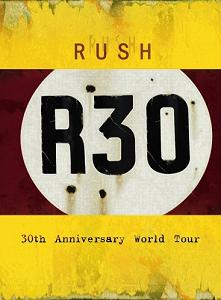
Four of the songs on Feedback would become regulars on the setlist for the so-called R30 anniversary tour, the Frankfurt stop of which was subsequently documented in a DVD package. The deluxe version included archival content, plus the music on two CDs, with a slightly abridged program that repeats only eight songs from Rush In Rio.

Coming soon after that album may seem like market saturation, but the sound is superior to that set. The opening “R30 Overture” is a nice arrangement of snippets from their early epics, going right into “The Spirit Of Radio”. “Between The Wheels” is a surprise inclusion, and of course we get a banded nine-minute drum solo out of “Mystic Rhythms”. Another unplugged “Resist” leads to an acoustic “Heart Full Of Soul” with Neil’s most understated drums ever. By the end of the show, Geddy has to compensate for some of the high notes. (The visuals add to the experience, especially since vending machines are now visible near the washers and dryers on Geddy’s side of the stage.)

Rush Feedback (2004)—3
Rush
R30: 30th Anniversary World Tour (2005)—3

Friday, February 19, 2021

Simon & Garfunkel 9: Old Friends Live

Vintage concerts were one thing, but as long as Paul Simon and Art Garfunkel were still alive and performing separately, audiences wanted to see and hear them harmonize together. Just a few years into the century, they finally got their chance.

Old Friends: Live On Stage presents the bulk of the set from their reunion tour (extra songs were added to the DVD, which also offers the spectacle of Paul doing ill-advised rock star poses). Their voices are older, certainly, but they still have that blend. However, while the songs are recognizable, these are not carbon copies; many are transformed into the more modern sounds coming from the band, handpicked by Paul. And when they do replicate the record, as on “Hazy Shade Of Winter”, the singers have modified their parts. Though there is some overlap, it’s not a straight copy of the Central Park concert; this time out we get to hear such nuggets as “The Only Living Boy In New York”, a medley of “At The Zoo” and “Baby Driver”, “Leaves That Are Green”, and even “My Little Town”.

About halfway through the first act they chat a little bit about their youth and history together; Artie is as gracious as usual, and Paul takes the opportunity to take a few shots. They do a brief busk of “Hey Schoolgirl”, then bring out the actual Everly Brothers for a combined assault on “Bye Bye Love”. Artie sings “Kathy’s Song”, surprisingly, and trades verses with Paul on “American Tune”; “Slip Slidin’ Away” is the only other nod to either solo career. And while he cedes the second verse of “Bridge Over Troubled Water” to its author, Paul’s attempts at being soulful fall flat. Finally, on a new studio song called “Citizen Of The Planet”, included as a closing “bonus”, their voices sound younger, leading us to wonder if this is an outtake from Hearts And Bones.

Maybe you had to be there, but at least this particular reunion wasn’t embarrassing, considering that at this late date they’re unlikely to try it again. It’s nice to know that while they were getting along, we get to feel it.

Simon & Garfunkel Old Friends: Live On Stage (2004)—3

Friday, August 28, 2020

Faces 7: Snakes And Ladders

It’s commonly known that once the Faces were done, Rod Stewart concentrated on his solo career and Ron Wood was asked to join the Rolling Stones (though he wouldn’t be a fully vested member of the corporation until 1990). Ian McLagan and Kenney Jones managed to shanghai Steve Marriott for a reformed Small Faces, to little excitement, and then that was really it.

Meanwhile, with both Rod and the band’s catalog on their roster, Warner Bros. compiled Snakes And Ladders, subjectively subtitled Best Of Faces to make the most of it. It’s an odd set; the cover art is a collage of photos featuring several shots of interim bassist Tetsu Yamauchi (who plays on exactly one track) but none of Ronnie Lane. More to the point, none of Ronnie’s lead vocals are included. Obviously, they knew where the money was.

The album opens with “Pool Hall Richard”, a standalone single and a decent rocker, then meanders oddly through the catalog, stopping at obvious hits like “Stay With Me” and “Ooh La La”. The instrumental “Pineapple And The Monkey” and “Around The Plynth” are particularly odd choices. Side two sports the mildly disco “You Can Make Me Dance, Sing Or Anything (Even Take The Dog For A Walk, Mend A Fuse, Fold Away The Ironing Board, Or Any Other Domestic Shortcomings)”, another standalone single, but only the original LP has the alternate single take of “Had Me A Real Good Time”.

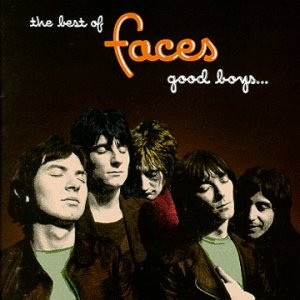
Only eight of the tracks were repeated on the superior Good Boys… When They're Asleep compilation, released 23 years later. This set moves chronologically, covering much more of the band’s breadth. It’s also a better tribute to Ronnie Lane, given the inclusion of “Debris”, “You’re So Rude”, and “Glad And Sorry”, though it pointedly hypes the connection to Rod’s solo career in the packaging. Along with “Pool Hall Richard” and “You Can Make Me Dance”, the set includes “Open To Ideas”, a soulful unreleased track from the band’s final sessions.

The set was spearheaded by Ian McLagan, whose enthusiasm also drove the next major archival release. Besides sporting the greatest box set title of all time, Five Guys Walk Into A Bar… provides an exhaustive look at the band on four discs. Less than half of the tracks were from the original albums (including the two singles and outtakes from Good Boys), filling up the balance with B-sides, alternate takes, rehearsals, live performances, BBC appearances, and unreleased stuff. Ten years later, 1970-1975: You Can Make Me Dance, Sing Or Anything… boxed up the original four albums, each bolstered with extras on the CD edition, and added a fifth disc of Stray Singles & B-Sides. And ten years after that, Faces At The BBC delivered eight hours of exactly that over eight CDs and one Blu-ray. There’s a lot of repetition, but you also get their reverent renditions of Christmas carols.

Between those sets, Faces are covered. Certainly no other band has gotten more mileage out of ellipses.

Faces Snakes And Ladders/Best Of Faces (1976)—3
Faces
The Best Of Faces: Good Boys… When They're Asleep (1999)—4
Faces
Five Guys Walk Into A Bar… (2004)—
Faces
1970-1975: You Can Make Me Dance, Sing Or Anything… (2015)—
Faces
Faces At The BBC: Complete BBC Concert & Session Recordings 1970-1973 (2024)—3

Tuesday, July 14, 2020

Tommy Stinson 3: Village Gorilla Head

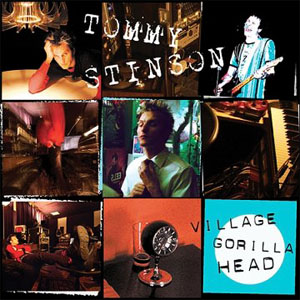
While his old buddy Paul Westerberg busied himself with lo-fi home recordings that sounded that way, Tommy Stinson took time off between sporadic gigs playing bass in Guns N’ Roses to put together his first real solo album. Village Gorilla Head was mostly recorded solo, with help from GN’R mates, but while he’s still about the raucous rock, he’s still following his old buddy’s lead.

Although it gradually builds to a larger sonic landscape, “Without A View” begins introspectively and manages to stay that way. Similarly, the delicate acoustic guitars on “Not A Moment Too Soon” give way to a surefire hit single if they still made those. “Something’s Wrong” is straight off the Bash & Pop template, but if you’re looking for noise, “Couldn’t Wait” sports a broken-leg meter and complicated riff. “OK” is another grower, with added charm in the childlike gang backing vocals on the later choruses, while “Bite Your Tongue” has some vicious commentary disguised in a rather ordinary track.

The title track is completely out of left field, with a homemade triphop feel, and funky guitars and jazz piano to match, which anyone else would submit to multiple dance remixes but for the experimental breakdown in the middle that incorporates cellos and saxophones. The yearning “Light Of Day” is a sneaky highlight, not too far removed from Tom Petty’s “Echo” but in a good way, with a pedal steel guitar in the mix too. Speaking of homages, “Hey You” hearkens back to acoustic Faces, and while we’re at it, “Motivation” turns it up again with Stonesy snottiness. For a closer, “Someday” is anticlimactic, though it throws a lot of ideas into the pile.

Chances are most listeners would be familiar with the Replacements, or maybe a stray Axl fan might have been curious, but hopefully somebody found Village Gorilla Head worthy of ownership. The kid knows how to write songs, and they deserve to be heard.

Tommy Stinson Village Gorilla Head (2004)—3

Tuesday, November 5, 2019

Joni Mitchell 22: Millennial Compilations

Although seemingly retired, Joni kept her hand in the marketplace with not one, nor two, but three thematic retrospective sets released over a period of nine months. Each follows something of a theme, building on the mild renaissance her career had experienced; the first two continued to use her own paintings for the cover art.

First came The Beginning Of Survival, which took its title from a letter written by a Native American chief to “the Great Chief in Washington” a century before, reproduced in the package. Released in an election year amid various wars in the Mideast, the set focused on social commentary from the mid-‘80s on, mostly from the “difficult” Geffen albums. Therefore, most but not all of the tracks have jarring synthesizer arrangements and her lower voice. Perhaps it’s a good intro to her least celebrated period, but the music is still a matter of personal taste, and some tracks are simply less annoying than others.

A few months later, Dreamland covered her entire career, from the ‘70s up through the orchestral albums of this century. The songs range from beloved hits already collected on Hits to more challenging pieces like “The Jungle Line”, “Dancin’ Clown”, and the title track. The chronology is all over the place, forcing the listener to take her as she is (or was), yet there is a thread from song to song (“Free Man In Paris” to “In France They Kiss On Main Street”, the harmonicas on “Furry Sings The Blues” into “You Turn Me On I’m A Radio”). Three tracks are remakes from her orchestral albums, and the set ends with her original recording of “The Circle Game”. With even more of her paintings depicted in the package, perhaps these are the songs that meant the most to her.

The same could be said for what came the following spring. Songs Of A Prairie Girl collected songs to celebrate and evoke Saskatchewan, its “long, cold winters [and] short but glorious summers” per her brief notes. Five songs are repeated from Hits, including “Urge For Going”, but for the most part the program leans towards the later years; “Cherokee Louise” is in its arguably superior Travelogue incarnation. Two songs from Don Juan’s Reckless Daughter appear: the title track, and right smack dab in the middle of the program, a so-called remix of “Paprika Plains” that aims to even out the dynamics a bit. Both songs benefit by this context, even with “Raised On Robbery” sandwiched between them. Because so many of the tracks reference her youth, there’s a certain nostalgia, and even melancholy, throughout the set.

Ultimately, these CDs prove that there is no way to encapsulate Joni Mitchell in under 79 minutes. Much like other mercurial artists among her contemporaries (Bob Dylan, Neil Young, Van Morrison, etc.) any favorites are going to vary from person to person, and different albums speak to different people in different ways. What comes through is that, as a composer, she was anything but ordinary. Hopefully any of these albums has drawn a newbie into her complete catalog.

Joni Mitchell The Beginning Of Survival (2004)—
Joni Mitchell
Dreamland (2004)—3
Joni Mitchell
Songs Of A Prairie Girl (2005)—3

Tuesday, May 28, 2019

Tommy Stinson 2: Perfect

After the Bash & Pop album was basically ignored, Tommy Stinson gave up on music for a while. After all, if Paul Westerberg couldn’t sell records on his own, how could the guy everyone still thought of as the teenage bass player?

By most accounts he tried working real jobs to support the family he’d left in Minneapolis while he was floundering in L.A., but eventually he made his way back to music, and put together a new band called Perfect. With the support of onetime Replacements manager Peter Jesperson, the band hit the studio and recorded an EP for an offshoot of an indie distributor. When Squirrels Play Chicken is a harmless cross between ‘70s punk and power-pop songsmithing, best exemplified by “Makes Me Happy”, which seems unsure of its key, yet matches Tommy’s freewheeling sense of melody. “Sometimes” is a stomp too slow for Green Day but perhaps more suitable for Bob Mould fans. “Alternative Monkey” is ahead of its time, considering how much it sounds today like Jet or the Strokes. “Miss Self-Esteem” comes closest to Westerberg at his most sensitive, and “Don’t Need To Know Where” revs it up to top speed, with truly explosive drums. The best part of the album is hidden at the end, a joyous thrash through “Crocodile Rock”, truly out of affection.

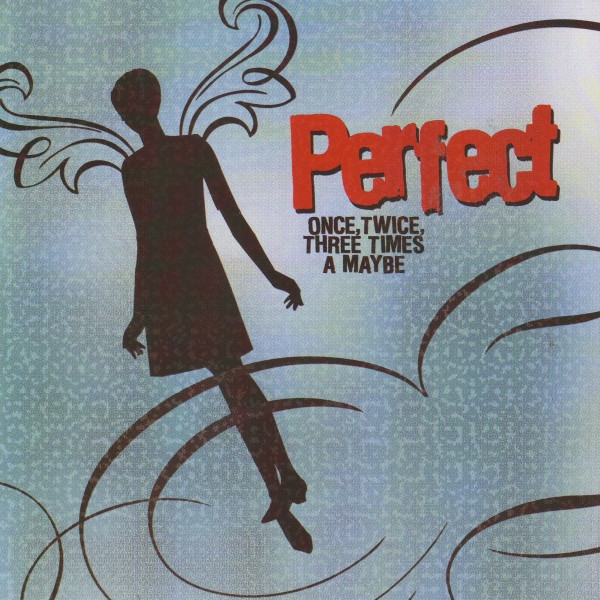
At 20 minutes, the EP was a nice taster of what could be, and the band went off to record a full-length album with Jim Dickinson, whom Tommy had met way back on Pleased To Meet Me. The album was completed, and promptly shelved by the record company. The tapes eventually ended up seven years later with Rykodisc, who took a chance on it, but not after juggling it and dropping one song. Once, Twice, Three Times A Maybe (an Eddie Murphy reference?) is closer to the straight Bash & Pop sound, but more straightahead rock. He’s still not the best singer, but the songs are well-crafted and arranged. (The title notwithstanding, “Making Of An Asshole” is truly terrific, as is “Peg Song”, the track not released.)

Taken all together, the entire official output of Perfect could be squeezed onto a single CD, which only means a future Record Store Day release will have it all on two records at overblown prices. You heard it here first, folks.

Perfect When Squirrels Play Chicken (1996)—3
Perfect
Once, Twice, Three Times A Maybe (2004)—3

Tuesday, February 21, 2017

Daniel Lanois 5: Rockets

Once he got back into his own music, Daniel Lanois started playing shows, and got more active with his website. That also provided him the opportunity to distribute music that might not have got the same support from a label.

The thinking behind Rockets was to have “a sort of renegade CD available at the merchandise stand.” Seeing as it consists mostly of alternate and/or live versions of songs from his small catalog, that’s a good description. It also provides a good sampler of the albums that aren’t Acadie, though we do get another version of “The Maker”, and a surgically altered mix of “Under A Stormy Sky” that becomes a collaboration with Willie Nelson and Emmylou Harris.

But they’re not all retreads. The title track is described as (spoiler alert) “a revisit of the murder scene in the movie Sling Blade,” and shows how well he creates tension. “Sweet Soul Honey” is apparently very important to him, as he would go on to include the lyrics in his memoir; it would be more effective as the instrumental as intended. He further describes “Panorama” to be “as close as I’ve come to Samuel Barber,” but don’t expect any Adagio For Strings; this is all pedal steel guitar over thunderous drums.

Rockets is not a grand statement, nor was it meant to be. It is a worthy addition to his space on the shelf, and can be got nice and cheap from his own website.

Daniel Lanois Rockets (2004)—3

Tuesday, April 7, 2015

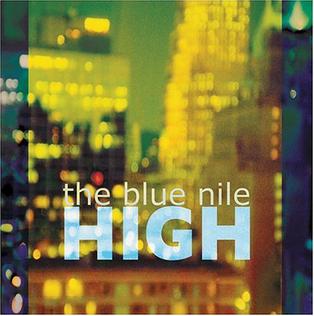
Blue Nile 4: High

Five years, seven years… having to wait only eight years for a new Blue Nile album was almost bucking the trend. But it doesn’t matter when High is as good as it is, and certainly better than Peace At Last. Here we finally have a real Blue Nile album, combining the minimalist pop if the first album, the lushness of Hats, and even the better acoustic moments of the previous one. Paul Buchanan dominates, as ever, but the other guys are still credited.

Stabby piano chords sustain “The Days Of Our Lives”, which slowly builds on the verge of becoming something but never resolving. It becomes a mere introduction for “I Would Never”, a classic ballad with just the right amount of Buchanan ache. Those stabby chords return on “Broken Loves”, but work around a bass part to give it more shape. Wisely, the effect of the spoken part repeated by a sung one doesn’t continue through the whole thing. With excellent balance, “Because Of Toledo” returns to plaintive acoustic regret, tough it’s not clear what it was about Toledo (pronounced like the Ohio city, and not the Spanish one) that seemingly pushed him to rehab. And then it’s back to the edgier, upbeat portrait in “She Saw The World”.

The title track is another sumptuous piano ballad, with a hint of fake strings and just the right amount of fake percussion — in other words, quintessential Blue Nile. That makes “Soul Boy” something of a retreat to the last album, musically and lyrically (“no more fight and no more leave” hearkens back to “Family Life”) but it’s still effective. The way it slows to a halt suggests the end of the album, but “Everybody Else” gathers enough momentum to keep things rolling before “Stay Close” provides another subdued’ lengthy conclusion.

High doesn’t sustain its strength throughout the program; after all, there could never be another Hats, could there? Still, for those of us who weren’t expecting much, it contributed a wonderful next chapter in the Blue Nile story, and we knew enough not to expect anything else for a while.

In fact, the rest of the catalog had been upgraded with bonus tracks well before they got to this one. Along with remixes of two songs, four unreleased tracks added to the bounty. “Wasted” could stand to have its drum machine mixed back sooner, but the melody is as nice as that in “i” (lowercase intentional). “Big Town” is a little busy, and despite the trappings of suburbia, “Here Come The Bluebirds” provides a low-key conclusion.

The Blue Nile High (2004)—
2020 Remastered Collector's Edition: same as 2004, plus 6 extra tracks

Friday, September 12, 2014

Mark Knopfler 6: Shangri-La

The new century was already seeing an upswing in Knopfler solo albums, but perhaps a motorcycle accident spurred him into more frequent releases. Whatever the real story, Shangri-La presented another hour’s worth of generic Knopfler noodling, most of the songs interchangeable with each other.

His penchant for storytelling is to be admired, but the music doesn’t always seem to match whatever the tale is, whether it’s an elegy for Elvis Presley’s movie career (“Back To Tupelo”) or the genius of McDonald’s entrepreneur Ray Kroc (“Boom, Like That”). “Donegan’s Gone” pays tribute to the recently departed skiffle king Lonnie Donegan, and no points for guessing the subject matter of “Song For Sonny Liston”.

Still, a few tracks stand out. “Our Shangri-La” and “Postcards From Paraguay” do successfully evoke a tropical scene, just as “The Trawlerman’s Song” sounds like a sea shanty. The late-night saloon setting of “Stand Up Guy” makes reference to a doctor, while the why “Don’t Crash The Ambulance” would seem to come from a personal place as well. The ironic country lament “Whoop De Doo” and the tender lullaby of “All That Matters” are easily the best songs here.

Sure, Shangri-La is nice, but we’re tired of using that adjective to describe a Mark Knopfler album. The near-title track does have a good extended ending, but it barely comes halfway into the program, making even the sequencing seem arbitrary. There was a time when his music truly stirred and painted pictures; this is just going through the motions.

Mark Knopfler Shangri-La (2004)—2

Tuesday, April 8, 2014

Crosby & Nash 5: Crosby-Nash

They could wait around for Neil to call, or see if Stephen wanted to do anything. Instead, while not exactly teeming with songs dying to be recorded, David Crosby and Graham Nash hooked up with some old and new friends for their first duo album in over 25 years.

And not just any album; Crosby-Nash was spread across two discs—one 45 minutes, the other half an hour—to give the impression that they really were teeming with songs dying to be recorded. They start strong with “Lay Me Down” and “Puppeteer”, both from the pen of James Raymond, Crosby’s long-lost son, with whom he’d reconnected in the mid-‘90s and started collaborating almost immediately. After that it gets pretty quiet—a little too quiet, especially if you’re waiting for an “Almost Cut My Hair” to blow the roof off the proceedings. Instead we get more immaculately recorded adult contemporary pop designed to accompany a gently swaying sailboat. Things pick up whenever the two harmonize, but as usual, they write separately or with anybody else in the band but each other, and cover people like Marc Cohn.

There’s nothing wrong with quiet and pretty; “Grace” is a very pretty piano interlude, but it’s used to set up an inferior song. “Luck Dragon” (again, written with James Raymond) comes close to rocking, while “Don’t Dig Here” (also written with guess who) gives Graham a chance to lament the environment over a riff that eventually rips off “Come Together”. “Michael (Hedges Here)” is a shaky but well-intentioned tribute to the late guitarist, who’s also credited with the arrangement of “My Country ‘Tis Of Thee” that closes the set.

Graham’s getting a little mushmouthed in his old age, and Crosby’s mellowed right with him, only the anger he used to exercise is now demonstrated by the warmed-over Steely Dan of “They Want It All”. He spends five minutes on the scat-sung “How Does It Shine?” (the answer: not as brightly as “Song With No Words” or even “Orleans”), the last minute or so turning into a faux-samba for anybody who misses Stephen Stills’ forays into the same. “Samurai” is an a cappella piece that obviously means something to him.

A shuffled “highlights” disc was made available around the same time, leaving some of us to wonder why they didn’t just leave it at that. Rather than alternating between the guys, the sequencing goes two and two, adding to the general tedium. Being the 21st century, it sounds great, thanks to ProTools and close miking. But there’s not a lot here that will compete with their old stuff.

Crosby-Nash Crosby-Nash (2004)—

Tuesday, February 11, 2014

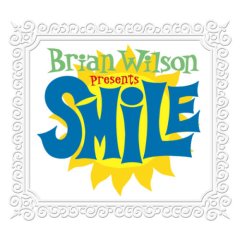
Brian Wilson 2: Smile

Seemingly cured of his demons—enough to remarry and adopt a few kids—Brian Wilson continued his own path through the end of the century, releasing a few solo albums and avoiding any true collaboration with the other Beach Boys. Unlike his first solo album, which was most likely created at pharmaceutical gunpoint but sounded pretty good nonetheless, his new music didn’t rise far above the “that’s nice” accolade. Basically, he was competing with his own past, via the rehaul of the Boys’ catalog and even his own reunion with onetime collaborator Van Dyke Parks.

Parks was part of the Smile project, the famously unfinished masterpiece that was destined to rival the Beatles’ best moments had it only been allowed to breathe, or so we were led to believe. Rumors began to spread around 1988 that all the music intended for it would actually be released; meanwhile, fans not content with the 30 minutes or so included on the box set in 1993 scrambled for anything said to represent the finished product as it stood in 1967.

Listening to these bootlegs, one could completely understand why the project got stalled. The existing pieces were certainly unfinished, and overlapped so much that a strict running order seemed almost arbitrary. Had the album come out back then, the standard thinking—outside of a few renegades who champion notoriously bad albums—would likely be that Smile was an overblown waste of tape. And the Beach Boys legacy wouldn’t be any different today, and Brian would still be a mess.

But it did change. Most people either love or hate the Beach Boys, and everyone hates Mike Love, but anyone who’s taken time to even try to like Pet Sounds can agree that Brian Wilson composed some pretty amazing music that just happened to fit on AM radio. And not only did he emerge from his paranoid shell, he assembled a band of devoted musicians, and went on tour around the turn of the century with them. These guys drove him to begin performing Pet Sounds in its entirety, with technology enabling the studio creation to exist on a stage. That was so well-received that Brian finally consented to “completing” something resembling Smile, with assistance from (surprise surprise) Van Dyke Parks, and performing it live. Critics raved, and then it was recorded in the studio.

Everyone related to the project was careful to say that Brian Wilson Presents Smile is not the real lost album; however, it is a stunning recreation. Comparing the new tracks to the bootlegs, the casual listen might have fooled one’s ears into thinking they’re the original tracks. While Brian’s voice is much shakier, all the elements are there.

That’s a deliberate pun; whatever was supposed to be the “Elements” suite is lost to the microdot. But with the CD format at its disposal, the piece has been separated not into two sides but three movements. It follows much of the bootlegged sequences, beginning with “Our Prayer” and “Heroes And Villains”. Most pundits usually put “Good Vibrations” at the start of “side two”, with the epic “Surf’s Up” at the end; here “Surf’s Up” closes the middle section, while a lyrically rearranged “Good Vibrations” appears as a coda. Some of the most famous outtakes appear, like “You Are My Sunshine”, “Child Is Father To The Man” and even a recreated “Mrs. O’Leary’s Cow” (aka the “Fire” sequence).

It’s still a pretty silly record, with puns that induce more winces than wonder; most of those were added solely for this production. Issued through Nonesuch, it comes in a neat little package with embossed slipcase and booklet. Inevitably, the experience becomes somewhat anticlimactic, but there are a few absolutely gorgeous moments that could rank with the finest 20th century American music, up there with Gershwin, Cole Porter, Aaron Copland and so on.

2004 was a year where the impossible happened, from the Red Sox winning the World Series to Brian Wilson finishing Smile. Naturally, it stoked hopes for an official release of the original recordings, but if that wasn’t gonna happen, at least we’d have this.

Brian Wilson Brian Wilson Presents Smile (2004)—

Tuesday, January 21, 2014

Tom Waits 20: Real Gone

Well, here was something different. Tom Waits had already gained renown for making music out of “found sounds”, and since his eldest son had already started experimenting with turntables, his next album would feature loops built on sounds created by his own throat. The human beatbox is in charge most of the time, and there’s not a piano or any kind of keyboard to be found.

Real Gone is a long album, over an hour. There are songs here, but many of their potential charms are buried under heavy percussion. Even talented stalwarts such as Les Claypool and Marc Ribot struggle to be heard above the din. From time to time, a “song” does emerge; “Sins Of My Father” is the first one in the program, three songs in, but at over ten minutes, it too is easy to shake interest. The cacophony of the track that follows (“Shake It”, if you’re interested) slaps all the dust particles back into the air, with a voice so distorted that it’s impossible to follow with the lyrics (which are not necessarily in order in the CD booklet). That happens a few times on this album.

Another case in point: “The Day After Tomorrow” is a lovely lament, most likely written from the point of view of a soldier stuck in the Gulf. It comes at the end, with a mood not unlike Bob Dylan’s “Restless Farewell”. Then there’s 30 seconds of silence, and another minute’s worth of beatboxing in “Chickaboom”.

There are other wonderful moments on Real Gone, should you have the gumption to wade through an awful lot to get there. “Don’t Go Into That Barn” has clear antecedents on the Bone Machine and Mule Variations albums, leaving the concept to sound a little worn out. “How’s It Gonna End” is quiet and spooky enough to keep you asking the question in the title; the same goes for “Dead And Lovely”. “Trampled Rose” would go on to be part of the wildly popular collaboration between Robert Plant and Alison Krauss, following this original closely. “Green Grass” has an exquisite guitar intro that sadly doesn’t last through the rest of the song.

Such is the way with Real Gone. It’s not the best place to start, and he’s got plenty of other, better albums. Some people think this is one of his best, so maybe they’re right and we’re wrong.

Tom Waits Real Gone (2004)—

Saturday, August 31, 2013

Lou Reed 27: Animal Serenade

At first one balks at the idea of yet another Lou Reed live album, particularly after the trial that was The Raven, the odor of “contractual obligation”, and the double-CD, two-hour length. However, Animal Serenade emerges as one of the more striking and enjoyable installments in his catalog.

The band consists, again, of Mike Rathke on guitar and guitar synthesizer—which replicates many of the piano parts familiar from the albums—and Fernando Saunders on bass and vocals, as well as some electronic drums. Jane Scarpantoni plays cello, of course, and the artist then known as Antony provides ethereal vocals. (Unfortunately missing from the listening experience are the demonstrations of Lou’s tai chi master, who appeared alongside the band on stage.)

He sounds a little drunk at first, teasing the crowd with the correct way to play “Sweet Jane” before switching abruptly to “Small Town”, peppering the lyrics with asides about Long Island, despite the show happening in L.A. But he soon hits his stride, and stays almost conversational over a subdued backing. The setlist runs a wide gamut, pulling out such deep cuts as “Tell It To Your Heart”, “The Day John Kennedy Died”, and the title tracks from Set The Twilight Reeling and Ecstasy. Three songs from Berlin predict that album’s revival a few years away. “Vanishing Act” and “Call On Me”, two of the better tracks from The Raven, are welcome, and after a brief history lesson, he recites his own version of the title poem in a different but still unsettling approach to Willem Dafoe’s take. Fernando gets the spotlight for his own lovely composition “Revien Cherie”.

Velvet Underground songs are mostly reserved to the later part of the show, and given vibrant readings thanks to the performers and their respective technologies. “Venus In Furs” is stretched to ten minutes via a harrowing cello solo, while “All Tomorrow’s Parties” is more rock than baroque. “Candy Says” is wisely handed over to Antony, who gives it a reading exponentially greater than Lou admits he could himself. Rather than the usual “hits”, more familiar tracks include “Dirty Blvd.” and “Street Hassle”, wherein all three parts are condensed to about two-thirds its original length.

All in all, it’s something of an “intimate evening with Lou,” though we wish he’d’ve shouted down those of the audience who hoot during quiet sections, or at least the pinhead who requests “Rock ‘N Roll Animal!” As there are other examples of angry Lou available for your listening pleasure, Animal Serenade is a recommended alternative.

Lou Reed Animal Serenade (2004)—

Monday, July 1, 2013

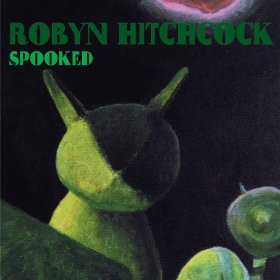
Robyn Hitchcock 20: Spooked

Having basically ceased to matter in the business outside of his miniscule fan base, Robyn found a new home on Yep Roc, a label that specialized in indie rock perpetuated by such older codgers as Nick Lowe, The Reverend Horton Heat and the guy from the Blasters. For his first missive on the label, Robyn hooked up with David Rawlings and Gillian Welch, darlings of the alt.country movement. Their influence isn’t immediately overt, but they prove to be inspired collaborators.

Spooked is another acoustic album with a green cover, mostly, many of the songs coming across as demos. “Television” is sadly not about the band but the appliance, yet rates a devoted vocal. “If You Know Time” is based around what sounds like a dulcimer, evoking something like a more tuneful Incredible String Band. But around where “Everybody Needs Love” comes in, the album threatens to sound like endless variations on “The Cheese Alarm”.

People who’ve followed Robyn this long want desperately to like him, and therefore ache for an album to thrill as much as its older siblings did in earlier decades. We wanted to root for Spooked, and display it as proof that he’s just as inventive as ever. Yet songs like “Creeped Out” come across as something he’s making up on the spot, with the barest of chords, the immediate effect is that of forced whimsy, where once he sounded more natural. Meanwhile, the lengthy cover of Dylan’s “Trying To Get To Heaven”, here given its full title with the tag “Before They Close The Door”, seems like a Major Statement, coming only a couple of years after his double-Dylan tribute set, and in full acknowledgement of his mortality. (Of course, the unique modification referring to “the dinosaur’s waiting room” shows he just has to be him.)

There are enough moments throughout, like the first couple of tracks and a few near the end (like “Full Moon In My Soul” and “Flanagan’s Song”) that actually possess melodies capable of adhering to your brain. It’s hard to imagine how Spooked might have developed from first idea through composition, refinement and recording. It seems a very arbitrary album, especially considering that the two-song bonus CD that accompanied initial orders is as good as the album it accompanied. We didn’t come around ourselves for over a decade, but when heard within the context of a decade’s worth of a lot of one-shots, the album does emerge as recommendable.

Robyn Hitchcock Spooked (2004)—3

Friday, December 28, 2012

Finn Brothers 2: Everyone Is Here

After Crowded House disbanded, Neil Finn hadn’t disappeared, but neither had he made much of a dent in a music industry not very interested in his brand of pop perfection. It also didn’t help that the albums he recorded under his own name weren’t immediately as catchy as what had made him rich (assuming he was).

Since he still had something of a cult following, they were likely very excited indeed when his next project turned out to be a Finn Brothers album. And rightfully so. Following the okay results of Woodface and Finn a decade earlier, Everyone Is Here wisely avoided the “two guys in a room” approach and instead incorporated studio musicians and actual producers (one of whom was Mitchell Froom, which wasn’t obvious from the sound, thankfully). It’s a straightforward pop album, without any real experimentations, if a little somber at times, but that’s okay too.

It comes off nice and strong from the start, with the close harmonies of “Won’t Give In” and the “don’t give up” message of “Nothing Wrong With You”. The album flows right along, with melodies that seem like they’ve been in the air forever; they’re that comfortable. “Luckiest Man Alive” is a little mawkish lyrically, but boy, is it catchy.The messages in the lyrics aren’t always clear, as in “Edible Flowers” and “All God’s Children”, but the more upbeat tracks, like “Part Of Me, Part Of You”, “Anything Can Happen”, and even “Homesick”, will stick in your head.

Everyone Is Here may have been a safe move, but it was also the most satisfying new album from Neil Finn in about ten years. Naturally, it didn’t dent too many American charts, despite a few songs being played on a few episodes of Scrubs. Because it was the style at the time, it was reissued only a few months later in a so-called “special edition” with a bonus DVD and extra tracks—some of which were relics from the original version of the album, produced by Tony Visconti and subsequently rejigged—and the boys faithfully toured to support it. However, any momentum built up was threatened that March, when Crowded House drummer Paul Hester took his own life.

The Finn Brothers Everyone Is Here (2004)—3

Wednesday, June 27, 2012

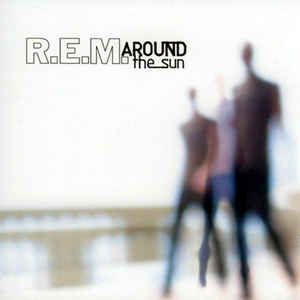
R.E.M. 15: Around The Sun

Michael Stipe has always been the most arty member of R.E.M., so it was likely his idea to take the bold step of streaming their next album on a social media site before it hit stores—not something that many mainstream bands were doing at the time. It brought the band some publicity, but it probably also had to do with why Around The Sun was not a big seller. Not because people were stealing it online, but because the album isn’t very good.

If anything, the album is just plain ordinary. The very first two tracks are incredibly similar to the point of identity theft; “Leaving New York” got the push in a post-9/11 world, though “Electron Blue” has more bursts from Peter Buck. “The Outsiders”, aka the one with the unnecessary rap by Q-Tip, stands out for that reason alone, and that’s not meant in a good way. There’s no denying how pretty “Make It All Okay” is, and “Final Straw” revives the autumnal acoustic sound for a not-so-subtle political statement, which continues on the very sleepy “I Wanted To Be Wrong”.

“Wanderlust”, with its jaunty British music hall-type of rhythm, has potential to wake things up, but they confuse your toes with a dropped-beat meter. “Boy In The Well” and “High Speed Train” are slow and similar songs both in dire need of bite, but each containing a killer chorus; surely they could have been combined. In between is “Aftermath”, a decent tune washed with those strings they’ve used too much already. “The Worst Joke Ever” stretches a metaphor way too far, befitting the title, but preventing the album from picking up any speed. “The Ascent Of Man” doesn’t either, but somehow the “yeah yeah” chorus works. Then an already too-long album coasts to a close with the title track.

Around The Sun is of a creature with most of their post-Automatic For The People output, in that we desperately want to like it more than we do, but we can’t. Although they’d certainly started to lose their way before Bill Berry left, it was beginning to seem as if he made the wise move. Once upon a time a new R.E.M. was a cause for celebration, and every fan remembers not only the first one they didn’t buy on street date, but the mixed emotions at that tradition having been broken. Why had they been so important to us, anyway?

R.E.M. Around The Sun (2004)—2

Wednesday, November 16, 2011

Rolling Stones 41: Live Licks

In an amazing turn of events, the Stones broke pattern somewhat by issuing a live album as a follow-up to a hits collection, which itself had followed a live album! They’re nothing if not innovative.

Live Licks gets its title from the tour supporting the Forty Licks collection, and it’s to their credit that it’s not simply all the songs from that album played live. That would be silly, of course. They only pulled that trick for the first disc, which serves up eleven of their Classic Rock radio staples, the newest of which was over twenty years old, with the key addition of Sheryl Crow on “Honky Tonk Women”. (We’ll pause while you try to contain your excitement.) And the man who said he wouldn’t be singing “Satisfaction” in his forties is doing it at 60.

The second disc is slightly more interesting, with three—three!—solo vocals by Keith, some deeper catalog selections, a few choice covers and a guest appearance by gargantuan legend Solomon Burke on “Everybody Needs Somebody To Love”, to which most people will respond, “Hey, they’re doing a Blues Brothers song.” It’s still the more surprising, if anything, of the two discs.

Live Licks sounds good, of course, with technology helping Chuck Leavell and Bobby Keys replicate the sounds of the records. The boys sound great and the band is tight. But by now we’ve been used to seeing the “post-production” credit in the liner notes of a live Stones album, so who knows how much tweaking happened between the performances and the CD pressing? It remains just another souvenir, and one that certainly wasn’t purchased by everyone who’d bought a ticket on this crazy 14-month tour. If you were there, you probably had a great time. If not, the excitement doesn’t likely surface.

And what’s a Stones album without a little controversy? To ensure their stature as the world’s favorite dirty old men next to Hugh Hefner, Live Licks was released in some of the more liberated countries worldwide with an uncensored cover, showing the lovely lady riding the tongue topless. In the US we were left to wonder what was under the bikini. Hot-cha!

This wasn’t the only souvenir of this particular jaunt, as a year before a DVD box set called Four Flicks sold exclusively through the Best Buy chain contained three different concerts in three separate venues—an arena, a stadium, and a theatre, which was the other gimmick of the tour. Two decades on, after they’d begun regularly repackaging concert video from the post-Wyman years as live albums, Licked Live In NYC offered the audio from the set’s Madison Square Garden portion, as originally broadcast on HBO, which also happens to include the aforementioned Sheryl Crow cameo. Coming soon after the very welcome release of the El Mocambo set from 1977, this was not only overkill, but a big step back in the creativity department. Even more maddening is that it’s pretty good, set-wise and performance-wise.

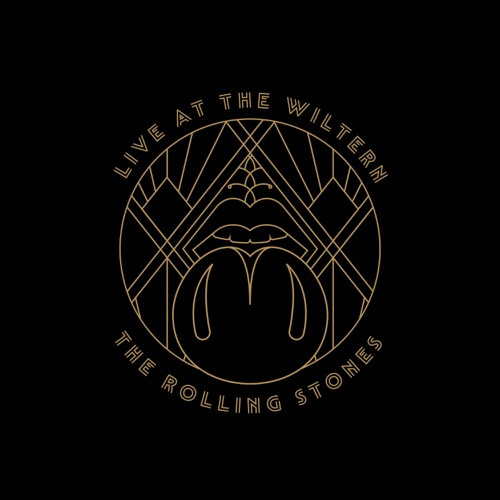
Two years after that, Live At The Wiltern presented a theater-sized show from a couple months before that had also been sourced for Live Licks. The thrust of this selection from the vaults was that it sported deeper dives into the catalog, which was one of the more unique aspects of the tour. Some of these so-called rarities included “Live With Me”, “Hand Of Fate”, “Dance Part 1”, “Stray Cat Blues”, “No Expectations”, “Going To A Go-Go” by a thin margin, and others that were already represented on the other two albums above. (Solomon Burke’s guest appearance is here as well.) Being a more intimate venue, with excellent separation of Woody’s guitar on the left and Keith on the right—albeit with backup singers and a full horn section—it might be the keeper of the three.

Rolling Stones Live Licks (2004)—3
Rolling Stones
Licked Live In NYC (2022)—3
The Rolling Stones
Live At The Wiltern (2024)—3