Showing posts with label 2017. Show all posts

Tuesday, March 26, 2024

Neil Finn 7: Out Of Silence

Always into doing something different, Neil Finn’s next move was to rehearse and record an album quickly, and in front of an audience. But Out Of Silence wasn’t just another live album—its production was livestreamed, which wasn’t a common thing in those days. Another unique aspect is that he wrote (and played) the songs on piano, adding another facet to his style. Sons Elroy and Liam add bass and drums where requested; throughout, strings and a small choir of singers add color.

The electronic effect at the start notwithstanding, “Love Is Emotional” sets the bittersweet template, continued on “More Than One Of You”. Beginning with some spooky vibes, “Chameleon Days” is a little more experimental sounding, or maybe it’s just his falsetto vocal. Arpeggiated guitars drive “Independence Day”, which gets a terrific lift for the choruses. Brother Tim shows up for “Alone”, derived from the works of British author Mervyn Peake.

Keeping it in the family, wife Sharon co-wrote “Widow’s Peak”, another poetic reverie. “Second Nature” picks up the pace with the most accessible track here. He gets mildly political on the pleading “The Law Is Always On Your Side” and “Terrorise Me”, the latter of which echoes “Edible Flowers”. These make “I Know Different”, while weary, something of an expression of hope.

Out Of Silence can be a little precious at times, but it’s certainly a welcome departure. A lot is packed into its 35 minutes, and it may be his finest solo work yet.

Neil Finn Out Of Silence (2017)—3

Tuesday, January 16, 2024

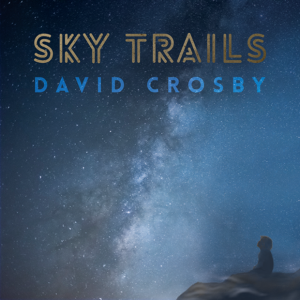
David Crosby 8: Sky Trails

It’s amazing that it took this long for Crosby to realize that he didn’t need Stills, Nash, or Young to goad him into creating. Sky Trails was his third album in as many years, and just as different to its predecessors. Anyone worried that James Raymond had fallen out of favor can be relieved, as he’s all over this one, adding a distinctly jazzy influence throughout.

“She’s Got To Be Somewhere” crackles with Steely Dan funk, from the electric piano and horns to the Dean Parks guitar solos. The lovely title track is an acoustic gem written and sung with Becca Stevens, whom we first heard on Lighthouse. There’s a forced metaphor in “Sell Me A Diamond”, but the track itself is good, with Greg Leisz adding steel guitar before Jeff Pevar gets to shred all over it. Continuing the Steely Dan connection, “Before Tomorrow Falls On Love” was written with THE Michael McDonald, but is musically based on Raymond’s piano and Mai Agan’s striking fretless bass. She’s the cowriter of “Here It’s Almost Sunset”, which features further soprano sax work from Steve Tavaglione.

“Capitol” is the requisite political diatribe, and unfortunately derails the momentum thus far; the fake drums don’t help. A reverent cover of Joni Mitchell’s “Amelia”, however, sounds of a perfect piece with the rest of the program. “Somebody Home” had already appeared in a live version on a Snarky Puppy album, and here it’s nicely restrained, considering how many people are on the track. The complicated “Curved Air” melds flamenco with jazz over dizzying, changing meters, and “Home Free” is a slow, grateful appreciation of simple domesticity.

Each of the albums he made this decade have been good, and Sky Trails is by far the strongest. One would think the well would be dry after working at such a speed, but it’s nice to have one’s assumptions refuted.

David Crosby Sky Trails (2017)—

Friday, January 12, 2024

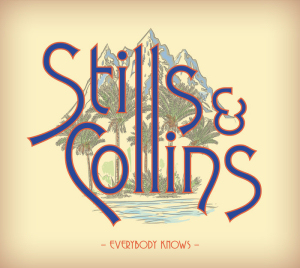
Stephen Stills 15: Everybody Knows

It was a great idea on paper: Stephen Stills and Judy Collins, who’d collaborated briefly musically and otherwise in the late ‘60s, finally doing an album together. Being the nature of the biz in this century, Everybody Knows was crowdfunded and promoted with a tour.

The album mixes covers and songs from their own catalog, some of which actually refer to each other. This would have been wonderful if these septuagenarians had voices that blended. Judy still has it, and sounds as sweet as ever, but Stephen does not mesh with her at all. The result is akin to overhearing a conversation at a high school reunion, appealing much more to the participants than observers.

The Traveling Wilburys’ “Handle With Care” is a surprisingly fun way to start. “So Begins The Task” was on the first Manassas album, but allegedly dates from just after their breakup. “River Of Gold” is a lovely lament for the environment written and sung by Judy, which soars when Stephen takes a solo, but sinks when he harmonizes. He finds the notes, but his voice is just too rough. The vintage “Judy” follows, first heard on Just Roll Tape, and odd to hear her harmonizing. The title track is the oft-traveled Leonard Cohen song; he died the year before.

Judy first released “Houses” in 1975, and we imagine Stephen was tickled to have a song written about him included. “Reason To Believe” and “Girl From The North Country” are of course well-worn folk standards, and Judy likely gave “Who Knows Where The Time Goes” its widest exposure back in the day. Finally, “Questions” doesn’t stray too far from the Buffalo Springfield template.

Impeccably recorded with a mix that recalls the soft rock of Daylight Again, Everybody Knows is a nice idea that unfortunately is fifty years too late. Had they managed to make an album like this back then, there’s a good chance it would have been widely beloved. But this isn’t it.

Stills & Collins Everybody Knows (2017)—2

Tuesday, May 23, 2023

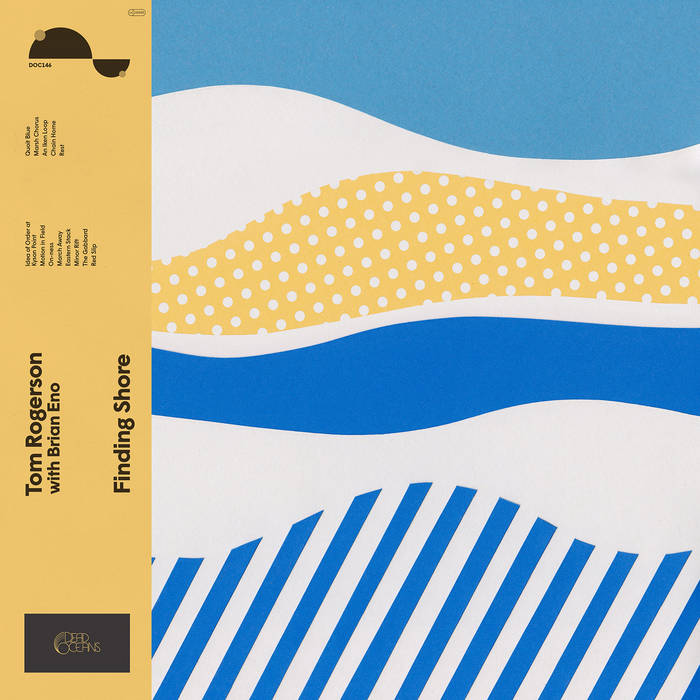
Brian Eno 25: Finding Shore

From his first collaborations with other musicians, Brian Eno has often been in the position of electronically processing the sounds other people produce. That’s how he started out with Roxy Music, and how he usually “produces” other people. His two albums with Harold Budd found him working head to head with a pianist, and that’s very much the idea behind Finding Shore, a collaboration with British keyboardist Tom Rogerson.

It’s not the best comparison, as Rogerson is a much more expressive pianist in the classical style—as demonstrated best on “On-ness”—compared to the minimalist, impressionistic landscapes Budd conceived. The listening experience is more emotional, and not as “cold” as the Budd albums could tend to be. Still, there’s a familiarity to “Quoit Blue” and “Minor Rift” that sends us back there. That said, thanks partially to the technology Eno uses, the music can sound more harsh and mechanical, as on “March Away”, “Eastern Stack”, “Red Slip”, and “Chain Home”. This makes the majestic “Marsh Chorus” and “An Iken Loop” more welcome.

The improvisatory approach covers a lot of moods, so Finding Shore can be a little disjointed. But taken individually, the tracks are certainly enjoyable.

Tom Rogerson with Brian Eno Finding Shore (2017)—3

Friday, March 31, 2023

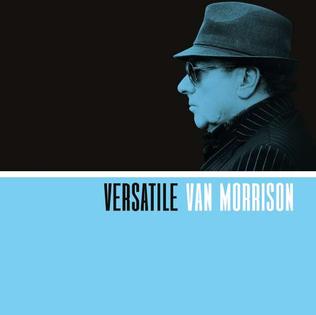
Van Morrison 46: Versatile

Mere months—that’s right, months—after a blues album, Van returned with a collection of new songs. Well, new recordings, anyway; Versatile is a swing album, more concerned with jazz (again) than blues.

If anything, this is his Sinatra album, with takes on “A Foggy Day”, “I Get A Kick Out Of You”, “Makin’ Whoopie”, and the like, but his arrangements are more unique, particularly on “Unchained Melody”. (Plus, nobody associates “I Left My Heart In San Francisco” with Frank.) It’s not all about singing; the traditional “Skye Boat Song” is a showcase for his alto sax as well as the other players.

Scattered throughout the program are originals that haven’t been done by a million people already. “Broken Record” starts the set well, except that the chorus consists of those two words repeated just as you feared. “Take It Easy Baby” is mostly a sax solo with inconsequential lyrics, but “Affirmation” is a lovely, lengthy piece featuring James Galway, up until Van starts scatting. He even covers himself: “I Forgot That Love Existed” gets a remake thirty years after we heard it the first time, “Start All Over Again” is almost as old, but “Only A Dream” only had to wait fifteen years.

While still way too long, Versatile is a good Van Morrison album for those people looking for something to play when they’ve already heard the Best Of. His voice is smooth, and we suppose you could even say it’s versatile.

Van Morrison Versatile (2017)—

Tuesday, January 10, 2023

Brian Eno 24: Reflection

We’ve mentioned that many of Eno’s ambient albums are so complex that they sound different on each listening. That’s tough to do with physical media, as once something is mastered it’s set in stone, for lack of a better metaphor. As many of his ambient works are designed to accompany whatever environment he’s created, he’s always longed for something that could change naturally.

He kinda does that with Reflection, but not if you buy the CD. A $40 app from the Apple Store was designed to be completely generative, with the sound adapting to time of day and even the season of the year. Even the streaming version, which had to stick with one program, was updated from time to time; as of this writing there are four “single” versions on Spotify of varying lengths.

At any rate, the CD consists of a single 54-minute track, and has not changed since first play, at least as far as we can tell. (Thursday Afternoon was also a one-track album, but more happens here.) It begins quietly, suggesting a dark landscape like On Land, but soon finds a setting more like The Ship, only without voice. The tones, similar to bass electric piano notes and sometimes vibes as heard on Music For Airports, reverberate seemingly without end, until a distant high-pitched sound seems to appear from across whatever water we’re looking at around 18 minutes in. A variation sounds about four minutes later, bringing a major-chord change that resounds, then recedes. About a half hour in there’s actually a two-chord sequence; ten minutes after that some multi-note figures appear, and what we used to call space sounds. Eventually the program fades on what we used to call a loop, and then it’s gone.

We will admit to putting on Reflection specifically for falling asleep, so it does take some effort to experience the entire program. It’s easy to ignore, but rewarding when you don’t.

Brian Eno Reflection (2017)—3

Tuesday, November 8, 2022

Van Morrison 45: Roll With The Punches

In our music retail days, we found it hard to get excited about new releases in the blues or reggae genres, as both were populated by performers who weren’t exactly groundbreaking. Each also had a lot of sameness, and repetition, so when an album stood out, it was rare.

That’s one of the stumbling blocks of Van Morrison’s Roll With The Punches, which is predominantly concerned with blues, mostly old and some new. There are a few special guests, which is no surprise, along with a few retreads, so very little grabs one’s attention.

The title track gets right to business, but the softer “Transformation” is just one track featuring Jeff Beck and Chris Farlowe, both of whom get more room to shine on “I Can Tell” and the forced medley of “Stormy Monday” and “Lonely Avenue”. Georgie Fame sings first on Count Basie’s “Goin’ To Chicago”, while another veteran of the ‘60s R&B scene, Paul Jones of the original Manfred Mann, gets to warble on Van’s latest complaint about “Fame”. Another original, “Too Much Trouble”, finally delivers a tune that could be a classic.

If you thought the only thing missing Van’s version of “Bring It On Home To Me” on It’s Too Late To Stop Now was Jeff Beck, your prayers have been answered. Jeff and Chris also spice up the surprising addition of “Ordinary People”, which pales against the original, but Sister Rosetta Thorpe’s “How Far From God” is a nice change of pace, as is the oldie “Teardrops From My Eyes”. From there it’s just Van doing more Lightnin’ Hopkins (“Automobile Blues”), Mose Allison (“Benediction”), T-Bone Walker (“Mean Old World”), and Bo Diddley (“Ride On Josephine”).

Were we in charge, and we certainly are not, we’d’ve ditched the all-star turns and stuck to the blues standards he hadn’t done to death yet. It had been a while since Van had really wallowed in the blues genre, so Roll With The Punches mostly delivers, except when it doesn’t. As had been the pattern, he recorded a bunch of songs, decided he had an album’s worth, and put it out. Take it or leave it, see if he cares.

Van Morrison Roll With The Punches (2017)—3

Friday, August 13, 2021

Replacements 10: For Sale

In the decades following the formal dissolution of the Replacements, interest in the band—and their legend—only increased. Meanwhile Paul Westerberg emerged from suburban fatherhood with the occasional lo-fi solo album, and Tommy Stinson paid the rent by regular touring as the bassist in Guns N’ Roses. After the two got back together to record a benefit EP for ailing guitarist Slim Dunlap, they managed to get organized for a few live shows, then a nationwide tour, which ended abruptly and scattered any plans of future recording.

That had only whet fans’ appetites further, so it was a perfect excuse for any label with anything worth selling to cash in. Astonishingly, the Sire vaults didn’t just have a well-recorded show of the original band; the ‘Mats actually rose to the occasion. They would notoriously sabotage any chance to get ahead, particularly if they knew they were captured for any kind of posterity, but throughout For Sale: Live At Maxwell’s 1986, everything clicked.

The setlist is stellar, culling tunes from every one of their albums to date, even the Stink EP. “Can’t Hardly Wait” appears, still in lyrical progress, but the band’s arrangement is bulletproof. Even “solo” songs like “Answering Machine” and “If Only You Were Lonely” get an electric boost. It wouldn’t be a ‘Mats gig without wacky covers, and “Fox On The Run” is started and abandoned early. They do much better with “Black Diamond”, of course, as well as “Hitchin’ A Ride”, “Nowhere Man”, and “Baby Strange” by T. Rex via Big Star. (We almost feel bad for the poor bastard who keeps screaming for “September Gurls” to no avail; at least he had the recent Bangles cover for solace.)

From time to time Paul gets stuck, either from forgetting words or changing them and losing his place. For the most part they keep charging ahead, particularly Bob Stinson in all his glory, firing on all cylinders and seeming autopilot. Tommy gamely yells “MURDER!” during songs and lulls, and Chris Mars proves to be more than just a timekeeper. For Sale is truly an unexpected treat, and an essential part of the Replacements legacy.

The Replacements For Sale: Live At Maxwell’s 1986 (2017)—4

Tuesday, February 23, 2021

Cat Stevens 16: The Laughing Apple

Yusuf continued to embrace his history as Cat Stevens, and the legacy it entailed, with the mix of new and old on The Laughing Apple. Once again credited to his current and previous names, it’s another pleasant set of singer-songwriter folk music, just like he used to make.

In fact, unless one were intimately aware of his deep catalog, it’s not always easy to tell which songs are remakes. Four songs, including “Blackness Of The Night”, “Northern Wind”, “I’m So Sleepy”, and the title track, were originally recorded and released fifty years earlier on his second album. With the exception of some ornamental touches, the new versions are much more relaxed and not as fruity as the style of the times. “Grandsons” is an update of a Mona Bone Jakon outtake that had appeared on a few latter-day compilations, and rings truer in his current voice than it did then.

If “You Can Do (Whatever)” sounds like a cousin of “If You Want To Sing Out”, that’s probably because it was also intended for the Harold And Maude soundtrack but wasn’t finished in time. Similarly, “Mighty Peace” was begun in the early ‘60s. He wasn’t the first guy to put new music to “Mary And The Little Lamb”, but at least the choruses transcend the verses.

Of the new songs, “See What Love Did To Me” could have fallen off either Tillerman or Teaser, and listen for the subtle substitution of “God” in the later verses. “Olive Hill” is a spritely reverie for halcyon days, with something of a “cowboys on the prairie” instrumental break, while “Don’t Blame Them” is a call for universal tolerance with a melody inspired by Beethoven’s Pathétique sonata.

The Laughing Apple also sports contributions from longtime collaborator Alun Davies, helping the warm sound. The package is nice, too, full of storybook-style sketches for each of the songs.

Yusuf/Cat Stevens The Laughing Apple (2017)—3

Friday, December 6, 2019

Roger Waters 4: Is This The Life We Really Want?

Much like a certain character in a Dickens novel, Roger Waters had a change of heart in the 21st century, and began to embrace his former bandmates in public. An actual Pink Floyd reunion for Live 8 in 2005 amazingly did not involve a Fender Precision bass soaring across the stage, and when he took his latest update of The Wall on tour, both Nick Mason and David Gilmour contributed to one London performance.

Still, despite a kinder, gentler Roger, many of the new images and messaging within the staging of The Wall proved he could still be plenty disgusted over world issues, and when he finally got around to a new album after 25 years, it showed. Is This The Life We Really Want? isn’t much different from his other solo albums, except that there are no all-star guests and exactly one guitar solo. While there isn’t a storyline, most of the things that pissed him off on Amused To Death have multiplied, particularly the media and global terrorism. Nigel Godrich, most famous for producing Radiohead and Beck, takes charge here, tethering Roger in much as he did Paul McCartney in 2005. The album still sounds somewhat Floydian, with familiar strings, keyboard flourishes, octave notes on the bass, and so on.

Sound effects like ticking clocks and conversations abound, some not easy to discern in the murk of the mix. The songs are mostly slow and depressing, his voice either gravelly and disgusted or howling with rage. He occasionally lapses into lists instead of lyrics, and did not write a distinct melody for each of the tracks. F-bombs are spat, particularly when railing against Donald Trump.

“When We Were Young” is a “Speak To Me”-style intro, with ticking clocks, a heartbeat pulse, and muffled voices, moving into “Déjà Vu” (a title that doesn’t appear until the end of the tune). It’s a profound rumination on what he’d do if he were God, then if he were a drone, complete with startling effects. A drumbeat that evokes Bowie’s “Five Years” drives “The Last Refugee”, a sad reflection that erupts into the much angrier “Picture That”, with a wonderful rant culminating in “a leader with no [expletive deleted] brains”, all over music that sounds like “Sheep”.

That takes a lot out of him, and a cough that reminds us of the first grunt on “Pigs (Three Different Ones)” heralds “Broken Bones”, a mostly acoustic elegy for Mistress Liberty. The title track maintain tension over several minutes, then detours into a strange monologue in south London accent about ants before ending on what sounds like a patient flatlining. Some “Welcome To The Machine” mechanics continue the same tempo and heighten the tension on “Bird In A Gale”, which is less political but just as bleak. The Bowie beat must be a theme for lost children, as it returns on “The Most Beautiful Girl”, about another victim of random government-sanctioned violence.

As before, a song about an innocent is answered from the point of view of the finger on the trigger, and “Smell The Roses” brings in the funk a la “Have A Cigar” filtered through the second half of “Dogs”. It’s a good way to set up the album’s finale, which is really one song with three titles, and the middle one is just one verse. Taken together, “Wait For Her”, “Oceans Apart”, and “Part Of Me Died” may well be, dare we say, the most beautiful thing he’s ever released. The suite ends with a positive message, but also on an unresolved, minor chord, almost abruptly.

While not an easy listen, the music on Is This The Life We Really Want? is certainly moving, and serves the lyrics, whether or not you understand what he’s talking about. While he’s preaching to his choir, the album is a lot better than it could have been. In other words, it was worth the wait.

Roger Waters Is This The Life We Really Want? (2017)—3

Tuesday, March 20, 2018

U2 18: Songs Of Experience

While—to nobody’s surprise and despite their insistence otherwise—U2 didn’t have the follow-up to Songs Of Innocence in stores within the year, it did only take them three years to decide on a sequence for it, with a tour thrown in to celebrate thirty years of The Joshua Tree. The hype machine would have us believe that the band was just as important as they’d ever been, if not more, though some of us longtime fans feel that taking a hint from R.E.M.’s finale wouldn’t be such a horrible loss. Instead, Songs Of Experience defiantly loads up on anthems, helped by no less than nine producers, as many as five on a single track.

But rather than blowing the doors open, “Love Is All We Have Left” is about as quiet as they’ve ever been; we don’t even mind the Autotune. We discern no mention of Bono’s so-called “near-death experience”, but they save that for the louder “Lights Of Home”, a collaboration with sister-rock band Haim for which they get full songwriting credit. “You’re The Best Thing About Me” sounds like two different songs duct-taped together, with its trashy guitar verse and a more anthemic (there’s that word again) section used for the chorus. “Get Out Of Your Own Way” would be good advice, but loses points for sounding too much like the previous song run through “Beautiful Day” and particularly the closing rap by Kendrick Lamar, which bridges into the bombastic yet dull “American Soul”. (This song is mostly notable for repeating the “you are rock and roll” chant from the similarly placed “Volcano” on the last album.)

The album really starts to sag here, through the lackluster “Summer Of Love” and “Red Flag Day”, though it’s nice to hear the Edge’s vintage harmonies in the mix on the latter—or is it Julian Lennon?—as opposed to Lady Gaga on the former. (Bono’s notes helpfully point out that these particular songs were conceived in the south of France looking across the ocean at Syria, possibly with the kids on the cover in tow, not considering the irony of preaching from such a lofty locale most fans can’t afford to visit.) “The Showman (Little More Better)” is something of a departure into mindless pop, but we always hear Stewie and Miley singing about friendship from the Hannah Montana episode of Family Guy. Yet it makes “The Little Things That Give You Away”, moody as it is, a nice diversion.

The sentiment in “Landlady” seems a little strange, until one realizes that it’s a pet name for his long-suffering wife, to whom he’s been apologizing, in song, since the Carter administration. “The Blackout” begins like a generic, annoying dance tune, but develops into something decent by the end. Driving as it is, it’s not really a big stadium singalong, so that’s the role “Love Is Bigger Than Anything In Its Way” plays, if the other ones don’t take. Finally, “13 (There Is A Light)” is touching, and reaches new heights by appropriating “Song For Someone”, one of the better tracks from the last album.

That’s where the standard CD ends, but since vinyl was a lucrative format again, the equivalent of side four was added to a so-called deluxe edition of the CD. “Ordinary Love” is an alternate mix of a song they wrote for a Nelson Mandela film bio. “Book Of Your Heart” has potential, but is best appreciated for Edge’s early-‘80s guitar style and tone. The “St Peter's String Version” of “Lights Of Home” heightens the tension big time, while an alternate mix of “You’re The Best Thing About Me” (billed as “U2 vs. Kygo”, a DJ we’ve never heard of either) is unnecessary and seizure-inducing.

With all the time and talk that’s gone into every U2 album of this century, we must concede that they’d never delivered anything pointedly bad or even embarrassing—until this. Maybe Songs Of Experience should have been the “free” album. Shave it down and combine it with the highlights from the one before, and it might rate higher, but that would mean even more years between albums.

U2 Songs Of Experience (2017)—2

Tuesday, December 26, 2017

Robyn Hitchcock 31: Robyn Hitchcock

Another one of those heritage artists we find ourselves paying attention to more as a custom than out of continued wonder, Robyn Hitchcock keeps putting out albums that occasionally recall his ‘80s heyday with a single band, but don’t always carry through every second. It took him nearly four decades in the business before he released an eponymous album, a move that always suggests A Major Statement.

He always does better when he records with a dedicated band, and Robyn Hitchcock indeed gets a boost from a cohesive sound. It also helps that the album rocks. “I Want To Tell You About What I Want” gets out of its one-chord groove in time, and while “Virginia Woolf” spends less time on her than Sylvia Plath, it follows right along with terrific guitar leads. “I Pray When I’m Drunk” is a something of a Johnny-Cash-meets-the-Byrds pastiche that works by being brief. “Mad Shelley’s Letterbox” opens the same way as the first track, but opens up with a terrific chorus. Things finally slow down for the lengthy “Sayonara Judge”.

“Detective Mindhorn” seems to be connected with the fictional star of a recent British film; catchy as it is, it’s too long to be a theme song. The country sound resurfaces on “1970 In Aspic”, another curious look back at a year from his youth, a theme he continues on “Raymond And The Wires”, another tribute to his father. Another slower song goes longer on “Autumn Sunglasses”, with plenty of Rickenbacker 12-string and a lyric that doesn’t sound too labored. Finally, “Time Coast” ends the set with toe-tapping garage rock.

Robyn Hitchcock is another one of those albums that sounds great when it’s playing, and will likely continue to. But by the time we get around to listening to it again, he’ll have another one out.

Robyn Hitchcock Robyn Hitchcock (2017)—3

Tuesday, December 19, 2017

Neil Young 55: The Visitor and Paradox

During the promotional period following the release of Living With War, Neil was asked why he wrote an album full of protest songs. He responded that nobody else was writing them, so he felt he had to do it himself. Apparently not having heard any since, and despite once acknowledging that “just singing a song won’t change the world”, the genre has nonetheless dominated his mindset.

That wouldn’t be a bad thing, except that for a protest song to be effective, it must be as catchy as it is precise, while also demonstrating a universal appeal. Although The Visitor, recorded with his new pals Promise Of The Real, isn’t as monotonous as The Monsanto Years, he still struggles with getting his message across without sounding like a cranky old man. (In case it’s not obvious, the obsession this time is saving the planet from Donald Trump.)

Another barrier would be the overall sound. The band has been praised for their ease in accompanying Neil on a level beloved by fans of the Crazy Horse collaborations. But while that trio was sloppy to begin with, Promise Of The Real adds another guitar player, conga percussion, and sometimes keyboards to the soup, making everything sound like it was recorded from the other end of a theater. And in addition to his pump organ, many of the songs prominently feature what sounds like a toy piano. As for his voice, he continually works outside what’s left of his range.

The protest songs tend to follow the Greendale approach of chanted vocals with Neil barking over the top, usually around a catchphrase that would be below Graham Nash. “Already Great” isn’t too bad, but should be faded before the “whose street” chant dubbed onto the end. “Fly By Night Deal” doesn’t add much, but at least it’s over quickly. Sporting classic Neil solos, “Stand Tall” is a direct descendant, musically and thematically, of “Who’s Gonna Stand Up?” and “Let’s Impeach The President”, so it sounds familiar, but the soundbites of talking heads on the news channels mar the track. “Diggin’ A Hole” and “When Bad Got Good” (basically a “lock him up” chant) are a pair of plodding trash-rockers that make “T-Bone” seem like a work of genius, but if anything, they elevate “Children Of Destiny”. When premiered the previous Independence Day, it seemed alternately overblown and treacly, but it’s more cohesive, and welcome, in this context.

At least he varies the program somewhat. “Almost Always” is built around the main riff from “Unknown Legend”, and more gently airs his concerns about everything. “Change Of Heart” is even more gentle, with almost stream of consciousness words, and ending on a note of hope. The strangest track by far is “Carnival”, in which he channels Tom Waits via a mariachi backdrop in a demented vision, every now and then returning to his own voice for three bridges. At over ten minutes, “Forever” takes patience, particularly when he strains for the high notes, but it spreads a sense of calm that ties the album together at the end.

Few people in his employ would be reckless enough to challenge him, and Promise Of The Real certainly don’t. Neil doesn’t care what anybody else thinks, and it’s not his fault that some of his most reliable collaborators have gone to that recording studio in the sky. Still, it’s inevitable that The Visitor will be unfavorably compared to his earlier, classic work—especially given that the long-promised Archives was transformed from a physical format to an streaming Internet model the same day this album was released.

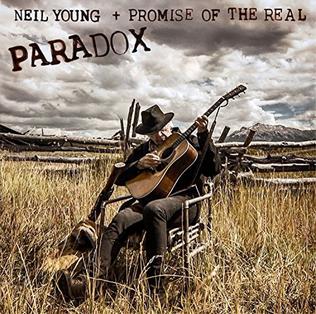
Meanwhile, a short film directed by Daryl Hannah and starring Neil and the band was completed in time for the following spring’s SXSW convention. Paradox was either an ecological parable, impenetrable fantasy in the spirit of Journey From The Past, or inside joke (take your pick). The accompanying soundtrack album—dubbed “Special Release 10” in Neil’s unique catalog nomenclature—was streamed on the Archives site and other major online services well in advance of its release, giving the curious plenty of time to decide if they just had to own it. Most of the music is improvised or seems that way, but not always similar or even as engrossing as the electric meanderings of Dead Man. “Diggin’ In The Dirt” is a simple fireside strum with the POTR boys. We’d be excited about a cover of Willie Nelson’s “Angel Flying Too Close To The Ground”, except that Willie’s son Lukas sings it. Time is also devoted to a couple of blues covers, and the Nelson brothers warbling 45 half-remembered seconds of the Turtles’ “Happy Together”. Neil even carefully copyrighted the lyric (singular) of “Hey”, despite being little more than a jam on “Love And Only Love”.

As for more familiar fare, the album is bookended by an edit of “Show Me” from Peace Trail and an alternate mix of “Tumbleweed” from Storytone. The most interesting tracks are right in the middle: a live version of “Peace Trail” with the kids, a 10-minute wordless jam on “Cowgirl In The Sand”, and a solo “Pocahontas” with his trusty pump organ. Basically, an album side’s worth.

Neil Young + Promise Of The Real The Visitor (2017)—
Neil Young + Promise Of The Real
Paradox (Original Music From The Film) (2018)—2

Friday, December 15, 2017

Bob Dylan 63: Trouble No More

After he publicly embraced Jesus Christ as his Lord and Savior, and began using his stage and albums to tell everyone about it, it took some time for fans to “get it”. The common belief is that Bob Dylan got Jesus out of his system after three albums, but close perusal of the songs he’s written over the last four decades prove that he’s still concerned about the end times, holy wrath and judgement, and other mysteries of faith. His approach changed, but he really didn’t.

Anyway, Bob’s so-called “born again” years continue to perplex longtime fans as well as newcomers, so a Bootleg Series volume devoted to the period makes sense from a marketing standpoint. While the recordings on those three albums vary from a quality standpoint, he also toured constantly with a stellar band backing him up—anchored by Jim Keltner, Tim Drummond, Fred Tackett, and sometimes Spooner Oldham—which gave the songs room to breathe and grow. Trouble No More, in all its incarnations, consists largely of live recordings in terrific sound, most of which are sourced from cassettes right off the board.

And here’s where it gets a little annoying for the consumer. As they’ve done lately, the volume is available as a two-CD set, as well as an eight-CD box with a DVD and books. The cheap set is all live, taken from concerts covering three calendar years, with a few duplicates of songs from different shows, and a small handful of songs that never made it to albums. The larger set includes those discs, plus two more discs of “rare and unreleased” studio outtakes, rehearsals, and live performances, including even more new-to-the-official-canon songs. There’s also two discs’ worth of selections from an April 1980 residency in Toronto, plus a full show from July 1981 in London on two more CDs. (And if you bought the set through Bob’s website, you got another concert from November 1979 on another two CDs.) Taken all together you have six versions each of “Slow Train” and “Gotta Serve Somebody”, four of “Solid Rock”, and two or three versions of several others of the period.

Of the new material on the two-CD version, “Ain’t Gonna Go To Hell For Anybody” is nice to hear in decent quality. As a song it’s preferable to “Ain’t No Man Righteous, No Not One”, which struggles under its New Orleans groove. “Blessed Is The Name” is actually better when the ladies sing. And we get earlier versions of “Groom’s Still Waiting At The Altar” and “Caribbean Wind” before he heavily revised the lyrics.

The big box does indeed provide some real gems, like the live versions of “Slow Train” and “Do Right To Me Baby” from early in his conversion. The virtual concerts nicely show not only how well the band rode the dynamics, but we also get to hear appreciative audiences, despite the legend. The alternate studio takes are occasionally illuminating, like the passionate first reading of “Pressing On”. Some of the unreleased songs aren’t very exciting lyrically, though “I Will Love Him” and “Jesus Is The One” are a little overt but well played, and “Thief On The Cross”, “Yonder Comes Sin”, and “Cover Down, Pray Through” just plain rock. Rather than the take issued as a B-side and available nowhere else, we get take one of “Trouble In Mind”, and “Ye Shall Be Changed” is repeated from the first Bootleg Series box. The 1981 concert is interesting for how he mixed earlier material with the Christian material, but some of it is still in the ill-advised Budokan arrangements, and frankly, doesn’t have the fire and passion of the religious material. Also, he’d already developed that whiny tendency to spout the lyrics rather than sing them, with that extra nasal approach comedians find so endearing.

The two-CD version of Trouble No More should suffice for all but the most rabid listeners. None of Bob’s sermonizing between songs is included on either package, nor are any of the opening sets of gospel from the rotating set of backing vocalists, but when we do hear them, they fit rather than dominate. We have since upgraded our rating due to becoming better acquainted with the music, and the big set is far from tedious. The liner notes go into incredible depth describing the evolution of the material onstage, and the essay by devout atheist and outspoken skeptic Penn Jillette is movingly powerful.

Yet we maintain that a happy medium could have been achieved, had they simply added the “rare and unreleased” discs to the two live ones for a single, comprehensive package; not too big, not too small. Sometimes we think they’re intentionally ignoring us.

Bob Dylan Trouble No More: The Bootleg Series Vol. 13/1979-1981 (2017)—4

Tuesday, December 12, 2017

Rolling Stones 50: On Air

Two decades after every other band of their caliber (and several of lesser) released authorized compilations of recordings from their live BBC appearances, the greatest rock ‘n roll band in the world finally got around to beating the bootleggers with their own. The main purpose of On Air (not the band’s most imaginative title, since others got to it first) was to tie in with a hardcover book of the same title that documented their TV and radio spots throughout the ‘60s. However, because the scope is limited to radio recordings only, the audio artifact only goes up to 1965.

And that’s fine, because most of the tracks included come from the period when they were still considered blues interpreters. Only a small handful of Jagger/Richards compositions are included, the rest of the selections being expected Chuck Berry and Bo Diddley covers, plus other songs similar to the ones that filled up their first handful of albums. Throughout we get to hear that great rhythm section, sending Bill Wyman some due and royalties, as well as Brian Jones blowing harp.

It’s not complete, nor does it have a set chronology. That means that one of the earliest recordings (“Come On”) is followed by one of the last (“Satisfaction”, of course), and bouncing around from there. We can also hear their hopes of being blue purists dashed slightly by the screams of the girls in the audience for the theater performances.

Of course, there’s more than one version of this available; an 18-track single disc seems pointless when the double CD adds another 14. Four of the tracks were included on a vinyl EP with the super deluxe GRRR! set, but the real appeal, of course, are the eight songs that were never on any other Stones album ever. “Fannie Mae” and “Ain’t That Loving You Baby” are both serviceable tracks that would have fit on any of them. “Roll Over Beethoven” and “Memphis Tennessee” were done better by the Beatles, though even Mick doesn’t know who “took the message and wrote it on the wall” in the latter. “Beautiful Delilah” was a common Chuck Berry cover, but rare for them. “Cops And Robbers” is good silly fun, and everybody played “Hi Heel Sneakers” back then. “Crackin’ Up” is noted as one of the “new” songs to the canon, even though we do like the hot take already on Love You Live.

As can be expected, the sound quality varies due to whatever source tapes they could get. The first couple of tunes on the second or “bonus” disc are particularly grainy, but luckily the quality improves from there. In the end, it’s a long overdue addition to the wall, and as the liner notes suggest, interesting to compare to their last album.

The Rolling Stones On Air (2017)—

Friday, November 10, 2017

Who 26: Maximum As & Bs

Part of the music industry’s money-making strategy for the second decade of the 21st century was to reprint anything and everything on limited-edition vinyl in multiple colors and at exorbitant prices, while still not allowing returns from retailers. Every now and then they’d get clever, but a lot of the time the attention to reproductive detail resulted in products that were nice to look at, but not necessarily convenient to listen to, particularly in the modern era of immediate digital access.

The business team behind The Who are clearly no dopes when it comes to recycling, and one of their recent, more clever projects involved four chronological box sets offering replicas of the band’s original 45s, with accurate labels and picture sleeves where applicable. The audio has since been compiled and issued in a five-CD set called Maximum As & Bs. While we extend kudos for the correct non-use of apostrophes, and it’s great to finally have some of their so-called lost tracks handy again, it would have fit on four CDs, and not a few tracks appear for the umpteenth time.

Three short years before, the Who Hits 50 set included most of these A-sides, yet this box does tell the story fairly well. Beginning with the first High Numbers record, it goes through the band’s singles in order. Since half of the debut album was milked for the charts, those tracks nicely frame both versions of “Circles”, even including “Waltz For A Pig”, the Graham Bond Organisation track credited to “The Who Orchestra” for legal reasons. Repetitions are few, so “Circles” doesn’t appear again as part of the Ready Steady Who EP, also included in context.

The milking continues in the Tommy era, so a few of those album tracks appear in jarring edits, and again in re-recordings for the movie soundtrack. But even for a band who learned early on that the album format was their strength, some of their lesser-known gems finally resurface (read: everything from 1970 through 1973). Then we hear the band’s overall output quality diminish alongside its quantity, with fewer rarities. Album cuts were used for B-sides, and outside of “Bony Moronie” from 1971, the live tracks included here come from the 1982 and 1989 Keith-less tours. It’s a big leap to the two new songs from 2004, and the Wire & Glass EP from two years later. Finally, there’s “Be Lucky” from that last compilation, and yet another stereo remix of “I Can’t Explain” to complete the circle.

It’s odd that they include cancelled singles (“Circles” and “Instant Party Mixture”, which fans would have had on both deluxe expansions of My Generation, plus “Eminence Front” and “It’s Your Turn”) without including some of the tracks they actually mention in the booklet, like the censored “Who Are You” and the live “Dancing In The Street” from 1979. But with 90 tracks lasting five hours, there’s certainly a lot of music here, and the plethora of distinct mixes on Maximum As & Bs makes quibbling over what wasn’t included exactly that. Plus, it beats having to get up and flip or replace the record every three minutes.

The Who Maximum As & Bs: The Complete Singles (2017)—

Friday, October 20, 2017

Robert Plant 13: Carry Fire

His hair may be too long and his face ever more creased, but fifty years into his commercial career Robert Plant sounds very comfortable with his voice, his instrument. Carry Fire continues with the palette set by lullaby and… The Ceaseless Roar, his previous solo album, except that the rhythms here are not as overtly exotic, and the breadth of material not as wide.

“The May Queen” was the first preview track, and it’s fairly circular, finally breaking out in the wordless chorus. “New World…” would have been a stronger choice, as it has a driving tempo and therefore more energy. But despite its slower pace, “Season’s Song” moves like a boat on the sea, and it’s a keeper. Towards the end of “Dance With Me Tonight”, right alongside the sound of a heraldic horn, his voice finally emerges an octave higher than it’s been all album, and one can’t help but smile at its familiarity. It’s a good setup for “Carving Up The World Again”, a protest song with a tribal beat and better chorus. He’s been political before, so it’s not that big a deal, but it’s not his strong suit, and that makes “A Way With Words” something of a relief.

These ears aren’t especially wowed by the balance of the album. The exotic influences return on the title track, by way of more overt loops; it improves as it builds. “Bones Of Saints” ups the tempo to a rock level again, getting a lot of steam out of the “no, no, no” chorus. He lets out a few good yells near the end, but “Keep It Hid” remains tense and restrained. “Bluebirds Over The Mountain” is a wholly original reading of the rockabilly classic, sung as a duet with Chrissie Hynde of all people, and ending with some more great yells. Finally, “Heaven Sent” ends the album very, very slowly, and fades just as it gets interesting.

The previous album was so fresh and interesting that Carry Fire is already at a deficit for fair comparison. But it too reveals its strengths the more it sinks in, and he’s onto something.

Robert Plant and the Sensational Space Shifters Carry Fire (2017)—3

Friday, October 13, 2017

David Bowie 41: A New Career In A New Town

Once again an era of Bowie’s career is perfectly summarized by one of his own song titles. The A New Career In A New Town box set basically covered what is still called the Berlin era, despite only some of the music being recorded there, and follows the pattern of the previous sets: the studio albums and pertinent live albums, sometimes twice, and a mop-up disc to include singles. With a book.

Starting with this box, Tony Visconti has become very involved with shaping the official history. Not only did he produce the original albums, but his modern mixes, with the stated intention of enhancing the original records thanks to modern technology, will become both prominent and controversial—particularly without Bowie around to approve or reject.

Low and “Heroes” appear in simply remastered versions of their original mixes, then we get Stage as originally released, followed by Stage (2017), newly prepped by Visconti, which incorporates all the additional tracks added since 1991, and in the correct setlist order. (The artwork is only mildly different.) Lodger is presented the same way—the original mix, which we admittedly always found harsh, and then a new, airier mix, this one supposedly okayed by Bowie prior to his death. Scary Monsters follows, once again succinctly summing up the period. (Sadly, his narration of Prokofiev’s Peter And The Wolf, recorded as a Christmas present for his son and released on RCA Red Seal in 1978, is not included.)

As for extras, a separate “Heroes” EP offers German and French versions of the song in both album and single edits, which nicely cuts down the potential repetition on the Re:Call 3 disc. Beginning with the usual single edits of several songs—plus extended versions of “Beauty And The Beast” and “Breaking Glass”—this installment includes rarities expected and unique, such as: 1979’s stark re-recording of “Space Oddity”; the instrumental “Crystal Japan”; the complete 11-minute Baal EP, recorded for a BBC-TV production of a Bertolt Brecht play; the initial, superior soundtrack version of “Cat People (Putting Out Fire)”; and the classic duets “Under Pressure” with Queen and “Peace On Earth/Little Drummer Boy” with Bing Crosby. In all, a suitably odd end to a challenging yet rewarding chapter of Bowie’s career, poking into the ‘80s, right before things took a complete turn.

David Bowie A New Career In A New Town (1977-1982) (2017)—

Tuesday, October 3, 2017

Beach Boys 30: Sunshine Tomorrow

As we don’t claim to have any legal authority or expertise, please forgive some simplification. There’s this 50-year copyright rule, wherein forgotten or buried recordings by certain bands must be claimed and/or released under threat of slipping into public domain. Like other bands and artists of their heritage, the Beach Boys catalog department took advantage of streaming trends and began quietly issuing digital albums in order to beat that pesky rule. Starting in 2013, every December or so (sometimes earlier) a title would appear offering a bounty of vault tracks from the Boys. The Big Beat 1963 consisted mostly of Brian Wilson songwriting demos, while the following year brought forth session highlights and something of an expansion on Beach Boys Concert. After the Uncovered And Unplugged edition of Party!, and Pet Sounds and Smile having already been mined for deluxe box sets, a chunk of the next copyright extension release was actually pressed onto CDs.

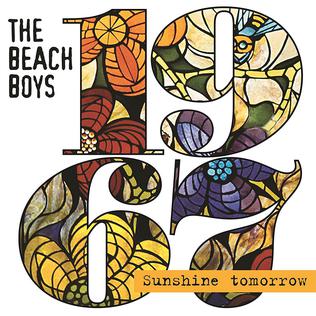
Whoever was in charge knew which albums were getting the most revisionist-theory love, so 1967—Sunshine Tomorrow picked up more or less where the Smile box left off, but rejigged the chronology. The first disc is devoted to Wild Honey, which some folks say is superior, beginning with the first-ever true stereo mix of this very short album (save “Mama Says”, which is still in mono). The album still sounds very thin, especially the drums, but here it’s followed by a couple dozen session outtakes and some contemporary live tracks, though “Aren’t You Glad” comes from a 1970 concert. The second disc jumps back several months to reveal 18 minutes of session highlights from its predecessor, the labored but laconic Smiley Smile. But they truly bury the lede by including the first official release of the notorious unreleased Lei’d In Hawaii album.

This project was originally designed to re-establish the band as a force to be reckoned with in the wake of the Summer of Love. Smiley Smile was about to be released, so they went to Hawaii to record a live album, with Brian in tow for his first full live appearances with the band since the end of 1964 (and his last for another few years). The concerts didn’t go so well, and neither did the live-in-the-studio sessions that happened in an attempt to make up the difference. Wild Honey was then quickly recorded, and released only three months after Smiley Smile.

What would have been Lei’d In Hawaii combined the later studio recordings with a few songs from rehearsals for the live show. It’s a strange mix of old and new material, beginning with a nearly tongue-in-cheek introduction before a faithful cover of the Box Tops’ “The Letter” that just grinds to a halt. Brian’s electric organ unfortunately dominates the songs, which are frankly inert, including a changed perspective on the retitled “Help You, Rhonda” and a cover of the Mindbenders’ “Game Of Love” that suffers from tempo troubles. At least their harmonies on “Surfer Girl” are still impeccable; those voices help Bruce sing “With A Little Help From My Friends”, and we hear a Smile influence on “Their Hearts Were Full Of Spring”.

Allegedly, an audience was supposed to be overdubbed for the final mix, and we’re not sure that would have helped. The handful of tracks included from the actual concerts sounds pretty limp, though some girls are screaming anyway; Mike Love is as obnoxious as ever. The set ends, thankfully, with a return to the studio, with a repeat of the late-1967 tape of Brian trying to play and sing “Surf’s Up” solo at the piano, followed by an a capella mix of “Surfer Girl”.

Sunshine Tomorrow is pointedly for completists, but some thought was clearly put into it. It’s a smart move to start the program with the more focused music of the period, as opposed to the fractured material that made up the previous album and the aborted Hawaii experiment. Plus, we can better discern Brian’s involvement throughout, with his voice and keyboards prominent in the outtakes. (Two more compilations were made available digitally by the year’s end to further cause salivation. Sunshine Tomorrow 2: The Studio Sessions offered another disc’s worth of work-in-progress material and isolated elements from all three albums, while the six-hour Live Sunshine included seven complete concerts from the era, including each of the doomed Hawaii shows.)

The Beach Boys 1967—Sunshine Tomorrow (2017)—

Friday, September 15, 2017

Neil Young 54: Hitchhiker

Waiting for Neil to reveal his Archives to the extent long promised is an exhausting task for any fan, particularly those not especially wowed by his newer material. Based on direct quotes, we’d come to expect a laundry list of unreleased album projects, and while a few live albums made it to retail shelves, such titles as Homegrown, Chrome Dreams, and Toast remained locked up. And then he went and put out Hitchhiker, which the general public didn’t know anything about until he mentioned it in his second memoir.

The music was recorded over the course of a “stony” evening in 1976, shortly after he bailed on the Stills-Young Band tour. David Briggs rolled tape, and the session resulted in ten acoustic demos, all release-worthy. In fact, three of the recordings have been in the catalog for, well, decades; “Campaigner” came out on Decade with one less verse than the full take here, “Pocahontas” was overdubbed for Rust Never Sleeps, and “Captain Kennedy” made it out intact on Hawks & Doves. Five other songs appeared in alternate versions on later albums as well. Most people will zero in on “Powderfinger”, the oft-bootlegged acoustic version, just as mysterious as ever, but without the fire of Crazy Horse.

“Ride My Llama” comes off as fragmented, petering out before he decided how to finish it. The title track, which wouldn’t make it to an album for 34 years, comes off less a cautionary tale than an acknowledgement of the medicine he enjoyed. Another stab at “Human Highway” will fuel debate over the “definitive” version of the song, with or without CSN. “The Old Country Waltz” is played on piano, and very well too, showing off its complexities and delivered with a much more honest approach than the hokey take on American Stars ‘N Bars.

Two otherwise unreleased songs make their first appearances. “Hawaii” is a strange portrait of an archetypical Neil loner; it’s fairly complete, which only makes it more odd that he seemingly hasn’t played it since, even onstage. “Give Me Strength” is a gorgeous slice of heartbreak that he supposedly sat on because it was just too personal. This particular take has a couple of guitar mistakes and other noises, which would not have passed muster in 1976.

At a brisk 33 minutes, Hitchhiker is another tease of an ongoing project of unfathomable depth. According to the logo on the packaging, this is the fifth in a series of “special releases”, which means there are four other such albums in the pipeline that predate this little surprise. The mind reels at the possibilities; if only they were probabilities. The only constant thing about Neil is that he constantly changes his mind.

Neil Young Hitchhiker (2017)—