Showing posts with label genesis. Show all posts

Tuesday, September 24, 2024

Genesis 24: BBC Broadcasts

Thirteen years after the last Genesis reunion tour, Phil Collins rejoined his old band for another go around the world. Dubbed The Last Domino?, the shows mixed familiar hits with older (and newer) epics. Phil sang seated in a comfy chair while his son played drums—and pretty well, by all accounts. Daryl Stuermer was still around, and two male backup singers were on hand as well. The tour was promoted by a double-disc compilation, also titled The Last Domino?, that more or less replicated the setlist—including full versions of songs that were excerpted onstage—and could have, once again, been a Spotify playlist. But it included some nice photos from the rehearsals and sent more royalties in the direction of the absent Peter Gabriel and Steve Hackett.

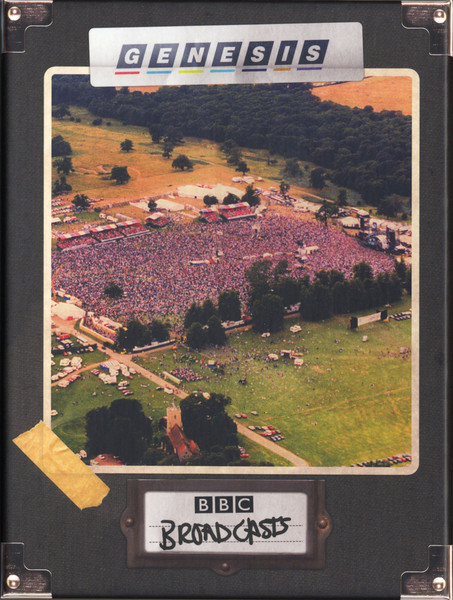
Once again the band had been put to bed, but Tony Banks still found a way to extend their reputation as a live attraction with the surprise release of the five-CD BBC Broadcasts box, covering the band’s career from 1970 to 1998. The package is mostly chronological, but by doing so some sessions are split between discs, which works for streaming, but can be jarring on CD. Also, while it’s five discs long, it doesn’t contain every radio performance by the band through the years—most likely to cut down on repetition, but also because they knew a whole disc from the Ray Wilson era was a non-starter, even at this low price point.

The first disc is the Gabriel era, beginning with three songs from the band’s first BBC studio appearance in 1970, and the same three that were already on the first Archives box. We jump to 1972 with the established Hackett-Collins lineup, with one flashback to the 1971 “Stagnation” that was also on the first Archives box. There’s a good performance of the rare “Twilight Alehouse” B-side, and an encore of “Watcher Of The Skies” from the Lamb tour.

From disc two on everything is in front of an audience, with improved sound, and the long-term live lineup including Daryl Stuermer and Chester Thompson. Five tracks from the 1978 Knebworth Festival—including the transition from “Dance On A Volcano” via “Drum Duet” to “Los Endos”—are followed by most of a 1980 London theater show, which fills the rest of disc two and most of disc three. Despite the occasional voiceover, highlights include the complete “Duke Suite” and the surprise encore of “The Knife”. (The songs omitted from this show were already part of the Knebworth selections. Also, “Follow You, Follow Me” is the same version that’s on Three Sides Live, while “Ripples”, “The Lady Lies”, “Duke’s Travels”, and “Duke’s End” were on Archives #2.)

Most of the well-traveled (since it was already on VHS and DVD) Wembley Stadium show from 1987 straddles discs three (the last two tracks) and four; the balance of the latter is given over to two songs from 1998 with Ray Wilson (who sounds very much like Paul Carrack on “Not About Us”). The fifth disc is devoted entirely to selections from their appearance at the 1992 Knebworth Festival: five songs from We Can’t Dance, with their “Old Medley” in the middle. We’d’ve ended with anything but an eight-minute “I Can’t Dance”, but the crowd seemed to love it.

Again, the sequencing is odd, and the discs aren’t all to capacity; surely some more music from 1978 or 1987 could have nudged the 1998 music to the end of disc five if it was so necessary to include? Quibbles aside, BBC Broadcasts has a lot of deep cuts for the musos and not just the pop fans, and thus provides an exhaustive look at what made the band, in any incarnation, such a draw through the decades.

Genesis The Last Domino? (2021)—3
Genesis
BBC Broadcasts (2023)—

Friday, March 15, 2024

Phil Collins 14: The Singles and Plays Well With Others

The “Take A Look At Me Now” series of Phil Collins album reissues was certainly ambitious, and considering how quickly it come to completion, mostly successful. (Your move, Paul McCartney.) However, many of the hit singles that appeared on movie soundtracks over the years were not included near their most obvious albums, and a high volume of B-sides and other oddities were also passed over on the various bonus discs in favor of demos and live versions of often anachronous origin.

But he didn’t make it this far in the biz being a dope. Just in time for his autobiography to hit bookshelves came a compilation—his third—called The Singles. This was available two ways: a three-disc version in chronological order, and an abridged version that shuffled 33 of the songs into one mostly upbeat mix and one mostly slow one. (It also contains everything on …Hits.) Anyone who truly cares will half to have the big set, but considering that half of the third disc is made up of songs from Tarzan and Brother Bear, that makes it easy to skip it.

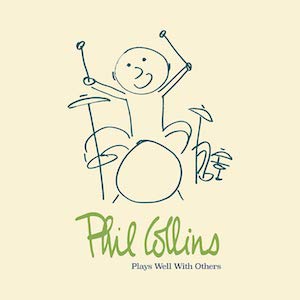
Two years later, an even more ambitious project emerged. Plays Well With Others was a sprawling four-CD set highlighting his guest spots on albums going all the way back to 1969. The first disc goes up to 1982, touching on sessions he did for the likes of John Cale, Brian Eno, Robert Fripp, John Martyn, and Peter Gabriel, his furious side trips with Brand X, and production jobs for Robert Plant and ABBA’s Frida (represented by the smash hit “I Know There’s Something Going On”). The second disc is a little less eclectic, with production work for Eric Clapton, Philip Bailey, and Stephen Bishop, as well as more obvious hits like Howard Jones’ “No One Is To Blame”, Tears For Fears’ “Woman In Chains”, and even “Do They Know It’s Christmas?” by Band Aid. (His version of “Burn Down The Mission” from the Elton John tribute album Two Rooms appears as well.)

By the third disc we’re in the ‘90s, which here is dominated by more John Martyn productions, session work for David Crosby, and his own appearances on soundtracks and tribute albums. “No Son Of Mine” appears here too for some reason. But there is some jazz work, with Quincy Jones and Fourplay. This continues on the fourth disc, which pulls from three decades’ worth of live appearances, but the jazz is tempered by all-star turns from Prince’s Trust concerts and such. For all the trashing he’s gotten over the years, including by this very forum, it’s easy to forget that he was a very inventive drummer in his prime.

A year after that, further strays from the Collins catalog were finally collected, albeit digitally. Other Sides contained 90 minutes of B-sides—including “The Man With The Horn” and several revealing demos—that still should have been parceled out to the proper album reissues, while Remixed Sides ran to two hours’ worth of extended versions to appease anyone who loved 1988’s 12"ers compilation or needed all four versions of “Hang In Long Enough”.

Phil Collins The Singles (2016)—3
Phil Collins
Plays Well With Others (2018)—
Phil Collins
Other Sides (2019)—
Phil Collins
Remixed Sides (2019)—2

Friday, November 10, 2023

Genesis 23: R-Kive

With Phil Collins supposedly retired and Peter Gabriel happily touring on his own any further Genesis reunions seemed unlikely. But all the principals had been involved with a BBC documentary on their history, so somebody decided an overview of the band was due. The difference this time, however, was that R-Kive democratically included three extracurricular and/or solo tracks each, and not always obvious ones, by each of the five best-known members. (Sorry, Anthony Phillips.)

The first disc focuses on the complicated early material from the Gabriel period, focusing on such epics as “The Knife”, “The Musical Box”, “The Cinema Show”, and “Supper’s Ready”. Then the songs get shorter, but still challenge. The disc is capped by “Ace Of Wands”, a frenetic prog-fusion instrumental from Steve Hackett’s first solo album that features Phil and Mike Rutherford.

Disc two charts the evolution of the band with Phil as lead singer, starting with the gorgeous “Ripples” and “Afterglow”, detouring to “Solsbury Hill”, “Biko”, and a track each from Tony Banks (the poppy “For A While”, on which he plays a competent guitar solo) and Hackett (the tuneful “Every Day”, from his third solo album). It stays somewhat heavy through “Turn It On Again”, “Abacab”, and “Mama” with “In The Air Tonight” in between, then it’s all pop with “That’s All”, “Easy Lover”, and “Silent Running” from Mike + The Mechanics.

The ubiquity of the pop charts continues on disc three with three songs from Invisible Touch, plus “The Living Years”, a.k.a. the other hit by Mike + The Mechanics. “Red Day On Blue Street” comes from a Tony Banks album nobody bought wherein he worked with such vocalists as Marillion’s Fish and, in this case, Nik Kershaw. Three songs from We Can’t Dance are followed by “Over My Shoulder”—another Mike + The Mechanics track that spotlights Paul Carrack—and the title track from Calling All Stations. Nothing appears from So, despite having been endlessly promoted over the previous two years on Gabriel’s tours in support of its anniversary reissue; instead we get “Signal To Noise”. Similarly, of all the Phil songs to choose, somebody picked “Wake Up Call”. Just to give everyone their due, “Nomads” is a flamenco new age hybrid sung by Hackett with Chris Squire on bass, while “Sirens” comes from Banks’ second classical album.

While R-Kive was a nice idea, it was a missed opportunity. Chances are trying to coordinate all the solo Collins and Gabriel hits would have taken a lot of paperwork, but it still seems they felt it necessary to have that equal time for everybody. That third disc is just weird, but that’s roughly where the quality didn’t really keep up with the chronology. By now, anyone with a CD burner or premium Spotify account could make their own compilations, or dig out their old mix tapes. Still, most of the music makes it worth the listen.

Genesis R-Kive (2014)—3

Tuesday, January 24, 2023

Genesis 22: Live Over Europe

Following ten years apart, wherein Phil Collins did Disney soundtracks between solo albums and Mike Rutherford and Tony Banks twiddled their thumbs, the most profitable lineup of Genesis reconvened for a reunion tour. Not able to convince Peter Gabriel and Steve Hackett to join, they called back Daryl Steurmer and Chester Thompson for support and off they went. (The documentary detailing the rehearsals and first shows is particularly hilarious when it’s clear Daryl and Chester know their parts far better than the other three know theirs.)

Following the American leg, Live Over Europe 2007 replicated the setlist on two full CDs. Beginning with “Duke’s Intro”, which melds elements of “Behind The Lines” and “Duke’s End”, they move to “Turn It On Again”, which was the handy name of the tour, and proceed through over two hours of expected hit songs (“No Son Of Mine”, “Land Of Confusion”, “I Can’t Dance”, “Invisible Touch”, and the like) as well as more ambitious epics (the complete “Home By The Sea” and “Domino” suites, an “In The Cage Medley”, “Firth Of Fifth” into “I Know What I Like”) and relative deep cuts (“Mama”, “Ripples”). The requisite dual drum solo is called “Conversations With 2 Stools”, named after the objects Phil and Chester beat for the first three minutes, and after a few encores of later hits, the set ends nicely with “The Carpet Crawlers”.

The performances are impeccable, and drawing from several shows ensures competency if not intimacy. The album was a nice enough souvenir, but it was soon to become part of a larger deal.

Being one of those bands audiophiles liked, it made good business sense for Genesis to revisit their catalog in the 21st century by releasing three box sets over a period of 18 months, each dedicated to a distinct period of the band. Each remastered CD was matched with a DVD containing the same studio album in 5.1 surround sound and other audio-visual content, and each set contained a bonus disc—and matching DVD—of “Extra Tracks”, such as B-sides (including “Match Of The Day” and “Me And Virgil”, which were omitted from the Archives #2 box) and other rarities.

A year after the final album box was released, their live legacy was reassessed much the same way, but not exactly. 1973-2007 Live included a CD and 5.1 surround-sound DVD pairing for an expanded Genesis Live, which added five out-of-order tracks from the Lamb tour, but not the fabled “Supper’s Ready” that had snuck out way back when. Seconds Out was also paired with a DVD, while Three Sides Live—in its all-live, no “Paperlate” version—did not get a surround mix. Neither did The Way We Walk, but that combined volume was rejigged to replicate the actual set lists as opposed to “short” and “long”. Also, “Drum Duet” was now called “The Drum Thing”, while “Mama”, “That’s All”, and “In Too Deep”, plus “Turn It On Again” as a bonus, were moved to the end, having been recorded on earlier tours.

A slot in the packaging was included for consumers to store their separately purchased copies of Live Over Europe 2007, which was nice of the designers, but even more exciting was the disc of extra tracks in the form of Live At The Rainbow, recorded in 1973 at the fabled London theater. Some of this was already on the first Archives box, and the jury’s still out as to how much of the vocals were touched up by Peter Gabriel decades later. (The DVD portion includes another 20 minutes of music from the show, sequenced in context. Also, folks gnashing their teeth about no DVDs for two of the albums only had to wait two months for The Movie Box 1981-2007, which contained five DVDs, plus their Behind The Music documentary and an empty slot for the When In Rome DVD from the reunion tour.)

Genesis Live Over Europe 2007 (2007)—3
Genesis
1973-2007 Live (2009)—3

Friday, October 1, 2021

Genesis 21: Archive #2

Having already devoted four discs to the Peter Gabriel era of the band, the Genesis Archive #2: 1976-1992 box set was designed to supplement the Phil Collins era. Whereas the first set was teeming with goodies for the fans, this time out they had a smaller pool covering a wider period.

The sequencing is just plain strange, as each disc ignores chronology. The first contains B-sides (largely studio tracks, plus one extended remix), the second is all live versions (some of which happened to already be B-sides), and the third has more remixes, then more live versions, and then more B-sides. Warning to uber fans: Steve Hackett only appears on one live track (alongside Bill Bruford on drums) and just three of the B-sides.

The “B-sides” disc is gold for collectors and just as maddening. At their best, they show a more experimental side of the band in a time when they’d become mainstream. For example, “On The Shoreline” is a surprisingly poppy little gem from the We Can’t Dance era that hearkens to earlier triumphs, while “Hearts On Fire” utilizes canned horns with vocals way too close to “Illegal Alien”. “You Might Recall”, “Paperlate”, and “Evidence Of Autumn” return to digital after being exiled from the North American version of Three Sides Live. “Do The Neurotic” is a lengthy instrumental of some merit, even if it does sound like the theme song to an ‘80s detective TV show, while “I’d Rather Be You” defines B-side throwaway. The “Naminanu” and “Submarine” instrumentals are somewhat related to “Dodo/Lurker”, so that’s nice, but here they’re separated by “Inside And Out” from the Spot The Pigeon EP, the surprisingly strong “Feeding The Fire” from the Invisible Touch sessions, and a seven-minute remix of “I Can’t Dance”.

In the booklet—which goes in depth into the albums of the period, even though most of the music discussed isn’t heard—Tony Banks’ justification for the selection of live tracks is that none had appeared on a live album before. That doesn’t mean we were aching for a live version of “Illegal Alien”, but that’s what kicks off the second disc. Luckily, the bulk of the disc concentrates on deep cuts from earlier albums, such as “Ripples”, “Entangled”, and “Duke’s Travels” (which extends through “Duke’s End”). Well-deserved credit is given to Daryl Stuermer and Chester Thompson for their valuable contributions to the band on stage.

The first 25 minutes of the third disc are devoted to three extended remixes from the Invisible Touch era before jumping back for contemporary-ish live versions of a profanity-laden “No Reply At All”, a heckled “Man On The Corner”, and an affected “The Lady Lies”. Then it’s more B-sides from the first few years of the Phil era: “Open Door” and “Pigeons” return from Three Sides Live and Spot The Pigeon exile respectively; “The Day The Light Went Out” and “Vancouver” are mildly poppy yet mysterious; “It’s Yourself” is a revelation, as it leads directly into the opening of “Los Endos” on A Trick Of The Tail. A ten-minute “work-in-progress” recording of “Mama” closes the set, and is the only previously unreleased studio track.

That right there is annoying, although the band insisted that any “outtakes” per se ended up as B-sides. But even with the limited supply, there were some key omissions—namely, “Match Of The Day” from Spot The Pigeon and “Me And Virgil” from the 3x3 EP (or side four of Three Sides Live, depending on your location). Somehow the band thought the extended remixes they included were less embarrassing than the tracks they left out. Couldn’t those have been added in context, and the 12-inch variations relegated to its own disc with others of the sort? This is all quibbling, of course, since the set is designed strictly for diehards. By now the hits could be found elsewhere anyway, but at least some of those rarities were available again.

Genesis Genesis Archive #2: 1976-1992 (2000)—3

Friday, May 21, 2021

Genesis 20: Turn It On Again

Barely a year after Phil Collins had compiled his own hits collection, Genesis got one of their own. Turn It On Again: The Hits sticks very close to that premise, with half of the program devoted to songs from Invisible Touch and We Can’t Dance. (Hey, it says “hits” right in the title, not “best of”.)

The compilers do their best with the space left over, and the first few tracks do provide something of a balance via the “title” track and “Mama”, which, like several selections here, is presented in its radio edit. We get a handful of further songs from the ‘80s, with “Follow You Follow Me” and “I Know What I Like (In Your Wardrobe)” the only selections from the ‘70s. The stillborn “Congo” from Calling All Stations is something of a middle finger, only slightly offset by the one “new” track. “The Carpet Crawlers 1999” is a re-recording including the five members of the “classic” lineup, with Steve Hackett getting to add lots more guitar and Phil prominently harmonizing with Peter Gabriel, before taking over the last verse all his own. (Rumor has it the original plan was to have Ray Wilson sing a verse, but he was no longer in the band when they finally got around to recording, so tough bananas on him.)

Longtime Genesis fans would have had all the original albums anyway, but when Phil Collins returned in 2007 for a reunion tour, Turn It On Again: The Hits was expanded to two discs and subtitled The Tour Edition. This time, after starting with that “title” song, they followed the reverse chronological template of 2004’s three-disc Platinum Collection, going backwards from the We Can’t Dance material, adding “Tell Me Why” from that album for some reason. “Illegal Alien” plus further songs from Abacab filled out the picture, while the second disc did a better job of sampling the ‘70s, with such rarities as “Happy The Man” and two tracks from the Spot The Pigeon EP. It’s still a little light on Peter Gabriel, but again, we’re talking hits here. (“The Carpet Crawlers 1999” closed the first disc, while “Congo” was stuck all the way at the end of the second, after the single edit of “The Knife”.)

Genesis Turn It On Again: The Hits (1999)—
2007 Tour Edition: same as 1999, plus 16 extra tracks

Tuesday, April 20, 2021

Phil Collins 8: A Hot Night In Paris

By the end of the century, it was easy to forget that Phil Collins was once a respected drummer, and not just in rock or prog. He dabbled in fusion jazz with Brand X in the late ‘70s, but another 20 years went by before he flung himself into more traditional jazz.

A Hot Night In Paris is credited to The Phil Collins Big Band, and that’s what it is: a live recording by a large combo influenced by those of Buddy Rich and Duke Ellington. The repertoire draws mostly from the more familiar Collins and Genesis hits of recent years, and there are absolutely no vocals. Phil plays drums, Daryl Steurmer is on guitar, Luis Conte assists on percussion, Brad Cole from his last album plays piano, somebody we’ve never heard of is on bass, and sixteen guys make up the horn section.

There’s no mistaking “Sussudio”, but the rest of the arrangements aren’t as obvious. “That’s All” is a little harder to guess, “Invisible Touch” is way subdued, and “Hold On My Heart” is slowed down to a crawl with the slightest attention to the melody. “I Don’t Care Anymore” is completely stripped of its signature drum pattern, relying instead on flashy film noir accents, reminiscent of ‘50s detective shows, rendering it virtually parodic. Gerald Albright takes the spotlight for his own “Chips & Salsa”, which isn’t the most satisfying appetizer to these ears, sorry to say.

“Milestones” is the Miles Davis tune, on which jazz guys love to stretch, and they do, whereas the easy-listening take on “Against All Odds (Take A Look At Me Now)” is the closest to the record everyone knows. Luckily, the set closes with two lengthy surprises. First, the Average White Band’s “Pick Up The Pieces”, with George Duke on piano, James Carter on sax, and Arif Mardin conducting, is always a crowd-pleaser, even for twelve minutes. Then Phil plays a short solo to kick off “The Los Endos Suite”, which reprises the closing track from A Trick Of The Tail, detouring to Buenos Aires for a few vamps, eventually returning to the “Squonk” theme so Daryl can let loose.

With the exception of those last two, most of the tunes that work best on A Hot Night In Paris are the ones that aren’t as recognizable from their hit single versions. Jazz purists may scoff, but those predisposed to despising Phil Collins might be as pleasantly surprised as they are tolerant.

The Phil Collins Big Band A Hot Night In Paris (1999)—3

Friday, September 4, 2020

Genesis 19: Archive

With the band all but over, the longtime members of Genesis convened to compile a box set of rarities. Rather than cram all their incarnations into a single sprawling compilation, Genesis Archive 1967-75 wisely concentrated on the Peter Gabriel years. In an eccentric move, but ultimately a method that enhanced the listening experience, the program went backwards, kind of. (We’ll explain.)

The first two discs are devoted to the only professionally recorded live performance of The Lamb Lies Down On Broadway. The sound is terrific, the rhythm section and keyboards tight, and Peter’s occasional song introductions attempt to shed some light on the work’s thick plot. Because many of the songs as originally performed had less-than-stellar vocals due to the costumes he wore onstage, Peter re-recorded an indeterminate portion of the vocals specifically for this set. Steve Hackett allegedly redid some of his guitar parts too. Because (they said) the tape ran out for “It”, that song is included in its studio incarnation with all new vocals.

The third disc begins with five songs from a 1973 concert at London’s Rainbow Theatre—four from Selling England By The Pound, plus “Supper’s Ready”, the latter supposedly with new vocal parts as well. A BBC performance of “Stagnation” with the then-newly recruited Steve Hackett and Phil Collins is excellent. Three rare singles fill the rest of the disc. “Twilight Alehouse”—originally from the Foxtrot era but eventually released as the B-side to “I Know What I Like”—is unsettling in its portrait of an ordinary yet disturbed man (as opposed to fantasy or mythological creature) finding solace in alcohol, but the instrumental break is worth it. The standalone “Happy The Man” single sounds almost like a parody of Cat Stevens (despite the alarming rhyme “like a nun with a gun”). The drastically re-arranged, re-recorded single version of “Watcher Of The Skies” cuts out the entire Mellotron intro, sticks to the verses, and fades on a chant.

The fourth disc is the most challenging, simply because it goes way, way back to when they were just kids starting out, before Steve and Phil. Some of these are more historically than musically interesting; good luck enduring “Let Us Now Make Love” without cringing. A strings-less mix of “In The Wilderness” suggests that a stripped-down version of the debut might be of interest, as are such demos as “Dusk” and “She Is Beautiful”. A few tracks recorded for the BBC and nowhere else are also unique in that Peter shares some vocals with Tony Banks and Anthony Phillips. The bulk of the disc predates the first album, and includes even more straight pop and love songs than anything they’d do until the ‘80s.

Coming at a time when Peter was supposedly hard at work on his next album, the Genesis Archive reminded people who’d given up on the modern version of the band where they’d come from. It didn’t do Phil Collins any favors, unless you listen closely enough to the drums.

Genesis Genesis Archive 1967-75 (1998)—

Friday, June 5, 2020

Genesis 18: Calling All Stations

Few bands that have achieved success with one lead singer go on to find success with another after the first one leaves, for whatever reason. AC/DC did it after Bon Scott, Pink Floyd kinda did it after Syd Barrett, and Genesis did it after Peter Gabriel. So once Phil Collins went solo for good, Genesis founding members Tony Banks and Mike Rutherford intended to carry on, and why wouldn’t they.

This time, however, they were replacing a singer who also happened to be their drummer, and an active collaborator for over two decades. The new singer would have to be pretty damn impressive to keep these guys in gold records and sold-out shows; a drummer wasn’t as important, as they’d used Chester Thompson to supplement Phil on tour for years. Virtual unknown Ray Wilson was certainly competent in the vocal department, but that’s about all he brought to the table as evidenced by Calling All Stations. (Two drummers were used throughout the album.)

Part of what helped Genesis move forward after Gabriel left was their existing brand: the music still sounded like the Genesis of recent years, and Phil had not only contributed vocals to earlier songs, but was able to get into the spirit of the melodies, if not the characters. By 1997 the Genesis sound had become most synonymous with him, to the point where keyboards and guitars weren’t as prominent as before. Furthermore, Banks’ multiple solo projects were sales duds, and any success Mike + The Mechanics had was usually down to whoever was singing, especially if it was Paul Carrack.

Without looking at the label of the CD, would anybody know this was Tony Banks and Mike Rutherford? Worse, would someone think this was the new album by the band that still called itself Bad Company, but sounded nothing like the lineup with Paul Rodgers? That’s what makes Calling All Stations so inessential. There’s nothing embarrassing about it, except maybe the rhythms on ill-advised first single “Congo”, or the baffling “Alien Afternoon”. “Small Talk” is pretty dopey, though “The Dividing Line” sounds enough like recent Genesis until the vocals start.

As usual for the time, the album is way too long. The new lineup toured Europe and promptly called it quits. Calling All Stations is still in print, and we thought it had not been part of any reissue or expansion program, but it turns out we were mistaken.

Genesis Calling All Stations (1997)—2

Friday, February 14, 2020

Phil Collins 5: Both Sides

After several high-profile years, both on his own and with Genesis, Phil Collins came home to find his marriage falling apart. Just as he did for Face Value, he turned to his trusty drum machine and home studio to put some demos together. But instead of adding horn sections and all-star buddies, he pretty much left the demos unadorned, and that was Both Sides.

Not all of the songs deal with failed romance, but overall it’s still a dour album, even when it’s upbeat. Apparently convinced that But Seriously wasn’t serious enough, “Both Sides Of The Story” treads territory familiar from “Another Day In Paradise”, but with faster drums and guitars and a distinct Peter Gabriel influence in the bridge (think “Biko”). “Can’t Turn Back The Years” is the first lover’s lament, while “Everyday” fills the “Never A Time” template following an extended solo piano intro. “I’ve Forgotten Everything” is a well-worn lyric in a defensive vein, but the recording certainly owes a debt to the Blue Nile. “We’re Sons Of Our Fathers” utilizes a banjo and canned horns for a near-Dixieland feel that thankfully dissipates. At least the track provides a little variety once those instruments are overshadowed, even if it if is about damn kids nowadays. “Can’t Find My Way” would likely stand out on any other album; here it’s just another mope.

While still a plea for forgiveness, “Survivors” revives the driving sound of the opening track, with prominent drums layered on top. It’s a shame he didn’t realize that the opening of “We Fly So Close” is ripped off from the theme from the movie Fame; maybe he was too concerned with repeating the basic chords from “In The Air Tonight”, right up to the guitar at the chorus. Despite the obvious nod to “Somewhere” from West Side Story, “There’s A Place For Us” has a Prince-worthy hook that’s screaming for someone to cover it. While supposedly about the ongoing troubles in Northern Ireland, the bagpipes on “We Wait And We Wonder” once again recall Peter Gabriel, this time “Come Talk To Me” from the year before. And in case you didn’t get the point, “Please Come Out Tonight” reiterates what’s really on his mind.

As is common with albums recorded in solitude, editing is eschewed throughout Both Sides, resulting in another over-long album, with several tracks lasting well over five, six, even seven minutes. Once again good songs get lost in the interminable sequence. Hence, it wasn’t the smash we’d come to expect; even the adult contemporary crowd seemed to be less than interested in something so down. (One of the first releases in the “Take A Look At Me Now” reissue series, the bonus Extra Sides disc collected a few contemporary B-sides, including the catchy “Take Me With You”, a demo of “Hero” as given to David Crosby, and a handful of live versions of album songs from questionable audio sources.)

Phil Collins Both Sides (1993)—
2016 “Take A Look At Me Now” edition: same as 1993, plus 10 extra tracks

Friday, October 18, 2019

Genesis 17: The Way We Walk

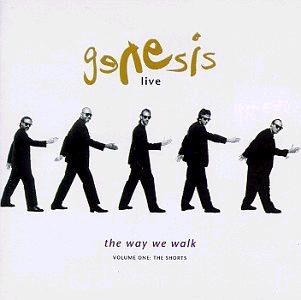
Maybe they knew this would be the last big tour for a while, as Genesis took the opportunity to glut the marketplace with not one, but two live albums culled from their big tour supporting We Can’t Dance. Playing on the video and chorus for “I Can’t Dance”, both volumes were titled The Way We Walk, and were sequenced thematically.

Volume One: The Shorts was released first, in time for the holiday buying season, and concentrated on the hit singles, some recorded on the Invisible Touch tour. Outside of Phil Collins’ evangelist impression on “Jesus He Knows Me”, F-bomb in “Invisible Touch”, and gargling through “I Can’t Dance”, there’s no real difference from the studio versions, except that stalwart supporting players Daryl Stuermer and Chester Thompson are on hand to fill out the sound. (Nice of the boys to include them on the cover, though.) It helped that none of the songs had been repeated from earlier live albums, but that also meant that your enjoyment depended on whether you liked the ‘80s version of Genesis.

If you didn’t, maybe you were more excited by Volume Two: The Longs, which arrived a few months later with no intention of going gold. This set was devoted to their lengthy epics, mostly focusing on instrumental interplay. “Old Medley” begins with “Dance On A Volcano” before weaving tunes from the Peter Gabriel era over 15 minutes, then teasing the crowd with random lines from the likes of “That’s All”, “Your Own Special Way”, “Follow You, Follow Me” and, sadly, “Illegal Alien”. (Earlier tours had similar medleys, wherein Phil would even sprinkle a Mike + The Mechanics tune and “You Can’t Hurry Love”.)

Four tracks exceed ten minutes; “Drum Duet”, thankfully, is “only” six. Even in this context the newer pieces stick out, though the “Home By The Sea” suite does well, as does “Domino”, begrudgingly. The two epics from We Can’t Dance don’t gain any stature but don’t lose any either.

Genesis The Way We Walk Volume One: The Shorts (1992)—3
Genesis
The Way We Walk Volume Two: The Longs (1993)—3

Tuesday, July 23, 2019

Genesis 16: We Can’t Dance

It had already been five years since the last Genesis album, their longest stretch yet. In that time, Phil Collins had several more hit singles, another solo album, and a major tour, while Mike “+ the Mechanics” Rutherford spawned his own hit with “The Living Years” and nobody cared about Tony Banks’ solo album, nor even Bankstatement, his collaboration with Steve Hillage of Gong. Yet somehow the three of them managed to write and record a dozen songs in the space of six months, and We Can’t Dance appeared right on the cusp of grunge. As had been happening over the previous decade, only the absence of horns makes the album seem less like a Phil Collins solo album; their weakness for “wacky” videos for the more upbeat (read: radio-friendly) tracks also detracted from the songwriting.

The lyrics are also less vague, encroaching even more on social commentary, which frankly, had never been their strong suit. Wisely, the album begins with the brooding “No Son Of Mine”; while it does address domestic turmoil, the darker tone evokes good memories of the “Mama” album. “Jesus He Knows Me” is mildly catchy, but overtly skewers televangelism, and evokes uncomfortable memories of “Illegal Alien” or “Anything She Does”. But just to throw people off track, “Driving The Last Spike” is their first lengthy historical epic since the mid-‘70s, but turns toward a more contemporary sound over its ten minutes, despite the 19th-century subject matter.

While not specifically the title track, “I Can’t Dance” pretty much unravels any attempt to take the band seriously, with both the lyrics and literal video making fun of the then-current trend in music videos and soda commercials, despite their own participation and the fact that Phil had already done it quite well in the clip for “Don’t Lose My Number”. “Never A Time” is the requisite ballad, and a nice one, with echoes of adult contemporary Eric Clapton and far enough away from “People Get Ready” to keep from being sued. Then “Dreaming While You Sleep” spends far too long with a drum machine and bluesy noodling to get its point across (to wit: hit-and-run drivers will be cursed with guilt forevermore).

While Mike Rutherford’s Rickenbacker 12-string reappears after too long a wait, the mild samba rhythm and upbeat tone of “Tell Me Why” brings forth only more hand-wringing over social injustice. “Living Forever” provides an ironic contrast in its resistance to being told what to do and how to live, carried by a truly infectious backing and an extended ending that, again, recalls the mid-’70s. Despite being a single, “Hold On My Heart” is the “In Too Deep” of the album, and redundant after “Never A Time”.

As if “Tell Me Why” wasn’t enough, “Way Of The World” asks more child’s questions about why modern life is just so hard and cruel. And maybe we’re just sentimental, but “Since I Lost You” works despite its wrenching delivery and inspiration (the recent death of Eric Clapton’s young son, with some Slowhand-style leads to boot). So it really takes balls to end with yet another ten-minute epic, but “Fading Lights” is much preferable to “Driving The Last Spike”, and we still expect the chorus to go into “Ripples”. Tony’s extended solo in the middle is worthy of his best, and hindsight has brought a certain poignancy to the track, being the last studio track this version of the band released.

Basically, We Can’t Dance is a long and tiring listen; delete a few of the songs and cut others short and there’s the possibility of a strong set here—slight, but possible. The converted didn’t care, and promptly bought millions of copies and almost as many concert tickets, which in turn sold more copies of the album.

Genesis We Can’t Dance (1991)—

Friday, April 5, 2019

Phil Collins 4: But Seriously

Considering the man’s ubiquity through the ‘80s—a time where he himself says “even I was sick of hearing me everywhere”—there would be no question that the next Phil Collins solo album would be a smash hit. First, though, there was a detour in the form of his first starring role in a major motion picture. Buster is best remembered today by two songs from the soundtrack album: the Motown hybrid “Two Hearts”, written with Lamont Dozier and celebrated with yet another video wherein he appears as every member of a band, and his gorgeous rearrangement of “A Groovy Kind Of Love”.

Like all international superstars, he was very concerned about the state of the world in 1989, and the lyrics on …But Seriously were designed to reflect that, if subtly. An upbeat yet odd start, “Hang In Long Enough” has a blast of horns, but sticks too uncomfortably close to “1999” to sound original. A familiar drum machine and keyboard meld brings in “That’s Just The Way It Is”, which features a harmony from new buddy David Crosby; presumably Phil was the only guy on the planet who hadn’t heard Bruce Hornsby’s song from a couple years before, though the bagpipes at the end are a nice touch. “Do You Remember” was made to be a hit single, and it was, but sounded better when it was called “Groovy Kind Of Love”. Normally we wouldn’t get too excited about “Something Happened On The Way To Heaven”, but that fantastic game-show fanfare that appears at the top and in the middle? POW! (Buried in the mix, under all the horns and vocals, is a twangy 12-string part, and a nice touch.) “Colours” sadly decries apartheid for the first three minutes, then transitions into a promising jazz instrumental before going back to a more Genesis sound (plus horns) for another six. As a respite, “I Wish It Would Rain Down” is best known for spotlighting Eric Clapton’s guitar work; he also appeared in the elaborate video alongside the rest of the band and Jeffrey Tambor. (That canned keyboard sound dominates the rest of the mix today.)

“Another Day In Paradise” was the first single, and now we hear the song’s structural similarity to “Man On The Corner”; at the time the big deal was made about David Crosby singing on it, and it won a Grammy for Record of the Year. With a faster version of the same chorus, “Heat On The Street” is a bouncy Motown-like tune in defense of “the kids”. “All Of My Life” reeks of Stephen Bishop’s influence, particularly on the “Tootsie”-like verse; if you listen closely you can hear Steve Winwood on organ, and that’s not Clapton, but Sting regular Dominic Miller on the leads guitar. The furious instrumental “Saturday Night And Sunday Morning” provides some late variety, but is over before it can really make an impact, and seems strange to stick before “Father To Son”, a pleasant paternal chat. While it begins very much like “Take Me Home”, “Find A Way To My Heart” recycles the horn hits we’ve heard for the previous hour to end up in a different place.

While it’s simply too damn long, and too many songs sound alike, the album sold a bazillion copies worldwide, thanks in part to all the hit singles and the subsequent world tour, which was commemorated by 1990’s Serious Hits… Live! album and concert video. Typical of the “Take A Look At Me Now” reissue campaign, …But Seriously’s bonus disc (labeled Extra Seriously, ho ho) mixes performances from that tour with others from later tours, along with a few B-sides and demos.

Phil Collins …But Seriously (1989)—
2016 “Take A Look At Me Now” edition: same as 1989, plus 13 extra tracks

Friday, December 28, 2018

Genesis 15: Invisible Touch

By 1986 Phil Collins had truly dominated the music industry to the point where the first time we heard a song called “Invisible Touch” on the radio, we assumed it was just another B-side to another single from No Jacket Required. But no! Genesis actually made another album, and if they were going to coast on Phil’s notoriety, all the better for them. (Not that he had all the fun; Mike Rutherford recruited Paul Carrack and a singer named Paul Young who wasn’t the soulful heartthrob for a combo called Mike + Mechanics, which had a couple of hits over the winter.)

At first impression, Invisible Touch is truly indistinguishable from Phil’s solo work, being that it’s full of catchy tunes and pop hooks, many of which were hit singles. Tony Banks wasn’t doing anything on the title track that was any more advanced than the keyboards on “Sussudio”, and whatever guitar flourishes Mike came up with would be copped by Daryl Stuermer on stage anyway. “Tonight, Tonight, Tonight” revives some of the “dark” moods of “Mama” from the last album, and while this too would be a hit single, they had to chop about four minutes out of the middle of the album version. Then there’s “Land Of Confusion”, the big social-conscience statement with pointed video to match, its distorted mannequins still causing nightmares of its own today. And while they’d been doing pretty ballads for a while now, “In Too Deep” might as well have been “One More Night Part Two”.

“Anything She Does” sits in the same position as “Illegal Alien” from last time, and while it’s not as offensive, the horns and synths are particularly dated. It also sets the album apart as a Genesis production, since Phil on his own would never be so cheeky to sing about a porn star on a solo album; that influence came straight from the other two. They were also quick to defend their modern streamlined hitmaking sound by pointing out all the lengthy tracks on the album, like “Domino”. But calling two unrelated tracks parts one and two of the same piece doesn’t make it so. That said, “In The Glow Of The Night” suffers from the technology of the time, while “The Last Domino” at least builds momentum to be mildly exciting. “Throwing It All Away” finally gets the recipe right, combining everyone’s pop tendencies with a great arrangement and straightforward delivery. It’s the high point of the album, certainly, especially when followed by “The Brazilian”, an instrumental (you know, just like they always used to do) that doesn’t seem to conjure much of an international feel, unless they were referring to the salon treatment.

There’s absolutely nothing wrong with Invisible Touch, unless you’d ignored the last five years and actually expected Genesis to recapture their prog roots. Everyone else was happy with it, and it sold by the bucketful. And even if Peter Gabriel’s So, which ruled the charts and airwaves along with this album during the same period, didn’t excite the gearheads, they could always check out GTR, which combined the ideas of former Genesis guitarist Steve Hackett with those of Steve Howe, most recently of Asia and once of Yes.

Genesis Invisible Touch (1986)—3

Friday, June 1, 2018

Phil Collins 3: No Jacket Required

After years of slowly but surely dragging Genesis to the mainstream, Mr. Showbiz cashed in all his favors and got a major label push to get this into everyone’s house. No Jacket Required was so huge it didn’t even need “Easy Lover” (big hit duet with Philip Bailey the previous fall) or “Against All Odds” (a.k.a. “Take A Look At Me Now”, a movie theme song from a year earlier) or even “Separate Lives” (the so-called love theme from White Nights, a duet with Marilyn Martin, which came out that Xmas) to sell it. This thing was huge, even winning a Grammy. (We would be remiss were we not to mention Howard Jones’ hit remake of “No One Is To Blame” the following spring, featuring Phil on harmonies and boomy drums.)

Then, as now, there are exactly two songs we really, really like: the brooding “Long Long Way To Go”, which sounds most like his earliest solo experiments and features Sting on harmonies, and “Inside Out”, which sounds like “Don’t You (Forget About Me)” at half-speed, but works the simple theme well enough. It could almost pass for Genesis, even without the bridge that resembles “Taking It All Too Hard”.

The rest of the album is pure pop, heavy on the horns and synths, even further away from prog, with a distinct Prince influence on the more upbeat tunes (especially “Who Said I Would”). Which is fine, if you like that sort of thing. And the public did, eating up all the singles and loving all the wacky videos. Whenever we hear any of those songs—and “Sussudio”, “One More Night”, and “Take Me Home” are still in heavy rotation on the local “lite” radio stations—we’re reminded of a scorchingly hot summer sitting in front of an air conditioner, matching the sweaty guy on the album cover. (Patton Oswalt knows what we’re talking about.) Drop the phrase “great! great sandwich” into any conversation and see which of your contemporaries notice. Be forewarned that anyone who doesn’t remember the video for “Don’t Lose My Number” will be utterly baffled by the aside.

The CD version of No Jacket Required, for those early adopters, offered an extra track in the way of “We Said Hello Goodbye”, a nice midtempo ballad with an extended, moderately lush prelude, though something of an afterthought following the anthemic qualities of “Take Me Home”. It was included in the same spot on all reissues, as well as the 21st century “Take A Look At Me Now” edition, the extra disc of which (cheekily labeled Extra Large Jacket Required) was loaded with live versions of nine songs on the album plus “Easy Lover”, all recorded in the ‘90s save one. Demos of three eventual album tracks, none very illuminating, round out the disc, while fanatics bemoaned the absence of the B-sides “The Man With The Horn” and “I Like The Way”, and anything from 1988’s 12"ers compilation of six extended remixes.

Phil Collins No Jacket Required (1985)—3
2016 “Take A Look At Me Now” edition: same as 1985, plus 13 extra tracks

Friday, April 6, 2018

Genesis 14: Genesis

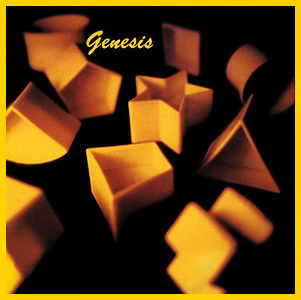
After touring to support Three Sides Live, and taking a few months off for Phil Collins to push his second solo album, Genesis went right back to work on their next album, and had it out by the end of the year. (Right after Phil finished a brief tour as Robert Plant’s drummer.) Titled simply Genesis, it has since been referred to as the “Mama album”, thanks to the opening track and first single, whereas we immediately recognized the childhood toy depicted on the cover.

“Mama” was a good choice for an introduction to the album, as its harsh sound dragged the band back from the pop sound people had begun to associate with them. (Another good sign: no horn sections anywhere.) That said, “That’s All” is fairly simple, both in execution and lyrics. The next two tracks form a suite that completes the side, just like the old days. “Home By The Sea” takes some time to absorb; apparently the repeated demands to “sit down” come from the ghosts occupying said home. “Second Home By The Sea” is a lazy title, but nicely pairs with its brother, bringing everything full circle in the last minute.

That’s a pretty decent album side, but the execrable “Illegal Alien” is up there with the worst songs the band has ever committed to posterity. At best it’s an accurate Men At Work pastiche, but even they had the taste not to go this politically incorrect. (The video was no help either.) “Taking It All Too Hard” is a little better, back to Phil’s recently patented breakup lyrics. Around our way “Just A Job To Do” was an FM radio staple, a heavier track with good band interplay. One of the sneakier songs in their catalog, “Silver Rainbow” begins with a catalog of paradoxes, then moves into what seems like a cautionary lecture, until you realize he’s talking about the first time making out with a girl (“and a bear comes in the room” being a particularly red herring). Finally, “It’s Gonna Get Better” works around tricky time signatures and finds a suitable melody to deliver its uplifting message.

“Illegal Alien” aside, Genesis remains one of their better albums because the three of them were still playing like a band, contributing equally. We’ll go so far as to say it was their last good album, which says a lot, considering how busy they’d been up to this point.

Genesis Genesis (1983)—

Tuesday, November 21, 2017

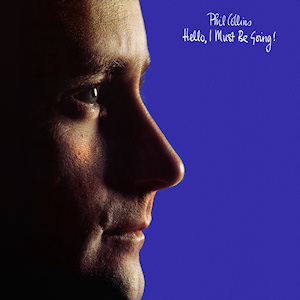
Phil Collins 2: Hello, I Must Be Going!

This was the stage of music history where it began to become impossible to avoid hearing Phil Collins. Months after touring behind the last Genesis album, he was back working on his second solo album. Hello, I Must Be Going! went further to establish him as Mr. Entertainment, balancing shameless pop with more substantial material, sometimes with the speed of a ping-pong match.

“Those drums” begin the album, as “I Don’t Care Anymore” angrily throws boxes all over the place. Then it’s a major mood swing to the horns-heavy “I Cannot Believe It’s True”, one of several songs that does not need to exceed five minutes but does anyway. Successful despite itself is “Like China”, a terrific, almost sweet tune not ruined by his Cockney accent. “Do You Know, Do You Care?” goes back to the darker sound, with those drums again, angry vocals and guitars used like loops. Amazingly, and a sad commentary on the record-buying public, his too-cute cover of the Supremes’ “You Can’t Hurry Love” became a massive hit, hyped by yet another promo video wherein he played all the parts.

Keeping things upbeat, “It Don’t Matter To Me” layers extremely syncopated horns over a very simple sequence. “Thru These Walls” begins in “In The Air Tonight” territory, right down to similar scenes in the video, but he errs too far on the side of creepy. Then it’s back to the ultra-sweet “Don’t Let Him Steal Your Heart Away”, which relies solely on voice, piano, guitar, bass, drums, and strings to convey the equally simple sentiment. Right out of nowhere comes “The West Side”, a near-fusion instrumental that still manages to clear the palette for “Why Can’t It Wait ‘Til Morning”, which displays his uncanny ability to write heartbreakers.

Ultimately, Hello, I Must Be Going! is a better album than Face Value, mostly because it was designed as an album, rather than a collection of enhanced demos. He even took it on his first solo tour, yet the eventual expanded reissue offers only a handful of tunes from that era (including covers of “It’s Alright” and “People Get Ready”), along with performances from later tours. Two demos cap the Hello! Extras disc, wherein we can hear him “doo-doo” and “no-no” his way through the yet-to-be-completed lyrics for “Do You Know, Do You Care?” and “Don’t Let Him Steal Your Heart Away”.

Phil Collins Hello, I Must Be Going! (1982)—3
2016 “Take A Look At Me Now” edition: same as 1982, plus 11 extra tracks

Tuesday, June 27, 2017

Genesis 13: Three Sides Live

It might seem odd for a band to put out a double live album only five years after their previous one, but Genesis had definitely evolved, in the true definition of the word, in the meantime. Since the departure of Steve Hackett, Daryl Stuermer had supplemented Mike Rutherford on guitar and bass, while Chester Thompson remained on the backline, occasionally joined by Phil Collins for double drums.

Most of the set relies on recent albums, replicating some of the more popular tracks from Abacab and Duke. “Behind The Lines” melds into “Duchess” as expected, complete with drum machine. “Turn It On Again” and “Misunderstanding” are transformed into peppier arrangements, while “Abacab” is extended to a full ending. While it may not have been familiar to new fans, the “In The Cage” medley on side three is a highlight, incorporating parts of “The Cinema Show” and the “Slippermen” sequence from The Lamb Lies Down On Broadway, slowing just enough down to turn into “Afterglow”. (Remember, unlike his bandmates, Tony Banks was the only guy onstage playing his particular instruments.)

Even being their third such compilation, Three Sides Live only made sense as a title in America and a handful of other countries that did indeed include studio tracks on side four of the LP. “Paperlate” is punchy horn-driven Collins pop, right along the lines of “No Reply At All” and arguably superior, though “You Might Recall” is less successful and borderline cheesy. Then there’s “Me And Virgil”, a trouble-on-the-farm song that pales in comparison to “The Roof Is Leaking”. (All three were originally released as a British EP called 3x3, with wonderfully Beatlesque packaging, and even liner notes by Tony Barrow!) “Evidence Of Autumn” and “Open Door” were both slow and pretty B-sides from the Duke sessions; the former takes time to build but has a gorgeous verse, the latter not as gorgeous but still nice.

Since the album was standardized worldwide, those songs disappeared from the CD reissues, though they have appeared on the occasional box set. In their place, as it was in the UK and elsewhere, are three further live tracks from earlier tours. “One For The Vine” is drearier onstage, but Phil does a nice job singing “Fountain Of Salmacis”. A medley of “It” finding its way to the non-vocal parts of “Watcher Of The Skies” comes from 1976, when Steve Hackett was still in the band and Bill Bruford was on drums.

Genesis Three Sides Live (1982)—3

Tuesday, January 17, 2017

Genesis 12: Abacab

From here the line between Genesis and Phil Collins really begins to blur, as his solo career brought his voice to a wider audience. On Abacab, his voice is more confident than ever, yet he still feels compelled to play “characters”. And thanks to the hand of engineer Hugh Padgham, the sound crackles throughout.

The title track is still a lot of fun for a song about nothing; even the closing jam, while simple, keeps the attention with the dueling synth and guitar, and crazy seagull effects in the back. “No Reply At All” is an awfully bold departure, for the band anyway, being that it is plastered with the same Earth, Wind & Fire horns that Phil used on his solo albums, to the detriment in the mix of Tony Banks’ organ and Mike Rutherford’s highly impressive bass. (His guitar is equally impressive all over the album.) “Me And Sarah Jane” is another quirky Banks tune, with some echoes of the ‘70s, but wrapping up nicely for the final “choruses”. The real hidden gem here is “Keep It Dark”, which even got a video, telling a grand Genesis sci-fi tale in 6/4.

Side two starts in a similar fashion to side one, with an extended jam of sorts for “Dodo/Lurker”, which somehow encompasses an extinct bird and a submarine. “Who Dunnit?” appears to be an exercise in annoyance, starting with a simple idea then beating it into submission. “Man On The Corner” seems descended from Phil’s demos for his solo album, with a touch of the social commentary he’d pursue later, unless one considers it a view in third person of the poor slob from “Misunderstanding”. “Like It Or Not” fits with Phil’s recent romantic laments, except that Mike wrote it. There’s a wonderfully moody setup for “Another Record”; sadly it doesn’t last for the whole song, which turns into a clever acknowledgement of fleeting stardom (indeed, the song was allegedly left over from Duke) featuring one of the earliest uses of the fake harmonica sound that would become omnipresent throughout the decade.

There are a few long tracks, but no epics; most of the tunes are concise but not throwaways. Abacab is a refreshing look back to the band when they were just this close to becoming true behemoths. There’s something for every fan, and something to piss every fan off.

Genesis Abacab (1981)—

Friday, September 16, 2016

Phil Collins 1: Face Value

Some of the songs Phil Collins wrote in the wake of his divorce ended up on the most recent Genesis album, but somehow the demos of the rest were deemed strong enough to form the basis of his first solo album. And considering what Face Value led to, it could be said that said divorce made him millions in the long run. (Not that we’d wish misfortune on anyone, but the man does have his detractors.) While he’d contributed inventive drums to Genesis albums, had done sessions for Brian Eno and even moonlighted in the British fusion band Brand X, from this album forward, he was squarely in the world of pop.

Everybody knows the story behind “In The Air Tonight”, how Phil witnessed a murder, then invited the perpetrator to the front row of one of his concerts, where he told the whole story and instructed the authorities to make the arrest. What people don’t know is that Phil himself was simultaneously apprehended for aiding and abetting a fugitive of justice by not reporting the crime when it happened, and he’s been in prison ever since.

Whatever you want to believe, it’s still a spooky song, with a sound that’s been imitated as a sincere form of flattery, and of course, those gated drums. “This Must Be Love” sounds even more like a demo, in stark contrast to the upbeat jazzy remake of “Behind The Lines”. By ignoring the big fanfare and adding Earth, Wind & Fire’s horn section to follow the melody, we can concentrate more on the lyrics, and choose to play the original again. The crickets that can be heard at the end shouldn’t be considered a critical commentary, but effectively set up the stark tale of farmland woe in “The Roof Is Leaking”, supposedly with Eric Clapton on that dirty dobro. This fades into the excellent instrumental “Droned”, which then morphs into “Hand In Hand”, for which he apparently never wrote words, so they’re substituted by a children’s choir and the horn section. Maybe he realized it was too close to “Follow You, Follow Me”.

The horns are used to much better effect on “I Missed Again”, which was a more obvious choice for a single. We have a weakness for “You Know What I Mean”, consisting solely of piano, lush strings and Phil’s sad vocal, especially since the horns come back on “Thunder And Lightning”, a cloying slice of smooth jazz that nonetheless shows off Daryl Stuermer, who’d graduated from supporting Genesis member onstage to Phil’s main guitarist whenever he was solo. Notice also Phil’s piano composing style, which entails pounding the same single bass note while moving the chords around with the other hand. (Hey, it worked for Graham Nash.) “I’m Not Moving” sounds less produced than some of the other tracks, giving it some well-needed charm, erased by the lounge sax and too-slow pace of “If Leaving Me Is Easy”. Finally, an experiment that shouldn’t work but does is his cover of “Tomorrow Never Knows”, to which he invents a harmony and inserts various loops generated by Daryl Stuermer and the horns. If you listen closely at the fade, he adds two lines from “Over The Rainbow”.

Even though there is a side’s worth of really good music here, Face Value does not earn a passing grade. As songs, they’re fine, but as an album it misses the mark. But nobody cares about what we think, least of all the modern-day consumers who pounced on this record on both sides of the ocean.

As part of a massive reissue campaign called “Take A Look At Me Now”, Phil reissued his solo albums with the expected bonus discs (and unexpectedly, updated cover photos that reflected the name of the campaign). Extra Values is a strangely sequenced grab bag of demos and live versions culled from various decades. If you ever wanted to hear “Misunderstanding” with a horn section, here you go. More interesting is “…And So To F”, a Brand X number well played by the live band. Of the demos, “Misunderstanding” and “Please Don’t Ask” tie the album back to Duke, while an instrumental called “Against All Odds” provides another key to the future.

Phil Collins Face Value (1981)—
2016 “Take A Look At Me Now” edition: same as 1981, plus 12 extra tracks