Showing posts with label joni mitchell. Show all posts

Friday, September 19, 2025

Joni Mitchell 30: Joni’s Jazz

It should be clear by now that while she started as a folksinger, Joni Mitchell had an affinity for jazz, from standards to fusion. She dabbled with these throughout her career, as evidenced by her experimental tunings and chords, and the caliber of musicians she used in the studio and on tour.
After the Joni Mitchell Archive compiled four box sets of unreleased material (and three of remastered albums), the Joni’s Jazz box took a pretty bold approach by presenting four CDs’ worth of music that supposedly fit the thesis. Some of these tracks wouldn’t necessarily have been labeled as “jazz” in their original contexts; just having a saxophone doesn’t count as far as we’re concerned. Wayne Shorter does feature quite a bit; he’s shown on the cover, and the set is dedicated to him. Herbie Hancock is also on the cover, and two collaborations from his catalog are included: the Gershwins’ “The Man I Love”, and her own “Tea Leaf Prophecy”.

Beyond those, the set gets some rarities out of the way early on: a big-band version of Marvin Gaye’s “Trouble Man” from the debut album by Clint Eastwood’s son Kyle, and demos of “Moon At The Window” and “Be Cool”. Near the end of the fourth disc is a lovely wordless demo of “Two Grey Rooms” that appeared in a box set of the Geffen albums in 2003. Beyond that, it’s a nearly five-hour trawl through the catalog. With seven tracks each from Turbulent Indigo, Taming The Tiger, and her orchestral covers album Both Sides Now, we wonder if a Reprise Albums box covering the ‘90s is moot and therefore not in the pipeline. Every now and then songs taken from an album are bunched together, but generally it seems all over the map, and random-sounding.

So we’re not sure of the intended audience for this set. While there is some undoubtedly masterful music here, just because it has a jazz influence doesn’t necessarily make it essential. It’s a Spotify playlist in a fancy physical format.

Joni Mitchell Joni’s Jazz (2025)—3

Friday, October 18, 2024

Joni Mitchell 29: Further Asylum Years

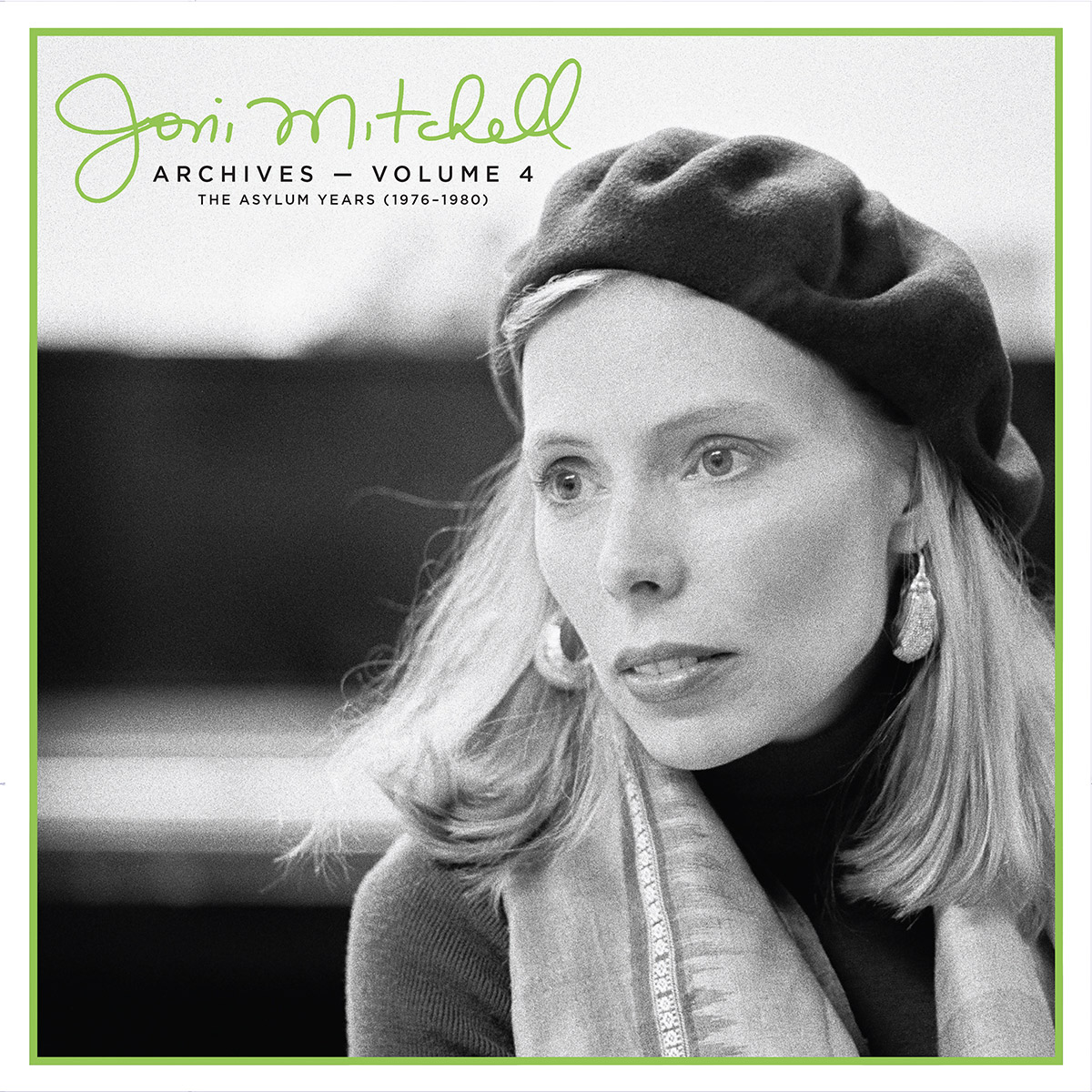
With excellent regularity, the Joni Mitchell Archive series stayed on a mostly consistent schedule, with the fourth box of unreleased material arriving roughly a year after the third (and a few months after a remastered set of the albums that mostly correspond to what’s covered here). Interestingly—or perversely—while the title says it encompasses the years 1976 through 1980, the music begins in November 1975 and ends in September 1979.

A good deal of the contents of the six discs consists of live recordings, beginning with her tagging along on Bob Dylan’s Rolling Thunder Revue, then continuing on her own tour to promote The Hissing Of Summer Lawns. She tries out some new material, including “Coyote”, on its own and in a medley with what would become the title track of Don Juan’s Reckless Daughter. (Rather than the now-familiar clip of her playing it at Gordon Lightfoot’s house, or even at The Last Waltz, she pulls out “Woman Of Heart And Mind”.) Most of a Boston show with the L.A. Express takes up the second disc, continued from the first, with performances pulled in from other stops on the aborted tour, and it’s most interesting when she plays on her own. Nearly unplugged arrangements of “Shadows And Light” and “Harry’s House” are very nice, as are early performances of “Hejira” and “Talk To Me”. (Apparently the chicken noises were entrenched from the beginning.)

Fans of Hejira will drool over disc three, which begins with acoustic demos of seven of the album’s songs (Chaka Khan helps out on “Black Crow”) and three that would end up on the next. It goes on to include an intro and two songs from a stop on the second leg of the Rolling Thunder Revue, and ends with two rough mixes from the album sessions: “Refuge Of The Roads” with more horns (and without Jaco Pastorius) and “Don Juan’s Reckless Daughter”.

There are only two outtakes from the Don Juan sessions: a rough mix of “Otis And Marlena” and a 12-minute piano improvisation titled “Save Magic” that would form the basis of “Paprika Plains”. Then she was off to work with Charles Mingus, and we finally get to hear some lost sessions with such jazz legends as Tony Williams, Gerry Mulligan, Stanley Clarke, and John McLaughlin. One version of “Sweet Sucker Dance” is just drums and her layered vocals, while “A Good Suit And A Good Haircut” incorporates more of the man’s “raps”, and “Sue And The Holy River” is a lovely piano exploration. We also get to hear excerpts from a festival show where she played some of her new Mingus-infused compositions and collaborations in the occasional company of Herbie Hancock on grand as opposed to electric piano. “The Dry Cleaner From Des Moines” is a cappella and wonderful, and she encourages the audience to provide wolf noises to “The Wolf That Lives In Lindsay” while she tunes her guitar mid-performance, and they howl along with the tape too. (A session outtake provides a mix without the wolves.)

Most of the last two discs are devoted to a Forest Hills show in 1979, augmented by other appearances from the same tour, presenting something of an alternate Shadows And Light, but with a few songs that weren’t on that album. (“Jaco’s Solo” was one of those, probably because it took a cacophonous, effects-laden trip to Hendrix’s “Third Stone From The Sun”.)

This was Joni’s most challenging era yet for fans, certainly compared to the previous eight years of her public career, and the music within this set reflects that, as well as her descending range. Still, for those willing to dive further in, there are indeed gems to be found, as well as takes on more familiar material (two versions each of “Free Man In Paris” and “Help Me”, but three of “Big Yellow Taxi”). It’s fascinating to hear her create.

Joni Mitchell Archives—Volume 4: The Asylum Years (1976-1980) (2024)—3

Friday, December 1, 2023

Joni Mitchell 28: The Asylum Years

Joni’s move to the then-new Asylum label in 1972 wasn’t just a change of distribution. The albums she recorded there took a turn from the predominantly solo acoustic sound of her first four albums, incorporating rhythm sections and horns, resulting in a commercial adult contemporary sound, then veering towards more esoteric jazz. The third box in her Archives series tackles the first half of this era, which saw four albums hit the charts, and is as illuminating as one could hope.

The first two discs encompass the making of the For The Roses album, beginning with a handful of solo and pristine demos—the first two from 1971, despite the box subtitle—including the stunning, otherwise unknown “Like Veils Said Lorraine”. Then we go to Carnegie Hall for a widely bootlegged, rapturously received performance that spills over to disc two. She plays the “hits”, but several Roses songs are new to the crowd, as the album wouldn’t be out for another nine months. She brings out various “friends” for “The Circle Game”, including Jackson Browne, who opened the show. (He’s listed as one of the choristers “possibly” in attendance; the “David” she mentions is likely Geffen, who’s also listed.)

James Taylor sits in on an acoustic rock ‘n roll medley and “Electricity” from further Roses sessions, whereas a try of “You Turn Me On I’m A Radio” with Neil Young and two Stray Gators was wisely redone elsewhere. (Similarly, that song and “See You Sometime” were also tried days later with the same Stray Gators, but not Neil.) Further alternate mixes include “Cold Blue Steel And Sweet Fire” where she overdubs a vocalization of the eventual sax part. “Sunrise Raga” is a fascinating mostly instrumental with her acoustic accompanied by tabla, and she was clearly interested in covering “Twisted” this early. (It’s nice to hear a version without Cheech & Chong, too.) A solo “Judgement Of The Moon And Stars” from a London concert is enthralling.

Disc three begins with a stunning 12-minute piano-and-vocal suite that goes from “Down To You” through “Court And Spark” and “Car On A Hill” back to the beginning. She must have considered this for release, as it features multiple Jonis harmonizing on the “Car” section. Other demos for the Court And Spark album are refreshing to hear without the studio adornments. We get three versions of “Raised On Robbery”—an acoustic with trilling chorused Jonis and percussion, a rockin’ one from a Graham Nash session, and the one recorded a day later with the Tonight’s The Night band that was on Neil Young’s second Archives box. As with the Roses portion, alternate mixes from the sessions are capped with an instrumental sketch, in this case the Greek-flavored “Bonderia”.

The balance of disc three and all of the fourth are devoted to a more laid-back L.A. concert with the support of Tom Scott and the L.A. Express, providing something of an alternate to Miles Of Aisles. (Most of that album came from shows performed five months later, and features some different selections from what’s here.) Whereas that album was programmed as a double album of four sides, here we have a complete show that moves through the dynamics of a full band for a half-hour, through a solo section featuring some lengthy conversational intros, and back with the band. While Scott can be a little overbearing in some contexts, his simple touches on “Cold Blue Steel” and “For Free” are welcome, and she works very well with the whole band. Oddly, there’s no “thank you, good night” after the last song; the disc simply ends after “Car On A Hill”.

An early live recording of “Jericho” starts the fifth disc, followed by “Woman Of Heart And Mind” in front of a quiet Wembley audience during the 1974 CSNY tour. These acoustic performances provide an excellent segue to seven demos for The Hissing Of Summer Lawns, not all of which have been bootlegged before (and there are some demos out there not collected here). Anyone put off by the arrangements on the finished album should appreciate these all the more. “Harry’s House”, for example, does not have the “Centerpiece” interlude, and an early “Dreamland” is accompanied only by guitar. Session outtakes from the album include “The Jungle Line” without the Burundi drummers or synthesizer, and another try at “Dreamland” with a band backing.

Her first Archives box fascinatingly traced her growth, and the second provided a fine companion to her first four albums. The period covered in this third box went widely off most people’s expectations—not unlike Neil Young’s “ditch” era—with varying critical and commercial success. As we can hear here, everything, from the biggest band arrangement to the solo performances, started with words and a melody. While she may have identified with painters, whom she referenced on Miles Of Aisles (“nobody ever said to Van Gogh, ‘Paint a Starry Night again, man!’”), her sketches are as fascinating as the finished works. And my goodness, was she prolific.

Joni Mitchell Archives—Volume 3: The Asylum Years (1972-1975) (2023)—4

Friday, August 4, 2023

Joni Mitchell 27: At Newport

Following an aneurysm in 2015, Joni Mitchell hadn’t made any public appearances. But by the turn of the decade, she had been hosting various “Joni Jams” at her house, mostly spearheaded by singer-songwriter Brandi Carlile and featuring an assortment of musicians. In July 2022, Carlile brought one of these to a larger stage, literally and figuratively, at the Newport Folk Festival, with the lady herself at the center of the throng, placed on an actual throne. The participants started by playing some of her songs, and eventually she was compelled to join in.

A year later, At Newport presented most of this appearance, albeit shuffled from the original setlist sequence so Joni is heard earlier instead of partway through. The album is clearly subtitled “featuring the Joni Jam”, but it should be the other way around. It’s still very much a tribute show performed some very starry-eyed accompanists; she doesn’t sing on every song, and when she does, she’s often supported by other vocalists. Carlile often answers many of the lines in the same cloying way Brian Kennedy used to on too many Van Morrison albums. (Interestingly, two members of The New Basement Tapes are onstage.) An anecdote about the song precedes “Amelia”, and we’d love to hear more like that.

The album is at is best when they stop fawning and let her sing without a net. “Both Sides Now”, in a lower key than she’s ever sung before, is particularly moving, even with Carlile’s coaching. The Gershwins’ “Summertime”, which preceded in the set but comes next here, is just plain terrific. When she plays “Just Like This Train” on electric guitar with no vocals, and only the slightest accompaniment, it’s transfixing. The album ends as the set did, and as it should, with the entire throng singing along to “The Circle Game”. “Joni Mitchell has returned!” yells Carlile, Joni laughs and says it was “so fun”, and the crowd chants her name to the fade.

The hootenanny has been a fixture of folk music since well before the coffeehouse days, but when it concerns someone of Joni’s stature, perhaps everyone else should just stand aside. That said, it was indeed a historic afternoon, and rightfully preserved.

Joni Mitchell At Newport (2023)—3

Friday, December 31, 2021

Joni Mitchell 26: The Reprise Years

The Joni Mitchell Archives series took off to a fairly productive start. Following a set that boxed up her first four albums—including the debut remixed to remove the murk—the second real volume presented an alternate view of the era that resulted in the release of that fabulous quartet. Across five discs, The Reprise Years presents a sidecar to that unique period.

Right off we hear rare songs, including the first of two demos of “Midnight Cowboy” written for the film of the same name; frankly it’s not one of her better compositions, nor would it have fit very well on a soundtrack. Many of these demos sound very close to the released versions, proving just how well she had mastered playing the songs. Some of the home recordings are crude or incomplete, but then there are those where you can hear a clock ticking, such as on “The Fiddle And The Drum”, performed with piano. Halfway through the first disc are outtakes from the sessions for her Reprise debut, including inferior versions of “Both Sides Now” and “Conversation”, but such forgotten songs as “Jeremy” and another stab at “The Gift Of The Magi”. A few sketches of her picking (or playing piano) while humming melodies without words are fascinating.

The bulk of the second disc is a performance at an Ottawa “coffee house” captured by none other than Jimi Hendrix on his own reel-to-reel tape recorder, set up at her feet. The first album hadn’t come out yet, and songs from that album are interspersed with early versions of “I Don’t Know Where I Stand” and “Ladies Of The Canyon”, as well as the last version of “Dr. Junk” and “Come To The Sunshine”. (The latter is included in a studio take from May 1968, since abandoned.) One fascinating snapshot finds her discussing what songs could go onto her second album, which illustrates how some songs appear in earlier takes than the albums where they ended up. Clearly, she wasn’t just making it all up as she went along. Her first appearance on BBC’s Top Gear radio show is unique not only for John Peel’s trademark lugubrious delivery, but the accompaniment of players familiar from Donovan albums.

Her Carnegie Hall debut takes up all of the third disc, with the encore starting the next, although two songs have been substituted from another show, presumably to preserve continuity. She sounds confident and, most of all, happy throughout, ably retuning her guitar while expanding on the inspirations behind the songs. The appreciative if subdued audience is urged to sing along with Jesse Colin Young’s “Get Together” and “The Circle Game”, which is formed into a medley with “Little Green” for a truly poignant touch.

Three future Ladies Of The Canyon tracks are previewed from the Clouds sessions, as is the otherwise unpursued “Jesus”, right before the entirety of her appearance on The Dick Cavett Show (the one right after Woodstock, which was crashed by Crosby, Stills, Nash & Jefferson Airplane). Speaking of which, “Woodstock” itself appears in a performance at the acoustic (not electric) piano, while two other Ladies tracks sport overdubs eventually discarded. Disc four ends with a harbinger in a medley of “Big Yellow Taxi” and “Bony Moronie” with James Taylor at a Greenpeace benefit. He turns up halfway through the BBC radio concert that dominates disc five, supporting her on guitar and occasional harmonies, both distinctive. She openly flirts with him before their rendition of his “You Can Close Your Eyes”, after several previews of songs that would be on Blue.

If these discs are any indication, that album was unique in that its songs (save “Little Green”) hadn’t been germinating for years, waiting for the right album sequence, as had been the case with the first three. We get an early, unfinished, and truly anxious “All I Want”, plus a few more early demos. “River” is included in an alternate mix with French horns playing carols over the coda, while the familiar B-side version of “Urge For Going” features chamber-style strings over the third verse on. As for the legendary outtake “Hunter”, the song’s similarity to “This Flight Tonight” makes its omission from Blue a wise move. (And it turns out she wrote it about a stray cat she’d adopted. This is a theme that will recur throughout her career, up to the latest pet who features in the Cameron Crowe interview that makes up the liner notes.)

There’s a lot of music here, and despite the repetition, it’s illuminating. This is an artist displaying her craft, at a time when it seemed she was infallible. She wasn’t, of course, but we can be thankful for how she reacted to the concept of fame. The proof lies herein.

Joni Mitchell Archives—Volume 2: The Reprise Years (1968-1971) (2021)—

Friday, November 13, 2020

Joni Mitchell 24: The Early Years

With nary a rarity in her catalog, Joni Mitchell has generally let her albums speak for her career. While other artists of her caliber, generation, and output have shared their sketchbooks, Joni has resisted such openness. Her only box set that doesn’t merely repackage albums, 2014’s Love Has Many Faces: A Quartet, A Ballet, Waiting To Be Danced, presented four hours of music going as far back as Blue covering the subject of, well, love, all taken from the catalog.

Her longtime manager, the late Elliot Roberts, had been privy to his other client Neil Young’s ongoing efforts to document his professional career, so maybe we can thank him for convincing her to finally delve back in the past. After all, Archives—Volume 1: The Early Years (1963-1967) is dedicated to his memory. These five CDs cover roughly five years before her first album was recorded, and it provides an abundance of riches, and in pretty good quality.

The set begins with a quasi-audition tape recorded at a Saskatoon radio station, wherein she treads the folk music ground familiar to fans of Joan Baez, furiously strumming her ukulele, yet her voice is as strident and clear as ever. Two club sets by “Joanie Anderson” expand her brand somewhat, in her engaging introductions, though a rendition of the calypso “Sail Away” hints at some of the harmonic heights she’d achieve in a few years’ time.

With the second disc, a performance of “Urge For Going” at her mother’s birthday party debuts her earliest songwriting attempts. “Born To Take The Highway” and “Here Today And Gone Tomorrow” are more naïve than naiveté, and Jac Holzman of Elektra Records was presumably less than wowed by the five songs from her audition for him. Nonetheless, her voice and passion makes them work in the context of this box. Besides, the songs began to just pour out.

The decided shift from traditional material to her own compositions is amplified by her switch to guitar and her discovery of alternate tunings, evident in a couple dozen songs she never brought to a studio. A trio of unheard songs from a March 1967 tape (“Gemini Me”, “Strawflower Me”, “A Melody In Your Name”) are particularly astounding; a few months later “Free Darling”, featuring a slight detour with the phrase “I came to the city”, is buried amidst demos of familiar songs. Despite its melancholy tone, “Come To The Sunshine” is an unabashed love song, while “The Gift Of The Magi” suffuses the O. Henry story with existential horror. “Dr. Junk” sports dizzying changes and wordplay, and a good example of why she might have been hesitant to explore her history. But “What’s The Story, Mr. Blue?”, which she says was cobbled together from several unfinished songs, displays a wry, even ribald humor.

Most of the familiar songs appear as formed as we got to know them, either from her albums or the covers that sustained her before she got her own contract. Though there are a few word changes and alternate melodies, but hardly radical ones. A tantalizing snippet called “Joni Improvising” finds her edging up to “The Dawntreader” and “I Had A King”. We finally have her own versions of “Eastern Rain”, which Fairport Convention recorded early on. There’s even a performance of Neil Young’s “Sugar Mountain” to illustrate how it influenced “The Circle Game”. Several radio and television appearances are introduced by fawning hosts, to which she replies with equal parts modesty and candor.

While she’s increasingly avoided live performance in recent decades—citing stage fright, insufficiently receptive audiences, and the tedium of having to constantly change guitar tunings as the main deterrents—she did start out on the coffeehouse circuit, so it’s insightful indeed to hear how she fared when she was literally singing for her supper. Three straight sets from the Canterbury House in Ann Arbor, Michigan cap the package, and demonstrate how much she had in her arsenal at that time. Songs she would scatter throughout her first three albums (four if you include “Little Green”, wherein she sings the name of the daughter she gave up) are often prefaced by lengthy introductions and elaborations, painting a portrait of a performer at ease in the spotlight. After breaking a string, she beseeches someone to change it for her while she performs an a cappella song.

As might be expected of a release this size, some songs (e.g. “Both Sides Now”, “Urge For Going”, “The Circle Game”) appear repeatedly. Still, the pure talent in her voice and fingers shines throughout. Also, there’s not a single song played on the piano. Those would come.

Joni Mitchell Archives—Volume 1: The Early Years (1963-1967) (2020)—

Friday, March 6, 2020

Joni Mitchell 23: Shine

If you leave a genius alone long enough, she’ll emerge when she has something to say. And that’s exactly what Joni Mitchell did, nearly a decade after her last album of new material. Shine arrived with no agenda, save the pile of songs she’d just created, or came to her, however you want to put it. Best of all, most were simply arranged, with nothing reeking of any time period or musical trend—just her voice, her piano or guitar, and a few friends adding the instruments she didn’t play, like winds and pedal steel.

In an unexpected move, Shine begins with “One Week Last Summer”, a wonderful piano instrumental with saxophone that manages to sound fully orchestrated. “This Place” celebrates the great outdoors and wide open spaces, helped by pedal steel guitar, in the hope that there’ll still be time before they all get mined for any number of reasons. She returns to the piano for “If I Had A Heart”, a lament for the state of the world in the post-9/11 world and the numbness that has resulted. The drum machine and effects turn up on “Hana”, and she adds some amazingly distorted guitar herself, which is jarring at first. However, taken as part of the whole it’s not too distracting, particularly with the slow pretty piano of “Bad Dreams”.

A remake of “Big Yellow Taxi” is unnecessary, except to enforce that she’d been pissed about the environment for decades. The canned beats continue, along with that wacky guitar, on “Night Of The Iguana”, which was inspired by the movie of the play of the same name, tied to the ecological theme. “Strong And Wrong” is back to the piano, mourning centuries of man’s hubris in the name of religion. For an excellent juxtaposition, the title track is a lengthy prayer, asking for grace for all things on Earth, from little children and starving fishermen to misguided leaders and even those who inspire road rage. That would be a heavy way to go out, but instead she chooses to end with “If”, an adaptation of the Rudyard Kipling poem that extols strength in the face of chaos.

A comeback of this magnitude would normally lead directly to a Grammy for Album of the Year; instead, that increasingly dubious honor went to Herbie Hancock’s all-star tribute River: The Joni Letters, out the same day. Featuring appearances by Norah Jones, Tina Turner, Leonard Cohen, and the woman herself, it recast songs from her catalog into Starbucks-friendly jazz, pushed along by Wayne Shorter and Vinnie Colaiuta. The album works best on the instrumental tracks, particularly as two of them are jazz standards: “Solitude”, by Duke Ellington, and “Nefertiti”, which Shorter (who wrote it) and Hancock played with Miles Davis. (A 10-year anniversary edition thoughtfully included a second disc comprising the four bonus tracks that had been farmed out to Amazon and iTunes.)

Joni Mitchell Shine (2007)—
Herbie Hancock
River: The Joni Letters (2007)—3
2017 Expanded Edition: same as 2007, plus 4 extra tracks

Tuesday, November 5, 2019

Joni Mitchell 22: Millennial Compilations

Although seemingly retired, Joni kept her hand in the marketplace with not one, nor two, but three thematic retrospective sets released over a period of nine months. Each follows something of a theme, building on the mild renaissance her career had experienced; the first two continued to use her own paintings for the cover art.

First came The Beginning Of Survival, which took its title from a letter written by a Native American chief to “the Great Chief in Washington” a century before, reproduced in the package. Released in an election year amid various wars in the Mideast, the set focused on social commentary from the mid-‘80s on, mostly from the “difficult” Geffen albums. Therefore, most but not all of the tracks have jarring synthesizer arrangements and her lower voice. Perhaps it’s a good intro to her least celebrated period, but the music is still a matter of personal taste, and some tracks are simply less annoying than others.

A few months later, Dreamland covered her entire career, from the ‘70s up through the orchestral albums of this century. The songs range from beloved hits already collected on Hits to more challenging pieces like “The Jungle Line”, “Dancin’ Clown”, and the title track. The chronology is all over the place, forcing the listener to take her as she is (or was), yet there is a thread from song to song (“Free Man In Paris” to “In France They Kiss On Main Street”, the harmonicas on “Furry Sings The Blues” into “You Turn Me On I’m A Radio”). Three tracks are remakes from her orchestral albums, and the set ends with her original recording of “The Circle Game”. With even more of her paintings depicted in the package, perhaps these are the songs that meant the most to her.

The same could be said for what came the following spring. Songs Of A Prairie Girl collected songs to celebrate and evoke Saskatchewan, its “long, cold winters [and] short but glorious summers” per her brief notes. Five songs are repeated from Hits, including “Urge For Going”, but for the most part the program leans towards the later years; “Cherokee Louise” is in its arguably superior Travelogue incarnation. Two songs from Don Juan’s Reckless Daughter appear: the title track, and right smack dab in the middle of the program, a so-called remix of “Paprika Plains” that aims to even out the dynamics a bit. Both songs benefit by this context, even with “Raised On Robbery” sandwiched between them. Because so many of the tracks reference her youth, there’s a certain nostalgia, and even melancholy, throughout the set.

Ultimately, these CDs prove that there is no way to encapsulate Joni Mitchell in under 79 minutes. Much like other mercurial artists among her contemporaries (Bob Dylan, Neil Young, Van Morrison, etc.) any favorites are going to vary from person to person, and different albums speak to different people in different ways. What comes through is that, as a composer, she was anything but ordinary. Hopefully any of these albums has drawn a newbie into her complete catalog.

Joni Mitchell The Beginning Of Survival (2004)—
Joni Mitchell
Dreamland (2004)—3
Joni Mitchell
Songs Of A Prairie Girl (2005)—3

Friday, August 9, 2019

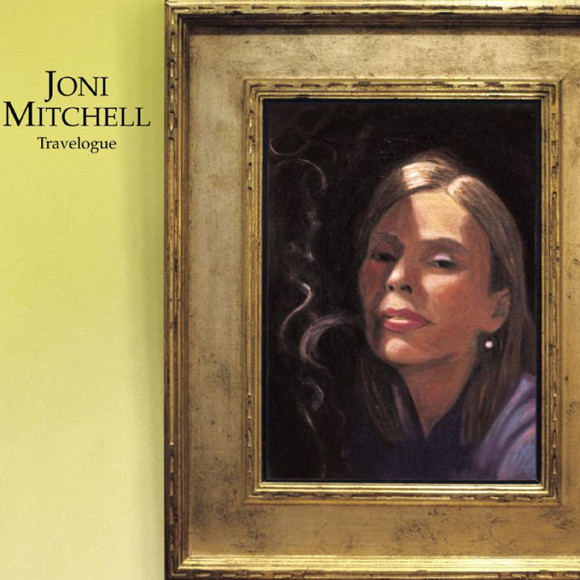
Joni Mitchell 21: Travelogue

The idea of Joni Mitchell doing a standards album three decades into her career may have been tough to swallow, but the final result turned out to be quite palatable. So for her next trick, she decided further the experiment on “A Case Of You” and “Both Sides Now” to recast even more of her own material with orchestral arrangements.

Apparently anything worth doing is worth overdoing, so Travelogue runs over two hours. Right there it’s a lot to take in; plus, unlike established standards that have already been arranged in dozens of ways, most of Joni’s material already exists in definitive form as her original album tracks. That said, many of the selections are deep cuts, so people hearing the songs for the very first time may enjoy these versions more than those of us more familiar with them might. The selections come from eleven of her albums; of those, Wild Things Run Fast is represented by four tracks (ex-husband Larry Klein did the arrangements, so maybe that one is special to him.)

Some of the more percussive treatments sound like mid-‘70s Tom Waits, while “Sex Kills” is lashed to a rhythm akin to “On Broadway”. There’s a choir here too; unobtrusive on “Slouching Toward Bethlehem”, it works on “God Must Be A Boogie Man”, but not so much on “Sire Of Sorrow”. The louder tracks can be jarring so soon after softer ones, again making the two-hour journey arduous. The Hejira remakes seem to be the most faithful, and the look all the way back to “The Dawntreader” is also lovely. “The Last Time I Saw Richard” has something of a wandering arrangement, but her voicing of the waitress’s one line cheapens it. “Woodstock” is given an even more extended approach than hers, and certainly from CSNY’s version; we find it meandering. “For The Roses” gets a dramatic overhaul, wherein she really explores each line, just as “Cherokee Louise” is given a heartbreaking treatment, as befits the lyrics. “The Circle Game” ends the program gorgeously, with wonderful sax trills from Wayne Shorter, making for as moving as closer as “Both Sides Now” was on her last album.

In some ways Joni was ahead of the curve, as the years since have seen several artists go the “orchestral re-imagining” route a la Travelogue. Cynics suggest such a project happens when an artist has run out of ideas; in Joni’s case, she said she was done with the record business anyway. She wasn’t, but we didn’t know that then, and neither did she.

Joni Mitchell Travelogue (2002)—3

Friday, April 12, 2019

Joni Mitchell 20: Both Sides Now

Believe it or else, at one time it wasn’t so common for performers of the rock era to record albums of standards from the pre-rock era. Not that Joni Mitchell was considered rock, but here was one of the preeminent songwriters of the century tackling “moon-June” lyrics. Plus, all those cigarettes hadn’t been kind to her range, so surely this would be a tough listen. Comparisons to Billie Holiday’s Lady In Satin—recorded after her own voice had been racked to a rasp, a year before her death—weren’t exactly flattering.

However, such knee-jerk reactions aren’t fair, because Both Sides Now is just fine, taken for what it is. As advertised, these are lush arrangements of songs, most of them older than Joni herself, already done by just about anybody who crooned in front of a microphone. Save a Gordon Jenkins chart for “Stormy Weather”, all the arrangements come from young Vince Mendoza, who’s been quite busy since then. Other soloists include Herbie Hancock, Wayne Shorter, and Mark Isham.

The order of the tunes is supposed to follow the arc of a romance, from excited beginning through crushing defeat to the bruised but determined aftermath, whereupon the cycle starts again. Working with longtime co-producer and onetime spouse Larry Klein, it’s tempting to imagine the daggers thrown from microphone to control room. (As per usual, the package includes several of her paintings and self-portraits; a limited edition included some of these as lithograph packaged in a hat box.)

The most striking tracks would be the two remakes of their own songs, both given the same lush treatment as the rest of the tunes, but so shocking when one is so accustomed to the high soprano of three decades before. “A Case Of You” fits very well halfway through the program, but it’s the title track that truly takes on a different meaning out of the mouth of a woman of experience as opposed to a jaded twentysomething. The song was already melancholy, but now, given the years in between, it’s so much more poignant (particularly at “now old friends, they’re acting strange/and they shake their heads and they tell me that I’ve changed”).

If Both Sides Now had been released by, say, Lady Gaga if she was around then, or Diana Krall, or another modern singer with a smoky voice, it would have been hailed as perfect, essential, dazzling. Get over the fact that Joni will never again hit those high notes, and marvel at how her evolved range wraps around these songs. Even we were skeptical at first, and are now ashamed at our callousness. This really is a special album for late nights, rainy days, and lots of wine.

Joni Mitchell Both Sides Now (2000)—

Friday, January 4, 2019

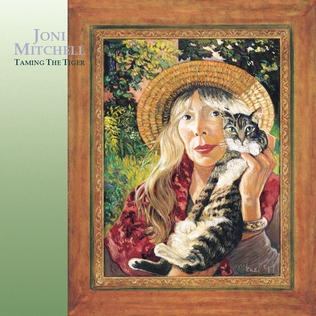
Joni Mitchell 19: Taming The Tiger

Between the Grammy Awards and the legs on her hits album, it’s safe to say that Joni Mitchell was about as high-profile as she would ever be. In addition to critical respect and public appreciation, the tabloids had a feel-good story on her hands when she was reunited with the daughter she’d given up for adoption 33 years before.

But anyone expecting Taming The Tiger to reflect all that good news just doesn’t know Joni. As ever, she’s experimenting with new sounds—this time courtesy of a guitar synthesizer that not only enabled her to change between her multitude of tunings in a matter of seconds, but provided sounds and textures that inspired the songs she wrote on it. The usual gang of supporting players is here, particularly Wayne Shorter and his soprano sax (one of the few horn players we don’t mind hearing as much as we do him).

In a mild act of defiance to anyone expecting easy listening, “Harlem In Havana” begins with atonal percussion effects, which turns into the sound of a carnival gone haywire, the canned sounds of excited riders coming off more like screams of actual terror. But soon enough a melody emerges, as does a song, and the jarring feeling passes. “Man From Mars” is a heartbreaking song of loss, lamenting the one who left, but what makes it so universal is that it’s actually about her cat, immortalized in the paintings throughout the packaging, who disappeared after she scolded him for peeing on the floors. (The lesson, of course, is that pain is just as real for the loss of a pet as it is a partner, and if you’ve never experienced either, you’re lucky.) To that point, “Love Puts On A New Face” is presented as a recount of a conversation that delineates the difference between the sexes without blaming anyone. Not so for “Lead Balloon”, a nasty song from the opening distortion and the “Kiss my ass” opening line that sticks out like a sore thumb, and frankly goes over like the metaphor in the title. Much more effective is “No Apologies”, another sad rumination on the abuse of women by men who should have known better.

The title track has soothing atmospherics, but outside of the obvious slams against the record industry, the poetry is way over our heads. From there, however, the themes return to those of the heart, and for the better. “The Crazy Cries Of Love” puts new music to words by a fellow Canadian songwriter she admired, and has some wonderful, hopeful imagery. The song most people would focus on is “Stay In Touch”, a gentle acknowledgement of the new relationship she was developing with her daughter, who brought along a family of her own. It’s nicely paired with “Face Lift”, said to be based on an argument she’d had with her own aging mother. Something of a benediction comes in “My Best To You”, her reinterpretation of an ancient song by the Sons of the Pioneers. Then, after what seems like an eternal gap of silence, “Tiger Bones” emerges. It’s a solo guitar piece, and it’s just lovely. We can’t think of any other instrumental in her catalog, either, so that makes it all the more special.

It may be that in a few years’ time we’ll decry the “cold, dated sound” of Taming The Tiger, but for now, the arrangements and production work, not only recalling parts of Hejira but nicely complementing what we’ll be kind and call her mature vocal range. It was nice to have her “back”; but was she?

Joni Mitchell Taming The Tiger (1998)—

Tuesday, June 19, 2018

Joni Mitchell 18: Hits and Misses

Amazingly, Joni had been in the business for nearly 30 years before somebody said, “Let’s do a hits album.” To which she replied, “Sure, as long as you put a ‘misses’ album out too.”

And that’s exactly what happened. Hits features a comedic cover shot of Joni lying in a street, presumably where the truck ran her over, whereas Misses depicts her drawing her chalk outline on the pavement—as she said, mooning the camera. Both albums were released simultaneously, and considering that the Hits volume was stacked with songs from Her First Four and Court And Spark, songs well known either in her renditions or in popular covers, it far outsold the sampler of lesser-known tracks that made up Misses. As something of a carrot for the fans, Hits begins with her only recorded version of “Urge For Going”, previously available only as a B-side. And while the program dwells mostly in that early era, “Chinese Café/Unchained Melody” and “Come In From The Cold” nicely represent the ‘80s and ‘90s respectively.

While Hits was a no-brainer, Misses rewards anyone brave enough to dive in. This set is not programmed chronologically at all, flying back and forth among the decades, with a slight emphasis on the Geffen years and “difficult” albums like The Hissing Of Summer Lawns. That said, fans familiar with the earliest albums will recognize “The Arrangement”, “A Case Of You”, and the title tracks from For The Roses and Hejira, the latter of which closes the set magnificently. They’re not all winners; later selections like “Nothing Can Be Done” and “Dog Eat Dog” are not our personal choices to advertise the lesser-loved albums, and the programmed sound of the newer tracks jars with the more pristine acoustic material, but if any of it gets people to dig deeper, it’s all good. The woman is, after all, an absolute treasure.

Joni Mitchell Hits (1996)—4
Joni Mitchell
Misses (1996)—3

Tuesday, March 6, 2018

Joni Mitchell 17: Turbulent Indigo

An artist of Joni Mitchell’s stature can be allowed the time and space to work, and a three-year gap had become her norm. But when that gap comes between two albums of such comparative quality, it’s worth the wait. Turbulent Indigo finds Our Heroine back on Reprise Records, where it all started, gently plucking her guitar strings and singing songs both direct and opaque. From time to time, Wayne Shorter flutters in on his soprano sax.

“Sunny Sunday” is a simple sketch of a woman who shoots a gun at a streetlight and always misses, a provoking metaphor. The theme of struggle set, the loudest song on the album—which isn’t saying much—is “Sex Kills”, which manages to skewer pharmaceutical companies, big oil, the gun climate, and just about everything else that’s wrong with society. “How Do You Stop” is a cover of a then-recent James Brown tune, and features Seal on backing vocals (she’d done the same for his album that year too). Somehow it fits perfectly on the album. The title track matches the cover self-portrait of herself with Van Gogh’s bandaged ear, making clear points about artistry. Her voice ably reaches the upper end of her current range on “Last Chance Lost”, a moving rumination on the end of a relationship (which may or may not be her own).

The heartbreak continues on “The Magdalene Laundries”, which refers to the fate of so-called “fallen women” in Ireland, in asylums that existed through even this past century, and by extension condemns the Catholic Church for its complicity. The piano emerges on “Not To Blame”, a timely lament for victims of spousal abuse and worse, which steadily ticks toward a hopeless conclusion. “Borderline” uses clever alliteration and mild wordplay to discuss the conflicts we instigate with each other, followed by another view on difference. A study of a man trying to impress a French girl, “Yvette In English” was written with David Crosby, and first appeared on his own album the year before. Joni’s version is superior, except for the constant repeats of Yvette’s name throughout the track. Finally, “Sire Of Sorrow (Job’s Sad Song)” is both the longest track and the closer, but not given epic treatment or any other stature above the rest. Still, its recasting of Job’s arguments with God is mesmerizing, particularly with the “antagonists” in her own multitracked voice mocking her plight.

Turbulent Indigo is a strangely soothing listen, given the subject matter. Not a single track could be considered upbeat, yet it’s a strong statement. And yes, it’s good to have her back.

Joni Mitchell Turbulent Indigo (1994)—

Tuesday, July 25, 2017

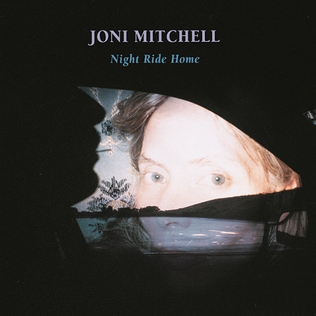
Joni Mitchell 16: Night Ride Home

Just as many of her contemporaries finally found their way out of the fog of the ‘80s, so did our Joni cap the decade, as well as her association with Geffen Records, with an album that we hesitate to call a return to form. Night Ride Home is almost entirely based around acoustic guitar, which is a good start. The tracks are filled out by the usual suspects—co-producer/then-husband Larry Klein on bass, Alex Acuña on percussion, Vinnie Colaiuta on drums, even Wayne Shorter blowing sax on two tracks—but without the clatter and clutter that dogged her three previous albums.

That said, the title track uses crickets as a metronome, but they’re no match for the strong melody. A “Hejira”-like pattern drives “Passion Play (When All The Slaves Are Free)”, which somehow links the crucifixion of Christ with Exxon oil. Less obscure is “Cherokee Louise”, a haunting sketch of early adolescence where a happy ending seems impossible. It’s oddly juxtaposed with “The Windfall (Everything For Nothing)”, seemingly a tirade against a hired hand who felt financially shortchanged. “Slouching Towards Bethlehem” is very poetic, and rightfully so, being her musical re-setting of a Yeats piece.

While probably too long to be a hit single, “Come In From The Cold” is the most accessible track here, a slightly more wistful reminiscence of the same time period as “Cherokee Louise”, multiple Jonis forming a complex choir around the title. The music for “Nothing Can Be Done” is credited to Larry Klein, her lyrics seeming to be navigating the choppy waters of a relationship, with prominent vocal assistance from David Baerwald of David + David. “The Only Joy In Town” is a valentine to a “Botticelli black boy” she encountered in Rome, while “Ray’s Dad’s Cadillac” goes back to her teenage years yet again; it’s the least successful of the trio, mostly because of how the title is repeated and repeated and repeated. What seals the album as truly worthwhile is the last track, where she plays piano for the first time in forever. “Two Grey Rooms” is a sad glimpse of unrequited love she swears isn’t autobiographical, and that’s why it resonates. Granted, there’s a rhythm section, and even strings, but those suspended chords bring joy to these ears.

Since we don’t offer ratings in quarter-point increments, we considered placing this album at a more conservative level, but when compared to her work of the previous ten years, it truly stands out. Although her devotion to cigarettes has ensured that she’ll never again sound like her first four albums, Night Ride Home is still a journey back to simplicity, and it’s about time.

Joni Mitchell Night Ride Home (1991)—

Tuesday, February 28, 2017

Joni Mitchell 15: Chalk Mark In A Rainstorm

The wrong title can curse an album at worst, but it can be just as annoying when it’s used against artist. Roger Waters, for example, had a field day with A Momentary Lapse Of Reason, recorded by the band he thought he’d ended. So what are we to expect from Chalk Mark In A Rainstorm, which suggests something so temporary it might not have happened?

This is Joni still amid in the ‘80s, and all the electronics the decade brought forth. Even as sophisticated as the technology got, it still doesn’t fit her. This is not to suggest that she shouldn’t try, but it’s hard to believe she thought these sounds were worth capturing. Sometimes technology can be a means to an end, but when it dominates, it should be effective. The last album had a somewhat successful experiment involving a cigarette machine; the equivalent here is the bed of recordings from TV ads used to illustrate “The Reoccurring Dream”. It makes the point about empty commercialism, but also has us trying to change the channel.

Yet again she feels the need to employ guest celebrity vocalists, two of whom were on the same label: Peter Gabriel gets to duet on “My Secret Place”, since he’d donated his studio, and Don Henley is prominent on “Snakes And Ladders”. Billy Idol trots out his standard whoops and barks on “Dancin’ Clown”, complete with shredding from Steve Stevens and a shorter, just as uncomfortable cameo from Tom Petty. Iron Eyes Cody contributes the Native American chanting on “Lakota”, despite his likely Italian heritage. Willie Nelson duets on “Cool Water”, an update of the old cowboy song. The lack of original material is another bad sign, as the album ends with “A Bird That Whistles”, a.k.a. her interpretation of “Corrina, Corrina”. Performed on acoustic, with only Wayne Shorter doing bird impressions on the sax, it’s also the best track on the album.

Just as jarring is the fact that the first two tracks were originally written for use in American Anthem, which led the wave of movies about male gymnasts. That partially explains the reference to being “born and raised in New York City” on the otherwise enjoyable “My Secret Place”, and the quest for winning a trophy in “Number One”. Political songs fit better; “The Tea-Leaf Prophecy (Lay Down Your Arms)” considers the possibility of romance during wartime, while “The Beat Of Black Wings” not only gives the album its title but relates a conversation with a shattered Vietnam vet.

The guest stars brought Chalk Mark In A Rainstorm some airplay, but seeing as the album appeared in the racks around the same time as her back catalog was made available on CD—and at the “Super Saver” price point—those would have been a much better investment for new fans diving in.

Joni Mitchell Chalk Mark In A Rainstorm (1988)—2

Friday, September 23, 2016

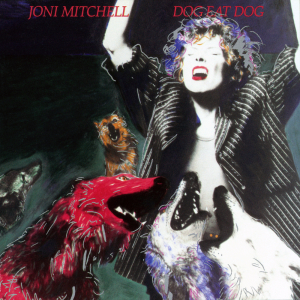
Joni Mitchell 14: Dog Eat Dog

The ‘80s found so many legends from the decades before, who had once set trends, now following them. Joni Mitchell’s skills with words and music hadn’t diminished, even if she was taking more time between albums, but the production on Dog Eat Dog, then and now, makes it difficult to get past. One of those producers, along with Joni and Larry Klein, is Thomas Dolby, who’s just fine in his own element—we can listen to “Airwaves” for hours on end, and we have—but dare we say his presence caused Joni to become, shall we say, blinded by science?

Most of the album deals with global and political concerns, which caused more controversy than the fact that “Good Friends”, the love song that opens the album, is sung as a duet with Michael McDonald. “Fiction” would be a decent synth-pop track if she wasn’t singing on it, and while the lyric makes some points, it’s more list than poetry. The message of “Three Great Stimulants” is more successful, with a more palatable accompaniment. “Tax Free” attacks televangelists, a few years before a bunch of them met scandal, but using Rod Steiger to give voice to the “men of God” is a little heavy-handed. “Smokin’ (Empty, Try Another)” is literally built around the sound of a cigarette machine—cute, but somewhat deflates her own preaching.

The title track brings all her gripes together, equating evangelists with “big wig financiers”, not exactly popular opinions under Reaganomics. Given the instrumentation and interjected effects, it’s hard to tell if she’s trying to emulate the lifestyle of “Shiny Toys” or lampooning it. It’s soon forgotten however, with “Ethiopia”, easily the highlight of the album, sticking mostly to piano with little in the way of production gimmicks, and a powerful commentary on what was one of the news events of the year. The subject of “Impossible Dreamer” isn’t clear until she includes “Give Peace A Chance”, but it’s more impressionistic than direct. She ends back where she started, with the straight-ahead romance of “Lucky Girl”, thankfully without Michael McDonald.

We’ve given Joni the benefit of the doubt thus far, but Dog Eat Dog misses the mark as an album. It still has its fans; even lifelong Joni fanatic Prince would have enjoyed some of the modulations here. But the key word there is “some”.

Joni Mitchell Dog Eat Dog (1985)—

Friday, May 6, 2016

Joni Mitchell 13: Wild Things Run Fast

With few exceptions, any major artist’s “Geffen years” have since been considered not their best. Some of this had to do with musical trends in the early ‘80s, compounded in Elton John’s and Neil Young’s cases by personal turmoil. (John Lennon is another matter altogether.) Don Henley started okay, but would sue David Geffen (again) in time, and most of the label’s acts would move on the first chance they got.

Therefore we approached Joni Mitchell’s Geffen years with some trepidation. She released four albums for the label in the space of ten years, each defined by the sub-era in which they appeared. A common thread is bassist, co-producer and then-husband Larry Klein, so maybe these albums should be considered more the Klein years than the Geffen years.

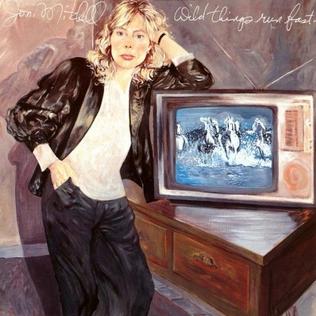
Some familiar names grace the credits of Wild Things Run Fast, like John Guerin, Larry Carlton and Wayne Shorter, alongside newer, younger guns like Steve Lukather and Vinnie Colaiuta. Add the painted self-portrait, and the listener might expect an easier ride after the experiments of her last couple of albums. But this is the ‘80s, so drums will sound more processed, synthesizers will abound, and the mix will be very, very clean. Thankfully, Joni has never been trendy, so technology does not rule the day.

Just as she once mixed “Centerpiece” into one of her own songs, “Chinese Café” works “Unchained Melody” into the plot as well as the music, making for a lush, minor classic. The most aggressive guitar yet on any of her albums defines the title track, somewhat distracting while she’s harmonizing with herself. “Ladies’ Man” is, as its own title might suggest, more subtle, fitting in with the contemporary jazz of the time. Larry Klein is no Jaco Pastorius, but his bass style on this album, and especially “Moon At The Window”, will remind one’s ear of Hejira. History will also tell us that he’s the inspiration behind “Solid Love”, one of the happiest love songs she’s ever written and recorded.

“Be Cool” sounds like one expects it should, missing only finger snaps in the place of the drums. The big misstep is a cover of “(You’re So Square) Baby I Don’t Care” that sounds as processed as it can be, with a guitar part designed to appeal to Van Halen fans. The only redeeming factor is the major-seventh chords over the fade. The loud guitars continue on “You Dream Flat Tires”, still a strange sound on a Joni album; the other voice on the track is Lionel Richie, who also isn’t normally associated with fusion. “Man To Man” has many guitar and synth touches similar to the Police influences she said went into the album, and maybe they’re also in “Underneath The Streetlight”. This track’s repeated hook (“Yes I do I love you!”, the exclamation point printed in the lyrics every time) and “Love”, adapted from Corinthians, seal the album’s portrait of Little Joni, happy at last.

Indeed, one must forget about the girl with the guitar and the piano beloved from those first albums, just as she’d demand you would. Wild Things Run Fast takes time, and an open mind to appreciate.

Joni Mitchell Wild Things Run Fast (1982)—3

Friday, November 27, 2015

Band 9: The Last Waltz

It shouldn’t be news to anyone that The Last Waltz is one of the better rockumentaries in the genre. Much of the credit belongs to Martin Scorsese’s direction, which alternates staged interviews and performances with “you are there” footage from The Band’s star-studded farewell concert. The editing is particularly masterful; rather than presenting the concert as it was, many of the performances are shuffled. The film even opens with “Don’t Do It”, which was actually the night’s final encore.

Such suspensions of time are sometimes necessary to elevate a film that’s not designed to be a fly-on-the-wall cinema verité portrait. And when you add Robbie Robertson, with his fancy new haircut, telling his new best friend about “eight years of concerts, stadiums and arenas”, a simple glance at their actual activity between 1968 and 1976 will have the scholar wondering how empty itineraries in 1972 and all but one date in 1975 made their job so grueling.

All our nitpicking aside, the film is still fun to watch, and the music is terrific. The album, originally a three-record set, is paced well, with Band classics alternating with vocal spots by their very special guests, augmented by a horn section. Their old boss Ronnie Hawkins comes out for “Who Do You Love”, and Neil Young manages to overcome the ball of coke he snorted before his still sleepy rendition of “Helpless”. Joni Mitchell’s voice appears from backstage during that number, and then she comes out for an excellent performance of “Coyote”.

Robbie had recently produced an album for Neil Diamond, and despite Levon Helm’s protestations, was given a spot singing “Dry Your Eyes”. It’s a fine song, but nothing compared to Rick Danko’s excellent job on “It Makes No Difference”, not to mention Garth Hudson’s beautiful sax solo. Dr. John closes side two with “Such A Night”, a good setup for the blues sequence on side three. Paul Butterfield blows harp on their arrangement of “Mystery Train”, Muddy Waters burns the place down with “Mannish Boy”, and Eric Clapton duels with Robbie on “Further On Up The Road”.

Poor Richard Manuel doesn’t get a chance to sing until “The Shape I’m In” on side four, followed by their friend Bobby Charles coming out for “Down South In New Orleans”. Van Morrison emerges from his mid-decade hiatus to sing “Tura-Lura-Lura” with Richard, before completely demolishing the place on “Caravan”. Bob Dylan was an expected guest, but shocks with his nearly shoulder-length hair stuffed under a hat. All but one of his songs from the show appeared on the original album; 1966 is visited via “Baby Let Me Follow You Down” and “I Don’t Believe You”, and a tender “Forever Young” manages to turn into a reprise of the first track. Then everybody crowds the stage for a mass chorus on “I Shall Be Released”, Richard somewhere back there on his piano.

Side six presents “The Last Waltz Suite”, a loose set of songs recorded on a soundstage, and some inserted in the film. In addition to “The Weight” performed with some of the Staples Singers and “Evangeline” with Emmylou Harris, Robbie gets a solo vocal on “Out Of The Blue”, while Richard barks “The Well” and duets “The Last Waltz Refrain” with Robbie. “The Last Waltz Theme”, which appears at the top of side one, closes the set with an orchestra. While not stellar, they’re easily better than most of Islands.

Several songs in the album aren’t in the film, and vice versa. Even the four-CD box set, which adds much more from the concert and rehearsals, doesn’t include the complete show as performed. But of all their live releases, The Last Waltz is the best, and not just for their own songs. In the end it’s the music that makes it a nice finale for whatever was actually over; Levon would insist that the whole deal was Robbie’s ego trip, and the other guys would play together, in dives even smaller than the ones where they started out, up until and beyond Richard’s suicide in 1986, and continuing in various combinations until Rick died in 1999.

The Band The Last Waltz (1978)—4
2002 box set: same as 1978, plus 24 extra tracks

Friday, September 25, 2015

Joni Mitchell 12: Shadows And Light

Live albums can preserve a key moment in time, or serve to sum up a chapter of an artist’s career. Or sometimes it’s just a way to fulfill contractual obligations. Shadows And Light, Joni’s second double live set, puts her in front of a tight jazz combo, featuring no less than Jaco Pastorius, Pat Metheny, Lyle Mays, Michael Brecker, and Don Alias—a long way from that lovelorn folksinger.

The concert was also a video production at the time, evidenced by the introduction, which melds the title track with sound bites from Rebel Without A Cause and Frankie Lymon. Then it’s right into songs from Hissing Of Summer Lawns, Hejira, and Mingus, which this tour was basically supporting, but only one from Don Juan’s Reckless Daughter. She’s clearly about the band here, letting “Pat’s Solo” bridge “Amelia” and “Hejira”, just as “Don’s Solo” connects “Black Crow” and “Dreamland”. The crowd eats them up, too. A capella group The Persuasions were on the tour as well, and back her up on “Why Do Fools Fall In Love” and the title track, both hinted at in the intro. The only early “hits” here are “Free Man In Paris” and the closing, moody arrangement of “Woodstock”, played on guitar, not piano—almost Hejira-style.

The songs benefit from the unified context, and the sound is clean and full, as befits the players and their concern for tone. Shadows And Light ends up being a good entrée into Joni’s less commercial work, capping off a busy decade and setting the stage for one with less activity. (The first CDs omitted two songs and “Don’s Solo” to fit the program on a single disc; the current two-CD set has everything, though you’ll have to get the DVD for “Jaco’s Solo” and “Raised On Robbery”.)

Joni Mitchell Shadows And Light (1980)—

Tuesday, May 19, 2015

Joni Mitchell 11: Mingus

Joni’s quest to be taken seriously as a musician hit a personal high when she began collaborating with legendary jazz bassist and composer Charles Mingus. Although he died before their joint album could be finished, the irascible legend did provide her some music to embellish with lyrics and arrangements, resulting in the album named for him.

Mingus is as challenging as any post-Blue Joni album, leaning heavily on the contributions of players more commonly associated with the likes of Weather Report. The album begins with an audio-verité snippet from a birthday party, and various Mingus “raps” are inserted as transitions throughout the album (also transcribed verbatim throughout the packaging, alongside several of Joni’s paintings of the man). They do provide some context, his spirited conversation contrasting with the mostly low-key atmospheric jazz.

“God Must Be A Boogie Man” is the first real song, written shortly after he’d died. Jaco Pastorius is on bass with Joni’s guitar providing the rhythm, though the nasal group holler of the title sullies the mood a tad. “A Chair In The Sky” is dominated at first by Herbie Hancock’s electric piano, but soon Wayne Shorter on sax joins the combo as the players (and singer) fill up the sound picture. At this point she can still hit those high notes too. “The Wolf That Lives In Lindsay” is percussively played on her acoustic, but the sound of actual wolves howling through it (credited, of course, as “Wolves”) distracts from her vocals. It does provide something of an effect of playing your guitar out on the lonesome prairie.

“Sweet Sucker Dance” is a lengthy poetic rumination, with a slightly torchy delivery, and the festivities finally pick up on “The Dry Cleaner From Des Moines”, with a spirited horn arrangement by Jaco and Joni’s scat-style vocals. Arguably the most daring piece is the last, the now-standard “Goodbye Pork Pie Hat” given new lyrics by Joni, presumably with Charlie’s blessing, sticking to the original melody.

“Dry Cleaner”, “The Wolf”, and some of the raps aside, Mingus is an easy album to listen to, but difficult to retain. While nothing will have you reaching for the skip button (or tone arm), it demands patience, and sometimes that’s not possible.

Joni Mitchell Mingus (1979)—3