Showing posts with label billy joel. Show all posts

Friday, July 17, 2015

Billy Joel 19: My Lives

While he wasn’t writing new songs, Billy Joel did tour on a regular basis, and his old label was determined to milk the catalog as best they could. Naturally, 2001’s The Essential Billy Joel and 2004’s Piano Man: The Very Best Of Billy Joel didn’t really offer anything not already covered by the other two Greatest Hits volumes, so it was surprising that a box set would be primarily devoted to rarities. You know, like the sets already covering Bob Dylan, Bruce Springsteen, the Beatles, and other letters from the alphabet.

My Lives begins at the beginning, with a couple of demos from his early band The Lost Souls. “My Journey’s End” apes the Beatles, while “Time And Time Again” is Dylan via the Byrds, and both prove why they didn’t make it. The Hassles, a more soul-influenced combo, are represented by two tracks; his uncomfortable moaning on “You Got Me Hummin’” should never have made the cut. Attila—the organ-drums duo depicted on their only album cover standing in a meat locker—is acknowledged by an excerpt of “Amplifier Fire”. All that out of the way, the first disc moves through various recordings labeled as demos, some of which would be recognized as future hits, and a few album tracks to present a wider view of the hitmaker. Some are band performances, some are solo at the piano; standouts include “Oyster Bay”, an early lament that the road to superstardom wasn’t easy, and a simple sketch of “Miami 2017”. A reggae arrangement of “Only The Good Die Young” is a good showcase for the late Doug Stegmeyer on bass, while the full take of “Zanzibar” lets Freddie Hubbard solo longer.

The second disc continues chronologically with fewer demos, but more in the way of rarities and straight album tracks. A decent club performance of “Captain Jack” leads into a demo of “The End Of The World”, a cousin of “Don’t Ask Me Why”, on its way to “Elvis Presley Blvd.”, a Nylon Curtain B-side. “The Prime Of Your Life” is an unfinished full-band sketch of an idea that would come to fruition as “The Longest Time”. A piano-driven live cover of “I’ll Cry Instead” leads into an unfortunate dance remix of “Keeping The Faith” and “Modern Woman”, the worst song from The Bridge. Along the way we hear the original 1983 piano demo of “And So It Goes” (more interesting than the Storm Front B-side “House Of Blue Light”) and the kids’ song “Nobody Knows But Me”.

By the third disc, it’s clear he’s running out of original ideas; hence the pile of covers, both live and contributed to soundtracks throughout the ‘90s. Performing “Shout” at Yankee Stadium, after about three minutes of baiting the audience with local references and call-and-response “whoos”, is just about the definition of pandering, and changing the chorus of a certain hit to “I don’t know why I go for ice cream” is cute the first time. The three covers from Greatest Hits Volume III may be contextually important, but they’re hardly rare. Still, there’s no questioning how well his voice is suited to “When You Wish Upon A Star” and “In A Sentimental Mood”. An early version of “River Of Dreams” has the music from “Lullabye (Goodnight My Angel)” as a bridge, followed by “A Hard Day’s Night” live with an inaudible Elton John on vocals and piano. And it took us until hearing “Motorcycle Song” (an early version of “All About Soul”) to realize that the “na-na-na” part is the same as the bridge to “Just The Way You Are”. And truly helps illustrate that the well was dry.

The disc that covers the new millennium is therefore dominated by live versions and 24 minutes’ worth of music from Fantasies & Delusions (which, again, he composed but did not perform). There is, however, a new piece in the form of “Elegy: The Great Peconic”, an orchestral/symphonic/whatever composition that’s lush and familiar. Hidden at the end of the disc is a curious nine-minute conversation at the piano between Billy and Phil Ramone discussing possible promotional exercises for the Glass Houses album. While the included DVD could have boasted any number of promo videos or, say, 1982’s Live From Long Island concert for HBO, instead it offered only performances from the River Of Dreams tour.

One has to be a Joel fanatic to appreciate My Lives, so it can be only recommended to that handful of diehards. Anybody else can content themselves with any of the hits collections or live albums that came before or since.

Billy Joel My Lives (2005)—

Tuesday, January 6, 2015

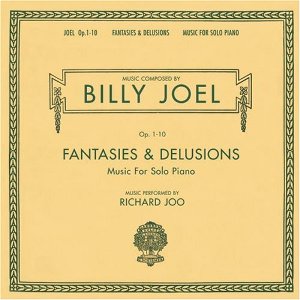
Billy Joel 18: Fantasies & Delusions

This is one of those albums we hesitate to discuss at any length, mostly because, since it’s a classical experiment, we’re in no way schooled enough in the genre to be authoritative. But music means different things to different people, and it helps that Fantasies & Delusions isn’t awful.

This is a suite of solo piano music composed by Billy Joel, apparently so complex that even he himself didn’t feel up to performing it himself. It’s packaged studiously, resembling the cover of sheet music, with only his name in big letters to make it easy to find on shelves, and a photo of himself with pianist Richard Joo on the back.

As solo piano music, it fits nicely in the background, less obtrusive than most classical dabblings by the likes of Paul McCartney or Joe Jackson. It’s very melodic, not at all atonal or avant-garde. Listed as Opuses (Opi?) 1 through 10, presented out of order, most tracks are between seven and eleven minutes, so something like the minute-long “Invention In C Minor” stands out easily. “Air (Dublinesque)”, which closes the album, recalls “And So It Goes” to an extent, before losing itself in an approximation of a jig. Still, considering his knack for a melody, and his tried-and-true method of building songs from simple piano themes, it’s a shame that there aren’t more hummable passages. Of course, were he to release an album of his hits performed a la George Winston, paring the familiar songs back to their roots, he’d likely get slammed for retreading. That said, hearing this music in the context of the classical roots that underpin his grander epics (and even things like “Pressure”) helps to appreciate it.

So while it’s harmless, Fantasies & Delusions is worthy of any collection that also includes recordings by any of the other masters of classical piano performing pieces by any great dead composer. If this provides a gateway to Artur Rubenstein, Vladimir Horowitz, Mitsuko Uchida (the list goes on), then the listener is in for a journey and a half.

Billy Joel Fantasies & Delusions (2001)—3

Tuesday, September 2, 2014

Billy Joel 17: Greatest Hits Vol. III

Seemingly retired from the pop scene, the final Billy Joel release of the ‘90s was a compilation. Being a single-disc sequel to the double set from 1985, it got the imaginative title of Greatest Hits Vol. III, cleverly allowing Sony to repackage both together in a box with a fourth “music and conversation” disc. But anyway.

Two of the songs (“Keeping The Faith” and “An Innocent Man”) predate the previous hits collection, but as they were actual hits, we’ll allow it. But the rest of the program isn’t as obvious. We move chronologically through the three studio albums yet to be anthologized, with eyebrow raisers like “Baby Grand” and “Leningrad” among the more expected radio fodder. “Shameless” is included, most likely as a nod to the Garth Brooks version. Similarly, we suspect “The Downeaster ‘Alexa’”, “And So It Goes”, and “Lullabye (Goodnight, My Angel)” made the cut for more personal or sentimental reasons than commercial ones. (Really, would you call any song that missed the top 40 a “hit”?)

The album did offer something new to fans who already had the albums: three new songs, all covers, all on the slow side. “To Make You Feel My Love” was the debut of a new Dylan song, a whole month ahead of Bob’s own version, complete with harmonica solo. (And of course, Garth Brooks had to go ahead and record his own version the following year.) “Hey Girl” is a Goffin/King tune, given a lush blue-eyed soul arrangement. Finally, “Light As The Breeze” recasts a Leonard Cohen song as an R&B showstopper, investing it with way more melody than Leonard could’ve.

If anything, Greatest Hits Vol. III proves that even if Billy Joel didn’t write any more songs himself, he could easily build a cash cow out of covers. (Hey, it worked for Rod Stewart and Barry Manilow, to name two.) That he hasn’t done so is a big point in the integrity column. We know now that those last three albums basically happened because he was caught up in the industry machine, which took him away from his family. He didn’t have the same fire to succeed, since he already had, but personal struggles combined with comparable financial ruin kept him on the road much longer than he would have liked. So we can cut the guy some slack.

Billy Joel Greatest Hits Vol. III (1997)—3

Tuesday, June 17, 2014

Billy Joel 16: River Of Dreams

Now it had been four years between albums, so River Of Dreams was more “long-awaited” than ever. Just like the last time, Billy got a guitarist to produce; this time it was former L.A. session rat Danny Kortchmar, but he’s not necessarily the guy heard wailing all over the place (sometimes it’s Leslie West). The social commentary continues, with more emphasis on what passed for rock in 1993.

He also seems to be going for a different vocal approach, with a lot more crooning in a lower register. This is apparent on “No Man’s Land”, decrying suburban sprawl and decay. We never thought we’d say this, but something about the falsetto (and the finger cymbals) on “The Great Wall Of China” resembles that of Prince in his psychedelic phase. The lyrics are clever without meaning anything, and the Beatlesque touches are interesting. “Blonde Over Blue” has that croon again, a back-handed love song that’s one of the least “Billy Joel-sounding” songs in his catalog. Despite its pseudo-classical title, “A Minor Variation” is a slow funk number in the vein of recent Steve Winwood, and seems even longer than it is. “Shades Of Grey” is pretty loud—incidentally, the only track with Liberty DeVitto on drums—to end a disjointed side.

What was still called side two is an improvement, which isn’t always the case with Billy Joel albums. “All About Soul” is very well-constructed pop, just this side of melodramatic with more hooks than you can count. Even the backing vocal from Color Me Badd, the antithesis of soul, can’t sink this one. “Lullabye (Goodnight, My Angel)” fits the “classic Billy Joel” mold, a classical piano piece with a simple, loving vocal, in this case sung to a child. And then there’s the title track, as simple as they come, but again, so frickin’ catchy that it won’t let go. “Two Thousand Years” likely started as another classical theme, but the “hole in the bucket dear Liza” theme after each verse is a distraction. Finally, “Famous Last Words” closes the proceedings on a high note, the Hammond organ prominent over the fade.

And with that prophetic title matching a song that’s anything but grandiose, thus ends the last album of new Billy Joel songs for (at this writing) 21 years and counting. Whether or not that was the intention, River Of Dreams was a better place to stop than Storm Front.

Billy Joel River Of Dreams (1993)—3

Tuesday, April 1, 2014

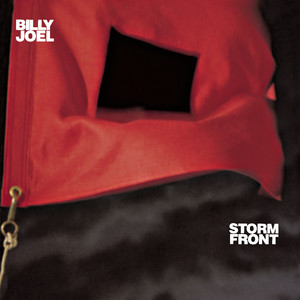
Billy Joel 15: Storm Front

Another lengthy break was out of character, and when Billy had another album ready, it was supposed to signify a change of direction. Longtime producer Phil Ramone was replaced by Foreigner’s Mick Jones, and most of the band was different, too. Beyond that, and for all its intention to rock, Storm Front was by-the-numbers adult pop, occasionally veering to social commentary, which was never one of his strong suits.

“That’s Not Her Style” picks up right where The Bridge left off, only with more harmonica. Most people likely skipped ahead what’s up next. Possibly his only novelty song, “We Didn’t Start The Fire” crams forty years of headlines into a distant cousin of “It’s The End Of The World As We Know It”, complete with sound effects (thankfully avoided for “JFK! Blown away! WHAT ELSE DO I HAVE TO SAY!”). He must have decided the song was long enough as it is, since he races through 25 years in the last verse. Also, the chorus has nothing to do with the rest of the song. “The Downeaster ‘Alexa’” is an “Allentown” for the fishing industry, with a title named after his daughter and a seafaring feel beating Sting by a couple of years. A true guilty pleasure is the undeniably catchy “I Go To Extremes”, with Liberty DeVitto pounding away and a few decent piano breaks. “Shameless” would become a smash hit (and apt description) for Garth Brooks in a few years, but here it has a near-Hendrix vibe, both in the delivery and the guitar parts. (Don’t ask us to elaborate further on that; it took us this long to get here.)

The title track rehashes “That’s Not Her Style”, in a slower tempo with an even more generic production, which provides a welcome opening for “Leningrad”, the first piano ballad here, and a sound that hearkens back to his earliest albums. Some of the lyrics are a little clumsy for a guy who’d actually been to the city in question, and only 20 minutes since that other history lesson. One of the better-constructed songs is “State Of Grace”, and one of the few not released as a single of any kind. Then “When In Rome” crashes in like the theme song for a sitcom, sung in his faux-Ray Charles voice. (Really, picture the opening credits for Family Matters or Perfect Strangers flying by, pastel colors and high top fades aplenty. Why hasn’t some TV producer grabbed this yet?) After a much-too-long ending, “And So It Goes” is a somber, romantic benediction. Despite its passing resemblance to the hymn “Jerusalem” (“And did those feet in ancient time”) it became something of a standard.

There’s nothing wrong with Storm Front, and it went on to sell four million copies in the US alone. Many of those would end up in used bins, but it was still a pretty good feat now that he was competing with Phil Collins for those yuppie dollars.

Billy Joel Storm Front (1989)—3

Friday, March 21, 2014

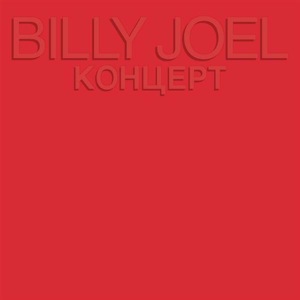
Billy Joel 14: Kohuept

After The Bridge, Billy Joel was about as American as apple pie, blue jeans and baseball. Somehow he took his tour to post-glasnost Soviet Union, which his label commemorated with a live album, a two-record set short enough to fit on one CD. (Technically, the album’s title is Kontsert, which is phonetic Russian, but we boorish Americans have no respect for other cultures, so to us, the Russian alphabet appeared to spell Kohuept, which was easy to ridicule as Kaput. And of course, the cover was bright red.)

The set opens with a Russian folk song sung a cappella, before plowing through “Angry Young Man”. “Honesty” is played solo, sounding very much like the classical piece it began as. Billy came to build bridges and educate, so he offers a lengthy explanation before “Goodnight Saigon”, made lengthier by the translator. “Stiletto” makes a surprising appearance, being more of a deep cut than even a radio hit. A bigger band fleshes out the jazz sentiments of “Big Man On Mulberry Street”, but his Ray Charles impression on “Baby Grand” comes out more parody than homage. Similarly, on “An Innocent Man” he apes the growls of Ben E. King while ceding the high notes to a backup singer.

From there it’s pretty much all hits, until the obligatory cover of “Back In The U.S.S.R.” He does strap on an inaudible guitar for “A Matter Of Trust”, and ends the show with a solo acoustic version of “The Times They Are A-Changin’”. By then he sounds exhausted.

The album was recorded at the end of a long tour, and his voice isn’t always up to the task. But for a long time, this was the only official souvenir of his longtime band playing the big hits, Songs In The Attic being a live album with a twist. Many years later, in the era of the deluxe package, the album was expanded, with a new title, and now ran the equivalent of a full show. The first half now sounds completely different with the addition of “Ballad Of Billy The Kid” (completely with an introductory explanation that includes the theme from The Magnificent Seven), “She’s Always A Woman”, and “Scenes From An Italian Restaurant”. A snippet of the doo-wop chestnut “What’s Your Name” precedes “The Longest Time”. More hits a scattered throughout the second half, and the disc closes with rehearsal recordings. (Sadly but predictably, footage of him throwing a tantrum during one performance of “Sometimes A Fantasy” was not included.)

Since he seemingly stopped writing songs, the only “new” Billy Joel albums have been of the live variety. This upgrade is arguably more entertaining, as it comes from the height of his career, rather than the motions of the oldies circuit. Liberty DeVitto was his best drummer anyway.

Billy Joel КОНЦЕРТ (1987)—3
2014 A Matter Of Trust: The Bridge To Russia: same as 1987, plus 11 extra tracks

Wednesday, November 20, 2013

Billy Joel 13: The Bridge

And so we enter the Wayfarer years, wherein Billy Joel competed with Bruce Willis for who could have more photos taken of him in sunglasses. (To their credit, they didn’t go the stupid hat route, considering their eventual hairlines, or lack thereof.) The Bridge was Billy’s first album since who cares when that didn’t have some kind of theme or style tying it together, unless that theme is “I’m sleeping with Christie Brinkley and you’re not.” Or “Check out the guest stars I’ve got all over this thing.” Hmm. Maybe there’s a theme after all.

At any rate, were the tunes any good? That depends. “Running On Ice” begins with a suitably illustrative piano part, followed by another syncopated section that plays off the song’s edginess, and likely kept it from being a hit single in those feel-good times. Instead, folks ate up “This Is The Time”, a fairly overt Valentine to his wife, sure to replace “Just The Way You Are” as that decade’s first wedding dance. That single came after “A Matter Of Trust”, pushed along by the count-in and prominent video wherein the Piano Man actually plays a guitar! Except that according to the liner notes, he doesn’t, and this decade’s ears wish they sounded more like, you know, guitars. Still, an undeniably catchy tune. The first single from the album was actually “Modern Woman”, heard originally to promote the shrill Bette Midler vehicle Ruthless People, and sounding like a sped-up descendant of “You’re Only Human”. A fourth single was “Baby Grand”, a smoky duet with Ray Charles—both guys sing and play piano here—that works as a slightly faster “New York State Of Mind”.

One jazz tune wasn’t enough, so side two is blasted open by the big band horns of “Big Man On Mulberry Street”. It pales in comparison to “Baby Grand”, which wasn’t as obvious in the days when you had to flip the record or tape between sides. Still, it does clean the palette somewhat for “Temptation”, a moody tune stuck between love and guilt. “Code Of Silence” is possibly the album’s hidden gem, musically and even lyrically. Co-written with Cyndi Lauper at the height of her multicolored career, she’s used sparingly on vocals, thankfully, with a minimum of chirp. (Liberty DeVitto cleverly turns the beat around, if you notice.) With only one song left, it’s time to bring in the last guest, and for “Getting Closer” it’s Steve Winwood, then firmly back in the high life again. His Hammond B-3 works around a rhythm that wants to be a Traffic homage, but isn’t.

Despite the novelties of each track, there’s no real progression on The Bridge. Synthesizers abound, since it was 1986. The odd thing is that even when Billy Joel was exploring old styles he was doing something “new”, while this is merely a collection of songs that don’t seem to have a lot to do with each other. Then again, there’s nothing wrong with just having an album of songs.

Billy Joel The Bridge (1986)—3

Wednesday, October 9, 2013

Billy Joel 12: Greatest Hits

Firmly established as a superstar, the time was ripe for a bona fide Billy best-of. The helpfully titled Greatest Hits Volume I & Volume II reflected its existence as a two-record set, arranged in rough chronological order, each volume helpfully subtitled with the relevant years.

Beginning with “Piano Man”, it pretty much has everything the casual top 40 radio fan would have heard already. A whopping five songs from The Stranger dominate the first record, with only three hits from the still-recent An Innocent Man on the second. (“Goodnight Saigon” anchors side three, suggesting his own input into the sequencing.)

To entice fans who already had all the albums already, two brand new songs were included, both designed to be counted among their brothers as true greatest hits. “You’re Only Human (Second Wind)” is a jarringly bouncy track assuring the listener that it’s okay to make mistakes, since they’re part of life and everything—and just to prove it, he even flubs one of the choruses! What a silly goose. If this song actually helped prevent a suicide, that’s a good thing, but the knee-jerk critic’s response is to suggest that it probably drove more people nuts. All the way into the top ten.

The other new song was more of a production, and wasn’t as big of a hit. But “The Night Is Still Young” is a much more palatable track, with a vocal approach that echoes the Righteous Brothers, and gently layered keyboards that nudge the melody along. It’s one of those songs that’s rarely played anymore, but is welcome when it is.

The release history of the album has become somewhat confusing over the years. First, overseas markets swapped “Honesty” for “Don’t Ask Me Why”, while some tracks were the shorter (or live) single versions. The compact disc medium was a relatively new novelty, and the CD version of Greatest Hits took advantage of the extended capacity to add more songs (and long ones, too, including “Captain Jack” and “Scenes From An Italian Restaurant”). The current CD you can buy or download now has everything in their full lengths, both “Honesty” and “Don’t Ask Me Why”, and the studio version of “Say Goodbye To Hollywood”.

Billy Joel Greatest Hits Volume I & Volume II (1985)—4
1985 CD: same as LP, plus 4 extra tracks

Friday, September 20, 2013

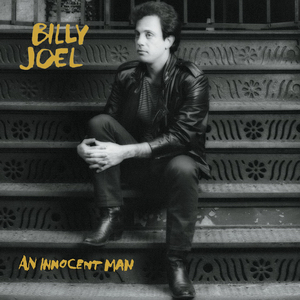
Billy Joel 11: An Innocent Man

So Billy Joel managed to fall in requited love with supermodel Christie Brinkley, giving hope to short dog-faced guys everywhere. (This after allegedly dating Elle Macpherson as well.) His happiness spurred his next genre experiment; where The Nylon Curtain was rightfully called Beatlesque, An Innocent Man was anything but, taking inspiration from the R&B and soul music that dominated the charts before the British Invasion.

His joy was infectious, as six of the album’s ten tracks were hit singles. At the risk of playing out a game of Spot the Influence, not everything on the album was as overt as “Uptown Girl”, which aped the Four Seasons, or “The Longest Time”, which brought a cappella doo-wop back to the radio. It helped that the songs could stand on their own. “Tell Her About It” was the first hit, spurred by a cute video complete with an Ed Sullivan impersonator and a cameo by Rodney Dangerfield (right around the time when his movie Easy Money came out, the title song of which happened to be the opening track on the album at hand). “Leave A Tender Moment Alone” helped revive the popularity of Toots Thielemans, whose harmonica would find its way to another Phil Ramone production a year later when Julian Lennon had a hit with “Too Late For Goodbyes”. Even the title track, a smooth pastiche of the Drifters that ran over five minutes, got airplay.

The woman who started it all got only one namecheck on the album, though “Christie Lee” is not exactly a highlight. “This Night” uses the vintage gimmick of borrowing from the classics—in this case, Beethoven’s Sonata Pathétique—for the chorus, rendering that melody impervious to any other connotation. “Careless Talk” gets closer to the Sam Cooke style, but unfortunately, Billy is no Steve Perry. The one song that comes off the most contemporary is “Keeping The Faith”, which limits the nostalgia references to the lyrics, and effectively closes the album.

An Innocent Man had a lot of legs, with those hit singles carrying the album well into the following year. Being more pop than rock, it didn’t help his standing on the AOR stations, but Top 40 ate it up. And of course, being able to show off his girlfriend in his videos ensured that even the kids listening to Rush and Def Leppard looked forward to seeing him on MTV.

Billy Joel An Innocent Man (1983)—3

Wednesday, August 7, 2013

Billy Joel 10: The Nylon Curtain

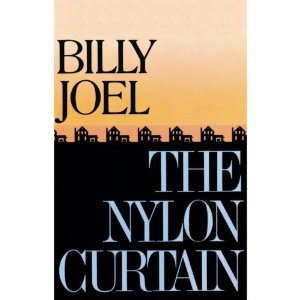
The summation provided by Songs In The Attic bought Billy some time for his next album, which turned out to be somewhat ambitious. We haven’t been able to find any contemporary reference that explains the title, but The Nylon Curtain would appear to have something to do with suburbia, as demonstrated by the aerial photo of a typical Levittown neighborhood on the inner sleeve. (Meanwhile, Rush beat him to the marketplace by two weeks with their own rendition.)

This time he was trying to be topical, and he does so right off the bat with “Allentown”. That he can get such a catchy hit out of a song decrying unemployment is a testament to his skill, his phrasing of “an American flag” notwithstanding. But a whole album of protest songs wouldn’t fly, so the next track reveals the other overriding touchpoint: the Beatles. “Laura” is a suitably nasty song about co-dependency, with a Ringo stroll, descending chords into sevenths, bathroom echo added to the Lennonesque sneer, and even a Harrisonian guitar solo. A lovely baroque flourish frames the song, a true hidden gem kept off the radio by a certain seven-letter adjective. “Pressure” was the most contemporary sounding track for the time, so it was the first single (and his first expensive video for the MTV age). But the song that got the most attention at the time was “Goodnight Saigon”, a tribute to Vietnam War veterans, which was an increasingly popular topic at the time. It’s one of those songs that can either inspire chills (for its realism) or ridicule (the helicopter effects) but it’s a strong statement from a guy who got through the era on a deferment.

Side two is just as musically rich. “She’s Right On Time” is an honorary holiday classic, thanks to its passing references to Christmas trees. Like “Laura” it’s framed by a pretty little piece, which turns up in the middle eight, and the harmonies come right off Abbey Road. “A Room Of Our Own” borders on being more of a list than a lyric, saved by some unexpected juxtapositions. The electric piano keeps it contemporary, but those guitar stabs in the pre-chorus are truly Fab. The Lennon voice returns on “Surprises”, a psychedelic portension of doom, taken way over the top in “Scandinavian Skies”. Here the nightmare strings of “Strawberry Fields” and “I Am The Walrus” accompany a series of airplane trips through various European cities, suggesting World War II but mostly lysergic wordplay. “Where’s The Orchestra?” stretches another metaphor to the brink, this time in the setting of a theater finale. In fact, it was about 20 years after the album was out that we realized that the melody of “Allentown” is played over the fading chords.

Due in part to its emulation of Beatle songcraft, The Nylon Curtain has certainly held up over the years. It’s the one Billy Joel album to get if you want more than just the hits, and has a lot to do with why we can’t hate the guy. When he’s good, he’s very good, and so is this album.

Billy Joel The Nylon Curtain (1982)—4

Friday, July 5, 2013

Billy Joel 9: Songs In The Attic

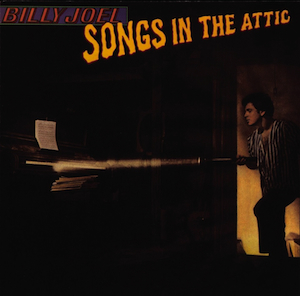
Here was an excellent idea—a live album of pre-Stranger songs performed by his loyal band. With eleven songs chosen from concerts in clubs and hockey arenas, Songs In The Attic provides cohesion to some unwieldy tracks and illuminates some otherwise lost gems.

These aren’t drastic reinterpretations, but simply “better” versions of songs that had, for the most part, originally been comprised of studio musician contributions. His full-time band had been beating the crap out of these songs for several tours now; Phil Ramone’s production, of course, brings out the best in each of them. And by sticking with the original arrangements, curious concert-goers wouldn’t be disappointed when they went back and bought up the albums with the songs they hadn’t heard before the show. (It’s good to have catalog, although Cold Spring Harbor wasn’t widely available at the time.)

“Say Goodbye To Hollywood” certainly sounds better here, but even with that extra push, he still sings with a Ronnie Spector vibrato. Songs like “Miami 2017” and “Captain Jack” (with a nice new intro) always worked well in the concert environment, so it’s surprising for something as comparatively intricate as “Streetlife Serenader” to succeed as well as it does. Wisely, the chosen performances of “She’s Got A Way” and “You’re My Home” come from smaller clubs, but then again, so do “Everybody Loves You Now” and “Summer, Highland Falls”.

Being a live album and a quasi-hits collection, Songs In The Attic is something of a transitional stopgap, even though there was no indication he was about to change anything. As an improvement on the albums it sampled, it provides value. The original LP was a nice package, too—plenty of old photos in the gatefold, along with lyrics and extensive liner notes, paying lengthy tribute to all the guys on the road crew. Maybe he was a nice guy after all. (Over the years other period recordings have emerged in the guise of outtakes, suggesting that the album was supposed to be a double, encompassing a full setlist equivalent including the all the hits, too. Keeping it simple was the wise choice.)

Billy Joel Songs In The Attic (1981)—

Wednesday, June 19, 2013

Billy Joel 8: Glass Houses

Now that he had graduated to the level of superstar, Billy Joel chafed at every non-complimentary review, many of which insisted that he didn’t “rock”. Naturally, the more he complained, the dumber he sounded, which didn’t help his case any. And as long as his albums and songs were keyboard-inspired and driven, he had a steep climb ahead of him.

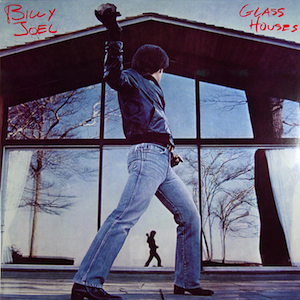
So there was some suggestion that Glass Houses was a response to those detractors, with its provocative cover of the leather-clad artiste poised to toss a rock at what some assumed was his own expansive Long Island manse. On the back, broken glass frames his portrait in skinny tie. Inside, the handwritten lyrics and credits suggested a DIY ethic, carried over onto the band photo. (It was a nice try; a couple of the guys can’t help but look slick, but the lead guitarist has a Clem Burke vibe with his hair and loose tie, and Liberty DeVitto has removed his Buddy Holly specs but has his wristwatch around his ankle! What a crazy nut!)

The sound of breaking glass, already a punk staple, opens “You May Be Right”, a competent relationship song in his established vein. “Sometimes A Fantasy” begins with the mod effect of a touch-tone phone, a good setup for an early ode to phone sex, which is kinda edgy, even for 1980. However, the trilling acoustics and island sound of “Don’t Ask Me Why” return us to the middle of the road, only to have the stuttering near-rockabilly of “It’s Still Rock And Roll To Me” restate his case. That’s four hit singles right there; the side ends with “All For Leyna”, a track we remember being a lot more edgy then than it sounds now, but it’s still pretty good.

The songs on the second side aren’t as well known because, again, they weren’t singles. “I Don’t Want To Be Alone” is a mild pastiche of Southside Johnny, presented as a conversation with an opportunistic woman, while “Sleeping With The Television On” presents something of a riposte to that situation, complete with cheesy organ solo. “C’Etait Toi (You Were The One)” also wasn’t about to confuse anyone into thinking Billy Joel personified street cred, but perhaps his insistence on splitting the verses between French and English inspired Sting to do the same again and again. “Close To The Borderline” is a lyric-heavy rant possibly influenced by Elvis Costello subject matter-wise, and something of a harbinger for a future hit single. Along the same lines, “Through The Long Night” is a mellow closer with tons of layered harmonies right out of McCartney’s Wings arsenal.

Glass Houses had everything his audience wanted; after all, they didn’t care if their boy rocked as long as he kept putting out albums and touring behind them. But of his catalog to date, this one’s songs lost their luster soonest.

Billy Joel Glass Houses (1980)—3

Monday, May 20, 2013

Billy Joel 7: 52nd Street

So now he was a star, and he did the smart thing: he didn’t screw with the formula. Same band, same producer, same New Yawk summertime radio candy, with a few touches to indulge his knowledge of pop history and classical motifs. 52nd Street was an easy hit as a result.

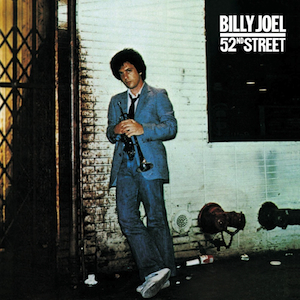
“Big Shot” crashes out of the speakers, all snotty delivery and fingerpointing. “Honesty” is another one of his lovely classical pieces expanded into a pop song. What always kills is the way he stretches the word “on” neatly into the final chorus. “My Life” was drilled into the public consciousness by its use as the theme song for the sitcom that launched the career for future Oscar® winner Tom Hanks, though we’re still not sure why it sounds like he’s puking on the fade. “Zanzibar” is an incredibly complicated composition for a portrait of a twentysomething barfly—perhaps the protagonist of “Captain Jack” if he’d lived this long? This is the tune that fits the use of the trumpet on the album sleeve, with bop legend Freddie Hubbard taking the solo. (So much so that it’s easy to overlook Doug Stegmeyer’s bass while that’s going on.)

As before, side one is stacked with the hits, so side two presents hidden treasure for the casual album buyer. A slow piano with a smoky sax sets up the false intro for “Stiletto”, one of his more popular deep cuts. “Rosalinda’s Eyes” returns to the MOR lite jazz sound of the mid-‘70s; it’s notable to mention that “Rosalinda” is a variation on his mother’s name. The horn-heavy “Half A Mile Away” has some decent hooks, but overall it’s fairly slight. A harbinger of future works, however, appears in the big production behind “Until The Night”. Here is an overt Righteous Brothers homage at a time when they were in the “where are they now” file; his stellar, intricate vocal arrangement is spot-on, and the little touches in the arrangement (percussion, strings, etc.) show a dedication from students of the recording art form. (Righteous Brother Bill Medley would even record it himself a few years later.) It makes such a statement on the side that the title track comes off as something of an afterthought, but still well played.

52nd Street would have been welcome to anyone who’d already inhaled The Stranger—more of the same without being a complete retread. And that’s just what we demand of our pop stars.

Billy Joel 52nd Street (1978)—

Wednesday, May 1, 2013

Billy Joel 6: The Stranger

With this one, he nailed it. The first key ingredient was producer Phil Ramone, who parked the boy in A&R Studios in New York City, and had him record his latest East Coast batch of tunes with his regular band (plus a few ringers brought in). The cast of characters can be seen on the back cover, and we still can’t match the face of the guy in the Yankee jersey with the more familiar bearded countenance of the late Mr. Ramone. Still, the photo always puts us in the mood for spaghetti and a carafe or five of Chianti.

We can’t speak for the rest of the country, but in the greater New York City area, nearly every track on The Stranger was in constant radio rotation, AM and FM alike. It’s a microcosm not only for his own career, straying just this side of rock, but for the time and place: this is the sound of summer in New York City in the late ‘70s.

It also presents another good defense for the art of the album side: side one alone has “Movin’ Out”, the title track, “Just The Way You Are” and “Scenes From An Italian Restaurant”. There’s no deep concept going on here, but each just seems to fit. (And again, if you were a kid back then, today you know all the words without knowing you know them.)

“Movin’ Out” is subtitled “Anthony’s Song”, but most people would think of it as the “ACK-ACK-ACK-ACK” one. Mama Leone and Sgt. O’Leary are distantly related to the characters in “Piano Man”, and just as believable. The title track is framed by that wonderful piano piece with the whistling; the main body of the song isn’t as wonderful, though the bridges provide excellent contrast. “Just The Way You Are” is pretty middle-of-the-road as far as formatting goes, and has become a cliché seeing as how he’s no longer married to the object of the lyrics (as Ben Folds can appreciate). Meanwhile, notice the subtle 10cc “I’m Not In Love” background vocal effect on the fade. We said that the side wasn’t meant to be conceptual, which is good considering the suite that is “Scenes From An Italian Restaurant”. The opening section (and reprise) fits the mood of such a place, and the Dixieland detour of section two leads well into what we always heard as the story of “Thunder and Eddie”.

There are more European hints throughout “Vienna”, a song forever linked with a certain Taxi episode. A more universal plaint appears in “Only The Good Die Young”, where the lyrics beat the hell out of the arrangement. “She’s Always A Woman” is loaded with similes, which only inspires more (e.g. “she drinks like a fish”, “she eats like a pig”, “she lies like a rug”, etc.) “Get It Right The First Time” is fluff, but it’s well-constructed fluff. Even the samba lilt of the post-chorus la-la is infectious. “Everybody Has A Dream” sports a 1971 copyright, and indeed it was recorded for his first solo album in a rather fey arrangement. Maybe the access to an all-star choir made it easy to fill out the side here. But there’s something else—just seconds after “Everybody Has A Dream” insists its way to the fade, that haunting “Stranger” theme returns for a couple more minutes, whistling and all.

That’s the thing with Billy Joel—scrape away the lyrics and the Long Island arrangements, and you’ve got well-crafted music. The Stranger was a huge hit, going gold within six months and certified diamond (10 million) today. Granted, some of that is thanks to its continual “Nice Price” availability; a more recent deluxe edition added a contemporary concert, and another one added a DVD to that. From here he would ramp up his dance with critics who refused to accept him as deep, while selling out stadiums and hockey arenas. (The piano kid would have been just as excited to make it to Carnegie Hall, which is obvious from the reception his “hometown” crowd gives him throughout the concert included on that bonus disc.)

Billy Joel The Stranger (1977)—
2008 30th Anniversary Legacy Edition: same as 1977, plus 12 extra tracks (Deluxe Edition adds DVD)

Monday, April 1, 2013

Billy Joel 5: Turnstiles

While one usually has to go to California to make it big in the music business, that’s not to say that talent and potential will help you along, as Billy Joel learned. He simply is not a West Coast guy, so he went back to Long Island to re-establish himself as a native New Yorker. It was the smart move, as the quality of Turnstiles—chock full of songs about starting over and fading dreams—can attest, even if it didn’t pay off right away.

The “Be My Baby” intro, percussion and warble makes “Say Goodbye To Hollywood” something of a Spector homage (and indeed, Ronnie Spector would cover it) but the song itself is better than the recording here. His lyrics have definitely improved, as shown on the reflective “Summer, Highland Falls” (a.k.a. “sadness or euphoria”). That progress, however is hampered by the ever-so-slight “All You Wanna Do Is Dance”, which meanders around a Latin beat to no real purpose. It’s forgotten as soon as “New York State Of Mind” comes in. This song has become something of a standard, and for good reason. Even before the city in question became a focal point for benefit concerts, this little Ray Charles homage managed to hit all the right notes and scale the right chords to be a song that you’d figure some Tin Pan Alley guy had to write already, but they didn’t, and it’s little Billy Joel who had to hire the sax player to help him nail the ending. And he does, and they do.

“James” is a one-sided letter to a childhood friend; fictional or not, it’s a little too close to “Daniel”. The rest of the album more than compensates. “Angry Young Man” begins with the famous “Prelude” that recycles all the Copland touches he’d used in “Ballad Of Billy The Kid”, then nicely punctures the egos of so many of his misguided contemporaries. “I’ve Loved These Days” begins as another slightly classical piece, and is another big farewell to the good times he may have once known. It’s not the album’s finale, however. That place of pride goes to “Miami 2017”, better known by the subtitle “Seen The Lights Go Out On Broadway”. It’s a very clever science fiction scenario, written from the point of view of a retiree in the year of the title. What’s remarkable about the song is not that we’re only four years away at this writing, but there was no way he could have known how frightening the images would be after a certain September. Still, it’s got enough local references to make audiences cheer.

If anything (outside of moving back home) helped make this album as strong as it is, that would be the band. In LA he relied on hired guns to translate his ideas. But on Turnstiles, he stuck with his touring band, and found the glue he’s been missing thus far. These aren’t the best versions of these songs; that would happen eventually, and for posterity. In the meantime, it was good that he learned a little humility.

Billy Joel Turnstiles (1976)—

Wednesday, March 13, 2013

Billy Joel 4: Streetlife Serenade

It’s easy to ridicule Billy Joel—and we will, of course—but there’s no denying that the man knows how to craft music. His pop-based-on-classical method is certainly apparent on the virtual title track of his third album.

“Streetlife Serenader” pits a grand Debussy-influenced treatment against a lyric about doo-wop singers, and the results are gripping. It resembles some of the more elaborate Elton John pieces of the same period, and we think Elton may have borrowed one of the transitional sections for “Little Jeannie”. It’s followed by “Los Angelenos”, built around a prominent electric piano over the same two chords, but never seeming to say anything. A different keyboard brings in “The Great Suburban Showdown”, with some wry lyrics suggesting a Randy Newman influence. Its mild country touches (mostly via the pedal steel) continues on “Root Beer Rag”, an instrumental showcase undercut by some snotty scatting. It’s built around a flourish of piano notes that unmistakably make it a Billy Joel tune, which can also be said about “Roberta”, an unlikely, underrated love song.

A fairly clever nose-thumb at the record industry, “The Entertainer” is still relevant today, even if the synthesizers aren’t. “The Last Of The Big Time Spenders” is a late-night stroll through early Tom Waits territory, but “Weekend Song” is crammed to the gills with just about every “workin’ man” cliché still exploited every Friday for people headed to happy hour. A pretty nocturne gets words for “Souvenir”, which would be the obvious end to the album if not for “The Mexican Connection”, a fairly ordinary instrumental.

As with the previous album, Streetlife Serenade is impeccably produced and performed, with many of the same Hollywood session guys. The cover notes even split the tracks between “One Side” and “Another Side”, although the labels don’t reflect that on the copy we have. Even if the world wasn’t noticing, he’d established a style for himself, musically and vocally. It remained to be seen whether we could expect instrumentals on every album.

Billy Joel Streetlife Serenade (1974)—3

Friday, January 18, 2013

Billy Joel 3: Piano Man

Two years living down an album he hated gave Billy Joel plenty of time to hone his chops in bars and on the road, and it was the latter that helped him get a deal with Columbia Records. He certainly sounds more confident on Piano Man, and dare we say a little tougher.

“Travellin’ Prayer” would be an ordinary country hoedown (complete with banjo, fiddle and jawbone) if not for the jazzy chords at the start. Somehow, it works. Despite its ubiquity, the title track is a very vivid portrait of the cocktail lounge crowd, whatever the hell a “real estate novelist” is. “Ain’t No Crime” could be accused of having a few clichés, but consider that this was 1973, and most sitcom theme songs hadn’t been written yet. “You’re My Home” is another excellent love song (his first such one, if you hadn’t heard “She’s Got A Way” yet) and we can forgive the line about his beloved being his “instant pleasure dome”; it’s not like her body is a wonderland or anything. As long as the title track was, he still puts another epic at the end of the first side. “The Ballad Of Billy The Kid” isn’t any more daring or out-of-place than Elton John’s view of the Old West, but there are enough Copland references and a cute twist that make it worth sitting through.

“Worse Comes To Worst” is a little annoying; the structure is ordinary (for him) and the wah-wah guitar just isn’t that cool. His vocals aren’t tough enough, but that’s remedied on “Stop In Nevada”, a portrait of a liberated woman with a suitably Elton-worthy string arrangement. “If I Only Had The Words (To Tell You)” rises above its parentheses to be memorable, as does “Somewhere Down The Line”, designed to rouse arena audiences. It’s particularly impressive that the final organ note on that song nicely sets up the intro of “Captain Jack”, the album’s other epic, and still a haunting one. Each verse provides a skewering of the teenage loser in Anytown, USA, each verse more damaging than the last. There might be a hint of Lennon in the vocal, and every white American male remembers the first time he heard the word “masturbate” on the radio. The most basic of chords make for a truly stirring chorus, and it fades away to end the album.

Piano Man flows very well, split as it is between “One Side” and “Another Side” on the original LP, with its stark cover. The plethora of session rats gives it a slickness, but it very much sounds like the Billy Joel people came to know. (The Legacy Edition includes the “legendary” radio broadcast from 1972 that got him signed to Columbia; seeing as it includes three songs never released in any form, plus lots of audible beer sipping between tracks, it’s a nice addition to the catalog.)

Billy Joel Piano Man (1973)—
2011 Legacy Edition: same as 1973, plus 14 extra tracks

Monday, January 7, 2013

Billy Joel 2: Cold Spring Harbor

After several years trying to make it in bands, Billy Joel finally took the chance to make his name on his own. His first solo album was soundly ignored when it came out, and even the version of Cold Spring Harbor that you can find today isn’t quite the album it might have been. Apparently the first (and only) pressing ran fast, and it wasn’t until well after he was a big star that his old manager arranged to have it reissued—at the right speed, but remixed and rerecorded in places. Some have compared this to what Alan Douglas did to the Hendrix legacy; we’d suppose even Billy would say that’s extreme.

The album deserved better, since it not only sounds like the Billy Joel that would be embraced within a few years, but it’s not much like other singer-songwriter albums of the period (except maybe that Elton John guy). “She’s Got A Way” and “Everybody Loves You Now” would get another lease on life a decade later, having been well-worn on the road. “You Can Make Me Free” comes between those on side one, and builds up into a terrific jam (complete with overdubbed Beatlesque harmonies) removed from the reissue. His manager may have screwed him over, but at least he put his charge in touch with some decent session guys. “Falling Of The Rain” is built around a trademark Joel piano run, and there’s even an original “Nocturne”; both show off those aforementioned classical chops.

It’s a short album at a little over half an hour, so the misses stand out. “Turn Around” would be rewritten better a few times on future albums, while “Why Judy Why” is pretty ordinary. “You Look So Good To Me” simply has too much Hammond organ. “Tomorrow Is Today” gets away from itself in the middle, when his “soulful” voice makes its first appearance and the strings saw away at arpeggios at top speed. “Got To Begin Again” leans heavily on the “end of the road” metaphor, even for a closing track.

Still, there’s enough on Cold Spring Harbor that suggests his potential. Some enterprising individuals have used digital technology to speed-correct the original LP, which would be the best way to hear it. Again, his voice isn’t quite there, suggesting a lack of of confidence—well-placed as it turns out—with a wavering chirpiness that wasn’t helped when sped up. But again, these things are clearer with the perspective of forty years. If anything suggested he wasn’t ready for the big time, it was the mustache.

Billy Joel Cold Spring Harbor (1971)—3
1983 reissue: "same" as 1971

Sunday, December 30, 2012

Billy Joel 1: The Hassles and Attila

Billy Joel causes arguments like few other musicians of his or any generation. For some he’s a pompous hack, while others hail him as a terrific songwriter and live performer. For those of us who grew up near New York City, he seemed almost as ubiquitous on the radio as Springsteen, even though it took him a while to become a household name. And even though his last album of songs came out decades ago, an all-star benefit at Madison Square Garden isn’t complete unless he comes out to play songs loaded with local references.

As he’d say, he was a classically trained pianist who loved rock ‘n roll, and many of his melodies started out as instrumental pieces grounded solidly in classical piano. That’s one reason why his attempts to rock aren’t as convincing as when he emulates pieces by 18th-century longhairs. With the benefit of hindsight, we consider him a guilty pleasure, with all the meaning both of those words suggest.

But everyone’s gotta start somewhere, and in his case it was the Hassles, a Long Island combo equally influenced by tristate heroes the Rascals and Vanilla Fudge, to the point where they tried to meld soul with psychedelia. Their first album is dominated by radical, not always successful covers, and more Hammond organ than would be heard throughout his solo career. There are some originals, like the decent “Every Step I Take (Every Move I Make)” and the Sam & Dave-style “I Can Tell”, both of which showcase his voice better than the soul shouting he tries elsewhere.

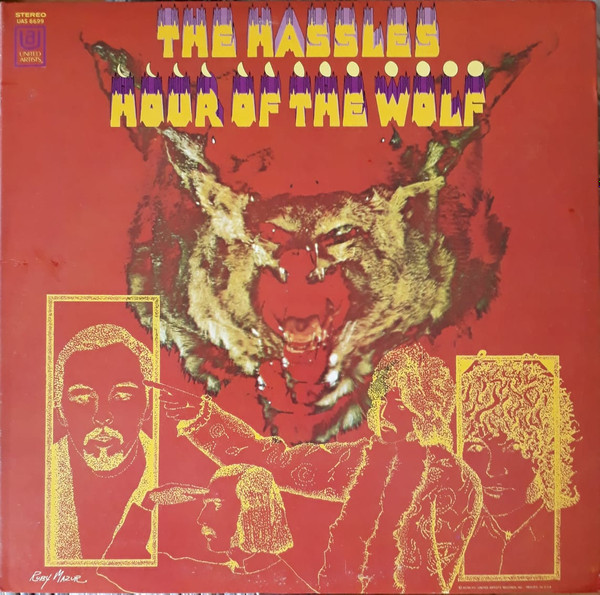
The Hassles was expanded on CD in time for its 25th anniversary (with bonus tracks in the form of earlier studio recordings), but that was not the case for their second album, since lost to time and YouTube. Billy took over the songwriting for Hour Of The Wolf, still very much of its time. “Country Boy” turns into a Dead-type jam that fades very quickly, and several tracks try to be twee and poetic, but the 12-minute title track is just plain laughable. The lyrics are bad enough, but the drum solo is preceded by the band making the wolf sound effects themselves. At least his piano solo hints at future efforts, despite its pomposity and the maniacal laughter that follows and drowns out the guitar solo. The band is certainly competent, and somebody took the time to orchestrate arrangements, but the material just isn’t there.

That was it for the Hassles, but not for their singer and drummer. Attila saw Billy going all-out on the Hammond organ, sending it through amps and wah-wah pedals to make it sound like Led Zeppelin, accompanied only by drummer Jon Small in an imitation of what Lee Michaels was doing with Frosty in those days. The band name was bad enough, but they went all out by wearing furs like actual Huns, and were photographed inside a meat locker for their only album cover.

Billy is not nor ever was Robert Plant, so his mewling throughout the albums is just plain embarrassing. “Wonder Woman”, “Rollin’ Home”, and “Holy Moses” may well have inspired Wolfmother, while “Tear This Castle Down” sounds like bad Deep Purple. “California Flash” is an attempt at ironic humor in its portrait of a gimmicky singer, and “Revenge Is Sweet” predicts his petulant attitude once he actually did make it. He gives his throat a break with the mostly jazzy instrumentals closing each side: the “Godzilla” segment of “Amplifier Fire” gets points for the name seven years before Blue Öyster Cult got around to writing their song about the same subject, which are lost with “March Of The Huns”, and “Brain Invasion” is more of the same.

Attila is far from the worst album ever made, but we’ll guess that this album is what got the Hammond organ out of his system for good. His ongoing discomfort about this being out there is well founded, yet there’s no denying he had chops.

The Hassles The Hassles (1967)—
1992 expanded reissue: same as 1967, plus 8 extra tracks
The Hassles Hour Of The Wolf (1969)—2
Current availability: none
Attila Attila (1970)—2
Current availability: none