Showing posts with label paul simon. Show all posts

Friday, June 2, 2023

Paul Simon 20: Seven Psalms

When some musicians retire, they mean it, and that’s it. Others find the muse still waking them up at all hours, and that’s what happened to Paul Simon. Seven Psalms is a 33-minute suite of seven movements, indexed as a single track on CD and streaming, in a meditation on creation, existence, and beyond. To accompany his 80-year-old voice, he plays a variety of guitars, predominantly acoustic, plus keyboards and percussion (including Harry Partch’s Cloud Chamber Bowls), making this his most solo album since his first.

“The Lord” is the main theme here, opening the suite and recurring twice. Over his acoustic guitar he acknowledges the subject as an encompassing giver, as well as “the Covid virus” and “the rising ocean”. “Love Is Like A Braid” is a wonderful melodic poem of gratitude, to someone or something—your choice—and very gentle indeed. For a switch in tempo, “My Professional Opinion” combines riffs from “Sentimental Journey” and “Don’t Get Around Much Anymore”; though that’s likely unintentional, its bass harmonica can’t help but recall “The Boxer”, and just when it starts to groove, we hear “The Lord” again.

A small classical-type quartet features on “Your Forgiveness”, as is a voice ensemble, but we can’t hear the latter at all, incorporated as well as they are into the proceedings. The lyrical tone is getting darker, and the atmosphere of “Trail Of Volcanoes” adds to the unease, and we hear a note of fear as he compares his journey to those of refugees. But there is literally “a change of mood,” and Edie Brickell shows up on “The Sacred Harp” to provide a gesture of assistance and comfort. “The Lord” reappears to put things in perspective; by now He’s not just the engineer of the universe but his “record producer” as well. “Wait” is something of a plea to not leave just yet, but Edie appears again to bless the congregation, and we end with “amen”.

We will not be the first to say that Seven Psalms is a grower, but it is very welcoming on first listen, and refreshing the more familiar it becomes. After a lifetime of crafting and overcrafting, this particular collection does not seem at all labored. If it’s his final statement, it’s a good one. If he’s got more, hopefully he’ll keep it as simple as this.

Paul Simon Seven Psalms (2023)—

Friday, January 6, 2023

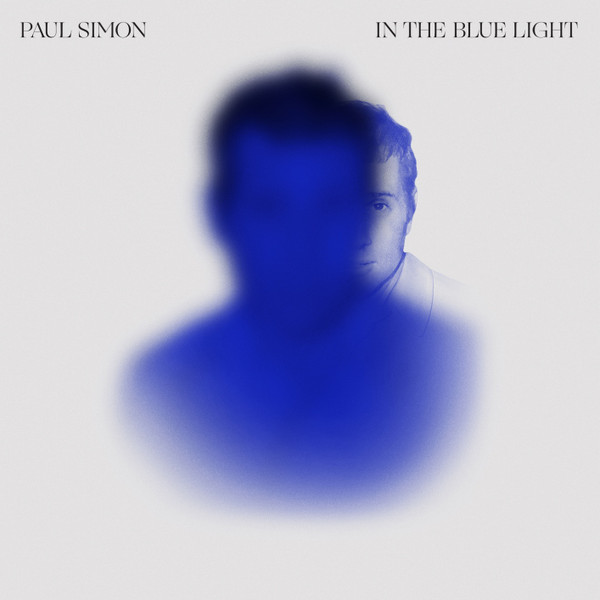
Paul Simon 19: In The Blue Light

Even though he wasn’t exactly a road warrior, it was surprising to hear Paul Simon announce a farewell tour in 2018. Shortly afterward, he surprised us further with an album made up entirely of remakes of songs from his catalog. To his credit, In The Blue Light isn’t merely a reclaiming of songs in publishing limbo, nor is it the “let’s orchestrate them!” gambit. Rather, he’s taken songs he felt were “underappreciated” over the years, not least by himself, and given them “fresh perspectives”.

That’s all fine and well, but it’s still an album of remakes. “One Man’s Ceiling Is Another Man’s Floor” becomes a big band slow blues, whereas “Love” (one of four songs from You’re The One) isn’t all that different, except that now it has Bill Frisell. “Can’t Run But” does get an orchestral treatment from the yMusic ensemble, who we first heard on a Ben Folds album. “How The Heart Approaches What It Yearns” goes for late-night jazz, with help from Wynton Marsalis, who infuses “Pigs, Sheep And Wolves” with New Orleans gumbo.

The yMusic folks return on “Rene And Georgette Magritte With Their Dog After The War”, downplaying the doo-wop references on the original but still lovely. “The Teacher” works better in this context, particularly with the focus on Spanish guitars and brief saxophone solos, but he still chooses to “act out” the emotions in “Darling Lorraine” rather than let the words and music carry them. That lengthy tune makes the moody jazz of “Some Folks’ Lives Roll Easy” stand out that much more. It’s an especially nice lead-in to the very soft take on “Questions For The Angels”.

Throughout In The Blue Light his voice is tired, but he works with its limitations. Having different players on each track also gives the listener time to be immersed in each, rather than have them be lost in the sequence. It’s a nice album for easy listening.

Paul Simon In The Blue Light (2018)—3

Friday, July 22, 2022

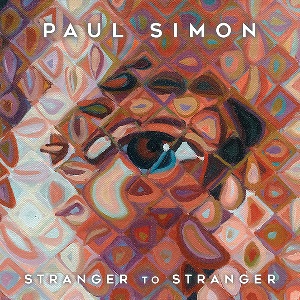
Paul Simon 18: Stranger To Stranger

For most of his post-Garfunkel career, Paul Simon has painstakingly created songs with the mildest suggestion of a rhythm as touchpoints. In his old age, with the ease and advancements of home recording, he doesn’t have to travel to other countries and observe other cultures for inspiration. He still could, of course; he just doesn’t have to.

Stranger To Stranger sounds like it was assembled on a computer, and we don’t mean that in a bad way. The sound is still fresh and pure, like thanks to the assistance of “his old partner Roy Halee”, which is how the credit actually reads. Many of the tracks involve multiple players and exotic instruments, but it still remains very much a solitary vision.

The first sound we hear is an Indian string instrument that the liner notes tells us sounded like “The Werewolf” to the auteur’s ears, so he wrote a song around it about doom and death. Sound effects abound, and the track is taken over by a gothic horror movie pipe organ by the end, along with more howls. “Wristband” is a very clever song that retains its humor past several listens, and manages to extend the idea of exclusive entry past its premise. “The Clock” is an instrumental built around a simple pulse, with some chimes, and is over too quickly. More complex rhythms and textures drive “Street Angel”, while a waltz of sorts propels the lilting title track. As predicted two tracks earlier, “In A Parade” finds the street angel in a hospital being diagnosed for mental disorders, with beats to match.

The engaging “Proof Of Love” is very reminiscent of his early ‘90s work, and apparently the noted Brazilian influence is why. “In The Garden Of Edie”—again, clever—is another instrumental that isn’t long enough. “The Riverbank” continues the musing on death, but over a mildly funky groove that isn’t down in the slightest. “Cool Papa Bell” would be mostly a tribute to a Negro League baseball legend, but is dominated by a tuba and spends more time reflecting on a certain twelve-letter epithet. The closing “Insomniac’s Lullaby” adds sound effects and Harry Partch instruments to a lovely guitar piece and meditation on sleeplessness. It’s more of a prayer than a lullaby, but it’s effective.

Stranger To Stranger is another winner in a career that’s slowly winding down. From time to time he leans on one of his spoken character voices rather than trying to find a melody, but the solo guitar pieces have us wishing he would do an instrumental album of same. He should also be commended for the album’s digestible length, at just over 37 minutes. (That said, a deluxe edition included a few extra tracks, starting with the exquisitely recorded “Horace And Pete”, the theme song for a Louis C.K. web series, which should have been on the main album. The oldie “Duncan” and “Wristband” come from a well-received performance on A Prairie Home Companion. “Guitar Piece 3” is a spooky interlude, while “New York Is My Home” is a collaboration with Dion DiMucci, also featured in the aforementioned web series.)

Paul Simon Stranger To Stranger (2016)—

Tuesday, November 9, 2021

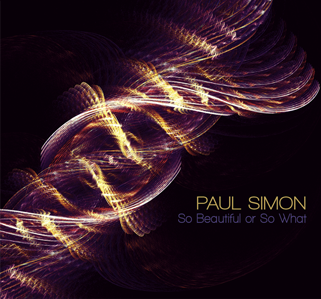
Paul Simon 17: So Beautiful Or So What

After all this time, and a handful of, frankly, “eh” albums, one might be forgiven for not expecting to be wowed another time by Paul Simon. So Beautiful Or So What is sneaky in that it starts out tepidly, but soon elevates to something special.

Much of the album was recorded alone at his home studio, so there are plenty of loops and effects. These seem to dominate “Getting Ready For Christmas Day”, which is built around a sermon from several decades earlier, then becomes a relevant lament for children stationed overseas during the holidays and the determination to muddle through somehow. The same clattery backing supports “The Afterlife”, one of his more successful attempts at approaching aging and death with humor. “Dazzling Blue” has echoes of “Under African Skies”, which is fine with us. A very intricate guitar part, half plucked and half strummed, drives “Rewrite”, which rises above the “help me, thank you” hook in the chorus with subtle verses. Those tracks will not prepare you for “Love And Hard Times”, a gorgeous rumination on creation and blessings, with a gentle piano and string arrangement to match his gentle guitar.

“Love Is Eternal Sacred Light” is almost a sermon of its own, with an uptempo backing and near-gospel delivery. We take another break for the exquisite “Amulet”, a solo guitar instrumental, leading into further rumination on “Questions For The Angels”, wherein a pilgrim’s stroll through Brooklyn takes in a billboard of Jay-Z. “Love And Blessings” samples from another old gospel recording, but wisely limits it to the choruses. Meanwhile, the vocal, guitar, and bass all follow the same basic melody, but just out of phase to keep from unison. Finally, the title track, digs into a dirty groove, reiterating all the themes we’d heard thus far.

So Beautiful Or So What really is a pleasant surprise, especially when you’re not expecting much. Even with all the contributors in the credits, and the time it took to create, it still exudes a low-key presentation, with a fresh sound. Well worth revisiting.

Paul Simon So Beautiful Or So What (2011)—

Friday, June 25, 2021

Paul Simon 16: Surprise

Outside the title, the biggest surprise about this Paul Simon album was that it was largely a collaboration with Brian Eno, who’s credit with “sonic landscape”. Even with the domed one’s touches, Surprise is still unquestionably a Paul Simon album, built around the same exotic rhythms that have dominated his solo career. In another surprise, he plays nearly all the guitars throughout, from the sprightly African figures to the more distorted riffs.

One of those begins “How Can You Live In The Northeast?”, which opens the album with zero subtlety, touching on a world at war and floods overcoming levees. “Everything About It Is A Love Song” takes a journey through multiple textures, always coming back the most simple guitar figure. “Outrageous” is the first most overt attempt to sound modern, sung in one of his character voices, but the “who’s gonna love you when your looks are gone” hook still works. Not as successful is “Sure Don’t Feel Like Love”, which seems more like the Eno approach of using whatever words fit the rhythm at hand. The powerful “Wartime Prayers” starts out just lovely, with nice atmospherics and gentle guitar, but as it’s designed to be an anthem, the heavy drums distract from Herbie Hancock’s piano. “Beautiful” escapes us; the lyrics seem to teeter between modern nursery rhymes and details about children adopted from overseas.

“I Don’t Believe” is a highly personal cry of defiance, going so far as to credit his wife (who’s also glimpsed “brushing her long chestnut hair”) for one of the aside observations. Unfortunately, the bridges about his stockbroker aren’t about to raise any sympathy. The travelogue in “Another Galaxy” is elevated by Eno’s touch, though he’s heavier-handed on “Once Upon A Time There Was An Ocean”, which doesn’t quite reach lyrical heights. “That’s Me” suggests more autobiography—underscored by the vintage snapshot used to illustrate the lyrics—and while “I never cared much for money” is a baldfaced lie, the multiple looped guitars (again, all him) stand out.

Along with its overall consistency, the best thing about Surprise is its manageable playing time. There is something of a bonus track in “Father And Daughter”, a remix of a song previously featured in The Wild Thornberrys Movie, but it fits both sonically and thematically. It’s a nice inclusion.

Paul Simon Surprise (2006)—3

Friday, February 19, 2021

Simon & Garfunkel 9: Old Friends Live

Vintage concerts were one thing, but as long as Paul Simon and Art Garfunkel were still alive and performing separately, audiences wanted to see and hear them harmonize together. Just a few years into the century, they finally got their chance.

Old Friends: Live On Stage presents the bulk of the set from their reunion tour (extra songs were added to the DVD, which also offers the spectacle of Paul doing ill-advised rock star poses). Their voices are older, certainly, but they still have that blend. However, while the songs are recognizable, these are not carbon copies; many are transformed into the more modern sounds coming from the band, handpicked by Paul. And when they do replicate the record, as on “Hazy Shade Of Winter”, the singers have modified their parts. Though there is some overlap, it’s not a straight copy of the Central Park concert; this time out we get to hear such nuggets as “The Only Living Boy In New York”, a medley of “At The Zoo” and “Baby Driver”, “Leaves That Are Green”, and even “My Little Town”.

About halfway through the first act they chat a little bit about their youth and history together; Artie is as gracious as usual, and Paul takes the opportunity to take a few shots. They do a brief busk of “Hey Schoolgirl”, then bring out the actual Everly Brothers for a combined assault on “Bye Bye Love”. Artie sings “Kathy’s Song”, surprisingly, and trades verses with Paul on “American Tune”; “Slip Slidin’ Away” is the only other nod to either solo career. And while he cedes the second verse of “Bridge Over Troubled Water” to its author, Paul’s attempts at being soulful fall flat. Finally, on a new studio song called “Citizen Of The Planet”, included as a closing “bonus”, their voices sound younger, leading us to wonder if this is an outtake from Hearts And Bones.

Maybe you had to be there, but at least this particular reunion wasn’t embarrassing, considering that at this late date they’re unlikely to try it again. It’s nice to know that while they were getting along, we get to feel it.

Simon & Garfunkel Old Friends: Live On Stage (2004)—3

Friday, October 16, 2020

Paul Simon 15: You’re The One

Perhaps chastened by the failure of his big splash on Broadway, Paul Simon went back to just making records. You’re The One was the first of his albums in a long while that didn’t have an overall theme or style. Granted, his output hadn’t been that heavy to begin with, and the tracks still feature exotic rhythms and not exactly orthodox instruments and textures. That’s also not to say he’s avoiding profundity by any stretch, but a Paul Simon album without an agenda is certainly a novelty.

The finest moments bookend the set: the gentle yet rhythmic “That’s Where I Belong”, and the suitably peaceful “Quiet”. In between, we follow narratives like the troubled marriage chronicles in “Darling Lorraine” and the title track, the latter frustrating in that there’s a wonderful melody in there, while the accusations in the chorus deflate it. Maybe that’s the point, but it reduces the inclination to listen too closely. “Old” is a personal history in the guise of a standup routine, while “The Teacher” is just plain pretentious in its professed humility.

We should mention that he had young children around the house during the making of this album, so perhaps that explains the nursery rhyme elements of “Look At That” and “Hurricane Eye”, but even he can’t leave things as simple as that. “Pigs, Sheep And Wolves” could be a nice parable if he hadn’t smothered the Mother Goose possibilities with Orwellian sentiments illustrated by Law & Order imagery. “Señorita With A Necklace Of Tears” pulls a remote line out of the middle for its title, rather than go with one of the more memorable hooks scattered throughout. “Love” is a more pleasant samba and a better cross between intricacy and directness.

You’re The One sounds good, as we would expect, but his attempts to sound relaxed and chummy aren’t very convincing. Maybe he’s too easy a target for criticism, but for all its sonics, and the sameness of it all, you’ll want to stick with the classics. (Only four years later the album was overhauled along with its older siblings, adding three live versions expertly performed that don’t expand much on the studio versions.)

Paul Simon You’re The One (2000)—
2004 CD reissue: same as 2000, plus 3 extra tracks

Friday, May 22, 2020

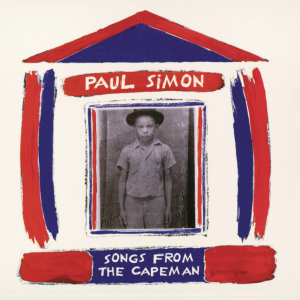
Paul Simon 14: The Capeman

After the period of relatively high activity that began with Graceland, it had been a long time since a new album of songs from Paul Simon. And when one did arrive, it wasn’t exactly what people expected.

It turned out he’d been very busy for most of the ‘90s working on a Broadway musical, which took both a lot of work and a lot of money. He soon learned the hard way that neither of those factors would guarantee success. The Capeman was based on the life of a convicted murderer who dominated New York City headlines in the late ‘50s, partially because of his youth and partially because of his Puerto Rican heritage. Simon’s approach to creating this grand work was unorthodox, and he didn’t make too many friends in the process. When the show debuted, it was lambasted, but the writing was already on the wall when people heard the album designed to preview and promote it.

Songs From The Capeman is credited to Paul Simon alone, but many of the vocals are handled by the actors and actresses in the play, to the point where one forgets who wrote everything. Marc Anthony and Ruben Blades appear here and there, yet he himself sings “Born In Puerto Rico”, which is hard to believe even as a character because of his by-now familiar voice. (José Feliciano sings the version added as a bonus track the following century, and it’s better.)

The album demands attention, since the lyrics (or libretto) is very important to the story at hand. It would help if the story were linear, but it’s not. It’s easy to slip into the background, and then some spurt of profanity or stereotypical patois will leap from the speakers, and we worry about its effect on impressionable children. That happens a lot in “Adios Hermanos”; loading up your opening track with f-bombs isn’t likely to appeal to a more conservative fan base. Dialogue from archival interviews is intended to add gravitas, but merely muddies the process.

Musically it’s not bad; we’re in no position to judge the authenticity of the Latin heritage and style, but this is mostly balanced throughout by a wonderful smattering of doo-wop. “Quality” balances two doo-wop styles, the solo croon and the girl-group chorus, quite well, and better than the dual personality of “Bernadette”. “Virgil”, sung from the point of view of a prison guard, sounds like a hokey Western gunfight. “Killer Wants To Go To College” is a decent tune with too much plot, even split into two parts. “Trailways Bus” will only have one yearning to hitchhike from Saginaw with a pack of cigarettes and Mrs. Wagner’s pies. The finest moment could be “Can I Forgive Him”, set up as a conversation between the Capeman’s mother and those of the murder victims, and sung by himself to the accompaniment of his acoustic guitar.

The Capeman was an interesting concept, but ultimately the Songs From The Capeman are bound to the show. While moments of clarity shine through, it’s a vanity project, and not really worth the trouble. The expanded version from this century would have been an excellent opportunity to illuminate any part of the story, but merely adds the Feliciano track mentioned above, along with another schizophrenic doo-wop track in “Shoplifting Clothes” and an unfinished demo of “Can I Forgive Him”. Clearly, he’s moved on.

Paul Simon Songs From The Capeman (1997)—2
2004 CD reissue: same as 1997, plus 3 extra tracks

Tuesday, October 1, 2019

Paul Simon 13: 1964/1993

Lots of people’s careers were celebrated with box sets in the early ‘90s, and some of them were actually worth investing in—usually if there were rare or unreleased tracks on them. That’s what made Paul Simon’s place on the shelf so maddening. First of all, the title was off; the music runs the gamut from 1957 to 1991, so somebody wasn’t paying attention. Even limited to three discs, as befits a guy who’d recorded fewer than a dozen albums, much of 1964/1993 was stuff people had already, whether on the albums themselves or, more likely for the time, Negotiations And Love Songs.

The set begins with the version of “Leaves That Are Green” from his then-out-of-print solo album, moving through only a handful of tracks from the Simon & Garfunkel albums—possibly due to licensing—with the live take of “Kathy’s Song” for variety. A tentative demo of an unfinished “Bridge Over Troubled Water”, already sounding like he meant it for Art to sing, is included for petulant reasons. The classic rendition follows, as does a strange little spoken segment called “The Breakup”, wherein Art attempts to make a statement about their separation while Paul interrupts constantly from the control booth. This goes into the original “Hey, Schoolgirl” single from 1957, then “My Little Town” is the last we hear from Art before the chronology returns to the start of Paul’s actual solo career.

From there, it’s basically an expansion on Negotiations, with a lot of the same tunes, save a live version of “Still Crazy After All These Years” from 1991. The final disc has seven songs from Graceland, five from The Rhythm Of The Saints, and three from Concert In The Park. There is another bonus in the form of “Thelma”, an outtake from Rhythm Of The Saints that’s worth more than a cursory listen.

Certainly, the music contained on 1964/1993 is such a high quality, even if you had it already, that we can’t fault the content. It simply should have been something else entirely, and both he and his label would soon learn a harsh lesson on what consumers were willing to abide.

Paul Simon 1964/1993 (1993)—

Friday, June 28, 2019

Paul Simon 12: Concert In The Park

At possibly the peak of his solo career, Paul Simon returned to Central Park not quite ten years after his historic reunion with Art Garfunkel for another free concert. Artie was nowhere to be seen this time, but the multitudes in the park and watching on television wouldn’t have minded. And since he’d’ve been stupid not to, Paul Simon’s Concert In The Park arrived in stores not months later, just in time for holiday shopping.

The nearly two-hour show concentrated mostly on songs from Graceland and The Rhythm Of The Saints (which the tour was ostensibly promoting), with well-placed selections from his catalog. Given the international genetics of the band on the crowded stage (each member nicely profiled in the CD booklet), some of those oldies are transformed. “Kodachrome” begins with a bubbly bass and manages to hit on reggae along the way. With no Art around, and always anxious to remind people that he wrote it, “Bridge Over Troubled Water” is given a more blatant gospel treatment, also touching on reggae partway through. “Train In The Distance” and “Hearts And Bones” would appeal to those to bought Negotiations And Love Songs. Given his new Brazilian friends, “Cecelia” is spiced up a little over the original arrangement. Even “Diamonds On The Soles Of Their Shoes”, in the absence of Ladysmith Black Mambazo, gets an extended vocal intro and a raucous percussion ending. Naturally, the crowd goes nuts at certain lyrical references, like the New Jersey Turnpike, New York City winters, and smoking a J.

As with the Garfunkel show, one song from the concert was not included on the eventual album. Throughout the tour, he would often bring “You Can Call Me Al” to its expected close, only to say, “That was fun, let’s play it again”—and the band would. Such things work better in the moment, so the CD as released only includes the song the once.

Even counting the redundancies with his previous three releases, Concert In The Park works as a summation of his career, and a staple of many a CD collection. It was a good show, and a good tour, and he likely wouldn’t be this huge again.

Paul Simon Paul Simon’s Concert In The Park (1991)—

Friday, March 22, 2019

Paul Simon 11: The Rhythm Of The Saints

After Graceland had paid off so handsomely, the world wondered what Paul Simon could possibly do to better it, much less equal it. While he didn’t go back to the South African well, The Rhythm Of The Saints did explore third-world rhythms and sounds, predominantly from Brazil, to inspire his words, with varying results.

“The Obvious Child” is based around Brazilian parade drums, but could easily stand on its own without all that. If anything, the drums mask the similarity in the first verse to his delivery in “You Can Call Me Al”. A snaky melody with subtle percussion underpins “Can’t Run But”, which manages to be hypnotic considering he limits his own vocals to about three notes. “The Coast” has a nice loping rhythm along the lines of “Diamonds On The Soles Of Her Shoes”, and even gives co-writing credit to guitarist Vincent Nguini. Similarly we hear echoes of “Under African Skies” in “Proof” with horn parts that would be mimicked by Chevy Chase and Steve Martin in a video that didn’t help to sell the album any. The most haunting track is “Further To Fly”, with its complicated masked meter and lyrics that seem to address the search for love as well as a fear of aging and death.

The aftermath of the search is explored in “She Moves On”, which now sounds very similar to a Talking Heads rhythm from around the same time. “Born At The Right Time” stays in the same tempo but presents a more upbeat tale, complete with a singalong chorus and a hint of accordion. “The Cool, Cool River” is an ambitious track, starting with a complicated rhythm and almost forboding melody, stopping off at slightly dreamier interludes, and best of all, a few decisive horn blasts for the final run. Milton Nascimento co-wrote “Spirit Voices” and adds some of his own, but by now the basic tempo has become generic, Simon’s phrasing almost arbitrary, just as the title track mostly dribbles to a fade.

The Rhythm Of The Saints wasn’t a hit on the Graceland level—how could it be?—but people liked it and bought it. It also hasn’t had the legs its predecessor had, as the weaknesses only become more pronounced as the decades roll by. Throughout the album, he sings in a gentle tone, which is fine, but with few exceptions doesn’t help each of the songs stand out from each other.

According to Wikipedia, citing a magazine article we’ve yet to find or confirm, the album had an different sequence before the label insisted on opening with “The Obvious Child”, rather than having it at the top of side two (despite that being where “You Can Call Me Al” happened to sit). The original sequence basically flips the sides, but doesn’t present any more dynamic an effect. (The expanded CD helps widen the picture, with a very nice acoustic demo of “Born At The Right Time” and “Thelma”, a great pop song left out in the first place, likely because it’s so direct compared to the other lyrics.)

Paul Simon The Rhythm Of The Saints (1990)—3
2004 CD reissue: same as 1983, plus 4 extra tracks

Tuesday, December 11, 2018

Paul Simon 10: Negotiations And Love Songs

His label had to have been relieved by the massive success of Graceland, and knowing the man’s measured pace while creating his next likely masterpiece, Warner Bros. made the commercially wise move to issue a hits compilation. Granted, Paul Simon had only one “hit” from the two albums with the label that weren’t Graceland, so they bolstered Negotiations And Love Songs—helpfully subtitled 1971-1986—with nine selections that were already on his previous hits album plus, oddly, “St. Judy’s Comet”. (We’d also gladly take “I Do It For Your Love” over “Have A Good Time” any hour of any day, but nobody ever asks us.)

That covered the ‘70s, but what of the ‘80s? “Late In The Evening” was the logical choice to represent One-Trick Pony, sparing newcomers the trouble of picking that one up. Three of the better tracks from Hearts And Bones get welcome exposure; “Train In The Distance” even provided the set’s title. “Diamonds On The Soles Of Her Shoes” and “You Can Call Me Al” round out the program. (If you bought the two-LP version of the album, you also got the title track from Graceland.)

For a chronological overview, Negotiations And Love Songs covers the basics, with true highlights from his handful of albums to date, and not sneaking in any live versions of songs better known from his old duo. Also, with Greatest Hits, Etc. now out of print, this was the only place to find “Slip Slidin’ Away”. (If you wanted “Stranded In A Limousine”, for whatever reason, you were out of luck.) And who could resist that dreamy noir portrait of the artist with his fedora cocked at a jaunty angle?

Paul Simon Negotiations And Love Songs 1971-1986 (1988)—4

Monday, May 6, 2013

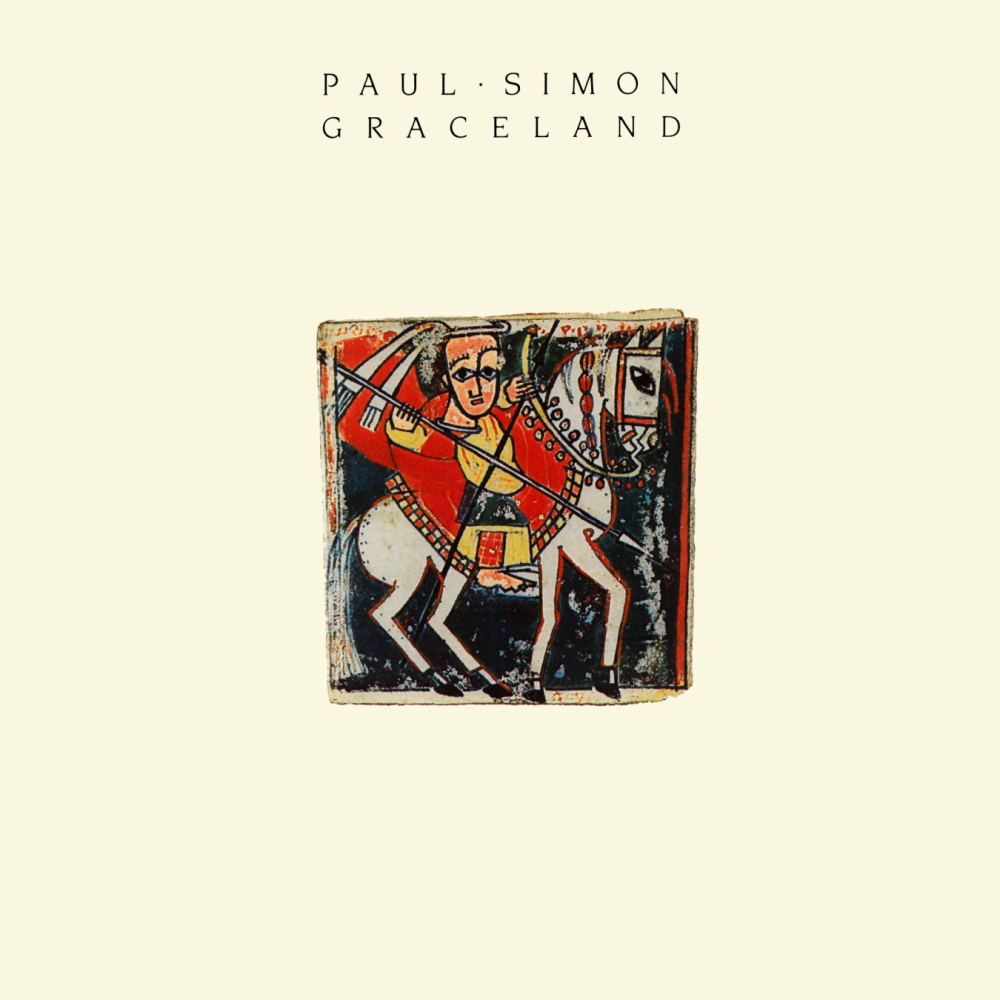
Paul Simon 9: Graceland

He was always a methodical writer, but even with taking an average of three years between albums, Paul Simon’s commercial draw had dwindled, and it was safe to say he was no longer relevant. (Not that he was oblivious to the situation; he did, after all, include not one but two songs called “Think Too Much” on his most recent album.)

So when the FM radio DJ announced a new song by Paul Simon in the summer of 1986, the initial ho-hum response turned into a raised eyebrow of curiosity. The song was “You Can Call Me Al”, and its catchy chorus, odd rhythm and punchy horns made it a hit. (And thanks to its clever video, for years afterwards record store clerks had to explain to customers that the album with “that Chevy Chase song” was in actuality by Paul Simon.)

It wasn’t an immediate success, but over several months the momentum built, and somehow Paul Simon managed to claw his way back to the mainstream with an album full of appropriated sounds, just like he’d always done. Graceland soon became as ubiquitous in CD racks as Bookends and Bridge Over Troubled Water had been in our parents’ record collections. The album was so popular that a year after it won the Grammy for Album of the Year, the title track won Record of the Year; we’re pretty sure the voters thought it was the album that had been nominated.

Still, the accolades were deserved. The debate will continue as to just how much credit he should get compared to the third-world musicians whose bootleg tape he’d heard, but the truth is he built on something fresh and different to many Americans’ ears, and complemented it with resonant lyrics. In the process, he provided a stepping-stone for people to gain a greater appreciation for “world music”, as well as more dialogue about apartheid.

To backtrack a sentence, Graceland wouldn’t have been successful if it wasn’t a “good” album, and it is. A wheezy accordion heralds in the broken-leg dance of “The Boy In The Bubble”, contrasting the news reporting of the verses with the major-key prophecies of the chorus. The subtle pull of the title track includes the harmonies of the Everly Brothers to capture the wide-eyed experience of traveling. “I Know What I Know” is just plain wacky and fun, leading into “Gumboots”, an update of that original bootleg tape. A good deal of “Diamonds On The Soles Of Her Shoes” can be attributed to the Ladysmith Black Mambazo choral group (they also provide the fire for the a cappella “Homeless” on side two) but the story of the rich girl and the poor boy is just plain sweet.

“You Can Call Me Al” starts the second side, with “Under African Skies” providing a near-lullaby before “Homeless”. “Crazy Love, Vol. II” talks of Fat Charlie the Archangel, which sounds autobiographical on the umpteenth hearing. It’s also something of a signpost on the album, as “That Was Your Mother” is built on a zydeco groove, and “All Around The World Or The Myth Of Fingerprints” is supposedly a Los Lobos composition they brought to the sessions, only to raise more issues down the road as to just how selfish the man might be.

But that’s all redundant when faced with the basic fact that Graceland was a wonderful surprise when it appeared, and never wore out its welcome. From a primal, instinctive standpoint, it’s a good album, and one that still makes people smile decades later.

Paul Simon Graceland (1986)—4
2004 CD reissue: same as 1986, plus 3 extra tracks
2012 25th Anniversary Edition: same as 2004, plus 3 extra tracks and 2 DVDs

Saturday, April 13, 2013

Paul Simon 8: Hearts And Bones

A professional reunion with Art Garfunkel didn’t last long enough to result in a new Simon & Garfunkel album, so the album that did come out was credited to Paul Simon alone. Hearts And Bones was well-received critically, but its quality didn’t ring too many cash registers.

These days it’s easy to see why, as the tunes weren’t exactly radio-friendly, and after an exhausting tour with Artie he wasn’t about to go back on the road. Even his voice sounds weary on these tracks. Plus, his never-ending quest for inspiration via non-traditional sounds meant an unfortunate reliance on the trends of the time. “When Numbers Get Serious” and “Cars Are Cars” would both benefit from less busy, non-contemporary arrangements. Neither version of “Think Too Much” is very appealing, though the one labeled “(b)”, which comes first is less irritating, its calypso arrangement notwithstanding, than the faster “(a)” take.

However, the good outweighs the bad here. “Allergies” has a vocoder-type effect and electronic handclaps that still complement the fretful lyrics, as does the high-speed guitar solo from Al DiMeola. The title track and “Train In The Distance” are both pretty, understated reflections on his then-current wife and his first wife, respectively, both delivered with universal sentiments that make them gems in the catalog. “Song About The Moon” is something of a grower, with a “Slip Slidin’ Away”-style lope and a simple lyric espousing simplicity. On the other hand, “Rene And Georgette Magritte With Their Dog After The War” is supposed to be a cipher, stretching to connect the surreal painter with classic doo-wop combo references. It could go nowhere else on the album, so closing with “The Late Great Johnny Ace” (debuted two years earlier in Central Park) is not only reverent, but gains a mournful coda for strings with winds composed by Philip Glass, ending abruptly for optimal effect.

Ever since Hearts And Bones came out, fans have wondered how the songs would have sounded with Artie singing on them. (A few had been tried on their tour, but any Garfunkel contributions to the sessions were left aside during the final mix.) Much as we’d like to hear those for history’s sake, we’re just as interested in hearing stripped-down versions of the more trying songs. The eventual reissue included four bonus tracks along those lines; outside of “Shelter Of Your Arms”, which shares some lyrics with “When Numbers Get Serious”, the demos of “Train In The Distance” and “Rene And Georgette” sound pretty close to the final cuts, while “Johnny Ace” has a resolved ending on guitar. And it’s still a sad song.

Paul Simon Hearts And Bones (1983)—3
2004 CD reissue: same as 1983, plus 4 extra tracks

Friday, March 22, 2013

Simon & Garfunkel 6: Greatest Hits and Concert In Central Park

1970 said farewell to not only the Beatles, but also Simon & Garfunkel. As with the Fab Four, fans of the odd couple from Queens continually hoped for a reunion. And a few times, their dreams came true.

Two years was an eternity in those days, so their one-off performance at a George McGovern benefit was a Big Deal. Columbia issued the Greatest Hits album around the same time. Along with a handful (but not all) of their hit singles, some undated live versions provide wonderful substitutions. (“Kathy’s Song” and “For Emily, Whenever I May Find Her” showcase each of the boys in a solo.) Besides photographic evidence that Paul Simon looks just as awful with a hat as without one, it’s also the only place to get “America” with a clean intro.

By this time, Simon had already started his solo career proper, and Garfunkel was soon to follow. Outside of the occasional joint gag appearance, the only other collaboration of the dynamic duo was 1975’s “My Little Town”, released as a joint single promoting each of their current, separate LPs. Meanwhile, both boys took stabs at movie stardom, sporadically releasing solo LPs throughout the decade. Art’s were as unadventurous as Paul’s were increasingly slick, and when the ‘80s arrived, not even Paul’s handful of hit singles kept him from seeming a has-been. (Even he was aware of this, as One-Trick Pony made plain.)

Still, it was with mostly joy rather than cynicism that greeted the news of another benefit concert, this one happening on the Great Lawn in Central Park, to be recorded for an album and broadcast on HBO. The Concert In Central Park presents the entire show as performed, with two exceptions: an encore repeat of “Late In The Evening”, and the ironically disrupted “The Late Great Johnny Ace”, a song about dead musicians performed nine months after John Lennon’s murder less than a mile away. In addition to their hits, backed by competent studio musicians, Art gamely harmonizes on some of Paul’s solo hits. The covers of the oldies “Wake Up Little Susie” and “Maybelline” add to the general feeling of nostalgia and fun.

The original 2-LP package, which even included a booklet with lyrics and photos, both vintage and of the event itself, wasn’t cheap, and fans were basically buying some of these songs for the third or fourth time. But it still captures a special moment in time, where the two old friends managed to harmonize, no matter what was going on between them backstage. Its specialness, if that’s a word, was underscored by the decision the following to do a reunion tour and record an album together, both of which were aborted due to infighting, and it would be some time before either man found his bearings again. In fact, once Paul had regained his commercial status, he returned to the park nearly ten years later to the day, with an even larger band, but no Art.

Simon and Garfunkel Simon And Garfunkel’s Greatest Hits (1972)—4
Simon and Garfunkel
The Concert In Central Park (1982)—4

Saturday, March 9, 2013

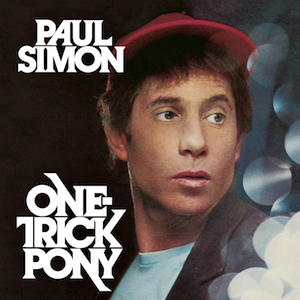
Paul Simon 7: One-Trick Pony

While Art Garfunkel was the first of the duo to hit the big screen as an actor, Paul Simon had similar dreams. After becoming best buds with Saturday Night Live producer Lorne Michaels, he began to rack up several comedic appearances on that show, and even managed to get a speaking role in Woody Allen’s Annie Hall. From there, it was a natural jump to writing and starring in a full-length feature film.

One-Trick Pony concerns a musician who made it big in the ‘60s with a protest song, and is now traveling the country playing whatever gigs he can get for his band, from driving between small clubs in a van to flying out to open up for the B-52s on a bigger bill. His character is stubbornly holding on to his integrity as a working musician, which causes friction with his estranged wife and son, and prevents him from getting much sympathy from record executives. (Along with the band members playing versions of themselves, Lou Reed is the only other musical actor in the film, in a hilarious role as a smarmy promo guy with AM radio ears.) Our Hero is alternately sarcastic and depressed, not exactly likable, a little stiff, but lean and swarthy, with possibly the best toupee of his career.

The film isn’t exactly a thinly veiled autobiography, but it would become a self-fulfilling prophecy when its failure to wow the public relegated the once all-powerful Simon to the “where are they now” file. The accompanying album didn’t help much. Save the toe-tapping opener “Late In The Evening”, “God Bless The Amputee”, the title track, and “Ace In The Hole” (the latter two recorded live), most of the tracks are middling jazzy pop, with lyrics that serve to reflect the malaise running through the film. Thus, the album is equally dour, demonstrating the lack of enthusiasm the music receives onscreen, and doesn’t resonate much without the visuals.

In a further demonstration of the character’s stubborn nature, the fictional protest song “Soft Parachutes” wasn’t included on the album, but did finally appear on this century’s expanded reissue, along with two early versions of “Oh, Marion” and “How The Heart Approaches What It Yearns”, plus “Stranded In A Limousine”, which had been MIA since Greatest Hits Etc. was deleted. (No sign of the “AM radio” version of “Ace In The Hole”, however.) So it’s a little more complete now, but not exactly better.

Paul Simon One-Trick Pony (1980)—
2004 CD reissue: same as 1980, plus 4 extra tracks

Thursday, February 28, 2013

Paul Simon 6: Greatest Hits, Etc.

Having begun to work more slowly than ever, Paul Simon went for the standard contract-ending maneuver. Greatest Hits, Etc. compiled tracks (hits and otherwise) from his four solo albums of the decade, sweetened by two new songs to suck in those who’d already bought the albums. “Slip Slidin’ Away” has since become one of his more popular standards, an easygoing meditation on good people trying to do good things, with a clip-clopping rhythm and the Oak Ridge Boys harmonizing along. “Stranded In A Limousine” is a funky, jazzy parable that’s probably about something more profound, or at least designed to sound that way.

There’s no denying the worthiness of the hits in this package (“Me And Julio”, “Mother And Child Reunion”, “50 Ways…”) but some of the choices to fulfill the “etc.” label are up to personal taste. “Have A Good Time” mars side one, but is redeemed by the live version of “Duncan” that follows, and “I Do It For Your Love” on side two. “Take Me To The Mardi Gras” is simply an odd way to end the album, particularly coming after the raucous “Loves Me Like A Rock”. What’s more, “My Little Town” is glaringly absent.

With the snail’s pace that would follow, it would be a long time before he had any worthy contenders to add to his roster of “hits”. By the time that happened—in a big way—Greatest Hits, Etc. no longer sufficed, and was replaced with a more comprehensive set on another label. “Slip Slidin’ Away” would remain in the pantheon, but “Stranded In A Limousine” would revert to rarity status, not returning to general availability until the new century.

Paul Simon Greatest Hits, Etc. (1977)—
Current CD availability: none

Saturday, February 2, 2013

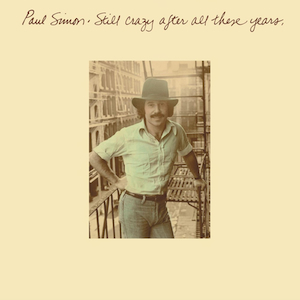
Paul Simon 5: Still Crazy After All These Years

A common theme in the mid-‘70s was the so-called divorce album, wherein confessional singer-songwriters lamented the passing of the relationship with whatever dew-eyed muse that had inspired their most beloved songs of romantic devotion. John Lennon spilled his troubles on Walls And Bridges, and Bob Dylan arguably set the standard with Blood On The Tracks, but Paul Simon’s way with cryptic words kept Still Crazy After All These Years from being merely dirty laundry. It even won Grammys. (He limited the expression of his inner turmoil to a cheesy mustache and a cheesier hat.)

The album is front-loaded with some of his best songs, beginning with the resigned title track, its cool electric piano and offbeat strings that perfectly frame the inevitable sax solo. One big draw is “My Little Town”, a reunion on tape with Art Garfunkel (also included on his own concurrently released album). Easily one of their spookier tracks, it nails the feeling of being trapped by one’s origins, heritage, family, society, etc.; in other words, everything that made Simon & Garfunkel spokesmen for their disaffected generation. “I Do It For Your Love” is an extremely melancholy reverie on the ended marriage, finding a metaphor in an odd place, but countered by the jive-rhyme in “50 Ways To Leave Your Lover”, something of a spin on “Love Potion #9”. After four solid tracks, “Night Game” is just plain odd, taking some common baseball expressions literally. It seems out of place here, being more in line with his proper solo debut.

For a big-time mood swing, “Gone At Last” is a gospel raveup sung as a duet with Phoebe Snow and the now-familiar Jessy Dixon Singers whooping it up in back. From there, “Some Folks’ Lives Roll Easy” seems to be way too slow, but manages to keep up with itself, and our warped ears hear influences on and of Van Morrison and Tom Waits of the same period. We don’t have much use for “Have A Good Time”, between the cutesy delivery, broken-legs meter shifts, and particularly the out-of-place sax solo appearing at the end like a busker around a corner in a subway tunnel. “You’re Kind” is much better, by being simple and offering up a twist ending that’s very real. A final mood swing arrives in “Silent Eyes”, a slow, poetic creation, not exactly a prayer, but still establishes a mood of night and sleep. (In an odd bit of foreshadowing, the piano here is played by Leon Pendarvis, whom most casual TV viewers would recognize as a longtime member of the Saturday Night Live band. Thanks in part to his friendship with producer Lorne Michaels, Paul Simon would go on to appear on the show in various capacities many times over the coming decades.)

Such a strong closing track makes Still Crazy After All These Years Paul Simon’s best work since splitting with Artie, and easily on par with the better Simon & Garfunkel albums. (Bonus tracks on the eventual reissue include a demo of a future hit single and a very alternate arrangement of “Gone At Last”.) It must have taken a lot out of him, since his output would be less prolific going forward.

Paul Simon Still Crazy After All These Years (1975)—
2004 CD reissue: same as 1975, plus 2 extra tracks

Saturday, December 1, 2012

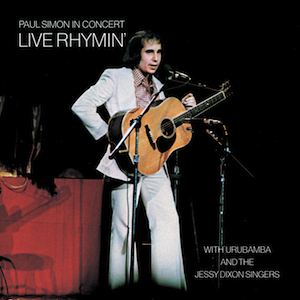
Paul Simon 4: Live Rhymin’

As affirmation that he was to be accepted as an artist on his own, and not just the shorter guy in a duo, Paul Simon’s tour supporting There Goes Rhymin’ Simon was commemorated with a live album. Its barely inspired title of Live Rhymin’, by which it’s generally known, can be excused considering all the words crammed onto the label for the credits.

The first three songs are solo acoustic performances of already-classics, then he brings out the Urubamba combo to support him for “El Condor Pasa” and “Duncan”, ably presenting the unique sounds of those recordings onstage. Their embellishments on “The Boxer” are a matter of personal taste, but we hear his extra verse for the song the first time here. The Jessy Dixon Singers were the other guests on the tour, and they come out to support “Mother And Child Reunion” and “Loves Me Like A Rock”, which they do well, and better than on “The Sound Of Silence”. Simon must have known he couldn’t do vocal justice for “Bridge Over Troubled Water”, so they help there too, though that didn’t stop him from emoting over the lengthy repeated coda. (He leaves them alone for “Jesus Is The Answer”, providing a bathroom break right in the middle of side two. Presumably they also supply the drums and organ on this part of the album; no issue has ever identified the players on each track.)

These days, Live Rhymin’ is seen as a stopgap commercial ploy, to fill the racks between the hit album and the next presumed masterpiece. Indeed, considering the success he’s had with big concert tours, it’s a harbinger, but still an intriguing snapshot of a time when his presentation was simpler. (It would be many years before the album was expanded, and well after his other solo albums got similar treatment, but rather than presenting a complete concert or equivalent sequence, the updated CD only added two tracks.)

Paul Simon with Urubamba and the Jessy Dixon Singers Paul Simon In Concert: Live Rhymin' (1974)—3
2011 CD reissue: same as 1974, plus 2 extra tracks

Saturday, September 29, 2012

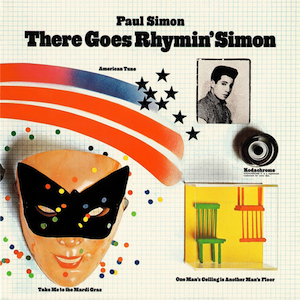
Paul Simon 3: There Goes Rhymin’ Simon

In one of the fastest follow-ups of his career—at a pace he’s yet to beat—Paul Simon surfaced with his second solo album since leaving Artie all his lonesome. With cover art to match its playful title, There Goes Rhymin’ Simon follows the auteur to Muscle Shoals and back, trying out different styles of music, with an even larger selection of studio cats than before.

The first, obvious single was “Kodachrome”, a snapshot (ha!) of a time when cameras had film and copyright laws required the cover to inform us that “KODACHROME® is a registered trademark for color film.” More than anything, its wonderful opening couplet (“When I think back on all the crap I learned in high school/It’s a wonder I can think at all”) still resonates long after the last Fotomat closed. “Tenderness” is one of the more esoteric doo-wop songs ever recorded, helped out by the Dixie Hummingbirds. One of their members gets a featured vocal on “Take Me To The Mardi Gras”, which is nice and doesn’t evokes that festival until the fade. With its Quincy Jones strings, “Something So Right” became something of a standard, gaining several covers almost immediately, but he puts a lot of unexpected bite into “One Man’s Ceiling Is Another Man’s Floor”.

“American Tune” has become one of his signature songs, even if he did borrow it from Bach, who’d borrowed it from somebody else. It probably had a different meaning during the Nixon administration, but needless to say he’s since learned to perform it with a gentler hand than the rhythm ‘n strings here. “Was A Sunny Day” serves almost the same purpose of comic relief as “Why Don’t You Write Me” had; there’s a puzzling reference to the doo-wop classic “Mr. Earl” and backing vocals by two of the then-unknown Roches. The platitude closing side one wasn’t enough, because now he tells us we must “Learn How To Fall” before we must fly, and it’s matched with a daring, almost psychedelic backing (or as far as a Hammond organ and fuzzy steel guitar can go). “St. Judy’s Comet” is the sound of a man trying desperately to sing his young son to sleep, and it’s just plain charming without being cloying. And we end sort of when we came in, for “Loves Me Like A Rock” is about as meaningless as the hits from the previous album, but boy, is it catchy (Dixie Hummingbirds again).

If Paul Simon was tentative, There Goes Rhymin’ Simon is a lot more confident, and a justified hit. The four demos included on the reissue, while very gentle compared to their eventual recorded versions, exude just as much confidence, even “American Tune” with incomplete lyrics.

Paul Simon There Goes Rhymin’ Simon (1973)—
2004 CD reissue: same as 1973, plus 4 extra tracks