Showing posts with label roger waters. Show all posts

Friday, December 29, 2023

Roger Waters 5: Lockdown Sessions and Dark Side Redux

In the years following his 2017 solo album, Roger Waters took a band on the road for another multimedia extravaganza that incorporated not only the new stuff but classic Floyd as well, and as would be expected. As outspoken as ever, he garnered criticism aplenty for his anti-Israel stance, which overshadowed the anti-Trump imagery in the show. A film and album of the production, both titled Us + Them, did only slightly better than his reworking of Stravinsky’s A Soldier’s Tale.

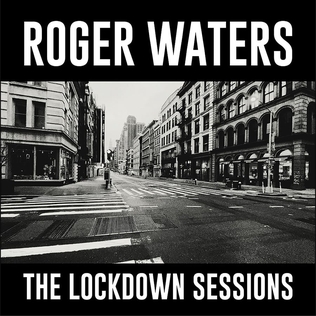
Like most musicians hamstrung by the limitations of the Covid pandemic, he did what he could to keep busy musically, and in his case, that meant rerecording mostly stripped-down arrangements of songs that had been played throughout the tour. Intriguing but inessential, The Lockdown Sessions slows down three songs from The Wall (four actually, as the track called simply “Vera” segues into “Bring The Boys Back Home” to stretch it out for five minutes), two from The Final Cut, and “The Bravery Of Being Out Of Range” from Amused To Death, while keeping the original guitar solos intact. However, the pointedly titled “Comfortably Numb 2022”, eschews both guitar solos, substituting an angry attempted phone call for the first and a backup singer wailing over explosive effects for the fade. For the most part, his voice hovers somewhere between a whisper and an aside; at least he’s not yelling.

The album made a splash only among the faithful, so he decided to make the most of the 50th anniversary of The Dark Side Of The Moon to give that album the same treatment, with the same band, knowing full well that the earth would stop on its axis at the news. The angle this time was to tackle the lyrics of a younger man with the perspective of a near octogenarian, and since he wrote them, he’s certainly allowed.

For the most part, the “reimaginings” are extreme. Effects are pretty much gone, except that chirping birds are everywhere. “Speak To Me” is now an opportunity to recite the lyrics to “Free Four” over that ominous heartbeat. Another couplet from that song is intoned before the verses of “Breathe”, which at least has drums and is more recognizable. “On The Run” retains its robotic pulse, but is dominated by a new monologue soaked in paranoia and madness. It continues over the start of “Time”, where clocks used to be. It slowly plods along, prodded by Hammond organ and swirly cellos, and a woman softly ooh-ing where there used to be a guitar solo. “Great Gig In The Sky” is possibly the most transformed; in keeping with its original theme of mortality, he reads part of a correspondence with the assistant of a cancer-stricken acquaintance that includes an anecdote about a show in Croatia. Clare Torry’s improvised melody is transposed to a quiet synth.

“Money” keeps its 7/4 meter but not the effects; this time the sax and guitar solos are replaced by a surreal narrative about a boxing match. Luckily, “Us And Them” is mostly untampered, though the forced echo in the verses could have been skipped. What used to be the sax solo is now covered by strings and organ. There’s not the smoothest transition to “Any Colour You Like”, which now sounds more than ever like “Breathe”, and features another cryptic piece of prose. He does cleverly preface “Brain Damage” by addressing the “madness” of this re-recording concept, and that and “Eclipse” are taken fairly straight, if subdued. And he acknowledges by name the man who had the last word on the original album while disagreeing that it’s “all dark”.

The Dark Side Of The Moon Redux isn’t awful, but it will hardly replace the original. Nor does it lend itself to repeat listening. But Nick Mason endorsed it, so who are we to argue? Besides, if you want a non-Roger interpretation of the album, there’s always Pulse. (We do, however, like the dog on the cover.)

Roger Waters The Lockdown Sessions (2022)—3
Roger Waters
The Dark Side Of The Moon Redux (2023)—

Friday, December 6, 2019

Roger Waters 4: Is This The Life We Really Want?

Much like a certain character in a Dickens novel, Roger Waters had a change of heart in the 21st century, and began to embrace his former bandmates in public. An actual Pink Floyd reunion for Live 8 in 2005 amazingly did not involve a Fender Precision bass soaring across the stage, and when he took his latest update of The Wall on tour, both Nick Mason and David Gilmour contributed to one London performance.

Still, despite a kinder, gentler Roger, many of the new images and messaging within the staging of The Wall proved he could still be plenty disgusted over world issues, and when he finally got around to a new album after 25 years, it showed. Is This The Life We Really Want? isn’t much different from his other solo albums, except that there are no all-star guests and exactly one guitar solo. While there isn’t a storyline, most of the things that pissed him off on Amused To Death have multiplied, particularly the media and global terrorism. Nigel Godrich, most famous for producing Radiohead and Beck, takes charge here, tethering Roger in much as he did Paul McCartney in 2005. The album still sounds somewhat Floydian, with familiar strings, keyboard flourishes, octave notes on the bass, and so on.

Sound effects like ticking clocks and conversations abound, some not easy to discern in the murk of the mix. The songs are mostly slow and depressing, his voice either gravelly and disgusted or howling with rage. He occasionally lapses into lists instead of lyrics, and did not write a distinct melody for each of the tracks. F-bombs are spat, particularly when railing against Donald Trump.

“When We Were Young” is a “Speak To Me”-style intro, with ticking clocks, a heartbeat pulse, and muffled voices, moving into “Déjà Vu” (a title that doesn’t appear until the end of the tune). It’s a profound rumination on what he’d do if he were God, then if he were a drone, complete with startling effects. A drumbeat that evokes Bowie’s “Five Years” drives “The Last Refugee”, a sad reflection that erupts into the much angrier “Picture That”, with a wonderful rant culminating in “a leader with no [expletive deleted] brains”, all over music that sounds like “Sheep”.

That takes a lot out of him, and a cough that reminds us of the first grunt on “Pigs (Three Different Ones)” heralds “Broken Bones”, a mostly acoustic elegy for Mistress Liberty. The title track maintain tension over several minutes, then detours into a strange monologue in south London accent about ants before ending on what sounds like a patient flatlining. Some “Welcome To The Machine” mechanics continue the same tempo and heighten the tension on “Bird In A Gale”, which is less political but just as bleak. The Bowie beat must be a theme for lost children, as it returns on “The Most Beautiful Girl”, about another victim of random government-sanctioned violence.

As before, a song about an innocent is answered from the point of view of the finger on the trigger, and “Smell The Roses” brings in the funk a la “Have A Cigar” filtered through the second half of “Dogs”. It’s a good way to set up the album’s finale, which is really one song with three titles, and the middle one is just one verse. Taken together, “Wait For Her”, “Oceans Apart”, and “Part Of Me Died” may well be, dare we say, the most beautiful thing he’s ever released. The suite ends with a positive message, but also on an unresolved, minor chord, almost abruptly.

While not an easy listen, the music on Is This The Life We Really Want? is certainly moving, and serves the lyrics, whether or not you understand what he’s talking about. While he’s preaching to his choir, the album is a lot better than it could have been. In other words, it was worth the wait.

Roger Waters Is This The Life We Really Want? (2017)—3

Sunday, February 27, 2011

Roger Waters 3: Amused To Death

Undeterred in his quest to strive forward without his former bandmates, Roger Waters first mounted an all-star performance of The Wall in recently liberated Berlin. “All-star” is up to personal preference, with appearances by the Scorpions, Van Morrison, Bryan Adams, Joni Mitchell, Cyndi Lauper, Thomas Dolby, and of course, Jerry Hall.

In the absence of the other guys, he went back to work at an album kicking around since the end of the Radio K.A.O.S. tour. Amused To Death started out as a continuation of that story, but morphed in the process into a more general rumination on the effects of mass media, and how it’s dumbed down society. Without a linear plot to shackle its progress, the listener doesn’t feel forced into trying to follow whatever story is buried between the lines and within the obligatory sound effects. Naturally, war is still front and center of his main complaints, framing the program with an interview with a veteran of the First World War, and mixing in references to recent battles in the Gulf and Tianenmen Square. Throughout we can hear the sound of TV channels changing.

Having already used Eric Clapton, this time he turned to Jeff Beck to have a distinctive lead guitarist in the absence of David Gilmour. (Steve Lukather from Toto shows up too, among other “special guests”.) After the opening montage—including a heartbreaking narration by an old soldier speaking of leaving a comrade to die in no man’s land—“What God Wants” combines pounding drums, a one-note theme and a list-style lyric, but there are a couple of bridges that weave in a decent transition. An abrupt switch to “Perfect Sense Part I” wanders for a while underneath a backwards message—kind of futile when most listeners wouldn’t have a way to decipher it on their cassette or CD players. The vocals make a welcome switch to the soulful voice of P.P. Arnold (reminiscent of “Home” from K.A.O.S.) “Part II” of the song then becomes a setup for a Marv Albert commentary on an oil rig attack, complete with cheering crowd effects, continuing over the “In The Flesh”-style arrangement (booming drums again, and Hammond organ) of “The Bravery Of Being Out Of Range”. “Late Home Tonight” marries an acoustic guitar to chirping bird effects for hardly the first time in a Waters anti-war statement, but the strings are lovely and literally blown away for an even sadder second part. “Too Much Rope” even gets Floydian towards the end, but his delivery works against the novelty of profanity to keep it from being catchy.

“What God Wants Part II” continues the litany of the first part, without much variation; “Part III” has a nod to “Echoes”, then works around the bridges from the first part at a mournful tempo. Don Henley shows up to duet on “Watching TV”, an otherwise excellent attempt to humanize the Chinese massacre that’s undermined by the title and repeated references to the victim having “yellow” and “perfect breasts”. Something of a dark Dire Straits song, “Three Wishes” takes far too long to deliver its theme (surprise! The singer forgot to wish for love) and the vocal effects on the genie’s voice are distracting. “It’s A Miracle” is even slower, wandering for eight minutes before culminating in a rant against Andrew Lloyd Webber. Finally, the title track works in a mood similar to “The Tide Is Turning”, but with a much less hopeful theme.

While not exactly uplifting, Amused To Death is certainly the least annoying of his non-Floyd albums. The thing is, unlike the band he left, he wasn’t able to devise more than a handful of songs with memorable hooks. Also, being designed for the CD format, it’s lengthy at 72 minutes, with individual tracks in the six- to nine-minute range. It could easily have been shorter, but just as Roger insists on singing his own lyrics (P.P. Arnold on “Perfect Sense Part II” notwithstanding) he’s never been his own best editor. It must have irked him no end to see the album only sell a million copies, while the other guys made a mint two years later with The Division Bell. It also must have taken its toll, as for over two decades following this album, he would only release a handful of new songs, concentrating instead on an opera and various restagings of The Wall.

Some 23 years later, at a time when the human condition hadn’t seemed to improve any, a remastered version of the album was released, sporting not only different cover art, but a few sonic tweaks throughout. Where the 1992 CD utilized QSound for what was then state-of-the-art realistic sound reproduction, the ubiquity of 5.1 surround and other advances aimed to even out a very crowded sonic template. To the ordinary ear, the biggest difference was the substitution of the originally planned sample from 2001: A Space Odyssey at the start of “Perfect Sense Part I” that was refused by Stanley Kubrick, replacing the backwards message inserted in response. Jeff Beck fans will also be keen to hear the revamped guitar parts on “The Bravery Of Being Out Of Range”, while Don Henley is a little more audible on his featured track. It’s still a harrowing listen.

Roger Waters Amused To Death (1992)—3

Sunday, February 13, 2011

Roger Waters 2: Radio K.A.O.S.

Roger’s biggest complaint (well, one of them, anyway) about the “new” Pink Floyd (read: performing without him) was the quality of the lyrics. While he was always good at coming up with overall concepts, just having a pile of words doesn’t make a song unless there’s music to match. Coming as it did just months before the reconstituted Floyd’s own album, his next Big Idea had barely a chance to compete anyway.

Radio K.A.O.S. tells the story of—surprise surprise!—a traumatized individual cut off from society, not unlike a certain deaf, dumb and blind kid or, say, a jaded rock star who’s built a symbolic wall around himself. This time out, the individual in question is a paraplegic vegetable, albeit one who can communicate via “radio waves” and a speech synthesizer. His concerns about his unemployed brother, Maggie Thatcher’s policies and the silenced Welsh Male Voice Choirs lead him to hack into certain computers to simulate a nuclear war (which you might recall from the movie War Games).

There are various themes running around here, though it’s impossible to take the album without the overarching story. What’s more, “Billy” converses in between the songs with legendary LA DJ Jim Ladd, turning the album into a faux-radio broadcast (much like another Who album). Sometimes the songs are sung by Billy, sometimes they’re about Billy.

The plot is spelled out in the album art, but there’s not enough within the songs to enhance it. That makes the last part of the album so anticlimactic: we know there’s “Four Minutes” until the world explodes, so the song of the same name is merely aural decoration, and not that frightening.

Enough complaints about the non-commerciality of The Pros And Cons Of Hitchhiking must’ve sunk in, because the majority of the songs are delivered in a slick but not wholly sterile contemporary rock style. He even includes the Japanese flute everyone was putting on their albums in those days. Unfortunately, while the songs have a wide variety of chord changes, he still didn’t write any melodies outside of a three-note range, rasping his list-style lyrics like Mark Knopfler with a head cold. “Who Needs Information” is one of the better songs; it’s just too bad that it’s shackled to the story. “Home” has a great middle eight that’s dwarfed by the lazy litany around it. “The Tide Is Turning” does offer something in the way of hope, and in the form of an actual song worth hearing again. (Written in the aftermath of Live Aid, it would also close his restaging of The Wall in Berlin following the unification of Germany.)

One does wonder how this stuff would possibly sound if played by his old band, or if it would be any better. Radio K.A.O.S. was supported by a tour, of course, that included some of the music left off the album for space considerations. One wonders why, since it seemed so important at the time, he hasn’t since bolstered the album with more of the music intended to tell the story. The album his nemeses put out may have been fake Floyd, but Roger’s insistence on working alone took him too far away from a sound that might have helped sell more than a handful of copies. He could only stew over the aftermath when his former partners did much better at the box office.

Roger Waters Radio K.A.O.S. (1987)—2

Thursday, January 27, 2011

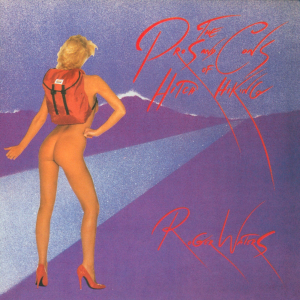
Roger Waters 1: The Pros And Cons Of Hitch Hiking

Immediately after unleashing The Final Cut, Roger Waters went back to the studio to record another, even more impenetrable song cycle, originally concocted back before The Wall. What eventually emerged as The Pros And Cons Of Hitch Hiking had been rejected by the other Floyds as “too personal”, and no matter how many times one listens to it, they were right.

At least the concept is intriguing: following the dream/nightmares of a man in the pre-dawn hours, presented in real time, and each of the songs is time-stamped. For roughly 42 minutes Roger muses over the same I-iv motif in 12/8 meter; sound effects and dialogue snippets abound, and if there’s a story in here, it’s not linear. He’s driving with his wife, they pick up a pair of hitchhikers and he attempts intercourse with one of them. His guilt is repaid by an attack by Arab terrorists who assault his wife, so he imagines himself away at Oktoberfest. He makes an attempt to save his marriage by moving out to the country, which soon goes awry. Then poof! He himself is a hitchhiker, eventually realizes that his problems aren’t that different from the rest of humanity, feels better, wakes up scared and is relieved to find his wife sleeping by his side.

With only a few exceptions, it’s one long song. Rolling Stone’s Kurt Loder said it best: “You could count the actual melodies here on Mickey Mouse’s fingers.” The ones that stand out are recycled from “Mother”, “The Final Cut”, “In The Flesh” and “The Fletcher Memorial Home”, and the effect isn’t so much clever self-reference but laziness and lack of inspiration. “Sexual Revolution” attempts to provide a beat, but it turns out this was a Wall reject. He delivers “Go Fishing” so histrionically it’s no wonder she left him in the country. The title track is catchy, but the cryptic references to Yoko Ono, Dick Tracy and Shane only make it seem like another dream. The song everyone likes is “Every Stranger’s Eyes”, which is mostly one of his litany lists, but has enough of a decent backing to make it soar.

At least the album is “Floydian” in its presentation. He uses most of the supporting players from The Final Cut, with the key additions of Eric Clapton (for a Strat tone, and a thumb of the nose to David Gilmour) and David Sanborn, whose squawking sax underscores his discomfort anytime thinks get dark. He took Clapton on the road to present the album and key songs from his past in a multimedia extravaganza. But ultimately, The Pros And Cons Of Hitch Hiking is just plain uncomfortable, leaving the listener in a bad mood and likely to lash out at unsuspecting friends and family. And if anyone can explain what exactly those pros and cons are, we’d love to know.

Roger Waters The Pros And Cons Of Hitch Hiking (1984)—2