Showing posts with label cat stevens. Show all posts

Tuesday, August 8, 2023

Cat Stevens 17: King Of A Land

By now Yusuf had become very reconciled with his former role, making the occasional public appearance, spearheading 50th anniversary deluxe editions of his ‘70s albums, and in one case, re-recording and reclaiming it. There was still enough turmoil in the world to comment upon, and once he had an album’s worth of songs, he and longtime producer Paul Samwell-Smith got to recording them. Once again credited to his two most recent monikers, King Of A Land covers a breadth of styles, expected and unexpected, with sweet storybook-style illustrations throughout. (It was also distributed by the recently relaunched Dark Horse label, under the direction of George Harrison’s son, and we see a connection between those legendary seekers for the first time.)

With its horns and tinkling harpsichord, “Train On A Hill” has something of a fairy tale feel, but it’s very much a modern, simple response to “Peace Train”. The title track continues the child-like tone, with expository advice nicely timed with the ascendancy of Charles III to the British throne. This makes the Skynryd-style riffing on “Pagan Run” all the more shocking, since the Cat had never rocked this hard. The song—another one about being saved from damnation—mostly avoids country-rock, until the slide guitar one would expect on a track featuring Russ Kunkel on drums. “He Is True” is a brief meditation in a quieter arrangement, but the twang comes back on “All Nights, All Days”, which sports some very Harrison-like slide guitars and mandolins. The jaunty instrumentation of “Another Night In The Rain” would seem to be at odds with the seemingly down-on-his-luck narrator, except that the choruses show the glass as half full.

“Things” is very much in the mode of his earlier work, but with a much more overt religious message. Even more overt is “Son Of Mary”, which retells the story of Jesus framed by simple choruses comforting his worried mother. The equally pious “Highness” is dominated by a throaty gospel choir, and the mix works somehow. “The Boy Who Knew How To Climb Walls” would appear to be another parable, except that his cracking voice drips with sadness over the effects of war, and it’s heartbreaking. The same voice remains on “How Good It Feels”, which takes a while to get to its point—twice via a quote from Tchaikovsky’s “Swan Lake”, happily with no Dracula overtones—and it’s worth it. The closing “Take The World Apart” is just plain jaunty, a cross between the Magic Garden closing theme and his own “If You Want To Sing Out, Sing Out”.

While it lands all over the place, King Of A Land is ultimately rewarding. Unless you can’t stand the guy, it’s impossible to hear without smiling.

Yusuf/Cat Stevens King Of A Land (2023)—3

Tuesday, February 23, 2021

Cat Stevens 16: The Laughing Apple

Yusuf continued to embrace his history as Cat Stevens, and the legacy it entailed, with the mix of new and old on The Laughing Apple. Once again credited to his current and previous names, it’s another pleasant set of singer-songwriter folk music, just like he used to make.

In fact, unless one were intimately aware of his deep catalog, it’s not always easy to tell which songs are remakes. Four songs, including “Blackness Of The Night”, “Northern Wind”, “I’m So Sleepy”, and the title track, were originally recorded and released fifty years earlier on his second album. With the exception of some ornamental touches, the new versions are much more relaxed and not as fruity as the style of the times. “Grandsons” is an update of a Mona Bone Jakon outtake that had appeared on a few latter-day compilations, and rings truer in his current voice than it did then.

If “You Can Do (Whatever)” sounds like a cousin of “If You Want To Sing Out”, that’s probably because it was also intended for the Harold And Maude soundtrack but wasn’t finished in time. Similarly, “Mighty Peace” was begun in the early ‘60s. He wasn’t the first guy to put new music to “Mary And The Little Lamb”, but at least the choruses transcend the verses.

Of the new songs, “See What Love Did To Me” could have fallen off either Tillerman or Teaser, and listen for the subtle substitution of “God” in the later verses. “Olive Hill” is a spritely reverie for halcyon days, with something of a “cowboys on the prairie” instrumental break, while “Don’t Blame Them” is a call for universal tolerance with a melody inspired by Beethoven’s Pathétique sonata.

The Laughing Apple also sports contributions from longtime collaborator Alun Davies, helping the warm sound. The package is nice, too, full of storybook-style sketches for each of the songs.

Yusuf/Cat Stevens The Laughing Apple (2017)—3

Tuesday, October 13, 2020

Cat Stevens 15: Tell ‘Em I’m Gone

While the songs weren’t exactly pouring out of him, Yusuf had fully returned to the concept of performing what used to be called pop music again. When it did arrive, Tell ‘Em I’m Gone prominently included his previous stage name as part of the packaging. (The album was also released on his own Cat-O-Log imprint. For those interested in such things, the vinyl version sported artwork by famed bootleg illustrator William Stout.)

The album’s liner notes helpfully explain his early fascination with the blues, and how he developed his own folk-style approach to it once he realized he didn’t have the voice as displayed by his contemporaries (think Eric Burdon, Rod Stewart, etc.) Decades later he’s still steeped in the architecture of the blues, putting his own arrangements to the likes of “Big Boss Man” and “You Are My Sunshine”. Just to keep you on your toes, he also covers Edgar Winter (“Dying To Live”) and Procol Harum (the atypically rocking “The Devil Came From Kansas”).

When he’s not tapping on his own history—“I Was Raised In Babylon” discusses the pros and cons of world religions, while the loping “Editing Floor Blues” explicitly addresses the Salman Rushdie kerfuffle—his own tunes continue to spread good news, such as the pretty fable “Cat & The Dog Trap” and the obvious but still heartfelt “Doors”. While “Gold Digger” may seem overly materialistic, it apparently concerns a South African miners’ strike, which ties in with the anti-slavery theme of his title track (aka “Take This Hammer”).

Because he can, lots of big names come to help out, including Richard Thompson, Charlie Musselwhite, Lenny Castro, and Will Oldham. The sound on Tell ‘Em I’m Gone is simple and crisp, as befits a co-production with Rick Rubin. What’s more, the album was mixed by onetime producer Paul Samwell-Smith, providing another link to the past.

Yusuf Tell ‘Em I’m Gone (2014)—3

Friday, July 3, 2020

Cat Stevens 14: Roadsinger

It turned out that Yusuf’s return to the music industry was more than a passing fancy. Roadsinger was promoted with stickers reminding consumers who he used to be, and he even did some promotional appearances on television.

It also helped that the album is more in the spirit of Tea For The Tillerman and Teaser And The Firecat than anything since. These are simple tunes, without unnecessary ornamentation, celebrating the same old ideas of enlightenment and unity, equally without preaching, starting from the opening “Welcome Home” through to “All Kinds Of Roses”. “Thinking ‘Bout You” is a joyful love song equally applicable to a deity as it is a life partner. “Everytime I Dream” alludes to some of the criticism he’d received for his pro-Islam statements, but it’s under a wonderfully retro acoustic arrangement with subtle horns. “The Rain” could easily fit into those early ‘70s albums, as could the yearning “World O’Darkness” (noted as being “from the musical, Moonshadow”, which opened and closed a few years later).

“Be What You Must” daringly incorporates the piano melody of “Sitting”, seesawing between a major chord and a minor, while what sounds like a children’s choir helps out on the chorus; thankfully, it’s only Michelle Branch and Gunnar Nelson. “In This Glass World”, also from the musical, is built around a gently fingerpicked electric guitar, and picks up drums and crunch halfway through for a heavier sound that fits. The title track finally emerges as something of a statement of purpose, or at least a theme song. “Dream On (Until…)” isn’t much more than a sketch with saxophone, but it works as a closing benediction, followed by the gentle instrumental “Shamsia” (which we assume is also from the musical, as that’s the name of one of the characters).

Though astonishingly short, at barely over half an hour, Roadsinger reminds us why we liked this guy in the first place. Even the packaging shows his care, with the lyrics appearing either as handwritten sheets or word processor printouts with handwritten corrections, among photos of smiling children we assume are his. (Not included on most editions of the album was the single “Boots And Sand”, written in the aftermath of being refused entry to America under suspicion of terrorism, and featuring vocal support from Paul McCartney and Dolly Parton.)

Yusuf Roadsinger (2009)—

Friday, February 21, 2020

Cat Stevens 13: An Other Cup

Well, this was unexpected. After nearly three decades of musical silence—save the occasional benefit performance in this century—the artist formerly known as Cat Stevens returned to a world everyone thought he’d left behind. Not that Yusuf Islam had been completely absent; he still showed up in the news when his academic views on the Muslim faith collided with conservative Western thought, a situation not helped when the word “Islam” caused knee-jerk reactions throughout the so-called War on Terror. That could be why An Other Cup was credited to simply Yusuf, with a sticker helpfully referencing his ‘70s nom de pop. (We’re keeping him tagged under that name for our own convenience.)

Despite the Latin horns on “Midday (Avoid City After Dark)”, the album more or less picks up where he left off, and if some of the music sounds like vintage Cat, that’s because some of it is. “Heaven/Where True Love Goes” plays on the last section from “Foreigner Suite”, while “I Think I See The Light” revisits a tune from Mona Bone Jakon. “Greenfields/Golden Sands” was supposedly begun in the ‘70s, but not finished until now. Old friends like Alun Davies and Jean Roussel are on board to bring back the classic sound as well.

In general, the album delivers thoughtful acoustic folk-type songs without too much over-production. “In The End” is the closest to a straight pop song, while Youssou N’Dour adds his unique voice to “The Beloved”. “Whispers From A Spiritual Garden” and “When Butterflies Leave” are detours into poetry. The most surprising song is a remake of the Animals’ “Don’t Let Me Be Misunderstood”, with lyrical changes designed to defend his beliefs rather than plead with a lover. (The UK got a bonus track in the form of “There Is Peace”, which isn’t any more or less pleasant than anything else on the album proper.)

Overall the lyrics aren’t any more preachy than Dylan’s born-again phase, and still center on the same search that dominated his best music of years before. The music is what matters, and his voice, as warm as ever, makes An Other Cup worthwhile. It’s nice to have him back.

Yusuf An Other Cup (2006)—3

Tuesday, October 8, 2019

Cat Stevens 12: Footsteps in the Dark

After a few years of musical silence, the news emerged that Cat Stevens had changed his name yet again. Now known as Yusuf Islam, he had retired from pop music to devote his life to his family and his faith. Meanwhile, his songs still played on the radio, in all formats, so releasing a second greatest hits compilation wasn’t too much of a stretch.

Despite its subtitle, Footsteps In The Dark is fairly short on actual hits, but it’s still chock full of quality. In a covert admission that the albums since the first hits album hadn’t aged well, the set covers songs throughout the entire ‘70s. As an added bonus, three songs make their album debut.

Side one is nearly flawless, beginning with “The Wind” but veering off course with “(I Never Wanted) To Be A Star”; okay, we get it. “Katmandu” and “Trouble” are rescued from Mona Bone Jakon. In between is the charming “I Want To Live In A Wigwam”, the B-side of “Morning Has Broken”. “On The Road To Find Out” turns out to be just one of the foreshadowings scattered throughout his pop career, while “If You Want To Sing Out, Sing Out”, written for and featured prominently in the film Harold And Maude finally appears for home enjoyment.

The second side hops even wider throughout the decade, from “Where Do The Children Play?” and “How Can I Tell You” to later tunes “The Hurt”, “Daytime” (whence comes the album title), and “Silent Sunlight”. The simple but sweet “Don’t Be Shy” is the other Harold And Maude song here, and for some reason “Father & Son” appears, despite its inclusion on the first hits album.

The CD era would eventually inspire further collections, beginning with Classics Volume 24 (numbered as part of A&M’s 25th Anniversary Classics series), which combined tunes from both hits albums and nicely included “If You Want To Sing Out”. Several different releases purporting to be The Very Best Of Cat Stevens have appeared over the years; the most recent is not chronological, but includes more pop material from the ‘60s and concludes with, yes, “If You Want To Sing Out”. A 2001 box set alternately titled either Cat Stevens or On The Road To Find Out covers his career over four discs, with the requisite outtakes, demos, and live tracks. 2005’s Gold double CD was very comprehensive, going from “Matthew & Son” through Teaser And The Firecat on the first disc alone, and including both Harold And Maude songs. The second disc rushes through the rest of the ‘70s, and even includes a new track recorded by Yusuf Islam himself specifically for this set.

All that said, Footsteps In The Dark is still the best (and cheapest) choice, particularly for “I Want To Live In A Wigwam”. As for Harold And Maude, a handful of limited vinyl-only releases in this century covered the new and previously released Cat Stevens music used in the film, until an official soundtrack was finally released on CD in 2022, adding dialogue and other music from the film.

Cat Stevens Footsteps In The Dark: Greatest Hits Volume Two (1984)—
Cat Stevens
Harold And Maude—Original Motion Picture Soundtrack (2022)—3

Friday, July 12, 2019

Cat Stevens 11: Back To Earth

From time to time an artist will attempt to regain his or her footing in pop culture by getting back to the sound that made him or her so successful in the first place. Oftentimes this intention is accompanied by the statement that so-and-so is “back”, and sometimes they even put it in the album title. While Cat Stevens was never that blatant, Back To Earth is an apt moniker for this album, as most of the songs avoid the modern sounds so prevalent on his recent work. At first, anyway.

An acoustic guitar, gentle piano, and muted drums carry “Just Another Night”, even through the double-time bridge, though the lyrics remain vague. While it’s based on the electric piano that had been prominent lately, “Daytime” is a gentle celebration of children worldwide; indeed, it was written for a UNICEF campaign. With its power chords and synth effects, “Bad Brakes” sticks out like a sore thumb, but somehow it doesn’t torpedo the proceedings. Given its comfortable yacht rock motif, “Randy” seems to be of a piece with other name songs of the time (i.e. “Mandy”, “Brandy”, “Sandy” etc.) but even given his emotional delivery, it’s not clear to us who this Randy person is, what he or she did, or why it had such an effect on the singer. “The Artist”, which follows, is a lovely understated instrumental in two parts that nicely concludes the side.

Side two begins promisingly, with “The Last Love Song” nakedly and achingly expressing hurt. But then it’s straight to the disco; we can’t tell if the instrumental “Nascimento” is supposed to evoke Milton Nascimento, but this minor-key boogie betrays a lack of lyrical inspiration. The disco influence still pervades on “Father”, a gentler prayer that sports lots of tricky changes and is past due for a simpler re-recording. The mood is dashed by “New York Times”, which paints an even nastier picture of the Big Apple than the Stones would, underneath a backing that’s part TV theme song, part travel advertisement. (In fact, the rhythm section is Will Lee and Steve Jordan, who would one day accompany Paul Shaffer on Late Night With David Letterman, and the singers include Luther Vandross.) So it’s relief when “Never” closes this short album in a more humble, laid-back mood, bringing it full circle.

Long-suffering fans may have been encouraged by Back To Earth, but had no idea that this was the last they’d hear from him for decades. We didn’t know then that he had already converted to Islam, changed his name (again), and wanted to devote his time to his faith and his family. He did owe the label one more album, so this was intended to close out his life as a performer. Now, of course, we can hear some hints of his intentions, but at least he tried to deliver something listenable. (Oddly, this was the first of his albums to receive a multidisc expansion, somewhat in line with its 40th anniversary. In this case, a new remaster of the album was paired with the 2001 remaster, plus a disc mixing outtakes with more recent live recordings, another disc dedicated to an album he produced for his brother at the time, and finally a disc dedicated to his final live concert appearance as Cat Stevens in 1979.)

Cat Stevens Back To Earth (1978)—
2019 Super Deluxe Edition: same as 1978, plus 42 extra tracks (plus Blu-ray)

Tuesday, October 2, 2018

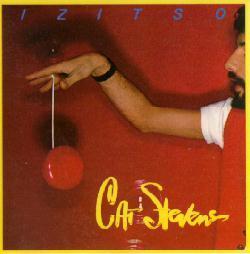
Cat Stevens 10: Izitso

With his concepts failing to connect with the world at large, Cat Stevens went back to writing just plain songs. While Izitso finds him even closer to chucking it all for a simpler life and enlightenment, he was still finding inspiration from modern synthesizers and contemporary rhythms.

But while some synthesizer experiments of the era still sound fresh, the Cat isn’t so lucky. The needlessly parenthetical “(Remember The Days Of The) Old Schoolyard” is designed to conjure memories of a more innocent youth, screaming children and all, but the keyboard colorings dump way too much color on those old snaps. Interestingly, the song uses a melody line like that theme from the “Foreigner Suite” that sounds like Coldplay, and while Elkie Brooks may be a worthy duet partner, she’s no Kiki Dee. “Life” uses the keyboards better, a more understated musing closer to his classic sound, complete with bouzoukis. And while that establishes a better mood, we’re off to Muscle Shoals for “Killin’ Time”, squarely in the now, but coming off like Bachman-Turner Overdrive playing “Shakedown Street”. And as he says, “You really miss the point.” “Kypros” is a harmless instrumental based around a rhythm box that’s not much more of a demo, and would be ideal background music for any number of ‘80s video games. Shackled to a forced metaphor, “Bonfire” sounds awkward today, even with Chick Corea noodling on piano. The salacious lyrics are more suited to Barry White, especially considering the path he was about to take, but we’re getting ahead of ourselves again.

Speaking of blatant, parentheses strike again on “(I Never Wanted) To Be A Star”, a clever track that weaves in references to his earliest hits soon after he left the old schoolyard. However, the lament is misplaced on an album seemingly designed to top the charts, given the yacht-rock qualities of “Crazy” and “Sweet Jamaica”. Then there’s “Was Dog A Doughnut?”, another windup instrumental that people will insist predicts techno. We’re not sure where the doughnut falls in, but the barking dog effects may indeed have influenced “Rockit”. One of the better songs, “Child For A Day”, ends the album, and while it’s possibly the most archetypical Cat Stevens song here, it turns out his brother wrote it.

At the time, Izitso would have been considered a comeback, and it would have been welcomed. As should be clear, it has not aged well, and while it’s definitely a step up from the last handful of albums, it’s still less than memorable.

Cat Stevens Izitso (1977)—

Tuesday, October 17, 2017

Cat Stevens 9: Numbers

As he continued to maneuver the pop industry, Cat Stevens became more obsessed with finding some kind of meaning to it all. Having long been “on the road to find out”, his next project was an exploration of numerology disguised as fairy tale. Numbers is a good-sounding album for the most part, best appreciated by not listening too closely to the story, whatever the hell it is.

After the instrumental opener “Whistlestar”, “Novim’s Nightmare” sits comfortably along his classic acoustic work. “Majik Of Majiks” begins as an excellent piano ballad, but the contemporary drums, female backing vocals, and sax solo by David Sanborn take it into the disco. “Drywood” is a little better, a mix of old and new, funky but not embarrassing.

However, “Banapple Gas” is a little embarrassing, mixing a trip to the islands with a country pedal steel and even a Coral sitar—catchy, to be sure, but not something you’d want to sing along with unless you’re about four years old. “Land O’ Freelove & Goodbye” is borderline baroque with the harpsichord and vocal lines, but a children’s choir is never a good idea. One of the less adventurous tracks musically is “Jzero”, fittingly as it’s about the antagonist of the story. “Home” deserves more study, particularly without the synth strings and children getting in the way. They also get to smother “Monad’s Anthem”, otherwise dominated by a heavily processed voice of some kind of overlord.

All these journeys were very important to the Cat, otherwise he wouldn’t have invested so much time in them. But lots of people were trying to convey messages in those days, and the better ones did it without roping in a bunch of kids. (The Wall doesn’t count.) By this time the audience was growing weary of listening to him finding his way, and Numbers didn’t help either side.

He toured with a ten-piece band behind the album, and a performance in Virginia was recorded, filmed, and sat on for thirty years. Neither the DVD or CD of Majikat – Earth Tour 1975 included the entire show, and the CD put the “Wild World” encore at the top, but the set covers more of the hits—including the two new songs from Greatest Hits—than recent songs.

Cat Stevens Numbers (1975)—2
Cat Stevens
Majikat – Earth Tour 1975 (2005)—3

Tuesday, May 23, 2017

Cat Stevens 8: Greatest Hits

Due to his success in the ‘70s, Cat Stevens’ original label took plenty of advantage of the material he recorded in the ‘60s, repackaging the same two albums in different configurations and even daring to put a more contemporary photo on the cover along with a false claim that the contents delivered his “best”. He wouldn’t have been able to stop them anyway, but could certainly claim Greatest Hits as the title for an album dedicated to his more recent, and indeed, best work.

Greatest Hits is not presented chronologically, and neatly transitions from the simpler acoustic material to the more electric arrangements and back again. Some of the new transitions work quite well—for instance, “Father & Son” to “Sitting” to “Morning Has Broken”. Original copies came with a poster featuring a July-through-June calendar of sorts, with lyrics appearing where dates would be, suggesting some kind of framework. Most of his singles are here—“Peace Train” in its early-faded edit—including the non-album cover of Sam Cooke’s “Another Saturday Night” and the “new” exclusive “Two Fine People”, a lesser rewrite of “Wild World”.

For an introduction to Cat Stevens, or at least the one who dominated the airwaves and turntables in the early ‘70s, the curious would be well served by Greatest Hits. And then they’d end up grabbing Tea For The Tillerman and Teaser And The Firecat anyway. It’s since been surpassed by later compilations, which we’ll get to eventually and in context.

Cat Stevens Greatest Hits (1975)—

Tuesday, November 29, 2016

Cat Stevens 7: Buddha And The Chocolate Box

The ‘70s moved along, and slowly enveloped many performers in its slick wake. Cat Stevens was still searching, the title of his new album reflecting the subliminal pull of the spiritual and the sensual. Buddha And The Chocolate Box is similarly pulled between reflective music and contemporary touches, without any resolution. The smart move was to revert to songs as opposed to a suite, but he was enamored with arrangements, so the songs themselves are either slathered in backing vocals or punched along by the rhythm.

Right away, “Music” would be a decent if naïve plea for how to achieve universal harmony, but apparently his definition of “sweet music” involves lots and lots of cowbell. “Oh Very Young” was the hit single, and fits in thematically with the message of those wonderful acoustic albums, but the arrangement paved the way for Al Stewart’s handful of hit singles a few years away. The long-awaited acoustic finally comes to the fore on “Sun/C79”, which appears to be something of a forced medley—the first part an ode to nature, before seeming to evolve into a narrative about a groupie told to the issue of their encounter. With its downright odd pop culture references, “Ghost Town” has some nice passages in between the Old West saloon touches, which seem more parodic than evocative. “Jesus” is a misleading title, seeing as the second verse is about Buddha, and shouldn’t he get equal billing too?

That simple message is swatted away by “Ready”, an overly lusty exhortation, but then “King Of Trees” comes in with a gentler piano and something of a chorale arrangement for yet another celebration of a vague guru figure. “A Bad Penny” is stuck between the chamber-pop ‘60s with its harpsichord and horns, but the rolling drums keep it from being that kind of a throwback, and render the kiss-off message even more confusing. “Home In The Sky” could be a lot better were it not for another (self-overdubbed) chorale part and a busy baroque organ.

There are good songs on Buddha And The Chocolate Box, but they’re buried beneath a thick layer of velvet and velour. With few exceptions, his strength is shown to lie in the simple, and because he kept chasing “bigger” ideas over three albums and counting, we can’t give this a better rating than we have. (Cat Stevens did release another album the same year, but only in Japan. Saturnight presented two sides of music from a concert in Tokyo; true to form, the proceeds went to UNICEF. Some fifty years later, the album was reissued worldwide on vinyl for Record Store Day, with its first-ever CD version arriving the following May.)

Cat Stevens Buddha And The Chocolate Box (1974)—
Cat Stevens
Saturnight (Cat Stevens Live In Tokyo) (2025)—3

Friday, July 29, 2016

Cat Stevens 6: Foreigner

The sensitive folkie from the hit albums seemed to have disappeared, for now Cat Stevens played a lot more keyboards, delivering his words in a more urgent, soulful bark. Things are lot more complicated, and that makes Foreigner one tough listen.

How tough? Side one is devoted to “Foreigner Suite”, 18 minutes of continuous music that can’t decide if it wants to be prog or disco. There are several sections devoted to lyrics, so it seems like a transcription of a long letter, maybe a dream? More than anything it comes off like unfinished fragments, strung together to seem more profound. Some of it is quite nice, like the breakdown following the solos after the “freedom calling” segment, and his revisiting of the “there are no words” theme from the opening. But what stands out today more than anything is the final section, which we’ll call “heaven must’ve programmed you”. A unique sentiment, to be sure, but the melody is most recognizable as the title track from Coldplay’s Viva La Vida, and you’ll still be humming after the song’s faded away.

The shorter songs on side two are cut from the same cloth. “The Hurt” is breezy R&B, but any sensitivity is cancelled out by the growl in his vocal. “How Many Times” could pass for a Van Morrison track of the same era if you let it. “Later” burbles along like an outtake from Superfly, but the verses take much different directions, with lyrics that come off as parodic (“I want to feel your body close/From your head down to your toes/Maybe help you fold your clothes”). Whatever “100 I Dream” is supposed to be about, it sounds closest to the acoustic affirmations that made us like the guy in the first place.

While Foreigner fails as a departure from the norm, and as difficult as it is, it just earns a positive rating. In some ways it’s preferable to Catch Bull At Four, since it’s not as dense, the suite aside. But it rivals his ‘60s pop recordings as the most uncomfortably dated album of his career to date.

Cat Stevens Foreigner (1973)—3

Tuesday, March 22, 2016

Cat Stevens 5: Catch Bull At Four

It’s odd to use the term “one-two punch” for albums as gentle as Tea For The Tillerman and Teaser And The Firecat, but commercially, that’s what they were. And with a little more cash coming in, Cat Stevens could spend more time in the studio recording bigger music (plus getting custom labels for his next record). Catch Bull At Four was a hit, of course, but it doesn’t have the brilliant consistency of that one-two punch.

Where the last few albums began with an acoustic guitar, a strident piano opens “Sitting”, another wonderful song about searching, propelled by drums and an electric mandolin. “Boy With A Moon & Star On His Head” is a cross between a fable and a folk song, going a long way toward a simple message about the reward in responsibility. “Angelsea” gets pretty repetitive after a while, the same three chords, wordless chanting and rumbling synth effects. But “Silent Sunlight” is a pretty hymn, and “Can’t Keep It In” a fairly catchy pop song, albeit with some challenging meter changes.

Side two is a more ambitious, and ultimately denser. “18th Avenue”, subtitled “Kansas City Nightmare” in the lyrics, seems to detail a less-than-pleasant experience passing through the town of the same name, and could the house of “Freezing Steel” with its cold lamb and potatoes be an airline joke? “O Caritas” pits lyrics in Latin against a bouzouki-heavy arrangement, diluting the message. “Sweet Scarlet”, sung solo at the piano, is said to be about Carly Simon, and can you blame him, but rather than end the album that quietly, “Ruins” follows a welcome strum until the drums illustrate the tension of visiting a place left behind.

Taken on its own, Catch Bull At Four is good, but not great. He would be increasingly uncomfortable with the life he’d taken on, but not so much that he refused to be photographed with a shirt open to the navel.

Cat Stevens Catch Bull At Four (1972)—3

Tuesday, November 10, 2015

Cat Stevens 4: Teaser And The Firecat

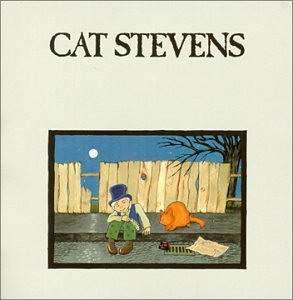
Keeping it simple as ever, Cat Stevens’ finest album is an exercise in less-is-more. Teaser And The Firecat is even better than its predecessor, with ten singable, strummable songs and a minimum of decoration. In fact, with so many of these songs being so well known, a review of our usual depth seems moot, but we’ll try.

“The Wind” sets the tone, two verses for two guitars, and just like that it’s over. “Rubylove” floats in, almost as simple, with trilling bouzoukis and even a verse in Greek. “If I Laugh” is a little sensitive, but wins for the intricate picking on the bridge. One wonders if there were three earlier attempts before he got to “Changes IV”, and if they were as noisy, but few songs are as gentle or, again, as simple as “How Can I Tell You”.

Something of a calypso feel permeates both “Tuesday’s Dead” and “Bitterblue”, but for variety, they’re separated by an actual hymn. He didn’t write “Morning Has Broken”, nor did he play the piano that punctuates it, but it’s easily one of his most recognizable songs. The same can be said for the litany of optimism that is “Moonshadow”. “Peace Train” would cause a lot of misery for 10,000 Maniacs in the late ‘80s, but for now it’s just a simple plea and nice metaphor with a hint of strings. And make sure you’re listening to the album version, which has a subdued coda featuring a faded strum.

Others may prefer Tea For The Tillerman over Teaser And The Firecat, but since they’re short, you can get ‘em both. They easily fit on a 90-minute Maxell tape with room to spare, or can even be burned to the same CD-R. (Of course, the eventual Deluxe Edition presented an alternate, shuffled version of the album, comprising five demos and five live recordings from as early as 1971 and as late as 2007. Four of those demos were included on the bonus disc of the 50th Anniversary Deluxe Edition, along with three previously unreleased demos, an extended mix of “Peace Train”, new re-recordings of “The Wind” and “Bitterblue”, a 1975 rehearsal of “Morning Has Broken”, two BBC recordings, and the “I Want To Live In A Wigwam” B-side. The Super Deluxe Edition added even more BBC recordings, a 1971 concert, and a Blu-ray.)

Cat Stevens Teaser And The Firecat (1971)—4
2008 Deluxe Edition: same as 1971, plus 10 extra tracks
2021 50th Anniversary Deluxe Edition: same as 1971, plus 13 extra tracks (Super Deluxe Edition adds another 37 tracks plus Blu-ray)

Friday, July 31, 2015

Cat Stevens 3: Tea For The Tillerman

Keeping it simple meant he could move fast, and the second Cat Stevens album in a calendar year showed him to improve with time. Tea For The Tillerman includes several enduring, sensitive favorites, as well as some less well-known but still excellent songs.

“Where Do The Children Play?” is a naïve but strong argument defending the planet, simple enough for budding guitarists to master. “Hard Headed Woman” is more complicated and darker, but for backhanded compliments in the form of a breakup speech, it’s tough to beat “Wild World” and its downward scale runs. “Sad Lisa” is a more sensitive portrait of a woman, with a neat Leslie effect on the piano fading in and out of the mix. Even more so, “Miles From Nowhere” teeters between meditative verses and insistent bridges.

Musically, “But I Might Die Tonight” is a little too close to the other three-chord songs on the album, but the lyrics, while list-like, are through provoking and it’s a short tune. Beginning with ambient effects and a catchy chant, “Longer Boats” seems pastoral, but there’s a hint of menace in there (slavery perhaps?). “Into White” runs the gamut of the color spectrum, helped out by the initial-caps on the back cover. “On The Road To Find Out” is one of the best songs about searching to listen to when you’re questioning yourself, just as “Father And Son” explores the generation gap with sympathy. That leaves the title track, a minute-long piano piece that explodes into a big choral part for two words, assuring that the children have indeed found a place to play.

Besides the songwriting, Cat Stevens demonstrates equal skill on the guitar and keyboards throughout Tea For The Tillerman. Plus, he proves that an album doesn’t have to have an electric guitar to rock, as the rhythm section drives the arrangements when called for. He was getting better, and would continue to do so. (The obligatory Deluxe Edition is an odd assortment of demos mixed betwixt both contemporary and later live tracks.)

For its golden anniversary, Yusuf took the bold step of re-recording the entire album, and releasing it as Tea For The Tillerman2. Some of the songs are in lower keys, some have tweaked lyrics, and it seems a little slower; the new version runs about three minutes longer than the original. (The nice man on the cover now sits under a moonlit sky in a spacesuit.) For the most part it’s the same, though “Miles From Nowhere” rocks a little harder. “But I Might Die Tonight” gets extended and a Mideastern influence, as does “On The Road To Find Out”. “Longer Boats” didn’t need a rap interlude and the French jazz take on “Wild World” simply misses, but “Father And Son” just gets more touching as the years go by. For this version, the “son” parts are sung by a younger Cat Stevens, flown in from the Troubadour in 1970. (These recordings were also included in the 50th Anniversary Super Deluxe Edition of the album, along with the original mix and a new mix each on their own discs, a disc of demos, alternates, and outtakes—including the songs from Harold And Maude and a rare duet with Elton John—and a fifth disc loaded with live material from the period, plus a Blu-ray and both the new mix and some of the live tracks on vinyl. The similar two-CD Deluxe Edition limited the extras to a handful of demos and live recordings.)

Cat Stevens Tea For The Tillerman (1970)—
2008 Deluxe Edition: same as 1970, plus 11 extra tracks
2020 50th Anniversary Deluxe Edition: same as 1970, plus 14 extra tracks (Super Deluxe Edition adds another 36 tracks plus Blu-ray)
Yusuf/Cat Stevens Tea For The Tillerman2 (2020)—3

Friday, April 17, 2015

Cat Stevens 2: Mona Bone Jakon

After a mild ripple on the pop scene, medical issues forced Cat Stevens to lay low for a while, and he wouldn’t emerge until the new decade. When he did, the sensitive singer-songwriter of the ‘70s and all the alliteration that went with it had emerged, and his next work left behind the ornate trimmings of his first two albums. Mona Bone Jakon presented a new Cat Stevens, decidedly acoustic, but occasionally rocking with a piano leading the combo. When strings appear, they are very sympathetic. Best of all, his gruff voice fits the format much better. (Shall we thank producer Paul Samwell-Smith, formerly of the Yardbirds?)

Not for the last time, he comments on his chosen vocation halfway through side one; “Pop Star” is a repetitive blues that shows just how ill-suited he was for that life, between the litanies of ritual tasks and scatting a horn riff for actual instruments to repeat. Much better are the songs that, well, sound like Cat Stevens. “Lady D’Arbanville” is a little over-dramatic, and today steers to close to a Gipsy Kings arrangement, but “Maybe You’re Right” and “Trouble” are thoughtful strums, and “I Think I See The Light” is based around a rolling and rocking piano.

However, the kid was still finding his way. The title track doesn’t last long or do much, and today is not the time to ask if it’s about his genitalia. “I Wish, I Wish” is forceful in its doubt, while “Katmandu” provides a mystical landscape to fit his image as a global troubadour. (And yes, that’s the Peter Gabriel on flute.) “Time” amounts to a relatively brief sonic experiment, a profound interlude before the gentler “Fill My Eyes” and finale of “Lilywhite”. An extended coda of strings wafts gently away towards the center to the label.

This is the real Cat Stevens debut, though what the dented, seemingly tearful trash can on the cover has to do with anything is beyond the scope of this forum. Rather, Mona Bone Jakon is a pleasant collection of songs, and a better place to start.

For its 50th anniversary, the album was reissued in a deluxe edition with a bonus disc with five demos—including the otherwise unknown “I Want Some Sun”—plus a BBC appearance and live recordings. The Super Deluxe Edition went even further, with the original album on one disc, a new mix of the album on another, the aforementioned demos plus four more on a third, and even more live material, including audio from TV appearances on a fourth. Plus all of the above on a Blu-ray, the new mix and some of the live stuff on vinyl, and a book.

Cat Stevens Mona Bone Jakon (1970)—3
2020 50th Anniversary Deluxe Edition: same as 1970, plus 10 extra tracks (Super Deluxe Edition adds another 25 tracks plus Blu-ray)

Friday, February 13, 2015

Cat Stevens 1: Cat’s Cradle

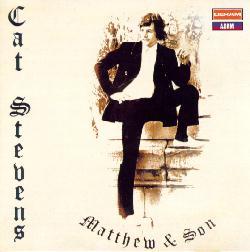
Navigating the history of Cat Stevens is a tricky prospect, considering that there are at least three stages of his career, even if people only know of one, and many have since written him off as a Muslim extremist. And even though he’s known as Yusuf now, once upon a time he was a Swinging London kid of Greek and Swedish descent who changed his name to the catchier Cat Stevens and wrote his own songs. Clad in a velvet jacket and ruffled shirt, his first album is chock full of dated chamber pop, the like of which had been foisted upon records by David Bowie, Genesis, the Bee Gees, and dozens of others.

The title track of Matthew & Son is a catchy tirade against the corporate culture, notable today for a middle eight borrowed by Tears For Fears on “Mad World”. Something of a chauvinistic novelty song, “I Love My Dog” was his first single, bettered by the pure pop of “Here Comes My Baby”, which gained new life thirty years ahead on the Rushmore soundtrack. That’s three decent songs in a row, to which the rest of the album pales, starting with the cringing bossa nova of “Bring Another Bottle”. The simple sentiment of “I Found A Love” is tarnished by the corny music hall of “I See A Road”.

His latest single starts side two, and the revenge fantasy “I’m Gonna Get Me A Gun” is one reason why Yusuf wouldn’t play his old songs for a while. The B-side, “School Is Out”, is just too literal; “Baby Get Your Head Screwed On” is always good advice, but that’s going to be tough as she “kissed [her] psychiatrist”. “When I Speak To The Flowers” doesn’t get far past its hippie position, and is about as repetitive as “Hummingbird”. While a little naïve, “Lady” is at least a sweet paean. (Naturally, the American version wasn’t identical to the British original, but the CD era has brought all the disparate contents together, including “Portobello Road”, which sounds most like the ‘70s troubadour we’d come to appreciate.)

The music machine required singers to deliver product on schedule, and his next album arrived at the end of the year. New Masters beefed up the arrangements and made them even more heavy-handed. It didn’t work, as besides being short of decent material (with one major exception), his voice is simply too harsh and bleating to pass him off as a pop idol.

“Kitty” begins pleasantly sounding like the streets of Paris, but the chorus is just a little too urgent, with a backing that undoubtedly inspired “Sky High” by Jigsaw. “I’m So Sleepy” will likely inspire same, and the churning rhythm of “Northern Wind” isn’t the most inviting sea voyage. “The Laughing Apple” is an attempt at a fairy tale worthy of Leonard Nimoy’s singing career. “Smash Your Heart” is comparatively restrained, but don’t be fooled by the title of “Moonstone”, overtaken as it is by horns-a-go-go.

The one song that redeems the album is “The First Cut Is The Deepest”, as good a pop song as any, as Rod Stewart, Sheryl Crow and others would prove. It’s more convincing than the tinkling harpsichord in “I’m Gonna Be King” or the trifling “Ceylon City” and its mysterious duet partner. One would think “Blackness Of The Night” wouldn’t be as jaunty as it is, just as the rustic setting of “Come On Baby (Shift That Log)” (he’d also like her to “wash that dog”) doesn’t invite the horn section that barges in anyway. And as before, “I Love Them All” is a snappy ending with a vague message. (This sequence was the same on both sides of the pond, but later reissues added some failed singles from the same period to complete the picture, some more overwrought than others.)

One almost wonders whether the albums would sound better without the decorations. Both would be repeatedly repackaged in the decade to follow, most notoriously on Cat’s Cradle (cue rimshot), which selected five songs from both albums, seemingly at random, except for beginning with the first three tracks from Matthew & Son and putting “First Cut” at the start of side two. Likely they seduced the odd unsuspecting fan, who would only recognize the voice the label hoped to exploit. More than likely, it’s one reason why so many Internet lyric sites mistakenly credit him for “Cat’s In The Cradle” by Harry Chapin.

Cat Stevens Matthew & Son (1967)—2
Cat Stevens
New Masters (1967)—2