Showing posts with label big star. Show all posts

Friday, February 17, 2017

Chris Bell: I Am The Cosmos

In addition to the cult around Big Star, a similarly rabid one has developed around Chris Bell, who started the band and left it to Alex Chilton when megastardom didn’t come his way. Besides having an inarguable gift for songwriting, he was also fascinated with the recording process, and had the support of his family, who just wanted to see the kid happy.

He spent the years after leaving Big Star continually honing a small handful of songs, even getting to work on them outside of Memphis with the help of engineer Geoff Emerick, best known for his work with the Beatles. He would release exactly one single before fatally crashing his car into a utility pole at the unfortunate age of 27.

But those two songs made a small impact in their own way. “I Am The Cosmos” is a majestic anthem of heartbreak, with a great guitar solo to match, and a killer fade where the repeated couplet goes from “I’d really like to see you again” to “I never want to see you again”. “You And Your Sister” is very much a flipside, but not a B-side; this tender acoustic love song fits right along “Thirteen” from #1 Record, and even has Alex Chilton on harmonies.

These songs would be covered by the likes of the Posies and This Mortal Coil, and when Rykodisc began their Big Star blitz in 1992, to the label’s credit, they simultaneously released a full CD of post-Big Star recordings by Chris Bell. I Am The Cosmos is not a “lost album”, but a collection of several stabs in the studio over a few years nicely arranged into the equivalent of an LP. Some songs appear twice, in different mixes or different recordings (“Get Away” and “I Don’t Know” are basically the same song, and give the yearning “Speed Of Sound” its basic structure, though it’s not as obvious at first) and the three versions of “You And Your Sister”—the single, a solo recording and a “country version”—don’t seem like overkill.

For the most part, these songs are classic ‘70s-era power pop. “Make A Scene” has one of those rhythms that defies tapping along correctly, and the aforementioned “Get Away” and “I Don’t Know” just plain sizzle. “There Was A Light” and “I Got Kinda Lost” were Chilton-Bell songs he took when he left the band, preserved here with Andy Hummel and Jody Stephens in the rhythm section, and “Get Away” even features Alex on guitar and Jody on drums.

Part of his mythology entailed his struggles with spirituality, making “Look Up” less vague than the more foreboding “Better Save Yourself”. “Fight At The Table” has a simple structure but a raucous arrangement and burbling synth, while “Though I Know She Lies”, one of his last recordings, is suitably sad.

His material was limited, and his strangled voice can be a bit much, but I Am The Cosmos is a worthy inclusion to the Big Star oeuvre, and certainly deserves to be there as much as Third does. When the rights to the band’s recordings shifted to the Rhino, I Am The Cosmos got the expanded treatment via their Handmade sidearm. This edition slightly rejigged the first 12 songs from the Ryko set on one CD, and packed a second with variations and sundry, such as the “extended alternate version” of the title track that didn’t fade before the killer couplet mentioned above. (Also, “Get Away” on the main disc still has its pyrotechnic drum effects, but also has some reverbed mumbles cluttering up the chorus.) Because they didn’t use up all the early stuff for their box set, this disc begins with some pre-Big Star tunes in their Icewater and Rock City incarnations, ending with an acoustic experiment deflated in the last seconds.

Once the Omnivore label went even deeper (and better) with their Big Star project, this album that never really existed got a second double-disc treatment. They’d already designated the pre-Big Star material to its own compilation, so this set relies mostly on alternate takes and mixes of the original “album that never really existed”, ten of which are previously unreleased. Granted, some of these mixes are modern, to highlight different aspects of the sound scape, but since he was such an incurable studio rat it’s interesting to hear all the elements.

Chris Bell I Am The Cosmos (1992)—3
2009 Rhino Handmade Deluxe Edition: same as 1992, plus 13 extra tracks (and minus 1 track)
2017 Omnivore Deluxe Edition: same as 1992, plus 20 extra tracks

Monday, July 29, 2013

Big Star 8: Nothing Can Hurt Me

In 2012, every rock snob’s favorite power pop band got the feature-length documentary treatment. Advance promotion was helped by the soundtrack album, released first as a double-vinyl Record Store Day exclusive before the CD version came out.

Nothing Can Hurt Me is something of a Big Star sampler, representing all three albums, with the twist that all the tracks are previously unreleased versions. In some cases, they’re alternate or rough mixes from the original sessions; in others, songs are labeled “movie mix, 2012”, prepared specifically for the film by the band’s original engineer. Just to make things even more interesting, some studio chatter is included, along with a “demo” of “O My Soul”, a pedal steel-heavy take of “Try Again” credited to Rock City (aka Big Star before they were Big Star) and a couple of solo Alex Chilton and Chris Bell tracks.

Considering that the Rhino box set served up a whole pile of alternates to justify duplicating song titles, it really is something of a stretch to do it yet again. That said, Big Star fans are fervent, and very likely musicians themselves, so the chance to hear alternate mixes of songs they’ve memorized—maybe to decipher a mumbled lyric or pick apart how the instruments were layered in the studio—is always welcome. Some of us can’t hear enough variations on “I Am The Cosmos” anyway.

If you’re a Big Star fan and you’ve yet to see Nothing Can Hurt Me, either get the DVD now or put it in your Netflix queue. You’ll be glad you did, and don’t be ashamed to wipe your eyes here and there.

Big Star Nothing Can Hurt Me: Original Soundtrack (2013)—3

Monday, March 12, 2012

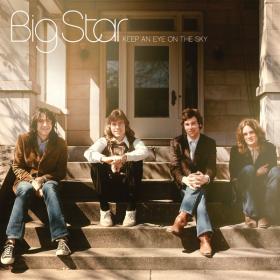
Big Star 7: Keep An Eye On The Sky

One of the modern rules of the music business is that sooner or later, everybody gets a box set. (This remains true even well after multi-disc collections weren’t necessarily packaged in boxes anymore.) Even bands that only had a couple of albums, given enough street cred, will be anthologized in time.

And so it happened with Big Star. Two albums while they existed, a legendary third album that went through various permutations on its way to being official, and every critic starting from 1992 insisted they were the bee’s knees, and some of us would be inclined to agree. But if you’re not already a fan, why should you care?

For the handful of us who do search out every scrap of tape related to the band, Keep An Eye On The Sky provides enough of an alternate view of Big Star as should ever be available. Over the first three discs comes enough alternate takes and mixes of the songs we’ve already inhaled, with the expected handful of surprises to keep us both interested and no resentful that we’ve bought the same three albums again. A few pre-band tracks set up where the boys came from, including a Chris Bell excerpt from another studio opus that would go unheard until put squarely into context later on. A smattering of Alex Chilton demos brings several songs down to their bare bones. Along the way, we get to hear some embryonic versions of certain studio creations, like the intro to “Jesus Christ” and the original lyrics for “Stroke It Noel”. The two best songs from Chris Bell’s so-called solo period, “I Am The Cosmos” and “You And Your Sister”, are placed well within context to show that such a studio rat might have been well served by sticking with the band instead of going his own way, recording in England and smashing his car into a pole.

Something of a holy grail arrives on the fourth disc, which presents an entire concert from the quiet period just before the second album was recorded, without Chris Bell but with the original “other three”, running through songs from the first two albums, playing some unexpected covers—Flying Burrito Brothers?!?—and a rendition of “ST 100/6” that incorporates the mid-section from the outtake described above.

Again, this collection, while comprehensive, is really for fans only. Anyone else would be best advised to go for the two-fer of the first two albums before even considering if they need anything else. And if you are already a fan, there will be enough on Keep An Eye On The Sky to make you feel as if you’ve spent your money well.

Big Star Keep An Eye On The Sky (2009)—4

Monday, December 26, 2011

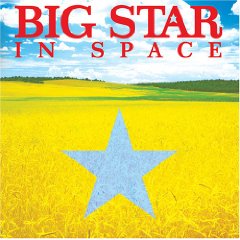
Big Star 6: In Space

After a decade of sporadic gigs (fueling continued interest in their tiny catalog) the reconstituted Big Star put out a new album in the middle of the second Bush administration. In Space is a Big Star album in name only, in that the players are the two Posies who joined Alex and Jody in 1993. In fact, Alex does not dominate the proceedings, and on the handful of songs that are certainly his, the sound is more like the schizophrenic R&B of his post-‘70s solo work. (Not that there’s anything wrong with that, if you like that sort of thing.)

The album is frontloaded with a handful of songs that do conjure the spirit of the band as people would like to remember them. “Dony” has a ragged edge and is catchy despite itself. “Lady Sweet” is the Posies version of the sound they’d like to hear. They harmonize with Jody on “Best Chance We’ve Ever Had”, and do a Beach Boys homage for “Turn My Back On The Sun”. Then Alex takes over for six minutes of silly funk in “Love Revolution”, a re-write of “Tighten Up” complete with calls to his “brothers and sisters” and a horn section. Thankfully, the old sound returns to Jody for “February’s Quiet”.

Alex wants the crowd to dance, which is obvious on his delivery of “Mine Exclusively”, a song that pre-dates even the Box Tops. The sound (and attitude) continues of “A Whole New Thing”, which pushes the irony in its beat-combo arrangement. “Aria, Largo” is hamfisted arrangement of a 400-year-old classical piece played on stiff guitar and bored drums. “Hung Up With Summer” sounds like it was recorded immediately afterwards, with a lot of the same guitar tones. “Do You Wanna Make It” is lyrically minimalist, conjuring memories of the Wonders as they toured the country’s finest state fairs. And it all comes to a sloppy end on “Makeover”, a jam with rambling “lyrics” cribbed from beauty ads. (It’s probably Paul Westerberg’s favorite track.)

In Space is not going to satisfy anyone’s dream of a fourth Big Star album, and the jury’s out as to whether anyone would care if not for the brand name on the label. At less than forty minutes, it delivers for about half. The Posies sound thrilled to be involved, but the real joy of the album comes from Jody Stephens, an exceptional and highly underrated rock drummer. His fills never fail to raise an eyebrow.

Big Star In Space (2005)—

Friday, November 25, 2011

Big Star 5: Columbia

Thanks largely to Rykodisc—and the rest of the world catching up—Big Star was suddenly a big deal. Just in time to ride the nostalgic wave, some enterprising organizers of a college “springfest” in Missouri managed to convince the touring Alex Chilton to bring drummer Jody Stephens in for a gig, supplemented by two of the Posies, who were one of the grunge era’s most devout Big Star disciples. Released within six months of this “reunion show”, which took place in the afternoon and in a tent, Columbia is nearly as sloppy as the other live album, but the energy coming from the Posies (who likely knew the songs backwards and forwards) makes for one hot recording.

It’s hard to tell which guitar is which, since both go awry at one point or another, but Jody is positively solid behind his kit, as well as on the two songs he sings. The Posies handle some of the tougher vocals, along with a reverent “I Am The Cosmos” in honor of Chris. A couple of songs from Third add variety, as do a couple of standby covers from the old days, T.Rex’s “Baby Strange” and Todd Rundgren’s “Slut”. Still, the focus is on the most rockin’, toe-tappin’ crowd-pleasers. This was not the time or place to drag Alex through “Big Black Car”.

Alex would continue to release the occasional quirky solo album, and reunite with the Box Tops a few times. Jody Stephens went back to managing Ardent Studios and playing the occasional session for the likes of Matthew Sweet (signed to the same label that released Columbia) and Golden Smog. And from time to time, they’d call the guys from the Posies and play a few shows as Big Star. (One of these, from October 1994, was professionally filmed, recorded, and vaulted for 20 years. Captured at the end of a tour, Live In Memphis is a better-performed version of the Missouri show, with the addition of “Jesus Christ”, “The Girl From Ipanema”, and even “Big Black Car”.)

So although it wasn’t a once-in-a-lifetime event, Columbia made for a neat souvenir. But it didn’t present the entire show, as evidenced by the photo of the set list inside the packaging. Dumber still, BMG Special Products put out a CD with five of the released tracks as part of their “Extended Versions” bargain bin series. When Record Store Day became a thing, some bright bulb decided to press the complete concert on vinyl as Complete Columbia, as well as make it available for streaming. Now fans whose parents hadn’t even met at time of the show could truly hear it all, from the stumble through “Thirteen” to the ramshackle encores of “Jeepster”, “Kansas City” and “Duke Of Earl”.

Big Star Columbia: Live At Missouri University 4/25/93 (1993)—
2016 Complete Columbia vinyl reissue: same as 1993, plus 7 extra tracks
Big Star Live In Memphis (2014)—3

Saturday, March 5, 2011

Big Star 4: Live

While Big Star wasn’t well known in their time, those that had experienced them firsthand generally agreed that their few live performances weren’t exactly stellar. But when the band became trendy in the early ‘90s, Rykodisc managed to pad their catalog with a live performance recorded by a Long Island radio station two months after Radio City was released, and after bass player Andy Hummel had quit.

Live presents the band, now reduced to a power trio with an unfamiliar bass player, plowing through two short sets of songs from their two albums, stopping halfway through for a quick interview and an acoustic set by Alex Chilton. The fluctuating levels inherent in most radio studio performances can be distracting, making the band sound even shakier than they already are. Alex is still depending on the same Strat tone he used all over Radio City, but he does a good job of covering all the guitar parts while straining to hit some of Chris Bell’s high notes. His disdain for the record business is apparent in both his between-song comments and the interview, and he gives the most of himself in a cover of Loudon Wainwright III’s groupie anthem “Motel Blues”.

While not as essential as their studio albums, people clamoring for anything from Big Star were happy to ingest Live, as it was the only official record of the band (well, part of them, anyway) in concert. That would change.

A few years later, another CD snuck out on a tiny label. Nobody Can Dance is split between a March ’74 rehearsal for that Long Island radio show and a short, pitch-problematic Memphis set from a few months after. The sound is even better (for the most part) than the Ryko set for the first half, while the second half provides proof that they not only played “Baby Strange” back then, but even included “The Letter”, presumably by audience request, an acknowledgement of Alex’s teenybopper past. Typically perverse, they do it in the slower Joe Cocker arrangement.

Big Star Live (1992)—3
Big Star
Nobody Can Dance (1999)—

Monday, March 22, 2010

Big Star 3: Third

The phrase “fractured masterpiece” doesn’t get thrown around a lot, but it aptly describes the album commonly credited to Big Star as either Third or Sister Lovers but usually both. While drummer Jody Stephens is the only other member of the band to appear on the album—even contributing vocals to one of his own compositions—it’s largely an Alex Chilton solo record, recorded in 1974 but not released for four years. And even when it did come out, it appeared on various tiny labels with different track listings. The 1992 version on Rykodisc is considered to be the artist-approved version, with a whopping 19 tracks. (To be precise, it was the sequence the producer decided upon that year, and Alex didn’t say no.)

The left turns Alex took on Radio City are even more extreme on Third/Sister Lovers, going right off the road and into the woods. Instead of tight trio arrangements, the songs exist in ragged, reverb-heavy spaces, played by various session musicians and friends, and some even sporting full string arrangements.

The opening “Kizza Me” sets the mood pretty well. A guitar starts, then wavers, and a vocal struggles to make its point while a piano and bass try to find their way through the murk. (The drums, of course, are spot on.) “Thank You Friends” can be taken either as sincere or sarcastic, depending on your mood. It too ends without certainty. “Big Black Car” is the emotional antithesis of the previous album’s car song—or any car song, for that matter. The song’s pace and delivery belie any possible joy of driving the open road. And then we have a bona fide Christmas song: “Jesus Christ” is the only modern pop song we can think of that would pass muster in a hymnal. A sleepy cover of Lou Reed’s “Femme Fatale” features Steve Cropper on lead guitar, before things pick up a tad on “O, Dana”, which would have incredible hit potential if not for the inscrutable lyrics (example: “I’d rather shoot a woman than a man”) and sloppy playing. But just as we’re starting to cheer up, “Holocaust” closes the first half with one of the darkest songs ever committed to tape.

“Kangaroo” always seems on the verge of falling apart but manages to hold itself long enough to reach an actual conclusion amid the chaos. Another possible hit was torpedoed when Alex changed his lyrics to “Stroke It Noel”, but luckily Jody comes next with the warm and straightforward “For You”. “You Can’t Have Me” brings back some of the angry power pop from #1 Record, setting up a similar closing suite of three songs filled with beauty. “Nightime” wanders the streets of Memphis in innocence (“Caught a glance in your eyes and fell through the skies”) and melancholy (“Get me out of here, get me out of here/I hate it here, get me out of here”). “Blue Moon” is a prayer for affection, then “Take Care” bids a sad adieu.

The “bonus tracks” work within the context of all that has gone before. There are covers—a chaotic “Whole Lotta Shakin’ Goin’ On”, the Kinks’ “Till The End Of The Day” and a haunting “Nature Boy”—and two key originals: the atonal “Downs”, which sounds like three songs playing at once, and the slower than slow “Dream Lover”, wherein our hero nearly falls off the piano while the strings reach for the heights.

Third/Sister Lovers is not for everyone, and it wouldn’t be a stretch to suggest that it’s waved around for hipster cred more than it’s enjoyed. But it truly does offer something different with each listen. If one order doesn’t work for you, try another; that’s what shuffle play is for.

The myth of the album only increased once it gained wider distribution, and future archival releases would continue to tease cultists with further sounds and suggestions about how the album came together. 2016 brought forth what could be considered the final word on the album with Complete Third. This three-CD set purports to include every one of Alex’s studio demos for the album, every extant rough mix, ending in the final sequence as dictated by the first test pressing, bolstered by any other tracks on the Ryko set that hadn’t been on said test pressing. Owning the set means having those once-rare tracks for a second or third time, and there’s a whole lotta repetition, but there’s also better perspective for us archivists. To wit, we hear a lot more of Alex’s girlfriend Lesa, who was involved with much of the sessions, and their bombed duet on the Beatles’ “I’m So Tired” provides a good template for what would eventually follow. Moreover, a five-minute track called “Pre-Downs” is only an excerpt of a night’s full of noodling and chaos that ended up on “Downs” proper. It’s worth skipping.

Big Star Third/Sister Lovers (1992)—4
Big Star Complete Third (2016)—

Friday, March 19, 2010

Big Star 2: Radio City

With their first album finding little commercial success, Big Star kinda fell apart, but reconvened as a three-piece without Chris Bell once Alex Chilton started writing and recording a few more songs. Consequently, the sound of Radio City is harder, and more unified by one voice.

“O My Soul” is a compact symphony, well-constructed and powerfully sung in basically a guitar-and-drums showcase overdubbed with a wheezy synth. (It’s also pointedly in mono, very much odd for 1974.) Followed by “Life Is White”, which sports a wheezing harmonica over a stumbling rhythm, we have a harbinger of the fractured sound that would dominate the next Chilton project. Andy Hummel’s “Way Out West” (sung by drummer Jody Stephens) and the hobbling “What’s Going Ahn” (one of three songs recorded with a different rhythm section before becoming a Big Star project) are nicely sequenced for balance. “You Get What You Deserve” is a sharp finger-pointing song Ray Davies would have been proud to pen.

“Mod Lang” is fairly dirty sounding, but for power pop greatness, it’s hard to beat “Back Of A Car”, and dig those galloping drum fills. “Daisy Glaze” is another multipart wonder, with mood swings indiscernible lyrically and open to misunderstanding. Credited to all three members, it’s quite the accomplishment. “She’s A Mover” is fairly ordinary boogie, but “September Gurls” is another well-loved power pop nugget, and no, we don’t know what’s up with all the creative spelling throughout these titles. Two basically solo Chilton performances, “Morpha Too” and “I’m In Love With A Girl” seem to come out of nowhere but cap the album perfectly.

Radio City was as much of a commercial dud as the debut was, and the band was pretty much done, though the musicians would continue to create, as we shall soon see. Luckily for those of us who weren’t there the first time, enough bands and critics kept the spirit of Big Star afloat that, in time, the band finally received the acclaim it deserved. Best of all, the first two albums enhance each other so well that their continued existence paired on a single CD makes it an absolute bargain.

Big Star Radio City (1974)—

Thursday, March 18, 2010

Big Star 1: #1 Record

Hailing from Memphis, Big Star was another one of those bands who seemed to make barely a ripple of a splash at the time, but years later had people falling over themselves in appreciation. In this case, the appreciation is warranted.

In many ways, the hopefully titled #1 Record is the template for what is considered power pop. At a time when Beatlesque songwriting was considered passé, it was left to a few standard bearers raised on the British Invasion to keep it going.

While the first name associated with the band is Alex Chilton, previously known as the gravel-voiced kid in the Box Tops singing “The Letter”, equal if not greater credit should go to Chris Bell, who started the band and wrote a chunk of the songs. (Most every tune is credited “Bell/Chilton”, a la Lennon/McCartney.) His is the first voice we hear, on the edgy yet arena-ready “Feel”. His voice drives “In The Street”, best known in its permutation as the theme from That ‘70s Show, and the equally rocking “Don’t Lie To Me” is just plain fun to yell along to. “My Life Is Right” was written with an earlier collaborator named Tom Eubanks, boosted by some wonderful rolls and fills from drummer Jody Stephens. “Try Again” is a nearly spiritual plea, while “ST 100/6” is a brief if mysterious closer.

Alternated with these throughout are Chilton’s contributions, all just as strong, and surprisingly gentler. “The Ballad Of El Goodo” is another statement of purpose, and provides a balance of sound early on, as does the super-sweet, uncanny ode to being “Thirteen”. “When My Baby’s Beside Me” turns it up for that wonderful anachronistic balance of ‘60s and ‘70s, while “Watch The Sunrise” and “Give Me Another Chance” deliver smart counterparts to Bell’s yearning, the latter complete with Mellotron. The smirk of bassist Andy Hummel’s “The India Song” is stuck right in the middle of the album, and provides a more irreverent nod to their influences.

The descriptions above notwithstanding, #1 Record is expertly sequenced, with production rich with layered guitars both acoustic and electric, plus harmonies galore. They had every right to be proud of it, and would be understandably disappointed when it didn’t sell by the bucketful—Chris Bell particularly.

Big Star #1 Record (1972)—