Showing posts with label jimi hendrix. Show all posts

Tuesday, June 23, 2026

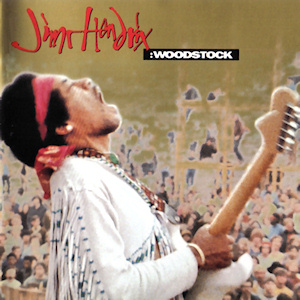
Jimi Hendrix 17: Woodstock

He didn’t play until the final morning, after most of the crowd had already left, but thanks to the film, Jimi Hendrix’s appearance at the Woodstock Festival has become legendary. He closed both the movie and the soundtrack album (both released before his death) and had all of side one to himself on Woodstock Two, released the following March.

Jimi was in transition; Billy Cox had replaced Noel Redding on bass, and for this performance he brought along two percussionists plus one Larry Lee—another old Army buddy who’d just returned from Vietnam—on second guitar. Due to comments he made throughout the set, this configuration has been called Gypsy Sun & Rainbows. While the extra musicians may have helped him fill out his sound to his liking in the studio, they couldn’t onstage, and future performances would go back to his tried and true trio format.

Because 1994 was the 25th anniversary of Woodstock, complete with another two festivals taking place that summer, the revitalized estate authorized an official release of Jimi’s performance that day. However, Alan Douglas was still in charge, so he rejigged the setlist and cut the program down to just over an hour so it could fit on a single CD. Everything that was on the original Woodstock albums was included, and in longer versions, but still not complete. It did subtitle “Jam Back At The House” with “Beginnings”, as it was known on other releases, and one of the solos after “Purple Haze” was now correctly titled “Villanova Junction”.

It was more than people had outside of bootlegs, and it was good enough for five years, when the new regime instigated another look, this time under the supervision of Eddie Kramer, who’d recorded the festival in the first place. Live At Woodstock contained most of the performance, now spread across two CDs and in the original sequence, but still without a few drum solos, Larry Lee’s solo spots, as well as some of his guitar solos. Even so, it seems more complete, particularly with all the stage patter left in.

After being erroneously announced as the Jimi Hendrix Experience, he starts by greeting the audience and introducing the musicians, almost apologizing for their lack of preparation. The first music we hear them play is “Message To Love”, making its public debut. “Hear My Train A Comin’” is identified by its alternate title and explored for ten minutes. “Spanish Castle Magic” had already become a jam, but at least the crowd would have heard it before; likewise, “Red House”. Despite having a precise riff, “Lover Man” is pretty straight but threatens to go off the rails, and “Foxy Lady” goes through the verses before letting him blaze out a solo. “Jam Back At The House” was another new funky one that required everyone to pay attention, and they seem to, though Mitch has trouble after his drum solo. “Izabella” was another new one, something of an antiwar love song, followed by tight “Fire”.

This is the point where the set became legendary, and not just because it appeared in the film. “Voodoo Child (Slight Return)” is on fire all the way, though he takes it down to introduce the band again. There’s a brief quote of what would soon be known as “Stepping Stone”, and while he repeatedly thanks the crowd, he doesn’t leave the stage, but keeps playing. What should be the last chord of the song turns into “The Star-Spangled Banner”, with only Mitch trying to keep up with him. Then he kicks into “Purple Haze”, wherein he clearly sings “kiss this guy.” Once that ends he solos alone for about four minutes, with only the occasional sound of a tambourine from somebody onstage, eventually coming to “Villanova Junction”. After that they try to leave, but the crowd wants more. Jimi toys with playing another new song, but can’t remember the words, so it’s back to “Hey Joe”.

Live At Woodstock is more historic than it is excellent, and the producers likely did us a favor by smoothing out or omitting the rougher edges. It’s interesting to have some things in proper context, but sometimes it’s easier to print the legend.

Jimi Hendrix Woodstock (1994)—3
Jimi Hendrix
Live At Woodstock (1999)—3

Friday, October 11, 2024

Jimi Hendrix 31: Electric Lady Studios

Along with trying to complete a fourth studio album, Jimi Hendrix was consumed with designing and opening a recording studio to his specifications, beck, and call. Once Electric Lady Studios opened in the early summer of 1970, he got to recording with Billy Cox and Mitch Mitchell in between live gigs. Designed to accompany the documentary of the same name, Electric Lady Studios: A Jimi Hendrix Vision presents three discs’ worth of alternate takes and mixes from the last four months or so of his life, in somewhat chronological recording order, with some shuffling here and there to prevent redundancy, which happens anyway.

Some of this had been out before in alternate mixes, or overdubbed after his death. On a lot of the earliest tracks here, it’s just Jimi, Billy, and Mitch working through the arrangements, live to tape, so we get to hear the bare bones of the songs before they were layered with vocals and other embellishments. The first albeit instrumental take of “Belly Button Window” is interesting as it includes bass and drums. There’s a brief stab at “Further On Up The Road”, followed by a seamless 26-minute exploration of “Astro Man”, “Beginnings”, “Hey Baby (New Rising Sun)”, “Midnight Lightning”, and “Freedom”; the rhythm section stays with him at every turn. A full band take of “Midnight Lightning” eventually goes into “Beginnings”, a galloping “Bolero” opens the familiar take of “Hey Baby”, and we can trace the development of “In From The Storm” from two early takes titled “Tune X/Just Came In”. One wonders what might have become of “Valleys Of Neptune” had he had the chance to develop it further—one of the takes is just him, Steve Winwood, and a rhythm machine—and he sure seemed fond of “Drifter’s Escape”. “Heaven Has No Sorrow” is just a demo with bass, and somehow there were 17 takes of something called “Messing Around” (only the last is included). A few posthumous mixes end the set; “Drifting” and “Room Full Of Mirrors” are okay, but “Angel” is way too awash in phasing and other obtrusive effects.

Focusing as it does on a distinct period, Electric Lady Studios: A Jimi Hendrix Vision is still less disjointed than the previous three collections of outtakes. But because of its breadth, this is designed for Hendrix scholars, particularly those still not convinced that either The Cry Of Love or First Rays Of The New Rising Sun present anything approximating his final vision. (A 5.1 mix of the latter album, with previously released takes of “Pali Gap”, “Lover Man”, and “Valleys Of Neptune” as bonus tracks inserted into an alternate sequence, is included along with the documentary on a Blu-ray packaged with the box.) Clearly he was teeming with ideas, and it’s always going to be a shame that he didn’t get to see them through himself.

Jimi Hendrix Electric Lady Studios: A Jimi Hendrix Vision (2024)—3

Tuesday, March 13, 2018

Jimi Hendrix 28: Both Sides Of The Sky

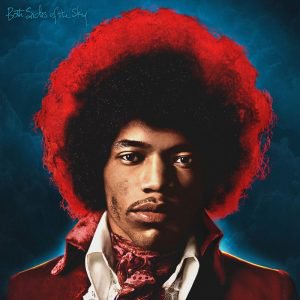
For no apparent reason, even after saying they were done with this sort of thing, another hodgepodge of unfinished studio recordings by Jimi Hendrix was unleashed on the world. Both Sides Of The Sky purports to consist of even more contenders for his never-realized fourth album, while sporting cover art based on a younger version of the man who composed the music therein. The compilers even dared to call it “the third installment in the trilogy”.

However, much of this has been heard before, in one way or another. The fanatics can contrast and compare alternates of “Hear My Train A-Comin’” (with the Experience) and “Lover Man” (with Band of Gypsys), and shake their heads over a sped-up “Stepping Stone” that touches on country and polka. “Mannish Boy” appeared in a slightly different form on Blues, and “Georgia Blues” was on the now-deleted companion to Martin Scorsese’s take on the genre. “Power Of Soul” was in a different mix on South Saturn Delta, as was a less-developed demo of “Sweet Angel”, here bridging the similarity to “Little Wing” with the xylophone. Three tracks teased on the 1990’s Lifelines set appear in more complete takes and/or composites; “Things I Used To Do” is a jam with Johnny Winter, and “Send My Love To Linda” combines a few solo takes with a full Gypsys rendition, but “Cherokee Mist”, featuring Jimi on electric sitar and feedback with Mitch Mitchell playing along, is a fascinating peek into the Electric Ladyland sessions.

It seems the biggest selling point for the marketers are two jams with Stephen Stills on organ and vocals, supposedly recorded at the same session but with different drummers. “$20 Fine” is basically a Stills song with Jimi adding guitar, and “Woodstock” is very similar to the CSNY version that had yet to be released, except that Jimi is merely playing bass. These would probably be better suited to a Stills compilation, but the Estate likely insisted only they could release them. That leaves only “Jungle”, which starts with some meandering and eventually gains Buddy Miles on drums, before fading out.

Considering not every note Jimi played in a studio setting has been made available to those who don’t collect bootlegs, it’s too soon to tell if this is really it for what the Estate has to offer. Of course, there are still plenty of official live releases, always with the chance of more to come, for those inclined to explore. If we were in charge of things, and obviously we were not, neither this album, nor the other two in the “trilogy”, nor South Saturn Delta, nor First Rays — especially once Cry Of Love and Rainbow Bridge were widely available again — nor the box sets would have happened. Rather, the music would be grouped chronologically, Beatles Anthology-style, for less of a grab-bag approach, and giving the student a much smoother journey through the man’s studio life, particularly to demonstrate all the directions he explored in the last 24 months of his time on the planet.

Jimi Hendrix Both Sides Of The Sky (2018)—3

Tuesday, October 21, 2014

Jimi Hendrix 26: People, Hell And Angels

Out of nowhere came People, Hell And Angels, another Hendrix vault compilation. Something of a counterpart to Valleys Of Neptune, it served up more studio takes that might have made up his fourth album, recorded in 1969 post-Noel and touching on the Band of Gypsys.

As should be clear by now, Jimi recorded several takes and arrangements of his works in progress, depending on his mood and who was around. So here’s another “Bleeding Heart” (this one slow), another “Hear My Train A Comin’” (more like the more familiar live versions), a decent “Earth Blues” with the Gypsys, and an early stab at “Izabella” with the expanded Woodstock band. Of the unfamiliar material, “Inside Out” comes from mid-1968, pre-Ladyland, a duet with Mitch embellished by Jimi’s own bass part and more guitar. Sadly too short is “Villanova Junction Blues”, otherwise recorded only in jams and at Woodstock.

The album also attempts to further “right” some of the liberties taken by Alan Douglas forty some years earlier. Along with a longer excerpt of “Easy Blues”, last heard on Nine To The Universe, “Somewhere” is rescued somewhat from Crash Landing, in a take featuring Stephen Stills on bass. (That album’s title track also appears in a different but unaltered take, while what used to be known as “Captain Coconut” is added as a bonus on the Target stores edition of the album, in all of its twenty-minute splendor.) “Hey Gypsy Boy” was first heard on Midnight Lightning, supposedly recorded the same day as “Let Me Move You”; while funky and fiery, it’s basically a showcase for vocalist/saxophonist Lonnie Youngblood, and therefore belongs on a collection of Hendrix session work. Similarly, “Mojo Man” is a completed track by sometime backup singer Arthur Allen to which Jimi added a lead part.

The Estate stated that People, Hell And Angels would be their final archival release of studio material; time would prove it wasn’t. We can recommend it as a worthy installment, along with most of the studio releases of the last two decades, but that doesn’t excuse the anachronistic cover art. Really, a pile of songs from 1969 and the best they could do was a shot from two years earlier?

Jimi Hendrix People, Hell And Angels (2013)—3

Friday, July 25, 2014

Jimi Hendrix 25: West Coast Seattle Boy

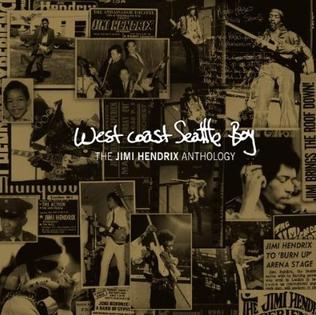
Collectors were still acquainting themselves with whatever bounty they could take from Valleys Of Neptune when, hold and below, another four-CD Jimi box appeared. Rather than repeat the 2000 box, which had been part of the previous MCA deal, West Coast Seattle Boy prefaced three discs of unreleased music with a disc devoted to the session work he’d done before the Experience, for the likes of the Isley Brothers, King Curtis and Little Richard. This stuff had been clogging up gray-area records and tapes since Jimi was alive, and while there are some who will welcome these things in best-ever quality, the real story doesn’t begin until disc two, after he’d hooked up with those two English guys and truly became the Jimi Hendrix of legend. (Perhaps to make up for it, the set included a DVD, and was also available in a single-disc distillation, which was the style at the time.)

So, just like the 2000 box, we travel chronologically through studio alternates and a handful of live tracks, some of which were on since-deleted box sets, others further songs from the Berkeley concert and Band of Gypsys shows. Pay close enough attention and you’ll hear some pretty interesting things.

Many of the outtakes and rarities are instrumental, allowing us to focus on his playing. The best include “Little One” from the Electric Ladyland era, featuring some Indian drones likely contributed by Dave Mason. “Cat Talking To Me” is also pretty decent, particularly without the Mitch Mitchell vocal heard previously. “New Rising Sun” is a longer mix of the dreamy piece that opened Voodoo Soup. “Calling All Devil’s Children” follows a terrific riff unfortunately mixed down to allow a “political rally” to take over the track. “Young/Hendrix” is a 21-minute jam previously excerpted on Nine To The Universe, notable for a five-second riff that Lenny Kravitz stole for “Are You Gonna Go My Way”. Then there’s “Messenger”, a jam on chromatic riffs with Jimi’s overdubbed piano on top. And “Peter Gunn/Catastrophe” is rescued from oblivion, or more accurately, War Heroes.

Of course, there are some actual songs here. “Mr. Bad Luck” purports to be the original mix of the track that sported 1987 overdubs on Valleys Of Neptune; the later version that now opens South Saturn Delta as “Look Over Yonder” is still the one to have. A handful of home recordings preview songs destined for Electric Ladyland and Cry Of Love, including a solo “My Friend”, plus “Tears Of Rage”, not yet widely known outside the Dylan circle. “The Everlasting First” is one of his final guest sessions, with Arthur Lee’s second incarnation of Love. The last piece on the disc is the acoustic “Suddenly November Morning”, from a longer suite of unfinished ideas.

While good, West Coast Seattle Boy was another missed opportunity. Considering all the distinct eras and bands of Jimi’s short career, the grab-bag approach ultimately gives short shrift to the story, distorting it, and making his official catalog even harder to navigate. And the Estate wasn’t done yet.

Jimi Hendrix West Coast Seattle Boy: The Jimi Hendrix Anthology (2010)—3

Friday, April 18, 2014

Jimi Hendrix 24: Valleys Of Neptune

Jimi had been dead nearly forty years when the family switched up their licensing yet again. A new deal with Sony Legacy worldwide meant snazzy new digipack editions of the three Experience albums, plus several of the MCA titles from the ‘90s. And of course, they also offered something “new”.

Valleys Of Neptune attempts to present a possible follow-up to Electric Ladyland, focusing mostly on material recorded in 1969 with the original Experience. Because technology had advanced to perform all kinds of magic, and because the Experience was splintering at the seams, such an album would not have existed in this form. Several tracks are re-recordings of earlier material, showing off how they’d developed on stage over time, and three even include overdubs added by Noel and Mitch in 1987. That means we have further variations on “Stone Free”, “Hear My Train A-Comin’” (both previously cannibalized in the mid-‘70s), “Fire” and “Red House”—each with their own charms, but “definitive”? Hardly, especially when they fade mid-song. “Bleeding Heart” was tried several times that year, and this one is tight and funky.

The title track promises buried treasure, being an unreleased song, and it’s pretty good. However, it matches a 1970 Billy-and-Mitch take with a vocal from nine months earlier. Still, this is what purists call an “out-fake”. “Mr. Bad Luck” is an earlier version of “Look Over Yonder”, just as “Lover Man” doesn’t have its “Here He Comes” subtitle. (Both were overdubbed in 1987; negligibly superior versions are on South Saturn Delta.) A lengthy instrumental version of “Sunshine Of Your Love” includes a conga break and a bass solo to fill up the better part of seven minutes. A title like “Lullaby For The Summer” suggests something entirely different to the raucous riffing it actually contains, while “Ships Passing In The Night” is a sloppy precursor to “Night Bird Flying”. Finally, “Crying Blue Rain” begins like another slow blues, with some “amen” vocalizing along the lines of “Power Of Soul”, eventually picking up speed and fading out. (If you bought the CD at Target, you also got a de-Douglased “Trash Man”, plus an Experience jam titled “Slow Version”.)

Thanks to the aforementioned technological magic, everything on Valleys Of Neptune sounds terrific. But each installment of release-worthy studio tracks only muddies the picture further, ultimately sinking the attempt to create a hypothetical “lost album”. The world will never know what he might have done with all these recordings; luckily the above-average quality of it all makes it worth hearing.

Jimi Hendrix Valleys Of Neptune (2010)—3

Tuesday, January 14, 2014

Jimi Hendrix 21: The Jimi Hendrix Experience

By the turn of the century, Jimi Hendrix had already been best-ofed and anthologized in a few handfuls of hits collections. The current trend was to tell an artist’s (or artists’) story via a box full of alternate, live and/or otherwise unreleased material. Despite having already seen two box sets of such material in the CD era, both had been deleted, so now there was another.

The Jimi Hendrix Experience wasn’t the best title for it, since the band of that name only appeared on about two-thirds of the contents. Still, there was something of an attempt to be chronological, though the first disc does jump around a bit. Rather beginning with the two songs from a concert in Paris—from October 1966, the earliest recordings of the Experience as a band—an alternate mix of “Purple Haze” comes first to entice the non-fanatics, among several outtakes from the debut. Among the more fascinating pieces are the spoken word section used for “Third Stone From The Sun”, isolated and extended for clarity and context, and an early take of “Burning Of The Midnight Lamp”, showing Jimi’s prowess on the harpsichord.

The other three discs proceed from there, with some of the more tantalizing tracks being restored mixes from Crash Landing, plus otherwise orphaned selections from some of the other posthumous albums. “It’s Too Bad” is a lengthy blues jam with Buddy Miles and organist Larry Young that’s a lot better than it reads. By the time you get to the fourth disc, you’re astounded by all the alternate versions of things that might or might not have become part of the fourth studio album.

The live material isn’t all new, coming from the Monterey Pop Festival show, the Stages box, Hendrix In The West, the Isle of Wight and some of the “official bootlegs” sold via mail order directly by the estate; still, it does a nice job of presenting the whole picture. In the end, The Jimi Hendrix Experience demonstrates just how easy it is to put together a set of rare Hendrix material. Indeed, thirteen years later, after Sony/Legacy had unleashed a whole pile of old and new material, the set re-appeared, with four extra songs of varying rarity mixed into the original sequence. You know, so everybody that cared had to buy it again.

Jimi Hendrix The Jimi Hendrix Experience (2000)—3
2013 reissue: same as 2000, plus 4 extra tracks

Friday, October 25, 2013

Jimi Hendrix 20: South Saturn Delta

While First Rays Of The New Rising Sun attempted to present the final word on Jimi’s last work, that wasn’t to say the family was finished with theirs. As had happened in the previous decades, a handful of albums presented rare or unreleased material, culled from a multitude of sessions with all of his bands, in order to portray him as a well-rounded musician.

The first of these was South Saturn Delta, taking its name from a jazzy instrumental, complete with horn section. It’s a bold choice to make it a centerpiece, but apt when taken alongside the odd selection of alternates and outtakes. “Angel” appears twice, once in a studio jam with Mitch Mitchell labeled “Little Wing”, and then again in a more precise home demo. An alternate mix of “All Along The Watchtower” supposedly features Brian Jones more prominently, but nothing stands out as being revelatory. (His appreciation for John Wesley Harding is demonstrated further on a funky trial of “Drifter’s Escape”.) In the plus column, “Here He Comes (Lover Man)” is an expansion of his amped-up arrangement of “Rock Me Baby” as heard at Monterey, and while it’s apparently a composite of four takes, it’s still six minutes of fun. “Power Of Soul” and “Message To The Universe” present studio versions of Band Of Gypsys tunes, the former rescued from its Crash Landing alteration. Even more surprising is “Midnight Lightning”, a completely solo take.

At its best, South Saturn Delta helps to mop up some of the stray tracks from Rainbow Bridge and War Heroes, providing a new home for such nuggets as “Look Over Yonder”, “Pali Gap”, “Tax Free”, and “Midnight”, plus the nutty B-side “The Stars That Play With Laughing Sam’s Dice”. So it’s a decent companion to First Rays, which had only come out six months before. And half of the album is basically the original Experience, adding to the diversity. While schizophrenic, it’s nice to have, and stayed in print when the distribution rights changed yet again.

Jimi Hendrix South Saturn Delta (1997)—4

Friday, June 7, 2013

Jimi Hendrix 19: First Rays Of The New Rising Sun

Jimi’s aging father and the stepsister he never knew wrested control of the Hendrix catalog away from the record labels, and took over distribution of same. Thus began a lengthy and lucrative campaign to preserve his legacy via repackagings, archival digs and tchotchkes.

Their determination to rectify all wrongs meant that the catalogs were pared back to the basics: the original three Experience albums, newly remastered (again) and supervised by Jimi’s preferred engineer Eddie Kramer. Band Of Gypsys would remain in print, having been approved by Jimi in his lifetime, but anything released after that (with the exception of the excellent Blues compilation) was deleted so the Estate could start fresh. Their first strike was replacing the controversial Voodoo Soup with what is now the final accepted version of his fourth album.

Based on a handwritten sketch of three possible album sides out of four, First Rays Of The New Rising Sun reverts for the most part to the original Cry Of Love concept, using all of that album’s songs and mixes. Interspersed are four tracks from Rainbow Bridge and three from War Heroes, making for a more inclusive view of those leftovers.

Still, just as with Cry Of Love, the similarity of a lot of these songs makes it tough to tell them apart at first, especially when tracks like “Freedom” and “Izabella” are placed back to back. Likewise, “Room Full Of Mirrors”, “Dolly Dagger” and “Ezy Ryder” should satisfy anyone seeking more cowbell. It’s nice when things like “Angel”, “Drifting” and “Hey Baby (New Rising Sun)” shift the tempo, and ending with “Belly Button Window” is the smart move.

We state all this in full recognition that the learned Hendrix scholar can’t fathom how anybody could confuse these songs with each other. To counter, we also doubt that anyone would prefer any permutation of a possible fourth album over any of the three Experience albums. The point is, it’s all conjecture, and anything Jimi might have finished, had he got around to it instead of filling up tape after tape, would likely trump anyone else’s best guess, however educated.

Unlike its stepsibling of two years before, there’s nothing “new” on First Rays Of The New Rising Sun; rather, it’s yet again somebody’s mix tape version of the best of the official leftovers. Everyone’s version would be different, and we’ve yet to see a decent defense of “My Friend”. Since they used all of it anyway, a simple two-fer of Cry Of Love and Rainbow Bridge would have been ideal, but wouldn’t fit on a single CD, so that solution doesn’t work for the industry. With the Estate firmly in control, they decreed that this sequence would become the accepted standard into this century—though even their speculation would continue in other ways.

Jimi Hendrix First Rays Of The New Rising Sun (1997)—

Wednesday, June 5, 2013

Jimi Hendrix 18: Voodoo Soup

Because Jimi never finished his fourth studio album, anything purporting to be exactly that is subject to speculation. Therefore, the possibilities are endless. But because The Cry Of Love had been around for over twenty years, for good or bad it was something of an accepted standard. It took that long for something else to be presented as a possible alternative, and sparks flew.

Once again the culprit was Alan Douglas, who’d already “tampered” with the archives. Now he attempted to present another possible sequence for a fourth Hendrix album, with the wacky title of Voodoo Soup and anachronistic cover art to match. Seven songs from Cry Of Love join two each from Rainbow Bridge and War Heroes, plus three other “new” tracks.

Naturally, being the ‘90s, the songs had slightly different mixes from the originals, with two glaring exceptions. On “Stepping Stone” and “Room Full Of Mirrors”, Buddy Miles’ original drum tracks were replaced by a new accompaniment supplied personally by one of the album’s coordinators, whose previous claim to fame is that he also was the drummer for The Knack. Whether or not he was competent is moot, of course; once you know he’s there it’s tough to ignore the fact.

The album seems to want to turn Cry Of Love on its head, beginning with something of an overture in “The New Rising Sun”, a three-minute instrumental segment of a larger unfinished piece. It’s pretty dreamy, in the positive sense of the word, but fades into “Belly Button Window”, the song that previously closed Cry Of Love. The altered “Stepping Stone” comes next, adding another alternate to the pile of mixes Jimi discarded in his lifetime; the new, galloping drums threaten to run away with the track. “Freedom” is fairly similar, but “Angel” has a less processed vocal than before, and doesn’t fade, making for a nice variation. “Room Full Of Mirrors” already had a dizzying mix, and this new version (with 1995 drums) provides another trip through the fun house. While “Midnight” and “Peace In Mississippi” are great jams, being earlier Experience recordings puts them somewhat outside of that “fourth album” idea.

“Night Bird Flying”, “Drifting” and “Ezy Ryder” each tone down the congas that were so prominent on the earlier mixes; “Pali Gap” is slightly edited to sound less like the improv’d jam it was. “Message To Love” is a studio take of the song familiar from Band Of Gypsys, and somehow sounds out of sync mixwise with the rest of the era. “In From The Storm” was the penultimate track on Cry Of Love, and here it’s allowed to close the set.

Except that it’s a purely speculative compilation, there really isn’t anything “wrong” with Voodoo Soup, making it a fairly enjoyable mix tape, and a worthy candidate for whatever his next album might have been. Still, enough people couldn’t get past the whole Knack connection, and since several previously released contenders were excluded from the hour-long sequence, nobody was happy. Least of all the Estate, which deleted it as soon as they could, thus guaranteeing Voodoo Soup collector’s item status.

Jimi Hendrix Voodoo Soup (1995)—4
Current CD equivalent: none

Friday, May 17, 2013

Jimi Hendrix 16: Blues

The Rykodisc albums and Reprise box sets proved that there was still gold in the Hendrix hills. With an eye on streamlining (and reissuing) the catalog, the estate made the very surprising move to take it to MCA in the U.S. They promised that further archival projects would make everything wonderful, but immediately raised eyebrows by repackaging the three Experience albums with new artwork, and deleting the existing Reprise CDs, including the recent box sets.

But MCA’s next move was surprisingly good, even with Alan Douglas’s name in the credits. Blues collected 11 mostly obscure recordings to firmly present Jimi Hendrix as a key link in the blues guitar tradition, rather than just a flashy guy who played with his teeth.

The set is neatly bookended by “Hear My Train A-Comin’”, first in an acoustic 12-string solo performance from 1967, then in the lengthy electric performance as heard on Rainbow Bridge. “Red House” appears in its original UK LP rendition, then again with the expanded “Electric Church”. In between are such warhorses as “Born Under A Bad Sign”, “Mannish Boy”, “Catfish Blues”, and “Bleeding Heart”, plus the originals “Once I Had A Woman” and “Jelly 292”, alternate versions of previously altered album tracks. The most interesting yet controversial piece is a re-edited “Voodoo Chile Blues”, from several takes of the slow version heard on side one of Electric Ladyland.

The timing for Blues was excellent, given the genre’s then-resurgence thanks to young white guys like Jonny Lang and Kenny Wayne Shepherd, who considered Jimi an influence, and such veterans as Buddy Guy and B.B. King, who considered him an heir. Its stature in the canon is confirmed by its continual in-print status when the estate took over the catalog five years later, and again in this century when it moved to Sony.

Also in this century, a couple of years before stamping his name on documentaries about Bob Dylan and George Harrison, director Martin Scorsese tried to one-up Ken Burns with a PBS series on the blues. If anything, it opened the opportunities for a flood of companion CDs covering famous and forgotten bluesmen, the likes of which hadn’t been seen since Sony rediscovered Robert Johnson in 1990. The Hendrix estate also heard cash registers, so they dove in with another set.

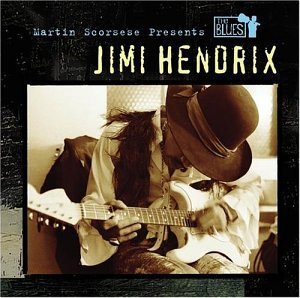
Martin Scorsese Presents The Blues: Jimi Hendrix should not be considered definitive in the least; while it only overlaps a few song titles with Blues, it’s not exactly illuminating. Five of the tracks could be considered standard—the Smash Hits version of “Red House”, “Come On” and the long “Voodoo Chile” from Electric Ladyland, the execrable “My Friend” from The Cry Of Love and later First Rays Of The New Rising Sun, and “Midnight Lightning”, which closes South Saturn Delta. Three songs are repeated from the 2000 box set, including a smoking take of “Hear My Train A-Comin’” with the Experience.

That leaves exactly two songs not officially released before. “Georgia Blues” is a something of a rewrite of “Stormy Monday”, featuring Lonnie Youngblood on sax and lead vocals, in an uncanny similarity to Bob Seger. Slightly more interesting is “Blue Window”, where he’s backed by the Buddy Miles Express for 13 minutes, horns and all.

As many of the tracks feature Jimi playing alongside people other than the Experience or the Band of Gypsys, the album does succeed in presenting another side of him. Unfortunately, it had already been done, and better, making it less a loving portrait than a grab for cash. Its out-of-print status today suggests that even the Estate doesn’t consider it part of the canon. Naturally, with the latter of those rare tracks out of circulation, used copies go for big bucks.

Jimi Hendrix Blues (1994)—4
Jimi Hendrix
Martin Scorsese Presents The Blues: Jimi Hendrix (2003)—3

Sunday, May 12, 2013

Jimi Hendrix 15: Stages

Each of Jimi Hendrix’s live appearances was unique, providing different and evolving interpretations of his songs, giving both the casual collector and diehard chronicler a lot to explore. In fact, there are so many officially available CDs of individual concerts that we hesitate to dive in here, but dive we must.

A year after the Lifelines box tested the waters (and fans’ patience), Stages presented four concerts, one each from 1967 through 1970, on four CDs. All but the last featured the original Experience; Billy Cox had replaced Noel Redding on the rhythm section next to Mitch Mitchell in the final year. But even with “Purple Haze” and “Fire” showing up at all four shows, they’re not the same at all.

The first show is also the shortest, coming from a Swedish radio broadcast in front of a polite audience. After a warmup of “Sgt. Pepper’s Lonely Hearts Club Band”, they plow through the familiar songs and singles from the first album, as well as the new single “Burning Of The Midnight Lamp”. (For some reason the songs appear out of order, even though everything played is included.) “I Don’t Live Today” had only just started being played live, and they have fun with it. Jimi sounds tired, but that could be due to a larger concert played the night before. Because Stages went out of print along with Lifelines after only a few years, this show was mostly lost officially, and had to wait three decades until 2025’s Bold As Love set brought it back in context.

Less than five months later, the band was in Paris, and Jimi was tired of playing just the hits. Just like he did at Monterey, he opens with a slightly extended “Killin’ Floor”, but follows it with nine minutes of exploration through “Catfish Blues”, leaving room for a Mitch drum solo. He does treat the crowd to “Foxey Lady”, with Noel happily adding the breathy “foxey” accents, and he gets to play guitar on “Red House”. After nine minutes of “Driving South”, it’s back to the more familiar “Wind Cries Mary”, “Fire”, a reverent if off-pitch “Little Wing”, and a six-minute “Purple Haze”. Throughout, he sounds playful, and his fretwork soars. (This show was reissued on the estate’s “official bootleg” label, bolstered by three songs from another show two months and a continent away, on Live in Paris & Ottawa 1968 in 2008.)

An already-plundered San Diego show made up the third disc. “Red House” had already appeared on Hendrix In The West—four more songs were included on the 2011 upgrade—and “I Don’t Live Today” had also been farmed out to The Jimi Hendrix Concerts and other compilations over the years. As it was only a month after the Los Angeles show that had appeared in Lifelines and was eventually released on its own, that’s the only discernable reason why this hasn’t had a separate rerelease. (Yet.) That’s too bad, because it’s an excellent show that deserves to be heard in full, and in order. Highlights include an 11-minute “Spanish Castle Magic” with a detour into “Sunshine Of Your Love”, the aforementioned “Red House” and “I Don’t Live Today”, and ten minutes of “Voodoo Child”. Even the opening “Intro Riffs” over a rowdy crowd have charm.

A lot of changes happened in the year between Noel quitting and the band’s appearance at the Atlanta Pop Festival the following Fourth of July, which is excerpted out of order on the fourth disc. Some of this had already appeared on 1986’s Johnny B. Goode “mini-LP” shuffled with performances from the oft-plundered Berkeley concert, both sources of which were also used to fill out the inaccurately titled Band Of Gypsys 2 a few months later. The 2015 release of Freedom: Atlanta Pop Festival presented the entire concert (save the final aborted song) as performed, necessitating two CDs, and that’s the way to hear it.

Rather than ease into the set, they bash through “Fire” right away, Mitch playing especially busily and Billy keeping up as best he can through questionable meters. They keep the pace going with “Lover Man”, which sports a quote from “Flight Of The Bumblebee” in the solo. Overall the show is kinda wobbly, possibly because of the scorching summer weather, but he’s enough of a professional to work with it; “Red House” slows things down enough to get everybody back in sync, as does a lengthy “Hear My Train A Comin’” a couple songs later. Being the 4th of July, he hints at “Star-Spangled Banner” before “Purple Haze”, then delivers a full rendition during the encore. He does play some of the hits, but the most interesting thing about this show in context is the new material, which had yet to be released in studio form: “Room Full Of Mirrors”, “Freedom”, and “Straight Ahead”. It might not have been his best show, but 1970 was fairly well documented with live recordings, and others will be assessed in context.

Jimi Hendrix Stages (1991)—3
Current availability: none
Jimi Hendrix Experience Freedom: Atlanta Pop Festival (2015)—3

Saturday, May 11, 2013

Jimi Hendrix 14: Lifelines

The CD era gave the Hendrix catalog another life, helped by the increased commercial interest in archival material. After Rykodisc got into the game with their two very well received compilations, Reprise let Alan Douglas do some more vault-trawling. Lifelines was essentially a reproduction of Live And Unreleased, a syndicated radio show—inspired by the Lost Lennon Tapes series and produced by former Knack drummer Bruce Gary, whom we’ll hear from again—spread across three CDs, plus a fourth disc with most of a 1969 Experience concert and an anachronistic cover photo.

Hearing the radio show in real time was certainly an event for those who knew where to tune in to hear it, but with interview snippets and smarmy narration often obscuring the music—both the songs we know and the rare stuff—it was a persistently frustrating listen. While the CDs were usually indexed to start at each complete track, and the liner notes gave some information among the hyperbole, this was a missed opportunity to present the material optimally.

That said, the show does move mostly chronologically from his earliest work with the Isley Brothers and Curtis Knight all the way through to the end. Rarities include a club performance of “Like A Rolling Stone” with Al Kooper, live versions of “Red House” and “Machine Gun”, a few more BBC recordings, alternates of “Look Over Yonder”, “One Rainy Wish”, “1983”, and “Angel”, and such legendary outtakes as “Cherokee Mist”, “Rainy Day Shuffle”, “South Saturn Delta”, “Send My Love To Linda”, and “Valleys Of Neptune”. Even with all those, most purchasers likely spent more time with the live disc, recorded at the L.A. Forum. “Foxey Lady” had to be cut to accommodate the shorter disc capacity of the time, but it had already been a bonus track on the previous year’s CD reissue of The Jimi Hendrix Concerts, as if they planned it.

When MCA took over the Hendrix catalog three short years later, Lifelines went out of print. Over the years much of the rare material would emerge on other archival releases, but it took nearly two full decades before Los Angeles Forum: April 26, 1969 finally became available again, and in full for the first time. At this point the Experience were better than ever, allowing Jimi to explore and extend songs well past their three-minute lengths on vinyl. At over 14 minutes, “Tax Free” is even longer than on the box. After tuning and tossing out “Foxey Lady”, he tries to get “Red House” over the rowdy audience. “Spanish Castle Magic” starts more immediately, and runs for 12 minutes into “Star Spangled Banner” (we’re still about five months away from Woodstock) and “Purple Haze”. By now the police are trying to quell the crowd, so Mitch Mitchell takes his customary solo at the start of “I Don’t Live Today”, which continues with fiery-sounding effects. The cops have made their way to the stage, so the band responds with a 17-minute “Voodoo Child (Slight Return)” that includes a detour through “Sunshine Of Your Love”. It’s good to have this one back in circulation.

Jimi Hendrix Lifelines: The Jimi Hendrix Story (1990)—3
Current availability: none
Jimi Hendrix Experience Los Angeles Forum: April 26, 1969 (2022)—4

Sunday, April 28, 2013

Jimi Hendrix 13: Radio One

Like most hungry London-based performers, The Jimi Hendrix Experience made multiple appearances on the BBC’s handful of radio shows that focused on current pop music. And like most people who went on to be world-famous, many of those performances were spread around via bootlegs until legitimate releases happened.

The first such release came courtesy of Rykodisc. Radio One presented 17 tracks, split between hits and more unique performances. As with most BBC collections, fanatics had lots to pick apart, while the more casual fan could gravitate towards markedly alternate versions of songs they knew from the albums, along with those that were, well, new. “Killin’ Floor” was constant in his setlists, and cooks here. The blues chestnut “Catfish Blues” appears in its then-first known performance (complete with a nod to “Rollin’ And Tumblin’”), as does “Hear My Train A-Comin’”, with unfortunate “party” noises, which also mar “Spanish Castle Magic”. “Driving South” was an excuse to jam, and comes from a show hosted by British blues legend Alexis Korner, who also plays slide with the band on “Hoochie Koochie [sic] Man”. Jimi even composed a “Radio One Theme” for one show.

These performances took place throughout a very busy 1967, when the band played a lot of shows and had the tightness to prove their worth. Save the occasional handclap or vocal overdub, these are live performances, and prove Jimi was able to create his own pyrotechnics without the multitracking that would soon dominate his regular studio work. Thus “Burning Of The Midnight Lamp” is a simpler trio version, without all the decorations the single/album track got. Of course, one must take the good with the bad, so while his funky arrangement of “Hound Dog” has merit, the overdubbed barking makes it one to skip. Better backing vocals are on their cover of “Day Tripper”, which does not include John Lennon, no matter what anybody tells you.

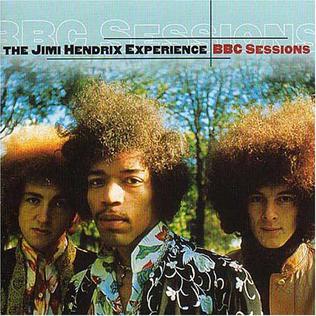
Ten years later, once the “family” gained control of the masters, an expanded double-disc set more directly titled BBC Sessions presented virtually everything he recorded for the station, including alternate takes from the same shows, presented in a not-quite-chronological order to cut down on repetition. This is good, since we get two more versions of “Driving South” and another “Hear My Train A-Comin’” (this one with “support” vocals). Even with the retreads, they did find more rarities, like his one-time-only cover of Dylan’s “Can You Please Crawl Out Your Window?” And that really is Stevie Wonder playing drums on the extended jam that leads into his own “I Was Made To Love Her”.

Of historical importance, the set ends with the band’s notorious performance on the Lulu TV show, when they cut short “Hey Joe” (which had been requested by the hostess herself) to go into “Sunshine Of Your Love” in “tribute” to the recently disbanded Cream, who’d written the song with Jimi in mind in the first place. And it’s just as well, since there are two other, similar takes on “Hey Joe” elsewhere in the set.

Because the BBC never saved anything, the sound quality on both is a little muddy, and the tweaking modern-day producers took to make the new set less mono doesn’t help. But as a companion to the three true Experience albums, and in balance with some of the other post-Experience recordings we’ll get to soon enough, BBC Sessions is a worthy addition to one’s Hendrix pile. (It was eventually re-released once Sony took over the Hendrix catalog, with the addition of another “Burning Of The Midnight Lamp” and a DVD with a documentary. They also released a single-disc version, but what’s the point?)

The Jimi Hendrix Experience Radio One (1988)—
The Jimi Hendrix Experience
BBC Sessions (1998)—4
2010 reissue: same as 1998, plus 1 extra track (and DVD)

Saturday, April 27, 2013

Jimi Hendrix 12: Live At Winterland

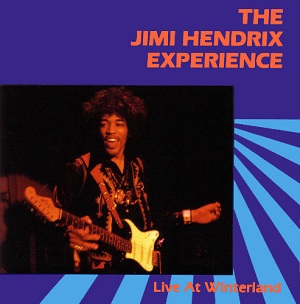
Just in time for the music industry’s celebration of the 20th anniversary of the Summer of Love came the first “new” Jimi Hendrix album specifically designed for the CD market. The first product of Rykodisc’s brief affiliation with the Estate, Live At Winterland was compiled from a three-day residency at a converted San Francisco ice skating rink the week Electric Ladyland was released. The compilers had six shows to choose from, and only repeated one performance from The Jimi Hendrix Concerts.

By this time his manager was professionally recording his concerts, so the source used was superior to anyone’s bootlegs. This CD was produced by Alan Douglas and future Beach Boys catalog maven Mark Linett, and they did a decent job of presenting the trio as they were, seamlessly blended to simulate a single show. After Bill Graham’s introduction (a Douglas trope), they plow through “Fire” and “Manic Depression”, then Jimi provides an explanatory intro for a jam on Cream’s “Sunshine Of Your Love”. “Spanish Castle Magic” is marred by buzzing amplifiers, and he acknowledges the absence of “Red House” from the American version of his first album. Jack Casady of Jefferson Airplane sits in on bass for “Killing Floor”; “Tax Free”, an instrumental familiar from War Heroes, gets an eight-minute excerpt. From there it’s a good run through “Foxey Lady”, “Hey Joe”, and “Purple Haze” right into “Wild Thing”. All in all, a solid listen. (Five years later, the album celebrated an anniversary of its own with the release of Live At Winterland+3, containing—you guessed it—three more songs on a 30-minute bonus disc, including a lengthy exploration on “Are You Experienced”.)

In this century, once the Estate realized that fans would be interested in multi-disc archival digs, the shows were mined for a four-CD package simply titled Winterland. However, as would be their wont, they still took liberties with history, by curating a disc each from each day’s two shows, and adding a fourth of “extras” from three of the shows, bolstered by an interview conducted two months earlier on the opposite coast. (Amazon customers got another disc with a little over a half an hour of music from eight months earlier at a different Bill Graham venue, most of which was previously released as an official bootleg, and notable for the first collaboration with Buddy Miles, on a cover of “Dear Mr. Fantasy” in two pieces because the tape ran out. Meanwhile, a single disc of Winterland “highlights” muddied up the discography further.)

Being a new mix spearheaded by Eddie Kramer, the sound is different from the Rykodisc releases; they even restored Herbie Rich’s organ and Virgil Gonsalves’ flute on songs where they’d been omitted earlier. But there was still some editing and combining of performances to enhance general listenability, and some chatter heard on the old CDs didn’t make it. There is naturally repetition of several songs, but he never played anything the same way twice, and for the most part the set focuses on songs that enabled his soloing as opposed to just playing the hits and familiar album tracks, which he does too. (“The Star-Spangled Banner” makes two appearances, once of which is compiled from two performances; the October 11 “Voodoo Child” remains exclusive to Live At Winterland+3, but at least the set included full versions of songs included on The Jimi Hendrix Concerts, which had since been deleted.) Nearly five hours of music is a lot to take in, but it’s educational to hear him in an environment where he could settle in for a stint and stretch, rather than just rush from town to town and show to show.

The Jimi Hendrix Experience Live At Winterland (1987)—
1992 Live At Winterland+3: same as 1987, plus 3 extra tracks
The Jimi Hendrix Experience Winterland (2011)—

Friday, April 5, 2013

Jimi Hendrix 11: Jimi Plays Monterey

The occasional vault plundering of the Hendrix legacy continued somewhat randomly into the ‘80s. Then somebody decided that “digital remastering” would be a big deal, which led to the first of several stabs at definitive CD versions of the original studio LPs, plus the Kiss The Sky compilation. But the smartest move in years was an expansion of something that had already been out, kind of.

Just before he died, Reprise split an LP of so-called Historic Performances Recorded At The Monterey International Pop Festival between a side of Jimi backed with Otis Redding’s set—both being highlights of that particular festival. It only took another 16 years for Jimi’s complete set to appear in its entirety. Jimi Plays Monterey was billed as a soundtrack, accompanying the commercial video tape of the same show. The visuals are recommended to illustrate the sounds, since some of the aural and physical pyrotechnics can get lost in the mix.

It helps that it’s an excellent set. He hadn’t released so much as a single in the States yet, and only offered a few songs that would appear here on Are You Experienced. Of his own songs, “Foxy Lady”, “Hey Joe”, “Wind Cries Mary” and “Purple Haze” would be standards soon enough, while “Can You See Me” was only on the British version of the album. Instead, he opens with a burning take on “Killing Floor”, does a detour with “Like A Rolling Stone”, re-arranges “Rock Me Baby”, and sacrifices his guitar to “Wild Thing” (following a detour through “Strangers In The Night”). Throughout the set, he banters with the audience and plays up to his now-assumed spacey reputation.

In the pantheon, Jimi Plays Monterey made a logical bookend opposite Band Of Gypsys with the three studio albums in the middle. When Rhino put out their box set devoted to the festival for its 25th anniversary, all nine songs were included. Fifteen years after that, the Estate reissued the album again, this time crediting it to The Jimi Hendrix Experience, and reinstating not only some of the dialogue, but Brian Jones’s complete introduction.

Jimi Hendrix Jimi Plays Monterey Original Motion Picture Sound Track (1986)—4

Thursday, April 4, 2013

Jimi Hendrix 10: The Jimi Hendrix Concerts

Alan Douglas was still in charge of the Hendrix vaults, and following his controversial reimagining of leftovers, he did something of a service with a pair of compilations. The Essential Jimi Hendrix was a two-record set that sampled the first three albums chronologically, ending with tracks from the first three posthumous studio albums. A year later, Volume Two offered one side of songs from the first album plus “Crosstown Traffic”, while the other served up “Wild Thing” from Monterey, “Machine Gun” from Band Of Gypsys, and “Star Spangled Banner” from Woodstock. A bonus one-sided 45 featured a previously unreleased cover of “Gloria”. Basically the Hendrix equivalent of the Red and Blue albums, they provided a good introduction. (Both volumes would make it to a combined double CD in 1989, the studio tracks re-arranged chronologically and ending with the live tracks and “Gloria”.)

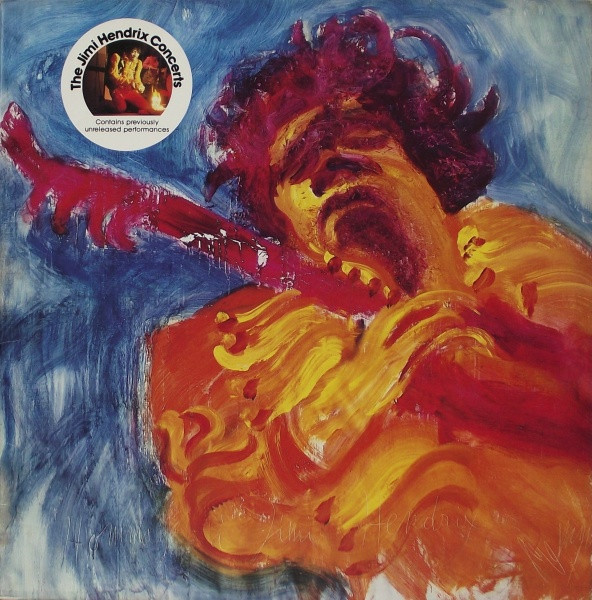
For his next trick, Douglas went back to the vaults for something of a sequel to Hendrix In The West. Labeled on the back over as “a collection of his most exciting performances”, The Jimi Hendrix Concerts was another double album, mixing tracks from eight different concerts over three years. In addition to the soon-to-be familiar sources of Berkeley, the Albert Hall, and San Diego, four shows from his 1968 residency at San Francisco’s Winterland Arena were utilized for the first time.

Following an introduction from Bill Graham, that’s where “Fire” comes from, then it’s over to San Diego the next year for Mitch Mitchell’s extended intro to “I Don’t Live Today”. Jimi stretches out on this one too, with a detour into “Star Spangled Banner” and then quoting from “Tomorrow Never Knows”. A year after that, it’s “Red House” from the New York Pop Festival. “Stone Free” had already been extended onstage past its radio-friendly length, and here goes for ten (edited) minutes. It leads well into the freakout intro for “Are You Experienced”.

There’s been a lot of fancy fretwork so far, which makes the comparative restraint in “Little Wing” very welcome. We hear just a few notes of “You Got Me Floatin’”, a song never otherwise known to be played live, then it’s into a furious “Voodoo Chile [sic] (Slight Return)”, a week before Electric Ladyland was released. “Bleeding Heart”, here subtitled “Blues In C Sharp”, is slow and sinewy. “Hey Joe” comes from Berkeley, one of his last concerts, and they apparently couldn’t do anything about the radio interference in the first verse. “Wild Thing” descends into chaos fairly quickly, and “Hear My Train A Comin’” (here subtitled “Gettin’ My Heart Back Together Again”) ends it all with another long blues.

To make The Jimi Hendrix Concerts a listenable experience (sorry) for newbies and collectors alike, Douglas edited out some jamming and drum solos, and used echo as well as stage patter from San Diego throughout to add to the mirage. But even despite the range of sources—and Billy Cox instead of Noel Redding on two tracks—it worked. (This too was released in CD in 1989, sporting a bonus track in “Foxey Lady” from the LA Forum, an addition that would add even more value to the box set that came out a year later. All are out of print now, so it’s moot.)

Jimi Hendrix The Essential Jimi Hendrix (1978)—4
Jimi Hendrix
The Essential Jimi Hendrix Volume Two (1979)—
Jimi Hendrix
The Jimi Hendrix Concerts (1982)—4
1989 CD reissue: same as 1982, plus 1 extra track
Current CD equivalent(s): none

Friday, February 22, 2013

Jimi Hendrix 9: The Alan Douglas Albums

The legend of Jimi Hendrix only grew as the seventies progressed, doubtless helped by such documentaries as Woodstock and Monterey Pop, plus of course his popularity on AOR FM stations. Having seemingly done all they could with whatever he’d left finished, producer Alan Douglas decided the next best thing to a new Hendrix album was to grab some working tapes, wipe off everything but Jimi’s parts, and have a bunch of jazz-funk studio musicians—none of whom were involved with the original sessions—overdub fresh arrangements. And not just bass and drums, either—percussion, backing vocals and even another guitarist were involved.

While the results were certainly listenable, every year of hindsight only raises more questions as to whether the albums should be considered the equivalent of either colorized films or just mashups. While technology has made it easier to create things like Natalie Cole’s duet with her father and the Threetles “completion” of a couple of Lennon demos, Hendrix students would ultimately prefer to hear the untampered recordings, many of which have surfaced on a variety of archival releases. For the duration of the Reprise era, however, these albums were considered part of the catalog, and they have their defenders.

Crash Landing was the first volley, albeit short at less than 30 minutes. Three of the songs would have been moderately familiar, studio versions of the Band Of Gypsys tracks “Message Of Love” and “Power Of Soul” (here called “With The Power”) and a remake of “Stone Free”. The mis-titled “Somewhere Over The Rainbow” is not the Wizard Of Oz tune, but it is a half-decent piece of slow stank. The title track is something of an anti-drug message, though his concern for his lady’s health is overshadowed by his horniness. “Come Down Hard On Me Baby” is a pedestrian blues shuffle, not one of his best. “Peace In Mississippi” is a burning solo hampered by the too-slick additions, while “Captain Coconut” is a strange montage of various solo experiments.

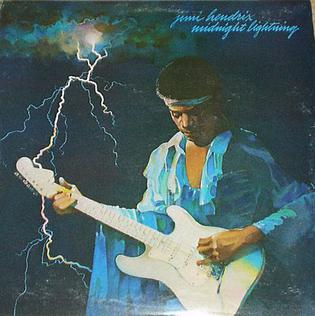
Douglas struck again by year’s end with Midnight Lightning, following the same idea. A couple of songs were repeated from War Heroes: “Trashman” is an expansion of “Midnight”, and “Beginnings” doesn’t even include Mitch Mitchell, who wrote it. The title track is torpedoed by the additional backing vocals, which merely repeat the title over and over. A half-decent studio take on “Hear My Train A Comin” doesn’t quite match the excellence of the live versions, nor could it, but it tries, and the same could be said for “Machine Gun”. “Gypsy Boy” is a tentative sketch filled out to the point where the new parts nearly overwhelm the basic track. A cover of “Blue Suede Shoes” applies an original riff that should have been spun off into an original. And although it’s over five minutes, “Once I Had A Woman” ends just as it starts to burn.

Seeing as the two albums are cut from the same reconstituted cloth, a single CD could cover both albums; however, even though Crash Landing was reissued CD in the US once upon a time, the Hendrix Estate has decreed that these albums stay deleted. They’ve done the same to Nine To The Universe, another Douglas product that simply presented edits of five separate jam sessions, with no embellishment. Of the three albums, it’s the jazziest and purest, and therefore preferred. But all is not completely lost; selections from these albums, in their original unaltered states, have emerged on various compilations in this century, sometimes in better context.

Jimi Hendrix Crash Landing (1975)—3
Jimi Hendrix
Midnight Lightning (1975)—3
Jimi Hendrix
Nine To The Universe (1980)—
Current CD equivalent(s): none

Wednesday, November 7, 2012

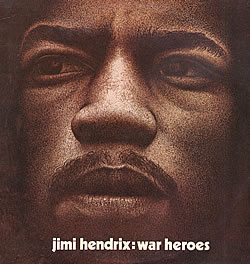
Jimi Hendrix 8: War Heroes

Jimi was barely in the ground two years before management put together another scrape through the vaults—the fourth posthumous release in the US alone. War Heroes (whatever that means; another title we can’t figure out) was an odd combination of instrumental jams, alternate versions of a single nobody could find, and an old B-side, not really arranged in any order.

Did somebody say “more cowbell”? Well, “Bleeding Heart” is a funkified arrangement of an Elmore James tune, sitting uncomfortably in style and production next to “Highway Chile”, a B-side from 1967. The Experience would occasionally perform “Tax Free”, a jazzy Swedish instrumental, in concert; with a guitar sounding like a Hammond B-3, it hints at yet another direction he might have followed. “Peter Gunn/Catastrophe” is a stumble of a joke jam in between recording actual takes of something else, or maybe he was out of ideas that day. Whatever the story, it’s doubtful he would have released this himself. “Stepping Stone” was tried several times toward the end, and this version is pretty close to excellent, but it needs more adjustment.

“Midnight” is a fairly loud groove by the Experience that’s either loved or hated. (We like it ourselves.) But it’s followed by the purely novelty “3 Little Bears”, which even Jimi sounds embarrassed playing, even begging the engineer to stop him. “Beginnings” is a jazzy stop-time experiment, credited to Mitch Mitchell on the original album, but since revealed to be a variation on “Jam Back At The House”, first played as far back as Woodstock. “Izabella” is another funk song with potential, but it’s just not making it here.

There are enough moments on War Heroes to make it interesting, but then you’ve only got about a side’s worth of material, which begs the assumption that the best leftovers had already come out on Cry Of Love or Rainbow Bridge. That didn’t keep the European labels from compiling the pointedly titled Loose Ends, an album so negligible it’s been barely cannibalized in this century. As for the album at hand, its contents are spread across three CDs, plus a box set and a CD single with two mixes of the same instrumental Christmas medley.

Jimi Hendrix War Heroes (1972)—3
Current CD availability: none

Friday, October 26, 2012

Jimi Hendrix 7: Hendrix In The West

After two vault-scrapings, somebody decided that a live album might be a decent way to make money off a dead Hendrix. Rather than highlight a single performance, thus began the practice of siphoning songs from the hundreds of concerts he’d played, sticking in this case to the Isle Of Wight Festival and Berkeley from 1970, and San Diego and the Royal Albert Hall from 1969 with the original Experience. (We haven’t figured out the significance of the title Hendrix In The West, seeing as only half of the album was recorded on that American coast; from an overseas standpoint, he pretty much only performed in the Western Hemisphere, so the mystery remains.)

For the most part, the album doesn’t concentrate so much on the obvious, but does present him at the peak of his inspiration. The opening “God Save The Queen/Sgt. Pepper” medley from the Isle of Wight Festival (issued several times everywhere, but not in the US until 2002) is meant as a simple warmup, and the crowd responds happily. “Little Wing” is short but sweet, but “Red House” keeps your attention for thirteen minutes, from quiet to screaming, steady all the way. (It’s Jimi’s name and photo on the cover, but the excellence of Mitch Mitchell, Noel Redding and even Billy Cox should not be underestimated.)

A more impromptu “Johnny B. Goode” is delivered with plenty of fire, followed by a blazing take on “Lover Man”, making its album debut. An incredibly funky groove somehow leads to a take on “Blue Suede Shoes” (from a soundcheck, which probably explains the fade) and the set closes with an especially hot “Voodoo Child (Slight Return)”, which also fades for some reason.

Hendrix In The West is a solid album, but our cynicism over the motivation is underscored by the sloppy presentation. Besides seeming to be in a different sequence in every country, the compilers tried to pull a fast one by crediting the Albert Hall tracks to San Diego, resulting in a legal issue that kept the two Albert Hall tracks from appearing when the estate reissued the album nearly forty years later (not surprising, considering how many times that show had been recycled on countless no-name labels). So “Little Wing” appears instead from the Winterland shows, and “Voodoo Child” comes from San Diego. Three more songs from San Diego fill up another 20 minutes on the CD, leading us to wonder why they didn’t use the other two songs from the show, which had appeared on an official box set in the early ‘90s, just before the estate took everything back. Since so many of the tracks are available elsewhere, the album’s relevance today has been lessened. But it’s still pretty damn good.

Jimi Hendrix Hendrix In The West (1972)—4
2011 version: same as 1972, plus 5 extra tracks (and minus 2 original tracks)