Showing posts with label bruce springsteen. Show all posts

Friday, July 11, 2025

Bruce Springsteen 30: Tracks II

The ‘90s were a pretty dry decade as far as new Bruce Springsteen music was concerned. His first attempt at a Bootleg Series-style release, Tracks, arrived near the end of it, and while it was comprehensive, but still left fans disappointed, as it only scratched the surface. Come the new century, further archival digs expanded on albums like Darkness On The Edge Of Town and The River, and he would also open the vaults to share various classic concerts via his own website.

An interval even longer than the major-label-debut-to-box-set-retrospective period capped by Tracks went by before a sequel of sorts appeared. Tracks II: The Lost Albums 1983-2018 differed from its predecessor in that this sprawling seven-CD collection (equivalent to nine LPs) consisted of completed album projects that he decided against releasing upon completion for various reasons. As it turns out, three of those albums date from the ‘90s, so now fans can argue with themselves over whether they might have enjoyed them in real time or not.

The first such collection, L.A. Garage Sessions ‘83, dates from the post-Nebraska pre-Born In The U.S.A. period, when he’d started writing more character-driven stories, haunted with the legacy of Vietnam, but some fun love songs too. The music is not as lo-fi as the tunes on Nebraska, using more keyboards and drum machines with a more full sound overall, possibly with the idea that it could be another releaseable album as is. The most full CD in the set, it gets its title from the venue where it was recorded, so if you’re looking for trashy rock (or Electric Nebraska), too bad. Of these songs, only “My Hometown” made the next album, and “Johnny Bye Bye” and “Shut Out The Light” would be B-sides. His rewrite of Elvis Presley’s “Follow That Dream” had been played live already, and “Sugarland” would be tried on the next tour. “Richfield Whistle” is more subdued, but the potentially harrowing tale in “The Klansman” is paired with an incongruous rockin’ backing. “Seven Tears” sounds like some of the rockabilly Tom Petty was trying (and didn’t release) around the same time, though “Unsatisfied Heart” has all the makings of a hit, moreso than the two versions of “Fugitive’s Dream”, with which it shares lyrics.

The drum machines heard on the first disc evolved over the ten-year jump to the next album. Streets Of Philadelphia Sessions doesn’t include the title track, for which he won an Oscar, but the songs are just as down, exploring more of the struggles of maintaining relationships. Some of these songs were built from drum loops, and again, the fans who wanted him to rock out would have been disappointed—again—and particularly after his last three, more low-key albums. It was their (and our) loss, because the songs are generally strong, and presented better than on the one-two disappointment of Human Touch and Lucky Town. Well, okay, the repeated “yeah” sample detracts from “Blind Spot”, an otherwise strong tune. “Maybe I Don’t Know You” and “The Little Things” are a little too literal, bested by “Something In The Well”, which shares lyrical ties with Tunnel Of Love; “Waiting On The End Of The World” is more cut from that cloth sonically too. Some of these aren’t too far removed from Peter Gabriel’s recent explorations on the same themes, like “Between Heaven And Earth”. “We Fall Down” and “One Beautiful Morning” are more energetic, and “Secret Garden” sounds very much like the eventual E Street-embellished version, but the artificial drums stick out here. Still, it doesn’t kill the song any. “Farewell Party” repeats some lines from “Blind Spot”, but is even more visual. To be blunt, it was a mistake to shelve this particular album.

The box makes another ten-year jump, this time to a collection of songs allegedly written and recorded for a movie that never got made. Partly instrumental, Faithless has a western prairie vibe, and wouldn’t have been any more surprising a departure for the time than The Seeger Sessions, and coming right after Devils & Dust. Besides, you can get away with more on a soundtrack. This is dusty music, exemplified by the title track and the nearly atmospheric instrumentals. His kids sing on “Where You Going, Where You From”, unfortunately, but “All God’s Children” could easily be mistaken for a latter-day Tom Waits album. But for the lyrics and the eventual gospel chorus, “God Sent You” could have been left over from the Darkness sessions. Without knowing what the film was supposed to be about, we can only guess what these mildly religious tunes are intended to illustrate, but it’s another diversion thankfully available to hear.

Back in the ‘90s, the album now known as the Streets Of Philadelphia Sessions was abandoned, and he got back together with the E Street Band for the sessions that led to the new tracks on the Greatest Hits album. This presumably bought him the time and clout necessary to proceed with The Ghost Of Tom Joad, which it turns out was just part of the music he’d been churning out unbeknownst to us mortals. The way he tells it, Tom Joad was recorded at night, while the days were busy with Somewhere North Of Nashville, a straightahead country album that turns the volume up with extra twang. It’s not a new sound for him; the remake of “Stand On It” is close enough to that old B-side, just as “Janey Don’t You Lose Heart” replaces the ‘80s keyboard with pedal steel and fiddle. Two of the songs were released by other people as covers, and three different songs describe a particular type of “man”; “Repo Man” has a rockin’ piano but is throwaway, “Detail Man” isn’t much different, but “Delivery Man” is a pretty funny tune first tried back in 1983. (Garry Tallent, Danny Federici, and even Max Weinberg are on this disc, if that helps.) “Tiger Rose” is more rockabilly than modern, and the cover of Johnny Rivers’ “Poor Side Of Town” predicts his covers album two decades away. The understated near-Eagles quality of “Under A Big Sky”, “You’re Gonna Miss Me When I’m Gone”, and “Blue Highway” come as a relief to the louder tunes. The title track was previously known as a subdued interlude of sorts on Western Stars; here’s it more fleshed out. He still sounds like himself throughout the disc, but we wonder if the fans would have appreciated this at a time when Garth Brooks was inescapable.

He must have thought so too, as he also sat on it. Meanwhile, the critical acceptance of Tom Joad gave him the courage to keep exploring the history of migrant workers—in the American southwest as well as in New Jersey—which is where the songs on Inyo came from. This is quiet music again, where he’s accompanied only by Soozie Tyrell on fiddle and vocals and embellishments from Ron Aniello, except for when the mariachi bands show up on “Adelita” and “The Lost Charro”. Except for those two, the music is gentle enough to lull, so it’s not easy to follow the story he’s telling, which obviously meant a lot to him. (Far as we can tell, there are a lot of dead children, and plenty of injustice, hardship, and heartbreak.) “One False Move” and “When I Build My Beautiful House” are the least “genre-like” tracks here, and it’s too bad he couldn’t find another place for them. But likely not interested in testing his audience with another Tex-Mex detour—even one that was more upbeat than Tom Joad, low as the bar was—he shelved Inyo, concentrating instead on compiling the Tracks box and reuniting with the E Street Band again.

The new century saw him back to putting out albums on a more consistent basis, but more often, they were increasingly compiled from disparate sessions with rotating players, as with Wrecking Ball and Western Stars. Twilight Hours is another “companion” album, presenting the more orchestral pop side to the California pop of Western Stars, complete with major-seventh chords for the first time in his career. (Mighty Max Weinberg drums on most of the tunes.) He’s almost crooning here, taking on the guise of an older romantic in the depths of a midlife crisis. “Sunday Love” is the most blatant Bacharach pastiche, lyrically and arrangement-wise, among several, but he pushes his luck with the bossa-nova beat of “Follow The Sun”. “Late In The Evening” and “Two Of Us” might as well be the Spinners without the funk, considering both borrow from the same song. “Lonely Town” is downright forlorn, a cross between Tom Waits (again) and Elvis Costello’s Bacharach collaborations, while “September Kisses” channels Roy Orbison. The more paternal “I’ll Stand By You” had actually been written with the Harry Potter movies in mind; this version is from a different movie soundtrack. “Another You” and “Dinner At Eight” are just plain romantic. “High Sierra” (with lyrical echoes of Inyo as well as “Fugitive’s Dream” and “Unsatisfied Heart” from the first disc), “Sunliner”, and the almost hopeful title track are very much along the lines of the album that did come out; it’s pretty impressive that he had this much in the tank.

Capping the set is Perfect World—not an album per se, but a collection of various one-off tracks that kept falling off the stove. Any of these could conceivably have been included on Wrecking Ball or High Hopes, though they likely wouldn’t have improved them. It kicks off with the rockers everyone waited four hours to hear—once again hedging his bets that the fans wouldn’t like the other stuff in the box. The first three songs are collaborations with fellow heartland rocker Joe Grushecky, and already released by his Houserockers: “I’m Not Sleeping” sounds like Jon Bon Jovi fronting the Asbury Jukes, “Idiot’s Delight” has a Dylanesque whine, and “Another Thin Line” cops elements of several Animals songs. “The Great Depression” rolls along with banjo again and, like “If I Could Only Be Your Lover”, has some Western Stars sweep to it. It’s not his fault that “Blind Man” sounds like the Wallflowers, and “Cutting Knife” echoes Tom Petty style-wise, but even though “Rain In The River” is a little sludgy, his voice mixed to the point of near incomprehension, it kicks. Featuring the only appearance of Little Steven, the anthemic “You Lifted Me Up” is a happy love song—a rarity in this set, particularly when followed by the regret of the title track, first released in a version by John Mellencamp.

Seven new albums in five hours is a lot to take in. But each installment is treated as its own entity, complete with unique artwork, so it’s best to ingest them one at a time. Frankly, the overall quality of the music here suggests that he did himself a disservice by holding these albums back. It’s one thing to not release them for fear of alienating his audience, but doing so also made it seem like he was afraid to risk a commercial flop. Some would call that pandering. Had he taken chances, he might not have had to wait a quarter-century to be appreciated for widening his artistry, and even gotten respect for stretching himself.

Many longtime fans balked at the inflated price, even considering the heavily annotated clothbound book. Because why not, Lost And Found offered twenty “selections from the lost albums”, evenly representing each of the albums in the order they’re presented in the box. Therefore it’s pretty much all over the place, but it does include some of the more surprising left turns to be found. And just like in the big set, there’s not a single saxophone to be heard anywhere.

Bruce Springsteen Tracks II: The Lost Albums 1983-2018 (2025)—
Bruce Springsteen
Lost And Found: Selections From The Lost Albums (2025)—3
Friday, November 18, 2022

Bruce Springsteen 29: Only The Strong Survive

From the start of his career, Bruce Springsteen would pepper his live sets with covers ready-made for the E Street Band to rip, usually crowd-pleasing numbers by Mitch Ryder and Gary U.S. Bonds. Even in this century he’s led the modern E Streeters through covers for specific occasions, such as “Purple Rain” and “London Calling” in tribute to their deceased auteurs, and even in Australia where he’s honored AC/DC with “Highway To Hell” and INXS with “Don’t Change”. He has always been a student of rock history, and particularly the sounds of classic soul.

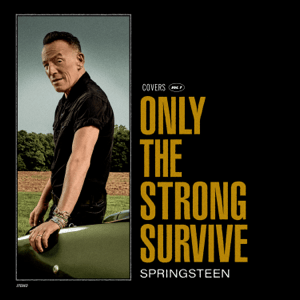
Still, the idea that half a century into his career he’d record an album of nothing but covers—the Pete Seeger album notwithstanding—surprised and concerned many (except of course the diehards who were prepared to love anything he belched onto plastic). Moreover, rather than use the E Street Band, he left the performing and arranging on Only The Strong Survive to yes man Ron Aniello, while the Boss was content to just sing. (Granted, this was the impetus behind John Lennon’s oldies album, which didn’t have the easiest gestation itself.) Add the cover art, which used only his last name, threatened that this was the first of who knows how many volumes, and showed him posing next to yet another car but looking like an extra from The Sopranos, and he was in danger of turning into Rod Stewart, and nobody wants that.

Nonetheless, Bruce throws himself into the music, because he loves it. For the most part, these aren’t songs that were overplayed on the oldies stations back when the ‘60s were mined for those playlists.

The first voice we hear on the album isn’t his, but the backing vocalists setting up the title track. “Soul Days” was a hit from this century by Dobie “Drift Away” Gray, here set up as duet of sorts with the legendary Sam Moore, who already joined Bruce on the Human Touch album. This track should have been faded before the in-studio shout out, but it’s forgotten once the next track starts. It’s astounding to realize that “Nightshift”, a 1985 tribute to the recently departed Marvin Gaye and Jackie Wilson, was a hit song for the suddenly Lionel Richie-less Commodores while Bruce himself was in the middle of the Born In The U.S.A. tour. (One wonders whether Volume 2 will include his interpretation of highlights from the Billy Ocean catalog.) “Do I Love You (Indeed I Do)” gets points for beginning with a guitar and glockenspiel like classic E Street Band, but the horns and strings bring it back to the sound at hand. On “The Sun Ain’t Gonna Shine Anymore” he can’t decide if he wants to be Frankie Valli or Scott Walker, so he tries both; god forbid he use his own voice. “Turn Back The Hands Of Time” is one of the more musically interesting tracks, considering the chord changes and key shift, whereas “When She Was My Girl” was a surprise early-‘80s hit for the Four Tops, who are also represented by the more vintage “7 Rooms Of Gloom”.

“Hey, Western Union Man” comes from the same Jerry Butler album as the title track; modern listeners may well wonder what this “telegram” thing is that keeps getting mentioned. The Temptations get their nod with “I Wish It Would Rain”, a song that’s nearly impossible to screw up, and he doesn’t. Tangentially, “What Becomes Of The Brokenhearted” is a very faithful cop of Jimmy Ruffin’s version. Unfortunately, “Don’t Play That Song” is set in a “party” atmosphere, but fans will likely thrill to the reference to “summer nights down by the shore”. William Bell is represented by the obscure (to us) “Any Other Way” and “I Forgot To Be Your Lover” (another duet with Sam Moore) which we only knew in Billy Idol’s drastic overhaul. “Someday We’ll Be Together” delivers the same sense of farewell as it was when it was a Supremes single in name only.

Only The Strong Survive is not awful. Nor is it absolutely necessary. True believers will love it; everyone else should dig up the original versions, and anything else those artists did.

Bruce Springsteen Only The Strong Survive (2022)—3

Tuesday, November 23, 2021

Bruce Springsteen 28: No Nukes

One of the last gasps of hippie idealism personified by Laurel Canyon musicians occurred in the wake of the “accident” at the Three Mile Island nuclear power plant in 1979. Led by John Hall, known back then as the guy from the band Orleans, Jackson Browne, Bonnie Raitt, Graham Nash, and others coalesced to form Musicians United for Safe Energy, and staged a variety of events in order to raise awareness and money. Five concerts at Madison Square Garden later that year raised more of both, and were the centerpiece of a triple-album set plus a feature film.

Meanwhile, Bruce Springsteen had spent most of the year in the studio toiling and tinkering over what would become his fifth album, and hadn’t done any major shows since New Year’s Day. Naturally, his appearance with the E Street Band at two of the MSG shows, in front of what amounted to his hometown crowd, were big deals, and the excerpts included in the film did a lot to show the rest of the country what the excitement was all about. For Bruce, it was also another spark that started the fire of overt activism that has only grown in his work since then.

Both concerts were released for download and as a CD package via the Bruce Springsteen Archive website in 2018. Three years later, 13 songs compiled from the two shows were remixed and matched with the restored 16mm film footage for a double CD plus DVD or Blu-ray set, unabashedly titled The Legendary 1979 No Nukes Concerts.

From the opening crash of “Prove It All Night”, Bruce and the band attack the set like it stole their lunch money. They were fired up and ready; the occasion of the leader’s 30th birthday might have also added to the intensity. Following “Badlands” and “Promised Land” he takes the mood down to debut “The River”, and goes back to the party with “Sherry Darling”, both from the album in progress. From there, “Thunder Road”, “Jungleland”, “Rosalita”, and “Born To Run” deliver the anthems.

The encore covers are included from both nights: “Stay”, with Jackson Browne and Rosemary Butler, who’d recently made it a hit again, plus Tom Petty; the classic “Detroit Medley”, which actually combined two medleys made famous by Mitch Ryder; Buddy Holly’s “Rave On”, hypercharged; and a ten-minute bash through Gary U.S. Bonds’ “Quarter To Three”. It’s even more compelling on screen, with the mildly pompadoured and sideburned frontman looking his coolest, even when tearing around the stage with his shirttails flying, Steve Van Zandt sporting a beret before he switched to the schmatta, and Clarence “Big Man” Clemons commanding his domain. (Neither audio nor video documentation of Bruce pulling his ex-girlfriend, the photographer Lynn Goldsmith, to the stage and then having her escorted from the building because she ignored his request for no pictures has been included.)

All in all, the No Nukes Concerts provides a good balance and perspective between the five discs from the 1986 box and 2006’s excavation of Hammersmith Odeon London ‘75. “Legendary” is a fitting adjective for this music.

Bruce Springsteen & The E Street Band The Legendary 1979 No Nukes Concerts (2021)—4

Friday, November 6, 2020

Bruce Springsteen 27: Letter To You

As threatened, Bruce did indeed record an album with the E Street Band following the unveiling of his Western Stars project. Then he proceeded to sit on it for a year, rather than unleash it in time for blasting from car windows by fans happy to be out of the house amidst the COVID-19 pandemic. Perhaps then Letter To You might truly be appreciated as “just what we needed,” as all the other reviews would have us believe. Maybe the delay was because he knew this was the basic framework of an album, with lyrics far from polished and frankly pandering, and an overall sound that often sounds like somebody trying to imitate Springsteen.

“One Minute You’re Here” quietly eulogizes someone or something that has been lost, then the title track crashes in along the lines of “Lucky Town”. “Burnin’ Train” opens with a flourish of Charlie Giordano’s Hammond organ, then gallops along like the title. Then we come to the first of three songs pulled from the notebooks of the 1970s. Despite their age and their legend, they have two more things in common: they’re all too long and played way too slowly, in the same plodding tempo. “Janey Needs A Shooter” was started, then abandoned, and finally finished with Warren Zevon in 1980, where it’s still slow but not plodding. This version goes back to Bruce’s original, more disturbing lyrics, covered by the three major chords. “If I Was A Priest” is loaded with the same hick Guthrie voice that Dylan adopted in an attempt to camouflage a suburban upbringing. “Song For Orphans” had been played live as recently as 2005; the choruses add a few notes to the melody. Each of these top six minutes, and drag an already slow program. (All date from his first demos for Columbia Records, supposedly unearthed for a yet-to-be-specified archival project; the songs, and fans alike, would be better served having the originals.)

The other songs fare a little better, but there’s still some sameness between “Last Man Standing” and “The Power Of Prayer”, which sit back to back. (The latter features a lot of sax courtesy of Jake Clemons.) “House Of A Thousand Guitars” is mostly keyboards, but his repeating “a thousand guitars” a thousand times before the end doesn’t give it any edge. “Rainmaker” sounds like a louder version of the dusty anthems on Western Stars, which isn’t a bad thing. Nobody in the studio pointed out how much the verses of “Ghosts” resemble “Walls Came Down” by the Call, especially over the lengthy coda, which is too bad, since the choruses have potential. Yet “I’ll See You In My Dreams” is an excellent closer, and a shoo-in for any season-end montage you can imagine.

Letter From Home isn’t bad, and we have warmed to it, but those who consider it a masterpiece are just as deaf as those who didn’t get the lyrics to “Born In The U.S.A.”, and by now they should know better. He may have been going for the vibe of the sessions that produced The River, but this is not the same band as it was forty years earlier. Nor should it be. Take it for what it is and don’t put any more significance to it. (And what’s up with that cover shot? Shouldn’t he have saved that for his Christmas album?)

Bruce Springsteen Letter To You (2020)—3

Friday, July 5, 2019

Bruce Springsteen 26: Western Stars

Even in this modern age, Bruce Springsteen has managed to keep any new album under wraps until it’s been delivered to the label. Yet no sooner had he announced Western Stars—a low-key set of songs he said was inspired Southern California, Jimmy Webb, Glen Campbell, that sort of thing—than he seemed to disown it, promising a new album with the E Street Band ere long. Outside of Patti, none of those guys are here, save some of the more recent backup singers and horn players, many veterans of the Seeger Sessions era, though David Sancious, of all people, plays on two tracks.

The album was developed slowly over the better part of eight years, during which he got distracted by expanded reissues, an autobiography, a Broadway residency, a couple of tours, and two other albums. The cover art is fitting, as most of the songs indeed express an overall feeling of the open plains. (What is it with these Jersey boys and cowboys, anyway?) The music is also embellished by strings, some real, some synthesized. The tone is set with “Hitch Hikin’”, which is about just that, the strings evoking a Copland sweep. Unless it’s not clear, the next track identifies him as “The Wayfarer”, who’s even more aimless than the guy in the first track, assuming he was actually headed somewhere. The next fella is standing still, waiting for his gal coming in on the “Tucson Train”, and the ending suggests she actually arrives. The title track cleverly suggests both an astronomical description as well as anonymous actors who used to work in the movies when cowboy films were all the rage. Meanwhile, those of us of a certain age know exactly what that “little blue pill” does. Two tracks later, “Drive Fast (The Stuntman)” seems to cover the same theme, though it’s not clear whether the guy works in the industry or is just a lifelong daredevil, but it’s a much better song with surprising key changes; this is the album’s turning point. (In between is the clunker “Sleepy Joe’s Café”, a borderline party song for a catalog that already has too many of them.)

Indeed, the second half of the album is much stronger, where each arrangement really adds to the drama in its prescribed story. The guy who’s been “Chasin’ Wild Horses”, like others here, has been doing that as both his job and by nature. It shares a melodic hook with his Beach Boys homages of a decade earlier, but that big Western sound is brought out on “Sundown”, with its banjo and baritone guitars and yearning lyrics familiar to Wichita linemen and denizens of Galveston and Phoenix. While very brief, “Somewhere North Of Nashville” explores a different kind of has-been, this time a songwriter. The sparse arrangement is a nice departure from the rest. While it seems about as simple, “Stones” finds an excellent lyrical turn and dresses up the few chords very well, and this is one that will endure. Great as it is, “There Goes My Miracle” almost succeeds as the big anthem, but the canned drums throughout the track, and especially on the second verse, leap out of the retro mood he’d been so set on. “Hello Sunshine” brings the prairie sound back; this was the first track the masses heard, and everybody noticed its similarity to “Everybody’s Talkin’”, and Bruce should know the difference between homage and mimicry. Besides, there’s been a lot of sunshine, sunrises, sundowns, and sun in general on this album, putting his skill at sequencing into question. It probably should have gone closer to the beginning, particularly since “Moonlight Motel” could only go at the end of the album. Here the drifter has landed in a town with nothing going on but memories of the one he let get away. (There’s a lot of heartache in these songs.)

Western Stars is a nice album, and succeeds despite itself. The narrators are dusty men, older but certainly wiser and even more hopeful than the guys we met on Nebraska. Many fans loved it right away, while in a surprising departure, Rolling Stone awarded it only four stars. Chances are it’s a grower, more so than the albums he did put out while marinating on this one.

Only four months after the album’s release, a film co-directed by Bruce presented the album in a live format, complete with commentary, that was supposed to suffice for an actual tour. The soundtrack was duly released as Western Stars—Songs From The Film. We haven’t noticed any differences from the album versions, but because it’s treated as a performance it just might have the edge. Plus, only here can you find his unique performance of “Rhinestone Cowboy”, which was the biggest song in the country the week Born To Run came out. Naturally, Rolling Stone raved about it.

Bruce Springsteen Western Stars (2019)—3

Tuesday, January 22, 2019

Bruce Springsteen 25: Springsteen On Broadway

Still getting a lot of legs off his memoirs, Bruce undertook a theater residency on Broadway, which he called the first five-day-a-week job he ever had. The show consisted of about 16 songs, most preceded by an extended monologue, performed solo on acoustic guitar or piano, occasionally accompanied by wife Patti Scialfa. Given the proximity to his most fervent fan base, the show’s run was extended several times, and eventually ended up as a Netflix feature and accompanying soundtrack, both entitled Springsteen On Broadway.

Bruce has been telling stories about his childhood as long as he’s been filling theaters and arenas, but with a Broadway audience he’s allowed to stretch them out as long as he wants, with no band vamping behind him waiting for the downbeat. The crowd sits quietly while he talks, laughs at all the jokes, calls out answers to brief questions and saves their applause for the music itself and a tribute to Clarence Clemons. He does his best to take advantage of the intimate setting, telling his alternately self-deprecating and exaggeratedly boastful tales, peppered with four-letter words and his own chuckles.

Springsteen On Broadway is a long program, filling up two CDs, and best enjoyed in one sitting. The stories themselves are nothing new, particularly for anyone who read his book. He begins with his youth, and moves gradually through trying to get signed, and what he did after he got famous, with some commentary on the Trump administration toward the end. The songs are mostly the expected classics from the ‘70s and ‘80s, with a few curveballs thrown in, but predominantly stripped back and slowed down. We kept checking the notes, and it really is him playing the piano, even keeping pace while he’s talking. Naysayers won’t be convinced, but he’s not singing for them anyway.

Bruce Springsteen Springsteen On Broadway (2018)—

Tuesday, April 3, 2018

Bruce Springsteen 24: Chapter And Verse

With a glimpse of mortality following the loss of E Street Band members, and even before he started writing his autobiography, Bruce Springsteen opened his legendary vaults to demonstrate the making of certain key albums in his catalog. Some were also accompanied by live artifacts. He’d already started offering downloads of shows from his most recent tour, but the Bruce Springsteen Archives went further back, selling professionally recorded concerts, complete with aesthetically relevant artwork, from his entire career.

It’s a fairly impressive endeavor, having recently escalated to a new release every month or so, and higher concentration on the previous century. Once his book was published, a companion of sorts was also released. Chapter And Verse doesn’t attempt to condense every musical reference in the pages into an 80-minute program, but it does provide something of a chronological overview, even going back before the fame.

His first band is represented by “Baby I”, a worthy garage rock stomp, and an even louder thrash at “You Can’t Judge A Book By The Cover”. Once he started writing his own songs in the ‘70s, Steel Mill takes over for “He’s Guilty (The Judge Song)”, with a lot of pinched lead guitar and organ; then they evolve into the Bruce Springsteen Band for “Ballad Of Jesse James”, which belies a distinct Van Morrison influence. “Henry Boy” is an awfully busy acoustic demo that predates the first album, and the best parts would form the backbone of “Rosalita” two years down.

“Growin’ Up” is included in the demo version previously heard on Tracks, and from there we go forward with a song per album until this century. The idea seems to be to include the most personally important track from each, and not necessarily the hits. If that’s what you’re looking for, you have other options. This one’s for the diehard fans.

Bruce Springsteen Chapter And Verse (2016)—3

Tuesday, October 31, 2017

Bruce Springsteen 23: High Hopes

Having decided he could create albums anywhere and anytime, Bruce went the Tattoo You route by raiding his outtakes vault. However, while the Stones managed to create a great album from their leftovers, Bruce only ended up with a plateful of table scraps on High Hopes, a desperate title to be sure.

Some songs had appeared in earlier incarnations. The title track had been part of the E Street Band reunion sessions two decades earlier; it’s a cover, so he can’t be blamed for the lazy chorus, but he should have known better about the horns. “American Skin (41 Shots)” was introduced on the reunion tour and released on the 2001 live album, and is just as long here, but still good. Tom Morello played guitar on half the album, and sings some of the verses on the too-long, too-loud rock remake of “The Ghost Of Tom Joad”. (He also allegedly suggested all the covers that were included. “Just Like Fire Would” was originally recorded by a punk band, but here it’s all Bruce. Similarly, “Dream Baby Dream” was originally by synth-punk duo Suicide, and becomes an aching prayer.)

“Harry’s Place” was likely left off The Rising in favor of “Mary’s Place”, which is no better. “Down In The Hole” begins low-key like a Devils & Dust track, but picks up with crazy samples and sound effects, just as “Heaven’s Wall” opens with a gospel chant and beats a “raise your hand” motif into submission. “Frankie Fell In Love” is a nice throwback to his character songs from the ‘70s, and “The Wall” a nice memorial to Vietnam veterans. But “This Is Your Sword” is an unconvincing call to arms, and “Hunter Of Invisible Game”, while lilting, lopes aimlessly.

While some of the songs are certainly worth saving from obscurity, the album as a whole fails. Perhaps as proof that he’s no longer his best editor, an EP called American Beauty appeared for Record Store Day and online streaming, containing four songs easily as good if not better than anything on High Hopes. The title track and “Hurry Up Sundown” are rousing arena rockers, “Mary Mary” a sweet strum, and “Hey Blue Eyes” a deceptively pretty tune about wartime atrocity.

Bruce Springsteen High Hopes (2014)—2
Bruce Springsteen
American Beauty (2014)—3

Tuesday, June 6, 2017

Bruce Springsteen 22: Wrecking Ball

Nearly four decades into his recording career, the inevitability of Rolling Stone magazine giving every Bruce Springsteen album a five-star review is nearly pathological. Granted, we’re no doctor, but sometimes it’s hard to believe we’re listening to the same album.

Wrecking Ball is the “angry” Bruce album, bemoaning the state of the union with a boomy sound and a lot of yelling, even for him. Part of that comes from the day’s headlines, but mostly because technology allows him to build his tracks himself, which keeps him from being reined in as he might in a band situation. Most of what’s left of the E Street Band are pasted in here and there, but overall it’s a collaboration with co-producer Ron Aniello. Between them, they cover most of the instruments, even drums. Even with real instruments, there’s a dependence on loops and samples that makes it all very sterile-sounding.

“We Take Care Of Our Own” begins with all the subtlety of a U2 anthem, but the glockenspiel or its equivalent soon gives away who it really is. It’s exactly what his fans hope for, but it doesn’t last. “Easy Money” is stuck somewhere between a drum machine and a campfire, with nursery rhyme-level lyrics; “Shackled And Drawn” has a slightly better hook. Then we come to “Jack Of All Trades”, which details all the things a workin’ man can do around the house to take care of his own during hard times. Meant to be stirring, it ends up maudlin, but hopefully somebody out there took some comfort from it. (The guitar solo comes from new best friend Tom Morello, best known from Rage Against The Machine and Audioslave.) “Death To My Hometown” is not a protest of the worst single from Born In The U.S.A. but another worker’s anthem sung in a brogue with backing to match. Despite its bombast (and another Tom Morello solo), “This Depression” manages to be a welcome return to more familiar Bruce.

The title track, inspired by the demolition of many of the stadiums he once filled, is pretty ordinary until the bridge about halfway through, which makes the return to the opening motif a smooth one. “You’ve Got It” provides another respite in the form of a basic love song without any sociological agenda, but it’s not one of his better ones. The most daring track is “Rocky Ground”, which uses a gospel sample and refrain, even including a rap; the song deserves a more stripped-down approach to be more effective. The fake gospel overtone carries over to “Land Of Hope And Dreams”, first heard over a decade earlier on a live album, now re-recorded with one of Clarence’s solos flown in. “We Are Alive” begins with the sound of a needle in dead wax, and soon stomps along as a modern Woody Guthrie song, its message deflated by mariachi horns right out of “Ring Of Fire”.

The album proper ends there, but any Boss fan worth his or her salt would have had to pick up the “Special Edition” for its two extra tracks. “Swallowed Up (In The Belly Of The Whale)” sounds like it comes from the same campfire as “We Are Alive”, and could work over the closing credits of a Coen brothers drama. Finally, “American Land”, first heard as part of the Seeger Sessions trip, gets a studio version here, and still sounds like the Pogues.

Despite the acknowledged highlights, Wrecking Ball is a lesser Springsteen album. We’ve let him slide before, and he’s allowed to experiment all he wants, but even he wouldn’t suggest that everything he’s done is gold.

Bruce Springsteen Wrecking Ball (2012)—

Tuesday, December 20, 2016

Bruce Springsteen 21: The Promise

Maybe it was only isolated to one corner of the country, but up in the northeast, one of rock ‘n roll’s most bootlegged artists of a certain decade was Bruce Springsteen. Part of that was due to his legal troubles in the late ‘70s, wherein he was prohibited from releasing his big follow-up to Born To Run. He was allowed to record, and he played an enviable roster of shows, but all that free time encouraged him to write at least three albums’ worth of material, so that when his next album did arrive (to unquestionable acclaim amongst the already converted) it barely scratched the surface of what had been on his mind.

For the better part of 30 years, fans clung to concert tapes and illicitly acquired dubs of the stuff he was working on then, so it was very surprising (and welcome) when he eventually signed off on The Promise, released not only as an adjunct to an anniversary edition of Darkness At The Edge Of Town, but allowed to stand on its own as its own entity, separate from the setup. (Which is why we’re talking about it here, rather than in the context of that album’s reissue.) It was the smart move, because it’s a terrific pile of tunes. These aren’t just siphoned tracks scattered across a larger collection of cast-offs from a disparate career; these recordings all come from the same singular era, with the same defined band members trying to help him concoct his next attempt at the Great American Novel on wax.

And that’s why The Promise is an excellent package, as it presents not one but two LPs’ worth of tunes that would have gone a long way to establishing Bruce as a force to be reckoned with. Go into it blind and ask yourself: this stuff wasn’t as good as what he did end up releasing in 1978? Once you get past that, higher thumbs up to the kid who was so focused on the message he wanted his fourth album to present that he could nudge aside two dozen other songs that anybody else of that era would’ve killed to write, much less record. These are all tunes worthy of that time, and if he had just thrown them on the first pile of plastic that went past the conveyor belt, whatever he called it would have been hailed by Rolling Stone, WNEW-FM and the rest of the usual suspects as a deeply crafted work of amazing import, with maybe only that week’s Graham Parker or Steve Forbert albums to suggest an opponent, but hardly enough to stick in the long run.

Scholars can pinpoint the exact spots, but even we can hear elements that would surface on things that actually did emerge at the time. The set begins with an alternate arrangement of “Racing In The Street”, and continues through what amounts to full-band demos of “Because The Night” and “Fire”, which would have brought him piles of money if he’d released them himself rather than pawn them off on others. Truly, if deejays had gotten their hands on “Rendezvous” back then, you’d still be hearing it today. “Ain’t Good Enough For You” would soon get retooled as “This Little Girl” and donated to Gary U.S. Bonds for his 1981 comeback album. The set gets its title from a legendary outtake that finally appears in a full band take, right up there with his other epic ballads, but without the engine. (And really, quoting “Thunder Road” so soon after the song of that title? That just wasn’t done in ’78.)

They’re not all gems; “Talk To Me” and “It’s A Shame” would have been much better served by Southside Johnny. And nice as it is, listen to “Candy’s Boy” and try to convince yourself that this trip to the beach beats the ball of tension it would eventually evolve into. It’s particularly odd that the last track listed is the underwhelming and hardly enjoyed “City Of Night”, particularly when “The Way” is more what we’d expect from him. Slight as it is, it’s got Clarence, and he wouldn’t be around for much longer.

Everything sounds crisp and clean, and unlike the post-production that rankled fans on Tracks, the songs crackle like the analog of 1977. Nearly all of the tracks have had modern sweetening—mostly horns but even some lead vocals—but not to the point of rendering the songs anachronistic. We’re going to go out on a limb and suggest that these songs are to the Bruce pantheon as any of Dylan’s 1965-66 leftovers are to his. Here was a guy firing on all cylinders, and right in the middle of it, he’d figured out how he wanted his albums to sound. It’s clear he knew how to write hits; he wanted to write songs that would last. Good for him.

Bruce Springsteen The Promise (2010)—

Friday, August 12, 2016

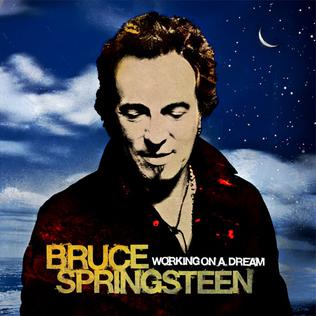
Bruce Springsteen 20: Working On A Dream

Bruce never worked fast, and had long earned the luxury of having to rush himself. Working On A Dream was one of the fastest follow-ups in his career, arriving only five retail quarters after Magic. Having learned his lesson from that time he put out two albums on the same day, this time he decided to give the songs that materialized at the end of the sessions a little breathing room.

On the basis of “Outlaw Pete”, an eight-minute saga about a bank-robbing baby that has some catchy hooks outside of the one that’s identical to “I Was Made For Loving You” by Kiss, one can be forgiven for thinking the kid didn’t get enough oxygen. But “My Lucky Day” redeems it, with the big E Street sound everybody loved on The Rising, and even a textbook Clarence solo. The title track is a little too by numbers, and the sweetness of “Queen Of The Supermarket” is sunk by its improbability, or at least its literalness; Paul Westerberg already wrote the best ode to a checkout girl anyway. Right at the end he finds a terrific countermelody, then shocks us with an F-bomb, and lets the song fade to the accompaniment of a UPC scanner. (We kid you not.) “What Love Can Do” sounds like something he must’ve written already, and it could do without the clattery arrangement. “This Life” builds on the Brian Wilson inspirations of the last album to get us smiling again.

The experiments continue on “Good Eye”, a noisy blues rocker sung through a Green Bullet. “Tomorrow Never Knows” is a country song that has nothing to do with John Lennon, and while “Life Itself” is twice as long and has nothing to do with George Harrison, it’s got more depth. The country elements of those last couple of songs combine with the high notes on “Kingdom Of Days” to take it away from “Girls In Their Summer Clothes” and “Your Own Worst Enemy”. “Surprise, Surprise” was another chance to evoke John Lennon, or at least Gomer Pyle, but instead stays a pop song with a Mark Ronson bridge. It’s a final chance for toe-tapping, given the dusty atmosphere of “The Last Carnival”. (As had become standard, this album’s hidden or bonus track is “The Wrestler”, written for the movie of the same name. It’s no “Streets Of Philadelphia”.)

Working On A Dream is possibly Bruce’s most lightweight album, in that it’s not weighed down by the hard lives and tough loves of all those just plain folks. Rolling Stone magazine was bound by law to give it five stars, but that should mean nothing by now. It’s merely harmless and enjoyable.

Bruce Springsteen Working On A Dream (2009)—3

Friday, April 1, 2016

Bruce Springsteen 19: Magic

His fans should know by now that while it might take some time, Bruce always goes back to the E Street Band to rock and roll. Even people who came in as late as The Rising can’t complain about the five-year gap before Magic provided the sound they craved.

This album is textbook Bruce, with plenty of guitar, familiar glockenspiel touches, gratuitous sax solos and choruses aplenty. At the same time, it stays a little too close to that textbook. “Livin’ In The Future” is a rave-up in the style of “Tenth Avenue Freeze-Out” run through Born In The U.S.A., with plenty of Clemons breaks. “I’ll Work For Your Love” has the type of opening Jim Steinman stole for Meat Loaf, directly descended from the live “Santa Claus Is Comin’ To Town”; the addition of violin and harmonica bring it into this century’s version of the E Street Band.

But the oddest influence seems to be that of Brian Wilson. “You’ll Be Comin’ Down” borrows its melody and feel from “Don’t Worry Baby”; “Your Own Worst Enemy” could be a Wilson production, with its lush strings, tympani and sleighbells, and a very odd choice for such a paranoid lyric. “Girls In Their Summer Clothes” mines similar territory only two tracks later, but his croon overpowers everything for a better meld.

There are songs that don’t sound like his catalog or that of the Beach Boys. “Radio Nowhere” is a smart opener, fulfilling the narrator’s plea for rhythm and guitars. “Gypsy Biker” provides just enough dust for variety, but the title track sticks out like a sore thumb, being more along the lines of solo works like The Ghost Of Tom Joad and Devils & Dust. It makes “Last To Die” even more striking, with a nervous edge and runaway pulse. That sets up “Long Walk Home”, an ultimately hopeful cousin of “My Hometown” and “My City Was Gone”, and the building mystery in “Devil’s Arcade”. (A hidden track, “Terry’s Song”, is a tribute to his recently deceased friend and road manager that avoids any fake sentimentality.)

If anybody else released this album, it would be praised (or condemned) as an overt Springsteen homage. Magic is undeniably catchy, and avoids any overt theme or message. That’s not to say it’s not there; he’s still concerned about the state of the world and the well-being of his fellow Americans, but delivers it via the type of music his fans want most to hear. It’s unlikely any Republican candidates would mistake these songs for potential campaign anthems.

Bruce Springsteen Magic (2007)—

Friday, December 11, 2015

Bruce Springsteen 18: The Seeger Sessions

Despite his affinity for rock ‘n roll and motorcycle jackets, Bruce Springsteen has longed to emulate dusty folksingers. Whereas Bob Dylan never shied away from his debt to Woody Guthrie, the Boss chose Pete Seeger for inspiration on one of his more surprising projects. Suggested by a late-‘90s diversion, and likely pushed along by his political activism in the Bush II era, We Shall Overcome: The Seeger Sessions collects several folk songs, performed in what sounds like a barn with fiddles and Salvation Army horns. The result is a lot of fun despite the occasionally dour subject matter.

True folk songs have become part of America’s fabric, and these tunes would be recognizable, even if the titles aren’t. Kids of a certain age will recall “Old Dan Tucker”, “John Henry” and “Froggie Went A-Courtin’” from elementary school, while more scholarly types will nod at “Erie Canal”, “Pay Me My Money Down” and “Shenandoah”. “Eyes On The Prize” and “My Oklahoma Home” gain more gravity in the aftermath of Hurricane Katrina, which also gives “We Shall Overcome” more depth if not edge.

The album was released as a DualDisc, with bonus audio mixed in with DVD content. As has been all too common in this century, it was rereleased six months later as an expanded CD, adding three live tracks to the two earlier extras. The subtitle American Land Edition was suggested by the sole original composition in the set.

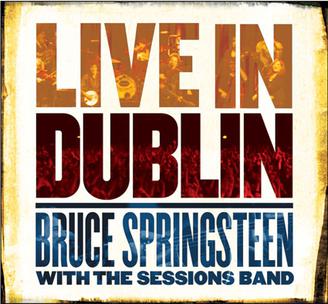
To prove that it wasn’t just a whim, Bruce took 17 people on the road on both sides of the pond, playing songs from the album, other public domain songs, and even new arrangements of his own songs. Three nights were the source of Live In Dublin, which presents a very boisterous crowd reacting positively to the folk songs they knew as well as such reworked nuggets as “Atlantic City”, “If I Should Fall Behind”, “Blinded By The Light” and even a jump swing extension of “Open All Night”. Of particular note is a raucous “American Land”, which sounds even more like a Pogues song. With several singers taking turns at the mic, the virtual concert is even more of a hootenanny than the album that inspired it all.

Bruce Springsteen We Shall Overcome: The Seeger Sessions (2006)—
American Land Edition: same as 2006, plus 5 extra tracks
Bruce Springsteen with the Sessions Band Live In Dublin (2007)—3

Friday, August 14, 2015

Bruce Springsteen 17: Devils & Dust

After thirty years in the business, Bruce Springsteen seemed to finally have the confidence to follow his own path, wherever it took him. While predominantly solo and acoustic, Devils & Dust isn’t as easily shoehorned into the same category as Nebraska and The Ghost Of Tom Joad, but it would likely feel that way for anybody who jumped back on the bandwagon after The Rising. Chances are, however, they’d get into this album faster.

What helps is the sequencing, so that there’s never danger of getting stuck in a rut. The title track builds from a quiet strum to a fleshed-out track, leading well into the driving rock in “All The Way Home”. It’s a startling switch to the dusty landscape and blatant sex in “Reno”, and back to the more conventional “Long Time Comin’” (wherein he still intends to “get buck naked”). “Black Cowboys” and “Maria’s Bed” stay on the quiet side, until the latter bursts its seams with mandolins, chanted backup vocals and a country echo of “Mary’s Place”.

The second half of the album isn’t as well-paced, staying mostly within the same tempo and intensity. “Silver Palomino” continues the country theme, and there’s something in “Jesus Was An Only Son” that sounds like Tom Waits. “Leah” is a simple love song, and “The Hitter” seems most like a descendant of Nebraska, with the boxer talking to his ma. One song with a lot of potential is “All I’m Thinkin’ About”, another love song but sung in a near-falsetto with a hushed backing. Just as hushed, but more complicated, is “Metamoros Banks”, following a traveler’s journey backwards, so Bruce says, from his demise to the hope that made him set out.

Devils & Dust succeeds as a departure from the Springsteen norm. Only one E Streeter is here, and it isn’t Clarence, while his main foil is co-producer Brendan O’Brien. Steve Jordan plays whatever drums are heard, and of course Patti’s everywhere. It takes a while to sink in, but ultimately satisfies.

Bruce Springsteen Devils & Dust (2005)—3

Tuesday, February 24, 2015

Bruce Springsteen 16: Essential

Maybe the record industry knew their glory days were long past, as the new century saw a proliferation of hits collections, particularly for people who’d already had several. While not as cheaply executed as Unigram’s “20th Century Masters—The Millennium Collection” series, Sony’s line of “Essential” compilations usually aimed to load up two CDs, with some true rarities to entice repeat buyers.

Bruce had managed to avoid exploitation throughout his career, but come 2003, with audiences still swooning from The Rising, his catalog was ripe for the hits treatment. The Essential Bruce Springsteen isn’t merely an expanded Greatest Hits, nor does it even duplicate that collection. But it does kick off with five radio favorites from his first two albums, and giving more love to most everything after. The title tracks of Nebraska and The Ghost Of Tom Joad provide bleak perspectives in between the anthems; meanwhile Born In The U.S.A. is underrepresented, and you’ve got to look elsewhere for “Secret Garden”. (Really? They had to make room for “Mary’s Place”?) The second disc closes with the two new songs from 2001’s Live In New York City, “American Skin (41 Shots)” and “Land Of Hope And Dreams”.

A couple of odd choices aside, this set wouldn’t be worth more than a paragraph’s mention except for the third, “bonus” disc. This sequel to Tracks collects some extraneous soundtrack songs from the ‘90s, such as “Missing”, “Dead Man Walkin’” and “Lift Me Up”. There’s only one B-side (“The Big Payback” from the Nebraska era) but two songs from charity collections—“Trapped”, a live cover of the Jimmy Cliff song previously stuck on the USA For Africa album, and Elvis’s “Viva Las Vegas”.

And then there are the completely new songs outside of bootlegs. “From Small Things (Big Things One Day Come)” was a River outtake made a hit by Dave Edmunds, followed by “Held Up Without A Gun”, a great live raveup barely longer than a minute. “None But The Brave” was earmarked for Born In The U.S.A. but likely cut for sounding too much like his last two E Street albums, whereas “County Fair” is beloved by collectors who also love “Wild Billy’s Circus Story”. “Code Of Silence” is another rarity from the “reunion” tour, while “Countin’ On A Miracle” is an acoustic alternate played over the PA at the end of the Rising shows.

Given when most of these songs were recorded, they could have easily been slotted into Tracks and still kept under four discs. Why he sat on them for five years is anyone’s guess, but fans can be happy to finally have them. That is, if they acted fast enough; twelve years and five studio albums later, the set was overhauled, replacing a dozen tracks from the first set with nineteen others. Some of the older substitutions were negligible, but not all of the newer ones made up the difference. Also, this time there was no bonus disc.

Bruce Springsteen The Essential Bruce Springsteen (2003)—4
Bruce Springsteen
The Essential Bruce Springsteen (2015)—

Friday, September 5, 2014

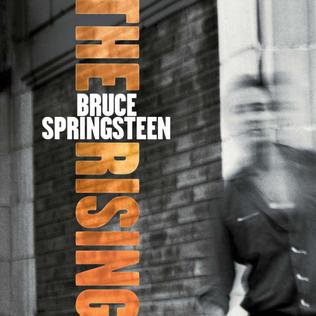
Bruce Springsteen 15: The Rising

Purportedly, within weeks of the attacks on September 11, Bruce Springsteen was driving down by the Jersey shore when a guy in the car next to him rolled down his window and called out, “We need you!”

While Bruce has never had the level of hubris of, say, Bono, he did still mean something to the people of New York who grew up on his music, and likely only enjoyed a handful of songs he put out in the ‘90s. Now it was a new century and the world had changed, and as he’d already put the E Street Band back together for a tour following Tracks (documented on the obligatory live album and DVD), it was time to rock out again.

The songs on The Rising resonate with the multitude of emotions following 9/11, and work best when they use the E Street Band, which now included both Steve Van Zandt and Nils Lofgren, and of course Patti Scialfa. Also prominent is violinist Soozie Tyrell, and because it’s a Brendan O’Brien production, it’s not so much live-sounding as it is decorated.

The first six songs are all solid, one after another, well paced and contrasted. The harpsichord and strings at the start of “Lonesome Day” are a red herring, as it soon turns into exactly what the guy on the shore wanted. It takes a lot of balls to put a song called “Nothing Man” on an album produced by the guy who worked with Pearl Jam, but he pulls it off. “Into The Fire” and “Empty Sky” seem overtly related to current events, but not blatantly, while “Countin’ On A Miracle” and “Waitin’ On A Sunny Day” are just the type of apostrophed rockers that fill stadiums. You have to listen for Clarence Clemons, but he’s in there, just not blasting over every fade.

The wheels come off 25 minutes in, on track 7. “Worlds Apart” has a melody and chord structure right out of his late ‘70s songbook, but we can handle only so much Middle Eastern effects and choirs when Sting uses them, and they sound just out of place here. Even worse is “Let’s Be Friends (Skin To Skin)”, heavy on hip-hop loops and modern R&B. “Further On (Up The Road)” is ordinary rock by numbers and “The Fuse” is little more than a spruced-up demo.

Things do get back on track on “Mary’s Place”, with another red herring of a Mellencamp intro; while it’s about twice as long as it should be, the song’s “let’s have a party” sentiment provides the same relief as similar songs on The River, needed here more than ever. “You’re Missing” is moving but not mawkish, while the title track still stirs chills and thrills, even without delving into the lyrics. “Paradise” is a dour detour into Ghost Of Tom Joad territory. And finally, “My City Of Ruins”, completed before the attacks but a fitting end, borrows liberally from Van Morrison’s “Crazy Love”, but most people will think of “The Weight”.

Bruce has always written about struggle, hope, despair, and persevering despite it all, so even outside of the context of the times, The Rising for the most part succeeds. Take out the chunk of misses in the middle and tighten a few of the fades—the songs are all longer than they need be anyway—and it would rank with his best. It was still his best album in 15 years.

Bruce Springsteen The Rising (2002)—

Friday, May 23, 2014

Bruce Springsteen 14: Tracks

Fans who saw the shows Bruce played to promote The Ghost Of Tom Joad were understandably excited whenever he pulled out a little-played oldie, or better yet, something that never made it to a record. That feeling of nostalgia, along with the knowledge that it would sell, likely fueled the completion of his second box set. Tracks presents four discs of studio material covering 25 years of recording. Only two songs were recorded live (besides, that area was pretty much covered already) and nine had been B-sides, leaving 55 songs put on tape with every intention, at one time or another, of competing for a spot on whatever album he hoped would emerge from the accumulating pile.

The set starts, appropriately, with four songs from his Columbia “audition”, and proceeds to tell the rest of the story, more or less chronologically, with a lot of deviation to supposedly accentuate flow; frankly, we’re sticklers for recorded order, and we know some of his diehard fans are too. Everything appears in studio quality, whether mixed then or for the box; in a few cases he added horns or even vocals from E Streeters to fill up a song just prior to its release here. We’re hardly of the caliber of the most devoted Springsteen scholars; the supplementary notes compiled by his most dedicated fanzine is required reading for anyone approaching this collection. But we do enjoy lists and puzzles, so hearing this alternate history does provide another perspective, and some more appreciation for why people love the guy so damn much.

Since so many of these songs were at one time contenders for whatever album he was trying to complete, the question is begged as to whether he should have included any of the rejects over what he did. The answer is an emphatic no. While there are some true compositional gems, so many of the tracks have the same production effects that color the ones we already know. The River may or may not have been better off as a single LP, even in the earlier, rejected sequence that would have been The Ties That Bind. Born In The U.S.A. would still have bad synthesizers, and we’ve already discussed how to improve on Human Touch and Lucky Town. And because it only scratches the surface, the jury is out on the alternate universe of Darkness At The Edge Of Town—for now, anyway. (Though we remain fascinated by “Iceman” and the proto-Southside Johnny performance of “Hearts Of Stone”.) The elusive Electric Nebraska stayed hidden away; instead, “Wages Of Sin” is a surprising slow burner from 1982, while the stark demo of “Born In The U.S.A.” better conveys the song’s intent.

As with any project of this theme, the “real fans” had lots of complaints with liberties taken and songs ignored. This continued the following spring when 18 Tracks distilled the box down to a single disc—you know, for the “casual fan”—but also added three songs not on the box, effectively forcing fans to open their wallets again. It’s a well-thought-out selection, focusing on rockers (mostly), alternate versions of familiar songs and two of the more popular B-sides (namely “Pink Cadillac” and the underrated “Janey, Don’t You Lose Heart”). The “new” songs then appear at the end of the disc. “Trouble River” was left off of Human Touch, despite being half-decent, and likely because it runs the same riff into the ground. The legendary Darkness-era song “The Promise” appears in a brand new solo recording, as opposed to a vintage E Street take. But all is nearly redeemed by “The Fever”, the best song left off his second album, perhaps because it sounded so much like his first album (where it also would have been the best song). Criminally excluded from Tracks, one wonders if this was the plan all along.

Bruce Springsteen Tracks (1998)—3
Bruce Springsteen
18 Tracks (1999)—

Tuesday, January 28, 2014

Bruce Springsteen 13: The Ghost Of Tom Joad

Lest anyone think he was going back to his classic sound, Bruce threw the industry another curve ball. While The Ghost Of Tom Joad was a return to form of sorts, that form was the introspective approach of Nebraska and Tunnel Of Love. These songs are quiet and intimate, demanding attention and not always getting them, portraits of broken men and shattered dreams. You know, the usual happy stuff.

He wisely begins the program with the title track, a blatant reference to the hero of The Grapes Of Wrath, already celebrated by the likes of Woody Guthrie. Starting with a blast of harmonica and swelling to a musical backing not unlike Dire Straits, it eases the listener in. However, even this low-key track is one of the louder songs on the album. A pair of doomed individuals revive the Nebraska connection; the narrator of “Straight Time” struggles with life outside prison, and the difference in occupation makes it clear he’s not the wayward shoe salesman on “Highway 29”. “Youngstown” is whispered in much the same mood until the band joins in after the first chorus, and nobody noticed that it follows the melody and structure of Bob Seger’s “Turn The Page”. That tale of hard times in Ohio is balanced against the sad plight of Mexican immigrants seeking their fortune cooking meth in “Sinaloa Cowboys”; somehow they evaded the border guard who narrates “The Line”, most likely because they weren’t a raven-haired beauty named Louisa.

One of those immigrants might have ended up smuggling cocaine to “Balboa Park”, and while the lyrics of “Dry Lightning” don’t suggest it, there’s still a south-of-the-border lilt to the accompaniment (and the vivid image of the “piss-yellow sun”). “The New Timer” exists to prove that there is no romance to riding the rails, with every “sir” aside bringing us back to Nebraska. Its bleakness enhances the hope running through “Across The Border”, and even its arrangement would make it a good place to end. But Bruce had more to say, with the lengthy anticlimax of “Galveston Bay” and the much shorter “My Best Was Never Good Enough”—a wonderful title, but unfortunately just a string of pointed clichés delivered in a cartoony voice.

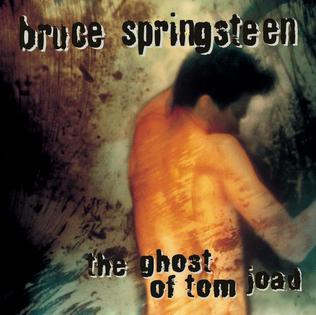
The Ghost Of Tom Joad is not the kind of album that gets blasted from car stereos, or would even get rotation in a record store. It took a lot of balls to release it at the height of the holiday buying season. That it’s not as pointedly bad as Human Touch keeps it from failing; we give him credit for creating music on his own terms, and remembering to keep it simple. His rhymes don’t always deliver on the stories he’s telling, but that can get worked out on the road. And it would, first on a solo tour, then later with a band. (Soozie Tyrell features prominently on the violin here, and would continue to do so.) In all, probably the worst thing we can say about the album is the cover art. And maybe the goatee. (Well, it was the ’90s.)

Bruce Springsteen The Ghost Of Tom Joad (1995)—3

Friday, November 22, 2013

Bruce Springsteen 12: Greatest Hits

Meanwhile, Bruce tried to stay busy in the ‘90s. The two new albums released the same day weren’t as successful as the tour supporting them, as fans flocked to see their hero running around a stage with people that pointedly were not the E Street Band. But he did manage to recapture some respect with a song written for the highly popular film Philadelphia; “Streets Of Philadelphia” wasn’t as dramatic as the song Neil Young wrote for the same movie, but it caught on enough to garner an Oscar, and eventually a few Grammies. It was also a key selling point for his first-ever Greatest Hits album.

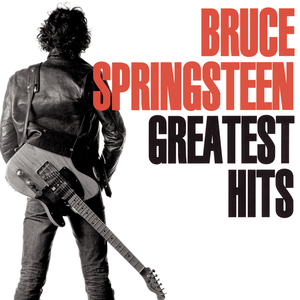
The title ticked a lot of fans off, since not all the songs were hits, not all the hits were on it, and there was nothing from his first two albums (likely because that would have put money in the pocket of his former manager and producer). Chances are they had the four songs from Born In The U.S.A. a couple of times already, too. But for people whose CD racks consist solely of hits collections, soundtracks and such, Bruce’s Greatest Hits did cover enough of those bases. If you like one of the songs, you like them all.

Most attention was paid to the four brand new songs at the end, all recorded with—ta-da!—the E Street Band. First, there was “Secret Garden”, destined to replace “Every Breath You Take” as the most misunderstood song choice for wedding receptions, helped along by Jerry Maguire. Its understated keyboards had already become a Boss trademark, and his intimate vocal belies something of a bizarre “Candy’s Room”. “Murder Incorporated” wasn’t exactly new; this angry track was left over from the Born In The U.S.A. sessions, dusted off and sounding great. “Blood Brothers” is back to quiet, with lyrics that seem to refer to the band, but probably don’t. It soon picks up a galloping beat not unlike Dire Straits, and that’s meant as a compliment. Finally, “This Hard Land” was another early-’80s leftover, but newly recorded.

Songs as strong as these only made people wish Bruce and the boys could record and release a full album. But that wouldn’t happen for a while. In the meantime, Greatest Hits ensured big-box record retailers outside the 201 area code that they could still have a Springsteen slot in their racks with decent turnover.

In time, of course, Bruce (or more likely, his management team) would allow himself to be anthologized further. But while he continued to make music in the new century, none of it was popular enough to garner a Volume Two where this set left off. Therefore, any future collection would include most of what was on the first Greatest Hits, followed by whatever they felt worthy of being tacked on. While The Essential Bruce Springsteen had some merit, particularly in its first incarnation, the decision to market a Greatest Hits of “Bruce Springsteen & The E Street Band” was first head-scratching since they’d already played on most of the original hits album anyway, but moreso when it was initially sold exclusively at Walmart. Five of the twelve selections hadn’t been on the first one, and three of those were from this century. At least the later European version added another six tracks to fill up the disc.

Three decades after that first set, someone decided we needed a Best Of Bruce Springsteen, despite the self-defeating nature of somebody else deciding what his best would be. The usual grab bag of selections from before 1995 were amended by four subjective choices from four of his ten post-9/11 albums. That filled up a CD, but the increasingly common “digital edition” added another hour’s worth of music, including four more songs from this century, three representing more recent albums skipped on the retail version. Given the proliferation of vinyl releases outside of Record Store Day, it was truly a cash grab, and considering how much flak he was getting for astronomic ticket prices, many fans felt it underscored how out of touch he’d become. That said, the music was still as good as it ever was.

Bruce Springsteen Greatest Hits (1995)—4
Bruce Springsteen & The E Street Band
Greatest Hits (2009)—
Bruce Springsteen
Best Of Bruce Springsteen (2024)—

Friday, November 8, 2013

Bruce Springsteen 11: Lucky Town

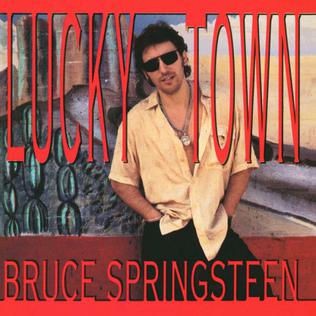
The other album that came out the same day as Human Touch had a better shot at being accepted by those who’d struggled through the 14 songs they heard already. Lucky Town is a 20 minutes shorter than its brother, and was recorded even more quickly than that. It’s another one-man-band deal, with the addition of veteran session drummer Gary Mallaber and good old Roy Bittan. By not being as labored, it has a freshness the other lacks, and has aged better.

Just like its brother, it begins with a potboiler in the form of “Better Days”, which gets its growl from the drop-D tuning all over the album. (It also takes the daring step of rhyming “piss” with “kiss”.) The title track certainly sounds like a textbook Springsteen song; it could have been combined with “Local Hero”, which crackles like a Mellencamp song, though it loses its way lyrically following the updated “Glory Days” sentiment of the first verse. “If I Should Fall Behind” is a gentle love song, not at all clichéd, but “Leap Of Faith” is an empty arena singlaong that sounds too much like “Local Hero” to stand out.

“The Big Muddy” is the requisite song of mystery, in dire need of a better chorus and hook; surely a scholar like Bruce would have heard the phrase from Pete Seeger. The true centerpiece of the album is “Living Proof”, a song about his newborn son and infused with emotion not at all staged. Despite its overused title, “Book Of Dreams” celebrates his wedding, providing a much happier ending to Tunnel Of Love. “Souls Of The Departed” is a well-intentioned lament for boys damaged by war overseas and at home, but one gets the feeling he wrote it already. And “My Beautiful Reward” is a nice little ending, an acoustic strum helped along by organ and drums in to the sunset.

Could these songs have been better served by the E Street Band? While not as easy to answer as whether McCartney should have stuck with Wings, the distinct absence of a saxophone suggests that Bruce wanted to move on.

Lucky Town is the better album of the two, and not just by comparison. Still, because this is exactly the forum for such speculation, here’s our suggestion for the 45-minute album that should have been released that day, still called Human Touch:
Side one: “Better Days”, “Lucky Town”, “Local Hero”, “With Every Wish”, “Roll Of The Dice”
Side two: “Human Touch”, “If I Should Fall Behind”, “I Wish I Were Blind”, “Living Proof”, “Book Of Dreams”
Burn a CD of that and see if you agree. If you don’t, submit your own.

One of the ways he tried to promote the albums was an appearance on the then-trendy MTV Unplugged show. He began with a solo performance of his playful “Red Headed Woman”, then said “screw the format” and brought out his non-E Street touring band, which is how the show and resultant album was titled MTV Plugged. Most of the set pulls from the new albums, but the past is acknowledged with “Atlantic City”, “Darkness On The Edge Of Town”, a subdued “Thunder Road”, and most surprisingly, “Light Of Day”, the theme song from a much-maligned film starring Joan Jett and Michael J. Fox as sibling bandmates. (For some reason the album was released everywhere but the U.S. until 1997, which is why we’ve dated it that way below.)

Bruce Springsteen Lucky Town (1992)—3
Bruce Springsteen
In Concert/MTV Plugged (1997)—3